 SINGAPORE – To tackle the rising number of deaths from heart disease in Singapore, the National Heart Centre Singapore (NHCS) on Wednesday (Sept 21) launched the Women’s Heart Clinic, which will offer end-to-end services tailored to the specific needs of…
Source link
New clinic for women to tackle heart health
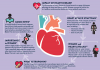
Singapore the best place for expats, according to HSBC survey
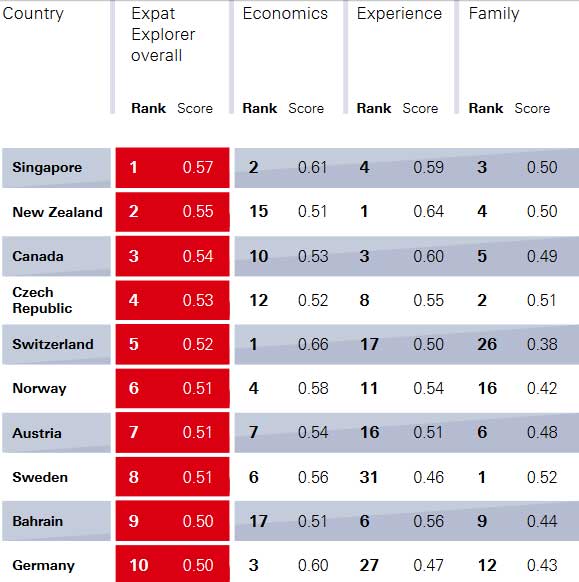
Image:

Publication Date:
Wednesday, September 21, 2016 – 15:03
Send to mobile app:
Source:
Story Type:
Others
Red Cross seeks $21.1 million to help flood-hit N Korea

Seoul – The Red Cross appealed Wednesday for US$15.5 million (S$21.2 million) in emergency funding to help flood-ravaged North Koreans, warning of a “secondary disaster” in the impoverished country unless urgent assistance is provided.
At least 138 people are known to have died and nearly 400 are missing after torrential rain triggered major floods, devastating villages in the country’s northeast, the UN said last week.
According to the UN, 140,000 people need assistance. The International Federation of Red Cross and Red Crescent Societies (IFRC) said that about 70,000 remain homeless after tens of thousands of houses were damaged or destroyed.
“People were vulnerable before this disaster but now they are in danger of reaching tipping point,” said Chris Staines, head of the IFRC delegation in Pyongyang, in a statement.
“Winter is on our doorstep and when you add up the impact of the floods and the risks people now face, we could see a secondary disaster here in the months ahead”, Staines said, following a visit to the affected areas.
With winter temperatures threatening to plunge to minus 30 degrees Celsius (minus 22 degrees Fahrenheit), the US$15.5-million fund will be used to deliver crucial relief supplies including tents, medicines and coal to 7,000 families.
Images published by state media showed collapsed roads and railways, as well as houses engulfed in a wall of mud, while hundreds of people – many covered in dirt – struggled to remove the debris.
It said large numbers of troops and residents from nearby areas had been mobilised for reconstruction, with authorities urging them to “work miracles”.
The impoverished and isolated North is vulnerable to natural disasters, especially floods, due partly to deforestation and poor infrastructure.
At least 169 people were killed by a massive rainstorm in the summer of 2012.
However, huge government resources are swallowed up by a missile and nuclear weapons programme widely condemned by the international community.
The North, already under layers of sanctions imposed over past missile and nuclear tests, is facing potentially more sanctions following a fifth nuclear test staged on September 9.
Image:

Publication Date:
Wednesday, September 21, 2016 – 15:01
Keywords:
Send to mobile app:
Source:
Hermes ID:
2 613 006
Hermes ID String:
SY_REDCROSSNKOREA_0921
Story Type:
Others
First S'pore firm to sponsor F1 team

Those who caught last weekend’s Singapore Grand Prix might have noticed the name of a local company zipping around the Marina Bay Street Circuit during the race.
Emblazoned on the cars of Scuderia Toro Rosso (STR) is the logo of Acronis, a Singapore-based data back-up and protection firm, which became the first Singapore company to sponsor a Formula One (F1) racing team when it partnered with STR in July.
Singtel was the title sponsor for the F1 Singapore Grand Prix race from its inception in 2008 until Singapore Airlines took over in 2014.
But no Singapore company has ever directly sponsored an F1 racing team before Acronis.
Founded in 2003 here by Russian-born Singaporean Serguei Beloussov, Acronis has a global user base of more than five million consumers and half a million businesses using its back-up and data recovery solutions.
Singapore is home to Acronis’ headquarters as well as its research and development centre.
It has offices across the world, including in the United States, Japan, Russia and Germany. It has more than 800 employees, including around 50 here.
The company has seen a 172 per cent year-on-year (YOY) growth for its enterprise business since January last year, while its consumer business saw a 55 per cent YOY growth over the same period.
Its corporate customers include Singapore’s Central Provident Fund Board and CrimsonLogic as well as multi-national companies such as 3M and General Motors.
According to Mr Beloussov, who is also Acronis’ chief executive, the company chose STR because of its respect for team principal Franz Tost and driver Daniil Kvyat.
“Their vision for the team coincides with our corporate culture of being alert, responsive, vigilant, decisive and relentless,” said Mr Beloussov.
The Acronis-STR deal is a multi-year sponsorship, but the sponsorship amount and exact duration cannot be disclosed due to contractual obligations.
Mr Beloussov said that the deal with STR involves more than just publicity aspects.
STR will also use Acronis’ hybrid cloud data protection solutions to ensure data availability during race preparation and actual races.
In the past, F1 teams like Williams have lost precious telemetry data due to fire. In July, at the British Grand Prix, Haas team principal Guenther Steiner revealed that the loss of GPS track data, telemetry and radio communication due to power failure had cost the team a better result.
“In Formula One, to lose data of a session means you would lose two- to three-tenths of a second,” said Mr Tost of STR during an event at Acronis’ global headquarters in Suntec City when the STR team was in town for the Singapore Grand Prix.
These milliseconds may sound insignificant, but in Formula One – where the competition is measured by hundredths of seconds – it can mean starting in first or at the back of the grid, Mr Tost said.
“We had an issue three years ago when our data was lost. And we lost one week of progress on the cars,” he recounted.
Mr Beloussov said: “We are sure that our storage solutions, including back-up, can assist Toro Rosso in their races and will sharpen our technology for the benefit of consumers and businesses.”
This article was first published on September 21, 2016.
Get a copy of The Straits Times or go to straitstimes.com for more stories.
Image:

Publication Date:
Wednesday, September 21, 2016 – 16:00
Send to mobile app:
Source:
Story Type:
Others
City Harvest appeal: Judges question if Crossover Project ‘genuinely endorsed’

 SINGAPORE – As the prosecution made its arguments for longer sentences for the six present and former City Harvest Church leaders in court on Wednesday (Sept 21), the judges presiding over the appeal raised the issue of the level of support from members of…
Source link
Commentary: Inter-racial marriages nothing special, until I met those facing challenges
My own inter-ethnic relationship has been obstacle-free, but a documentary on mixed marriages got others sharing with me the struggles they face in gaining acceptance, writes Kane Cunico.
Source link
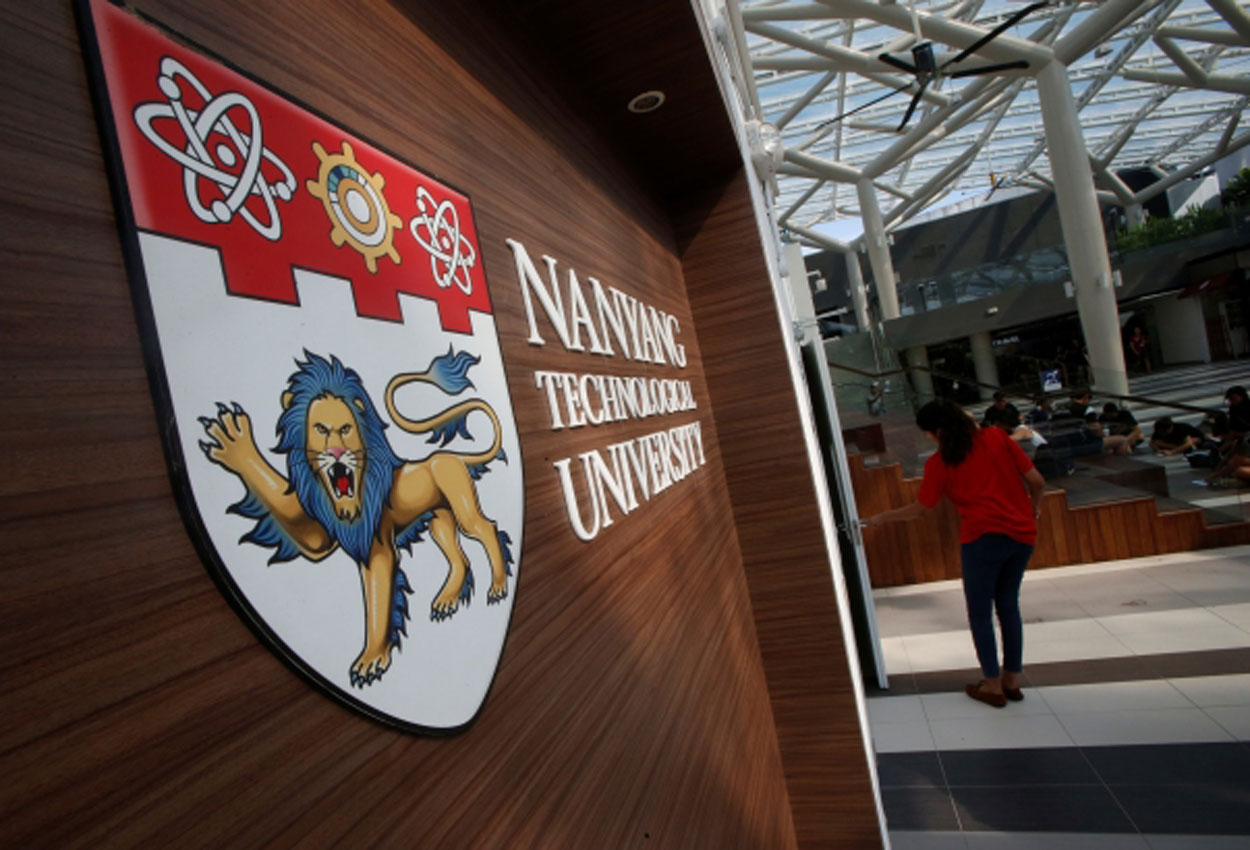
NTU ranked world's best young uni for third straight year
Nanyang Technological University (NTU) has been ranked the world’s best young university for a third straight year.
In Quacquarelli Symonds’ (QS) latest rankings of the world’s top 50 universities established less than 50 years ago, NTU retained its No. 1 spot followed by Hong Kong University of Science and Technology and the Korea Advanced Institute of Science and Technology.
London-based QS, which released the rankings this morning, noted that Asian institutions took all of the top six places, although Australia is the most featured nation in the ranking, taking ten of the 50 available places.
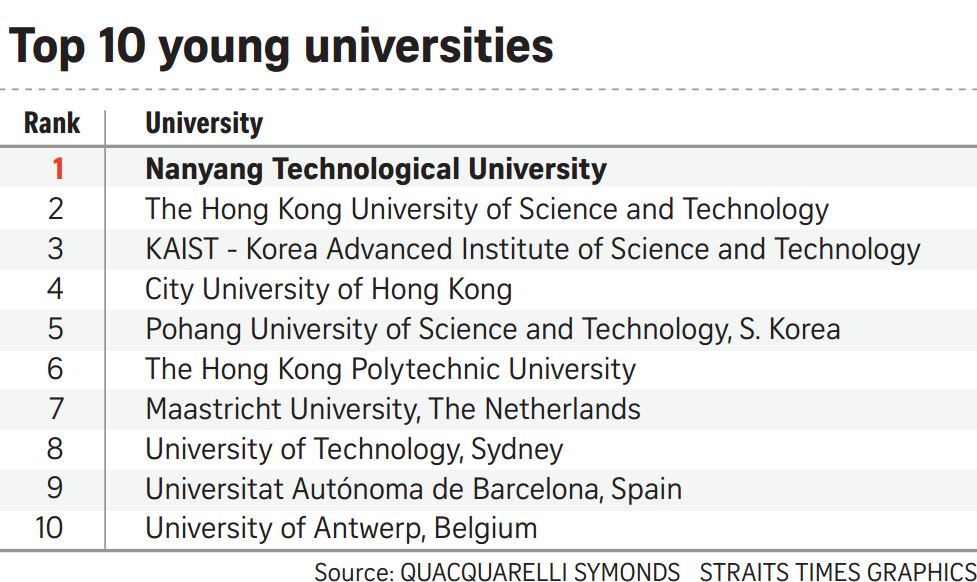
QS also noted that six of the top ten places are taken by universities with a heavy Stem (Science, Technology, Engineering and Maths) focus, such as NTU.
The annual ranking is based on six indicators, including research quality, teaching quality, reputation among employers, and an assessment of the global diversity of faculty and students.
NTU president Bertil Andersson called the three-year performance a “remarkable achievement” and said being young is an advantage as it allows the university to chart its own path without being held back by conventions.
Inaugurated in 1991, NTU marks its silver jubilee this year.
Prof Andersson predicts that Asian universities will continue their progress up the league tables, as their rise is connected to Asia’s economic development and its strong belief in the value of education.
He said NTU has benefited from strong government support in education and research, noting Singapore’s increased investments in research and innovation.
He cited NTU’s higher research output as one of the reasons for its big jumps in the league tables in recent years.
“We are now seeing the fruits of our labour after having invested in and ramping up on research in the last few years. NTU has also expanded its partnerships with global partners, and set up a number of high-end research labs with top industry players.”
QS’head of research Ben Sowter said NTU is a “glittering example” to other young universities to show “that the traditional pecking order is not beyond disruption”.
He added: “The correlation between the prominence of universities from both Australia and Asia, and the prominence of innovative tech-focused institutions, is especially strong in this year’s rankings.
“The trend suggests that young universities with the resources and willingness to focus on creating and maintaining strong Stembased research programmes stand, by far, the best chance of disrupting any established global elite.”
QS said the top young universities league table is designed to highlight the potential and excellence of universities without decades or centuries of established reputation.
Despite criticisms levelled at university league tables, Prof Andersson said rankings are useful indicators.
He said they show how far universities have progressed and in their standing in the region and internationally.
He added that NTU remains focused on its aim “to create a world-class environment for education and research so as to train our graduates to excel in the global environment”.
This article was first published on September 21, 2016.
Get a copy of The Straits Times or go to straitstimes.com for more stories.
Image:
Publication Date:
Wednesday, September 21, 2016 – 15:00
Keywords:
Send to mobile app:
Source:
Story Type:
Others
Malaysian film Interchange to open Singapore International Film Festival 2016
The fantasy noir thriller by celebrated auteur Dain Iskandar Said will be making its Asian premiere.
Source link
10,000 trained to spot and help those with dementia
When a home owner found an elderly stranger trying to enter her Woodlands flat with a key, she called a local grassroots leader.
“She asked me what to do,” said 51-year-old consultant James Lim. “I suspected it could be a senior with dementia so I told her to stay calm and not to do anything while I went over.
“I spoke to him in Hokkien to put him at ease and told the crowd of neighbours who were milling around to give him some personal space so that he would not get more disorientated or agitated.”
Although the man could not recall who he was or where he lived, police later managed to contact his daughter. It turned out that the elderly man had mistaken that flat to be his on the same floor, but a few blocks away.
Mr Lim is one of more than 10,000 people in Singapore who have been trained to spot those with dementia, interact with them and refer them to aid agencies, if needed. They include front-line staff from transport companies, banks, retailers and public organisations, as well as school students and mosque and church members.
As people around the world mark World Alzheimer’s Day today, Khoo Teck Puat Hospital (KTPH) and the Lien Foundation are also spearheading local efforts to raise awareness of dementia in the community. Since last year, they have been encouraging workers from organisations and members of the public to sign up and be trained as a “dementia friend”.
Their Forget Us Not initiative started by training 2,000 people in Yishun. The area was chosen to test out the concept of a dementia-friendly community because it has a significant number of elderly residents as well as a geriatric centre at KTPH to support them.
One in 10 people aged 60 and above in Singapore has dementia and the condition strikes half of those aged 85 and beyond, according to findings from a large-scale study released by the Institute of Mental Health last year.
Health Minister Gan Kim Yong said last year that tackling dementia needs to go beyond having the “hardware” – such as infrastructure – to fostering stronger community support and creating dementia- friendly communities.
Other countries such as Britain and Japan have already trained millions of people in local towns on basic dementia recognition and care.
With the training, it is hoped that the social isolation and stigma associated with dementia can be reduced. So, if a person with dementia gets lost, a policeman or student can show him the way home. Or, if the person takes items from a supermarket without paying, the staff will not assume he is shoplifting.
So far, selected staff from 49 organisations, such as the National Library Board, Sheng Siong supermarket, Bedok Police Division, SMRT, Nanyang Polytechnic and DBS Bank, have undergone the training.
SMRT service ambassador Lim Yen Ling, 44, said the training enables her to better identify people with dementia in the midst of a chaotic peak-hour crowd.
Over the last few months, for instance, she has been noticing that a regular elderly commuter would repeatedly check the rail network map and ask her if the train is heading towards Ang Mo Kio.
So each time she sees him, she would reassure him that he is on the right platform and alert a fellow passenger on the train to keep a look out for him and ensure that he alights at Ang Mo Kio.
Grassroots leader Mr Lim and Nanyang Polytechnic student Nattasha Alvinur, 17, found the training so useful that it prompted them to organise their own awareness talks.
Mr Lim subsequently arranged one for his Woodlands residents and Ms Alvinur, together with 29 other students, formed a group that conducts regular talks on dementia in schools. So far, they have shared the dementia message with more than 2,000 teenagers.
Said Ms Alvinur: “I have a grand-aunt with dementia and when she got lost, not many people would help her. Those who help only know how to drop her off at a police station. With greater awareness, I hope people can grow old in a safer and friendlier environment.”
Dealing with disease
SIGNS
• Looks lost and confused
• Speaks incoherently
• Shouts or hits out
• Sees or hears things that are not real
• Accuses others of stealing their things
• Repeats action that appears purposeless
• Removes clothes
WHAT TO DO
• Talk to them using clear and simple language
• Be patient and acknowledge their concerns
• Use visual cues such as pictures or drawings to understand their needs
• Look for next-of-kin contact details on identification cards
• Call the next-of-kin, security guard or police
• For more information, go to www.forgetusnot.sg
A dementia trainer’s guide, tailored for the specific needs of industries such as banks, transport, retail and food and beverage, as well as places of worship, is also being developed.
10% – How many aged 60 and above who have dementia
50% – How many aged 85 and above who have dementia
This article was first published on September 21, 2016.
Get a copy of The Straits Times or go to straitstimes.com for more stories.
Image:

Category:
Publication Date:
Wednesday, September 21, 2016 – 15:00
Send to mobile app:
Source:
Story Type:
Others
Use near-miss reporting as learning opportunity: LTA chairman
“Near-miss reporting should not be associated with punishment or reprimand, Instead, it is to be taken as a learning opportunity to correct substandard behaviours and practices,” says chairman of LTA, Alan Chan.
Source link


