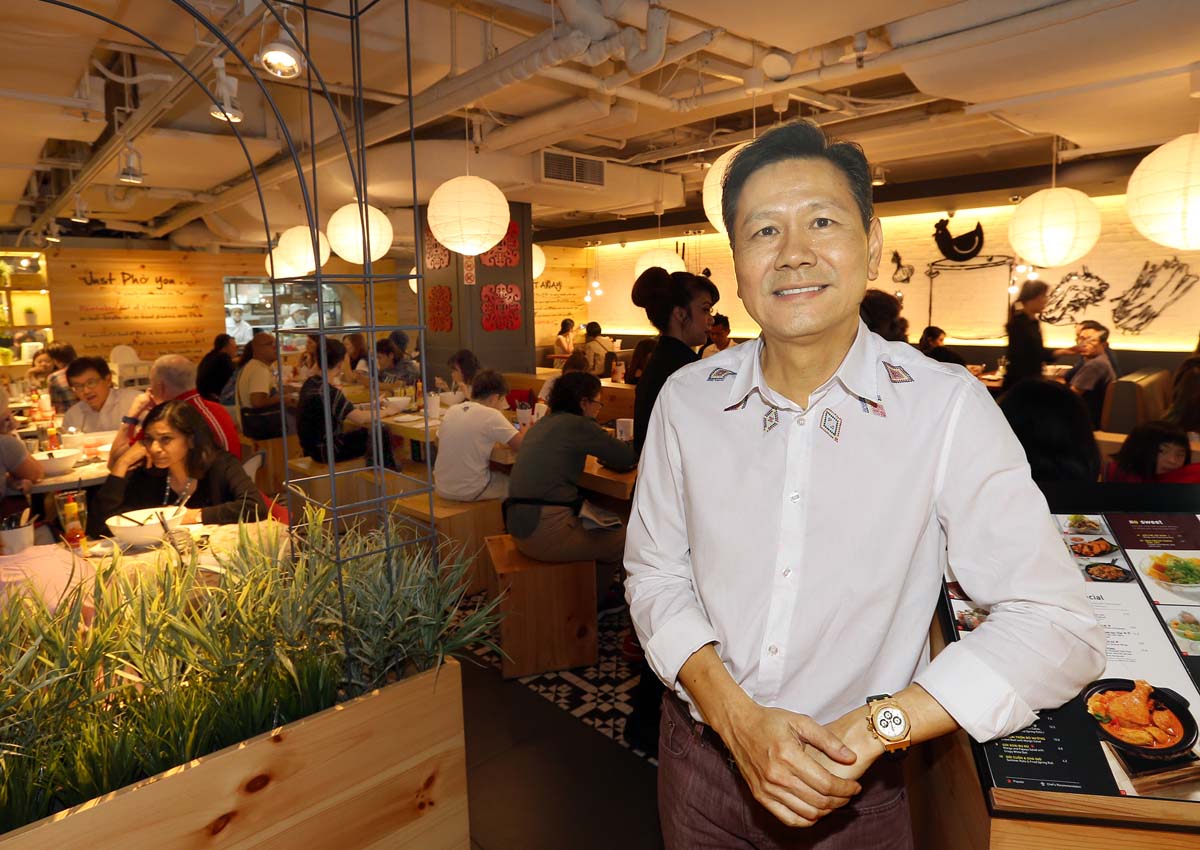
Building supplies firm M Metal is grappling with tough trade-offs familiar to many small and medium-sized enterprises (SMEs). Revenue is down, but managing director John Kong does not want to retrench staff amid the tight labour market.
Sales fell 15 per cent in the first quarter of the company’s current financial year, compared with a year ago.
To cope, M Metal has budgeted for a lower 3.5 per cent salary increment for employees this year, down from 4.5 to 5.5 per cent in previous years.
However, if it makes losses this year, even these lower increments might have to be deferred, Mr Kong said.
“We want to keep costs down and survive in this tough market, while also retaining employees,” he added.
Mr Kong holds monthly meetings with his staff of about 40 to update them on the company’s performance – an approach which he hopes will give them a sense of ownership over the firm’s growth, and incentivise them to work harder for more sales.
Many employers are facing the same challenges, as economic growth slows and already-thin margins come under greater pressure.
Government forecasters expect growth of between 1 and 2 per cent for the full year, in what could be the slowest year since 2009.
Despite the weaker outlook, wage growth has remained firm. Real total wages grew by 5.4 per cent last year, compared with 3.9 per cent in 2014.
Many firms, especially SMEs, already have a very lean staff count and “do not have much to retrench”, said Association of Small and Medium Enterprises president Kurt Wee.
Sectors like marine and oil and gas, where takings have plunged on the back of the slump in global oil prices, have already seen significant layoffs.
But companies in most other industries are still holding on to staff.
“The situation is not as bad as during the Sars period or the financial crisis – companies are not carrying out mass retrenchments,” said Mr Alvin Ang, who runs recruitment firm Quantum Leap Career Consultancy.
“But they are more selective when they hire, and are being more cautious on the whole.”
“There’s also fear among employees – they don’t want to quit their existing jobs given the poor sentiment.”
Retailers not rehiring
Some companies – retailers in particular – have been coping simply by not replacing staff when they quit, said Mr Ang. The sector has been one of the hardest hit by lacklustre consumer sentiment.
“The turnover for retail frontline staff is typically high. When retailers see tourist numbers are sliding, for example, they will not rehire,” he noted. The staff who remain have to take on more work.
Mr Ang’s own business has also been hit by the slide in hiring activity – volumes have fallen 20 to 30 per cent since January compared with the same period a year ago.
“If companies are not hiring, it directly affects my bottom line and revenue,” he added.
Another sector where hiring sentiment has been hit hard is financial services, including banks, asset managers and hedge funds, said Ms Lynne Roeder, managing director of recruitment giant Hays in Singapore.
“A lot of the bigger organisations within this sector are hiring fixed-term contractors to ensure their businesses keep moving, while management wait and see what will happen to the industry over the medium term,” she added.
Even as the economic slowdown weighs on hiring activity, financial institutions are also experiencing structural changes altering the way they use manpower, Mr Ang said.
Technology can help improve productivity so “two people’s jobs can become a one-person job, without an increase in workload”.
Ms Roeder also pointed out that not all sectors are faring badly.
“Technology and life sciences has been one of the more resilient industries. Many organisations see Singapore as a hub for growth with a large talent pool in which to hire candidates from,” she noted.
More firms are also turning to freelancers or contract workers.
“Hiring contract employees to deliver immediate value, bringing proven expertise for a designated period of time is becoming a trend,” said Ms Roeder.
“Recruiting temporary employees to complement permanent counterparts is seen as an effective strategy to improve productivity while keeping teams as lean as possible.”
Mr Kong, meanwhile, intends to ride out the storm together with his staff. “SMEs are under tremendous pressure. We don’t have financial resources. To survive in the long term, we need to look at staff as future assets, and be honest with them about how the company is doing.”
chiaym@sph.com.sg
This article was first published on September 25, 2016. Get a copy of The Straits Times or go to straitstimes.com for more stories.
DANANG, Vietnam – Japan’s Aichi prefecture and its capital city Nagoya were confirmed as co-hosts of the 2026 Asian Games on Sunday, adding yet another major event to the country’s bulging international sports calendar.
The Olympic Council of Asia (OCA) formally endorsed the bid after Aichi Prefecture governor Hideaki Ohumra and Nagoya city mayor Takashi Kawamura presented their joint offering to the OCA General Assembly in Danang, which is currently hosting the 5th Asian Beach Games.
The OCA had originally planned to choose the 2026 Asian Games host in 2018 but brought the vote forward to provide some stability to the region’s crammed sporting calendar which includes three Olympic events over the next eight years.
South Korea is already hosting the Winter Olympics at Pyeonchang in 2018, while Tokyo hosts the 2020 Summer Olympics before the winter games go to Beijing in 2022.
Held every four years, the 2018 Asian Games have already been awarded to the Indonesian cities of Jakarta and Palembang while the 2022 edition will be held in the Chinese city of Hangzhou.
Tokyo is also hosting the next Olympic games in 2020 while Japan will stage the Rugby World Cup in 2019, the Asian Winter Games in 2017 and the world swimming championships in 2021.
Japan has hosted the Asian Games twice before, at Tokyo in 1958 and Hiroshima in 1994, and the awarding of the 20th edition in 2026 is the latest in a series of major sporting events heading to the country over the next decade.
For decades, Singapore workers had it good with jobs aplenty. But now, job seekers exceed vacancies. However, what might be the ‘new normal’ offers new opportunities too, Insight finds.
When Ministry of Manpower (MOM) figures earlier this month showed the number of job openings in Singapore had fallen below the number of job seekers for the first time in four years, workers like Bernadette Lee were taken aback.
“I was shocked,” said the 56-year- old. “It’s not good news. It’s been a long time since I’ve heard something like this.”
She left her job as a social worker last month to seek a better work-life balance, but worries now that her job hunt might be more difficult than she had expected.
“I have to lower my expectations. I was a manager but now I may have to settle for an executive position,” she said.
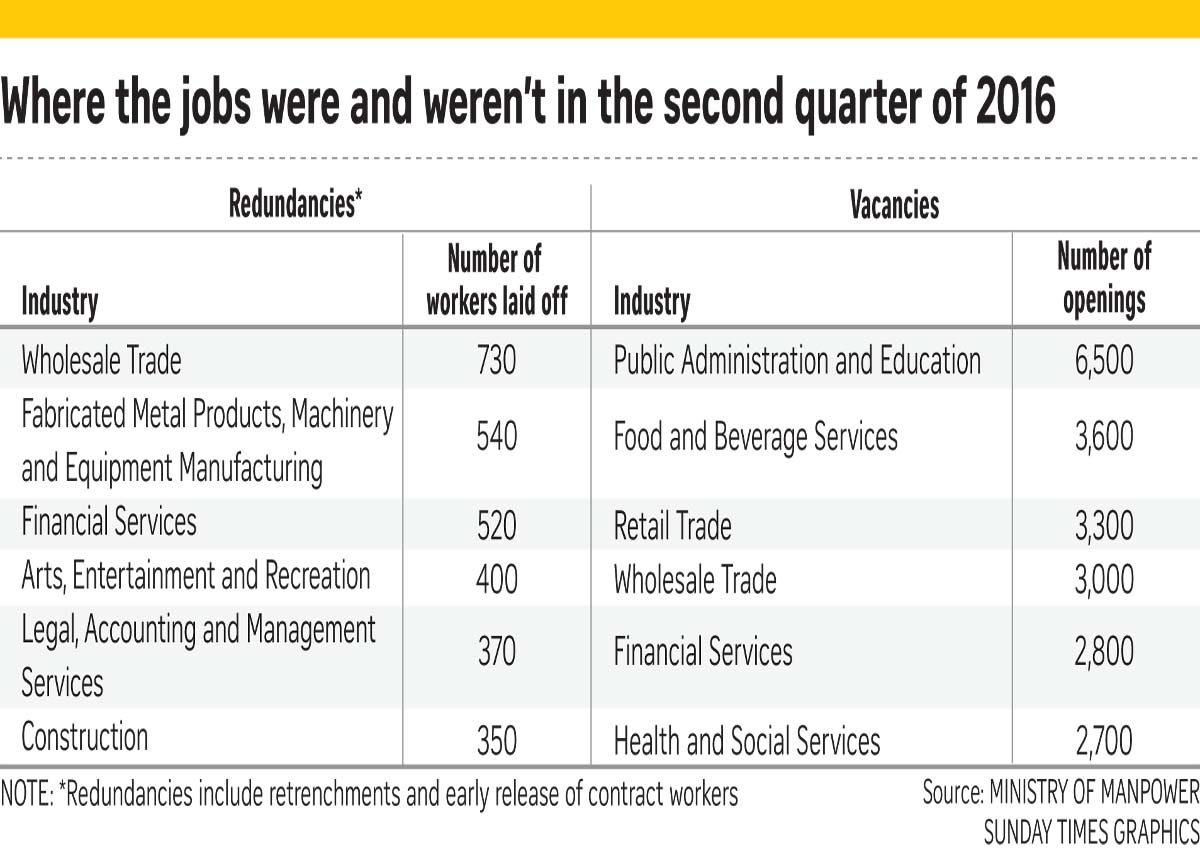
Casting a shadow over the labour market in recent months were economic indicators reflecting the slowing economy. One of the most recent was the MOM’s figures showing that unemployment among citizens and permanent residents rose to 3 per cent in the second quarter of the year, from 2.7 per cent in the previous quarter.
These rates, which are adjusted for seasonal factors such as Chinese New Year and school holidays, have not gone above 3 per cent since 2010.
Layoffs also reached a seven-year peak.
The number of workers who were retrenched or had their contracts aborted in the first half of the year hit its highest level since the global financial crisis in 2009.
Furthermore, the rate of workers re-entering employment has plummeted to its lowest since then.
Job growth has slowed and, for the first time in four years, job seekers outnumber job vacancies, which have been falling since last year.
Manpower Minister Lim Swee Say said at a career fair last Friday he hopes this is not so much a downward trend as a hump in the road that Singapore has to push itself over, to get to the greener pastures of productivity-driven growth.
He said: “As we go through this transition, there will be disruptions, there will be retrenchments, there will be downsizing in some sectors.”
Creating more jobs is only part of the solution, he added.
“If we are not careful, unemployment might go up, not because we don’t have enough jobs but because there is a mismatch between jobs and skills. Then we would have structural unemployment, which is harder to solve.”
But it is not all doom and gloom.
The Government, businesses, job hunters and even those who are still in employment are being pro-active in finding strategies to help them work things out in the changing work environment, as the stories in this package show.
What’s driving the situation?
With the global economy never truly recovering from the 2009 crisis, growth has been patchy in export hub Singapore. And now, recent global developments have turned up the heat.
National University of Singapore associate professor of economics Liu Haoming said:
“Given the uncertainty introduced by the United States election, Britain’s exit from the European Union and the slowdown in the Chinese economy, firms will be very cautious about their hiring.”
He added: “Whether this trend will continue into the next year will depend on what happens in the rest of the world, particularly in the US and China.
“If (US Democratic Party candidate Hillary) Clinton wins the election, it will likely increase people’s confidence about the US economy, which should have a positive impact on Singapore’s economy.”
Global economic headwinds aside, the nationwide productivity drive has required companies to restructure which, in turn, has forced them to shed jobs.
Ms Linda Teo, country manager of recruitment company ManpowerGroup Singapore, said the rise in redundancies, especially in the labour-intensive services sector, has been exacerbated by the slowing economy and softening consumer demand.
“Companies are either operating on leaner headcounts to contain costs or have replaced certain functions with technology,” she added.
A total of 9,510 workers were made redundant in the first half of this year, compared with 6,750 in the same period last year.
The MOM was concerned enough to bring forward to this year a retrenchment survey due next year. The survey, which takes place every four years, will widen its scope to cover smaller firms employing between 10 and 24 workers.
But what is setting alarm bells ringing now could very well be Singapore’s new normal, said SIM University labour economist Walter Theseira.
“There may be no quick rebound as there was from the 2009 global financial crisis,” he said.
“We are entering what is likely to be a prolonged period of low to moderate growth – a situation that Singapore has never experienced before, but which is normal for most developed economies.”
Economist Selena Ling from OCBC Bank said the unemployment rate could hover above 3 per cent for the next two years or so.
Should firms still be pushed to restructure amid such uncertainty? “When it comes to economic restructuring, there is never a good time,” said Ms Ling.
“If you do it when times are good, you’ll have businesses asking why you’re changing things while everything is going well. When times are bad, see it as a chance to put your house in order while things are quiet. The competition is always nipping at your heels.”
New opportunities ahead
In fact, an unemployment rate of 3 per cent would be considered something to cheer about for almost any other developed country.
Dr Theseira said that while things might look dire compared to what Singaporeans are used to, the country is – relatively speaking – not that badly off.
“Many advanced economies would love to have our present unemployment rates, which would be considered to be unusually low by their standards.”
Economists and labour MPs alike said it is too soon to characterise the labour market as slackening.
Prof Liu said: “The decline in employment and job openings happened only in the second quarter. After four quarters of almost continuous growth in employment across all industries, it is still too early to say the tight labour market is over.”
National Trades Union Congress (NTUC) assistant secretary-general Patrick Tay cited numbers to show there are jobs available, but a mismatch of skills has prevented them from being filled.
“For example, we hear there are more than 15,000 vacancies in the tech and IT sector. But the problem is, do we have enough experienced persons available… to fill those jobs?”
The Government has been rolling out scheme after scheme to tackle this mismatch, from a new virtual career fair in the last two weeks to better connect employers and job seekers online, to plans to transform entire industries.
Last Friday, MOM’s Mr Lim launched two new career programmes for the hotel sector, which employs 35,000 people.
One is a new skills framework under the nationwide SkillsFuture initiative. It is a structured guide to help workers chart their career progression and identify specific skills to get jobs they want.
The other is the Professional Conversion Programme (PCP) for Professional Executives, to ease the transition for mid-career professionals between multiple industries. It starts for the hotel industry next month.
NTUC’s Mr Tay, who chairs the Government Parliamentary Committee for Manpower, said the lower birth rates of the past two decades meant there will be fewer new entrants to the workforce, as the baby boomer generation go into retirement. This will keep the labour market tight.
But this is scant consolation for workers who are used to almost full employment but must now worry about their rice bowl.
From a young age, Singaporeans are told to study hard and earn tertiary qualifications to get a good, white-collar job which they can keep until retirement.
But good qualifications are no longer a guarantee of employment in a world disrupted by technological change.
Speaking to global business and political leaders at the Singapore Summit recently, Deputy Prime Minister Tharman Shanmugaratnam called for students to be put on “paths of advancement” for skills in dealing with real-world situations.
“The whole mantra of college education – of trying to make it as easy as possible for everyone to get a college education – is a big mistake,” he said.
Indeed, as to what opportunities are emerging on the job landscape, some areas workers should look at are compliance and financial technology, said Mr Foo See Yang, vice- president and country manager for recruitment company Kelly Services Singapore.
He said another paradigm shift arising from the economic situation is a growing interest in contract and freelance work.
From 2011 to last year, Kelly saw a 70 per cent increase in placements of high-end contract jobs with monthly salaries of more than $10,000. “Contract work can be a long-term career option with similar remuneration rewards as full-time employment,” he said.
Offering advice for workers, ManpowerGroup’s Ms Teo said: “In today’s ever-changing job environment, career longevity, and not job security, is more crucial. The reality of today’s work environment is that no one is irreplaceable.”
Skill gap a big problem for fresh grads
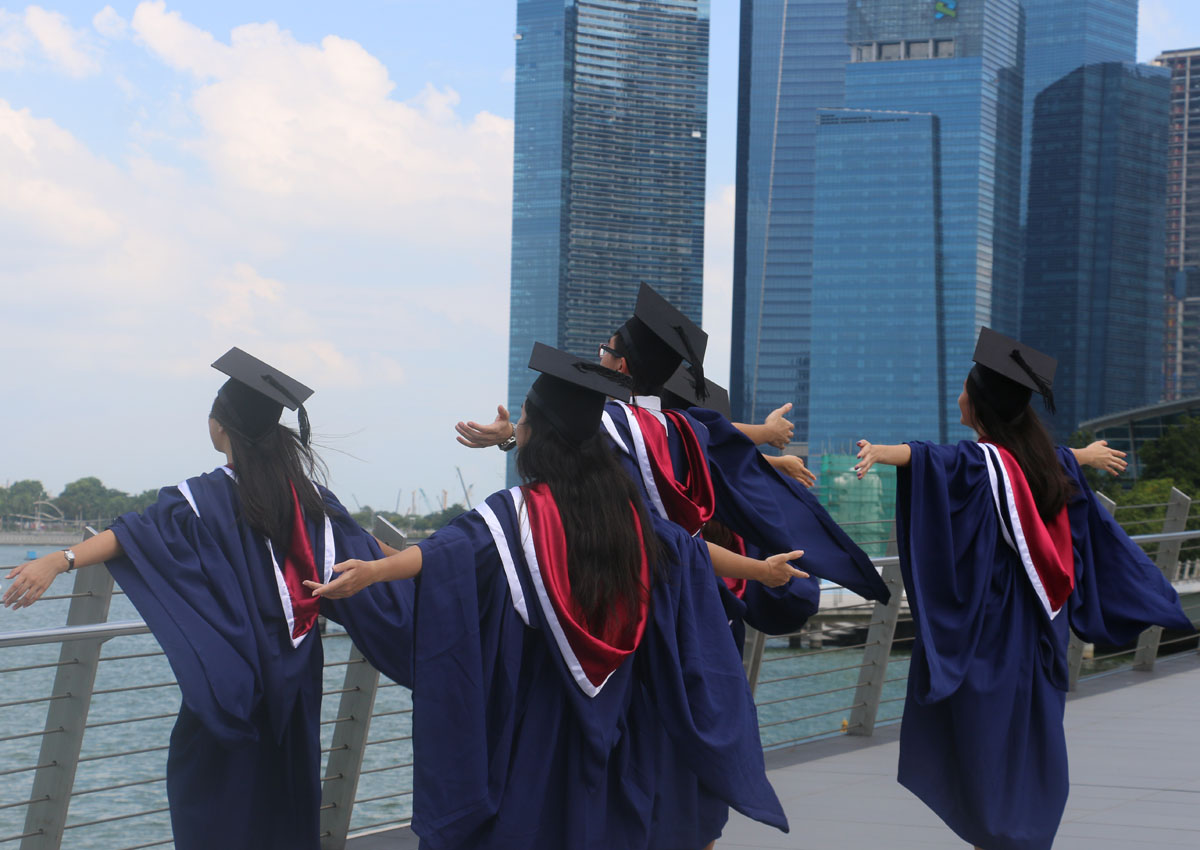
When she finished her university studies in July, Ms Elizabeth Boon made a splash online with her unorthodox graduation photo shoot.
The National University of Singapore communications graduate, 24, eschewed hat-tossing euphoria in favour of bleak photos styled to match the economic outlook.
In them, she poses listlessly in the Central Business District with a cardboard sign that implores: “Hire me leh.”
The controversial photos earned her brickbats online, but also struck a chord with many other fresh graduates leaving the bubble of tertiary education for the sometimes choppy waters of the job market.
Official figures released earlier this month show that job vacancies continue to fall, as the number of job seekers outstrips the number of openings for the first time since June 2012.
The rise in unemployment hit resident degree-holders the hardest. Their unemployment rate rose to 4.3 per cent in June, from 3.5 per cent in the same period last year – the highest level since 2009.
Graduates will find it harder to recoup their investment, as the cost of a degree is likely to go up. Since 2010, tuition fees at local universities have increased every year for most undergraduate courses, largely because of rising operating costs.
Employers are also less keen to hire this year, according to a survey released last week by recruitment firm ManpowerGroup.
Of 646 companies polled in Singapore, nearly three in four said they had no plans to increase headcount during the fourth quarter.
According to Glints, a career development portal for young people, a major problem is the growing skill gap between graduates and the jobs they are applying for.
Says Glints co-founder and chief executive Oswald Yeo: “For example, there’s a huge demand for technology workers such as software engineers or digital marketers, but there isn’t a big supply of these candidates coming out from universities or polytechnics.”
When Glints itself hired an intern who was a marketing major from a local university, he proved ill-equipped to run social media campaigns because he had not been taught how to.
“We had to teach him all over again,” says Mr Yeo.
He advises graduates to try to acquire such skills through internships or part-time opportunities.
Otherwise, he says, Singapore could see a growing trend of under-employment, with young job seekers ending up in roles that they are over-qualified for, simply because they lack the specific skills that employers want.
And what of Ms Boon? She has yet to be hired for a permanent position, but she has made her peace with that.
She now freelances as an emcee, writer and actress, raking in $5,000 in a good month but earning less than $1,000 in a bad one.
“There are dry spells when I have to watch my spending,” she says.
“If my friends ask me to go out for drinks, I’ll join them but I won’t drink.
“I’m lucky because I don’t have financial commitments for the near future, and my family does not rely on me to support them. But that’s not the case for many of us.”
For other graduates, freelancing remains a stop-gap measure while they hold out for permanent positions. Nanyang Technological University journalism graduate Kenji Kwok, 25, is making do with wedding and documentary photography while he waits to hear from employers.
He wants to do communications in the civil service and has applied for four positions since April, but his efforts have yet to bear fruit.
“I enjoy photography, but it’s not steady,” he says. “People don’t suddenly decide they’re going to get married next month. Demand can be quite up in the air.”
He and his girlfriend recently put down a five-figure deposit for a build-to-order flat, which is increasing the pressure on him to secure a steady income.
“I have mixed feelings about the bad news (regarding the economy),” he says. “At least I’m not the only one in this situation, but it also means the competition is stiffer.”
Olivia Ho
oliviaho@sph.com.sg
This article was first published on September 25, 2016. Get a copy of The Straits Times or go to straitstimes.com for more stories.
Nine-year-old Teo Choon Khang, representing Singapore in the Paralympics might have seemed like a far-fetched idea a few months ago.
But after watching his idol Theresa Goh, who clinched a hard-fought bronze medal at the recently concluded Paralympics in Brazil, Choon Khang is now filled with hope.
The pupil at Cantonment Primary School suffers from cerebral palsy – a physical disability that affects movement and posture, and can include a range of associated physical and cognitive impairments.
But it has not stopped him from taking to the pool, just like Goh, since he was three.
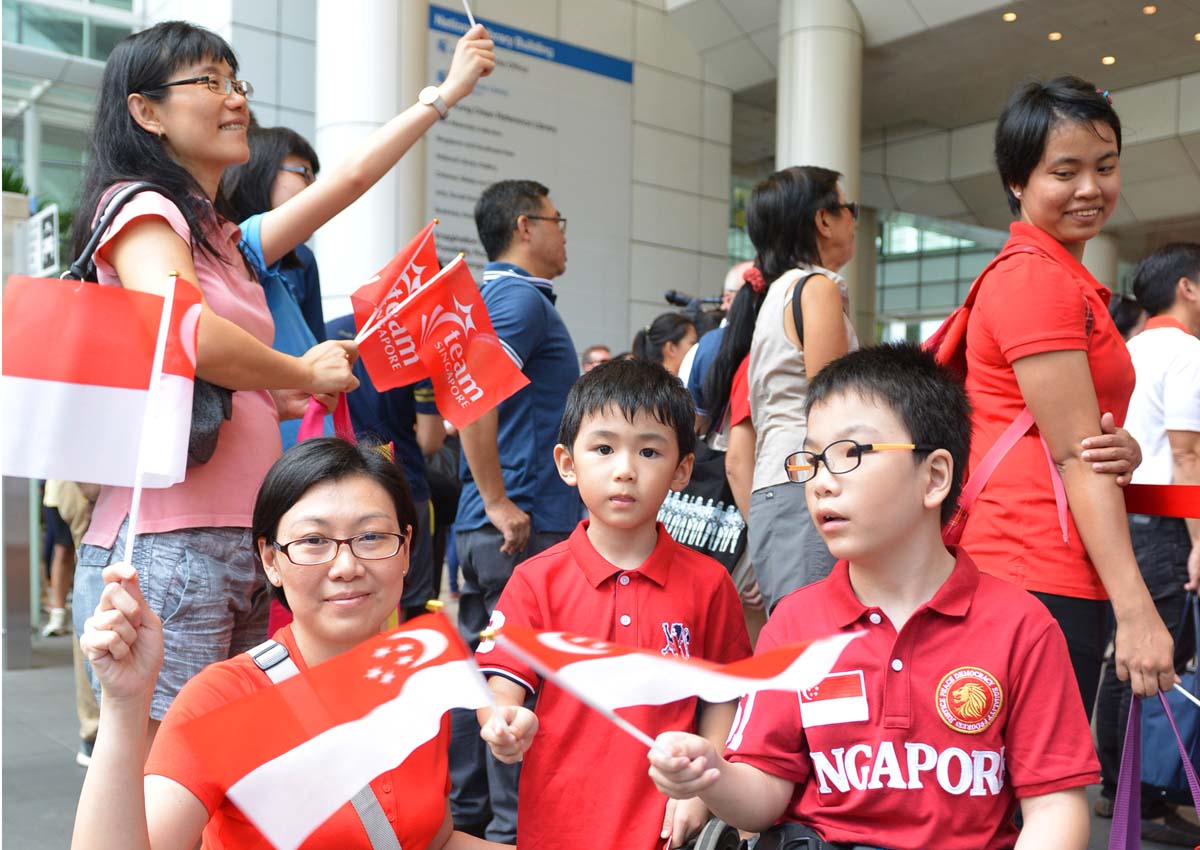
Yesterday, he was among the hundreds of Singaporeans who turned up to support the 13 Paralympians, including Goh and double gold medallist Yip Pin Xiu, during their celebratory parade around Singapore.
Yip, 24, triumphed in the 50m and 100m backstroke S2 races. In Rio, she became the first Singaporean to win two golds in a single Paralympics, while also setting world records in both events.
Goh, 29, won her first medal after four Paralympics, taking home the bronze in the 100m breaststroke SB4 final.
Choon Khang, his younger brother and his mother, Madam Jennifer Ng, 49, were at the National Library, the parade’s second pit stop, to welcome the para-athletes.
Madam Ng, who works in the education sector, said: “Watching Theresa (Goh) has definitely encouraged him.”
Choon Khang, who swims the backstroke, said he looks up to Goh because she is “strong and very good” in the water. He hopes to one day swim in the Paralympics like his idol.
Madam Ng said: “He likes the sport very much. In fact, he has a swimming lesson right after this (event).”
Yesterday’s parade kicked off at the Sengkang Sports Centre, where about 100 people had turned up, some as early as 8.30am.
Among the crowd was Madam Lim Sook Wei, 45, a housewife, her husband, and their autistic son, Hugh Lee Shen Xuan, 10, a student at Pathlight School.
They had travelled from Jurong. Madam Lim said: “We came here especially for Yip Pin Xiu, and my heart is still pumping.
“We are so glad to meet her here. We hope that our son is inspired and learns that nothing is impossible, and that it is okay to dream.”
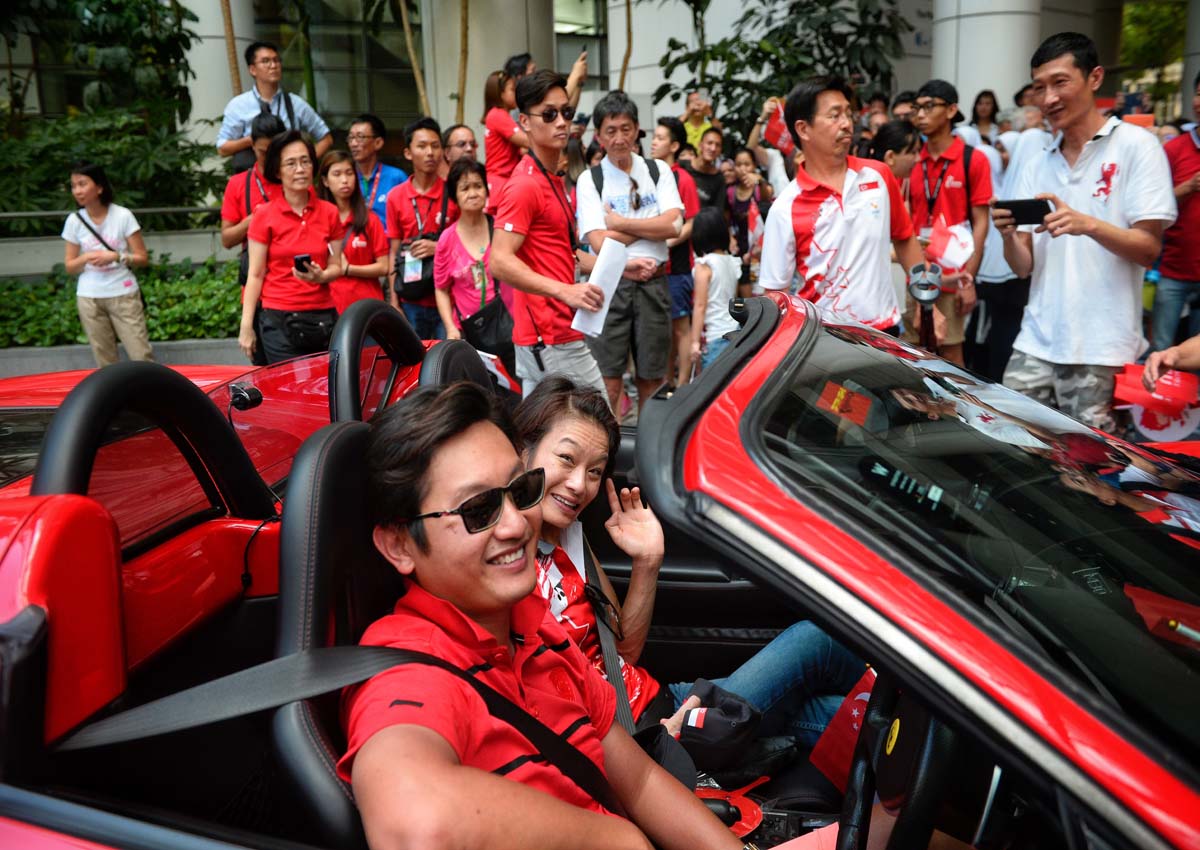
At about 10am, the 13 para-athletes were ushered into 11 Ferraris and two London cabs. They then made their way to the National Library.
The convoy passed through the Sengkang, Hougang and Serangoon heartlands and attracted cheers and waves from members of the public.
By the time the para-athletes arrived at the National Library at about 11.40am, a crowd of about 300 people – including students from Pathlight School and the Singapore Management University, where Yip is studying – had gathered.
They were also received by Minister for Culture, Community and Youth Grace Fu and Central Singapore District Mayor Denise Phua, who presented each athlete with a flower garland.
Pathlight School student Hock Kah Chin, 18, was overjoyed to share the stage with swim queen Yip – he and his schoolmates presented each para-athlete with a token of appreciation.
“I watched her races on social media. I felt like I was there.”
“I think (Yip) Pin Xiu is strong, courageous and ever-ready to take on obstacles,” he said.
He added that he wants to represent Singapore in football or athletics. He is already representing his school in the 100m sprint. The para-athletes were then driven to VivoCity, where another crowd of 300 people were eagerly waiting.
There, Ms Fu, who was the guest of honour, thanked the para-athletes for their efforts and said Singapore was “super super proud” of them.
Yip Pin Xiu clinches Singapore’s second gold medal at Paralympics
Click on thumbnail to view photos. Source:
AFP, Reuters, The Straits Times, MCCY, Singapore Sports Council
At each pit stop, the para-athletes sportingly answered questions posed by the emcees.
For example, Yip, who suffers from muscular dystrophy, revealed she had been homesick as she had spent about five to six weeks overseas, including a pre-Paralympics training camp in Spain.
She had her brother join her in gorging on local food such as kway chap, fishball noodles and nasi lemak soon after she landed at Changi Airport.
Goh, who has spina bifida, revealed that she ate 20 sticks of ice cream before the Games. She shared that she will be taking a break before hitting the pool again, and was due to fly to Ireland for a holiday just hours later.
Madam Rudianah, 36, an admin executive, and her son, Muhammad Syakir Raihan, eight, a pupil at Fengshan Primary School, were at VivoCity.
“They work really hard, it shows their strength and their spirit. These people are special,” Madam Rudianah said.
This article was first published on September 25, 2016. Get The New Paper for more stories.
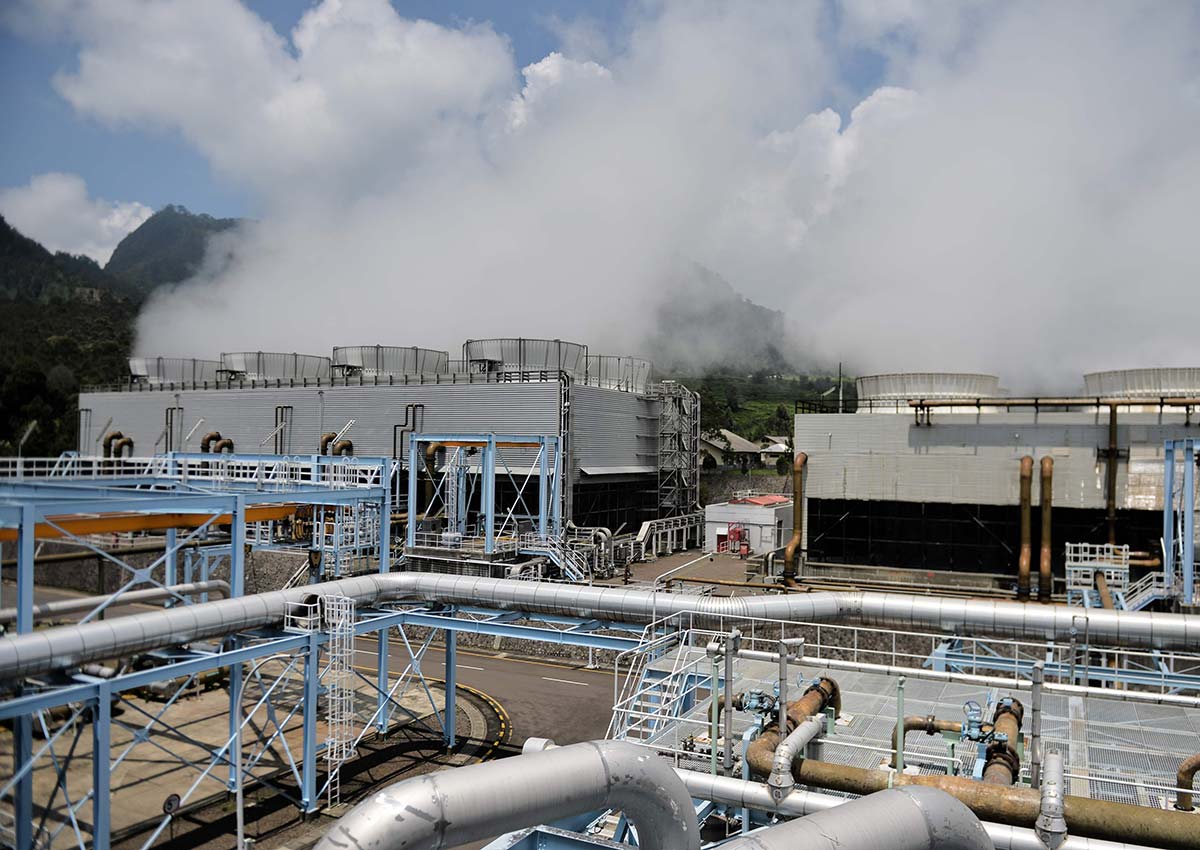
WAYANG WINDU – Columns of steam shoot from the ground at an Indonesian power plant sitting in the shadow of an active volcano, as energy is tapped from the red-hot underbelly of the archipelago.
Pipes zig-zag up rugged mountainsides covered in tea plantations, carrying steam from the Earth’s core to power enormous, electricity-generating turbines at the Wayang Windu facility on Java island.
Indonesia, a seismically-active island chain studded with scores of volcanoes, holds an estimated 40 per cent of the world’s geothermal energy reserves, but has long lagged behind in its use of the renewable power source.
Now the government is pushing to expand the sector five-fold in the next decade, although the challenges are huge in a country where the burden of red tape remains onerous, big projects are often delayed and targets missed.
“The potential is tremendous,” said Rully Wirawan, field manager at Wayang Windu.
“The current government is trying to tackle the challenges so I believe the development of the sector will be better in future.”
Geothermal, a clean energy source which releases negligible amounts of greenhouse gases, unlike burning dirty fossil fuels, is mostly found in seismically-active areas around tectonic plate boundaries.
The Earth’s heat emanating through the faultlines warms underground reservoirs, and the resulting steam can be channelled to geothermal energy plants.
The majority of Indonesia’s power is generated from its abundant reserves of coal and oil.
It currently has installed capacity to produce about 1,400 megawatts of electricity from geothermal, enough to provide power to just 1.4 million households in the country off 255 million.
That is less than five per cent of geothermal’s estimated potential and behind the world’s two leading producers of the energy source, the United States and the Philippines.
But the government is aiming to increase Indonesia’s generating capacity to around 7,200 megawatts by 2025, as part of a broader plan to boost the renewables sector, which would likely make it the world’s top producer of the power source.
A major part of the drive is a law passed two years ago that means geothermal exploration is no longer considered mining activity, as it was previously.
The old definition had held up the industry as mining cannot be carried out in the country’s vast tracts of protected forests, believed to contain about two-thirds of Indonesia’s geothermal reserves.
The government is also seeking to sweeten local administrations – which had sometimes resisted the construction of the steam-belching facilities – by offering them up to one per cent of revenue from any geothermal plant in their area.
Abadi Poernomo, chief of the Indonesian Geothermal Association, which represents companies involved in the sector, is upbeat about future prospects: “A lot of investors from abroad are coming to Indonesia with the intent to develop geothermal”.
Still, the challenges are enormous. While achieving the 2025 target may be possible, it will be extremely difficult, said Daniel Wicaksana, an energy expert at consultancy Frost and Sullivan Indonesia.
One of the biggest problems is the high exploration costs needed at the outset, as checking for potential geothermal reserves is a complex, time-consuming business, that is not always successful.
Building a geothermal plant costs the equivalent of US$4 to US$5 million (S$5.4 to S$6.8 million) per megawatt, compared to US$1.5 to US$2 million for a coal-fired power station, according to the association.
Investors have also complained about what they say is the relatively low price offered by the state-run power company to buy electricity from a geothermal facility, which they claim usually doesn’t cover the large initial outlay.
To top it all off, Indonesia’s complicated bureaucracy puts many off – 29 permits are required from different government agencies and ministries for a geothermal plant, and time-consuming negotiations with powerful local administrations can also hamper progress.
“The level of complexity to complete the necessary paperwork, at the local level especially, also adds to the slow development of geothermal,” said Wicaksana.
Green groups have also questioned authorities’ commitment to geothermal in the near term – a plan by the government to ramp up electricity-producing capacity dramatically by 2019 seems more focused on building coal-fired power stations than expanding the use of renewable energy sources.
Wayang Windu, which is jointly managed by independent company Star Energy and state-owned energy giant Pertamina and takes its names from the active volcano near the plant, illustrates some of the challenges.
Exploration first began at the site in 1985 but it was not until 15 years later that the plant began producing electricity commercially, while work on a new unit to boost power generation has been delayed due to negotiations over cost.
Even officials admit achieving the government geothermal target will be tough.
Ego Syahrial, the head of the government’s geology agency, which assesses geothermal energy reserves conceded: “The progress is not very encouraging to be honest.”
Last week, a Malaysian was jailed for forging boarding passes and staying in Changi Airport’s transit area for 18 days. Would sleeping in transit lounges be as comfortable as staying in a hotel? Ng Jun Sen (ngjunsen@sph.com.sg) finds out.
After enduring a long stopover in another airport, coming back to Singapore is like stepping into another dimension. Relief feels like the familiar 23 deg C air venting out of the Terminal 2’s central air conditioning system.
It must be the same feeling others experience when passing through or arriving at Singapore’s Changi International Airport. After all, the airport has been rated the best in the world in several surveys.
Malaysian Raejali Buntut certainly thought so. The former business development manager spent 18 days in the transit area of Changi Airport after oversleeping and missing his flight to Kuala Lumpur.
He forged boarding passes so he could enter various transit lounges and was jailed two weeks for forgery.
But with Changi Airport’s public transit area looking as posh as some hotels here, would you even need access to a lounge to spend the night if your connecting flight is a good day or two away?
If you have some time to kill, Changi Airport may be one of the best airports in the world to do that.
Here’s what I did during my last flight.
Toy store
Initially, I was a kid in a toy store.
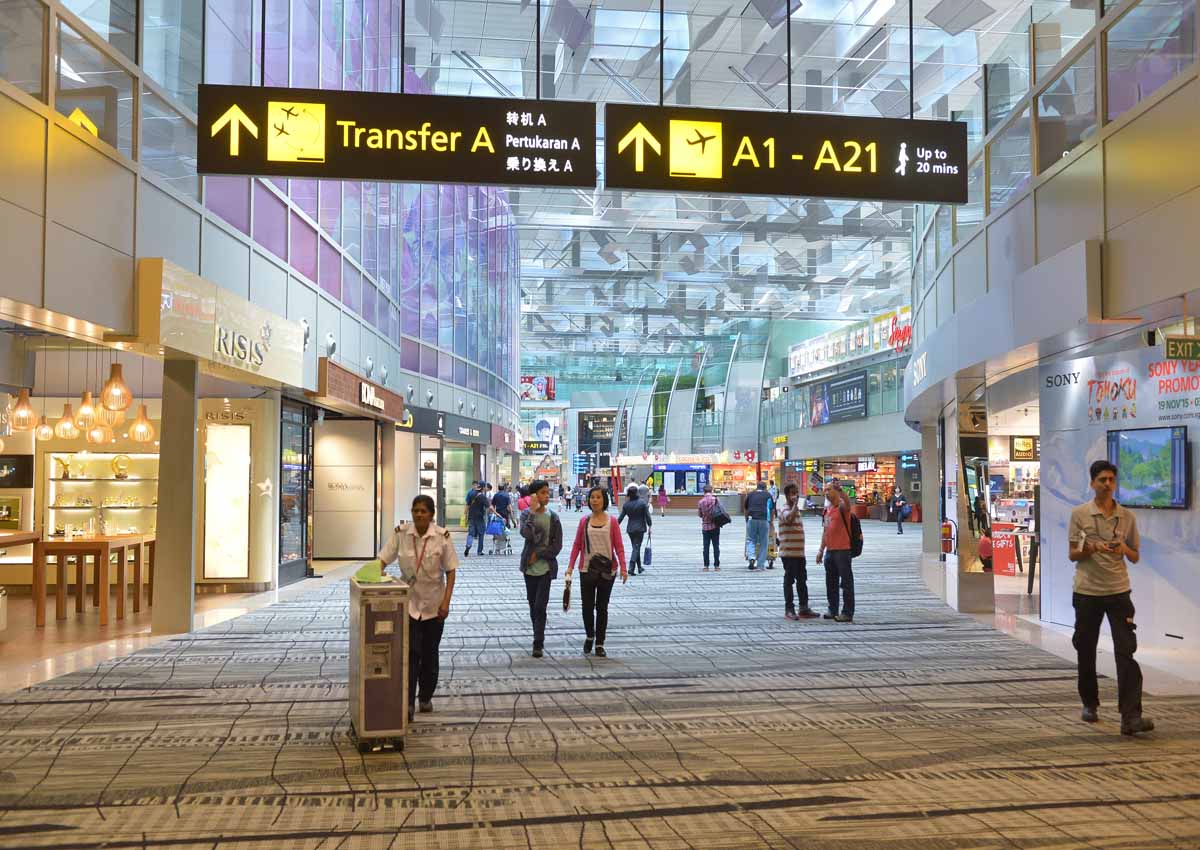
I grabbed an airport map and went straight for the headline attractions – T1’s social tree, T2’s entertainment deck, T3’s movie theatre.
There were magnificent gardens that held my attention for half an hour each, and I visited all of them. To be honest, I never even knew some of these existed in the transit areas and I thought back to all the times when I went straight for my flight, ignoring all these facilities.
Food options are also aplenty and you will never run out of things to eat, especially with affordable Singaporean food at two food courts.
With my trolley, I must have circumnavigated all three terminals more than 10 times on Skytrains, clutching onto my duty-free shopping bags and several woodblock prints I made from the “woodblock rubbing stations”.
Window shopping is also an option, especially with stores by posh retailers such as Gucci, Hermes and Burberry dotting the terminals.
But sightseeing got old very quickly. Take away the gardens and the attractions, and Changi Airport is just like any other.
To pass the time, all you really need is a nice chair with ready access to an electrical outlet for your devices, which is readily available everywhere.
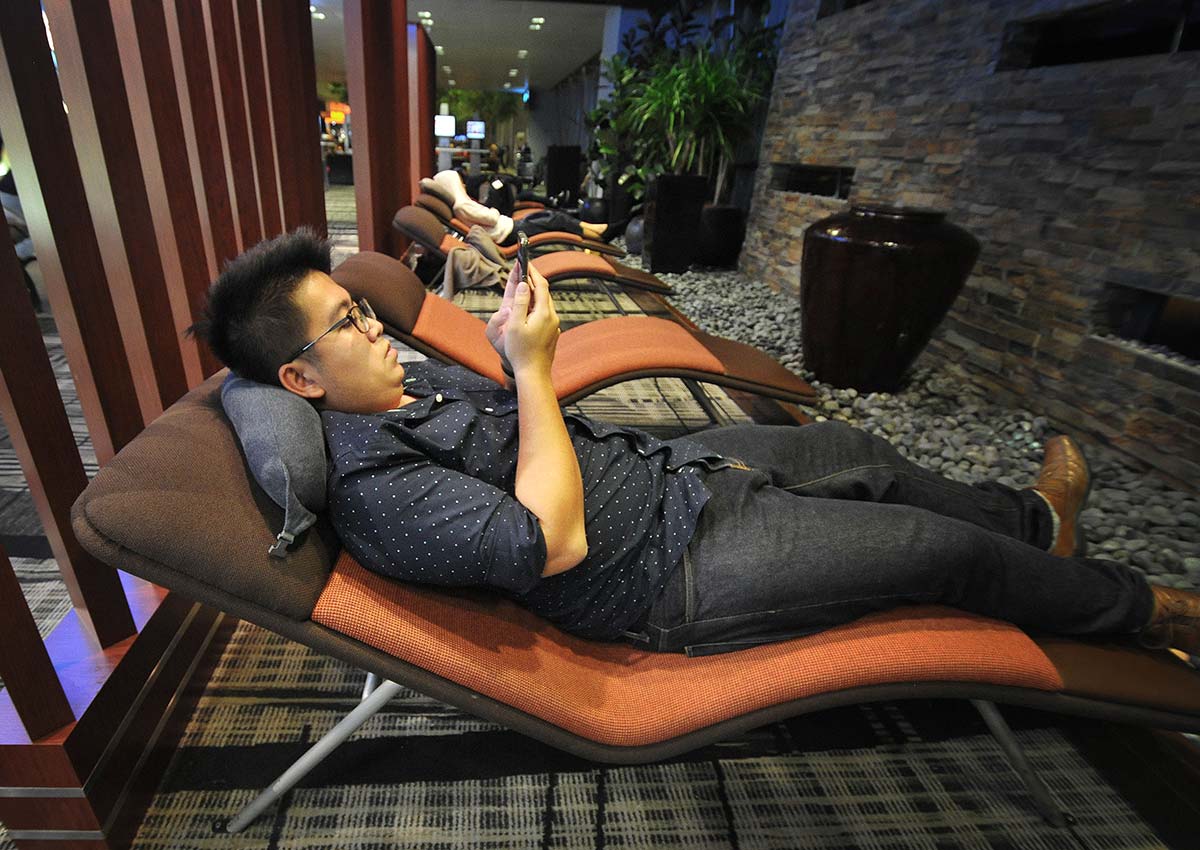
If your connecting flight is more than 24 hours away, you could either spring upwards of $50 for a six-hour block at one of the transit hotels, or lay your head on one of the many snooze lounges free of charge.
Going the free route seems like a no-brainer, considering how plush the transit area looks. But as comfortable as the recliners are, it will be hard for anyone to get some decent shut-eye for an extended period.
The bright overhead lights could keep you awake, as could the generic and repetitive lobby music that just would not stop playing. The frequent flight announcements coming from the PA speakers do not help either.
A spokesman from Changi Airport said the ambient music is meant to “contribute to a pleasant environment for our passengers”, but I started to suspect if it was really to keep them awake so they do not miss their flight.
You would have to keep an eye on your belongings – you would have little recourse if someone took your things and boarded a flight shortly after.
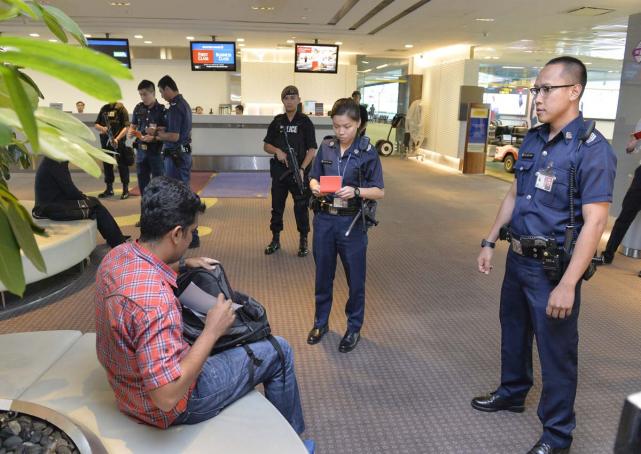
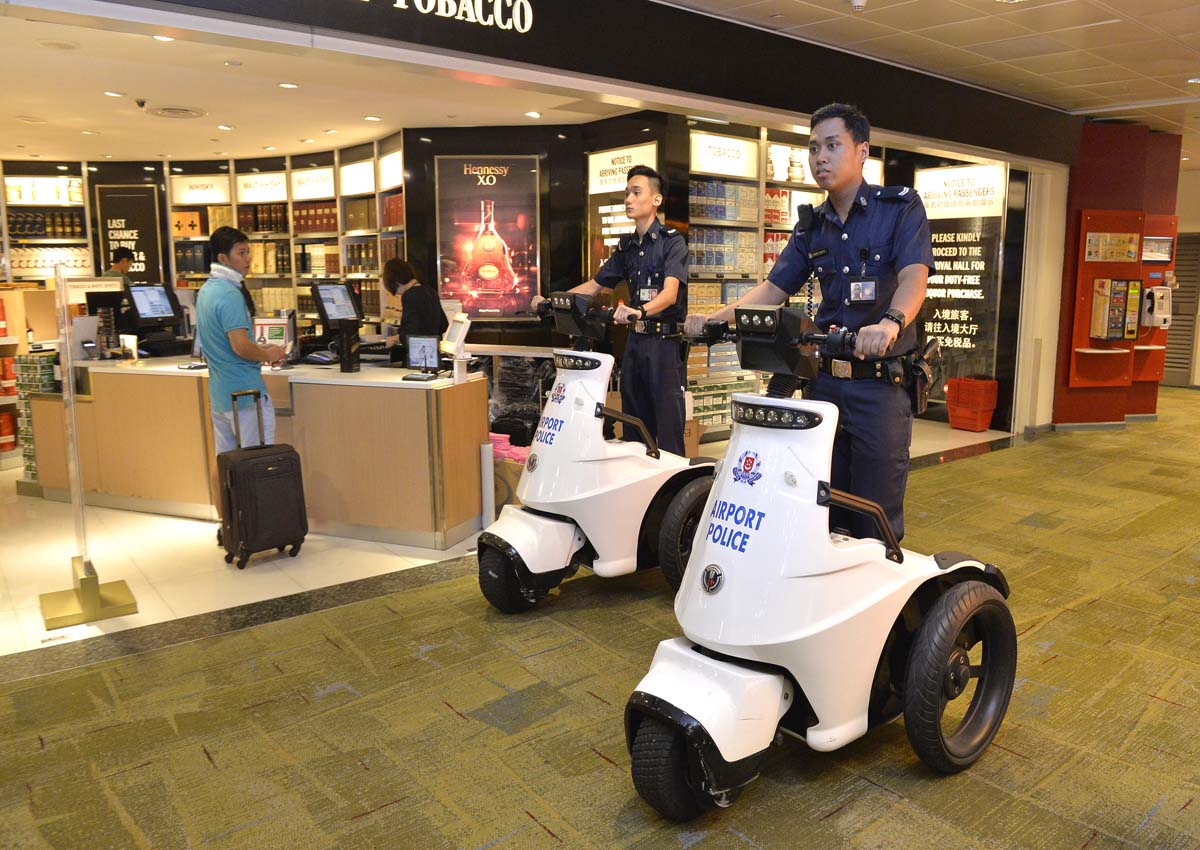
At night, airport police patrol the transit areas, politely waking up travellers to check on their boarding passes.
f you’re the sort who often falls asleep with the TV on, then maybe you should head to the movie theatre to catch a free late-night flick.
It is not as comfortable as the snooze lounge recliners, but at least there are fewer distractions. You probably do not want to pop up at your connecting flight without freshening up a bit.
Public toilets are free to use and they are as clean as they are spacious. But you will have to shell out $16 to bathe at pay-per-use lounges. There are also no laundry services in the transit area and I was not going to wash my soiled clothes in the sink and dry them out in the airport.
‘Roughing’ it out
So would I recommend giving a transit hotel a miss and roughing it out at the general transit area if you have a really long stopover?
Honestly, I would do it only if I absolutely had to.
Despite getting bits of shut-eye here and there, I was a zombie on the move and had little love for the butterfly garden and the koi feeding session that wowed me previously.
I managed to chat with a British gentleman with a six-hour stopover, and he helped me with some perspective on why, despite Changi Airport being voted the best airport for sleeping in by The Guide To Sleeping In Airports, spending the night there is not all it is cracked up to be.
Like me, he was excited at the idea at first, but then he said: “You know, that’s why they call it a transit area for a reason. You’re in purgatory and it’s not home.”
Transit area is protected
If you do not have a connecting flight, you are to clear immigration and exit the transit areas. Otherwise, you may face police action, says Changi Airport Group’s senior vice-president of corporate and marketing communications Ivan Tan.
Image: The Straits Times
Mr Tan says: “The police patrol the airport (including transit areas) and take necessary action against overstayers.
“Passengers who enter the transit hall with a boarding pass should only be there for the purpose of travelling to their next destinations.
“Transit passengers are allowed to stay in Changi’s transit areas until their next connecting flight at Changi within the next 72 hours.”
With more than 55 million passengers travelling through Changi Airport every year, of which 30 per cent are transit passengers, the airport seeks to provide passengers with a pleasant experience.
Mr Tan says: “These include free-to-use facilities such as entertainment zones (movie theatres and entertainment deck), rest and relaxation amenities (snooze chairs and couches) as well as paid facilities such as transit hotels and lounges.”
But overstay, and you may run afoul of the law. A police spokesman tells TNPS that the airport police division conducts patrol and regular security checks on persons in the transit areas “to ensure the safety and security of all passengers”.
The police said on Thursday that the transit areas of Changi Airport are gazetted as a protected area and they warned people against abusing their boarding pass privileges.
Image: The Straits Times
Earlier this month, a man and a woman were arrested after they misused their boarding passes to enter the transit area. They allegedly did it to buy Apple’s new iPhone 7 and had no intention to board a flight.
Those who misuse their boarding pass to enter the transit areas, with no intention of proceeding to their next destination, are liable for an offence under the Protected Areas and Protected Places Act.
This carries a maximum of two years in jail and a fine of $1,000.
Previously, the police had also given similar warnings to fans who would buy a boarding pass and enter the transit area just to be closer to arriving celebrities.
Mr Rajan Supramaniam, a lawyer at Hilborne Law LLC, says that having a valid reason to be in a protected or restricted place acts as a “shield” for people to be there. Without such a reason, a person could be found guilty of criminal trespassing.
Mr Rajan says: “There needs to be valid grounds for people to be in a protected place.
“When you are in a protected place but unauthorised, when you have no reasons to be there, then it could be seen as criminal trespassing.”
Reasons like waiting for a flight, having a medical emergency or even getting stuck in the toilet, all these act as a “shield” if the authorities ask why you are there, he explains.
Suspicious
The trigger for the authorities to take action would be suspicious activities,” Mr Rajan says.
“If a person was involved in such activities, there will be security checks to see if he has a good reason to be there, so he can shield himself.
“But if you do not, it could be seen as unauthorised access because the airport is not a public place.”
Image: The Straits Times
When asked if overstaying in a transit area without a valid reason is trespassing, Singapore Management University law don Eugene Tan says he “certainly thinks so”.
According to Prof Tan, criminal trespassing does not take into account a person’s intention.
Mr Tan says: “You need not have intended to break the law by trespassing, but because of the nature of the protected place, it is not a situation of wanting to stay there and then being able to.
“Once he or she does not have a valid reason to be there, a person would have trespassed or breached a regulation that would govern the access and use of transit areas of Changi Airport.”
Additional reporting by Hariz Baharudin
This article was first published on September 25, 2016. Get The New Paper for more stories.
South Korea apparently has elite troops on standby ready to assassinate Kim Jong-un if they feel threatened by North Korean nuclear weapons, according to the country’s defence minister.
Fox59 reports that Han Min-koo was asked in a parliament session, “Are you creating a special forces unit to eliminate Kim Jong-un?”
He responded, “Yes, we do have such a plan.”
“South Korea has a general idea and plan to use precision missile capabilities to target the enemy’s facilities in major areas as well as eliminating the enemy’s leadership,” he elaborated.
329452
Photo Gallery
North Korea president Kim Jong-Un happily inspecting things
It has long been suspected that such a plan was in place but the minister’s candid answer surprised some, reports CNN.
The defence ministry has said it is planning for the worst case scenario and assumed North Korea was ready to conduct a sixth nuclear test.
According to globalnews.ca, earlier this month, South Korea’s joint chiefs of staff revealed a retaliatory system, called Korea Massive Punishment & Retaliation (KMPR), after North Korea’s nuclear warhead test.
KMPR is comprised of surgical missile strikes and special forces units set to neutralize North Korea’s leadership in the scenario where South Korea feels a nuclear attack is imminent.
Last week the United States, Japan and South Korea roundly condemned North Korea’s recent nuclear test and called for tough new measures to further isolate the communist state.
The South Korean foreign minister, Yun Byung-se called North Korea’s missile and nuclear tests a “ticking time bomb” and a threat to world safety.
WELLINGTON – A social media firestorm that forced Disney to withdraw a movie costume amid accusations it represented “brown face” shows Pacific islanders will no longer accept their culture being cheapened for profit, experts say.
Polynesian culture has proved popular in recent years, sparking fads for island-style tattoos, hipster “tiki” bars in the United States and numerous imitations of New Zealand’s famous All Black rugby haka.
The latest attempt to capitalise on the trend is Disney’s animated feature “Moana”, a retelling of ancient Pacific legends which is due for release later this year.
Critics have lambasted the entertainment giant over tie-in merchandising that included a Halloween costume allowing children to dress up as the demi-god Maui.
The full-body, zip-up outfit featured brown skin with traditional Pacific tattoos, a grass skirt and bone necklace.
A trickle of outraged tweets from Pacific activists soon turned into a flood, with Disney accused of cultural appropriation and lacking respect.
Global media coverage followed, with the story finding particular resonance in the United States, where the costume was likened to the “black face” make-up once worn by white performers in minstrel shows.
Within days, Disney pulled the costume from outlets worldwide, offering an apology for any offence caused.
New Zealand’s Maori Party, one of the costume’s harshest critics, said the controversy could have been avoided if Disney had consulted properly.
“They’re obviously not making any approach or having any deep engagement with the people of Polynesia, to whom that intellectual property belongs,” a spokeswoman told AFP.
“They’re not talking with the people from that culture, the guardians of that culture, so they’re not getting it right.” There have been similar, though less vociferous, complaints about other Pacific cultural faux pas in recent years.
Haka parodies have been used to sell everything from gingerbread men in New Zealand to soft drinks in Japan – all without permission from the war dance’s traditional owners.
Samoans were also unimpressed in 2013 when Nike released a pair of women’s leggings mimicking the pe’a tattoo – a sacred design reserved only for men.
New Zealand Maori have also objected to depictions of Polynesian deities being used to sell alcohol, a substance that has ravaged some indigenous communities.
It’s not the first time the Pacific islands have found themselves in the spotlight of Western popular culture.
In the mid-20th Century, troops returning from WWII helped popularise the notion of the relaxed island paradise.
The result was a bastardised version of Pacific culture where traditional dancers became hula girls and ancient tapa cloth designs transformed into the gaudy Hawaiian shirt, marketed as a “wearable postcard”.
There was also a craze for Polynesian-themed tiki bars, featuring bamboo furniture, kitsch imitations of island gods and sugary cocktails served in coconut shells.
Such tiki bars have recently experienced a revival in the United States, prompting National Public Radio to ask the question: “Harmless fun or exploitation?”.
Owen Thomson, the owner of Archipelago tiki bar in Washington DC, told NPR such establishments had always been “three steps removed from anything actually Polynesian”.
“It’s more about re-creating a piece of Americana, of that 1950s, 1960s style,” he said.
The difference between now and the 1960s is that even a relatively small ethnic group such as Pacific islanders can use social media to point out cultural offences.
“Social media is holding a lot of these big companies to account, there’s more eyes and ears on their product,” the Maori Party said. “It’s raising awareness around these issues.”
It also means companies riding roughshod over cultural values could now find themselves on the wrong end of a social media frenzy.
“Polynesian people from across the Pacific region voiced their views about this (Disney case) and it’s their voices that are important,” Christine Ammunson, from New Zealand’s Human Rights Commission, told AFP.
“We encourage businesses to keep talking and listening to the communities whose cultures and ancestors they seek to portray.”
The swanky Ferraris that carried Singapore’s Paralympians during their celebratory parade yesterday were as much of an attraction as their passengers.
Flag-waving spectators cheered and took photographs of the red Prancing Horses, which formed an impressive convoy as they roared along Singapore’s main roads.
Yet, the 11 Ferrari drivers/owners behind the steering wheels were happy to remain in the background, and it took a lot of persuasion before they were willing to be interviewed, as they did not want to take the limelight away from the Paralympians.
They are from the Ferrari Owners’ Club but had stepped forward to volunteer their cars and services without any prompting by the club.
Said lawyer Timothy Tan, 54, who ferried chef de mission Ho Cheng Kwee: “I feel that the para-athletes are often overshadowed by their able-bodied counterparts.
“We wanted to give them a grand parade, something memorable, in our own small way.”
Managing director Elaine Lim-Chan, 45, who ferried double gold medallist para-swimmer Yip Pin Xiu, added: “When Timothy approached me, I said ‘yes’ straight away, I think none of us will reject it. We really come together as one Team Singapore.”
Not all Paralympians sat in a Ferrari. Boccia players Nurulasyiqah Taha and Toh Sze Ning travelled in London cabs because the more spacious vehicles were easier for the wheelchair-bound athletes to get in and out of.
At the parade, the owners also gave personalised Ferrari caps to each of the 13 Paralympians. These additions gave the parade a warm touch, shaped by careful considerations for the needs of the para-athletes.
Planning for the homecoming began even before the para-athletes had left for Brazil, said Singapore National Paralympic Council chairman Teo-Koh Sock Miang.
She said: “We have done celebratory parades before on an open-top bus, but the para-athletes would have found it challenging to go up the steps because some of them are on wheelchairs.
“We always consider the needs of the athletes and we want them to feel comfortable.”
Sport Singapore chief executive officer Lim Teck Yin added: “(We had) many helping hands… the London cabs, the Ferrari drivers to step forward with their vehicles, and we were pleased with the care and patience they took to drive.”
Yip Pin Xiu clinches Singapore’s second gold medal at Paralympics
Click on thumbnail to view photos. Source:
AFP, Reuters, The Straits Times, MCCY, Singapore Sports Council
Throughout the parade, all of the para-athletes, medallists or not, shared the same stage at the pit stops as they were lauded for their performance at Rio.
Dr Teo said: “I think we’ve come very far (in growing disability sports).
“This parade is a wonderful reinforcement of that.”
chiazya@sph.com.sg
Additional reporting by Chua Siang Yee and Nicole Chia
This article was first published on September 25, 2016. Get a copy of The Straits Times or go to straitstimes.com for more stories.











.jpg)