BANGKOK – Authorities are preparing to set up an emergency flood-prevention barrier to protect the ancient Wat Chaiwatthanaram temple in Ayutthaya province as heavy rains continue to lash Thailand.
Fine Arts Office 3 director Pratheep Pengtako said the Chao Phraya River was now only one metre below bursting its banks at the location of the Unesco World Heritage Site.
He said the department was preparing to set up a flood-preventing barrier to protect a key ancient site.
Due to rains and northern runoffs, the Chao Phraya Dam has released 1,500 cubic metres of water per second, resulting in the river rising, which is posing a serious flood threat to the world-renowned site.
Officials were also preparing to set up a fence, reinforced by sandbags and covered with waterproof canvas, to form a 2.5-metre-high and three-metre-long flood barrier at the area of the temple nearest the riverfront, he added.
In Ban Ban district, farmers raising fish in riverside floating baskets were hit by the rising waters. Retired soldier Captain Jaroon Naksilp said his 120,000 ruby fish in 60 floating baskets were destroyed by strong torrents before he could harvest and sell them.
Chao Phraya River overflowed in Ang Thong’s Pa Moke district which led to flooding at Wat Sa Kaew where monks and volunteers built sandbag barriers around rice that was being stored for orphans.
Provincial governor Weerawut Putrasreni yesterday inspected flood-risk areas along the river in Pa Moke, Muang and Chaiyo districts. The most risky was Pa Moke’s Tambon Phong Pheng, as the province’s lowest point and sections had already given way to torrents. Some 20 per cent of the surveyed 40km-long riverbanks were at risk, Weerawut said. He instructed officials to tell residents to move belongings to high ground and prepare boats and other tools to aid victims.
The Disaster Prevention and Mitigation Department announced officials were aiding residents in flood and landslide-hit Chaiyaphum, Phang Nga, Kamphaeng Phet, Phetchabun, Nakhon Ratchasima, Sukhothai, Phitsanulok and Nong Bua Lam Phu and said that 23 districts in seven provinces had so far been declared as flood disaster zones.
Meanwhile, eastbound trains from Bangkok suffered a two-hour delay yesterday due to floods inundating a track section between Bangkok’s Makkasan and Klongtan stations. Chachoengsao Train Station head Natthakan Meesomya urged commuters to use other transport.
In Samut Prakan province, overnight downpours led to up to 20cm-deep flood and traffic jams on many roads yesterday including the six-kilometre-long Soi Baring.
Continuous rain in Krabi’s Ao Luk district prompted Than Bok Khorani National Park to bar tourists from entering its famous waterfall for the second day yesterday, while some farmland and two roads in the district were also flooded.
TOKYO – Malaysia’s Lee Chong Wei on Sunday won his sixth Yonex Open Japan title, defeating third seed Jan O Jorgensen of Denmark.
Lee, a silver medallist in the last three Olympics, triumphed 21-18, 15-21, 21-16 against the Dane.
The 33-year-old world number one had sailed through the men’s singles at Tokyo Metropolitan Gymnasium without losing a single game.
But he had more of a contest in the final, with Jorgensen taking the second game.
Lee also won the Japan Open in 2014, 2013, 2012, 2010 and 2007.
He has recently hinted at extending his career to the Tokyo 2020 Olympics for another shot at an elusive badminton gold, despite earlier indicating the Rio games would be his last.
In women’s doubles, Danish pair Christinna Pedersen and Kamilla Rytter Juhl – silver medallists in Rio – had their revenge on Rio gold-winning Japanese rivals Misaki Matsumoto and Ayaka Takahashi 19-21, 21-18, 21-12.
In women’s singles, He Bingjiao of China won the title after defeating compatriot Sun Yu 21-14, 7-21, 21-18.
Sun had silenced Japanese fans in the semi-finals after crushing the 12th ranked Akane Yamaguchi.
In men’s doubles, Chinese pair Li Junhui and Liu Yuchen overwhelmed Koreans Kim Gi Jung and Ko Sung Hyun 21-12, 21-12.
Prime Minister Lee Hsien Loong’s last working visit to Japan was in 2014. This time round, his trip takes place as the two countries mark 50 years of diplomatic relations.
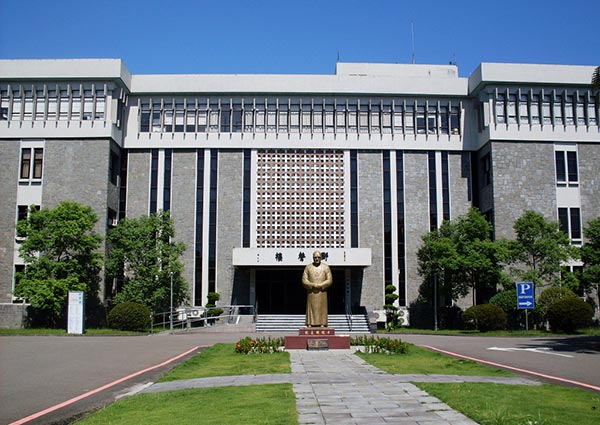
TAIPEI, Taiwan – Fu Jen Catholic University announced the suspension of a school dean on Friday, who garnered public ire for allegedly covering up a campus sexual assault case.
The press conference and protest came after the assault survivor, a now-graduated student surnamed Wu, took to Facebook Wednesday to publicly apologise to Fu Jen Catholic University’s College of Social Sciences Dean Hsia Lin-ching, a professor of psychology, and those involved in the case. The post provoked public outrage, with many questioning why a sexual assault survivor should be made to apologise.
Following the protests and press conference, the Education Ministry released a statement indicating that the ministry had already issued a notice to Fu Jen University, stating that the school’s handling of the sexual assault case had violated the Gender Equity Education Act.
The school must provide a proposal to improve their response to the case by Oct. 31, the statement said. Failure to meet the school’s gender equality committee’s demands will lead to penalties.
Severe penalties include a withdrawal of subsidies to the private school, the statement read.
Fu Jen Vice-President for Academic Affairs Yuan Jenq-Tay said that the school’s gender equality committee had held an emergency meeting on Thursday.
Two decisions were reached at the meeting. First, any individuals involved in the case were barred from disturbing or harassing the victim in any way, thus creating secondary or more injuries, he said.
The other conclusion saw the suspension of Hsia from her duties as dean, signifying that Hsia was among those under investigation.
Fu Jen School of Law Deputy Dean Wu Chih-kuang, who serves as a consultant on the gender equality committee, said an investigation was underway over whether the Psychology Department’s workforce team caused secondary injuries to the victim. Before Wu Chih-kuang made an official report to the committee, an investigation was underway by a psychology department task force.
On June 17, the school faculty reported to the Education Ministry the task force’s failure to handle the sexual assault case on June 17, Wu Chih-kuang said. The Education Ministry deemed the department task force in violation of the Gender Equity Education Act.
However, protesters, led by psychology departments faculty and students, alleged that the school had initially allowed the psychology department’s task force team to carry out “educational counseling” of the assault survivor.
Protesters said that because the school is being accused of inappropriate handling of the case, especially for not intervening initially and launching an investigation into the case via the gender equality committee, faculty have made the task force into scapegoats.
The protesters objected to Hsia’s suspension and raised a banner that accused the university of pandering to public opinion in its decision to suspend Hsia.
The annual Red Dot Award: Design Concept focuses on uncovering exceptional professional-level design concepts.
It is open to both students and professional designers, and entries are judged not only on creativity, but marketability as well.
Out of the 4,698 entries submitted this year, 245 concepts were awarded the globally coveted Red Dot award by an international panel of jurors.
Another 42 concepts were honoured Red Dot: Best of the Best for exceptional design excellence, and 53 concepts were credited with an Honourable Mention.
Mr Ken Koo, president of Red Dot Asia, says: “Only 6 per cent of all entries were awarded a Red Dot this year, making each awarded concept an outstanding feat of accomplishment.
“The Red Dot award seeks to open doors for designers, giving them more opportunities to bring realisation to their own work.”
Fik Light
Image: Fk Light
Red Dot
Designer: Edmund Liew
Singaporean freelance designer Edmund Liew believes that road traffic safety can be improved, and he wants to do that with FIK Light, his version of traffic lights.
Conventional traffic lights change from red to green, green to amber, and then from amber to red, sometimes abruptly.
Some countries have taken the initiative to install a countdown LED light beside the red and green lights to inform drivers and road users of the time left.
“But countdown numbers unconsciously have a psychological impact on the drivers, causing nervousness or frustration, especially if they are in a rush,” says Mr Liew.
The FIK Light also has green, amber and red lights, but Mr Liew designed the lights to appear as strips, giving them a more modern look.
He says that in the strip lighting countdown system, the individual strips denote the time left for each individual light element.
“The remaining strips that appear tell drivers how much time is left in each of the lights, be it red, amber or green.
“The light system in each module can be catered to different traffic intersection time duration,” says Mr Liew.
Swash
Red Dot
Designer: Ronald Tan
Mr Ronald Tan, a final-year undergraduate design student at Lasalle College of the Arts, was inspired by his mum when he was designing Swash, a mini clothes washer.
“My mum still hand-washes clothes,” says Mr Tan.
“I noticed that there are individuals who have no need or space for a full-sized washing machine, hence Swash was created.”
Swash makes use of the pails or containers most households already have, and replaces the strenuous act of hand-washing clothes by incorporating the washing process of a washing machine.
It delivers a similar result within a unit that is compact and portable.
The two components of Swash – the washing unit and the washing basket – can be detached to facilitate storage.
Swash’s washing process mimics the washing machine and begins with the basket holding the dirty laundry.
The process is streamlined as the basket is directly attached to the washing unit mounted on a pail.
Three spring-loaded clamps secure and centralise the unit in place.
The control interface’s simple design consists of only four buttons – start, stop, timer up, and timer down.
Once washing starts, the basket moves in rotational motion.
The pail is emptied and Swash transforms into a dry spinner once the washing completes.
The activation button on Swash’s handle indicates the hand position required to grab the unit in order to begin.
The basket keeps the clothes in and filters the water out into the pail, and with that, the process is complete.
Piperine and Crystalline
Honourable Mention
Designer: Jonathan Saphiro Salim
Mr Jonathan Saphiro Salim, an undergraduate at Lasalle College of the Arts, wants to make kitchen countertops more exciting with his version of the salt and pepper grinders.
His Piperine and Crystalline grinders have a cylindrical weight at the end of their spinning shafts.
This allows the grinding process to be performed with only one hand.
As the process uses centripetal force, less effort is required from the user compared to conventional mills.
The user only needs to move the shaft in a circular motion, and this causes the weight attached to the end of the metal frame to spin, activating the grinder.
The refilling process is easily done by sliding out the semi-circular cylinder container.
When not in use, the grinders can be neatly kept away in a specially constructed dock.
Living Shelter
Honourable Mention
Designer: WY-TO and Pod Structures
What happens when a natural disaster strikes? Often, those affected find themselves without any shelter.
Singapore-based design firm WY-TO hopes to provide a solution for those affected by natural disasters.
Co-founder Yann Folian says: “We decided to use our skills to create a shelter solution designed specifically for the climate, geography, and cultural habits of South-east Asia.”
Nearly 43 per cent of natural disasters happen in the Asia-Pacific region.
His team created the Living Shelter, an affordable flat-pack capsule, designed to be easily shipped and assembled in any kind of tropical environment.
Inspired by the kampung house, Living Shelter has openings that ensure natural ventilation, roof eaves to protect from sun and rainwater, and legs to elevate the liveable area from the ground.
The engineering system provides sturdiness, and adaptability to hot and humid weather conditions.
All components and systems can be easily dismantled and reused separately in an entirely new building on a more durable term.
The Living Shelter offers privacy and security, as well as basic needs such as electricity, water and furniture.
It includes a water bag for water collection; a built-in solar panel on the roof to charge electronic devices and provide light; and built-in foldable furniture such as a bed, hammocks, shelves and portable furniture. These are all conveniently flat-packed.
A custom-made folding mechanism was also created to ensure that the overall structure works correctly without the need for tools or special training for installation.
This is an edited version of an article that first appeared in The Business Times weekend edition on Sept 24.
This article was first published on September 25, 2016. Get The New Paper for more stories.
TAIPEI – A Taiwanese court has sentenced a former intelligence officer to 18 years in prison for reportedly working as a double agent and spying for China as relations worsen with Beijing.
Major Wang Tsung-wu was sentenced Thursday by Taiwan’s High Court on convictions of engaging in espionage as well as violating national intelligence and security laws.
The court provided no further details, citing national security restrictions.
Local media reported how Wang was allegedly turned by China when he was sent there as an undercover agent for Taiwan’s Military Intelligence Bureau around 20 years ago.
He spied for Beijing for more than a decade, reports said.
Wang was recruited by China in 1995 and leaked confidential information before he retired in 2005. He also recruited retired colonel Lin Han in 2013 to help collect intelligence, according to Hong Kong-based Apple Daily.
Lin had travelled to Singapore and Malaysia to meet with Chinese intelligence and passed on information about the identities of the Taiwan bureau’s officers and their missions, Taipei-based Liberty Times reported.
Wang was paid around US$96,000 (S$130,500) while Lin received about US$76,000 for the information they passed, it added.
Lin received a six-year jail term for violating national intelligence law, the High Court said.
Both men can appeal the ruling.
It is the latest in a string of espionage cases and comes as ties between Taiwan and China turn increasingly frosty since Beijing-sceptic President Tsai Ing-wen took office in May.
Taiwan and China have spied on each other ever since they split in 1949 at the end of a civil war. Beijing still regards the self-ruled island as part of its territory awaiting reunification, by force if necessary.
In 2011, an army general who headed an intelligence unit was sentenced to life for spying for China, in one of Taiwan’s worst espionage scandals.
That sentence came despite a rapprochement between Taiwan and China under then-president Ma Ying-jeou of the Beijing-friendly Kuomintang party.
Earlier this year a mainland Chinese man was jailed for four years for recruiting a former major-general and other local military officers to spy for Beijing.
The major-general received a sentence of two years and 10 months.
TAIPEI, Taiwan – Six Taiwanese tourists were reportedly robbed after falling into a deep sleep at a resort in Pattaya Thursday evening.
The tourists, all women, found that over NT$63,300 (S$2,745) in cash had been stolen when they woke up Friday morning, the Central News Agency reported on Saturday from Bangkok.
The six tourists, who were travelling together in Thailand, called the Taipei Economic and Cultural Office in Thailand for help.
The tourists had made an online reservation at a well-known resort called VIP Villas Pattaya Palm Oasis Jomtien Beach.
In a telephone interview with CNA, the tourists said that they had found the check-in process “strange.”
“After we checked in, the counter service staffers found various reasons to deny us room keys. They asked us to put our luggage in the rooms and to have a walk around,” one tourist said.
The woman reportedly told staff that their room telephone did not work and that the French windows did not lock.
Though asked to resolve these issues, the staff did not, according to the tourists.
Unusual odour
After returning to the resort at night, the tourists smelled what they later described as an “unusual odour” in their rooms.
One of the tourists, in a social media post, said the odour was “very fragrant” and that it triggered headaches and extreme fatigue.
The women – even one who was a chronic light sleeper – proceeded to sleep deeply all night, according to the post.
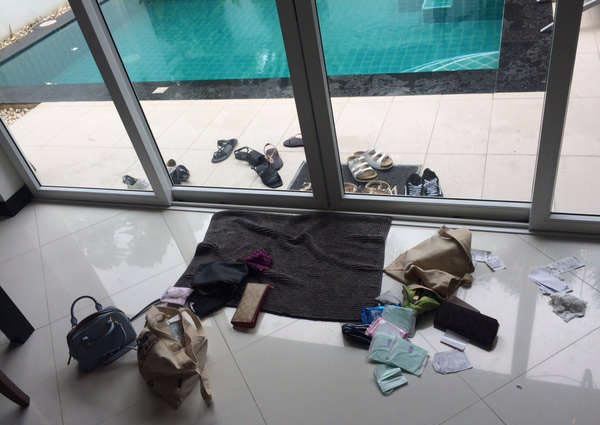
The following morning, the group reportedly woke to find the French window open and their wallets scattered across the floor, with over 70,000 Thai baht (S$2,745) missing.
Help from Thai-Chinese leader
The tourists reported the case to police through Rabu Tangthongtavee, a member of the Thai-Chinese community.
They had first asked hotel staff to report the case to police, but the request was ignored, according to CNA. Instead of helping them report the incident, staffers allegedly blamed the group of guests for failing to lock up their personal property.
One tourist said, “We dare not imagine the outcome if our physical safety had been threatened. We hope tourists from Taiwan will not stay at this villa and recommend being wary of personal property and physical safety when travelling in Thailand.”
She said a staffer told them a total of seven thefts had occurred at the villa within 10 days.
Apple Daily reported that the group of tourists included a flight attendant employed by Taipei-based Far Eastern Air Transport.
The airline confirmed the report, saying that the flight attendant was on personal leave and that the company would give her assistance if needed.
E-mail enquiries from his potential customers read like an assassin’s job listing.
A head wound from a hammer? No problem, Mr Liew Boon Siong, or Kel Liew, as he is known by his friends, would reply.
Want a body part removed? It will cost you extra, but it can be done too.
But Mr Liew, 38, is no serial killer or sadistic torturer. He is a freelance special effects make-up artist who specialises in creating gory and graphic “injuries”.
His make-up work can be seen in television dramas and web series on artistes like Pierre Png or Ann Kok.
Each artificial wound can take between five and 20 minutes to create, depending on the complexity.
The diploma graduate from The School of Make-up expanded his repertoire to special effects more than a year ago, when one job required him to create a stab wound during the filming of a local drama.
Until then, he had been doing only regular beauty make-up for weddings and events, which is still his mainstay.
“I think I did a poor job of the stab wound,” he admits, adding that his interest was piqued ever since.
During his free time, he practises new ideas for wounds and bruises on himself.
That, or browsing through gruesome pictures of real wounds and bodies online.
All in the name of supporting his passion, he says.
“I am not obsessed (with gore). Some people think it’s weird, but I’m only trying to be as 100 per cent anatomically realistic as I can,” he says.
He admits that his curiosity sometimes leads him to take a closer look at wounds that strangers may have.
He quickly adds: “But it is not like I will take photos of their wounds or anything, that would be rude.”
Once, he accidentally wore a bloody-looking laceration wound out in public after rushing out to run an errand, drawing gasps from people.
Thankfully, no one called the police on him.
While the wounds look convincing enough to this reporter, Mr Liew confesses that most of the time, camera tricks are still needed to complete the effect.
Mr Liew says: “You need to play with light and angles to create depth in the wounds, otherwise it would look flat.”
One pet peeve, however, is the director’s reluctance to be as gruesome as he desires.
“They will sometimes tell me to tone down the blood used, probably because it may affect the (age) ratings,” he recalls.
He becomes his most daring self on social media, plastering his Instagram and Facebook pages with no-holds-barred versions of his works.
So realistic are his creations that even medical professionals are impressed. Some even offer tips on how he may improve on the realism.
“Being praised by my friends in the medical field is the most rewarding feeling of all. These are the people who have seen the real thing,” he says.
Although his wide knowledge of all things grotesque and his ability to recreate them artificially have shocked some people, Mr Liew says that criticism is part of the job.
Twice, pictures of fake wounds were removed from Facebook account after some users reported them, believing that they were real.
Instead of being offended, Mr Liew says he is secretly flattered when it happens.
He says with a laugh: “It just means that I did a good job.”
Secrets of the trade
1 Always discuss with the client about possible skin allergies, as some of the make-up materials can sometimes cause irritation.
2 The international community of special effects make-up artists is a close-knit one, so don’t be afraid to ask someone more experienced for advice.
3 Don’t be afraid to experiment and practise. Even material like chicken skin or soba noodles can be used to create certain effects, such as emulating body fat or tendons.
This article was first published on September 25, 2016. Get The New Paper for more stories.
With a pair of white Calvin Klein underwear pulled over his trousers, lawyer Darren Tay delivered his speech at the World Championship of Public Speaking in Washington DC last month.
The briefs were used to illustrate a funny anecdote from his childhood: A bully made him walk around in school with his underwear worn over his pants.
It turns out he had the last laugh. He made history as the first Singaporean and South-east Asian to be crowned champion at the competition.
Mr Tay, 27, is a Toastmaster. That is, he is part of a global club comprising members who gather regularly to, well, talk.
They do not engage in idle chit chat, but present themselves in a structured, rhetorical way to an audience. In other words, they do what many people have nightmares about: public speaking.
Membership fees depend on the specific club, but in Singapore, it is usually about $150 a year.
During a meeting, there are three main segments: the prepared speeches that members book a slot for beforehand; table topics or impromptu speeches; and evaluation speeches, where fellow members go on stage to give their assessment of the prepared speeches.
Each member gets a basic manual that comes with a list of “projects” or speeches for him to complete, each time applying a skill, such as content organisation or vocal variety. As members progress, they can buy advanced manuals.
Founded in the United States in 1924, the Toastmasters programme has gone on to garner devotees all over the world. There are more than 345,000 members who are part of the 15,900 Toastmasters clubs in 142 countries.
In Singapore, the first Toastmasters club started in 1967. There are now 226 clubs with more than 6,000 members. This is an impressive tally compared with larger countries such as Japan, which has 172 clubs.
Countries are separated into districts as part of the Toastmasters network. Because Singapore has so many members, this little red dot counts for one district – District 80, to be exact.
Although Toastmasters clubs are not well known in the mainstream, members are often devoted and frequently speak of their experiences very highly. The main gain, they say, is that the club has made them more effective communicators.
Other than that, many say they gained confidence, improved their language skills and made more friends.
Toastmasters world champion Mr Tay, who is a member of the Punggol Park CC Toastmasters Club, used to be a shy teenager who loathed public speaking.
Through Toastmasters, he has learnt that public speaking is like a sport.
“Public speaking is something you can’t learn by watching videos on YouTube or reading about.
“You have to keep practising and Toastmasters gives you the stage to do so,” he says.
Personal grooming trainer Patricia Lum, 62,who is the district director for Singapore, says Toastmasters clubs are not just for articulate, established speakers.
There are clubs that cater to different levels of speakers and members can come from all walks of life, not just white-collared professionals.
Slightly more than half of the clubs here are based in community clubs, while nearly a quarter are started by corporate organisations such as DBS Bank, technology giant IBM and insurance group AIA.
The remaining clubs are split among educational institutions including Ngee Ann Polytechnic and the National University of Singapore, and private associations such as YMCA.
English is not the only language in which meetings are conducted.A quarter of the clubs are Mandarin, Tamil, Malay or bilingual. There is even a French Toastmasters club.
Depending on the number of members in a club, which can range from 10 to more than 100, meetings can be held once a month or weekly.
Likewise, annual membership fees vary from club to club. Typically, the fees for a community club-based one starts at about $150 a year.
Business planner Allison Ching, who is president of the Toastmasters Club of Singapore, which is one of the largest in Singapore with more than 130 members, says: “Members are free to take their time to complete their projects or speak whenever they want to. So it’s purely up to them how fast they wish to progress.”The club holds its meetings at Sheraton Towers Singapore in Scotts Road.
Members can also club-hop and test their public speaking skills in front of different sets of audiences.
Meanwhile, Ms Lum, who is in the same club as Mr Tay, says she always knew it was “a matter of time” before the orator would nab the title he won.
“Like Olympic champion Joseph Schooling, he has put Singapore on the world map – for public speaking,” she says.
Delivering 80 speeches in four years
Image: The Straits Times
Judging by her confident demeanour, it is hard to imagine that five years ago, Ms Joyce Kingsly endured sleepless nights preparing for a seven-minute speech.
The 42-year-old businesswoman now takes the floor regularly for her job.
She owns an etiquette and image consultancy called Creating ‘A’ Class Corporates, conducting courses in dining etiquette, personal grooming and communication. She also runs an import and wholesale meat distribution company.
Five years ago, it was a different story.
She tossed and turned in bed for two nights before having to deliver her debut Tamil speech at a Little India Shopkeepers and Heritage Association (Lisha) Tamil Toastmasters Club meeting. It was her first speech and so was a selfintroduction.
Her nerves were shot because she had always been terrified of public speaking.
Ignoring her pounding heart and shaking hands, she went on stage, delivered her speech – and was awarded best speaker.
“I couldn’t believe it,” says the mother of two daughters aged 21 and 17. Her husband works as an engineer.
“I didn’t sleep for another two nights after that as I was in disbelief.”
She joined the Toastmasters club in 2011 at the encouragement of Mr Harikrishnan Muthusamy, a key driving force in the formation of the 14 Tamil Toastmasters clubs in Singapore.
At that time, she had been taking on more leadership roles, including joining various grassroots groups, and felt that joining a Toastmasters club would “be good for her personal development”.
She found the course structured and effective. “Each chapter in the Toastmasters manual concentrates on an aspect of public speaking and refines you in some way, whether it is planning your speech or eye contact.
“As you progress, you get feedback from evaluations and become a more all-rounded speaker,” she says.
Shortly after joining the Tamil language club, she founded the Lisha women’s wing a year later.
So far, she has delivered 80 speeches – five in Tamil – in the last four years.
As a result of the practice, her verbal Tamil has improved significantly, she says.
This helps her in her work and regular community engagements with Lisha, as she has to speak in Tamil about a third of the time.
She says: “All of this would not have been possible without Toastmasters.”
Coming out of his shell to help with youth
Image: The Straits Times
A self-professed introvert, Mr Saiful Reduwan did not have the confidence to speak in front of crowds.
His solution was to learn from established speakers.
As a teenager, he used to flip through the newspaper in search of free seminars to attend.
It did not matter what the topic was, he just wanted to observe the speakers and study how they expressed themselves. He would complement his seminar attendance by watching videos of American motivational speaker Tony Robbins online.
Yet, he realised it was not enough to just watch. He still could not articulate his thoughts effectively.
Over the years, a growing desire to help the youth in the Malay-Muslim community compelled him to take action.
“I want to inspire the youth in my community to aim higher, but I wasn’t able to reach out to them because of my poor communication skills,” he says.
His dream was to set up a youth academy, a space for him to guide young people in whatever activity they hoped to pursue, be it sports or the arts. To do that, he had to first come out of his shell.
At 32 now, he is an allied educator, which means he provides teaching and learning support in a secondary school.
Two years ago, he joined the sole Malay-English Toastmasters club, Jauhari Bilingual Toastmasters Club at Cairnhill Community Club.
“If I was going to help the community, I figured it was better for me to join a club that allowed Malay speeches too,” he says.
So far, he has delivered two speeches in Malay and seven in English.
“The members are very encouraging and they give me tips,” he says, adding that the benefit of a small club is that the members all know one another. The club has 18 members and Mr Saiful is the youngest.
His confidence has soared since joining the club and he is keen to share his skills and insights.
He volunteers as a youth coach at social enterprise The Green Apple Project, which offers youth empowerment programmes such as mastering communication skills.
He is also helping a group of teenage hip-hop dancers market themselves and showcase their skills.
“Now that I’m more confident speaking up and conducting workshops, I am teaching youth how they need to communicate better to be heard.”
Founder of world’s first mandarin club
Image: The Straits Times
If Singapore has a godfather of the public speaking scene, he could well be Mr Ernest Chen, 73.
He has been instrumental in spreading the growth of the Toastmasters club scene in Singapore and is a veteran public speaking coach.
He first joined the Toastmasters Club of Singapore in 1983 to learn to speak more confidently on public occasions.
He found the experience so worthwhile that he went on to start 15 other Toastmasters clubs in Singapore in the following three decades, including the world’s first Mandarin club, Thomson C.C. Mandarin Toastmasters Club, in 1991.
When he joined Toastmasters, there were only three clubs in Singapore. Now there are 226.
He used to run an event management company and a stationery business that he inherited from his father. He subsequently switched careers and, from 1990, started coaching people in public speaking.
He has taught more than 3,000 people and regularly conducts workshops in not only verbal communication, but also speech writing and business brokerage.
He has written three books – two in English and one in Chinese – on public speaking too.
In 1993, he was awarded Distinguished Toastmaster, the highest award a member can attain.
Looking back on how far he has come, he said he had just wanted to “reach out to as many people as possible”.
He adds: “To do so, I learnt that you must speak correctly and effectively.”
The bilingual speaker, who is married with three children, decided to start a Mandarin Toastmasters club as he noticed that there were many Chinese Singaporeans who preferred to speak in their mother tongue.
To get as many members as possible, he decided to start the club at a community club.
The first one he founded was the Thomson Toastmasters Club at Thomson Community Club in 1988 and that created a ripple effect.
“Other community clubs started contacting me and now, there are so many of them,” he says.
Looking back, he says he has no regrets.
“I now do what I love and that is to influence others through how I speak and help them effectively speak well too,” he says. “I’m a Toastmaster for life.”
Finding friends and her mother tongue
Image: The Straits Times
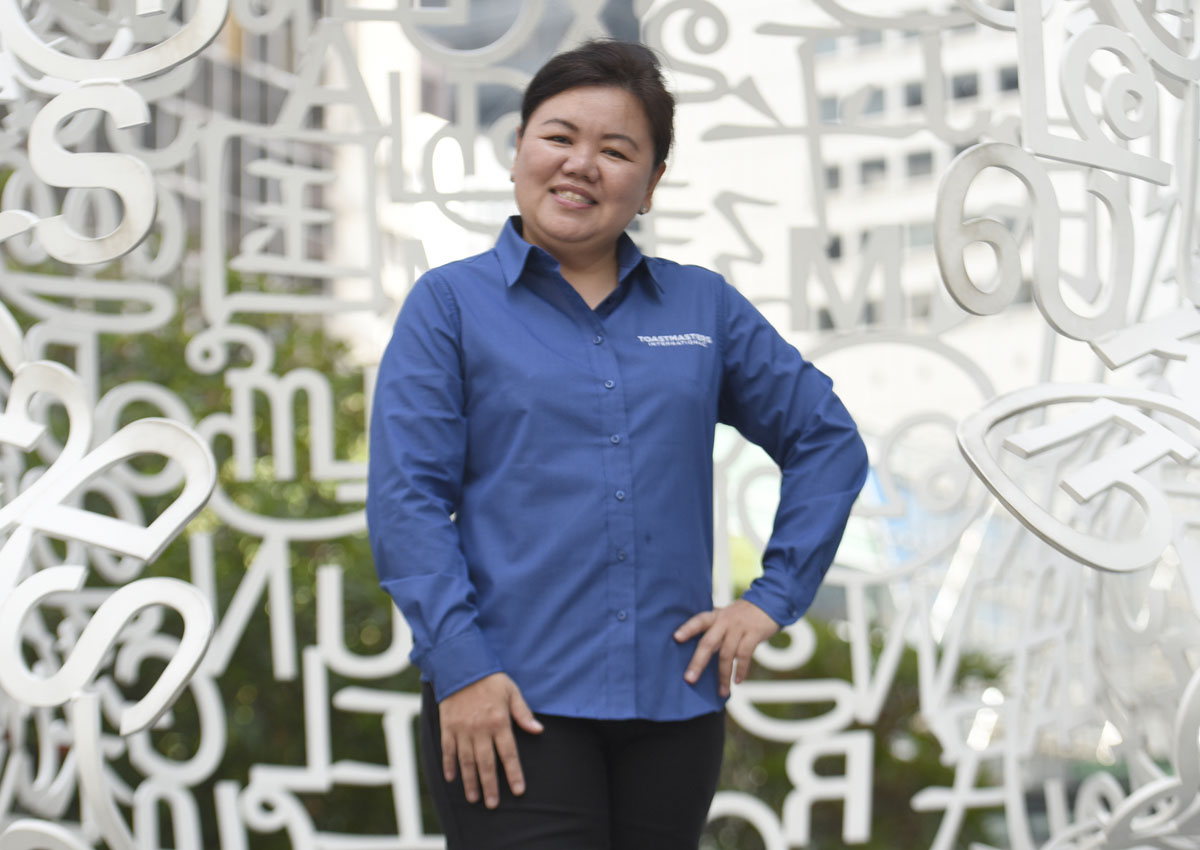
Speaking to suppliers in China used to drive Ms Cassandra Ang, 50, up the wall.
For the past 12 years, she has been helping her husband in his trading business and often needs to speak to suppliers in China, where they source for goods.
While her conversational Mandarin is solid now, it was not the case a decade ago. Because she spoke mostly English, her command of her mother tongue weakened over the years.
She remembers having difficulty speaking to Chinese suppliers over the telephone. “At times, I’d have no idea what they were saying,” she says.
Due to miscommunication, she once accidentally ordered 1,000 handbags with no straps when she had wanted long-strapped ones.
As her poor Mandarin was costing her time and money, she decided to fix the problem and brush up on the language.
In 2004, she heard about Toastmasters clubs from a friend and joined a Mandarin-speaking one – Bukit Batok CC Mandarin Toastmasters Club – near her home.
She took quickly to the course and was so active that she decided to take up leadership positions at the club.
After becoming treasurer, she worked her way up to being president. Each position can be held for only a year.
She did not stop there. She volunteered to be part of a division committee before graduating to district level, the top rung within each country’s Toastmasters scene.
She subsequently joined another club, Chua Chu Kang CC Mandarin Toastmasters Club, in 2009 and was appointed president three years later.
In total, she has taken on 16 positions.
“I enjoy being a leader and Toastmasters is a good place to take on different roles,” she says.
Ms Ang, who has two daughters aged 20 and 17, is also attracted to the social aspect of Toastmasters clubs.
The clubs tend to attract middle-aged people, particularly those above 50, for whom “Toastmasters is a place where they can make friends too”, she says.
She organises quarterly bonding activities, such as karaoke sessions and day trips to Malaysia, for members to get together outside the Toastmasters setting.
“We are a close-knit family,” she says.
Besides having a steady group of friends, her Mandarin woes are over too.
In fact, she even received a great compliment from her Chinese supplier. “After two years in Toastmasters, the supplier asked me how I could speak such good Mandarin now,” she says.
This article was first published on September 25, 2016. Get a copy of The Straits Times or go to straitstimes.com for more stories.
BANGKOK – Thailand’s first female prime minister on Sunday told the man who ousted her government two years ago to investigate his own brother over corruption allegations, in an unusually strong broadside against the junta.
Yingluck Shinawatra was booted from office shortly before army chief Prayut Chan-O-Cha seized power in May 2014, the military’s second coup in less than a decade and their twelfth successful power grab since 1932.
Since then she has been hit with a series of junta-led prosecutions including a retroactive impeachment, an ongoing criminal negligence trial that could see her jailed for up to a decade and a separate move to seize more than $1 billion in civil damages.
The last two legal cases stem from a popular but financially costly rice subsidy scheme that Yingluck’s government pushed.
“The Prime Minister (Prayut) says that all the legal actions against me are based on the law and are not bullying,” Yingluck wrote on her Facebook account on Sunday.
“I would like the Prime Minister to apply the same logic and justice given to me like he gives justice and protection to his brother and other people who are on his side. Because the laws should be enforced for everyone, not just used only against my side.” Yingluck’s comments were a direct reference to new corruption allegations that have surfaced this month against Prime Minister Prayut’s brother Preecha Chan-O-Cha, who is also a senior army general.
Local media said one of Preecha’s sons had won a series of lucrative construction contracts from Thailand’s Third Army, which Preecha used to command.
Preecha insisted his son won the contracts in a fair tender process and denied any wrongdoing.
But it is not the first time the junta chief’s brother has had to deny negative headlines.
Earlier this year he admitted helping another son land a well-paid officer’s job in the military.
And when the junta ordered senior officials to reveal their wealth – part of a post-coup attempt at transparency – Preecha had $1.2 million in his bank account – money he said was military assets he was looking after and not his own personal wealth.
Such headlines have stung Prayut, who has defended his coup as necessary to root out political corruption and end years of instability between competing factions.
However critics say his regime has been selective in graft prosecutions, with the main aim being to rid the country of the Shinawatra political clan.
Yingluck’s billionaire brother Thaksin was ousted as prime minister in a 2006 coup.
The Shinawatras have won all general elections since 2001 by promising greater wealth and opportunity to the nation’s poor, especially in the long-neglected north and northeast.
But their parties were loathed by a Bangkok elite and by southern voters – backed by the military establishment – who accused them of corruption and nepotism.
Prime Minister Prayut appeared to distance himself from his brother in comments on Sunday after returning from New York, the first time he has addressed the issue in detail.
“A brother is a brother, it’s not the same as me,” he said. “He is not stupid. But I do not make a guarantee for him because it is his responsibility.”