US actor Ben Stiller, 50, has spoken up in support of early cancer detection. He revealed recently that he is a prostate cancer survivor.
He was 46 when he began a baseline Prostate Specific Antigen test for the disease and…
Source link
Review decision to allow online gambling: NCCS
The National Council of Churches Singapore (NCCS) has called for a review of a recent decision to allow two lottery operators here to offer online betting, citing worries about problem gambling.
In a statement yesterday, it appealed to the Government to relook its decision to allow Singapore Pools and the Singapore Turf Club to start running online betting platforms here in the next two months.
The council, which represents more than 250 churches here, said it was gravely concerned about the move to exempt the operators from the Remote Gambling Act.
It said the Government is sending “confusing and conflicting signals”, noting that the Remote Gambling Act, which outlaws all online and phone betting activities, was passed by Parliament just two years ago.
Last week, the Ministry of Home Affairs (MHA) said it was giving the nod to the operators to launch online services, following applications by the Singapore-based lottery operators to be exempted from the Act.
Singapore Pools will launch its online betting services on Oct 25 and the Turf Club will roll out its new Web and mobile platform on Nov 15. Punters can place bets for 4D, Toto, football, F1 sports and horse-racing.
MHA had said the operators will have to put in place safeguards, such as allowing only those above 21 to open accounts, and checks to ensure those who try to open accounts do not have existing casino exclusion orders.
MHA had said a complete ban would only drive remote gambling underground, making it harder to detect.
But NCCS, the first religious organisation to comment on the issue, said it “finds it difficult” to accept this rationale, adding that this “cannot be the best option for Singapore”.
The council said it was concerned about the adverse personal, familial and social effects of online gambling.
It cited studies highlighting how problem gambling affects the family, productivity at work and also leads to depression, anxiety and suicidal tendencies in pathological gamblers.
Internet gambling is also responsible for the increased incidence of underage gambling, it added.
Noting it is “deeply concerned” that social problems would worsen, it added: “Removing the temptation of gambling from living rooms and work spaces will ultimately strengthen the fabric of our society for generations to come.”
melodyz@sph.com.sg
Read more:
Betting operators unveil safeguards against addiction to online gaming

Get MyPaper for more stories.

Laundry boss missing, customers left hanging
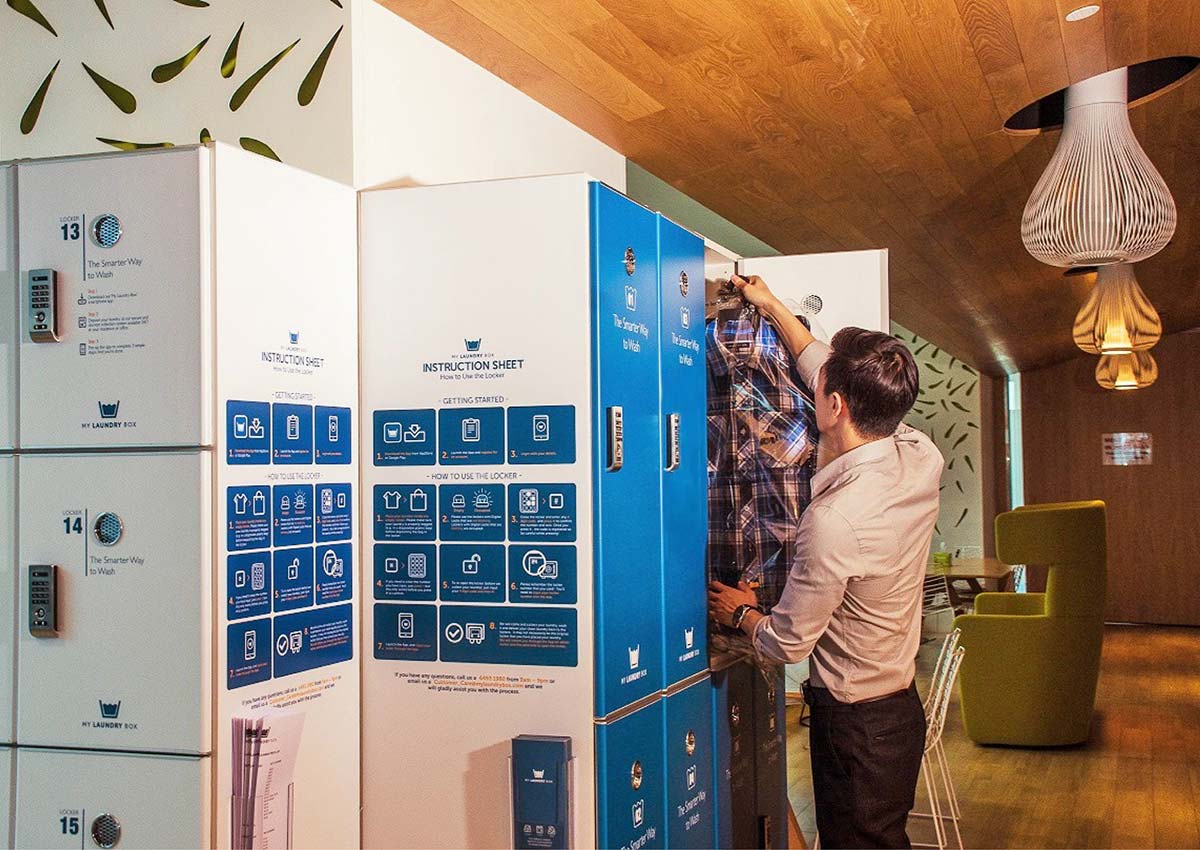
The first laundry business here that used the “smart laundry lockers” system surprised its customers when it suddenly ceased operation, causing some to worry about the refund of their pre-payments and others to fear they might not retrieve their clothes already sent for washing.
A customer, Mr Shao, told Lianhe Wanbao that for two years he had encountered no problems with My Laundry Box.
“I just deposited my clothes into one of its lockers and its app would soon tell me that they were taken away for washing,” the Chinese evening daily quoted him as saying.
“Usually, within five days, I would get back my stuff from the locker,” he recalled.
However, last month, his clothes came back only after 10 days, and only after he chased the company for them.
Last week, he again made another deposit and discovered days later that the clothes had not been collected.
“It looks like the $50 I had paid up has gone down the drain,” said Mr Shao.
Wanbao’s check on the Facebook page of the company found many other victims, with one claiming to have pre-paid more than a thousand dollars, which might not be recoverable.
According to Wanbao, some customers had gone straight to its subcontractor – a washing and dry-cleaning outlet in Kaki Bukit – to recover their items.
Meanwhile, Kelvin Khoo, founder of My Laundry Box, has gone missing, without paying his staff and delivery men.
The company’s main office at Ang Mo Kio Avenue 10 was vacant and locked-up, and a source said the CEO had disappeared since Aug 28.
It was only in May that the 34-year-old, who launched his company in 2013, was invited to a forum held by Spring Singapore to share his entrepreneurial experience.
myp@sph.com.sg
Get MyPaper for more stories.
More students pursuing post-sec education over past decade
The proportion of students pursuing post-secondary education remains high, the Education Ministry (MOE) revealed in its annual set of data released yesterday.
However, about 96.7 per cent of the Primary 1 cohort in 2005 progressed on to post-secondary education last year, a slight drop from 96.9 per cent in 2014.
Still, it is a significant jump from a decade ago in 2006, when just 90.8 per cent of the 1996 Primary 1 cohort made it to post-secondary institutions.
National University of Singapore economics lecturer Kelvin Seah said the dip reflects that “further increases in the proportion are harder and harder to achieve once the proportion is already high”.
“In any educational system, we will never see exactly 100 per cent of students progressing to post-secondary education,” he added.
“Some (students) dropping out of the system is inevitable, either because the students who drop out perceive work or employment as a more attractive option to studying, or because they feel they are unable to cope with the academic rigour involved in furthering their education.”
The MOE report also found that students are faring better at the Primary School Leaving Examination (PSLE), O levels and A levels over the last decade.
More are passing the PSLE. Last year, 98.3 per cent of PSLE pupils were eligible for the Express, Normal (Academic) and Normal (Technical) courses at secondary schools. In 2006, just 97.7 per cent did so.
About 93.1 per cent of students who took the A levels last year achieved at least three H2 passes, with a pass in General Paper or Knowledge and Inquiry. This is up from 87 per cent in 2006.
For the O levels, 83.7 per cent of students who took the exam last year received at least five passes, up from about 82 per cent in 2006.
Jalan Besar GRC MP Denise Phua, who heads the Government Parliamentary Committee for Education, said:
“While it is heartening to see that students continue to fare well in their exams, it is also timely to consider and start tracking a more holistic set of indicators of student performance.”
calyang@sph.com.sg
Get MyPaper for more stories.
Tisch Asia a scam: Suit by 3 ex-students
It was touted as the first overseas offshoot of a celebrated film school, which boasts alumni such as film-maker Martin Scorsese and opportunities for students to hobnob with big names and be taught by illustrious directors.
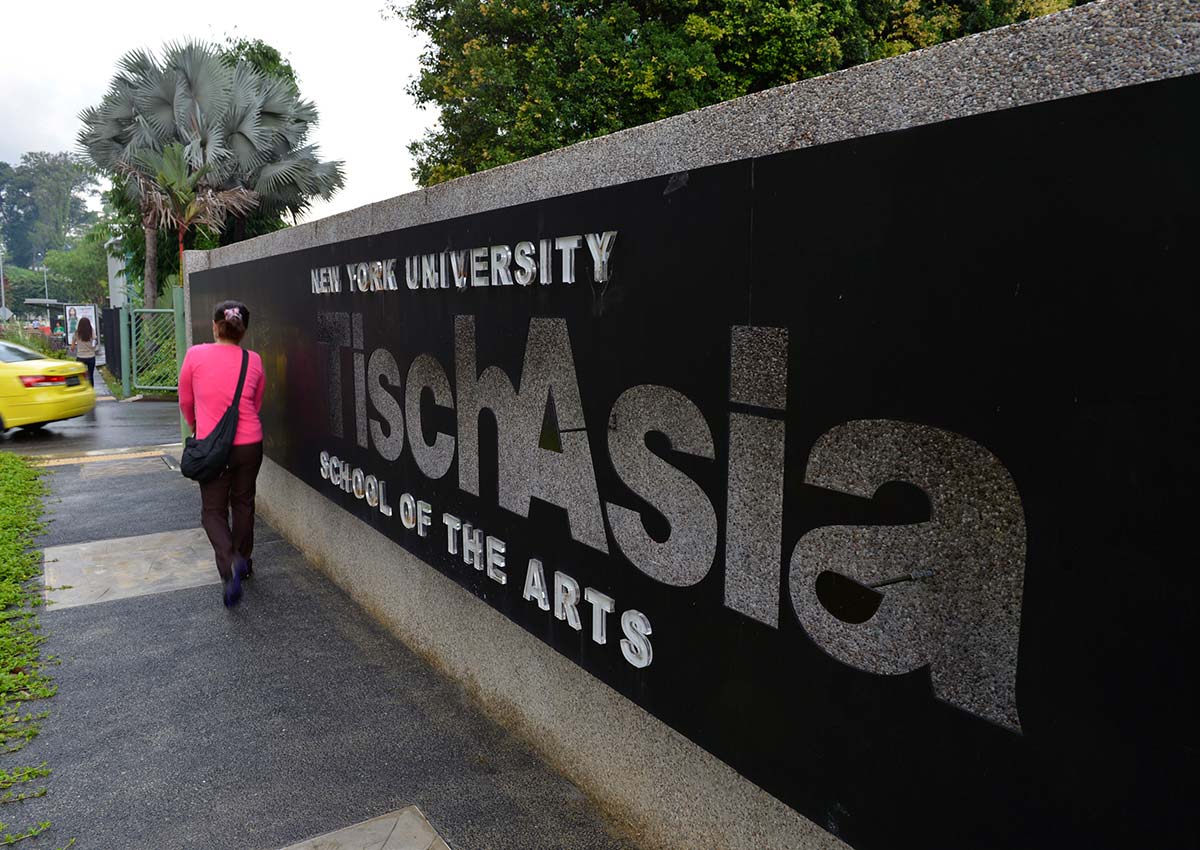
But when Tisch Asia – a branch of New York University’s (NYU’s) Tisch School of the Arts – shut its doors last year due to financial woes, some students felt that they had fallen victim to an educational scam.
Now, three former Tisch Asia students are suing NYU on behalf of their peers, alleging a “sub-par” faculty, facilities and equipment compared with those available to their New York peers.
Anna Basso, Amy Hartman and Jaime Villa Ruiz filed a complaint against NYU in the US District Court for the Southern District of New York last month.
The American residents spent US$100,000 to US$165,000 (S$137,000 to S$226,200) each in tuition fees to study at the now-defunct school in Kay Siang Road.
The Singapore campus, which opened to much fanfare in 2007, left the private education scene last year after its last batch of students finished their courses.
The branch, which offered degrees in areas including animation and digital arts, dramatic writing and film, took in students from countries such as the United States, China, South Korea and India.
In documents obtained by The Straits Times, the lawsuit states that Tisch Asia students, many of whom were rejected applicants from Tisch New York’s Master of Fine Arts programmes, enrolled on the promise that programmes were identical.
But only the tuition fees were the same at Tisch Asia, the suit alleges.
“When NYU decided to close Tisch Asia, it became abundantly clear to students that they fell victim to an educational scam, that their programme would never create a legacy,” the suit noted.
“In reality, many faculty members at Tisch Asia had either sub-par experience or knowledge to the faculty in New York… At least one teacher was a fresh graduate of Tisch Asia.”
Students also “could not avail themselves of the networking opportunities crucial to the art world”, which Tisch New York students had access to through faculty connections and exposure to Hollywood and figures in the film industry.
Some cinematography professors “showed students outdated lighting techniques resembling television lighting of the 1990s”, the suit claims.
One of them “did not know how to use a modern camera”.
The alumni suing NYU are seeking for class action status, representing other Tisch Asia students.
Many Tisch Asia graduates told The Straits Times they are disappointed with the quality of education, from facilities to exclusion from grants available to their New York peers.
A few, however, said their education could not possibly be similar to the one in New York.
NYU spokesman John Beckman stressed that Tisch Asia students had the same curriculum as the one Tisch uses in New York.
He added that Tisch Asia operated at a steep deficit as NYU offered an education that cost more than the tuition fees paid.
He added that the lawsuit is wholly without merit.
calyang@sph.com.sg
Get MyPaper for more stories.
MOH publishes private surgeon charges
Patients can now have an idea of how much private sector surgeons charge for their services, and perhaps even negotiate a better rate.
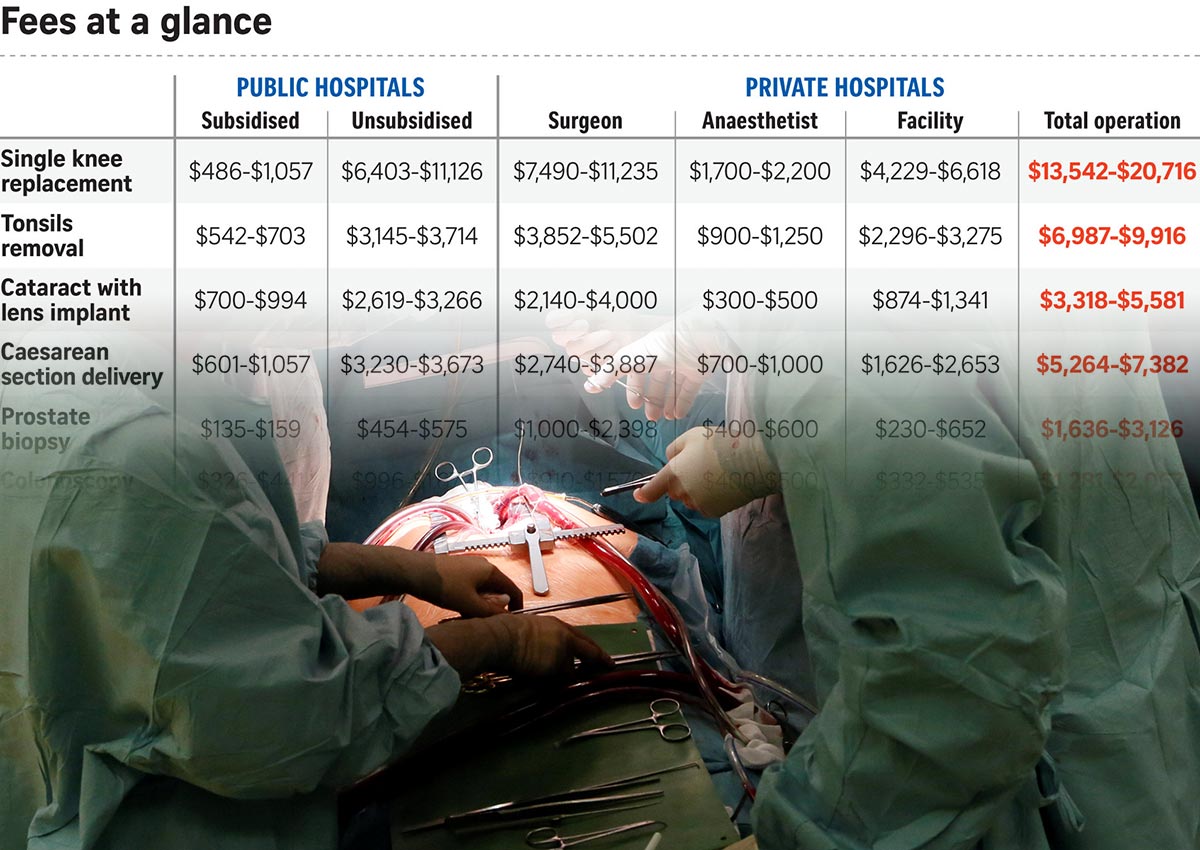
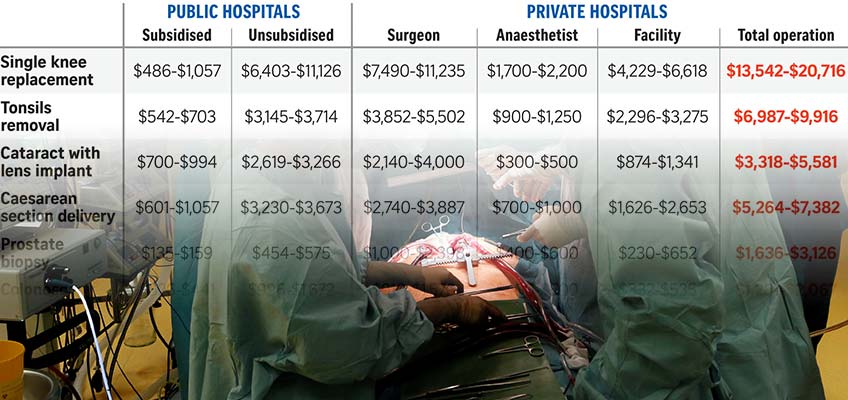
The Ministry of Health (MOH), which started publishing operation fees in public hospitals in 2014, has expanded the list to include total operation fees in private hospitals.
The ministry says this will increase fees transparency and help patients make informed decisions.
On top of that, the list gives a breakdown of the private sector bill, separating the surgeon’s fee, the anaesthetist’s fee and facility costs, such as use of the operating theatre.
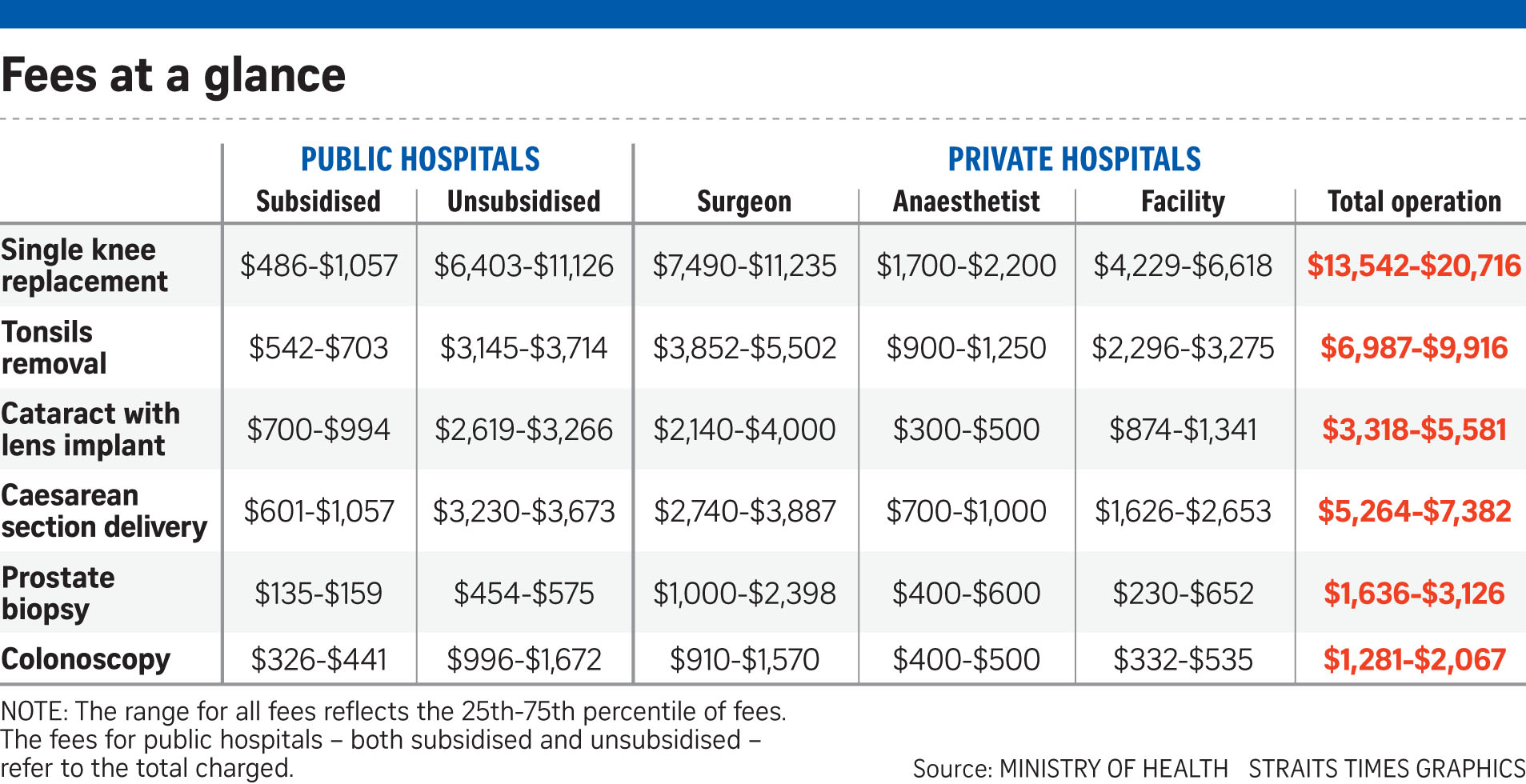
The fees put up by MOH are a range, with the lower amount reflecting the 25th percentile charged and the higher amount the 75th percentile. This means that a quarter of patients pay less than the lower amount and an equal number pay more than the higher rate.
For instance, to remove the appendix, half the patients in the private sector pay $9,928 to $13,128, with the surgeon pocketing $4,500 to $6,420 of this sum.
A private patient in a public hospital pays less than $3,000.
This move will help illuminate what is currently an opaque area.
There are no fee guidelines for doctors. Many private specialists fix their own fees which could differ greatly between two surgeons operating in the same hospital.
In general, half the cost paid by patients goes to the surgeon.
As a result, there have been cases of doctors overcharging, the most prominent being Susan Lim’s bill for treating a Bruneian royalty that amounted to $24.8 million for seven months.
The move was welcomed by Chia Shi Lu, head of the Government Parliamentary Committee for Health.
Dr Chia, an orthopaedic surgeon at Singapore General Hospital, said it would help both patients and doctors in financial discussions.
If the doctor is charging a lot more than the range given, then he will have to explain to the patient.
It could be because of the doctor’s greater experience, or because the case is more complex, explained Dr Chia.
The fees were taken from data submitted by hospitals between July 1, 2014 and Dec 31, 2015.
Said the ministry: “Such information will enable patients who are considering treatment at private hospitals to estimate the fees charged by the doctors and the hospital for the various listed procedures.”
salma@sph.com.sg
Get MyPaper for more stories.
Nursing home staff in Singapore overworked and underpaid: Study
Most of them are foreigners, with untrained newbies being paid as little as S$350 a month, excluding food and lodging, the report said, adding that this is less than what most domestic workers are paid.
Source link
Wife of diver killed by stingray: 'I can't believe he's gone'
Madam Serene Tong was at work on Tuesday afternoon when she was told in a phone call that her husband was in hospital after an accident at Underwater World Singapore (UWS).
The clerical officer was not told the details of the…
Source link
BMW smashes into back of police car
He was at his security guard desk at the entrance of yo:HA hostel’s Evans Road branch yesterday when a loud bang jolted him from his seat.
Rushing out to the main road, Mr Vincent Pereira, 61, saw a police car with a crumpled…
Source link
Son pleads guilty to punching mother repeatedly
The elderly woman was worried about her son’s diabetic condition and wanted him to drink more of the milk that she had bought him.
But he reacted to her concern by losing his temper and beating her up.
Yesterday in…
Source link


