Singapore police have arrested a trio suspected of pawning fake gold bangles and chains – and in the process seized cash amounting to over S$5,000.
Source link
Three men arrested for pawnshop gold scam
Irresponsible owners 'the worst type of animals'
Confessions of an animal shelter supervisor
How much is that doggie in the window?
There is a fee, says animal shelter supervisor Mohan Veerasamy, but nothing compares to the amount of commitment you need to put in.
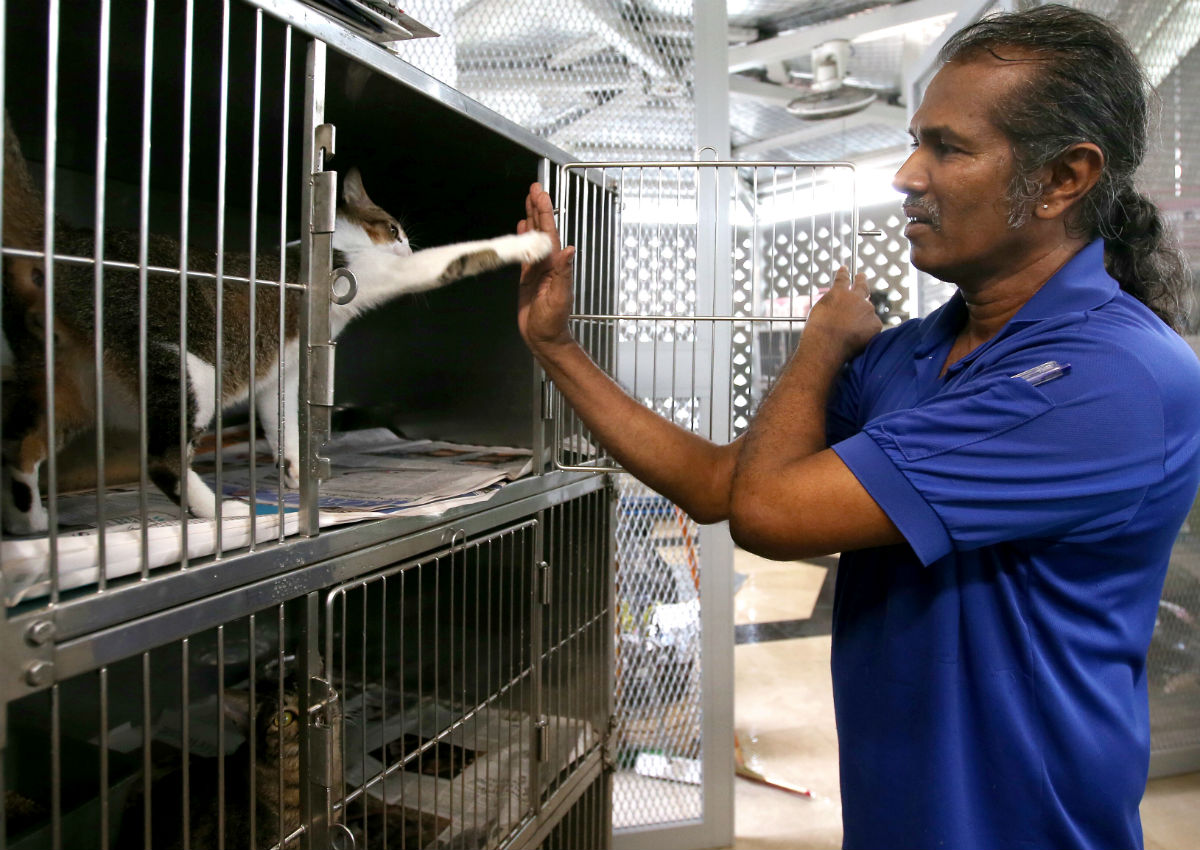
For 26 years, Mr Mohan has cared for all sorts of animals at the Society for the Prevention of Cruelty to Animals (SPCA) shelter at Sungei Tengah.
But no animal is as frustrating to deal with as another human being, says the 53-year-old.
“They are the worst type of animals of all,” says Mr Mohan, referring to those who come to the shelter to adopt the animals for the wrong reasons.
His biggest peeve is hearing these owners say “I have no time to look after him”.
Mr Mohan says: “That is an unacceptable excuse. Why decide to get a pet if you have such a busy life?”
He gets annoyed at prospective pet owners who ignore his advice, particularly if the animal has a history of abuse.
As abused animals often need special care, a few owners end up returning to the shelter with the animal, admitting that they are unable to look after it.
“It happens all the time, some even come back after a day,” he says.
“There is no point arguing with an owner who no longer wants it. Better to hope that another family will come along.”
Mr Mohan confesses that he tells white lies to people who want to adopt animals for the wrong reasons, tricking them that the animal they are interested in is already taken.
As the shelter supervisor, he manages a team of seven animal care officers looking after the 7,766 sq m facility at Sungei Tengah.
That means daily cleaning duties for the 38 dog kennels and 30 cages for cats and other small animals in the shelter.
“We have to handle around 20kg of animal poop in a day. But I have never felt dirty or tired, because I enjoy working with animals,” he says.
He also responds to calls for animal rescue, recalling past incidents of saving animals in difficult situations.
Mr Mohan laughs when he remembers the many false alarms: “We were called to rescue a cat trapped at a high rise ledge once and it turned out to be a white towel.”
The former army regular first joined SPCA when he was 26, after suffering from a serious leg injury in a motoring accident.
He did so to surround himself with animals as his large family could not accommodate a pet, he says.
Actress Rui En adopts kitten from SPCA
Click on thumbnail to view photos. Source:
Lollipop












TALKING TO ANIMALS
While work technically begins at 8am daily, Mr Mohan is usually at the shelter nearly two hours earlier to “talk” to the animals in the holding area.
This is where SPCA keeps recently rescued animals that are still new to the shelter and are not ready to mingle with the others.
Mr Mohan says: “Well, they may not understand me, but it helps them to hear the same voice daily and gradually acclimatise to the place.”
He still experiences heartbreak when he sees a new animal come to the shelter bearing scars of previous abuse.
Click on thumbnail to view photos. Source:
The New Paper










“It makes me very angry to see these animals in such a state, but at least they are here now and won’t have to go through more abuse or be abandoned in some forest or drain. For that, I am glad.”
One example is Prince, a nine-year-old Jack Russell terrier whose previous owner had poured hot water on it.
Thanks to him and his team, Prince is a far cry from the dog he was three months ago, when he would cower from people and refuse food.
Mr Mohan and some of the animals were at The Cathay last week as part of SPCA’s World Animal Day adoption drive.
He says: “Helping these animals get back on their feet again is the most rewarding part of this job. Animals may not forget what happened to them, but they forgive very easily.”
SECRETS OF THE TRADE
1)Face masks and scented ointments may help deal with animal smells for a while, but it is better to simply get used to it.
2) Gain the trust of traumatised animals by re-associating the abusive act with something positive, such as a treat or a reassuring word.
3) Always be ready to meet new challenges. SPCA staff encounter all sorts of animals, from hamsters to rabbits, and once, even a monitor lizard

This article was first published on October 9, 2016.
Get The New Paper for more stories.
Image:
Publication Date:
Sunday, October 9, 2016 – 21:00
Keywords:
Send to mobile app:
Source:
Story Type:
Others
Gaining an edge – at what price?
Private tuition is getting fancier and rates are soaring. But many parents are still willing to pay. Why the obsession with tuition when S’pore’s education system is already ranked one of the best in the world? NG JUN SEN (ngjunsen@sph.com.sg) finds out
A veteran educator herself, Mrs Marietta Koh pays around $2,000 per term to put her daughter through tuition classes.
This is despite her belief that tuition canhurt society, since not all can afford it.
Is tuition a necessary evil? She certainly thinks so.
Mrs Koh says: “The idea that education is the great equaliser used to be true, but things have changed as parents become more affluent.
“The rising trend of tuition is worrisome because it is money that gives parents the ability to purchase advantages for their children.”
Mrs Koh, once a secondary school and junior college teacher and later a tutor, knows of parents who pay $5,000 a month for tuition, as well as those who struggle to pay the fees.
Yet when it comes to her daughter, she admits that she has to think differently.
“When I think from a parent’s perspective, my priority changes to what’s best for my daughter. Every parent wants the best,” says Mrs Koh, who is now a curriculum development consultant.
This compulsion to give one’s children an academic advantage has contributed to a burgeoning industry that is worth more than $1 billion, up from $820 million in 2008.
Seven in 10 parents send their children to tuition classes, according to a 2015 survey.
Some, like Madam Mala Ramakrishnan, believe that tuition has become a necessity.
She took up a second job to pay the hefty tuition fees, believing the extra classes would put her children on par with others. (See report on facing page.)
Brand-name tuition centres are also popping up in shopping malls islandwide.
There are around 850 tuition centres and enrichment centres registered with the Education Ministry, up from 800 in 2014 and about 700 in 2011.
So fierce is the competition that tuition centres have to innovate to stand out from the pack.
Centres differentiate themselves by offering additional perks, such as free shuttle services to the tuition centre and free ice cream while studying, reported The Straits Times last week.
MORE INTENSIVE
Mrs Koh says the more expensive tuition programmes offer a curriculum that is more intensive than what is taught in schools.
At The Learning Lab, where she used to give private tuition, primary school children even take up current affairs programmes so they can learn to be “more sophisticated” than their peers.
Mrs Koh says: “They learnt about current topics like the financial crisis in 2009, and are able to understand (news events) better. These children will have an edge over others.
Traditional tuition centres offer more exam-oriented tutoring to help students with their weaker subjects.
A former National Institute of Education lecturer, Dr Yeap Ban Har, says this trend of including play with learning is rooted in research and learning theories.
He says: “Maybe these tuition centre owners feel that schools are not doing enough of this and want to offer that experience for children.
“Plus, it offers parents who can afford it another option – not more of the same thing.”
There are cheaper options, too, but experts say that parents are willing to pay more for a perceived guarantee that their children’s grades will improve.
Dr Kelvin Seah, an economics lecturer at the National University of Singapore (NUS), says: “The effectiveness of tuition depends on the tutor and the way to know if the tutor is good or not is to see his past experience and record.
“That’s why brand-name tutors, like some super tutors out there, can charge much higher rates.”
Because those who can afford it will be able to pay for better tuition, Dr Seah believes that the obsession with tuition can end up widening the gap between “the haves and the have nots”.
“It has been a focus of education research, whether tuition here leads to inequality and, by and large, research does show that it is the case,” says Dr Seah.
While schools are perfectly able to help weaker students through supplementary classes, many parents would still rather pay for tuition.
Dr Seah says: “The reality is that parents think they are taking an educational risk here by relying solely on the school. They see other kids go for tuition, so their children have to go, too.”
NUS sociologist Dr Tan Ern Ser agrees, describing tuition as an “inequality of opportunity”.
Dr Tan says: “We have heard so much about parentocracy and how parents try to give their children an advantage in the mobility game.
“Tuition can un-level the playing field, giving students from families with the means a boost in their performance in academic subjects, exposure to enrichment courses, even grounding in useful skills.
“In short, it can result in unequal relative social mobility.”
She spent half of monthly income on her kids’ tuition
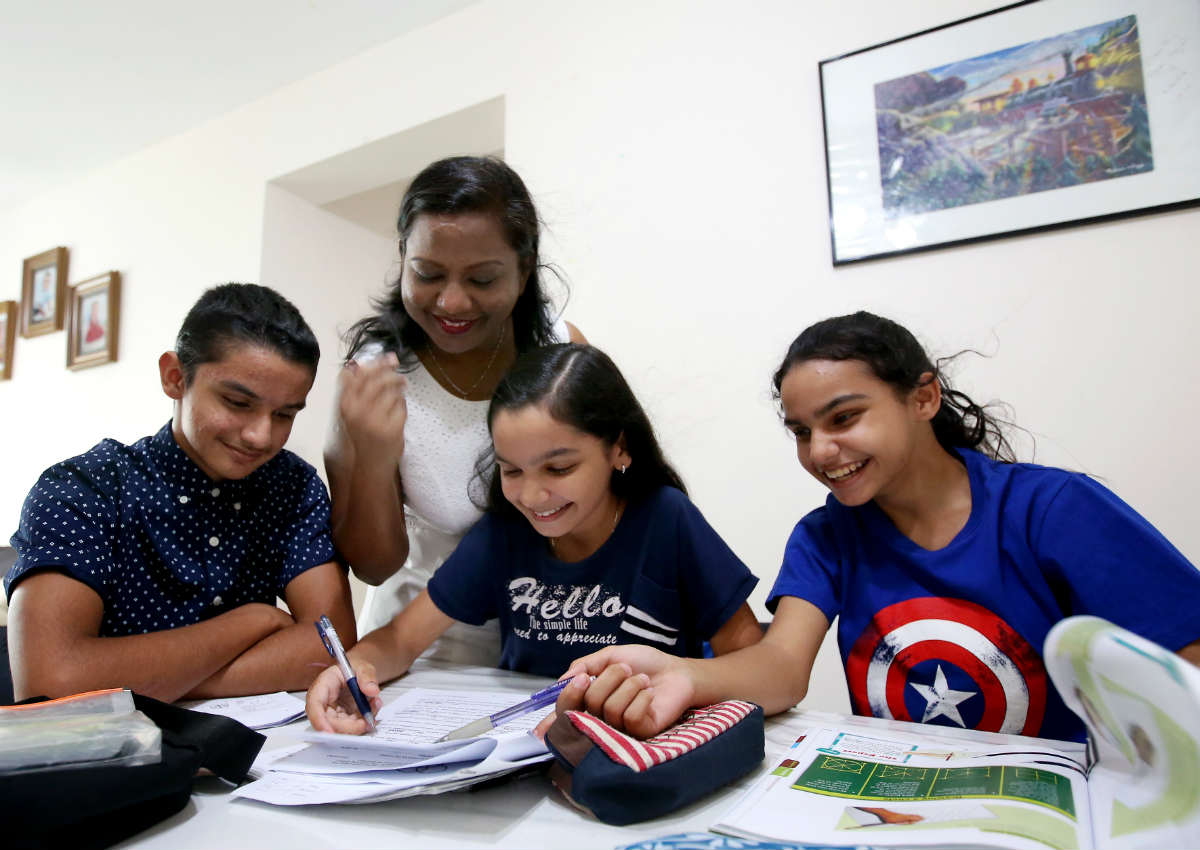
On some days, Madam Mala Ramakrishnan, 45, would look at her balance sheets and cry.
For two years, nearly half of her monthly income as a legal secretary went to pay for tuition for her three children – aged 15, 13 and 11 – and the rest would be used for rent, bills and food.
The centre-based tuition cost her $200 per child.
To make ends meet, the single mother took up an additional job as a house maid, earning another $100 each week.
“Life was hard then, it was a struggle and I was so tired every day that I didn’t even have time to spend with my kids,” she says.
The family lived in a one-room rental flat after an amicable divorce in 2009.
Although they had a roof over their heads and just enough money to get by, the environment was not conducive to her children’s studies.
Madam Mala says: “It was a messy neighbourhood and there were many fights and quarrels every night.”
But to her, tuition was always a necessity as it gave her children the chance to be on an equal footing as their classmates.
If her children did well in their studies, perhaps they may end up in a better place in life than her, she thought.
She also received calls from teachers who told her that her children’s grades were slipping, which worried her further.
Madam Mala says: “I didn’t want my children to be looked down on because of their grades.
“I believed that I need to do more for them, even if it means that I have to take up an additional job, then so be it.”
ONLINE BUSINESS
Today, she no longer juggles two jobs as she has found additional income in her online business as a beauty consultant.
She has also taken her children out from centre-based tuition as it had little effect on their grades, but she paid $2,000 to sign her 13-year-old daughter to an education programme that encourages learning.
Living on tight budget, with no savings
His family of four can live quite comfortably on their total household income of $3,800, says cabby Goh Teck Seng.
Except that he spends $2,100 on tuition for both his children, he tells The New Paper on Sunday.
Mr Goh, 45, used to drive the morning shift, but since last year, he has been on the road for about 12 hours a day, six days a week.
His wife, Madam Linda Tan, makes about $1,400 a month working two jobs, as a clerk and as a cleaner in a karaoke lounge.
Mr Goh, who lives in a three-room HDB flat, says: “We are thrifty and we have no debts. But we also live on a tight budget with no savings for now.”
This is so that he can pay a private tutor for his son, 15, and send his younger daughter, 11, to a popular learning centre.
His son, he says, is an average student who needs help in maths and English.
WAITING LIST
“We want him to do well enough to get into a junior college,” adds Mr Goh.
His daughter was on the waiting list for about six months before she got a place in a leading education centre.
Mr Goh pays $1,200 for a term at the centre and another $400 for private Chinese tuition.
He says: “Our daughter is the smarter one, so we want to invest in the best for her.”
Mr Goh admits that his daughter’s school offers supplementary classes for the pupils, but says he does not want to take the risk.
“It’s not that the teachers are lousy, but there are about 30 children in one class, so how much attention can they give to my daughter?” he says.
“We would prefer to make our own sacrifices so that we can give her a head start in life.”
‘It’s better to pay more for proven quality’
Madam Florence Chan, a housewife, was given a blank cheque by her husband to spend on her son’s tuition.
“Pick whatever is the best out there,” her husband, who is a director in a contractor firm, told her.
So she did exactly that, spending days going through online forums to research options for her 16-year-old son.
They now spend nearly $1,000 every month on small group tuition for various subjects at the junior college level, including economics, his weakest subject.
Madam Chan, who is in her 40s, says: “We noticed that he needed to buck up. If he stays at home, he would be playing computer games rather than studying.
“Now, he is a lot more disciplined.”
Madam Chan says her son’s tuition class covers topics 30 per cent faster than the school. At lectures, he is able to grasp concepts better since it was already taught in tuition.
She declines to share what their household income is.
“I’m blessed that we do not have to worry about money.
“Yes, we may have to give up some luxuries, but investing in your own children is always the right option,” she says.
“I could have paid less for tuition, but the quality of the tutor may not be as good. It’s better to pay more for proven quality.”
This article was first published on October 9, 2016.
Get The New Paper for more stories.
Image:

Publication Date:
Sunday, October 9, 2016 – 21:00
Send to mobile app:
Source:
Rotator Headline:
Mum worked 2 jobs, has no savings …all for kids' tuition
Rotator Image:
Story Type:
Others
Singapore swimmer on comeback trail from collapsed lung
After a life-threatening injury and shoulder tear which put her out of action for 10 months, Roanne Ho is set to return for the national squad at the FINA/airweave Swimming World Cup in late October.
Source link
Challenges owners face in reviving fading fortunes of old-fashioned malls

 SINGAPORE – Standing in her shop in Beauty World Centre, Madam Sie Choo Yong, who is in her 90s, mustered a smile for every shopper who walked by – there were hardly any these days at the ageing mall which has become a pale shadow of its former glorious self….
Source link
I dream of winning SEA Games gold for Singapore one day: Fandi Ahmad
The local football legend and newly-appointed under-23 head coach talks to Channel NewsAsia about his goals and ambitions for Singapore’s best young talents.
Source link
Alibaba Pictures, Amblin to co-produce films for global, Chinese audiences

Steven Spielberg’s Amblin Partners and Alibaba Pictures Group Ltd, the film studio unit of Chinese e-commerce giant Alibaba Group Holding Ltd, said on Sunday they will co-produce and finance films for global and Chinese audiences.
They will also collaborate on the marketing, distribution and merchandising of Amblin Partner films in China, the companies said in a joint statement.
Under the terms of their partnership, Alibaba Pictures will also acquire a minority stake in Amblin Partners, which is chaired by Spielberg, the award-winning US movie director and producer.
Amblin Partners creates film, television and digital content under the Amblin Entertainment, DreamWorks Pictures and Participant Media brands.
Hong Kong-listed Alibaba Pictures has yet to release any films, although the company formerly known as ChinaVision Media Group Ltd has several projects in production.
Alibaba Pictures began investing in Hollywood films in 2015 with its stake in ‘Mission: Impossible – Rogue Nation’. It was an investor in this year’s blockbusters ‘Star Trek Beyond’ and’Teenage Mutant Ninja Turtles: Out of the Shadows’.
Billionaire Jack Ma’s Alibaba Group paid about USUS$800 million (S$1.1 billion) for a controlling stake in ChinaVision Media in 2014. The company later became known as Alibaba Pictures.
The investment was part of a wave of acquisitions by big Chinese companies looking to expand their Hollywood footprint while bringing more Western films to China, set to soon surpass the United States as the world’s biggest movie market.
Dalian Wanda Group Co, the conglomerate controlled by China’s richest man Wang Jianlin, is partnering with Sony Pictures under which Wanda will market Sony Pictures’ films and co-finance some upcoming movie releases of Sony Corp’s film unit in China.
In January, Wanda paid US$3.5 billion for a controlling stake in US film studio Legendary Entertainment. The group has also since said it would start co-investing in global blockbusters next year.
Image:

Publication Date:
Sunday, October 9, 2016 – 16:52
Keywords:
Send to mobile app:
Source:
Hermes ID:
2 655 452
Hermes ID String:
JLALIBABA09
Story Type:
Others
S’pore businesses quizzed by Chinese counterparts over their stand on South China Sea issue

 SINGAPORE – Following the back-and-forth between Singapore and Chinese state-owned newspaper Global Times over the South China Sea issue, some Singapore businessmen with interests in China are being questioned by their Chinese counterparts, on where they…
Source link
Pasir Ris-Punggol Town Council requests ‘urgent’ court appointment to obtain documents from AHTC
PRPTC says it has not received information relating to Punggol East from the Aljunied-Hougang Town Council, despite direction from the Court of Appeal issued six weeks ago.
Source link
Zero waste way of life
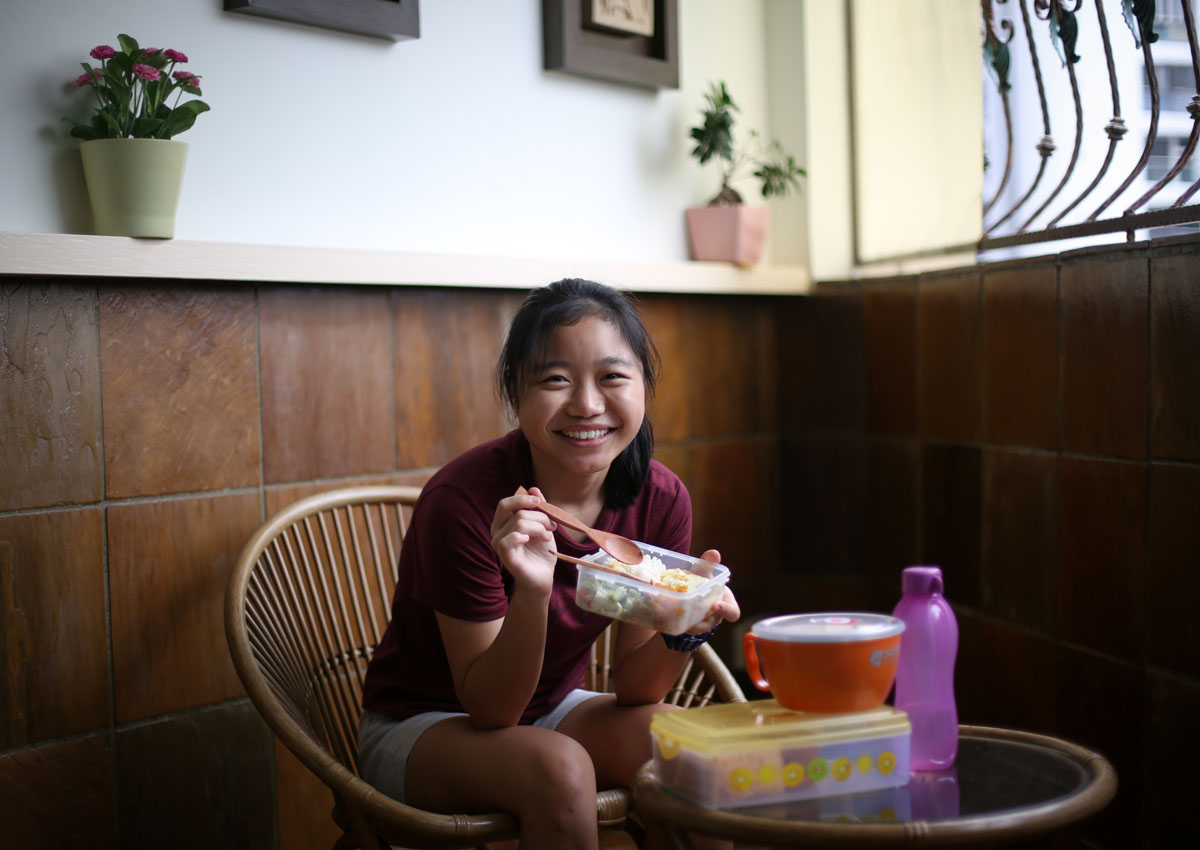
They take their own cutlery, containers and water tumblers when they go out. They avoid straws, plastic bags and food packaging.
Some have a compost bin at home where they dump their kitchen scraps and use the compost to fertilise plants.
Others turn fruit peels into eco enzymes for household cleaning.
When it is that time of the month, some women use reusable menstrual cups and cloth pads instead of disposable pads.
These are just some measures adopted by members of the Facebook group, Journey to Zero Waste Life in Singapore, which seeks to reduce waste in daily lives.
With more than 900 members, it was started in May by software engineer Gan Kah Hwee, 29, who wanted to spread awareness about sustainable living in Singapore.
She had always wanted to be eco- conscious, avoiding disposables and using her tumbler and lunchbox.
However, she says: “I felt paiseh (embarrassed) about doing something different. I also didn’t see others doing the same.”
She changed her mind after watching the award-winning documentary Trashed (2012) by British film-maker Candida Brady in April. She says: “I realised that if we don’t practise ‘reduce, reuse and recycle’, the trash problem is going to be serious. We have to start with ourselves and not wait for the authorities to do something.”
She signed up for a sustainability mentorship programme with environmental consultancy Green Future Solutions where she met likeminded participants.
She then started the Facebook group as a form of support. “We post photos of food we buy in our reusable containers. We learn from one another which restaurants and stalls don’t entertain reusables and try to avoid them,” she says.
The group started with about five members, including Ms Gan’s boyfriend, who runs a software firm.
Then, at a climate change seminar, she met representatives from the non-governmental agency People’s Movement To Stop Haze and Singapore Youth for Climate Action and invited them to the group.
They, in turn, invited their network of environmental bodies.
The group, which has about 40 new members every week, comprises mostly people from Singapore of all ages and from all walks of life.
About 100 of them attended its first sharing session on Oct 1 at the Visual Art Studio in Boat Quay.
During the three-hour event, Malaysian environmental journalist Aurora Tin shared her experiment in leading a zero waste lifestyle.
Singaporeans Eugene Tay, from environmental group Zero Waste SG, and Farah Sanwari, from Repair Kopitiam, where people meet to repair things, also spoke about their initiatives.
Environmental educator Tan Hang Chong shared tips on how to avoid junk mail while Ms Xyn Foo, of Open Book Cafe in Bukit Pasoh Road, talked about her efforts to reduce waste at her cafe by using stainless steel straws and not offering serviettes.
Vendors also shared information about eco-friendly products such as loofah kitchen sponges, bamboo toothbrushes and reusable beeswax food wrap.
Participants also got to sample “more sustainable” coffee roasted fresh by the Really Really Fresh Coffee movement, a Kickstarter- funded project that advocates roasting coffee on demand to reduce wastage, as roasted coffee has a short shelf life.
Ms Gan hopes to organise more of such sessions. “Maybe we can visit an incineration plant and recycling facilities to see where our trash goes.
We are also thinking of organising workshops on how to make toothpaste, compost bins and eco enzymes.”
A year’s trash in a bottle
Since the start of the year , Ms Aurora Tin, her husband and their dog, Lucky, have generated so little trash that their rubbish fits into a 500ml glass jar.
Ms Tin, 28, who works as a freelance environmental journalist in Petaling Jaya, Malaysia, made a resolution to live a “zero trash” lifestyle late last year.
She was in town recently to share her story with the zero waste community here.
She told the audience that in her job, she often writes about the importance of the three Rs: reduce, reuse and recycle.
But one day early last year, she found the dustbin next to her workdesk full of the empty packaging of the snacks she had eaten. “I felt like a hypocrite.
On the one hand, I was telling people to practise the three Rs, but on the other hand, I was creating so much trash myself.”
In December, she found the “solution to her guilt” when she read the book No Impact Man by Colin Beavan, which chronicles how he, his wife and their daughter tried to make zero impact on the environment while living in Manhattan, New York.
She says: “I was very inspired and thought maybe I could do the same in Malaysia.”
Taking a leaf out of the book of New Yorker and blogger Lauren Singer, who managed to squeeze two years of trash into a 16oz (about 473ml) mason jar, Ms Tin resolved to fit one year of her family’s trash into a glass jar.
She was then renting a room in a condominium with her solar engineer husband, Mr Lau Tzeh Wei, 28, and their dog.
She tells The Sunday Times that they started preparing themselves about two weeks before the turn of 2016 to give themselves “some time to adjust, as habits cannot change overnight”.
To find alternatives to plastic containers, they got family and friends to pass them empty glass jars they no longer wanted.
The couple gave away food with packaging to their friends so they would not have empty packaging to trash.
They converted their dustbin into a recycle bin.
Food waste was stored in the freezer and donated to an environmental non-governmental organisation after one to two weeks.
When they later rented a bigger space in a terrace house, they created a compost bin.
Much effort went into avoiding plastic bags and products including food, household and personal hygiene items that came with packaging which cannot be reused or recycled.
To avoid packaged products often found in supermarkets, they started buying groceries from the wet market and used a shopping bag for vegetables, tiffin carriers for wet produce such as tofu, and stainless steel containers for meat.
They stopped buying some of their favourite processed canned food such as baked beans and pasta sauce, as well as Milo packs and milk cartons.
Stores where household detergents and condiments such as soya sauce can be refilled became places they patronised.
Instead of plastic toothbrushes, they used bamboo ones, which are biodegradable.
They also made their own toothpaste from coconut oil and baking soda.
Ms Tin switched to using a menstrual cup, which is a flexible cup inserted into the vagina to collect menstrual blood.
It can be cleaned and re-used. In the last month, she stopped using shampoo.
She says: “Over time, we found there are many things we can live without.
If we really need something, we will always be able to find a substitute for it. For instance, instead of milk, we now take soy milk.”
Life became simpler.
She says: “In the past, I tended to use more condiments when I cooked, but nowadays, it’s just sugar, salt, soya sauce and coconut oil.”
Thanks to practical tips from the book, Zero Waste Home, and the Facebook group, Zero Waste Heroes, the journey has not been too rocky, she adds.
The most challenging part was in the first few months, when she and her husband were caught out by unexpected situations.
For instance, a cup of hot Milo came back with a plastic stirrer and their checked-in luggage had a sticker plastered on it.
They have since learnt to scan restaurants before making their orders and to travel without checking in their luggage.
Her husband found it difficult at first to refuse gifts from others. Ms Tin says: “I’d get upset when he came back from events with items, such as a T-shirt in a plastic bag.”
So far, however, the people around them, including Ms Tin’s parents, have been supportive.
Her mother-in-law sometimes still gives her food that comes in plastic bags or apples with stickers on them.
She says with a laugh: “I would quietly forget to bring them home or reject them gently.”
To date, her glass bottle is about two-thirds full and is largely filled with small plastic parts, as well as some empty medicine blister packs and used dental floss.
She believes they are on track to keep all of this year’s trash inside it.
She has not decided if she will keep her trash in another jar once this one fills up. But she is sure she and her husband are not returning to their previous way of life.
They have cut their spending by 40 per cent, through eating at home more often and buying fewer things.
Ms Tin says: “We also feel healthier as we usually dine in and eat mostly vegetables and grains.”
Her greatest reward? “I feel so much less guilty towards the Mother Nature I love.”
Baby, let’s buy pre-loved
Being environmentally conscious rises to a new level of difficulty when one has children.
Outreach manager Benjamin Tay, 34, who carries his own lunchbox and cutlery, uses second-hand gadgets and does not drive, found being eco-conscious easy at first. But with the arrival of his daughter, Margaret, in 2013, reducing waste became more difficult.
“Babies seem to need so many things, from diapers to milk to toys,” he says.
He and his wife, Wong Lexin, 33, a housewife, try their best. Margaret, who is turning three, wears cloth diapers at home and uses disposables only when they are out.
Other than a Lego set, which Mr Tay bought because she can “play with it for a long time”, her toys are mostly gifts.
Her clothes are also either gifts or hand-me- downs.
Her stroller, diaper bag and storage boxes for toys were bought from a community marketplace for buying and selling.
The children’s books she reads are borrowed from the library.
She sleeps in a toddler-sized bed which was converted from her cot and can be upgraded to a single bed.
The family, who live with Mr Tay’s parents, are looking to buy a three-room Housing Board flat.
Mr Tay estimates he has saved at least $1,000 by turning to reusables and pre-loved items.
While he does take Margaret to toy stores, he lets her know in advance that she can only window shop and that she has many toys at home. “So far, she has not asked us to buy toys for her,” he says.
When he was a child, he read a book about the impact of human behaviour on climate change and that influenced him to buy less and waste less.
Because of him, his wife of four years also does not patronise hawker stalls that use disposables.
Mr Tay sold his car this year to reduce pollution.
And to avoid creating electrical waste, he uses a second-hand phone, iPad and a refurbished Macbook.
The haze last year and its impact on his daughter – she had throat irritation and cough – boosted his conviction as an eco warrior.
He started volunteering at People’s Movement To Stop Haze.
When the environmental non-governmental organisation was officially registered as a society in June, he became its manager of people and outreach.
While he is passionate about the environment, he would not go to extremes.
“I believe in making compromises. So if the coffee shop uncle does not want to pour the cup of coffee into my tumbler, I’d either finish up the cup of coffee there or pour it into my tumbler myself. Habits take time to change and he may have his constraints.”
Reducing waste since she was 10
This eco warrior started young and in small ways.
Ms Oan Jia Xuan, 18, started recycling when she was 10.
The Hwa Chong Institution student says: “I remember putting plastic bottles, paper, metal cans and glass bottles into recycling bags and encouraging my parents to do the same.”
In primary school, she urged her classmates to throw plastic bottles and paper into the school’s recycling bins.
To save paper during maths class in secondary school, she drew a vertical line down her foolscap so she would have two columns to write in, instead of just one. She says: “The teacher told me not to do it a couple of times, but when I continued to do so, he just left it at that.”
She never wastes food and was shocked to learn that others do. She says: “When I was in secondary school, I saw two full trays of beehoon being thrown into the dustbin after a buffet in school. I was shocked to see so much food being thrown away.”
During recess, she started reminding her friends to finish their food or to ask for less rice in the first place.
She recalls with a laugh: “I think some of them became afraid to eat with me.”
Joining the Green Council, an environmental club at Hwa Chong Institution, boosted her commitment to the green cause.
She became familiar with the waste statistics in Singapore and overseas.
Realising how serious the situation was, she started to consume less.
“I realised that of the 3 Rs of ‘reduce, reuse and recycle’, Reduce is the most important. If we can reduce, then we don’t even need to think about reuse or recycle.”
To reduce the use of plastic bags and styrofoam boxes, she takes a tumbler and lunchbox to “tar pau” food and uses a container when she buys buns from the bakery.
She also takes a washable cloth bag instead of a plastic bag to school for putting her soiled clothing in.
Recently, she stopped consuming Yakult, a drink she loves. She explains: “Each time after drinking, you need to throw away an 80ml bottle and a straw.”
She has also stopped buying sweets, chocolates and biscuits that are individually packaged. Instead, she buys them in bulk if she wants to eat them.
To save electricity, she has been using cold water to shower for the past year. She charges her phone only once in two days.
Some of her habits have rubbed off on her parents. Her father, 55, who runs his own business, and her housewife mother, 53, now use reusable containers and shopping bags.
They live in a five-room Housing Board flat.
Jia Xuan is so fired up about the cause that she has written to one shopping mall and at least two supermarkets and eight companies, including clothing and furniture shops, to get them to switch from plastics to reusables.
She plans to pursue environmental studies in university.
She says: “I hope to be involved in policy-making one day and help Singapore become a more sustainable country.”

This article was first published on Oct 09, 2016.
Get a copy of The Straits Times or go to straitstimes.com for more stories.
Image:
Blurb:
<p>They take their own cutlery, containers and water tumblers when they go out.</p>
Publication Date:
Sunday, October 9, 2016 – 16:00
Keywords:
Send to mobile app:
Source:
Story Type:
Others


