Zunika Ahmad’s sentencing comes less than two weeks after Singapore’s apex court overturned her acquittal.
Source link
Woman jailed 10 years for sexually assaulting girl with sex toy
Local market set to cool as US election draws near
The world is counting down to the United States presidential election on Nov 8, an event that could cause market turbulence in the near term while raising questions about the future of global trade.
Analysts expect regional markets to reflect volatility on Wall Street in coming weeks, so investors should tread carefully even if opportunities for bargain-hunting turn up.
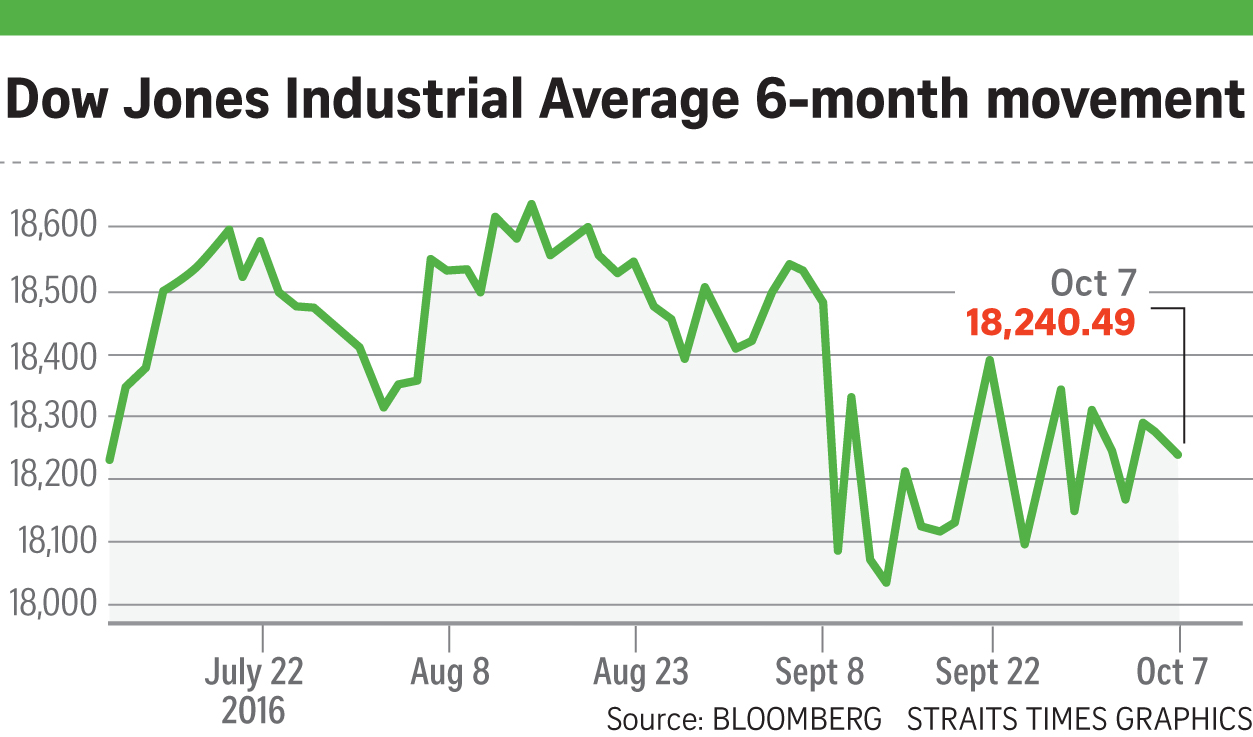
One reason for caution is that US presidential elections have traditionally been preceded by sell-offs. In 2012, for instance, the Dow Jones Industrial Average dropped by around 6 per cent in the month leading up to the vote on Nov 6.
ELECTION JITTERS
“Historically, US equity indexes tend to be volatile during presidential election years when the incumbent is not seeking re-election,” DBS analysts Janice Chua and Yeo Kee Yan said in a recent note.
“Given the high correlation of global equity markets with the US’, investors are likely to stay on the sidelines in the run-up.”
Both the S&P 500 and Dow Jones Industrial Average have been range-bound in the past 30 days – a sure sign of jitters building up. Both indexes have been down around 1.3 per cent over the period.
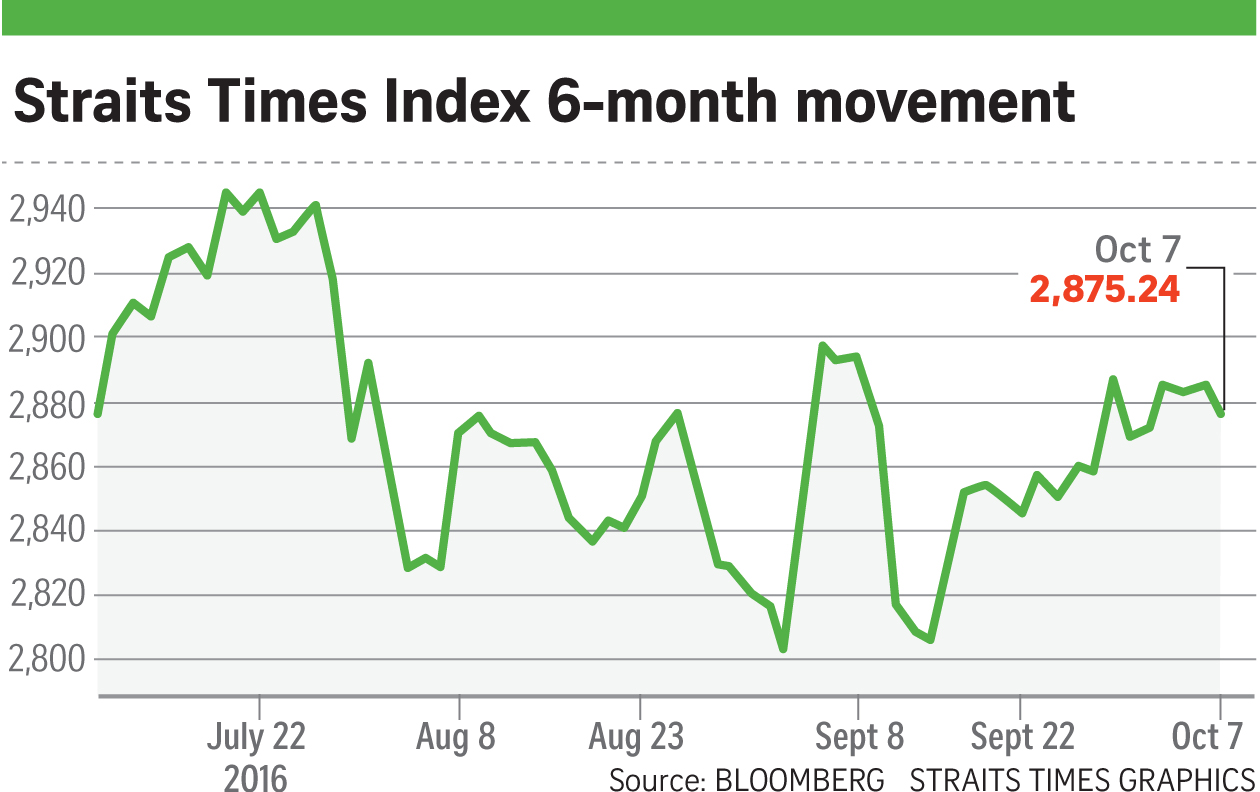
Against this backdrop, DBS has forecast that the Straits Times Index (STI) will trade between 2,750 and 2,950 points for the remainder of the year. The benchmark closed at 2,875.24 last Friday.
What complicates matters is that Republican candidate Donald Trump has stirred worries within and beyond the US with his controversial policy stances on immigration and trade.
While Democratic candidate Hillary Clinton has been viewed by many as being more appropriate for the job, the markets might be unprepared for a nasty surprise, said CMC Markets analyst Margaret Yang.
“Right now, she is ahead in opinion polls, so equity markets have not fully priced in a victory by Mr Trump. But seeing how Brexit ended despite opinion polls, I wouldn’t completely rule out his winning, which would be a huge market shock and lead to panic selling,” Ms Yang told The Straits Times.
“One way to hedge against the risks is to get some gold and Japanese yen positions. Both are popular safe-haven assets and sought after during ‘bad times’. The key is having a balanced portfolio.
“As for shares, the local market is one of Asia’s cheapest and downside is limited, so there are opportunities for long-term investment.
“But now is not the right time to buy. Perhaps wait until the second or third day after the election when markets hit bottom and rebound, as they did after Brexit.”
Yield plays such as Keppel Reit (real estate investment trust), Ascendas Reit and Frasers Logistics & Industrial Trust are good buys amid the volatility, DBS noted, while ComfortDelGro and Sheng Siong are also worth a look.
Bank of Singapore has retained its neutral stance on Asia-Pacific equities, while advising investors to get exposure to high-quality bonds with shorter maturities to avoid interest rate risks.
LONG AFTERSHOCKS
Even so, the bank’s chief economist, Mr Richard Jerram, sees no reason to be overly bullish, as aftershocks from the election might be worse than just near- term market disruptions.
“With Clinton, we can expect a large degree of policy continuation. But if Trump wins, it will be a totally different game,” said Mr Jerram.
“Compared with domestic affairs, the US president has more power in directing foreign and trade policies. If Trump implements the 45 per cent tariff on Chinese exports that he pledged, the move could crash global trade because the whole Asia-Pacific supply chain would be affected. The worst-case scenario is that he throws the global economy into recession.
“As for the Trans-Pacific Partnership, you can be sure there’s no chance he would let it pass. In fact, it’s as good as dead even if Clinton wins – the deal is unlikely to get past the US Congress.”
A Trump administration might also create complications for Federal Reserve policies, noted ABN Amro chief economist Han de Jong.
“It is not only Trump himself, but also others in his camp who have come out to claim that the Fed is essentially a supporter of the Democrats… This raises a risk to Fed independence should Trump become president, not something financial markets should like,” said Mr de Jong.

This article was first published on Oct 10, 2016.
Get a copy of The Straits Times or go to straitstimes.com for more stories.
Image:

Blurb:
<p>The world is counting down to the United States presidential election on Nov 8, an event that could cause market turbulence in the near term while raising questions about the future of global trade.</p>
Publication Date:
Monday, October 10, 2016 – 15:00
Send to mobile app:
Source:
Story Type:
Others
Transgender man gets 10 years in jail for sexually abusing teenager

SINGAPORE – A 40-year-old transgender man whose acquittal for sexual assault charges was reversed last month was sentenced to 10 years’ jail on Monday (Oct 10).
Zunika Ahmad, who used a sex toy to assault a 13-year-old neighbour over a period of more than…
Source link
Scoot: Fares fr $45 all-in to over 20 Destinations Take Off Tuesday Promo on 11 Oct 2016

SCOOT: Extended Take-Off Tuesday promo w/ all-in fares fr $45 tomorrow (11 Oct, 7am to 1159pm). Travel by 13 Jan 2017
Scoot: Fares fr $45 all-in to over 20 Destinations Take Off Tuesday Promo on 11 Oct 2016
Escape the ordinary with Super Scootee. Wok into the land of vast imperial history and culture with Scoot’s extended Take Off Tuesday sale featuring all-in fares fr $45 to over 20 destinations
How did 81 judges cast 92 votes in Sing! China final?
Updated on Oct 10
SINGAPORE – How did 81 judges cast 92 votes in the Sing! China final on Friday (Oct 7) night?
That was the question that lit up social media in China and Singapore after Xinjiang’s Jiang Dunhao, 21, won the talent competition, narrowly beating Singapore’s Nathan Hartono, 25.
The answer to the mystery might be a technical error.
Sources close to the programme have blamed it on machine error, reported The Beijing News, but the producer of the show has not commented on the discrepancy.
Last Friday, six finalists were vying for first place at China’s National Stadium in Beijing. In the first two rounds, all six performed with their mentors, followed by solos.
Voting by the audience determined the top two singers, who would go on to the third round.
After both performed their songs in the third round, the audience and a panel of 81 judges voted to determine the final winner. The votes by the audience and the judges will each make up 50 per cent of the final tally.
Jiang and Hartono were the last two standing in the third round. Hartono performed a mash up of two songs – Moonlight in the City by Singaporean crooner Mavis Hee and Woman Flower by Hong Kong legend Anita Mui.
Jiang sang Window, a ballad by his mentor Chinese rock star Wang Feng. Hartono’s mentor is Taiwanese pop star Jay Chou.
During the vote, the judges, said to be industry and media professionals, were invited on stage to drop their vote in two ballot boxes. The boxes scanned each vote cast and the vote count was updated ‘live’ on a large screen.
Hartono led at first, but Jiang caught up, and they were neck and neck as the vote tally reached 81. But the numbers continued to go up.
Despite the host repeating multiple times during the show that there were 81 judges, Jiang won with 47 votes to Hartono’s 45 – a total of 92 votes.
Jiang also got more spectator votes – 59,852 to Hartono’s 45,613.
Read also: Nathan Hartono finishes second in nail-biting Sing! China final
It was a surprise win as Hartono, who goes by his Chinese name Xiang Yang in the show, was one of the favourites going into the final. His score in the semi-final on Sept 30 was the highest among the finalists.
Another singer, Xu Geyang, was also tipped to win but was eliminated in the second round.
One Chinese netizen called the voting “a comedy”, another said “we are not blind”. One netizen commented: “Do you think we don’t know maths?”.
Some speculated that the contest was rigged, while others questioned if there was a glitch in the voting apparatus.
In Singapore, support for the home-grown singer was strong.
“Nathan Hartono is already a winner! It’s 100% certain that he’ll be singing the 2017 NDP song!” said Singaporean poet Gwee Li Sui.
Many noted that no foreigner has ever won on the show.
Said prominent blogger Mr Brown: “Nathan Hartono, you may have come in second in the Sing! China contest but you are first in our hearts!
“How come got 81 judges and then the number of votes is 45 vs 47 leh? 45+47 is 92 leh. Kelong issit?”
It was also caught on camera that the last vote cast for Jiang registered as two votes, Lianhe Zaobao reported.
There was even a parody of the puzzling result posted by SGAG.
Hartono’s mentor Chou said in an interview after the competition that he was pleased with all aspects of the show, but joked that the weather was “too cold”.
“The media were dizzy from the cold, so maybe they voted wrongly,” Sina.com reported him as saying.
Both Hartono and Jiang graciously accepted the result.
Read also: Hartono came in 2nd but won plenty of precious air-time
Hartono told The Straits Times that he was not disappointed at being the runner up.
“I’m not sure how it showed up on TV. But did you see how I was smiling the whole way through when they were counting the votes? I’m just very happy that I got to sing the third song,” he said in a post-competition interview.
Jiang, in an interview with Sina.com, said that he was just “dazed” after his win, and he expected either Hartono or Xu to be the champion.
He also told Sina that there was much he could learn from Hartono.
In response to Sina’s question on whether the result was rigged because he has signed a contract with Star China, the producer of the talent show, he said: “Yes, the company has given me a contract. To me, a boy from a Xinjiang border town, there was nothing shady. I had nothing. To get where I am today, besides my hard work, and my mentor’s help, a large part was due to luck.”
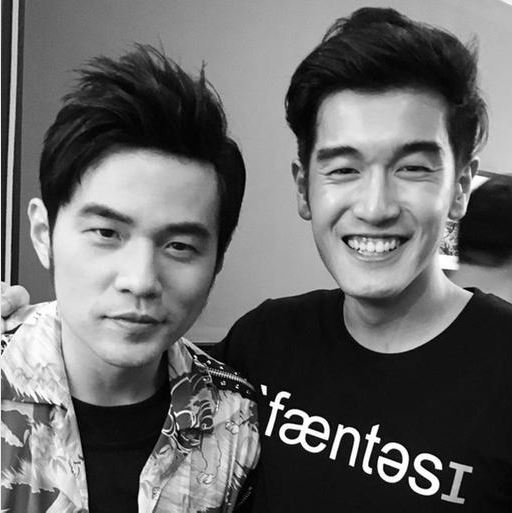
On Saturday morning, Hartono posted a photo of Jiang and himself on micro-blogging site weibo with this message: “You’re the best. Finally, a chance to share the stage with you!! Go all the way brother.”
“Everybody has been asking me about my feelings towards the results. Well here they are: in short, I’m not bothered one bit. I couldn’t have been happier to even be included in the finals. To then compete in the top two? That’s just insane,” he wrote in a Facebook post on Saturday afternoon.
Local singer Nathan Hartono wows Sing! China judges
Click on thumbnail to view photos. Source:
The Straits Times, The New Paper, YouTube screengrabs, HBO Asia, Music & Movement

















Read also: Tung Lok offers restaurant patrons free servings of Nathan Hartono’s favourite dishes
This article was first published on Oct 8, 2016.
Get a copy of The Straits Times or go to straitstimes.com for more stories.
Image:

Publication Date:
Monday, October 10, 2016 – 13:27
Keywords:
Send to mobile app:
Source:
Rotator Headline:
How did 81 judges cast 92 votes in Sing! China final? It could be machine error
Rotator Image:

Story Type:
Others
Singapore sees spike in number of cyberattack-for-ransom cases
Singapore – It started innocently enough, with a click on a third-party ad on an India news website by a staff member, back in 2014.
Soon, the data stored on that computer in a multinational logistics company in Singapore became inaccessible. The hard drive had been encrypted by a malware, triggered by the click on the ad.
A pop-up window offered to decrypt the data within the computer for the price of a bitcoin, a form of cryptocurrency then valued at about US$500 (S$686.42) per bitcoin.
Last year, the company saw 10 such attacks when rogue software infected the company’s computers, and encrypted each hard drive. The offer from the hackers was simple – pay the ransom to unlock the data, or lose it forever.
The total number of ransomware attacks so far this year has already matched the total number from last year, says the company’s head of security, who declined to disclose his name or the name of the company. The ransom amount varies, from a single bitcoin to two.
“The sophistication of the attacks has also increased. We have had malware that infects the computer, and tries to spread to our servers, and hold data stored on our servers to ransom as well.”
As the company had established a policy of not paying up, it has had to lose the data, wipe all the infected machines, and train its staff on how to recognise these new forms of malware and attacks.
While the first instance was due to a rogue online ad, subsequent attacks were caused by a variety of methods, including attachments sent to staff members, some marked simply as “Invoice”.
This use of social engineering, where hackers try to trick their prey, makes it a little harder to ensure that such files are never opened, explained the head of security.
While the company has not paid up any amount to the hackers, it estimates that it has wasted close to S$100,000 in the last two years in dealing with the issue, with time spent on wiping all the infected computers, and on training staff in recognising the changing methods of hackers.
According to security companies, such ransomware attacks, where data is stolen or locked by hackers and released only when money is given, are fast becoming the most popular and lucrative form of digital crime.
In 2015, the US Federal Bureau of Investigation’s Internet Crime Complaint Center saw 2,453 complaints about ransomware incidents, which cost users more than US$1.6 million.
Locally, the number of such attacks has increased as well, says the newly minted Cyber Security Agency of Singapore (CSA), which is responsible for Singapore’s cybersecurity efforts.
“There has been a spike in the number of ransomware cases reported this year,” said Dan Yock Hau, director, operations, CSA. “In the whole of 2015, there were only two reported cases. In comparison, in the first eight months of this year, 17 cases of ransomware have been reported to SingCERT.”
The Singapore Computer Emergency Response Team, or SingCERT, which falls under the purview of the CSA, was set up to facilitate the detection, resolution and prevention of cybersecurity-related incidents here. And that figure could actually be higher, as companies big and small are often unwilling to talk about being hit, as it means admitting that their systems have been compromised.
Those who disclose the nature of such attacks might actually send a signal to hackers that they are vulnerable.
“We believe that the number of victims is much higher as most cases tend to go unreported,” said Mr Dan.
The CSA says it has also received recent reports indicating that ransomware has started to spread to mobile devices as well.
“Hence, judging by global trends, the numbers are likely to escalate rapidly, given that ransomware has proven to be a lucrative monetisation tool,” said Mr Dan.
Some companies might choose to pay the ransom, as the amount can be quite small, but security experts say that the first instance of a ransomware attack is normally a drive-by attack, and not a full-blown one.
This is where hackers release the malware into the wild, and only demand a small fee in exchange for the decryption key.
Once hackers determine that an individual or company is willing to pay up, the attacks can escalate, with the ransom amount increasing each time.
According to Symantec, the financial sector, comprising finance, insurance and real estate, accounts for 47.5 per cent of ransomware attacks here, making it the most vulnerable industry in Singapore.
The company’s Internet Security Threat Report Vol 21 ranks Singapore as being eighth in the region, and 42nd globally, for ransomware by destination, with 16 total attacks per day in 2015.
But no industry should count itself safe from being targeted, warned Evan Dumas, head of emerging technologies, APAC, Middle East and Africa, at Check Point Software Technologies.
Because ransomware is usually targeted at a geography using a common service, all industries and companies of all sizes, as well as individuals, are targeted.
“A common tactic is to find a service like POPStation, and then use a phishing email claiming you have a package delivered and to click on the link to see the status. Another common tactic is to impersonate a government entity and trick the user into clicking on an attachment that is disguised as an official document,” he said.
These methods allow an attacker to target a geography broadly without the need for specific customisation, as would be required with, say, a banking Trojan software.
Still, some industries can be more vulnerable. In the United States, there are reports that the utilities and healthcare industries are being targeted because they provide a critical service to the community.
“It just so happens that healthcare facilities commonly have outdated security. They are also an emotional target because of the critical nature of the services provided,” noted Mr Dumas.
“What makes a good target is outdated security or a poor security posture, resulting in that company or industry being a good target.”
In April, the Board of Water and Light in Lansing, Michigan, was hit by ransomware.
In February, the Hollywood Presbyterian Medical Center paid 40 bitcoins 10 days after hackers locked access to the hospital’s medical records and computer systems.
But there is no guarantee that paying the ransom solves the problem.
The Kansas Heart Hospital in Witchita paid the ransom amount in May, but did not regain full access to its files. The hackers quickly demanded another sum, which the hospital subsequently decided against paying.
“From a cybercriminal’s perspective, healthcare is a popular target because of the non-perishable information available. While a quick call to the bank can easily terminate a credit card, medical records have no expiry date attached to them,” noted Nick Savvides, security evangelist at Symantec.
“Furthermore, patients’ lives are at stake in hospitals and often enough, a time delay could result in a life or death situation. Cybercriminals are aware of the urgency associated with healthcare and may use this to their advantage.”
Still, it is better not to pay the ransom, for the obvious reasons, said David Siah, country manager at Trend Micro Singapore.
“Firstly, paying does not always warrant the release of kidnapped files or data. In several cases, companies do not get their files back after making payment. Secondly, paying only serves to perpetuate the crime. It is an expedient and short-term solution, and often ends up fuelling the cybercriminal’s confidence in carrying out more attacks at other organisations.”
When dealing with cyberattacks, having proper back-ups has always been the advice and while it is good to have back-ups safely stored away, in case companies need to replace the ones encrypted by hackers, cyberattacks have also moved beyond merely locking up data.
These days, the threat can be to release stolen information, whether it’s private and personal photos, or publishing a company’s sensitive sales or research information to competitors.
“We now see that attacks have moved to mobile devices, encrypting files, and anything else that an owner is willing to pay to recover,” said Mr Savvides.
“Some ransomware now also threatens to publish the victim’s files online unless they pay, which is an interesting and sinister twist, since the traditional advice of keeping effective back-ups does not help in this scenario.”
Another form of ransomware attack used by hackers is to prevent proper business functions.
A dedicated DDoS, or Distributed Denial-of-Service, attack on a company’s e-commerce website can overload the site and prevent customers from making online transactions. At least until the business owner pays the hackers to stop the DDoS attack.
This has prompted local Internet service provider ViewQwest to launch a DDoS Protection Service for its subscribers. Powered by enterprise security specialist NSFOCUS, the S$699 per month service was launched in April and offers premium Internet security services to businesses, to beef up their IT infrastructure.
The service works by monitoring traffic for unusual activity and diverting suspicious traffic to its scrubbing centre, to filter real users from bots.
After identifying, in real-time, the bots used in a DDoS attack, a trigger is sent to drop the malicious traffic so business operations can continue smoothly.
The company said that in 2014 and 2015, DDoS attacks mainly targeted gaming companies but in 2016, the scope widened to threaten public institutions and financial companies as well. Some are politically motivated and often evolve into orchestrated ransom attacks.
“Corporations are increasingly going beyond plain-vanilla Internet lines to premium ‘clean-pipes’ which monitor and prevent malicious DDoS traffic in real time. Attacks of over 10 gigabits per second of traffic account for over 20 per cent of total DDoS attacks, signalling a growing trend in the amount of DDoS attack traffic,” pointed out Vignesa Moorthy, chief executive of ViewQwest.
“If your Internet security solution is to deal with DDoS attacks only after you have detected the attacks, you are already too late. Prevention is not only better than cure, it is now the only cure for huge DDoS attacks.”

This article was first published on October 10, 2016.
Get The Business Times for more stories.
Image:

Publication Date:
Monday, October 10, 2016 – 14:00
Keywords:
Send to mobile app:
Source:
Story Type:
Others
T4 construction set to be completed by year end
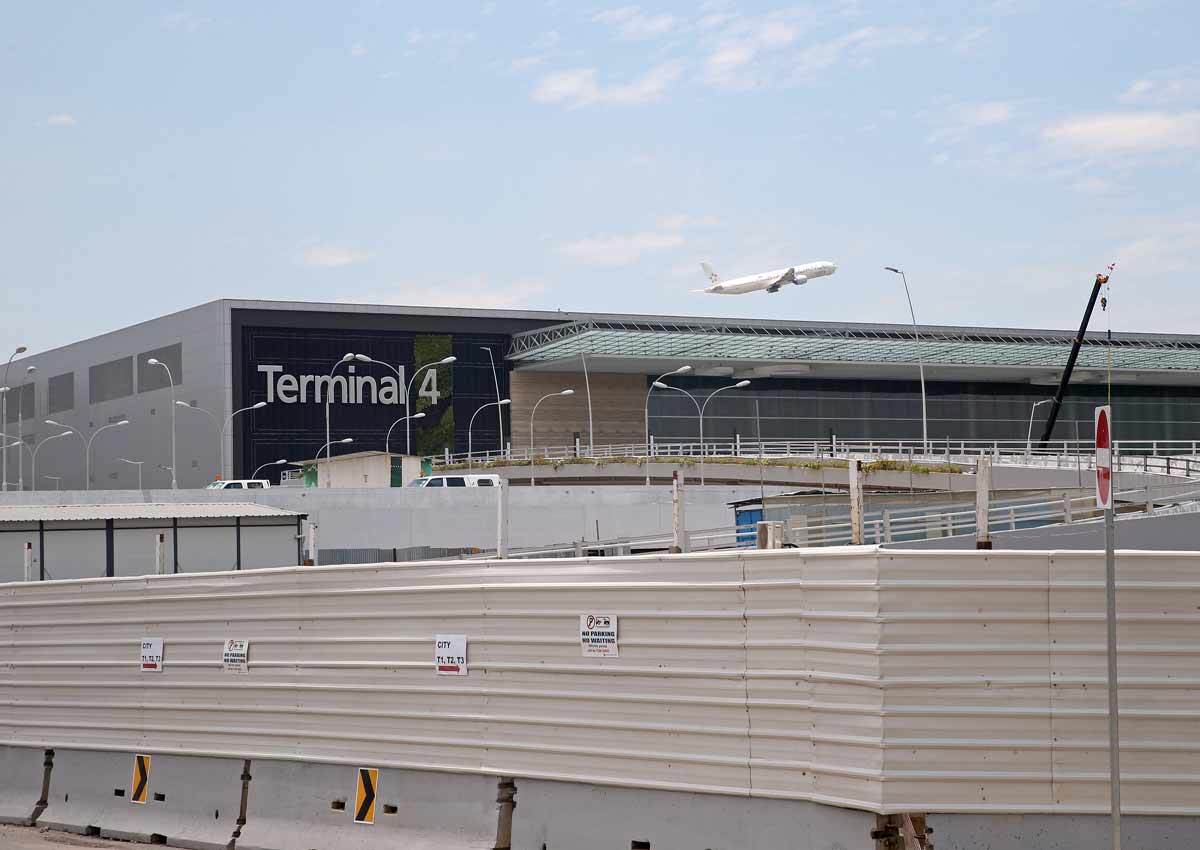
Changi Airport’s new passenger terminal looks finished from the outside with “Terminal 4” embossed on a wall at the departure level, and new roads and bridges constructed, along with a 68m-high control tower.
More than two years since construction started, a multi-storey carpark just in front of T4, an outdoor holding area for taxis and a bus terminus are also nearing completion.
Works are expected to be completed by the end of the year.
T4, however, will not be ready to receive travellers and visitors just yet, spokesman for Changi Airport Group Ivan Tan told The Straits Times. The opening is slated for the second half of next year.
The next phase of works will involve the testing of airport systems and equipment as well as operational readiness trials.
Unlike the other three terminals, T4 will see a massive rollout of self- service and automated options for check-in, bag tagging, immigration clearance and aircraft boarding.
Passengers will be subject to centralised screening instead of being screened at the gatehold rooms just before boarding – the system in place at the other terminals.
To minimise teething problems, extensive tests will be conducted later this year.
There are plans for more than 50 trials, including live flights, ahead of T4’s opening.
This is more than double the number of trials for T3, which opened in 2008.
Built to handle up to 16 million passengers a year, T4 as well as expansion works at T1 will increase Changi’s total capacity to 85 million passengers.
Cathay Pacific and budget airline AirAsia were the first two carriers to announce plans to move to the new terminal.
AirAsia’s Singapore chief executive Logan Velaitham is looking forward to moving the airline’s operations to the new facility.
The extensive use of automation and technology is a key attraction, he said.
This will not only benefit customers but also help the airline cut operating costs by as much as 40 per cent, with less reliance on manpower.
Mr Logan said: “We expect huge operational and productivity gains which we aim to translate into lower fares for our customers.
“At T4, AirAsia passengers can also look forward to a new travel experience which will offer seamless and easy processes from start to end.”
While there will be no Skytrain linking T4 to the other terminals, those with connecting flights will be moved to a transfer lounge where they will be bussed to T2.
They can take a Skytrain to T1 and T3 from there.
Undergraduate P.S Sandhu, 19, said: “Automation is definitely a step in the right direction in terms of convenience and efficiency.
“But there must also be adequate provisions made so that travellers who may have issues with check-in or other processes can move to manual counters so they don’t hold up the automated lanes.”
This article was first published on Oct 10, 2016.
Get a copy of The Straits Times or go to straitstimes.com for more stories.
Image:
Publication Date:
Monday, October 10, 2016 – 15:00
Keywords:
Send to mobile app:
Source:
Story Type:
Others
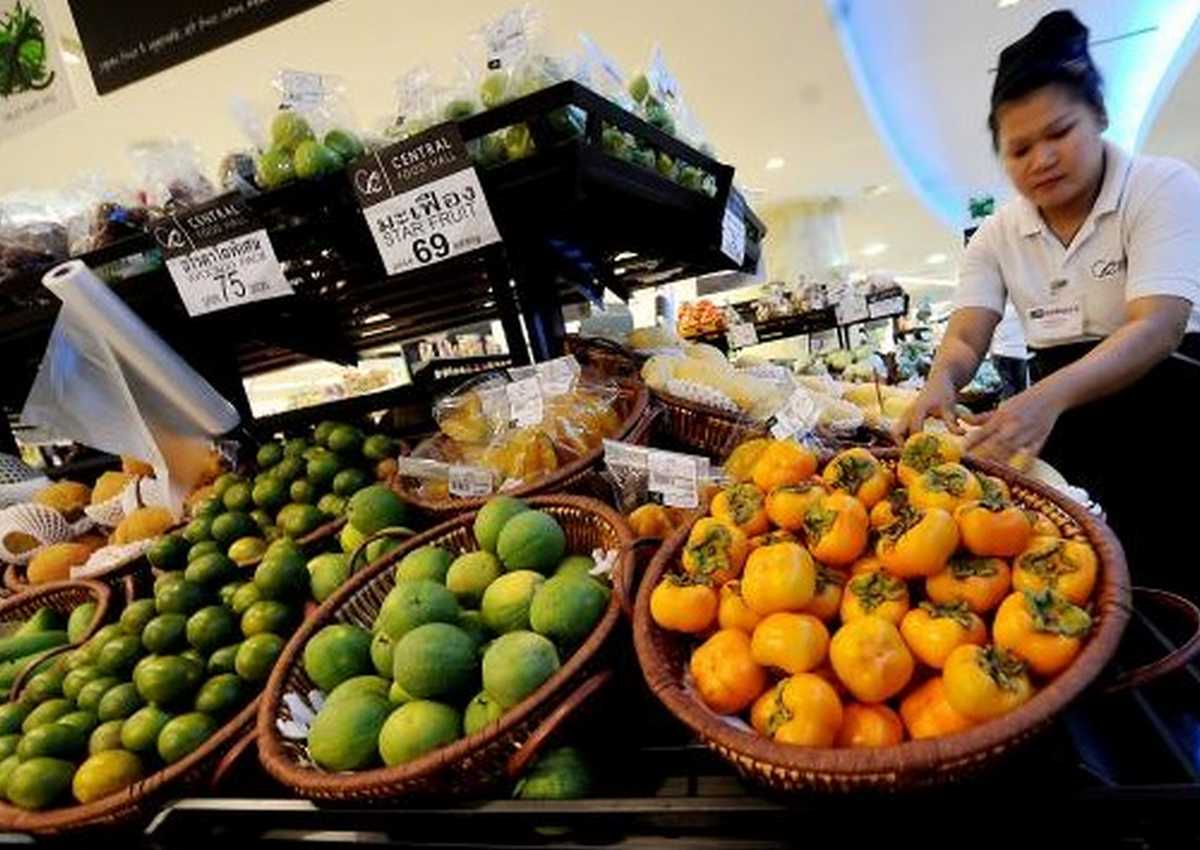
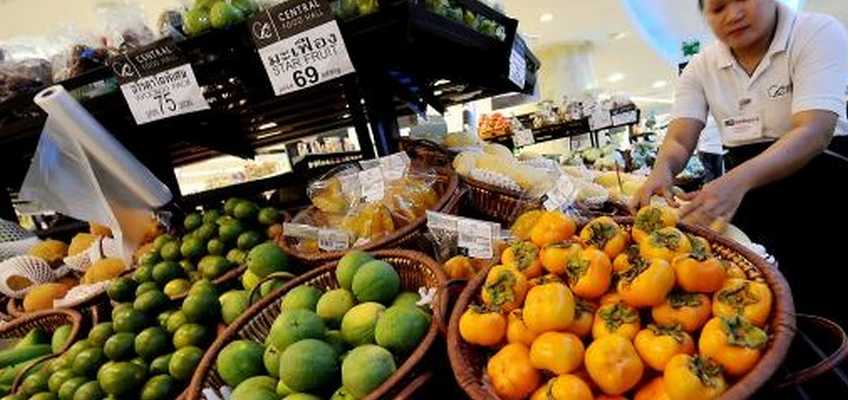
70% of produce in Thai supermarkets continue to be 'contaminated': Food safety group

A regular pesticide screening of 16 types of fruits and vegetables from Thailand in August has found traces of prohibited and dangerous chemicals, a food safety advocacy group revealed on Oct 6.
The Thai-Pesticide Alert Network (Thai-Pan) also warned that 70.2 per cent of the fruits and vegetables found in Thailand’s supermarkets were contaminated with unsafe levels of pesticide.
Ironically, produce with the Q-Mark certification – a voluntary food safety label introduced by the Thai government in 2005 – were also found to have unhealthy levels of chemicals.
In fact, contamination of ‘Q-Mark’ products increased to 61.5 per cent in the latest inspection, compared to 57 per cent in a March survey by Thai-Pan.
7 facts to note about organic food
Click on thumbnail to view photos. Source:
Shutterstock




























2 in 10 of the samples certified as organic by the Thai government also had small traces of pesticide residue.
Prokchol Ousap, coordinator of Thai-Pan, said that 56 per cent of 158 produce samples had unsafe levels of chemicals, The Bangkok Post reported.
The most contaminated vegetable is Chinese kale, with 10 out of 11 samples failing the test, while all 8 samples of Sai Namphueng oranges had unsafe levels of pesticide.
Other contaminated vegetables on the list include red chillies (9 of 12), cowpeas and basil (8 of 12), morning glory (7 of 12), small eggplant (6 of 11), cucumbers (5 of 11), tomatoes (3 of 11), cabbage (2 of 11) and Chinese cabbage (2 of 12) .
Besides Sai Namphueng oranges, other fruits to avoid include dragon fruit (7 of 8), guava (6 of 7), papaya (3 of 6), watermelon (3 of 7) and cantaloupe (1 of 7).
These contaminated products were found in the supermarkets from three provinces in Thailand – Pathum Thani, Nakhon Pathom and Ratchaburi.
grongloh@sph.com.sg
Image:
Category:
Publication Date:
Monday, October 10, 2016 – 12:28
Send to mobile app:
Source:
Rotator Image:
Story Type:
Rewritten Story
Nine Emperor Gods Festival celebrated with many people of all races and religions
The annual Festival of the Nine Emperor Gods, also known as Kew Ong Yah in Chinese dialect, was celebrated in Nee Soon GRC, where Mr Shanmugam is a Member of Parliament.
The 10-day long celebrations involved performances and community events.
Said Mr Shanmugam: “Every year, the organisers extend the celebrations to everyone in the community – goodie bags are distributed, daily vegetarian meals are offered, the elderly residents are treated to a dinner and are given red packets.
“Devotees and the gods will also make a special tour around Nee Soon to pay mutual respects to the various temples, including the Indian temples who warmly welcome them.”
As an MP, Mr Shanmugam has attended the festival every year if he is in Singapore during the celebrations.
Speaking to the media, he added that the event is very ground-up and also emphasises tradition. Beyond religion, the celebrations take on a multi-racial and multi-religious approach as well, he said, with many participating.
Accompanied by a procession of brightly-lit floats, lions and dragon dances and performers in elaborate costumes, Mr Shanmugam and the devotees left from the Chong Pang Combined Temple to Sembawang Beach where prayers were held.
After the prayers, he joined temple elders bearing the sacred urn representing the gods in “sending off the Nine Emperor Gods” into the waters of the Straits of Johor along Sembawang Beach.
They then returned to the shore to set a huge paper-mache dragon boat ablaze, to symbolise casting off bad luck and negativity.
Mr Toh Hong San, chairman of the Kew Ong Yah Jing Shui Gang Dou Mu Gong Temple, said cultural performances from other racial groups were included in the celebrations this year. Malay and Indian performances were featured during the vegetarian feast held for more than 950 residents on the ninth day of the festival as well.
330916
 Photo Gallery
Nine Emperor Gods celebrations in Phuket and Singapore
Source:
-

<!–
-

<!–
-

<!–
-

<!–
-

<!–
-

<!–
-

<!–
-

<!–
-

<!–
-

<!–
-

<!–
-

<!–
-

<!–
-

<!–
-

<!–
-

<!–
-

<!–
-

<!–
-

<!–
-

<!–
-

<!–
-

<!–
Image:

Publication Date:
Monday, October 10, 2016 – 11:47
Keywords:
Send to mobile app:
Source:
Story Type:
Others
Thailand extends cash help for babies born in poverty amid IQ fears
SAMUT SONGKHRAM, Thailand – After the birth of her second son six months ago, Narinthip Pommarin stopped work to focus on her boys but soon found her husband’s sporadic US$12-a-day(S$16) roofing jobs could not cover their needs.
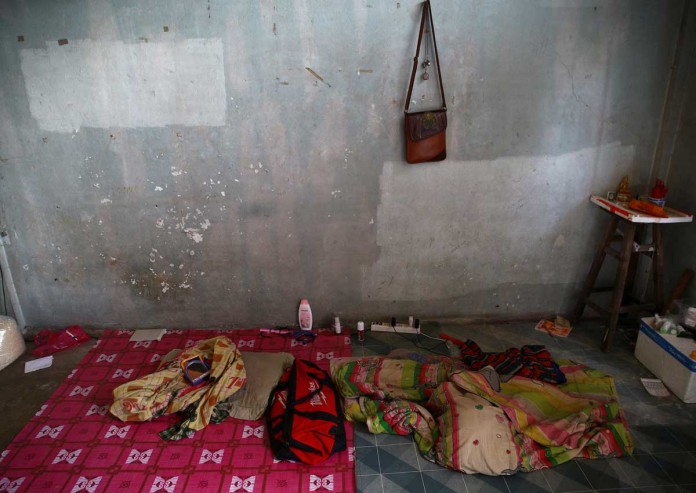
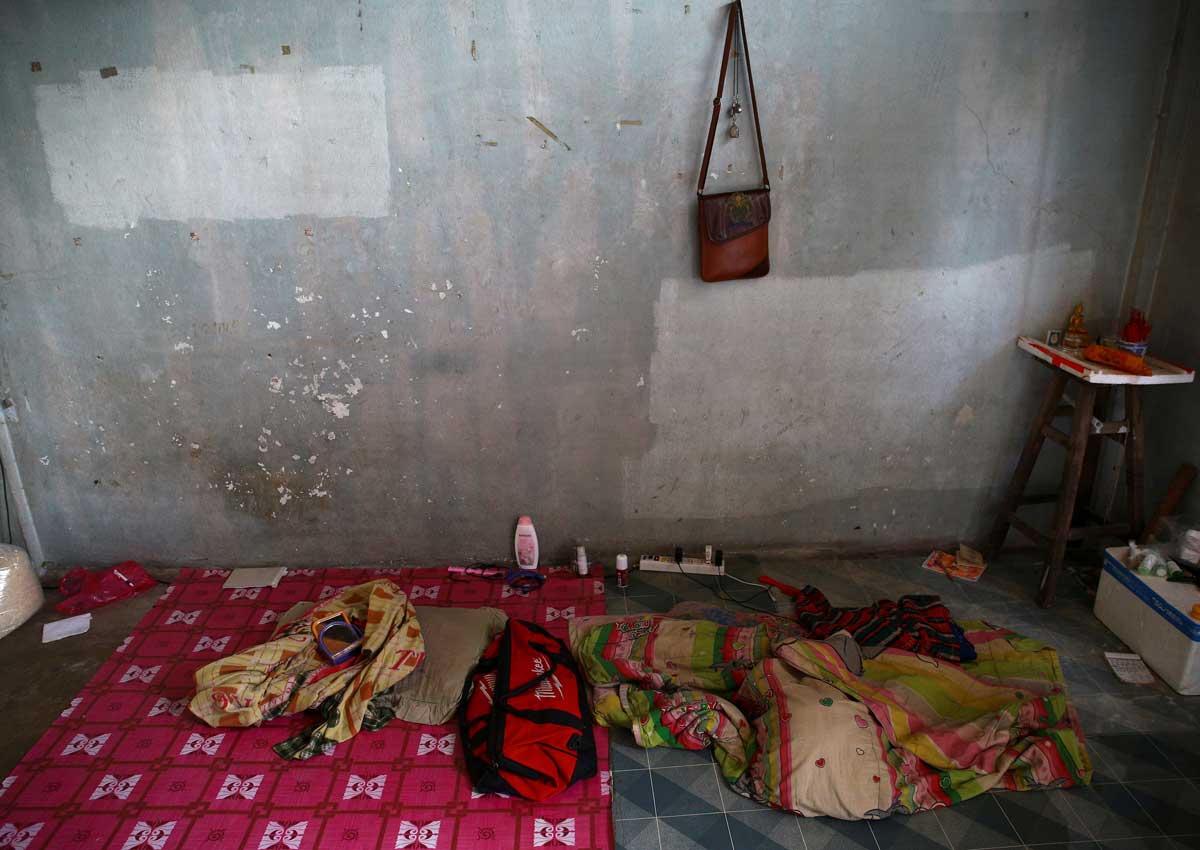
They were forced to borrow money for the rent on their tiny, airless room in a rowhouse behind a car wash in Samut Songkhram province, southwest of Bangkok, and were struggling to repay the debt.
Then a friend suggested Narinthip sign her baby Ang Bao up for Thailand’s new child support grant providing 400 baht (S$16) a month. “It’s not a lot, but it helps,” Narinthip said, sitting in the trash-strewn alley outside her home, tugging a rope to rock Ang Bao to sleep in a hammock.
“We save it, we have not used any of it yet, but at least when we do not have work, we can rely on this amount to buy milk and food.”
Thailand launched its child support grant a year ago to help tens of thousands of its poorest children get a better start in life.
The initiative comes amid concerns that a lack of proper nutrition and early years care has led to Thailand’s children having lower IQs than the global average which could have longterm repercussions for the country.
UN children’s agency UNICEF, which spent seven years helping the government develop the programme, hopes other countries in the region will follow suit.
Research shows that the first few years of a child’s life are crucial for mental and cognitive development.
Investing in the early years leads to healthier children who do better at school and have higher earning potential as adults – which helps break entrenched cycles of poverty, experts say.
“It is during the (first) six years that investment in a child’s development is most critical and yields the highest long-term returns – not only for the individual child, but for society as a whole,” said UNICEF representative for Thailand Thomas Davin.
Earlier this year Thailand extended the grant until a child’s third birthday, from the original plan for a year of support, and this month bumped up the monthly amount to 600 baht.
“In the past, Thailand did not have any programme to care for young children,” said Maitri Inthusut, permanent secretary of Thailand’s Ministry for Social Development and Human Security.
“The child support grant is a way to look after children … to build a strong foundation for our country in the long term.”
HELPING HAND Families with a monthly salary of less than 3,000 baht per adult are eligible for the grant.
Among its 65 million people, Thailand estimated 128,000 of the 710,000 babies born each year would qualify for the grant.
So far 154,000 have registered, Maitri said, meaning the government has underestimated the number living in poverty.
The grant has also opened a crucial channel of communication between families in need and local authorities, increasing access to social services.
“The government is directly reaching its hand out to help. This keeps (families) in close contact with the local government (services),” Maitri said.
Statistics from the programme are sobering.
Among the mothers of the registered babies, 46 per cent are unemployed, 23 per cent are under 20 years old, 40 per cent are single mothers, and 10 per cent lack secure housing, Maitri said.
For 40-year-old Saipiroon Poonsawat, the main carer for her baby nephew who has severe developmental problems, registration has linked her to social workers and much-needed assistance.
Eleven people live in her leaky, ramshackle hut, including seven children and her pregnant daughter-in-law.
Soon there will be a twelfth mouth to feed. “Even now, we skip meals,” Saipiroon said, cradling her skeletal nephew, Porsche, his feeding tube sticking out from under his shirt.
During a visit, social workers brainstormed ways to tap into other funds for Porsche’s healthcare and infant formula, as well as tuition for Saipiroon’s 16-year-old son who had to quit school to save money.
Thailand, which launched its grant after a visit to see South Africa’s child support programme, will share its experiences at a meeting in Kuala Lumpur next month of regional ministers and officials, organised by UNICEF and the Malaysian government.
Cambodia and Bangladesh are already planning to visit Thailand with a view to setting up similar child support grants, UNICEF’s Davin said.
Image:
Publication Date:
Monday, October 10, 2016 – 11:34
Send to mobile app:
Source:
Story Type:
Others


