28.7 C
Singapore, SG
Thursday, September 24, 2026
Home Blog Page 2648

Economists predict no change to MAS monetary policy for now

0

SINGAPORE – Economists are saying – meekly – that Singapore’s central bank will not alter its monetary policy approach when its decision is announced this Friday, while an easing is ripe for 2017.

Some, including Nomura and Bank of Tokyo-Mitsubishi UFJ (BTMU), see a 60 per cent probability of the Monetary Authority of Singapore (MAS) keeping the Singapore dollar nominal effective exchange rate (S$NEER) policy band untouched.

But recent developments have heightened some of their worries, prompting them to increase the odds as going down to the wire. Citi economist Kit Wei Zheng said in an Oct 5 note that its base case is now 50 to 55 per cent standing pat.

Looking ahead, economists are more certain of a monetary easing next year, most likely in the form of a re-centring, if growth fundamentals do not improve.

Wrote RBS economist Vaninder Singh in a note on the chance of MAS easing: “Not yet, but we are getting there.”

In April, MAS flattened the S$NEER slope to zero per cent as it forecasted that core inflation will pick up more slowly than expected over 2016 as economic growth slows.

Core inflation, which excludes private road transport and accommodation costs, is a key policy consideration for the MAS.

The MAS also looks at other price and cost measures to assess inflationary pressures in the economy. These include prices of commodities and electronic goods, output gap and labour unit costs.

Economic data in recent months seemed to affirm MAS’ woes.

The labour market has seen increased slack in recent months, and latest export numbers also painted a worrisome picture for the city-state’s trade-reliant economy.

A surprise drop of 1.5 per cent in private home prices in the third quarter also dented economists’ confidence further, as there is a correlation between home prices and quarter-on-quarter (qoq) gross domestic product (GDP) growth.

Yet many economists said that these still fall within MAS’ expectations when it flattened the S$NEER band in April.

For one, September’s manufacturing purchasing managers’ index (PMI), a leading indicator of activity in the sector, inched into expansionary territory for the first time in 14 months.

Factory output, specifically those within the electronics cluster, also expanded slightly in August. Factory output is closely related to manufacturing’s GDP performance.

More crucially, economists are placing their bets on the recent upbeat inflation forecasts from MAS as a strong case for no policy change.

In July, MAS said that core inflation for 2016 should “average around one per cent”. It had previously expected that core inflation would be in the lower half of the 0.5 to 1.5 per cent range for the year.

HSBC economist Joseph Incalcaterra said that the upgraded inflation forecast “sent a clear signal to the market that costs will rise”, and is a strong basis for MAS to not ease.

But even as economists expect no policy change from MAS, they predict that Q3 growth data, due also on Friday, will be disappointing.

Recent bearish comments on growth outlook made by MAS chairman Tharman Shanmugaratnam heightened these worries up a notch. Mr Tharman, who is also deputy prime minister, said in late September that Singapore’s 2016 growth is likely to come in at the lower end of the one to 2 per cent range.

Some see this as a hint at a deeper Q3 qoq contraction. ANZ economist Ng Weiwen put this at 0.3 per cent, while Citi’s Mr Kit had placed the contraction at 0.5 per cent before Mr Tharman’s comments.

With no expectations of a monetary easing, economists see fiscal resources and policy responses to the upcoming Committee on the Future Economy report to support growth in the meantime, said BTMU’s Leong Sook Mei.

Even if the Singapore dollar might be spared from undergoing policy surgery this week, economists say that an operation is still in the works. This is likely to be in April next year when the weakness in Singapore’s economy becomes more apparent.

By then, MAS will most likely re-centre the S$NEER band. This is because the slope is already flat, and volatility in the foreign exchange markets is not high to warrant a widening, wrote RBS’ Mr Singh.

While the general consensus leans more towards no policy change from MAS this Friday, the large probability they accorded to a surprise move is partially substantiated by the fact that the central bank has rarely issued policy statements on the last working day of the week. The last time it was issued on Friday was three years ago on April 12, 2013.

Also, in light of the three latest easings by MAS, ANZ’s Mr Ng is still holding his breath: “Recently MAS has been surprising the market, so an easing is still not totally off the table.”


This article was first published on October 10, 2016.
Get The Business Times for more stories.
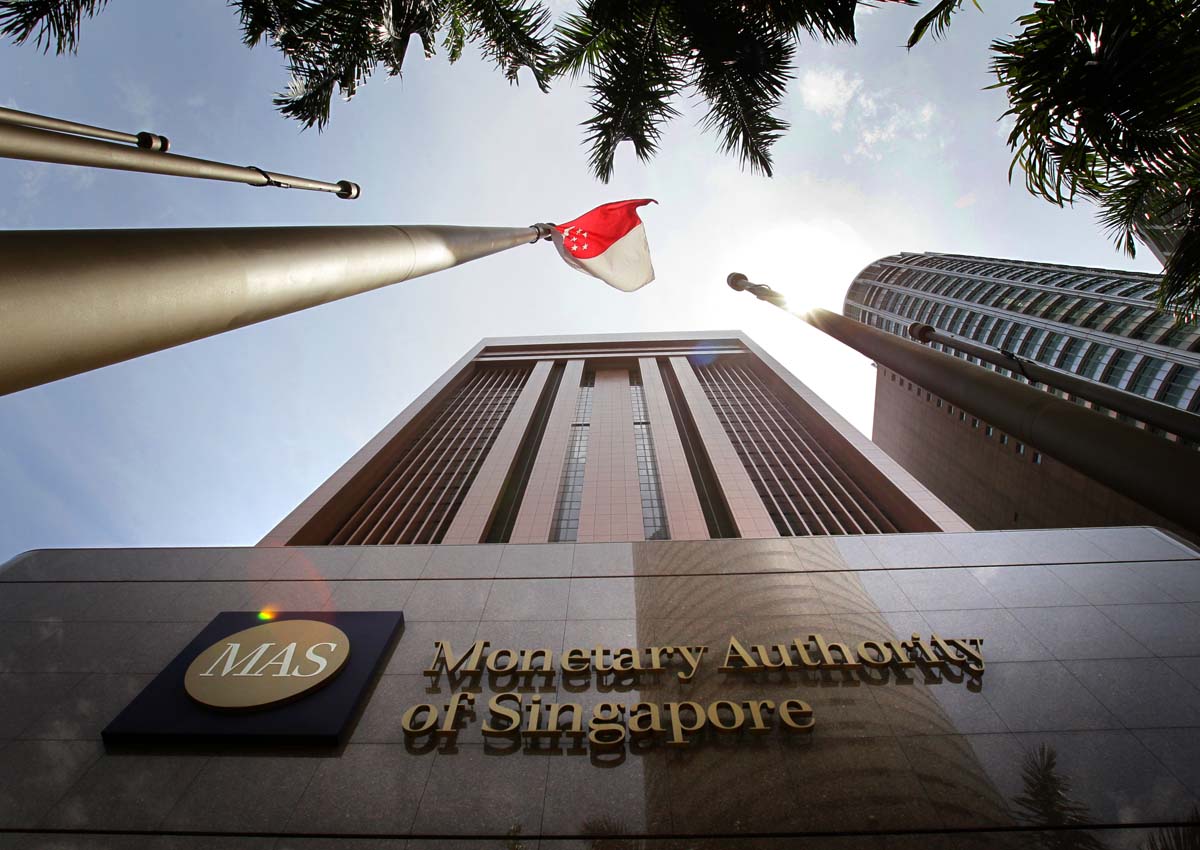
Image: 
Publication Date: 
Monday, October 10, 2016 – 15:06
Send to mobile app: 
Source: 


Story Type: 
Others

Source link

Mechanised HDB carparks safe but slow, say users

0

While two of the three mechanised carparks in Housing Board estates – Changi Village and Yishun – can have utilisation rates of more than 90 per cent during peak hours, it is not the case for the one in Bangkit Road, which sees just around half its spots taken up in its busiest periods.

The mechanised parking systems (MPS) started operation last December and January, with those in Bangkit Road and Yishun for season parking and the Changi Village one open to short-term users too.

The HDB says it plans to allow short-term parking at the mechanised carpark in Bangkit Road in Bukit Panjang later this year where “the needs of our season-parking ticket holders are adequately met”.

There are 26 parking spots in the Yishun mechanised carpark, 60 at the one in Bangkit Road, and 195 in Changi Village, where the mechanised carpark is near offices and eateries and is most popular during lunch and dinner on weekdays.

In Yishun, residents said the mechanised carpark is well used, with vacancies falling to single digits at night. But at Bangkit Road, vacant spots remained at around 50 between 8pm and 9pm when The Straits Times visited last Thursday.

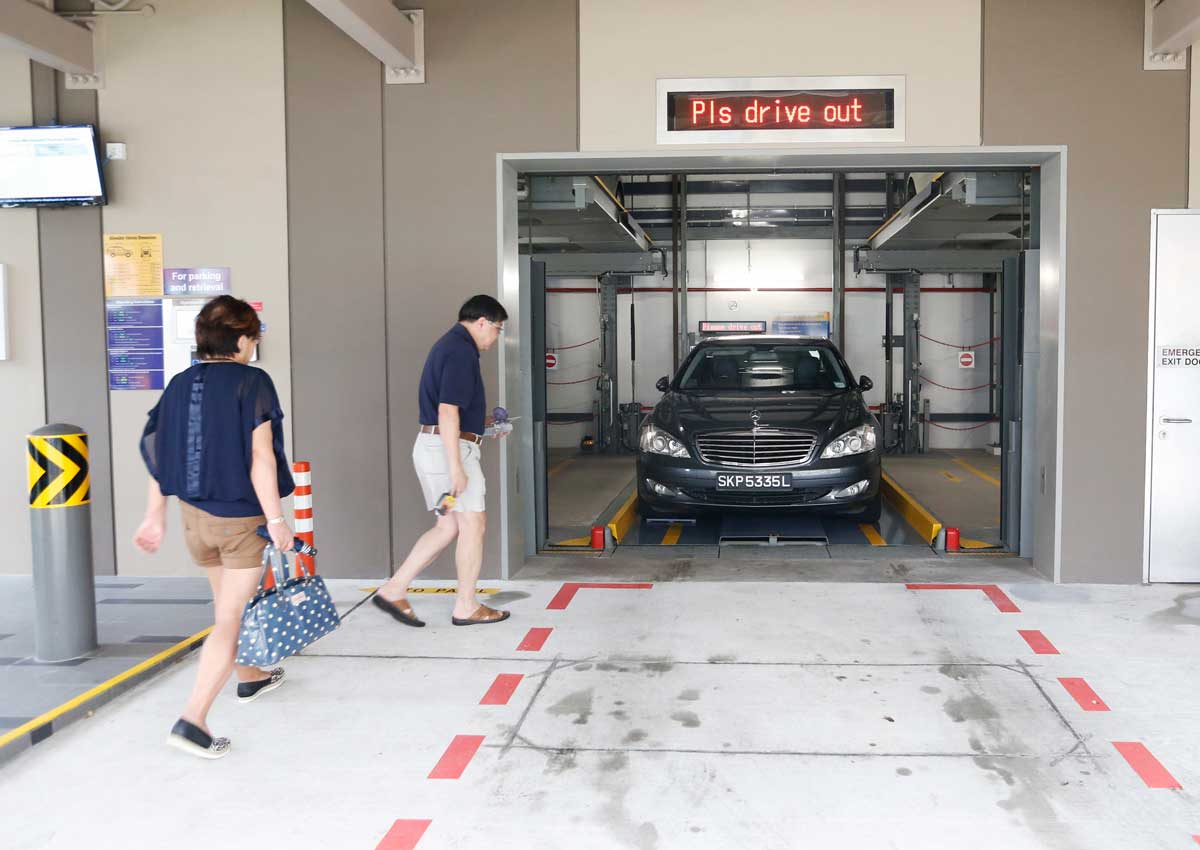
At a mechanised carpark, users drive into a lift before exiting their vehicle and entering a PIN code outside. The car lift doors then close and the system automatically parks the vehicle. It is retrieved by entering the same PIN code.

Those who use the mechanised carparks told The Straits Times the system is convenient and safe, despite the occasional glitch. For those who do not use them, waiting time is a major concern.

“We cannot afford to wait five, 10 minutes in the morning. My kids will be late for school,” said Mr Low Soon Peng, 45, a safety officer living in Yishun. He uses the mechanised carpark only on weekends.

It takes 10 to 15 minutes for users to retrieve their cars during the peak period and an average of five minutes during the off-peak period, said the National Development Ministry.

Motorists who need to use the car frequently also find it a hassle to park at a mechanised carpark.

Said retail manager Jo Yang, in her 40s, who works in Bangkit Road: “It’s not very convenient for shopkeepers like us. We have to move merchandise sometimes and it’s troublesome to go in and out of the carpark.”

Other problems related to the three mechanised carparks include breakdowns. In half a year, there were 11 breakdowns out of some 54,000 parking transactions, mainly due to user issues such as motorists forgetting to apply their parking brakes, said MND last month.

Fans of the system, however, cited advantages such as security.

Yishun resident K. Krishna, 61, director of a human resource consultancy, said: “When I go overseas, I can leave my car there for a month. In the open-air carpark, you don’t know what’s going to happen but (at the mechanised carpark), I’m very sure the car is safe.”

SIM University senior lecturer in urban transport management Park Byung Joon said such systems make it “quite easy to increase the parking capacity by (at least) threefold”.

He said: “It has been implemented in cities like Seoul and Tokyo for many years. Given the scarcity of land in Singapore, MPS is really a way forward.”

But Dr Park added that engineers will need to shorten the time for retrieving cars, as a 15-minute wait during peak hours may almost be “psychologically unacceptable” for users.


This article was first published on Oct 10, 2016.
Get a copy of The Straits Times or go to straitstimes.com for more stories.

Image: 
Category: 
Blurb: 
<p>While two of the three mechanised carparks in Housing Board estates – Changi Village and Yishun – can have utilisation rates of more than 90 per cent during peak hours, it is not the case for the one in Bangkit Road, which sees just around half its spots taken up in its busiest periods.</p>
Publication Date: 
Monday, October 10, 2016 – 16:00
Send to mobile app: 
Source: 


Story Type: 
Others

Source link

HK singer Joey Yung dazzles S'pore audience despite foot injury

0

If there were any lingering pain from her recent foot injury, Hong Kong pop singer Joey Yung showed no sign of it last night in front of a 5,000-strong crowd.

The 36-year-old Cantopop diva was in town with fellow Hong Kong veteran Hacken Lee, 48, for their first double-bill concert at the Resorts World Ballroom in the Resorts World Convention Centre.

Great friends in real life, the duo were on fire from the get-go, performing a string of upbeat, energetic numbers like Sleep Early and Escape, and even doing a sexy tango dance to the track Bewitched.

At their previous concert stop two weeks ago in Huizhou, China, Yung told Hong Kong reporters that she had accidentally broken a drinking glass at home and stepped on the glass shards and splinters.

“It happened just before our Huizhou show and I was in severe pain up till the start of the concert,” she said.

“Backstage, my crew members did everything they could to help me. Some held my leg, some used a magnifying glass and needle to check for leftover splinters.

“After some poking here and there, they finally managed to pop a small piece of glass out from my foot.”

The New Paper spoke to local diehard fans of Yung, who said she is one who “always displays incredible professionalism” in the event of freak accidents or mishaps.

Ms Wing Wong, 40, who works in logistics and is the leader of the Singapore contingent of Yung’s international fan club, said: “I’ve watched every concert of Joey’s and there were times when she managed to pull off concerts with minor injuries, or when she lost her voice.”

SCARY

The most serious incident, recalled Ms Wong, was during Yung’s 2010 concert in Hong Kong, when she tripped and fell while singing on an elevated platform.

“At that moment, everyone in the audience went silent. It was quite scary. But Joey immediately stood up and told her fans: ‘Where I fall is where I’ll stand up on my own.'”

In April, Yung and Lee took part in the hit Chinese reality TV singing competition I Am A Singer 4, which pits professional singers against one another.

Yung came in seventh out of 14 contestants and Lee, who was also the host of the show, came in fourth.

Another local fan, healthcare worker Lily Foong, who is in her early 40s, pointed out that despite Yung’s middle-of-the-table placing, she was already a winner to all of her fans as she showed she was “the type to give it her all”.

“Joey twisted her ankle on I Am A Singer 4 and while it would have been better for her to rest, she continued to dance,” said Ms Foong.

During their concert yesterday, Yung and Lee entertained fans with humorous Cantonese banter.

No surprises that a huge part of the night’s focus was on their experiences on I Am A Singer 4.

Yung took friendly digs at Lee’s unimpressive command of Mandarin.

“For me, the best part about I Am A Singer 4 was seeing Hacken use all the Mandarin he learnt in his entire lifetime to host the show,” she joked.

To that, Lee replied: “Yup, I know around 300 Mandarin words. If anyone dares to challenge my Mandarin, I’ll tell them I hosted a Mandarin TV programme before and it was a ratings hit.”

Lee told the crowd that earlier this year, once he had received the official invite to go on I Am A Singer 4, he gave Yung a call immediately to tell her that she should consider giving the show a shot too.

“Joey told me she’d come as my guest duet partner,” he said.

“Little did I know, when we started filming I Am A Singer 4 proper, she came on as my rival.”

Yung laughed and quipped: “In this world, you have to beware of women.”


This article was first published on October 10, 2016.
Get The New Paper for more stories.

Image: 
Category: 
Publication Date: 
Tuesday, October 11, 2016 – 00:00
Keywords: 
Send to mobile app: 
Source: 


Story Type: 
Others

Source link

Serving up catered meals for pre-schools

0

Preparing food – such as pasta, mashed potato and rice with chicken and spinach – for children has become much easier at more than 30 pre-schools here.

They have signed up for a centralised catering system started last month and believed to be the first of its kind in the pre-school sector here catering to different schools.

It is one of at least two initiatives launched recently to lower costs and raise productivity in a rapidly expanding pre-school sector. The other initiative helps pre-schools identify IT solutions that help educators in their administrative work.

Both initiatives are led by the Association of Early Childhood and Training Services (Assets), which represents pre-school operators and teacher training institutes here.

In the catering service, meals are prepared daily by Singapore Food Industries for about 2,000 children in pre-schools run by different operators across Singapore.

The menu is approved by the Early Childhood Development Agency (ECDA) and Ministry of Health, and meets nutrition standards set by the Health Promotion Board.

After a pre-school industry forum in May, several operators said they were keen on a centralised catering system, so Assets worked with the Employment and Employability Institute to get a vendor.

Assets chairman T. Chandroo, who also chairs pre-school chain Modern Montessori International, told The Straits Times: “With the centralised meal-catering system, pre-schools can save on manpower and resources, as they do not need to have dedicated space and staff to prepare meals for the children.”

The early childhood sector has been growing due to rising demand for pre-school services. There were 1,700 pre-schools last year, up from 1,200 in 2008.

Five centres under Safari House Preschool signed up for the catering service last month. Its director Vincent Teoh said: “Currently, it is very difficult to recruit cooks and kitchen helpers, and we also have to closely monitor and manage the food hygiene and consistency of the food quality.

“With the catering system, we can be assured that the children will have quality healthy food daily, without any interruptions. The management can then have more time to focus on children’s development.”

For children with food allergies, the caterer has special menus, said Dr Chandroo. “The caterer fully complies with Singapore’s strict hygiene and safety standards in preparing the meals, hence ensuring food safety for the children.”

Meanwhile, an initiative to support teachers in administrative work was also launched earlier this month. Under the Smart Solutions initiative, Assets has been working with ECDA and the Info-communications Media Development Authority to identify ways to help pre-schools move away from labour-intensive administrative processes.

These include apps that make it easier and paperless for educators to mark attendance, record children’s temperatures, manage information on staff and pupils, and communicate with parents.

Six vendors were shortlisted after a call for proposals in August. Pre-schools that sign up for such solutions under this initiative can receive funding of up to 70 per cent.

One vendor is education technology firm LittleLives. Its apps have been used by Cherie Hearts @ Upper Thomson since 2014 to help with tasks such as taking attendance and tracking children’s progress.

Other cost-saving initiatives by Assets are in the pipeline, including bulk purchasing for pre-school supplies and zonal bus services.

Mr Izaan Tari Sheikh, 32, an executive director at a bank, has a three-year-old daughter in a pre-school that is not on the centralised catering scheme.

He said: “As long as the food is halal and safe, I’m okay with whether the pre-school uses the central catering scheme or not. But having a central established caterer could lead to better monitoring of food safety.”


This article was first published on Oct 10, 2016.
Get a copy of The Straits Times or go to straitstimes.com for more stories.

Image: 
Category: 
Blurb: 
<p>Preparing food – such as pasta, mashed potato and rice with chicken and spinach – for children has become much easier at more than 30 pre-schools here.</p>
Publication Date: 
Monday, October 10, 2016 – 16:00
Send to mobile app: 
Source: 


Story Type: 
Others

Source link

Joss paper company was biggest tax evader in last 5 years: IRAS

0

SINGAPORE – The biggest case of tax evasion in Singapore in the last five years was of two partners in a joss paper company.

For two years running – 2009 and 2010 – the two partners of Chwee Guan Joss Paper Sticks & Candles Trading Co, under-reported…

Source link

Bye to UN top job; hello to S. Korean presidency?

0

The curtains might be coming down soon on Mr Ban Ki Moon’s 10-year tenure as secretary-general of the United Nations, but a new political future could be awaiting him back in South Korea.

Speculation has been rife in recent weeks that he will run in next year’s presidential election, and various opinion polls have ranked him as the hot favourite ahead of other likely contenders.

Given his credentials and illustrious diplomatic career, including 37 years of foreign service before snagging the UN’s top post, Mr Ban, 72, is deemed the ideal candidate to inspire and lead the nation through times of political disarray and economic turmoil.

While he has yet to clearly indicate his intention to run – his UN term ends on Dec 31 – signs of his interest have already emerged.

In the middle of last month, he told a group of South Korean parliamentary leaders at a meeting in New York that he would be back home before mid-January, two weeks after his term ends.

Asked if he had “something major” to announce on his return, he said: “I’d like to have the opportunity.”

Observers said the immediacy of his return could mean that he is keen to engage in political activities early or to announce his presidential bid.

More recently, former prime minister Kim Jong Pil was quoted in reports as telling political sources that Mr Ban had “clearly made up his mind” to run for president. Mr Kim did not elaborate.

The ruling conservative Saenuri Party is reportedly courting Mr Ban as it is lacking a strong presidential candidate to field against opposition hopefuls Moon Jae In and Ahn Cheol Soo, who are trailing behind Mr Ban in support ratings.

Born to a humble family in rural Eumseong county in the central province of North Chungcheong, Mr Ban was an ace student who in 1962 famously won an English speech contest and got to fly to Washington to meet then United States President John F. Kennedy.

After graduating in international relations from the top-ranked Seoul National University, he joined the Foreign Ministry in 1970 and was foreign minister before assuming his UN role in 2007.

As UN chief, he has promoted sustainable development, advocated women’s rights and strengthened peace efforts.

While his performance drew mixed reviews in the international arena, he remains loved and admired by many in South Korea.

He is, after all, the first Korean to lead the UN.

There are also hopes that he can do more to reduce tensions on the Korean Peninsula and press North Korea to abandon its nuclear weapons programme.

He tried last year to visit the inter-Korean Kaesong industrial complex, but the trip was cancelled at the last minute by North Korea.

Mr Ban’s ardent supporters are split in their views of his post-UN options.

Some have started civic groups to support him as a potential presidential candidate, while others have expressed hopes that he would just end his diplomatic career on a high note.

Meanwhile, the opposition faction has challenged Mr Ban’s capabilities to run the country, arguing that he has no experience in domestic politics or public service.

South Korea is facing rough times ahead as its economy stagnates, and people are growing increasingly worried about a bleak future.

Its Parliament is also in chaos with the ruling and opposition parties constantly locking horns over numerous issues and Bills with no resolution in sight.

Yonsei University political science professor Moon Chung In said it was too early to tell if Mr Ban would really run for president.

“He might be a good candidate in dealing with inter-Korean relations and promoting national cohesion and integration.

But he might be weak in (driving) the economy as he has not been dealing with economic issues.”


This article was first published on Oct 10, 2016.
Get a copy of The Straits Times or go to straitstimes.com for more stories.

Image: 
Category: 
Publication Date: 
Monday, October 10, 2016 – 16:00
Send to mobile app: 
Source: 


Story Type: 
Others

Source link

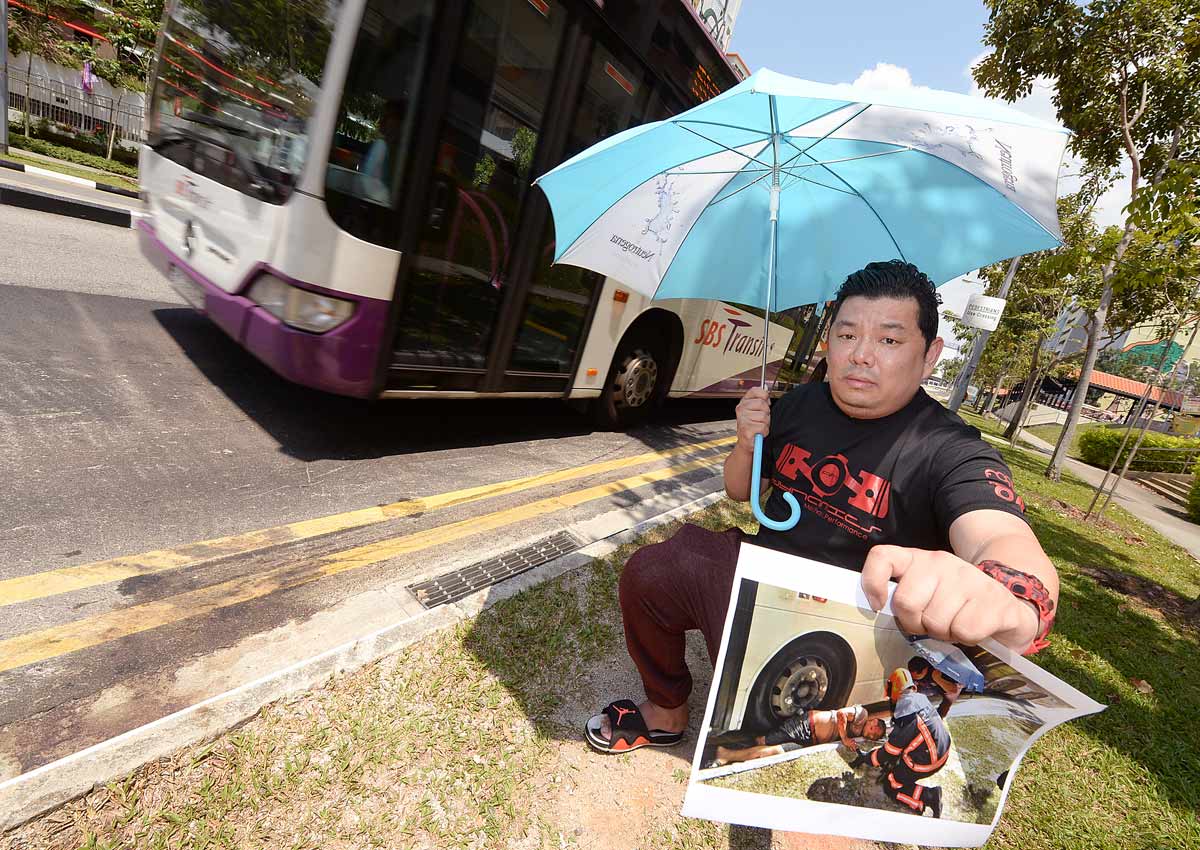
Hougang accident: Man disappointed after crowd took photos instead of helping

0

Mr Albert Leow was at home when he heard a loud crash.

When he looked out the window, he was horrified to see a man pinned under an SBS Transit double-decker bus.

Mr Leow called the police and rushed down to help the victim.

Recalling a video showing a group of people lifting a lorry to free a trapped victim in an accident in July last year, Mr Leow, 41, thought the 20 to 30 people who had gathered there could do the same.

But he was dismayed when several of them were more interested in taking pictures and videos of the trapped man instead of helping him.

His HDB flat at Block 662, Hougang Avenue 9, overlooks the scene of the accident, which occurred opposite Ci Yuan Community Club at 10.30am on Sept 30.

A pedestrian, Mr Lim Chin Soon, 51, was trapped under the front left wheel of SBS Transit Bus Service 72.

Mr Leow, who runs a car workshop, told The New Paper on Tuesday: “At first, I thought his head was pinned beneath the wheel.”

When he got there, he realised it was the victim’s right leg.

Said Mr Leow: “I felt so sad and helpless. The only thing on my mind was to keep him conscious. He kept saying his leg was in pain.”

Mr Leow spoke to Mr Lim until Singapore Civil Defence Force (SCDF) officers arrived.

CROWD DIDN’T HELP

Mr Leow said he had tried to get the crowd of bus passengers and pedestrians to try to help Mr Lim.

“I called out to them to come forward to help lift the bus,” he said.

But no one responded.

Said Mr Leow: “I’m very sad because there were so many people there, but no one came forward to help. I can’t lift the bus off the victim on my own.

Referring to those who were preoccupied taking pictures and videos of the scene, he said: “What’s the point of taking all these photos? What good will it do them?”

A bus passenger, Mr Bernard Chua, 45, said: “No one came to help, they were just taking photos.”

Mr Leow noticed that Mr Lim’s head was on the kerb, which was hot.

“So I borrowed a lady’s umbrella to shield him from the scorching sun,” he said.

For his kind deed, he was dubbed “The Umbrella Man” by netizens.

“Another kind woman gave me her handkerchief, which I placed between the hot kerb and his face,” he added.

Mr Chua, a security officer, also placed a newspaper under Mr Lim’s head.

Mr Leow said: “The SCDF and SBS officers were all professional and calm. They were polite to me and let me stay to hold the umbrella over him.”

Last Tuesday, Mr Leow, accompanied by a TNP team, visited Mr Lim at Tan Tock Seng Hospital.

When Mr Leow walked into the room, Mr Lim recognised him and kept thanking him.

Mr Lim, who is single and lives alone, told TNP that all he could remember about the accident was that he was heading to a coffee shop to look for a job.

“I’m not angry at the bus driver, I forgive him. He was just doing his job,” he said.

Last Wednesday, The Ray of Hope Initiative, a non-profit organisation, contacted TNP to offer financial help to Mr Lim. Mr Lim said he will be undergoing his second operation today at the hospital.

Mr Leow said: “I hope more people will render their help if they see an emergency. Don’t wait for the SCDF because it might be too late.”


This article was first published on October 10, 2016.
Get The New Paper for more stories.

Image: 
Category: 
Publication Date: 
Monday, October 10, 2016 – 14:14
Keywords: 
Send to mobile app: 
Source: 


Story Type: 
Others

Source link

Somersault goal lights up S’pore FA Cup tie

0

SINGAPORE – It was a moment of magic that lit up an otherwise standard FA Cup tie between National Football League (NFL) side Yishun Sentek Mariners FC and Island Wide League (IWL) outfit Kaki Bukit Sports Club on Sunday.
With the Mariners holding a…

Source link

Multiple routes: What turns bus drivers off

0

Erratic work-rest schedules, challenging routes and overall inexperience are some of the reasons bus drivers here do not like plying multiple routes, also called “interlining”.

Dr Marc Rochester, 61, who drove buses in London from 1976 to 1979, wrote to The Straits Times to say that one obstacle to interlining here could be the length of some services. He drove up to seven different routes a day in Britain, but the longest was only about 7km.

The longest here is 73km – Service 858 running from Woodlands Regional Interchange to Changi Airport and back.

Dr Rochester, now a music history lecturer, said: “It was inconceivable as a bus driver (in Britain) that you would drive only one route.”

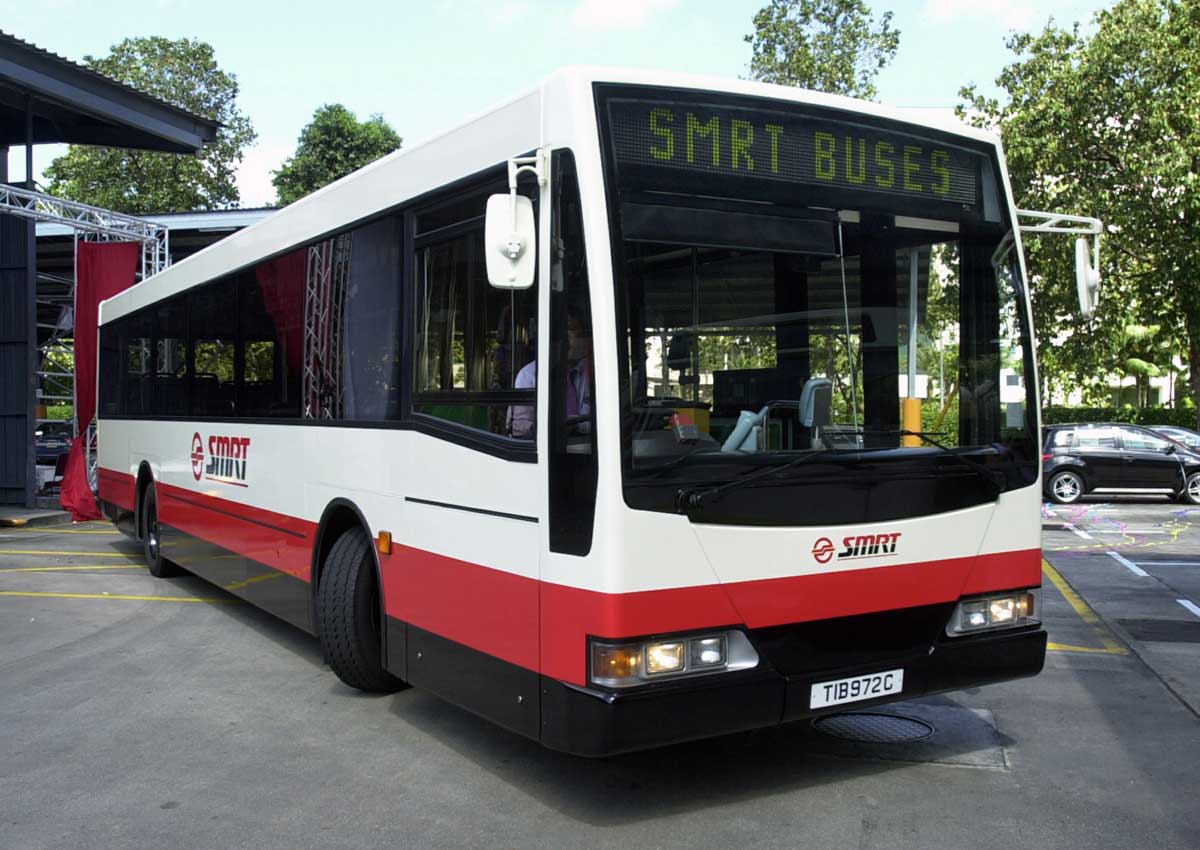
But in Singapore, interlining is practised sparingly. Operator SMRT Buses said interlining requires drivers to know each route’s road network, road conditions and bus passenger travel patterns.

SMRT Buses & Road Services managing director Tan Kian Heong said interlining can be used to achieve operational efficiency, but he noted that driving multiple routes is more demanding for drivers.

  • 73km

    Service 858, running from Woodlands Regional Interchange to Changi Airport and back

There could also be an impact on their work-rest cycle, as they would be required to hop onto another bus immediately after completing one route – it might not be possible to schedule breaks as easily as is the case for single-route schedules.

“For our interlined services, SMRT Buses will ensure that all bus captains receive route familiarisation training and cater for sufficient rest so they can carry out their duties well,” Mr Tan said.

The issue came to light last month when new bus operator Go-Ahead announced it was borrowing drivers from the incumbents after being hit by a wave of resignations.

Twenty of its drivers quit because they could not cope with juggling multiple routes.

“Interlining is the basis of our operating model in Britain,” said a company spokesman, adding that all its drivers here were told on joining that they had to do multiple routes.

Veteran transport consultant Bruno Wildermuth said: “Bus drivers here are spoilt. They never had to do different routes before.”

SBS Transit, the biggest operator here, does not practise interlining.

Mr Wildermuth said: “I don’t know any other country where bus drivers drive only one route.”

SIM University senior lecturer Park Byung Joon said it is rare, but does occur in South Korea, to let drivers “personally take care of their buses”. They even mop the vehicles.

This model seems to work. Seoul’s bus system is well regarded worldwide and, according to Dr Park, the driver turnover rate is “effectively zero”. “Most work for the same company until they retire,” he said.

In Singapore, the turnover rate for public bus drivers is reportedly up to 15 per cent, with more than 1,000 resignations a year.

Industry observers said many drivers do not stay long enough to master more than one route, exacerbating the interlining problem.

The Land Transport Authority is said to be so concerned about the issue it has extended the deadline for its latest bus route tender to Oct 27. The original deadline for the tender, covering 26 bus routes in the Seletar package, was last Thursday.

Industry sources reckon the authority wants to give bidders more time to tweak their proposals to scale back on interlining.

Meanwhile, Tower Transit, the other newcomer, said interlining is more commonly practised in cities with relatively low-frequency services. The company noted that, even though the concept itself is not entirely new to Singapore, “we have made only limited use” of it.

Still, Mr Wildermuth said he does not see why Singapore cannot have interlining if drivers are better trained and better paid.

Asked if that would also mean having the public pay more for bus services, he said: “In (bus) contracting, we’re already paying more.”

In contracting, operators are paid a fixed sum (which they tender for) to run a parcel of routes. The Government collects fare revenue that, in the case of London, falls far below the tender sum. Taxpayers make up the shortfall in this operating model, which is supposed to lead to higher service levels.

Dr Rochester said that, given time, drivers here would be more open to the practice of interlining.


This article was first published on Oct 10, 2016.
Get a copy of The Straits Times or go to straitstimes.com for more stories.

Image: 
Category: 
Blurb: 
<p>Erratic work-rest schedules, challenging routes and overall inexperience are some of the reasons bus drivers here do not like plying multiple routes, also called "interlining".</p>
Publication Date: 
Monday, October 10, 2016 – 15:00
Keywords: 
Send to mobile app: 
Source: 


Story Type: 
Others

Source link

Sharp rise in people arrested for trying to order drugs online

0

Nowadays, you can buy practically anything online.

So it is no surprise that some drug abusers try to get their fix by frequenting the many sites peddling illegal drugs on the Internet.

Last year, 30 drug abusers were arrested in Singapore for trying to buy drugs online.

In the first half of this year, the figure jumped to more than 100, according to Central Narcotics Bureau (CNB) statistics.

Most of the arrests resulted from the detection of drugs and drug paraphernalia in the mail and courier parcels.

Although the 100 or so arrests make up less than 10 per cent of the 1,778 abusers arrested in the first half of this year, there is cause for concern that more abusers are trying new avenues to get their drugs, rather than just relying on local pushers.

In an exclusive interview with The New Paper, CNB’s senior assistant director for ops research, Superintendent 1A Ng Khai Song, said the bureau has been paying more attention to this avenue of drug purchases.

“I can’t make a prediction about the trend as the significant increase only started this year and more time is needed.

“But we’re on the lookout for this emerging trend,” he said.

Supt Ng, 41, studies trends and cases that the CNB comes across. The research is used to help CNB officers prepare themselves and conduct operations in the field.

He said: “Given the rise in e-commerce, it’s not surprising that people would attempt to purchase controlled drugs as well as drug paraphernalia online.”

Drug paraphernalia includes utensils and instruments used for consuming drugs, such as bongs and grinders.

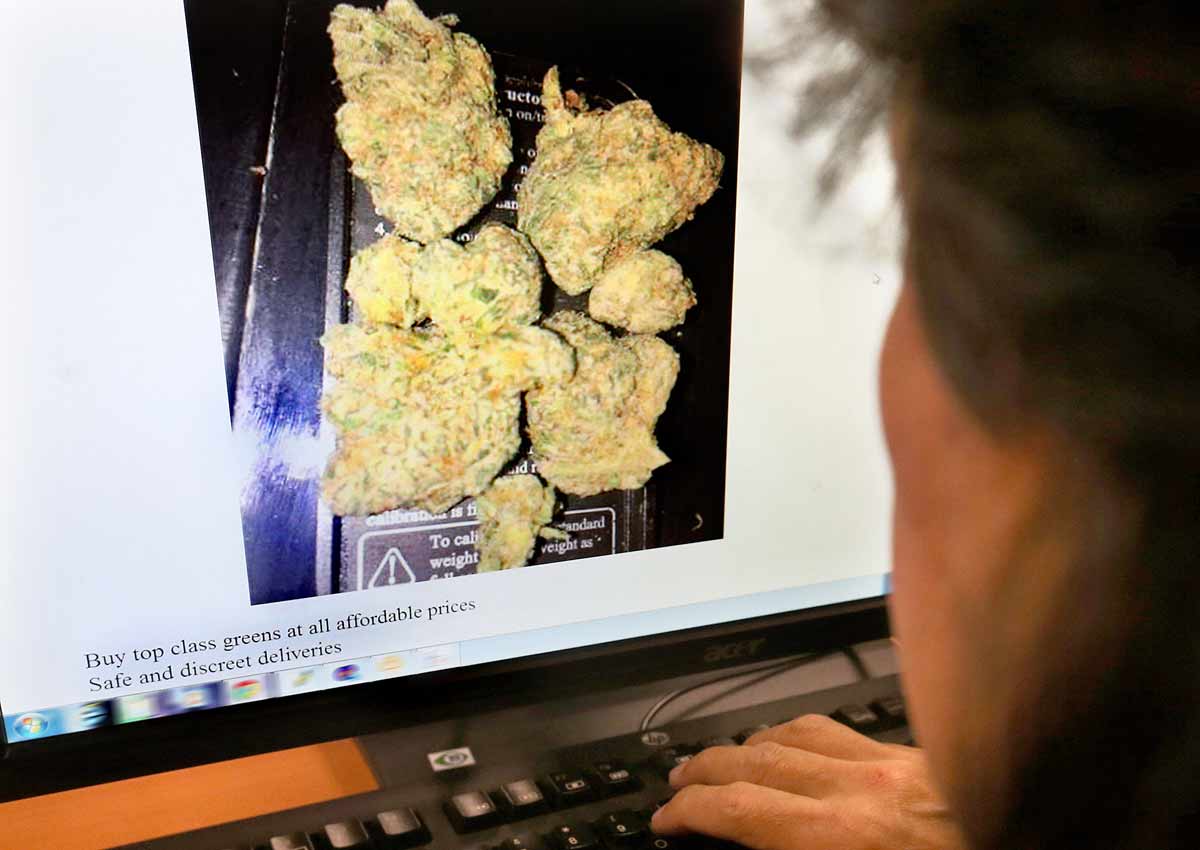
Also of concern is that the drugs are being advertised for sale on at least two popular local online marketplaces.

Over the course of three weeks, TNP observed multiple advertisements hawking drugs on these two sites.

STILL DETECTED

Supt Ng said: “People have the misconception that if they purchase drugs over the Internet and get them delivered to their homes, they can avoid being detected.

“But they cannot be more wrong.

“We watch this space very closely and we will investigate and take action if anyone is found to be engaging in such activities.”

Supt Ng said the majority of those arrested are aged 20 to 39, who might have more liberal attitudes towards drugs.

The group is also a mixture of first-time and repeat offenders.

He added: “They might be more comfortable with the Internet, and advances in connectivity also allow them to make these purchases more conveniently.”

Without giving away too many details that might affect CNB’s operations, Supt Ng said that parcels of certain shapes, mailing addresses and countries of origin usually set off alarm bells, but the bureau is always on the lookout for changing methods of drug abusers so that it can stay one step ahead.

Besides the use of innocuous envelopes and CD covers, CNB has also come across more innovative concealment methods – hiding drugs in a metal box disguised as a book, and stashing them in tea packaging.

The bureau also works closely with the Immigration & Checkpoints Authority (ICA), its foreign counterparts, and major postal and courier companies such as Singapore Post and DHL to monitor and spot drugs and drug paraphernalia smuggled in from overseas and in the local post.

Said Supt Ng: “Given the sheer volume of parcels coming into Singapore, we have been and will be continuing to focus our attentions on this area.”

Apart from the fact that drugs are harmful, Supt Ng also warned of the added dangers of purchasing them online.

“There are plenty of question marks, like who are you buying it from? How do you know it’s not a scam? And you don’t know if the drugs are adulterated or what they might contain.

“It’s not like you can report them to the police,” he said.

Ads for drugs found on two local sites

Over three weeks, The New Paper observed multiple posts advertising the sale of drugs on two local marketplaces.

These posts were usually hidden among the regular categories of online marketplaces such as beauty, healthcare and even gardening.

In the more surreptitious posts, the drugs were referred to by their lesser known code names and given vague descriptions.

In the more brazen advertisements, the sellers marketed their goods using common street names for cannabis (weed), cocaine (coke), and methamphetamine (Ice).

Under the guise of an interested buyer, TNP contacted a seller through a secured chat app, but did not purchase the drugs.

Throughout the conversation, the seller promised that the deal was “100 per cent” secure, and that the drugs would reach Singapore safely without detection by the authorities.

The seller could not have been more wrong.

The Central Narcotics Bureau’s senior assistant director for ops research, Superintendent 1A Ng Khai Song, said the CNB is aware of online platforms, including local ones, purportedly selling drugs.

“Many of these sellers are hosted overseas.

“And while it might take some investigation to identify the real identities of the seller and buyer, as long as you attempt to bring drugs into Singapore, we will take tough action against you,” he warned.

Addiction specialist: Number of cases will rise

Addiction specialists said they are not surprised that some drug abusers have turned to the Internet to have drugs delivered to their doorstep.

When contacted by The New Paper, Dr Thomas Lee said that a handful of his clients have shared stories about obtaining drugs by mail, but he has not seen a rising trend.

The consultant psychiatrist at The Resilienz Clinic added: “To them, it’s just another mode of purchasing and it’s mostly for convenience, I believe.

“It’s not the main mode (of getting drugs). But it breaks the traditional way of doing it face to face at spots like Geylang.”

Another addictions specialist, Dr Munidasa Winslow, has noted an increase in his clients buying drugs on the Internet and receiving them by mail.

In the first half of this year, he has seen at least four cases involving such clients.

“It’s definitely more than before and I suspect that the numbers will rise in the coming years,” he said.

The psychiatrist from Promises Healthcare said that such clients are usually under 30 and might be more comfortable making purchases online.

While Dr Winslow said the drugs bought online are usually sleeping pills or prescription medicines, Dr Lee said he has heard of people buying designer drugs like Ecstasy online.

Dr Lee believes that drug abusers turn to online purchases because they think they can avoid getting caught.

“They think they can hide their tracks better using fake names and addresses. It could also be that they want to experiment (with drugs), but do not have any local contacts, so they resort to ordering online,” he said.

Past arrests

SEPTEMBER 2016

CNB carried out investigations after ICA officers at Changi Airfreight Centre detected a parcel believed to contain cannabis.

They tracked down the intended recipient, a 35-year-old Singaporean, and arrested him outside a HDB flat at Buangkok Crescent.

A small packet of Ice was seized from his bag.

A raid of his home uncovered about 13g of Ice, a small amount of heroin, Erimin-5 tablets and various improvised drug-smoking apparatus.

CNB officers also found two cannabis plants and equipment used for cultivating them.

JUNE 2016

A 29-year-old man was arrested after CNB officers went to an apartment in the Orchard Road area. He was suspected of having ordered online a parcel containing drug apparatus.

A search of the apartment uncovered over 100g of cannabis, about 20g of Ice, Ecstasy tablets, Erimin-5 tablets, a small amount of ketamine and other drug-taking apparatus.

AUGUST 2015

CNB crippled the activities of a drug syndicate suspected of receiving drugs from overseas by mail and repacking them for sale in Singapore.

The officers arrested a 29-year-old man suspected to be the syndicate leader, two suspected drug traffickers, four clients and one accomplice, all aged between 18 and 31.

About 1.8kg of Ice, with an estimated street value of about $324,000, was seized.

DECEMBER 2014

A suspicious package arriving from a neighbouring country was found to contain a locked safe box disguised as a book.

About 103g of ketamine and 299 tablets suspected of being Ecstasy were recovered from the “book”.

CNB investigations led to a raid on a Marsiling home where the suspected intended recipient and importer, a 25-year-old man, was arrested.


This article was first published on October 10, 2016.
Get The New Paper for more stories.

Image: 
Publication Date: 
Monday, October 10, 2016 – 14:00
Keywords: 
Send to mobile app: 
Source: 


Story Type: 
Others

Source link