According to international research, an average of at least six people are affected by the suicide of a loved one. More of them are now coming forward to tell their stories.
Source link
Picking up the pieces: Losing a loved one to suicide
Singer puts family conflict behind her

Since Taiwanese singer Angela Chang last performed at the Singapore Expo in 2008, she has not taken a hiatus, although it may seem like it.
She continued to release albums, but they have been under the radar as she has kept a low profile since a slew of negative press reports about her contentious relationship with her mother around 2008 and 2009.
There were allegations that she had chased her mother out of their home, followed by accusations that Chang was unfilial and ungrateful.
The 34-year-old – who became a star in her early 20s with hits such as Invisible Wings (2006) and a lead role in the idol drama My MVP Valentine (2002) – is ready for a full-fledged return to the entertainment scene and to reclaim lost turf.
“When I encounter unhappy things, I would selectively forget things. This is therapeutic. If you keep dwelling on it, it won’t do you any good,” says Chang, who was in town recently to promote her new album, Head Over Heels, and her concert here on Nov 18 at Suntec City.
At the press conference, the petite lass with big doe eyes and a powerful voice looks poised and at ease in a white lacy top and a short black skirt.
While questions about her family were a no-go, she seems to have left the ugly past firmly behind.
Indeed, some of the songs she is known for are about staying positive in the face of adversity. They include Invisible Wings and, from the new album, tracks such as I’m Not Afraid and Go.
On Head Over Heels, her ninth studio album, she contributed lyrics to one song, Do You Remember, and also directed a music video for the first time, for the track Before Goodbye.
As she puts it: “Having been in this line for so many years, it’s a pity if you don’t show some growth because that means you haven’t learnt anything new.”
She promises something new and different at each of her concerts, tweaking the line-up of songs as well as to her costumes. There might be more in store for fans here as Singapore holds a special place in her heart.
She had lived here with her family for about a year when she was about 10 and she still has fond memories of that time.
“My first impression was the smell of durians right across from where we lived, near Sentosa, I think. When I went to the beach, the water was so clear I could see fish swimming. And the streets were so clean,” she says.
Something else that is new is her changed attitude towards romance.
“I think I’ve tended to be pretty rational and I used not to believe in love at first sight. But now, I’m not discounting that possibility. Maybe in the future, if you find the right person, you’ll just fall head over heels. You never know.”
100% Angela Zhang World Tour
Where: Suntec City Convention & Exhibition Centre, Halls 601 to 604
When: Nov 18, 8pm
Admission: $88 to $168 from www.apactix.com and post offices islandwide
•Head Over Heels is out.
This article was first published on Oct 12, 2016.
Get a copy of The Straits Times or go to straitstimes.com for more stories.
Image:

Blurb:
<p>Since Taiwanese singer Angela Chang last performed at the Singapore Expo in 2008, she has not taken a hiatus, although it may seem like it.</p>
Publication Date:
Wednesday, October 12, 2016 – 17:00
Send to mobile app:
Source:
Story Type:
Others
Before fire started, we heard loud quarrel: Jurong residents
About 300 residents had to be evacuated from nearby HDB blocks after a huge blaze ripped through a wet market and coffee shop at Block 493, Jurong West Street 41, in the early hours of yesterday.
By the time firefighters put out the “raging fire” about 90 minutes later, all that was left of the market was a tangled mess of metal, charred wood and ashes. The roof had also collapsed.
Another coffee shop at Block 494 was also damaged by the fire.
Some residents of Block 499, a senior citizen’s block that overlooks the wet market, said they heard a heated argument that involved some people shouting at around 2.30am, a short while before the fire broke out.
It is not known whether the incident had anything to do with the fire, which they said was initially small but rapidly grew and spread to other areas.
332030
 Photo Gallery
Fire destroys Jurong coffeeshop and wet market
-

<!–
-

<!–
-

<!–
-

<!–
-

<!–
-

<!–
-

<!–
-

<!–
-

<!–
-

<!–
-

<!–
-

<!–
-

<!–
-

<!–
-

<!–
-

<!–
-

<!–
-

<!–
-

<!–
-

<!–
QUARRELLING
Mr Tony Pan, 66, who lives on the eighth storey of Block 499, told The New Paper that he was woken up by the sound of people shouting.
“I looked out of my window and saw some people quarrelling under a tree, but couldn’t tell how many there were,” he said.
“Then there was a small fire, about a quarter of a basketball court. By 3am, the fire had spread through the whole market, and the roof caved in.”
Another Block 499 resident, Mr Jason Teh, 68, who lives on the 17th storey, also said that he heard loud noises from below but did not think much of it at first.
“People often sit downstairs to play mahjong at night, so when I heard the commotion of people arguing, I didn’t think much of it,” he said.
“When I smelled smoke at around 2.45am, I looked out of my window and saw a fire that was quite small. But it quickly spread to the market.”
The Singapore Civil Defence Force (SCDF) said it was alerted to the “raging fire” at 2.45am, and dispatched three fire engines, four Red Rhinos, seven support vehicles and four ambulances.
The SCDF said in a Facebook post that the wet market and coffee shop were “completely engulfed in flames”, and six water jets and an aerial monitor were deployed to put out the fire, which was extinguished at 4.15am.
“At the height of the fire, the roof of the wet market collapsed, and the exterior side wall of a coffee shop at Block 494, which was directly facing the raging blaze, sustained fire damage,” it added.
No one was hurt but a woman in her 60s, who had breathing difficulties while being evacuated, was taken to Ng Teng Fong General Hospital.
When TNP arrived at 5.15am, SCDF officers were still carrying out damping-down operations.
A Block 494 resident who wanted to be known only as Mr Teo, 60, said the exterior wall of his three-room flat on the third storey, which is next to the wet market, was damaged.
When TNP visited his flat at 9.30am, a section of the interior wall had burn marks. The wall was still hot to the touch, and the floor was covered in soot.
The container driver, who lives with his wife and two tenants, said in Mandarin: “I woke up to the smell of smoke at around 3am. It was very hot, so we quickly evacuated.”
During the blaze, he said he heard three explosions at the wet market, and was afraid the fire would spread to the gas tanks in the coffee shop below his block.
“We’re so lucky nothing serious happened,” he said.
Madam Aminah Mohammad, who also lives on the third storey of Block 494, said her son woke her up at around 3am.
The 54-year-old, who works in the retail industry, said: “We then woke up my 90-year-old mother, and our maid helped us take her out. The smoke was very thick. I was so confused, it was very scary.
“A husband and wife with a baby helped us to carry my mother, who was in a wheelchair, down the stairs.”
GOOD DEED
She said she was extremely grateful for her neighbours’ kind deed.
Jurongville Secondary School student Jasmine Lwa, 13, had to take her Secondary 1 mathematics exam paper yesterday despite not being able to sleep for most of the night.
She and her parents were told by the police to leave their fourth-storey unit at Block 494 at around 3am after thick smoke engulfed the area.
At 6am, she was allowed to return to the flat to get ready for school.
Jasmine told TNP later: “I was very tired because I didn’t sleep much. I couldn’t concentrate during the exam and found it hard to stay awake.”
Residents were alerted to the fire through the mobile application SGSecure, said the SCDF. The Ministry of Home Affairs said this was the first incident for which an alert was sent out through the SGSecure app, and encourages more people to download the app, so that they can receive such alerts in future.
The alert was sent to users of the app who were in the vicinity of the fire.
The evacuated residents were allowed to return home progressively.
The fire destroyed 36 stalls in the wet market, which is owned by HDB, and 10 in the coffee shop.
Building and Construction Authority (BCA) engineers later inspected the building structure at Block 493 and found it to be stable, though the roof structure had partially collapsed and was damaged, reported The Straits Times Online.
BCA added that the structural integrity of Block 494 and its upper floors were not affected, though the fire had damaged the coffee shop on the first storey and part of the roof structure and adjacent linkways.
It has advised the owners of affected buildings to cordon off the affected areas.
The cause of the fire is under investigation.
MP: Temporary site being considered
A stallholder at the coffee shop at Block 494, Jurong West Street 41, rushed to the scene after a regular customer alerted her to the fire at around 3am.
When Madam Noorlin Rahman, 52, who owns Noorlin Seafood, got there, she saw a small fire at the nearby wet market.
She told The New Paper: “I was scared, but I never thought it would spread all the way here. After the third explosion, the whole place went dark with smoke, and the fire reached here.”
Madam Noorlin, who has run the stall for five years, estimated her losses, inclusive of stock, equipment and takings, to be around $3,000 a day.
“I’m rushing to look for a new place now. I’m very worried that I can’t find another place because I have 12 workers to support,” she said.
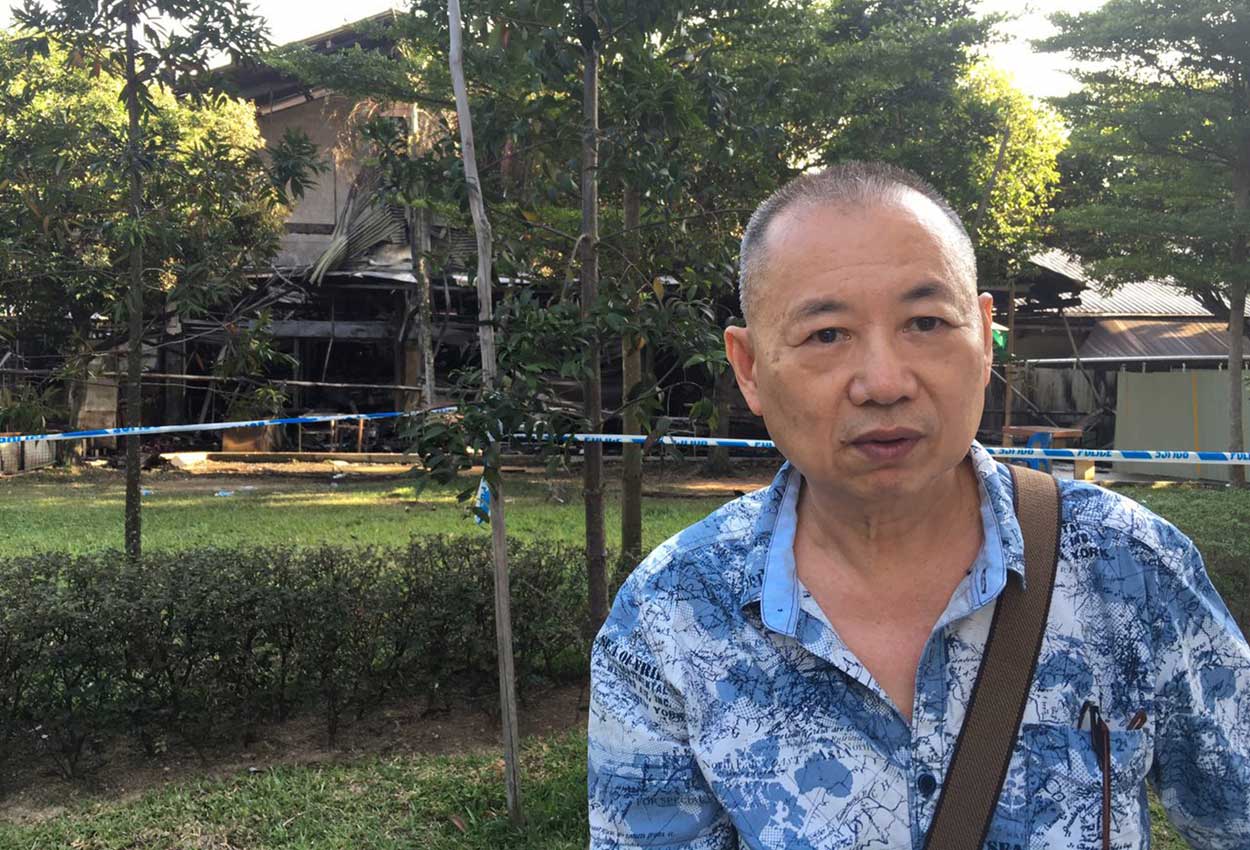
20 YEARS THERE
A flower seller, who wanted to be known only as Mr Teo, 65, said he lost a few thousand dollars which he had kept in his stall of 20 years at the wet market.
Mr Teo, who is single and works alone, had arrived at around 5am to find his stall destroyed.
He told TNP in Mandarin: “I’m angry because that was my hard-earned money. I have regular customers, but now I can’t do business.
“It’ll be good if we can get compensation. I’ll be losing more than $30 a day, and will have to rely on my savings as I have no insurance.”
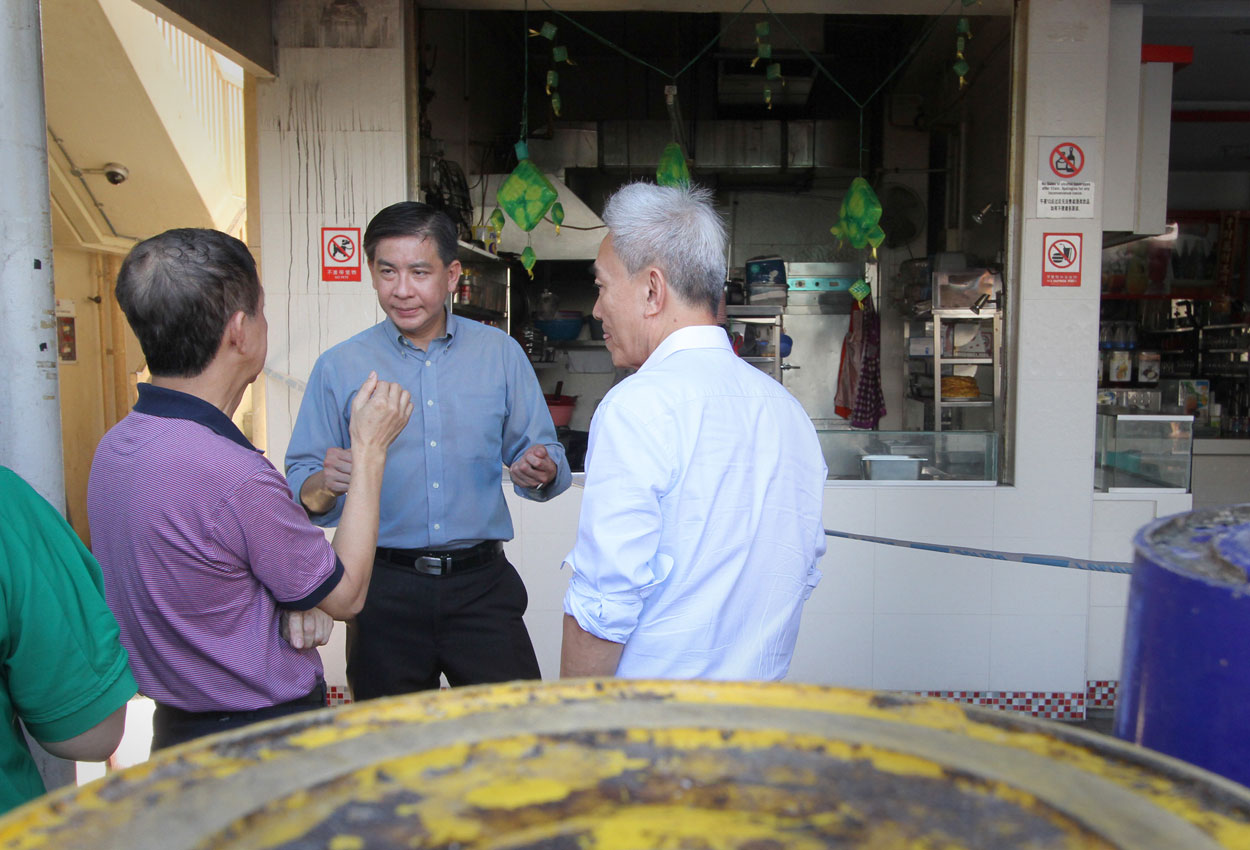
Mr Ang Wei Neng, Member of Parliament for Jurong GRC, visited the area yesterday morning. He said he was trying to help the affected stallholders resume their businesses elsewhere, or set up an alternative site nearby for the time being.
One proposed alternative is to set up a temporary wet market and hawker centre at a new basketball court in front of Block 498 that was constructed in July.
Mr Ang added: “The wet market’s building structure does not appear to be safe, so it will take a while before (the stallholders) can access the area. The two coffee shops adjacent to the market are also unlikely to operate for now.”
He added that the Building and Construction Authority is looking to rebuild the market, which will take one to two years. In the meantime, HDB is looking into suspending the rental charges.
“Most importantly, there were no injuries. Our main concern is those units near the fire, and our first priority is for them to be safe. Now, we’re checking these units for defects and (we will) see if we can help the residents in any other areas,” Mr Ang said.

This article was first published on October 12, 2016.
Get The New Paper for more stories.
Image:

Publication Date:
Wednesday, October 12, 2016 – 13:53
Keywords:
Send to mobile app:
Source:
Story Type:
Others
Retailers feel pinch but not beauty salons
At luxury watch retailer Leong Poh Kee, where watches cost upwards of $15,000, sales have plunged by at least half since the beginning of the year.
Its regular customers, who contribute to most of the sales, are from the mineral and oil sector and have taken a hit from the economic slowdown, said its managing director William Leong.
“This is the worst I’ve seen in my more than 40 years of being in the business,” said the 59-year-old.
“Customers don’t visit as frequently as before, and even when they come by, it’s harder to convince them to buy.”
It is not just the luxury segment that is feeling the pinch.
Retail experts have pointed to the slowing economy here and overseas as the key factor for the slump in sales during the recent Great Singapore Sale, which ran from June 3 to Aug 14.
The latest official statistics show that retail sales, excluding motor vehicles, in June and Julyfell 3 per cent over the same months last year.
While it is not all doom and gloom yet, consumers are being more prudent with their spending, it appears.
At supermarket chain FairPrice, sales of its house-brand items, which are at least 10 per cent cheaper than popular brands, and its “everyday low-priced” products – a basket of items most popular among shoppers and which are competitively priced – have risen by about 10 per cent since the beginning of the year.
Madam Tong Xiao Jing, 54, who quit her job as a quality control manager last year and has been unable to find a job since, said she tries to buy cheaper household products now.
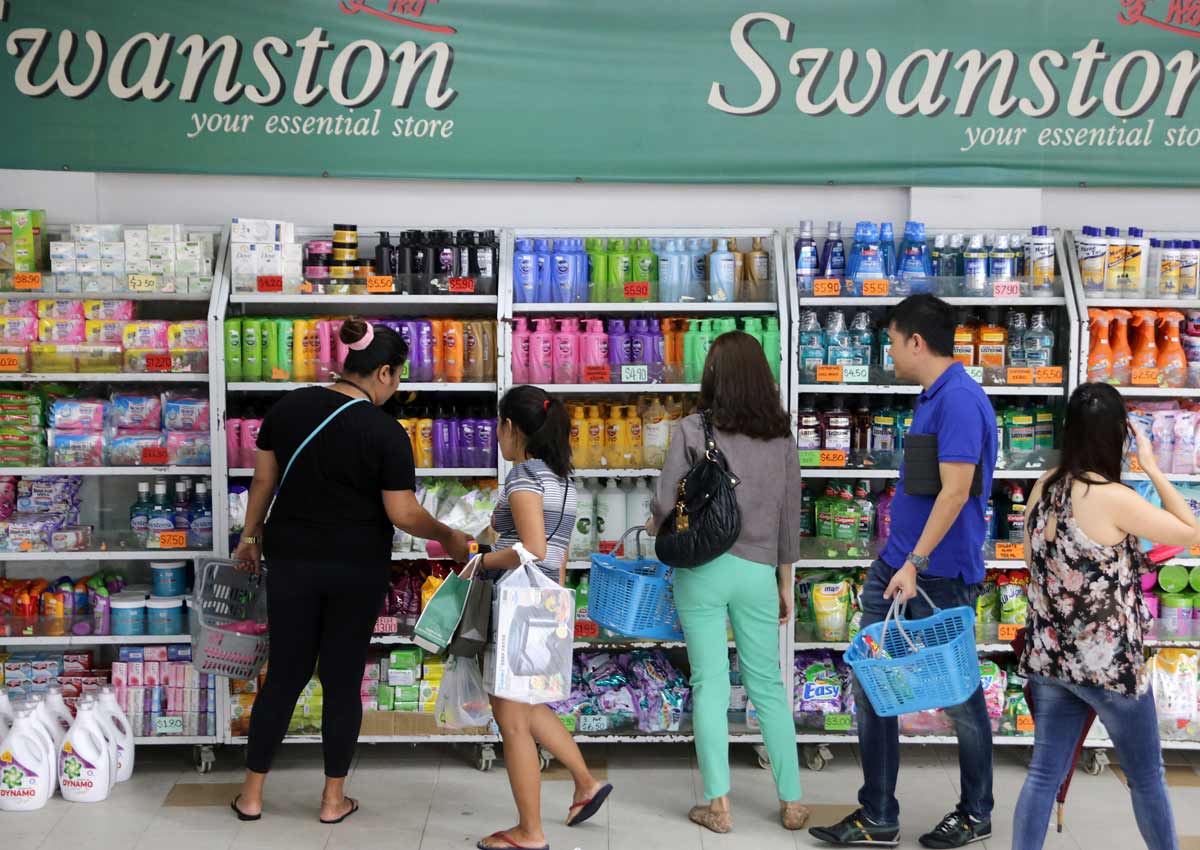
She shops at Swanston, a retailer at People’s Park Food Centre known for selling products at lower prices than its competitors.
Staff at the store told The Straits Times that business has been “very good”.
“The items can be $1 or even $2 cheaper than elsewhere,” said Madam Tong, as she loaded shampoo bottles into her shopping basket.
But while consumers scrimp on their daily necessities, one sector remains fairly resilient: beauty services.
Facial, hair and nail salons, as well as aesthetic clinics, said sales are still growing, albeit at a slower rate.
“Sales have been fairly okay. We are still seeing growth although not as fast as compared with five years ago,” said Ms Gladys Cheng, director of face spa chain Jet Concepts.
She added: “People will generally still buy when it comes to beauty. They may go for a cheaper option, but beauty is still a need for most.”
Said Dr S.K. Tan, medical director of aesthetics practice IDS Clinic: “Patients do remark that the economy is bad… but consumer spending appears to be the same.”
This article was first published on Oct 12, 2016.
Get a copy of The Straits Times or go to straitstimes.com for more stories.
Image:
Blurb:
<p>3% Fall in retail sales, excluding motor vehicles, in June and July over the same months last year.</p>
Publication Date:
Wednesday, October 12, 2016 – 16:00
Keywords:
Send to mobile app:
Source:
Story Type:
Others
Tuition still on demand, but other types of classes hit
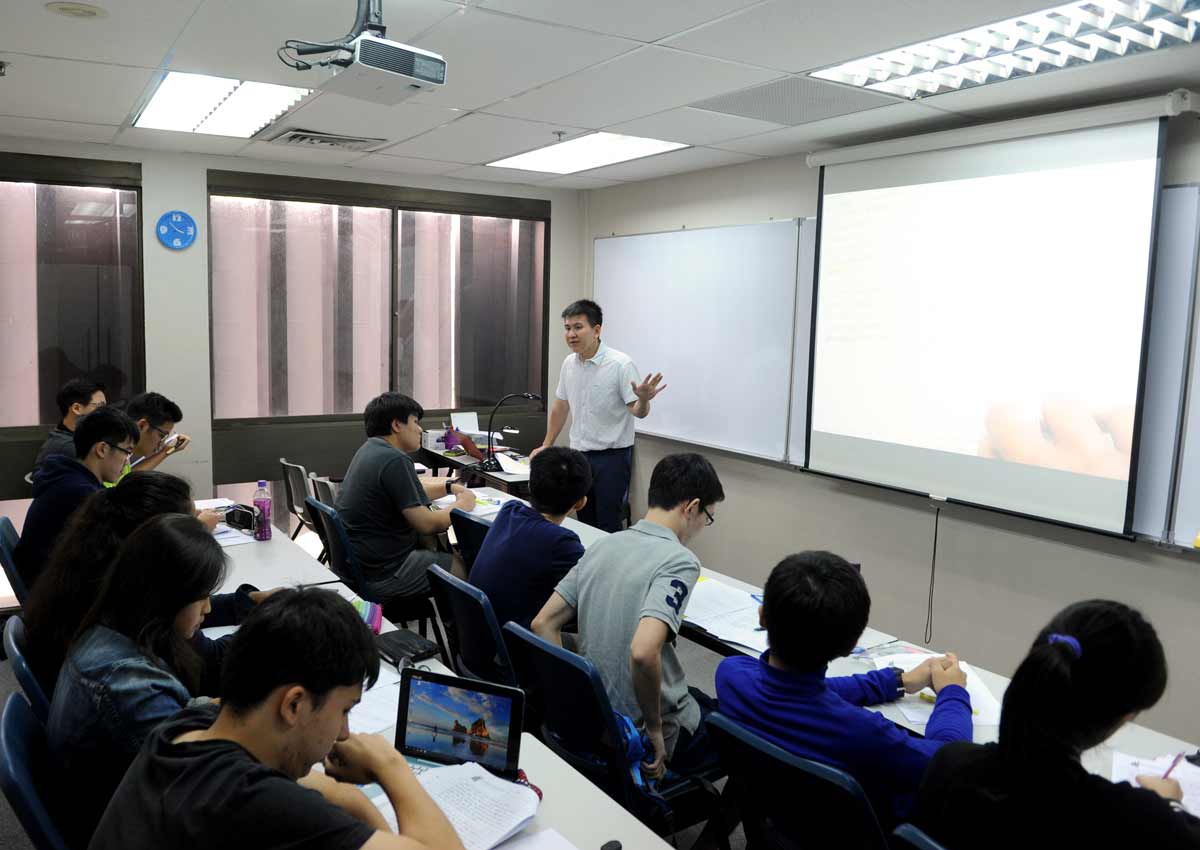
Non-academic enrichment classes may be experiencing a slowdown in enrolments but companies offering academic classes, such as PSLE tutoring, remain resilient.
Ms Chan Huang Yee, executive director of I Can Read, a chain of English reading enrichment centres, said enrolment has been slower in the last two months, falling 10 per cent compared with last year.
She said the slowdown could be due to parents withdrawing students as the year comes to a close.
But she also expects the economic downturn to affect business.
“New customers will be reluctant to make the commitment.
While parents tend to leave any spending cuts on their child’s education as the last option, a prolonged downturn will see even current customers cutting back on their spending,” she said.
Ms Fiona Walker, group managing director of Julia Gabriel Education which offers speech and drama classes, has seen shifts in the company’s enrolment over the last 12 months.
She said: “We have noticed a trend of parents wanting to see both clear links to academic outcomes, as well as being drawn to shorter, taster programmes.”
Mrs Lindy Koh-Teo, operations manager of swimming school Aqua Ducks, said that growth has been slower this year.
In the 2008 financial crisis, she slashed prices and was able to retain customer loyalty.
She may not do the same now though as the firm is much bigger.
However, tuition appears to be most able to weather economic downturns.
Mr Max Tan, director of True Learning Centre, said that his three tuition centres have seen a “marked increase” in enrolments.
“For the PSLE classes, there’s definitely an increase.
No matter how bad the economy is, children’s education is still one of the priorities.”
Lee Xin En
This article was first published on Oct 12, 2016.
Get a copy of The Straits Times or go to straitstimes.com for more stories.
Image:
Blurb:
<p>KIDS' EDUCATION STILL IMPORTANT</p>
Publication Date:
Wednesday, October 12, 2016 – 16:00
Keywords:
Send to mobile app:
Source:
Story Type:
Others
On the menu: Cheaper sets as restaurants battle gloom
Singaporeans may be famously food-loving but eating out seems to be the first expense to go in an economic downturn.
Most restaurants and bars located in the downtown area interviewed by The Straits Times reported at least a 10 per cent drop in customers or turnover compared with last year.
Mr Philippe Pau, director of Bistro Du Vin at Shaw Centre, said Singaporeans react quickly to economic downturns.
“Companies and employees can sense straight away when things start to slow down and move to ‘safe mode’, which brings about more caution in spending,” he said.
Mr Eldwin Chua, chief executive of the Paradise chain, said the group’s high-end outlets like Chinese restaurant Paradise Pavilion at Marina Bay Financial Centre saw the biggest impact, with a “30 per cent fall in customers from last year, while its casual dining eateries such as Paradise Inn are down by 10 per cent”.
Mr Chua has slashed the company’s corporate expenditure by about 80 per cent. Instead of wining and dining his overseas business partners in the priciest Japanese restaurants, he chooses good restaurants that are cheaper.
Some Paradise restaurants introduced a 50 per cent discount for teatime earlier this year to help make up for lost revenue.
“We have to entice people to visit. Whatever is left of the pie, we snatch,” said Mr Chua.
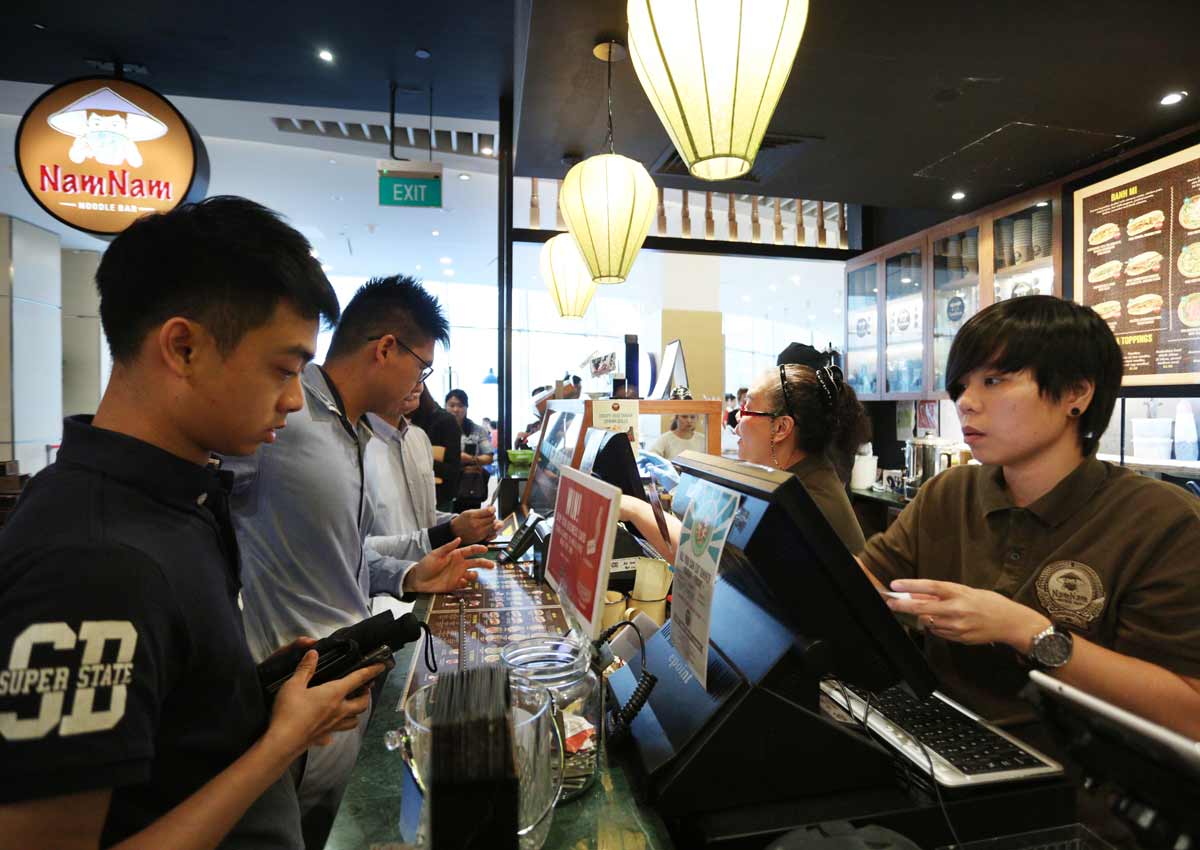
Many restaurants, including two in the Les Amis group – Vietnamese NamNam and Bistro du Vin – are offering more affordable options.
NamNam Noodle Bar senior area manager El Chee said: “While offering a value for money proposition to guests is not something new we have undertaken, greater effort has been made to cater to price-conscious guests looking for both quality and value.”
A new dinner set was introduced last October as well as an a la carte buffet option last month which allows diners to eat more at a fixed price.
Bistro Du Vin which serves French food, also introduced a two-course option, on top of its three-course lunch set.
Mr Wesley Gunter, director of a public relations firm, said eating out with three children can be quite expensive, so he and his wife cook on weekends, enticing the children with “more exciting dishes”.
“As we tend to entertain friends on weekends, we have now resorted to organising house potluck parties instead of meeting at our usual hangouts to save costs,” he added.
Mr Indra Kantono, co-founder of four bars, including Jigger and Pony and Gibson, said he made use of the slower pace to focus on training and to renovate his weakest-performing bar.
He remains upbeat, citing the success of great restaurants born out of the 2008 financial crisis in the US.
This article was first published on Oct 12, 2016.
Get a copy of The Straits Times or go to straitstimes.com for more stories.
Image:
Blurb:
<p>10% Minimum percentage drop in customers or turnover reported by most restaurants and bars located in the downtown area interviewed by ST, compared with last year.</p>
Publication Date:
Wednesday, October 12, 2016 – 16:00
Keywords:
Send to mobile app:
Source:
Story Type:
Others
Shopping patterns shift amid slowdown
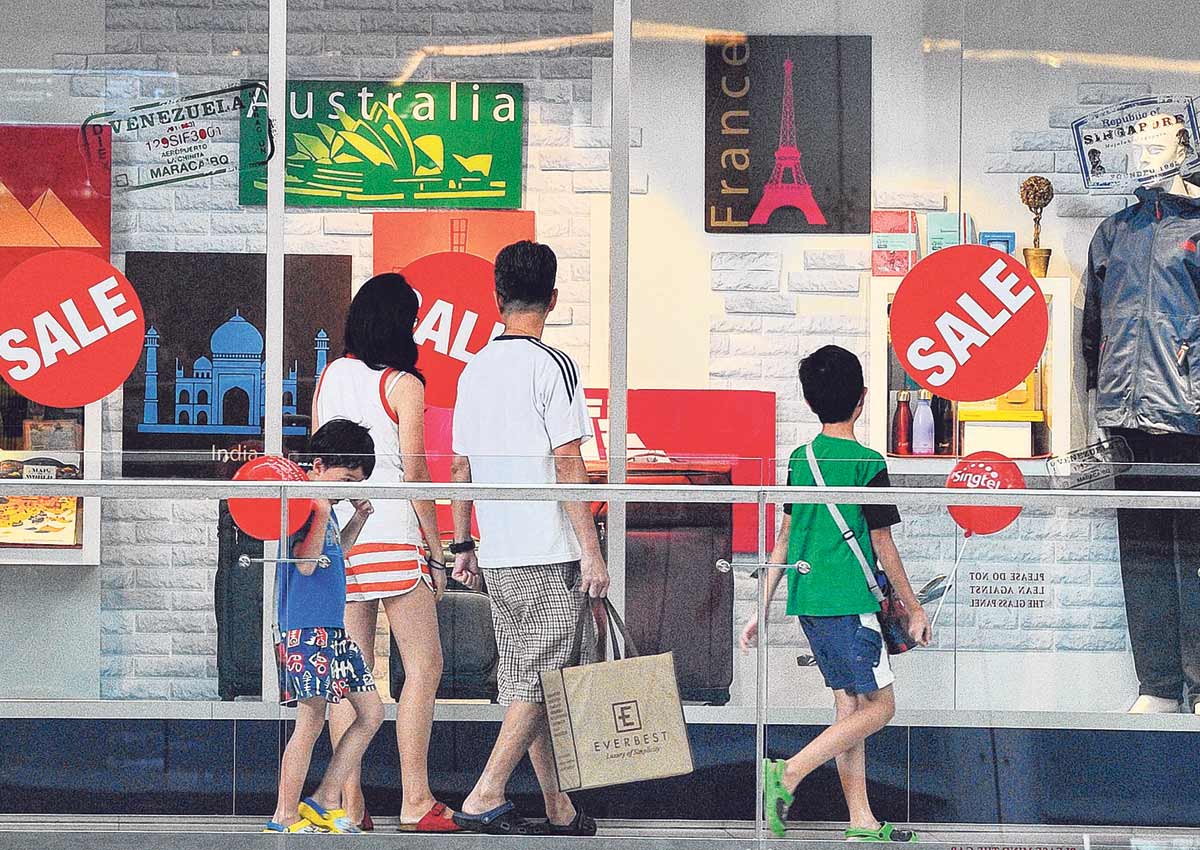
Singapore’s retail sector is going through a rough patch. As the economy slows, shops are being boarded up and retail rents are falling.
And yet, amid this gloom, consumers continue to spend – though there is a shift in the pattern and quantum of their spending.
In June, the first month of the Great Singapore Sale, retailer sales were down 3 per cent compared with the same month last year.
It is not just tourists who are staying away, but local consumers are also looking more closely at price tags.
The mood has not been helped by the fact that about 4,800 people were laid off in the second quarter, 48 per cent more than in the same period last year.
Landlords are feeling the pinch as well.
Average monthly gross rents for prime first-storey speciality retail shops dipped 1.2 per cent in the three months to September from the previous quarter, said property consultancy Edmund Tie & Company recently.
Vacancies in the Orchard planning area rose again in the second quarter to 9.2 per cent, after reaching what was then a five-year high of 8.8 per cent in the first quarter.
ANZ economist Ng Weiwen pointed out that home prices have fallen for 12 consecutive quarters, while bank lending has shrunk for 11 straight months.
This has translated into weaker spending.
However, the decline has been gentle across the board and there have been some bright spots.
Those who find this surprising should look at the unemployment rate.
While it rose from 1.9 per cent in March to 2.1 per cent in June, it remains quite low. Said OCBC economist Selena Ling: “When unemployment rate is anything below 3 per cent, it is effectively at full employment.”
It could be one reason why consumers continue spending on mid-range goods and services, such as travel and at cafes, even as they cut back on luxury items and seek better deals for necessities.
ANZ’s Mr Ng said: “For the different tiers of consumer spending, the high-end consumer segment will be more sensitive to changes in consumer income, so it’s not surprising.
“The mid-range segment will still hold up in the near term as wages are still holding up.”
In fact, more are paying their credit card bills on time.
Only 32.25 per cent of card holders did not pay their bills in full for the second quarter, down from 33.91 per cent in the first quarter. Ms Ling said: “People have been turning slightly more cautious with spending.”
They may spend less on fashion.
And malls could take a hit if their offerings are the same as the ones available on Taobao and the like, she added.
But cheaper options like house brands at supermarket chain FairPrice are seeing stronger demand.
This is what a slowing economy looks like – in Singapore.
Read also: –On the menu: Cheaper sets as restaurants battle gloom
–Retailers feel pinch but not beauty salons
–Tuition still on demand, but other types of classes hit
This article was first published on Oct 12, 2016.
Get a copy of The Straits Times or go to straitstimes.com for more stories.
Image:
Blurb:
<p>Singapore's retail sector is going through a rough patch. As the economy slows, shops are being boarded up and retail rents are falling.</p>
Publication Date:
Wednesday, October 12, 2016 – 16:00
Keywords:
Send to mobile app:
Source:
Story Type:
Others
24 Solar Terms: 8 things you may not know about Cold Dew

The traditional Chinese lunar calendar divides the year into 24 solar terms. Cold Dew, (Chinese: 寒露), the 17th solar term of the year, begins this year on Oct 8 and ends on Oct 23.
At this time, temperatures are much lower than in White Dew in most areas of China.
The dew is greater and colder and there will be less rain.
Autumn crops will be ripe.
Here are eight things you should know about Cold Dew.
Foggy autumn

Temperatures drop significantly in October. When the cold air encounters autumn rain, the abundant water vapour in the air soon reaches saturation, and then it turns into misty rain or fog.
When the humidity is high, there will be foggy regions formed in many areas of China.
Season for fishing

People always say that fishing in shallow water in autumn does make sense.
That’s because during the Cold Dew period, temperatures decrease quickly and sunshine cannot reach the deep water thoroughly.
Fish all swim to shallow water areas where the water temperature is relatively high.
Season for eating pomegranates

Pomegranates are ripe during Cold Dew.
Pomegranates have been cherished for their exquisite beauty, flavor, colour, and health benefits for centuries.
Season for drinking chrysanthemum wine

Chrysanthemum is the iconic flower of Cold Dew.
To prevent autumn dryness, many regions in China have the custom of drinking chrysanthemum wine.
This is a tradition of the Double Ninth Festival (on the ninth day of the ninth month in the Chinese calendar), which often falls around Cold Dew.
According to ancient records, drinking the wine made with chrysanthemums, poria cocos and pine oleoresin grants people long lasting youth.
Season for eating hawthorns

There is a saying that goes “It is time to harvest hawthorn during Cold Dew.”
Extracts of the berries have long been used in herbal medicine.
The antioxidants in hawthorn are thought to boost heart health by strengthening blood vessels and stimulating blood flow.
A great time for hiking
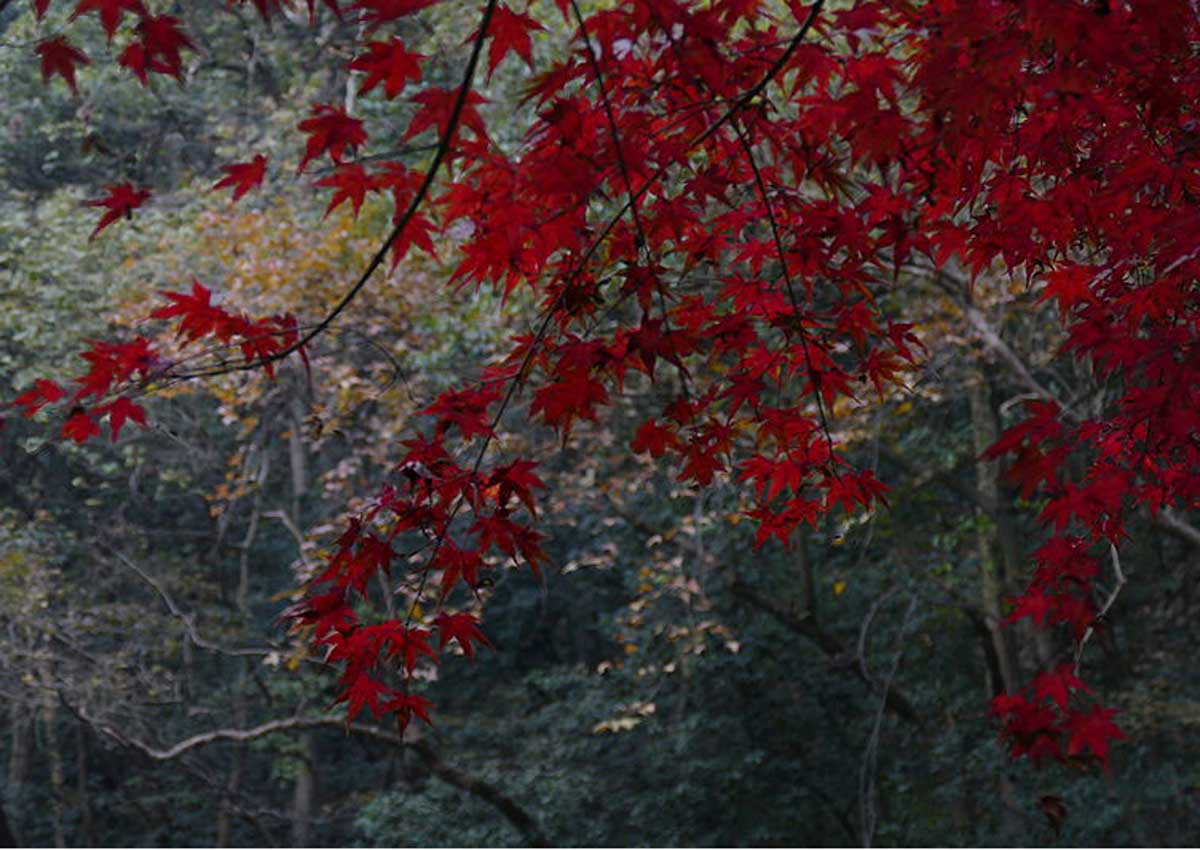
During Cold Dew, North China takes on a look of late autumn with white clouds, red leaves and early frost.
On the day of the Double Ninth Festival, people often climb hills with cornels, a kind of plant.
This custom aims to dispel evils, and originated in the Eastern Han Dynasty (AD25-220).
Season for making kippers

People of the Dong ethnic group in western Hunan province have the custom of making kippers during Cold Dew.
It is said that the kipper made on the day of the Cold Dew with accessory foods such as rice wine, salt, glutinous rice, pepper powder, paprika powder and ginger are especially delicious.
Season for picking camellia seeds

Southern Hunan province is a famous area for producing tea seed oil.
People are not allowed to go to the mountains to pick the seeds until Cold Dew comes around.
Publication Date:
Wednesday, October 12, 2016 – 12:32
Keywords:
Send to mobile app:
Source:
Story Type:
Others
Channel NewsAsia among winners of environmental journalism award
A total of 11 awards were presented at this year’s AEJA, which is an annual award ceremony organised by the Singapore Environment Council (SEC) to recognise excellence in environmental journalism within Asia.
Source link
3,000 new PMET jobs in Precision Engineering by 2020

SINGAPORE – The Precision Engineering (PE) industry will create 3,000 PMET jobs over the next three years, mainly in new areas such as robotic coordination and industrial data science.
This move towards digital manufacturing will see a significant shift in…
Source link


