28.3 C
Singapore, SG
Saturday, September 26, 2026
Home Blog Page 2609

Some 1.5 million face premium hikes for health insurance when moratorium ends

0

Around 1.5 million policyholders can expect to face premium hikes for health insurance once the moratorium on freezing Integrated Shield Plan (IP) premiums ends on Oct 31.

The Straits Times understands that the average premium increase will be between 9 and 15 per cent but the hikes are expected to impact only certain IPs, particularly those covering private hospitals.

This is because the number and dollar amount of claims made at private hospitals have shot up compared with those at public hospitals.
About 2.5 million Singapore residents have IPs. An estimated 60 per cent of them have policies covering stays in private hospitals, while the rest have plans that cover class A and class B1 wards in public hospitals. So about 1.5 million Singapore residents may be affected by the premium hikes.

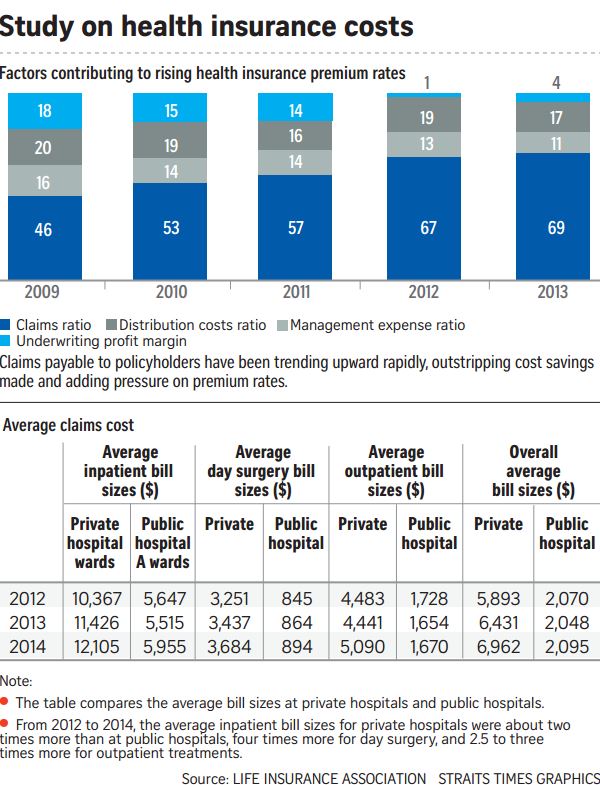
The Life Insurance Association (LIA) said the average IP claim incidence rate has been growing at approximately 9 per cent a year.

It noted that the overall average bill incurred by IP insurers increased by 8.7 per cent for private hospitals each year from 2012 to 2014 compared with just 0.6 per cent for public hospitals.

During the same period, the average inpatient bill for private hospitals was almost double that for public hospitals and four times more than recorded at day surgeries.

The LIA statistics also showed that IP insurers paid out claims amounting to $488 million in 2014 alone.

Healthcare is expected to be the biggest cost in retirement and many people have ranked this as their top concern.

The LIA told The Straits Times yesterday: “We recognise that the current rate of escalating claim costs in Singapore is not sustainable and that when it comes to IPs, premiums would need to correspondingly be increased to keep up with the claim amounts for IP insurers to continue offering these policies.”

It has been reported that two IP insurers have been making only marginal profits, with three racking up losses on such policies.

In May, French insurer AXA Life joined the IP market here as the sixth provider.

The LIA also noted while MediShield Life has led to some savings for IP insurers, these will be offset within one to two years by more – and costlier – claims being lodged.

The association released some recommendations yesterday, such as the pre-approval of medical treatment, to address the issue of escalating claim costs for IPs.

NTUC Income said it is reviewing its entire IncomeShield portfolio.

“At this point, we plan to increase the premiums of some plans in 2017. However, we are still working out the details, including the level of increase,” it said.

IP rider premiums are excluded from the one-year moratorium. So far, at least two insurers – Income and Prudential – have increased their IP rider premiums.


This article was first published on Oct 14, 2016.
Get a copy of The Straits Times or go to straitstimes.com for more stories.

Image: 
Publication Date: 
Friday, October 14, 2016 – 14:00
Send to mobile app: 
Source: 


Story Type: 
Others

Source link

Popular Thai actors coming to Singapore to promote latest film

0

SINGAPORE – Two popular Thai actors will be visiting Singapore soon to promote their latest film.

The pair, Ter Chantavit and Mew Nittha, will be in town on Oct 24 ahead of the release of the Thai romance film One Day.

Chantavit is a popular actor in Thailand, and previously starred in films such as ATM and Hello Stranger. Meanwhile Nittha has been the face of a number of international brands in Thailand, including Loreal, Sunsilk and Pantene.

The two stars will be joined by the film’s director Banjong Pisanthanakun, who last came to Singapore in a 2013 on a promotional tour for the horror-comedy film Pee Mak.

In Singapore, the two actors and the director will meet with members of the media and fans at two events.

First, there will be a meet-the-media session at 3pm on Oct 24 at the Pan Pacific hotel.

They will then make a stage appearance at the film’s Singapore gala premiere from 6pm on the same day at Golden Village Suntec City.

One Day is a love story between Denchai (Chantavit), a geeky 30-year-old IT officer who never had the courage to express his feelings for his colleague, Nui (Nittha). He finally gets his chance on a company trip to Hokkaido.

The film was mainly shot in Hokkaido as well as Thaland, and is director Pisanthanakun’s first foray into the romance genre.

It will be released in cinemas in Singapore on Oct 27.

seanyap@sph.com.sg

Image: 
Category: 
Publication Date: 
Friday, October 14, 2016 – 12:34
Keywords: 
Send to mobile app: 
Source: 


video embed code: 
<iframe width="100%" height="355" src="https://www.youtube.com/embed/H9MuJ5fXfMg" frameborder="0" allowfullscreen></iframe>
Video Media: 
Other Video Media
Story Type: 
Rewritten Story

Source link

Everything changed when I coloured my hair: Korean-American model Irene Kim

0

Step aside Cara Delevingne, we have a new fashion sensation in our midst.

Meet rainbow-haired, Korean-American model Irene Kim, 28, who is in town to promote the travelogue she hosts, tvN’s M.U.S.T (My Unexpected Sweet Trip).

M.U.S.T highlights multiple gourmet and travel spots in different cities across Asia.

The Singapore episode where Kim visits Pulau Ubin and Gardens By The Bay will premiere on Nov 3 at 10.30pm on tvN (Singtel TV Ch 518 and 619/ StarHub Ch 824).


A photo posted by Irene Kim (@ireneisgood) on Oct 2, 2016 at 3:57am PDT

Kim letting her hair down in Paris last week.

Time called Kim the “New Face of the Fashion World”, and Vogue heralded her as “The Korean It Girl”.

But who is this eye-candy making waves in the fashion world?

Kim tells The New Paper about how she envisages herself during a group interview at Amara Sanctuary Resort Sentosa on Monday.

“I just see myself as Irene. I did start with modelling, but the social media (business) is not everything that I do.

“I host television shows, I do social media, I produce my own content. I’d just say I’m an entrepreneur,” Kim said.


A photo posted by Irene Kim (@ireneisgood) on Oct 9, 2016 at 6:04am PDT

Kim at Haji Lane.

Apart from M.U.S.T, she also hosts beauty show K-Style on Mnet America.

She started full-time modelling at 25 years old, later than her peers, and was warned of being too old for the industry.

Moreover, Kim does not possess a modelesque physique.

“I don’t have the traditionally beautiful Asian face and I am not super tall. I’m, like, (178cm) ,” she said.

“So I thought of what could differentiate me from other models, such as having a different fashion style.”


A photo posted by Irene Kim (@ireneisgood) on Oct 10, 2016 at 8:35pm PDT


There was her gung-ho attitude for starters.

The Seattle-born Kim rejected a modelling contract at age 15 when the agency insisted she undergo minor plastic surgery.

Kim, who now lives in Seoul, said her claim to fame was when she decided to dye her hair, which was against tradition.

JAWS DROPPED

“When I coloured my hair, that’s when everything changed,” Kim shared.

“I did it without any permission from my agency. I dyed it blue, I walked in, and their jaws dropped.

“They were, like,’you’re not going to book any jobs with that’ because Asian models are known for their black hair,” she said.

“I kind of broke that stereotype and that season, I walked the most shows during Seoul Fashion Week. I walked 18 shows. I almost died.”

Since then, her rise has been meteoric and it is mostly thanks to her online presence.

Last year, she was chosen to be a global beauty contributor for Estee Lauder alongside US reality star Kendall Jenner, and she curates content for Chanel and Marc Jacobs on her Instagram.

She religiously documents her travels, clothes, famous entourage, and the runway shows she attends on Instagram, and has amassed 811,000 followers and counting.

She has also cultivated a strong following through her personal YouTube channel, and beauty show K-Style. Social media is a vital platform for the fashionista.

“I use that to show my personality. A lot of brands, editors, and magazines in the industry, they need social media.

“They need people like us who have personalities to help them navigate their publications (and brands among the crowd),” said Kim.

But she’s not content to rest on her laurels. She wants to cement her brand name further and perhaps launch her own line.

The only thing that is not on her plate now? Acting.

Only if the right opportunity arises, and only if she gets to play herself, Kim said, laughing.


This article was first published on October 14, 2016.
Get The New Paper for more stories.

Image: 
Category: 
Publication Date: 
Friday, October 14, 2016 – 21:00
Keywords: 
Send to mobile app: 
Source: 


Story Type: 
Others

Source link

EZ-Link: New Disney Tsum Tsum Cards (Wave 2) from 14 Oct 2016

1

EZ-LINK: New Disney Tsum Tsum cards (wave 2) now available

EZ-Link: New Disney Tsum Tsum Cards (Wave 2) from 14 Oct 2016

Tsum Tsum fans, The Disney Tsum Tsum craze continues with another set of ez-link cards! Check out the latest Design 3 and 4 EZ-Link has got in store at My EZ-Link Online Shop

Source

Unwanted gods find new home in Hong Kong

0

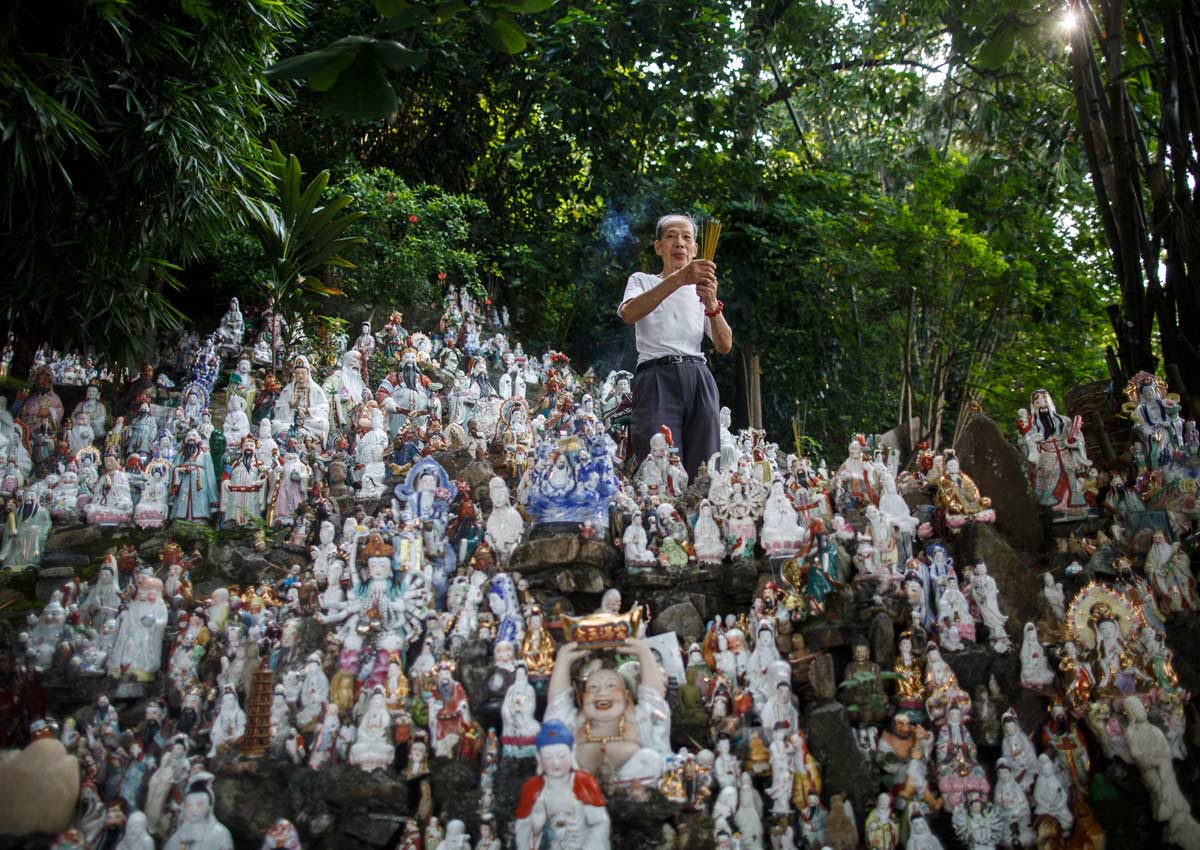
Hong Kong – Tucked away on a coastal Hong Kong hillside is a different type of recycling point – here, thousands of unwanted statues of deities look out to sea, gathered and repaired after their owners discard them.

Dedicated volunteer Wong Wing-pong attends to the colourful collection of figures which are perched on a rocky slope running down to the sea in the south of the city.

Twice daily he sweeps away leaves and burns incense sticks as offerings to the unwanted gods, ranging from Buddhist and Taoist to local deities and Christian icons.

A retired butcher, 85-year-old Wong has been looking after the statues for 17 years after stumbling across a small neglected collection on the outskirts on the site, near the residential district of Wah Fu, while he was out walking.

Back then there were a dozen unattended statues, some broken. Now the spot has grown into a popular destination for discarded figures, and is known locally as “A sky full of gods and Buddhas”.

Wong says new statues arrive every month from a number of sources – restaurants that are undergoing renovation, private homes where they can no longer be accommodated.

He spruces them up and some who have donated figures still come to worship them.

“No one should demean god. If they are out here, we should treat them well,” Wong told AFP.

“If they are broken, I will glue them back together…I don’t dare throw them away. It goes against the conscience.” Residents say they are thankful to Mr Wong.

One woman in her 80s, who gave her name as Ms Wan, said she still visits statues of local deities Guan Yin, goddess of mercy, and Guan Yu, inspired by a Chinese general, which she left at Wah Fu five years ago.

“The place is very well kept. I am thankful to him,” said Wan, who removed the figures from her home because some of her relatives converted to Christianity and did not want them on display.

Another resident, 65-year-old retiree Tse Sum swims off the shore near the site every day and also praised Wong for his dedication.

“If they are dumped they are trash,” said Tse of the unwanted gods.

“But if they are kept in order, they can be works of art.” Religion and local customs permeate Hong Kong, where Buddhist and Taoist temples are common and incense offerings are regularly burned outside local businesses.

Private homes often have a shrine to a local deity, with Christian churches and mosques also in the mix.

But with space at a premium in a city were rents are sky high, informal collections of discarded gods often decorate roadsides and public spaces.

In a leafy park next to a police station in the northern district of Fanling, around 30 statues sit quietly under the branches of a banyan tree.

Unlike Wah Fu, this site is not cared for daily by a guardian, but still draws visitors.

Yoyo Ng, 54, has come to leave a Guan Yin statue, one she kept for more than 30 years, saying she had to remove it from her home to make room for new tenants.

“I didn’t want it to go…Hong Kong is just too small. I had no choice. I keep it in the shade so it’s not exposed to sunshine,” says Ng, who works at a rehabilitation centre for the disabled.

To Ng, leaving the statue in the park means she can continue to worship it regularly there. She said volunteers from her neighbourhood in Fanling come several times a month to clean the figures.

Discarded deities have disappeared from some areas over the years – residents say they are unsure who was responsible or why they were removed.

The government says it has no specific policy of clearing them, although they may be taken away if they are blocking the footpath.

Wong says he has no intention of abandoning the figures at Wah Fu. Looking after the statues has given him peace of mind.

“I feel I’m more healthy now. I have good sleep,” he says.

“I will come here until I can’t walk…I don’t care which religion they belong to. I will look after all of them.”

Image: 
Category: 
Publication Date: 
Friday, October 14, 2016 – 12:11
Keywords: 
Send to mobile app: 
Source: 


Hermes ID: 
2 667 983
Hermes ID String: 
SP-UNWANTED
Hermes Author: 
SPANAECH
Story Type: 
Others

Source link

Why do people say things on social media that can hurt them?

0

Her fingers moved across the keyboard, and with each stroke, a slice of her life was revealed – for all to see.

She was driven by a need to share her experience from the night before. But she did it without thinking things through thoroughly.

Jane (not her real name), 27, who works in the financial industry, said: “I would often post on social media without thinking too much about the consequences.

“After all, everyone does it and I didn’t think that people would pay so much attention to my posts.”e

Unfortunately, some of her 1,000 Facebook “friends” noticed.

On one occasion several years ago, she decided to call in sick and skip work after she had a headache from drinking too much at a party the night before.

An acquaintance tagged her in a photo hanging out at the club on the same day she was absent from work. It did not help that Jane had also shared on Facebook that she had a hangover on the day that she was on medical leave.

Jane said: “Technically, I wasn’t doing anything wrong because I really didn’t feel well, but my boss spoke to me about it once I was back at work.

“Looking back, I could have lost my job if my boss was the ‘picky’ sort.”

Jane, who used to treat her social media account as an outlet to “unload” her grievances, said that her social media posts have also got her in trouble with her colleagues.

UGLY CONFRONTATION

She went on a tirade about some of them and although she did not mention any names, it eventually led to an ugly confrontation, she said.

“In the past, I would also post about it when I was unhappy with my family members, but they didn’t know because they were not on my social media accounts,” she said.

“But it’s different at work and I admit that I was being unprofessional.”

Jane eventually left her job.

She said: “I guess it was a toxic working environment and my posts were toxic as well.

“I don’t post as much any more because I’m happier at my new workplace.”

And that is the reason, Jane thinks, that Donald Trump makes some of his most disastrous and hate-filled comments online.

“He must be feeling upset about all the criticism that he has to face.

But, she added: “I would think he would be more careful because he has such a big audience, unlike me.”

‘Drunk tweeting’ could be campaign tactic

Most people have a natural filter when it comes to sharing their thoughts online.

But mistakes can be made when a person is feeling particularly exhausted, emotional or tense, said PRecious Communications managing director Lars Voedisch.

“In the past there is drunk dialing, then there is drunk texting and now there is drunk tweeting,” he explained.

Donald Trump might be an example, as observed in a New York Times article last month.

His most unpredictable and vehement tweets often appear in the early morning, when the Republican candidate is away from his minders and unwinding after a long day of campaigning.

But are Trump’s online outbursts really made in his moments of weakness? Mr Voedisch thinks that those “emotionally overcharged” posts were probably deliberate.

He said: “One of the key tactics at the start of Trump’s campaign was his radical and controversial opinions. He probably did it on purpose, knowing that he would get the headlines the next morning.

“His tweets could also be a typical deflection technique to bring the attention away from a previous controversy.”

Social media and communications consultant Belinda Ang, thinks that while Trump’s tweets will come across as “extreme” to most people, supporters may find such interactions personal and authentic, reaffirming their support for the candidate.

She said: “They would feel engaged, and that he is just being straightforward and not hiding anything. We cannot assume his true intent though – whether he is being emotional or has an informed agenda.”

For the rest of us, the experts strongly recommend thinking twice before posting anything on social media.

Mr Voedisch said: “Most people have hundreds of friends on social media and that doesn’t include friends of your friends too. Your posts might be posted privately but it can get extremely public.”

Ms Ang has a tip for those who wish to rant anyway.

“Type it out but before you hit the ‘post’ button, press backspace and erase it alphabet by alphabet,” she said.

“This way, you can practise self-censorship but at the same time manage your emotions and not allow your anger to build up.”

Trump’s recent rant-tweets

  • Oct 12 – Insulted 2008 Republican presidential candidate John McCain “The very foul mouthed Sen. John McCain begged for my support during his primary (I gave, he won), then dropped me over locker room remarks!”
  • Oct 11 – Slammed his own party and Republican leader Paul Ryan “Our very weak and ineffective leader, Paul Ryan, had a bad conference call where his members went wild at his disloyalty.”
  • Oct 10 – Ridiculed Hillary Clinton “History lesson: There’s a big difference between Hillary Clinton and Abraham Lincoln. For one, his nickname is Honest Abe. #RattledHillary”
  • Oct 5 – Dissed media outlet CNN “Wow, @CNN is so negative. Their panel is a joke, biased and very dumb. I’m turning to @FoxNews where we get a fair shake!”
  • Sept 30 – Attacked former Miss Universe winner Alicia Machado with untrue claims “Did Crooked Hillary help disgusting (check out sex tape and past) Alicia M become a US citizen so she could use her in the debate?”


This article was first published on October 14, 2016.
Get The New Paper for more stories.

Image: 
Publication Date: 
Friday, October 14, 2016 – 21:00
Send to mobile app: 
Source: 


Story Type: 
Others

Source link

Why do people says things on social media that can hurt them?

0

Her fingers moved across the keyboard, and with each stroke, a slice of her life was revealed – for all to see.

She was driven by a need to share her experience from the night before. But she did it without thinking things through thoroughly.

Jane (not her real name), 27, who works in the financial industry, said: “I would often post on social media without thinking too much about the consequences.

“After all, everyone does it and I didn’t think that people would pay so much attention to my posts.”e

Unfortunately, some of her 1,000 Facebook “friends” noticed.

On one occasion several years ago, she decided to call in sick and skip work after she had a headache from drinking too much at a party the night before.

An acquaintance tagged her in a photo hanging out at the club on the same day she was absent from work. It did not help that Jane had also shared on Facebook that she had a hangover on the day that she was on medical leave.

Jane said: “Technically, I wasn’t doing anything wrong because I really didn’t feel well, but my boss spoke to me about it once I was back at work.

“Looking back, I could have lost my job if my boss was the ‘picky’ sort.”

Jane, who used to treat her social media account as an outlet to “unload” her grievances, said that her social media posts have also got her in trouble with her colleagues.

UGLY CONFRONTATION

She went on a tirade about some of them and although she did not mention any names, it eventually led to an ugly confrontation, she said.

“In the past, I would also post about it when I was unhappy with my family members, but they didn’t know because they were not on my social media accounts,” she said.

“But it’s different at work and I admit that I was being unprofessional.”

Jane eventually left her job.

She said: “I guess it was a toxic working environment and my posts were toxic as well.

“I don’t post as much any more because I’m happier at my new workplace.”

And that is the reason, Jane thinks, that Donald Trump makes some of his most disastrous and hate-filled comments online.

“He must be feeling upset about all the criticism that he has to face.

But, she added: “I would think he would be more careful because he has such a big audience, unlike me.”

‘Drunk tweeting’ could be campaign tactic

Most people have a natural filter when it comes to sharing their thoughts online.

But mistakes can be made when a person is feeling particularly exhausted, emotional or tense, said PRecious Communications managing director Lars Voedisch.

“In the past there is drunk dialing, then there is drunk texting and now there is drunk tweeting,” he explained.

Donald Trump might be an example, as observed in a New York Times article last month.

His most unpredictable and vehement tweets often appear in the early morning, when the Republican candidate is away from his minders and unwinding after a long day of campaigning.

But are Trump’s online outbursts really made in his moments of weakness? Mr Voedisch thinks that those “emotionally overcharged” posts were probably deliberate.

He said: “One of the key tactics at the start of Trump’s campaign was his radical and controversial opinions. He probably did it on purpose, knowing that he would get the headlines the next morning.

“His tweets could also be a typical deflection technique to bring the attention away from a previous controversy.”

Social media and communications consultant Belinda Ang, thinks that while Trump’s tweets will come across as “extreme” to most people, supporters may find such interactions personal and authentic, reaffirming their support for the candidate.

She said: “They would feel engaged, and that he is just being straightforward and not hiding anything. We cannot assume his true intent though – whether he is being emotional or has an informed agenda.”

For the rest of us, the experts strongly recommend thinking twice before posting anything on social media.

Mr Voedisch said: “Most people have hundreds of friends on social media and that doesn’t include friends of your friends too. Your posts might be posted privately but it can get extremely public.”

Ms Ang has a tip for those who wish to rant anyway.

“Type it out but before you hit the ‘post’ button, press backspace and erase it alphabet by alphabet,” she said.

“This way, you can practise self-censorship but at the same time manage your emotions and not allow your anger to build up.”

Trump’s recent rant-tweets

  • Oct 12 – Insulted 2008 Republican presidential candidate John McCain “The very foul mouthed Sen. John McCain begged for my support during his primary (I gave, he won), then dropped me over locker room remarks!”
  • Oct 11 – Slammed his own party and Republican leader Paul Ryan “Our very weak and ineffective leader, Paul Ryan, had a bad conference call where his members went wild at his disloyalty.”
  • Oct 10 – Ridiculed Hillary Clinton “History lesson: There’s a big difference between Hillary Clinton and Abraham Lincoln. For one, his nickname is Honest Abe. #RattledHillary”
  • Oct 5 – Dissed media outlet CNN “Wow, @CNN is so negative. Their panel is a joke, biased and very dumb. I’m turning to @FoxNews where we get a fair shake!”
  • Sept 30 – Attacked former Miss Universe winner Alicia Machado with untrue claims “Did Crooked Hillary help disgusting (check out sex tape and past) Alicia M become a US citizen so she could use her in the debate?”


This article was first published on October 14, 2016.
Get The New Paper for more stories.

Image: 
Publication Date: 
Friday, October 14, 2016 – 21:00
Send to mobile app: 
Source: 


Story Type: 
Others

Source link

2 former Micro 2000 Technology employees charged with corruption

0

Ng Jun Siang is accused of 26 counts of corruptly accepting gratification amounting to S$238,530 while Tan Kim Chong Tony, is accused of 22 counts of corruptly accepting gratification amounting to S$18,750.

Source link

Thailand's royal family at a glance

0

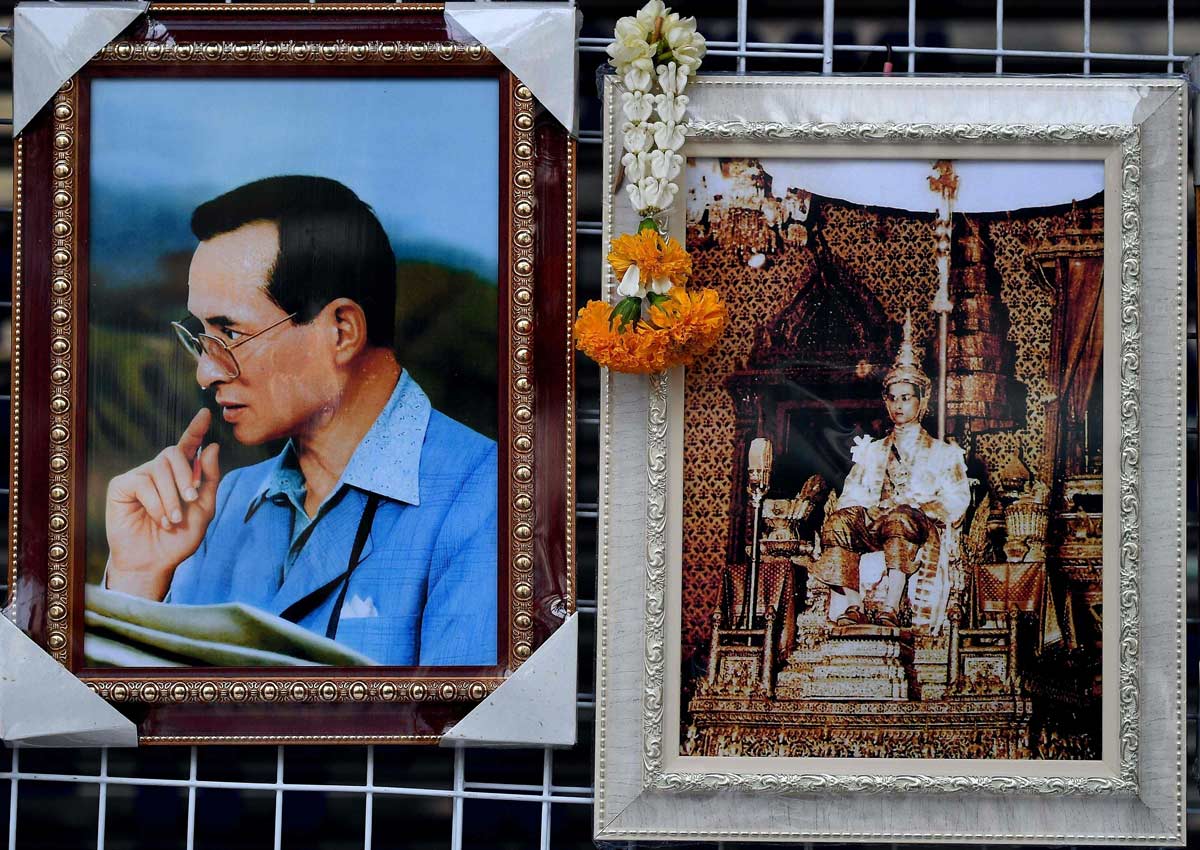
BANGKOK – Until his death on Thursday Thailand’s King Bhumibol Adulyadej was the world’s longest-reigning monarch.

Officially known as King Rama IX, he descended from the Chakri dynasty which came to power in Thailand in the late eighteenth century.

Both local and international media must self-censor in Thailand when reporting on the royal family due to the country’s lese majeste law – one of the strictest in the world.

Under the legislation anyone convicted of insulting the king, queen, heir or regent faces up to 15 years in prison on each count.

The following are brief profiles of members of the Thai royal family.

The king’s only son and the next in line to the throne, Vajiralongkorn was born on July 28, 1952.

He studied in Britain and Australia before embarking on a military career.

Officially married three times, the Crown Prince has had a colourful personal life.

His married his first wife in 1977, a cousin, Princess Soamsavali Kitiyakara, with whom he has a daughter. They later divorced.

In 2001 he married a woman who became known as Princess Srirasmi in a private ceremony. She gave birth to a boy, Dipangkorn Rasmijoti, on April 29, 2005.

In late 2014, Srirasmi suffered a very public fall from grace when several members of her family were arrested as part of a police corruption probe and charged with lese majeste.

Vajiralongkorn later divorced her and she lost her royal titles.

The crown prince has spent much of his time away from the public eye, but in recent years he has stepped in at some official ceremonies as his father’s health declined.

In August 2015 he led key figures of the current junta and thousands of others in a mass bike ride through Bangkok, a rare high-profile appearance which analysts said amounted to a public declaration of support from the country’s military rulers.

But he has yet to draw the same level of public devotion as his revered father.

Daughter of the Thai ambassador to France, Sirikit Kitiyakara met Bhumibol, her distant cousin, shortly before he ascended to the throne.

Their relationship developed at his hospital bedside in Switzerland, where Bhumibol had been studying, after he suffered a serious car accident which cost him the sight in one eye.

The pair were married in a Bangkok palace on April 28, 1950, a week before his coronation.

She was always seen by her husband’s side but has retreated from public life in recent years due to ill health.

Behind the scenes she has been a formidable figure, forging strong links to the country’s business and military elites.

Sirikit’s portrait adorns roadsides across the kingdom and people celebrate Mother’s Day on her birthday.

The king and queen had four children.

The royal couple’s daughter Sirindhorn, beloved by many Thais, was born on April 2, 1955.

She is a devoted scholar who lectures in history and speaks English, French, Chinese, German and Thai as well as mastering Latin, according to her official biography.

Her work with charities, notably as head of the Thai Red Cross, has won her admiration and she regularly represents the palace at official events.

In recent years she has been the most visible senior royal family member, continuing her father’s tradition of sponsoring development projects across rural Thailand.

The king in 1977 elevated Sirindhorn to a higher rank with the newly created title of crown princess, three years after the Thai constitution was amended to allow women to take the throne.

She is unmarried and has no children.

Ubolratana, 65, the first-born child of Bhumibol and Sirikit, studied in the United States at the Massachusetts Institute of Technology and later at the University of California, Los Angeles.

While in Boston, she met and eventually married American Peter Jensen. Ubolratana gave up her royal title and raised her family in the US.

She and Jensen divorced in 1998, and three years later she moved back to Thailand.

Their second son, Poom Jensen, was autistic and Ubolratana has worked to promote awareness of the condition. He was killed at the age of 21 during the 2004 tsunami while on holiday at the southern Thai resort destination of Khao Lak.

The youngest child in the royal family was born on July 4, 1957.

She studied chemistry at Kasetsart University and later received a doctorate.

She has used her position to promote the sciences in Thailand and was the first Asian to be invited to join Britain’s Royal Society of Chemistry as an honorary fellow, according to her official biography.

She married an air force officer, Virayuth Didyasarin, in 1982. Because he was a commoner, she was supposed to give up her royal title but her father granted her special permission to keep it.

The couple later divorced, but have two daughters.

Image: 
Category: 
Publication Date: 
Friday, October 14, 2016 – 11:50
Send to mobile app: 
Source: 


Hermes ID: 
2 667 973
Hermes ID String: 
SP_ROYALFAM
Hermes Author: 
SPANAECH
Story Type: 
Others

Source link

Singapore economy shrinks 4.1% from previous quarter in Q3, biggest fall since 2012

0

SINGAPORE – Singapore’s central bank on Friday held policy steady despite a surprisingly sharp economic contraction in the third quarter, but analysts say the weak inflation and growth outlook will likely force policymakers to ease further.

Singapore’s economy contracted by 4.1 per cent in the third quarter on a seasonally adjusted annualised basis, from the previous three months, the biggest slump since 2012, data from the statistics office showed. Forecasts had centred on 0.3 per cent growth.

The affluent city state’s open economy has felt the brunt of a global slowdown and a downturn in commodity prices, while a cooling in Singapore’s major trading partner China has put the shackles on the domestic manufacturing sector.

After a brief bounce, the Singapore dollar quickly turned lower, falling as much as 0.4 per cent to 1.3865 against the US dollar, nearing a seven-month low set on Thursday, as traders took stock of the grim gross domestic product numbers.

Despite the weak GDP figures, the Monetary Authority of Singapore (MAS) said in a statement it would keep the width of the policy band and the level at which it is centred unchanged, maintaining the rate of appreciation of the Singapore dollar policy band at zero per cent. “The current policy band provides some flexibility … to accommodate the near-term weakness in inflation and growth,” the MAS said in its semiannual policy statement.

But a number of analysts expect the MAS would be forced to ease in coming months. “The bigger story is that GDP was very, very weak,” said Michael Wan, economist at Credit Suisse in Singapore.

“MAS risks being behind the curve. They should ease – inflation is low, growth is slow and slowing and it looks like it’s not going to improve anytime soon.”

Particularly worrying for economists, the manufacturing sector shrank 17.4 per cent, due to a decline in transport engineering and the volatile biomedical sector. Even the once-vibrant services sector contracted for the third consecutive quarter.

The MAS manages monetary policy by changes to the exchange rate, rather than interest rates, letting the Singapore dollar rise or fall against the currencies of its main trading partners based on its nominal effective exchange rate (NEER) because trade flows dwarf the city state’s economy.

Sixteen of 18 analysts in a Reuters survey had predicted that the MAS would keep monetary policy unchanged this month. In April, the central bank unexpectedly eased policy.

SIGNS OF SLACK

Economic growth in the city-state has remained anaemic in the past two years and analysts worry about the paucity of catalysts to spark momentum any time soon.

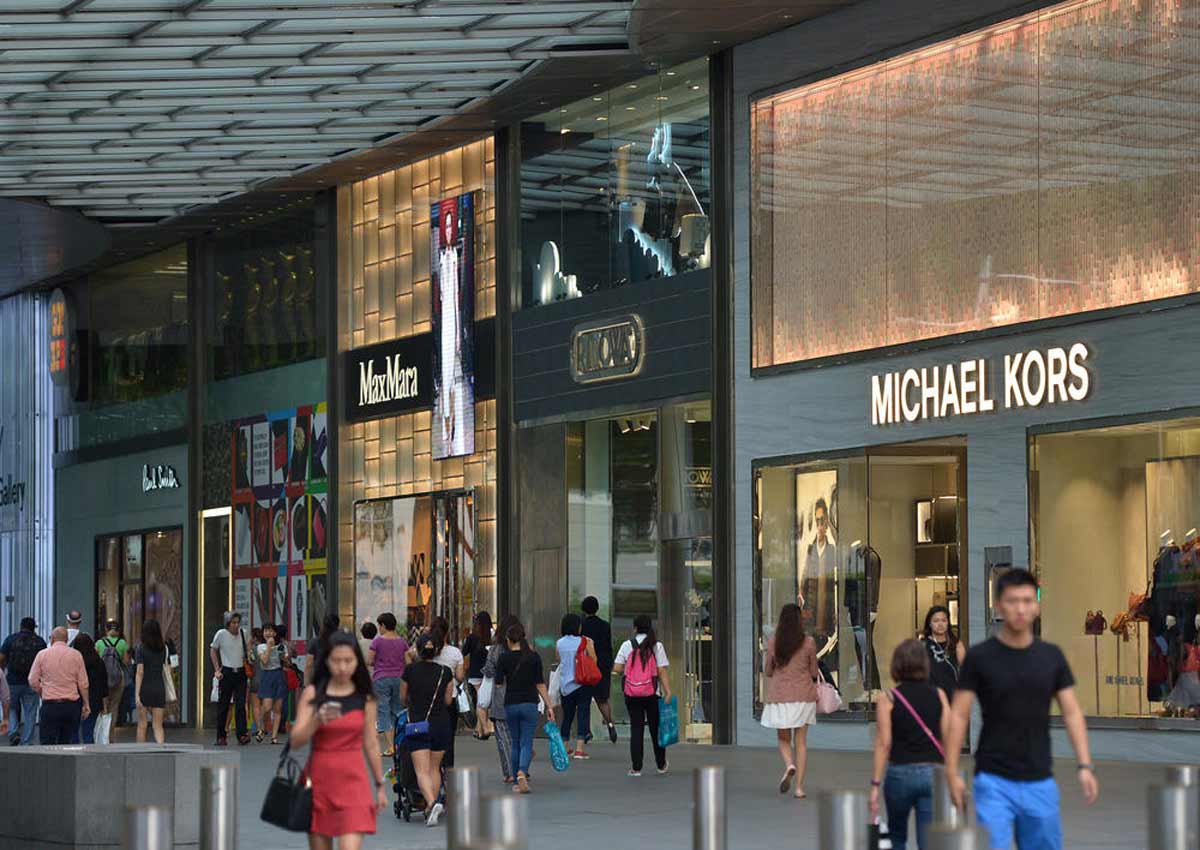
Entire floors at central shopping malls are vacant as weak domestic demand has hurt retailers while a slowing global economy has meant tourists have less money to spend. Most industries face a labour shortage exacerbated by immigration curbs and wages are running well ahead of productivity. Vacancies in office and residential buildings hit multi-year highs.

The downturn in commodities has hurt the offshore and marine industry, with debt woes engulfing companies such as Swiber Holdings Ltd, Swissco Holdings LTD and Rickmers Maritime.

Even the financial industry, which has put the tiny 51-year-old island city on the global map, is under pressure as its once-booming private banking sector struggles under tougher compliance rules.

The services sector contracted 1.9 per cent in the third quarter. The MAS expected 2016 economic growth to come in at the lower end of the 1-2 per cent forecast.

Medium-term core inflation was seen trending towards, but average slightly below 2 per cent, while all-items inflation has bottomed, it said. “Our base call … is that we will get a re-centering in April,” RBS economist Vaninder Singh said, referring to a possible one-off depreciation of the Singapore dollar.

Image: 
Publication Date: 
Friday, October 14, 2016 – 11:26
Send to mobile app: 
Source: 


Story Type: 
Others

Source link