28.3 C
Singapore, SG
Saturday, September 26, 2026
Home Blog Page 2608

Green group chief 'shocked' by suspension via phone call

0

The head of a green group has been suspended indefinitely, surprising many in the environmental scene.

Mr Edwin Seah, 46, who has been executive director of the Singapore Environment Council (SEC) since April last year, was told of the move yesterday morning while on leave.

He said he was told via a phone call from the council’s executive committee chairman Lam Joon Khoi.

“I’m shocked because no reason was given, and I was due to travel tomorrow night on official business,” he told The Straits Times.

He was due to fly to Ukraine tonight for the annual general meeting and elections for the Global Eco-labelling Network, of which he is an elected board member.

An SEC spokesman said:”The SEC Board has decided to suspend Edwin Seah with effect from today.

We are unable to comment further as investigations are ongoing.”

ST understands the council will hold a committee of inquiry next Wednesday.

The non-governmental organisation spreads environmental awareness through training programmes, awards and its Singapore Green Labelling Scheme.

It was started in 1995 and has 28 full-time staff.

Mr Seah, who was previously at the Singapore Tourism Board and Energy Market Authority, was nominated along with SEC former eco-certification head Kavickumar Muruganathan for The Straits Times Singaporean of the Year award last year.

They were recognised for raising awareness about the link between the haze and unsustainable paper products.

Mr Seah’s suspension is the latest in a string of personnel changes in the charity.

In April, Mr Kavickumar, 27, left to join Asia Pulp and Paper (APP).

Former chief executive Jose Raymond, 44, also joined APP in January but left last month and has since set up his own public relations firm.

Professor Ang Peng Hwa, who co-founded the Haze Elimination Action Team volunteer group, said he was shocked by the news, especially as he had just met Mr Seah at an SEC event on Wednesday.

“With all the recent personnel changes this year, it seems like it is a spell of bad luck for SEC,” he said.


This article was first published on Oct 14, 2016.
Get a copy of The Straits Times or go to straitstimes.com for more stories.
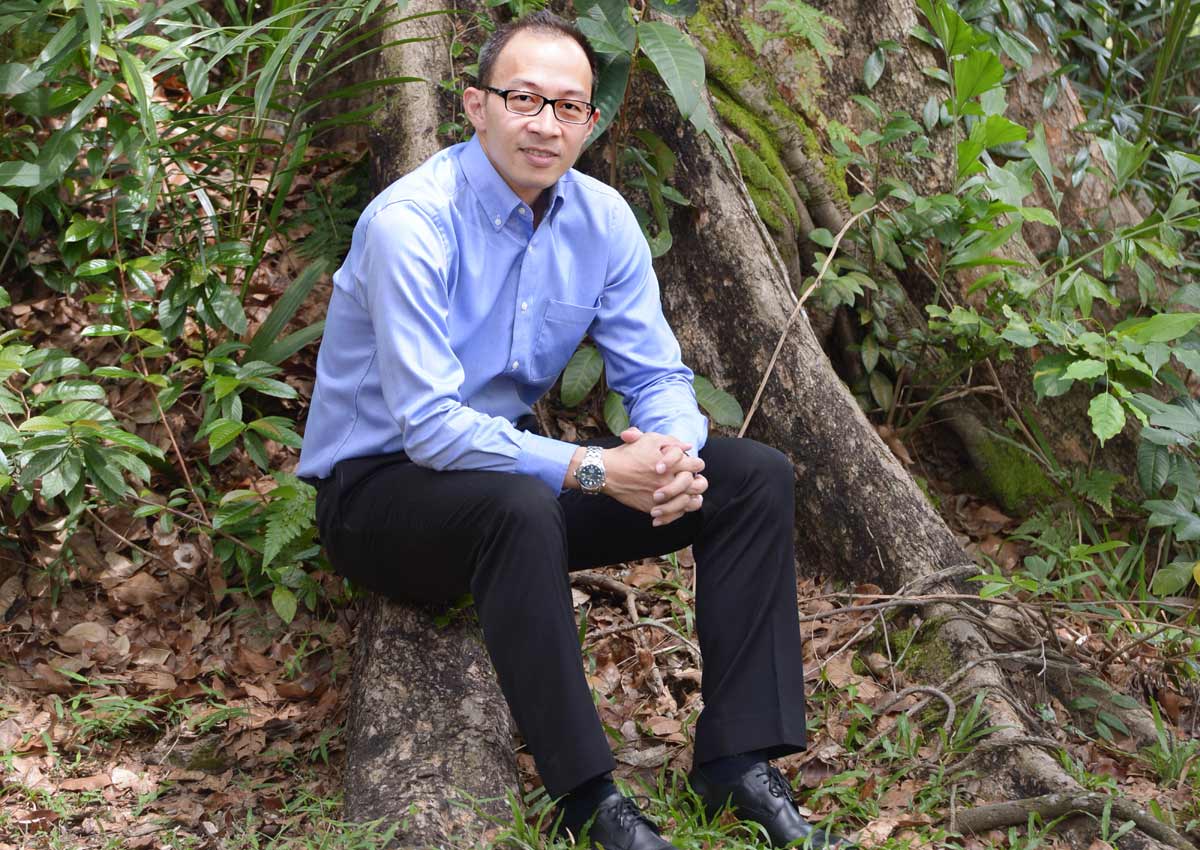
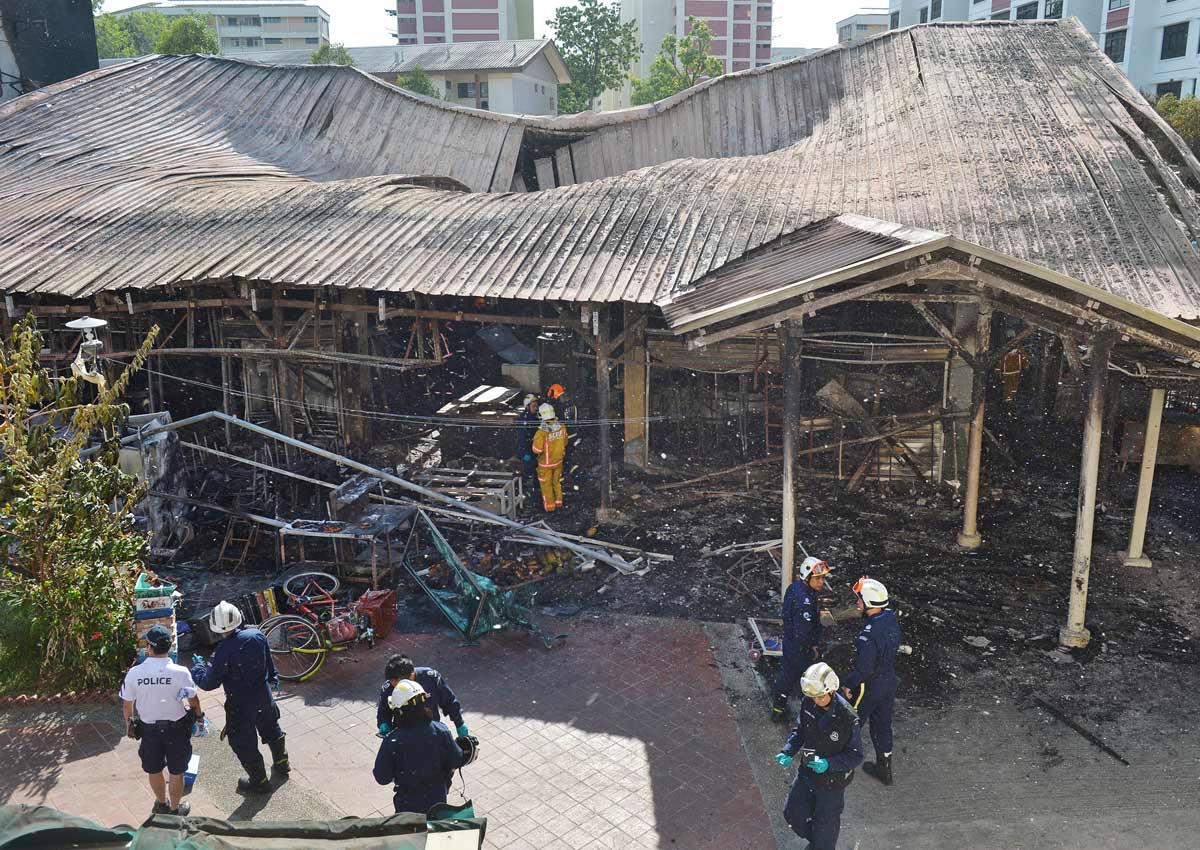
Image: 
Category: 
Blurb: 
<p>The head of a green group has been suspended indefinitely, surprising many in the environmental scene.</p>
Publication Date: 
Friday, October 14, 2016 – 15:20
Keywords: 
Send to mobile app: 
Source: 


Story Type: 
Others

Source link

Jurong fire aftermath: Agencies join forces to help stallholders

0

A multi-agency effort is under way to help the 51 stallholders affected by a fire that destroyed their wet market and two coffee shops in Jurong on Tuesday.

Jurong GRC MP Ang Wei Neng met the stallholders last night, along with representatives of the Housing Board, the National Environment Agency (NEA), the Ministry of Social and Family Development (MSF) and the Singapore Civil Defence Force (SCDF).

The HDB and NEA provided the affected stallholders, from blocks 493 and 494 in Jurong West Street 41, with a list of 27 market stalls and 22 food stalls that are available in Clementi and Ghim Moh.

Stallholders who are interested will get assistance to relocate to the new stalls, where monthly rental costs are between $200 and $850.

“Business is expected to resume within a month,” the HDB said.

Rental costs and service and conservancy charges for the wet market operator will be waived for the period it cannot operate, on the condition that the stallholders in turn are not charged.

The HDB and NEA will work with the owners of the two coffee shops.

The MSF’s Social Service Office in Taman Jurong is providing assistance to stallholders, and immediate relief funds will be disbursed by Southwest CDC.

Mr Ang said a new market “may take a year-plus to build”.

The immediate priority is to find alternative stalls at other markets so that the stallholders can resume business as soon as possible.

“We have decided to provide an emergency relief fund of $500 to each of the stallholders tonight,” Mr Ang added.

Mr Derek Tan, owner of the Block 494 coffee shop, said it might take about four months before he could reopen.

Stallholders told The Straits Times that they would rather stay in the area as some of them live there or have regular customers.


This article was first published on Oct 14, 2016.
Get a copy of The Straits Times or go to straitstimes.com for more stories.
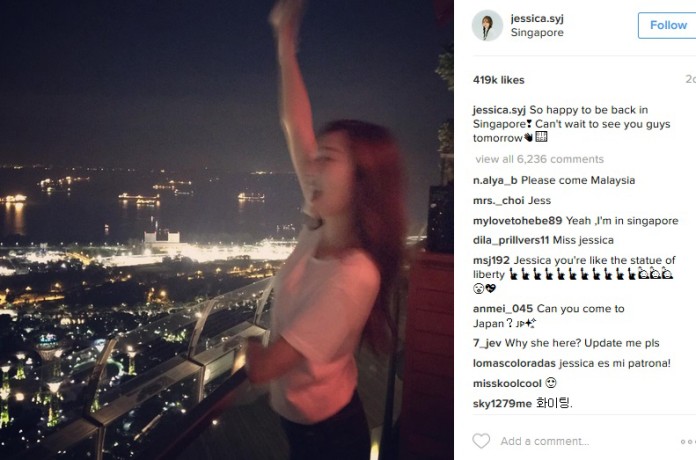
Image: 
Category: 
Blurb: 
<p>A multi-agency effort is under way to help the 51 stallholders affected by a fire that destroyed their wet market and two coffee shops in Jurong on Tuesday.</p>
Publication Date: 
Friday, October 14, 2016 – 15:00
Keywords: 
Send to mobile app: 
Source: 


Story Type: 
Others

Source link

'Ice Princess' Jessica Jung visits Korean celebrity hairstylist's Nassim Road salon

0

SINGAPORE – The weather has been pretty warm lately but fans of former Girls’ Generation member Jessica Jung are probably not feeling the heat.

The “Ice Princess” brought some chill to Singapore when she made a special appearance at an event organised by Bella K-Beauty House, a beauty salon fronted by Korean celebrity hairstylist Gunhee.

At the event, the 27-year-old singer and fashionista answered questions submitted by reporters. According to My Paper, she said that she was looking forward to having crabs for dinner.

She also took time to pose for photos with fans, although selfies were not allowed and anyone who attempted to take one was promptly stopped. Two male fans who tried to lean in for a photo were also stopped for getting too close.

When the event was over, Jung left the salon only to find some 30 fans waiting in the hot sun to catch a glimpse of her. She flashed them a small smile and did a quick wave before leaving with her assistants in a vehicle nearby.

on Facebook

We are all smiles at Bella~♡♡
@jessica.jung

Posted by Bella K-Beauty House Singapore on Thursday, 13 October 2016

Fans who missed the chance to see Jung in person this time can catch the star in Singapore when she returns for a fan meeting in November.

ljessica@sph.com.sg


Image: 
Publication Date: 
Friday, October 14, 2016 – 13:06
Keywords: 
Send to mobile app: 
Source: 


Rotator Image: 
Story Type: 
Others

Source link

Retail sales dip 1.1% in August, nearly all sectors in the red

0

The only sector to register an increase in August was motor vehicles, which saw sales rise by 30.4 per cent compared to the previous year.

Source link

Crown Prince faces huge challenge as heir apparent

0

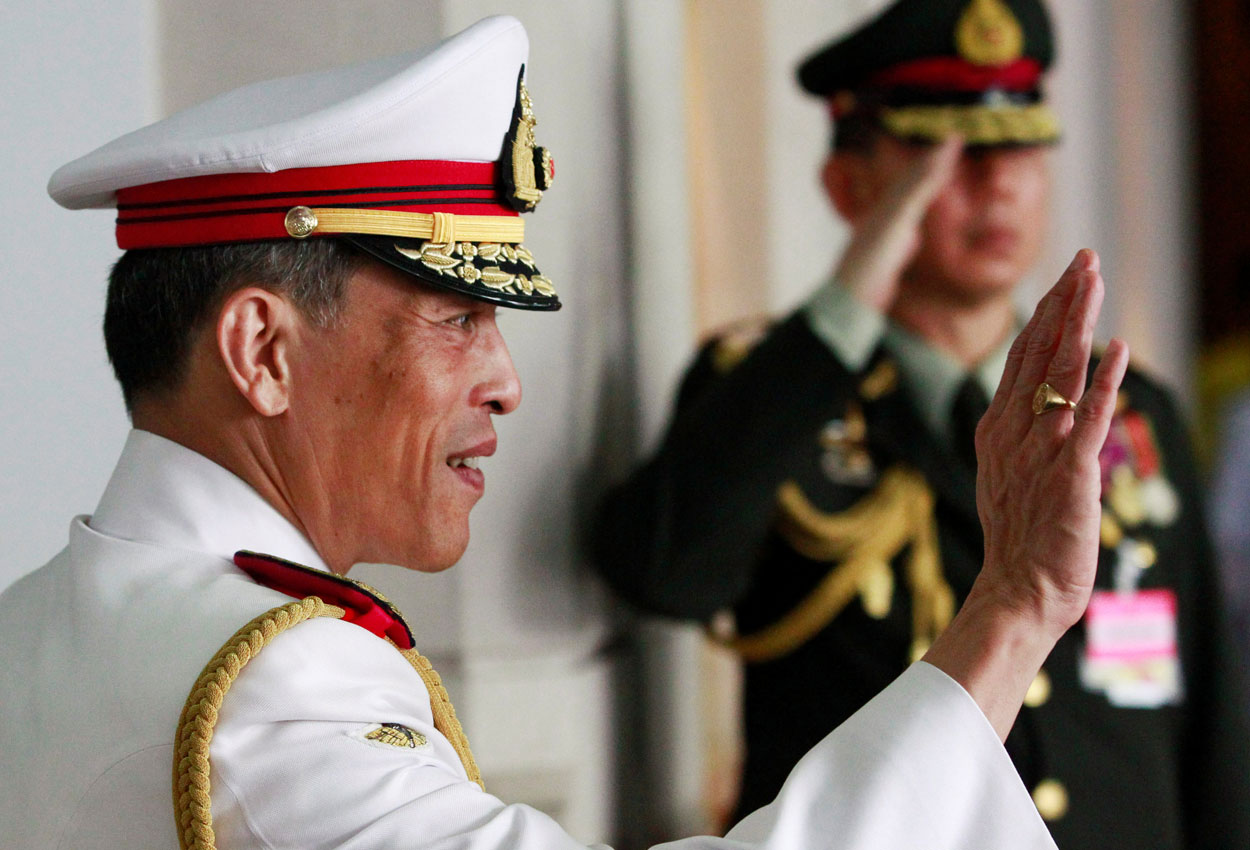
With his father elevated to semidivine status, Thailand’s Crown Prince Maha Vajiralongkorn will have a huge challenge not just to fill the shoes of King Bhumibol Adulyadej, but to define himself as the new monarch.

Tall and with a soldier’s posture, the Crown Prince, 64, was schooled in England and attended Australia’s Royal Military College at Duntroon, in Canberra.

He was invested as Crown Prince in 1972 by King Bhumibol.

The heir apparent took up his duties after returning to Thailand, serving in the Royal Thai Armed Forces and making frequent tours around the country, while representing his father at official events and ceremonies.

He reportedly led counterinsurgency campaigns against communists in Thailand in the 1970s.

He is also a qualified fighter pilot and regularly flies big jets.

As the Crown Prince, he had six battalions of elite troops under his command.

Among other things, he established hospitals in remote areas; by 1997, Crown Prince Hospitals had been set up in 21 locations.

The Crown Prince has been married three times. His first wife was first cousin Soamsavali Kitiyakara. The couple married in 1977 and have a daughter but they divorced in 1993.

He married a second time, to actress Yuvadhida Polpraserth, with whom he has five children.

In February 2001, the Crown Prince married, for a third time, to Ms Srirasmi Akharaphongpreecha.

The marriage was announced only in 2005, and she was given the royal title Mom Srirasmi Mahidol na Ayudhya by the King.

Her “simplicity, warmth win hearts,” the English newspaper The Nation wrote.

A few months later, the couple’s son Dipangkorn Rasmijoti, now 11, was born.

In November 2014, senior police officials related to Ms Srirasmi were found to have allegedly used their connections with the palace to extort and amass vast wealth, and her family was stripped of the royally bestowed surname. The couple divorced.

Media reporting on the monarchy is constrained by Article 112 of Thailand’s criminal code – a harsh lese majeste law which punishes with a jail sentence of up to 15 years anyone deemed to have insulted the King, Queen, heir apparent and Regent.

But in 1987, in the course of an interview with the Thai magazine Dichan, the Crown Prince was asked how he felt when people talked about him “as if Your Highness was a black sheep”.

His reply: “Sometimes, black sheep serve a purpose, one of helping others. Black sheep help those not-too-white ones seem whiter.”

Occasionally, European newspapers have featured rare pictures of him in Europe, where he reportedly spends much time, specifically in Germany.

But in more recent years, as his father grew frail, the Crown Prince took over many more ceremonial duties including accepting the credentials of foreign ambassadors.

Diplomats who met him reported him to be well informed, affable and urbane.

Lately, he has been taking on a higher public profile. He led bicycle rallies in Bangkok separately for the King and Queen in August and December last year.

Themed “Bike for Mum” and “Bike for Dad”, they were his first mass public events, and drew the enthusiastic participation of tens of thousands of middle-class Thais. The first event drew as many as 300,000 to register nationwide.

Security was tight for the rallies in Bangkok as the Crown Prince led cyclists – including the Prime Minister and Cabinet ministers – on the route, smiling and waving to hordes of well-wishers who turned out to see him.

Many of those who participated had bought bicycles specially for the occasion, while onlookers waited for hours in the heat to catch a sight of the Crown Prince.

Similar mass rides were conducted nationwide, in events pitched as a show of unity in a nation politically polarised over the last decade.


This article was first published on Oct 14, 2016.
Get a copy of The Straits Times or go to straitstimes.com for more stories.
Image: 
Category: 
Publication Date: 
Friday, October 14, 2016 – 14:00
Send to mobile app: 
Source: 


Story Type: 
Others

Source link

Singapore, Australia ink four key agreements

0

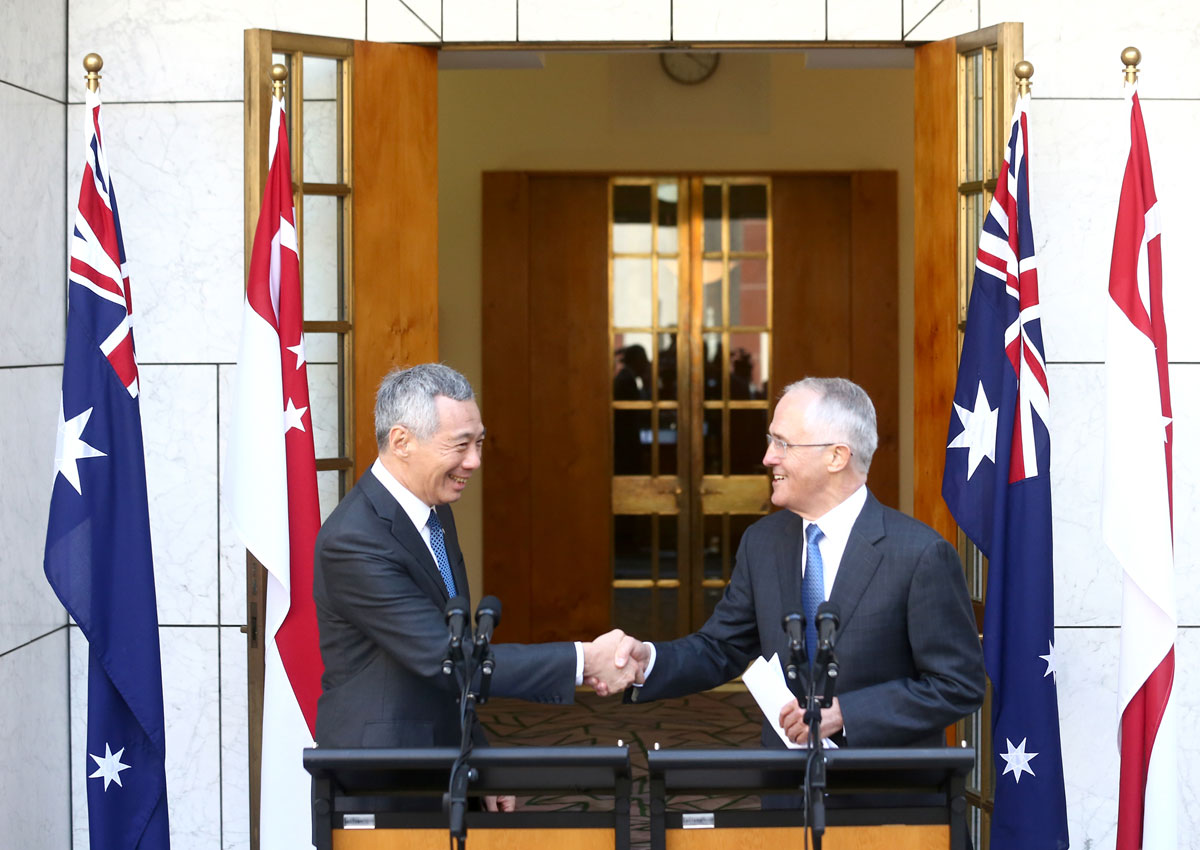
Singapore and Australia signed four key agreements yesterday that will boost co-operation in trade, defence, innovation and combating transnational drug crime.

They include an upgraded free trade agreement (FTA) that will make it easier for Singaporean professionals and entrepreneurs to work in Australia and vice versa.

There is also a A$2.25 billion (S$2.35 billion) defence deal that will see both sides jointly develop military training facilities in Australia. The upgraded FTA comes into force next year, and defence co-operation planning starts early next year.

Prime Minister Lee Hsien Loong and Australian PM Malcolm Turnbull said in a joint statement that the agreements represent the “most substantial upgrade in the Australia-Singapore relationship in a generation”.

Benefits in four key areas

Of the four Comprehensive Strategic Partnership (CSP) agreements signed yesterday, one will see trade ties being deepened while the other three will see Singapore and Australia collaborate more closely in the areas of defence, scientific research and anti-drug trafficking.

The upgraded Free Trade Agreement will come into force next year and planning for the expansion of new military training areas in Australia will start early next year.

These are some of the benefits under the agreements:

Trade

  • More flexible rules of origin, which are standards used to determine the origin of goods, will make it easier for Singapore exports to qualify for tariff-free treatment in Australia.
  • Reduction in regulatory barriers, such as onerous labelling requirements, will facilitate trade in goods like wine, cosmetics and medical devices.
  • Opportunities for companies from both sides to bid for government procurement contracts.
  • Easier mobility and longer stays for business people.

Defence

  • New A$2.25 billion (S$2.35 billion) programme will allow the Singapore Armed Forces to conduct unilateral training in Australia for 18 weeks, in areas 10 times the size of Singapore, for up to 14,000 troops per year over 25 years.
  • Joint development of military training areas and advanced facilities in Australia.

Science research and innovation

  • The Singapore and Australian governments will provide about S$50 million worth of support for collaboration in science and innovation.
  • More co-operation between research institutions, such as between Singapore universities and Australia’s Data61 to look into big data and smart cities.
  • Shared use of research infrastructure – like supercomputing centres in both countries – to realise a greater return on investments, spread expenses, allow for maintenance of infrastructure, and let researchers improve their research by accessing a wider range of facilities and intellectual cultures.
  • Establishing Australia’s fifth landing pad in Singapore to facilitate the foray of high-tech Australian start-ups into Asia.

International drug crime

  • Singapore’s Central Narcotics Bureau and the Australian Federal Police will conduct joint training, learning and development programmes and officer exchanges to combat the proliferation of drugs, especially new psychoactive substances. 


This article was first published on Oct 14, 2016.
Get a copy of The Straits Times or go to straitstimes.com for more stories.
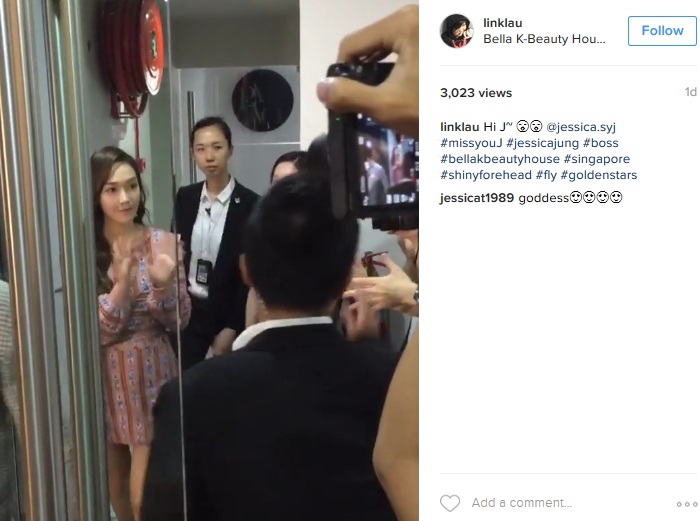
Image: 
Category: 
Publication Date: 
Friday, October 14, 2016 – 15:50
Send to mobile app: 
Source: 


Story Type: 
Others

Source link

Singapore's poor economic growth may be signal of weakness around the region

0

Singapore’s growth in the third quarter badly missed expectations on Friday, potentially signaling weakness around the region.

The city-state’s gross domestic product (GDP) grew 0.6 per cent on-year in the third quarter, well off forecasts for 1.7 per cent growth from a Reuters poll and the weakest reading since 2009, during the global financial crisis.

GDP also contracted 4.1 per cent on-quarter, compared with a Reuters poll forecast for 0.3 per cent growth.

“Singapore being a small open economy, basically we are like a harbinger,” Selena Ling, head of treasury research and strategy at OCBC, told CNBC’s “Squawk Box” on Friday.

“You can expect the next few weeks when we get third quarter growth numbers coming out from the rest of the Asian economies, probably you’ll see weaker than expected numbers as well.”

She called Singapore’s data “pretty grim,” noting that even the most bearish forecast hadn’t called such weak figures.

Despite the weak data, Singapore’s central bank, the Monetary Authority of Singapore (MAS) kept its monetary policy unchanged with a neutral bias for the currency.

Rather than using interest rates, the MAS, which has official policy-setting meetings just twice a year, sets its monetary policy by adjusting an undisclosed trading band for the currency based on a basket of currencies weighted to reflect trade levels with the city-state.

In the wake of the GDP data and the MAS’ inaction, the Singapore dollar fell to its lowest level since early March. The US dollar was fetching as much as S$1.3887 by mid-day Friday, up from levels as low as S$1.3770 earlier in the session.

OCBC’s Ling said external factors dragged on Singapore’s growth.

“Ahead on the horizon, you do have some risk events like US elections. You also have a possible FOMC rate hike in December. So these are pretty big external factors,” she said. “The China slowdown story is still on-going so you do have renewed concerns about how much of the softness in terms of the Chinese manufacturing export pattern is going to drag on regional trade growth as well.”

She noted that the World Trade Organisation (WTO) had already downgraded global trade forecasts for 2016 and 2017. The WTO has projected global trade would register its fifth straight year of sub-3 per cent growth, citing shifting exchange rates and falls in commodity prices.

The slowdown was already evident in China’s trade figures. Data released Thursday showed China’s exports tumbled 10.0 per cent in dollar terms in September and imports fell 1.9 per cent, coming in well below forecasts from a Reuters poll for a 3.0 per cent fall in exports and a 1.0 per cent rise in imports.

Image: 
Publication Date: 
Friday, October 14, 2016 – 12:50
Send to mobile app: 
Source: 


Story Type: 
Others

Source link

EU, APAC regulators need to work together: MAS deputy managing director

0

Mr Ong Chong Tee was speaking at the inaugural EU-Asia Pacific forum on financial regulation, where Singapore’s central bank hosted regulators from both regional groupings to discuss issues including cross-border coordination in regulation.

Source link

King Bhumibol an 'outstanding king': Singapore President Tony Tan

0

“King Bhumibol was an outstanding King who dedicated his life to improving the welfare of his people and developing the Kingdom of Thailand,” says Singapore President Tony Tan Keng Yam.

Source link

Singapore drama Perfect Girl on Netflix

0

When actor-writer-director Jason Chan decided to make English-language Asian content for global distribution three years ago, he met with overwhelming response.

“The number of people who laughed in our faces, I can’t count. Everyone said things like, ‘No one wants to see Asians speaking English. No one will ever buy this content.'”

He is having the last laugh now.

Perfect Girl, a show produced by his company BananaMana Films, has been acquired by major international platforms such as Netflix, Viki and Naver TVcast.

BananaMana declines to reveal how much each platform paid for the show, but it is probably safe to assume Perfect Girl has recouped many times its production cost.

After all, it was made with just $1,000. Chan not only wrote and starred in it, he was also the director, cinematographer, editor and even music composer.

“I’d done composition class way back when. I took out my piano and (music-making app) GarageBand, which is free. It’s not rocket science, people can do it,” he says.

The 10-part Web series, about a man who runs into his high school crush after 10 years, attracted notice after it picked up five awards, including for Outstanding Drama Series, at the Los Angeles Web Series Festival last year.

First to buy it was Viki, a Singapore video-streaming platform headquartered in San Francisco, which rolled it out as a 67-minute-long feature during Valentine’s Day this year.

“It is the first Singaporean drama picked up by Viki, which traditionally picks up very high-quality premium Korean content,” says Chan, 44.

Photo: Bananamana Films

Major American entertainment player Netflix was next to knock on his door and Perfect Girl premiered on the platform on Oct 1 and is now available globally on it.

It is likely the second Singapore production on Netflix after Anthony Chen’s acclaimed film Ilo Ilo (2013).

The show has also made its way to Naver TVcast, “kind of like the Netflix of Korea”.

Chan says: “I didn’t quite know the significance of it until my wife told her sisters and some of her friends and they were reacting the same way our friends were reacting to Netflix.”

His wife Sang Min Lee, 34, is Korean and part of the creative producing team of four at BananaMana Films.

Perfect Girl’s acquisition by Naver was also particularly satisfying as the platform features content from major Korean broadcasters such as KBS, MBC and SBS.

Chan set up BananaMana Films five years ago with Christian Lee, in his late 40s, originally doing corporate videos.

Chan, who is from Australia, and Lee, who is from the United States, are Singapore permanent residents.

Both of them started out as actors and have worked on television, in films and on stage in Singapore, Australia and America.

Lee says they are both bananas, which means someone who is yellow on the outside and white on the inside, and one meaning of their company’s name is “where are the bananas” in Malay.

Their focus turned to original works three years ago and their portfolio includes What Do Men Want? (2014), a 13-part series for Mediacorp, and Bang Bang Club, a 20-minute pilot for an action thriller which they hope to develop into a film or television series.

They are also working on their first full-length feature, Jimami Tofu, a love story between a Singaporean chef and a Japanese food critic set in Okinawa, Japan. Shooting takes place next month over four weeks. The film is planned for release in February.

Photo: Bananamana Films

With a subsidy from the Okinawa Film Office and development funding from the Info-communications Media Development Authority of Singapore to help with the script, Jimami Tofu has a budget of $250,000. Talks are under way for Viki to put its name to it and push it out globally.

Lee says: “We believe it’s a new world now for film-makers, especially when it comes to distribution. We must leverage technology to bring production costs down and aim for sponsorship and online long tail distribution.

“We hope we’re trailblazing for our Singapore film industry.”

Chan adds: “The old traditional system required hundreds of thousands to millions of dollars to make a good story. But Perfect Girl is this great example that you can do a lot for very little.”


This article was first published on Oct 14, 2016.
Get a copy of The Straits Times or go to straitstimes.com for more stories.
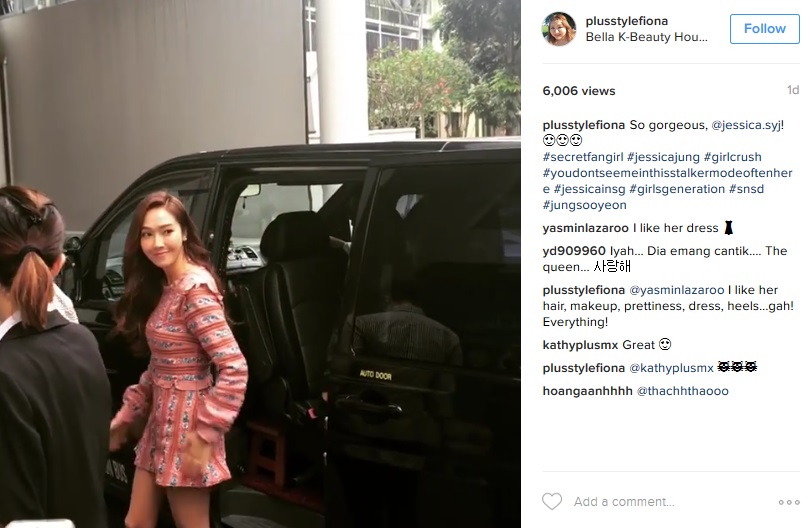
Image: 
Blurb: 
<p>When actor-writer-director Jason Chan decided to make English-language Asian content for global distribution three years ago, he met with overwhelming response.</p>
Publication Date: 
Friday, October 14, 2016 – 15:10
Keywords: 
Send to mobile app: 
Source: 


Story Type: 
Others

Source link