Home Blog Page 2475

Exam stress among the young: When grades define worth

0

The obsession with grades and exams can take its toll on children. Amelia Teng speaks to experts and shines the light on the pressures children face and what parents can do to ease their burden.

One counsellor recalled how a 13-year-old girl scored 83 marks in mathematics but was scolded by her mother for being careless on one of the questions.

“Her mother told her that she could have scored above 85 had she been more careful,” said Ms Lena Teo, deputy director of therapy and mental wellness services at the Children-At-Risk Empowerment Association Singapore. The girl was referred to her because of anxiety, depression and self-harm.

Then, there was a mother who made her son retake the Primary School Leaving Examinations (PSLE), even though he had passed the first time. “I was shocked,” said Dr Carol Balhetchet, senior director for youth services at the Singapore Children’s Society.

“I couldn’t understand why a parent would put her child through another year of primary school for better grades.”

The obsession among some parents for grades and exams is putting undue stress on young children here – an issue that has come under the spotlight after a Primary 5 pupil fell to his death. According to a coroner’s inquiry last week, the boy had seemed afraid of showing his mid-term exam grades, having failed Higher Chinese and mathematics, to his parents.

Parents here have described the episode as a wake-up call, with many admitting it has forced them to rethink how much pressure they put on their young children to do well academically – sometimes without even realising it.

More than As and Bs on a report card, it is the expression on their parents’ faces when they read it that often matters most to children, added experts.

A parent’s show of approval, disappointment or anger are signs of affirmation and acceptance, or otherwise, for young children. “Children just want to see their parents happy for who and what they are,” said Dr Balhetchet.

Latest figures show that last year, there were 27 suicides among 10- to 19-year-olds – a 15-year high. This was double the 2014 figure, despite a drop in the overall number of suicides.

Young suicides have also been on the rise elsewhere – in Britain, 201 young people in the same age group of 10 to 19 had killed themselves in 2014, up from 179 in 2013.

A recent investigation by the University of Manchester of 130 teen suicides also showed that more than a quarter of them had experienced exam stress or other academic pressures.

The worry, counsellors here said, is that parents sometimes do not realise that by harping on grades, young children’s sense of self-worth ends up being defined by how well they do in school. Even the “reminder” that if the child does not do well in school, he could end up with a poor job in the future can add pressure.

Families today also have fewer children, counsellors pointed out. And that means that children not only have fewer siblings to confide in, they also end up having greater expectations placed on them.

Said Madam Madelin Tay from Family Central, a service by Fei Yue Community Services: “With fewer kids, parents can afford better resources and surely want the best for their kids. So it may be intentional or unintentional that they want to see results after investing their time and money.”

And not just when they enter primary school.

Housewife Nadia Ng, 28, who has a four-year-old boy and 2½-year-old girl, said: “Even in pre-school, other parents ask me if I send my son for enrichment classes, but I don’t see a need because he’s so young.”

The Ministry of Education has, in recent years, taken steps to reduce the overemphasis on academic marks, by not naming the top scorers of national examinations and investing more in programmes to nurture students’ strengths in other areas, such as sports or music.

The PSLE T-score – often criticised for causing excessive stress – will also be done away with in 2021, and pupils will no longer be graded relative to their peers.

Mr Bimal Rai, an educational psychologist from Reach Therapy Services, said he sees more efforts to help academically weaker students through schools like Crest Secondary. “The good thing is that there are multiple pathways in the education system today.”

But parents do not buy into this as well – that learning is a lifelong journey.

“There is more understanding across schools that children have to be measured more holistically, but some old structures like grading and assessment haven’t changed,” said Dr Balhetchet.

Mr Brian Poh, a clinical psychologist from the Institute of Mental Health’s department of child and adolescent psychiatry, said that children also have other pressures to deal with. These include friendship issues, bullying, sibling rivalry and difficulties with school authorities, he added.

While some children can cope, counsellors said that others may struggle and later develop socio-emotional problems such as anxiety, extreme mood swings or even withdrawal from social circles.

The Primary 5 boy’s death has seen some parents relook their own behaviour.

Housewife Karen Chen, a 34-year-old mother of three, said: “Education seems like a rat race, and it does seem that kids are under more pressures today. The recent tragedy is a wake-up call for all parents to evaluate ourselves and how we help our kids manage stress.”

Madam Christine Lim, 39, a part-time recruiter who has a son in Primary 2 and daughter in Primary 6, said: “As long as they try their best, I can accept any grade.

“Sometimes I scold them for making careless mistakes or I may threaten to not take them on holidays, but I’ve never hit them for bad results.”

Mrs Tan Kee Leng said she was more careful with her words during the lead-up to her son’s Primary PSLE this year.

“He started to get more stressed and couldn’t sleep very well,” said the 42-year-old who works in a pharmaceutical company.

“Instead of asking him what’s the highest mark or how his friends did… we told him we would accept his results and we would move on no matter what.”

Thoughts of a student on the need to excel

In April 2014, New Zealander Victoria McLeod fell to her death at a Clementi condominium where she lived with her parents.

The 17-year-old who was in her final year in an international school here had put great pressure on herself to get into university, even though her parents had told her that passing exams was not the only way to find her course in life.

Seven months after her death, her parents found her online journal. Here are several extracts:

JAN 14, 2014

Dear Friend,

I lost it. I just sort of keeled over and thought ‘I can’t do this’. Like, I’ve known that I will never have a dazzling life, what with the grades I get. But if I keep carrying on like this, I might actually end up snapping…

I don’t know how I’m going to cope when I get back to school. Will it really help if I ask for it? Would I just be wasting my parents’ money? But the whole point is that I can’t ask for it anyway. How do you explain that you might have social anxiety… I just don’t know. And it scares me.

JAN 15, 2014

Dear Friend; I was out yesterday and saw (). You know, one of those chicks that look like they have it all. Blonde. Lithe. Top grades. Popular. The whole jealously wrapped-up package…

It’s kind of beyond me how someone can have their life so sorted. Maybe I should start comparing them allegorically to filing cabinets. Each file section is a subdivision of life. Academics. Family ties. Extra-curricular activities. Social stature. Looks. Boyfriends/ girlfriends. Socioeconomic state. Mental health. Physical form. With a person like (), not only is every section perfectly organised, but also each page has the right border, font, page number and grammar with A-pluses on each sheet of crisp white paper inside every pastel folder… I gave up on trying to be an () a long ago.

MARCH 30, 2014

I remember something J.K. Rowling wrote in the first Harry Potter book. That there were more important things than Hermione’s affinity with books and cleverness. Like friendship. And bravery. But that’s changing. One day, no one will know the meaning of courage or camaraderie.

Sadly, all that really matters, all that grown-ups are trying to drill into young minds, is success. If you are not successful, there is no point in existence. That’s a pretty sad message to teach. But that is what’s happening, whether we want it to or not.

It doesn’t matter if it’s at the cost of one’s well-being. Even if you were reduced to something barely functioning, but you pulled yourself up and are sitting there, telling your story in an Armani suit, that’s all that matters. That you became a success story.
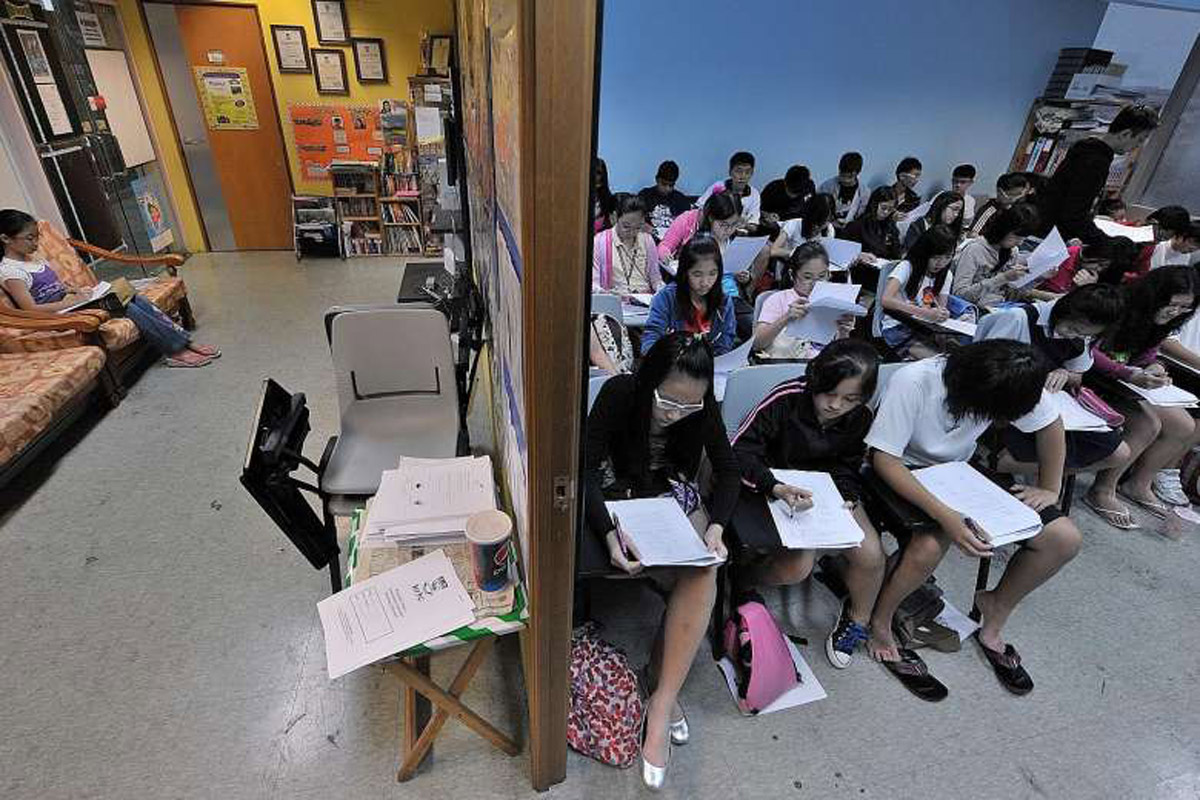
One parent says extra coaching sometimes through tuition, helped her child cope with more complex topics and catch up in class.

Marks do fall as lessons get harder but a big drop may indicate other issues

It is common for pupils’ results to dip in upper primary school as they adjust to more subjects and tougher content – and parents need to readjust their expectations.

The introduction of science as the fourth subject at Primary 3 is one factor, but the increasing complexity of concepts being taught also adds to the dip, said educators, who urged parents not to be unduly alarmed. Pupils tend to improve after some practice.

Madam Joyce Ong, 42, said her daughter, now in Secondary 1, had experienced a dip of around 10 marks in mathematics and science when she started Primary 4 and 5.

“As new and more complex topics are added, children might fumble a bit,” said the property agent.

But extra coaching, sometimes through tuition, helped her daugher to catch up, she added. “Some of the problem sums can be quite daunting… I was also unsure which methods to use, so I can imagine it was more difficult for an 11- or 12-year-old.”

However, large drops in scores could point to more serious issues. In the recent coroner’s report into the death of a Primary 5 pupil, it was stated that he had scored 20.5 out of 100 for mathematics and 12 marks for his Higher Chinese exam. For his English language, Chinese language and science papers, he had 50, 53.8 and 57.5 marks respectively.

His principal had testified that the boy had been an “average” student since he started school, and in previous years, had obtained an average of 70 marks for his subjects.

Experts said the huge drop may have meant that the boy was coping with other issues as well.

Several parents also questioned if he should have been allowed to take Higher Chinese as he was an “average” student.

A 51-year-old former primary school teacher said that pupils are given the choice of taking up Higher Chinese at the end of Primary 4 if they do well in the examinations for their languages.

“Schools will also hold briefings after the exams at the end of the year to explain to parents their selection criteria – usually 75 marks and above,” he said.

“Higher Mother Tongue is an optional subject and if, in Primary 5, the pupil fails or is unable to cope, parents can still write in to ask that he or she drops the subject.

“Parents typically like their kids to take a higher language because it looks good on their portfolio.

“But it doesn’t seem very wise for them to continue taking the subject if they don’t do well, even if they qualified for it earlier.”
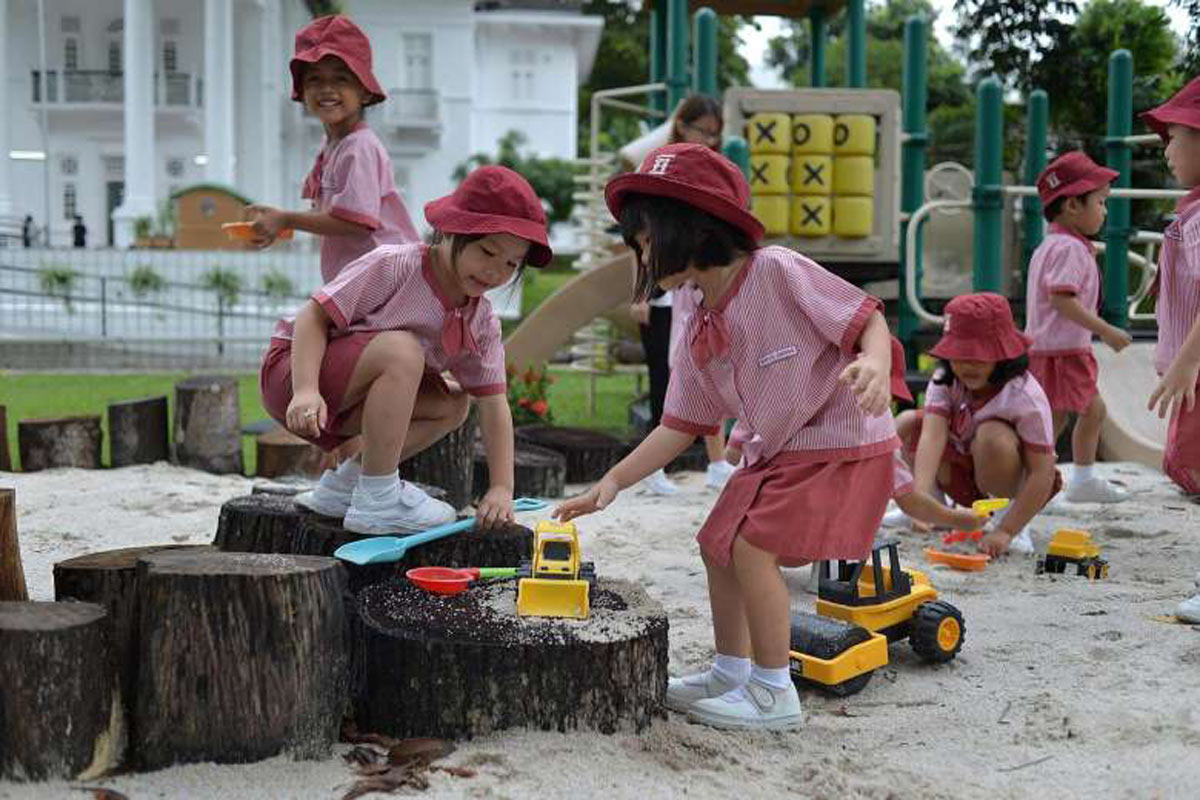
Key steps in building stronger ties with kids

Speak with them, spend time with them and understand who they are – these, said counsellors and psychologists, are several key steps in building stronger relationships with children, who will in turn be more open about sharing their problems.

Dr Thomas Lee, medical director and consultant psychiatrist at The Resilienz Clinic, said children at the age of 12 and below are still developing emotionally and mentally. He said: “They don’t know how to talk about their feelings.”

Ms Pamela See, an educational and developmental psychologist from Th!nk Psychological Services, said: “If parents are encouraging and allow open communication, their kids are more likely to share their difficulties with them knowing that they will get the support.” Parenting coach Cheren Kwong believes parents must spend quality time with their children, instead of being “too engrossed in work or their phones”.

Psychologist Daniel Koh from Insights Mind Centre explained that communication with children must go beyond what parents deem as “important”, such as if homework is done or they have revised for tests.

Parents must show interest in their children’s lives beyond how they fare in their studies, said counsellor Madelin Tay, from Family Central, a service of Fei Yue Community Services. “If we focus on just the academic aspects, kids may feel accepted only when they have measured up or when they have achieved. Kids want to know that they are accepted unconditionally,” she added.

Dr Carol Balhetchet, senior director for youth services at the Singapore Children’s Society, said: “When children see their parents’ faces, they see a validation of love – whether they come in first or last, whether they win or lose.”

Mr Bimal Rai, an educational psychologist from Reach Therapy Services, said: “Parents need to manage their expectations and be mindful of what they convey to children.

“At the moment, the message that seems to define our culture is ‘you must do well, the Primary School Leaving Examination is very important’.”

Instead, the focus should be on helping children be more resilient when they fail and providing unconditional support.

Said Dr Balhetchet: “We have been brought up with so much success that we think that we cannot afford to fail. But sometimes failure is another way of learning.”

Mr Brian Poh, a clinical psychologist from the Institute of Mental Health’s department of child and adolescent psychiatry, said rather than being overly focused on results, it is better to praise young children for their “effort in completing their work or trying their best”.

Parents and educators can also teach children how to cope with academic pressure, such as setting goals and managing time, he added.

Ms Lena Teo, deputy director of therapy and mental wellness services at the Children-At-Risk Empowerment Association Singapore, urged parents to understand their children’s abilities better: “Every child has (a) different kind of smart. Some are academically smart, some are better with their sports or music, while others are late bloomers.”

Technology entrepreneur Chow Yen Lu, in his 50s, who co-founded Over the Rainbow, a non-profit organisation that promotes mental wellness among young people, said parents need to be less “authoritarian” and more like “partners and advisers”. His lost his own son, Lawrence, in 2009, a few months before his graduation from Murdoch University in Australia. Lawrence had been battling manic depression for eight years.

“The most important thing is to be there, and be supportive… (when facing failure) tell them that it’s like a thunderstorm, that everything will come to pass,” said Mr Chow.

Higher-level schools like junior colleges have started training students in basic counselling skills and mental health issues, realising that it may be be easier for them to talk about their problems with someone of similar age. The Ministry of Education said schools also build resilience in students through ways such as project work, co-curricular activities and camps.

“Teachers teach students social-emotional skills such as time management, goal-setting, coping with stress, and handling expectations,” said a spokesman, explaining that teachers are trained to detect signs of distress and provide basic counselling.

But students at a younger age need more guidance from parents, said counsellors. Part-time recruiter Christine Lim, 39, said she told her Primary 6 daughter, who had read news about the 11-year-old who fell to his death after receiving his Primary 5 results, that after failure, “you can always try again”.

• Additional reporting by Calvin Yang and Yuen Sin

HELPLINES

SAMARITANS OF SINGAPORE (24-hour hotline) 1800-221-4444

TINKLE FRIEND 1800-274-4788

SINGAPORE ASSOCIATION FOR MENTAL HEALTH 1800-283-7019

CARE CORNER COUNSELLING CENTRE (IN MANDARIN) 1800-353-5800

MENTAL HEALTH HELPLINE 6389-2222

AWARE HELPLINE 1800-774-5935



This article was first published on Oct 30, 2016.
Get a copy of The Straits Times or go to straitstimes.com for more stories.
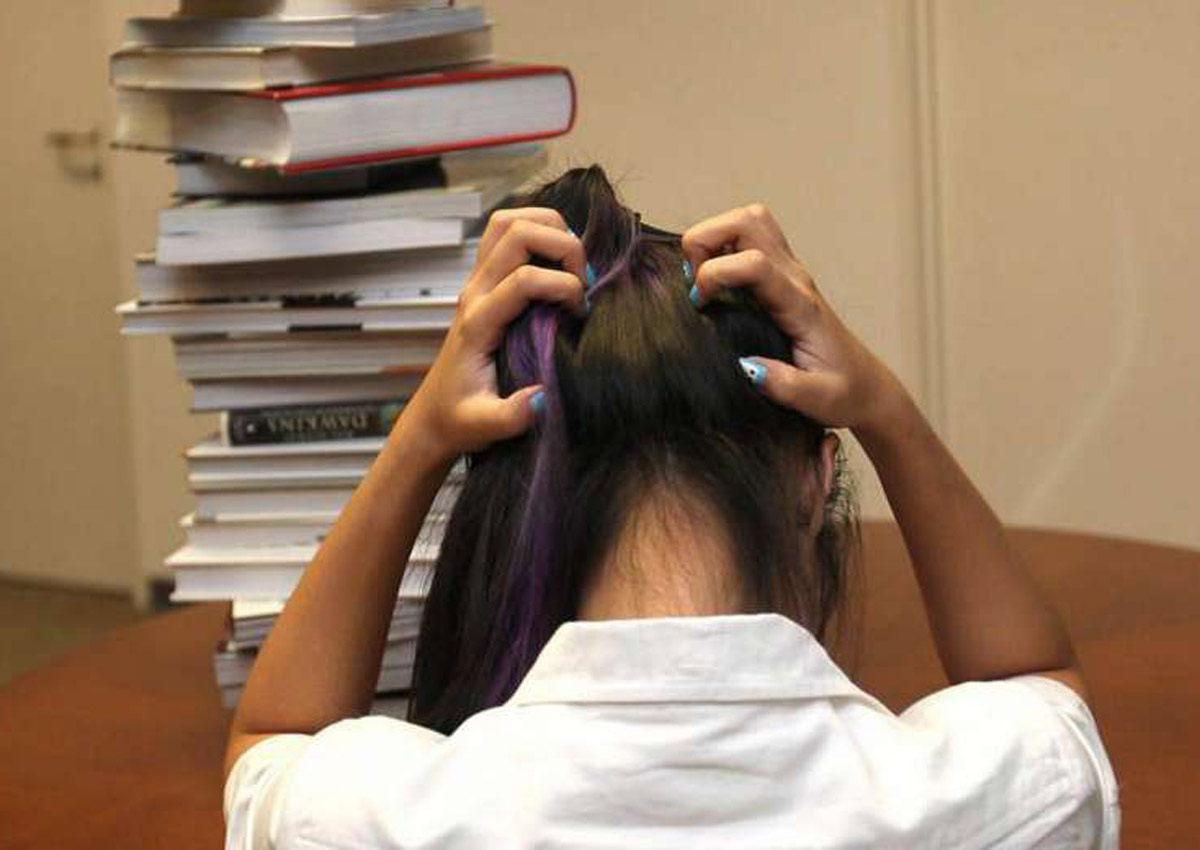

Image: 
Publication Date: 
Sunday, October 30, 2016 – 15:17
Send to mobile app: 
Source: 


Story Type: 
Others

Source link

More transparency urged in agency fees for maids

0

Some employment agencies that recruit and place maids here charge them and their employers fees without specifying what exactly the fees cover.

Two migrant worker groups are calling for greater transparency through the used of itemised bills, saying that it can go some way towards preventing overcharging.

The Centre for Domestic Employees (CDE) said yesterday that it has been working with employment agency associations on a template of itemised bills, and proposed that the Ministry of Manpower (MOM) include transparency among criteria for its future grading scheme for employment agencies.

Separately, Transient Workers Count Too (TWC2) is recommending, in a report being released this week, that Singapore should consider making it mandatory for employers, maids and agents both here and in the source country to sign a document setting out itemised expenses during recruitment and the terms for paying them. Maids should produce this document when applying for a work visa.

The non-governmental organisation found that while maids’ placement fees have dropped in recent years, they usually still have almost five months of pay deducted to pay off the fees.

The researchers found that such salary deductions have fallen from an average of 7.2 months for women arriving in Singapore in 2010, to 4.7 months for those arriving last year.

The TWC2 report details the findings of a survey conducted in January and February of more than 230 maids from the Philippines, Indonesia, Myanmar, India and Bangladesh.

In 2011, the MOM introduced a rule limiting the placement fees employment agencies can charge to a maximum of two months of a worker’s salary.

Recruiters in the maids’ home countries are also subject to local rules on such fees, which are about $650 in the Philippines and $1,400 in Indonesia, the report said.

But the survey found that more than 60 per cent of women who came from the Philippines in 2014 or later and more than 40 per cent of those who came from Indonesia were still over-paying. Myanmar workers surveyed tended to pay the most – an average of $2,721. Filipinas and Indonesian workers paid $2,231 and $2,476 on average respectively.

Meanwhile the CDE, which is run by the National Trades Union Congress, said it found through speaking with embassies, agencies and recruiters that the overall cost of recruiting a maid from Indonesia is normally about $3,800 to $5,800. This includes recruitment and training costs of $2,500 to $3,300.

For Filipino maids, the overall cost usually ranges from $3,100 to $4,600, including recruitment and training costs of about $1,200 to $1,800.

The CDE said itemised bills will make it easier to determine if the costs are fair, if they should be reduced, and how best to share costs between employers and workers.

With greater transparency, “employers and (workers) would be able to make a more informed decision before they enter into an employment contract and disputes relating to it can also be reduced,” it said.

It proposed that the MOM include transparency of costs as one of the criteria in the Trustmark Grading Scheme for employment agencies that is expected to be launched in the second half of next year.

An MOM spokesman said the ministry has seen “very few cases” of maids being overcharged by local agencies, though MOM is not able to regulate the fees charged in workers’ home countries.

Employment agencies here have to issue maids a written and itemised receipt for all fees charged, including fees collected on behalf of overseas agents, the spokesman added.

The fees charged by the Singapore agent are also stated in the In-Principle Approval letter, which is in the native language of a prospective worker and sent to her before she leaves her country.

There were some 237,100 foreign domestic workers here as of June.

joseow@sph.com.sg


This article was first published on Oct 30, 2016.
Get a copy of The Straits Times or go to straitstimes.com for more stories.
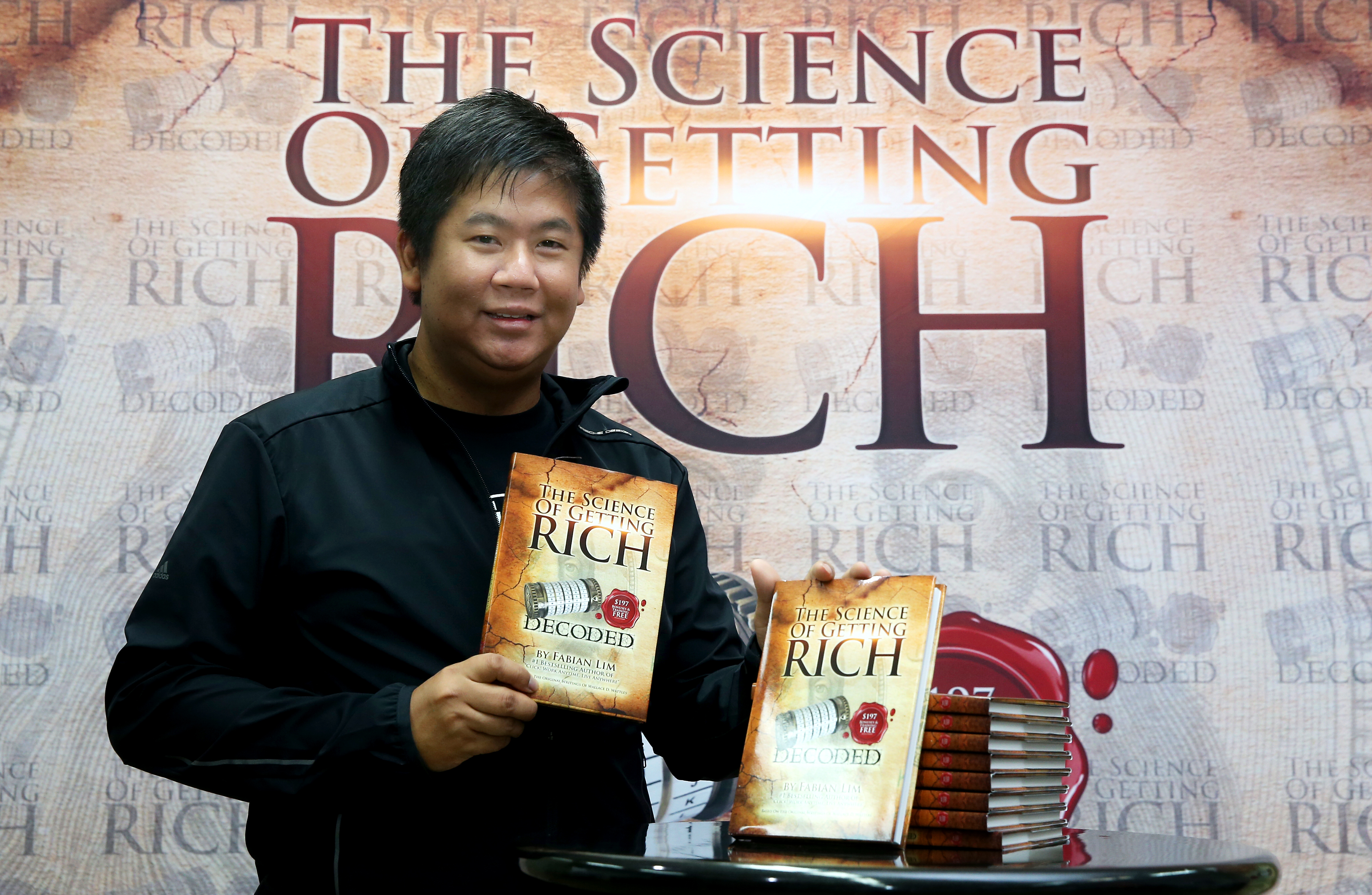
Image: 
Category: 
Publication Date: 
Sunday, October 30, 2016 – 14:57
Keywords: 
Send to mobile app: 
Source: 


Story Type: 
Others

Source link

Radin Mas rental flats get free coat of anti-mosquito paint

0

Under the initiative, 216 rental units in the constituency will get a free coat of anti-mosquito paint within the next two years.

Source link

Healthcare pioneer Dr Kwa Soon Bee dies aged 86

0

A former Permanent Secretary of Health and Director of Medical Services – appointments which he held for 12 years from 1984 – Dr Kwa spearheaded the redevelopment of many public hospitals and the expansion of the polyclinic network.

Source link

More writers getting books out with help of self-publishing services

0

Why stop at writing when you can be your own publisher?

That’s what more people here are doing.

Ms Pearlin Siow, 40, founder of Boss Of Me, a company that helps authors publish their work, has seen a rise of up to 80 per cent in the number of people who self-publish compared to when the company started five years ago.

Owners of self-publishing companies attribute the rise to a more educated population, the ease of self-publishing, lower cost, more control over the book and better profits for authors.

Mr Patrick Chan, executive director secretariat of the Singapore Book Publishers Association (SBPA), says: “As Singaporeans are now better educated and more confident, they would like to… share their knowledge and creativity.”

Digital print technology saves cost too.

Mr Goh Kheng Chuan, 47, owner of Rank Books, says: “Our minimum print run now is 50 copies. In the past, you needed to print at least 500 or 1,000 (copies).

“Most people don’t need so many books anyway. So this means you do not have to fork out a huge investment to (get) published.”

Previously, a minimum run of 500 books would cost at least $3,000 to print, says Mr Goh.

Now, a minimum run of 50 costs just $1,288 , making it easier on the wallet for self-publishing authors.

As a result, he says more people are jumping on the bandwagon – teenagers, tutors, fresh grads, retirees and trainers.

Rank Books started as a publishing company in 1972 but has transitioned into a company that provides self-publishing services.

Mr Goh says: “A lot of authors come to us… But their books may not have commercial value and they just want to put a book together to sell to their friends and family.”

MORE CONTROL

Famous self-published authors include English writer E. L. James, who wrote the best-selling Fifty Shades Of Grey trilogy, and US neuroscientist Lisa Genova, the author behind Still Alice.

Self-publishing allows authors to have more say in how their books turn out – such as the design, printing, marketing and distribution.

Ms Siow says: “Many of my clients sell their books through their (own) networks. Many also give their books away for free or use them as an incentive for their seminars and talks.”

Unlike in the past, authors are no longer at the mercy of publishers, she says, thanks to “the advent of social media and various publishing tools, and websites like Kickstarter.”

Mr Chan adds: “Publishing companies typically offer a 10 to 12 per cent royalty while self-published authors keep all the proceeds.”

Ms Siow works with top book distributors here and links clients to them.

She says: “Book distributors typically take 60 to 70 per cent of book sales whereas a publisher takes 90 per cent.

“You can also schlep your books to indie bookstores like Books Actually and Cat Socrates and negotiate a commission with them, or sell your books online.”

Ms Susan Long, general manager of Straits Times Press, says self-publishing is a positive trend and is good for self-expression, the publishing industry and for Singapore.

She says the company is always on the lookout for good works – self-published or unpublished. It has just published a previously self-published work, The Malaysia That Could Be, by Kalimullah Hassan, which is now out in the bookstores.

She says: “The author had done a very small, sold-out print run in Malaysia.”

“Some authors are known, but the books they self-publish could be very niche in audience and topic, such that traditional/mainstream publishers would not pick them up.”

Her books give her a voice

Children here adore her books but few know her story.

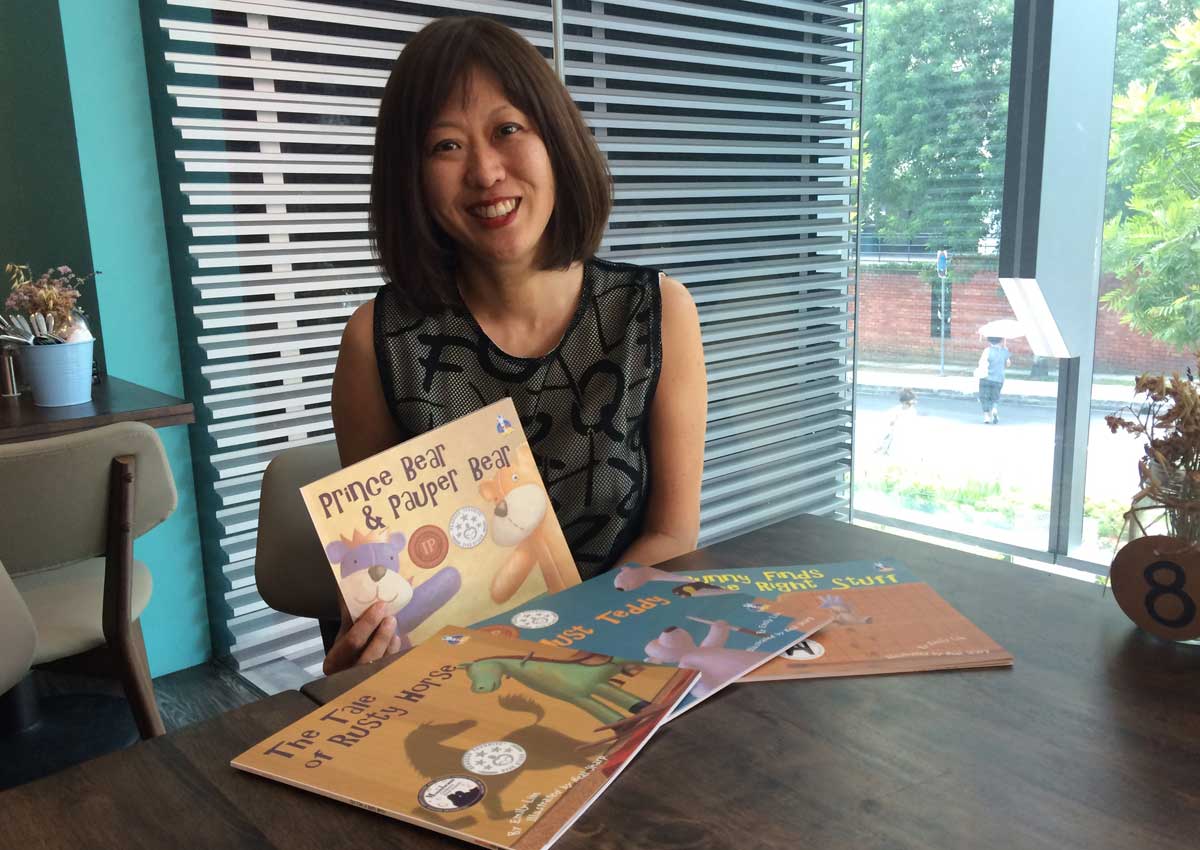
Her first book, Prince Bear & Pauper Bear, is about a teddy bear who cannot speak as his toymaker forgot to sew a mouth on him.

What many don’t know is that the book is really about its writer, Ms Emily Lim, 45.

In 1999, Ms Lim developed spasmodic dysphonia, a rare voice disorder that left her unable to speak. She has since recovered.

She says: “It was only after I had finished writing (the book) that I realised I had written my own story. It was very subconscious. I didn’t see it until it was completed.”

That book launched a successful career – her writings have been commissioned by both private and government agencies.

Ms Lim has written about 30 children’s books in about 10 years. Her books, which include The Tale Of Rusty Horse, Just Teddy and Bunny Finds The Right Stuff, have sold about 45,000 copies so far.

She is also the first person outside North America to win three Independent Publisher Book (IPPY) Awards – a book competition that sees the largest number of entries from around the world – in the children’s picture book category.

Ms Lim’s foray into self-publishing started after she won a writing competition, First-Time Writers and Illustrator’s Publishing Initiative, in 2007.

With the $8,000 grant she won, she published her winning manuscript, Prince Bear & Pauper Bear.

She then went on to self-publish another three more books using her own money and another grant.

The former business development executive says: “I wasn’t working at the time, so I thought I might as well do it myself.

“I spent some time researching, attended writing conferences, and spoke to publishers and printers.”

TEAM

She cobbled together a project team comprising an illustrator, graphic designer, printer and distributor to get her book published.

Ms Lim also did her own marketing and would push trolleys of books to schools.

Her books are now published overseas, in countries such as China, South Korea, Malaysia and Indonesia.

Her five-year-old son, Caleb, inspired her second series of books, the Tibby series.

The third book in the series, Tibby And Scaredy Snout, will be out in bookstores next month.

However, making a living by self-publishing your own books is not easy.

Ms Lim says she doesn’t earn much from her own books – it costs her about $10,000 to $12,000 on average and 6 months to publish one book, which retails for around $15.

“I do it because I’m passionate about it. It is not a money-making thing. It won’t make us rich.” she says, adding that she earns more from clients who commission her work.

Writing is successful businessman’s hobby

About 15 years ago, Mr Fabian Lim lost his job as a management consultant.

He says: “This incident made me rethink. Rather than working for someone else and making someone else rich, why not put effort on myself and live a lifestyle that I want and no one can fire me any more?”

He’s now a successful entrepreneur with multiple businesses under his belt and owns a six-seater private jet.

Photo: The New Paper

Mr Lim, 45, is the founder of PageAdvisor.com, an online marketplace for home and lifestyle services. He also conducts training courses on digital marketing.

He is also a self-published author. He published his first book – Click! Work Anytime, Live Anywhere – in 2013.

His second book, The Science Of Getting Rich Decoded, is out this month.

But he won’t be quitting his day job.

He says: “The amount of royalties is insignificant compared to the amount of effort it takes. It is not my main income anyway.”

Publishing delays? Just do it yourself

When he was 19, he was a singer – as one part of duo Phil & Wil.

Now, he advises and manages the wealth portfolio of high net worth individuals.

Mr William Cai, 44, published the first edition of his book, How To Be A Successful Investor, in 2009. It sold 5,000 copies.

Photo: The New Paper

He refreshed the manuscript, added new chapters and self-published the second edition in June this year.

The vice-president of GYC Financial Advisory says: “I want to share what I know with as many people as possible… and (advise them on) how to better take care of their finances.”

The book covers topics such as the psychology of the market, how to avoid a bear market and how to ride a bull market.

Mr Cai had wanted to release the second edition of his book earlier – in 2014 – but there were delays, so he decided to self-publish instead.

tnp@sph.com.sg


This article was first published on Oct 30, 2016.
Get The New Paper for more stories.

Image: 
Category: 
Publication Date: 
Sunday, October 30, 2016 – 21:00
Keywords: 
Send to mobile app: 
Source: 


Story Type: 
Others

Source link

'Some don’t know their family heirlooms are fakes,' says watchmaker

0

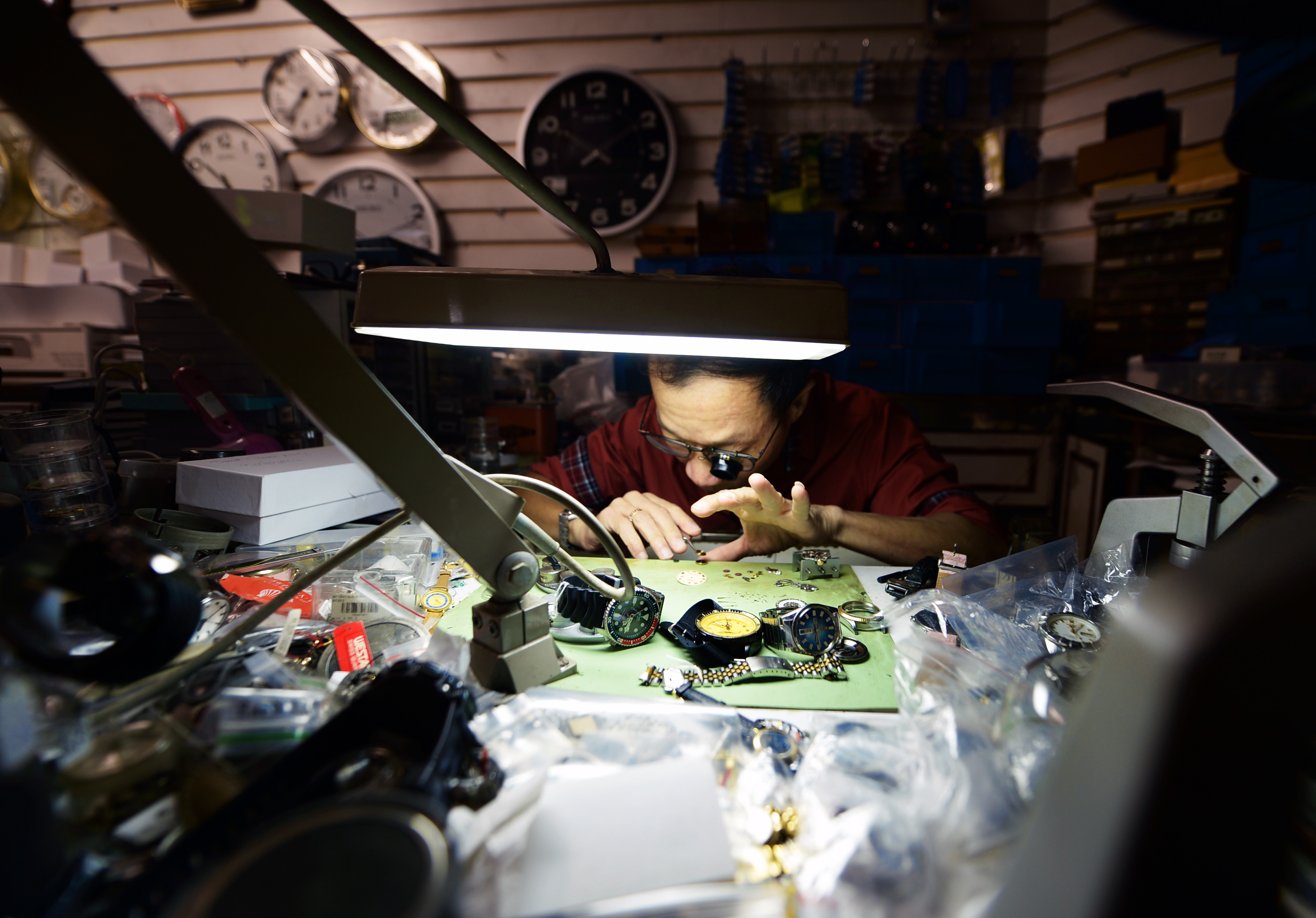
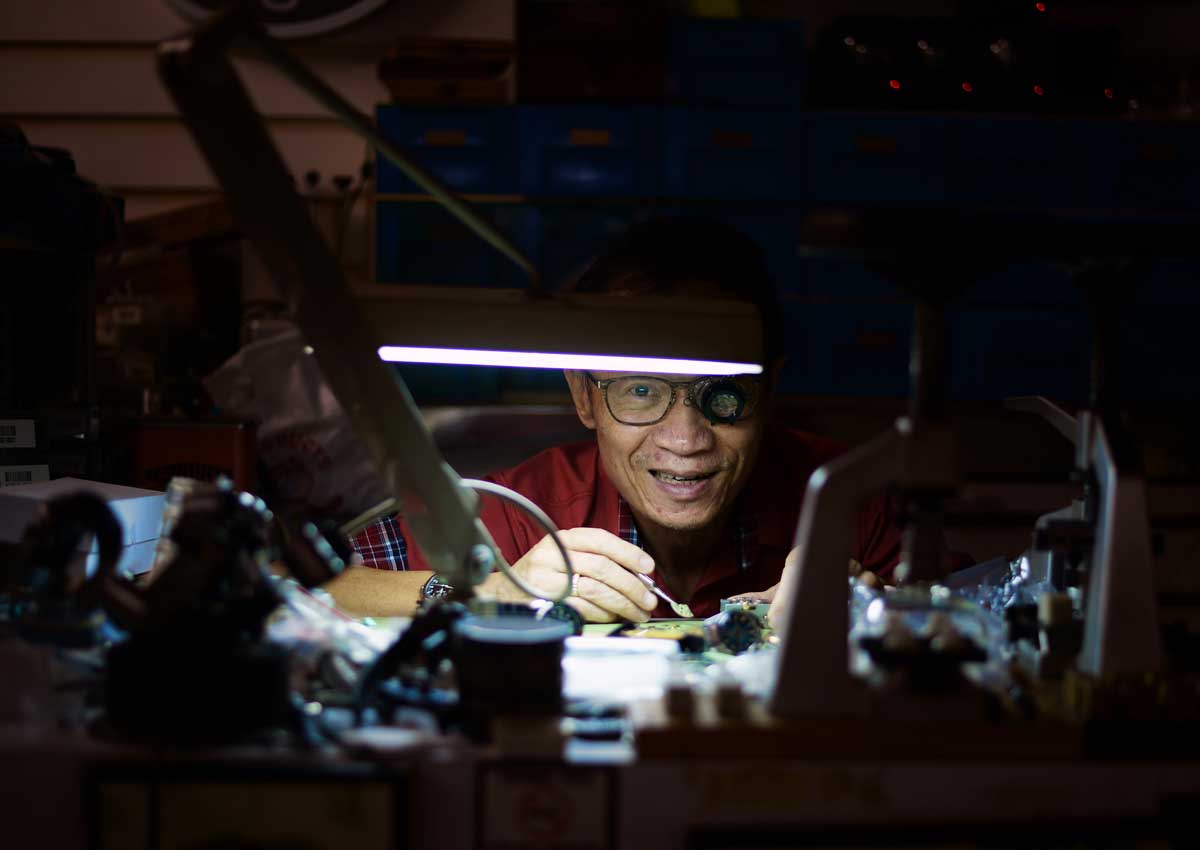
Staring at hundreds of tiny watch parts on his workbench, the last thing Mr Goh Seng Moh wants to do is sneeze.

After all, losing parts can mean thousands of dollars in damages.

Even the noise and clatter of Tanjong Katong Complex does not faze the 57-year-old watchmaker, who works alone at his shop, K-2 Watch Company.

Peering through his magnifiers, he surgically dissembles a customer’s old Rolex, cleans and oils each part, and then puts it back together again within minutes.

A passionate horologist, Mr Goh loves his job. He says: “This is like playtime for me. Not many people can say they can play at work and get paid for it.”

He first learnt his skills by tinkering around with complicated mechanical watches, together with his elder brother.

It was his late father’s way of keeping him disciplined, since plenty of patience and focus is needed to take apart a watch and put it back.

“At that time, my father would look at my work and decide whether I passed or failed. I failed 10 per cent of the time,” he said in Mandarin.

“Watchmaking is not easy to learn and it took me a long time.”

Photo: The New Paper

Mr Goh says he is part of Singapore’s watchmaking royalty – his father was a co-worker of master Lee Seo Choon, a prominent watchmaker who trained many other local masters.

The name Seo Choon still carries significant weight among watch aficionados here. Several reputable watch dealers in Singapore can trace their lineage back to Mr Lee.

NICHE

Since then, Mr Goh has carved his own niche repairing vintage watches, starting his company in 1984.

Barely larger than an office cubicle, the shop seems like a mess from the outside as his things are packed tightly in shelves and cabinets.

But Mr Goh says there is a certain order to the chaos.

“I am a one-man show, so I have to be very organised or else things will go missing,” he says.

The most expensive piece he repaired is a Jaeger-LeCoultre watch worth more than $10,000.

Because watches can be pricey and delicate, finding a good watchmaker is a matter of trust.

He does not advertise, relying on word-of-mouth to rake in business.

Mr Goh can entertain around 20 to 30 requests each day, working from 1 to 9pm every day, taking only half a day off on weekends.

Everything he does has to be recorded meticulously on pen and paper to prevent customers from accusing him of fraud.

He recalls one incident when a Rolex owner accused him of stealing the links off his watch bracelet.

Mr Goh says: “Luckily I had made sure to count all the links before I started work on the watch, and it was all properly documented.

“It turns out that it was the customer’s wrist which grew fatter.”

He reveals that many customers often have no idea that their precious family heirlooms are imitations. He has to be their bearer of bad news.

“To help them save face, I sometimes choose not to tell the customer that their watch is a fake,” he said.

“Some imitations are done so well that it can be quite hard to tell, but when I take a closer look at the materials used, I can tell.”

SECRETS OF THE TRADE

1. To keep a steady hand, you must have good fitness and stamina. You cannot be quivering after your 30th watch repair job.

2. Be honest and charge based on part costs and workmanship, not the price of the watch or how wealthy your customers are.

3. If you accidentally damage your customer’s watches, make sure you pay for it. It is better to lose money than to ruin your reputation.

ngjunsen@sph.com.sg


This article was first published on Oct 30, 2016.
Get The New Paper for more stories.

Image: 
Category: 
Publication Date: 
Sunday, October 30, 2016 – 14:00
Keywords: 
Send to mobile app: 
Source: 


Rotator Image: 
Story Type: 
Others

Source link

The much anticipated Popeyes Day with $5.90 5pcs chicken deal will be happening on 6 Nov 2016

0

#DONTSAYBOJIO Popeyes Day featuring 5pcs of mild/spicy bone-in chicken for only $5.90 on Sunday, 6 November 2016

Share this deal with your friends & loved ones!

The much anticipated Popeyes Day with $5.90 5pcs chicken deal will be happening on 6 Nov 2016

Mark your calendar! The next Popeyes Day will be happening on Sunday, 6 November 2016 with the best deal highlight of 5 pieces of mild/spicy Bone-in-Chicken going for just $5.90.

Source

STTA and Feng Tianwei: Ex-coach speaks out

0

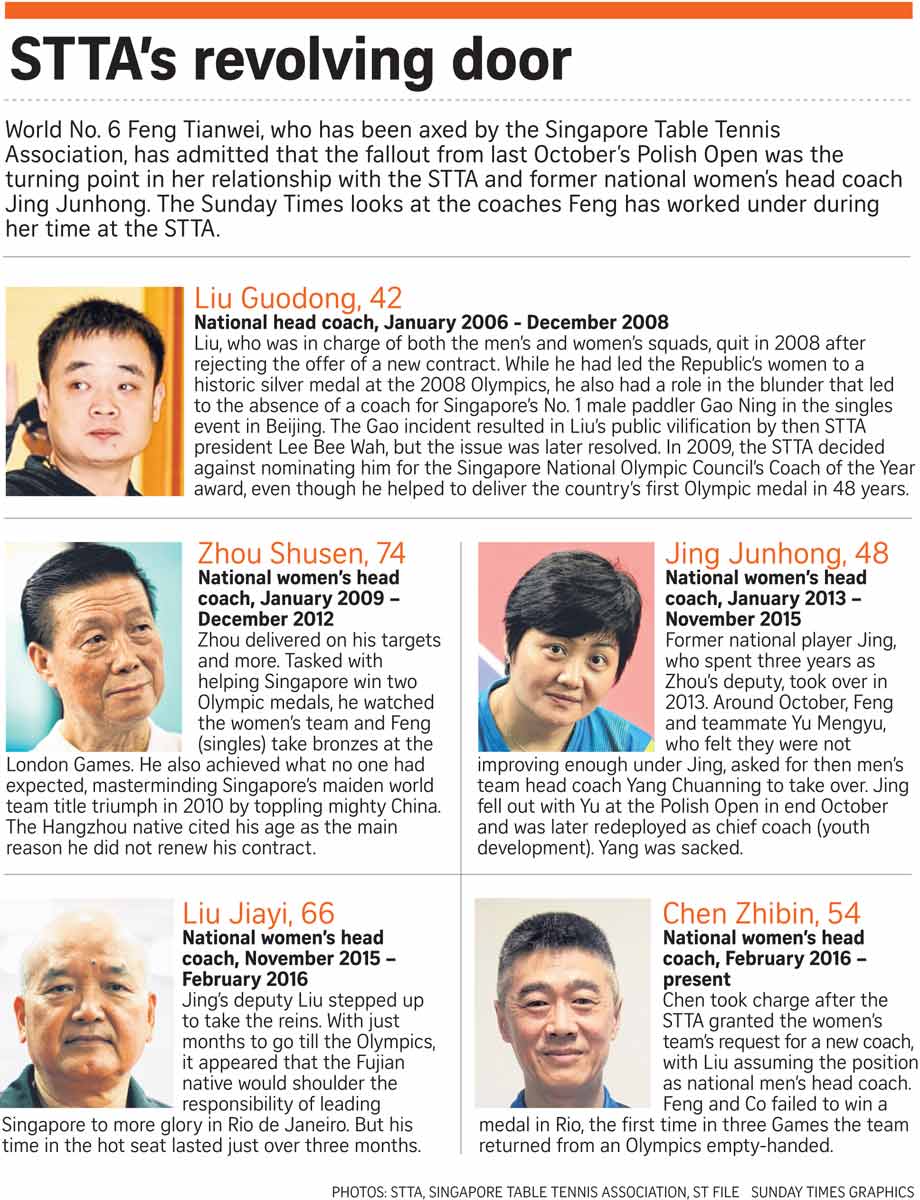
When Yang Chuanning was sacked as national table tennis men’s head coach last November, little was made known about his sudden dismissal.

But it has now emerged that the termination of his services, 1½ years before his contract was up, was one of the factors that contributed to the breakdown of the relationship between world No. 6 Feng Tianwei and some senior members of the Singapore Table Tennis Association (STTA) leadership.

The STTA had axed Feng from the national squad on Tuesday, announcing that the 30-year-old “does not fit into the STTA’s current plans for rejuvenation”.

Yang, 58, revealed to The Sunday Times that the women’s team had made a request around October last year for him to replace Jing Junhong as head coach of the women’s team.

Said Yang: “The women’s team approached me privately to see if I might be interested in coaching them. Maybe it came across to some that I had instigated the players, but I never asked for the post. I was comfortable as men’s team coach.

“I’m open to a new challenge if they think I’m suitable for the role but it was a decision for the STTA to make.”

The request, however, is believed to have caused relations to sour between Feng and the senior leadership in the STTA, eventually contributing to her recent expulsion from the national team.

Shortly after that, a public disagreement erupted between national paddler Yu Mengyu and Jing at the Polish Open.

The latter, who is married to STTA technical director Loy Soo Han, was then redeployed as chief coach (youth development). That announcement was made by the STTA, along with the news of Yang’s sacking.

Related: Feng sees hope even in ‘most hopeless moment’

It is understood that the women’s team, who had been led by Jing since 2013, had felt that their progress under the former national paddler was limited.

Their team ranking slipped from third at the London Games – where Feng and company took bronze for a second successive team medal at the Olympics – to No. 6 in October last year, their lowest in years.

When Yang’s fate was decided, the STTA said in a statement then that the “decision comes after extensive consultation with the players of the men’s team”.

“The decision is being made in the best interests of the players and in view of the upcoming Rio Olympics 2016,” it added in a statement.


Yang was given a week to leave the country, returning to his native Jiangsu where he is consultant to the Jiangsu provincial team. It was not until three months later that a replacement for Yang – Liu Jiayi – was appointed for the men’s national team.

ST understands that Yang’s professionalism and capability were questioned by some members of the STTA leadership.

But one of Yang’s former charges here, who spoke to ST on the condition of anonymity, said: “Coach Yang has a high level of technical skills and he was helpful whether in training or competition. The results he has helped produce are there for all to see.”

Under Yang, the men’s team achieved two straight top-eight finishes at the World Team Table Tennis Championships in 2012 and 2014. Singapore also won men’s doubles bronzes at both the 2013 Asian Championships and the 2014 Asian Games in South Korea.

Said Yang: “I left Singapore feeling very upset, but I’ve moved on and wouldn’t have brought it up again if not for what Tianwei is going through now.”
 

Read also:

Was Feng axed over disciplinary issues?


This article was first published on Oct 30, 2016.
Get a copy of The Straits Times or go to straitstimes.com for more stories.
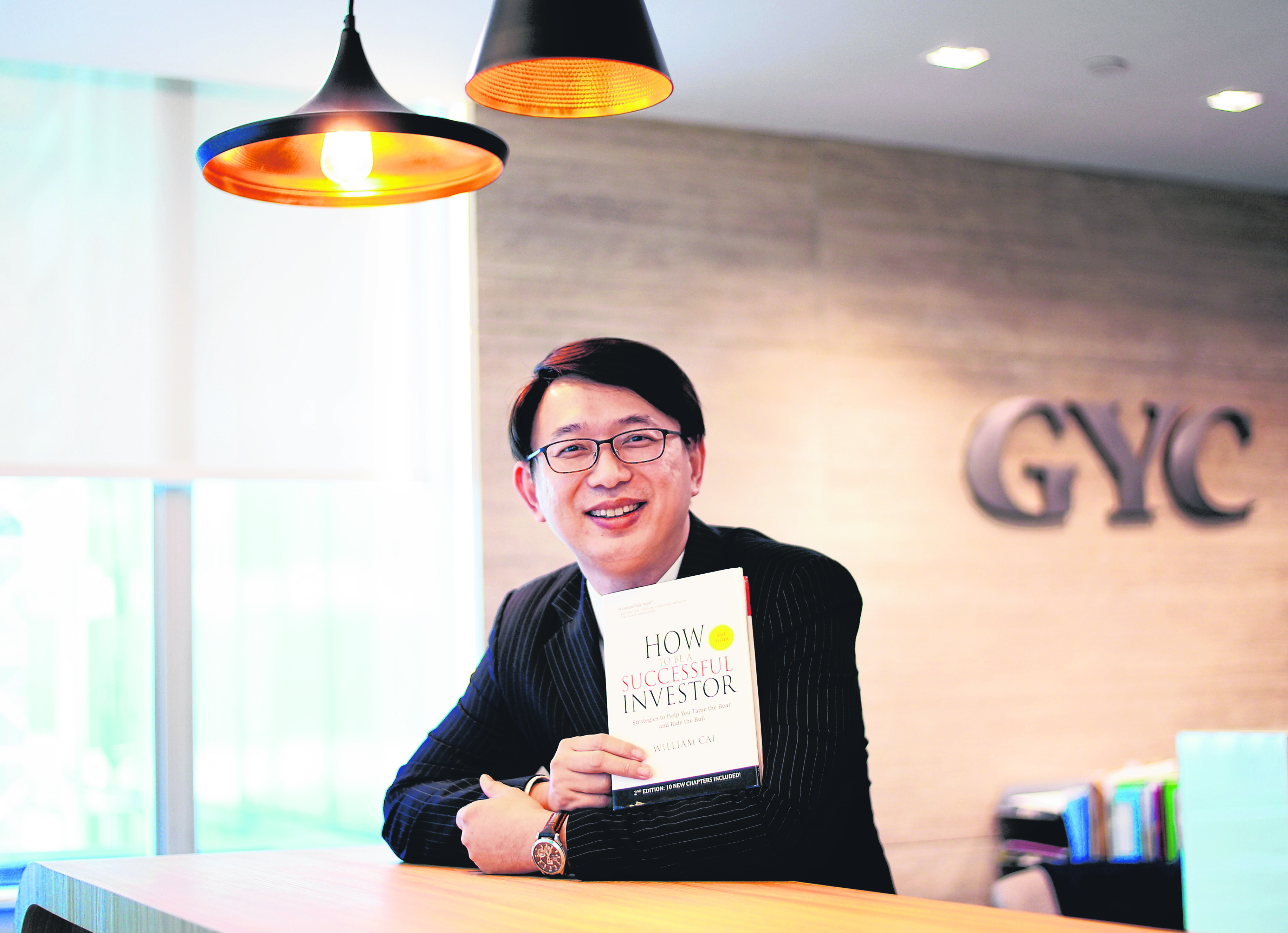
Image: 
Publication Date: 
Sunday, October 30, 2016 – 14:00
Send to mobile app: 
Source: 


Rotator Headline: 
Sacked coach reveals reason for Feng Tianwei's fallout with STTA
Story Type: 
Others

Source link

Thousands enter hall for first time to pay respects to King Bhumibol

0

All roads led to the Grand Palace yesterday as the Royal Household Bureau opened the Dusit Maha Prasat Throne Hall to the public to pay respects before the royal urn for the first time since the King passed away on October 13.

The black-clad mourners filled Sanam Luang, the 12-hectare open field in front of the palace. In lines of black, they queued up, rain or shine, since the very early hours to get inside the hall and pay their final respects to the beloved His Majesty King Bhumibol Adulyadej.

Suwaphan Tanyuvardhana, Prime Minister Office’s Minister and head of a command centre to monitor situation at Sanam Luang, said around 50,000 people came to pay their respects. He also said that the number of people who entered the Grand Palace was also higher than the set quota of 10,000 people.

The Royal Household Bureau earlier announced 10,000 people daily would be allowed to enter the Throne Hall, from 8am onwards. But the plan was changed as mourners from all corners of the Kingdom unceasingly poured into Sanam Luang.

The first mourners yesterday were allowed inside the hall at 5am. They were among those camping at Sanam Luang since the night before.

Bangkok Deputy Governor Amnuay Nimmano assured that all people were welcome to pay their respects. He said the Royal House Bureau would give everybody an equal chance to do so. No strict dress code had been announced by the bureau, he said.

“Some farmers who just grow rice all their lives have no shoes. It’s fine. They can go inside shoeless,” he said. “For those women coming from other provinces and didn’t have any proper skirts, it’s fine, too. We will lend a sarong.”

Despite hot weather and a muddy ground, hundreds of thousands of mourners waited very patiently in the line managed by authorities yesterday. The influx made the distribution of queue cards impossible. Authorities said no number limitation had been set and mourners were welcome until otherwise announcement.

Officials were deployed yesterday to keep order and help people. Bottles of water as well as handheld fans were constantly distributed.

Hundreds of volunteers also worked tirelessly, offering smelling salts and balms for weakened people and collecting garbage around the crammed field.

The Joint Operation Safety Centre’s deputy commander Maj-General Pongsawat Panchit said that 70 people were allowed to enter the hall at a time.

Those with special needs such as the elderly and sick people, however, were separated from other mourners and allowed to enter the hall via a fast-track entry route.

Amnuay said authorities led by the First Army Area were planning the construction of the royal crematory in Sanam Luang. He said it would take up two-thirds of the total space, leaving only a third for people to pay homage to the King. He added that authorities were coming up with a new management plan to deal with the current crowds at the park.

He said that authorities planned to reorder the food camps. They would be put together in one area to free up more space, he explained. And a timetable would be set for |specific distribution times, unlike now when food and drinks were handed out around the clock, he added.


Amnuay said authorities would try to make everything work, adding that this was one of the biggest events for Thai people.

Image: 
Category: 
Publication Date: 
Sunday, October 30, 2016 – 12:54
Send to mobile app: 
Source: 


Story Type: 
Others

Source link

K-pop group Rainbow breaks up after 7 years

0

Members of girl group Rainbow are heading in different directions, the group’s management agency DSP Entertainment announced Friday.

“After a long discussion about their futures, Rainbow’s Kim Jae-kyung, Go Woo-ri, Kim Ji-sook, Noeul, Oh Seung-ah, Jung Yoon-hye and Jo Hyun-young unfortunately decided to go their separate ways,” the agency said in a statement.

The group’s contract with company is scheduled to come to an end on Nov. 12.

“We are sincerely grateful for all of the fans who have supported Rainbow for the past seven years,” DSP Entertainment added. “We would appreciate your continuous support for the members in their new journeys.”

After Debuting in 2009, the seven-member act released one full-length album, “Rainbow Syndrome,” in 2013. The girl group has also put out some hit songs such as “A” and “Mach.”

Most recently, Rainbow unveiled its fourth EP “Prism” in February.

Image: 
Category: 
Blurb: 
Publication Date: 
Sunday, October 30, 2016 – 12:35
Keywords: 
Send to mobile app: 
Source: 


Story Type: 
Others

Source link