Home Blog Page 2401

Next year's Presidential Election could be reserved for Malay candidates: PM Lee

0

SINGAPORE – The Republic could see its first Malay president in over 40 years come the next Presidential Election due next August, with the Government intending to amend the Presidential Elections Act in January to put into place a hiatus-triggered mechanism to ensure a minority race president.

This was revealed by Prime Minister Lee Hsien Loong on the second day of the Parliamentary debate on proposed amendments to the Constitution on the Elected Presidency (EP) scheme.

The hiatus-triggered model was one of the suggestions made by the Constitutional Commission to refine the EP in August. Under the model, a Presidential Election would be reserved for a particular race, after five terms without a representative from that race assuming the highest office in the land. 

This means Singapore is now in the fifth term of the Elected Presidency, while all past and present elected Heads of State have been Chinese, save for the late Mr S R Nathan.

“Therefore by the operation of the hiatus-triggered model, the next election, due next year, will be a reserved election for Malay candidates,” said Mr Lee. “That means if a Malay candidate steps up to run or more than one Malay candidate steps up to run, who is qualified, Singapore will have a Malay President again… I look forward to this.” 

Through this arrangement, one in three Presidents will be non-Chinese over six terms – larger than the proportion of non-Chinese in the population, noted Mr Lee. 

Noting that there are some who felt this mechanism went against meritocracy, Mr Lee said that candidates in a reserved election will still have to meet the same qualifying criteria. 

In mulling over the refinements to the EP, which also touched on updating the qualifying criteria for candidates and strengthening the Council of Presidential Advisers, Mr Lee said that the Government had thought hardest about ensuring multiracial representation. 

He added: “Every citizen, Chinese, Malay, Indian, or some other race, should know that someone of his community can become President, and in fact from time to time, does become President.”

This was not a theoretical matter, as race had real world implications in Singapore, said Mr Lee. 

Enormous progress may have been made but the different ethnic groups continue to be subjected to “external pulls and influences”, he added.

Citing Singapore’s close business ties with China, Mr Lee said that outsiders may misunderstand the Republic to be a Chinese country, given the population composition and cultural familiarity of the two nations. 

“Thus we must always remember that we are not a Chinese country, but a multi-racial, multi-religious Southeast Asian nation with an ethnic Chinese majority but not a Chinese country,” said Mr Lee. “We have to show this domestically, to our own population, Chinese population, as well as the non-Chinese population and we have to show this externally, to other countries too.”

Among neighbouring countries, race and religion remain hot issues, said Mr Lee. 

In Indonesia, there were riots over a Chinese Christian governor running for re-election in Jakarta, and in Malaysia, non-Muslim parties were upset that a hudud bill – Islamic Penal Code – has been tabled in Parliament. 

Similar concerns over race and religion exist in Singapore, and the President is the most important unifying symbol of the nation, said Mr Lee. Without intervention to ensure a multiracial outcome, the Presidency could end up a single-race office, he warned. 

While he was heartened by aspirations to be race-blind, Mr Lee urged Singaporeans to be realistic. 

In the US, the presidential race between Donald Trump and Hilary Clinton may be about globalisation, jobs and insecurity, but race continues to be front and center, pointed out Mr Lee.
Trump supporters are largely lower- and middle-class whites, while African Americans are “overwhelmingly” voting for Mrs Clinton, albeit with less enthusiasm than they did for President Barack Obama. 

Hence, practical arrangements have to be made to make multiracialism in Singapore work, said Mr Lee. 

He added: “As we get closer to this ideal, and minority candidates are regularly elected President in open elections, we will need hiatus-triggered reserved elections less and less.”

Source link

Prelude to a bigger clash

0

Pro-democracy lawmakers slammed Beijing’s interpretation of the Basic Law yesterday, accusing the central government of making changes to Hong Kong’s mini-Constitution and further eroding the city’s autonomy.

By introducing new details unknown of in the past to Article 104 which covers Legislative Council (Legco) members’ oaths, in an attempt to ban two pro-independence lawmakers from the council, Beijing effectively changed the Basic Law, Democratic Party lawmaker James To said at a press conference.

Civic Party lawmaker Dennis Kwok who was also present, echoed the same sentiment. Representing the legal sector, Mr Kwok said the legal fraternity will not accept the Chinese ruling as it goes beyond interpretation of the law.

The interpretation is being used as a disguise for the central government to intervene in Hong Kong and how the city should be run, he added.

In handing down its interpretation of Hong Kong’s Basic Law yesterday, the National People’s Congress (NPC) Standing Committee said lawmakers must swear allegiance to Hong Kong as part of China.

Candidates would be disqualified if they changed the wording of their oath of office or if they failed to take it in a “solemn and sincere” manner.

The NPC also stated clearly in an eight-page document distributed to the media that pro-independence activists will not be eligible to run for the legislature or be sworn in as lawmakers.

Yesterday’s announcement marks the fifth time Beijing is interpreting the Basic Law, with the rare move sparking fears that China is tightening its grip on the city.

The intervention came after Mr Sixtus Leung, 30, and Ms Yau Wai Ching, 25, pledged allegiance to the “Hong Kong nation” during a swearing-in ceremony last month.

The pair from political party Youngspiration had also pronounced China as “Cheena” in the swearing-in oath, which was deemed demeaning to China. Their act resulted in Legco president Andrew Leung declaring their oaths invalid.

While some people might find the pair’s behaviour and pronunciation of China offensive, Mr Teddy Wong does not think so.

“I find them immature, but it’s just their way of pronouncing China. I don’t feel offended at all,” said Mr Wong, 47, a civil servant. He also does not blame the pair for triggering Beijing’s interpretation of the Basic Law.

He told The Straits Times last night: “If not them, the central government may find another excuse to intervene.

They are not fulfilling their promise to respect our One Country, Two Systems framework.” The framework under which Hong Kong returned to China’s fold in 1997 gave the city a high degree of autonomy.

“By handing down their interpretation of the Basic Law, they are clearly destroying Hong Kong’s independent judicial system,” said Mr Wong.

Analysts have warned of more unrest in the days ahead. The police force is on high alert and is stepping up measures in anticipation of trouble from angry protesters. But the streets were unusually quiet yesterday, with lawmakers voicing their views at press conferences.

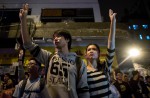
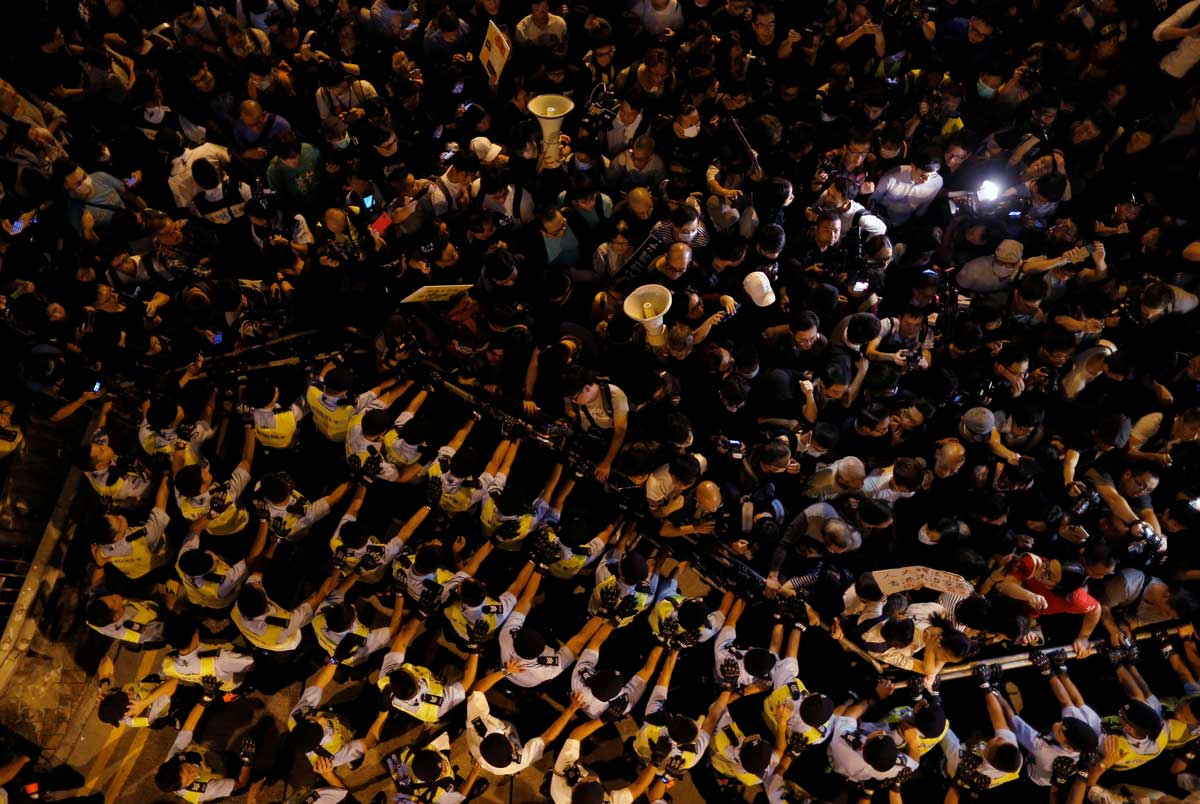
It was a stark contrast to the scene on Sunday when more than 13,000 angry protesters took to the streets, up in arms over Beijing’s intervention in the oath-taking controversy.

The protest march, which started at 3.30pm in Wan Chai district, ended at the Chinese liaison office instead of the planned destination of the Court of Final Appeal after the organisers changed the route.

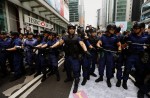
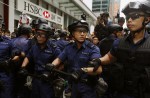
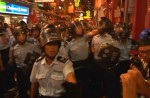
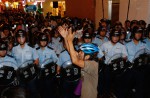
Clashes broke out between police officers and some 4,000 protesters outside the liaison office, with police using pepper spray to drive back protesters.

Demonstrators retaliated by opening umbrellas and hurling plastic bottles at the police, a scene reminiscent of the Umbrella Movement in 2014, a 79-day pro-democracy protest.

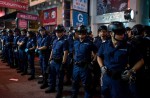
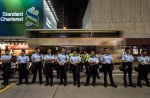
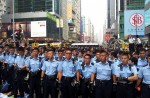
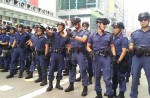
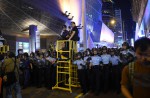
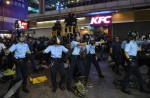
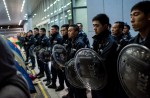
By 10pm, the crowd had split into groups, taking up positions at different spots along the tram track behind the Chinese liaison office and facing police officers clad in riot gear.

Traffic was forced to a standstill and tram drivers had to wait out the confrontation inside the trams.

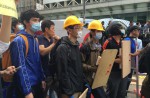
Masks and umbrellas were distributed to the protesters, most of whom were dressed in black.

Read also: Hong Kong police use pepper spray at anti-China protest

Young men in hoodies and black masks weaved through the crowd, moving heavy objects like dustbins and wooden planks in front of the police squad, forming makeshift barricades. The police in turn looked ready to charge at the crowd.

The stand-off lasted almost eight hours but, by midnight, only about 2,000 protesters remained.

Many appeared tired and bored. Some were walking around talking on their phones and taking selfies with police officers behind them.

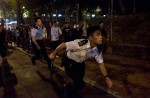
Around 10 minutes to 1am, the police officers moved in. Holding up shields, they moved towards the protesters, forcing them to retreat.

In less than one hour, a special police squad armed with batons managed to chase the remaining protesters out of the area. Roads were reopened and traffic was back to normal by 3am.

Four people were arrested and two police officers were injured during the clashes.

Read also: Hong Kong’s faith in rule of law shaken by China ruling

“There could be more violent protests in the days to come, when the two lawmakers (from Youngspiration) are stripped of their legislators’ status,” said political analyst Willy Lam.

“A by-election is expected to be held in three months’ time. If another localist activist is allowed to compete and loses in the by-election, that would set the stage for an even bigger confrontation, much bigger than Sunday’s protest,” he said.

However, while Beijing expects more protests, it is unlikely to back down, said Professor Lau Siu Kai of the semi-official Chinese Association of Hong Kong and Macau Studies.

“Beijing is determined to prevent the legislature from being used as a platform by the independence activists,” he said.


joycel@sph.com.sg


This article was first published on November 08, 2016.
Get a copy of The Straits Times or go to straitstimes.com for more stories.

Image: 
Category: 
Publication Date: 
Tuesday, November 8, 2016 – 15:00
Send to mobile app: 
Source: 


Story Type: 
Others

Source link

As it happens: Parliament debates changes to Elected Presidency, Day 2

0

SINGAPORE: The debate on proposed changes to the Elected Presidency system resumed on Tuesday (Nov 8), with Prime Minister Lee Hsien Loong speaking on the Bill tabled to amend the Constitution.

On Monday, Speaker of Parliament Halimah Yacob delivered a message on behalf of President Tony Tan Keng Yam, in which he urged Members of Parliament discussing the proposed changes to keep Singapore’s future in mind. 

In its White Paper released in September, the Government had broadly accepted the recommendations made by a nine-member Constitutional Commission in its review of the Elected Presidency system.

For the latest:

Source link

Mixed reactions to Shanghai's first unisex public restroom

0

The first unisex public bathroom in Shanghai, which aims to help reduce waiting times for such facilities, especially for women, has received mixed reactions.

Male users approached by China Daily were generally agreeable with having to share the space, while women formed the majority of those against the idea, citing safety and privacy concerns.

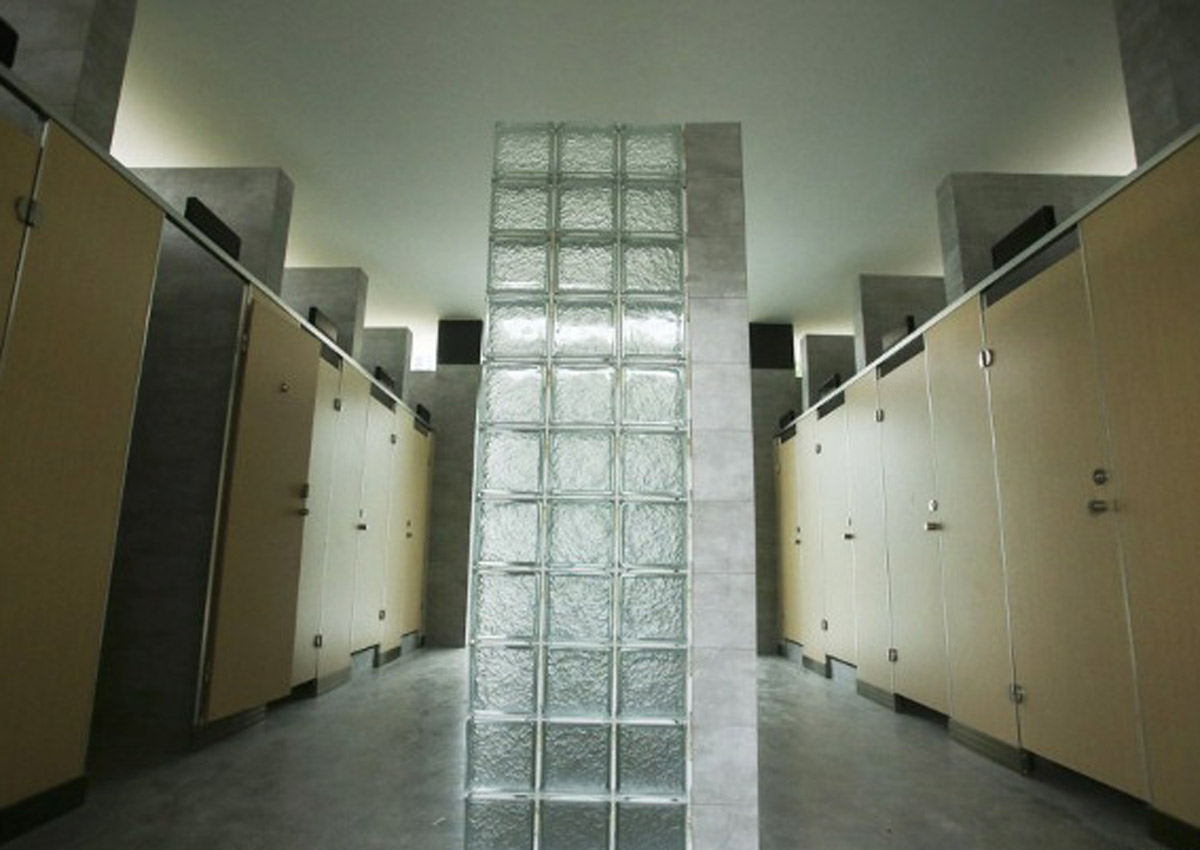
Scheduled to open on World Toilet Day on Nov 19, the bathroom has 10 unisex cubicles.

“I can accept it,” said Dong Xiangbin, a Shanghai resident in his 30s. “It has doors and the partitions are made using stone instead of glass, so I’m OK with it.”

Feng Min, 23, said, “I will use it during the daytime, but definitely not at night, because I think it is too dangerous.”

Also, if the cubicles are not soundproof, it’s going to be awkward for both parties because of the noise generating when people use the toilet, she added.

Liu Fang, 26, said she wouldn’t use the facility unless she was in a rush. “I can’t accept it. I prefer the traditional ones.”

Located at the intersection of Zhangjiabang Road and South Pudong Road, the public bathroom also has a separate men-only area featuring four urinals, and another space allocated for people with disabilities and those with children.

Users have to go through the same doorway to access the restroom, while the stone partitions between the cubicles are 2.3 meters high and there are no gaps between the floor and the door.

“Ordinary restrooms use clapboards, but our partitions are made of cement,” said Shen Yue, the restroom supervisor. “This bathroom is better than the conventional ones, because it’s more spacious and there are also potted plants.”

Authorities said that they will evaluate the response to the bathroom before deciding whether to open it around the clock or build more in the city.


Image: 
Category: 
Publication Date: 
Tuesday, November 8, 2016 – 13:32
Send to mobile app: 
Source: 


Story Type: 
Others

Source link

Beijing intervention roils waters for Hong Kong's top judge

0

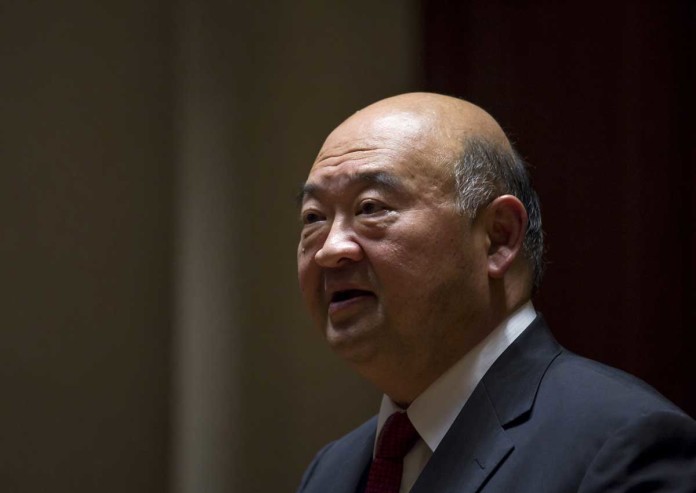
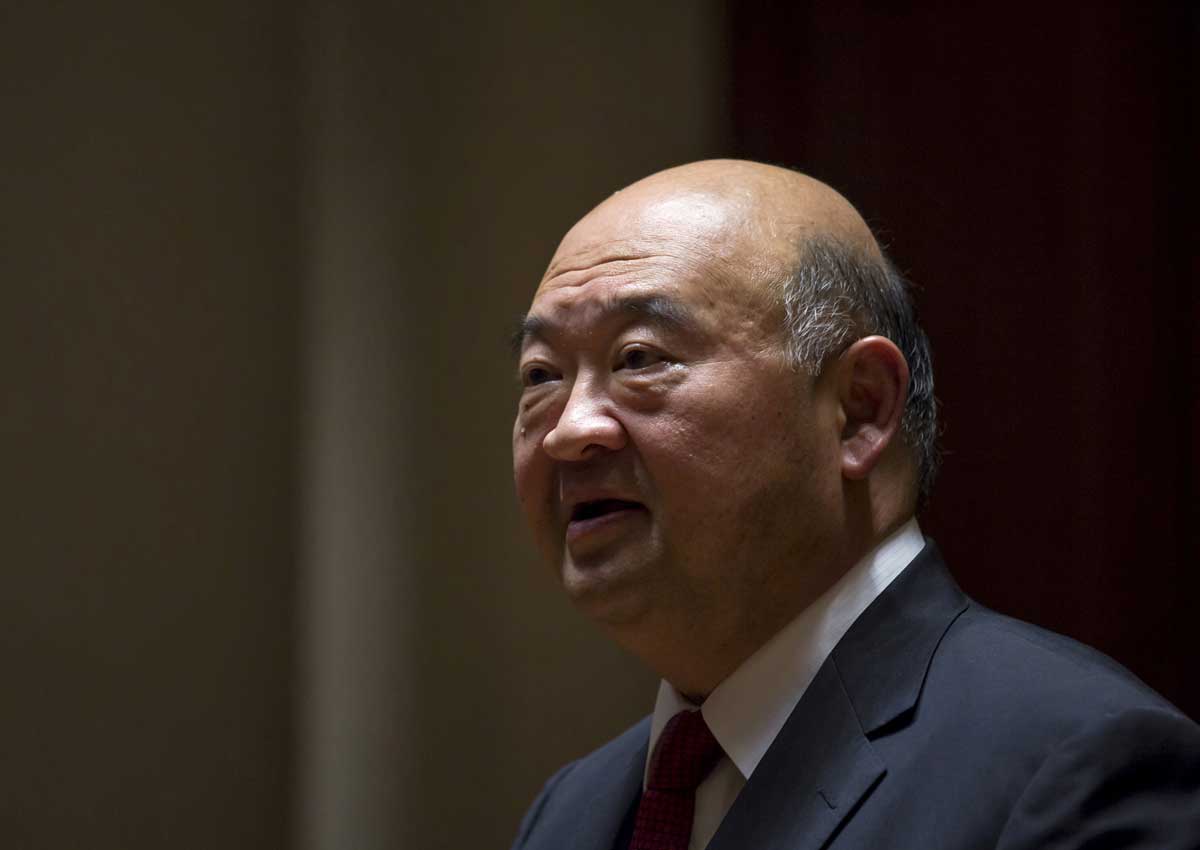
HONG KONG – Hong Kong Chief Justice Geoffrey Ma, a bald, thickset lawyer with a Churchillian air, is in the eye of a storm after Beijing’s politically charged intervention in the city’s legal system, and those close to him say he is not a man to bend his principles.

Ma, a passionate cricket lover who studied in the UK and was first called to the English bar, is prevented by convention from publicly commenting on politics, but Hong Kong’s Bar Association has condemned China’s move on Monday to effectively bar two independence-leaning lawmakers from taking their seats in the city’s legislature.

Hundreds of lawyers are planning a silent march on Tuesday night.

In private, Ma is aware of the concerns of senior judges about the risks of the city’s fledgling independence movement and of Beijing’s determination to thwart it, sources close to them say. “He is a judge who has an almost religious faith in the rule of law and all that springs from it,” said a source familiar with Ma.

“Suddenly the Hong Kong system has been undercut from above.” Ma leads an independent judiciary that operates under common law, originally based on the case law of England, but is ultimately accountable to a constitutional document, the Basic Law, which gives Beijing final authority since Britain returned Hong Kong to China in 1997.

The document enshrines Hong Kong’s extensive freedoms, the rights of its lawmakers and codifies the city’s relationship with Beijing.

China’s parliament, the National People’s Congress (NPC), acted under the Basic Law when it made its ruling concerning the two young lawmakers after they mocked China during an abortive oath-taking ceremony last month.

While the NPC has invoked its right to interpret the Basic Law four times in the past, this was the first time it has acted to pre-empt an ongoing court case, which is considering the position of the lawmakers.

As chief of Hong Kong’s pre-eminent Court of Final Appeal, Ma, 60, sits at the top of the legal system, which some lawyers and politicians feel is under threat from China’s intervention.

Ma’s court could eventually be called on if the case against the young pair is appealed.

Legal experts say judges are constitutionally obliged to take account of Monday’s ruling from Beijing, though removing a recalcitrant judge, particularly the Chief Justice, would be a complex affair, requiring a panel of five judges appointed by Hong Kong’s chief executive.

RISING PRESSURE

Ma and the judiciary did not respond to questions from Reuters, filed through Hong Kong’s Department of Justice, but his previous speeches have pointed to a determination to defend Hong Kong’s judicial independence.

In June, he told a legal ceremony that spoke of rising pressures on the judiciary. “Hong Kong’s courts now face more than at any other time in their history challenges which sometimes assume significant political and social dimensions,” he said, stressing that judges would remain principled in applying the law.

And in September last year, two weeks after a senior local Chinese official suggested Hong Kong’s chief executive was above other branches of government, including the judiciary, Ma sounded a defiant tone.

Court decisions, he said, may not be to everyone’s liking -“whether they be private individuals, political and other groups, or even the government, but it is not the role of the courts to make popular decisions.” He also spoke of the importance within the common law of”due recognition of rights and fundamental freedoms”, remarks made to an audience that included senior local Chinese official Zhang Xiaoming and senior mainland judge Zhou Qiang, local media reported.

The government’s Secretary for Justice, who has repeatedly said the oath issue should have been handled within the Hong Kong system, nevertheless expressed confidence that Hong Kong’s judges would not be weakened by Beijing’s intervention, any more than by previous interpretations. “Each time, the judiciary of Hong Kong remain independent, they remain professional, they remain strong,” he said.

Ma, who returned from Britain in 1980, is steeped in the colonial-era legal tradition of Hong Kong, where judges and lawyers still wear gowns and wigs, and where international judges and Queen’s Counsels from London are still welcome.

But it is the substance of that legal heritage rather than the trappings that most moves Ma.

“If you look at Geoffrey Ma’s speeches, he is quite outspoken on the importance of an independent judiciary,” said Simon Young, a professor at Hong Kong University’s law school. “I haven’t seen anything that he has said that would suggest he would consider compromise on that point.”

Image: 
Category: 
Publication Date: 
Tuesday, November 8, 2016 – 13:33
Send to mobile app: 
Source: 


Hermes ID: 
2 726 061
Hermes ID String: 
AS1108-HK-CHINAINTERVENTION
Hermes Author: 
SSANDREA
Story Type: 
Others

Source link

North-South Corridor’s impact on Ellison Building can be reduced: MND

0

SINGAPORE: The impact of the North-South Corridor (NSC)’s construction on the 92-year-old Ellison Building can “be reduced to one corner shophouse unit, instead of a larger portion of the building”, said Senior Minister of State for National Development Desmond Lee in Parliament on Tuesday (Nov 8), citing recently concluded engineering studies.

A prior assessment had stated that three units of the conserved structure on the edge of Selegie Road will have to be torn down to facilitate works on the NSC. These will be reconstructed and reinstated once the NSC is completed in 2026.

Responding to Nominated Member of Parliament Kok Heng Leun’s question, Mr Lee said that the original alignment for the NSC would have impacted even more buildings, including Rex Cinema on Mackenzie Road, and several of the shophouse units at Ellison Building.

“Nevertheless, we recognised the heritage value of Rex Cinema and Ellison Building. Hence, agencies were committed to carry out detailed engineering studies to further minimise the impact on these buildings. On that basis, the Urban Redevelopment Authority (URA) proceeded to gazette the two buildings for conservation in 2008,” said Mr Lee, adding that the Land Transport Authority (LTA) and the URA eventually managed to develop a solution for the NSC to avoid Rex Cinemas completely.

When completed, the 21km North-South Corridor will connect the residential estates in the North such as Woodlands, Sembawang, Yishun, Ang Mo Kio, Bishan and Toa Payoh to the city centre. It will incorporate bus lanes, cycling trunk routes and an expressway that runs elevated as well as underground.

‘CHALLENGING ENGINEERING TASK’

Mr Kok  also wanted to know why the decision made by the authorities regarding Ellison Building is the “best option”, and whether they have consulted with stakeholders and considered mitigation measures.

In response, Mr Lee explained that space is “extremely tight” in the segment of the NSC leading into the city centre.

“On the one side of Bukit Timah Road is the underground Rochor Canal. This is an important drainage facility to ensure that low-lying areas in the city can cope with intense periods of rainfall. The North-East MRT Line (NEL) cuts across Bukit Timah Road, while the Downtown MRT Line (DTL) runs beneath Bukit Timah Road. This means that the NSC tunnels must run in between the foundations of existing buildings along both sides of Bukit Timah Road, the underground Rochor Canal as well as the NEL and DTL stations and tunnels,” he said.

Mr Lee added that the project is a “challenging engineering task” as sufficient clearance distance must be allowed between the NSC tunnels and surrounding underground structures for safety reasons.

“The NSC tunnel also cannot be lowered further into the ground to avoid these underground infrastructures, as doing so will require extensive ramps and portal structures to connect the NSC carriageway with surface streets which will affect the nearby MRT stations and impact other buildings. Given these constraints, LTA has worked out the best possible alignment for the NSC tunnel under the circumstances,” said Mr Lee.

Following an earlier pre-tender exercise, the Government will engage a conservation specialist to provide advice on how to better protect Ellison Building, said Mr Lee, adding that this consultant will explore various mitigating measures in detail.

He also noted that the Government has held two rounds of discussion with heritage groups, to get their views on how to better protect the Ellison Building during the construction process.

“URA and LTA will continue to work closely with the heritage groups on the construction methods to protect Ellison Building, as well as the measures that should be taken to preserve the heritage and history of the site. The Government will finalise its implementation plans after these discussions,” said Mr Lee. 

Source link

Pakistani duo on trial for murdering compatriot, dismembering his body

0

SINGAPORE: Prosecutors are seeking the death penalty for two Pakistani men accused of murdering their compatriot and dismembering his body in a gruesome case in 2014.

Muhammad Noor’s torso was found in a suitcase dripping with blood along Syed Alwi Road on Jun 11, 2014. His legs, which had been sawn off at the thigh, were found in another suitcase at Jalan Kubor Muslim cemetery the next day. 

The suitcase containing Muhammad Noor’s torso. (Photo: TODAY/Ernest Chua)

Muhammad’s roommate Rasheed Muhammad, 45, and his friend Ramzan Rizwan, 27, were arrested on Jun 12 at a lodging house at 6 Rowell Road, where the men lived — and where Muhammad, 59, died. 

At the opening of Rasheed and Ramzan’s trial on Tuesday (Nov 8), Deputy Public Prosecutor Ong Luan Tze said the men decided to murder Muhammad to recover monies they had lost to him while gambling. 

At midnight on Jun 11, Rasheed and Ramzan crept into Room 44 where Muhammad slept. Ramzan covered Muhammad’s face with a shirt, smothering him, while Rasheed wrapped a string made with cloth around his neck and pulled, DPP Ong said. 

When Muhammad was dead, the men pocketed S$6,000 in cash they found in the room. 

In the morning, Rasheed and Ramzan made two trips to Mustafa Centre at about 9am and again at 11.45am, where they bought two suitcases, an electric saw, a bow saw and trash bags, DPP Ong said. 

It is the prosecution’s case that back in Room 44, the pair sawed off Muhammad’s legs and wrapped them in trash bags. They then packed the torso in one suitcase and the legs in the other, before cleaning the room with soap powder. 

At about 12.25pm, Ramzan left the black suitcase containing Muhammad’s legs at Jalan Kubor Muslim cemetery. He went back to help Rasheed, who was struggling with a grey suitcase containing Muhammad’s torso. 

File photo of the two Pakistani suspects brought to court for the case of the legless body stuffed in a suitcase at Syed Alwi Road. (Photo: Xabryna Kek)

They decided to abandon the bag along Syed Alwi Road en route to the cemetery, after one of its wheels broke and blood began to seep out of the bag, DPP Ong said. 

An 81-year-old man found the suitcase hours later. Assisted by several passers-by, he tried to push the suitcase to the police station, but when they made the gruesome discovery of a dead body in the bag, they immediately called the police.

The trial continues. 

If found guilty of murder, both men will face the death penalty. 

Source link

Take-up rate for portable medical benefits not high: Lim Swee Say

0

SINGAPORE: The take-up rate of the voluntary portable medical benefits at the company level has not been high, said Minister for Manpower Lim Swee Say in Parliament on Tuesday (Nov 8).

Mr Lim cited a survey conducted in 2013 which showed that about four per cent of companies employing about 20 per cent of local workers offer such benefits. Portable medical benefits cover people even if they are out of work or in between jobs.

Mr Lim was responding to Nominated MP Ms K Thanaletchimi’s question on how many companies have implemented portable medical benefits for their employees.

More than 90 per cent of employers provide additional medical benefits at the company level and among them, some employers provide portable medical benefits on a voluntary basis, said Mr Lim. “However the take-up rate has not been high.”

He explained the low take-up rate could be due to the preferences of employers and unions. Mr Lim said it may be more cost-effective for employers to adopt a short term perspective as most of their workers are healthy.

“Many of them find it more effective for them to attract and retain their workers they want. In other words, they can tailor their company medical scheme as an attraction,” he explained.

Mr Lim also added that the unions may also find it challenging to convince the workers to move to portable medical benefits as most of the companies provide medical insurance which does not require co-payment. 

The challenge for the tripartite partners is to adopt a long term perspective, Mr Lim said. “So indeed today there are already financial incentives for employers to move towards portable medical benefits. For example the tax deduction can be up to two per cent of the payroll instead of one percent.”

He added: “The hurdle is how to overcome this short term perspective of the workers and the employers.”

Going forward, the Government’s focus is to encourage employers to shift from providing non-portable medical benefits, such as Group Hospital and Surgical (GHS) insurance, to making additional contributions to employees’ Medisave accounts, Mr Lim said. 

Source link

Legless body case: Pakistani duo allegedly met outside room to plot murder

0

SINGAPORE — At the opening of a seven-day trial for the high-profile legless body case, the court heard how the Pakistani duo charged had allegedly plotted to kill their roommate to recover the money they had lost to him.

The prosecution charged that on June 11, 2014, Rasheed Muhammad, 45, and Ramzan Rizwan, 27, had met outside room 44 – which Rasheed and the deceased shared at their lodging house at 6 Rowell Road – to hatch a plot to smother and strangle Muhammad, before dismembering his body and stuffing the body parts into two separate suitcases.

The legless body of 59-year-old Pakistani national Muhammad Noor was discovered in a bloodied suitcase along Syed Alwi Road in the evening on the same day, while his legs were found in another luggage bag nearby at Jalan Kubor Muslim Cemetery.

After hatching their plot, upon entering the room, Ramzan allegedly took Rasheed’s shirt hanging at the back of the door and pressed it against Muhammad’s face, while Rasheed used a string to strangle him. When he became motionless, they took about S$6,000 from him.

Between 9am and 11.17am that morning, Rasheed and Ramzan then headed to Mustafa Centre where they got an electric saw and a grey luggage bag. On the way back, they also bought a bow saw and trash bags.

Once back in the room, the prosecution said they sawed off Muhammad’s legs at his upper thighs, then packed his body and legs into separate trash bags, before putting his legless body into the grey luggage bag.

The duo then made a second trip to Mustafa Centre and got a black luggage bag, which they used to contain Muhammad’s legs.

At about 12.25pm, they each pulled one bag out of the room. Ramzan allegedly dumped the bag containing Muhammad’s legs at Jalan Kubor Muslim Cemetery, while Rasheed is accused of abandoning the other bag along Syed Alwi Road after one of its wheels broke.

The bag with the legless corpse was discovered by an 81-year-old man at about 6pm on July 11, the court heard. Ramzan and Rasheed were separately arrested the next afternoon, following which Rasheed led the police to the cemetery where the bag with Muhammad’s legs were recovered.

The trial is scheduled for seven days and the prosecution is expected to call on 21 witnesses.

Source link

Meet Malaysia's own Jamie Oliver

0

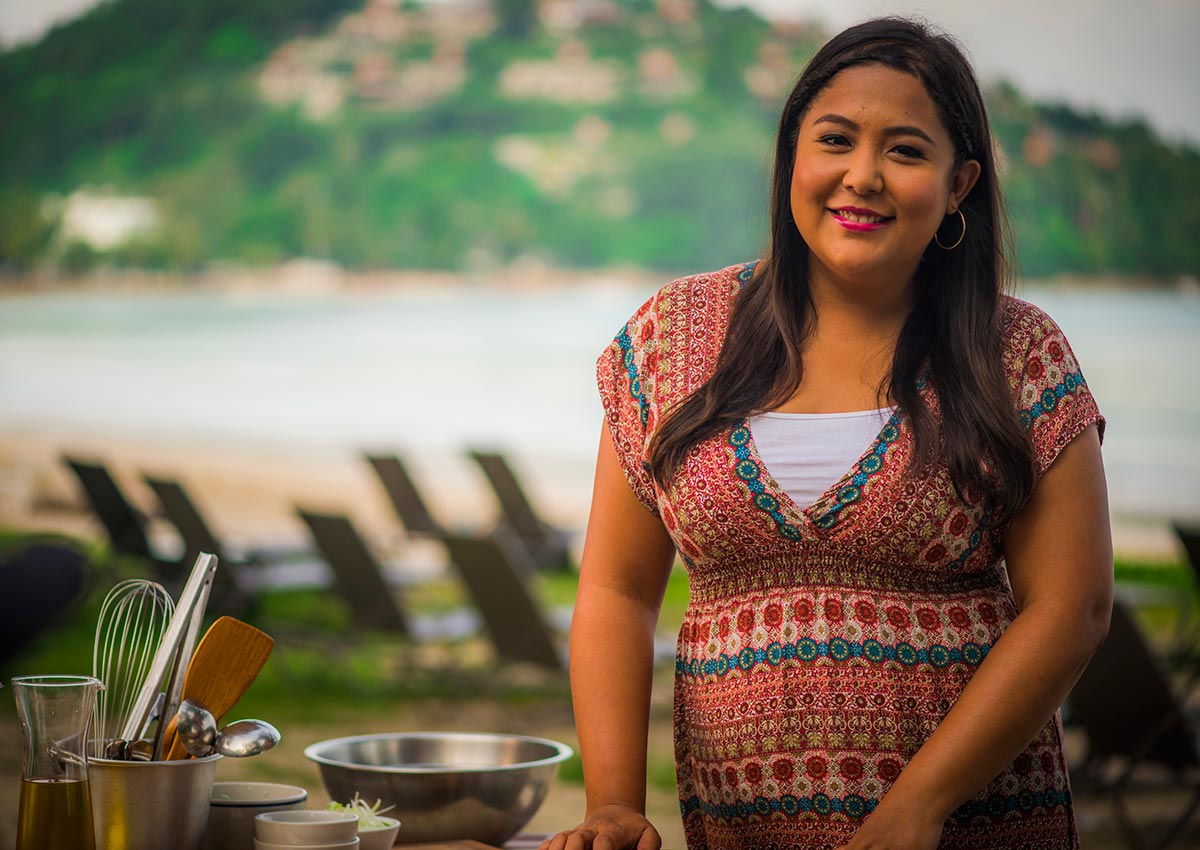
Food Hero 2015 winner Ili Sulaiman dreams of being her country’s Jamie Oliver.

Oliver launched Fifteen, a restaurant and charity apprenticeship programme for disadvantaged young people, in 2002.

Likewise, Ili has started Malaysian restaurant Agak Agak in Kuala Lumpur, a social enterprise which will train people from underprivileged backgrounds.

Agak Agak, officially launched on Nov 1, will take in its first three apprentices in January. Applicants are between 18 and 30 years old, and include school dropouts, the unemployed and people with learning disabilities.

“I idolise Jamie Oliver and felt inspired by him to start Agak Agak,” Ili, 31, told The New Paper over the phone last Friday.

“I think he is a great ambassador for change and I love his whole farm-to-table ethos of cooking.”

Ili said she has been inspired by Oliver since her student days in the UK, when she studied business administration and management at Queen Mary University of London. She would watch the celebrity chef’s TV shows and buy his cookbooks.

“The difference between Fifteen and Agak Agak is that we are more about home-cooked, old-school Malaysian recipes with a modern twist,” she said.

on Facebook

More teasers of the good stuff on our menu! This is kacang pol. Johor’s answer to chili con carne topped with sliced…

Posted by Agak Agak on Tuesday, 25 October 2016

TINGKAT

A foodie who at the age of seven learnt to cook from her grandmother, Ili founded wholesome tingkat food delivery service Dish By Ili in 2014, which she operated out of her own home in Bangsar.

“Dish By Ili was doing well and business definitely picked up after I won (reality food competition) Food Hero last year. Preparation spilled over from my kitchen into my living room and dining room,” she said with a laugh.

Dish By Ili now operates out of a rented central kitchen.

As part of her expansion plans, Ili decided to open Agak Agak with partner Basira Yeusuff of pop-up kitchen Root Cellar KL.

“Since I was struggling to employ skilled, passionate people, my idea was to open an eatery to train young people in the food and beverage industry, and give back to the community at the same time,” said Ili.

She is hosting her first food programme, By The Sea With Ili, in which she cooks local seafood dishes in six coastal Asian cities. The series premieres on Thursday at 10pm on Asian Food Channel (Starhub Ch 435).

She said: “It was an amazing experience to do a food show that also has a travel and lifestyle element, as previously I was shooting only short videos for the channel in the studio.

“It took me out of my comfort zone, as I was out on the beach, in the sun and even in the rain.”

Ili rolled up her sleeves to catch her own fresh seafood on the show, and prepared scrumptious meals like pineapple and prawn Peranakan curry and spicy clams in a hotpot.

“I was eating seafood for breakfast, lunch and dinner, but I never got sick of it because I love seafood,” she said.

While Ili enjoyed her culinary adventure, she also has fond memories of the people she met and cooked with.

“I learnt to cook by talking to locals, from sea gypsies to fishermen to aunties who have been cooking for their families for years.”

Ili hopes to follow in Oliver’s footsteps with more TV shows and perhaps cookbooks to follow.

“I’m nervous about peoples’ reactions to By The Sea With Ili because it’s the first time I’m showcasing more of my personality on TV as I cook and interact with people.

“I’ve been really lucky with my career as it has grown, so hopefully the show will kick off more opportunities for me.”


This article was first published on Nov 08, 2016.
Get The New Paper for more stories.

Image: 
Publication Date: 
Wednesday, November 9, 2016 – 00:00
Send to mobile app: 
Source: 


Story Type: 
Others

Source link