Home Blog Page 2400

Get up to 80% off winter wear & luggages at Winter Time’s expo sale from 9 – 13 Nov 2016

0

STARTS TOMORROW: Winter Time biggest winter wear & luggages sale at Expo – up to 80% off! (9 – 13 Nov)

Get up to 80% off winter wear & luggages at Winter Time’s expo sale from 9 – 13 Nov 2016

Winter Time provides a wide range of quality winter apparel & service clients worldwide as an apparel specialist, introducing winter wear from leading fashion countries like Europe, United Kingdom, USA, Japan, Taiwan, Hong Kong & China.

Source

Different types of online scams and how to avoid them

0

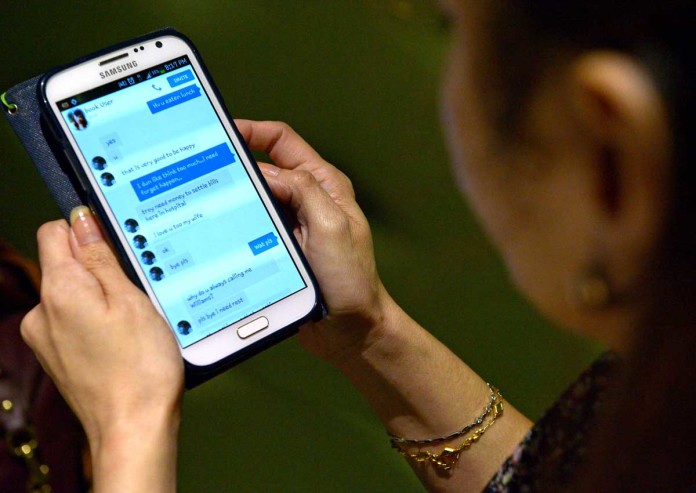
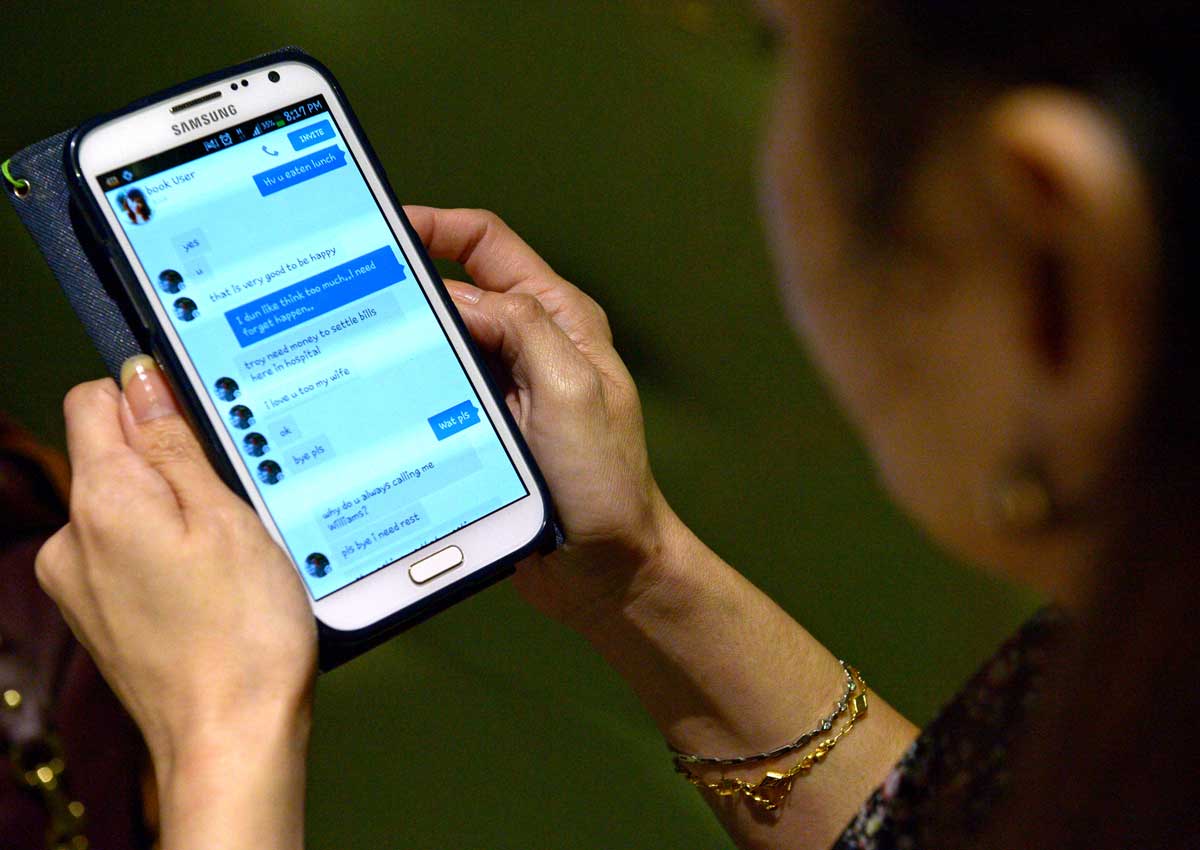
The police have warned that conmen are increasingly using social media platforms and dating websites such as QQ, WeChat, Facebook, Line and OkCupid to hook their victims.

The police issued an advisory on Tuesday (Nov 8) of some common scams employed by conmen using such platforms and reminded the public what to do to avoid falling prey.

In July, Home Affairs Minister K. Shanmugam had also released statistics on the swelling number of online and social media scams.

There were 2,450 such scams reported last year compared with 1,015 in 2014, Mr Shanmugam said in a written reply to a question in Parliament.

The Ministry of Home Affairs revealed that there were 298 Internet love scam cases in the first half of this year, almost twice the 150 cases reported in the same period last year. As much as $11.6 million have been lost to such conmen in the first half of the year.

Tuesday’s police advisory detailed three types of scams: impersonation of China officials, foreign investment and Internet love. Here are the different types of online scams and how to avoid them:

Impersonation scam

Victims receive messages from a spoofed local telephone number containing “999” or a spoofed China telephone number containing “110” for the Chinese police.

They are accused of committing crimes and are asked to provide further information such as their Internet banking details and One-Time Password (OTP). Or, they are directed to a fake website of the Singapore Police Force or the China Police and asked to key in their banking details. 

The scammers then use the personal and banking information to access the victims’ Internet banking accounts to make illegal transactions. In some cases, the victims were instructed by the scammers to transfer a sum of money using bitcoin vending machines.

The transfer involves scanning a QR code provided by the scammers and depositing money into the machine.

Foreign investment scam

Victims receive messages from unknown individuals claiming to be brokers or staff from banks or financial security firms in Hong Kong.

Thereafter, the victims will be introduced to attractive investments packages that promise returns of 10 to 50 times the amount invested.

Victims are instructed to transfer their money to banks in Hong Kong

and China and also told to pay administrative fees, security fees and other taxes to receive the profits and returns.

Internet love scam

Victims receive friend requests from unknown individuals and eventually develop a romantic relationship or friendship with them.

The victims will be asked to lend the other party some money on pretext of various reasons such as payment for tax to release a gift that was stuck at customs or investment into seemingly attractive investment packages.

Victims were typically instructed to transfer money to banks in Hong Kong and China.

Precautions to take when contacted by potential scammers online or on social media:

– Call the agency’s official telephone number to check that they had contacted you. It is unlikely for government agencies to send unsolicited messages or make unsolicited calls to members of the public on the social media for official matters. 

– Ignore instruction to remit or transfer money. Do not give out personal information and bank account details to strangers.

– Exercise caution when befriending strangers through social media platforms. Be wary when asked to send money overseas.

– Call a trusted friend or talk to a relative before you act. You may be overwhelmed by emotion and err in your judgment.

– If you have information related to such crime or if you are in doubt, please call the Police hotline at 1800-255-0000, or call 999 for urgent Police assistance.

Source link

President Tony Tan will not stand in next Presidential Election

0

SINGAPORE: President Tony Tan Keng Yam on Tuesday (Nov 8) announced that he will not seek a second term in office, as the upcoming election will be reserved for eligible Malay candidates. 

Prime Minister Lee Hsien Loong had said earlier said in Parliament that under the hiatus-triggered model proposed, the next election, due to be held by 2017, will be reserved for Malay candidates. 

“I look forward to seeing a Malay President after 46 years,” Dr Tan wrote on Facebook. Singapore has not had a Malay head of state since the first President Yusof Ishak. 

Dr Tan added that his priority as President remains unchanged. “I will continue to focus on performing my current role as President as well as I can for the remainder of my term, strengthening community ties and forging better international relations for Singapore,” he said.

In his post, Dr Tan also reiterated his message delivered by Speaker of Parliament Halimah Yacob on Monday. “The proposed amendments will ensure that our Constitution as a living document is aptly refreshed. As I said in my Presidential message to Parliament yesterday, the institution of Elected Presidency has to stay relevant with time and our local context,” Dr Tan said. 

Source link

Heated exchange on bid to allow limited online gambling

0

Workers’ Party MP Pritam Singh yesterday accused the Government of allowing lottery operators Singapore Pools and Singapore Turf Club to offer legal online gambling in order to “make more money”.

In an adjournment motion in Parliament, Mr Singh (Aljunied GRC) said there has been a “glaring lack of clarity” as to how the Government is preparing to address “the scourge of online gambling”.

This drew a sharp response from Senior Minister of State for Home Affairs Desmond Lee, who said it was the “most disturbing thing I’ve heard this evening”.

He called upon Mr Singh’s Workers’ Party to make clear its position on online gambling and give specific suggestions on what should be done instead.

In a 20-minute-long speech, Mr Singh raised numerous questions about the Government’s decision in September to exempt the two operators from the Remote Gambling Act.

He said the most common reaction he has heard from Singaporeans is that the Government “just wants to make more money”.

Mr Singh added: “Is providing for exempt operators a way to redirect gambling spending away from illegal overseas operators to local operators which are owned by the Tote Board?”

He said the argument that the Tote Board gives money to charities is “morally questionable” and “akin to saying that it is okay to harm some people in order to help others”.

He refused to accept the argument that the exempt operators allow the Government to manage crime associated with gambling and added that legalising online gambling will more likely attract first-time gamblers.

But Mr Lee pointed out that illicit online gambling was growing worldwide and Singapore would not be spared. Gamblers still found ways to bet online despite hundreds of websites being blocked. A total ban would drive the problem further underground.

“So we need a valve – legal, run by non-profit organisations, where people have to sign up, so we know who they are, with mechanisms to promote responsible gaming, for us to try to intervene early before the problem gets out of hand,” he said.

Mr Singh had “made rather serious allegations about the motivation of the Government”, he added.

Mr Lee also noted that during the second reading of the Remote Gambling Act in 2014, Mr Singh had pushed for a total ban on online gambling.

In the same debate, Workers’ Party’s Mr Png Eng Huat (Hougang) contradicted Mr Singh and said the ban will drive the problem underground.

Said Mr Lee: “What is the Workers’ Party’s true position on this matter? Even after this evening, even after the allegations have been made about the Government’s intentions, I don’t think we are any wiser.”

He asked the Workers’ Party to put on the table specific suggestions on how a total ban on online gambling would work. “For example, do you support a complete ban on VPN and technology that skirts around blocking measures?”

Mr Lee did not get a response as time ran out.


mellinjm@sph.com.sG


This article was first published on November 08 2016.
Get a copy of The Straits Times or go to straitstimes.com for more stories.

Image: 
Category: 
Publication Date: 
Tuesday, November 8, 2016 – 16:00
Send to mobile app: 
Source: 


Story Type: 
Others

Source link

Govt ready to review laws criminalising suicide but…

0

The Government is prepared to review laws that criminalise suicide, said Senior Minister of State for Home Affairs Desmond Lee in Parliament yesterday.

He was responding to a question from Mr Louis Ng (Nee Soon GRC), who asked whether the Government’s stance on the matter was set in stone.

Under Section 309 of the Penal Code, those who attempt suicide can be punished with jail for up to a year, or with a fine, or both.

“The ministry is prepared to review the position, but in so doing we must recognise that this is not a straightforward exercise,” said Mr Lee. “We need to make sure we do not inadvertently send the message that we no longer believe that it is wrong to take one’s own life.”

At the same time, law enforcement agencies and emergency services that respond to crises where a person is attempting suicide need to have powers to intervene and, after that, refer the individual to services for psychological and medical help.

The response from the Ministry of Home Affairs (MHA) came in the light of several high-profile cases of suicide that made headlines.

Earlier yesterday, Nominated MP Kuik Shiao-Yin had asked why the Government supported criminalisation of suicide, and what kind of psychological support was provided for those who attempted such a crime.

Mr Lee said that while in practice prosecutions were rare, the matter was something Singapore needed to take a stand on.

“It was thought to be important that society should signal through the law that it opposes people taking their own lives,” he said.

He pointed out that only two people were prosecuted for attempting suicide last year, out of 1,096 reported cases. Incarceration of such individuals was even rarer, said Mr Lee. From 2011 to 2015, only five people charged with attempted suicide were jailed.

When responding to cases of attempted suicide the police’s priority is to “ensure the person’s safety”, said Mr Lee, adding that arrests are made only to prevent the individuals from doing harm to themselves or others.

In such situations, handcuffs are used only to ensure safety or to prevent the individual from running away, said Mr Lee.

He also said that all cases would be recommended some form of medical or psychological support. Individuals could be referred to the Samaritans of Singapore (SOS) or the Institute of Mental Health, or their next of kin could be roped in to help.

Said Mr Lee: “Everyone has a part to play in paying attention to warning signs of suicidal tendencies of the people around us, especially family and friends. We should not hesitate to refer those who need support to the services that are available.”


dansonc@sph.com.sg


This article was first published on November 08, 2016.
Get a copy of The Straits Times or go to straitstimes.com for more stories.

Image: 
Category: 
Publication Date: 
Tuesday, November 8, 2016 – 16:00
Send to mobile app: 
Source: 


Story Type: 
Others

Source link

Next Presidential Election to be reserved for Malay candidates: PM Lee

0

SINGAPORE: The next Presidential Election due next year will be reserved for Malay candidates, based on the hiatus-triggered model, said Prime Minister Lee Hsien Loong in Parliament on Tuesday (Nov 8).

Mr Lee also said that as the Constitutional Amendment Bill states that the Government should legislate on when the racial provision should start, it intends to do so when amending the Presidential Elections Act in January next year. It will start counting from the first President who exercised the powers of the Elected Presidency, who was Dr Wee Kim Wee.

He was speaking during the parliamentary debate on proposed changes to the Elected Presidency system, which started on Monday.

So for the Presidential Election next year, if a qualified Malay candidate steps up to run, Singapore will have a Malay President again, the Prime Minister said. 

“As Minister Yaacob (Ibrahim) noted yesterday, this would be our first after more than 46 years, since our first President Encik Yusof Ishak,” Mr Lee said. “I look forward to this.”

The hiatus-triggered model means that while presidential elections will generally be open to candidates of all races, but if there is not a President from a particular community for five consecutive terms, then the next term will be reserved for a President from that community. This means that in the course of six terms, there should be at least one President from the Chinese, Malay, Indian and other minority communities, provided qualified candidates appear, he explained.

ENSURING MINORITY REPRESENTATION ‘MOST DIFFICULT QUESTION’

Mr Lee also noted that amongst all the proposed changes in this complicated Bill, the one hardest thought about and where the most is at stake is the question of ensuring multiracial representation in the Elected Presidency.

He said as the Head of State for Singapore, the candidate must represent all Singaporeans and the office must be multiracial. If the President always comes from the same race, not only will the President cease to be a credible symbol of our nation, the very multiracial character of the nation will come into question, the Prime Minister said. 

“Every citizen, Chinese, Malay, Indian or some other race, should know that someone of his community can become President, and in fact from time to time, does become President,” Mr Lee said.
He pointed out that Singapore is building a “radically different society”: Multiracial, equal and harmonious, gradually enlarging the shared Singaporean identity while celebrating different cultures and faiths. It is also allowing minority communities ample space to live their own ways of life, and not forcing everybody to conform to a single norm set by a single majority group.

“We have to work consciously and systematically at this,” Mr Lee explained. “It will not happen by itself, nor will we get there if we blithely assume that we have already arrived.”

ELECTED PRESIDENT AN ‘IMPORTANT STABILISER’ 

The Prime Minister reiterated why the Elected President is an important stabiliser for Singapore, noting that founding Prime Minister Lee Kuan Yew proposed the idea of the office because he was worried that there would be a freak election result one day, and the nest egg of reserves would be “squandered by a profligate Government”. 

He added that Singapore’s system is unique and “very difficult to get right because the balance is a delicate one”. This is because the President is a symbolic Head of State but elected through a national ballot, and as such has a popular mandate but not a mandate to govern. The President can also use his mandate to say no in certain specified areas, but not push for policies or to initiate action.

The Prime Minister also argued against vesting the powers of safeguarding Singapore’s reserves in the Parliament instead of a separate institution. He said that while it may help, the pressure in Parliament is to do more rather than spend less. Making everything depend on just one institution – the Parliament – “creates a single point of failure”, he added.

Doing so will mean everything hinges on the outcome of a single general election, and on the Government elected into Parliament with that one vote every five years, he said. 

Mr Lee said the Presidential Election itself presents difficulties, particularly in a fiercely contested campaign where “emotions and sentiments can build up and issues that have nothing to do with the role of the President can become hot”. 

He cited the 2011 Presidential Election, when one candidate championed a S$60 billion economic plan supposedly to create jobs and enterprise, while another made proposals such as better recognition for national servicemen and more help for the poor and unemployed.
These, Mr Lee noted, are the Government’s responsibility, and for the Prime Minister and Cabinet to decide. “But in 2011, some candidates’ attitude was: Never mind, just say it. Get elected first, worry about the Constitution later on.”

The Prime Minister referenced the US presidential election, saying that while the two candidates – Mr Donald Trump and Mrs Hillary Clinton – represent radically different world views, people can take some comfort in the strong checks and balances in the US political system. 

He cited James Madison, one of the country’s founding fathers, who wrote in the Federalist Papers: “If men were angels, no government would be necessary. If angels were to govern men, neither external nor internal controls on government would be necessary.

“A dependence on the people is no doubt the primary control on the government; but experience has taught mankind the necessity of auxiliary precautions.”

“That is wisdom,” noted Mr Lee, adding that while a system like the US one cannot work for Singapore, the city-state needs some stabiliser besides the primary control of the Government, and that is the Elected President.

CHANGES ARE ‘MY RESPONSIBILITY’: PM

As for the timing of the changes, the Prime Minister reiterated that he has been involved with the Elected Presidency almost from the beginning and knows the system – from the intent and design to how conditions have changed and ideas evolved.

“These changes are my responsibility,” he said, “I am doing it now because it would be irresponsible of me to kick this can down the road and leave the problem to my successors.

“They have not had this long experience with the system, and will find it much harder to deal with.”

In an exclusive interview with Mediacorp in September, Mr Lee said he believed this is something which needs to be done, and if it is not done, this would mean trouble for Singapore – “not today, not tomorrow, but 10 to 15 years’, 20 years’ time definitely”.  

Source link

Look out for scammers on social media platforms and dating websites: Police

0

Social media platforms such as Facebook and Line are familiar to many in Singapore but active users should exercise more precaution as there might be scammers lurking on these sites.

Police said this in a statement today (Nov 8) and pointed out that these scams, which usually involve transferring money overseas, can take place in at least three ways.

In one instance, victims would receive unsolicited messages from scammers impersonating a China official by using a spoofed local telephone number containing “999” or a spoofed China telephone number containing “110” for the Chinese police.

These scammers would ask for personal and banking information to access the victims’ internet banking accounts to make illegal transactions. In some cases, the victims were instructed by the scammers to transfer a sum of money using bitcoin vending machines, said the police in the statement.

Some victims have also been contacted by unknown individuals who claimed to be brokers or staff from Hong Kong banks or Hong Kong financial security firms. These victims would then be introduced to attractive investments packages that promised “returns of 10 to 50 times the amount invested”.

Those who are active on online dating websites should also be wary of potential scam tactics, said the police statement.

There have been cases of victims receiving friend requests from unknown individuals and eventually getting romantically involved or forge friendships with these unidentified people.

Victims were typically instructed to transfer money to banks in Hong Kong and China on the pretext of reasons such as paying tax fees to release a gift that was stuck at customs.

The authorities have observed that scammers are using social media platforms and dating websites such as QQ, Wechat, Facebook, Line, and Okcupid to reach their victims and would like to advise members of the public to take the following precautions when they’re online:

– Call the agency’s official telephone number to check that they had contacted you. It is unlikely for government agencies to send unsolicited messages or make unsolicited calls to members of the public on the social media for official matters.

– Ignore instruction to remit or transfer money. Do not give out personal information and bank account details to strangers. Criminals can use the personal information and bank details such as internet bank account username and password, OTP code from token and impersonate you;

– Exercise caution when befriending strangers through social media platforms. Be wary when asked to send money overseas.

– Call a trusted friend or talk to a relative before you act.

For those with information related to such crimes or if in doubt, call the police hotline at 1800-255-0000, or call 999 for urgent assistance.

ssandrea@sph.com.sg


Image: 
Category: 
Publication Date: 
Tuesday, November 8, 2016 – 17:24
Keywords: 
Send to mobile app: 
Source: 


Story Type: 
Rewritten Story

Source link

Successors ‘will find it hard to deal with’ EP scheme: PM Lee

0

SINGAPORE – Explaining why changes to the Elected Presidency scheme have to be made now, Prime Minister Lee Hsien Loong reiterated on Tuesday (Nov 8) that it would be irresponsible for him to “kick this can down the road and leave the problem to my successors”.

Pointing out that he has been involved with the scheme almost right from the start, he told the House that he would be better placed than his successors to make the amendments.

As a young Cabinet minister, he helped Mr Goh Chok Tong and his team develop Mr Lee Kuan Yew’s concept into a complete scheme. He also helped Prof S Jayakumar to draft the White Papers in 1988 and 1990.

“Since the Elected Presidency began (in 1991), I have been operating the mechanism that we designed, and discovering its glitches. I helped to refine and amend the scheme as we went along… So I think I can say that I know the system,” he said. After becoming the Prime Minister in 2004, he has worked closely with two Elected Presidents, Mr S R Nathan and Dr Tony Tan.

Given that his successors have not had this long experience with the system, they would “find it much harder to deal with (it)”, he noted.

While he expects his successors to make further improvements and adjustments to the EP scheme in the future, he believes the changes in the Bill currently put before Parliament will make the scheme “work better for Singapore, now and in the future”.

Nevertheless, he warned that “whatever we do, it is not cast-iron and fool-proof – things can still go wrong in Singapore, with Singapore politics”. A Government may be elected with good intentions, only to find its policies turning out badly, or a President may be elected on a basis different from his Constitutional role. Relations between the President and the Government may also become strained, or even break down.

Fundamentally, Singaporeans may be split along fault lines of race, religion, income or class. If that happens, no political system will produce a stable government for the country, added Mr Lee.

Reiterating that all these scenarios are possible, Mr Lee said that strengthening the EP will reduce the chances of these happening. “We know that without the Elected President, we have more cause to worry that things can go disastrously wrong,” he said. 

Source link

EP a necessary stabiliser for S’pore’s political system: PM Lee

0

SINGAPORE – Like other countries, Singapore’s political system requires “auxiliary precautions”, beyond the primary control through a Parliament elected by the people – and the Elected Presidency (EP) provides just that, Prime Minister Lee Hsien Loong said on Tuesday (Nov 8) as he joined in the debate on the Bill to amend the EP scheme. 

Speaking on the second day of the debate on the constitutional amendment Bill, Mr Lee pointed to the example of the constitution of the United States – where its people are electing a new president in a keenly-watched contest – for its “great store on checks and balances”.

The three centres of power – the Congress, the Executive and the Supreme Court – are constantly balancing one another, Mr Lee noted. The Congress itself is divided between the House and the Senate, which are separately elected and often with a different party as majority. There is sometimes gridlock, but the country accepts that because their aim is to prevent an overbearing government, he said.

“Right now, the US is about to go to the polls in a few hours’ time to elect a new president. The world is watching with bated breath, exceptionally concerned what the outcome will be,” Mr Lee said. “Because this time the two candidates represent radically different world views… The outcome will matter a lot, to the US and to the world. But one factor which people take some comfort in is the strong checks and balances in the US political system.”

Quoting Mr James Madison, who was one of America’s founding fathers, Mr Lee said: “If men were angels, no government would be necessary. If angels were to govern men, neither external nor internal controls on government would be necessary. A dependence on the people is no doubt the primary control on the government; but experience has taught mankind the necessity of auxiliary precautions.”

Mr Lee said he does not think that a system like what the US has can work for Singapore. However, “every system needs political stabilisers” and Singapore is no different. “We should keep the Elected President and fine-tune its stabliser role,” he said.

Mr Lee also addressed alternatives to the EP scheme and explained why they would not work. On the suggestion to have a non-elected President that holds the same custodial powers as that of the elected President today, Mr Lee pointed out that when the unelected President will find it hard to stand his ground when he has to say no to an elected Government. Another suggestion that has come up is to have a non-elected President chosen by the Parliament but his powers will be vested in the Council of Presidential Advisers (CPA). Mr Lee noted that the same issue arises when the CPA, whose members are unelected, becomes the decision-maker and has to say no to the Government.

If the CPA were to be elected, multiple elections would have to be held for Presidential advisors instead of just one to elect the President. Each election risks being politicised and the problem will be amplified, not reduced, he said.

As to the proposal to have a non-elected President with a purely ceremonial role, as it was before 1990, Mr Lee said this arrangement would fail to safeguard and stabilise the system.

Mr Lee noted that the very existence of the President’s custodial powers – under the EP scheme created in 1991 – has influenced Singapore politics for the better. “The prospect of a veto alone has lessened the temptation for political parties to promise the world to voters in General Elections,” he added. It is also why opposition parties have been “quite cautious with their spending proposals”, he said. Without this second key held by the Elected President, some parties would have “gone to town many elections ago”. The People’s Action Party (PAP) Government would also have come under pressure to match their generosity, he said.

Referring to how candidates in the fiercely-contested 2011 PE made claims, promises and declarations that are beyond the President’s powers and competence under the Constitution, Mr Lee said: “But for all its difficulties, I am convinced that the Elected President has been a plus for our system. Having this stabiliser is critical, and has already made a difference.”

He added: “Even though it is not easy to get right, we should persevere to improve the system. We can find ways to mitigate the difficulties, and will do so. Because the alternatives to the Elected President will create other, probably worse, difficulties.”

Source link

Fireman – Korean Action Comedy

0

#TuesdayTheatre
Fireman, a brand new action packed comdey show, is set to debut in Singapore this December! Get ready for a jaw-dropping performance with a dynamic mix elements from parkour, martial arts, dance and acrobatics!

So what are you waiting for? Head over to http://www.sistic.com.sg/events/fire1216 to get your tickets now!

Fireman – Korean Action Comedy

HOT from Korea, brand new action packed performance, FIREMAN, is set to debut in Singapore on the 10th and 11th December 2016. FIREMAN is a Korean non-verbal action comedy performance about firefighter trainees incorporating elements of parkour, martial arts, dance and acrobatics, as they overcome o…

Source