Home Blog Page 2394

Duterte admits ogling at Robredo's legs during Cabinet meeting

0

MANILA – In an act that may spark condemnation from women’s groups, President Duterte let loose his philandering self as he openly flirted with Vice President Leni Robredo in front of hundreds of survivors of Supertyphoon “Yolanda” in Tacloban City on Tuesday.

Speaking at the event marking the tragedy’s third year, Mr. Duterte told his audience how he and Finance Secretary Carlos Dominguez once ogled at Robredo’s knees during a Cabinet meeting.

He said Robredo, who visibly looked uneasy while the President was talking about her, would come to their meeting in Malacañang wearing short skirts.

“Please don’t be offended (with what I have said) because I’m not mad. You would know I’m mad when I start looking at beautiful women,” Mr. Duterte said in Filipino as he stared at the Vice President, eliciting giggles from the crowd.

He said he used to seat beside Robredo during their Cabinet meeting, but the protocol officer in Malacañang apparently noticed that he would just stay behind her.

“You know ma’am Leni would always wear skirts which are shorter than usual. At one time, Dominguez asked me come closer because I was far from them. But I told him, ‘Come here. Look at (Robredo’s) knees,'” he said as the crowd rolled in laughter.

“Maybe she noticed (that I was looking at her). I wanted to tell her, ‘Ma’am maybe next time you just wear shorts… But after our third meeting, she was already there at the far end of the table. I lost the view during the Cabinet meeting,” he continued.

Before concluding his speech, Mr. Duterte sang a line from Anthony Castelo’s song “Malayo Ang Tingin.”

The President also asked Robredo, the widow of the late Interior Secretary Jesse Robredo, in jest if rumours were true that she had found a boyfriend. “Don’t be offended. Is it true? If it’s true, a congressman may be killed.”

Mr. Duterte said he would often tease Robredo to lighten the mood when their meetings become dull and filled with tension.

The President had previously earned the ire of women’s groups for kissing young women during the campaign.

He also drew flak when he joked about the gang rape of Australian missionary worker Jaqueline Hamill when he was still the mayor of Davao City in 1989.


Image: 
Category: 
Publication Date: 
Wednesday, November 9, 2016 – 17:05
Keywords: 
Send to mobile app: 
Source: 


Rotator Headline: 
At event marking typhoon tragedy, Duterte admits ogling at VP's legs during Cabinet meeting
Story Type: 
Others

Source link

FAS election nears, former Tampines Rovers chief ready to step forward

0

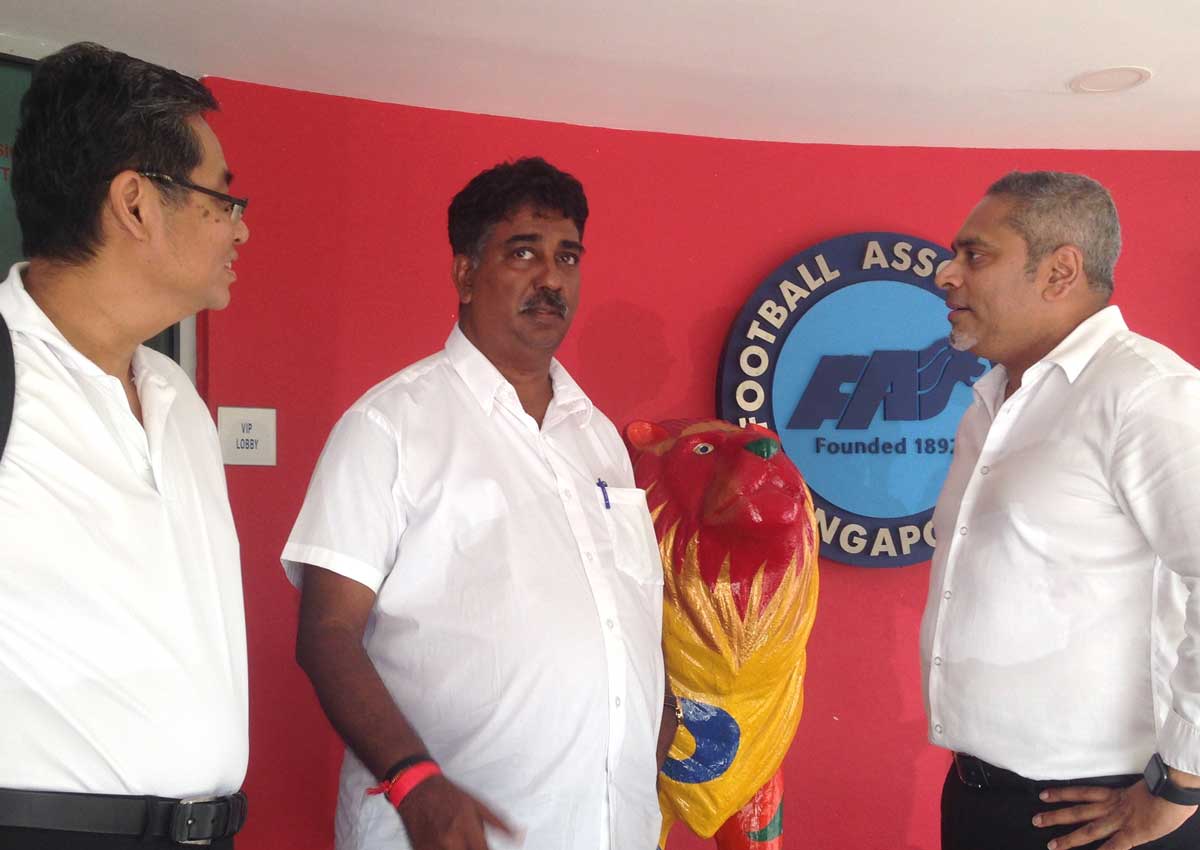
The die has been cast, and it is just a matter of time – weeks, at most two months – before Singapore’s football fraternity put forward the men and women who will govern the game from their Jalan Besar headquarters.

The local grapevine has been abuzz with how the lines are being drawn, which camps are forming and starting to recruit, and how many votes have already been secured.

So far, though, there remains little clarity over who will be involved in the first-ever election for the Football Association of Singapore (FAS) Council.

Former chairman of S.League giants Tampines Rovers Teo Hock Seng, 70, declined to confirm mutterings that he will join a team being put together by incumbent FAS vice-president Lim Kia Tong.

But, speaking to The New Paper from Europe yesterday, he declared that he is ready to step forward.

“Whoever invites me, I will join them. If there’s any way I can help, I will,” said the veteran football administrator.

Teo was also reportedly being wooed by Hougang United chairman Bill Ng, whom the former Tampines football chief said was a “good friend”.

While there have been a number of reports stating that Ng would form a team to run in the election, he has not expanded on what his plans are.

At the FAS Extraordinary General Meeting on Monday, affiliates voted to pass amendments to the proposed new constitution – the new constitution will be put forward to the Registrar of Societies, the Ministry of Culture, Community and Youth and the Commissioner of Charities for approval, which is expected to be a formality – and it will now allow the fraternity to elect their own leaders.

Speaking to TNP on Monday, Lim revealed that he was “seriously considering” running for the post of FAS president, but like former journalist Suresh Nair – who has reportedly also been busy assembling a team – he did not feel that it was an appropriate time to elaborate.

Suresh told TNP that he will only name his team when the FAS announces the dates of the election.

BIGGER ROLE

Airtime on the FAS election has been dominated by R Vengadasalam, who is the campaign manager of Team Majulah, but the former Woodlands Wellington manager revealed that he is poised to play an even larger role.

The team will see some changes in personnel and a refined manifesto.

“The team have not broken up. We are just undergoing a reconfiguration,” said Venga, in response to TNP queries on talk of a split in the team.

Team Majulah had earlier unveiled two candidates: former People’s Association deputy director James Lim and lawyer Alfred Dodwell. But James Lim has already broken away, saying that he will play no further part in the team.

To run for FAS president, a candidate must have played an active role in association football in two of the last five years.

Said Venga: “We’ll continue to see how we can form a good team for the election, and as of now, we easily have six candidates from the Island Wide League and National Football League sides, as well as people who are professionals.

“Sometimes with a big team it’s not possible to get everyone to agree, but our team are not a team of yes men.”

Despite his breakaway, James Lim backed Venga’s move for office.

“Venga is a person I respect and I know from working with him on Woodlands Wellington and the amendments of the FAS constitution – his heart is with Singapore football.

“He will have time for local football, and that is what was lacking with the present (FAS) council.”

shamiro@sph.com.sg


This article was first published on Nov 9, 2016.
Get The New Paper for more stories.

Image: 
Category: 
Publication Date: 
Thursday, November 10, 2016 – 00:30
Send to mobile app: 
Source: 


Story Type: 
Others

Source link

Hong Kong actress Janice Man says latest role 'emotionally exhausting'

0

For Hong Kong cinema’s rising star Janice Man, playing a victim of kidnap, rape and domestic violence in psychological crime thriller Nessun Dorma threw up unprecedented challenges in the acting department.

The 27-year-old, who scored a Best Supporting Actress nomination for her performance in action flick Helios (2015) at the Hong Kong Film Awards in April, told M that Nessun Dorma “is the most emotionally exhausting role” she has taken on.

“Before we started filming, I read the script and there were times when I doubted myself,” said Man in Mandarin.

“I didn’t feel confident enough to handle all the emotional nuances of my character.”

She sent her answers in an audio recording for our interview.

In Nessun Dorma, which is showing here, Man plays Simin, who develops second thoughts about her arranged marriage to wealthy bachelor Weichen (Lam Ka Tung).

Simin is secretly in love with math prodigy Muzhe (Andy Hui).

Photo: Shaw Organisation

On her way home one night, Simin is attacked and knocked unconscious by a masked stranger.

When she wakes up, she finds herself trapped in a room, nude and tied to a bed.

Is Nessun Dorma the most challenging movie you have done so far?

Yes, definitely. I’ve acted in other crime thrillers, but Nessun Dorma takes the cake when it comes to emotional heft.

Throughout filming, I felt like I was on an emotional roller-coaster ride. Most of the time, I was feeling so sad and depressed that I hardly interacted with anyone on set.

Which were the most memorable scenes, and why?

The scene where my on-screen husband physically assaulted me was unforgettable. We did it in one take and gosh, it felt so real.

Before the shoot, Ka Tung had expressed concern that he’d hurt me. I told him, “Don’t worry, hit me hard, I can take it”.

When he landed blows on me, I was stunned. I didn’t expect it to be so painful. I remembered I cried and cried, even after the cameras stopped rolling.

Another memorable scene would be the one where I was kidnapped, raped and left in a room.

For that, my emotional state was rather complicated. I felt fear. And because I wasn’t wearing anything, I felt really vulnerable. We finished the scene in two days and after that, I was more relieved than anything.

There is a lot of media hype in Hong Kong about your nude scene.

It’s natural that people will pay attention to (nudity), but to be honest, my biggest worry when I accepted the role of Simin was how I’d fare with the emotional scenes. What if I couldn’t convey the right emotions? To me, that’s more stressful.

As for the nude scene, of course it was very challenging too.

I hadn’t done something like that prior to Nessun Dorma. The nudity is necessary and crucial to the story, which made me okay with doing it.

I used to think I have a “bottom line” when it comes to acting and that no matter what, I’d never cross the line.

Well, after Nessun Dorma, I’ve realised that depending on the movie scripts I receive, I am willing to lower my “bottom line”. (Laughs)

keeyunt@sph.com.sg


This article was first published on Nov 9, 2016.
Get The New Paper for more stories.

Image: 
Category: 
Publication Date: 
Thursday, November 10, 2016 – 00:00
Send to mobile app: 
Source: 


Story Type: 
Others

Source link

Yishun woman sentenced to jail for failure to care for her 39 pet cats

0

SINGAPORE – A local woman has been sentenced to two weeks’ jail on Monday (Nov 7), for her failure to care for her 39 pet cats.

Together with other drug-related offences, Roslina Roslani, 34, was sentenced to a total of five years six months and four weeks’ jail.

The Agri-Food and Veterinary Authority of Singapore (AVA) had inspected her home at Block 207 Yishun Street 21 on Feb 25 this year, following public feedback about animal faecal odour coming from her unit.

The 39 felines found inside, all in poor physical condition and health, were surrendered to AVA. Four died later due to underlying medical conditions, while another had to be euthanised due to bad health.

The remaining 34 cats were handed to the Cat Welfare Society for re-homing.

In a media release on Tuesday (Nov 8), AVA said it condemns acts of animal cruelty, including neglect, which compromises the animals’ welfare.

“Animals from hoarding cases are often in bad physical and health conditions. We investigate all feedback on cruelty and we will take enforcement action, where necessary.

“Hoarding of pets may also cause public safety, nuisance and hygiene issues to the community, such as pest. AVA urges pet owners not to hoard animals, and be responsible and considerate pet owners so as not to cause inconvenience to the community.”

First-time offenders are liable to a maximum fine of $15,000, with a potential 18 months of jail.

On top of the AVA’s enforcement action and efforts to raise awareness on animal welfare, the public is advised to be vigilant and promptly report animal hoarding cases through AVA’s 24-hour hotline, 1800-476-1600, or its website (https://www.ifaq.gov.sg/AVA/apps/feedback.aspx). All information shared will be confidential.


This article was first published on November 8, 2016.
Get a copy of The Straits Times or go to straitstimes.com for more stories.

Image: 
Category: 
Publication Date: 
Wednesday, November 9, 2016 – 10:20
Keywords: 
Send to mobile app: 
Source: 


Story Type: 
Others

Source link

Indonesian victim in HK murder case always came home with presents

0

Her baby was just 40 days old when Ms Sumarti Ningsih left for Hong Kong in 2011 to work as a domestic helper.

It wasn’t an easy decision for the single mother to leave the newborn and her family behind in Indonesia.

But the 23-year-old had no choice because in their small town of Cilacap in Central Java, work was hard to come by.

It was a question of putting food on the table.

Ms Ningsih’s brother, Mr Suyitno, told The New Paper over the phone from Cilacap yesterday: “She did not just send us money, she also brought much joy to our household. Every one was happy when she was around.”

But their world came crashing down when Ms Ningsih and another Indonesian woman, Ms Seneng Mujiasih, were brutally killed in Hong Kong two years ago.

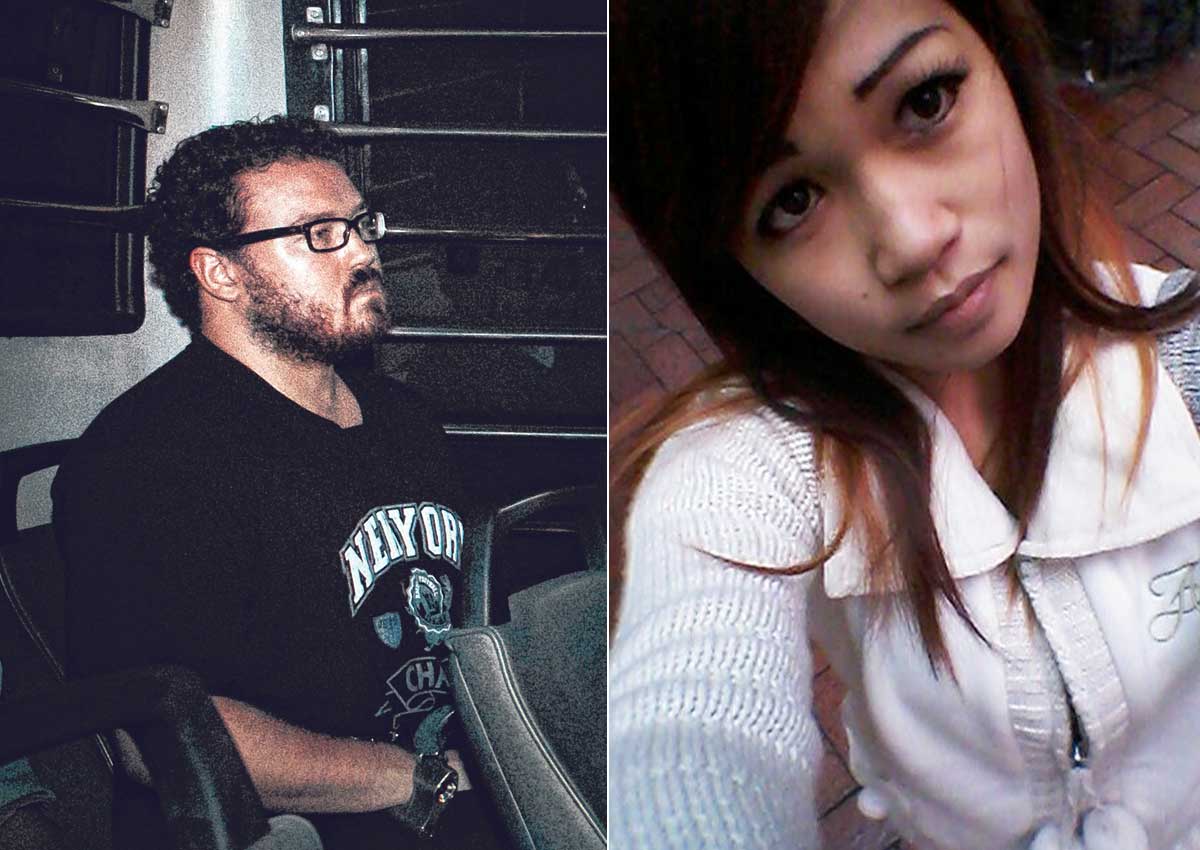
The murderer, British investment banker Rurik Jutting, was sentenced to life in prison yesterday.

Upon hearing news of the verdict, Mr Suyitno, 27, said his family could finally feel “relief” after two years of waiting.

Speaking in Bahasa Indonesia, he said: “We as a family are happy with the verdict and we’re thankful to the government which took our family’s side.”

But he added that his family intends to ask for compensation and will be consulting their lawyers.

Mr Suyitno, who is unemployed, said his sister would occasionally visit her son, Muhammad Hkafiz Arnovan, bearing toys and clothes.

The boy, now five, would happily accept these presents from the woman he called “auntie”, without knowing she was his mother.

He was taken care of by Mr Suyitno’s parents, and to him, they were his parents.

Mr Suyitno said Ms Ningsih never came home empty-handed.

He said: “When she came back, she would bring clothes or toys for her son, even though he did not know who she really was.

“She just wanted the best for him.”

Mr Suyitno said they have since told the son that the “auntie” will not come home with presents again.

Mr Suyitno described his sister as a “happy and fun person” whose top priority was her family.

To support her family, she started working at a young age as a babysitter and cleaner.

Despite being away, Mr Suyitno said his sister “never forgot” about her family.

She would regularly send back money and would always remind her family to “give Hkafiz what he wanted”.

ODD JOBS

The family of four now survives day-to-day by doing odd jobs.

In the two years since Ms Ningsih was murdered, Mr Suyitno said his family had always stayed away from news about the investigations or the trial because the grisly details were too much for them to bear.

“People would come up to us and give us updates. To be polite, my family would listen but would never ask to find out more,” he said, his voice cracking.

He added: “Each new piece of information was too horrific to imagine. We did not seek it out.

“We just want good memories of her.”

‘He’s an extreme danger to women’

The judge called his actions “sickening in the extreme and beyond a normal person’s imagination”.

The gruesome tale of torture, rape and murder, which played out in the Hong Kong High Court over 10 days, came to a predictable end yesterday.

British investment banker Rurik Jutting, 31, was sentenced to life in prison for the 2014 murder of two Indonesian women – Ms Sumarti Ningsih, 23, and Ms Seneng Mujiasih, 26.

The four women and five men who made up the jury returned unanimous verdicts on both counts after less than six hours of deliberation yesterday, pronouncing Jutting guilty of both murders.

As soon as the verdicts were delivered by Justice Michael Stuart-Moore, the crowded public gallery broke out in applause.

The court room was packed to the brim with people who included local and foreign journalists and migrant worker activists and was so full that the doors could not be closed.

Jutting, who was clean-shaven and dressed in a blue collared shirt and dress pants, remained expressionless as the sentence was read out.

As he was escorted out by security personnel, he breathed heavily and furrowed his brows.

Before sentencing him, Justice Stuart-Moore said that Jutting was an “archetypal sexual predator” who presents an “extreme danger to women”.

“There are insufficient superlatives to describe what he did,” he added.

‘I’M SORRY’

Jutting, in a handwritten statement read by his lawyer Tim Owen, expressed horror and remorse at his own crimes, saying he remained “haunted” by what he had done.

“My actions… were horrific even by the standards of a homicide drama,” his statement said, noting that he had caused “acute pain” to the victims’ families.

“The evil I have inflicted can never be remedied by me, in words or actions… For whatever it may be worth… I’m sorry beyond words.”

His lawyers told the court that Jutting will apply to serve his sentence in Britain, where prisoners can, in some cases, apply for parole after a fixed number of years.

Such transfers are possible under the Transfer of Sentenced Persons Agreement between Hong Kong and Britain.

Justice Stuart-Moore acknowledged the application, but said he would inform the British authorities of “exactly what type of danger he (Jutting) poses”.

The case had grabbed headlines worldwide for the brutal manner in which the former Bank of America Merrill Lynch employee had killed his helpless victims at his upscale Wan Chai district apartment.

The women had gone to his apartment after he offered them money for sex.

Fuelled by cocaine and alcohol, he tortured Ms Ningsih for three days and recorded parts of the torture on his phone. The jury was forced to watch the clips.

Jutting killed her by slashing her throat in his bathroom. He then stuffed her body into a suitcase which he stored on his balcony.

In hours of self-recorded ranting on his iPhone after Ms Ningsih’s murder, Jutting described his attacks on her using pliers, sex toys and a belt.

Days later, he murdered Ms Mujiasih by slashing her throat in his living room. Both women were found dead in Jutting’s flat on Nov 1, 2014, after he called the police.

Jutting denied the murder charges and claimed trial when he pleaded guilty to a lesser charge of manslaughter on the grounds of “diminished responsibility” due to alcohol and drug abuse and sexual disorders at the time of the killings.

But over the course of the trial, the prosecution argued that he was able to form judgments and exercise self-control before and after the killings.

harizbah@sph.com.sg

hpeishan@sph.com.sg


This article was first published on Nov 9, 2016.
Get The New Paper for more stories.

Image: 
Category: 
Publication Date: 
Wednesday, November 9, 2016 – 21:00
Send to mobile app: 
Source: 


Rotator Image: 
Story Type: 
Others

Source link

Trump takes the White House

0

Donald Trump will become the United States’ 45th President after his Democrat opponent, Mrs Hillary Clinton, conceded the presidency on Wednesday afternoon (Nov 9, Singapore time).

Mrs Clinton’s concession came as Mr Trump came within 13 electoral votes of winning, with key wins in states such as Florida, Ohio and North Carolina.

According to the CNN, Mr Trump won 48 per cent of votes while Mrs Clinton garnered 47.2 per cent.

Mr Trump’s victory completed a clean sweep for the Republican party, which retained its control over the US House and Senate.


Mr Trump addresses the crowd at his election night rally in New York. PHOTO: REUTERS

News of the 70-year-old’s shock win triggered a plunge in global stock markets.

The Straits Times reported that Singapore’s Straits Times Index had dropped a further 1.4 per cent at 3.40pm to  2,781.31 points following an earlier 2.3 per cent plunge.

The Tokyo Nikkei Index fell by 5.4 per cent by the close of trade.

The US dollar also dropped by several percentage points against other major currencies.

The Mexican peso, which has been linked closely to the US elections due to Mr Trump’s anti-Mexican stance, crashed by 13 per cent.

Source link

Stocks slide, ATMs run dry after India rupee shock

0

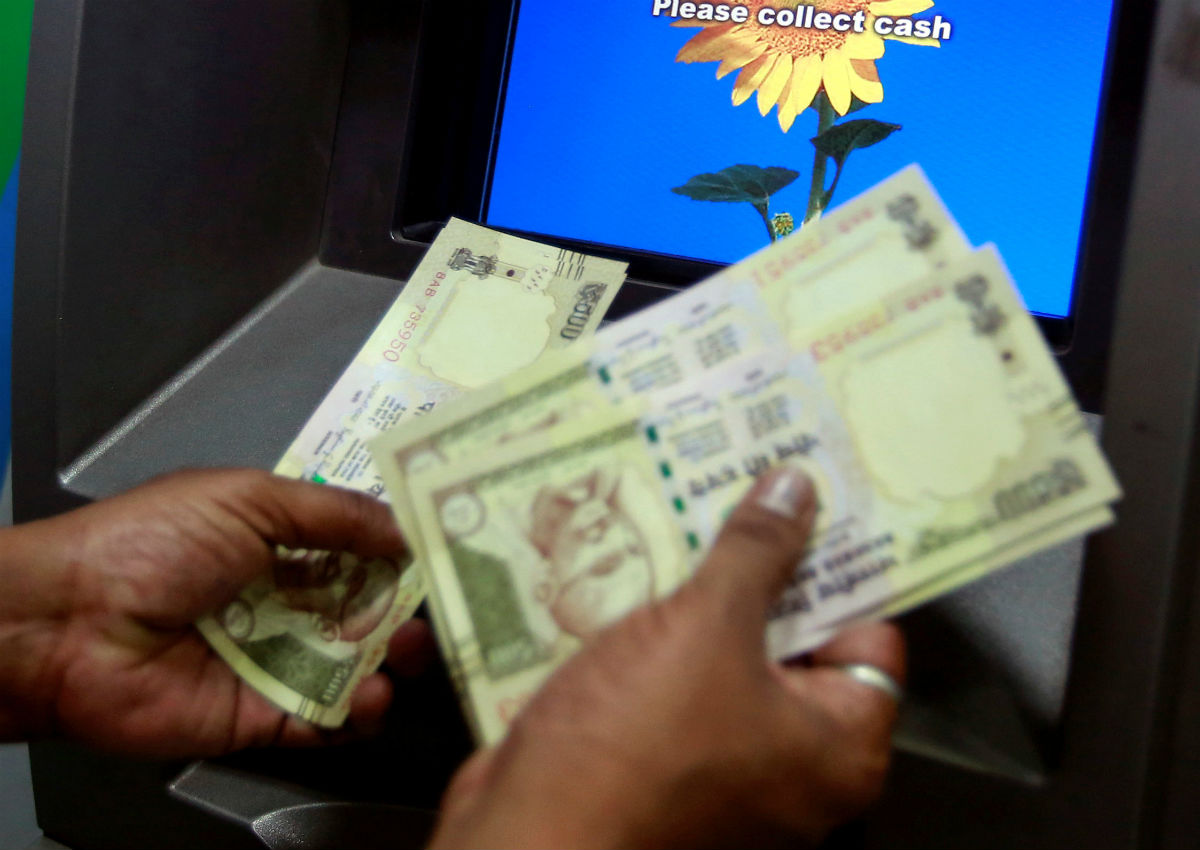
Cash machines ran dry and stocks tumbled in India Wednesday after Prime Minister Narendra Modi ordered the withdrawal of 500 and 1,000 rupee notes from circulation in a dramatic blitz on tax evasion.

In a televised address to the nation late Tuesday, the Indian premier announced the notes would no longer be legal tender from midnight in order “to break the grip of corruption and black money”.

The government plans to print new 500 and 2,000 rupee notes, which will be rolled out later in the week.

All banks and cash machines were ordered to close on Wednesday in preparation for the turnaround, triggering a late night rush by customers to withdraw smaller notes from ATMs.

Customers will be able to exchange their old bills for new notes or deposit them into their accounts but face the prospect of major scrutiny by tax authorities if they cannot account for a sudden swell in their balance.

While the move was praised by business leaders and commentators, Indian stocks plunged six per cent in early trade – a fall also partially attributed to uncertainty sparked by Donald Trump’s surprise strong showing in the US election.

Commentators warned the markets would react negatively to Modi’s shock move.

“With the noose tightening on black money, the consumption story goes for a complete toss,” market analyst Ambareesh Baliga told The Hindustan Times, predicting stocks would take a big hit.

Major queues built up outside cash machines ahead of the midnight deadline as customers tried to withdraw 100 rupee bills.

There was also a rush by motorists to gas stations, which will continue to accept the old bills until the end of the week as will transport operators and hospitals.

The 500 and 1,000 notes, which are worth around $7.50 and $15, are the largest bills in use in India which is still a massively cash intensive economy.

“I waited for 20 minutes in a queue at the ATM outside my office,” Delhi resident Puneet Raheja told AFP.

“The person in front of me made a total of 18 transactions on multiple ATM cards, withdrawing cash in only 100 rupee notes.” Many machines ran out of cash before midnight while other customers had to trudge away disappointed after failing to access their funds in time.

Ashok Kumar, who rushed to a gas station after Modi’s speech, found around 50 people ahead of him in the queue.

“I had to wait almost 40 minutes to get my tank filled,” he said.

Delhi resident Surjeet Singh, who was heading to a family wedding in Punjab, had to beg friends to give him smaller bills.

“I have to collect as many 100 rupee notes as I can before I leave,” he said.

“It’s a wedding in a small town and plastic doesn’t work everywhere.” While the use of debit and credit cards has increased in the last decade in India, many small businesses insist on taking cash to evade tax or else ask for mark-ups to cushion the blow.

Some $439 billion left the country illicitly from 2003-2012, according to estimates from the Global Financial Integrity group in Washington.

Many of India’s wealthiest citizens channel money to tax havens and convert it into jewellery and antiques to avoid tax.

Domestically, targets for investigation include temples and ashrams, where lavish donations can be a front for money laundering, and cricket betting. The property sector too is awash with black money.

Only 2.89 per cent of Indians pay any income tax at all, India’s previous finance minister told parliament in 2013.

Since coming to power in 2014, Modi has pledged to crack down on so-called black money with a series of new measures, including 10-year jail terms for evaders.

The latest announcement comes a little over a month after the government raised nearly US$10 billion through a tax amnesty for Indians to report undeclared income and assets.

“This is a logical next step in cleaning of the system and weeding out the black money,” said Dhiraj Relli, chief executive of the India-based brokerage HDFC Securities Limited.

“This will clean up the real estate sector and bring down the cost of doing business… As there will be no motivation to generate black money, the economy will see more inflows and the GDP will go up.”

Image: 
Category: 
Publication Date: 
Wednesday, November 9, 2016 – 13:29
Send to mobile app: 
Source: 


Hermes ID: 
2 729 174
Hermes ID String: 
JLRUPEE09
Hermes Author: 
LJESSICA
Story Type: 
Others

Source link

7-Eleven outlets made over to shake up convenience store arena

0

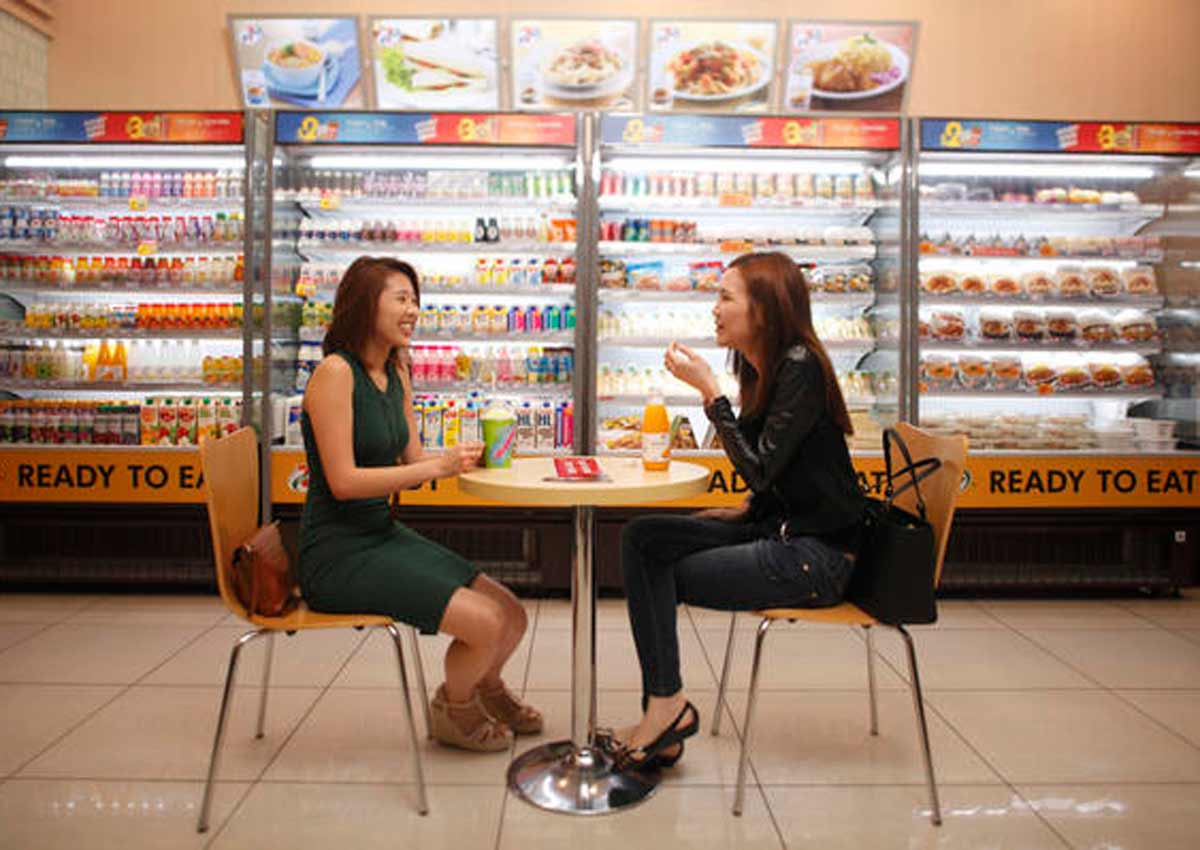
Singapore – Your neighbourhood 7-Eleven store will be getting a makeover. For starters, it could be up to 1.3 times larger than existing stores – about 800 sq ft, or nearly the size of a badminton court.

It is where you could pick up a freshly-prepared meal, take a seat or even meet friends.

These are among the ways the country’s largest convenience store chain is keeping up with disruption – by being a disruptor itself – even as the incumbent in a traditional, now-ubiquitous business.

Steven Lye, chief operating officer for 7-Eleven Singapore, made no bones about this in a recent interview with The Business Times.

The chain intends to do this by emulating aspects of the Japanese convenience stores, which are known to be “top notch”, by stocking premium products, introducing seating areas, and creating an entirely new range of fresh-chilled, ready-to-eat meals delivered to the store daily. This is quite a step-up from 7-Eleven as a pitstop everyone knows for only basic, everyday items.

It got its name in 1946, from its stores staying open daily between 7am and 11pm. Its move to stay open 24 hours started in 1963.

In Singapore, the chain is run by the Dairy Farm Group, and now has a network of more than 430 outlets.

Mr Lye said: “We want to convey the message that we are no longer just a place for small needs. We want to be at the top of our customers’ minds.”

Besides fresh-chilled, ready-to-eat meals, 7-Eleven Singapore’s expanded, elevated range of products include lifestyle products and even IT gadgets. It has also added 7-Connect lockers, self-collection stations where parcels from online shopping can be picked up, and cash-withdrawal machines hosted by the major banks.

In July, 7-Eleven invested S$350,000 in a branding campaign with the tagline “There’s Always 7-Eleven”, seeking to shift customer perception of its outlets from that of a stop for basic needs to a one-stop shop for groceries, toiletries, bill payment, cash withdrawals and more.

Mr Lye said: “In order to accommodate the extensive additions, future 7-Eleven stores will have an area of about 800 sq ft where possible.”

He added that the items sold at each store will depend on its location. Those in tourist haunts such as Orchard Road and Marina Bay will stock backpacks, suitcases and souvenirs; its Marine Parade outlet near the East Coast Park will sell kites.

Tech developments are also in the pipeline, said Mr Lye. One is a loyalty app named 7-Rewards, due to roll out next year; through this, regular customers can redeem free gifts or buy products at discounts after they have run up a certain level of spending.

Another new tech service is the 7-Connect Kiosk, a self-help machine for quicker bill payments; 7-Eleven counters will also accept wave-payment methods such as Apple Pay, Android Pay and Visa Paywave.

Mr Lye said the company has opted for an “invigorating direction” by refreshing the aesthetics of its existing stores; the larger outlets will also have enough space for seating areas for customers to enjoy their purchases on the spot.

“As a brand, we understand the importance of keeping up with the times and constantly evaluating the needs of customers. Hence, we have made a conscious effort to innovate.”

He is particularly excited about the new range of fresh-chilled, ready-to-eat meals. These are prepped and delivered upon order to ensure freshness, and will replace the current range of frozen-thaw meals by the first quarter of 2017.

He said: “The tech behind the new fresh-chilled meals is a strong value proposition that we are introducing to the market. Over the past 18 months, we have embarked on a strategy to take these ready-to-eat meals to a whole new level.”

The meals are said to utilise superior ingredients and authentic flavours, and have a shelf life of two days, compared to five days for the current frozen-thaw range in stores.

The fresh-chilled meals come in clear packaging so that their quality and freshness can be seen.

Current flavours include Hainanese chicken rice, braised duck rice, butter chicken biryani as well as three flavours of premium Japanese pastas. Mr Lye said that come 2017, 7-Eleven Singapore customers can expect over 40 different flavours.


This article was first published on November 9, 2016.
Get The Business Times for more stories.

Image: 
Category: 
Publication Date: 
Wednesday, November 9, 2016 – 14:00
Send to mobile app: 
Source: 


Story Type: 
Others

Source link

Ex-BSI banker trial: Accused was messenger, says lawyer

0

A lowly messenger or a key player? That question took centrestage at the trial of former BSI banker Yeo Jiawei, 33, yesterday with conflicting portraits of his alleged role in a complex money-laundering scheme.

Yeo’s lawyer, Mr Philip Fong, suggested his client was a minor player in business dealings with Malaysian tycoon Low Taek Jho and Mohamed Ahmed Badawy Al-Husseiny – two key figures in the 1Malaysia Development Berhad (1MDB) scandal.

Mr Fong made the suggestion while cross-examining prosecution witness Jose Renato Carvalho Pinto, a relationship manager with financial services firm Amicorp.

On Monday, Mr Carvalho described how Yeo began to enjoy the high life once he linked up with Mr Low and Al-Husseiny, a former high-level official of Abu Dhabi state fund International Petroleum Investment Co (IPIC). Al-Husseiny, an American, has been detained by Abu Dhabi authorities and is awaiting extradition on 1MDB-related charges, media reports say.

But Mr Fong yesterday portrayed Yeo, who is facing four counts of obstructing justice, as someone merely “relaying instructions” to Amicorp on behalf of Al-Husseiny. Mr Carvalho agreed when Mr Fong put it to him that Al-Husseiny was the one who gave instructions to Yeo.

“So Yeo was just an intermediary and messenger,” Mr Fong said.

Mr Carvalho replied: “A messenger doesn’t fly private jet … He was staying at (Emirates) Palace Hotel and flying private jet. He was not a DHL messenger.” Emirates Palace is a five-star luxury hotel in Abu Dhabi, which Mr Carvalho said Yeo had name-dropped when “talking big about spending nights in expensive hotels”.

Mr Fong maintained that Yeo was not given any power of attorney, and had no authority to make decisions on behalf of clients.

But Mr Carvalho said Yeo was “not only involved in wire transfers, or scheduling voice mails”. He testified that Yeo had told Amicorp how to structure funds for fake entities supposedly linked to the legitimate Aabar Investments PJS.

Prosecutors say four of these fake entities were set up, all with identical or almost identical names to Aabar Investments PJS, a unit of IPIC, with the intent to confuse. Al-Husseiny was director of these bogus entities. Amicorp had also set up bank accounts for one of them. These include Aabar International Investments PJS Ltd (BVI) and Aabar Investments PJS Ltd (Samoa).

Mr Carvalho said yesterday: “Yeo was working on the restructuring of funds for these Aabar entities. He had a plan on how to restructure the funds.”

He testified that Amicorp, relying on information from Yeo, had concluded two of the Aabar entities were owned by the IPIC unit, and so were legitimate.

Among the fake entities was Aabar Investments PJS Ltd based in the British Virgin Islands. It has not been named in the trial but is reported to have received US$3.5 billion (S$4.9 billion) from 1MDB.

Mr Carvalho said he suspected these entities were bogus after IPIC told the London Stock Exchange in April it did not own the entity based in the British Virgin Islands.

gleong@sph.com.sg


This article was first published on November 9, 2016.
Get a copy of The Straits Times or go to straitstimes.com for more stories.

Publication Date: 
Wednesday, November 9, 2016 – 12:41
Keywords: 
Send to mobile app: 
Source: 


Story Type: 
Others

Source link

Protecting Ellison Building: Talks in progress

0

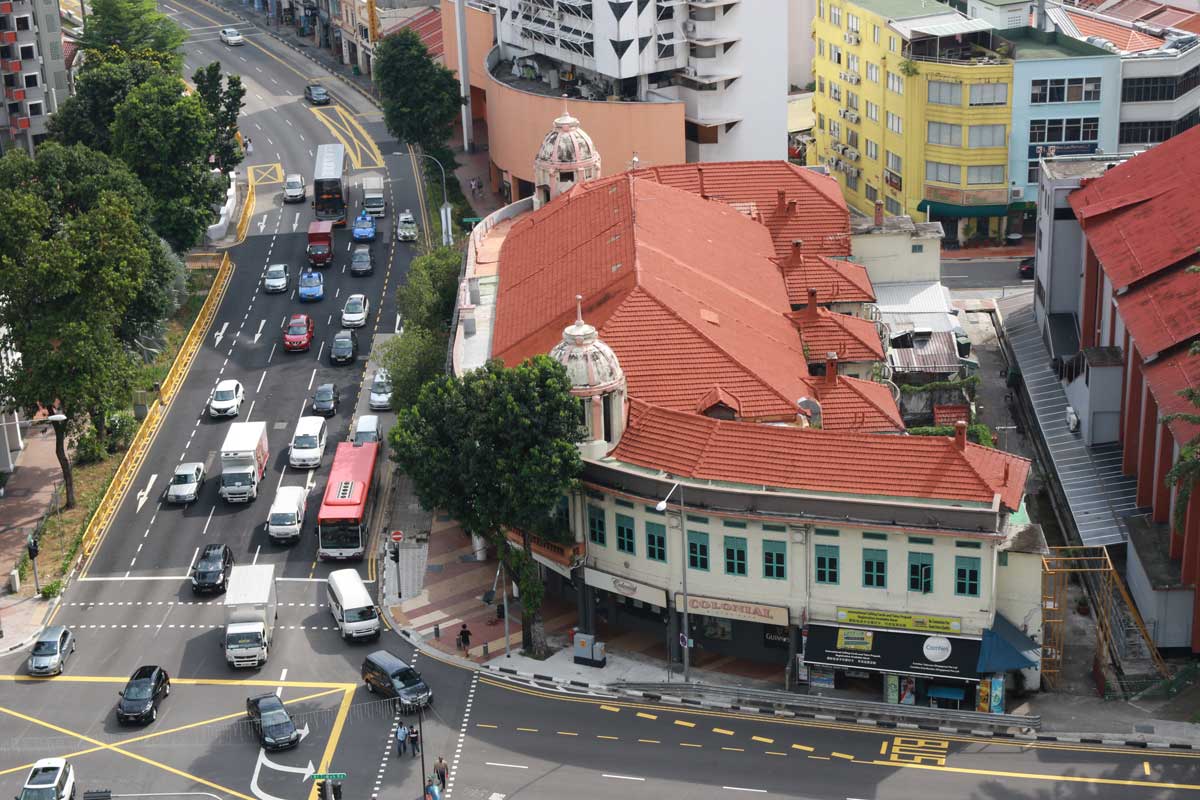
The authorities will continue to engage heritage groups regarding the conserved Ellison Building which will be affected by the development of the North-South Corridor.

Mr Desmond Lee, Senior Minister of State for Home Affairs and National Development, said in Parliament yesterday that the agencies involved will “work closely” with the heritage community on the construction methods to protect Ellison Building and “measures that should be taken to preserve the heritage and history of the site”.

He said the Government will finalise its implementation plans for the building, which lies at the junction of Selegie Road and Rochor Canal Road, after these discussions.

In August, the Urban Redevelopment Authority (URA) and Land Transport Authority (LTA) had said that one of Ellison Building’s nine units would be torn down and later rebuilt, to make way for the construction of the corridor.

This led to widespread concern and appeals from the heritage community.

The 1924 landmark was constructed by Romanian Jew Isaac Ellison and is known for its cupolas, as well as the Star of David on its facade.

The Straits Times previously reported that during engagement sessions with the agencies last month, experts had suggested other possible ways to avoid the demolition and reconstruction option.

These included propping up the structure and strengthening its foundation while the corridor, a 21.5km expressway connecting estates in the north to the city centre, is built, and providing underpinning support for the building while works are being done.

Mr Lee said the original alignment of the corridor would have affected more buildings such as the iconic Rex Cinema, and more units of the Ellison Building.

But because the authorities recognised their heritage value, detailed engineering studies were done “over many years” to minimise the impact on them.

On that basis, URA gazetted Rex Cinema and Ellison Building for conservation in 2008, knowing impact would be minimal, with a commitment to ensure any potential impact would be mitigated.

Mr Lee also said it had been the intention of the agencies to hire a conservation specialist after it issued the design and build pre-qualification tender to invite applications from contractors for the corridor.

He said the authorities have also met representatives from the heritage community twice.

Nominated MP Kok Heng Leun asked if the agencies had considered realigning the corridor to avoid the Ellison Building when the alignment plan for the corridor was first announced in 2011.

In response, Mr Lee said it was not possible to avoid the Ellison Building since public infrastructure criss-crosses underneath the area. He said Rochor Canal runs under one side of Bukit Timah Road. He also noted that the North-East MRT Line cuts across Bukit Timah Road, while the Downtown MRT Line runs beneath Bukit Timah Road. He said the tunnel cannot be lowered further into the ground to avoid the underground infrastructure as doing so will affect the MRT stations and even more buildings. Mr Kok also asked if engagement with non-governmental organisations could happen more upstream, and if the ministry would consider making cultural impact assessments to include heritage, the environment, economy and social elements as mandatory for development projects.

Mr Lee highlighted the National Heritage Board’s ongoing survey of sites and landmarks as a first step towards a more long-term strategic plan for heritage planning.

On cultural impact assessments, he said “this is something we need to study carefully”.


melodyz@sph.com.sg


This article was first published on November 9, 2016.
Get a copy of The Straits Times or go to straitstimes.com for more stories.

Image: 
Category: 
Publication Date: 
Wednesday, November 9, 2016 – 17:00
Send to mobile app: 
Source: 


Story Type: 
Others

Source link