Home Blog Page 2358

Opportunity for China to play bigger global role

0

A Donald Trump presidency could open doors for China to take on a bigger global role, especially in promoting trade and fighting climate change, given the United States President-elect’s disdain for these two issues, say Chinese observers.

Already, Beijing is talking up the need for a China-led regional trade pact at the Asia-Pacific Economic Cooperation (Apec) Summit in Peru this coming weekend.

The observers say this is a chance for China to step up efforts to win support for its own free trade pacts.

China’s influence and voice is likely to increase in global climate governance, which will then spill over into other areas of global governance and increase China’s global standing, power and leadership.

DR ZOU JI, deputy director of the National Centre for Climate Change Strategy and a senior Chinese climate talks negotiator. “With the TPP (Trans-Pacific Partnership) deal effectively dead, the more feasible deal will be the RCEP (Regional Comprehensive Economic Partnership),” China’s Commerce Ministry researcher Mei Xinyu told The Straits Times.

The 16 members of the China-led pact will want to see the pact sealed quickly as most are highly dependent on trade, he said.

“This will contribute significantly to the growth and stability of the region,” he added.

In an editorial yesterday, the state-run China Daily told the US: “Rest assured, the sky will not come tumbling down even if the TPP does get killed at the hands of the next president.”

Advising the new US administration to be a part of China’s initiative instead, it said: “Washington may want to take advantage of the nascent, evolving platform and become involved from the rule-making stage.”

Besides the RCEP, which currently excludes the US, Beijing has also set its sights on a bigger trade deal that includes all 21 Apec members.

Known as the Free Trade Area of the Asia-Pacific (FTAAP), the deal promises greater benefits than those of other regional trade pacts currently under negotiation. Singapore, an Apec member, is also part of both the TPP and RCEP.

Chinese officials say Chinese President Xi Jinping will attend the Apec meeting this weekend with the aim of pushing for more regional co-operation. China also hopes to see more progress in FTAAP discussions.

Climate change is another area where China could replace the US as the global champion, say some observers.

Mr Trump has reportedly threatened to pull the US out of the Paris pact to fight global warming, which nearly 200 countries signed.

“China’s influence and voice is likely to increase in global climate governance, which will then spill over into other areas of global governance and increase China’s global standing, power and leadership,” Dr Zou Ji, deputy director of the National Centre for Climate Change Strategy and a senior Chinese climate talks negotiator, told Reuters.

But this leadership role is not without costs, and China may not want to go down that path, said Dr Chen Gang, a senior research fellow at the East Asian Institute of the National University of Singapore.

“I don’t think China will want to take on more aggressive responsibilities for it will constrain growth,” he said.

With the world’s other leading carbon emitter – the US – out of the picture, China would be loath to be the lone party making the sacrifice.

“Countries are usually hesitant to commit unless the competitors also take on similar obligations. For China, an improvement in international image may not be enough to outweigh the economic interests that are at stake,” he added.

While China is ambivalent about taking up global leadership roles, it is likely to welcome the chance to take on a bigger role regionally.

For a Trump-led US could also see the superpower shift its strategic focus away from the region, which will benefit China, said analysts.

Said Dr Chen: “China will face less pressure over the East and South China Sea issues as well as Taiwan, and this will give it an opportunity to play a bigger role in the region.”


This article was first published on November 16, 2016.
Get a copy of The Straits Times or go to straitstimes.com for more stories.
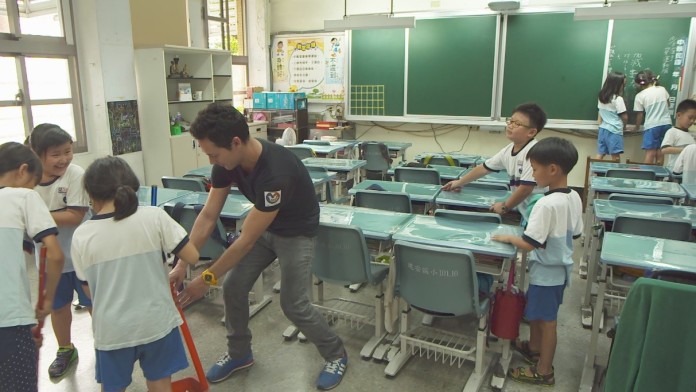
Image: 
Category: 
Publication Date: 
Wednesday, November 16, 2016 – 13:55
Keywords: 
Send to mobile app: 
Source: 


Story Type: 
Others

Source link

Are fewer dustbins, not fines, the better way to curb littering?

0

SINGAPORE: Despite years of anti-littering campaigns and penalties, the number of fines meted out for littering last year hit a six-year high – leading some to ask if there is a better way to keep Singapore clean, and not cleaned.

Some 26,000 tickets were issued by the National Environment Agency (NEA), and 7 in 10 litterbugs caught were Singaporean.

While litterbugs can be fined up to S$1,000 for a first offence and S$5,000 if caught again, as well as face serving Corrective Work Orders, behavioural psychologist Geraldine Tan thinks such deterrents don’t help to effect long-term change in behaviour.

“We don’t internalise (it) because of the negative association. I don’t know how to stop the behaviour; I just know I need to stop. Then on top of that, I get angry, I feel ashamed, embarrassed and resentful.

“So the next time, some people might want to take revenge.  You’re not looking? I would just throw. That is even worse,” said Dr Tan in an interview with Channel NewsAsia’s It Figures programme. (Watch the episode on littering here.)

FEWER DUSTBINS PLEASE?

Could Singapore learn from the successes of places such as Japan and Taiwan in shaping people’s habits instead? Start, perhaps, with removing some dustbins, counter-intuitive as that might seem.

The city of Taipei, for example, has fewer than 2,000 dustbins in public areas – that’s one bin for almost every 1,300 citizens. Compare that to Singapore, where there are around 10,000 street dustbins provided by the NEA – one for roughly every 540 citizens.

Mr Jui-Hsi Yen, section chief of the Department of Waste Management at Taiwan’s Environmental Protection Agency (EPA), said: “You’ll rarely find public dustbins (in Taipei). That’s because if the public keeps throwing their trash in and around the bin, that area would be dirty and messy. When the wind blows, some trash may float away.”

WATCH: How Taiwan went from ‘garbage island’ to one of Asia’s cleanest, in under 20 years.

The Japanese, for instance, carry a plastic bag with them for rubbish, Dr Tan noted. “If their kids eat sweets or anything like that, it goes into the plastic bag until they go home.”

But in Singapore, it could take a while for this habit to catch on. According to a 2011 study on littering commissioned by the Public Hygiene Council, one in five Singaporeans think that it is the cleaner’s fault if a street is dirty. More than half agree that the country is clean only because of its many cleaners.

Edward D’Silva, chairman of the Public Hygiene Council, says that Singaporeans have grown too comfortable with the fact someone will always be there to clean up after them. “They took all these things for granted,” he told It Figures.

However when citizens “are responsible for their own litter, it makes it easier for the Government to ensure that it doesn’t have to spend too much on employing cleaners”. “This money could have been spent better on improving the lives of citizens,” he added.

STUDENTS CLEAN UP IN SCHOOLS

But the secret behind Taiwan’s cleanliness is not just having fewer dustbins.

In the 1990s, the EPA introduced a zero-waste policy which encouraged the public to recycle. It also started charging for garbage bags that citizens must use to dispose of general waste, called for food packaging to be minimised, and banned disposable tableware from schools and government agencies.

This approach, coupled with strict fines for littering (as well as rewards for those who inform on litterbugs), made the Taiwanese more aware of the rubbish they create – and more responsible for the cleanliness of their environment.

The Taiwanese also start cultivating good habits early. Across the island, students between 3 and 12 years old spend about 20 minutes each day cleaning their classrooms. Older students take part in voluntary cleaning projects in their schools throughout the year.

In Singapore, many schools already include five to 10 minutes of cleaning by students. According to the Ministry of Education, by the end of this year, it will be compulsory across all schools. Schools are free to decide on what these daily activities should be and when they take place.

Watch the full episode on Toggle here. Catch new episodes of It Figures every Monday at 8pm SG/HK.

Source link

Cirque Adrenaline

0

As the holidays are fast approaching, treat your kids to some thrilling family entertainment with Cirque Adrenaline! Known for their theatrical flair and heart-stopping stunts, be prepared for an adrenaline pumping experience!

Find out more about Cirque Adrenaline at http://www.sistic.com.sg/events/ad1216

Cirque Adrenaline

Adrenaline is a jaw-clenching show featuring the world’s most dangerous and death-defying theatrical acts, guaranteed to get the adrenaline pumping. The world’s most exciting theatrical show will include heart-stopping motorbike stunts, high-flying trapeze artists, strong men, aerial acrobatic displ…

Source

Motor dealership fails to deliver cars after former employee allegedly misappropriated over $400,000 in deposits

0


After two months of delays and frustration with troubled car dealer Royal Automotive, Ms Jenny Tay was promised a refund of more than $47,000. But to her dismay, the cheque bounced when she tried to deposit it on Monday.

Despite several calls and messages, she could not reach the boss of Royal Automotive.

To make matters worse, Chinese daily Lianhe Wanbao reported yesterday that the lease of Royal Automotive’s Woodlands showroom will end this month.

When contacted by The New Paper yesterday, director of Royal Automotive, Mr Syed Khairil, 27, admitted it was facing cashflow issues, but insisted it was still in operation and was looking for a new location for its showroom.

WORKING CLOSELY

On the issue of the bounced cheque, he said it is working closely with the affected customer to resolve her issue as soon as it can.

Royal Automotive’s financial problems come even as its former employee, Chua Peng Jun, was charged in court today with criminal breach of trust.

TNP understands that at least 20 victims have made police reports against Royal Automotive.

Similarly, the Consumers Association of Singapore (Case) has received 20 complaints about the car dealer since July.

Executive director of Case, Mr Seah Seng Choon, said the number of complaints against parallel importers is not large, but it has seen more complaints recently.

Last week, Case told The Straits Times that it was considering whether it should flag Royal Automotive because of the number of complaints.

Mr Syed said he will be meeting over 40 customers this week to explain the situation to them.

He said: “We will try our best to help affected parties with the delivery of their cars, but we must operate in line with our legal obligations.

“We continue to be contactable at our office or through Facebook.”

Read also: Dealer who sold 27 cars at 2008 pasar malam hasn’t sold a car in 9 days

According to checks with the Accounting and Corporate Regulatory Authority (Acra), Royal Automotive was registered last November.

Two affected customers approached by TNP said they were attracted to Royal Automotive because of its lower prices, which are about $10,000 below the market rate.

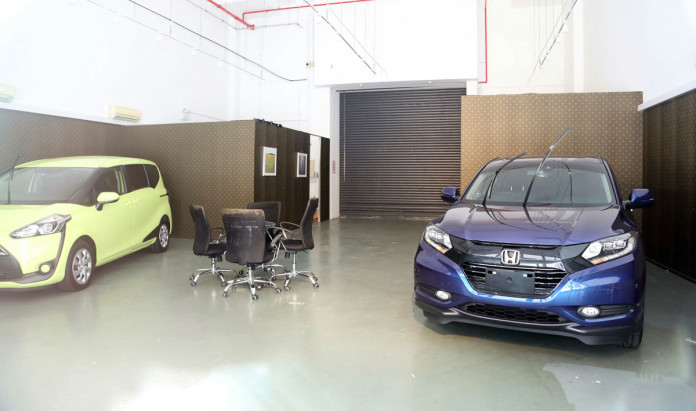
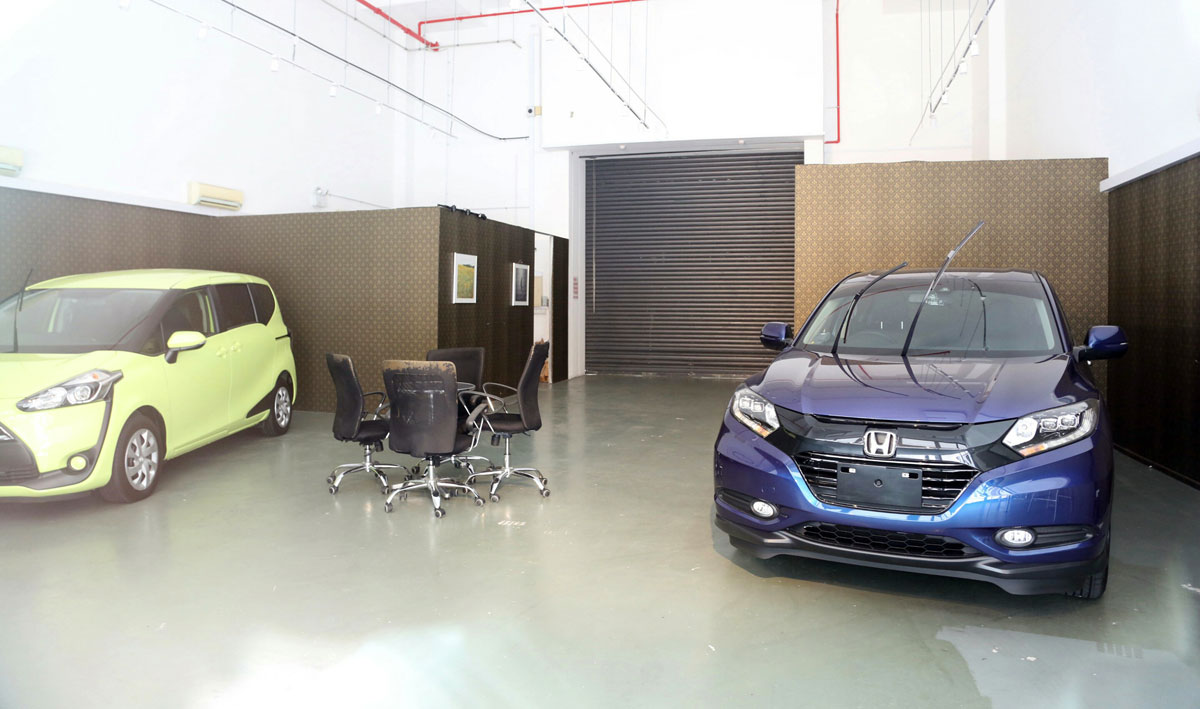
Ms Tay, who declined to reveal her occupation, had booked a Honda Vezel in May.

She was supposed to get the car by the end of August after trading in her old car.

She said: “I was initially sceptical so I asked them to show me their other invoices. They had proof that they were able to deliver the cars.

“It is a lesson learnt. I will make sure that the car is in the showroom before putting down any money.”

A customer, who wanted to be known only as Melvin, 40, also admitted that he should have done more research.

He scrapped his old car in anticipation of a new Honda Vezel by mid-October.

He said: “I work in sales so I really need a car. But I already paid a deposit of $20,000 and I have no choice but to hope for the best.”

More dealers flagged recently

Several parallel importers have been flagged by the Consumers Association of Singapore (Case) in recent months.

Case’s latest alert on Nov 4 was on TLC Cars, located at Turf Club Road, which received eight complaints.

Most customers complained that they had made partial or full payment for the purchase of a car, but did not receive the car on the promised delivery date.

Consumers have also told Case that the business owner is uncontactable and that the premises of the business had been vacated.

On Oct 31, Case issued an alert about De Auto Boutique and Exodus Global, which received 41 complaints from January to last month.

The complaints were mainly about consumers paying a deposit (from about $5,000 to $30,000) to the company to secure the deal, but failing to receive the car on the promised delivery date.

SMALL NUMBER

Nonetheless, the number of complaints against parallel importers is small compared to the number of complaints about the motorcar industry.

In 2015, the industry had 2,907 complaints, the highest among all the industries, said Mr Seah Seng Choon, executive director of Case.

The majority of the complaints were about defective goods.

Mr Seah said: “Although the number of complaints against parallel importers is not large, we do see more recent complaints of such companies collecting deposits from consumers and either failing to honour the agreement or closing down and leaving consumers in the lurch.”

Mr Seah advised consumers to negotiate to pay as low a deposit as possible when purchasing a car and urged them to consider patronising CaseTrust-SVTA accredited motoring companies.

These businesses are committed to fair trading and have taken up a $50,000 insurance bond in the event of unresolved disputes.

Read also: Another car firm leaves buyers high and dry​

Car salesman charged with criminal breach of trust

A former sales representative of local parallel importer Royal Automotive was charged yesterday with misappropriating more than $400,000.

Malaysian Chua Peng Jun, 23, allegedly committed criminal breach of trust of the amount belonging to the importer between May 17 and Nov 9, reported The Straits Times Online.

He is believed to have collected sales deposits totalling $414,564 from customers and issued fake invoices to them.

A police statement on Monday said they had received several reports against a local car dealership company.

According to the reports, the dealer had failed to deliver automobiles to customers after receiving the sales deposits.

Ang Mo Kio police arrested the accused on Sunday. He will appear in court again on Nov 22.

If convicted, he can be jailed for up to 15 years and fined for criminal breach of trust as a servant.

Last Friday, Royal Automotive announced on Facebook that Chua was no longer working for it as a salesman.

linheng@sph.com.sg


This article was first published on November 16, 2016.
Get The New Paper for more stories.

Image:
Publication Date:
Wednesday, November 16, 2016 – 14:30
Send to mobile app:
Source:

Story Type:
Others

Source link

Passenger on life support after being hit by unknown object on open-top bus

0


A Swiss man who has lived in Singapore for the past six years was injured in a freak accident while on an open-top double-decker bus on Oct 29.

The New Paper understands that Mr David Vassart, who is in his late 20s, is a relationship manager and an assistant vice-president at Credit Suisse, a Swiss-based financial services company.

He was injured after he was hit on the head by an unknown object while standing on the upper deck of an open-top FunVee Wow Night Tour bus.

The double-decker bus is run by City Tours and takes passengers on tours of historic sites and museums.

The route starts at Gardens by the Bay, passes by Merlion Park and ends at Bugis Street.

Coma

TNP understands that Mr Vassart, who is from Geneva and married with a daughter, is in a coma and on life support at the Singapore General Hospital.

When contacted, a City Tours spokesman said the company had given details of the incident to the authorities and declined to comment further.

The Embassy of Switzerland also declined to comment.

One of Mr Vassart’s friends, who declined to be named, told TNP: “We were shocked when we heard about the accident a couple of days later. We’ve always known David to be a fun guy who likes to party.”

His LinkedIn profile said he moved to Singapore in 2010 to be an account manager with Credit Suisse.


This article was first published on November 16, 2016.
Get The New Paper for more stories.

Image:
Category:
Publication Date:
Wednesday, November 16, 2016 – 14:07
Send to mobile app:
Source:

Story Type:
Others

Source link

Moneylender's bid to bankrupt debtor charged 240% annual interest rate dismissed

0

The High Court has quashed a moneylender’s bid to bankrupt a debtor who had borrowed $350,000 on an annual interest rate of 240 per cent – a ruling that could cause ripples in the moneylending industry.

Mr Ang Boon Kim, sole proprietor of ABK Leasing, had applied to bankrupt company director Goh Meng Leong, who in 2014 took out two unsecured loans totalling $350,000. Despite having paid back $700,000 – twice the principal sum – in instalments between December 2014 and September last year, Mr Goh still owed nearly $900,000.

That meant his initial $350,000 loan had grown to $1.6 million, including around $1.25 million in interest and late fees.

Mr Goh had agreed to interest of 240 per cent a year or 20 per cent monthly, with late interest at the same rate and a late fee of $10,000 every time payment was missed.

At issue in court was whether the moneylender could treat Mr Goh’s repayments as settling the interest first, rather than the principal borrowed. If so, the principal sum would continue to incur the 240 per cent interest. The court can also intervene if the interest is excessive and the deal is substantially unfair.

Assistant Registrar Jacqueline Lee set aside the bankruptcy application in the closed-door session and ordered Mr Ang to pay $1,500 in costs to Mr Goh.

It is understood she considered, among other things, that Mr Goh’s repayments should first be applied towards reducing the principal sum, and not just to satisfy the interest due.

ABK Leasing declined comment.

Both men had inked the contract before changes to the Moneylenders Act took effect on Oct 1 last year. The changes limit the maximum interest rate moneylenders can charge to 4 per cent a month, regardless of the borrower’s income.

Before then, such loan terms as the ones for Mr Goh were allowed for borrowers earning at least $30,000 a year. His maximum loan amount was also unlimited as his declared annual income of $599,250 was above the stipulated $120,000 threshold, according to papers filed through East Asia Law.

The loans were on “open monthly” terms, meaning the borrower could keep the loan open by opting to pay only the interest.

But Mr Goh’s lawyer, Mr Sarbrinder Singh of Sanders Law, pointed out that his client had already paid about $700,000 which went towards the payment of the $350,000 principal sum and the interest. He said ABK was wrong in claiming it was used only towards interest due.

He argued it was not for Mr Ang to unilaterally decide which payments were used to settle the principal sum and which for interest.

He urged the court to set aside the deal as the 240 per cent interest rates were “exorbitant”and the contract was ” unconscionable”.

Mr Goh, 36, who shuttles between Singapore and London for his business in electronic recycling, said he was relieved, having had to sell his HDB flat to settle the payments.


This article was first published on November 16, 2016.
Get a copy of The Straits Times or go to straitstimes.com for more stories.
Image: 
Category: 
Blurb: 
<p>The High Court has quashed a moneylender's bid to bankrupt a debtor who had borrowed $350,000 on an annual interest rate of 240 per cent – a ruling that could cause ripples in the moneylending industry.</p>
Publication Date: 
Wednesday, November 16, 2016 – 14:02
Send to mobile app: 
Source: 


Story Type: 
Others

Source link

Retiree in coma after falling on Bishan MRT station escalator for the second time

0

He fell at the same spot twice at Bishan MRT station.

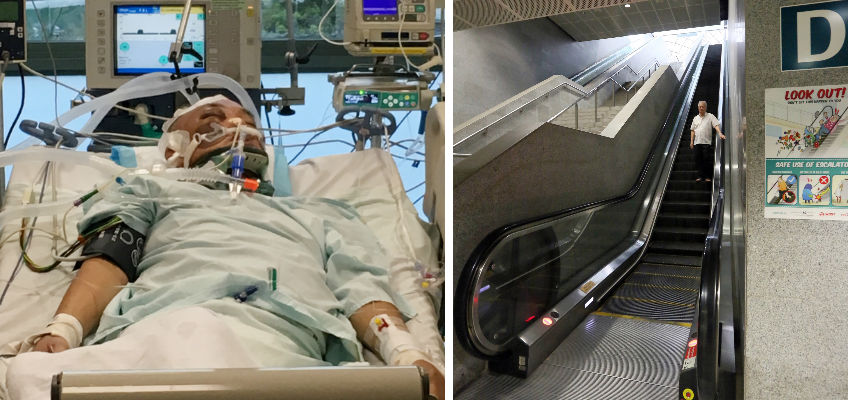
The first time it happened last Friday, Mr Lim Chwee Leong, 64, sprained his hand while breaking his fall as he was going up the escalator at Exit D.

The next day, the retiree, who is divorced, fell again at the same escalator.

This time he hit his head and was severely injured.

His son, Mr Lim Ka Hock, 46, told The New Paper yesterday that his father has been unconscious in Tan Tock Seng Hospital since the accident.

The freelance contractor said: “After the first fall, he came home and told us about it. He even said he was lucky that he didn’t hit his head.

“Who would have expected him to fall again at the same place on Saturday?”

His father had to undergo an emergency operation immediately after the accident to remove a blood clot in his brain.

A passer-by had seen his father fall backwards and hit his head while getting on the escalator that was going up, said Mr Lim.

He got up and continued riding the escalator. But he fainted as soon as he got off.

Mr Lim said that his father’s girlfriend had informed the family about his accident. When she called his mobile phone around noon, someone at the hospital answered and told her that he had been injured.

Doctors at the hospital told the family that a blood vessel in the older Mr Lim’s brain had ruptured after the accident, and a blood clot had formed.

“They said they had to operate immediately because the blood clot was putting pressure on his brain. He is relatively stable now and has been taken off the life-support machine. All we can do now is to wait for him to wake up,” he said.

SELDOM LEAVES FLAT

Mr Lim said he was not sure why his father, who rarely leaves their Bishan flat, was at the MRT station.

He added that his father was taking medication for high blood pressure, high cholesterol and diabetes. He had a heart attack 10 years ago.

“He is not very fit, especially because of his age, and might have fallen himself. What has happened has happened, and all we can do is pray that he gets well.

“To be honest, I am prepared for the worst.”

He said that his siblings would be meeting the doctors today to decide on their next course of action.

Mr Lim added that doctors told them that their father could be paralysed or remain in a vegetative state.

He hopes his father’s accident will remind others, especially the elderly, to be more careful when taking the escalator or stairs.

“It might be safer for people like my father to take the lift instead of the escalator as the speed might be too fast for them,” he added.

Mr Lim also said that an SMRT representative had visited his dad in hospital yesterday.

Replying to TNP’s queries, SMRT’s vice-president for corporate information and communications, Mr Patrick Nathan, said: “We are sorry this has happened. We are in touch with the family and providing assistance as best we can. The matter is being investigated.” A police spokesman said they were alerted to the incident at 11.34am on Saturday and found a 64-year-old man with head injuries.

The Singapore Civil Defence Force said the elderly man was taken unconscious in an ambulance to Tan Tock Seng Hospital.

Call to slow down escalators being evaluated

In August this year, a Public Transport Council report was released with recommendations to make rides more comfortable and less daunting for everyone, including families, seniors and wheelchair users.

One of the report’s key recommendations was the reduction of escalator speeds at train stations to give peace of mind to senior citizens who might be intimidated by fast-moving escalators.

In a report by The Straits Times on Aug 7, SMRT said it had been testing out slower escalator speeds at selected stations since July last year and was evaluating the possibility of reducing the speed of escalators at more MRT stations.

LOW NUMBER

The Land Transport Authority also said that from January to May this year, the number of escalator-related incidents at MRT stations “remained low” at 0.15 incident per one million riders, compared to 0.15 for 2014 and 0.14 for 2015.


This article was first published on November 16, 2016.
Get The New Paper for more stories.

Image: 
Category: 
Publication Date: 
Wednesday, November 16, 2016 – 14:09
Keywords: 
Send to mobile app: 
Source: 


Rotator Image: 
Story Type: 
Others

Source link

New reclamation method aims to reduce Singapore's reliance on sand

0

SINGAPORE: A new method of reclaiming land will be used on the northwestern tip of Pulau Tekong, and this aims to help Singapore reduce the amount of sand needed for such works and save on upfront costs.

The new method, called polder development method, will be adopted by the Housing and Development Board (HDB) for the project, announced National Development Minister Lawrence Wong during his visit to the polder site at Pulau Tekong on Wednesday (Nov 16).

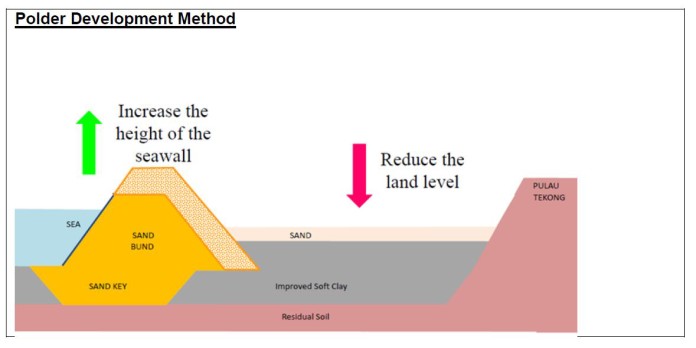
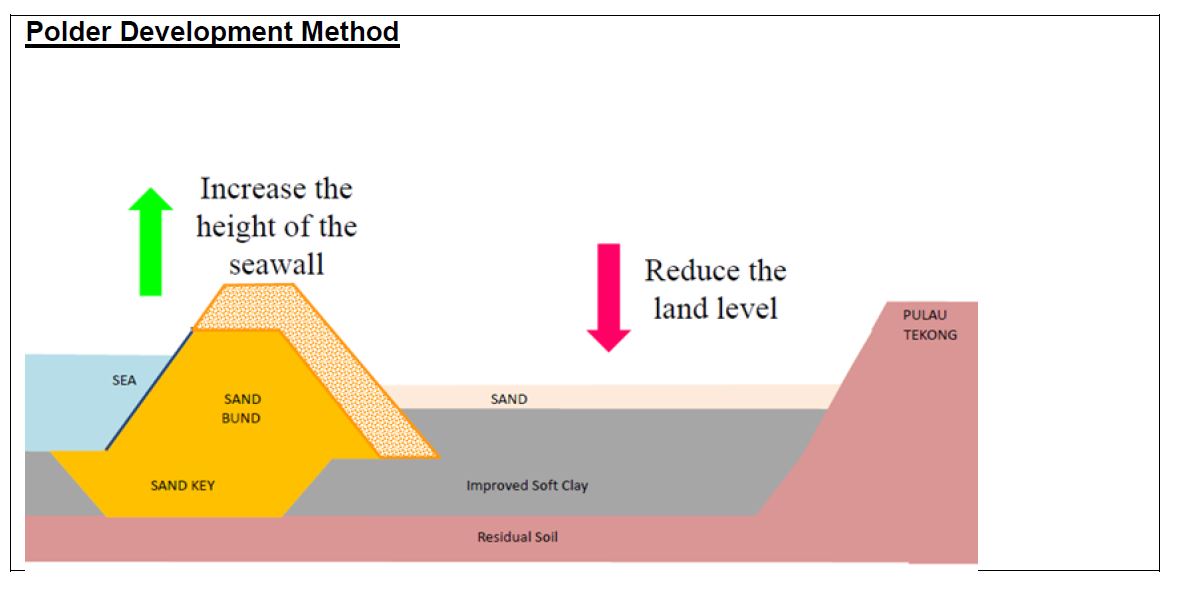
Traditionally, sand is used to reclaim land to above sea levels, but the new method involves developing a polder – a low-lying tract of land reclaimed from the sea. A dike or wall is built to prevent seawater from entering the polder while a network of drains and pumps controls the water levels.

This reduces the amount of sand needed for reclamation and saves on upfront construction costs, HDB and the Ministry of National Development (MND) said. 

Mr Wong added that sand is not always easy to come by, and the project will reduce the country’s reliance on sand for reclamation works.

The reliance on sand imports was keenly felt in 2007, when Indonesia announced its decision to ban the export of land sand to Singapore. It was reported at the time that Singapore was importing six to eight million tonnes of sand, with more than 90 per cent coming from Indonesia. This led to price increases in construction works and having to source for more sand from other markets. 

Mr Wong also said this new method will help build up capabilities. “We know that we are facing the threat of climate change, sea levels rising and we are low-lying in Singapore. With this project, I think the experience that we gain in learning how to build dikes, in learning how to manage coastal areas, will be very important for us as we deal with the threat of climate change in the longer term.”

When the reclamation is completed around 2022, Pulau Tekong will have an additional 810 hectares of land, or about the size of two Toa Payoh towns. The land has been earmarked for military training. 

To ensure the long-term safety of the polder land, the HDB drew on the experience of the Netherlands, which has used this method for land reclamation for many years, and has the world’s highest standards for dike safety, HDB and MND said. An environmental study has also been carried out to ensure there will not be significant impact on the surrounding marine environment and wildlife.

The tender for the polder project is expected to be called by the end of this year, and construction will start in end-2017, HDB and MND said.  

Source link

Jack Ma denies that he will fund education of 8-year-old lookalike

0

When something sounds too good to be true, it usually is.

Alibaba founder Jack Ma will not be funding the education of an 8-year-old lookalike after all, despite reports online earlier this week indicating that he would.

“The news is completely false,” an Alibaba spokesperson reportedly told Fortune magazine.

On Monday, Xinhua reported that Mr Ma had pledged to provide financial support for the education of his young doppelganger from primary school to university.

The boy, Fan Xiaoqin, is affectionaly known as “mini Jack Ma”. Photos of him went viral when Chinese netizens noticed that he bore a striking resemblance to the self-made billionaire.

China Daily reported that Fan’s family circumstances are unfortunate – his mother has polio, his father a missing leg and his grandma, Alzheimer’s disease.

Mr Ma, who today is one of China’s wealthiest individuals, is a former English teacher whose application to Harvard was rejected multiple times. He founded e-commerce giant Alibaba in 1999.

This year, sales at the company’s annual Singles Day online shopping event on Nov 11 topped 120 billion yuan (S$24.8 billion).

According to Forbes, Mr Ma’s net worth is estimated to be US$26.7 billion (S$37.75 billion).

seanyap@sph.com.sg

Image: 
Category: 
Publication Date: 
Wednesday, November 16, 2016 – 12:52
Keywords: 
Send to mobile app: 
Source: 


Story Type: 
Rewritten Story

Source link

Jakarta governor named suspect in blasphemy case

0

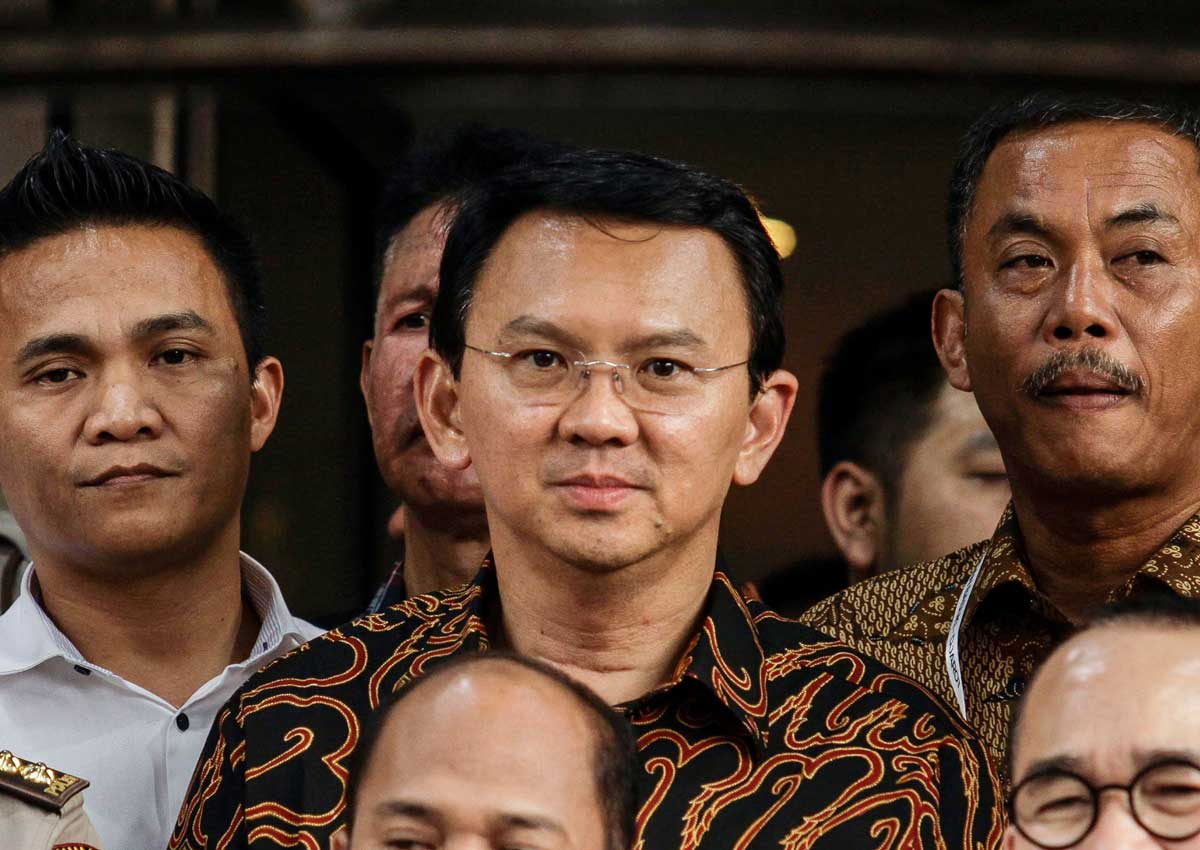
JAKARTA – Jakarta’s Christian governor was formally named a suspect on blasphemy allegations Wednesday, after claims that he insulted Islam sparked a violent mass protest by Muslim hardliners in the Indonesian capital.

After a lengthy preliminary investigation, police said that the allegations against Basuki Tjahaja Purnama, who is also a member of Indonesia’s ethnic Chinese minority, should go to trial.

Religious groups in the world’s most populous Muslim-majority country had demanded that Purnama, known by his nickname Ahok, be prosecuted for allegedly insulting the Quran while campaigning in elections for the Jakarta governorship.

The governor had accused his opponents of using a Koranic verse, which suggests Muslims should not choose non-Muslims as leaders, in order to trick people into voting against him.

The blasphemy claims sparked much anger among Muslims – both moderate and hardline – and over 100,000 protesters took to the streets in Jakarta on November 4 demanding that Purnama be prosecuted, with the protest turning violent as night fell.

After a weeks-long investigation which involved questioning scores of witnesses, national police chief detective Ari Dono told reporters: “Basuki Tjahaja Purnama has been named suspect.” “We have reached an agreement, even though it was not unanimous… that this case should be processed in an open trial,” he added.

Purnama will not be arrested but police ordered him not to leave the country.

Naming someone a suspect is a formal step in the Indonesian legal system that means authorities believe they have enough preliminary evidence to consider filing charges against someone.

If found guilty Purnama – who is favourite to win the February elections against two Muslim opponents – could be jailed for up to five years.

The protest earlier this month, which was the biggest in recent years in Indonesia, was peaceful during the day but as night fell descended into chaos, with protesters torching police cars and hurling rocks in in the heart of Jakarta.

Scores of police officers were injured and one man died in the clashes close to the presidential palace.

Purnama has apologised for his remarks made in September, saying he was criticising his political rivals who were using the verse rather than the Quran itself.

But this has done little to appease his opponents.

Image: 
Category: 
Publication Date: 
Wednesday, November 16, 2016 – 12:25
Send to mobile app: 
Source: 


Story Type: 
Others

Source link