26.8 C
Singapore, SG
Wednesday, September 30, 2026
Home Blog Page 2346

NKF patient says sacked CEO always found time for his patients

0

Retiree Joseph Chan, 63, learnt of the sacking of National Kidney Foundation (NKF) CEO Edmund Kwok only after he touched down at Changi Airport on Wednesday evening.

“I turned on my mobile phone and there it was, all over the Internet and on my Facebook wall,” Mr Chan, a kidney patient, told The New Paper yesterday.

The news was so upsetting that he broke down, he said.

“I was shocked. I could not believe it. He was a good CEO who cared for all the patients. He would come down to talk to us so he could understand our problems and fears,” he added, his voice breaking.

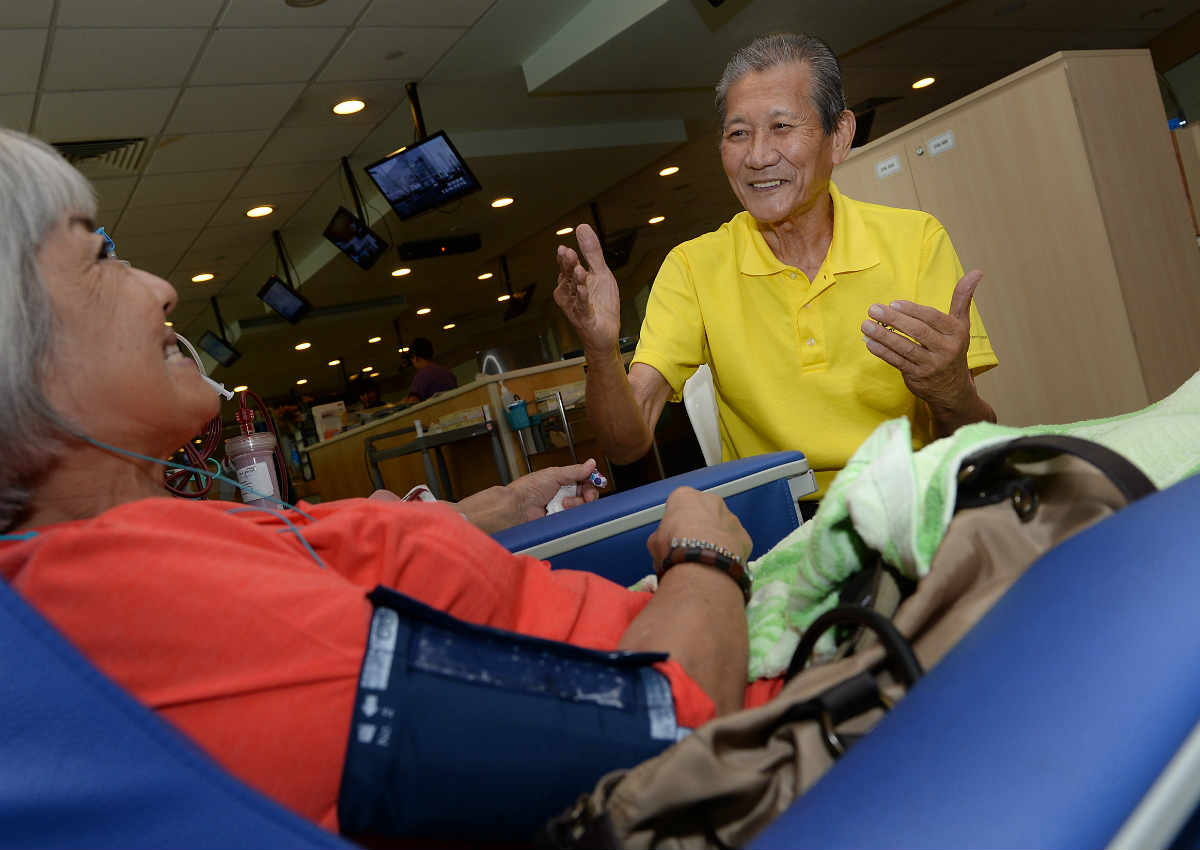
Dialysis patient Joseph Chan (right) broke down in tears when he heard the news of Mr Edmund Kwok’s sacking. Photo: The New Paper

Mr Chan, who is also a volunteer patient-counsellor at the NKF headquarters in Kim Keat Road, said Mr Kwok always had time for him and other dialysis patients.

“No matter how busy he was, he would always stop to shake my hand and ask how I was doing. I will certainly miss him,” he said.

On Wednesday morning, NKF announced in a press statement that Mr Kwok had been sacked, effective Monday, citing “personal indiscretion” as the reason.

At a press conference later that day, NKF Board chairman Koh Poh Tiong said the “indiscretion” involved a male employee who had made a complaint against Mr Kwok on Nov 7.

This is the second major scandal the charity has faced in just over a decade.

In 2005, then CEO T.T. Durai was found to be living a lavish lifestyle using funds raised by the charity. He was later convicted of corruption and sentenced to three months’ jail.

The NKF has not fully recovered from the Durai fallout.

Read also: NKF had no choice but to sack CEO Edmund Kwok, says chairman

At its peak, the charity had about 250,000 donors, but the number dropped to 146,000 in 2012. Today, it has about 160,000 donors.

At Wednesday’s press conference, the NKF Board took pains to stress that “one man’s indiscretion must not affect the whole organisation”.

“The organisation is not about one man. It’s about 4,000 patients and many more… We did what was needed. We terminated his services,” said board member William Wan.

BOUNCE BACK

Reiterating this on Wednesday, Charity Council chairman Gerard Ee, who was also once the chairman of NKF, told Chinese daily Lianhe Zaobao that in the past few years, mechanisms have been put in place to prevent senior management from influencing the operations of the charity.

He said he is confident that NKF will be able to once again “ride out the storm”.

Read also: NKF sacks CEO Kwok over ‘personal indiscretion’

Since Mr Kwok took over as CEO of NKF, the number of patients needing dialysis at the organisation has grown to about 4,000. Last year, NKF spent $100 million to provide the service because it heavily subsidises needy patients.

Dialysis patient Ismail Shahul Hamid, 62, told TNP that he was worried when he learnt of the sacking.

“But everyone makes mistakes. Unfortunately, he lost his job for his. Our dialyses still have to go on. I don’t think his mistake will affect the organisation or the donors because it was not about misusing money,” he said.

Mr Ismail, who is unemployed, takes cares of his son, who had a traumatic brain injury that left him bedridden.

Noting that more people are suffering from kidney failure nowadays, he said: “I hope the incident will not stop Singaporeans from donating as the money will help needy patients like me get treatment.”


This article was first published on November 18, 2016.
Get The New Paper for more stories.

Image: 
Category: 
Publication Date: 
Friday, November 18, 2016 – 14:00
Keywords: 
Send to mobile app: 
Source: 


Story Type: 
Others

Source link

Iras clarifies tax rules for bloggers

0

Netizens who receive products or services worth more than $100 from companies – or regularly over a period of time – must now declare them to the taxman.

Some examples are five-course meals, sponsored travel, magazine subscriptions or door gifts at events. These are often given in return for reviews or advertisements on the social media platforms of prominent bloggers or influencers, as trendsetters are called.

The taxman has come to a consensus with social media management companies and bloggers on the conditions under which such “non-monetary benefits in kind” have to be declared as part of their taxable income.

The rules were, however, issued only close to the filing deadline this year.

Thus, the Inland Revenue Authority of Singapore (Iras) told The Straits Times that the online community has until April 18 next year to declare the items and, therefore, the income received last year. Those who flout the rules will have to pay a penalty amounting to double the tax undercharged.

In March, Iras wrote to bloggers to remind them that such benefits must be declared as part of their income. They were to do so by the following month.

Some bloggers and social media influencers said it was hard to keep track of multiple, low-value items given to them.

Iras responded that the requirements are not new and are similar to those for other self-employed taxpayers. It has now clarified the guidelines, put them online and communicated them to bloggers, their management companies and the National Youth Council.

Netizens welcomed the clarity that the new guidelines bring.

“This $100 clarification gives bloggers and influencers more clarity as to what needs to be declared,” said Ms Yang Huiwen, regional director of social media company Netccentric, which has a network of 62,000 blogs here.

Mr Mark Amatya, a director at accounting firm PwC, agreed. “The threshold of $100 seems reasonable as it may mean that most items provided to bloggers are exempt from tax or reporting,” he said.

Mr Daniel Ang, 38, who runs food review blog DanielFoodDiary, said such guidelines mean influencers will have to take additional effort to keep track of and record what they receive – which could be quite challenging, as they sometimes receive unsolicited gifts. “The value of some things can also be intangible – for example, an autographed CD. How do we value that?” he said.

Iras, too, may not have an easy job enforcing the filings of many low-profile bloggers, said Ms Jill Lim of Deloitte Singapore.

Read also: Taxman knocks on bloggers’ doors

Ms Wu Soo Mee, partner at Ernst & Young Solutions, said a probable way to track such payments is to screen the social media platforms for individuals who may receive such potential taxable income.

Some influencers say companies should also have guidelines to be more transparent about the value of products given to them.

Miss Melissa Jane Ho, 29, who runs fashion and lifestyle blog melissajaneferosha, said: “Sometimes, brands don’t provide us with the value of the gifts, products or services, which makes it difficult for us to keep track of every single offer or transaction.”

​Examples of what has to be declared

To help bloggers determine if a gift or service has to be declared, the Inland Revenue Authority of Singapore listed several scenarios and the corresponding tax treatment. Some of these are:

Scenario: A blogger receives a box of mooncakes worth $80. Tax treatment: No need to declare as its value does not exceed $100.

Scenario: A blogger attends a five-course meal tasting provided by a restaurant, which adds up to $156. Tax treatment: Must declare as the value exceeds $100.

Scenario: A blogger receives five sessions of eyebrow threading worth $98. Tax Treatment: Must declare as it is provided over a period of time.

Scenario: A blogger receives a door gift worth $120 during a product launch. However, there is no obligation to review the gift. Tax treatment: Since the value of the gift exceeds $100, it has to be declared.

But complimentary gifts given on an ad hoc basis and below $100 do not need to be declared.

Scenario: After reviewing a perfume, a blogger is rewarded with a handbag worth $98.Tax treatment: All monetary payments and non-monetary benefits are taxable if they are given in return for services rendered.

In this case, the blogger has to declare the $98 as the bag is not for one-time consumption or testing. 

Read also: Taxman at bloggers’ doors: ‘This is content, not income,’ says one


This article was first published on Nov 18, 2016.
Get a copy of The Straits Times or go to straitstimes.com for more stories.

Image: 
Category: 
Publication Date: 
Friday, November 18, 2016 – 14:40
Keywords: 
Send to mobile app: 
Source: 


Story Type: 
Others

Source link

Health warning issued against weight loss product VIP Bio Mangosteen Complex

0

SINGAPORE: The Health Sciences Authority (HSA) on Friday (Nov 18) warned the public against buying or taking weight loss product VIP Bio Mangosteen Complex as it contains very high levels of sibutramine, a banned substance in Singapore. 

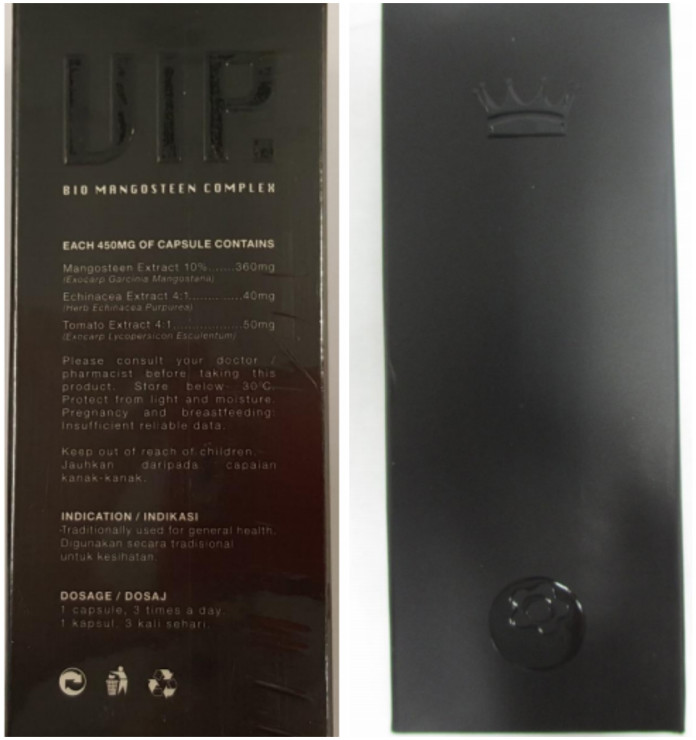
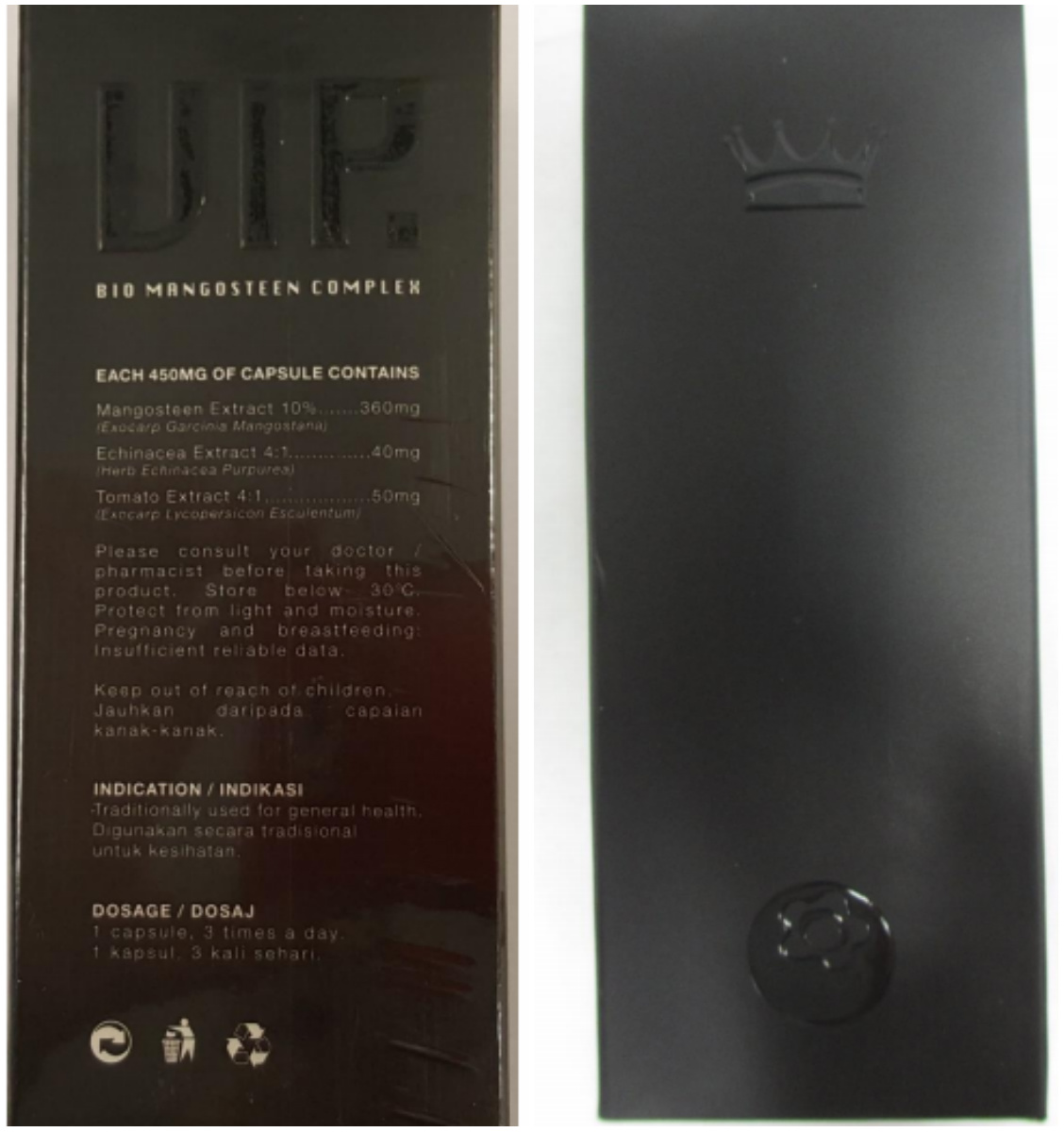
In a media release, HSA said the product’s label states it contains only natural ingredients, including fruit and herbal extracts, but contains sibutramine as well as another undeclared western medicine, phenolphthalein. 

VIP Bio Mangosteen Complex claims it only contains natural ingredients. (Photos: HSA)

HSA said sibutramine is a weight loss medicine that has been disallowed for sale in Singapore since 2010, due to “serious safety concerns associated with cardiovascular risks”. Before its ban, it was a prescription medicine used as an appetite suppressant to manage obesity, it said. 

“The high levels of sibutramine detected in VIP Bio Mangosteen Complex could make it very toxic and cause serious adverse effects such as heart attacks and seizures,” HSA said, adding that several consumers have reported experiencing hallucinations or hearing voices after consuming other health products with high levels of sibutramine. 

“Other possible adverse effects include high blood pressure, increased heart rate, irregular heartbeat, anxiety, depression and mood swings,” it warned. 

The authority added that in Singapore, there have not been any adverse reports associated with VIP Bio Mangosteen Complex, but the use of other slimming products with high levels of sibutramine have led consumers to be hospitalised, both locally and overseas. 

The other undeclared ingredient in the product, phenolphthalein, was used as a laxative previously, but has not been registered in Singapore since 2011. Phenolphthalein can cause rashes, abdominal cramps, breathing difficulties, kidney disorders and has been found in animal studies to be associated with cancer, HSA said. 

VIP Bio Mangosteen Complex is sold on several websites and popular social media platforms, HSA added, and claims to to deliver “immediate changes after around seven days and significant results in 21 days”. 

It advised members of the public to: 

  • Stop taking VIP Bio Mangosteen Complex immediately and consult a doctor if feeling unwell, or have health concerns
  • Be wary of health products that promise quick and miraculous weight loss, or carry exaggerated claims like “guaranteed results” or “scientifically proven”, as such products may contain prescription medicines which should only be taken under medical supervision, or undeclared potent ingredients that could seriously harm one’s health
  • Do not trust online product reviews, as testimonials cannot usually be verified
  • Exercise caution when purchasing health products online. Products sold could potentially be counterfeits or adulterated with undeclared potent ingredients 

Sellers should also stop selling VIP Bio Mangosteen Complex immediately, HSA said, as it is illegal to sell and supply complementary health products such as health supplements and traditional supplements containing undeclared potent western medicines or banned substances. 

“Anyone convicted of selling illegal health products may be liable for prosecution under the Health Products Act, Poisons Act and/or Medicines Act. Offenders will face a penalty fine of up to S$100,000 and/or imprisonment for a period of up to three years under the Health Products Act; a penalty fine of up to S$10,000 and/or imprisonment for a period of up to two years under the Poisons Act and a penalty fine of up to S$5,000 and/or imprisonment for a period of up to two years under the Medicines Act,” HSA said. 

HSA also encouraged members of the public to visit www.healthdangers.sg to learn more about the dangers of buying illegal health products from suspicious sources. 

Source link

Philippine dictator Marcos to be buried at heroes’ cemetery: Police

0

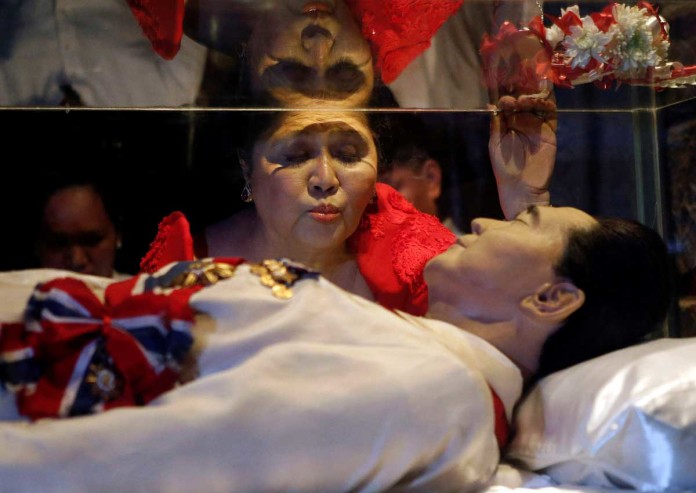
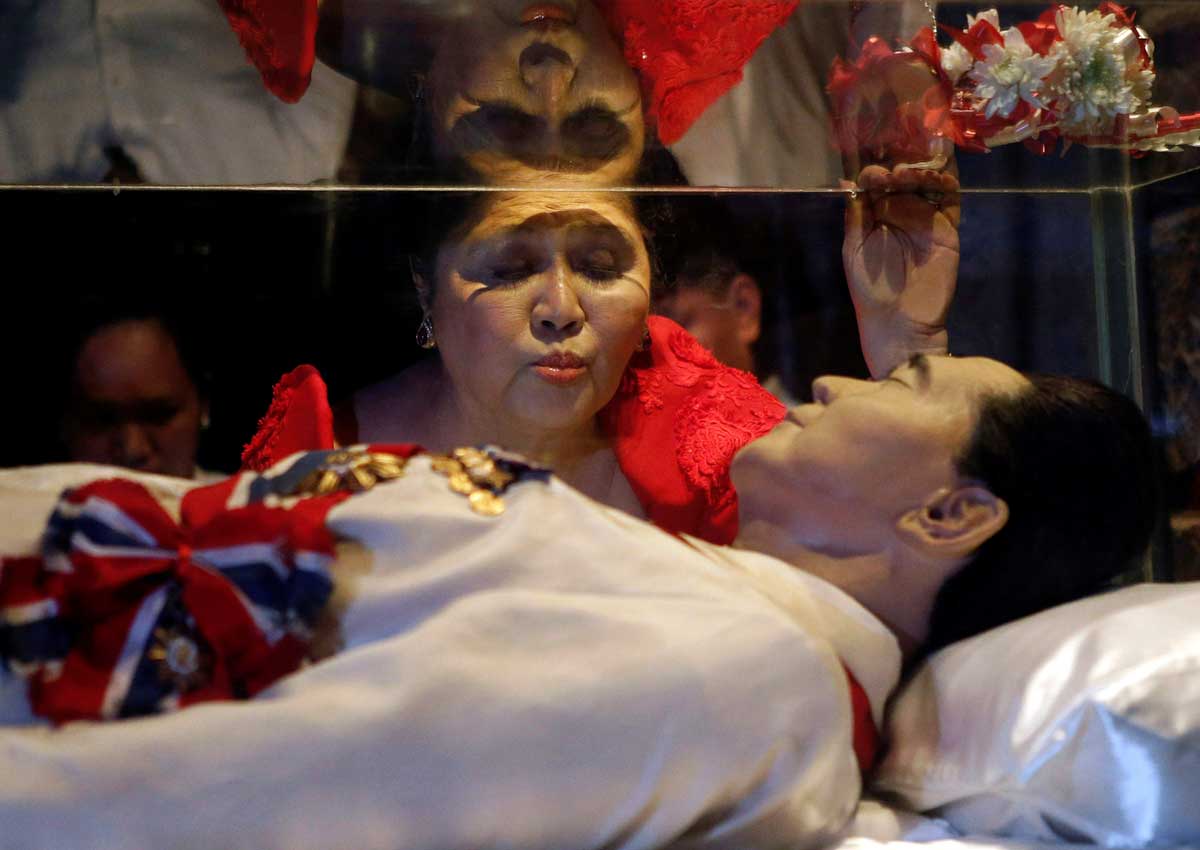
MANILA – Philippine dictator Ferdinand Marcos will be buried on Friday at the heroes’ cemetery in Manila, the national police chief said after the Supreme Court cleared the way for his internment 27 years after his death in Hawaii.

Police chief Ronald dela Rosa said he had only learned about the burial late on Thursday.

Police said Marcos’ body was flown by helicopter from his hometown in the northern Philippines for burial at the Libingan ng mga Bayani cemetery south of Manila at noon.

Human rights groups opposed his burial at the heroes’cemetery but the Philippines Supreme Court ruled against their protests last week.

Marcos ruled the Philippines for 20 years, during which time he, his family and cronies amassed an estimated $10 billion in ill-gotten wealth, a commission found. Thousands of suspected communist rebels and political foes were killed.

Marcos was chased from office in a people’s power revolt in 1989 and died in exile in Hawaii. His family returned to the Philippines in the 1990s and became powerful politicians representing his home province of Ilocos Norte.

Image: 
Category: 
Publication Date: 
Friday, November 18, 2016 – 12:33
Keywords: 
Send to mobile app: 
Source: 


Story Type: 
Others

Source link

Corrupt Chinese officials who fled abroad are now turning themselves in

0

More than half of the corrupt Chinese officials recently netted after fleeing abroad opted to turn themselves in, Xinhua has reported.

Yang Xiuzhu, the most wanted fugitive on the “red notice”, returned to China and turned herself in on Wednesday after being on the run for 13 years.

She is one of 37 fugitives named on the “red notice” listing 100 major corrupt Chinese officials that have recently returned back to the country.

Of these, 22 were persuaded to turn themselves in.

China has three main ways to bring back fugitives; persuading them to surrender, repatriation and extradition.

In 2015, seven were persuaded to turn themselves in voluntarily, seven were repatriated and two were arrested in China, after the notice was issued by Interpol in April of that year.

Beijing Normal University criminal law expert Huang Feng said persuading fugitives to return, with the help of the host country’s law enforcement agencies, was the easiest option.

He said it was the most economical and effective way to bring them back as it avoids the complex and lengthy procedures of extradition and repatriation.

The host countries may also repatriate the fugitives after receiving evidence of their crimes.

Yang Jinjun, the brother of Yang Xiuzhu, who fled to the United States in 2001 and was brought back in September last year, is the first of the “red notice” officials to be repatriated to China from the US.

While many of the more than 40 extradition treaties China has signed with foreign countries are with Asian and developing countries, some countries, including the US, Canada and some European countries, are popular destinations for fleeing corrupt Chinese officials.

Two of China’s most-wanted fugitives, suspected of economic crimes, will be extradited from France to face trial at home, a senior official from the Ministry of Public Security confirmed earlier this month.

More fugitives are expected to be sent back now that China is ready to begin talks about sharing confiscated ill-gotten assets with cooperative governments, the Chinese law-enforcement official said.

As of June 2016, China has brought back 2,210 fugitives, with 363 former employees of government agencies or related entities, from more than 70 countries and regions, and recovered illegal money and assets of 8 billion yuan (S$1.16 billion), according to the Central Commission for Discipline Inspection.

Image: 
Category: 
Publication Date: 
Friday, November 18, 2016 – 12:36
Keywords: 
Send to mobile app: 
Source: 


Story Type: 
Others

Source link

Shanghai school gives meals based on children's weight

0

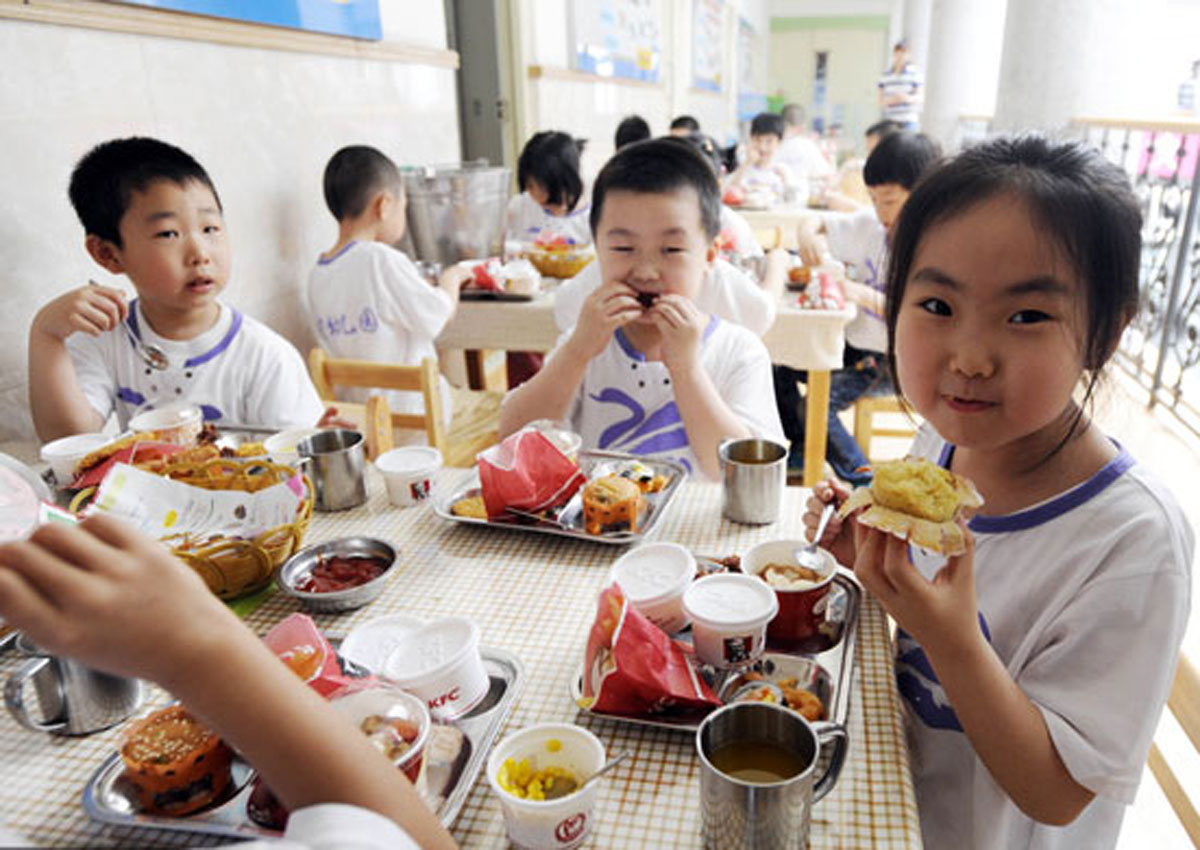
An afternoon snack menu for children in a kindergarten of Shanghai municipality, which offers vegetables to overweight children and milk and meat to underweight ones, has aroused a debate on its rationality, thepaper.cn reported.

Differentiated meals out of health considerations

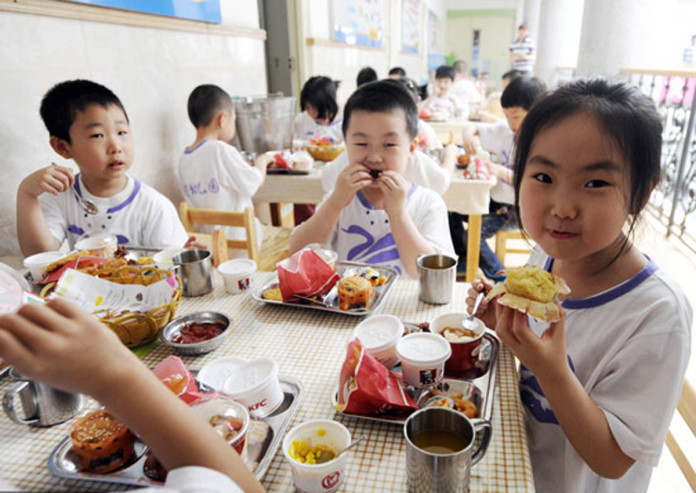
The kindergarten, located in Jiading district of Shanghai, has more than 130 students. A menu of afternoon snacks between Nov 14 and 18 made by the kindergarten shows boiled Chinese cabbage, boiled Bok choy, boiled baby cabbage, boiled lettuce and steamed pumpkin for overweight children, and eggs, milk, meat balls and biscuits for underweight children.

The kindergarten also prepares special meals for sick children, which are free from allergenic foods like eggs, mushrooms and seafood.

Wang Yaqin, the head of the kindergarten, said that the differentiated meals are out of health considerations. All menus are suggested by dieticians and undergo nutritious analysis in the afternoon everyday to make sure the diet is healthy for children.

She also said overweight and underweight children are categorized according to national standards. Although they eat differently in the afternoon meals, they eat the same for breakfast and lunch, so it is unnecessary to worry if they are undernourished.

Most parents support differentiated meals

Wang said that teachers visited students’ homes or conducted questionnaire surveys among parents about the idea of a differentiated extra meal and got their permission before implementing it.

A mother, surnamed Li, whose child is a student of the kindergarten said, “Extra meals are different from formal meals. It is good for my overweight child to eat more vegetables.” Another parent, surnamed Chen, said, “It is impossible that our children are in malnutrition in the city life. We only worry about excess nutrition. Obesity brings too many problems.”

Some parents express their concerns. A parent said his son is in the critical stage of physical development, “If he is overweight, he can exercise more. But malnutrition will affect his development.”

Some other parents fear that differential treatment may cause psychological problems. A mother surnamed Zhang, said that kindergarten children are very sensitive and afraid of being treated differently. Overweight or underweight children see negative reactions in everyday life and different meals may repeatedly remind them of their differences.

Dietician: Choosing food according to weight is necessary

Dieticians support the kindergarten and believe it is necessary to choose food according to the weights of different children.

Gu Chuanling, a public health nutritionist and member of Chinese Nutrition Society, said the standard weight calculation formula for children of 1 year old and above shows a standard weight equals age multiplied by 2 plus 8. Surpassing 10 to 19 per cent of the standard weight means the child is overweight and surpassing 20 per cent is obesity.

She said that obese children do not choose food wisely and love sweets and snacks. They take in too many calories everyday and accumulate fat in their body. Parents trying to satisfy their children’s appetite and having few exercise opportunities will lead to obesity.

Oat, whole-wheat bread, sugar-free yoghurt, fruit and nuts are the proper choices for afternoon snacks. They will supply the right amount of energy and nutrition to kindergarten children, she added.

Psychologist: Help children understand differences in a right way

Liu Yeping, associate professor at the Counseling Center of Shanghai Jiao Tong University, said teachers and parents need to help children understand meals in the right way.

The labels of “overweight” or “underweight” should not be given to children; otherwise children will feel discrimination and be psychologically harmed.

Teachers and parents should tell children that “we eat and do exercise to make our body stronger”.

Image: 
Category: 
Publication Date: 
Friday, November 18, 2016 – 12:19
Send to mobile app: 
Source: 


Story Type: 
Others

Source link

Singapore is India's benchmark

0

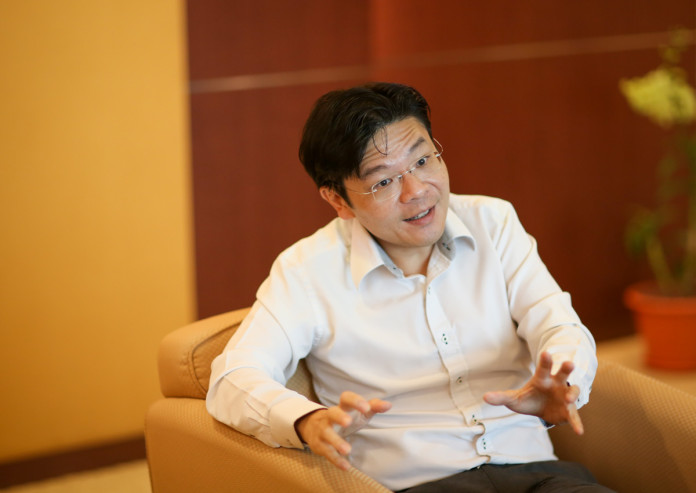
In his keynote address, Dr Kumar Pratap said that in the area of urban development India has a lot to learn from Singapore.

And if India was looking for a country as a benchmark in its development goal, then it has to be Singapore, he said.

Dr Pratap was speaking at the fourth Singapore-India Business Dialogue hosted by the Singapore Management University (SMU) on November 15.

The theme of the dialogue was Sustainable Urban Management in Singapore and India.

Minister for National Development and Second Minister for Finance Lawrence Wong was the Guest of Honour at the event.

Dr Pratap said that orderly urbanisation is necessary for India in order for the country to sustain its high growth rate.

Urban Indians number 31 per cent but they contribute 63 per cent to the national GDP.

These numbers are bound to grow, he noted, saying that 40 per cent of India’s population will be living in urban areas and will contribute 75 per cent to the GDP by 2030.

The challenge will be in providing minimum urban services to this rapidly growing urban population.

And therein comes opportunities.

Most of it will be from India’s Smart Cities Mission which aims to develop 100 cities.

The idea is to begin with a compact area in the city and develop that area as Smart City by providing a package of core infrastructure and smart solutions. In his address, Minister Wong also touched on the compactness of cities.

He said that a compact, dense and well-planned city is in fact one of the most green and sustainable ways to live.

“Our physical footprint becomes smaller, we reduce travelling time between urban sprawls and reap the benefits of shared resources and amenities,” he said.

Mr Wong said Singapore highly values its relations with India and several Singapore companies are doing business in India.

He mentioned Sembcorp as one of the biggest foreign investors in India’s power sector.

He added that Singapore and India can partner each other to grab the opportunities that come with the challenges of urbanisation and create more sustainable cities for the future.

Earlier, in her welcome address, Provost of SMU Lily Kong said that urban management and sustainability is one of the five areas of excellence that SMU has identified as it aims to build its reputation as a premier university in Asia.


Get a copy of tabla! for more stories.

Image: 
Category: 
Publication Date: 
Friday, November 18, 2016 – 11:45
Keywords: 
Send to mobile app: 
Source: 


Story Type: 
Others

Source link

Serving with love

0

The Singapore Indian Development Association (Sinda), set up in 1991, has managed to work towards the upliftment of the Indian community, with a lot of help from volunteers.

The very formation of Sinda took place through volunteerism, said the self-help group’s CEO K. Barathan, on the backs of heavyweights such as the late former president S R Nathan.

Said Mr Barathan: “Volunteerism started ever since Sinda’s inception and even today, we have distinguished persons in the community who volunteer with Sinda by sitting on our Board of Trustees to address the socio-economic issues faced by the Indian community.”

One of Sinda’s earliest initiatives is the Sinda Tutorials for Enhanced Performance (STEP), which has been running since 1992.

Over the years, it has served 70,000 students and many volunteers have, over the years, dedicated their services towards the success of this programme.

To sustain the growing numbers of students, STEP is today a two-hour, three-times-weekly commitment, and volunteers are supplemented by auxiliary staff.

Currently, 685 people volunteer in various Sinda programmes and initiatives. About half of them are expatriates and new citizens.

Nevertheless, key programmes such as the Guidance and Mentorship Programme, Literacy and Numeracy Programme (LYNN) and Project Read still need the support of a steady base of volunteers to meet the public demand.

What happens once you sign up to volunteer?

An induction programme is conducted every quarter for volunteers who first come on board. They get to know about Sinda and the work that is being done.

Read also: Sinda strides ahead

This allows them to explore different volunteering options. Once they sign up for a programme, the respective divisions connect with the volunteers. For some, this marks the start of their training.

Citing Project Read as an example, Sinda’s director of community engagement and volunteer management Vinod Kumar M. elaborated on core traits that a Sinda volunteer needs to have.

“We look for volunteers with the ability to understand and communicate what we are doing.

Next, they need to be able to connect with the beneficiaries. Finally, this connection then allows them to navigate towards a certain goal that Sinda has for the project.”

These skills are especially critical for volunteers who work with children in their homes.

Sinda’s chief operating officer Ravindran N. shared that one of Sinda’s long-term volunteer operations, the legal clinic, has been running for over 20 years by a group of dedicated lawyers who see clients on a monthly basis.

Said Mr Ravindran: “Clients are referred to them by Sinda’s Family Service Centre (FSC), the only self-help group that has its own FSC. Two lawyers have been with us for 20 years.”

tabla! met some of Sinda’s volunteers to understand more about what they do.

Son inspires mother

In 2002, Singapore permanent resident Chandrakala Kalyanasundaram (above, right) accompanied her son Aravindhan, who was then in Primary 5, when he began volunteering at Sinda’s Reading Programme at Jurong Green Community Club.

This was shortly after she and her family of four had moved here from Madurai in Tamil Nadu.

Aravindhan would volunteer as a Buddy Reader to Primary 1 students while his mother, a chemistry graduate from Chennai’s Anna University, would wait for him.

One day she decided to get involved and that was the start of her involvement with Sinda.

“Being new residents then, this helped us bond with the community, understand what was going on, understand the culture and mingle through community activities. You could say it was the son who brought the mother there,” smiled Mrs Kalyanasundaram.

Eventually, her younger son Ragavendra also volunteered for a period while Aravindhan continued volunteering through his junior college days.

While volunteering, a close friendship with a fellow volunteer inspired her even further.

Read also: SINDA must stay focused

Said Mrs Kalyanasundaram: “Ms Razeeda Buhari is a teacher and dedicated volunteer attached to the Sinda Centre Jurong Green Community Club.

“We met in 2002 and the good rapport between us resulted in a friendship cherished until today. She gives me the drive to do more. It has been a learning journey for me.”

Mrs Kalyanasundaram has been a passionate and dedicated volunteer for 14 years.

“I want her to do well.”

Mrs Sangeeta Bareja (below, right), 49, who heard of Sinda’s community work last year, now volunteers in two of its programmes – Project Read, and Literacy and Numeracy Programme (LYNN).

The science graduate from Punjab University has done some relief teaching in Singapore during her 23 years of living here.

Sinda matched her to a five-year old pre-schooler who required assistance in reading. Although the child was in K2, she could not recognise letters of the alphabet. Mrs Bareja began reading to her and slowly, the girl started reading back to her.

The child’s mother is the full-time caregiver for her bedridden mother-in-law while her father works as a driver to make ends meet.

In addition to Project Read, Mrs Bareja began volunteering at a nearby LYNN centre for two hours every Saturday this year.

She and another volunteer assist a teacher in a classroom setting for K1 and K2 students, helping out in Mathematics and English.

She contributes a total of three hours a week towards both programmes.

“It’s good because I get to meet other community members so you don’t feel like you are alone. Everyone can take a little time out to help the community and make a difference in someone’s life. I can see a difference in the girl as it’s been more than a year, and feel I have derived more satisfaction from it than she has. I want her to do well.”

Community ripple effect

Sinda Term Trustee Girija Pande, 66, who runs a business consultancy, believes that it is everyone’s responsibility to give back to society in any way they can and wanted to do so after conducting a very satisfying business run across Asia.

He has volunteered for over seven years and helped create an association of recently arrived senior Indian business leaders.

Explained Mr Pande: “The association, which is part of Sinda, is called Indian Business-leaders’ Roundtable (IBR). IBR has raised over half a million dollars for many projects, funded Sinda’s e-learning drive, assisted in career counseling of over 400 school children in various sectors of industry and is now looking to create internships for Singapore Indian youth in ITE and polytechnics.

This is part of the Skills Future project of IBR.

“IBR has assisted Sinda’s Step scheme children in maths by bringing in a well-known organisation Hey Math to assist them with their learning.”

Read also: Making a difference in the lives of youths

To give is to receive

Civil servant Logapreyan Renganathan, 44, tells his daughters that it is not the compliments of volunteering that should matter, but the “gift” of the unexplainable connection that is shared with a stranger in need, that moment in time where both hearts are filled with love, gratitude and togetherness.

Highlighting an encounter which left an indelible impression on him, he said: “When I first started volunteering seriously some 10 over years ago as part of my weekly-fortnightly routine, I met a man in a one-room flat who had difficulty opening his door as he had had a severe stroke.

There I was feeling good about myself for making a difference. But when he opened the door after some time, he smiled at me even though his mouth was crooked and said ‘I was once like you too, giving my time and money to the needy’.

“We chatted in his cluttered home, which was filled with items from his previous home, an executive maisonette. He lost everything – his business, luxurious lifestyle and the ability to care for himself. When I left his home that day, my notion and purpose in life changed. To give is to receive and it’s a lesson that has stuck with me and I keep reminding people whom I work and volunteer with, and my daughters too.”

Even before starting to volunteer, full-time national serviceman Santhiran Ezhavarasan, 23, explained that the thought of helping others began unconsciously when he saw his late grandfather helping people who were in need.

Said Mr Ezhavarasan: “Though he had very little to give, he never turned down anyone who came to him for help. He would do everything he could within his means to help people around him, to make their lives happier and better.”

Mr Ezhavarasan’s volunteering journey at Sinda began in June 2013 when he participated in the annual Sinda Youth Leaders Seminar (SYLS), which led to a four-year involvement.

After SYLS 2012, he said: “That spark propelled me to start conversations with leaders and youths around me who were volunteering at Sinda, and they shared with me many opportunities where I could give back to society.

“The good souls from Sinda were the ones who made me realise my inner aspirations to want to help others – the aspiration seeded by my late grandfather.

“They made me realise that I could do more beyond participating in community service; Sinda Youth Club empowered me to go one step further to design and lead service learning projects for my peers to serve alongside me.”

A duty, a calling

Advocate and solicitor B. Uthayachandran, 61, a Sinda volunteer for 22 years at the legal clinic at the Sinda Family Service Centre, contributes as he feels that professional legal advice is sometimes not easily available or not easily accessible to the needy.

When asked about the difference he makes, Mr Uthayachandran humbly said: “I don’t make a difference. I merely provide the information, advice and offer practical solutions to the issues at hand. This gives them confidence and self-respect. They make the difference for themselves by taking the appropriate courses of action. I would love to think that I teach them to fish rather than fish for them.”

He adds that there is a sense of satisfaction when doing things for others, especially the needy and unfortunate.

“The world is moving at great speed, and people claim that they do not even have time for their own, let alone for others. We have to pause and think of those who are not as fortunate as us. We do what we do because it brings a smile, happiness to others. It is a duty, a calling.”

Read also: Parents want Sinda tuition to cover more subjects

From receiving to giving Mr Mohamed Jaafar Peer Mohamed, 53, a general manager in the private sector, attended computer classes for beginners with Sinda in the early 1990s.

Now, Mr Mohamed volunteers at Sinda and since 2013, he has been involved in Sinda’s Festive Gift Pack Distribution, which helps distribute vouchers during Hari Raya, Deepavali and Christmas celebrations.

Mr Mohamed says: “In addition to giving back to society, it’s to carry on the good work our forefathers had done. Volunteering gives us a sense of responsibility, plus it keeps us socially connected.”

Reaching out to young ones For 15 years, Ms Jayamani Overithi, 68, a cleaning supervisor, has been a volunteer and she chooses to help children from low-income families be successful in life. She motivates them to aim higher and succeed with hard work.

Ms Overithi started with home-based tuition for kindergarten students for a few years, after which she was attached with homes to help the children.

Then she became a coordinator between Sinda and Yew Tee Community Club for a Reading Programme for children between the age of 4 and 7.

Said Ms Overithi: “Volunteering is important as some families need help, but they face difficulties in finding a way to solve their problems. Singapore needs many volunteers as there are many families that need assistance for the children in their homes.” She adds that she feels a sense of satisfaction helping these children grow up to be responsible, improve themselves and become high achievers.


Get a copy of tabla! for more stories.

Image: 
Category: 
Publication Date: 
Friday, November 18, 2016 – 11:42
Send to mobile app: 
Source: 


Story Type: 
Others

Source link

Don’t stay silent, abused wives urge victims of family violence

0

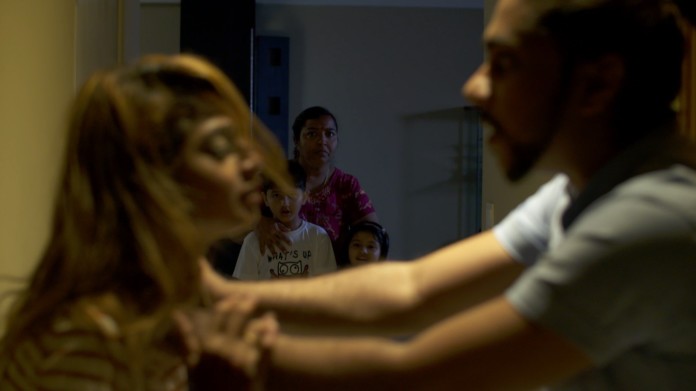
SINGAPORE: For several years, Jane (not her actual name) endured her husband’s punches and beatings in silence – the abuse continuing even when she was pregnant.

“He just kept on hitting me until I told him stop, I’m really going to die,” she said of one instance.

There were times when, she added, “I couldn’t even scream because my kids were outside. I didn’t want to wake them up.”

When they got married, Jane had heard people saying he was hot-tempered. “Maybe I chose not to see that part,” she said. And like many victims of abuse tend to do, she ended up blaming herself – “like I’m the reason for him to be like that”.

Jane shared her story of spousal abuse in an episode of On The Red Dot, which airs Friday (Nov 18) at 9.30pm on Mediacorp Channel 5.

Earlier this week, a three-year campaign called “Break the Silence” was launched to increase awareness about family violence.

According to Ms Goh Si Yong, a senior social worker with the Singapore Children’s Society, women like Jane may keep the abuse a secret for years, because they are “fearful about the recurrence of violence” or “that the husband will harm the child”.

“They could also be afraid that people would label them as a bad wife. So they do not come forward to seek help,” she said.

Mary (not her actual name) was another such victim. Abused from 2007 to 2015, she kept her ordeal a secret – in part because she came from Vietnam. “My husband always said that I am a foreigner, nobody would believe what I have to say,” she said in Mandarin.

WATCH: The story of Mary, who was abused for 8 years

Help for Mary came from an unlikely source – her daughter’s school counsellor, who heard from the young girl how her father treated her mother. The counsellor referred Mary to PAVE, the Centre for Promoting Alternatives to Violence.

In Jane’s case, she eventually confessed her ordeal to a doctor who treated her injuries. Both Mary and Jane filed for a personal protection order (PPO) against their spouses.

In 2015, the Family Justice Courts received 2,885 applications for legal protection against family violence – 75.6 per cent of these were filed by women.

Without a PPO, many cases would be classified as a family dispute, with the law unable to intervene. Those who breach the order can be fined up to S$2,000, jailed for up to six months or both.

Today, Jane is planning to start divorce proceedings, while Mary has begun the process – her Permanent Resident status will not be revoked in the event of a divorce.

Jane said: “I always tried to put on a very brave front (for my kids)… and I think that was a big mistake I made. Once I started opening up, that’s when I got most support. Something that was missing for very long because I didn’t tell anyone.”


Said Mary: “Do not suffer in silence. It’s very tough. We can stand up and be brave, find help with organisations.”
A PPO can be applied for at:

Centre for Promoting Alternatives to Violence (PAVE)

Blk 211 Ang Mo Kio Avenue 3, #01-1446

Tel: 6555 0390

TRANS SAFE Centre

Blk 410 Bedok North Avenue 2, #01-58

Tel: 6449 9088

Care Corner Project StART

Blk 7A Commonwealth Ave, 01-672

Tel: 64761482

Source link

Singapore's first Pikachu Parade held at Changi Aiport

0

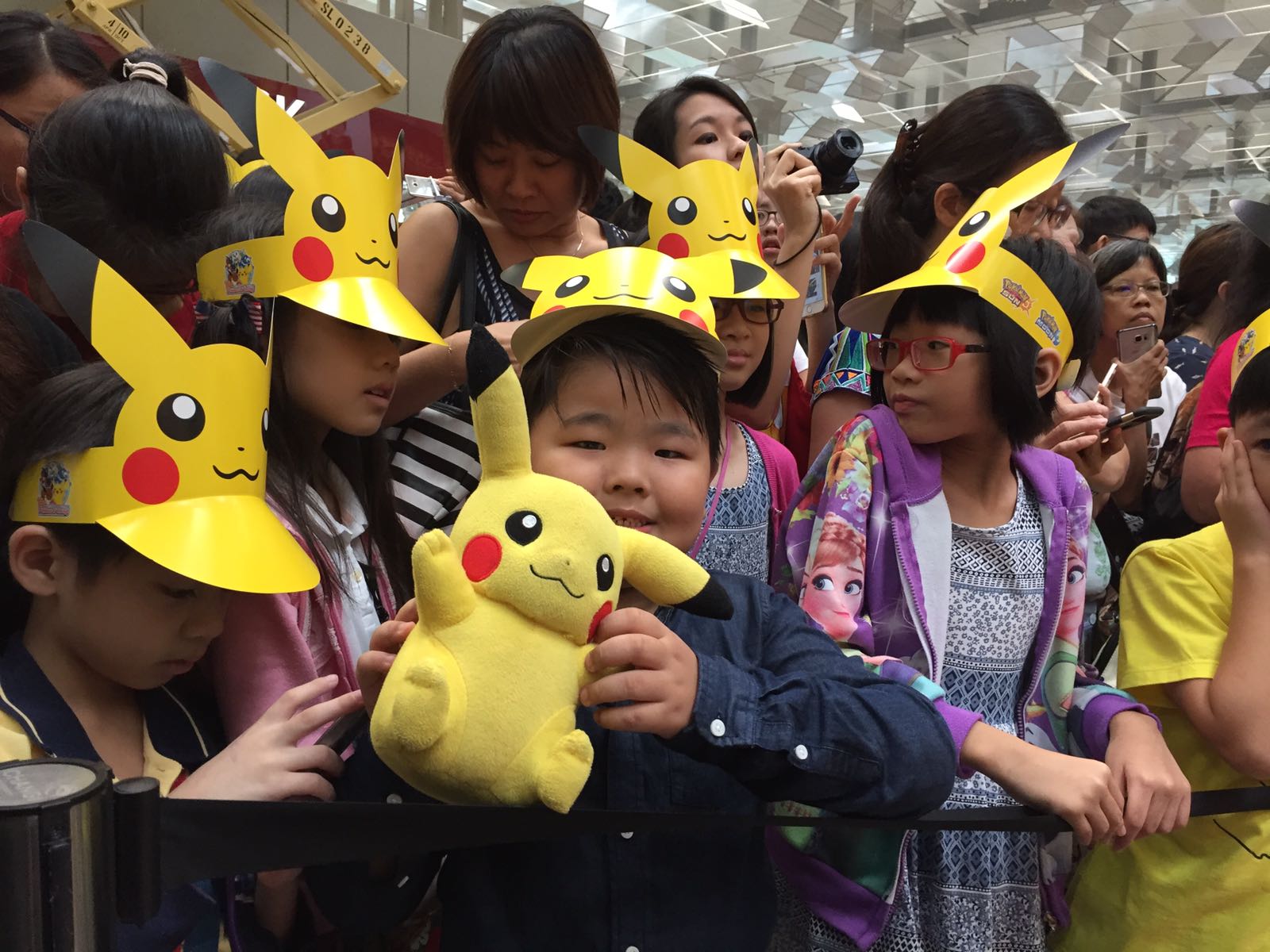
SINGAPORE: Virtual reality game Pokemon Go may have taken Singapore and the world by storm earlier this year, but a few characters came to life at Changi Airport on Friday (Nov 18), when the airport hosted the city-state’s first Pikachu Parade.

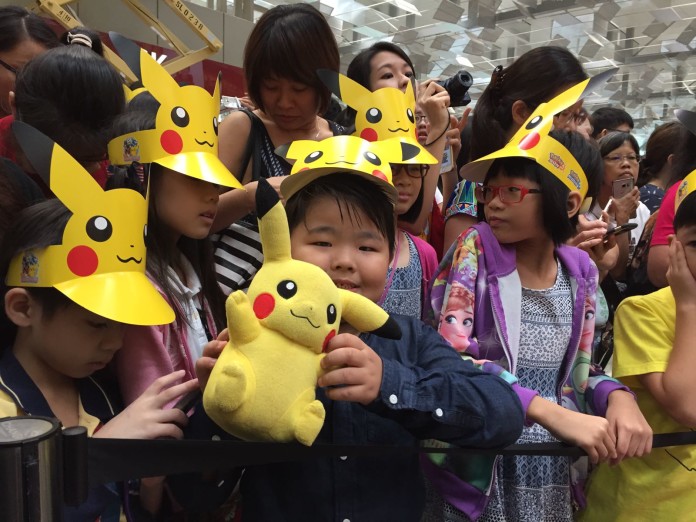
The promise of a Pikachu sighting saw hundreds of Pokemon fans gather at Changi Airport’s Terminal 3 before the parade kicked off at about 11am. 

Pokemon fans at the Pikachu Parade. (Photos: Winnie Goh)

Pokemon installations will be placed in Terminals 2 and 3 – including a 7m-tall Pikachu installation at Terminal 3 – from Friday until Feb 11, 2017.

On weekends, passengers and visitors to Changi Airport will also be able to get up close and personal with Pikachu. The popular Pokemon character will make an appearance at Gingerbread House at 6pm and 8pm on all Saturdays and Sundays until Jan 1, 2017, with the exception of Dec 3, Changi Airport said.

Over at Terminal 2’s departure hall, diehard Pokemon fans can go on a Poke trail to hunt for 26 Pokemon and stand to win exclusive Pokemon merchandise, Changi Airport said. Those looking for photo opportunities can head to the Snorlax Garden, where three life-sized Snorlaxes can be found. 

Snorlax Garden at Terminal 2’s departure hall. (Photo: Changi Airport/Facebook)

Source link