26.8 C
Singapore, SG
Wednesday, September 30, 2026
Home Blog Page 2345

62-year-old e-biker dies after accident with tipper truck at Cecil St: Truck driver arrested

0

An e-bike and a tipper truck at Cecil Street, Raffles Place, were involved in a fatal accident.

Stomp contributors Marcus and Bob sent in a video that is being circulated on WhatsApp and shows the wreckage of an e-bike and a body that was covered with a green sheet.

Stomp has reached out to the police for an official statement.

The statement said: “On Nov 18, the police were alerted to an accident involving a tipper truck and an e-bike along Cecil Street towards Collyer Quay.

“The 62-year-old male rider was pronounced dead by paramedics at scene.

“The 62-year-old male truck driver was arrested for causing death by a negligent act.

Photo: Stomp

Police investigations are ongoing.

The SCDF has also issued an official statement, which said: “The SCDF were alerted at 10.30am (Nov 18) today and dispatched one ambulance.

“One Chinese male in his sixties was pronounced dead at scene.”


Visit STOMP for more stories.

Image: 
Category: 
Publication Date: 
Friday, November 18, 2016 – 14:47
Keywords: 
Send to mobile app: 
Source: 


Story Type: 
Others

Source link

Philippine dictator Marcos buried with military honours at heroes' cemetery

0

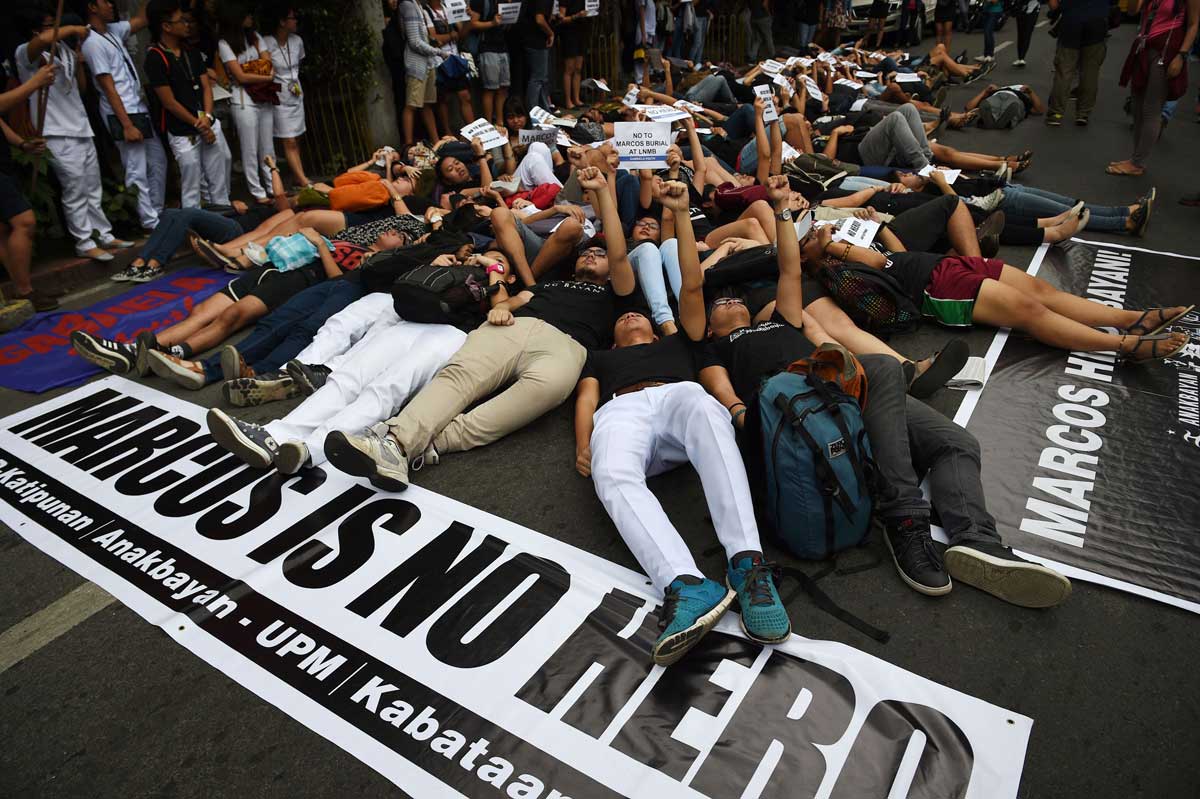
MANILA – Former Philippine dictator Ferdinand Marcos was buried with military honours at a heroes’ cemetery in the capital Manila on Friday, almost 30 years after his death in Hawaii, amid protests by human rights groups and opposition politicians.

Many in the Philippines were shocked and angered by the way Marcos’ family had kept the timing of the burial secret, with Vice President Lenie Robredo likening the ceremony to “a thief in the night”.

“This is nothing new to the Marcoses – they who had hidden wealth, hidden human rights abuses and now hidden burial – with complete disrespect for the rule of law,” Robredo said in a statement.

President Rodrigo Duterte, who is attending the Asia Pacific Economic Cooperation summit in Lima, Peru, had ordered the burial in August, fulfilling an election campaign promise.

Human rights groups opposed his burial at the heroes’cemetery south of Manila but the Philippines Supreme Court ruled against their protests last week.

Marcos ruled the Philippines for 20 years, during which time he, his family and cronies amassed an estimated $10 billion in ill-gotten wealth, a commission found.

Tens of thousands of suspected communist rebels and political foes were killed.

He was chased from office in a people’s power revolt in 1986 and died in exile in Hawaii three years later. His family returned to the Philippines in the 1990s and became powerful politicians representing his home province of Ilocos Norte.

Military spokesman Colonel Edgard Arevalo said “the will of the Marcos family” had to be respected after they requested a simple, private ceremony.

The media was banned from the Libingan ng mga Bayani cemetery.

Throngs of journalists waited outside as the military gave the late president a hero’s funeral, a 21-gun salute being fired as a Philippine flag was rolled and handed to Marcos’ widow, Imelda.

“This is what we have been praying for,” Marcos supporter Cherrie Cobarrubias told Philippine television, saying she planned to visit the grave later on Friday.

“We are happy,” she said.

Dozens of activists, human rights advocates and students, carrying placards and banners saying “Marcos is a traitor, Marcos not a hero” held protest rallies around Manila, some burning pictures of the late ruler.

Police said Marcos’ body was flown by helicopter from his hometown in the northern Philippines for burial at noon.

Marcos’ body was returned to the Philippines in the early 1990s and was placed in a refrigerated mausoleum at his hometown in Paoay in Ilocos Norte province.

Read also: Philippine dictator Marcos to be buried at heroes’ cemetery: Police

Marcos confirmed seeing ghosts in Philippines’ presidential palace

Body politics: Famous preserved corpses

Image: 
Category: 
Publication Date: 
Friday, November 18, 2016 – 14:39
Keywords: 
Send to mobile app: 
Source: 


Story Type: 
Others

Source link

Passers-by pin down man who allegedly took upskirt photos in MRT station

0

Four men chased a middle-aged man who had allegedly taken upskirt photos of a young woman at Toa Payoh MRT station.

The man ran off towards the HDB blocks in the area after the woman shouted for help, but the men caught up with him after about 100m.

They pinned him down for about 10 minutes before the police arrived to arrest him.

The woman, who is in her 20s, was ascending an escalator at Exit C of Toa Payoh MRT station at 2.25pm on Wednesday when she realised a man was taking upskirt photos of her, Shin Min Daily News reported.

A bank employee who wanted to be known only as Mr Chua, 25, said the woman was shouting for help while pointing at the man.

Four men chased the suspect while the woman ran behind them.

A 19-year-old saleswoman, who wanted to be known only as Miss Lim, was waiting for her friends when she saw the four men chasing and catching the middle-aged man.

The man, whom she described as well-built, tried to break free after he was pinned down.

She told Shin Min: “A woman in a blue dress caught up with them and I overheard her saying that the man was trying to take upskirt photos of her.”

Miss Lim said the middle-aged man kept begging to be released.

“First he said he had asthma, then he said he had to answer his phone. He kept pleading with the four men to let him go,” she said.

Shin Min understands that the middle-aged man, who also claimed he has high blood pressure, said he would co-operate only if he received medical treatment for it.

The police said they were alerted to a case of public nuisance at Block 175, Lorong 2 Toa Payoh, and a 43-year-old man was arrested.

The alleged victim was visibly shocked, trembling and crying.

Nurse Lau Wing Yup, 32, said he saw a crowd at Block 175 and thought someone had fainted and needed help, so he got off his bus at a nearby stop. He then saw the woman sitting at a nearby bench, crying.

He told TNP: “Several people went up to try to comfort her, but she continued to tremble uncontrollably. She was very emotional.”

Police investigations are ongoing.


This article was first published on November 18, 2016.
Get The New Paper for more stories.

Image: 
Category: 
Publication Date: 
Friday, November 18, 2016 – 13:35
Keywords: 
Send to mobile app: 
Source: 


Story Type: 
Others

Source link

Bursting at the seams: Singapore's cast-off clothing

0

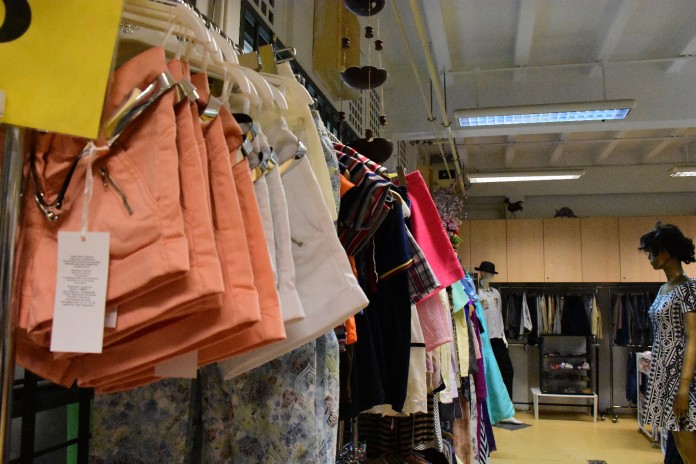
SINGAPORE: Racks of brightly coloured clothes line the aisles at the Salvation Army’s Family Thrift Store in Tanglin. A mannequin sporting a black, curly wig wears a black and white printed dress, while another models a red dress with a black skinny belt.

The racks are jammed tightly with clothes of varying patterns, sizes and brands, some evidently brand new with tags still attached.
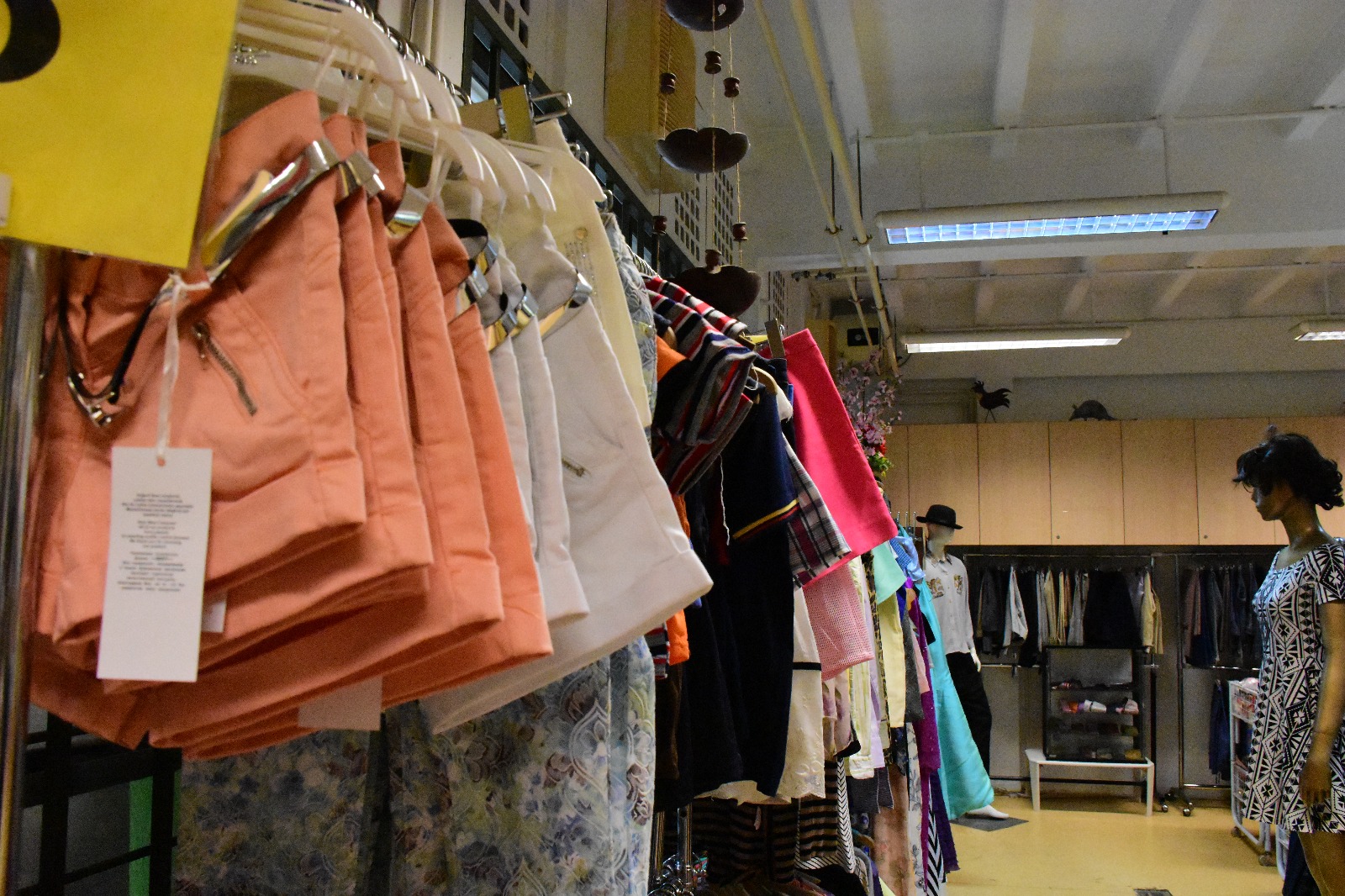
The Salvation Army’s Family Thrift Store in Tanglin (Photo: Winnie Goh).

Singaporeans looking to clear their bursting wardrobes often turn as their first port of call to the charity, which accepts donations of clothing, furniture and other items like household goods.

But what is displayed in this store – and in fact across their five thrift stores islandwide – is only a small fraction of what it gets on a daily basis.

On average, the Salvation Army receives about 10 tonnes of donated items per day, about 60 per cent of which is clothing. The amount can go up to about 30 tonnes a day during peak periods like the month leading up to Christmas.

And the burgeoning mounds of clothes taken in by the charity highlights a larger problem – the sheer amount of cast-off clothing generated by Singaporeans.

BUYING MORE THAN NEEDED

According to statistics from the National Environment Agency (NEA), Singapore generated 156,700 tonnes of textile and leather waste last year. This category, according to an NEA spokesperson, includes used clothing, linen and bags.

But of this amount, only 12,500 tonnes were recycled, which brings Singapore’s recycling rate in this category to just 8 per cent. NEA said textile and leather waste that is “not segregated at source for recycling or reuse” is incinerated.

Singapore’s rate appears to be part of a global problem: In the US, only about 16 per cent of textile waste was recycled in 2014, according to a report from the Environmental Protection Agency. In the UK, it is 14 per cent, according to a report published last year by the Department of Food, Environment and Rural Affairs, citing 2011 figures. 

Reducing the amount of clothing waste in Singapore is a challenge, according to Nuramirah Suyin Zaihan, an environmental engineer at the Singapore Environment Council (SEC). Greater spending power naturally fuels the consumption rate of goods, leading to consumers buying more than they need, she explained.

“Consumers are unable to see the connection between clothing consumption and the resultant waste that they produce,” she said.

The proliferation of fast-fashion chains in neighbourhood malls may also be contributing to the issue.

“The emphasis of mass production of such clothing to consumers can result in clothes that are of poor quality and are not meant to last long,” explained Ms Nuramirah. “These clothes will not only have a low resale value, but have a high chance of ending up as waste.”

“The competitive prices and convenience brought about by online shops and marketplaces also accelerates the clothing waste issue,” she added.

Research suggests this could be a key factor behind some people’s buying habits.

As part of an upcoming documentary The Trash Trail, Channel NewsAsia surveyed 1,000 Singaporeans to find out how much clothing they discard, and why.

According to the results, Singaporeans buy about 34 pieces of brand new apparel per year, with almost half of them citing discounts as the main driver for doing so.

And on average, they discard 27 items of clothing per year, citing reasons like “making space for new clothes”, “no longer fits” and “there are defects”.

LACK OF AWARENESS

People in Singapore are generally not aware of how and where they can recycle their old clothes, said Ms Nuramirah.

She added that due to a lack of education on proper recycling, cross-contamination of recycling bins is also a problem. “People should practice proper recycling habits by bagging recyclables like clothing waste and sealing it thoroughly to avoid any cross contamination,” she said.

Unlike paper or food waste, which is thrown away instantly, clothing waste also tends to accumulate over long periods of time and gets discarded in large quantities when people spring-clean their wardrobes.

As a result, she added, it is common to find people donating their old clothes to charities like the Salvation Army.
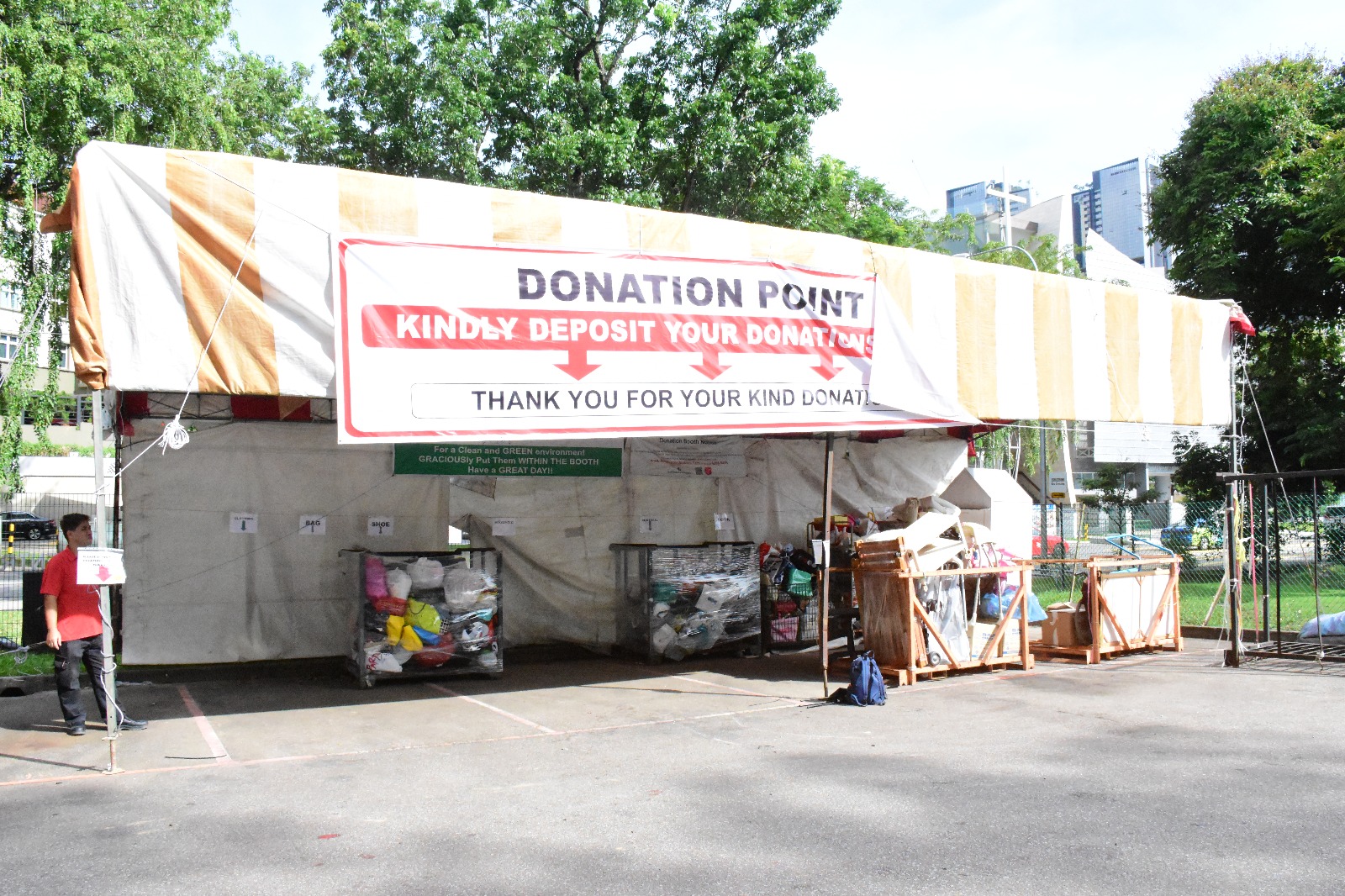
A donation point at the Salvation Army Family Hub in Tanglin (Photo: Winnie Goh). 

TOO MANY CLOTHES

The Salvation Army estimates that only about 8 to 10 per cent of donated clothes will be put on sale to members of the public – simply because of the sheer number of items they receive. 

“We receive so much clothing per day that it’s impossible for us to put it all on display in our shops,” said David Lim, senior manager of wholesale and export for Red Shield Industries, the charity’s social enterprise arm.
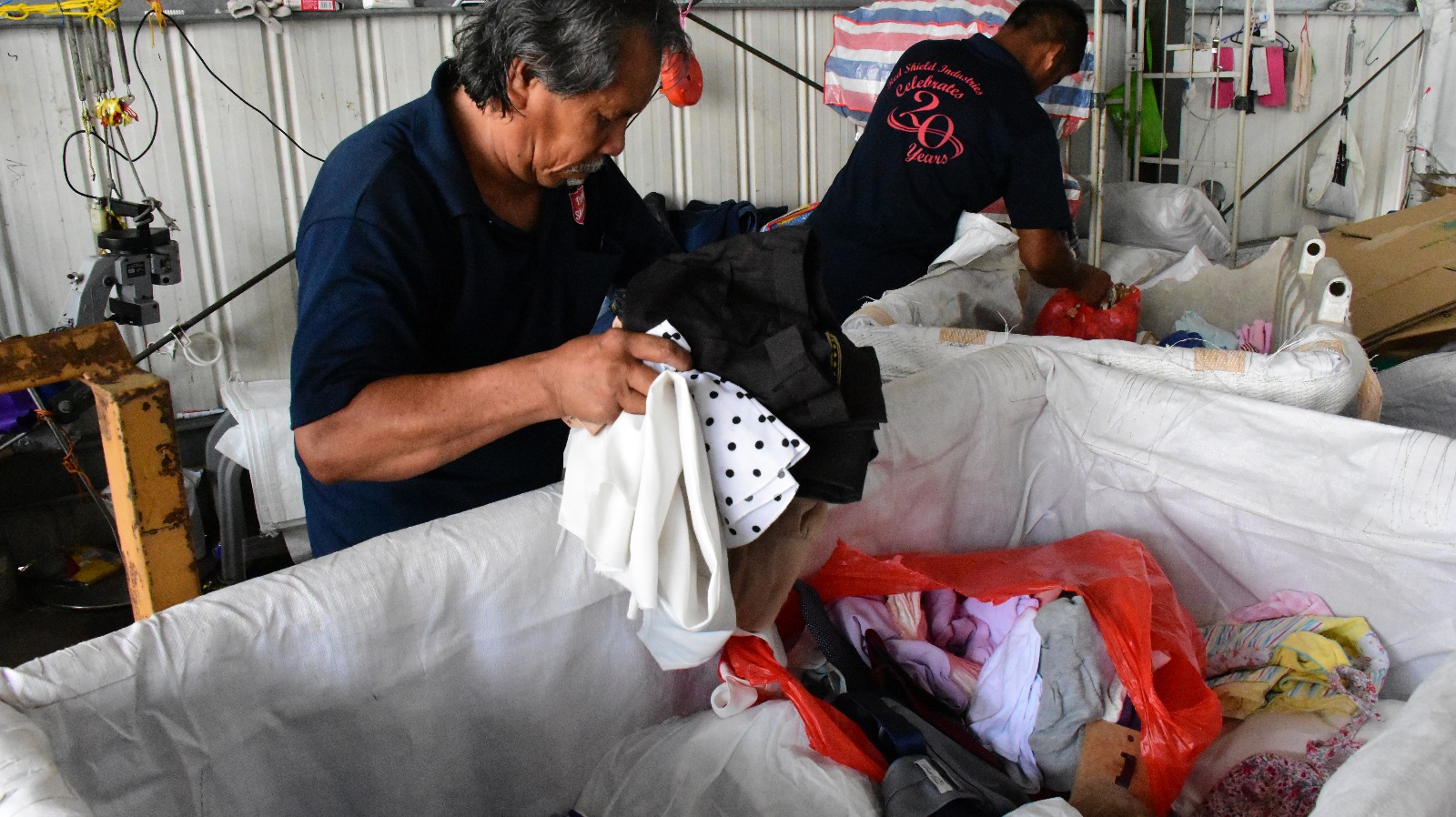
Workers at the Salvation Army sort donated clothing at its central processing centre (Photo: Winnie Goh). 

He explained that the clothes on sale at the charity’s thrift stores has passed two rounds of quality checks – first at the charity’s central processing centre, and again at the shop. Whatever does not make the cut will be returned to the processing centre for export to Malaysia and Indonesia.
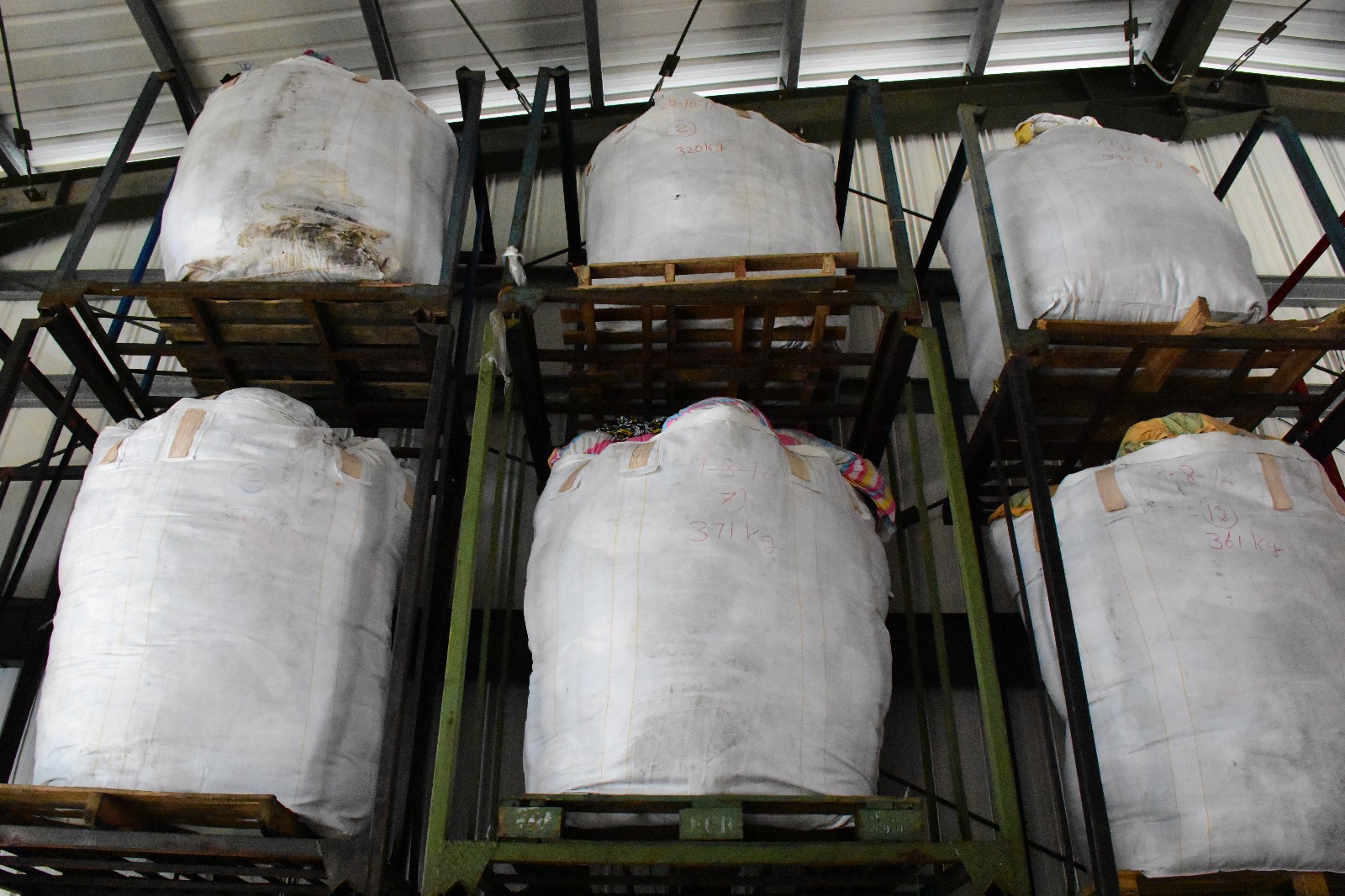
Jumbo bags of donated clothes are prepared for export at the Salvation Army’s central processing centre. Each bag holds about 400kg (Photo: Winnie Goh). 

“The funds we receive will help the Salvation Army in transforming lives,” he added.

But while donating to charities is one way to reduce the amount of clothes being thrown away in Singapore, Ms Nuramirah noted that “a mindset and lifestyle change is needed”.

How then, can this mindset and lifestyle change be effected? For one woman, the answer comes in the form of a sewing needle.

THE ART OF UPCYCLING

While Singaporeans throng shopping malls looking for the latest cheap clothing buys, Ms Agatha Lee estimates that she buys new clothes for herself and her family only once or twice a year.

Instead, she combines her skill with the sewing needle with her passion for the environment and finds ways to turn her old clothes into new items for herself and her home. She describes the process as “upcycling”, or turning discarded items into functional products of even higher quality and value.
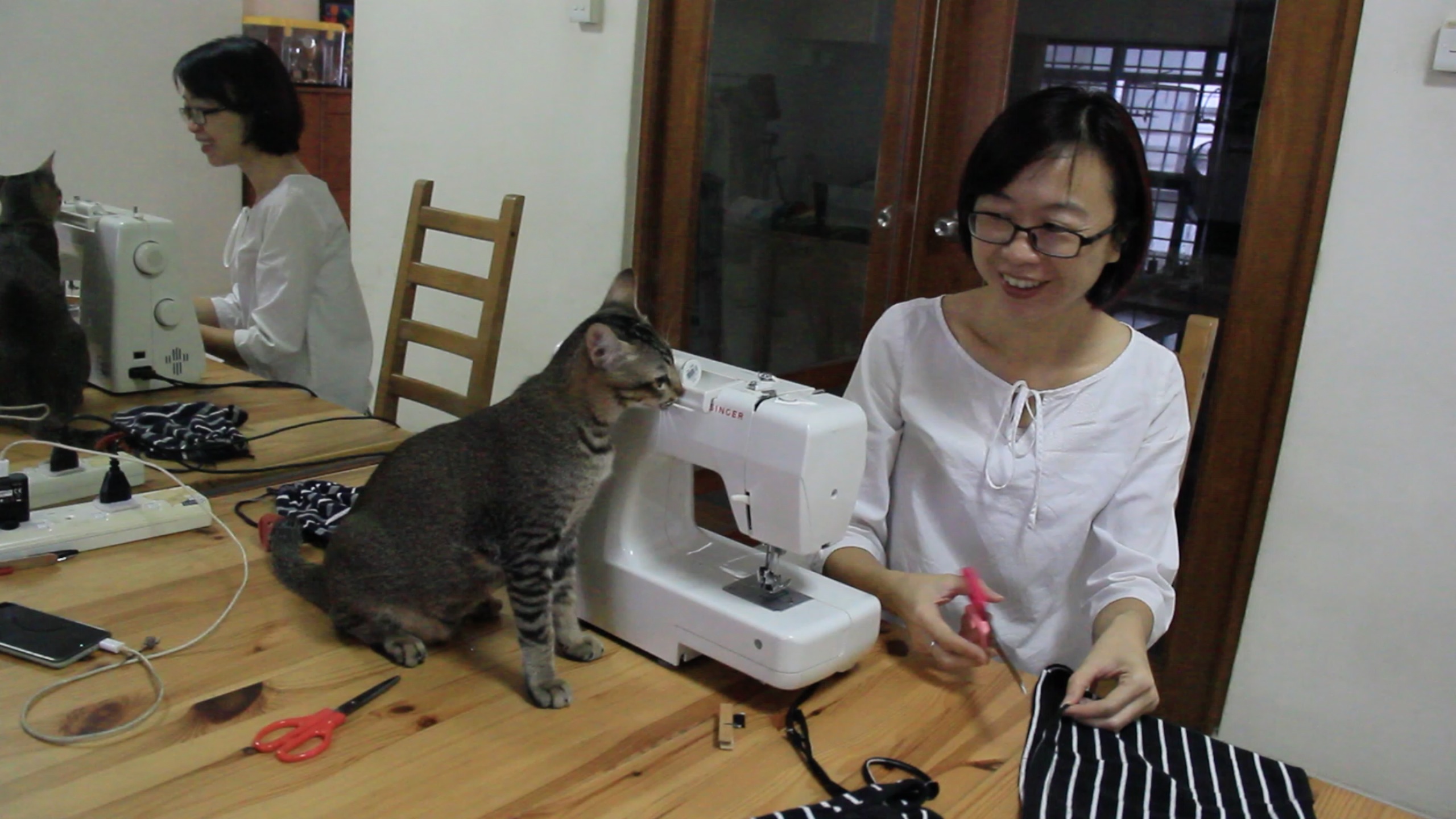
Ms Agatha Lee was inspired to upcycle her old clothes into new items for herself and her home (Photo: Winnie Goh). 

“A few years back, I realised I had a lot of clothes in my wardrobe,” she recounted. “Initially I was going to throw them away or donate them, but then I realised it would be such a waste because while I was clearing out my wardrobe, I would also be buying even more clothes.”

“I browsed on the Internet and realised there was a whole community of people who were upcycling their clothes, so that was how I got started.”

A look around her Woodlands flat reveals evidence of her creative flair: A desk chair has been reupholstered with covers made out of an old pair of jeans. Her cat is curled up on a picnic blanket made out of scrap material from discarded clothes. And a mannequin displays a halter top made out of what used to be a pair of trousers.
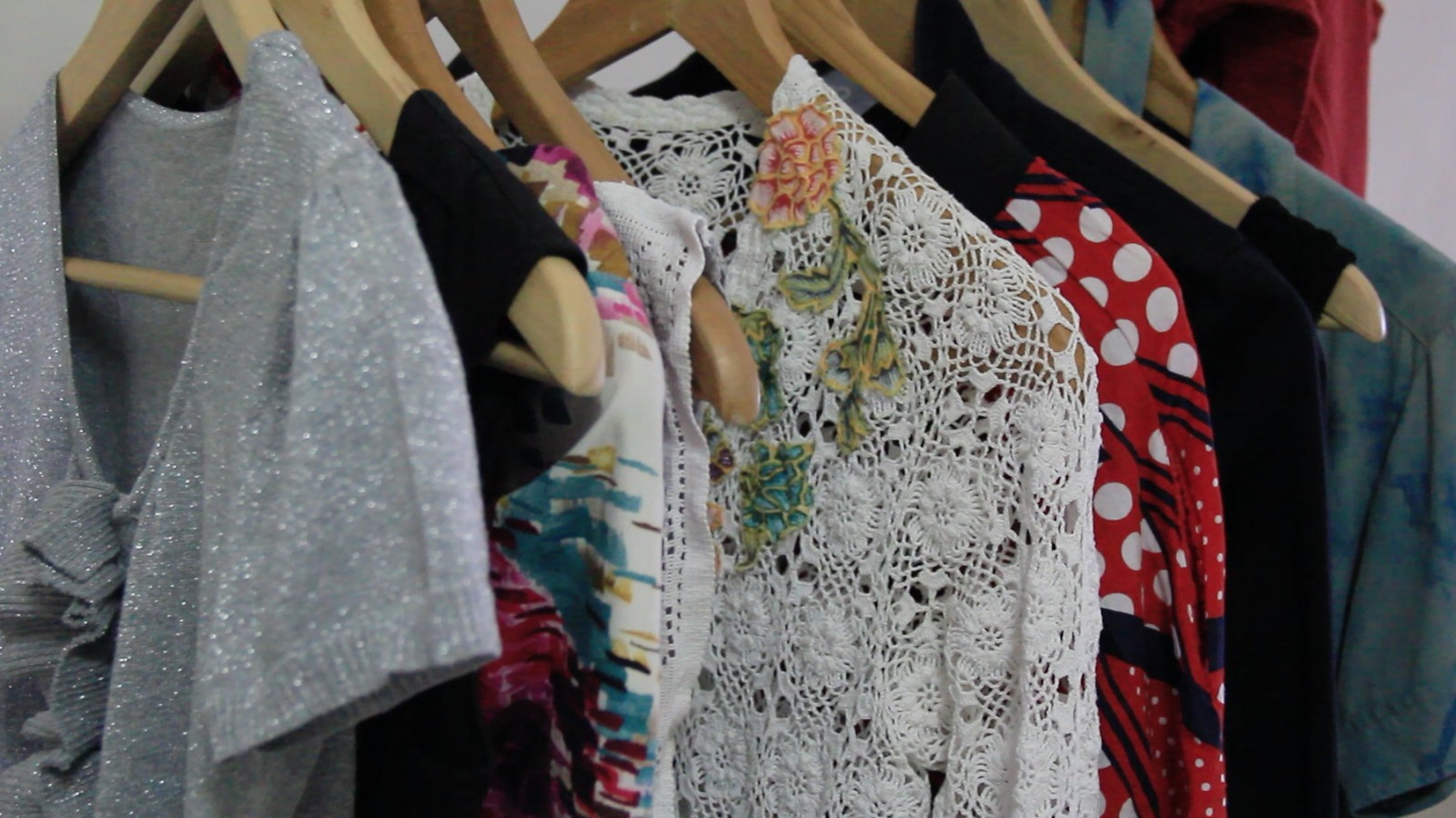
Some of Ms Lee’s upcycled creations (Photo: Winnie Goh).

It was not long before Ms Lee, who works part-time, began sharing her upcycling tutorials online. And her friends soon encouraged her to start running workshops to show Singaporeans how their unwanted clothes can be turned into something new.

“I was engaged by a lot of corporates and schools, and last year, I decided to have my own series of workshops,” she said. Participants in her full-day workshop learn the basics of sewing using a sewing machine, and try their hand at turning two or three of their own items of clothing into something new.

“At the last workshop, one lady converted her dress into her bag that was really well done, and there was another lady who had never sewn in her life, and she converted two of her husband’s T-shirts into cushion covers, complete with zips,” she recalled.

“You don’t need a lot of sewing skills and you don’t need to chop up the whole item to make it into another garment,” she added. “It can actually be a very fun activity and doesn’t have to take too much time.”
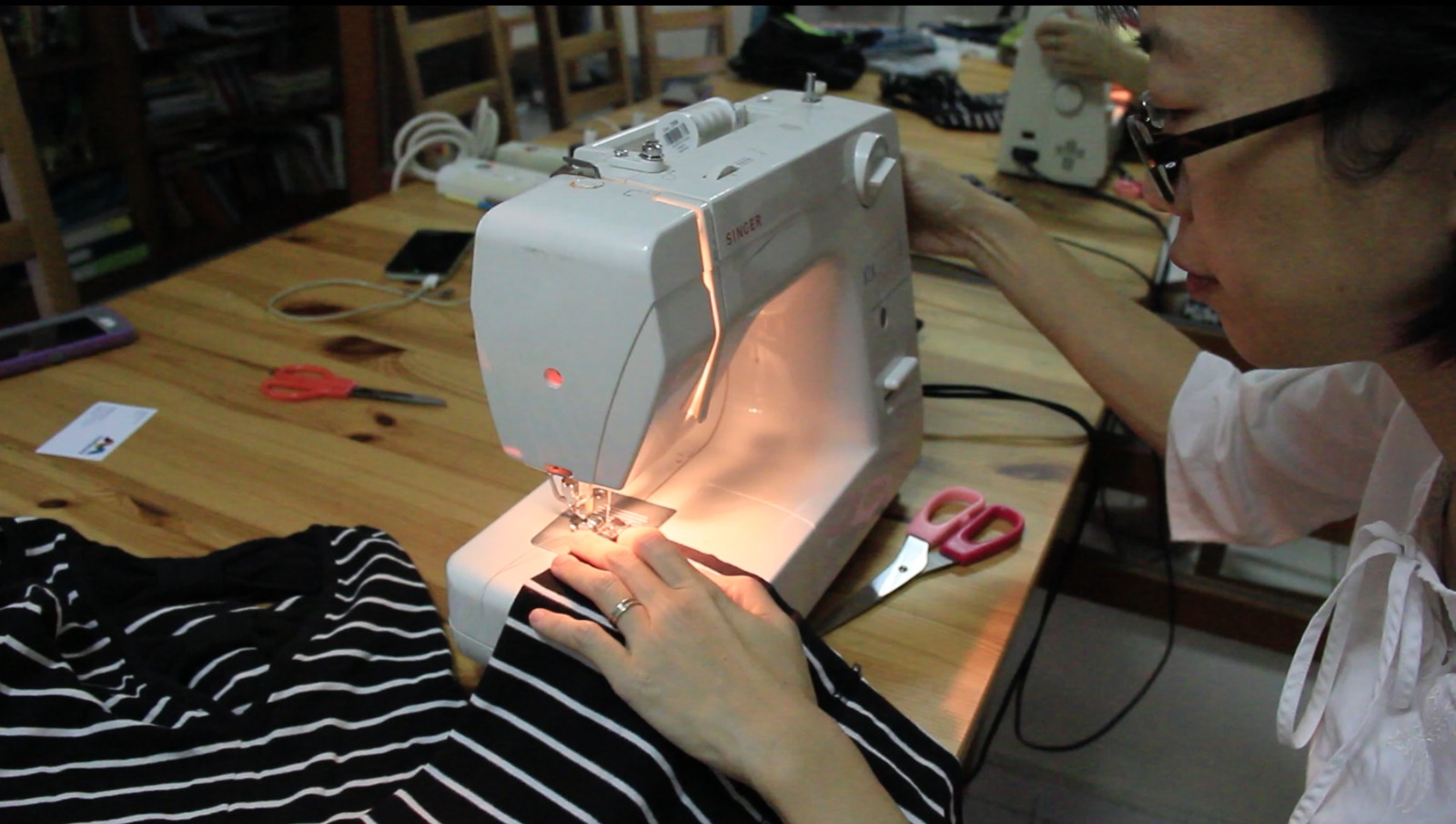
Ms Lee turns half an old top into a drawstring bag (Photo: Winnie Goh). 

But upcycling aside, Ms Lee said the simplest means of reducing the vast amount of clothing waste Singapore generates is for people to change their mindset, and buy fewer clothes. “Even before you enter the store, decide whether you even need that item of clothing,” she said.

“Because once you buy it and find you don’t want to wear it anymore, you’re probably going to end up throwing it into the bin.”

And that is where one business comes in: to save good clothing from the bin, and in the process, save people some money.

SECOND-HAND FIRST

With warm lighting and pop music blasting through the store, the flagship Refash outlet at City Plaza resembles any other store in the mall selling clothes targeting young fashionable women looking for a good bargain. 
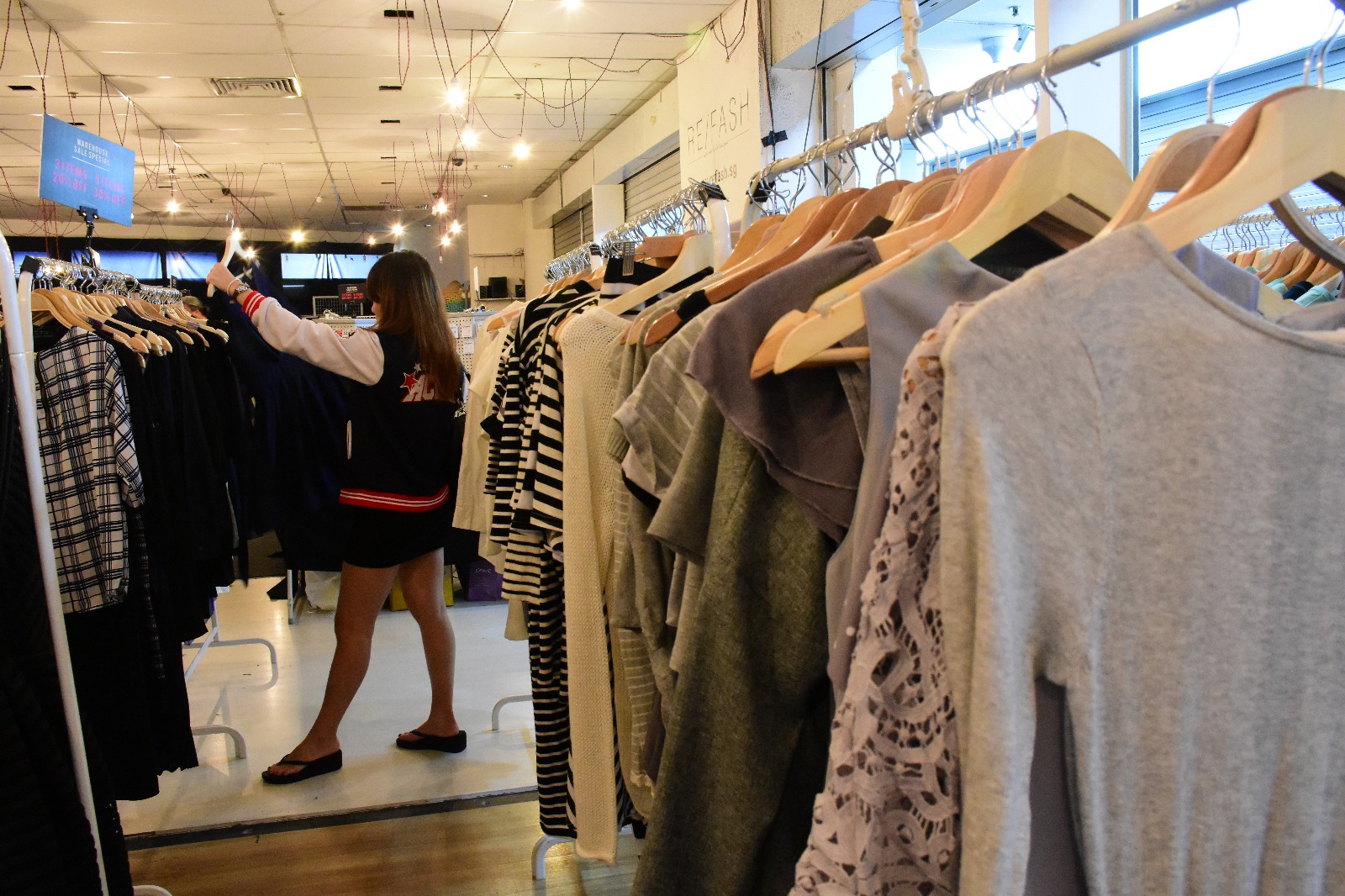
The flagship Refash store at City Plaza (Photo: Winnie Goh). 

But there is one difference: everything for sale on the racks is second-hand, and going for a fraction of its original price. A beige knit sweater from Uniqlo cost $10, while a black flare dress from New Look sells at $12.

Refash founder Aloysius Sng hopes to provide a simple solution for what he described as “a real problem in the market”: that people don’t wear a lot of items in their closet. He noted that a lot of these items also tend to be in almost mint condition, and still on-trend.
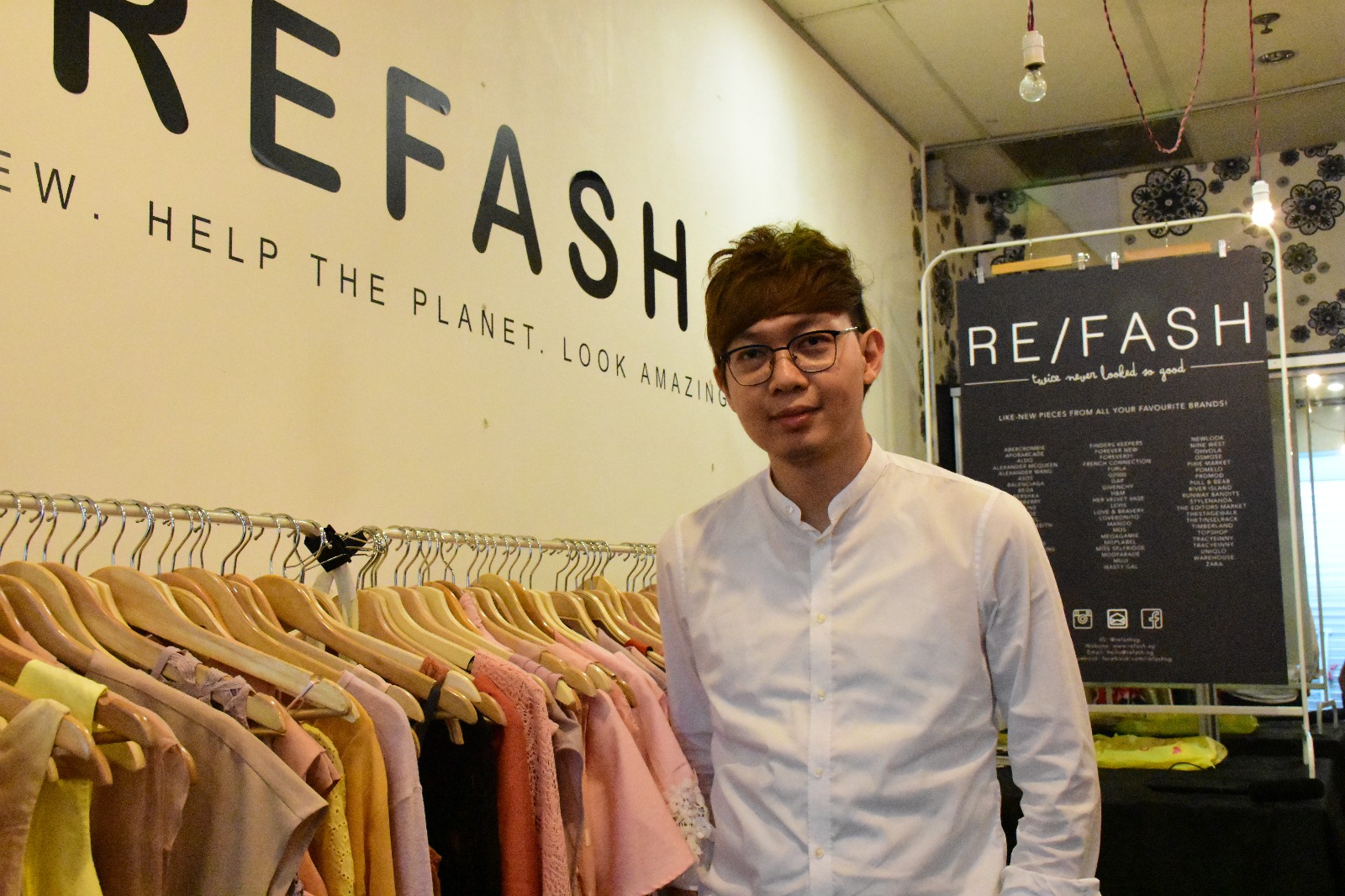
Refash founder Aloysius Sng (Photo: Winnie Goh). 

“With shortening trends and fast-fashion brands producing new designs faster than ever, that also means that consumers are consuming fast-fashion faster than ever,” he said. “We make it extremely simple for ladies to clean out their wardrobe, by just stuffing all their unwanted clothes in a bag, pass it to us, and we’ll do the rest.”

Clothes that reach Refash are sorted, tagged and either put on the racks at one of the company’s physical stores or listed on their website for sale, explained Mr Sng. The company takes a small service fee for each sale. “We accept mostly fast-fashion brands like H&M, Uniqlo, Topshop and Zara, and local brands like Love Bonito and MDS.”

“The clothes just have to be on-trend, and in like-new condition.”

Bags of clothes waiting to be sorted and tagged by Refash staff (Photo: Winnie Goh). 

Refash accepts about 80 per cent of the clothes they receive, he added. Clothes that are rejected upon sorting or are not sold after some time are either returned to the seller, donated to charity or exported overseas for sale.

Over the last nine months, Refash has processed more than 80 thousand pieces of clothing and made about half a million dollars in sales revenue. And Mr Sng said there is a waiting list of more than a thousand people looking to sign up with them.

These are encouraging signs, he said, that Singaporeans are becoming more open to the idea of buying and wearing second-hand. “Just three weeks ago, we had a warehouse sale…and a stream of people queuing up to shop for second hand clothes. It just goes to show that when second-hand is presented in a manner that hasn’t been done before, people are receptive to it.”

“We can’t say for sure that we’ve reduced textile waste by 10 or 20 per cent, but it’s a small step towards a longer term vision…to inspire a new generation of consumers to always think, second-hand first.” 

The Trash Trail will be aired on Channel NewsAsia in February.

Source link

WhatsApp texts 'show Yeo's big role in bank deal'

0

Heated text messages sent by former BSI banker Yeo Jiawei were produced in court yesterday as prosecutors continued to attack his claims that he was just a bit player in a huge money laundering scam involving the 1Malaysia Development Berhad (1MDB) fund.

The messages centred on a deal by a unit owned by Abu Dhabi state fund International Petroleum Investment Company (IPIC) to buy out Amicorp Bank in Barbados. It was alleged that Yeo was angry when he suspected the part-owner of Amicorp Bank of trying to cut him out of the deal that he had brokered.

Yeo called the executive “difficult” and even unleashed foul-mouthed messages, the court heard. He told Amicorp relationship manager Jose Renato Carvalho Pinto via WhatsApp in April last year: “Tell him (the Amicorp part-owner) to go fly kite. I’m the f****** relevant person. Tell him if he wants, fly down to see me.”

The prosecution said this showed Yeo played a far bigger role than that of a mere intermediary to Malaysian tycoon Jho Low and Mohamed Ahmed Badawy Al Husseiny. Both are being investigated over money laundering linked to 1MDB. In fact, Yeo was so trusted by Mr Low and Al Husseiny, ex-chief executive of the IPIC unit, that he sat in on meetings with their lawyers over the purchase of the Barbados bank.

The prosecution pointed to alleged inconsistencies in Yeo’s testimony when he claimed he was a mere “business introducer, intermediary, relationship manager and independent consultant” when servicing Al Husseiny, Mr Low and a close Low associate, Mr Eric Tan Kim Loong.

Yeo had downplayed his part yesterday, saying: “I was the introducer but I don’t play an important role. Without me, they can still do a deal.”

But in earlier WhatsApp exchanges with Mr Carvalho, Yeo had told him to tell Amicorp senior management that they must talk to him first before Al Husseiny.

Yeo had messaged Mr Carvalho: “He (Amicorp CEO) should understand that without my relationships with these people, Amicorp… will not get these deals.”

But yesterday, Yeo testified: “I’m the independent consultant introducing the deal to Amicorp and I want to be paid.” In another WhatsApp exchange with Mr Carvalho, Yeo said he had been “mandated” to run the Barbados bank project.

Deputy Public Prosecutor Tan Kiat Pheng said Yeo’s “deep” involvement in the Amicorp deal was “motive” for frustrating the Commercial Affairs Department (CAD) probe.

Yeo, facing four counts of witness tampering, had allegedly asked Mr Carvalho to get rid of his laptop, to not come to Singapore and to tell his assistant to lie to the CAD. DPP Tan added: “It showed arrogance in your attitude.” Yeo disagreed: “I’m just trying to protect my interest.”

The prosecution also claimed that Yeo was “so arrogant he could even override” Mr Low’s brother, Szen, over a payment transfer through his Amicorp bank account. Yeo told Mr Carvalho via WhatsApp to “ignore” Szen’s calls. Mr Tan said: “This shows you are in the position to control Szen Low’s account.”

The trial continues on Nov 22.


This article was first published on November 18, 2016.
Get a copy of The Straits Times or go to straitstimes.com for more stories.

Image: 
Publication Date: 
Friday, November 18, 2016 – 14:00
Send to mobile app: 
Source: 


Story Type: 
Others

Source link

Search for new NKF CEO 'could take months'

0

The search is on for a new leader at the National Kidney Foundation (NKF) after its chief executive officer was sacked for a personal indiscretion.

But replacing him will not be easy and could take months, say observers.

While the NKF is a charity, the complexity of heading one of Singapore’s largest non-profit healthcare groups makes it no less – or even more – challenging than running a hospital, say leaders in the charity and human resource sectors.

And those equipped to take over the hot seat vacated by its former CEO Edmund Kwok will have to be eminently qualified, preferably possessing experience in running a sizeable healthcare facility.

Besides strong leadership and administrative skills, the new leader must have a heart for patients, given the charity’s work in providing subsidised dialysis, said those interviewed.

On top of that, the ability to withstand the public scrutiny that comes with a high-profile job is required.

This means the search for the NKF’s next boss could take months – or longer, they said.

Human resource practitioners estimated that there are fewer than 500 people here with the necessary expertise and experience to be considered for the job.

These include those in senior management roles in healthcare institutions.

Law don Eugene Tan, who sits on the board of a charity that runs three nursing homes, said: “The chief executive has to be a strategic planner, a deft executor of plans, a charismatic fund-raiser and have a heart for beneficiaries – almost a polymath administrator.”

Such a qualified candidate will not come cheap.

Besides, medical charities have to compete with the private and public sectors for leaders and must offer competitive packages to attract talent, said those interviewed.

Ms Anita Fam, who sits on non-profit boards like those of the Assisi Hospice and the National Council of Social Service, said: “You don’t have to pay top dollar, but you have to pay a fair dollar. You can’t attract people of calibre if you pay far below the market rates.”

The NKF declined to reveal Mr Kwok’s salary when asked, nor would it say who were among those being considered to replace him.

Mr Kwok was previously the vice-president of oncology at Parkway Healthcare and held positions at Tan Tock Seng Hospital and the Institute of Mental Health, among others.

The NKF has close to 1,000 staff, almost 4,000 patients – with more to come – and an expenditure of about $97 million in its last financial year that ended in June.

National University of Singapore Business School professor Ho Yew Kee, who sits on several charity boards, pointed out that most of the other large medical charities pay their top staff between $200,000 and $500,000 annually.

Those interviewed noted that while these salaries seem large, the donating public must take into consideration the responsibilities and complexity of running a huge outfit like the NKF.

Both Mr Kwok and his immediate predecessor came with a wealth of experience in the healthcare sector.

When former NKF chairman Gerard Ee was looking for a chief executive to replace Mr T.T. Durai, who had to step down in the wake of public outrage over his misuse of donations and lavish pay package, he had 13 applicants to chose from.

In the end, Mrs Eunice Tay, the former chief operating officer of the National Neuroscience Institute, got the job.

Mrs Tay, who is legally trained, retired in 2013.

She was succeeded by Mr Kwok, who has a Master of Science in healthcare management from the University of Wales.

In the wake of Mr Kwok’s sudden sacking, Mrs Tay has been asked by chairman Koh Poh Tiong to assume CEO responsibilities until a new leader is found.

Mr Ee said of the demands of the top job: “Running the NKF will be increasingly complex in the future with the growing number of patients and demands made on it.”


This article was first published on November 18, 2016.
Get a copy of The Straits Times or go to straitstimes.com for more stories.

Image: 
Category: 
Publication Date: 
Friday, November 18, 2016 – 14:35
Keywords: 
Send to mobile app: 
Source: 


Story Type: 
Others

Source link

Celebrity Chow with Leon Jay Williams

0

Not many people know that Eurasian actor-singer Leon Jay Williams has Peranakan blood from his mother.

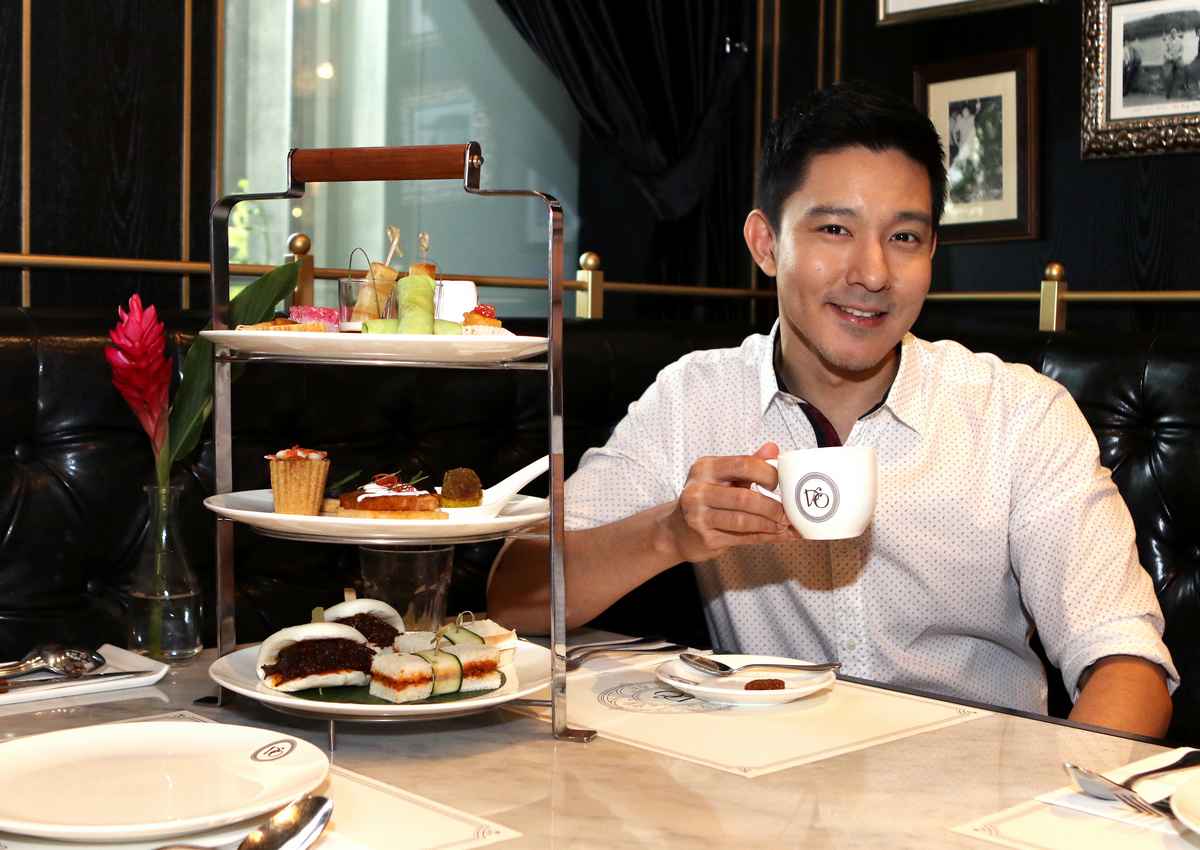
It is fitting then, that M had tea with him at celebrity chef Violet Oon’s newest Nonya restaurant – National Kitchen By Violet Oon at the National Gallery Singapore.

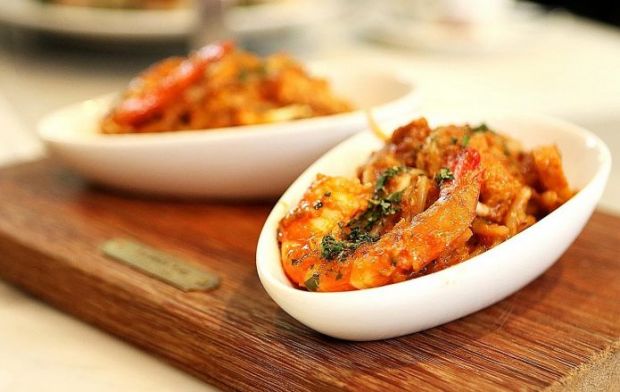
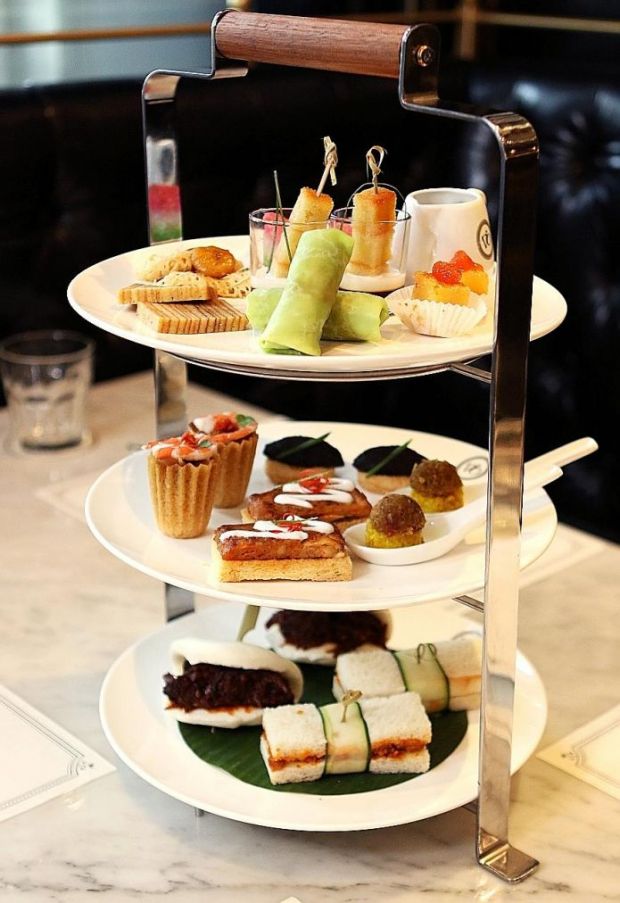
Seated amid the beautiful colonial decor, floral Peranakan tiles and framed vintage photographs, Williams sampled the Singapore High Tea set, which consisted of a mix of savoury and sweet Nonya treats. He also tried Oon’s signature dry laksa, and chilli crab mantou (Chinese buns).

Dry Laksa. Photo: TNP

“Peranakan food is known for its strong flavours. My mum used to cook it, but not so much recently because it’s a lot of work,” Williams, 40, said.

He picked the hae bee hiam sandwich from the high tea set and dry laska as his favourites, and washed them down with a cup of kopi C with less sugar.

“I’ve never had dry laksa before – it’s very unique. The flavour is great and it’s not too spicy.

“I like how the hae bee hiam sandwich comes in little portions. So while you get the taste of the hae bee, it’s not too overwhelming. It also tastes fresh with the cucumber wrapped around it.”

Williams is starring in Michelle Chong’s comedy Lulu The Movie as Leon. He is the handsome love interest of Lulu – Chong’s Chinese KTV hostess character. The film opens on Nov 24.

“I’m known for my roles as the posh guy in a suit, so I’m doing that again in Lulu The Movie. It’s my first local film, and it was fun working with Michelle as we’ve been friends for a long time,” he said.

Singapore High Tea Set. Photo: TNP

What are your top local food haunts?

I travel to Taiwan and China often and they don’t really have hawker places, so I like to visit those when I’m home.

I’ll go to Bukit Timah Market & Food Centre.

The Guangzhou Mian Shi Wanton Noodle stall at Tanglin Halt Food Centre is one of my favourites.

When we were filming Lulu The Movie, we shot on location at Geylang Claypot Rice. That was great – we had such a good lunch that day.

You’ve spent a lot of your career in Taiwan. What are your favourite things to eat there?

I go to the night markets for street food such as Taiwanese fried chicken and lu wei (a mix of braised ingredients).

I’m also happy with the little cafes there such as NY Bagels Cafe. There’s very good pizza at Alleycat’s Pizza too.

Chilli Crab Mantou. Photo: TNP

Do you cook?

I can cook the basic stuff – enough to survive. I tend to make dishes that are easy to prepare, such as salads, and breakfast dishes such as omelettes and sausages.

My wife, who is Taiwanese, cooks a lot of healthy food for us, especially since we have a daughter who’s about 18 months old. We’ll have rice with Chinese dishes, and pasta, all cooked with less salt and sugar.

What don’t you eat?

I don’t eat a lot of sweets and desserts, or food that’s too spicy.

In China, the spicy food tends to be the mala (made with Sichuan peppercorn) kind. I can’t eat that at all as it’s too much for me.


This article was first published on Nov 18, 2016.
Get The New Paper for more stories.

Image: 
Publication Date: 
Friday, November 18, 2016 – 13:22
Keywords: 
Send to mobile app: 
Source: 


Story Type: 
Others

Source link

Ex-NKF chief Edmund Kwok's case 'an abuse of power'

0

The incident which led to the sacking of former National Kidney Foundation (NKF) chief executive officer Edmund Kwok was an abuse of power, a source close to the case has said.

An act of a sexual nature allegedly took place on Nov 7.

Mr Kwok, 58, approached a colleague in his early 20s, separate sources told The Straits Times.

It was the first time such an encounter had happened between both men, sources said.

It took the employee one day to inform his supervisor in NKF.

The colleague later told his supervisor that he felt he could not say no to Mr Kwok, and that he felt powerless to stop the act, said two well-placed sources. “It was a clear abuse of power,” said one of them.

The younger man involved in the incident also said he did not want to escalate the matter, such as by making a police report, according to sources. He is still working for the NKF, which decided to lodge a police report.

It did so after questioning Mr Kwok. The NKF, during a press conference on Wednesday, said Mr Kwok had admitted, on two separate occasions, that the alleged incident took place.

The first was last Friday, when he was questioned by NKF chairman Koh Poh Tiong. During a disciplinary hearing on Sunday, he again said that it happened.

The organisation’s lawyers advised Mr Koh that what took place was a “reportable offence”.

On Monday, Mr Kwok was sacked by the NKF for the “personal indiscretion”. On Tuesday, the charity made a police report.

Read also: ‘NKF is not about one man’: Board

Mrs Eunice Tay has been asked to assume Mr Edmund Kwok’s duties until a new leader is found for NKF. Photo: Berita Harian

Police investigations would have kicked in, based on the report made by the NKF, said criminal lawyer Amolat Singh .

The next step is to get a statement from the alleged victim.

The Straits Times understands from various sources that the employee who complained has yet to give a police statement.

Another criminal lawyer, Mr Shashi Nathan, said that the police would need to gather sufficient information at this stage to determine if a crime has been committed, including taking statements from the accused and other witnesses.

This will allow the authorities to determine what to charge the accused with and if the person can be arrested.

Said Mr Singh: “But if the victim is ultimately unwilling to provide his statement or testify in court, then there would be no case.”

Sexual harassment victims may feel uncomfortable about speaking up, said Ms Jennifer Heng, communications director of HCSA Community Services.

“Sometimes when victims have to report the matter to a higher authority, they would be revisiting the details of their experience and this could be difficult emotionally and psychologically.”

She added that some may fear the possibility of their identities, and those of their family members and friends, being exposed and open to public scrutiny.

“Also, depending on the age and the profile of the victim, the experience of speaking up to people whom they don’t know personally, such as the police, can be a trauma in itself,” she said.

Read also: NKF had no choice but to sack CEO Edmund Kwok, says chairman

Mr Kwok is married with two children who are in their mid-20s.

The Straits Times understands that his family have “forgiven him”.

They are also getting support from Zion Serangoon Bible Presbyterian Church where Mr Kwok is a church elder.

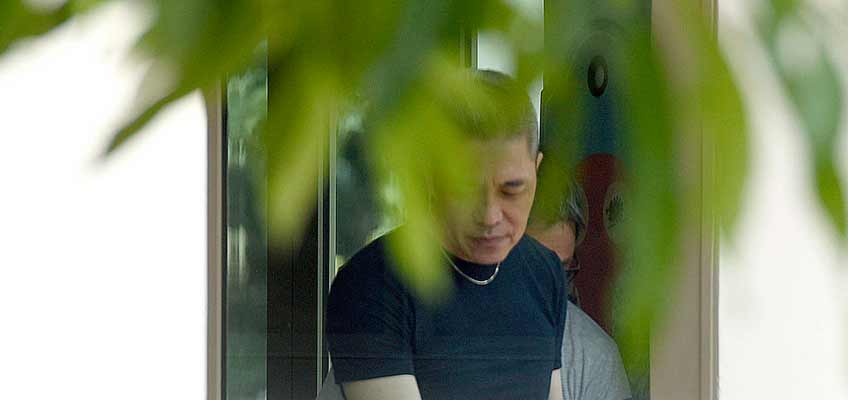
He was glimpsed for the first time since the shock news broke on Wednesday, when he left his terraced house in Hougang yesterday afternoon alone in a car.

Neighbours expressed surprise at what happened.

“It is very unfortunate. He is a nice man, who is very open,” said Mr K.P., 61, a semi-retired headhunter.


This article was first published on November 18, 2016.
Get a copy of The Straits Times or go to straitstimes.com for more stories.

Image: 
Category: 
Blurb: 
<p>The incident which led to the sacking of former National Kidney Foundation (NKF) chief executive officer Edmund Kwok was an abuse of power, a source close to the case has said.</p>
Publication Date: 
Friday, November 18, 2016 – 14:00
Keywords: 
Send to mobile app: 
Source: 


Rotator Image: 
Story Type: 
Others

Source link

Man found dead at foot of block after heated argument with wife

0

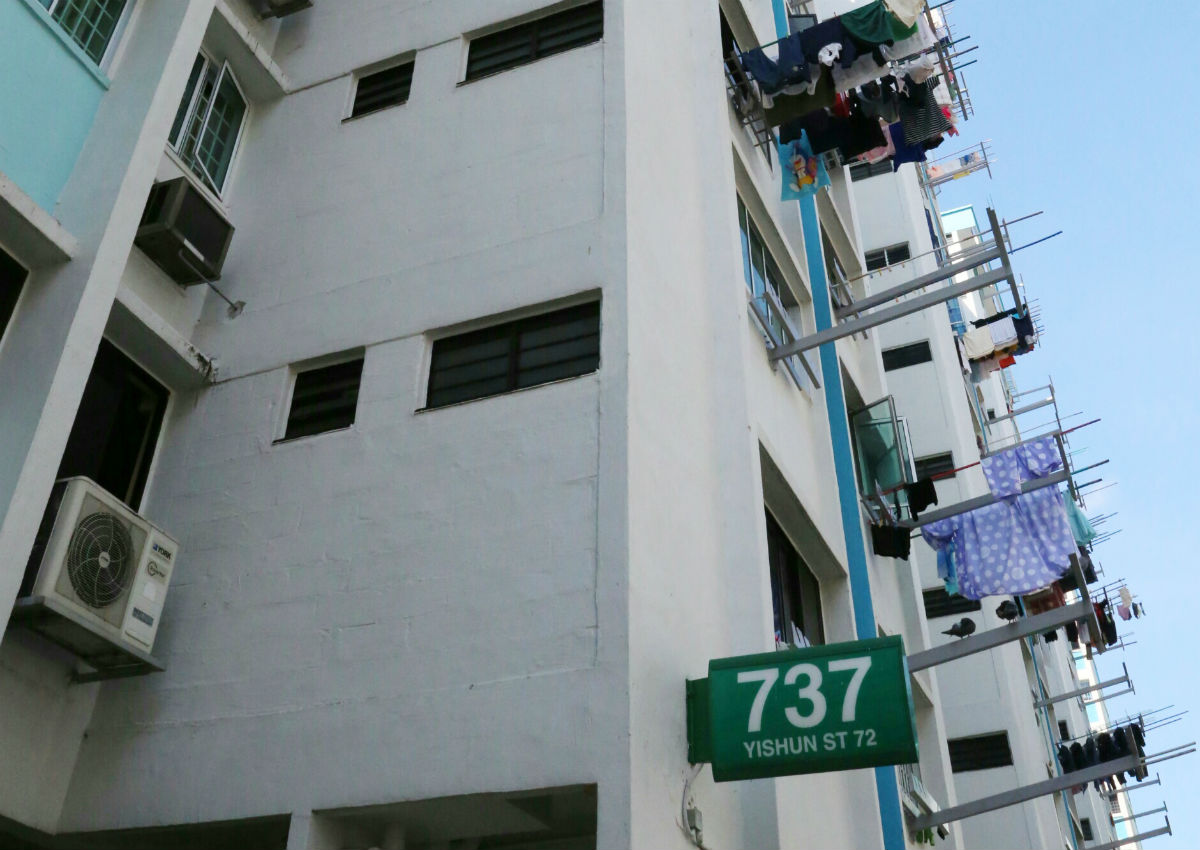
They had lived in the block for close to 30 years, but some neighbours did not even know that Madam Koh Eng, 66, and Mr Ong Chai Seng, 63, were married to each other.

Their relationship had been on the rocks for a long time and they were due to appear in court on Wednesday to undergo divorce proceedings, a neighbour told Chinese evening daily Lianhe Wanbao. But a heated quarrel between the couple at dawn that day ended in tragedy at their home at Block 737, Yishun Street 72.

Just before 6am, they got into a huge argument, reported Lianhe Wanbao.

Shouts were heard before Madam Koh, who had head injuries, ran out of their 12th-storey unit and headed to their daughter’s flat on the seventh storey.

Mr Ong did not chase after his wife.

Their daughter called the police, but when they arrived, Mr Ong was found dead at the foot of the block.

Lianhe Wanbao said Madam Koh found out about her husband’s death only after the police arrived.

He was believed to have fallen from the kitchen window of the flat.

Neighbours told Wanbao that the couple, who had lived in the block for more than 30 years, had a stormy relationship and were often heard having heated arguments.

They said that 13 years ago, Mr Ong had to quit his job as a taxi driver after a stroke.

A woman who lives on the 10th storey told The New Paper that she recognised the couple, but did not know that they were married because she had never seen them together.

The neighbour, who declined to be named, added: “In all my 10 years living here, I’ve never seen them take the lift together. I didn’t know them well, but I always saw the man going for early morning walks in the nearby park.”

Neighbours told TNP that they had seen Mr Ong moving about with the help of a walking stick.

WALKING STICK

He is believed to have hit Madam Koh with the walking stick during their fight on Wednesday, Wanbao reported.

When TNP visited Mr Ong’s wake yesterday evening, his family declined to be interviewed.

Two women who identified themselves as Mr Ong’s sisters told Wanbao at the void deck of the block yesterday morning that he was the sixth of nine siblings.

One sister said that they seldom talked after he got married more than 30 years ago. The last time she saw him was two years ago, Mr Ong had diabetes and high blood pressure and had lost a lot of weight in recent years, she added.

A police spokesman told TNP they were alerted to the incident at 5.57am on Wednesday.

A 63-year-old man was found motionless at the foot of Block 737, Yishun Street 72.

A 66-year-old woman connected to the case was found injured in a unit in the block, the spokesman said.

Investigations are ongoing.

The Singapore Civil Defence Force told TNP it sent an ambulance to the scene.

The man was pronounced dead by paramedics and the woman was taken to Khoo Teck Puat Hospital.

Aside from her head injuries, Madam Koh had bruises on both eyes and was experiencing dizzy spells, reported Wanbao.

Doctors suspected she might have a brain injury and transferred her to the intensive care unit for further examination.


HELPLINES
Samaritans of Singapore (SOS):1800-2214444
Singapore Association for Mental Health:1800-2837019
Sage Counselling Centre:1800-5555555
Care Corner Mandarin Counselling:1800-3535800


This article was first published on November 18, 2016.
Get The New Paper for more stories.

Image: 
Category: 
Publication Date: 
Friday, November 18, 2016 – 14:02
Keywords: 
Send to mobile app: 
Source: 


Rotator Headline: 
Man found dead at foot of block after heated argument with wife
Story Type: 
Others

Source link

In Thai politics, better be nice to rice farmers

0

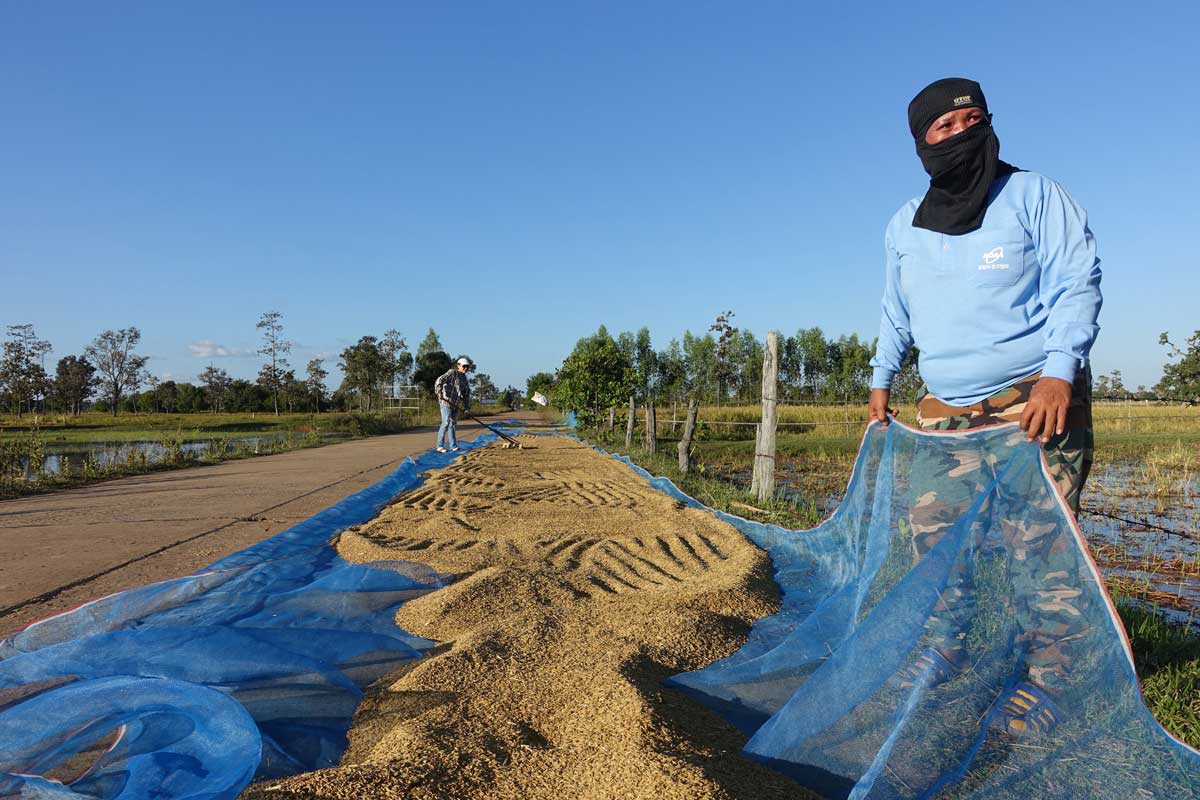
The sun is low as rice farmer Sammai Kruenthong emerges from a village minimart, holding a packet of instant noodles.

He waves it in my face. “This costs 10 baht per packet,” he says. “But my rice is now sold for 6 baht per kg.”

He adds: “I don’t know what this government is eating.”

Discontent is simmering in this part of north-eastern Thailand, which produces premium jasmine rice.

Abundant rain this year has bumped up harvest so much that the prices of top-grade Thai jasmine rice have been the lowest since 2006.

According to data from the Thai Rice Exporters Association, the export price of such rice was US$616 (S$872) per tonne on Nov 16, down 23 per cent from a year ago.

Millers are buying the freshly harvested grain from farmers at 6,000 baht (S$240) a tonne, which barely covers Mr Sammai’s cost.

Political parties largely laid dormant by military rule have tried to help.

Read also: Ousted Thai PM slams impeachment vote​

Ousted prime minister Yingluck Shinawatra drew crowds outside Bangkok shopping malls recently as she sold 30 tonnes of rice bought directly from farmers from the north-east Isan region.

Her niece Chayika Wongnapachant calls it an attempt to inspire farmers to launch direct sales.

The Democrat Party, rivals of Ms Yingluck’s Puea Thai party, this week took delivery of 12 tonnes of rice which it will sell at cost price via specific retailers, or directly to consumers.

“We will do what we can,” its deputy leader Kiat Sittheeamorn told The Straits Times, adding that it was a temporary measure.

The military government is also helping – it is running a decades-old scheme that offers subsidised loans to farmers who pledge to delay the sale of their rice, on top of other forms of aid.

All the aid comes up to more than US$1 billion.

The army has also sent soldiers to help farmers harvest rice.

But Premier and coup-maker Prayut Chan-o-cha is treading on delicate ground, having been brought to power by elites and an urban middle class upset at overly generous subsidies for farmers.

While successive governments have supported rice farmers since the 1980s, the Yingluck administration upped the ante by promising to buy every grain of rice from farmers at some 50 per cent above market price.

The plan to drive up prices by withholding stocks from the world market failed as other rice-producing countries simply made up for the shortfall.

Read also: First rice auction since junta took power open to all traders

That Ms Yingluck is undergoing a criminal negligence trial – on top of being fined 35.7 billion baht – for her rice scheme has made General Prayut’s rice intervention awkward.

But political aspirants who ignore rice farmers do so at their own peril. Agricultural workers make up some 30 per cent of Thailand’s 38 million-strong workforce.

Isan, where Puea Thai draws much support, is the most populous region in the kingdom. It has been consistently allocated more constituency seats in every election – more than double that of the Democrat stronghold of southern Thailand, and at least 30 per cent more than the booming central region.

Ms Yingluck’s brother, fugitive former premier Thaksin, appealed to Isan’s farmers more than a decade ago when he promised – and delivered – a debt moratorium, cheap loans and low-cost healthcare on a national scale.

They have returned Thaksin-backed parties over the past four elections.

This is dismissed as pork-barrel politics, but Isan rice farmers like Ms Boonsong Sithabut, 42, are clear about what they want.

“Our political power comes from elections,” she tells The Straits Times while grabbing fistfuls of paddy drying in the sun. “(The government) sends police and soldiers to control us. But we keep our sense of dignity.”

The government has said it plans hold a general election at the end of next year. It is not clear if any member of the junta plans to contest or if it will back a party.

While amended election rules in the new Constitution set to be promulgated will make it hard for Puea Thai to dominate, such an outcome remains possible, says political scientist Prajak Kongkirati of Thammasat University.

“Thai voters are not stupid,” he says. “They are strategic.”

Read also: Thailand unveils $714 million in rice loans as political tensions bubble

A lot lies in the hands of the likes of Ms Boonsong, whose siblings have to sell cooked food, deliver ice, and do other odd jobs to add to the 14,000 baht the family makes each year from planting rice.

Gen Prayut has blamed rice millers for colluding with politicians to lower prices, prompting the board of the Thai Rice Mills Association to resign. Several millers declined to be interviewed, to avoid antagonising the junta.

But one said on condition of anonymity that he had warned of an impending glut in July, but “no one paid us any attention”. Rice exporters, who make a 1 per cent to 5 per cent margin on each sale, say they are hurting as well.

“Our overheads remain the same, but we have to sell more to earn the same amount of money,” says Mr Vuttiphol Wanglee, the assistant to the managing director at Chaitip, an established rice exporter.

The government is trying to nudge some rice farmers to modernise and switch crops.

But exporters say the rice industry will benefit from higher-yielding varieties, lower production costs, and state-level marketing campaigns when prices are expected to dip. Farmers like Ms Boonsong are watching closely.

“We will see how they can help us, and then decide who to support in the next election,” she says.

Read also: More rice missing from storage in Thailand

tanhy@sph.com.sg


This article was first published on Nov 18, 2016.
Get a copy of The Straits Times or go to straitstimes.com for more stories.

Image: 
Category: 
Publication Date: 
Friday, November 18, 2016 – 14:50
Send to mobile app: 
Source: 


Story Type: 
Others

Source link