30.7 C
Singapore, SG
Wednesday, September 30, 2026
Home Blog Page 2339

MOH to ensure smooth services for NKF patients

0

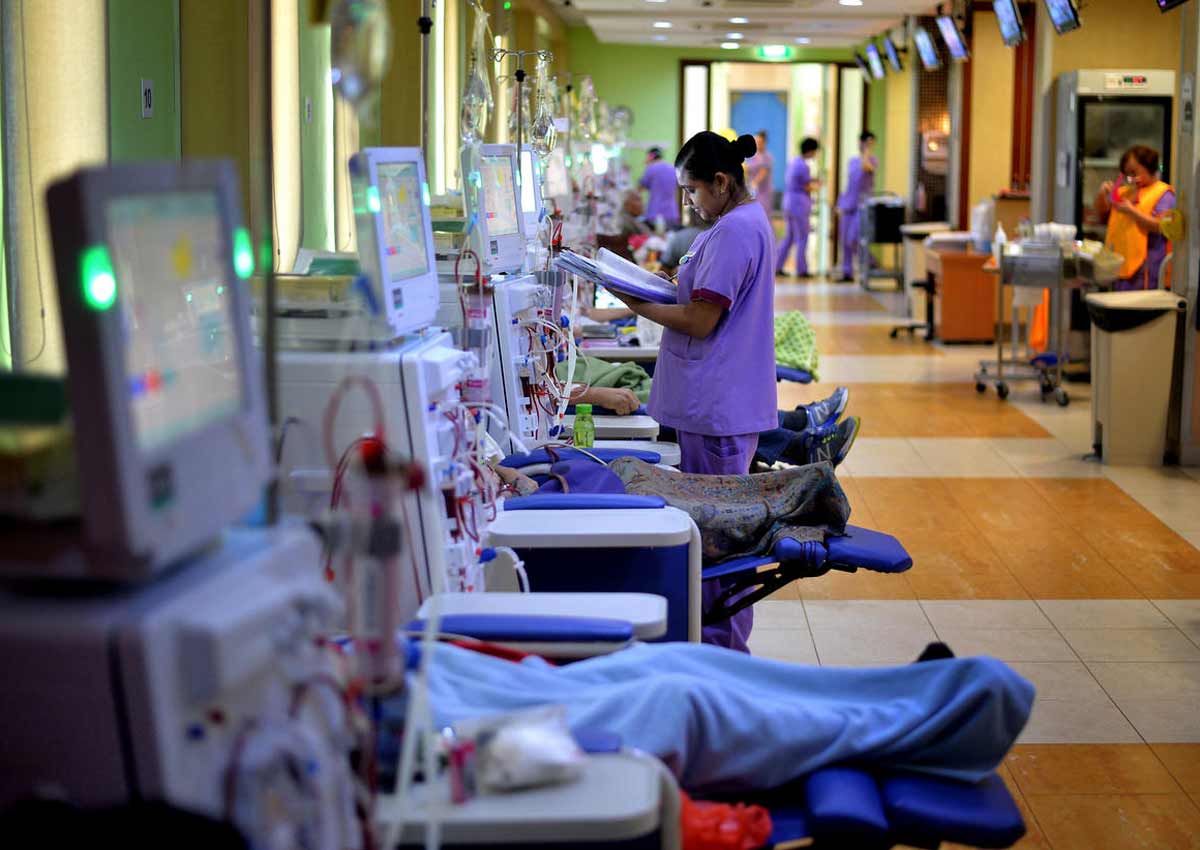
While the National Kidney Foundation (NKF) searches for a new chief executive officer, the Ministry of Health (MOH) will give whatever support necessary to ensure its patients get the services required.

Minister of State for Health Chee Hong Tat, in the first public remarks by an office-holder on the NKF episode, yesterday said the medical charity – one of Singapore’s biggest – is making sure it can stabilise its operations and that services to its some 4,000 patients are not affected.

Last Monday, NKF sacked Mr Edmund Kwok after he was found to have committed a “reportable offence” against a male colleague. A police report was lodged by the charity.

The NKF chairman and two board members are now running the show. Its past CEO Eunice Tay will return next month to take the helm while the search for a new boss gets under way. Healthcare and human resources experts have said it could take months, given the relative complexity of the role.

Till then, the ministry “will work closely with NKF to ensure that the services for patients, the operations will continue”, said Mr Chee.

He added: “I think we are happy to know that our donors, the public, have expressed confidence that NKF will continue their operations to serve their patients well.”

He also said MOH will provide whatever assistance is needed to the board of directors.

Mr Chee was speaking on the sidelines of a community initiative he launched in Toa Payoh to help its residents better monitor diabetes.

Those with pre-onset and early- stage diabetes can now turn to six community health posts located in areas such as Jalan Dusun and Braddell Hill to better manage their health through regular follow-ups and advice on lifestyle changes.

At these kiosks, health coaches will help residents monitor their blood pressure and set goals for their diet and exercise. The residents will also get fitness trackers to monitor their level of physical activity. If successful, the programme could be expanded nationwide, said Mr Chee.

Madam Seow Cheow Hua, 86, a Toa Payoh resident who has high cholesterol, said she will be keen to visit a kiosk to get diet tips.

“Having it near my home is really convenient,” added the retiree.


This article was first published on November 20, 2016.
Get a copy of The Straits Times or go to straitstimes.com for more stories.

Image: 
Category: 
Publication Date: 
Sunday, November 20, 2016 – 14:31
Send to mobile app: 
Source: 


Rotator Headline: 
NKF sacks CEO: Health Ministry to ensure smooth services for patients
Story Type: 
Others

Source link

Do you see what IC?

0

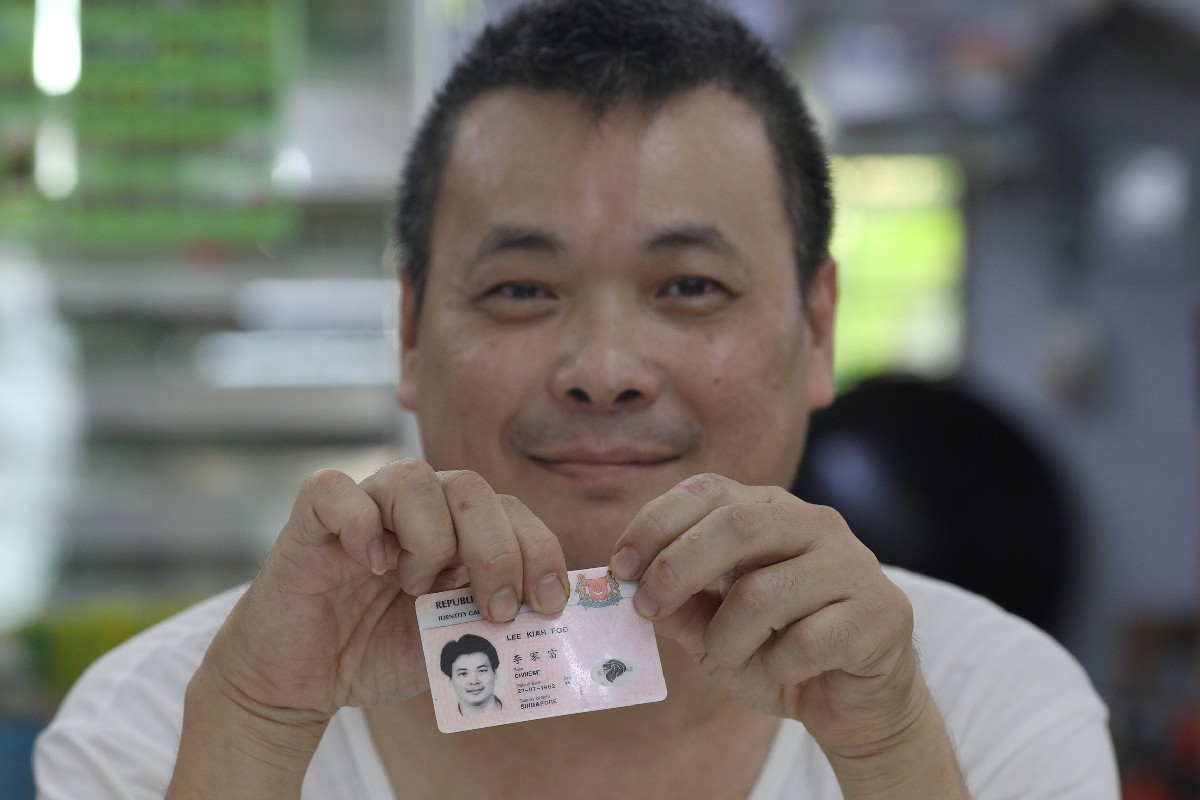
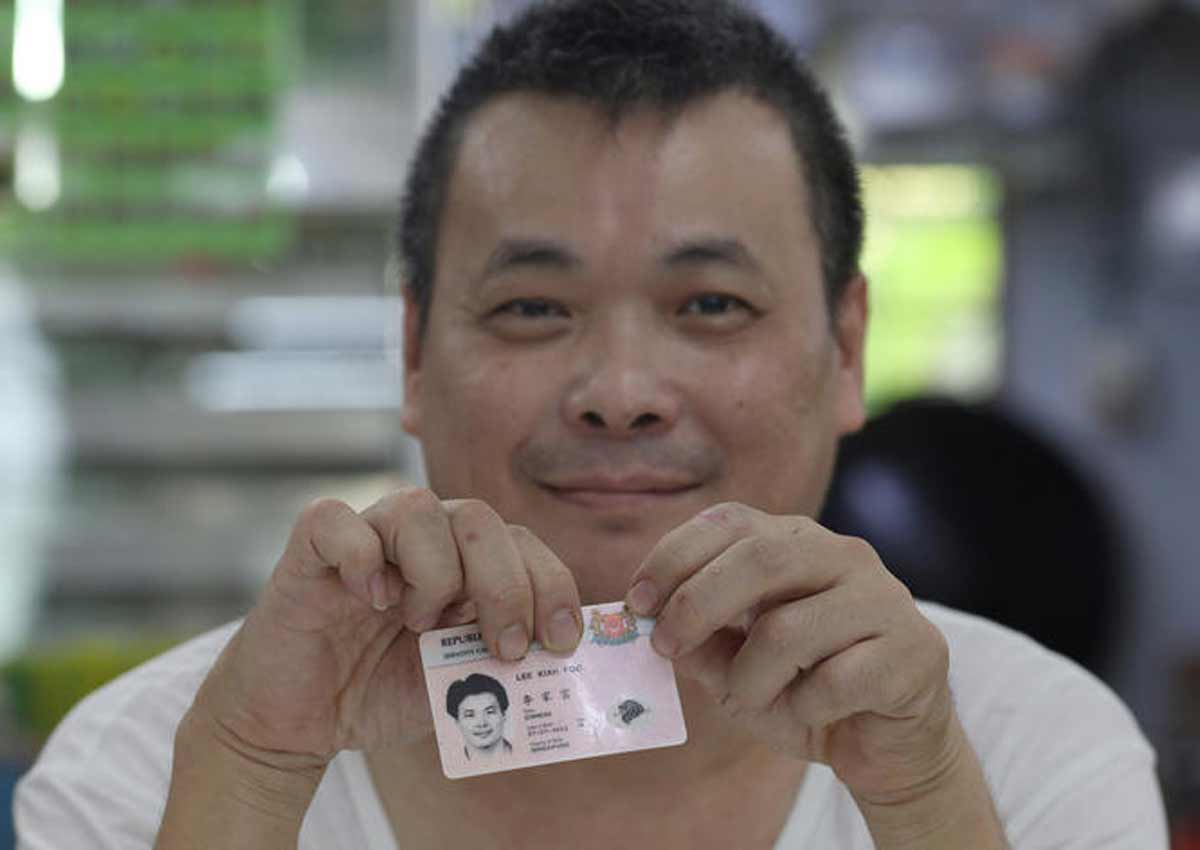
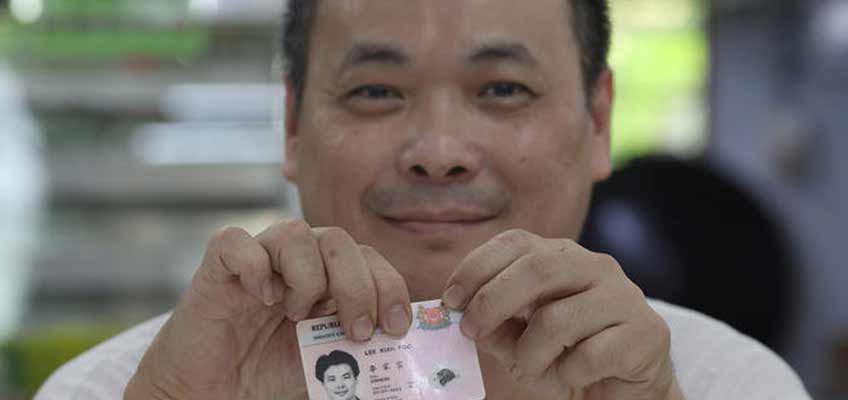
On Mr Lee Kiah Foo’s National Registration Identity Card (NRIC) is a photo of a young man with an angular face and thick floppy hair.

But in person, Mr Lee has a plump face and a crew cut, speckled with silver hair. “I often get asked, ‘Are you sure that is you?’,” the coffee-shop owner laughed.

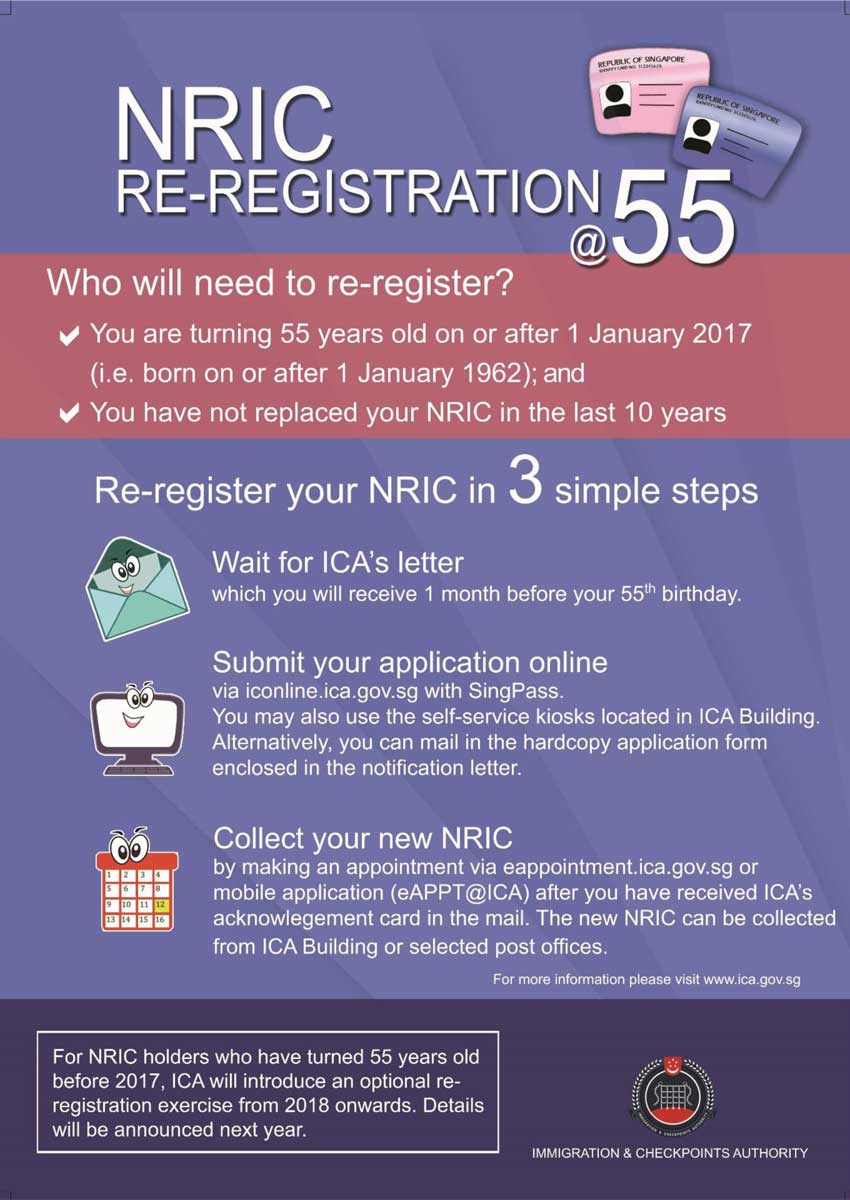
Such disparities have prompted the Immigration and Checkpoints Authority (ICA) to make it compulsory to apply for a new card at 55 years old, starting from next year. Mr Lee will be among the first batch of Singapore citizens and permanent residents (PRs) to be affected by the change.

The new rule aims to reduce the security risks associated with the authorities not being able to correctly identify an individual. It will also allow better identification of older NRIC holders, who currently have cards with photos taken over 20 years ago, and prevent “possible inconvenience”.

“People are sure to look different as they age so it makes sense to change the photo,” said Mr Lee.

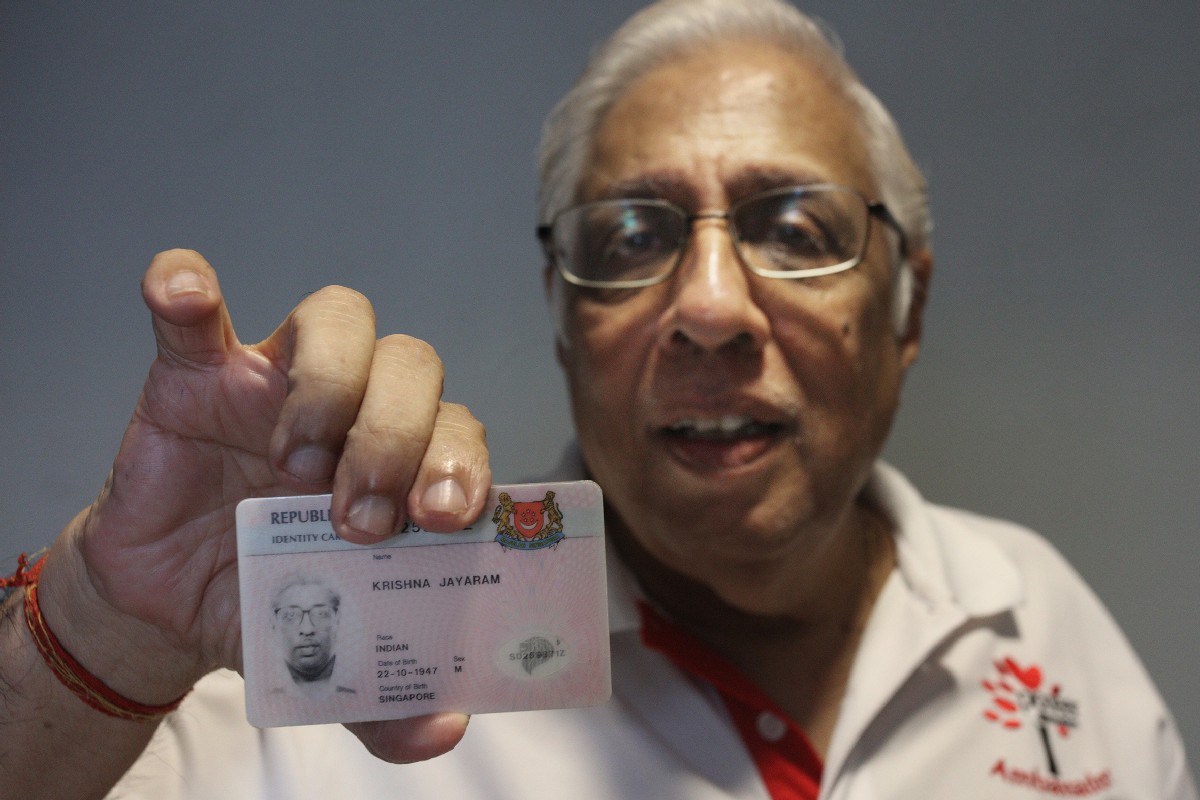
Mr Krishna Jayaram, 69, a part-time property agent, said: ”If the photo on the NRIC is more current, then there will be less need for the authorities to scrutinise the owner.” His NRIC photo shows a much younger picture of himself with a full head of black hair, which today has turned grey and receded.

They were among 10 people The Sunday Times spoke to, who agreed with the rationale behind the ICA’s decision, though they had never been denied services because of their outdated photos.

”It could be because my facial features have not changed much with age,” said Mr Krishna.

One issue that has been brought upon line is the cost of applying for a new NRIC. The re-registration will cost $10 for citizens and $50 for PRs. ”If it is compulsory, then I feel that the Government should waive the cost,” said Mr Krishna, echoing the online sentiment.

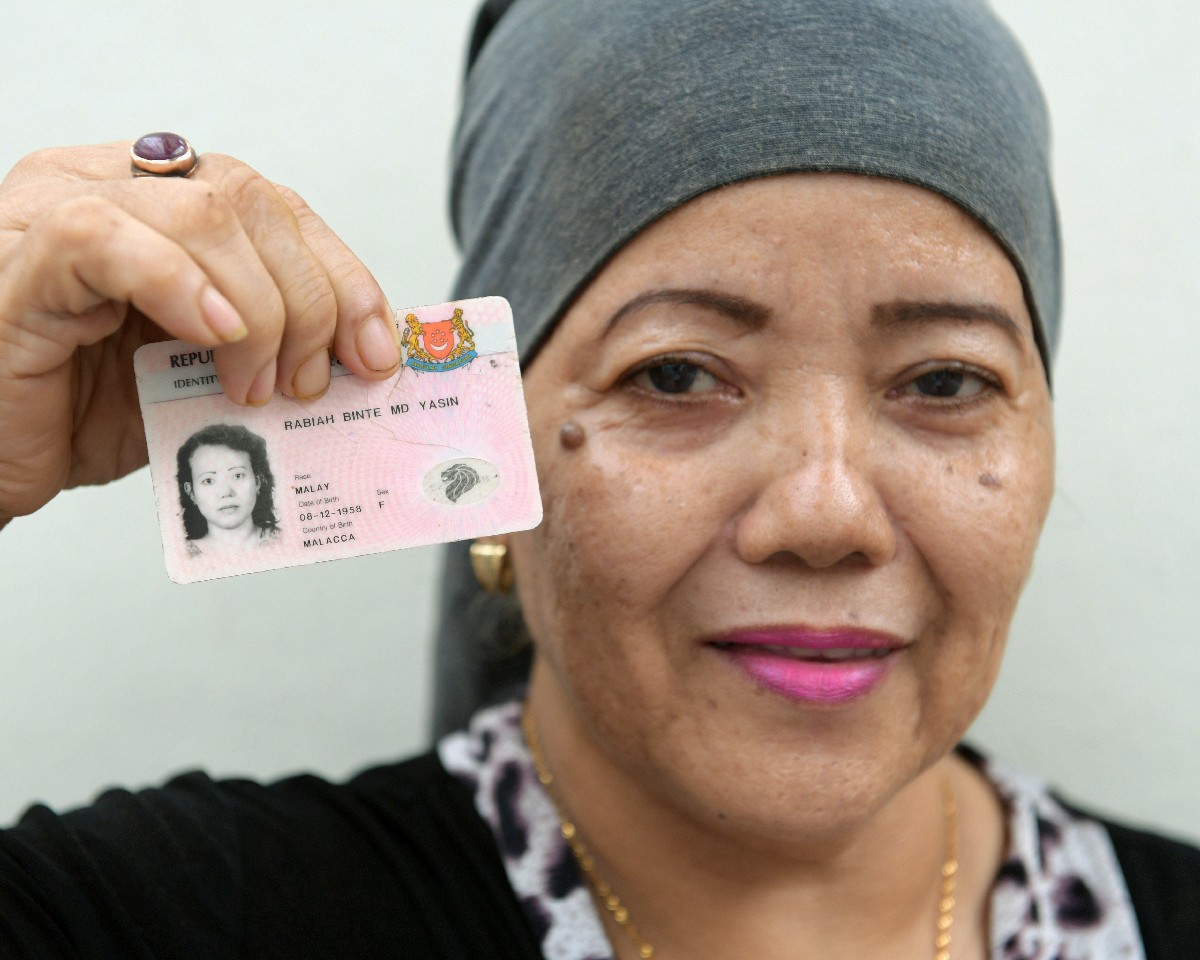
From 2018, Singapore citizens and PRs born before 1962, will also have the option of re-registering for a new NRIC, though it will not be compulsory. Food-stall owner Rabiah Md Yasin, 57, will probably choose not to: ”You need to take a new photo, make an appointment, and also queue. It takes a lot of your time.”

Granddad needs glasses now

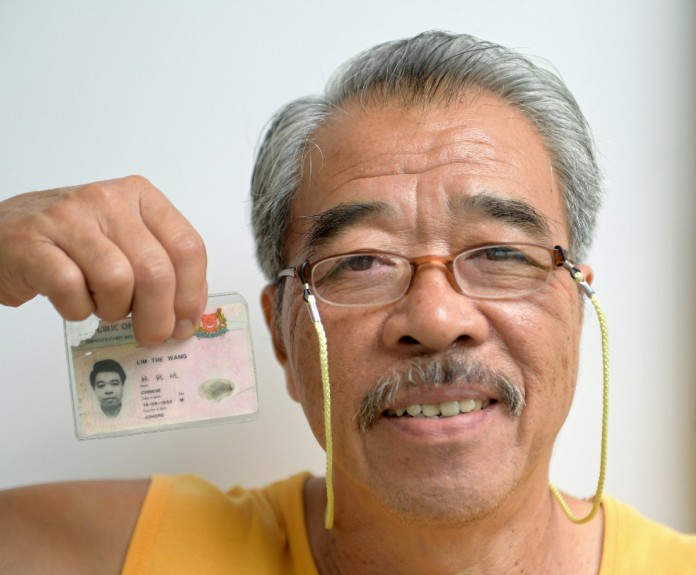
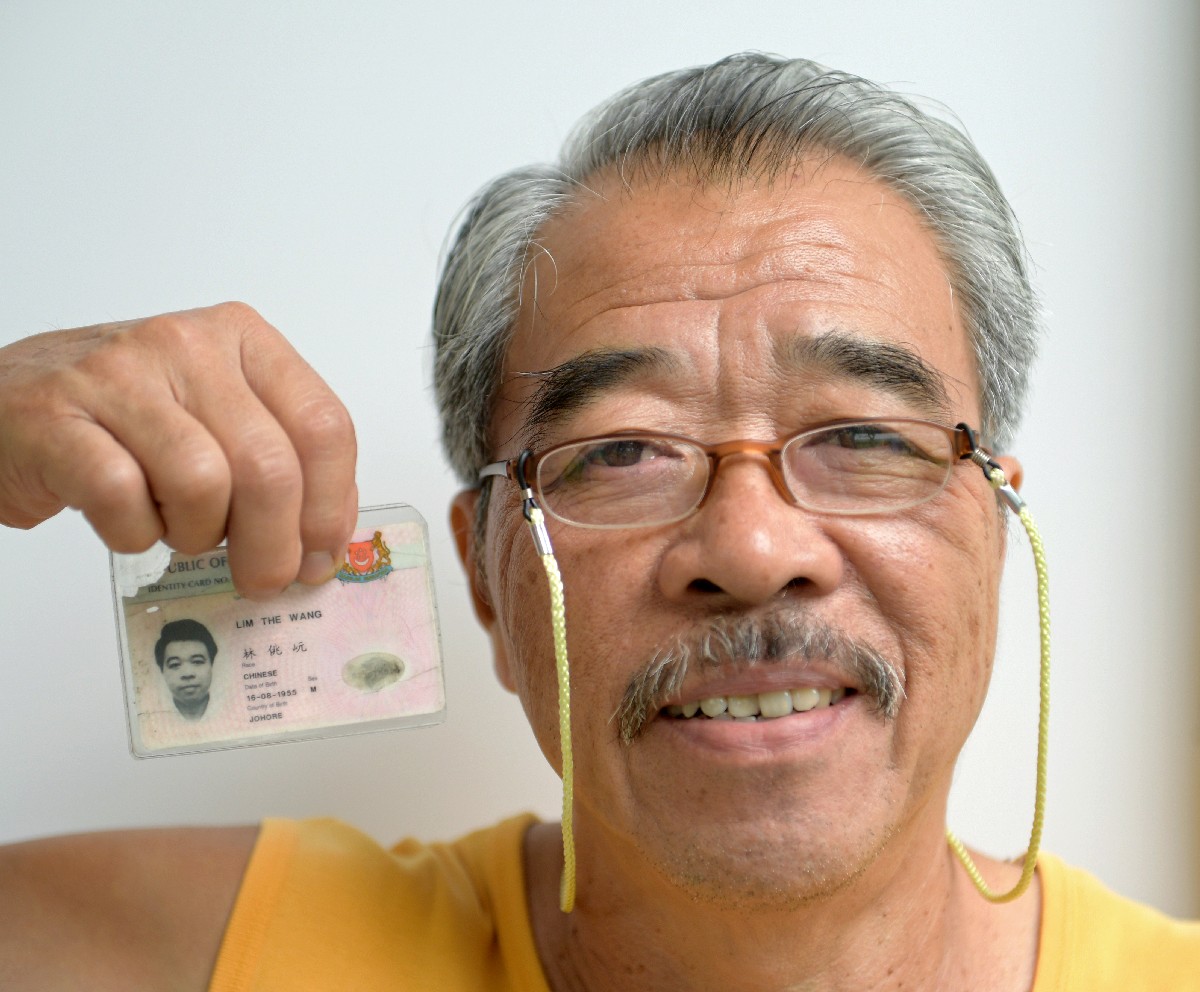
“Last time, I didn’t have to wear glasses. Now I am long-sighted, so I cannot see things at close quarters.” Mr Lim The Wang was 37 and working as a shoe-store manager at Thomson Plaza, then better known as Thomson Yaohan, when he took his NRIC photo in 1992.

The now-defunct supermarket chain was then attracting throngs of customers. “It was very crowded and also full of families,” said Mr Lim, now 61, who also goes by the name Tony now.

Today, the grandfather of two is a director at family business Pest Solutions Singapore.

Where did all the hair go?

“Just look at my hair, it used to be so long and thick. Now it’s so short and getting thinner.” Life has not changed much for Mr Lee Kiah Foo, 54, since his NRIC photo was taken 23 years ago.

Mr Lee, who is known to friends as Kenneth, was and still is an owner of a coffee shop in Toa Payoh, a business he took over from his father.

He said that 1993 is a special year for him, because that was when his daughter was born.

“She was my first child and I will never forget the first time I saw her and the excitement I felt,” said Mr Lee, who now has two sons as well.

Another shot at a better shot

“I don’t like my photo, I look ugly in it. I think I look better now.”

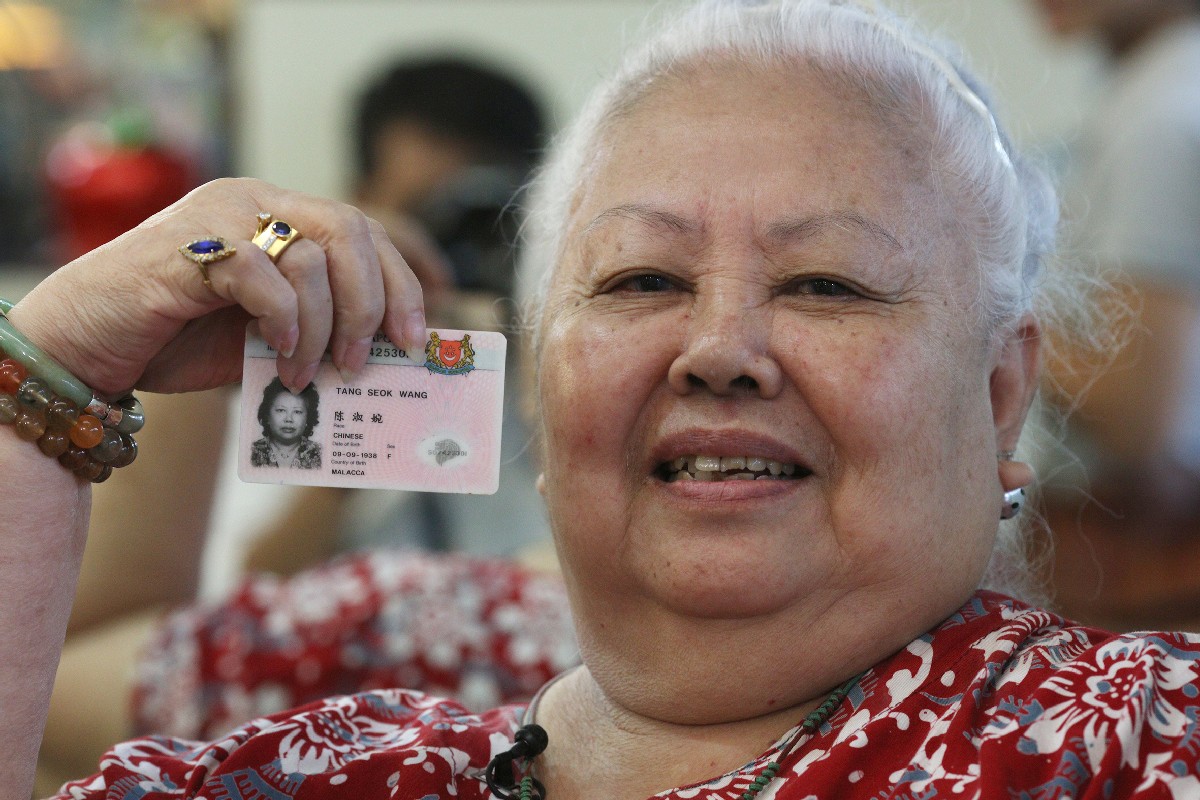
Madam Tang Seok Wang, 78, had her photo taken when she was 53, in 1991. The housewife has seven children, all in their 60s, and 10 grandchildren.

She joked that she would be happy to change her NRIC if it meant having a prettier photo.

Greyer hair, bigger belly

“My hair is much greyer and my skin seems more saggy compared to before. That’s only the facial part. If you go lower, then I will say I also have a bigger belly.”

Mr Krishna Jayaram, 69, who is now a part-time property agent, was an investor in the property market when his NRIC photo was taken in 1991.

He feels his features have not changed much overall, but Singapore has.

“Prices have gone up. Compare having coffee for 50 cents then to $1.30 today,” said the grandfather of two.

Thicker hair and smoother skin then

“I was much younger. My hair was longer and thicker and my skin was also smoother.” When her NRIC photo was taken in 1994, Madam Rabiah Md Yasin had just given birth to her fifth and youngest child, a girl, at 36 years old.

She ran a food business with her husband and more than 20 workers, and had stalls in several canteens and coffee shops.

She gave up the business after her husband died seven years ago, but staying home proved too stressful financially.Today, the 57-year-old runs a Malay food stall at a coffee shop in Toa Payoh using her mother’s recipes.

Photo: ICA


This article was first published on November 20, 2016.
Get a copy of The Straits Times or go to straitstimes.com for more stories.

Image: 
Category: 
Publication Date: 
Sunday, November 20, 2016 – 14:22
Send to mobile app: 
Source: 


Rotator Headline: 
NRIC re-registration for those turning 55: Most agree with ICA's rationale
Rotator Image: 
Story Type: 
Others

Source link

How prepared is Singapore for an attack?

0

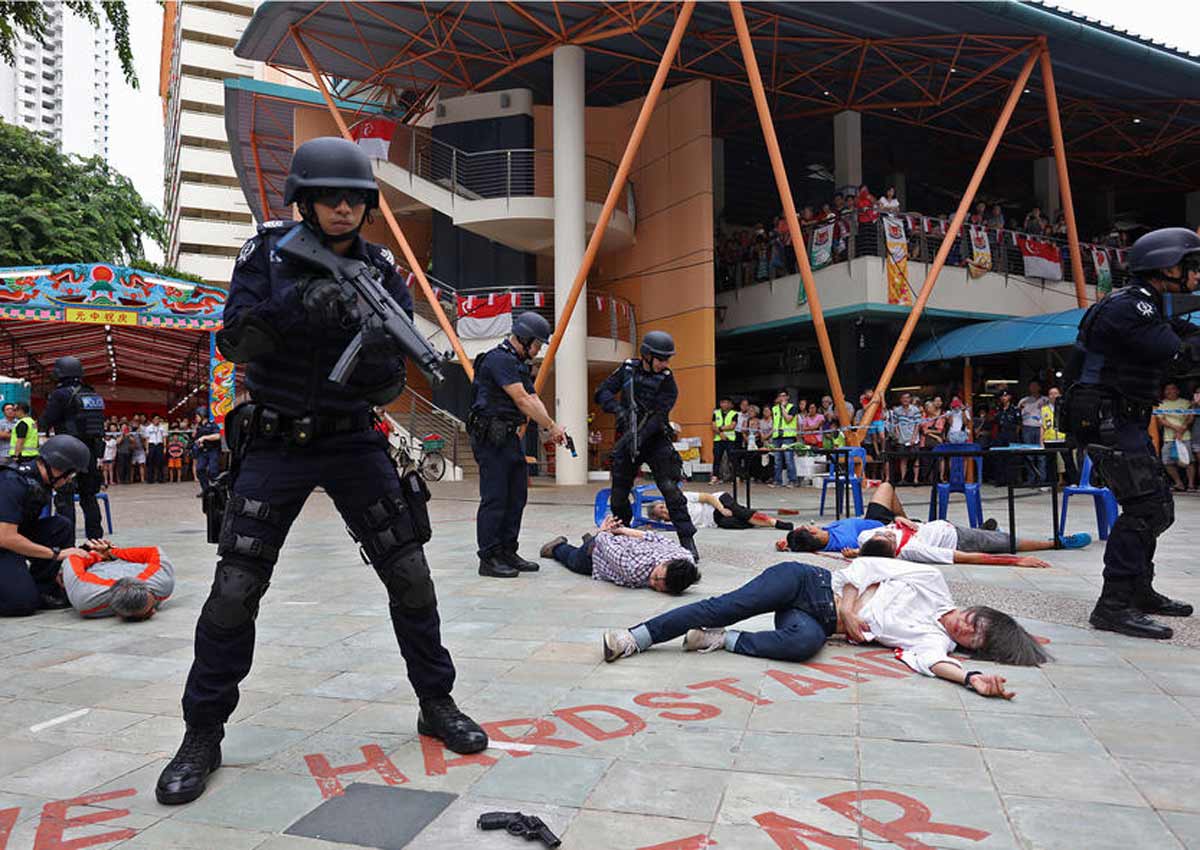
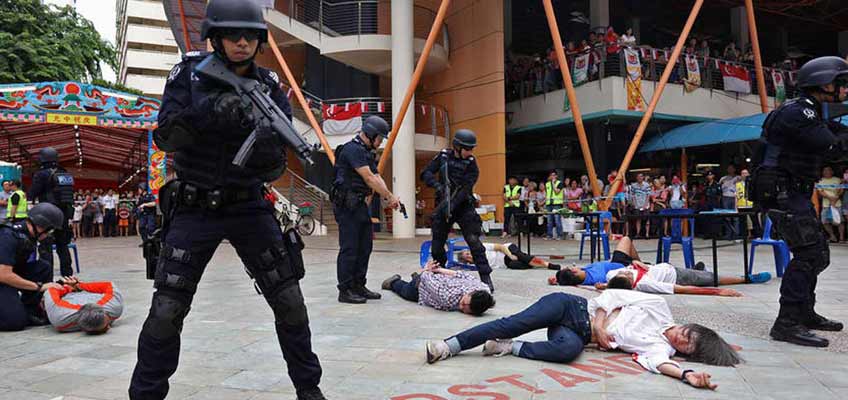
The scene: With their submachine guns raised, police officers stormed into the Century Square shopping mall in Tampines.

Moving swiftly in teams of two to four, they took aim and fired. Moments later, the “terrorists”, who had earlier “killed” shoppers and taken others hostage, lay dead on the floor.

The reality: These were the police’s new Emergency Response Teams (ERTs) responding to a mock terror attack during an islandwide counter-terrorism exercise last month.

These crack troops, who are trained in counter-assault skills, will be one of the first responders to any terrorist attack. They were commissioned in June and it is not uncommon to see them with their HK-MP 5 submachine guns and kevlar helmets patrolling the heartlands or city area.

The threat of a terror attack is at its highest ever in recent times and security agencies have been packing more muscle to deal with the possibility of a strike.

This year, the police, Singapore Civil Defence Force (SCDF) and Singapore Armed Forces have held a series of drills simulating mock strikes on different types of civilian targets, ranging from shopping malls to a hospital. These culminated in an islandwide exercise last month that involved coordinated attacks on multiple targets across the island.

An ad on a double-decker bus, featuring eyeball figures, urges people to watch out for suspicious-looking objects and to raise the alarm. Photo: NSCS
 

Two months ago, the SG Secure national movement was launched by Prime Minister Lee Hsien Loong in an effort to sensitise, train and mobilise Singaporeans to prevent terror incidents and respond to them.

Under the campaign, the Government is hoping to equip at least one person in every household with basic emergency skills such as CPR.

The National Security Coordination Secretariat (NSCS) has ramped up its Let’s Stand Together initiative to make people aware they can play a role in staying alert.

It put out ads and animated videos at bus and train stations based on eyeball figures who flag suspicious objects and raise the alarm.

“Eyeball characters were used because our eyes are our first defence in spotting and reporting threats; also, a play on the word ‘I’, which can represent each and every Singaporean,” the NSCS said.

These measures amount to Singapore’s largest counter-offensive against the terror threat, but has this been enough?

A WORK IN PROGRESS

At a panel discussion organised by Insight last Monday, experts said the nation still has some way to go.

Associate Professor Kumar Ramakrishna, head of policy studies at the S. Rajaratnam School of International Studies, said these efforts will go some way towards boosting awareness of the threat and could “pay dividends” in future.

But it is still very much a work in progress.

Last Monday, Home Affairs Minister K. Shanmugam said at a dialogue at the National University of Singapore that there was a real risk of citizens seeing no need to be concerned about the threat.

“The real challenge for us is how to make our population more sensitised and not that they will overreact,” he said.

Professor David Chan, director of the Singapore Management Uni- versity’s Behavioural Sciences Institute, told the round-table that, to some, a terror attack in Singapore is still a distant possibility and campaigns that do not make the danger relatable are at risk of being dismissed as “just another tagline”.

“Think about Marina Bay, its famous skyline, and think about a rocket hitting that place, can it happen? Even if it misses, it can hit somewhere else,” said Prof Chan, referring to a recent plot by a Batam terror cell to fire a rocket from the Indonesian island to Marina Bay.

While the plot was foiled by Indonesian police in August, it is proof that the threat of an attack is ever present and not a remote possibility, said Prof Chan.

Another wake-up call came this year when six Bangladeshi workers were jailed for two to five years after being caught raising money in Singapore to fund acts of terror in their homeland.

They were the first to be convicted under the Terrorism (Suppression of Financing) Act.

Drawing on his own experience to illustrate Singaporeans’ indifference to the terror threat, Prof Chan cited a recent example where he saw an unattended bag left near an escalator at the Harbourfront Ferry Terminal. Even though there was a considerable crowd, no one had reported it.

There is a scientific explanation for this, he said, adding that research has shown that when there are more people around, the impetus to take responsibility and do something is reduced.

“The responsibility is diffused and you begin to wonder: Is it my job?” he said.

His advice: “Don’t wait… if I keep waiting, nobody would do it. But if I know this and if I do it, then maybe I can prevent something.”

DANGER OF COMPLACENCY

This indifference might be due to the fact that although Singapore has disrupted the Jemaah Islamiah terror network and foiled its plots, and detected radicalised persons, it has not had a terror attack for decades.

The last one happened in 1991 when four Pakistani hijackers seized Singapore Airlines plane SQ117.

Two other significant attacks have happened in Singapore’s history.

In 1965, at the height of Konfrontasi, two Indonesian commandos set off a bomb at MacDonald House in Orchard Road, killing three people.

And in 1974, the Laju ferry was hijacked off Pulau Bukom by four terrorists from the Japanese Red Army and the Popular Front for the Liberation of Palestine.

Prof Chan said the Government has been doing such a good job of preventing attacks since then that Singaporeans are inured to the threat.

He called it the “paradox of success”.

Contrast the attitudes of Singaporeans with people in Israel – there, those who can afford it buy cars for their children so that they can drive to school and avoid taking the bus, said Dr Kumar.

“Why? Because the suicide bombers targeted the buses and public transport. So the threat is very palpable. You don’t need to convince them, they know this is what you need to do,” he added.

While buying a car to avoid taking public transport here would be quite extreme, Singaporeans could instead take small steps such as keeping their eyes peeled for suspicious characters and unattended bags in public, said accountant Rama Diwakar, 45.

“We can all play a part by being the eyes and ears of the authorities,” said Madam Rama.

She is an example of a concerned person who has gone one step further – she is a trained community responder with the SCDF, knows basic triage and could be activated if there is an emergency in her vicinity.

Dr Kumar, meanwhile, said that the challenge is cultivating “situational awareness” in all people here.

Some effort has been made to encourage this with SG Secure and the mobile app that was launched along with it. The app can broadcast important alerts during major emergencies and it can also be used to alert the police to incidents or to request help.

The problem is, since there has not been an attack here in recent years, people do not use it regularly, said fellow panellist Remy Mahzam, an associate research fellow at the International Centre for Political Violence and Terrorism Research.

“We can’t wait for something to happen before we get up and use this app,” he said.

Prof Chan said the real challenge was to engage people with technology on a day-to-day basis: “Everybody needs to realise that you can make a real difference, not just to yourself and your family, but the entire country.”

WHAT TO DO IN AN ATTACK

What should you do when you are caught in a terror attack involving firearms or weapons? The police give this advisory:

1. RUN

– Evacuate the place as soon as possible, moving quickly and quietly while staying out of view of the attackers.

– Leave your belongings behind and insist that the others leave with you.

2. HIDE

– Find cover and stay out of sight if you cannot run away. Stay quiet and switch your mobile phone to silent mode.

3. TELL 

– Call the police on 999 and tell them about the attack when you are safe. If it is unsafe to talk, SMS 71999, with your location and information about the attackers.

– Send information through the SGSecure app or through i-Witness on the Police@SG app.

– When police arrive, follow their instructions and do not make any sudden movements.


This article was first published on November 20, 2016.
Get a copy of The Straits Times or go to straitstimes.com for more stories.

Image: 
Category: 
Blurb: 
<p>The scene: With their submachine guns raised, police officers stormed into the Century Square shopping mall in Tampines.</p>
Publication Date: 
Sunday, November 20, 2016 – 13:00
Keywords: 
Send to mobile app: 
Source: 


Rotator Image: 
Story Type: 
Others

Source link

Crocodile rescued after getting trapped in Lim Chu Kang fish farm

0

Most long-time residents know the ins and outs of their neighbourhoods.

But one unlucky resident of Sungei Buloh not only ended up in unfamiliar territory, it got itself stuck in a nearby fish farm while out hunting for supper one night.

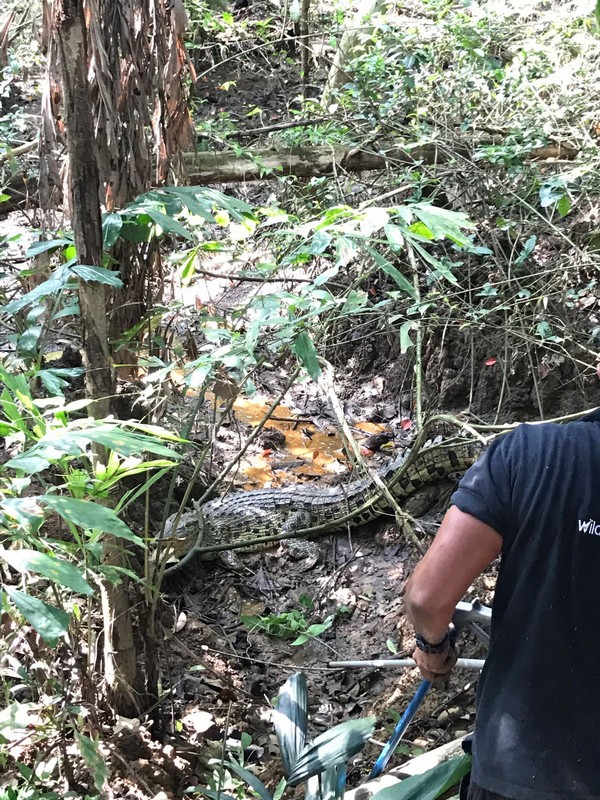
A crocodile, estimated to be between 2.5m and 3m long, had wandered into the facility through a drainage pipe, said Animal Concerns Research and Education Society, Singapore (ACRES).

It was rescued on Friday (Nov 18) by a team of four from ACRES after farm workers reported the sighting.

Photo: ACRES/Kalai Vanan

​

AsiaOne spoke with ACRES wildlife group director Kalai Vanan to find out more about the rescue mission.

He said that the animal was safely restrained, passed through a gap in the fence, and subsequently released back to the wetland reserve.

The reptile was identified as an estuarine crocodile, a nocturnal animal that is native to Singapore.

It spends most of its day basking at the water’s edge or stays hidden among vegetation, according to National Parks (NParks).

The crocodile can also be found in areas along the island’s northern coastlines and mainly feeds on fish and small animals.

Photo: ACRES/Kalai Vanan

​

Mr Vanan said that the estuarine crocodile population has dwindled over the years due to overhunting, leather trade, and destruction of its natural habitat.

As Singapore becomes increasingly urbanised, we are now sharing green spaces with wild animals.

“It is important that we learn to co-exist with them and help to raise awareness amongst the younger generation so that they will grow up to protect the wildlife that can be found in Singapore,” Mr Vanan said.

If you encounter a crocodile at the Sungei Buloh wetland reserve, the National Parks advise visitors to do the following:

– Stay calm and back away slowly

– Do not approach, provoke or feed the animal

– Call the Reserve Information Counter at 6794 1401 if you need help

To report a sighting of a wild animal in places that are not their natural habitats, call ACRES’ 24-hour wildlife crime and rescue hotline at 9783 7782. To contribute towards ACRE’s wildlife rescue efforts, visit their donation web page.

minlee@sph.com.sg

Image: 
Category: 
Publication Date: 
Sunday, November 20, 2016 – 13:38
Send to mobile app: 
Source: 


Rotator Image: 
Story Type: 
Assignment

Source link

Paying a heavy price with licensed moneylenders

0


It is a mathematics problem that would scramble the minds of most financial experts.

If one borrows $8,000 at an interest rate of 20 per cent a month, and has paid monthly instalments totalling $76,800, how much longer will it take to clear the debt?

The answer is – possibly never.

This is the quandary one family here is facing after a moneylender here refused to renegotiate the terms of the loan.

The result is that even if they continue paying $1,600 every month until the end of time, they would still owe the moneylender $9,600.

The loan comes with a monthly interest rate of 20 per cent, which works out to a 240 per cent yearly interest rate.

It is similar to the interest rates charged to Mr Goh Meng Leong, who appeared in the news last week when a judge quashed one moneylender’s bid to bankrupt him even after he had paid back twice the principal sum.

Such high interest rates charged by licensed moneylenders were the norm before new moneylending rules kicked in last year, capping interest rates at 4 per cent per month.

The family’s troubles began when their father turned to licensed moneylenders to repay gambling debts. It started with two initial loans of about $10,000, made in 2010 and 2012.

When he couldn’t manage the payments, he borrowed more, owing a total of seven moneylenders through 18 loan contracts.

His story was narrated to The New Paper on Sunday by one of his daughters, who wanted to be known only as Yan, 44.

Yan, who is single and living with her father, says: “He thought he could handle the first two loans… He was registered as business partner in a small restaurant so he was able to (get the) loan in the first place.

“As he did not stop gambling and had regular payments to make, it just went out of control. He has no income, so he could not even pay off (the loan even if he wanted to).”

Yan’s family had no idea that he had made those loans until they got repayment letters and phone calls from moneylenders.

When they found out, they confiscated their father’s passport and cut him off his gambling habit.

They managed to clear off several debts for him using their own savings, borrowing from friends and transferring the debts to their own names.

But it was one of the 18 loans – an $8,000 loan contract made in 2012 – that has the family scratching their heads.

They have paid around $76,800 to repay the interest from this loan so far, nearly ten times the original amount loaned.

Yet, the debt is still not repaid.

The moneylender still wanted them to pay back another $9,600 in full – the principal sum of $8,000 and remaining interest of $1,600 – before they can close the books on the contract.

No instalments

The moneylender was also unwilling to accept instalments for this last $9,600, or restructure the loan contract to fit the new lending rules.

Moneylenders are not obliged to do so, but some do it out of goodwill.

Yan, a regional sales director at an international company, does not want to reveal the family’s name to avoid trouble with this moneylender.

“Despite having made so much money from us, they still refused to allow us to switch the contract (to a more favourable one). We feel that this is unethical,” says Yan, who earns a five-figure monthly salary.

The seemingly never-ending debts have caused problems for the siblings.

Yan says: “It is tougher for my sister, who has two young children. Her husband does not really know about the financial burden that our father has placed on us… She has kept it away from him. She has emptied her own savings and taken out a loan with a bank.

“She has also cut down on one education plan for each of her children, and there have been no holidays for the past three years, unless it is to nearby destinations.”

As for her father, he declined to speak to TNPS but communicated through Yan that he regrets what he did.

This problem has also left him estranged from his son and his son’s two children, aged four and five.

Yan says: “He has regrets. He has lost the chance to ever be acknowledged by his only son and his son’s children.”

CAN YOU RENEGOTIATE? IT DEPENDS ON THE MONEYLENDER

Licensed moneylenders should always be willing to meet at the negotiating table, two moneylenders tell TNPS.

That is provided debtors have shown a willingness to pay up, they add.

A spokesman from Credit Assist, a licensed moneylender in Chinatown, says: “It will be unreasonable for a moneylender to refuse negotiations when the person has been paying for so many years.”

His company has a practice to help borrowers repay their debts, even lowering the interest rate for the borrower if necessary.

“We do have a guide here that if the borrowers have paid over a certain amount, we will be more lenient with them. Some of our customers even had their rates lowered to 12 per cent annual interest, which is almost nothing,” he says.

But there is no regulation to compel moneylenders to do this.

“It is purely based on each company’s ethics,” the spokesman added.

Last year, the Moneylenders Act was changed to cap nominal monthly interest rates at 4 per cent and an upfront administrative fee of not more than 10 per cent of the loan principal.

Previously, there was no such cap and moneylenders were free to set the interest rates based on a “willing lender, willing borrower” system.

Like loan sharks

Annual interest rates of 240 per cent are commonplace, leading people to compare these rates to unlicensed moneylenders or loan sharks, says the Credit Assist spokesman.

In comparison, banks currently charge an annual interest rate of between 5 and 20 per cent for personal, unsecured loans.

The actual rate depends on many factors, such as the size of the loan and one’s credit rating.

Many contracts that are currently active were inked before these changes kicked in.

One licensed moneylender, who gave his name as Mr Lim, believes that some licensed moneylenders still refuse to budge because the old contracts are too profitable to give up.

“Perhaps for some of these moneylenders, they see it as a way to hang on to the old days, because the new rules are not sustainable to them,” says Mr Lim.

He declines to be identified, adding that the community of licensed moneylenders is struggling with the 4 per cent cap.

Mr Lim, who is the sole proprietor of his firm, explains: “Customers come to us because they are not able to get a loan from the banks. These are usually people who are more likely to default.

“The bad debt ratio that we are dealing with is probably 10 times that of the banks. That is why interest rates have to be 10 times higher.”

TNPS was unable to reach the Moneylenders’ Association of Singapore for comment.

DESPITE HIGH RATES, BORROWERS HAVE FEW ALTERNATIVES

An annual interest rate of 240 per cent for a loan may sound high, but debt counsellors say they have seen worse .

Credit Counselling Singapore (CCS) general manager Tan Huey Min has even seen cases where borrowers were charged annual interest rates of 1,000 per cent.

Despite such high rates, people still signed off on such contracts because they had few alternatives.

Ms Tan says: “They can’t take personal loans from banks because they need to have a certain level of income to do so.

“And they may not have the option of borrowing from co-operatives as they are open only to a certain segment of the public.”

The changes in the Moneylenders Act last year has helped reduce the number of borrowers facing issues, albeit slightly.

From January to October this year, CCS has counselled 3,219 cases, compared to 3,760, over the same period last year.

Ms Tan says: “Gambling debts are often the main reason, but there are also those who borrow due to medical emergencies.

“We are also noticing a number of borrowers who used to be high-income earners, but did not want to change their spending habits and lifestyles when they lost their jobs.”

There are 160 licensed moneylenders operating today, according to the Law Ministry website.

Bad Apple

While banks have to abide to strict rules and licensed moneylenders have the Moneylenders Act to stick to, Ms Tan says moneylenders can be difficult to negotiate with as each has “its own way of doing things”.

Mr Billy Lee, founder and executive director of Blessed Grace Social Services, estimates that one in 10 moneylenders is a bad apple.

He deems them unethical when they give out a loan even though they know the person may not be able to repay it.

In March, the new Moneylenders Credit Bureau (MLCB) gave moneylenders the ability to see other loans that customers have taken before and their repayment records.

But Mr Lee says some moneylenders still provide loans to these chain borrowers “based on their own rules”.

Some of these firms also have a history of harassing borrowers and reject repayment plans that his social workers come up with, he adds.

Mr Lee says he will usually try to negotiate with the moneylender, but when he realises that the moneylender is out to keep the borrower on a contract that he knows will never be repaid, he will report the moneylender to the authorities.

He even keeps a blacklist of errant moneylenders who repeatedly deny requests for negotiations and frequently reject repayment plans from the social workers.


This article was first published on November 20, 2016.
Get The New Paper for more stories.

Image:
Category:
Publication Date:
Sunday, November 20, 2016 – 00:00
Keywords:
Send to mobile app:
Source:

Rotator Headline:
240% annual interest on loan by moneylenders commonplace before new rules kicked in
Story Type:
Others

Source link

Deadly India train accident kills 63: Police

0


Lucknow, India – A passenger train derailed in northern India Sunday, killing at least 63 travellers most of whom were sleeping when the fatal accident occurred, police said.

Rescue workers rushed to the scene near Kanpur in Uttar Pradesh state where the Patna-Indore express train derailed in the early hours of the morning.

“As we know a major accident has happened in which the entire train turned turtle. About 63 dead bodies have been taken out and some 150 people are injured,” Daljit Singh Chawdhary, the additional police director general, told reporters.

“A lot of teams are currently there including local police, doctors and members of the National Disaster Response Force (NDRF). The rescue operations are on.”

All local hospitals had been placed on alert and around 30 ambulances had been deployed to transport the injured.

TV footage showed rescue workers trying to cut through severely mangled coaches with suitcases and other luggage strewn around.

Witnesses spoke of being woken up by a huge bang and being thrown around.

“We woke up to a great thud this morning. It was pitch dark and the noise was deafening,” a passenger told reporters as he waited with his family at the accident site.

“I am lucky to be alive and safe. But it was a near death experience for us.” Suresh Prabhu, India’s Railways Minister, said in a tweet the government would investigate what caused the derailment and promised the strictest possible action against those found guilty.

India’s railway network, one of the world’s largest, is still the main form of long-distance travel in the vast country, but it is poorly funded and deadly accidents occur relatively frequently.

In 2014, an express train ploughed into a stationary freight train, also in Uttar Pradesh, killing 26 people.

India’s Prime Minister Narendra Modi tweeted that he was “anguished beyond words” by the loss of life.

Modi’s government has pledged to invest US$137 billion (S$195 billion) over five years to modernise its crumbling railways, making them safer, faster and more efficient.

<p>

</p>

Image:
Category:
Publication Date:
Sunday, November 20, 2016 – 13:31
Send to mobile app:
Source:

Rotator Image:
video embed code:
<div style=”display: block; position: relative; max-width: 100%;”><div style=”padding-top: 56.25%;”><iframe src=”//players.brightcove.net/4802324435001/default_default/index.html?videoId=5217859996001″
allowfullscreen
webkitallowfullscreen
mozallowfullscreen
style=”width: 100%; height: 100%; position: absolute; top: 0px; bottom: 0px; right: 0px; left: 0px;”></iframe></div></div>
Video Media:
Other Video Media
Hermes ID:
2 754 951
Hermes ID String:
SY_INDIATRAIN_1120
Hermes Author:
SEANYAP
Story Type:
Others

Source link

South Korea prosecutors indict friend, former aides of President Park in corruption probe

0
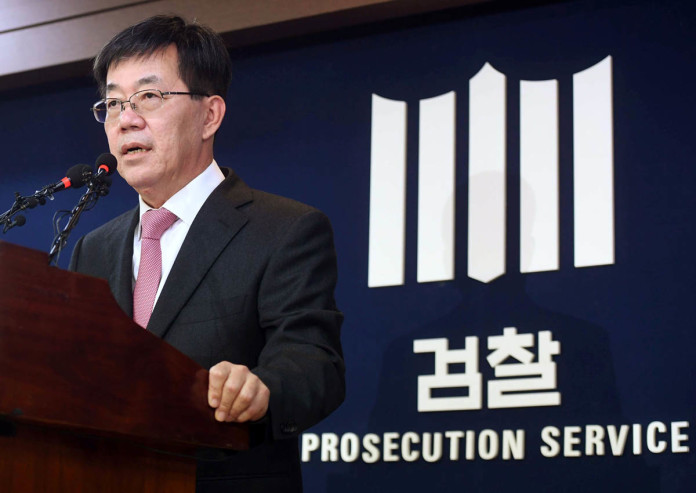
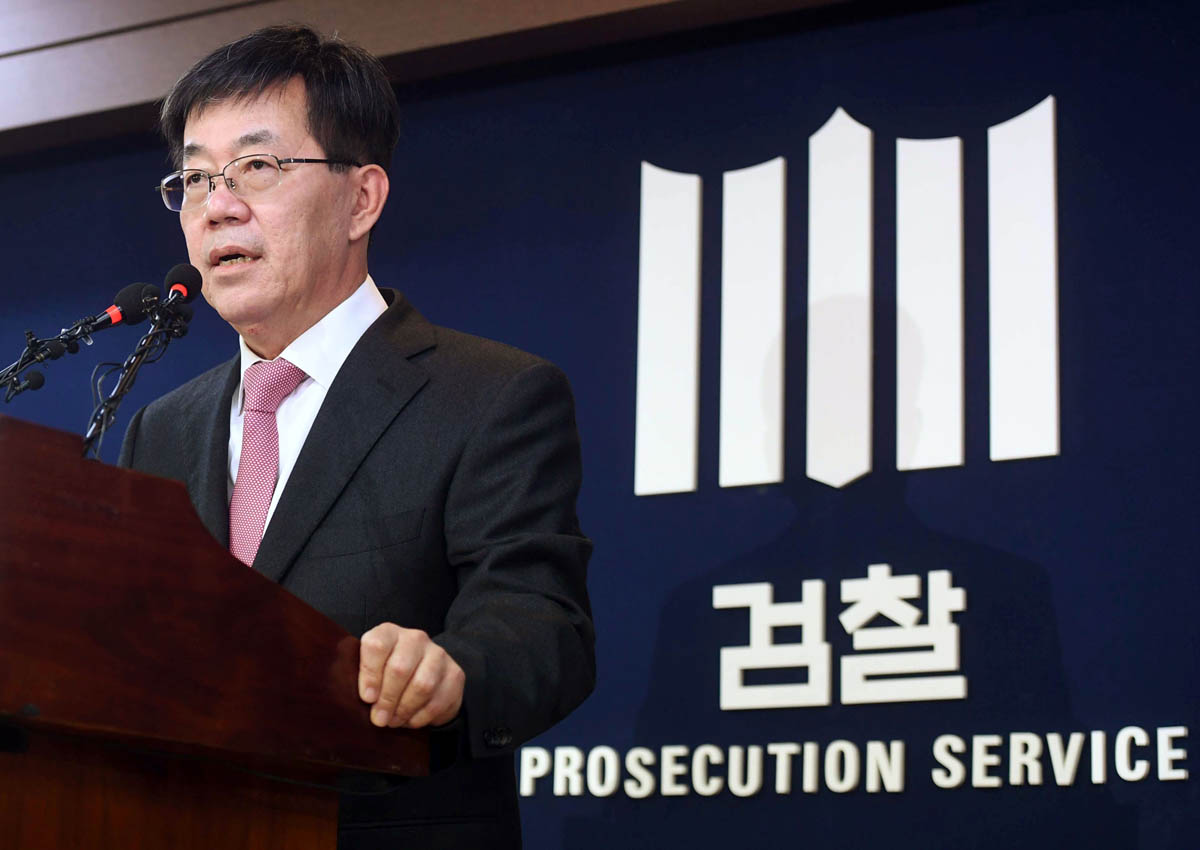
Lee Young-Ryeol, who is leading a probe into the presidential scandal, announces the interim probe result at the Seoul Central District Prosecutors' Office in Seoul on November 20, 2016. South Korea's Prseident Park Geun-Hye had a "considerable" role in a corruption and influence-peddling scandal engulfing her government, Seoul prosecutors said on November 20, as they formally laid out charges against Park's close confidante and two former presidential aides. / AFP PHOTO / YONHAP / YONHAP / - South Korea OUT / REPUBLIC OF KOREA OUT NO ARCHIVES RESTRICTED TO SUBSCRIPTION USE


SEOUL – South Korean prosecutors said on Sunday they had formally indicted a friend of President Park Geun-hye and two former aides in a corruption scandal engulfing her administration.

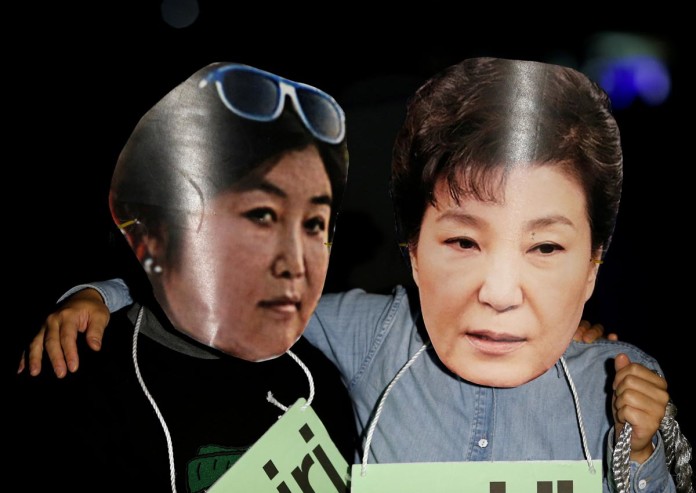
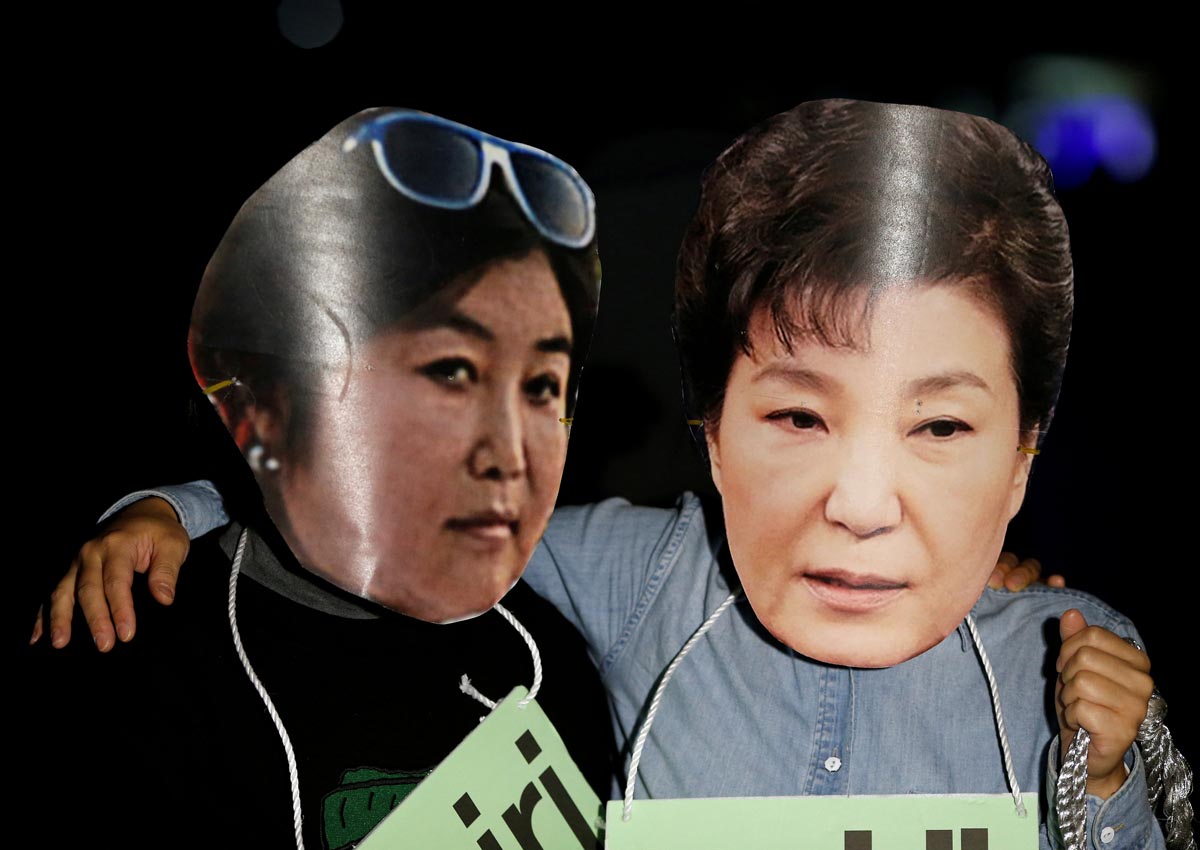
Choi Soon-sil, Park’s friend, and former presidential aide An Chong-bum are charged with abuse of power in pressuring conglomerates to contribute funds to foundations at the centre of the scandal, said Lee Young-ryeol, head of the Seoul Central District Prosecutors’ Office.

Lee added that his team believed Park had an accomplice role in the case but said she cannot be indicted because she has constitutional immunity.

“We will continue to investigate the president,” Lee told reporters.

South Korea’s presidential Blue House did not have an immediate comment.

The indictments had been expected. Choi is accused of working with An to exert improper pressure on dozens of the country’s biggest conglomerates to help raise 77.4 billion won (US$65.59 million) on behalf of two non-profit foundations, according to the prosecutors.

Park’s presidency has been rocked by allegations that Choi used her ties to the president to meddle in state affairs and wield improper influence, but she has resisted calls to resign.

Hundreds of thousands of demonstrators took to the streets of Seoul on Saturday in the fourth straight weekend of protests against her.

Prosecutors also indicted a second former presidential aide, Jeong Ho-seong, with leaking classified information to Choi.

An and Jeong both stepped down late last month as the crisis deepened.

Park has pledged to co-operate in the investigation but pushed back on the prosecutors’ plan to question her last week.

South Korea’s parliament has approved a bill to appoint a special prosecutor, who will conduct a separate and a more wide-reaching probe.

Image:
Category:
Publication Date:
Sunday, November 20, 2016 – 12:28
Send to mobile app:
Source:

Story Type:
Others

Source link

S Korea president Park Geun-hye was accomplice to Choi: prosecutors

0


President Park Geun-hye was an accomplice to the significant amount of crimes allegedly committed by her longtime confidante Choi Soon-sil and two former aides, state prosecutors said Sunday.

Lee Young-ryeol, chief of the Seoul Central District Prosecutors’ Office, revealed this in a nationally televised press conference, announcing the midterm results of a high-profile investigation into the Choi scandal.

Lee also said the office’s special investigative team was indicting three key figures in the scandal — Choi, Park’s former secretaries Jeong Ho-seong and An Jong-bum.

Park was not included as according to the Constitution, the president is exempt from criminal prosecution, except in cases of insurrection and treason.

The prosecutors had tried to question Park in person last week, but did not manage to as the president had delayed the process.

Image:
Category:
Publication Date:
Sunday, November 20, 2016 – 11:58
Send to mobile app:
Source:
Rotator Image:
Story Type:
Others

Source link

Duterte to Putin: Philippines longing to be part of Europe

0
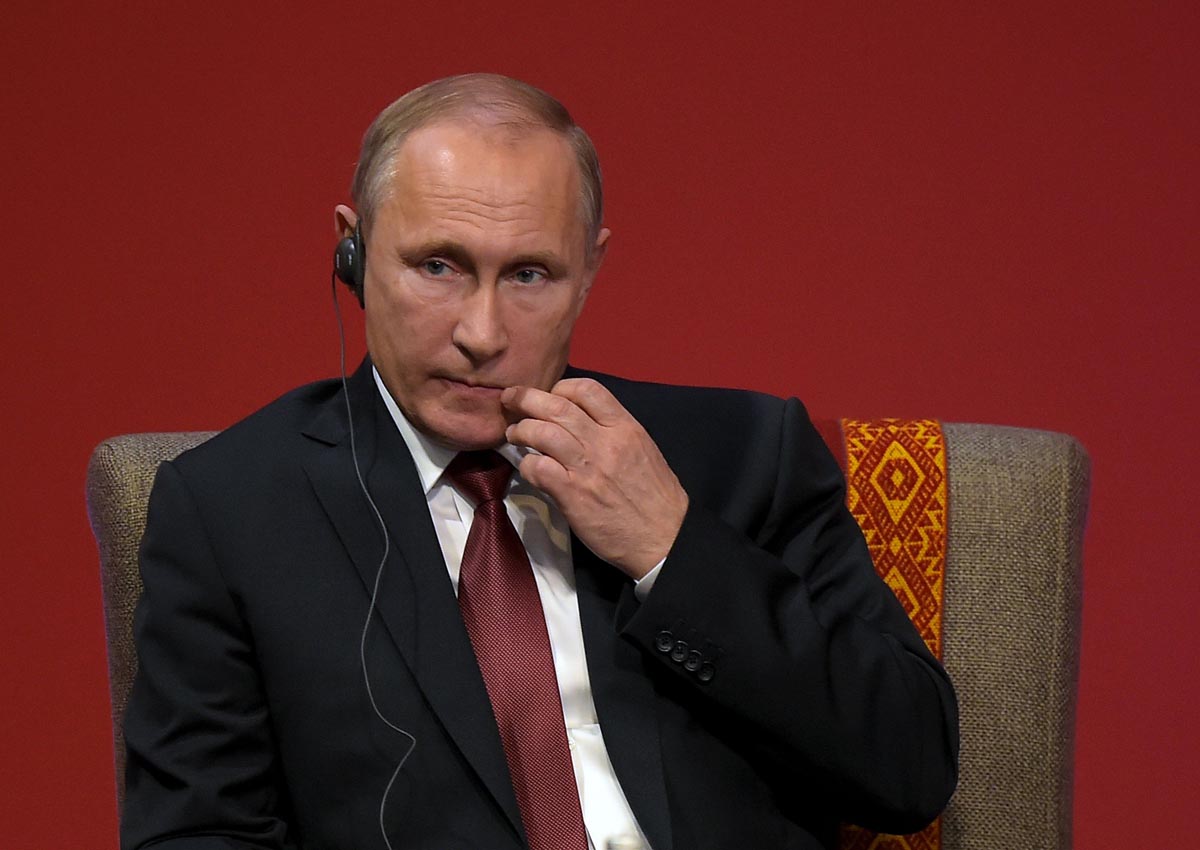
Russia's President Vladimir Putin takes part in the start of the ABAC and APEC Leaders' Dialogue at the Asia-Pacific Economic Cooperation Summit in Lima on November 19, 2016. Pacific Rim leaders are meeting in Peru on November 19-20 to push for continued free trade against the backdrop of rising protectionism globally. / AFP PHOTO / Rodrigo BUENDIA


LIMA, Peru — Goodbye, Asia. Hello, Europe?

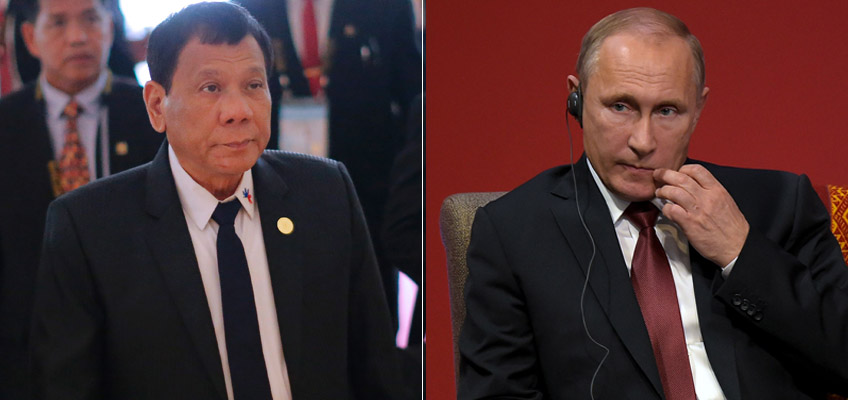
President Rodrigo Duterte, in a bizarre turn of phrase, told Russian President Vladimir Putin on Saturday that the Philippines had been “longing to be part of Europe.”

In the first bilateral meeting between the two leaders, Mr. Duterte, who had long expressed disdain for the European Union, inexplicably remarked that he wished for his country to be part of Europe.

“I have been looking for this moment to meet you, Mr. President, not only because you represent a great country but [because of your leadership] too,” he began.

“And we’ve been longing to be part also of — despite the distance — we have been longing to be part of Europe, especially in commerce and trade around the world,” Mr. Duterte told the Russian leader.

The Philippine president proceeded to talk, in his typical rambling style, about the “hypocrisy” of the West in intervening in the affairs of other countries while advancing their own interests.

“They want to seem to start a war but are afraid to go to war. That is what’s wrong with America and the others. They are waging war in so many places: in Vietnam, Afghanistan and in Iraq,” he said.

“And for one single reason that there was a weapon of mass destruction [in Iraq] and there was none. They insist, if you are allied with them that they follow you. They go to the Korean war, nothing happened. They did not defeat them,” Mr. Duterte said.

The talk between the two leaders was held at about 12 noon Saturday (1 a.m. Manila time) in a hotel room under tight security on the sidelines of the Asia-Pacific Economic Cooperation (Apec) Economic Leaders Meeting here. The media were allowed to cover only the first 10 minutes before being shepherded out.

It was the first meeting between the Russian and Filipino leaders, though Mr. Duterte had been making plenty of friendly overtures toward the latter.

Last week, the Philippine president spoke about his readiness to join a “new world order” under the leadership of China and Russia.

Putin, for his part, expressed his hope for the diplomatic ties between Russia and the Philippines to flourish.

He congratulated Mr. Duterte on winning the election on May 9, which he described as an auspicious date, as it fell on “a very pride day, a public holiday that marks the victory in the great patriotic war over the Nazi group.”

The Russian president credited Mr. Duterte for laying the groundwork for stronger ties with Russia.

“Well, you have been able to do a lot in a short period of time in terms of developing all round partnership between our countries and with respect to promoting greater trust and confidence between us,” he said.

Image:
Category:
Publication Date:
Sunday, November 20, 2016 – 10:28
Send to mobile app:
Source:

Rotator Image:
Story Type:
Others

Source link

Tennis: Andy Murray, Novak Djokovic set up gripping ATP Tour final showdown

0

LONDON – Andy Murray and Novak Djokovic will slug it out for the world number one ranking in a high-stakes final at the ATP Tour Finals after completing their contrasting paths to the dramatic showdown.

Murray and Djokovic’s unprecedented clash for pole position will end with one of the old rivals finishing the year on top of the world after the Scot shattered his rival’s 122-week reign at number one earlier this month.

Fittingly, they will bring the curtain down on the ATP season with both the prestigious Tour Finals title and the top spot up for grabs in Sunday’s (Nov 20) final at London’s O2 Arena.

After staging a superb fightback to defeat Milos Raonic 5-7, 7-6 (7/5), 7-6 (11/9) in Saturday’s (Nov 19) first semi-final, Murray is just one win away from capping a dream year in perfect fashion.

But Djokovic can say exactly the same after the defending champion thrashed Japan’s Kei Nishikori 6-1, 6-1 in the other semi.

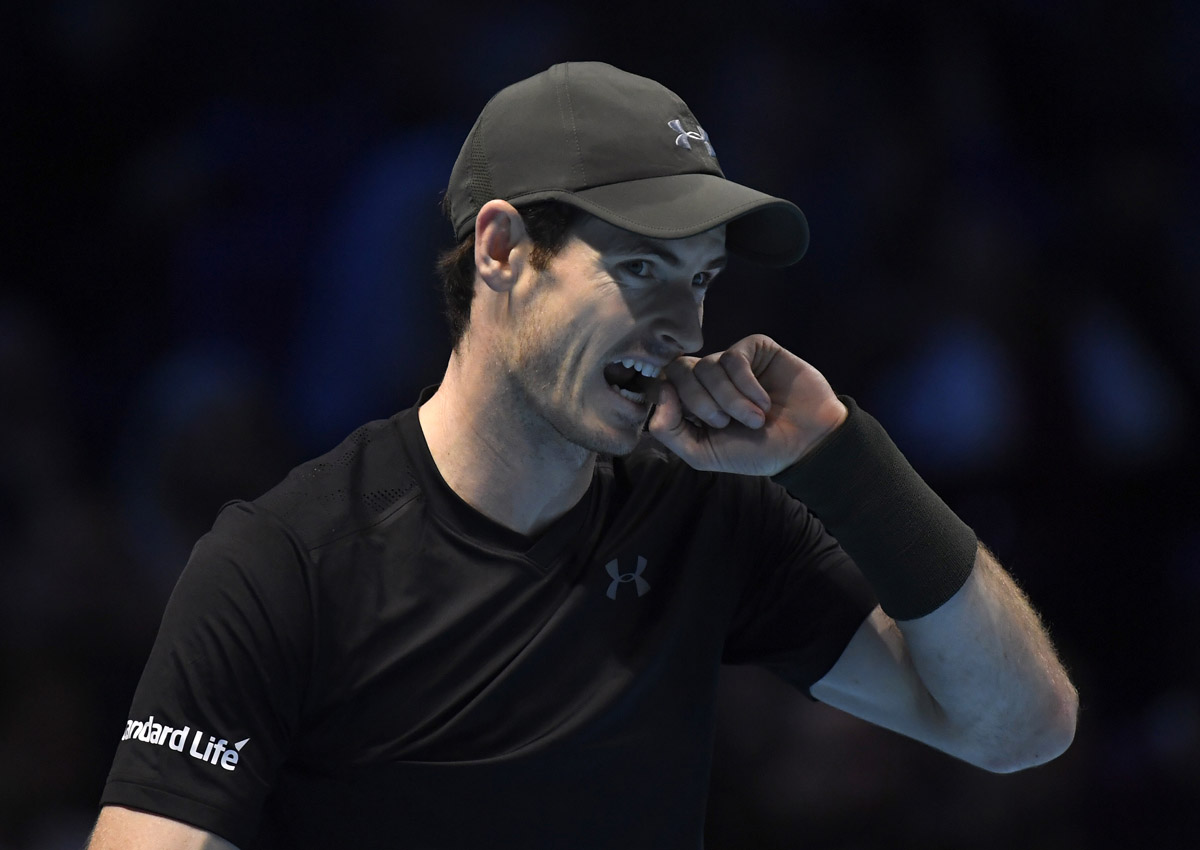
Crucially, Murray might be on his last legs after having to survive a three-hour 39-minute epic against Raonic that ranked as the longest match in Tour Finals history – eclipsing the record mark set when Murray beat Nishikori in three hours and 20 minutes on Wednesday (Nov 16).

While Murray’s body has been pushed to its limits this week, Djokovic has enjoyed smooth progress to the final and, unlike his opponent, the world number two will be well rested following his 67-minute demolition of Nishikori.

Murray, bidding to win the Tour Finals for the first time in his maiden final appearance, acknowledged he is feeling the strain of his gruelling run.

“It was obviously unbelievably tough. I played some great points and managed to get the break at the end,” Murray said.

“This is one of the hardest matches I’ve played indoors. I didn’t expect to play a long one with someone with a serve like Milos.

“I’m tired. I’ve played so much tennis over the last few months. I’ll give it my best effort, the best of what I have.” .

Raonic twice broke Murray when he served for the match in the final set and saved three match points in the decisive tie-break.

But the Canadian fourth seed couldn’t take the one match point that came his way in a thrilling denouement that eventually went Murray’s way to repeat the outcome of their meetings in the Wimbledon and Queen’s finals on the other side of London earlier this year.

Murray’s 23rd successive victory set a new career-best for the 29-year-old, who has been in sublime form since becoming a father for the first time, but only a 24th would bring a fitting finale to the best year of his life.

Djokovic has been in a prolonged slump since winning the French Open for the first time in June, sparking rumours about his private life and questions about his recent involvement with a “spiritual guru”.

But the decline is all relative and the 29-year-old has now won 22 of his last 23 matches at the Tour Finals, keeping him on course to win the tournament for a fifth successive year and record-equalling sixth time in total.

Djokovic had won his last eight encounters with Nishikori, a dominant streak that included a 2014 semi-final success in the Tour Finals, and it quickly became apparent the Serb was going to extend that sequence with ease.

Having played consecutive three-set matches, Nishikori was running on fumes before the match even began and his concentration wasn’t helped when an intruder tried to run onto the court before the start of the second game of the first set.

Djokovic took full advantage by breaking Nishikori in that game and again in the fourth to establish a vice-like grip that he had no intention of relinquishing.

With the first set in the bag, Djokovic went for the kill and hounded Nishikori into dropping serve yet again in the first game of the second set.

That was the knockout blow and the 12-time Grand Slam winner sprinted to the finish line as the out-classed Nishikori folded under Djokovic’s relentless barrage.

Image: 
Category: 
Publication Date: 
Sunday, November 20, 2016 – 10:00
Send to mobile app: 
Source: 


Story Type: 
Others

Source link