A cemetery in central China’s Henan province has deployed a humanoid robot in October 2016 to accompany the female patrol guards and escort their work at night, local media reports.
The cemetery said that the deployment was to boost the female guards’ courage especially during their night shifts.
It is also said to provide some company to the guards, so alleviate their sense of loneliness when walking around in cemetery at night.
However, many netizens raised doubts on its effectiveness after seeing the robot’s appearance; many were sceptical that whether its creepy feature would make it even more frightening for the female guards.
The robot reportedly cost the cemetery over 10,000 RMB (S$2,074) and can also pull carts when it moves with its hands up and bizarre facial expression forward.
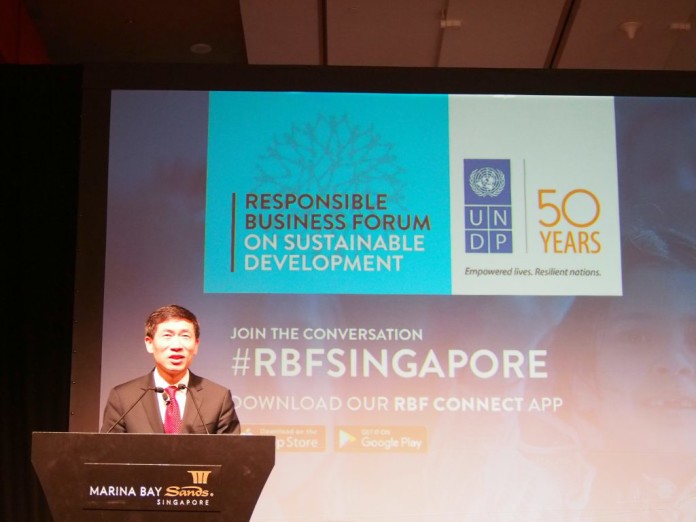
THE United Nations Development Programme (UNDP) has called on Asia-Pacific business leaders to play a greater role in achieving its Sustainable Development Goals (SDGs) amid a new development era of unprecedented environmental and social challenges.
Speaking at the fifth Responsible Business Forum in Singapore this week, Haoliang Xu, the UN Assistant Secretary-General and UNDP Director for Asia-Pacific, said the new development era also called for unprecedented solutions to ensure stability and sustainability.
“Climate change, ageing populations and explosions of popular discontent with the status quo are combining to present an existential threat to both people and planet. Everyone must join together to face this challenge,” he said in a statement on Wednesday.
The forum, organised by UNDP and Global Initiatives, aims to address a “sea change” in the nature of development funding by creating a new partnership for sustainable development.
During the UN Sustainable Summit on Sept 25, 2015, world leaders adopted the 2030 Agenda for Sustainable Development, which included the set of 17 SDGs aimed at ending poverty, fight inequality and injustice, and tackle climate change and infrastructure issues by 2030.
September was the warmest month in modern temperature monitoring and 2016 is likely to be the hottest year on record, the UNDP said.
It said global warming and the other effects of climate change are leading to an increase in natural disasters, for which Asia is already the most vulnerable region in the world with 1,600 disasters in the last decade and the loss of half a million lives.
Four-fifths of the population in Asia, UNDP said, live in countries where inequality has increased over the last two decades, and the unequal distribution of resources – including access to water, farmland and economic opportunity – is a major driver of conflict in areas as diverse as Afghanistan, Myanmar, Thailand and the Philippines.
At the same time, accelerated ageing in many countries presents governments with an ever heavier burden on the public purse to provide pensions, healthcare and other basic services.
The UN Assistant Secretary-General and UNDP Director for Asia-Pacific, Haoliang Xu. Image via UNDP
“All sectors of society – private and public, international and domestic – must collaborate to address challenges that affect the wellbeing of us all,” added Haoliang Xu.
“Our role is to combine decades of experience with ideas and resources from new partners, including in developing countries where businesses account for 60 percent of GDP and 90 percent of jobs.”
According to a UNDP report launched last month, domestic public and private finance account for 89 percent of all financial flows in Asia-Pacific. While foreign funding, or Official Development Assistance, is still essential for the development system, it now accounts for 0.7 percent of total financial flows in Asia-Pacific (down from 13.5 % in 1990).
This trend in development funding is partly driven by the increase in the number of middle-income countries from 16 to 28 over the past decade.
The UNDP said this required a fresh approach to financing for development that mobilises contributions from a wider range of sources, including the private sector.
“At the same time, there has never been a greater need for innovative ideas, new partnerships and funding as we gear up to achieve the SDGs,” the UNDP said.
The forum has also seen UNDP, Global Initiatives, 600 business leaders and government officials start work on a new coalition for sustainable development.
Mark Cliffe, Chief Economist of ING Group, who joined the UNDP press briefing at the forum, said sustainable growth posed a challenge to “enlightened” companies due to the nationalistic shift in global politics and low level of commodity prices.
However, he said: “Technology and new consumer propositions, such as sharing economy models, offer exciting new ways to deliver on the SGDs.”
Cliffe said the is currently an “exciting” array of new technologies making the pursuit of the SDGs a commercial proposition across a range of sectors.
“A great example is the rapid advances in fintech, combining mobile and internet technology, cloud computing and blockchain technology, which will facilitate explosive growth in financial inclusion.
“Micropayments and microcredits will fuel growth in micro-enterprises and jobs. In turn, this will help the delivery of many of the other SDGs.”
Cliffe said governments also have an important role in facilitating and providing incentives to business action.
“A number of economies, not least in Asia, have made encouraging progress in liberalising their economies and stimulating investment,” he said.
“Infrastructure development, both physical and digital, is vital, but governments can also help through smarter regulation and shifting the burden of taxes away from labour and towards resources.” he added.
The Japanese capital of Tokyo on Thursday was hit by its first November snow in 54 years, slowing rush hour trains as residents slogged to work wearing heavy coats and boots in a city far more accustomed to earthquakes than to snow.
The last time snow fell in November in Tokyo, John F. Kennedy was President of the United States and singer Bob Dylan – who this year won the Nobel Literature Prize – had released his debut album just months before.
The snow, which began as sleet around dawn but turned to snow soon after, was sparked by an unusual cold front spreading over the Tokyo area that sent temperatures down to near zero C (32 F).
Average temperatures at this time of year are highs of 14 C (57 F) and rose as far as 20 C (68 F) as recently as Sunday.
“I was shocked,” said Masaru Machida, who had just finished night shift work and was walking home. “It’s too early.”
Though Tokyo, which is on roughly the same latitude as the US city of Raleigh, North Carolina, does see snow at least once a year, it usually falls in January or February and rarely accumulates for long.
As much as 2 cm of snow was predicted for central Tokyo by the time the snow stops, likely by early afternoon, according to the Japanese Meteorological Agency.
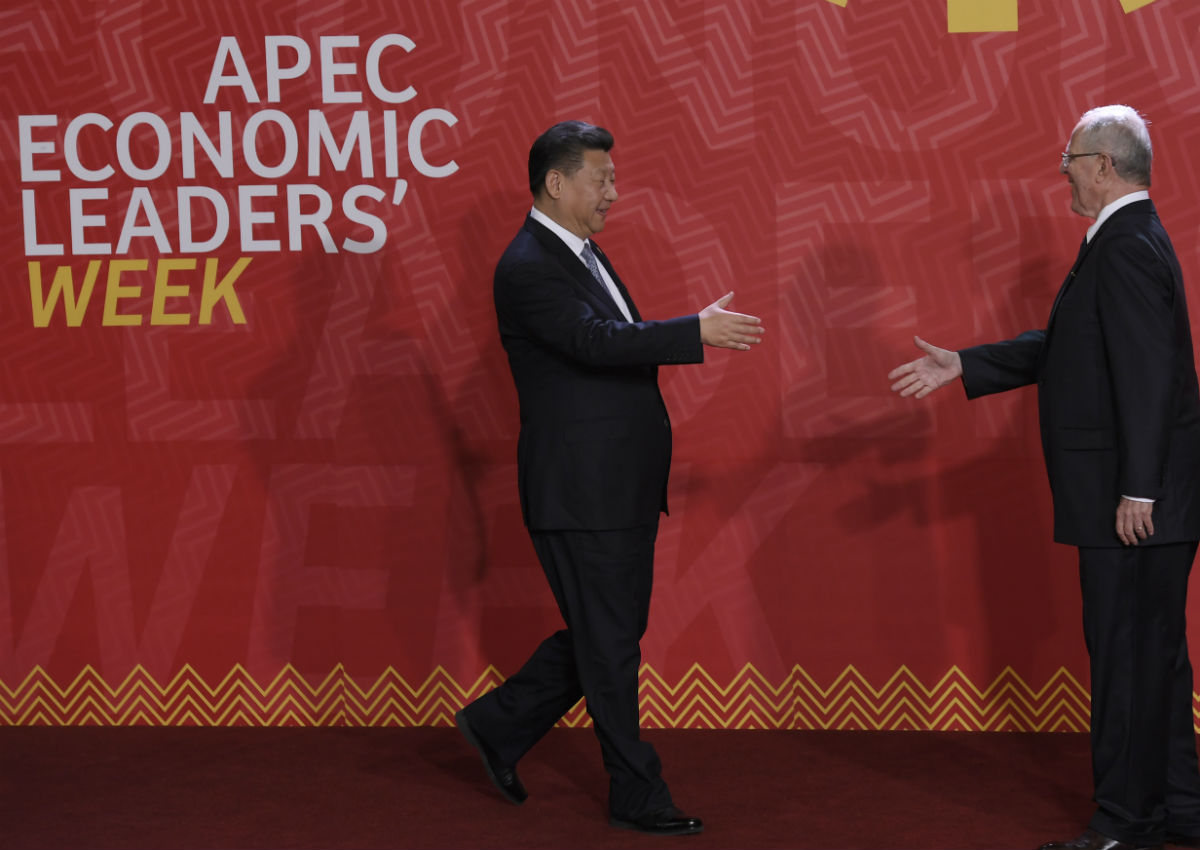
Beijing is more than pleased about Donald Trump turning his back on a major US-led Pacific trade pact.
Ian Bremmer, president of the global intelligence firm Eurasia Group and a closely watched political scientist, said Wednesday that officials in China are excited about President-elect Trump’s plan to withdraw from US participation in the planned Trans-Pacific Partnership.
The proposed free-trade bloc would have included 12 countries accounting for more than a third of global trade.
President Barack Obama and others had argued that the TPP deal was a way for the United States to continue to assert its leadership – especially in the face of an increasingly powerful China that is eager to replace the US as the main power in the region.
Trump’s apparent killing of the TPP creates a geopolitical vacuum in the eyes of both Beijing and American allies, Bremmer said.”This means that everyone in Asia no longer sees the United States as a credible leader, so they have to go to China for leadership,”
Bremmer told CNBC. “There’s a little bit of triumphalism in Beijing.”
Others have pointed out that the demise of the TPP means that China now will likely set standards for a major portion of the globe when it comes to environmental laws, intellectual property rights and labour protections – all principles for which Beijing has demonstrated little commitment.
China, Bremmer said, is now actively planning “new architecture” for regional leadership that does not include Washington because “they see opportunity now that they understand the Americans are abdicating.”
This, of course, will have major repercussions for other countries in the Asia-Pacific region, especially allies like Japan, South Korea and Australia.
“American allies are freaked out about this in Asia. The Chinese are licking their lips – they’re very happy about it,” Bremmer said in a separate televised interview Wednesday.
China has openly celebrated the TPP’s seeming demise, with the propaganda outlet Global Times declaring that Trump’s pledge to quit the deal “sends unclear signals.”
“Trump appears to be redesigning the US leadership, withdrawing the country from fields in which he thinks resources are being wasted,” another Global Times editorial said.
“China thus will gain some room to exert its influence.”
But others are less sure that China will benefit from the apparent collapse of the TPP.
“Net net, the loss of TPP is going to be a loss for China,” Meredith Sumpter, who directs the Asia practice at the Eurasia Group, told CNBC earlier this month.
“There’s this popular view that the TPP was meant to be exclusive of China, and that’s simply not true: The US wanted to get China engaged at a second (round of discussions), and the Chinese were quietly showing interest in that.”
“I don’t see any meaningful benefit for China from the US rejection of TPP. There will be a good deal of diplomatic theatre but it all gets forgotten by the next news cycle,” Derek Scissors, a scholar at the American Enterprise Institute, wrote in a note to CNBC.
“The Chinese will talk about grand new deals but the only truly free trade agreement they’ve ever signed is with Taiwan, and that is still primarily political. The Chinese will certainly sign trade agreements, but they will do nothing to change the Asian economy.”
HONG KONG – The Hong Kong government and Walt Disney are embarking on a HK$10.9 billion (S$2 billion) expansion of the Hong Kong Disneyland Resort (HKDL), with features that include the world’s first Frozen and Marvel-themed facilities to fend off fierce competition since Shanghai Disneyland opened in June.
The Frozen and Marvel-themed facilities are at the Phase 1 site of HKDL, where land formation work has been completed to facilitate the expansion works.
The government will explore the Phase 2 development of HKDL as its long-term development plan.
“(The expansion) would attract more high-spending and overnight visitors from more diversified market sources, hence benefiting tourism-related industries in Hong Kong,” Secretary for Commerce and Economic Development Gregory So Kam Leung said.
The expansion and development plan will run from 2018 until 2023, and the total number of attractions will increase from about 110 to over 130 after completion.
The plan will also transform the current Sleeping Beauty Castle, which is expected to close to all visitors from next year until 2019.
The government will inject HK$5.8 billion as new capital for the expansion plan into Hongkong International Theme Parks, operator of HKDL, based on the government’s 53 per cent holding in the joint venture company.
The expansion comes after the park’s first descent into the red in five years and large-scale layoffs earlier this year.
It lost HK$148 million last year after three years of profitability, with the number of visitors dipping 9.3 per cent.
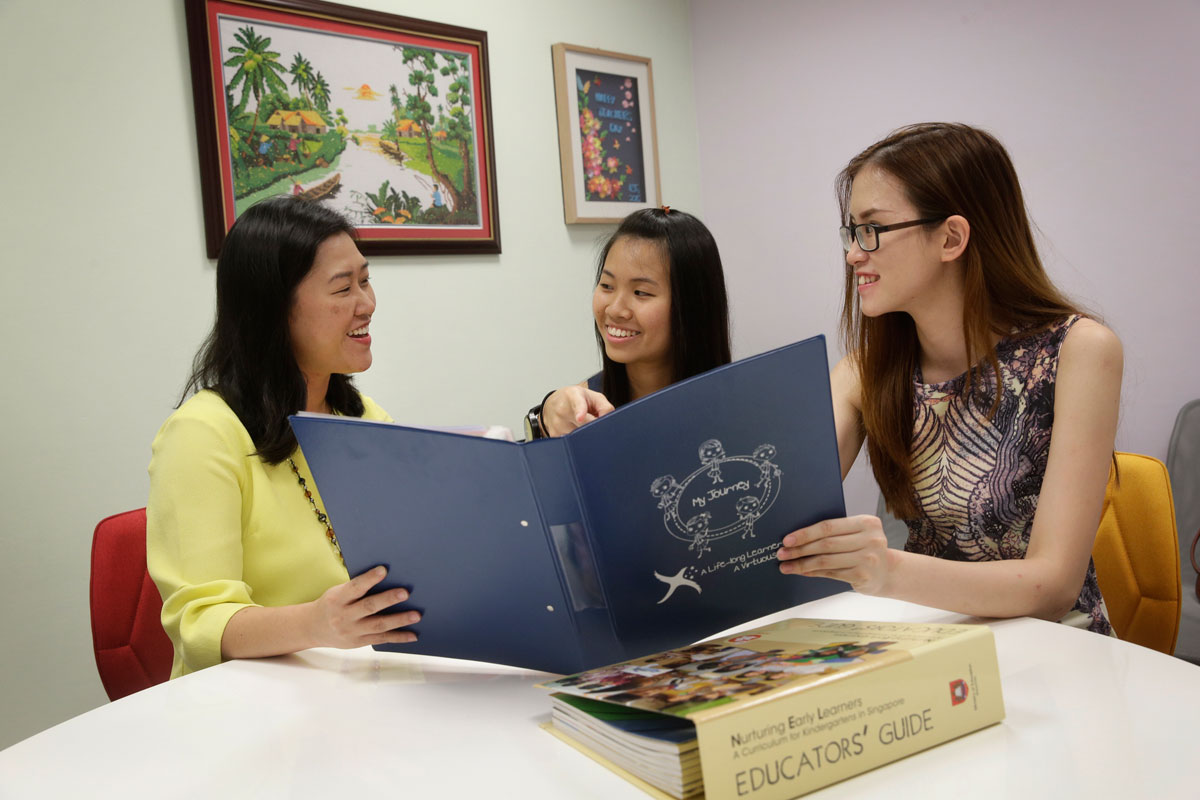
A four-year-old programme to help underprivileged children in pre-schools level up has reaped benefits, and is now being extended to ensure that the beneficiaries transition smoothly into Primary 1.
The Circle of Care (CoC) programme, involving 140 children at 10 pre-schools, has social workers and educational therapists working alongside pre-school teachers.
They identify the causes of a child’s difficulties and provide help on different fronts.
The scheme, piloted by philanthropic group Lien Foundation and welfare organisation Care Corner, has led to higher rates of school attendance and learning gains among the at-risk children receiving help.
Now, to ensure that the gains do not fade out, the pre-school teachers and social workers, who worked with the children, will collaborate with primary school teachers and counsellors to continue supporting them until they reach Primary 3.
CoC programme manager Lynn Heng said 39 of the 140 children receiving help under the programme are heading to Primary 1 next year.
All the children have progress reports prepared by the pre-school teachers, educational therapists and social workers, which will be shared with the primary schools they are heading to.
Besides detailing the gains that they made in literacy and numeracy skills, it also gives information on other skills that are important for learning, such as their ability to pay attention.
The report, prepared with the children’s parents, also gives information on how the parents can be helped to support their child’s learning at home.
At two primary schools, Lakeside Primary and Gan Eng Seng Primary, which are receiving 12 of the children next year, the collaboration will be more structured and deeper.
CoC teachers and social workers have already been meeting the teachers and school heads of the two schools since September to share information on the children and look at how various kinds of support can be given to them and their families.
Said Mrs Heng: “Some of them come from difficult home circumstances, it is important that there are various kinds of support in place to enable the family to help the child.
“I have seen some children make good progress in pre-school, only to slide back when they enter Primary 1.”
Madam Khafifah, 46, a single mum whose daughter is on the CoC programme, is glad she got to meet the school teacher and principal of Gan Eng Seng Primary last week.
“As a hawker assistant, I don’t make much and I work until 9pm every night.
“So, I was glad to hear about all the financial help I can get. The books alone add up to a lot.
“I am also happy that my daughter can go to the student care centre after school hours.”
SINGAPORE – A Singaporean man was sentenced to three months in jail for smuggling songbirds in cramped conditions.
Low Seng Hai, 63, illegally imported two Oriental white-eyes or mata puteh, and a zebra dove on May 27.
He was also found guilty of an animal cruelty charge, for subjecting the birds to unnecessary suffering or pain.
The Agri-Food & Veterinary Authority (AVA) was notified by the Immigration & Checkpoints Authority (ICA) officers at the Woodlands Checkpoint of the three live birds on May 27, the agencies said in a joint press release on Wednesday (Nov 23).
The birds were found hidden inside two small pouches under the front passenger console of a car, where they had “hardly any space for movement”.
They were also without food and water.
“The birds were transported in a precarious manner,” the authorities said.
AVA investigated and confirmed that the birds were imported without an AVA permit.
As part of the investigation, the birds were tested and found to be free from bird flu. They have been successfully rehomed to the Jurong Bird Park.
Importing any animals or live birds without an AVA permit is illegal and carries a maximum fine of $10,000 and/or imprisonment of up to a year.
chuimin@sph.com.sg
This article was first published on Nov 24, 2016. Get a copy of The Straits Times or go to straitstimes.com for more stories.
SINGAPORE – Socialite Kim Lim has engaged Valencia CF supporters in a war of words on social media.
The Spanish football club is owned by Ms Lim’s billionaire father, Peter Lim, who bought it for 420 million euros in October 2014.
The online saga started when Ms Lim, who is in her early 20s, posted a photo bearing the logo of English club Manchester United on Instagram on Saturday (Nov 19).
“So sweet… my number is 23 and he took this for me. (Love) you pa,” she wrote.
Valencia fans took issue with what they saw as support for another team, and criticised Ms Lim and her father in comments on the Instagram post.
Most of the comments are in Spanish. One post in English by a user known as khrisorval said: “In my opinion is a big lack of respect (to) show this picture, mainly if you take (into) account (Valencia CF) situation.”
The six-time La Liga champion has fallen to 16th place out of 20 clubs in the Spanish league.
Fans even booed owner Lim at a home game where they drew with Granada, which is at the bottom of the league, ESPN reported this week.
The spat did not end with that one post. Since Sunday, Ms Lim uploaded six other pointed posts directed at the irate fans.
One of them said the fans were “crazy and stupid to think they can control or have any say over my actions”.
She also said that watching another team play did not mean she was not supporting Valencia.
“I am not a pushover. Don’t try me,” she wrote in capital letters.
In another post, she said she can post what she wants on her own Instagram account.
“Ask us to leave as much but the fact is we still own the club so… yeah haha. Deal with it and move on,” she wrote in English and Spanish on Monday.
She also posted another photo of a Manchester United sign at the Old Trafford Stadium, apparently to prove her point that she can post what she wants.
“My view while dealing with crazy people…” she wrote.
Ms Lim’s supporters have also chimed in. One, known as darrenmouku on Instagram, said: “They do not know that you’re actually scouting and prospecting the possibility of signing Wayne Rooney to Valencia CF. Let them be, they will rejoice at this news once they know.”
On Wednesday (Nov 23), she posted a photo that said “Shut up”.
Mr Lim was popular with supporters when he first bought the club, as it went on to win game after game.
His daughter, Kim, was recognised on the streets of Valencia and fans went to her for photos, a Straits Times report said in April 2015.
But Mr Lim’s popularity plummeted as the team fell in the rankings. Coach Gary Neville was sacked in March after he oversaw just three wins in 16 league games.
His successor Pako Ayesteran also left in September. The team is now managed by former Italy coach Cesare Prandelli.
chuimin@sph.com.sg
This article was first published on Nov 24, 2016. Get a copy of The Straits Times or go to straitstimes.com for more stories.
SEOUL – South Korea’s prosecution investigators on Thursday raided the offices of Lotte Group and SK Group as part of their widening investigation into an influence-peddling scandal engulfing South Korean President Park Geun-hye, Yonhap News Agency reported.
A Lotte Group spokesman was not immediately available for comments, while an SK Group spokesman said he would look into the issue.
Chinese model and actress Zhao Yaqi, who was caught on camera with badminton superstar Lin Dan, has apologised over the affair, reported Kwong Wah Yit Poh.
She bowed in front of the media during a press conference, and sobbed uncontrollably at times throughout the session on Tuesday.
“My actions have brought a bad backlash from society. My family members are also under immense pressure due to my actions. I cannot forgive myself over this.”
“Previously, I never thought that my rash act would hurt others. I chose to avoid the issue for the past week as I was scared, guilty and did not know how to face it.”
“It was only when I saw all the criticism and gossip online that I felt silence would cause further damage.”
“I do not want those who are innocent in this incident to be hurt,” she was quoted by the daily.
Lin Dan, who became a father early this month, apologised for cheating on his wife Xie Xingfang, hours after the affair was exposed online.
Nicknamed “Super Dan” in China, Lin is the only man to have retained the Olympic badminton singles title – in 2008 and 2012 – and is the most successful singles player in the World Championships, winning five times between 2006 and 2013.
Xie has since forgiven her husband, according to the daily.