Home Blog Page 2313

At least 40 dead in China construction accident

0

BEIJING – At least 40 people have died after a platform under construction at a power plant’s cooling tower in eastern China’s Jiangxi province collapsed on Thursday, state news agency Xinhua said.

The accident happened in Fengcheng at around 7 a.m. (2300GMT), and rescuers are on the scene Xinhua said, without giving other details.

Deadly accidents are relatively common at industrial sites in China, and anger over lax standards is growing after three decades of swift economic growth marred by incidents from mining disasters to factory fires.

China has vowed to improve safety at such facilities.

President Xi Jinping has said authorities would learn the lessons paid for with blood after chemical blasts in the port city of Tianjin last year killed more than 170 people.

Image: 
Category: 
Publication Date: 
Thursday, November 24, 2016 – 13:41
Send to mobile app: 
Source: 


Story Type: 
Others

Source link

Thai election roadmap on course: deputy PM

0

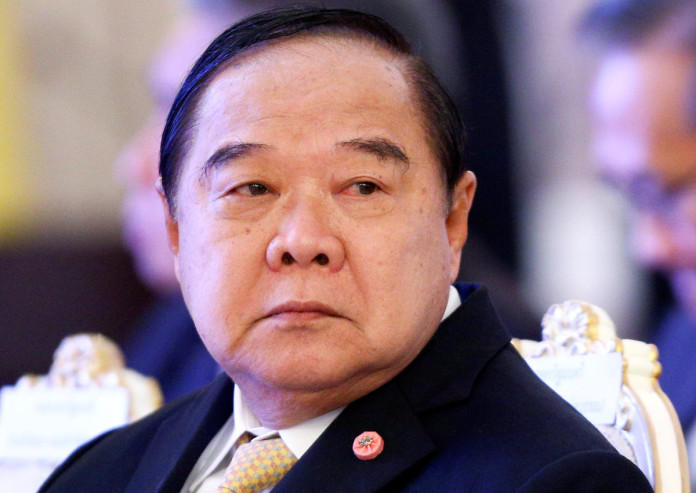
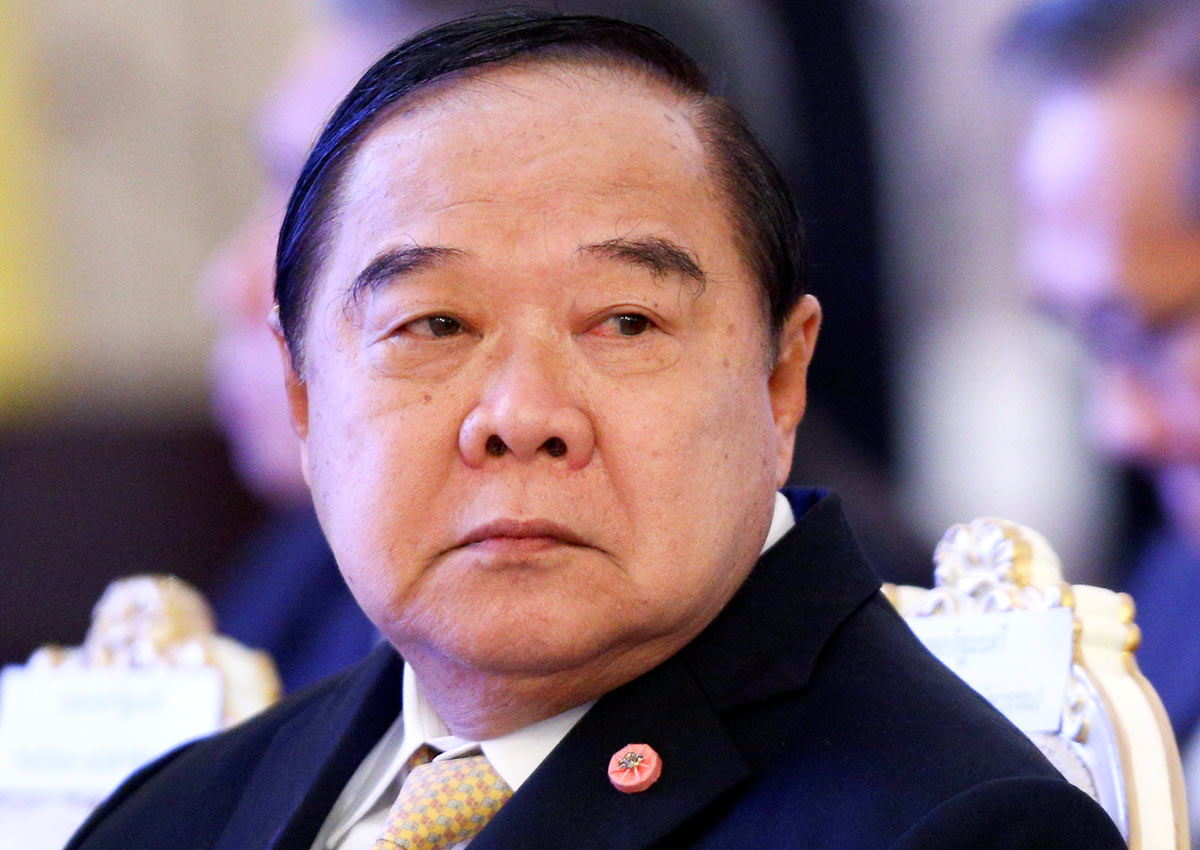
BANGKOK – Thailand’s military government has no plans to push back a return to democratic rule, Deputy Prime Minister Prawit Wongsuwan said on Thursday, in comments that came little over a month after the death of revered King Bhumibol Adulyadej.

Thailand is observing a year of mourning and political talk has largely been shelved out of respect for the late monarch, who reigned for 70 years and was seen as a unifying figure in the politically fractious country.

There are fears among government critics that the military, which seized power in a 2014 coup, would delay a general election planned for 2017 until several months after the end of the mourning period.

Prawit brushed aside those concerns and said a general election will take place next year. “It is the same as before,” Prawit told reporters. “If we can hold an election we will.”

The military vowed to restore order and enact political reforms after ousting Prime Minister Yingluk Shinawatra, whose civilian government had been paralysed by months of turmoil.

The coup was the latest chapter in more than a decade of unrest which has broadly pitted the urban middle-class and elite against the populist governments of Yingluck and her elder brother, Thaksin Shinawatra, that were supported by the rural poor.

On Wednesday, Deputy Prime Minister Wissanu Krea-ngam said a 2017 election will take place but a new government might not be formed until 2018.

The Puea Thai Party, the party toppled in the 2014 coup, has asked that the junta lift a ban on political activity.

“The country is ready to restore confidence in our foreign partners that Thailand will be under democratic rule again,”Amnuay Klangpa, a former Puea Thai Party lawmaker, told Reuters.

Image: 
Category: 
Publication Date: 
Thursday, November 24, 2016 – 13:34
Keywords: 
Send to mobile app: 
Source: 


Story Type: 
Others

Source link

Helping children choose life, not death

0

I remember my own childhood vividly. The weeks were filled with school, piano classes, private tuition for quite a few subjects and swimming lessons on Sunday afternoons.

But I also remember the moments in between – learning to cycle with my father on Saturdays, having dinner with my family every night, camping on the beach at Pasir Ris Park and the holidays abroad.

I don’t remember much of classroom lessons in primary school – only running down a grassy slope with friends, playing hide-and-seek around the school stage and, of course, recess time.

My schedule was packed, spare time was precious and rest time cherished.

At times, I was so tired I dozed off during tuition sessions, and I was secretly happy if my tutors had to cancel.

Yet, there was still disappointment when grades did not seem to match the work put in, and fear of facing even more disappointed parents and having to explain the results.

I pulled through and knew my parents acted in my best interests.

Stress on young children here is nothing new, but it recently came under the spotlight after a Primary 5 pupil killed himself in May.

According to a coroner’s inquiry in October, the boy had failed his examinations in Higher Chinese and mathematics and was due to show his parents the grades that day.

Read also: Death of boy, 11, who fell 17 floors after failing his exams for the first time ruled a suicide

This made many parents sit up, especially after latest figures revealed that there were 27 suicides last year among 10- to 19-year-olds – a 15-year high.

This is double the 2014 figure, despite a drop in the overall number of suicides.

This trend is not unique to Singapore – in Britain and Hong Kong, suicides among the young are on the rise as well, shocking the authorities and prompting preventive measures such as engaging parents and improving counselling in schools.

Schools here are also paying more attention to students’ mental wellness. Efforts range from starting peer helper initiatives to encourage students to speak up about their difficulties, to organising talks on mental health and setting up rest corners. And yet, the stress seems only to climb.

Mr Brian Poh, clinical psychologist at the Institute of Mental Health’s department of child and adolescent psychiatry, says: “Children do face pressures in different areas of their lives.”

These could range from academic-based stress to relationship issues such as friendship and bullying problems.

They face expectations from parents or teachers, and sometimes these pressures could be self-perceived, he added.

On top of that, there are hormonal changes that could play havoc with adolescent emotions.

Most children need to be pushed to work hard and some stress is needed but they should not be weighed down to the point that they feel crushed.

Suicide numbers are only the tip of the iceberg; many others develop psychological problems such as depression, anxiety and extreme mood swings.

Some even resort to self-harm in their teenage years.

Part of the problem is the faster pace of life today, said counsellors, and in smaller families, children face higher expectations to achieve.

Growing up in an increasingly digital era also means some young people retreat into the virtual world instead of spending, quality face-to-face time with family or friends.

Read also: Youth suicides here hit 15-year high last year

A FINE BALANCE
The education system’s longstanding focus on exam grades and book smarts, resulting in parents’ obsession with academic performance, is changing, albeit slowly.

In recent years, the Ministry of Education has taken steps to relieve some pressure, from not naming top scorers of national examinations to removing school ranking.

It has also invested more in programmes to nurture students’ strengths in other areas, such as sports or music.

And the Primary School Leaving Examination (PSLE) T-score – a key source of excessive stress for young ones – will be done away with in 2021, and pupils will no longer be graded relative to their peers.

But many parents and pupils still feel the need to keep up in the education race as long as there are high-stake exams and children are measured by grades.

Some said the ministry’s efforts to focus more on children’s holistic development come too late, after years of “conditioning” that have resulted in a mammoth system so ingrained in traditional notions of success.

There is also a sense that school curricula and exam questions are getting more difficult. So parents want their children to attend any optional supplementary classes offered by schools so as not to miss out on anything extra that is taught.

Fears of losing out have also helped create a booming shadow education industry in private tutoring, where paying for extra lessons outside school has become the norm rather than the exception.

It seems society as a whole – and that includes parents, students, policymakers and educators – has to re-examine its values and definitions of success.

While it is never easy for parents to go against societal expectations and to resist the urge to compare their children’s grades to others or strive for them to get into brand-name schools, perhaps more will do so over time.

There are parents now who say they refuse to bow to the pressures of signing their children up for tuition or enrichment lessons, or buying extra school exam papers, unless they really need it.

One parent, Madam Shirley Woon, 50, said she makes it a point to pack her children off to bed by about 9.30pm every night even if they are not done with their homework, and even if that means they risk the ire of teachers.

“Homework is important, but health is more important,” said the counsellor. “The mind needs to rest, the body needs to recover. It’s a matter of time before the body collapses if it is overworked.”

Research has shown that play is essential to the cognitive, physical and socio-emotional development of children especially in their early years.

Yet, in reality, this is not a priority for most families. Parents admit that the number of hours children devote to academic work is far more than any spent on play and rest.

And with many parents also busy with their work lives, when they come home in the evenings, conversations with their children often revolve around what is deemed more important and needful – if homework has been done or if they have revised schoolwork for tests.

Said Madam Joyce Ong, who has a Secondary 1 daughter: “I’ve heard of other kids who are very fatigued. They come home from school, rush through dinner, have tuition at night and go for tuition on weekends. I’m hoping not to put her through this,” said the 42-year-old property agent whose daughter currently does not have any tuition.

Read also: Survey to be formed to study suicides among young people

PARENTS’ APPROVAL
To children, a parent’s show of approval, disappointment or anger are signs of affirmation and acceptance, or otherwise, said counsellors.

Children need to know their self-worth is not defined by academic marks on their report cards.

They need to know their parents will support them even when they fail. Only then are they more likely to open up to their parents and share their fears and struggles.

Psychologist Daniel Koh from Insights Mind Centre said: “Before a child can confidently speak to his parents and feel safe and secure as well as supported, parents need to show that the child will be accepted and loved unconditionally.”

Communication with children has to go beyond their studies and results, he added. Instead, the focus must be on helping them be resilient when things don’t go their way.

Resilience is not just about dealing with school stress, but having the strength to face all challenges. Schools here are opening up to discussing mental health, especially among adolescents, and that is a first step to helping them build resilience.

These are not easy lessons to learn in the immense task of parenting – it takes significant courage and resolve to go against the grain and do what is better for your child.

Next month, I will become a first-time mother. People have asked if I have looked at securing a place in brand-name pre-schools with waiting lists, or if my husband has joined his alma mater’s alumni association so our son will have a higher chance of entering his school at Primary 1.

The years of schooling are far away, and those thoughts have not yet crossed my mind.

I want the first conversations at home about our son to be about the values we want to instil in him, not which schools we want him to go to. I hope to be an involved parent, yet know when to take a step back and let go.

I want him to learn resilience in times of stress and in the face of failure. I want him to understand that challenges and mistakes are part and parcel of life and that we learn most from them.

But I also know raising a child will not be easy, as many parents I have spoken to in the course of work have shared.

I anticipate the uphill struggle in the years ahead – there is the fear of being too caught up in the rat race of education, but on the other hand, there is also the fear that he will “lose out” if he does not join the race.

My hope is that when the time comes, we will make the right choices – not just for our child to get ahead and be a good student, but to grow to be a better, happier, and more well-adjusted person.

Read also: What drives teens over the edge?​

Helplines

Samaritans of Singapore (24-hour hotline): 1800-221-4444

Tinkle Friend: 1800-274-4788

Singapore Association for Mental Health: 1800-283-7019

Care Corner Counselling Centre (in Mandarin): 1800-353-5800

Mental Health Helpline: 6389-2222 


This article was first published on Nov 24, 2016.
Get a copy of The Straits Times or go to straitstimes.com for more stories.

Image: 
Publication Date: 
Thursday, November 24, 2016 – 14:00
Send to mobile app: 
Source: 


Story Type: 
Others

Source link

Tailoring cosplay fantasies

0


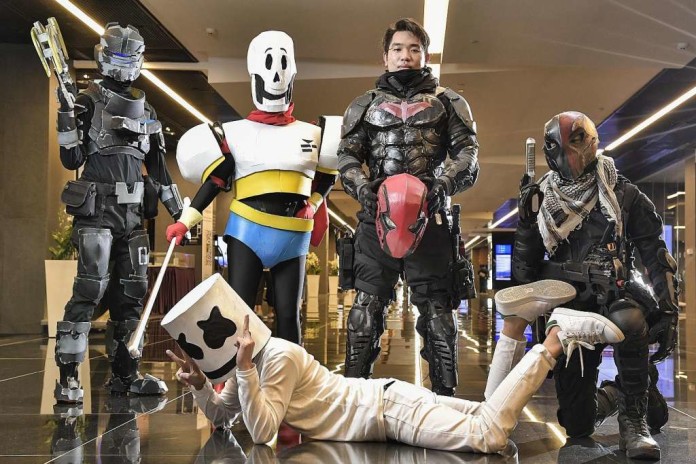
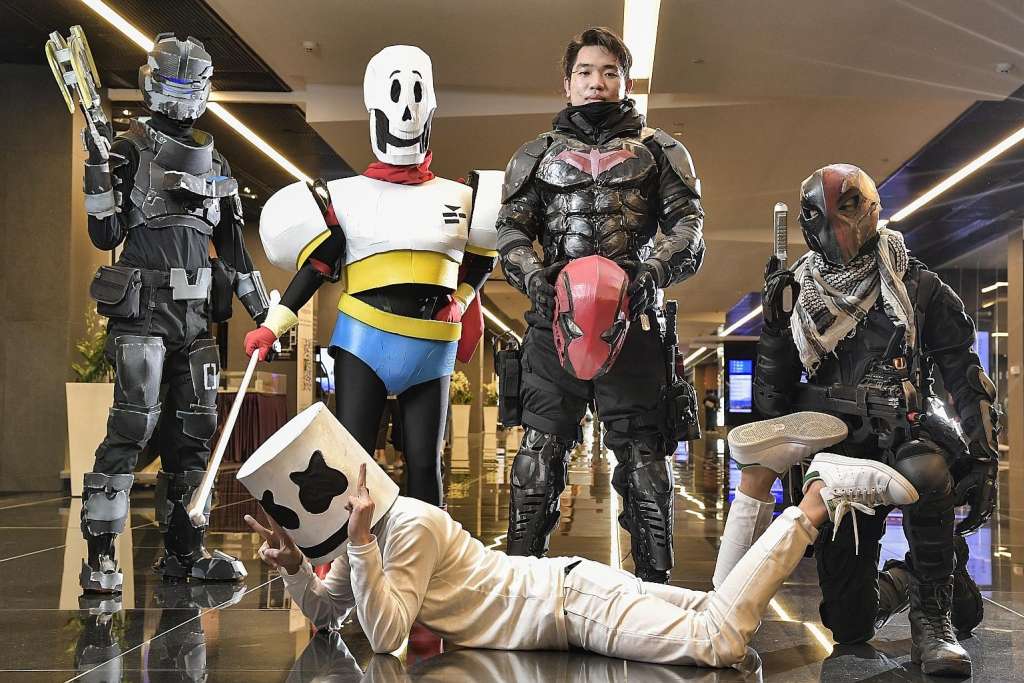
Give Mr Jarod Yip some ethylene-vinyl acetate (EVA) foam, resin casting, cardboard and wood, and he can transform these ordinary raw materials into elaborate outfits and props for cosplayers.

Inspired by big multi-genre entertainment and comic conventions like the San Diego Comic-Con and Dragon Con in the US, the 20-year-old basks in the attention that his costumes receive at local conventions.

And he also enjoys how cosplayers use his work to become their favourite characters from manga, anime, comic books, cartoons, video games and television series.

“Putting pieces together is a joy to watch, and it feels good to know that you came up with your own designs from scratch,” said the final- year animation student at Lasalle College of the Arts.

With the Anime Festival Asia (AFA) starting tomorrow and running till Sunday, he is rushing to put the final touches on three more costumes. Held at the Suntec Singapore Convention and Exhibition Centre this year, AFA is the region’s largest and most followed Japanese popular culture and anime festival.

Mr Yip gets really busy a few weeks before events like the AFA and GameStart Asia in Singapore as he has to juggle his time between his studies and his passion for creating costumes.

His bedroom in his parents’ four-room HDB flat and a corner in the stairwell become his work studio, where he cuts, sews and spray-paints his projects.

It usually starts with brainstorming and sketching out ideas on paper, cross referencing the images from Google, and then creating a shopping list of odds and ends and costume parts.

While he acknowledges the challenge of doing something without an instruction manual, he enjoys the laborious process of discovery and creation, which also takes his mind off the stress of schoolwork.

Mr Yip became interested in making his own costumes about 14 months ago after watching YouTube videos of cosplay conventions in the US.

He had been working part-time as a cleaner to support his family and help pay for his studies but he did not like that job, and learning how to make his own cosplay costumes could lead to an alternative source of supplementary revenue.

However, he knew nothing about working with EVA foam, a flexible material used in a lot of costumes. He found out by going to a cosplay convention and asking around about the kinds of material used on different outfits and where to source the cheapest supplies.

Generous strangers shared their knowledge and pointed him in the right direction, allowing him to practise by creating simple props in the beginning. Mr Yip said he used up “many rolls of foam” to get better at his craft.

Paying it forward, he now helps others who are also interested in foam-crafting, teaching them the techniques he uses and telling them where to get the basic materials.

His costumes are commissioned by peers or strangers he meets at local conventions.

He makes an average of 12 costumes a year, ranging in price from $30 for a simple mask to $600 for a full-sized costume. His earnings help pay for his course fees.

He posts his creations – such as traditional Japanese armour, mediaeval costumes and sci-fi gear – on his Facebook page “Ronin Cosplay”.

But it is not just about the money for Mr Yip, who hopes to become a professional cosplay costume and props maker. “I don’t mind turning this into a full-time job, although I don’t think I’ll make a ton of money doing this,” he said.

“Seeing my creations at conventions, that satisfies me.”


This article was first published on November 24, 2016.
Get a copy of The Straits Times or go to straitstimes.com for more stories.

Image:
Blurb:
<p>Give Mr Jarod Yip some ethylene-vinyl acetate (EVA) foam, resin casting, cardboard and wood, and he can transform these ordinary raw materials into elaborate outfits and props for cosplayers.</p>
Publication Date:
Thursday, November 24, 2016 – 13:00
Send to mobile app:
Source:

Story Type:
Others

Source link

Joseph Schooling praises feats of para duo Yip Pin Xiu and Theresa Goh

0


It was their first extended meeting since winning medals at the Rio de Janeiro Olympics and Paralympics, but the chemistry among Joseph Schooling, Yip Pin Xiu and Theresa Goh was evident.

Sitting side by side yesterday at the National Museum, where they launched new exhibits by the Singapore Swimming Association (SSA), the trio delighted those present as they teased and praised each other, even jocularly snatching the microphone from one another during a light-hearted question-and-answer segment.

There was also a heartwarming scene when Schooling, who looked tired from his own packed schedule, helped Yip to uncap her water bottle while regular “helper” Goh was answering a question.

The Olympic champion also launched a stout defence of the feats of his Paralympic pals.

Said the 21-year-old: “What they accomplished was phenomenal. I don’t think anyone should discredit that just because it’s the Paralympics. I think it’s stupid (to) think like that.

“They sacrificed just as much, if not more.”

The trio also addressed the thorny subject of prize money.

Schooling’s Olympic gold will see him net $1 million at the Singapore National Olympic Council’s Multi-Million Dollar Award Programme awards ceremony today.

In contrast, under the Singapore National Paralympic Council’s Athlete’s Achievement Award Programme, each of Yip’s two Paralympic golds has a $200,000 award, while Goh’s bronze in Rio will earn her $50,000.

Said Goh: “When it comes to prize money, it’s always a tough topic because it’s not something that’s within our control or something that’s really important to us.

“It’s a bonus and… one day hopefully (having equal prize money) will happen but it’s not something we’re focused on.”

Schooling agreed, adding: “Like Theresa said, we don’t go into (training and competing) thinking about the prize money, we go into these things because we want to and we love it.”

Yip, who was last to answer the question, said: “We’ll leave it to the rest of the people to decide. (Anyway) events like this exhibition are part of inclusion and a big step from where we were previously.”

The new exhibits that the trio launched form part of the SSA’s Legacy Council exhibition.

On display are medals, Team Singapore uniforms and swimsuits from current and former athletes.

Panels adorned with pictures and quotes help detail Singapore swimming’s key milestones from the 1950s to the present age.

They are the work of the SSA Legacy Council, led by former swim star Patricia Chan, who was present yesterday with other aquatic heroes including Joscelin Yeo and Tay Chin Joo.

The exhibition ends on Saturday. Entry is free.

On the importance of showcasing the history of Singapore swimming, Chan said: “(The concept is) you build on the last person, you stand on the shoulders of the ones before you and you just keep going up.

“Look where it took us.”


This article was first published on November 24, 2016.
Get a copy of The Straits Times or go to straitstimes.com for more stories.

Image:
Category:
Blurb:
<p>It was their first extended meeting since winning medals at the Rio de Janeiro Olympics and Paralympics, but the chemistry among Joseph Schooling, Yip Pin Xiu and Theresa Goh was evident.</p>
Publication Date:
Thursday, November 24, 2016 – 15:00
Send to mobile app:
Source:
Story Type:
Others

Source link

Woman trembled when she saw tiny feet under police canvas

0

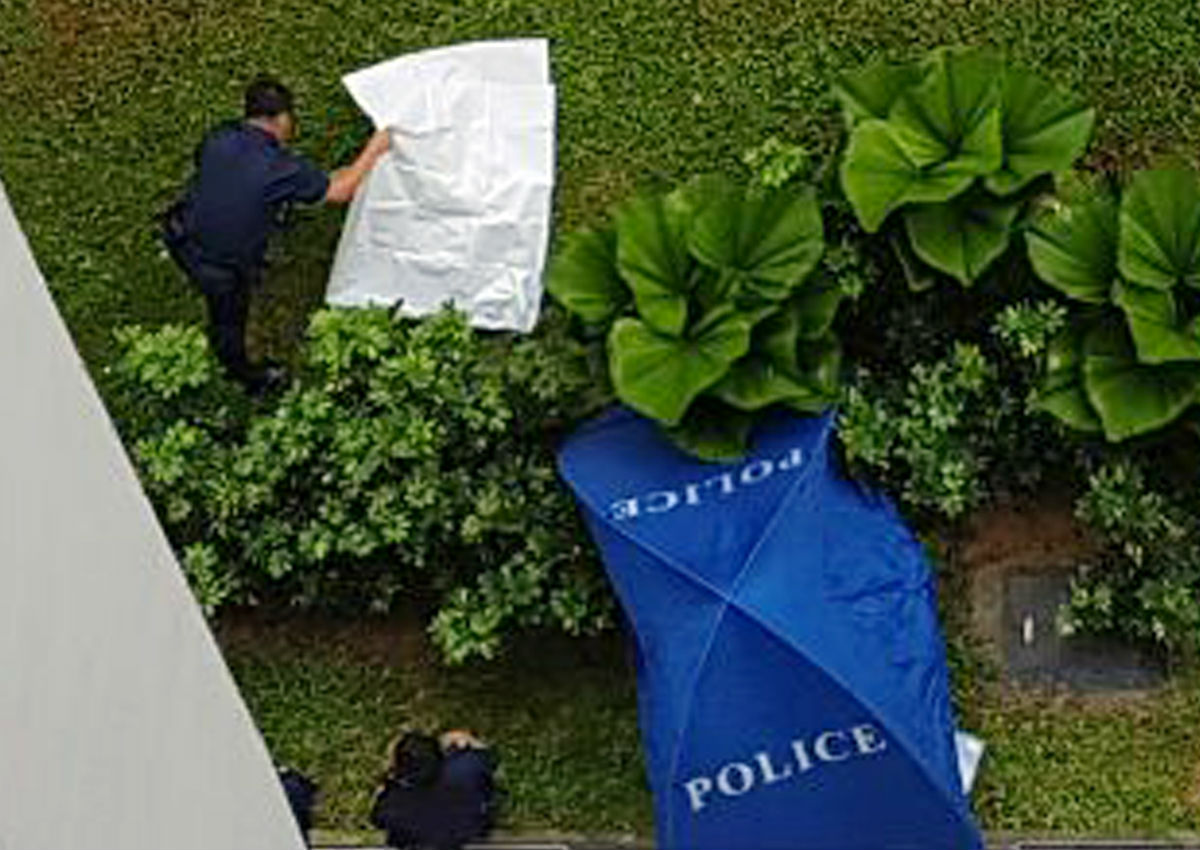
When a police officer lifted the piece of canvas, tiny feet appeared.

A mother-of-three watching from her four-room flat in Bukit Panjang, trembled as she realised the body under the canvas was that of a baby.
Speaking to The New Paper at her flat in Block 443B, Fajar Road, yesterday, the housewife, who wanted to be known only as Madam

Siti, said: “I looked out of a window and saw a blue tent covering a dead body.

“Beside it was a piece of canvas covering a much smaller body.

“As a mother, I feel sad that a baby is dead.”

The police told TNP that they were alerted about the case involving unnatural deaths around 6.40am yesterday.

A 29-year-old woman and her three-month-old daughter were found lying motionless at the foot of the block of flats.

The Singapore Civil Defence Force dispatched an ambulance and paramedics declared the woman and the baby dead at the scene.

TNP understands that it was Madam Koh Suan Ping and her daughter, Ng Le Xuan.

Madam Koh was said to have been wearing a red top while her daughter was clad in pink.

Police officers were still swarming around the area when Madam Siti left her flat around 10am to run some errands.

They were gone by the time she returned about an hour later.

She said: “Some neighbours told me that the woman fell from the 12th storey of our block and they had heard people quarrelling shortly before she fell. I didn’t hear any commotion. I also didn’t hear anything when they fell.”

Another neighbour, who declined to be named, said she was in her flat shortly before 7am when she heard a loud thud.

She peered out of a window and did not notice anything out of the ordinary at first.

She found out about the deaths only when her husband told her over the phone later.

The neighbour said: “It’s terrible that a baby had to die in such a manner.”

TNP visited the 19-storey block around noon yesterday but the crowds had cleared by then.

Lianhe Wanbao reported yesterday that it had spoken to Madam Koh’s 26-year-old brother and he said his late sister worked in marketing.

The Chinese evening daily also reported that Madam Koh, who got married on Oct 24 last year, used to post photos of her family of three on Facebook and they looked happy.

The family had moved into their Fajar Road flat before holding a housewarming party in February.

Madam Koh’s brother, who works as a recruiter, told Lianhe Wanbao that his mother was still being kept in the dark about the tragedy.

He said: “I’m worried she cannot accept the bad news, so I haven’t told her the truth.”

Police investigations are ongoing.


This article was first published on November 24, 2016.
Get The New Paper for more stories.

Image: 
Category: 
Publication Date: 
Thursday, November 24, 2016 – 14:00
Keywords: 
Send to mobile app: 
Source: 


Story Type: 
Others

Source link

Keep the F1 race, but only if they change the sport

0


The Formula One race in Singapore is a cacophonous, traffic-snarling, too-expensive, elitist event involving inadequate overtaking in a sport where rules change faster than a Mourinho mood. So should we keep this race?

Of course. Whatever else can we complain about?

Eventually balance sheets read by folks in suits will determine whether this sporting event stays alive and F1 chief Bernie Ecclestone, who is a back-pedalling quote machine, is hopefully about to find out that Singapore negotiators are steadfast.

If the deal to extend the race beyond 2017 is pleasing, let’s keep this fiesta of ear plugs. Firstly because the race quenches a rare thirst: If the zoo charms the visitor, the gardens calm, the shops seduce, then this is a spectacle of cars under stars.

Secondly, let’s turn one part of Singapore sport into a tradition. Let’s build history. Let’s sink roots into an event. Let’s make ourselves synonymous with a sport and a season. Just as summer means Wimbledon and Boxing Day signals the start of a Melbourne cricket Test match, September in sport should mean Singapore.

Like Monza (66 races) or Monte Carlo (74), Singapore should become a sporting habit and a destination, a place which Lima fans instinctively circle on a map and a date that Perth petrolheads will mark on calendars. Yet it is not easy to create a lasting brand for in uncertain economic times, with shrinking attention spans and altered tastes, events have unpredictable lives.

Singapore lived for the Malaysia Cup but now for the EPL. The best golfers once flocked here and now their tribe has moved elsewhere.

Yet one of the prerequisites to a sporting culture is to have continuity and this race could be our little, regular jewel. After all, what else gets 80 million people every September to take a look at us on TV? What else stands as an obvious example of our organisational skills? What else can lead to people to fly in and learn to say “awreddy”.

But here’s the dilemma: Singapore should agree to host only if the sport remembers how to entertain. Viewing numbers are declining because the sport as a whole is. Officials fiddle as fuel burns.

Football’s beauty is its simplicity, F1’s burden is its complexity. This year after two races the new qualifying format was rejected and changed. Drivers have criticised the rules and Toro Rosso boss Franz Tost has said “nonsense” penalties are given when cars touch each other. Presumably he meant to say: This is racing, fellows, not knitting.

Circuits could encourage overtaking and to watch MotoGP’s duels is to drool. High ticket prices – $258 is the cheapest, current deal for the 2017 Singapore race – keep hardcore fans at home while champagne-quaffing elites come to take a provisional, air-conditioned peek.

All sports are hostage to money, but Formula One’s tragedy is that it has no place for a Leicester-like triumph. The underdog will never be top dog: he may sneak a race win, never a season. Here, only the rich rule – smaller teams are almost afterthoughts to fill a field – and it is breeding a monotony. Next will come indifference.

My pal Pradeep used to have a friend send him VHS tapes of F1 races from Sydney in the 1980s and in his living room he watched as if attending motorsport Mass. Now he barely watches on TV and hasn’t attended the Singapore race the past few years, turned off and away by the “sheer lack of competition”.

This year 18 of 20 races have been won by one team and when he sees Mercedes on the front row, Pradeep thinks “why bother”. Of course if you reversed the grid, and put the fastest car in the last row, he’d queue up all day to buy tickets.

Of course, other sports – say Spanish football – have teams who dominate as ruthlessly, but they are not faceless people, hidden under helmets and behind data. Those teams are led by Messi and Ronaldo, players of charisma and physical theatrics and high skill, and we might wonder if F1 is offering us a champion of similar dazzle.

People will always watch because racing – whether it’s camels, ostriches or cars – is part of the human sporting condition. But Formula One must shrug off its conceit that it is the ultimate automobile attraction and morph into a simpler, fan-friendly, affordable, closely competitive pursuit.

Singapore should hang on to the race but only if the deal is sweet and the sport turns sexy. As much as we need a signature event, we also know that sport preaches patience. Cultures, after all, are built slowly and painstakingly. But as a fellow with a gold medal who is in town would tell us, everything extraordinary is worth the wait.

Read also: Formula One: Bernie Ecclestone clarifies comments, says F1 ‘don’t want to lose Singapore’​

F1’s South-East Asia future in doubt as Ecclestone says Singapore wants to drop race: Report


This article was first published on Nov 24, 2016.
Get a copy of The Straits Times or go to straitstimes.com for more stories.

Image:
Blurb:
Publication Date:
Thursday, November 24, 2016 – 14:00
Send to mobile app:
Source:

Story Type:
Others

Source link

A year of crowds, criticism and creativity: National Gallery Singapore turns one

0

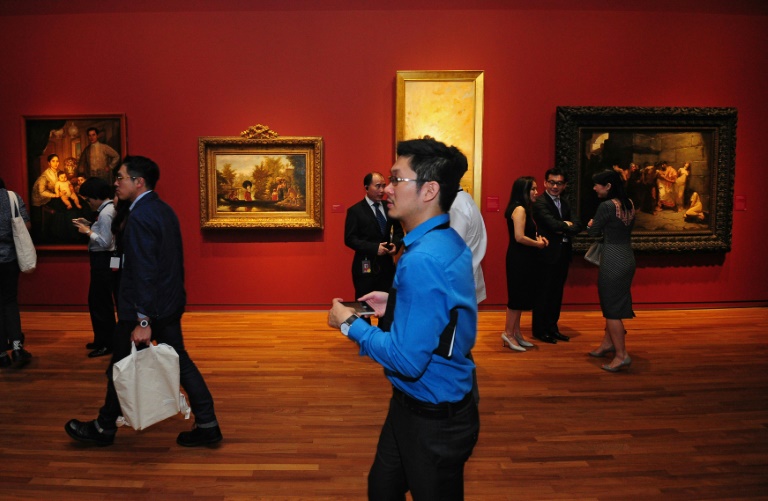
SINGAPORE: Whenever he travels overseas, Mr Ng Boon Chew makes it a point to visit museums. That hasn’t necessarily been the case back at home, where he admits he rarely checks out what’s in his own backyard. But since the National Gallery Singapore opened a year ago, the 45-year-old Singaporean has visited four times.

During the festive opening celebrations last year, he went twice. He also later caught one of the museum’s international blockbuster shows on modernist art. Last month, he dropped by with his wife to check out the ongoing survey show of leading Singaporean ceramicist Iskandar Jalil, which he enjoyed – even if he still gets lost in the building.

“I sometimes still get confused with the focus of the exhibitions and get lost in the the layout of the building,” he said. “It’s not the best (museum) I’ve been to but it’s right up there. It’s something I can be proud of,” he said.
(Photo: AFP/Mohd Fyrol) 

GETTING USED TO IT

For the past year, Singaporeans like Ng have had to get used not just to navigating the cavernous spaces and the huge amount of art seen inside the National Gallery, but to its very presence.

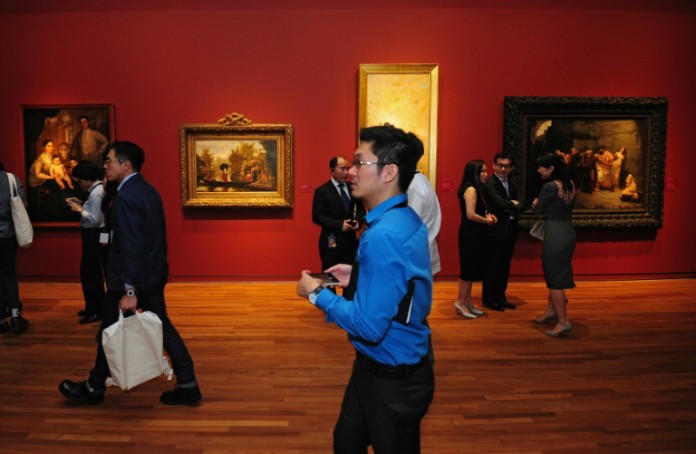
Not since the prickly spikes of the Esplanade were unveiled in 2002 has an art institution of such a scale captured the public’s imagination.

The S$532 million museum is widely regarded as the centerpiece of Singapore’s project of becoming a regional and international art powerhouse. The past decade has seen the emergence of a slew of festivals, art fairs, gallery enclaves, a biennale, and the revamp of other museums around the Civic District – and the National Gallery is seen as the final piece of the puzzle.

Once it opened on Nov 23, 2015, the museum went into overdrive to firmly establish itself in the arts and culture scene.

To date, it has presented nine exhibitions ranging from two anchor permanent shows on Singapore and Southeast Asian art to blockbuster collaborations with the likes of Centre Pompidou and Tate Britain. It has also launched smaller ones that featured important figures in the regional art scene such as Singapore’s Chua Ek Kay, Tang Da Wu, Tan Keng-Kee and Iskandar, Malaysia’s Redza Piyadasa, and the Philippines’ Johnny Manahan.

Surrounding these shows were countless programmes, ranging from children’s exhibitions and shows to film screenings and performances.

BUILD AND THEY WILL COME

All of these have resulted in more than 1.5 million visitors stepping foot inside the combined premises of what was once the former Supreme Court and City Hall. That number is expected to rise after its first anniversary festival, which will be held over two weekends beginning on Friday (Nov 25).

According to museum chief executive Ms Chong Siak Ching, the two permanent exhibitions alone drew 463,000 visitors in the first four months. Another big draw were its public programmes — 182,000 people went to events such as its open house weekends, musical performances and film screenings during the first few months.

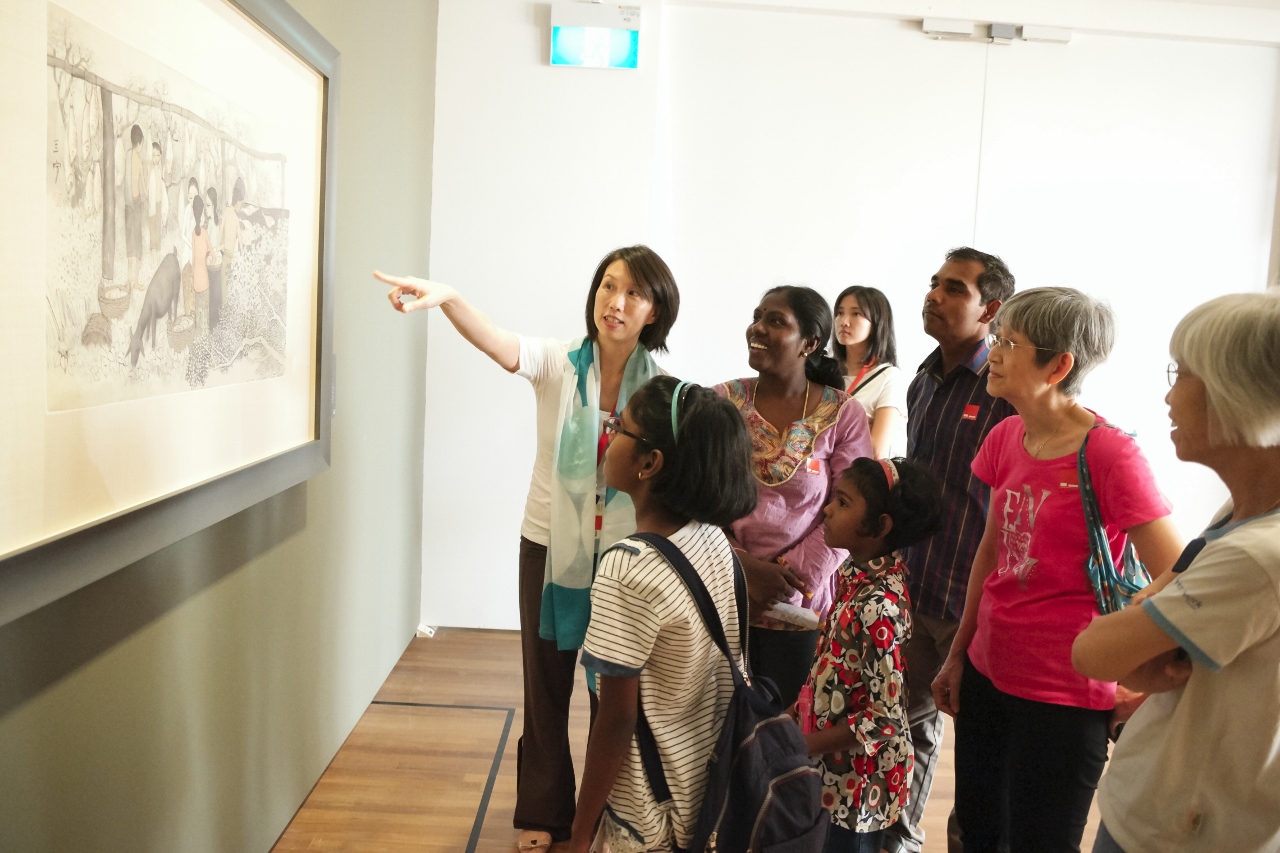
Schools were a prime target, with the museum reaching out to 71,000 students through its outreach education efforts. To date, they’ve been in touch with more than 50 per cent of Singapore’s educational institutions, ranging from primary schools to junior colleges.
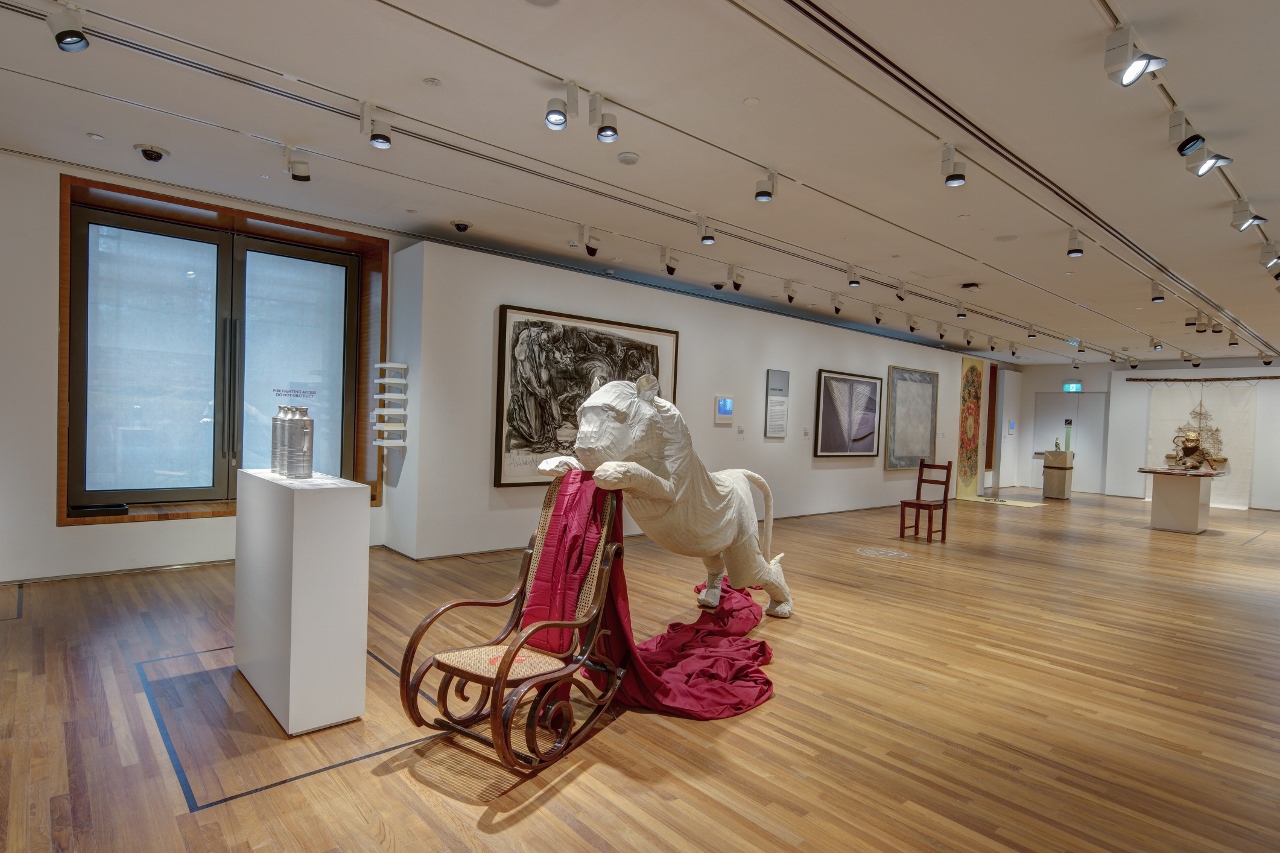
A section of Siapa Nama Kamu?, the museum’s permanent exhibition on Singapore art. (Photo: National Gallery Singapore)

With its seemingly solid visitorship, Ms Chong said they are now also looking at making these numbers sustainable.

“We are constantly looking at other aspects of engagement, including the amount of time each visitor spends at the Gallery and the number of repeat visits they make,” she said, adding that they have also tried to make the museum more inclusive, with initiatives such as art talks in dialect languages, tours in Singapore sign language, and easier access for persons with disabilities (including allowing guide dogs into the museum).

All these, coupled with mainly positive reactions from Singaporean and foreigners (the website Tripadvisor shows a 4.5 rating from 400 reviews) and even recent accolades at the Singapore Tourism Awards, point to a successful first year.

“The first year has been an active and hectic one for the Gallery, but at the same time it is immensely rewarding because of the encouraging reception so far,” said Ms Chong.

FAIR SHARE OF CONTROVERSIES

It hasn’t been all smooth-sailing for the museum, however. In the past year, it has had its fair share of drama and gaffes.

From the many name changes it went through before settling on the current, generic moniker, to online memes that poked fun at its logo, the National Gallery offered many talking points even before it opened to the public.

Once it did, it would occasionally be entangled in more controversy. Around the time of its opening celebrations last year, there came news of a family art collective, Holycrap.sg, being forced to take down its show at the museum cafe due to vague exhibition guidelines.

During a mini-festival in June, social media was abuzz with what was perceived as badly made large-scale reproductions of iconic paintings used for visitors’ photo-ops. One of the museum’s publicity videos was also taken to task for describing how paintings were now hung in a place where criminals were once sentenced to hang – a comparison that was done in bad taste according to some.
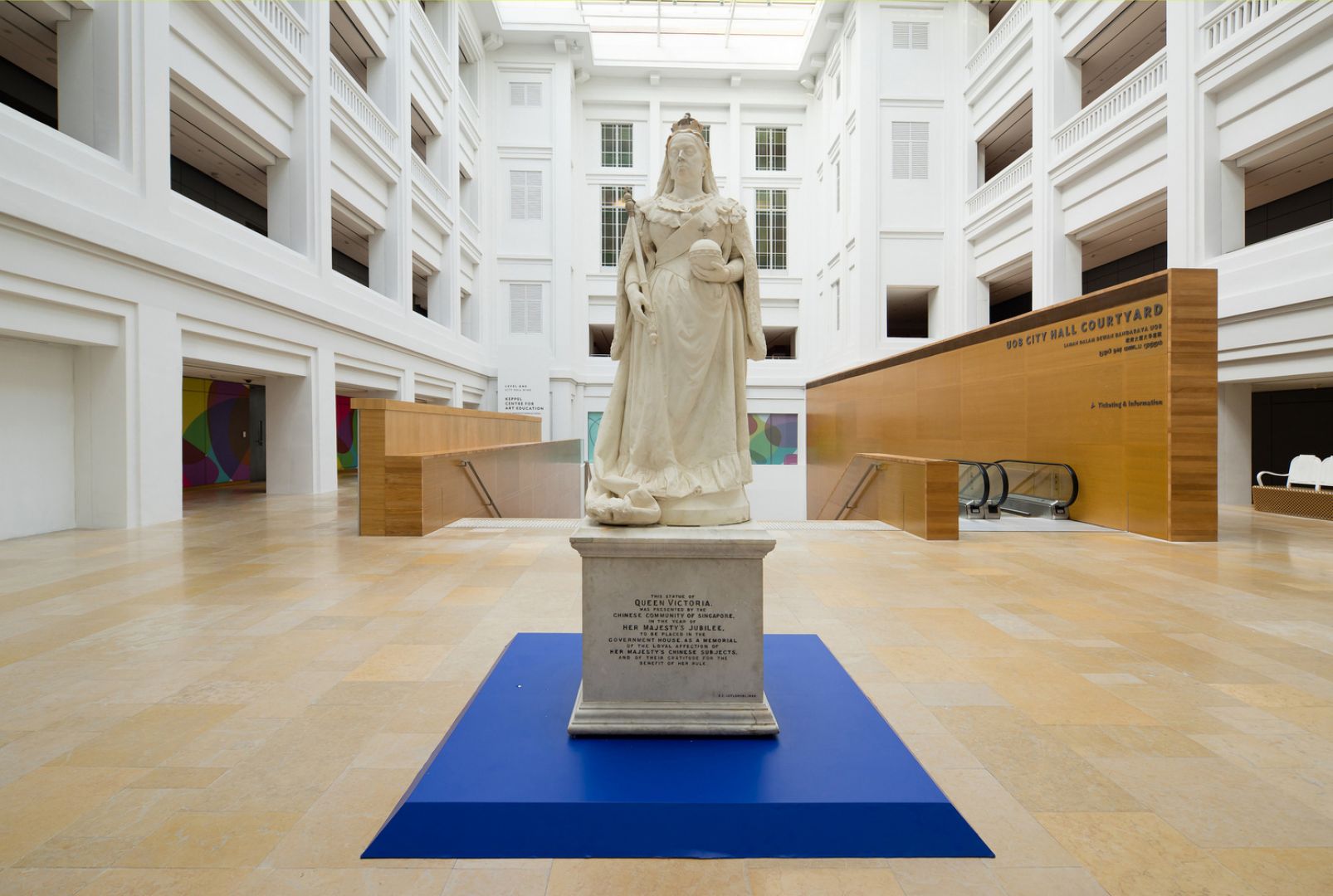
From the ongoing show Artist And Empire. (Photo: TODAY)

The most recent gaffe took place in September, when critics took to task the title of its first fundraising ball. It was initially called Empire Ball to tie in with its ongoing show Artist And Empire, which looked at colonialism.

Critics, including some artists who took part in the exhibition, highlighted the title’s insensitivity and political incorrectness. After much online hoohah, the museum eventually dropped the name.

Aside from these hiccups, other issues cropped up. These included complaints about unclear signage and confusing exhibition layouts; the inordinate amount of fine dining restaurants in an art museum; steep admission prices for international visitors; and even questions about the very buildings themselves and how the 64,000 sq m space seemed way too big for the number of artworks it was housing.

FINDING THE RIGHT BALANCE

Nevertheless, the number of visitors that flocked to the National Gallery in its maiden year seem to indicate that it is slowly being embraced by the public.

And as it enters its second year, observers point out that it’s time for the museum to buckle down and think of its strategies for the future – not just as Singapore’s premier art museum but as one that also has aspirations to be a leading voice in the Southeast Asian art scene.

But juggling between attracting consistently large numbers of visitors and keeping faithful to its core aims as a museum hasn’t been an easy task.
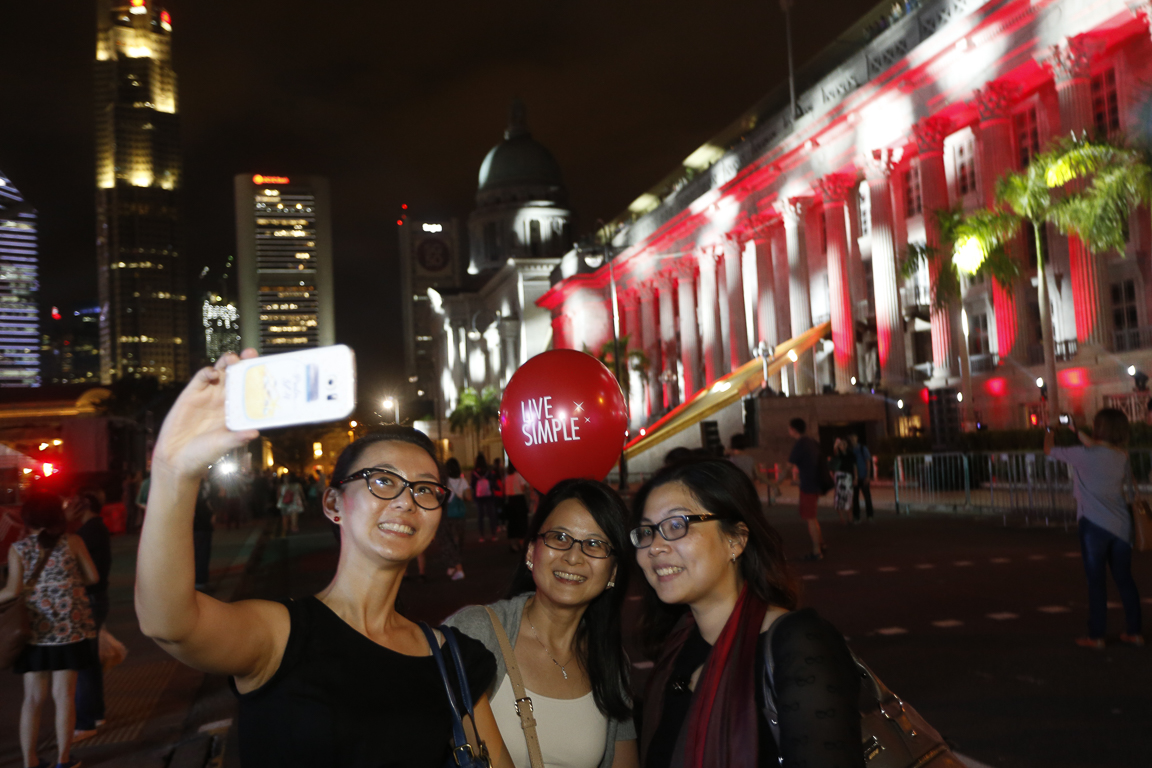
Visitors taking a wefie during the museum’s opening celebrations last year. (Photo: National Gallery Singapore)

Museum director Mr Eugene Tan admitted there are challenges in finding the right balance.

“Given the varying levels of understanding and appreciation of art in Singapore, our public programming and outreach team are continually developing new ideas and programmes to create different entry points to engage our visitors,” he said.

He added: “There is invariably a tension between the curatorial and scholarly aspect of our exhibitions and programmes, and those that will appeal to a larger audience.”

To help attract a variety of people, the museum has worked with non-visual arts events such as the Singapore Fashion Week. It has also been aggressively promoting events for the young, courtesy of its popular children-centric Keppel Centre for Art Education.

Its upcoming first year anniversary festival will feature 60 programmes that include a food area, music and dance performances and other pop events (with, as some have noticed, very little involvement from any of the living artists seen in the museum’s exhibitions).

FINDING ITS IDENTITY

While many of these public programmes have ensured a steady footfall inside the museum, some point out a possible disconnect, and even worry that this approach is merely feeding into the numbers game.

“Yoga, spectacular light shows, tie-ups with blockbuster shows – it just feels too desperate and gimmicky for instant validation,” Singaporean artist-curator Alan Oei told Channel NewsAsia.

The director of alternative art space The Substation, who recently wrote a critical piece about the National Gallery in the art magazine Art Review, added: “I wish NGS would be more confident about its own identity as an art institution. It feels like it doesn’t believe in the power of art. Instead, it’s been more like a marketing agency – trying so desperately to get people into its doors through all sorts of lifestyle angles.”
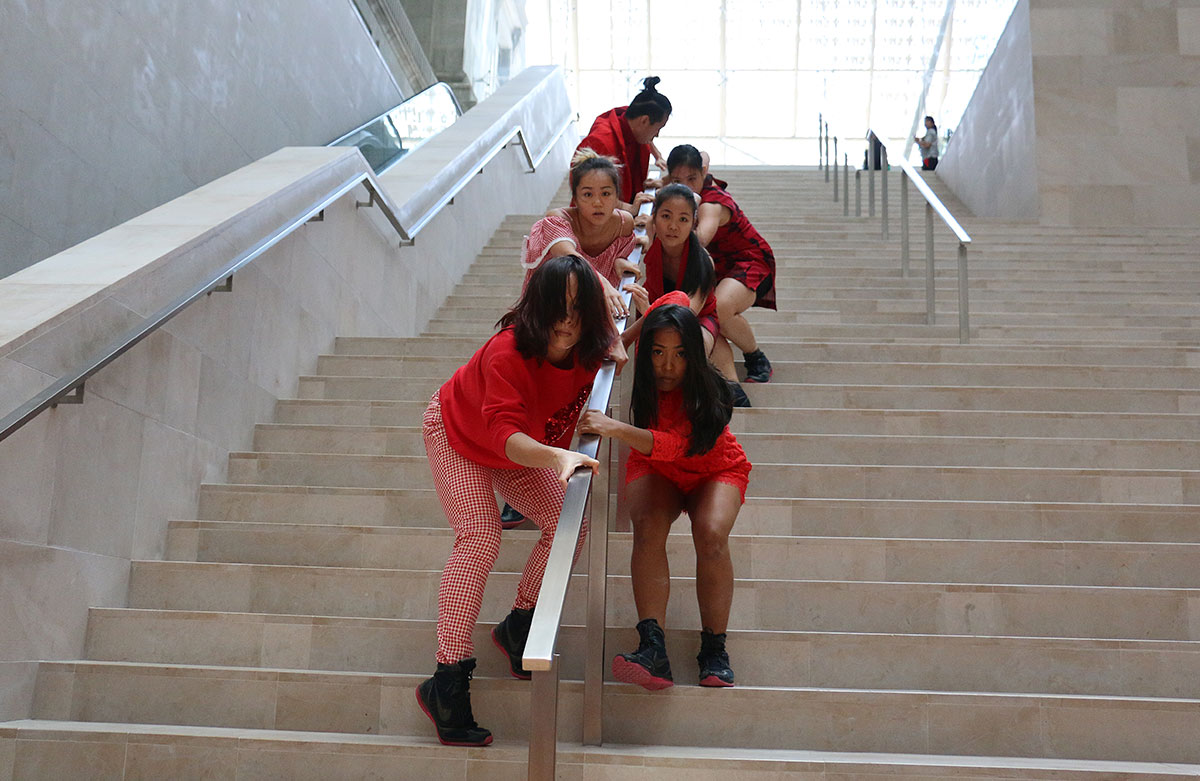
A performance by dance group The Arts Fission Company as part of last year’s opening celebrations. (Photo: Sherlyn Goh)

According to Singaporean artist and curator Mr Khairuddin Hori, the fact that the museum has been actively producing non-visual art public programmes is an “acknowledgement… that today’s audience is one that is diverse and not easily concerned by art alone”.

But the former deputy director of artistic programmes at Paris’ Palais De Tokyo also added that it could do more with these programmes to emphasise its identity.

“Perhaps it is time to look at engagements with Southeast Asia with more diverse lenses even if its core is the art historical. Elements such as music, foods, and other living cultures from the crevices of Southeast Asia could be offered to create holistic and connected conversations, simultaneously giving context to Singapore’s place as a port and internationalised city state,” he said.

LOW-KEY EFFORTS

While the museum continues to do a balancing act in the public eye, it would seem the National Gallery is faring better in its more low-key and less publicised efforts. Many of these aren’t meant to draw the crowds but are equally important — if overlooked — functions for a museum of such stature.   

According to Ms Chong, the museum has worked with institutions such as the NTU Centre for Contemporary Art Singapore and LASALLE College of the Arts, Cultural Center of the Philippines, National Art Museum of China and Fukuoka Asian Art Museum (Japan) for research programmes, seminars and the like.
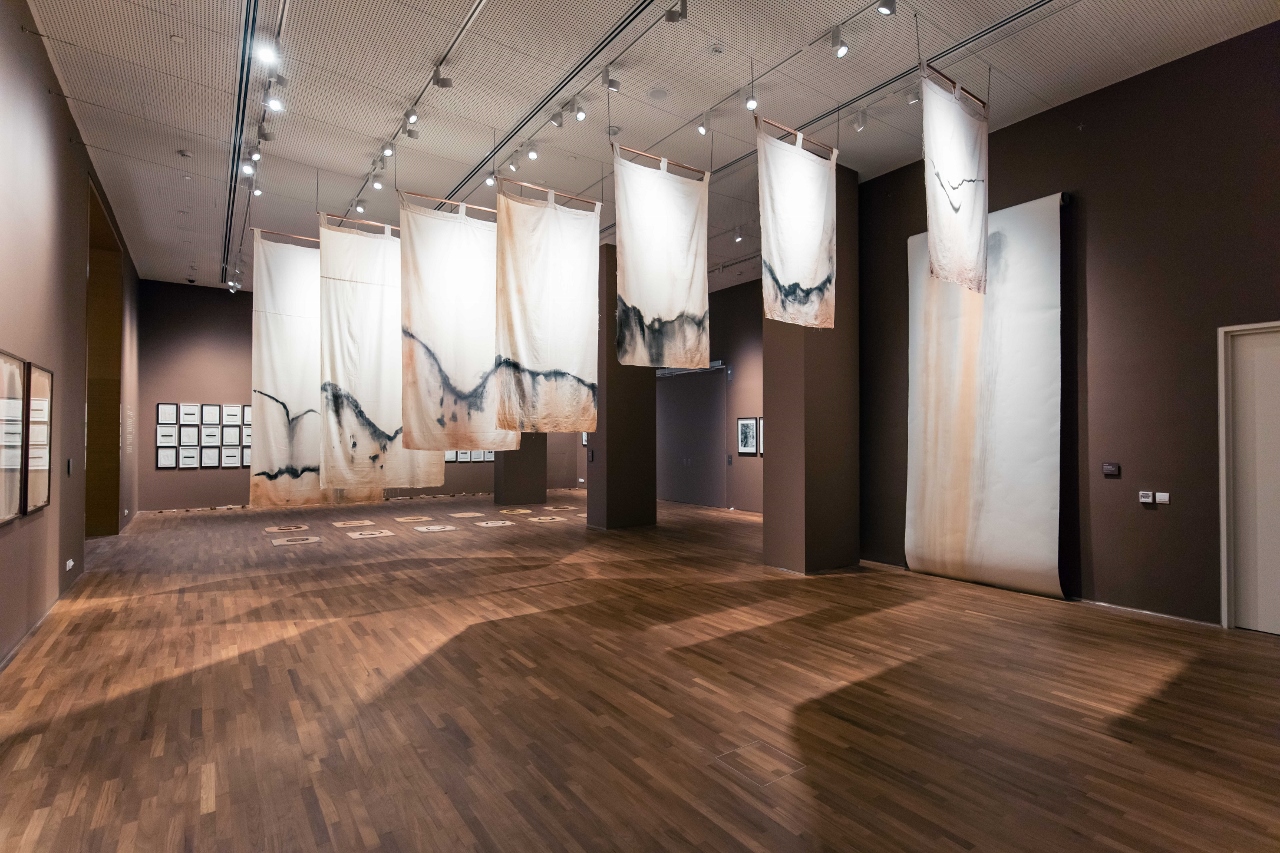
Singaporean artist Tang Da Wu’s Earth Work 1979. (Photo: National Gallery Singapore)

Forums, talks and workshops have also been a regular occurrence, said Mr Tan.

They recently organised a session with Vietnamese-born Danish artist Danh Vo, whose commissioned work is currently up at the Ng Teng Fong Roof Garden Gallery.

During their Reframing Modernism exhibition, the son of one of the key figures in Thai modern art was invited to a talk, while Singaporean film-maker Royston Tan was also recently invited to discuss his experiences as a student under Iskandar Jalil.

There are also plans to work with various institutes in Bandung, Indonesia, and Sydney, Australia.

And while the museum’s collaborations with western museums are the ones getting all the buzz, they are also planning a future show with notable museums in Japan and Korea.

THOUGHTS FROM THE REGION

And there is, of course, the museum’s regular tie-ups with other institutions in Southeast Asia.

Indeed, while the National Gallery is a Singapore institution, the fact that it looks at Southeast Asian art on such a large scale has meant that its neighbours are also keeping an eye on its progress.

While Mr Tan has shied away from describing the museum as a centre for regional art, its presence has undoubtedly had some impact outside of Singapore.

“I have felt so much enthusiasm among many Thai artists, collectors, galleries, and cultural institutions here towards (the National Gallery),” Ms Luckana Kunavichayanont, director of the Bangkok Art and Culture Centre, told Channel NewsAsia.

“I’ve noticed that the (museum’s) acquisition of regional works also boost so much hope for established and emerging artists here in Thailand, since we have few museums and collectors collecting art. To get recognition and be acquired by a major regional art institution has helped boost (some artists’) careers and prosperity.”
(Photo: National Gallery Singapore)

Mr Patrick Flores, curator for the Vargas Museum in the Philippines, also weighed in on the National Gallery’s regional aspirations. “Like many Southeast Asians, Filipinos should be able to appreciate this survey offered by the NGS and to find Philippine art adequately represented,” he said.

But at the same time, both of them acknowledged the complicated tasks the museum has taken upon itself by attempting to tackle art from a rather complex region.

“NGS has made a case for both national and regional art history, Singapore and Southeast Asia. What it can do is to offer ways through which to understand why this project is difficult and informed by fundamental problems of difference and complex representation,” said Mr Flores.

“It could be too soon to judge whether they have achieved their goal, it will take time and huge efforts for everyone involved,” added Ms Kunavichayanont.

TOO EARLY TO TELL

Indeed, a year is hardly enough time to gauge a project of such scope and magnitude as the National Gallery, even for those in Singapore.

“The real impact of NGS will only be felt generations later,” said Mr Oei. “A whole new generation of children and Singaporeans will have a great collection accessible to them. The question is how will NGS frame their experience?”

It’s a sentiment echoed by Singaporean artist and educator Ezzam Rahman, who regularly encourages his students to visit the museum for inspiration.

“You need to give the National Gallery some time for it to grow and flourish. You cannot expect it to be the next Tate Britain overnight. It’s like growing a seed — you can’t expect a tree to grow in a year,” he said, before adding: “But it’s very important to have one that houses these important works from Singapore and Southeast Asia, and to show it to the people.”
(Photo: National Gallery Singapore)

***

THE GOOD, THE BAD, THE NATIONAL GALLERY

Happy Birthday, National Gallery Singapore. We look at some of the highs and lows of its first year.

THE GOOD

1. THE PERMANENT EXHIBITIONS. The museum has mostly done a great job in framing blockbuster shows, such as Artist And Empire, from a regional perspective. Its smaller shows on iconic artists from the region also deserves praise. But ultimately, the two anchor shows on Singapore and Southeast Asian art are what holds the very idea of the National Gallery together. With 800 artworks on display, it’s a sweeping, ambitious undertaking that’s worth a return visit or three.

2. KEPPEL CENTRE FOR ART EDUCATION. The best way to grow audiences is to start them young, and the judging by the regular sight of schoolkids at the museum, it seems they’re pursuing them quite aggressively. And yes, there are some good art to be found there, too.

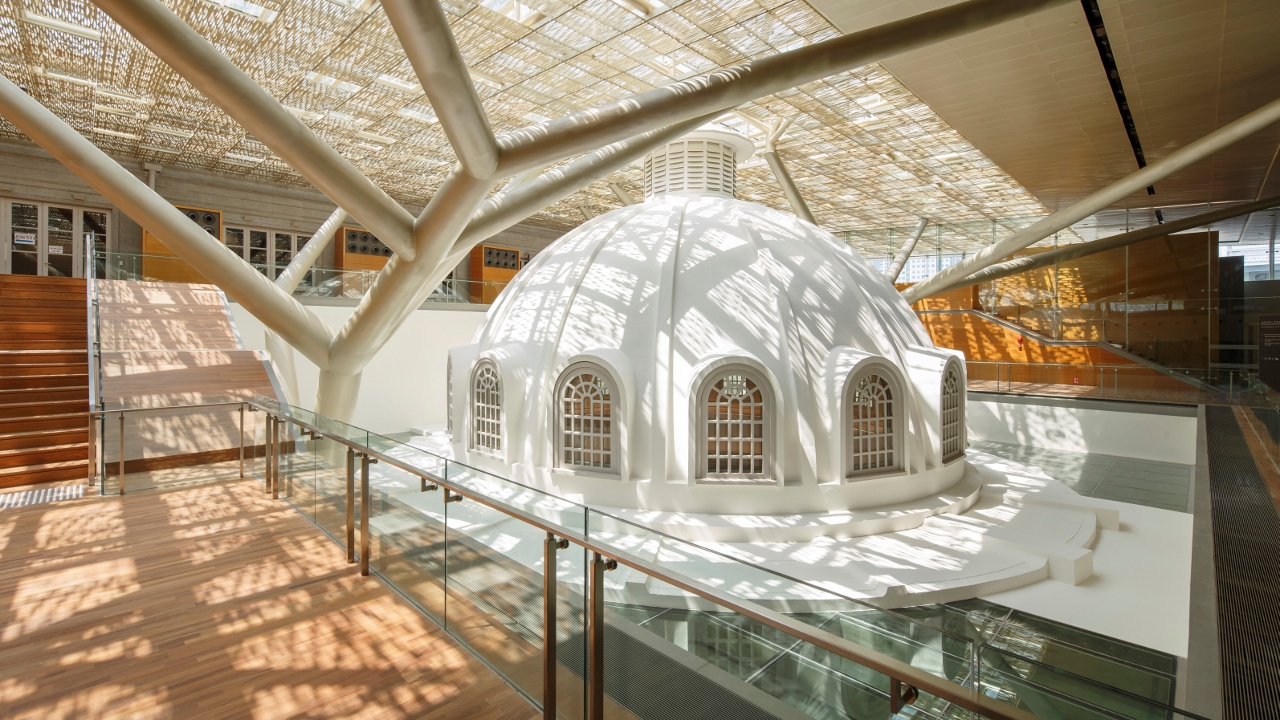
3. THE ARCHITECTURE. There have been criticisms about the confusing layout of the space, how cavernous the entire museum feels, but it’s probably no surprise that the two combined historical buildings have been a draw as much as the art on display. Sure, it might take time to get accustomed to the huge spaces – and the museum really does have to look at how it can utilise these properly – but you can’t ignore the history these buildings exude.

THE COULD-BE-BETTER

1. IMAGE PROBLEMS. Once in a while, the National Gallery pops up in the news (or newsfeeds) for the wrong reasons. Opinions travel fast in the age of social media – as was the case during the controversy surrounding the Empire Ball. Surely someone had pointed out that unironically naming a lavish fundraising event after an exhibition that sought to question colonialism was in questionable taste?

2. MORE OF SOUTHEAST ASIA. The exhibitions have done well in showcasing the region’s wealth in terms of visual arts, but more could be done with regards to the other programmes. With an entire region’s arts and culture to explore, the possibilities of bringing in artists of sorts are kind of endless – whether it’s performing arts, music, food, film, traditional or contemporary. In due time, perhaps?

3. AUDIENCE ETHICS. It’s hardly the first museum in Singapore but during the opening festivities, we realised it might just take a while for audiences to figure out the, well, rules of engagement inside a museum. Touchy-feely might work in certain interactive works, but David Medalla’s bubble sculpture isn’t one of them.


Source link

Black Friday, Singapore-style, for some in Orchard Rd

0

A Black Friday sale by retailers along Singapore’s popular shopping street will not officially happen this year after all.

The Orchard Road Business Association (Orba) has shelved plans for the event, following concerns by retailers that Black Friday has turned into a mostly e-commerce festival.

Black Friday is the day after Thanksgiving in the United States, with the latter falling on the fourth Thursday of November.

Orba executive director Steven Goh said physical retailers cannot compete with online stores on prices. Online retailers have lower operating costs, he said.

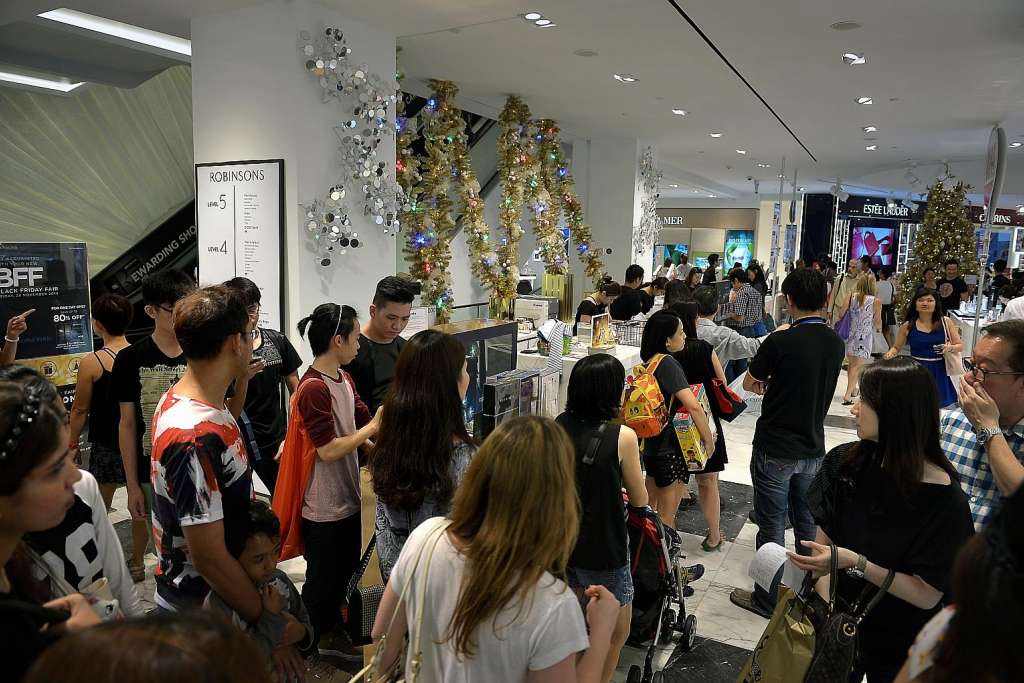
This, however, has not stopped brick-and mortar stores like Courts, Robinsons and Sephora along Orchard Road from joining the Black Friday drive to attract shoppers.

Some of them also have an online presence and have also had good experiences with such sales before.

Mr Goh said one reason that the official event was cancelled by his association was that a Black Friday sale would clash with Christmas promotions.

“As a precinct, we want people to dine, eat and shop here. Events like Black Friday and Singles’ Day go against our principle,” he said. Singles’ Day, which falls on Nov 11, is a shopping festival led by Chinese e-commerce giant Alibaba.

Christmas promotions from now until Jan 2 in Orchard Road include shopping voucher redemptions for spending at participating malls using MasterCard credit cards.

Singapore Polytechnic marketing and retail lecturer Amos Tan said there is a mismatch between Orchard Road’s image as a premium shopping belt and Black Friday’s image as a largely online sale of electronics and mass-market fashion brands.

“Firstly, premium brands are unwilling to give that kind of steep discounts. And with the high overheads here, brick-and-mortar stores cannot afford to,” he said.

While some brick-and-mortar stores appeared to be falling in line with this type of reasoning,not every retailer along the stretch is backing out of a Black Friday sale.

Thanks to the good response they received in previous years, department store Robinsons and furniture retailer Courts are going ahead with their own Black Friday promotions.

Both stores have an online and brick-and-mortar presence.

Robinsons, for example, drew five times more customers than usual during its three-day sale last year.

Beauty store Sephora as well as fashion brands Topshop and Dorothy Perkins are also holding Black Friday sales.

Meanwhile, e-commerce retailers in Singapore are leveraging on the year-end festivities.

For example, Lazada, Qoo10 and Zalora are holding Black Friday and Cyber Monday sales, with Zalora holding a fourth sale on Dec 12.

Cyber Monday is the Monday after Thanksgiving, when online sales are expected to peak.

Singles’ Day is popular with shoppers on these retail sites too. Within the first hour of the sale on Nov 11, Lazada’s sales volume rose by more than 30 times compared with the same time the previous day.

Qoo10 had its highest single-day transaction of $3.2 million on Singles’ Day.

Shoppers are increasingly browsing and making purchases on their mobile phones, e-retailers noted.

Mr Tito Costa, Zalora’s chief marketing officer, said the recent spike in mobile penetration is increasingly generating a huge number of “thumb-shoppers”.


This article was first published on Nov 24, 2016.
Get a copy of The Straits Times or go to straitstimes.com for more stories.

Image: 
Blurb: 
Publication Date: 
Thursday, November 24, 2016 – 13:00
Send to mobile app: 
Source: 


Story Type: 
Others

Source link

Geje Eustaquio is Driven by Desire to Be the Best in MMA

0

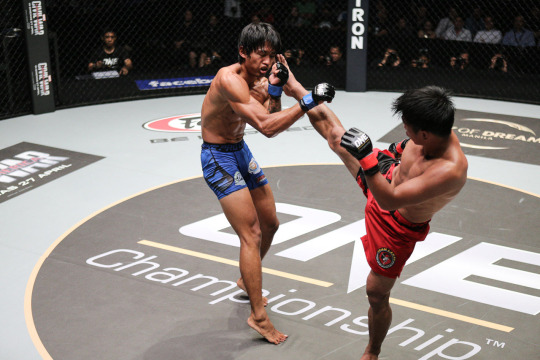
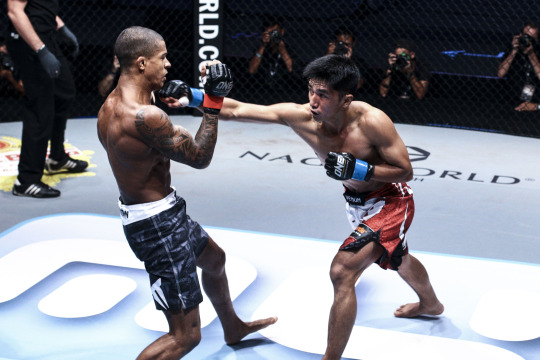
Former ONE Flyweight World Championship contender Geje “Gravity” Eustaquio will look to continue his successful bantamweight campaign when he meets Finland’s Toni “Dynamite” Tauru at ONE: AGE OF DOMINATION on Friday Night, 2 December, from the Mall Of Asia Arena in Manila, Philippines.

Tauru, a Vale Tudo specialist with an impressive ground game, is all the more dangerous fighting with his back against the wall, as the 10-4 combatant is on a three-fight losing skid coming into the contest and is desperately trying to turn his career around after a 10-fight win streak.

Eustaquio is confident in his own abilities, but the Filipino expects a tough battle.

“I look forward to swimming with him in the deep waters,” the 27-year-old says. “I see it as a chess game. I have my plans that I will take to the cage with me.”

The man known as “Gravity” is the hometown favorite and rightfully so. He attended Baguio City National High School and following graduation, he enrolled at the University Of The Cordilleras and was a member of the Philippines National Wushu Team.

“I used to be a Wushu player during my college years,” Eustaquio says. “In fact, I received my degree for free because of martial arts. After finishing my degree, I worked for a year in an international school as a teacher.”

Once that year was up, however, he reached out to Mark Sangiao and was interested in a different type of teaching. 

“I reflected and asked to get back [together with] my coach and help him teach the new upcoming breed of martial artists, as a way of giving back to him and to the community,” he recalls. “After that, I used to watch the then-new sport of MMA and I decided to put my heart and soul into it.”

Training out of the Philippines’ Team Lakay, “Gravity” made his professional debut in February 2011. He competed in three local shows, winning two of the contests, before signing with ONE Championship. Eustaquio made his promotional debut a year later against Alex Silva at ONE: BATTLE OF HEROES, and it was a night he will never forget.

“My first ONE Championship fight is the most memorable to me,” he says. “It is the biggest victory of my career because it was the first time I won internationally.”

Eustaquio continued to excel in the promotion’s flyweight division, even vying for the inaugural ONE Flyweight World Championship at ONE: RISE OF THE KINGDOM back in September 2014. Though he lost Adriano Moraes (who currently holds the interim championship), and Anatpong Bunrad in his next bout, he decided to move up a weight class following the promotion’s newly-installed weigh-in program that banned weight cutting by dehydration.

He defeated Saiful Merican in a catchweight bout at this past January’s ONE: CLASH OF HEROES, and then debuted at bantamweight where he bested Malaysian prospect Gianni Subba at ONE: GLOBAL RIVALS three months later.

Though Eustaquio has re-created himself, he gives a lot of the credit to his teammates and, of course, Sangiao. 

“He is the best coach we have,” the bantamweight says. “He is a brother, a father, and a mentor. He always looks at things for the long run and treats his team as a whole team. I was inspired by Mark. The hardship of life drives me to move forward and be the best in MMA.”

Now in a more suitable weight class, and armed with a brand new Masters of Arts in Physical Education, “Gravity” is getting closer to a future title shot against divisional kingpin Bibiano Fernandes and proving that he is the best. 

That further stresses the important of this upcoming bout with Tauru, a former Cage Warriors FC Bantamweight Champion who wreaked havoc all across the European scene and even challenged for Fernandes’ title himself. .

With two hungry fighters wanting to prove their worth and stake their relevance in the division, this match has all the makings of being the fight of the night. 

“Do not miss the chance to witness when the good becomes better and the better becomes the best,” Eustaquio states. “Bring it on!”

Image: 
Geje Eustaquio is Driven by Desire to Be the Best in MMA
Category: 
Publication Date: 
Thursday, November 24, 2016 – 13:06
Send to mobile app: 
Source: 


Story Type: 
Others

Source link