KidsSTOP
from Wednesday, May 10, 2017 at 12:00 AM to Monday, June 26, 2017 at 12:00 AM
from Wednesday, May 10, 2017 at 12:00 AM to Monday, June 26, 2017 at 12:00 AM
To be announced
Singapore, Singapore, Singapore

THIS WEEKEND ONLY: H&M offers up to 50% off Black Friday collection! Find out more in the post
H&M’s Black Friday deals offer savings of up to 50% off selected items from 25 – 27 Nov 2016
This weekend only! From 25 – 27 Nov, check out H&M’s Black Friday Deals available in all H&M stores. Selected items from Ladies, Mens and Kids marked down specially for the Black Friday weekend!
SINGAPORE — He was hired two years ago as the manager of Jamiyah Day Care Centre, but Mr John Britto soon found himself doubling as head of the centre’s rehabilitation department — which comprises one occupational therapist and a part-time physiotherapist.
The starved stable of allied health professionals at the centre — 16 employees serving 60 elderly people — has also resulted in employees pulling 12-hour shifts, and making it difficult for them to go on leave.
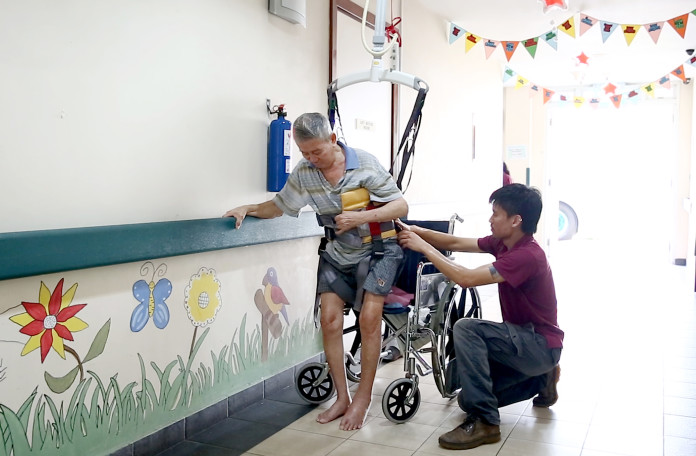
Over at Peacehaven Nursing Home, Mr Brian Tan, a physiotherapy assistant, also sometimes doubles as an errand boy for jobs that involve heavy lifting “because I am the only young man around” — taking time away from his therapy work.
For Mr Britto and Mr Tan, the news that the Ministry of Health (MOH) hopes to add another 30,000 workers to the healthcare sector comes as a much-needed booster for the intermediate- and long-term care (ILTC) sector, which is expected to bear much of the care demands of a rapidly-ageing population.
But other medical professionals say the issues faced by the healthcare sector require more than a straightforward injection of manpower.
Instead, Singapore needs to transform its current care model to one that makes better use of existing manpower — in particular, the general practitioners (GPs) and family physicians — to focus on preventing people from developing chronic conditions, and on community care.
This is not a new direction for the sector; as far back as 2000, the ministry launched the Primary Care Partnership Scheme and other initiatives to make better use of primary care resources. But limited headway has been made, in part because the care model continues to steer people towards seeking care at hospitals.
“It’s probably not a shortage of doctors but a distribution problem … There is still slack in some areas,” said Dr Phua Kai Hong, Associate Professor of health and social policy at the Lee Kuan Yew School of Public Policy.
“Compared with the rest of the population, our doctor-to-population ratio is decent … It’s not just the numbers but how you use these doctors,” he added.
Within the ILTC sector, practitioners are also urging a shift away from the nursing home model towards providing day care or assisted-living facilities for those who do not need intensive medical attention, to alleviate the burden on nursing homes.
As long as healthcare in Singapore is hospital-centric and “overweighted” towards specialist care, it will continue to face shortages because of the increased number of patients and the onset of chronic diseases, said Dr Jeremy Lim, who leads the health and life sciences and public sector practices of consulting firm Oliver Wyman in the Asia-Pacific.
WHERE THE NEEDS ARE
Today, the healthcare workforce is 91,000-strong — comprising doctors, nurses, allied health professionals, and support-care staff, among others. Meanwhile, there are 460,000 Singapore residents above the age of 65, and this group is expected to increase by 33 per cent to 610,000 by 2020, and to more than double by 2030.
The MOH said that about half of the expected 30,000 healthcare jobs needed by 2020 are expected to be filled by professionals, managers, executives and technicians. These include doctors, nurses, allied health professionals, and managerial administrative staff such as centre managers, operations and administrative executives
“The projected manpower demand will come from across the healthcare settings. Beyond new acute hospitals, there will be demand from primary care with new polyclinics, as well as the community care sector with the expansions of capacity in community hospitals, nursing homes, senior care centres and home care,” said the ministry, in response to TODAY’s queries.
Between 2015 and 2020, the Government wants to add six new polyclinics, 2,100 beds in public hospitals, and 9,100 beds in community hospitals and nursing homes.
Member of Parliament (Tanjong Pagar GRC) Chia Shi-Lu, an orthopaedic surgeon and chair of the Government Parliamentary Committee for Health, said with a revamp of Eldershield on the cards, financing for “post-hospital ILTC sectors” might improve and may increase demand.
Local and foreign recruitment has helped meet demand so far, and efforts to grow the local healthcare workforce include increasing the training pipeline, which has seen local medical and nursing intakes increase by 29 per cent and 17 per cent, respectively, between 2012 and last year.
This year, the Singapore Institute of Technology started four new allied health professional programmes: Physiotherapy, occupational therapy, diagnostic radiography and radiation therapy.
The ministry has also introduced training grants and programmes to woo those seeking a mid-career switch into the sector and to encourage Singaporeans studying health science disciplines overseas to return to practise locally.
And around nine in 10 public sector healthcare professionals who reach the age of 62 are re-employed, while the sector raised the re-employment age for staff from 65 to 67 in July.
Doctors working in acute hospitals told TODAY that growth in the recruitment of foreign doctors has helped make up for the shortfall. As of the end of last year, about 22 per cent of doctors in both public and private healthcare sectors were foreigners.
But Dr Lim said these efforts are “salves rather than fundamental solutions”. A community-centric model of care can tap family physicians to manage “all but the most-complicated cases of diabetes, heart failure and arthritis”, he said.
“Likewise, if nurses and allied health professionals take on more of the junior doctors today undertake, then we would need more nurses and allied health professionals, and may not need more doctors,” he said.
LONG-TERM CARE WORKERS NEEDED, BUT SECTOR HAMPERED BY ‘IMAGE DEFICIT’
The experiences of Mr Britto and Mr Tan reflect the acute manpower shortage in the intermediate- and long-term care sector.
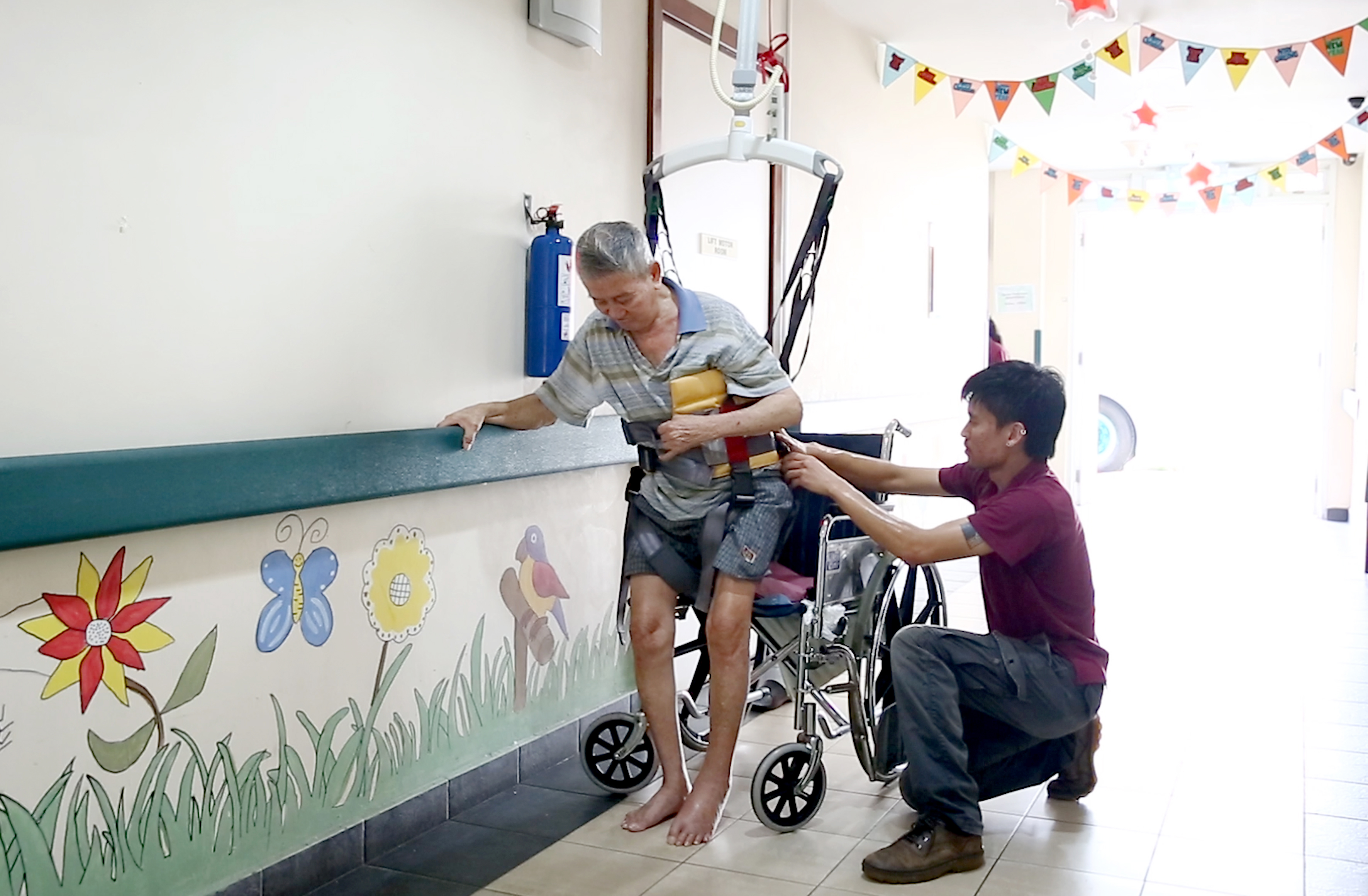
Over at Peacehaven Nursing Home, Mr Brian Tan, a physiotherapy assistant, also sometimes doubles as an errand boy for jobs that involve heavy lifting “because I am the only young man around” — taking time away from his therapy work. Photo: Nuria Ling/TODAY
Recruiting has not been easy, as the long-term care industry suffers from an “image deficit” among Singaporeans, said Ms Yorelle Kalika, who founded home-care provider Active Global Specialised Caregivers.
“There is a misconception that because home-based care does not have a professional work environment, like in a hospital or nursing home setting, it is less prestigious,” she said.
Nursing-home employees said Singaporeans shun their jobs, too. “Work in nursing homes tends to be monotonous and routine, and the career progression is not great,” said Mr Britto, a permanent resident who worked in acute and community hospitals before he joined the Jamiyah Day Care Centre.
He also noted that wages are not attractive. Junior therapists earn about S$2,800 a month in nursing homes, compared with S$3,500 for a similar role in hospitals.
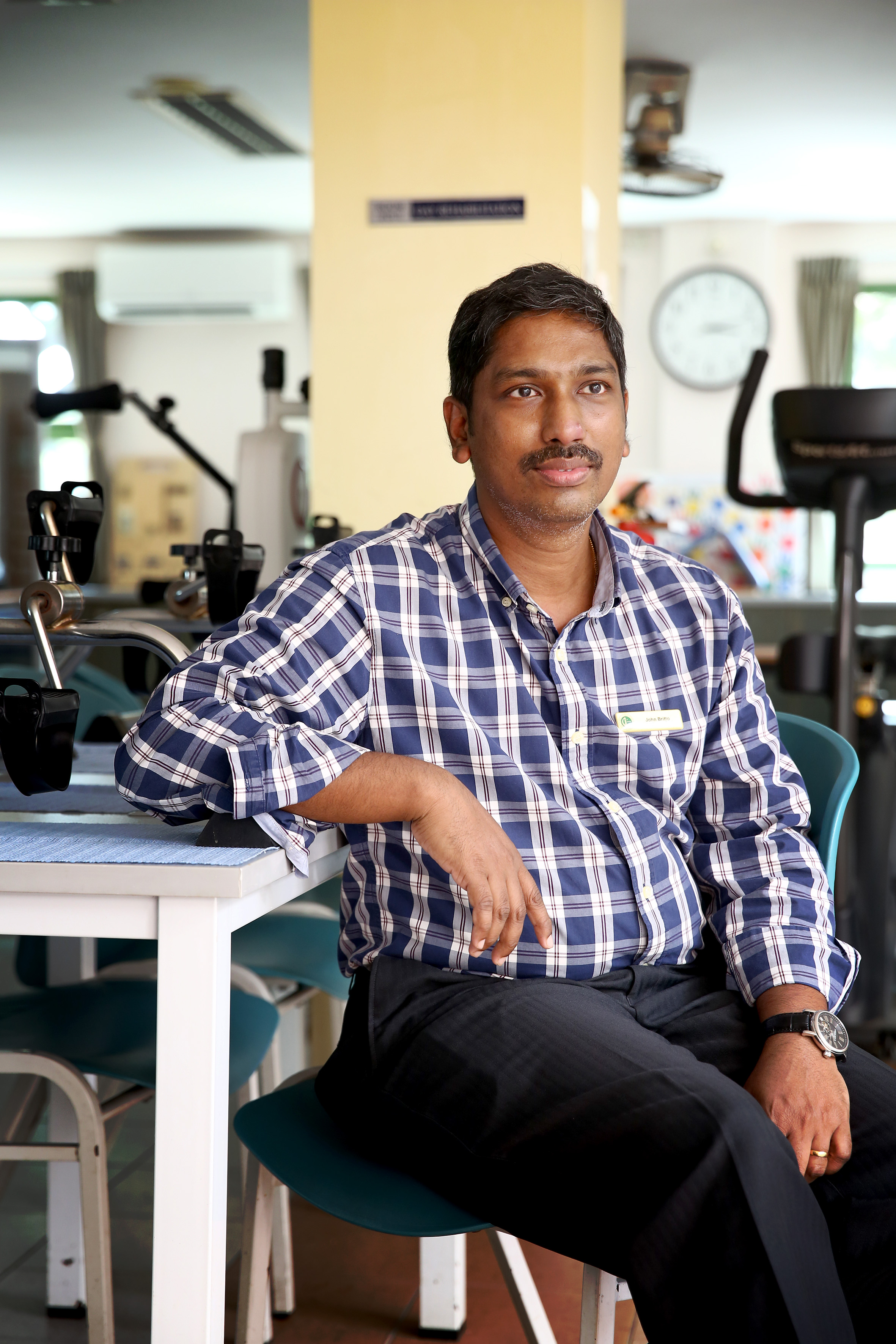
He was hired two years ago as the manager of Jamiyah Day Care Centre, but Mr John Britto soon found himself doubling as head of the centre’s rehabilitation department — which comprises one occupational therapist and a part-time physiotherapist. Photo: Nuria Ling/TODAY
Mr Tan, 26, who graduated from the Nanyang Technological University, said that his choice of profession was “unusual” for someone with a degree in sports science: “People told me to go into coaching (athletes), but I felt that working with the elderly made a greater difference. You get to see them improve with your assistance.”
Even if the sector successfully attracts more talent, said Jamiyah Nursing Home director Lai Foong Lian, the Republic will continue to “play catch-up” for some time.
“However fast you want to churn out professionals, it will not meet demand … The training takes three years, and they won’t have practical experience, which is vital for nursing homes,” said Ms Lai, adding that eight in 10 of her employees are foreigners.
This is also the case at Active Global, where 89 per cent of its caregivers are foreigners from Myanmar, Sri Lanka, India, the Philippines and Indonesia.
But depending on foreign workers may not be sustainable, said Ms Lai, as they will gradually return to their home countries.
Peacehaven Nursing Home executive director Low Mui Lang said she tries to vary employees’ job scope by rotating them between the home and its day centres, a move that has improved retention rates.
The home also hires older Singaporeans aged between their 50s and 60s as healthcare associates, and they now make up about 10 per cent of its workforce. Senior employees, still a largely untapped manpower resource across Singapore, are a valuable asset in the long-term care sector because they are conversant in various dialects and wages are not their foremost concern, she said.
Apart from ramping up manpower, another key strategy of the Healthcare Manpower Plan is to tap technology to raise productivity — something already being done across all sectors of care.
Peacehaven Nursing Home and St Andrew’s Community Hospital, for instance, make use of a ceiling track hoist to support patients as they walk from one end of the centre to another.
But technology is costly and might not necessarily be worth the manpower savings: A robotic-assisted bed that alerts staff when a patient gets out of it can cost S$8,000 each.
And healthcare workers cannot be completely replaced by technology. “People say it involves feelings, touch, which are not replaceable. That is why manpower is quite critical,” said Ms Lai.
Dr Chia said the 30,000 manpower projection could be a conservative one and “may not be as much as we need”. Noting that the healthcare sector is prone to “disruption”, he said there could for example be various types of assisted living centres, requiring less manpower than the current type of nursing homes.
Mdm Low agreed, pointing out that a tiered nursing ecosystem comprising nursing homes and “assisted-living facilities” — a housing model popular in Western countries for the elderly who cannot or choose not to live independently — will help to better distribute existing manpower.
Such facilities should house elderly residents who are not chronically ill and will require fewer staff on hand. This will also free up the beds in nursing homes for the bed-ridden and those who require a high level of care, she said.
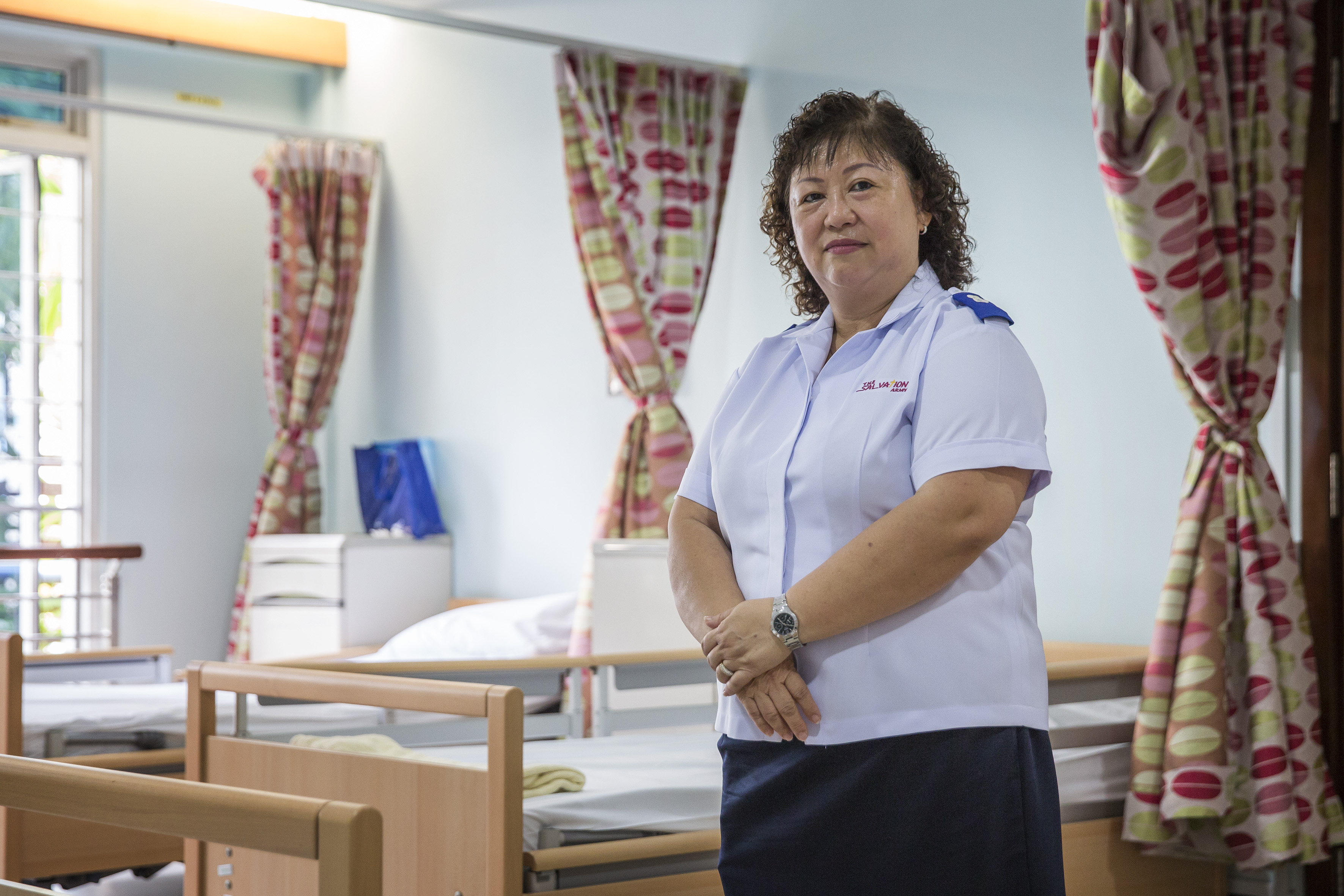
Madam Low Mui Lang, executive director of Peacehaven Nursing Home. Photo: Nuria Ling/TODAY
Peacehaven houses many patients who are fit to be discharged but continue to stay in the nursing home because they have no caregivers.
“We see a higher level of social needs than medical needs among this group of residents. The future model of elderly homes should include the ‘non-sick model’, which may require more social workers than healthcare … If we continue healthcare as we are doing today, it will blow the manpower,” she said, urging the Government to consider assisted-living facilities as it prepares to build new nursing homes.
Assisted-living facilities may be better suited to the needs of seniors who prefer to remain independent, she said. “The next generation of old folks is my generation, and we are the type who want to (remain) as independent as possible.”
RADICAL TRANSFORMATION AND OPTIMISING THE GP POTENTIAL
Noting how Singapore enjoys a “respectable” doctor-to-population ratio, Dr Leong Choon Kit, a GP who also sits on the Singapore Medical Council, called for a paradigm shift to strengthen GPs’ involvement in step-down and chronic care, as well as a greater emphasis on patients’ self-management.
With polyclinics and hospitals bursting at the seams, GPs in private practice can help to offload patients. As of last year, there were 18 polyclinics, and 2,973 GP and dental clinics in Singapore.
GPs can be trained to manage more complex cases without having to refer them to hospitals, unless necessary. This can help reduce the costs to both the patient and the system, he said.
“There is a lot of mismatch currently. If matching is done well, we are even likely to have a glut problem,” said Dr Leong, who operates Mission Medical Clinic in Upper Serangoon.
Public hospitals have been rolling out GP engagement programmes for close to two decades, but results have been piecemeal, he noted.
Dr Jeremy Chan noted that the administration and paperwork involved may deter GPs, who are often one-man operators, from signing up for such programmes.
Oliver Wyman’s Dr Lim said the lack of monetary incentives makes GPs reluctant to focus their practice on chronic care.
“For a whole-system transformation, Singapore needs to be comprehensive, and direct money, prestige and organisational power to the parts of the healthcare value chain that we want to strengthen,” he said.
In a commentary written for TODAY last year, Dr Lim suggested a financing model where the doctors are paid a guaranteed sum per patient for a specified total population. The assurance of income allows doctors to invest the time and resources to proactively enhance systems to care for patients with chronic diseases, he said.
Many patients still head to polyclinics despite long waiting times because they pay far less for consultations there than if they see a GP, said Dr Chan.
With no subsidies for medication, rent and staff, GPs incur higher costs, which are passed on to the patients.
The Community Health Assistance Scheme, which replaced the Primary Care Partnership Scheme, provides subsidies for Singaporeans from lower- to middle-income households for medical and dental care at participating GP and dental clinics.
But this could not bridge the gap between price points because the polyclinics’ subsidies were also enhanced, said Dr Chan. The amount patients pay for medication at a polyclinic may be less than even what the GPs fork out, GPs said.
Dr Leong stressed that Singaporeans should not be looking out only for cheap healthcare. “We must focus on quality and not cheap healthcare,” he said, adding that Singaporeans must take greater responsibility for their personal health.
The authorities and healthcare providers can play a part in facilitating the transformation, he said, such as by incentivising the purchase of healthier food, imposing a sugar tax and encouraging insurance companies to increase premiums for people who are not responsible for their own health.
Dr Lim added: “We should be emphasising preventive health, which is under-used, discouraging consultations for minor ailments that are self-limiting, and doing away with administrative processes that are not medically necessary.”
Patients can be taught to self-manage using gadgets, which can help reduce manual assistance. “Quarterly doctor consultations are then replaced by an annual one, during which all preventive health measures such as vaccinations and screenings are carried out at the same time,” Dr Lim said.
In an effort to encourage residents to care for their health, Peacehaven Nursing Home launched an initiative earlier this month where residents “earn” points for doing exercises that can then be redeemed for “rewards” such as a massage, snacks from a mock provision store or for a karaoke session.
Dr Leong also suggested equipping the younger generations with more “in-depth” medical knowledge, such as how to self-medicate for minor ailments and discern information culled from the Internet.
“We must focus on coordinating healthcare in Singapore. We have a very disjointed health system currently, with brilliance in every sector. We need to train many public health leaders who are both clinicians and administrators to take the lead, and make a deliberate effort to change lifestyle and infrastructure to support those changes,” he said.

Jose Mourinho might have finally found the right formula for Man United as Chelsea look to heap more misery on Spurs
MATCH TO WATCH: Chelsea v Tottenham (Sunday, Nov 27, 1.30am)
They might be unbeaten in the Premier League, but Spurs’ season is hanging in the balance.
Raw from their unceremonious Champions League exit, the Lilywhites must quickly pick up the pieces for a derby against league leaders Chelsea.
Spurs have just the one win over an abject West Ham last week in their past six league games – nine if you include the Champions League and EFL Cup.
Meanwhile, the Blues certainly won’t be keen on letting go of the top spot they so recently acquired.
Antonio Conte’s side is certainly in full flow and would love to draw the curtain on their neighbours’ unbeaten run at Stamford Bridge.
And if the title race isn’t enough motivation, both sides clearly hate each others’ guts.
This should be a cracker.
MANAGER TO WATCH: Mauricio Pochettino (Chelsea v TOTTENHAM, Sunday)
Up till now, he has enjoyed a pretty easy life in England.
With Spurs in a rut and dumped out of the Champions League, the Argentinean now has faces the first major test of his Spurs reign as the north Londoners attempt to arrest their poor run of form.
A few months ago, Sir Alex Ferguson said Spurs had the best manager in the Premier League in the shape of Pochettino.
The man now has to prove the legendary Scot right.
PLAYER TO WATCH: Henrikh Mkhitaryan (Manchester United v West Ham, Monday, 12.30am)
He would have wanted to forget the last time he started a match at Old Trafford against a team in light blue.
But instead, Henrikh Mkhitaryan looks to have played his way out of the cold and into his manager’s plans against West Ham after a fine display against Feyenoord in the Europa League.
After the match that United won 4-0, Jose Mourinho said of the Armenian: “This performance gives him the right to believe that he can play the next match again and he needs to replicate this kind of performance in the Premier League with more physicality and more aggression.”
He might have been made to wait since that disastrous first start against Manchester City, but if Mkhitaryan follows up the Feyenoord game with another outstanding performance against West Ham, Mourinho is going to have a hard time benching the ex-Borussia Dortmund man again.
TEAM TO WATCH: Manchester United (v West Ham, Monday)

Of course, Mkhitaryan isn’t the only one giving Mourinho a selection headache following the match against Feyenoord.
Wayne Rooney also turned in a vintage performance as he linked up well with United’s front four to score the opener and set up Juan Mata for the second.
In midfield, Michael Carrick continued to roll back the years as he dictated the Red Devils’ play.
Even Sergio Romero put in a decent performance with an eye-catching double save in the first half.
All of this with the likes of Marcus Rashford and Ander Herrera held in reserve on the bench.
With so many positives from a dominant performance, it will be interesting to see how Mourinho changes things up for a West Ham side that have failed to capture the heights of their performances last season.
UNDERDOG TO WATCH: Sunderland (v Liverpool, Saturday, 11.30pm)

It’s quite amazing as to how things change really quickly in the relegation dogfight with a win or two.
Just ask Sunderland, who now find themselves off the foot of the table thanks to two consecutive wins.
A tough match at Anfield – a ground where David Moyes has never won at – await, but at least the Black Cats will take on Liverpool with a much-improved state of mind.

China’s Foreign Ministry has commented on the seizure of Singapore Armed Forces (SAF) military vehicles and equipment by the Hong Kong customs, even as the SAF dispatched officers to Hong Kong “to address the security of the equipment”.
At a routine press briefing on Friday (Nov 25), the ministry’s spokesman Geng Shuang said China is currently verifying the related details when asked if Singapore has to contact the Chinese Foreign Ministry for the release of the vehicles.
“All people and goods entering Hong Kong Special Administrative Region should follow the laws of the SAR. I’d like to reiterate that the Chinese government firmly opposes any of the countries that has diplomatic ties with us to have any form of official exchanges with Taiwan, including defence exchanges and co-operation,” said Mr Geng in response to another related question.
Singapore’s Defence Ministry (Mindef) said in a statement on Friday that a SAF team is en route to Hong Kong “to address the security of the equipment”.
This comes a day after the territory’s customs officials seized nine Singapore-bound armoured vehicles and related equipment on board a container ship from Taiwan.
In the meantime, Japanese-owned container shipping firm APL, which was hired by the SAF to transport the cargo, has “assured the SAF that they are working with Hong Kong authorities to resolve the issue”, Mindef added.
Mindef said that APL was required to comply with all regulations including the declaration of transported equipment in the ship’s cargo manifest. This included obtaining the necessary permits required to transit through ports.
Shipped in 12 containers, the cargo comprises nine Terrex Infantry Carrier Vehicles “with no ammunition or sensitive equipment on board”, said Mindef.
“During the transit through Hong Kong, customs officials raised queries if the necessary permits and declarations by APL were in order and in the process detained the Terrex ICVs,” said the statement.
The Singapore Consulate General in Hong Kong is also assisting in this matter, it added.
The SAF conducts overseas training in a dozen or so countries, including the United States, Australia, Germany and India. In doing so, it hires commercial shippers to transport military equipment to and from Singapore.
Mindef said that all commercial shippers used by the SAF are required to comply with stringent requirements for protection against theft and tampering of equipment during the shipment as well as applying for all relevant permits. “These requirements have worked well and there have been no incidents of losses, theft or tampering over the years,” said Mindef.
It added: “The SAF will review the circumstances of this incident and determine if added measures are required to prevent such occurrences.”
Hong Kong Customs told The Straits Times that the “suspected control items have been moved to a temporary storage place of Customs in Tuen Mun for further investigation”. They would not confirm if the Chinese Foreign Ministry has been officially informed of the seizure.
Quoting sources, the South China Morning Post said in a report that Singaporean authorities will have to contact the Chinese Ministry of Foreign Affairs to secure the return of the armoured vehicles.
Additional reporting by Jermyn Chow in Taipei and Joyce Lim in Hong Kong

This article was first published on November 25, 2016.
Get a copy of The Straits Times or go to straitstimes.com for more stories.

SINGAPORE – The M1 Singapore Fringe Festival has to either cut or clothe two shows programmed for next January.
Performance lecture Naked Ladies and interactive piece Undressing Room have exceeded the R18 rating under the Arts Entertainment Classification Code (AECC) and cannot be shown here in their current form, the Infocomm Media Development Authority (IMDA) said on Friday (Nov 25).
An IMDA spokesman said: “The performances had excessive nudity which included scenes of audience-participants stripping naked, and graphic depictions of exposed genitalia.
“In regulating and classifying such events, IMDA is guided by the AECC to protect the young from unsuitable content, while enabling adults to make informed viewing choices. It is also advised by the Arts Consultative Panel.”
The latter is a 40-member panel of housewives, artists, educators and working professionals, which can make recommendations on ratings for arts shows.
It is understood that festival organisers could make changes to the shows and resubmit them for classification. Festival organisers are yet to respond to queries from The Straits Times about whether they would change or drop the shows.
IMDA’s statement comes after anonymous complaints posted online that the M1 Singapore Fringe Festival is presenting pornography in the guise of art.
Noted for its boundary-pushing fringe performances, the M1 Singapore Fringe Festival was started by home-grown theatre group The Necessary Stage. Next year will be its 13th edition, which will run from Jan 4 to 15.
The theme is Art & Skin and the festival’s line-up includes shows such as Naked Ladies, Canadian Thea Fitz-James’ performance lecture about the history of the naked female body in art. She strips in front of the audience and is nude for much of the show.
Undressing Room is a one-to-one encounter with Singaporean dancer Ming Poon. In a private space, he will challenge one participant at a time to literally bare all along with him.
On Nov 22, a Facebook group called Singaporeans Defending Marriage And Family highlighted these shows among others.
The anonymous post said: “Does the government deem inviting an audience to participate in the ‘show’ that includes undressing and exploring each other (sic) naked body not an obscene act punishable by law? If the government allow (sic) this, isn’t this a solicitation for a public sex act? This is as good as prostituting the performing art sector and is downright revolting.”
The post also dismissed the festival’s artistic director Sean Tobin as “a foreigner who has no vested interest in Singapore’s well-being”, who should not be allowed to comment on divisive issues. Tobin is also the head of the School of the Arts’s faculty of theatre.
On Nov 23, the festival’s organisers posted a statement in response saying works such as Undressing Room and Naked Ladies “are thoughtful, well conceptualised pieces that deal with the Festival theme, through the lens of nudity and the politics behind it. They question issues of identity, and how that is formed, thwarted and reasserted. They are most certainly not acts of pornography or titillation”.
Arts practitioners rallied online to the cause of the festival and festival director. R. Chandran, a veteran producer of theatre for children, said on Facebook: “As an educator he continues to cultivate fertile grounds with passion, and as a practitioner, he pours heart and soul into his work. As a parent, I find his relationship and interaction with his young son an inspiration.
“Therefore, I will stand on the frontline to defend Sean Tobin’s personal and professional integrity as well as his right to practise his chosen vocation and contribute to the overall growth of Singaporeans.”
akshitan@sph.com.sg
This article was first published on November 25, 2016.
Get a copy of The Straits Times or go to straitstimes.com for more stories.


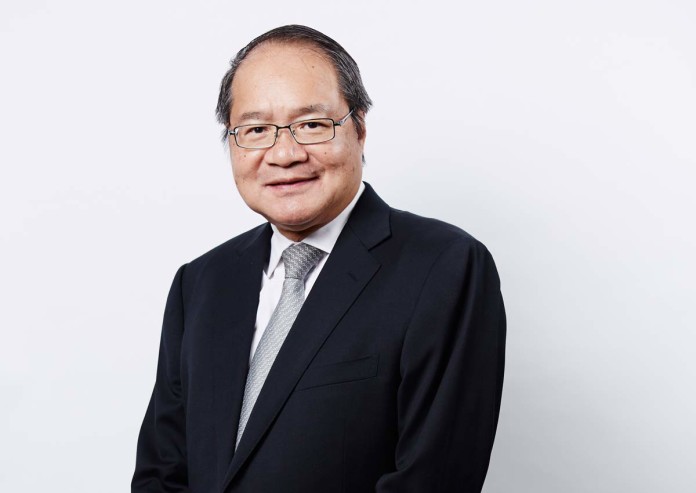
Veteran lawyer Lucien Wong, 63, will be Singapore’s new Attorney-General (AG) from January next year when current AG, Mr V.K. Rajah, 59, completes his term.
Mr Wong, who is currently chairman and senior partner of law firm Allen and Gledhill, will first be appointed Deputy Attorney-General on Dec 19 during the transition period before he assumes the top post at the Attorney-General’s Chambers (AGC) for a similar three-year term.
This was announced in a statement by the Prime Minister’s Office (PMO) in a statement today (Nov 25).
Mr Wong is also chairman of Maritime and Port Authority of Singapore and Singapore International Arbitration Centre. He is a member of the Board of Trustees of Singapore Business Federation. He is also a board director of Singapore Press Holdings, Temasek Holdings and Singapore Health Services.
When he takes over as AG on Jan 14 next year, Solicitor-General Lionel Yee will be appointed Deputy Attorney-General, and share the No. 2 position at the AGC with Mr Tan Siong Thye.
In its statement, the PMO thanked Mr Rajah for his service and contributions as AG.
It noted that Mr Rajah had “broadened the prosecutorial philosophy of the AGC and oversaw significant criminal cases, including the largest ever market-rigging securities case and the largest scale money-laundering case in Singapore”.
Mr Rajah had also set up working groups to enhance legal processes, including one relating to youth justice, among other initiatives.
Under his leadership, the AGC has provided legal support to help the Government formulate and implement programmes and successfully negotiate significant international agreements.
Mr Rajah directed the legal work on Singapore’s negotiations with Malaysia on the Kuala Lumpur-Singapore High Speed Rail and the Johor Bahru-Singapore Rapid Transit System, it added.
chenj@sph.com.sg
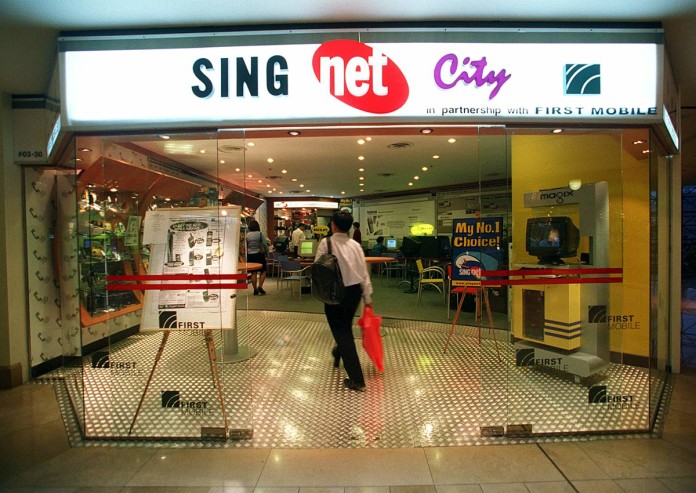
Singtel has been slapped with fines amounting to $145,000 for two separate pay-TV disruptions.
Both incidents saw customers being tuned out of programmes across more than 10 channels.
In the first incident on Oct 1 last year, 100 Singtel TV subscribers islandwide could not watch any programmes on 11 channels for more than one hour, said Infocomm Media Development Authority (IMDA) in a statement today (Nov 25).
Investigations by the regulator revealed that damaged fibre optic cables had caused the initial disruption.
It added: “That would have normally triggered an automatic switchover to the secondary fibre to prevent a service disruption. However, the switchover was unsuccessful due to a faulty fibre optic receiver card on the secondary fibre. SingNet did not have a robust process to test that the receiver card was functional.”
IMDA had to fine Singtel $55,000 for this incident. SingNet is a unit of Singtel.
It was again fined $90,000 for a disruption on Jan 5 this year.
Some 1,400 Singtel TV viewers saw sporadic blurry images on their TV screen across 15 channels for about three hours.
Explaining the fault, the regulator said: “This service difficulty was caused by a failure to properly configure two line cards on a router at SingNet’s Bukit Timah headend in August 2015. At the point of installation, the vendor was supposed to implement a router configuration that would increase the shared limit of the two line cards. However, as that was not carried out, when data traffic on 5 January 2016 was exceeded, intermittent pixelation occurred on the channels.”
IMDA’s assessment is that SingNet should have ensured that its vendor carried out its work properly, it concluded.
In determining the amount of penalties, IMDA said it took into consideration factors such as SingNet’s response to the incidents, the extent of the disruptions and its track record.
“IMDA notes that SingNet has committed to implementing the necessary measures to prevent future recurrences,” it added.
chenj@sph.com.sg
Read also: SingNet fined $90,000 for pay-TV disruption
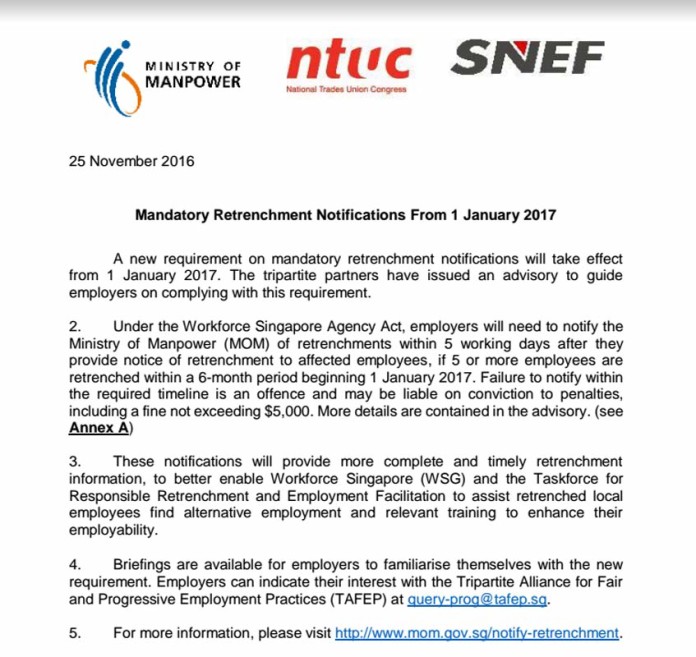
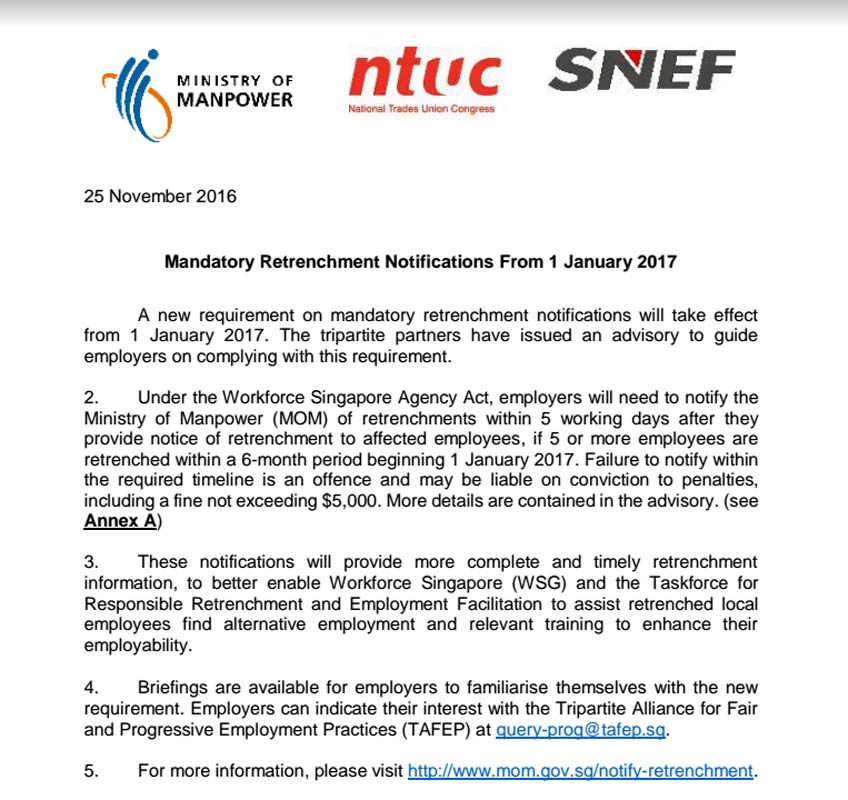
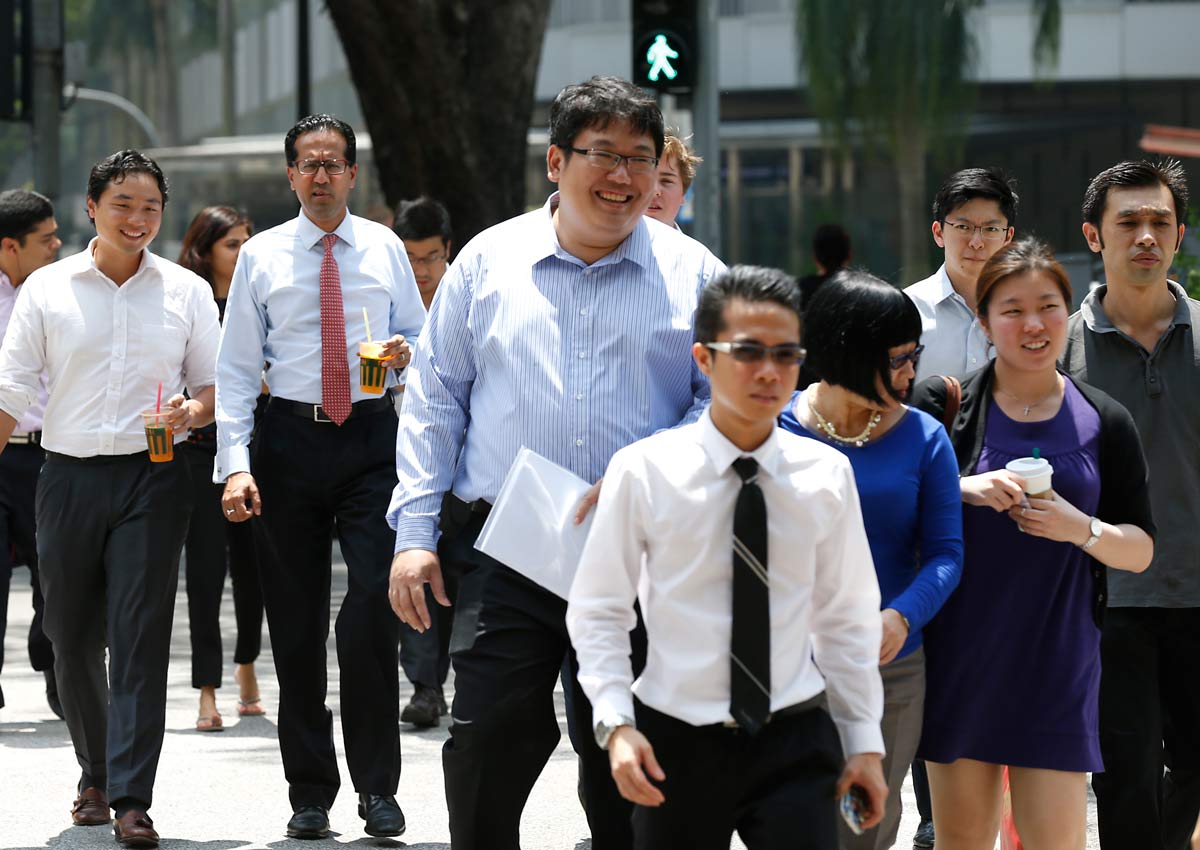
Retrenched workers will get faster help and protection from the Government and labour bodies.
From January next year, employers who employ at least 10 employees are required to notify MOM if five or more employees are retrenched within a six-month period.
Also, they must inform the authorities within five working days whenever an employee receives notification of his retrenchment.
The new ruling was announced by Ministry of Manpower (MOM), said the ministry, National Trades Union Congress and Singapore National Employers Federation in a joint press today (Nov 25).
Failure to notify the authorities within a required timeline is an offence with penalties including a fine of up to $5,000.
Said the Manpower Ministry on its Facebook page: “These notifications will provide more complete and timely retrenchment information, to better assist retrenched local employees with alternative employment and relevant training.”
chenj@sph.com.sg

If you have signed up for The New Paper Courts Big Walk this Saturday you could also take part in a run, and all without having to break into a sprint.
By joining the MH Virtual Run, participants joining us at Singapore Zoo for the Big Walk can also enjoy gifts and rewards by joining a Virtual Run organised by Men’s Health Singapore.
All you need to do is to sign-up and accept the challenge on the RunKeeper app (runkeeper.com) and Men’s Health Singapore will give you a welcome kit worth $128.
Sign up here at menshealth.com.sg/vr/
By completing the 5km walk, you can also redeem discount vouchers and more.
The Men’s Health Virtual Run Singapore’s first online ultra-running challenge to clock 100,000km within two months.
Participants will also be rewarded with attractive prizes as they hit certain distance milestones and take part in various social media challenges.
The Men’s Health Virtual Run Singapore’s inaugural online ultra-running challenge is on until December 31 2016.
The theme is “Run Your Own Race, At Your Own Pace, In Your Own Time”.

Since it launched on Nov 1, Runners from all walks of life have been amassing the distance to hit the golden 100,000km target.
The Men’s Health Virtual Run 2016 is organised by Men’s Health magazine in collaboration with renowned sports brand ASICS and global running app RunKeeper.
The app accurately tracks a runner’s mileage and provides additional information such as pace and calories burned.
Participants will receive rewards as they accrue mileage.
There are four key milestones that one can reach – 5km, 21km, 42km and 100km.
Each level allows the runner to redeem variant prizes from ASICS vouchers and spa treatments, to golf sessions and many more.
Sign-up rewards worth $128 are also given to each participant and no registration fee required.
Furthermore, over $15,000 worth of lucky draw prizes will be extended to all runners.
And you won’t be doing it alone. Some well-known names taking part include Allan Wu, Shan Wee, Cheryl Miles, Shaun Tupaz, Elliott Danker and Rachel See to name a few.
Time to run your own race.