Home Blog Page 2288

Community hospital gives glimpse of hospital care

0

The template for the future of Singapore’s healthcare system was on display yesterday as the Yishun Community Hospital was officially opened to take the load off the neighbouring Khoo Teck Puat Hospital (KTPH).

Community hospitals will play a bigger role in caring for patients in the future and are part of the transformation under the Healthcare 2020 Masterplan to “shift the centre of gravity from acute hospitals to the community”, said Health Minister Gan Kim Yong.

As he officially opened YCH, Mr Gan said: “Over time, we see community hospitals expanding their roles to provide more short-term inpatient care for geriatric, dementia and palliative patients.”

YCH, which is linked to KTPH, has cared for more than 1,400 patients since it became operational in December last year.

YCH, which has opened 238 of its 428 beds so far, is currently 60 per cent full, while the adjacent KTPH faces a bed crunch, with occupancy hovering at around 90 per cent.

It is much cheaper to run a community hospital, where the nurse-to-patient ratio is one to 16, which means one nurse can look after four times the number of patients compared with a general hospital.

This is largely because, while its patients still need care, their conditions are stable.

Community hospitals are also cheaper to build, at roughly half the cost of an acute hospital.

That is why all future acute hospitals in the public sector will have a community hospital next door to allow patients to “transit smoothly from the acute hospital to the community hospital and eventually back home”.

Aside from KTPH, Tan Tock Seng Hospital, Changi General Hospital, and Ng Teng Fong General Hospital all have community hospitals next door. Outram Community Hospital, expected to open in 2020, is being built on the Singapore General Hospital campus.

Speaking to The Straits Times after the event, the minister said: “With an ageing population, community hospitals will play an increasingly important role in our healthcare system.

“Older patients tend to take longer to recover and are more likely to require a longer period of rehabilitation to return home.”

The environment at a community hospital is more appropriate for extended rehabilitation and recuperation than that at acute hospitals, he added, “to help patients regain functionality and confidence so that they can return home safely”.

Mr Gan said two in five hip fracture patients can benefit from a stay in a community hospital, as can patients with pneumonia or who need complex wound management.

He said: “The community hospital’s focus is to help patients improve their functions and regain confidence such that they will be able to look after themselves when they eventually return home.”

He praised the hospital for innovations such as its “modern tropical kampung” design, which provides a natural healing environment.

Mr Gan said community hospitals can, in the future, expand their role “to support seniors in the community in key areas such as dementia care and palliative care”.

He also spoke of the addition of facilities in the north. Three wellness and care centres were launched in Yishun earlier this year that provide a whole range of aged care and active ageing services.

Next year, there will be a new medical centre in Admiralty and a new nursing home in Woodlands Crescent, and a bigger Yishun Polyclinic will be ready by 2018.


This article was first published on November 29, 2016.
Get a copy of The Straits Times or go to straitstimes.com for more stories.
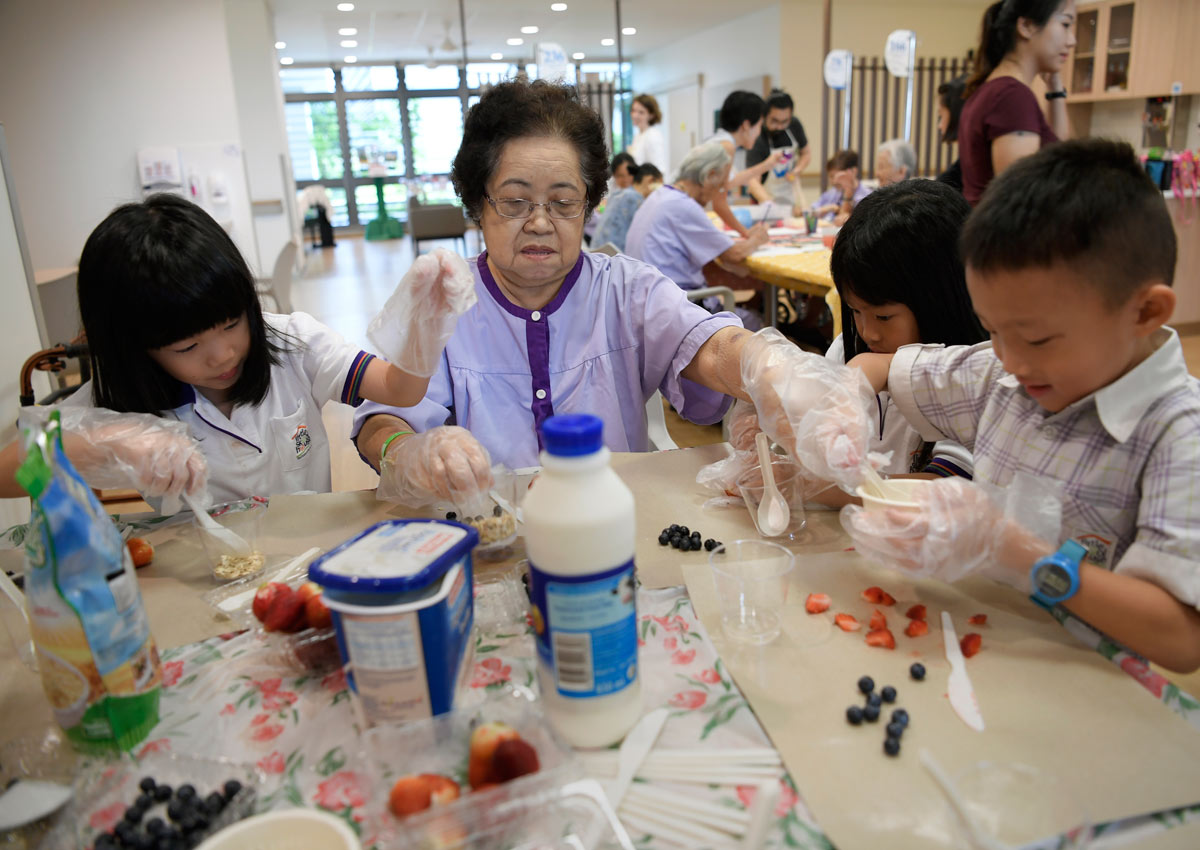

Image: 
Publication Date: 
Tuesday, November 29, 2016 – 15:00
Send to mobile app: 
Source: 


Story Type: 
Others

Source link

The Nutcracker Presented by Singapore Dance Theatre

0

Celebrate the holiday season with the Christmas classic – The Nutcracker presented by Singapore Dance Theatre. Prepare to be enchanted by the world-class production featuring your favorite characters, vibrant music as well as choreography and staging by ADT Artistic Director Janek Schergen. Find out more about The Nutcracker now! http://www.sistic.com.sg/events/nutcrack1216

Catch the Nutcracker with your friends and stand to win a S$50 Sephora voucher that could make you the envy of the sugar plum fairy! Simply head on over to https://www.surveymonkey.com/r/RRCLRFC after purchasing your group tickets, fill in your details and stay tuned for the winner announcements!

The Nutcracker Presented by Singapore Dance Theatre

The quintessential Christmas classic, The Nutcracker returns this holiday season. First staged in 2011, The Nutcracker brings audiences on a journey through the pre-WWI, turn of the century Shanghai featuring favourite and familiar characters including Clara, the Snow Queen, the Sugar Plum fairy and…

Source

US's investment appeal intact despite Trump's win: IE

0

The United States will remain an attractive investment destination for Singapore companies, even as the world’s largest economy prepares for life under Republican president-elect Donald Trump’s administration.

This was the view of Yeoh Mei Ling, International Enterprise (IE) Singapore’s regional director for the US, who cited the country’s strong market fundamentals and Mr Trump’s pro-business and pro-growth stance as reasons for this optimism.

IE Singapore is the government agency that spearheads the overseas growth of Singapore-based companies and promotes international trade.

Ms Yeoh, who is based in New York, has served in her current posting for about two years, following a stint in London as the agency’s centre director for Europe.

In the last couple of weeks since Mr Trump’s shock election triumph on Nov 8, she has been meeting representatives of Singapore companies with operations in the US to suss out the sentiments on the ground.

She told The Business Times in an interview on Monday: “We don’t expect any significant impact on Singapore firms in the long run, and there are still many opportunities for investment and expansion in the US.”

She said the US economy has been on a steady growth path, driven by strong consumer spending and a stable job market.

Real growth in gross domestic product (GDP) increased at an annual rate of 1.4 per cent in the second quarter of this year, up from 0.8 per cent in the first quarter.

The US Bureau of Economic Activity has pegged the unemployment rate at around 5 per cent.

Ms Yeoh said many Singapore companies have adopted a wait-and-see attitude for now, as Mr Trump gets ready to take office, and stressed that they intend to continue with their business plans in the US and have no intention of pulling back.

IE Singapore is facilitating about 30 Singapore projects there, a 50 per cent increase from three years ago.

Ms Yeoh described this as a “fairly healthy” number for a developed market that is traditionally not at the top of the list for Singapore companies when they venture abroad.

“Business interests lie primarily in the consumer and technology sectors, and this is aligned to our strategy for the US market,” she said.

Pointing to the recent Black Friday event – the traditional shopping spree in the US organised in conjunction with the long Thanksgiving weekend – she said it was proof that US consumer spending remained healthy.

A survey by the National Retail Federation found that more than 154 million people made purchases during the four-day retail extravaganza that began last Thursday, up from 151 million last year.

However, shoppers spent slightly less this year: US$289.19 on average per person, down from US$299.60 last year.

“Overall, consumer spending sentiments are still fairly strong. Moving forward, there will be some scrutiny as people wonder what Mr Trump will do to boost the US economy and support jobs, and this will also affect consumer sentiments in the months to come,” she said.

As for the technology sector, her sense is that the US election outcome will neither hurt the industry’s competitiveness nor leading American technology firms in the short to medium term, given the sector’s resilience and adaptable nature.

On the issue of trade, Ms Yeoh said that it is too early to predict how the Trump administration’s trade policies will pan out; however, she urged Singapore exporters to keep a close watch on the discussions.

“In the short term, we do not foresee any immediate impact, given that re-negotiations of trade policies and implementation take time.

“Today, supply chains, especially those of large US corporates, in some sectors are tightly integrated globally. Any change to this supply chain or relocation will require time,” she said.

It is also timely for Singapore companies to review their supply chains and consider manufacturing investments in the US in the coming years.

Being closer to their American customers would enable them to respond more quickly to their needs and better meet local content requirements.

Despite all the uncertainty surrounding the future of the US with Mr Trump at the helm, Ms Yeoh said there are many reasons for investors to stay upbeat.

“Throughout his campaign, Mr Trump has proposed various pro-business, pro-growth policies.

“Since getting elected, he has continued to emphasise these policies, including increased infrastructure spending, overhaul of the tax code, as well as lighter regulation on businesses.

“These will lead to the US economy’s continued GDP growth in the short to mid-term, and contribute to its business competitiveness in the long run,” she said.

“We don’t expect any significant impact on Singapore firms in the long run, and there are still many opportunities for investment and expansion in the US.” Ms Yeoh


This article was first published on November 29, 2016.
Get The Business Times for more stories.

Image: 
Publication Date: 
Tuesday, November 29, 2016 – 16:00
Send to mobile app: 
Source: 


Story Type: 
Others

Source link

Made-in-Singapore Terrex a key addition to SAF

0

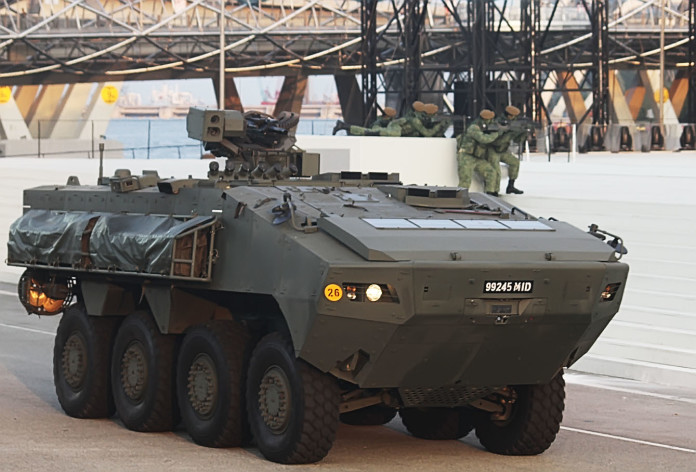
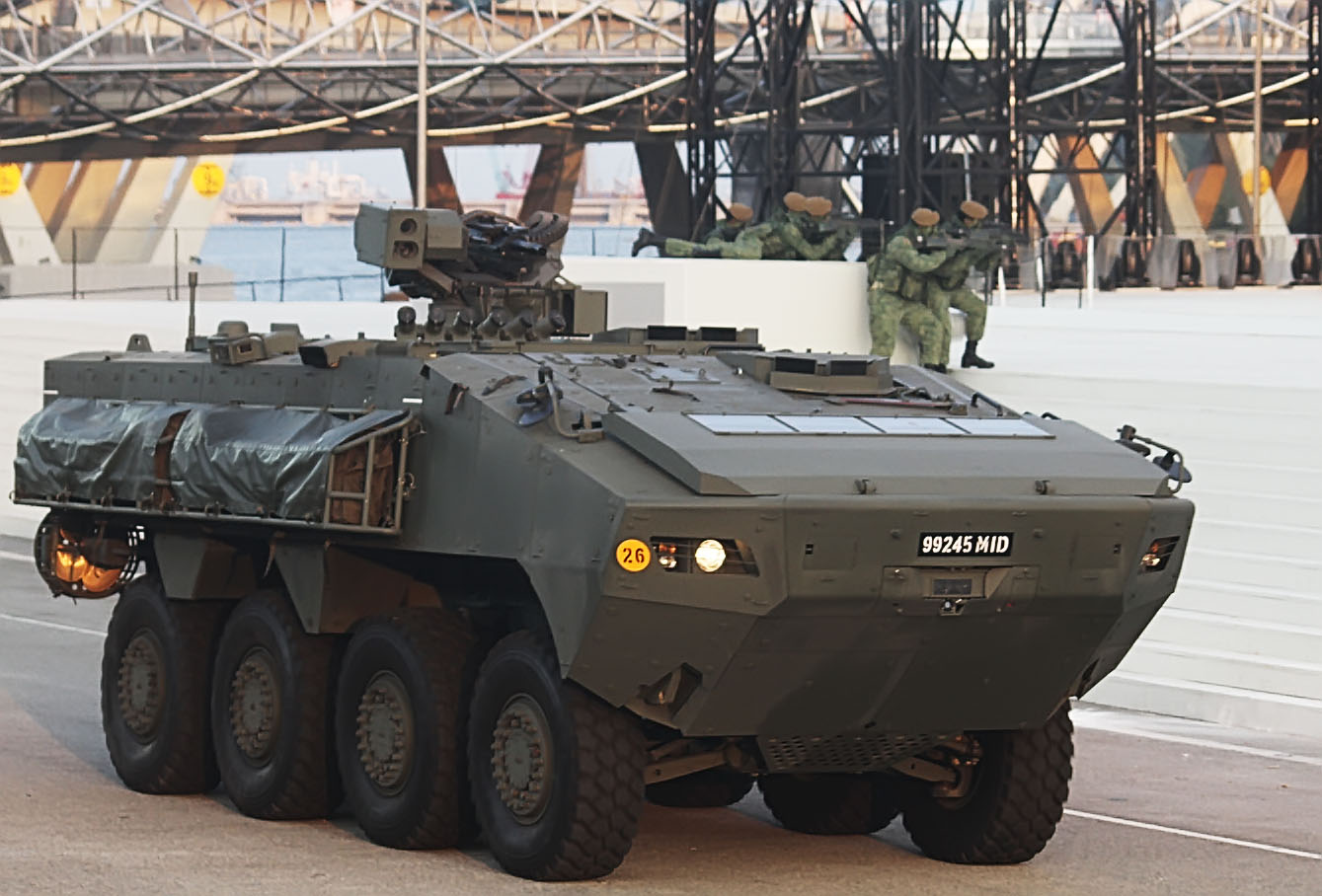
Dubbed King of the Terrain, the Terrex Infantry Carrier Vehicle is a key addition to the Singapore Armed Forces arsenal.

Designed and made in Singapore, the vehicle, which can carry 13 soldiers, is a milestone in the army’s motorisation efforts. It takes foot soldiers away from being moved in lumbering, canvas-topped three-tonners, which are less mobile and still require troops to hotfoot it, sometimes for hours, to get to their destinations.

The eight-wheeler can roar across rugged terrain at a top speed of 105kmh and is also at home in water.

At the heart of the Terrex is its battlefield management system. It links ground troops to their commanders at headquarters and to the SAF’s other fighting machines, such as Leopard tanks, artillery guns, Apache attack helicopters and unmanned aerial vehicles.

The souped-up battlefield taxis also provide added firepower. Its remote-controlled machine guns can take down targets 800m away and spit out bullets at 350 rounds a minute.

This means troops can pinpoint and strike enemy locations with precision, and friendly forces would not come under fire, so the men are quicker to react compared with their counterparts in non-motorised infantry battalions.

All this mobility and precision firepower comes wrapped in a multi-layered armour that gives soldiers better protection from anti-tank weapons and enemy attacks.

Introduced in 2009, the vehicle is jointly developed by the army, defence company Singapore Technologies (ST) Kinetics and the Defence Science and Technology Agency.

Currently, Singapore is the only user of the 24-tonne Terrex.

Elsewhere, the vehicle has drawn interest from Australia, Britain, the United States and even Mexico.

ST Kinetics joined hands with a US-based partner to become one of two contenders shortlisted to provide the Terrex 2 to the US Marine Corps in November last year, beating industry heavyweights such as Lockheed Martin.

ST Engineering is now looking to build bigger variants of the Terrex vehicles in a bid to replace ageing armoured vehicles in the Australian and British armies.

Read also: SAF deploys team to Hong Kong to secure seized armoured vehicles

Mindef confirms 9 armoured vehicles seized in Hong Kong


This article was first published on Nov 29, 2016.
Get a copy of The Straits Times or go to straitstimes.com for more stories.
Image: 
Category: 
Publication Date: 
Tuesday, November 29, 2016 – 15:00
Keywords: 
Send to mobile app: 
Source: 


video embed code: 
<iframe allowfullscreen="" frameborder="0" height="355" src="https://players.brightcove.net/4802324435001/default_default/index.html?videoId=5223362442001" width="100%"></iframe>
Video Media: 
Other Video Media
Story Type: 
Others

Source link

Poker debt case: Ex-Ku De Ta boss loses appeal

0

To continue civil action against his friend over a poker debt, former Ku De Ta boss Chris Au will have to pay HK$2 million (S$367,000) into a Hong Kong court as security.

Mr Au, a Singapore permanent resident, failed in his appeal to convince the court that his ordinary residence was in Hong Kong and not Singapore.

“The ordinary residence of the plaintiff was of fundamental importance as a plaintiff ordinarily resident in Hong Kong could not be ordered to provide security for costs, no matter how impecunious he was, and no matter how likely he was at risk of the defendant not being able to recover costs from him if he failed in his action,” said Hong Kong Deputy High Court Judge Marlene Ng.

She added in decision grounds issued last week that, for the purpose of security for costs, a plaintiff who was resident in Hong Kong at the time when the alleged cause of action arose but who is no longer resident “should not be in any different position to that of a plaintiff who has always been non-resident”.

Mr Au, who used to run the former Ku De Ta nightclub at Marina Bay Sands, is suing Mr Steve Yoon for HK$7.2 million allegedly over losses in 33 poker games that the duo took part in back in 2008 with two others. Mr Au claims that he has maintained a social relationship with Mr Yoon, a lawyer, ever since they met in “late 2004 or early 2005” to play poker.

Mr Yoon, in denying the claims, countered that the players never intended the card games played on social occasions to give rise to binding legal obligations for settlement of losses, among other things.

Mr Yoon, in addition to his counterclaim, also applied for Mr Au to pay a security deposit into court. He did this out of concern that if he were successful in his defence, Mr Au would be unable to pay his costs, given that Mr Au was ordinarily resident in Singapore and there were no assets that could be identified.

Hong Kong Registrar Lung Kim Wan granted an order in April for Mr Au to provide the HK$2 million security. Mr Au then appealed against the decision, arguing he had lived in Hong Kong for 13 years before moving to Singapore in 2010 and was a Hong Kong resident with a Hong Kong identity card and passport.

He added that he applied to be a Singapore PR solely for “business convenience”, as otherwise he would have to renew his employment visa every two years. He said the Ku De Ta business project involved heavy foreign investment and employed over 300 staff. He thought the Singapore authorities would review his business plans more favourably if he, as founder of the firm, ran it as a Singapore PR.

Judge Ng found such assertions “lent weight” to the view that he lived and worked in Singapore for the settled purpose of launching and carrying on his food and entertainment businesses in the country.

She made it clear that while being a Singapore PR was not conclusive that he was “not ordinarily resident” in Hong Kong, it “added weight” to the continuity of his connections to Singapore, “especially when his personal and business connections to Hong Kong after 2010 were at best tenuous”. She said: “It must also not be forgotten that his wife and child were in Singapore.”

Read also: Co-founder of Ku De Ta club goes to court in new twist

Ex-Ku De Ta boss facing fresh lawsuit

vijayan@sph.com.sg


This article was first published on Nov 29, 2016.
Get The New Paper for more stories.

Image: 
Category: 
Publication Date: 
Tuesday, November 29, 2016 – 15:00
Keywords: 
Send to mobile app: 
Source: 


Story Type: 
Others

Source link

No further sightings of suspected monitor lizard, water activities at Marina Reservoir can resume: PUB

0


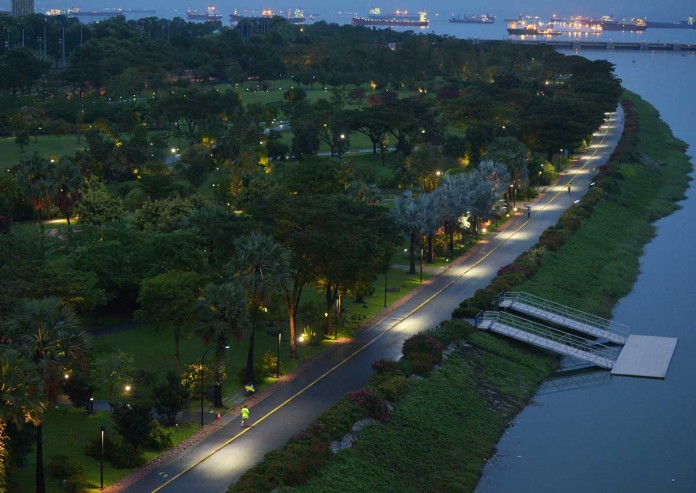
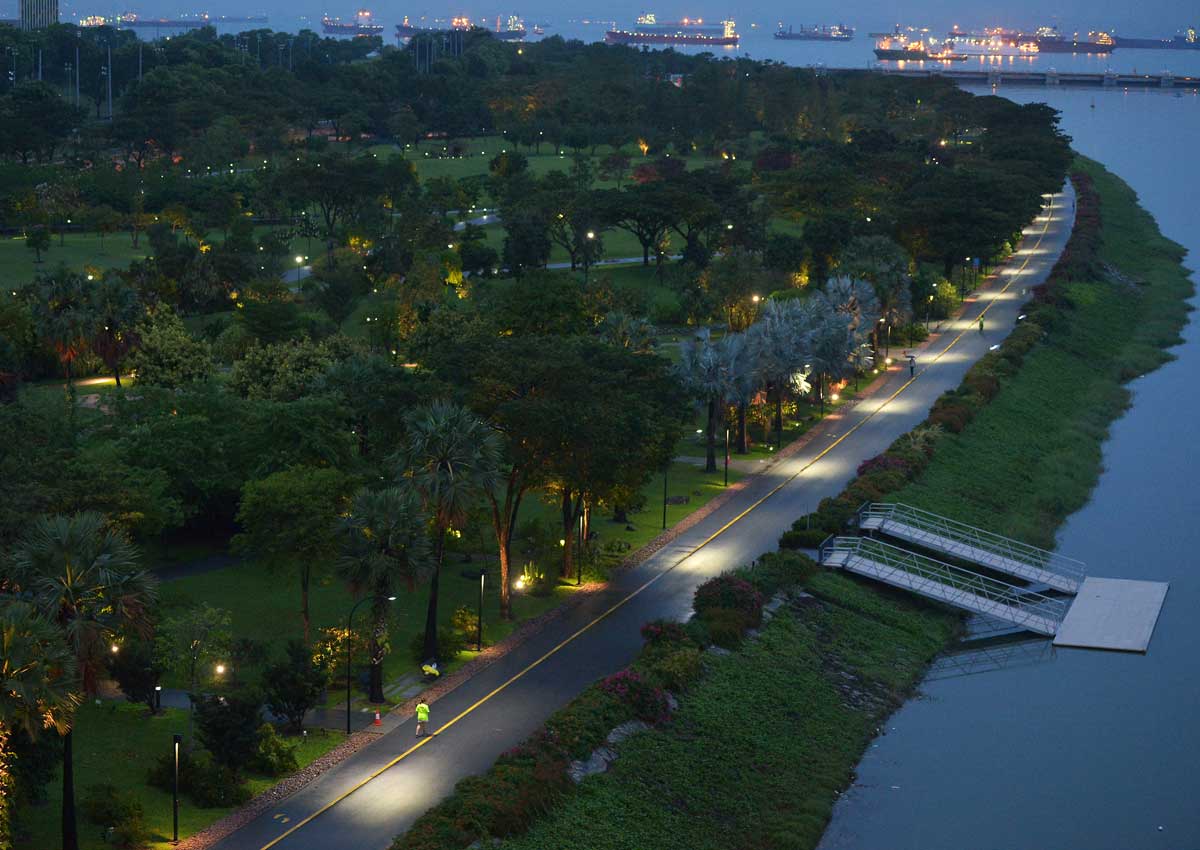
SINGAPORE – Four days after a creature “resembling a crocodile” was spotted at Marina Reservoir, the Public Utilties Board (PUB) has said today (Nov 29) that water activities in the area can resume.

PUB said in a Facebook post on Tuesday that it “did not receive reports of further sightings of the creature”, which it believes is more likely to be a monitor lizard.

“We have checked with more experts, including AVA, NUS, ACRES and Singapore Zoo, and they are of the view that the creature is most likely a monitor lizard,” said PUB.

The Singapore Dragon Boat Association, Water Sports Centre at the Singapore Sports Hub and People’s Association had suspended water sport activities over the weekend after reports of the creature were received by PUB.

PUB has informed the National Sports Associations and water sports operators to resume business as usual.

The reservoir area, which comprises the Kallang Basin, Marina Bay and the Marina Channel, is a popular spot for water activities such as canoeing, kayaking and dragon boating.

PUB also said that it will continue to patrol the waters to look out for the creature.

Members of the public are advised not to approach the creature, should they spot or encounter it. They can report any sightings of the creature by calling 1800-2255-782.

maryanns@sph.com.sg

Image:
Category:
Publication Date:
Tuesday, November 29, 2016 – 13:36
Keywords:
Send to mobile app:
Source:

Story Type:
Rewritten Story

Source link

‘Not 1st time such an APL vessel had transited in HK’

0


All vessels must fully declare all cargo on board before docking at Hong Kong’s port, according to the Hong Kong Customs authorities.

Generally, cargo in transit does not require an “import or export licence” as it will remain at all times on the ship. However, such a licence will be required for “certain type of strategic commodities”, said a spokesman for the city’s Customs and Excise Department.

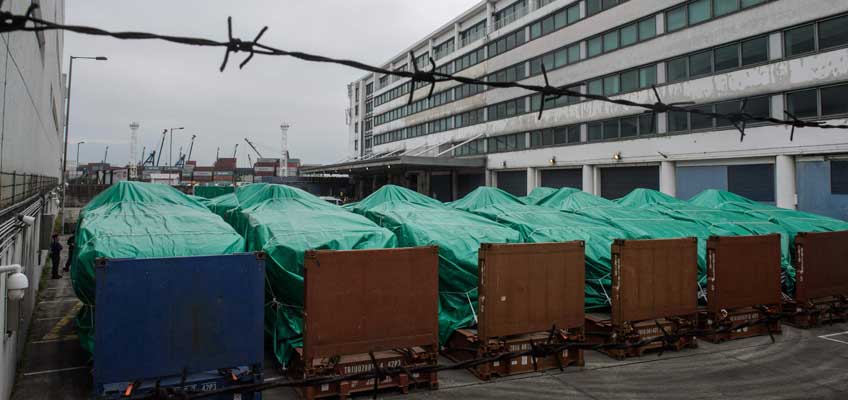
So did APL, the container shipping firm contracted by the Singapore Armed Forces to transport nine armoured vehicles and military equipment back to Singapore from Taiwan, make a complete declaration of the sensitive cargo on board its vessel before it docked at Kwai Chung Container Terminals last Wednesday?

APL has declined comment as “the matter is pending discussion”.

A report by Hong Kong’s Fact- Wire news agency claimed that APL did not have the “approval notice” for military vehicles.

Citing Customs sources, it said the shipment was first found not to possess the relevant permit at Xiamen’s Haitian Container Terminals, where the vessel transited after leaving Kaohsiung in south Taiwan. The Xiamen Customs authorities also declined to comment when contacted.

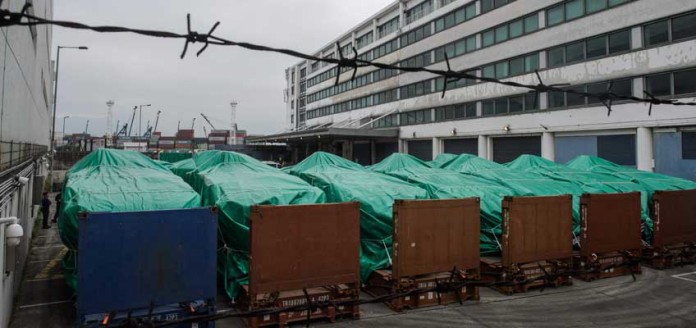
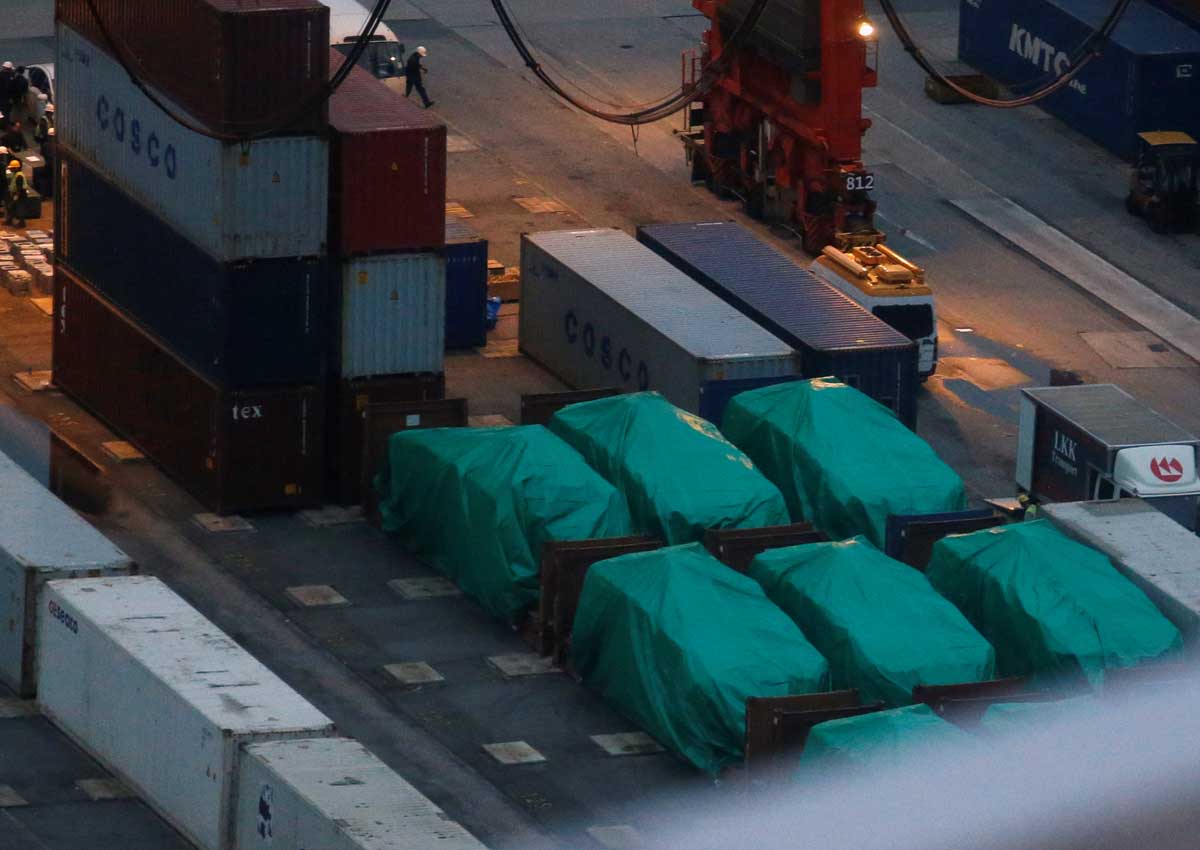
The purported improper documentation apparently led to the seizure of nine Terrex Infantry Carrier Vehicles and associated equipment by Hong Kong Customs.

Read also: China lodges protest over SAF vehicles

A retired captain who used to work for APL described the seizure as “a draconian move”.

He told The Straits Times that it was not the first time an APL vessel carrying Singapore-bound military equipment had transited in Hong Kong.

“Hong Kong is quite strict when there’s military equipment on board. It’s not unusual for Customs officers to board the vessel to conduct interviews,” he said.

“However, such cargo usually stays on board and is not forcibly discharged, like in the recent incident,” he added, speaking on the condition of anonymity.

“With electronic submissions, any documentation lapse can be easily and quickly rectified. Moreover, APL has accumulated years of experience in transporting military equipment, including for the United States, not only Singapore.”

CaptionPhoto: Credits

The managing director of the Hong Kong Shipowners Association, Mr Arthur Bowring, told The Straits Times that this was not the first time that Hong Kong Customs had seized “sensitive items”.

In 2010, it seized a disarmed K21 light tank and an armoured military carrier belonging to South Korea, apparently due to a missing Customs document. The vehicles were returned to South Korea through China’s Ministry of Foreign Affairs two months later.

Read also: SAF deploys team to Hong Kong to secure seized armoured vehicles


This article was first published on Nov 29, 2016.
Get a copy of The Straits Times or go to straitstimes.com for more stories.

Image:
Category:
Blurb:
<p>All vessels must fully declare all cargo on board before docking at Hong Kong’s port, according to the Hong Kong Customs authorities.</p>
Publication Date:
Tuesday, November 29, 2016 – 14:00
Send to mobile app:
Source:

Rotator Image:
Story Type:
Others

Source link

Singapore losing edge in drawing and keeping talent: IMD report

0

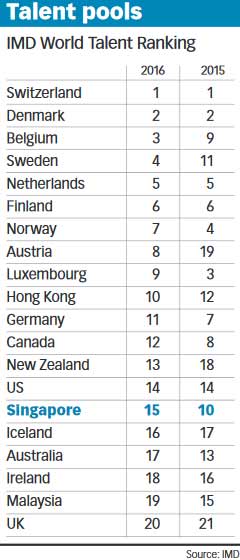
Singapore – Singapore has slipped five places to 15th in the latest world-talent ranking by Swiss business school IMD.

Hong Kong was Asia’s only representative among the top 10-ranked world economies in terms of how well they develop, attract and retain talent for the businesses operating in them. All Asian economies, including Taiwan, Japan, South Korea, China and India, lost ground in the 2016 talent league table.

The IMD World Talent Report 2016 is compiled by the same global learning institution which also puts out the annual World Competitiveness report.

Singapore, Asia’s only top 10-ranked entry last year (at 10th position), was among those which took the hardest knock in this year’s league; only South Korea and the Philippines among Asian economies slipped down more rungs.

Singapore’s slide down the talent score board appears to reflect not how IMD sees it today, but tomorrow.

The IMD talent ranking is structured according to three factors – investment and development, appeal, and readiness. Among the 61 economies on the list, Singapore tops the “readiness” score. This means its current “availability of skills and competencies in the talent pool” is the best.

Under “readiness”, Singapore is also first in “science in schools”, second in “university education” and “educational assessment – PISA” and third in “educational system” and “student mobility inbound”.

Like most of its Asian counterparts, it tumbled in the overall ranking because it fell behind in investing in and developing homegrown talent, said the report. It emerged only 38th in the sub-ranking for this.

Arturo Bris, the director of the IMD World Competitiveness Centre, said: “There’s no doubt that many Asian economies, Singapore arguably chief among them, remain among the very best attractors of talent from abroad.

“There’s no doubt, too, that they’re able to improve their overall competitiveness as a result of the knowledge and experience this foreign talent brings – but this isn’t enough to compensate for the lack of development of local talent, particularly with regard to the paucity of public-sector investment in education.”

In an e-mail to The Business Times, he identified inadequate investment and development of its own talents as one of Singapore’s biggest weaknesses. He noted that Singapore’s spending on education declined from 3.08 per cent of its gross domestic product (GDP) last year to 2.99 per cent this year, which is lower than 55 of the economies in the IMD ranking.

Singapore also did badly in pupil-teacher ratio, ranking 41st for primary education and 35th for secondary education.

Professor Bris said Singapore may be losing its shine in drawing overseas talent also because of its higher cost of living: “Singapore, like Hong Kong, is incredibly expensive for expats to live in. The rising cost of living may potentially become a major concern for those working here or thinking of doing so.”

Singapore’s living cost is higher than 55 of the economies in the ranking and is clearly the main cause of its poor showing – ranked 19th – in “appeal” to foreign talent. Under “appeal”, it also didn’t do well in “effective personal income tax rate” (ranked 32nd), “worker motivation” (23rd) and “remuneration in services profession” (20th).

Still, there is some saving grace for the city-state, which was ranked third in terms of “appeal” for “foreign high-skilled people”.

Prof Bris said the slip in this year’s talent ranking will make it challenging for Singapore to identify, sustain and develop talents going forward, meaning it will lose some competitive edge.

“Talent competitiveness is a long-term driver of overall competitiveness – only countries that excel at developing the right people’s capabilities build efficient economic systems,” he said.

When the IMD talent ranking first appeared in 2007, Singapore was placed fourth. It jumped to second the following year. In 2011, it was 17th. It bounced back to ninth in 2012, but slipped back to 17th in 2013 and 16th in 2014.


This article was first published on November 29, 2016.
Get The Business Times for more stories.

Image: 
Publication Date: 
Tuesday, November 29, 2016 – 14:00
Keywords: 
Send to mobile app: 
Source: 


Story Type: 
Others

Source link

Most GP patients wrong on antibiotic use: Study

0
Francis/Pills come in different colours and shapes #7133,08Dec98

More than two-thirds of patients who visit general practitioner (GP) clinics here are not aware that antibiotics don’t work against viruses – such as those which cause the common cold – according to a study done by researchers here.

Around the same number of patients wrongly believe that antibiotics cure upper respiratory tract infections (URTIs) more quickly.

Most URTIs, which include a sore throat, blocked or runny nose, and acute bronchitis, are caused by viruses and usually resolve on their own. They cannot be cured by antibiotics, which are used to prevent and treat bacterial infections such as urinary tract infections and pneumonia.

The study was based on 914 patients aged 21 and above from 24 GP clinics. It was conducted last year by students from the Yong Loo Lin School of Medicine at the National University of Singapore, with public health experts from the National University Health System.

It found that a third of patients expected antibiotics to be prescribed by their GPs for common ailments, with half of these patients asking for the medication or going to another doctor if it was not given.

In addition, around one-tenth of patients kept antibiotic stocks at home, and took leftover ones.

“Not finishing the course of antibiotics can reduce their effectiveness and even contribute to the spread of drug-resistant bacteria in the community,” said Dr Mark Chen, assistant professor at NUS’ Saw Swee Hock School of Public Health and one of the lead researchers.

The prevalent use and misuse of antibiotics has created drug-resistant bacteria that are much harder to treat, which, according to experts, pose a serious health threat.

Dr Chen said more public education is needed to prevent the unnecessary use of antibiotics. “Doctors can also offer patients a deferred prescription – the patient may come back in a couple of days’ time if they feel that the symptoms are getting worse, and the doctor then gets a chance to reassess the same patient to see if it is a bacterial infection that truly needs antibiotics.”

Doctors told The Straits Times they usually do not prescribe antibiotics on the first visit. “It’s quite common for most of my patients who have viral infections to ask for antibiotics, and if possible, I get them to come back again to the clinic to review,” said Dr Sam Wong, a GP at Parkway Shenton Group.

Dr Lee Kwok Keong, GP at Avenue K Clinic in Punggol, said he gets “quite a lot of requests from patients who travel overseas frequently for antibiotics”.

“However, overall, requests for antibiotics are much lower at my clinic, possibly because Punggol is a younger estate and people are more aware of their uses.”


This article was first published on Nov 29, 2016.
Get a copy of The Straits Times or go to straitstimes.com for more stories.
Image: 
Blurb: 
<p>More than two-thirds of patients who visit general practitioner (GP) clinics here are not aware that antibiotics don't work against viruses – such as those which cause the common cold – according to a study done by researchers here.</p>
Publication Date: 
Tuesday, November 29, 2016 – 14:00
Keywords: 
Send to mobile app: 
Source: 


Story Type: 
Others

Source link

Japan starts culling chickens, ducks after bird flu outbreak: media

0

Japan started culling more than 300,000 chickens and ducks after a highly contagious form of bird flu was found in two locations in the north of the country, Kyodo news reported on Tuesday.

It is the first time in two years that bird flu has been detected in poultry farms in Japan, Jiji news service said.

In Niigata prefecture north of Tokyo, local authorities started culling about 310,000 chickens at a farm in the village of Sekikawa after 40 birds were found dead, Kyodo news reported.

Further north in the prefecture of Aomori, about 16,5000 ducks were being culled after some tested positive for H5 bird flu, Kyodo reported without being more specific on the strain.

A severe strain of H5N8 bird flu has hit several countries in Europe and led to the culling of thousands of poultry after being detected in wild ducks in Northern France.

In recent weeks there have also been outbreaks in the Netherlands, Switzerland, Romania and Germany. Dutch authorities destroyed about 190,000 ducks on Saturday at six farms following an avian flu outbreak.

Farmers located in humid regions, where the risk of transmission is higher, are advised by health authorities to keep poultry flocks indoors or apply safety nets preventing contact with wild birds.

The H5N8 virus has never been detected in humans but it led to the culling of millions of farm birds in Asia, mainly South Korea, in 2014 before spreading to Europe.

The World Organisation for Animal Health had warned in an interview with Reuters mid-November that more outbreaks of H5N8 were likely in Europe as wild birds believed to transmit the virus migrate southward.

Image: 
Publication Date: 
Tuesday, November 29, 2016 – 11:30
Send to mobile app: 
Source: 


Story Type: 
Others

Source link