28.3 C
Singapore, SG
Saturday, September 26, 2026
Home Blog Page 2238

Abe, Putin to improve Japan-Russia ties but breakthrough on islands unlikely

0

Japan and Russia look set to improve ties and clinch some business deals when their leaders meet next week, but both sides are scaling back expectations of a big breakthrough in a territorial row that has blocked a peace treaty to formally end World War Two.

Prime Minister Shinzo Abe, who pledged in September to”resolve the territorial issue”, wants to leave a diplomatic legacy by breaking the impasse with Russia, a strategy he hopes would help Tokyo counter a rising China.

Territorial concessions would be risky for Russian President Vladimir Putin but the business agreements Tokyo is dangling would be welcome for an economy hit by low oil prices and Western sanctions.

But Abe said this week while he hoped for progress, the matter couldn’t be solved in one meeting.

Russian officials have echoed the cautionary tone.

“We should not raise expectations. It will be enough if one fresh step toward the resolution of the territorial issue will have been taken,” Muneo Suzuki, a lawmaker long involved in Japan-Russia ties and now advising Abe, told Reuters. “I think that one step can be taken.”

The territorial feud stems from the Soviet Union’s seizure at the end of World War Two of four islands off Hokkaido, known in Japan as the Northern Territories and in Russia as the Southern Kuriles.

Although ties between the two nations have improved since the end of the Cold War, there has been domestic opposition in both countries to compromising over the ownership of the islands, which remain under Russia’s control.

Abe and Putin meet on Dec. 15-16, first in Abe’s constituency in southwest Japan and then in Tokyo the next day.

The two sides are working to revive security talks and joint naval rescue training halted after Russia annexed Crimea in 2014, triggering Western sanctions.

They also might agree to speed up talks on joint economic activity on the four islands, Japanese media said. “These are meagre results after such high expectations,”said James Brown, a professor at Temple University’s Japan campus.

Diplomatic sources cite a variety of reasons for the dialling down of expectations in Tokyo, from the possibility US President-elect Donald Trump will improve Washington’s ties with Moscow and thus make Japan a less attractive partner to suggestions Abe put too much trust in his personal ties with Putin, whom he has met 15 times during his two terms as premier.

“TWO-PLUS-ALPHA” Japan long insisted its sovereignty of all four islands be confirmed before a peace treaty is signed.

But there are signs it has been rethinking its stance, reviving a formula called “two-plus-alpha”, based partly on a 1956 joint declaration in which the Soviet Union agreed it would hand over two smaller islands after a peace treaty was signed.

“It would be good if they can say concrete negotiations will be launched based on the 1956 Japan-Soviet joint declaration to achieve a resolution,” Suzuki said.

Agreeing on a peace treaty after the transfer of just two islands, however, would leave Abe open to criticism from his conservative base, hence the search for something extra.

One previously floated idea is creating a framework for joint economic activities on the islands. Russian Foreign Minister Sergei Lavrov told reporters last week discussions on the topic were underway at Abe’s suggestion.

Japan, however, insists any joint economic activities should be carried out without infringing on Japan’s sovereignty claims, a stance that makes sorting out a legal framework tough.

Any agreement involving transfer of sovereignty to Japan would have to address whether the US-Japan security treaty, the core of Japan’s diplomacy, would apply – including whether Washington would have the right to put military bases there or be obligated to defend the isles.

Providing such assurances, however, risks weakening Washington’s commitment to defending tiny Japanese-controlled islands in the East China Sea also claimed by Beijing.

“It will be difficult for the prime minister to overcome all hurdles on Dec. 15-16,” Masashi Adachi, head of the ruling Liberal Democratic Party’s foreign policy panel, told Reuters. “There are aspects where expectations were too high. I think they are becoming cautious.”

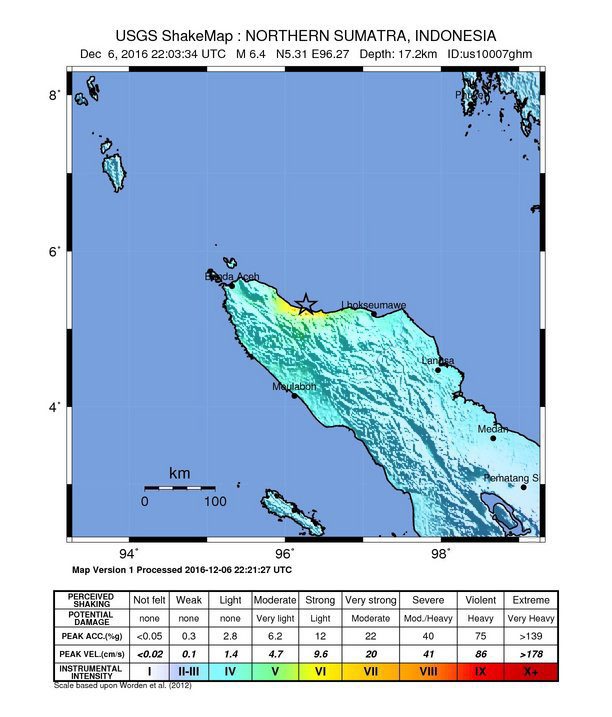
Image: 
Category: 
Publication Date: 
Thursday, December 8, 2016 – 16:32
Send to mobile app: 
Source: 


Story Type: 
Others

Source link

Singapore Red Cross commits $50,000 to Aceh quake relief efforts

0

SINGAPORE – Singapore Red Cross (SRC) has pledged $50,000 for relief items to support the Aceh disaster efforts.

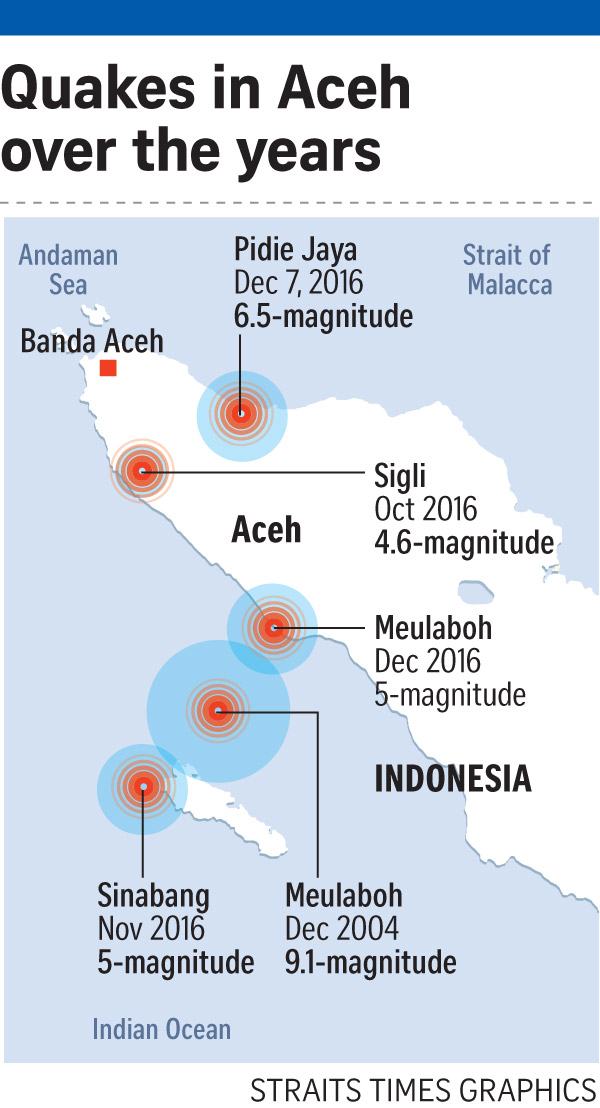
On Wednesday morning (Dec 7), a 6.4 magnitude earthquake struck off the coast of Pidie Jaya District in Aceh, Indonesia.

Search and rescue operations are underway, but National Search and Rescue Agency officials said that the death toll now stands at 102, with more feared dead.

At least 125 survivors have suffered serious injuries.

The Sumatran tip is no stranger to natural disasters, having endured its worst ordeal when a tsunami caused by the 9.2-magnitude earthquake in 2004 stole 167,000 lives.

SRC’s donation will support the search, rescue and retrieval efforts by the Indonesian Red Cross – Palang Merah Indonesia (PMI), which is working with local government agencies to provide immediate assistance to affected people.

The funds are needed for provision of excavation and debris clearance equipment, management of injuries, and safe water among other relief needs.

They will also include the provision of blankets, tarpaulins, hygiene kits, food packs, as well as two 5,000 litre water tanks and water purification equipment, SRC said.

There are currently no plans for a public fundraising appeal, but donations can be made at Red Cross House, 15 Penang Lane, Singapore 238486, during office hours (Monday to Friday, 9am to 6pm).

Meanwhile, the Singapore Civil Defence Force (SCDF) has deployed two officers to Indonesia to help in relief efforts.

on Facebook

<<SAF offers help for Aceh Earthquake>>

Yesterday morning, a 6.5 magnitude earthquake struck Sigli, Indonesia, located…

Posted by Ng Eng Hen on Wednesday, 7 December 2016

The two SCDF officers will form part of a five-man ASEAN Emergency Response and Assessment Team (ERAT), SCDF said.

debwong@sph.com.sg

Image: 
Publication Date: 
Thursday, December 8, 2016 – 16:25
Send to mobile app: 
Source: 


video embed code: 
<div style="display: block; position: relative; max-width: 100%;"><div style="padding-top: 56.25%;"><iframe src="//players.brightcove.net/4802324435001/default_default/index.html?videoId=5238709050001"
allowfullscreen
webkitallowfullscreen
mozallowfullscreen
style="width: 100%; height: 100%; position: absolute; top: 0px; bottom: 0px; right: 0px; left: 0px;"></iframe></div></div>
Video Media: 
Other Video Media
Story Type: 
Rewritten Story

Source link

When President Tony Tan turns broker

0

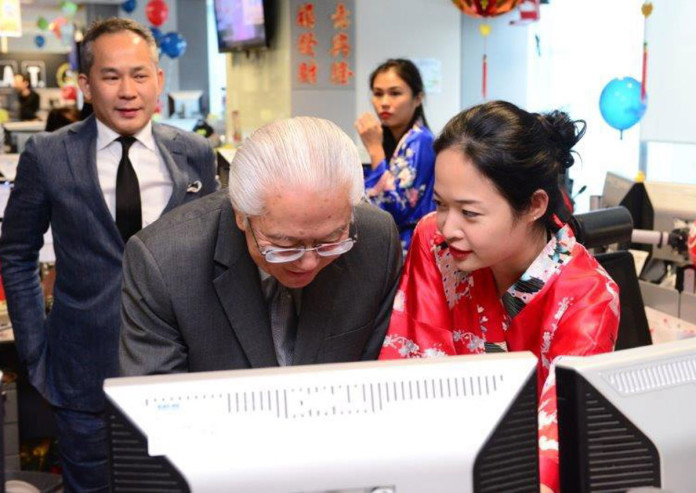
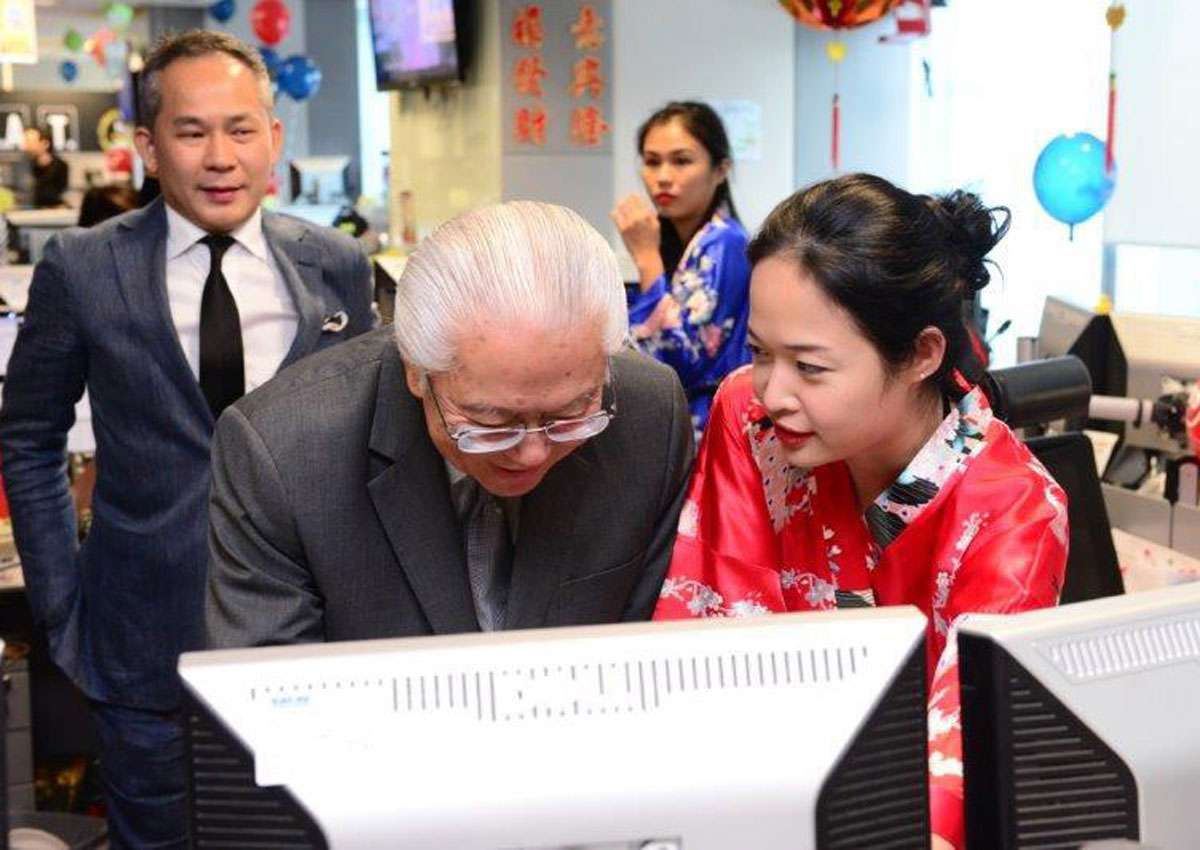
Singapore – PRESIDENT Tony Tan Keng Yam turned broker on Wednesday and closed four trades worth over S$520 million, helping to generate commissions for charity.

He spoke with customers to close deals and helped boost trading volumes during the day at the Singapore office of ICAP plc, a leading markets operator and provider of post- trade risk mitigation and information services.

ICAP held its 24th annual global Charity Day on Wednesday where 100 per cent of its revenues and commissions generated that day would be donated to more than 200 charities worldwide.

Four Singapore charities that will receive funds from ICAP this year include the President’s Challenge, Down Syndrome Association (Singapore), KK Women’s and Children’s Hospital (Kidz Horizon Appeal), and Red Cross Home for the Disabled.

Since Charity Day was launched in December 1993, ICAP has raised nearly £127 million (S$229 million) for more than 2,000 charities worldwide.

Last year, more than 60 ICAP offices around the globe raised £7.5 million for over 200 charitable projects. This is equivalent to 3 per cent of ICAP’s full year pre-tax profit for 2015/2016.


This article was first published on Dec 8, 2016.
Get The Business Times for more stories.

Image: 
Publication Date: 
Thursday, December 8, 2016 – 15:40
Keywords: 
Send to mobile app: 
Source: 


Story Type: 
Others

Source link

1,500 more tickets released for sold-out Park Bo-gum fan meet

0

Didn’t manage to grab hold of a ticket to meet South Korean actor Park Bo-gum in Singapore next February?

Here’s some good news for the festive season.

Organisers of the actor’s highly anticipated fan meeting in Singapore have released 1,500 more tickets, after 2,000 tickets first launched this morning (Dec 8) sold out within three hours.

These newly added seats are available across all ticket categories and can be purchased through all APACtix channels.

Tickets priced at $228, $198, $158, excluding the $4 ticketing fee.

To book your tickets, log on to www.apactix.com or call +65 3158 8588. Tickets are also available at Singapore Indoor Stadium Box Office, The Star Performing Arts Centre Box Office and all SingPost outlets.

The event will be held on Feb 18, 2017, 6pm at the The Star Theatre, The Star Performing Arts Centre.

debwong@sph.com.sg

Image: 
Publication Date: 
Thursday, December 8, 2016 – 15:14
Send to mobile app: 
Source: 


Story Type: 
Rewritten Story

Source link

1,500 more seats released after tickets to Park Bo-gum fan meet sold out

0

Didn’t manage to grab hold of those tickets to meet South Korean actor Park Bo-gum in Singapore?

Here’s some good news for the festive season.

Organisers of the actor’s fan meeting in Singapore have released 1,500 more seats.

These newly added seats are available across all ticket categories and can be purchased through all APACtix channels.

Tickets priced at $228, $198, $158, excluding the $4 ticketing fee.

To book, log on to www.apactix.com or call +65 3158 8588. Tickets are also available at Singapore Indoor Stadium Box Office, The Star Performing Arts Centre Box Office and all SingPost outlets.

The event will be held on Feb 18, 2017, 6pm at the The Star Theatre, The Star Performing Arts Centre.

Tickets to the highly anticipated fan meet were first launched at 10am today, Dec 8, but all 2,000 tickets were sold out within three hours.

debwong@sph.com.sg

Image: 
Category: 
Publication Date: 
Thursday, December 8, 2016 – 15:14
Send to mobile app: 
Source: 


Story Type: 
Rewritten Story

Source link

SIM invests $50m to get go-getters and their ideas going

0

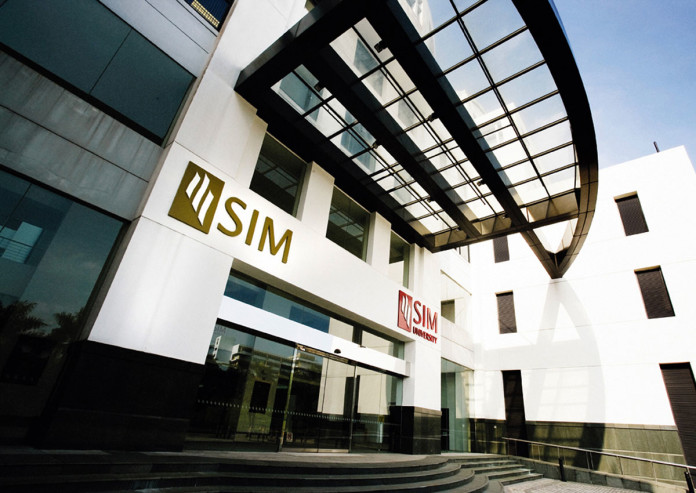
The Singapore Institute of Management (SIM) is pumping $50 million into supporting entrepreneurship, with its first initiative a programme to help go-getters build an idea into a business.

The Platform E programme will train entrepreneurs, incubate ideas and help bring products to market. There will be two tracks launched in April next year – a four-month and a 12-month programme.

The l2-month programme is aimed at fresh graduates new to entrepreneurship or people looking for a career switch, while the shorter option is for business owners who need help with scaling up their businesses.

Platform E will equip the entrepreneur not just to run his own businesses but also to take on the role of an “intrapreneur” – someone within a company who promotes innovation, said Mr Alan Wong, the chief executive officer of Platform E.

Platform E will be located at a 25,000 sq ft facility in SIM Management House in Namly Avenue that will also be rented out as commercial co-working space to non-programme participants.

Besides Platform E, SIM’s $50 million investment will also go towards supporting start-ups, mainly at the early stages.

SIM will also look for opportunities to invest in promising start-ups and small businesses that are keen to scale up, it said.

“Platform E will equip the entrepreneur not just to run his own businesses but also to take on the role of an “intrapreneur ” – someone within a company who promotes innovation,” said Mr Alan Wong, the chief executive of Platform E.


This article was first published on Dec 8, 2016.
Get a copy of The Straits Times or go to straitstimes.com for more stories.

Image: 
Category: 
Publication Date: 
Thursday, December 8, 2016 – 16:00
Send to mobile app: 
Source: 


Story Type: 
Others

Source link

An insight into Singapore’s first home for people with dementia

0


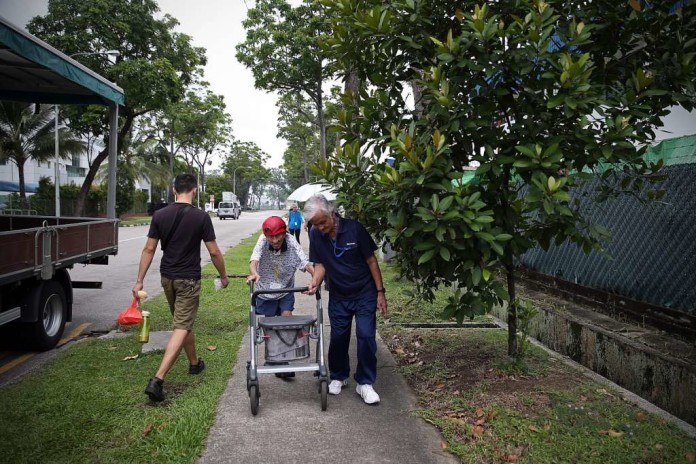
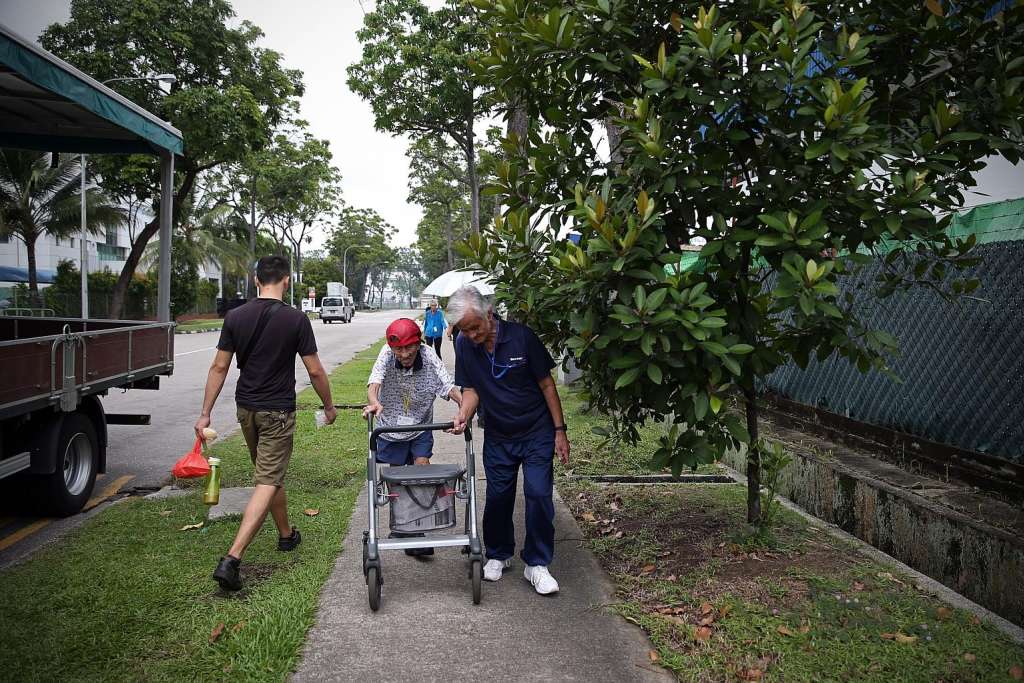
It is lunchtime. Mr Mustafa Md Yunus stops work and waits for his kawan (“friend” in Malay), Mr Lim Jin Huat, to put on his favourite red cap. He is 81 and his friend is 75.

Holding on to Mr Lim’s rolling walker with one hand, Mr Mustafa guides him as they make their way slowly to a nearby food centre.

Mr Mustafa has Alzheimer’s disease and Mr Lim has dementia. Both live with assistance at Apex Harmony Lodge, Singapore’s first home for people with dementia, in Pasir Ris.

Every Tuesday and Thursday, a chartered minibus takes a small group of residents, accompanied by staff caregivers, to Orchid Laundry in Tuas, an hour away.

There, they spend the morning folding a variety of clean towels and mats as part of the lodge’s Therapy Through Work programme.

Started in December 2013, the programme provides the therapeutic effect of “work” for residents who are still able to find such activity meaningful.

This helps maintain life as it used to be, pre-dementia, as much as possible.

Apex Harmony Lodge engages about 50 residents who are diagnosed with mild to moderate dementia in work-related activities offered by business partners.

Aside from gaining a sense of purpose and thus self-worth, residents learn to handle tasks themselves and get to exercise cognitive abilities such as attention and recall.

“Whenever Mr Lim sees the facilitators, he asks about work. It helps them keep track of the days because if there is nothing to do, there is no reason to know what day it is,” said therapeutic programme executive Petrina Goh, 25.

“You can really see their work ethic. Mr Lim prides himself on the speed at which he works and he will chide the staff if he sees them not working.

Mr Mustafa prides himself on quality as he really makes sure the towels are folded properly, neatly and that the numbers are right,” she added.

Other work-related activities offered by the lodge include cutlery packing and gardening.

Set up in 1999, the lodge, which currently looks after 200 residents, has a team of 85 nursing staff, 20 psychosocial staff – including art and music therapists and activities coordinators – and 10 who provide support functions.

The voluntary welfare organisation adopts an integrated and person-centred care model for people with dementia that cares for them holistically, taking into account their social, emotional, physical and cognitive needs.

Under staff supervision, residents have the choice to go for walks and exercise at Changi Beach Park, have breakfast while reading the papers at White Sands shopping centre, take part in creative therapy and go for high tea.

A recent report commissioned by local philanthropic houses Lien Foundation and Khoo Chwee Neo Foundation underscored the need for nursing homes to go beyond just clinical care.

Lien Foundation has committed some $2.6 million to Apex until 2018, so it can recruit more staff providing psychosocial care and build capabilities.

One in 10 people aged 60 and above in Singapore has dementia, and the condition strikes half of those aged 85 and beyond, according to findings from a large-scale study released by the Institute of Mental Health last year.

Both Mr Mustafa and Mr Lim take part in at least four activities together and have developed a unique friendship.

“Sometimes we underestimate people with dementia. We think they have lost their capability to make social connections, but they have not.

There is a lot unspoken. Mustafa and Jin Huat do not just look out for each other during work, but also day to day as well,” said Ms Soh Mee Choo, 56, Apex Harmony Lodge’s chief executive.

She cited an example in which the usually mild-mannered Mr Mustafa became angry with another resident for being rude to Mr Lim, who has a slight hearing impairment, as well as communication problems.

“I had never seen Mustafa in such a furious mood. He stood up and wanted to defend (Mr Lim).”
Ms Soh, who spent almost 10 years in special education, said that while the needs of a person with dementia are different, his strengths are also different.

“Instead of focusing on what they can’t do, do we have the eyes to see the beauty, strengths and good in them?”
Moving forward, she recognises that one of the challenges in caring for people with dementia is their evolving needs.

“The current work-related activities may not excite the next generation of residents, so we need to be visionary, to be thinking ahead to ask ourselves: Whatever we do today, will it still be applicable and relevant three years down the road?”

Other challenges include finding relevant business partners with the same beliefs, grooming people for the future, raising funds and keeping programmes sustainable.

“Now that I’m in the sector, I know how tough it is,” said Ms Soh. “Day-to-day operations are already a lot to handle, but on top of that, you need people to think beyond the present and conceptualise the future.

“I’m hoping that with the kind of effort, with the kind of outcomes we have, that there will be different quality assurance systems as well as policies to meet the needs of people with dementia so they can continue to live well.”


This article was first published on December 08, 2016.
Get a copy of The Straits Times or go to straitstimes.com for more stories.

Image:
Category:
Blurb:
<p>It is lunchtime. Mr Mustafa Md Yunus stops work and waits for his kawan (“friend” in Malay), Mr Lim Jin Huat, to put on his favourite red cap. He is 81 and his friend is 75.</p>
Publication Date:
Thursday, December 8, 2016 – 17:05
Send to mobile app:
Source:

Story Type:
Others

Source link

$200,000 boost for budding athletes

0


Last month, Olympic champion Joseph Schooling called for more financial support to be given to local athletes aspiring to win medals at major sporting meets.

After all, his parents Colin and May famously spent more than $1 million on his Olympic dream when they sent him to train in the United States at the age of 14.

The swimmer, now 21, saw part of his wish fulfilled when he gave $200,000 to a special fund set aside by the Singapore Swimming Association (SSA) for development of the sport, which includes supporting promising athletes.

Read Also: Joseph Schooling: Pain behind the glory

The money is from the $1 million he received from the Singapore National Olympic Council’s (SNOC) multi-million dollar awards programme (MAP), which mandates athletes give 20 per cent to their national sports associations (NSAs) “for future training and development”.

The SNOC does not dictate how NSAs use their share of the awards.

May, who presented a cheque to SSA president Lee Kok Choy with Colin at the OCBC Aquatic Centre yesterday, said: “We hope it’d give the young ones hope that if they train hard enough and they have the potential nobody will be denied (funding).

Read Also: Joseph Schooling wins Singapore’s first Olympic gold, beating childhood idol Phelps

“We don’t want anybody to go through what we’ve gone through if the kid has potential.”

Existing funding schemes include the Sports Excellence Scholarship (spexScholarship), which was launched in 2013. It gives athletes a monthly stipend as well as sports science support.

To apply for the spexScholarship, athletes must, among other criteria, “demonstrate potential for further development” and “be in medal contention for major Games and world-level events”.

May said she hopes the SSA funds will help athletes who do not have results “but we know they have potential and (find it) hard to justify for (a) spexScholarship”.

Lee agreed that should be a function of the fund. He said: “Determining potential is a struggle we always have, and we’re trying to be better at it.”

A committee comprising people within and outside the SSA will be formed to manage the fund, which also includes the $525,100 raised at a golf fundraiser headlined by the Olympic champion last month.

Read Also: The expensive truth behind Joseph Schooling’s Olympic gold medal

More details about the fund, including the committee members and how money is disbursed, will be revealed in a month’s time, said Lee. He added that while the funds would cover all disciplines under the SSA’s purview, more will be directed to swimming given its “relative size and scale”.

Other aquatic disciplines the SSA oversees include water polo, diving, synchronised swimming and open water swimming.

Read Also: Life after Rio Olympics: 10 things to know about Joseph Schooling

Lee, who is into his second two-year term as SSA president, said: “It’s not just about targeting individual athletes. We also want to use the funds to build infrastructure and capabilities.

“Ultimately, increasing the quality of support and coaching gives everyone a better chance.”


This article was first published on December 8, 2016.
Get a copy of The Straits Times or go to straitstimes.com for more stories.

Image:
Category:
Publication Date:
Thursday, December 8, 2016 – 14:07
Send to mobile app:
Source:

Story Type:
Others

Source link

He turned Tanglin hotel’s rooftop into lush garden

0


On a roof four storeys above ground lies an Eden, unknown to many, close to the busy Orchard Road belt.

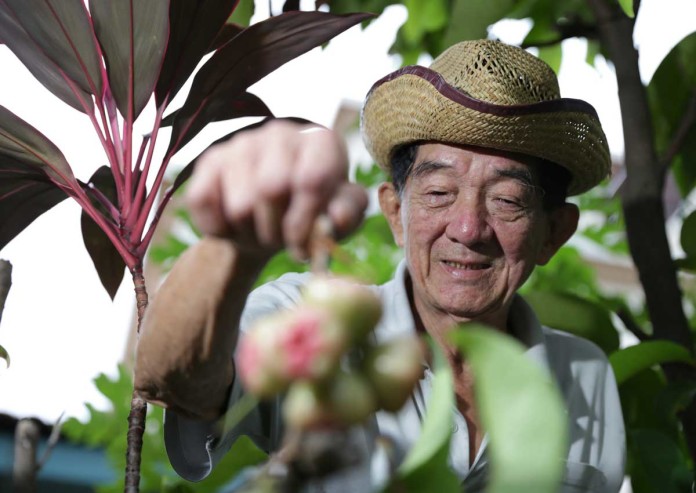
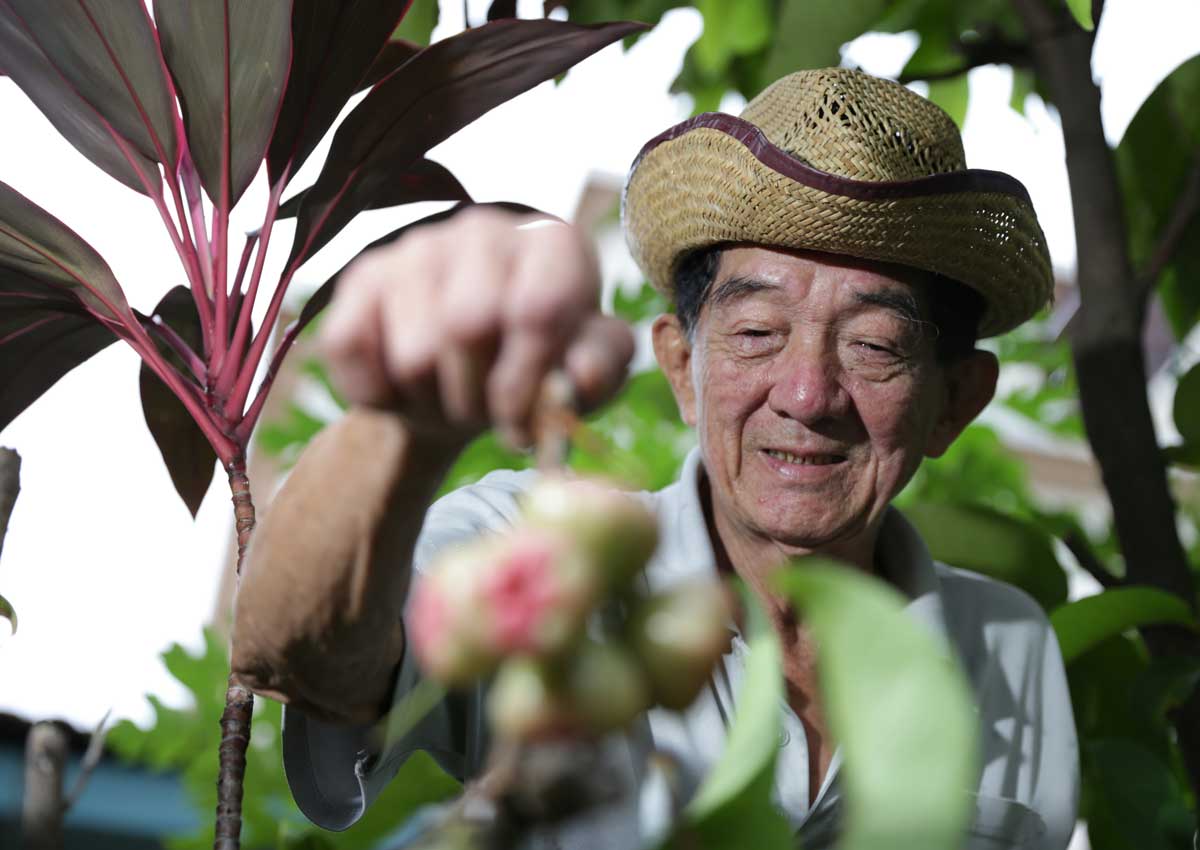
There, over 10 types of fruit trees grow, including guava, papaya, chiku and banana, nurtured from saplings by their keeper, Mr Lim Chin Tee.

Over the last four years, Mr Lim, or Uncle Lim as he is affectionately known, has transformed Hotel Jen Tanglin Singapore’s rooftop, a usually forgotten spot of a building, into a sweet-smelling garden.

On most days, a peek into the 83.15 sq m space in the Cuscaden Road hotel – slightly smaller than an HDB four-room flat – would find the 76-year-old stooped over, tending to his oasis.

With his gardening shears and other tools in hand, he snips away wayward branches and tugs on stubborn weeds, or piles food waste like leftover rice, coffee grounds and egg shells into the soil to fertilise the plants.

He starts work at 9am and often stays till 3pm or 4pm. “It’s not like I get overtime pay. Sometimes, it’s because there is so much to do, and other times, I just forget the time because it is so relaxing,” he said.

It would seem reasonable for a man his age to retire from work but Mr Lim said he does not want to be idle at home.

He read that it is important to stay active into old age to prevent chronic illnesses from developing. He feels that gardening helps to keep his body fit and his mind sharp.

His first brush with gardening came in 1954 when he was just 14 years old.

A friend gave his family two mango trees, which they planted at the front and back of their house. They flowered and bore fruit.

That was the start of a lifelong passion. After he left school, he began supervising gardeners at the former Mandai Orchid Gardens and working in the gardens of private homes.

He decided to get certification when then Prime Minister Lee Kuan Yew declared in 1967 that he would transform Singapore into a garden city.

Mr Lim completed a six-month gardening course at the Singapore Botanic Gardens in 1970 and has earned his keep as a gardener since then, working at hotels on weekdays and private homes on weekends.

It was a former employer, the general manager of the predecessor of the Hotel Jen Tanglin Singapore, who got Mr Lim his current job.

Mr Juergen Doerr was moving to the Philippines and was worried that the man who tended his home garden would be out of a job.

So he tasked the head chef of what was then the Trader’s Hotel to make sure that Mr Lim got a job in the hotel. In 2012, the role of a gardener was created for him.

“He is a good man. He pitied me because he was worried I wouldn’t have a job,” said Mr Lim.

Trader’s Hotel was rebranded as Hotel Jen Tanglin Singapore in September 2014, and today, Mr Lim is the gardener of its Spice Garden.

He gets waste from the hotel’s kitchens and turns it into compost for his garden, and offers the fruit he grows to hotel staff.

The garden is, today, open to the public and visitors are welcome to visit to see the fruits or have a chat with Mr Lim.

“When it comes to the Spice Garden at Hotel Jen Tanglin Singapore, there is no one more passionate or enthusiastic than Uncle Lim,” said Ms Juliana Jauw, the hotel’s assistant communications manager.

“Uncle Lim has inspired us with his knowledge and wisdom. We intend to use the Spice Garden as an educational hub to pass on his teachings to the next generation of staff, guests and members of the public.”

When asked what he hopes to grow in future, Mr Lim said his biggest wish is to have a mango tree just like the one in his childhood home.

But he wavers.

“Okay, maybe a durian tree as well; it’s hard to decide. I like them all,” he said.


This article was first published on December 08, 2016.
Get a copy of The Straits Times or go to straitstimes.com for more stories.

Image:
Category:
Blurb:
<p>On a roof four storeys above ground lies an Eden, unknown to many, close to the busy Orchard Road belt.</p>
Publication Date:
Thursday, December 8, 2016 – 17:10
Send to mobile app:
Source:

Story Type:
Others

Source link

S R Nathan honoured as man for all seasons

0

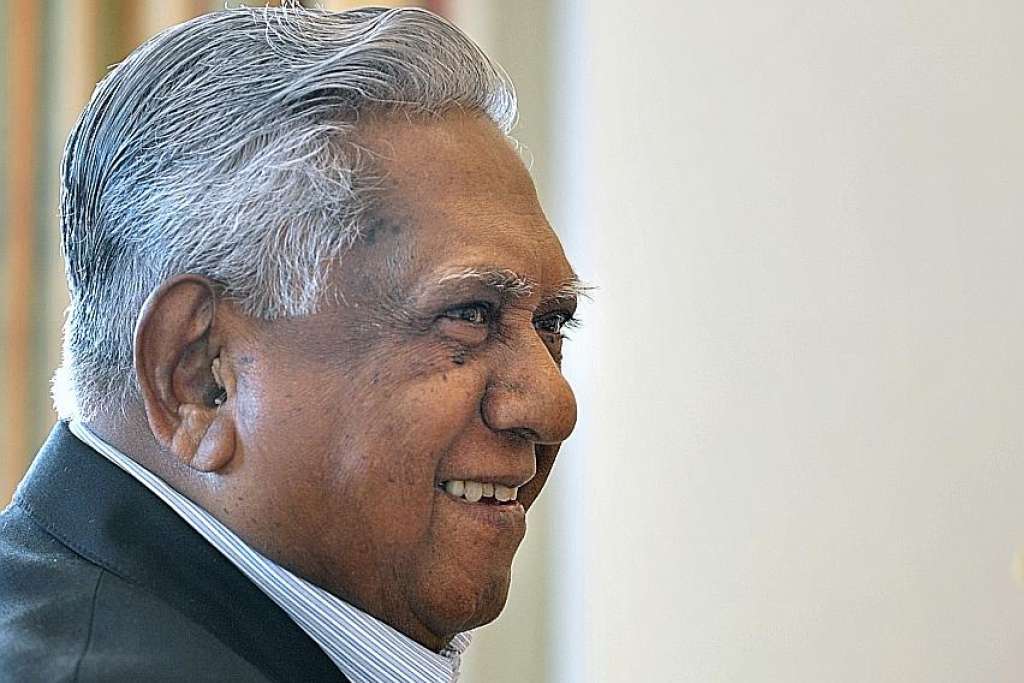
In his last days, former president S R Nathan was bent on finding answers to one question: What national cause would Singaporeans rally around for a brighter future, and deepen the bond between them and their leaders?

The Straits Times (ST) editor-at- large Han Fook Kwang yesterday told about 150 people at The Arts House that Mr Nathan had urged him to help find an answer to that question when he, EDB Society president Lee Suan Hiang and the society’s honorary secretary Daisy Goh visited Mr Nathan in hospital on July 13, over a month before he died on Aug 22.

Yesterday, four of the late statesman’s former colleagues proffered answers to his question at a forum Mr Han moderated, which the society and ST organised as part of its Pioneering The Future series.

They were Mr S. Dhanabalan, a former minister and member of the Council of Presidential Advisers; academic Cham Tao Soon, who is Professor Emeritus at Nanyang Technogical University; ambassador-at-large Ong Keng Yong, executive deputy chairman of the S. Rajaratnam School of International Studies; and ST’s former editor-in-chief, Mr Peter Lim.

To Mr Nathan’s question about the burning cause for citizens, Mr Dhanabalan noted how successful Singapore had been in turning former Indonesian president B. J. Habibie’s jibe about it being a little red dot and so “of no consequence” into “a badge of honour”.

He rued, however, that because Singaporeans absorbed many global “values, fashions and trends”, they risked winding up with “no clear identity” and being just like any other global city.

So he did not see why Singaporeans should be so keen on celebrating when Western media commended the Republic on being No. 1 in various fields, saying: “Why do we have no self-confidence to say we are different?”

Mr Ong said Singaporeans should stop harking back to the past, and instead build on the country’s success today.

He added: “We have to look at Singapore as having made it… Singapore is now reputable and well-regarded with high standards and, going forward, we should substantiate that idea.”

And while it had “leapfrogged” neighbours such as Malaysia and Indonesia to seize opportunities farther abroad, Singapore “must now find a way to… get better value” from its relationships with such neighbours, he said.

Prof Cham, who had visited Mr Nathan a few months before his death, said that if current and future Singaporeans worked smart and hard, the nation would continue to do well, barring a global disaster.

“I know they work smart, but I’m not sure they work hard,” he added.

Mr Lim noted that Mr Nathan had “empathy and quiet courage” and had done much to “strengthen multi-culturalism”, adding: “Why are we still wondering whether to accept (Deputy Prime Minister) Tharman (Shanmugaratnam) as prime minister or who should be the next president?”

All four paid tribute to the late labour-movement pioneer, diplomat, intelligence officer, media chief and head of state for being sharp, fierce about work, compassionate, very good with people and humble.

Mr Dhanabalan said Mr Nathan “could balance a bird’s eye view with a worm’s eye view”, never forgetting a face or a name while never losing sight of broad policy issues.

The forum began with Economic Development Board managing director Yeoh Keat Chuan, Mr Lee and Ms Goh presenting the society’s top award posthumously to Mr Nathan, calling him “a man for all seasons”.

His older grandson, Kiron Cheong, 24, received the award on his behalf. Mr Nathan’s widow, Urmila, was absent but their children, Juthika and Osith, were there.

Mr Osith told The Straits Times that his father had been informed of the award before he died, and was chuffed to accept it.

“He thought it good that economic development here did not just involve economists, but was more holistic.”


This article was first published on December 08, 2016.
Get a copy of The Straits Times or go to straitstimes.com for more stories.

Image: 
Category: 
Blurb: 
<p>In his last days, former president S R Nathan was bent on finding answers to one question: What national cause would Singaporeans rally around for a brighter future, and deepen the bond between them and their leaders?</p>
Publication Date: 
Thursday, December 8, 2016 – 17:03
Keywords: 
Send to mobile app: 
Source: 


Story Type: 
Others

Source link