28.3 C
Singapore, SG
Saturday, September 26, 2026
Home Blog Page 2237

Woman kicks security guard in groin after evading cab fare

0


Stomp contributor Eyeza alerted the Stomp Team to two viral Facebook videos depicting a woman brutally hitting a taxi driver and kicking a female security guard, simply because she refused to pay the taxi fare in Singapore.

The first video shows the male taxi driver grabbing onto the woman’s handbag, afraid that she would try to escape.

The woman reacts by hitting the cabby and asking him repeatedly to let go of her handbag.

The woman is then heard saying, “I have a lot of money!”

She then shouted profanities at the driver and challenged him to call the police.

In the second video, the woman is spotted hitting a female security guard who tried to intercede and help.

A worker from a nearby restaurant is seen holding both women’s arms to prevent another physical fight from breaking out.

The taxi driver is heard shouting, “Oi! She used the phone to hit her (security guard) head eh!”

The woman, who was wearing a pair of high heel shoes, then lifted her right leg and kicked the security guard in her groin.

The security guard bravely stood there and held the woman’s hands to prevent her from further hitting anyone, while the aggressive woman continued to taunt and hurl vulgarities.

Towards the end of the video, the female security guard is seen showing her hand that is scarred and slightly bloodied from the attack.


Visit STOMP for more stories.

Image:
Category:
Publication Date:
Thursday, December 8, 2016 – 21:34
Send to mobile app:
Source:

Rotator Image:
Story Type:
Others

Source link

Exclusive: Success is determined by how dispensable I can make myself, says Suu Kyi

0

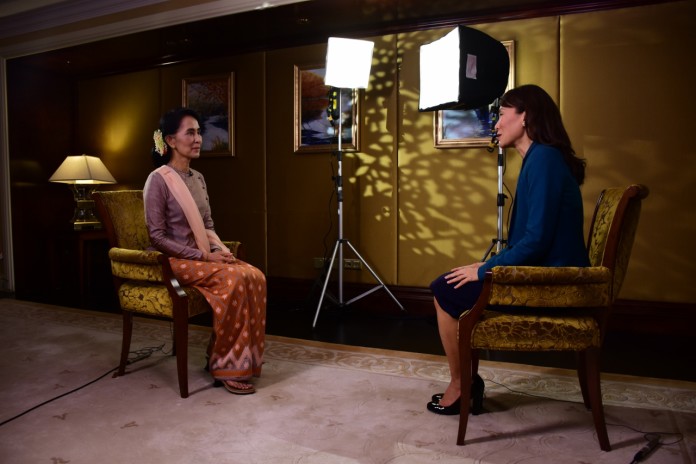
SINGAPORE: The success of Myanmar State Counsellor Aung San Suu Kyi as a leader is decided by how dispensable she can make herself, she said.

“I hope that I’ll be able to make myself totally dispensable, that they will not need me to go on – neither my party, nor my country,” the Nobel laureate said in an exclusive interview with Channel NewsAsia’s Conversation With, which was broadcast on Thursday (Dec 8).

Ms Suu Kyi, who became Myanmar’s State Counsellor and Foreign Minister after her party won a landslide election victory last November, pointed out that the National League of Democracy (NLD) had managed to retain public support throughout the past two decades because they “were very close to people on the ground”.

“I have to keep reminding people that I was under house arrest for 15 years… and we managed to keep our party going in spite of the great difficulty. So, you mustn’t underestimate the ability of many, many ordinary members of our political party, and our members are really the public,” said Ms Suu Kyi in the interview, which took place last Friday.

The interview also touched on the Rohingya issue, the state of Myanmar’s economy, the NLD’s succession plans, and the country’s relations with China and the incoming Trump administration.

An edited and condensed transcript of the interview follows.
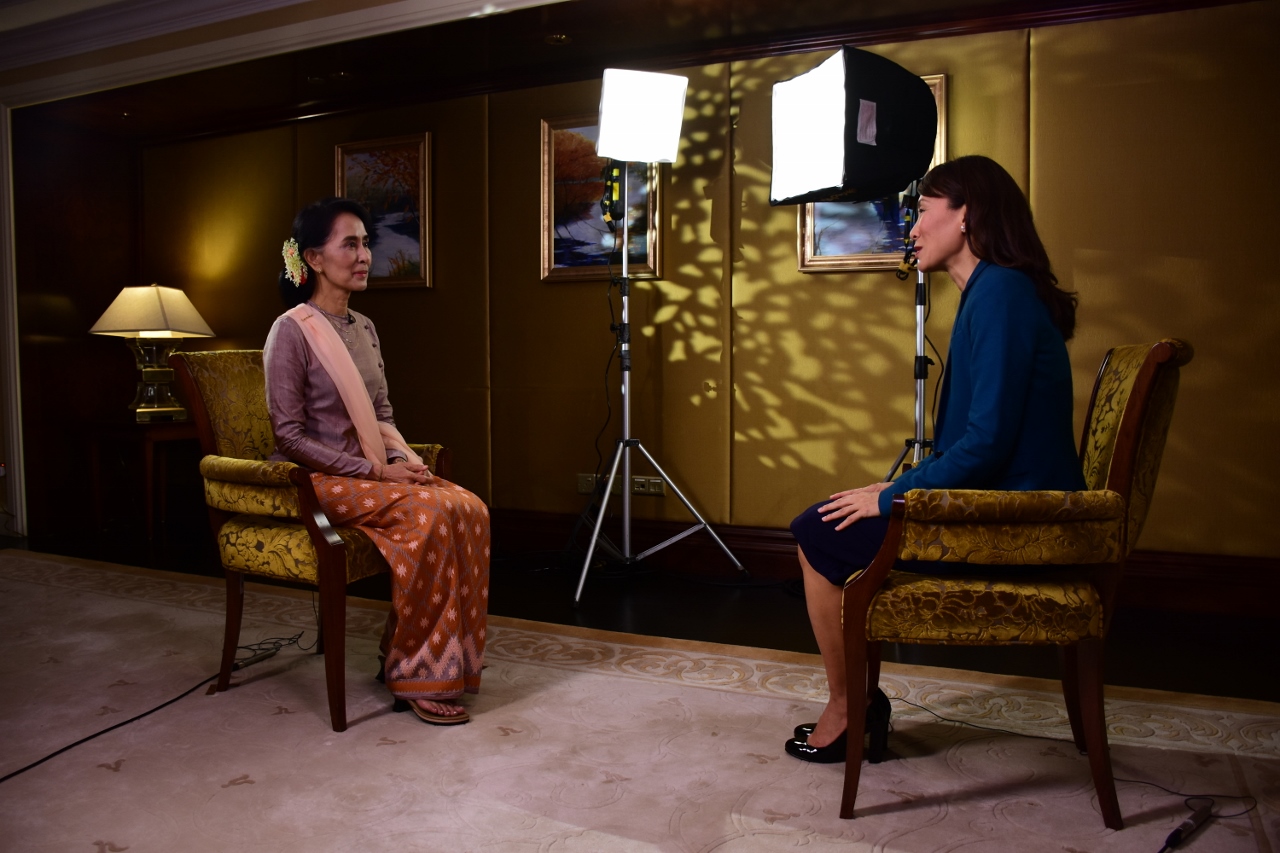
(Photo: Winnie Goh)

Lin Xueling: State Counsellor Aung San Suu Kyi, thank you very much for being on Conversation With. 

Aung San Suu Kyi: Thank you.

Q: Do you think the problem of the Rohingya is intractable?

A: No, I don’t think. But it would help a lot if the international community, with a bigger understanding, would recognise how great a challenge it is and how sensitive and delicate the matter is. Because in the Rakhine, it’s not just Muslims who are nervous and worried. The Rakhine are worried too – they are worried about the fact that they are shrinking as a Rakhine population percentage-wise. And of course, we cannot ignore the fact that the relationship between the two communities has not been good and we want to try and make it better. But it doesn’t help if everybody is just concentrating on the negative side of the situation in spite of the fact that there were attacks against police outposts which began on Oct 9. We have managed to keep the situation under control and to calm it down, but I would appreciate it so much if the international community would help us to maintain peace and stability and to make progress in building better relations between the two communities instead of always drumming up calls for bigger fires of resentment, if you like.

Q: But it is not solely the international community that is the root of this, State Counsellor. There are obviously difficulties on the ground.

A: I know that. I’m not saying there are no difficulties, but it helps if people recognise the difficulties and are more focused on resolving these difficulties rather than exaggerating them so that everything seems worse than it really is.

Q: In the case of the Advisory Panel, which is led by former United Nations Secretary General Kofi Annan, isn’t it a problem though? Many of the local community don’t support it they see it as foreigners mixing in, biased – these are the words used. This is by the local community themselves.

A: This is by some members of the local community, and I think it’s more for political agenda than a true understanding of what the Commission is all about. For example, one of the Rakhine parties and some others try to table a resolution in the legislature protesting against the Commission on the grounds that we were dragging an internal issue onto the international stage. We had to point out very simply that the issue has been on the UN agenda since 2010. So we were not dragging it up onto the international stage, we were trying to resolve the problem and have great confidence in Dr Annan’s abilities to resolve such tensions and such conflicts.

Q: And that will be accepted by the local community?

A: I think it will be accepted by the great majority of the people of our country who want peace and stability, and who want to establish harmony everywhere, in every part of our country, not just in Rakhine.

Q: And the Oct 9 Investigative Commission that’s being set up now – what is its ambit and what is the result that you would like to see from this?

A: What we would like is to find out what led to these attacks on Oct 9, and it goes back some time, and to find out if the allegations of human rights violations are accurate and if so, we will take necessary action.

Q: But isn’t it awkward then, that there are military persons on the committee itself? Is there a conflict of interest there?

A: No, not at all. We want to make sure that everybody is able to represent his or own angle, and they will be able to see for themselves what really happened. We think that we need a balanced commission.

Q: And you feel you have a balanced commission at the moment?

A: We’ve tried our best, we’ll find out soon enough if it’s balanced or not. And of course, if there is a need to change the composition of the commission, there’s no reason why it should not be done.

Q: Do you think you’re having to do quite a bit of compromising, though, to work with the military?

A: I don’t understand quite what you mean by compromise. It depends on what people mean by compromise. Some people, when they say compromise, they mean a compromise of principles – no, that we do not do. But I always think of it simply as negotiations – learning to understand each other. I think of it as give and take. Some people think give and take means they take all the time and the other side gives, and that’s not give and take. So I don’t think of it as compromise because of the misunderstanding of the word. We are ready to negotiate, we are ready to listen and to admit that perhaps, their point is better than ours and then they must do the same too.

Q: Do you think then the military has been acting under the rule of law?

A: We have been cooperating very well. We have been working together with the military, because in the Rakhine, the police and the military have had to work together. Of course, the police come under the civilian administration.

Q: But State Counsellor, if that’s the case, why not allow international observers, journalists, to go in and see that?

A: We have allowed teams to go in and see what the situation is like, but we cannot guarantee security everywhere. We have to make sure that whatever we allow to happen officially guarantees absolute security for all people.

Q: No politician likes to put up a timeline, I know, Madam. But do you think these problems, if you say they are tractable – when do you think you’ll have that peace and stability in Myanmar?

A: It’s not because we don’t want to put up a timeline, it’s simply that actually people don’t know, and I don’t know either. And those who say it’ll be done by such and such a time, I don’t know how they find these answers. What I can say is that we want to resolve these problems as quickly as possible and how quickly we manage to resolve them ultimately depends on the cooperation of the public. If our public are with us, if the majority of our people are behind us in our endeavors, then we’ll be able to resolve these problems quickly. But if they’re not with us, then it’ll take longer. It’s very much a matter of the government keeping close to the public and to try to explain to them what it is that were trying to do. Transparency is very important.

Q: Do you feel you have that now, the public, that citizens in Myanmar understand what you’re trying to do and are patient enough to give you this time?

A: I think the great majority of them are. But of course, there are those with the political agenda who do not want us to resolve the issue so quickly.
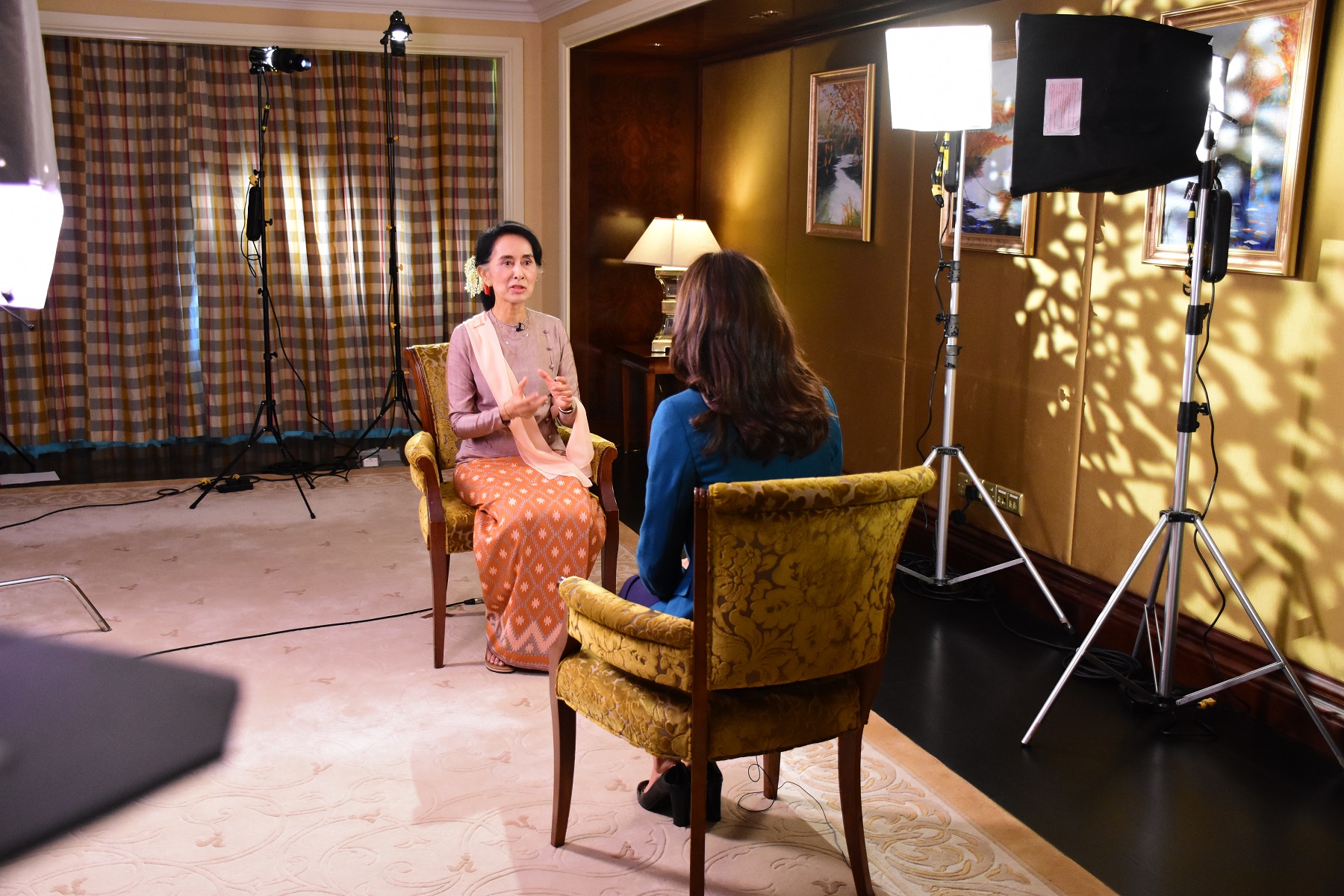
(Photo: Winnie Goh)

Q: Are you happy with how these nine months have gone?

A: I don’t think of happiness or unhappiness. We knew that there would be many challenges to overcome, and we are overcoming them. Of course, one always wants to overcome them immediately, but we knew of course that this is a wish rather than a practical view of what might happen. But I think I could say that on the whole, I’m satisfied because we’ve had to meet a number of challenges which were not planned, but still, I think we are managing to cope with the support of the people.

Q: What is something that you’re most pleased with in these nine months, short as it is?

A: The fact that the ministers are not corrupt.

(Lin: Yes, that is a substantive thing.)

Yes, it’s important. The public accepts that although they say that all right, the ministers are not corrupt, but some of the junior officers are still not quite what we would wish them to be.

Q: Do you think you could change that? Because sometimes, some people say that these things are cultural – that Southeast Asians are used to taking that kickback, used to smoothening things out with sweeteners?

A: When I went to meet your corruption investigation bureau, they gave me a piece of paper, on which one of the things say that corruption is a fact of life, not a way of life. I like that very much, because this is how it is in our country. People accepted not this way of life, although they recognise that it is the fact of life. This means that the practice of corruption has not become embedded in our culture and that’s very encouraging.

Q: Domestically, foreign direct investment is generally on the increase. But in recent months, there has been a bit of a dip, so are we looking at monthly fluctuations or do you think that people might be a little bit apprehensive about these nine months, when things are a little bit uncertain?

A: I think it’s a little bit to do with the general sluggishness of the world economy and caution rather than apprehension, because they’re waiting for our investment law to come out. Previously, we have two investment laws, one for foreign investment and one for local investment, which was not viewed with great favour generally. So we had a new investment law which went through the legislature recently and now, we’re drawing up the rules to go with it. So I think that was what a lot of investors were waiting for. And of course, they wanted to see what attitude we were going to take towards foreign investors. We want to make them understand that our country is investor-friendly, and when I say investor-friendly, I also mean that we want the kind of investments which would be beneficial to both sides – both partners – the ones who are investing as well as, of course, our people who should be the primary beneficiaries.

Q: But can that sometimes be difficult if we look at questions of minimum wage and where an investor might want to have low wages? Even though it might benefit the people of Myanmar better to have higher wages? For example, like what’s taking place now in the garment industry.

A: There will be problems like that and when I met the Singaporean business community a couple of days ago, one of them brought this up. They were worried about unionisation. I said this is unavoidable and what they should do is to take a new … they should also adopt a new approach. They should not just look at what they might meet but what they can do. If they were to take an approach, what I call a union-friendly approach, and make it clear from the beginning that they welcome unions and that unions should be for the welfare of the workers and to make sure that relations between employers and employees are good. That, I think, will take way a lot of worries linked to the union movement. There will be unions, we can’t get away from that. And yes, people will ask for high wages because everybody wants higher wages. Look at all the millionaires who go on working very hard to make sure that they get richer!

Q: So you think FDI is not something we need to worry about? We will see it move in that general, positive direction of more FDI?

A: I don’t want to say nothing to worry about, because it sounds a little bit too casual. We take it very seriously, we want to make sure that foreign investment works, we want to make sure that foreign investment helps us to achieve sustainable development.

Q: What about inflation, Madam? We’ve seen inflation very high – about 9 per cent – which is rather high and this is obviously difficult for ordinary people in Myanmar to have their wages keep up with that level in inflation. Are you worried about that? Are you worried that, therefore, people who voted you in might feel they’re not getting the benefits if their incomes are being eroded?

A: At the moment, in spite of the inflation, I don’t think that people’s incomes have been too eroded. Of course, this is again a political tool for those … I always forget that now we are no longer an opposition, so it’s our opposition who would like to focus on this.

But you know that the price of the dollar is going up, not just in our country but in general, and inflation. Again, inflation is not something to be feared if development can keep ahead of it. Of course, then people will ask, are we developing to that extent? I think we are beginning to.

The first nine months have been difficult because we’ve had to clear away a lot of debris from previous practices and now only, were beginning to make a little bit of headway.

We also always have to keep in mind the political issues that are of great importance to our country because development and stability go together. We can’t have sustainable development without peace and stability, and peace and stability cannot be sustained without prosperity. So it all goes together, and we have to look at things from several different directions, not just from one angle.
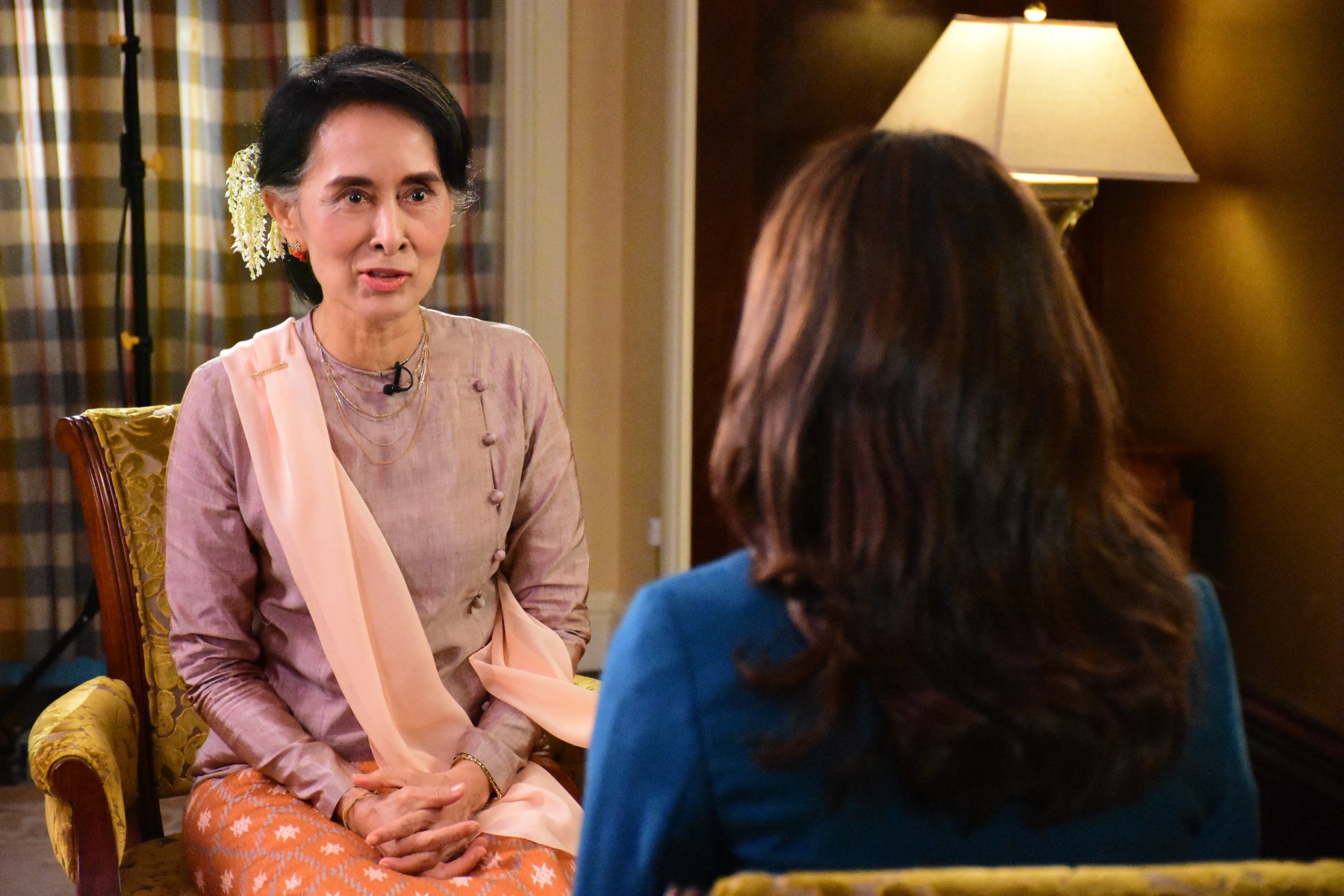
(Photo: Winnie Goh)

Q: Apart from the hat of State Counsellor, you actually also wear the hat of Foreign Minister. So if we look at some of the things that are happening around the world – are you at all concerned about a more isolationist America under a Trump administration? And how would that affect Myanmar?

A: I don’t think that it would substantially change the relationship between our two countries, because we’ve always had good relations with the US.

In fact, I think that our traditional foreign policy has been good. From the time of independence, we’ve concentrated on establishing friendly and fruitful relations with countries all over the world. We were one of the neutral countries, we did not take sides during the Cold War and we don’t want to take sides.

We want to be able to work together with everybody. We have to co-exist because there’s no choice. When you look at the human race, it has progressed from the times when we were running around in caves clubbing each other.

Q: Gladly. But won’t it change the balance of powers here in Asia as well if the US doesn’t play as active of a role?

A: The US is a big power. Well, the biggest in the world. So it could change the balance of power, but we could always try to make the change one for the better rather than for the worst, and it’s up to everybody.

Q: And you don’t think at all that the chemistry will change? You seem to be able to get on very well with Barack Obama, the current president. Will it be the same also with Mr Trump?

A: I have never met him, but I’m quite prepared to get on very well with him.

Q: What sort of role would you like to see China playing here in Asia?

A: A positive role, because China is a big power, and I think its big powers are capable of doing a lot of good if they go about it in a positive way. We’ve always had very friendly relations with China throughout the history of our independent nation. And although we were on very good terms with the West at that time, in the 1950s when the first Chinese communist government was established, we were one of the first countries to recognise it officially and to establish good relations with it, and China’s a neighbour. We can’t move away from each other, so we have to make sure that we stay as good neighbours.

Q: And you’re not apprehensive about what some commentators say is China’s increasing, flexing of muscles in our region?

A: I don’t think apprehensive is the word I would use and anyway, apprehension doesn’t do any good. So I think we just have to concentrate on making sure that we establish positive relations with each other.

Q: So much of the political movement in Myanmar is tied up with you, your personality. Do you think that if you were not here that there would be a rollback and that the military would come back into power?

A: I have to keep reminding people that I was under house arrest for 15 years and they’ve only managed to retain public support during that period, and we managed to keep our party going in spite of the great difficulty. So, you mustn’t underestimate the ability of many, many ordinary members of our political party, and our members are really the public, and we are very close to the public.

For example, there were those who were surprised when the election results that came out last year. We were not surprised because we were very close to people on the ground. We knew exactly how it was going to be. Well, we were wrong in about six or seven constituencies, but that’s not bad considering that we were talking about more than a thousand seats, and to have gone wrong in only about six or seven shows that we were able to gauge the temperature of the public quite correctly, and I think that’s our greatest strength – that the party was built on public support.

We rose out of the ordinary public and that is how were going to stay. And I think because of that, the party will be able to carry on under different circumstances.

Q: So you’re certain that let’s say, in 20 years, in the coming years as well, that you’ve built up enough of a successor base to maintain these steps to democracy?

A: Our success, where I am as a leader, is decided by how dispensable I can make myself. And I hope that I’ll be able to make myself totally dispensable, that they will not need me to go on, neither my party, nor my country.

Q: Really, State Counsellor?

A: Really, because I think that should be the ambition of any responsible leader. You’ve got to make yourself dispensable. Otherwise, what you’re doing is for yourself rather than for your country.

Q: And so, have you looked to see who there might be?

A: Oh, we have, and we have a number of capable people in our party.

Q: You wouldn’t wish to share with us?

A: I think it’s too early.

Q: Do you think, when you go to bed at night, that your parents would be pleased with the things that you are doing now?

A: I’m afraid I’ve never thought about it when I go to bed at night, but I’ll think of it tonight.

Q: But do you think they would be content with how you have led your life thus far?

A: I think they would think that I should know best what I need to do with my life, because both of them believed in allowing me to choose the kind of life. Well, I don’t really know whether my father would, but I would have thought he would because I was too young when he died. But my mother certainly was a very independent-minded woman and I think she would’ve understood quite well that I should be independent-minded too.

Lin Xueling: State Counsellor, thank you very much for being on Conversation With.

Aung San Suu Kyi: Thank you.
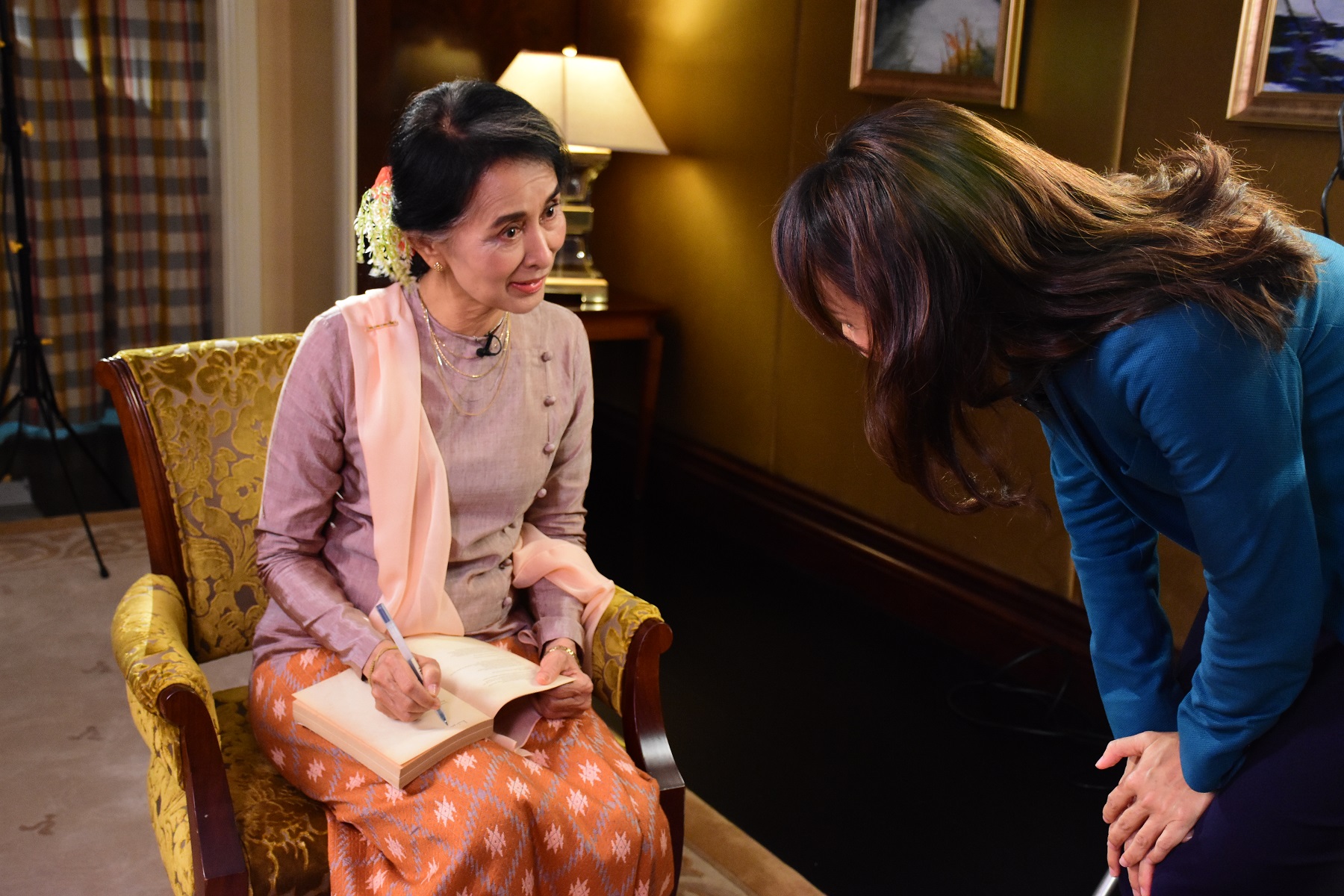
(Photo: Winnie Goh)

Source link

Duterte tells Macau casino boss to apologise, pay correct taxes

0


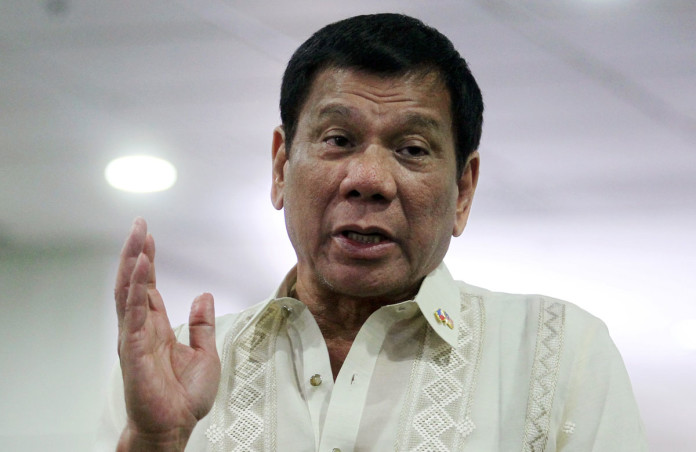
Philippine President Rodrigo Duterte said on Thursday he would allow Jack Lam, one of Asia’s top casino kingpins, to do business in the country after he had ordered his arrest on charges of economic sabotage and bribery.

Duterte said he would allow the casino boss to come back to the Philippines if he apologised for bribing an official and paid the correct taxes.

Lam, from the Chinese gambling enclave of Macau, has been operating online gambling at a former US air force base without a license, the justice department said. “On the condition that he lets go of original contract … Just pay taxes, don’t bribe anybody,” Duterte told reporters after saying Lam had sent surrender feelers to the authorities.

There was no immediate comment from Lam, according to his lawyer, Raymond Fortun, and his whereabouts were not known. Philippine police say he is not in the country.

Last month, Philippine immigration authorities detained about 1,200 Chinese men working without permits in call centre-like facilities for running suspected online gambling operations out of the former US air base, Clark Field.

Philippine police chief Ronald Dela Rosa said on Saturday an associate of Lam tried to secure their release. He said Duterte had ordered the arrest of Lam.

Philippine authorities said they had shut down two properties owned by Lam, who is a Chinese citizen and head of Hong Kong-listed Jimei International Lam, who used to bring high rollers to Macau’s top casinos including Sands China and Wynn Macau, has faded from prominence over the past few years as a Chinese crackdown on corruption has crippled so-called junket operations.

At the same time, Lam’s operations in the Philippines have grown, including a rise in Chinese nationals gambling online at his gaming site.

Image:
Category:
Publication Date:
Thursday, December 8, 2016 – 20:15
Send to mobile app:
Source:

Story Type:
Others

Source link

Jokowi meets Kofi Annan to discuss Myanmar

0


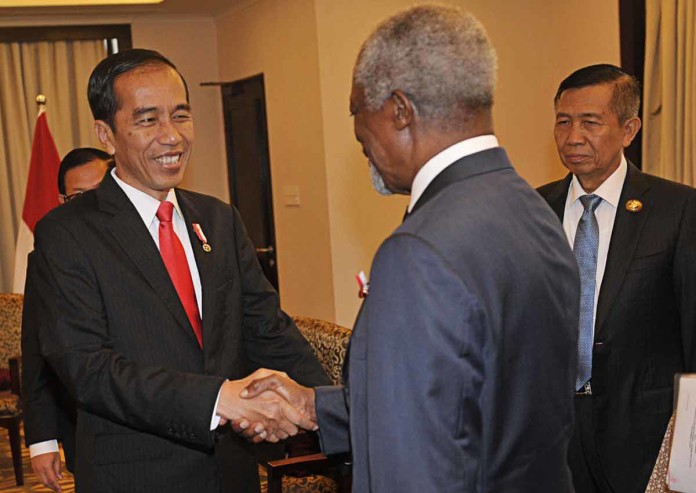
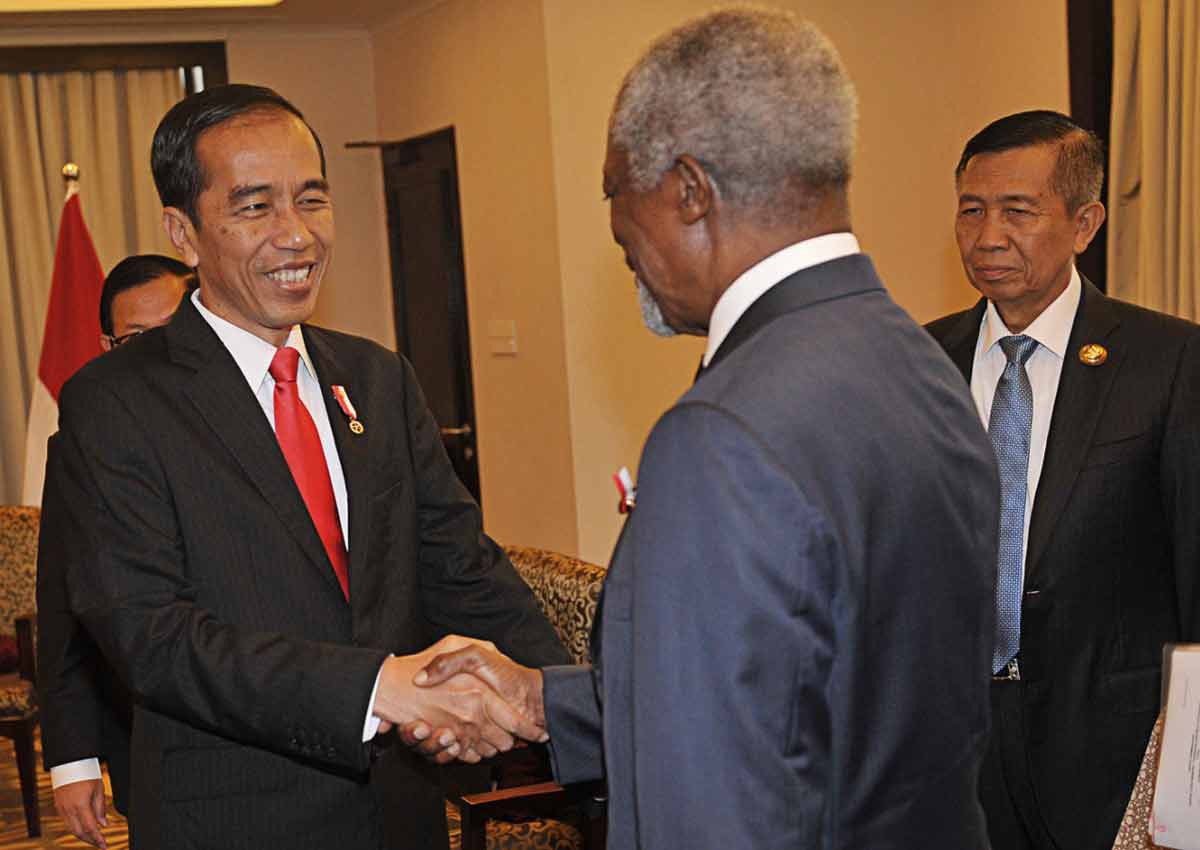
President Joko “Jokowi” Widodo held a meeting with former UN secretary-general Kofi Annan in Nusa Dua, Bali, on Thursday to discuss humanitarian aid for the Rohingya people in Rakhine state, Myanmar.

The 30-minute bilateral meeting took place before the President officially opened the ninth Bali Democracy Forum, in which Annan, who served as UN secretary-general from 1997 to 2006, became the keynote speaker.

Annan, who founded the Kofi Annan Foundation, is now the head of the Advisory Committee for Rakhine State. During the meeting, he explained to Jokowi his findings during his visit to the conflict area and advised countries to take urgent steps to help victims of the humanitarian crisis.

“Indonesia will soon dispatch humanitarian aid for the Rohingya people. I have ordered the relevant ministers to prepare the necessary logistics, especially food and blankets,” Jokowi said after the meeting.

Accompanying the President at the meeting, Foreign Minister Retno Marsudi said Annan appreciated the Indonesian government for taking prompt action to provide humanitarian assistance for victims in the troubled state.

“In the longer term, we will also support Myanmar in terms of providing capacity building in the field of good governance, democracy and human rights. We have started these programs and will continue to do that, because it is very important,” she explained, citing results of her recent discussion with Myanmar’s de facto leader Aung San Suu Kyi.

Delegations from 94 countries and observers from several organisations are attending the two-day conference to discuss democracy, religious tolerance and pluralism and strengthen global co-operation.

Image:
Category:
Publication Date:
Thursday, December 8, 2016 – 20:00
Send to mobile app:
Source:

Story Type:
Others

Source link

Indonesian navy prepares warships to carry aid to Aceh earthquake victims

0


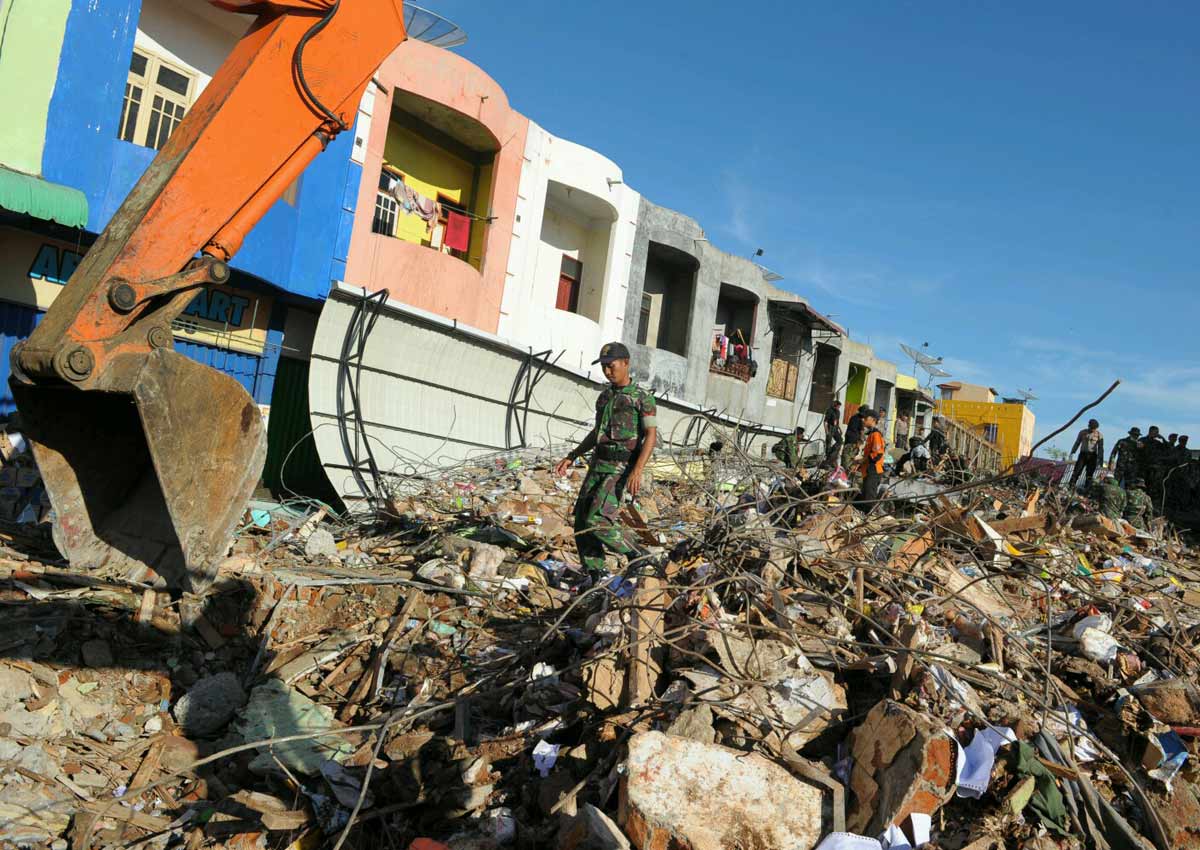
The Indonesian Naval Base (Lantamal) I in Belawan, North Sumatra, has readied four warships to carry basic necessities and medical aid to victims of the strong undersea earthquake that hit Pidie Jaya regency in Aceh on Wednesday.

Lantamal I Belawan spokesperson Maj. Sahala Sinaga said the four vessels were being prepared following the opening of a humanitarian assistance post for Aceh earthquake victims at the naval base. The post would collect goods like food, drinks and clothes donated by individuals and organisations.

“We have prepared four warships to carry humanitarian aid to Aceh. They are ready to be dispatched at any time,” Sahala told The Jakarta Post on Thursday, adding that the ships were also ready to take volunteering medical workers to the area of the disaster.

As reported earlier, more than 100 people were killed and thousands evacuated as an earthquake measuring 6.4 on the Ritcher scale rocked Pidie Jaya regency on Wednesday morning. The earthquake also caused massive damage to buildings.

Image:
Category:
Publication Date:
Thursday, December 8, 2016 – 19:57
Send to mobile app:
Source:

Story Type:
Others

Source link

Singapore defence minister makes cameo appearance in a local short film

0

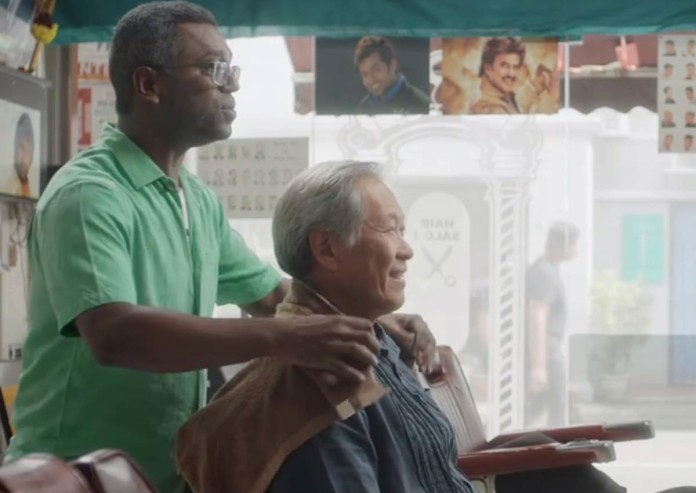
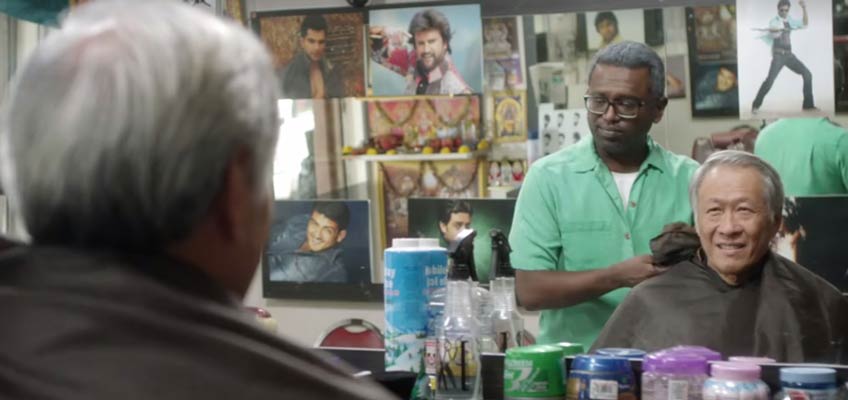
If you ever wondered who Defence Minister Ng Eng Hen sees when he needs a haircut, it’s a neighbourhood barber named Siva who adores Indian film stars like Rajinikanth and Abhishek Bachchan.

No, not really.

But Mr Ng did star as a regular customer of a barber in a short film entitled “The Usual”, appearing after the credits in a cameo appearance.

The film was written and directed by Sanif Olek, and was one of two films commissioned for this year’s ciNE65 short film competition, which is back for a new season.

In the film, Mr Ng calmly walks into the barber shop, flashes his pearly whites and drops his lines like it’s hot: “I’ll just have the usual”.

Quite a convincing performance by Mr Ng, most would agree, despite it lasting only a few seconds.

He may not be up for an Oscar anytime soon, but he certainly boosted the 4-minute film’s novelty factor, considering the rarity or unheard-of notion of Singapore ministers popping up in locally-made films.

Facebook user Marsie Aiko posted: “Brilliant video…and even minister of defence is in it.”

“Beautiful…very touching,” posted another user Juan Ridza.

The storyline’s as heartland as it gets, centred on the life of a boy named Rosli who aspires to be a commando after seeing a picture at the barber shop.

It has an extra emotional tug complete with flashbacks, when Rosli and Siva start reminiscing the past before Rosli’s father died. It was after all Rosli’s father who first brought him to Siva’s shop.

Well, enough spoilers already. Go watch it.

on Facebook

<<Ex-Commando’s Film>>

Sanif Olek makes film and draws from his own personal memories for inspiration. This includes…

Posted by Ng Eng Hen on Wednesday, 7 December 2016

sujint@sph.com.sg

Image: 
Category: 
Publication Date: 
Thursday, December 8, 2016 – 18:28
Send to mobile app: 
Source: 


Rotator Image: 
Story Type: 
Original Story

Source link

‘The noose is getting tighter’: Singapore ‘kelong king’ Wilson Raj Perumal’s fate to be decided in 2017

0

SINGAPORE: Wilson Raj Perumal, the man dubbed the most notorious football match-fixer in the world, could be released from house arrest in Hungary and sent home to Singapore in 2017, Channel NewsAsia has learned.

The 51-year-old, believed to have rigged up to 100 matches globally, has been based in Budapest since 2012 under a witness protection programme while aiding investigations into widespread corruption in football.

“The trial is still ongoing… It is likely to end next year,” Perumal said via Facebook messages. “After that, the decision is on Hungary to give me a status to stay or deport me back to Singapore.”

He is a wanted man in his homeland after fleeing abroad to escape a five-year jail term for running over an auxiliary policeman in 2009. But should he be returned to Singapore, Perumal could also face the prospect of detention – a fate met by fellow match-fixer Dan Tan Seet Eng, who has been held since October 2013 under the Criminal Law (Temporary Provisions) Act.

Little wonder then, that Perumal hopes to remain in Hungary with his Norwegian wife, three daughters and a son due in December. His children attend a local nursery and his spouse is studying for a psychology degree. Meanwhile Perumal “survives with limited funds” after gambling away nearly S$8 million he has claimed to have earned from his illicit activities.

“I am unemployed. I don’t speak Hungarian,” Perumal added. “I do some online jobs to get some funds – they are not permanent.”

What are these online jobs? “Studying irregular betting patterns for a company I cannot disclose,” he replied.

Perumal said another source of income was his 2014 autobiography, titled “Kelong Kings: Confessions of the world’s most prolific match-fixer”. Kelong is a colloquial term used to suggest cheating in sport.

Last year, the authors announced that film rights to the book had been optioned by Hollywood Gang Productions, the company behind movies like 300 and Immortals. Perumal said he hoped this would translate into some form of financial payoff.

Asked if he would consider a new career for the sake of his family, he said: “Maybe I am planning some business…The noose is getting tighter.”

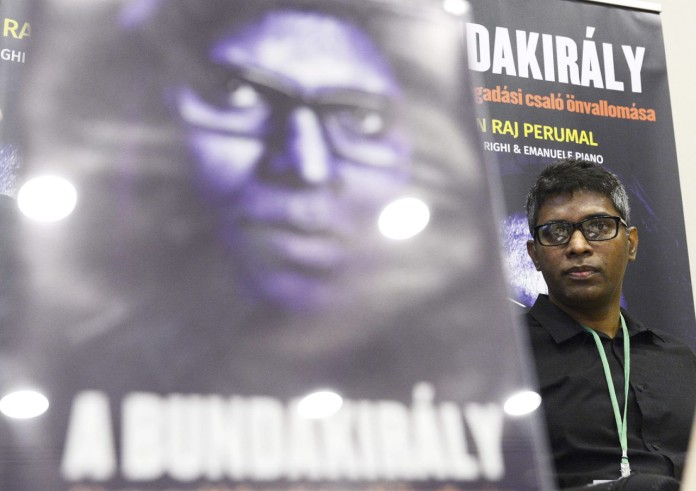
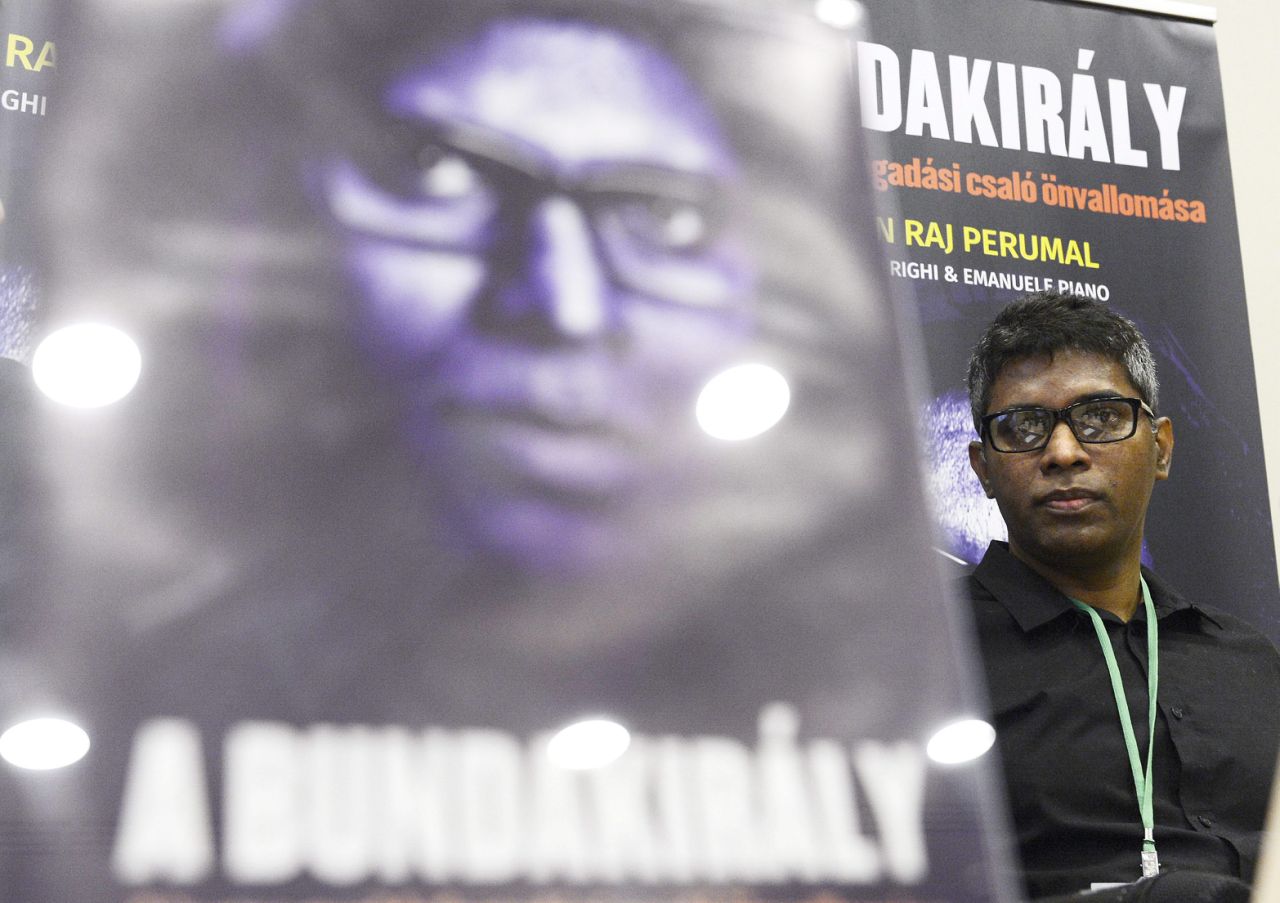
Perumal presenting the Hungarian edition of his book “Kelong Kings” in Budapest in 2014 (Photo: AP/MTI/Tamas Kovacs)

A LIFE OF CRIME

Perumal’s first brush with the law stretches back more than thirty years. Between 1983 and 1992, he was jailed and fined for a slew of offences including theft, forgery, housebreaking and impersonation.

His maiden foray into match-fixing came in 1994, when he gave over S$2,000 to a team captain to throw a local match. Perumal was punished with a year of imprisonment. Five years later he was back behind bars – this time for attacking local league footballers Max Nicholson and Ivica Raguz with a hockey stick to prevent them from playing the next day. In 2003, he was sentenced to 16 months jail for bribing a referee in Singapore – his final incarceration on these shores before going overseas.

Between 2007 and 2009, he paid off Zimbabwean players and officials to fix friendlies in Asia on a massive scandal, from which the country’s football fraternity has yet to recover. One of these was a match against Singapore played in August 2007: 

And in 2010, Perumal brokered a friendly game between Bahrain and a phoney Togolese side comprising imposters. In his memoir, he claims he took Nigeria and Honduras to the final rounds of the 2010 FIFA World Cup by rigging their qualifying matches, as well as having fixed football matches at the Atlanta 1996 and Beijing 2008 Olympics.

In 2011, Perumal was finally arrested in Finland, allegedly on a tip-off by a Singaporean who was a fellow member of a match-fixing syndicate. Possibly realising he had been double-crossed, Perumal outed Dan Tan as the boss of a worldwide match-fixing network based in Singapore. He served half of a two-year sentence before being extradited to Hungary to assist as an informant in a global match-fixing probe.

Even under house arrest, Perumal managed to make headlines when he was re-apprehended by Finnish police in 2014 under an international arrest warrant, after travelling to at least four countries in Europe. Singaporean authorities made a move to take Perumal into custody, but the effort failed due to the lack of an extradition treaty with either Finland or Hungary.

Earlier this year, Singapore media reported that Perumal had reached out to former Zimbabwean football chief Henrietta Rushwaya, asking her to fix matches in the South African league as well as at Rio 2016.

“Rushwaya’s story has no credibility,” Perumal told Channel NewsAsia. He declined to elaborate.

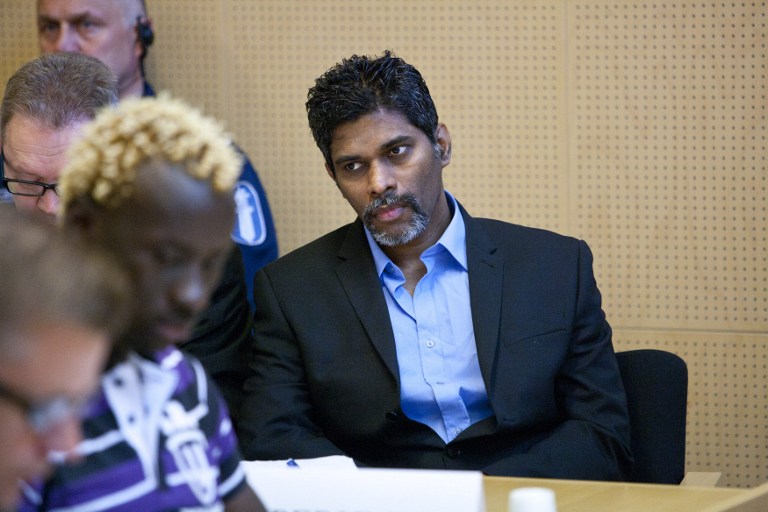
Perumal in a Finnish courtroom in 2011 (Photo: AFP/KAISA SIREN/LEHTIKUVA)

“SINGAPORE WAS NEVER A MATCH-FIXING HUB”

Perumal had plenty to say, however, about recent comments made by renowned match-fixing investigator Chris Eaton – who was FIFA security head when the Singaporean was brought to justice in 2011.

Eaton told an international conference in November that Singapore – which he once labelled an “academy for match-fixers” – had cleared its name with the capture of Tan. Malaysia is now the “epicentre” of match-fixing in Southeast Asia, a region which continues to perpetuate widespread illegal betting, added Eaton.

“I cannot understand why Mr. Eaton never fought against match-fixing when he was the head of security with FIFA,” said Perumal. “It’s only now Mr. Eaton is vigorously campaigning against match-fixing.”

In two years at FIFA, Eaton successfully investigated multiple match-fixing instances across South America, Europe, Africa and Asia. He also introduced numerous initiatives such as enhanced intelligence gathering; greater protection for whistleblowers and a partnership with Interpol.

“Match-fixing is not only taking place in Southeast Asia,” Perumal argued. “It is also rife in Russia, Latvia, Lithuania, Estonia. The FAs (football associations) are busy cleaning the mess.”

“Right now, I think Malaysian football is at its best. It is very clean; the movement of the odds in the M.League is stable. Eaton will have to substantiate his accusations against these countries and not make baseless accusations.”

“Singapore was never a hub like what Chris said,” he continued. “Dan Tan was stationed in Slovenia for a good one year and doing all the bets for fixed matches. Only in 2010 he stationed himself in Singapore because he was afraid to go to Europe after his friends got arrested in Croatia.”

“I came from Singapore; so were some of my colleagues. That does not make Singapore a hub. There are others in Malaysia, Europe and Indonesia.”

“If you look at the Sapina brothers, they were prolific as well,” said Perumal, referring to the notorious Croatian match-fixing trio of Ante, Milan and Filip. “Eaton never once mentioned Germany where the brothers operated from.”

“Singapore football, in my opinion, is clean.”

Source link

Pakistan plane issued Mayday call before deadly crash

0


SADDHA BATOLNI, PAKISTAN – A Pakistani aircraft carrying 47 people issued a Mayday call before losing radar contact and crashing into a mountain, killing everyone on board, authorities said, as they began collecting DNA Thursday to identify victims.

The Pakistan International Airlines (PIA) flight smashed into a hillside in the country’s north after one of its two turboprop engines failed while travelling from the city of Chitral to the capital Islamabad.

It burst into flames upon impact and parts of the wreckage were found hundreds of metres (yards) away from the main crash site in Abbottabad district of Khyber Pakhtunkhwa province.

The pilot of the ATR-42 turboprop aircraft contacted ground authorities after one engine failed and issued a Mayday call at 4:14 pm (1114 GMT), Azam Saigol, the airline’s chairman, told a news conference Wednesday in Islamabad.

Read Also: ‘No survivors’ after plane crash in northern Pakistan mountains

It began descending a minute later before disappearing from radar at 4:16 pm.

“This plane was technically sound and was checked in October,” he said, adding the captain had flown more than 12,000 hours and the aircraft was nine years old.

“Our focus now is to retrieve all the dead bodies,” he added, vowing a full investigation.

PIA spokesman Danyal Gilani said the aircraft’s black box has been recovered but “it will take time to ascertain a reason of the crash”.

An earlier death toll of 48 has been revised down to 47.

The dead included Junaid Jamshed, one of the country’s best loved singers who later became a Muslim evangelist, as well as senior local officials and three foreigners – two Austrians and one Chinese.

Dozens of friends and family members gathered at hospitals in Islamabad and Rawalpindi on Thursday to try to identify the badly charred and dismembered remains.

Relatives have been asked to submit DNA samples to help the identification process.

“My friend died in the plane crash, it is a great tragedy for me as he was my childhood friend,” said Murad Khan from Chitral.

“His relatives have not arrived yet as I work in Islamabad so I am here to receive his body. I don’t know if I will see his face for the last time or not.” Raja Aamir, whose mother died in the crash, said: “The sudden death of our mother is great loss for our family – 40 to 50 members of my family have arrived here in Islamabad we don’t know where we will stay.” Six of the victims had already been identified through fingerprints, according to Ali Baz, an official at the Ayub Medical Complex.

Senior aviation officials on Thursday pushed back against allegations that a maintenance lapse had caused the accident.

Read Also: Pakistani plane with more than 40 people aboard crashes in north: Police

“One engine of the plane failed after its takeoff from Chitral and the pilot informed us about that in his call to the control. The plane, however, was cleared for flight and that’s why it flew. Had it not been cleared, it would not fly,” said Muhammad Irfan Elahi, a top aviation official.

Rescuers, including hundreds of villagers, had overnight pulled badly burned remains from the smouldering wreckage of the aircraft near the village of Saddha Batolni.

“We put into sacks whatever we could find… and carried them down to the ambulance,” a villager in his thirties, who declined to give his name, told AFP.

A senior rescue official on the site who requested anonymity added: “The villagers told us that the plane was shaky before it crashed. It was about to hit the village but it seems that the pilot managed to drag the plane towards the hills.” Wednesday’s crash was the fourth deadliest on Pakistani soil.

The country’s worst air disaster was in 2010, when an Airbus 321 crashed into the hills outside Islamabad while about to land, killing all 152 on board – an incident blamed on pilot error.

Image:
Category:
Publication Date:
Thursday, December 8, 2016 – 17:49
Send to mobile app:
Source:

Story Type:
Others

Source link

China considers easing foreign investment limits

0

China has indicated it could relax restrictions on foreign investment in some sectors as it struggles to counter an overseas exodus of capital, while facing accusations of protectionism from US President-elect Donald Trump.

A record-setting wave of Chinese investment abroad has fuelled concern in Beijing over capital flight, reckless spending overseas, and the yuan’s fall against the US dollar.

A notice from China’s economic planning agency late Wednesday (Dec 7) said foreign investment restrictions could be eased in sectors such as automotive electronics; rail transport equipment; some mining, agricultural and chemical production; theme parks; and golf courses, as well as some service industries.

Such notices typically result in policy changes.

Citic Bank International’s chief China economist Liao Qun said the circular from the National Development and Reform Commission (NDRC) was prompted by worries about huge outflows of capital.

China’s foreign exchange reserves plunged US$69 billion (S$97.8 billion) to a five-year low in November, according to data Wednesday, with analysts blaming capital flight and central bank attempts to support the yuan.”They were going to open up restrictions for foreign investment anyway, but they are doing this in advance because they want more money to come in to balance out the falling foreign exchange reserves, which have been falling too fast this year,” Liao told AFP.

Beijing is struggling to prop up the yuan as capital flows out of China’s flagging economy in search of better investments in the United States, where the Federal Reserve is expected to hike interest rates next week and into 2017.

Desperate to stop cash leaving the economy, authorities have also stepped up rhetoric against what the Commerce Ministry this week called “irrational” overseas investments and taken various steps to curb money outflows.

The EU Chamber of Commerce said in a statement Thursday China last week put in place new approval requirements for cross-border capital outflows for amounts exceeding US$5 million to curb fund movements.

The Chamber criticised the move, saying it would “cause funds to be trapped in China”.”It also unnecessarily exacerbates uncertainties regarding the predictability of China’s investment environment,” European Chamber President Joerg Wuttke said in a separate statement to AFP.

James Zimmerman, chair of the American Chamber of Commerce in China, said in a statement the group was “concerned about the added burden” the approval requirements may place on moving money overseas and would seek clarification from authorities.

Earlier this week, Trump took aim at Chinese trade and fiscal policy in a pair of tweets, accusing the country of manipulating its currency and hitting US exports with heavy taxes.

He has pledged to ramp up import duties on Chinese goods based on the belief that Beijing continues to “heavily tax our products going into their country”.

Image: 
Category: 
Publication Date: 
Thursday, December 8, 2016 – 17:18
Send to mobile app: 
Source: 


Story Type: 
Others

Source link

Duterte says no plot to unseat vice president

0

Philippine President Rodrigo Duterte on Thursday (Dec 8) vowed to retain the country’s vice president until her term ends, just days after she resigned from the cabinet, complaining of a “plot to steal” her position.

Vice President Leni Robredo resigned from the cabinet on Monday, saying she would lead the opposition and challenge Duterte’s policies, such as his deadly war on drugs and moves to reinstate the death penalty.

“I will assure Leni and the rest of the Bicol region that you will have her until the very end of this term,” Duterte told reporters after a ceremony to break ground for an airport in the central region of Bicol.

“And there is no such thing as removing a vice president.”

Robredo was a one-term congresswoman from Naga City, located in Bicol.

In earlier speeches, Duterte has accused the opposition of using street protests against the burial of the late dictator Ferdinand Marcos in a heroes’ cemetery as a pretext to force him out of office and make way for Robredo.

Robredo was elected vice president in May in a separate contest and was not Duterte’s running mate. She has warned of a plot taking shape to remove her from the number two post after she was barred from attending regular cabinet meetings.

The 52 year-old social activist and human rights lawyer won by a narrow margin over former senator Ferdinand Marcos Jr, whose father was overthrown in a 1986 revolt. He has filed an election protest.

Robredo did not give details of the alleged plot to “steal”the vice presidency, but said it was telling that Marcos had accompanied Duterte on an official visit to China in October.


Image: 
Category: 
Publication Date: 
Thursday, December 8, 2016 – 17:21
Send to mobile app: 
Source: 


Story Type: 
Others

Source link