Home Blog Page 2215

Bolt film engages, but not in the running for greatness

0

The fastest human of 7.4 billion of his species is a man with a burden.

It isn’t fame or expectation, but something dull and literal and noisy and rustic.

It’s a sort of metal trolley with weights on it which is tied to his waist.

He drives forward and the trolley clanks behind him.

It is fitting that Usain Bolt is polishing humankind’s most fundamental sporting act – to run – while using the most primitive of equipment.

Genius is being trained without shirt or fuss or adoring crowd.

On a grassy field with scattered cones, his coach Glen Mills, a white-bearded, drawling savant, holds a stopwatch.

It is to this ticking music that Bolt runs.

Then he stops, his lungs beg for oxygen, as medicine is applied to his calf where he has spiked himself again.

I am watching this scene from the new documentary I Am Bolt on Sunday afternoon with a friend, both of us cemented to a couch by laziness.

It is 107 minutes of Bolt and is engaging yet a trifle hagiographic, revealing yet incomplete.

It lacks the intensity of Asif Kapadia’s Bafta-winning Senna and the thrill of Leon Gast’s Oscar-worthy When We Were Kings on the Ali-Foreman fight in Zaire.

It sketches Bolt’s greatness when in truth it is a detailed painting we seek.

Among the most intriguing men in Jamaica must be David Weller because he sticks out: Of the 78 Olympic medals the nation has won, only his bronze came in cycling.

The other 77 came in athletics.

And yet in I Am Bolt there is an insufficient dissection of this nation of the flying biped. Why do Jamaicans run? What does it mean to be fast? How is it rooted in the culture? Who are the ghosts in whose footsteps they race?

We need to understand Bolt in this terrain of the fleet, but it is never satisfactorily done.

Neither do we fully understand Bolt’s speed, for his skill isn’t adequately sliced into scientific pieces of reaction time and stride length.

And yet let us not complain too long for the camera roves far beyond the track, to the bite of the ice bath, the strain of the gym, his parents’ house, the massage table, his room at the Olympic Village.

We see a Bolt we have not before.

The best part of I Am Bolt is that it peels away his heroic skin and offers us a glimpse into Who Is Bolt.

We live in a sporting time when athletes are turned into unassailable gods, but really it’s their humanness and frailities and their conquering of anxiety which makes them fascinating.

Muhammad Ali once told his biographer Thomas Hauser that if he met Sonny Liston later in life he’d tell him, “Man, you scared me”.

Pete Sampras told the columnist Matthew Syed that “at Wimbledon, I would often wake up at 5.30am, my body pumping with adrenalin. I had a terrible fear of failure”.

Bolt, who sometimes stalks around his hotel room alone, talking to the camera, speaks honestly into it: “Every year I worry, am I still fast?”

It’s a beautiful moment, the curtains of his cockiness parting to reveal that even this man wears doubt.

Winning, the documentary also reminds us, is a weight, a sort of metaphorical trolley Bolt must pull.

The first days of greatness are laminated with innocence as the athlete joyously announces himself to the world.

But the closer the athlete climbs to the unthinkable – three consecutive 100m and 200m golds – the lonelier it can be, for no human has travelled there.

Who knows the burden of such winning? As Roger Federer said once, “I’ve created a monster, so I know I always need to win every tournament”.

The weapons of the great are practice, resilience, patience but also ego. Winning can be tiring, motivation dries in the training sun, but the idea of losing is the provocation to soldier on.

Bolt listens to Justin Gatlin brag on a TV show about winning in Rio and tells the camera, “What? He’s going to beat me? Hell, no.”

The race is effectively over.

I Am Bolt should be watched, for it adds to our appreciation of an athlete whose margins of victory seem more staggering with every passing year.

If Tiger Woods had four days to build 15-stroke leads, Bolt used the second-slowest start in Beijing to win the 100m by a proverbial mile.

A few images will stay with me, most of a man who stays grounded even as he glides over the earth.

He sees people, he smiles, he bumps fists.

He is the athletic best of them, yet one of them.

But it’s the scene to which the camera returns, of a bare-chested Bolt weeding the grass with his spikes in an almost rustic landscape which is somehow almost moving in its starkness.

As my friend, who watched the documentary with me, wrote to me on Monday morning, Bolt – at least in the film – doesn’t appear the product of sophisticated technology and shiny laboratories, but seems built of the “traditional craft of sweat, blood, push and burn”.

From a field just like any other, comes a runner like no other.

rohitb@sph.com.sg


This article was first published on December 13, 2016.
Get a copy of The Straits Times or go to straitstimes.com for more stories.

Image: 
Publication Date: 
Tuesday, December 13, 2016 – 17:00
Send to mobile app: 
Source: 


Story Type: 
Others

Source link

SIA and Lufthansa get all-clear to jointly plan Asia-Europe flights

0

Airlines agree to maintain capacity on routes; it will be more convenient for passengers to connect via S’pore

Singapore Airlines (SIA) and Lufthansa have received the official nod to jointly plan flights and schedules, as well as price and sell seats between Asia and Europe.

This is after they promised not to cut capacity, especially on the two routes that they dominate – Singapore-Frankfurt and Singapore-Zurich.

The airlines will also work together on flight planning and marketing activities for other Asia-Europe flights.

These include flights from Singapore, Indonesia, Malaysia and Australia, to points in Germany, Austria, Switzerland and Belgium.

The tie-up also includes revenue sharing on routes from Singapore to the European cities of Frankfurt, Munich, Dusseldorf and Zurich.

In giving the all-clear for the partnership, Singapore’s competition watchdog set the condition of maintaining capacity to mitigate concerns that if allowed to freely co-operate, the two airlines could deliberately cut seats to increase fares.

SIA and the German carrier are the only two airlines that operate direct flights between the cities, with a market share of more than 80 per cent.

Planes of German air carrier Lufthansa AG are seen on the tarmac at Fraport airport in Frankfurt, Germany, June 7, 2016. Photo: Reuters

In assuring the Competition Commission of Singapore (CCS) that the partnership would not compromise consumer interests, SIA and Lufthansa told the authority that they in fact plan to add seats to the two sectors.

To protect Singapore consumers, the airlines have also agreed to carry a stipulated minimum number of Singapore passengers on each route, every year.

The CCS, which took more than 10 months to approve the tie-up and sought public feedback for it, said yesterday it was satisfied with the commitments made by the airlines.

Additional capacity would bring more passengers and tourists to Singapore, benefiting the economy, it said.

The partnership with Lufthansa, one of SIA’s closest allies, is a key strategic move by both airlines to strengthen their positions amid intense competition, especially from Middle Eastern carriers which have been expanding aggressively in Asia and Europe in recent years.

When the proposed tie-up was first announced about a year ago, chief executive of Deutsche Lufthansa Carsten Spohr called it a “cornerstone” of the airline’s Asia strategy.

SIA spokesman Nicholas Ionides said yesterday: “Europe is an important market for SIA and the Singapore hub, and key to Singapore’s position as a global hub.”

The tie-up with Lufthansa – SIA’s largest joint-venture partner – will make it more attractive and convenient for passengers to connect via Singapore.

This is critical as Changi Airport and SIA face competition from other partnerships, especially between Dubai’s Emirates and Australia’s Qantas, analysts said.

In 2013, Qantas moved its stopover point for European flights from Changi to Dubai, dealing a severe blow back then to Changi Airport and Singapore’s status as a key hub between Asia and Europe.

karam@sph.com.sg


This article was first published on Dec 13, 2016.
Get a copy of The Straits Times or go to straitstimes.com for more stories.

Image: 
Category: 
Publication Date: 
Tuesday, December 13, 2016 – 15:00
Send to mobile app: 
Source: 


Story Type: 
Others

Source link

Johnny Depp dresses as Jack Sparrow to entertain patients in UK

0

The year 2016 may be troublesome for Johnny Depp, but he has never ceased to do charitable works as when he visited a hospital in London and morphed into his famed character in “The Pirates of the Caribbean” series.

On Friday, the actor disguised as Captain Jack Sparrow and surprised patients at the Great Ormond Street Hospital. His sudden presence turned into a social media fiesta when several witnesses posted his portraits online.

One Instagram user shared her delight in seeing the drunken pirate, “Yes folks, that is indeed Johnny Depp with my lovely niece! One of the few upsides of being stuck in Great Ormond St for Christmas is you get some pretty awesome visitors.”

In last year’s interview with The Graham Norton Show cited by The Sun, Depp, 53, said that he was grateful to the hospital where her daughter Lily-Rose was confined for renal failure back in 2007.

“For me, it’s a gift. They give me the gift,” he then explained.”When my daughter was ill in Great Ormond Street, it was the darkest period of my life. I’d always done these visits but after that experience, the visits became more and more important.”

“The kids are so courageous but to be able to bring a smile or a giggle to the parents means everything in the world to me,” he said.

Also read: Johnny Depp surprises sick children in Australian hospital

on Twitter

The actor will regain his role at Captain Jack Sparrow in the film’s fifth chapter, “Pirates of the Caribbean: Dead Men Tell No Tales,” which starts screening on May 26, 2017.

Image: 
Category: 
Publication Date: 
Tuesday, December 13, 2016 – 14:23
Send to mobile app: 
Source: 


Rotator Headline: 
Johnny Depp dresses as Jack Sparrow to visit sick children in UK hospital
Rotator Image: 
Story Type: 
Others

Source link

Driverless vehicles could change laws, insurance policies

0

Legal, insurance experts say liability issues involving such technology are still unclear

In October, National Development Minister and Second Finance Minister Lawrence Wong called on the insurance industry to adapt to meet the demands of emerging technology such as autonomous vehicles (AV).

But legal and insurance experts said they are still unclear about the liability issues surrounding Singapore’s push for AVs to perform a variety of functions here.

For instance, who should be blamed in an accident involving an AV?

Criminal responsibility is currently focused on the driver, said Professor Simon Chesterman, dean of the National University of Singapore’s law faculty.

The lack of a driver would pose a “real regulatory challenge” as a result.

“That is where we would need new legislation, but my suspicion is that the law would continue to require an identifiable person who can be ‘blamed’ for wrongdoing, as well as a compulsory insurance regime to protect those who might be injured,” he said.

The issue of liability gained significance after an accident in October involving one of start-up nuTonomy’s self-driving cars, which crashed into a lorry as it was changing lanes.

It is believed to be the first accident involving a driverless vehicle here.

Singapore is not the only country considering the implications of the AV technology push in terms of liability.

Britain, which is considered a leading centre in testing driverless vehicles, set up the Automated Driving Insurer Group which comprises 13 British motor insurers, among others, to consider liability issues.

In June, British insurer Adrian Flux launched what is believed to be the world’s first driverless car policy, aimed at vehicles such as Tesla’s Model S with autopilot functions.

The policy covers motorists for loss or damage in case of failure of the vehicle’s operating system, or failure to manually override the system to prevent an accident.

But the question of who to blame in an accident remains a sticking point here.

While Mr Anthony Chey, insurance partner at law firm RHTLaw Taylor Wessing, said the owner of the AV should be held responsible, Mr Leo Costes, AXA general insurance managing director, said liability could also lie with software providers in cases of software failure.

nuTonomy’s self-driving car crash was blamed on a software anomaly.

But it is not just accidents. The insurance industry is also trying to figure out if owners of AVs should be charged higher or lower premiums.

The Land Transport Authority already requires AVs being tested here to have third-party insurance.

Mr Manik Bucha, auto insurance head at AIG, said AVs could make roads safer and, therefore, lower motor premiums.

“With more than 90 per cent of road accidents said to be caused by human error, driverless vehicles are expected to improve road safety by removing the human element,” he said.

He added that features such as automatic emergency braking and collision avoidance systems, available in cars now, have already resulted in “significant reductions” in auto accidents globally.

But Mr Pui Phusangmook, NTUC Income’s general insurance and health general manager, said the repair costs for driverless cars may also be higher and this could affect premiums.

Mr Costes said there are other issues to consider.

“While accidents and claims may go down with driverless vehicles, new risks will have to be insured as a greater portion of the liability could be shifted from the driver to car manufacturers and software or telco providers.

“The risk will gradually shift from human to cyber and, soon, the technology in driverless cars will become not only a transportation issue, but also a cyber-risk issue.”

The Government’s vision for the use of AVs has been laid out by the Committee of Autonomous Road Transport (Carts) which was formed in 2014.

Carts’ vision is that within 10 to 15 years, AVs will perform not just personal transport functions, but also freight transport.


This article was first published on December 13, 2016.
Get a copy of The Straits Times or go to straitstimes.com for more stories.

@sph.com.sg>

Image: 
Category: 
Publication Date: 
Tuesday, December 13, 2016 – 16:10
Send to mobile app: 
Source: 


Story Type: 
Others

Source link

S'pore, KL to ink high-speed rail agreement today

0

PM Lee and Najib to attend Leaders’ Retreat and witness signing; project billed as game changer for both countries

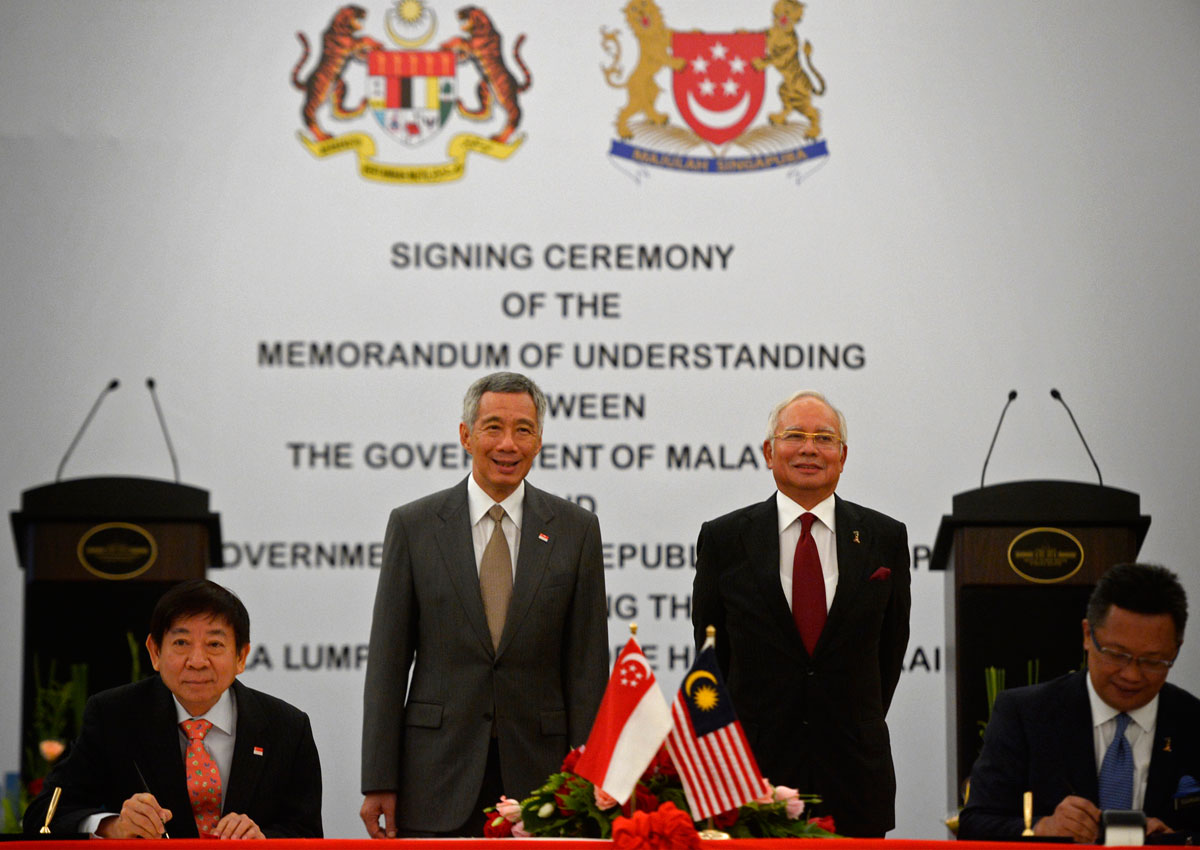
Prime Minister Lee Hsien Loong will visit Putrajaya today for the annual Malaysia-Singapore Leaders’ Retreat with his Malaysian counterpart Najib Razak.

Both prime ministers will witness the signing of a bilateral agreement for the high-speed rail linking Singapore and Kuala Lumpur, the Prime Minister’s Office (PMO) said in a statement yesterday.

The 350km high-speed rail line, first mooted in 2013, is billed as a “game changer” for both countries.

The mega project will shave travel time by land between Singapore and Kuala Lumpur to 90 minutes, compared with more than four hours by car.

The signing of the agreement is a culmination of intensive bilateral discussions since the 2013 Leaders’ Retreat, and furthers the good progress made by both countries since a memorandum of understanding was signed in July, the PMO statement said.

“It also demonstrates the two governments’ commitment to the project, which will boost connectivity, strengthen economic ties and enhance people-to-people linkages when completed,” the statement added.

PM Lee will be accompanied by Mrs Lee and a high-level delegation comprising Deputy Prime Minister and Coordinating Minister for National Security Teo Chee Hean; Transport Minister and Coordinating Minister for Infrastructure Khaw Boon Wan; Foreign Minister Vivian Balakrishnan; Minister for Culture, Community and Youth Grace Fu; Minister for National Development and Second Minister for Finance Lawrence Wong; Minister for the Environment and Water Resources Masagos Zulkifli; Minister for Education (Schools) and Second Minister for Transport Ng Chee Meng; Senior Minister of State for Finance and Law Indranee Rajah; Senior Minister of State for Home Affairs and National Development Desmond Lee; and Minister of State for Health Lam Pin Min.

Mr Khaw and Malaysian Minister in the Prime Minister’s Department Abdul Rahman Dahlan will sign the bilateral agreement.

Both sides were originally scheduled to meet on Dec 5, but that meeting was postponed.

Datuk Seri Najib had told reporters in Iskandar Puteri, Johor, that Singapore had requested a bit more time as it needed the President’s approval before inking the pact.

According to MyHSR, the agency in charge of the Malaysian share of the project, bids for the tender to build the line will be evaluated at the end of 2018.

Tender documents for the systems package – for the actual rail track and train carriages – will be issued at the end of next year, said MyHSR chief executive Mohd Nur Ismal Mohamed Kamal last week.

Three services will run along the eight-station, dual-track line.

There will be an express service between the two terminal stations – Jurong East in Singapore and Bandar Malaysia in Kuala Lumpur; a shorter shuttle service will connect Singapore and Iskandar Puteri in Johor; and a domestic service will link the seven stations in Malaysia.

International-bound travellers will need to clear immigration and Customs only when departing the respective countries.

roysim@sph.com.sg

Read also: Singapore-KL High Speed Rail: What you need to know
2026 start for S’pore-KL high-speed rail ‘realistic but not easy’


This article was first published on Dec 13, 2016.
Get a copy of The Straits Times or go to straitstimes.com for more stories.

Image: 
Category: 
Publication Date: 
Tuesday, December 13, 2016 – 15:00
Send to mobile app: 
Source: 


Story Type: 
Others

Source link

Winning poems of migrants

0

Annual poetry contest for foreign workers here expands, receiving 70 entries this year and holding its showcase at a bigger venue

Every day, as Bangladeshi supervisor Bikas Nath scrambles in and out of vessel holds at the shipyard where he works, all he sees around him is sweat and grime.

But in his mind’s eye, the 22-year-old glimpses the vistas of his homeland: dust storms, bright mustard flowers, the heady scent of jackfruit in the air.

Late at night in his dormitory, he stays up trying to put his memories and misery down on paper. “My life, my youth are held hostage,” he writes in Bengali. “And yet I long to love.”

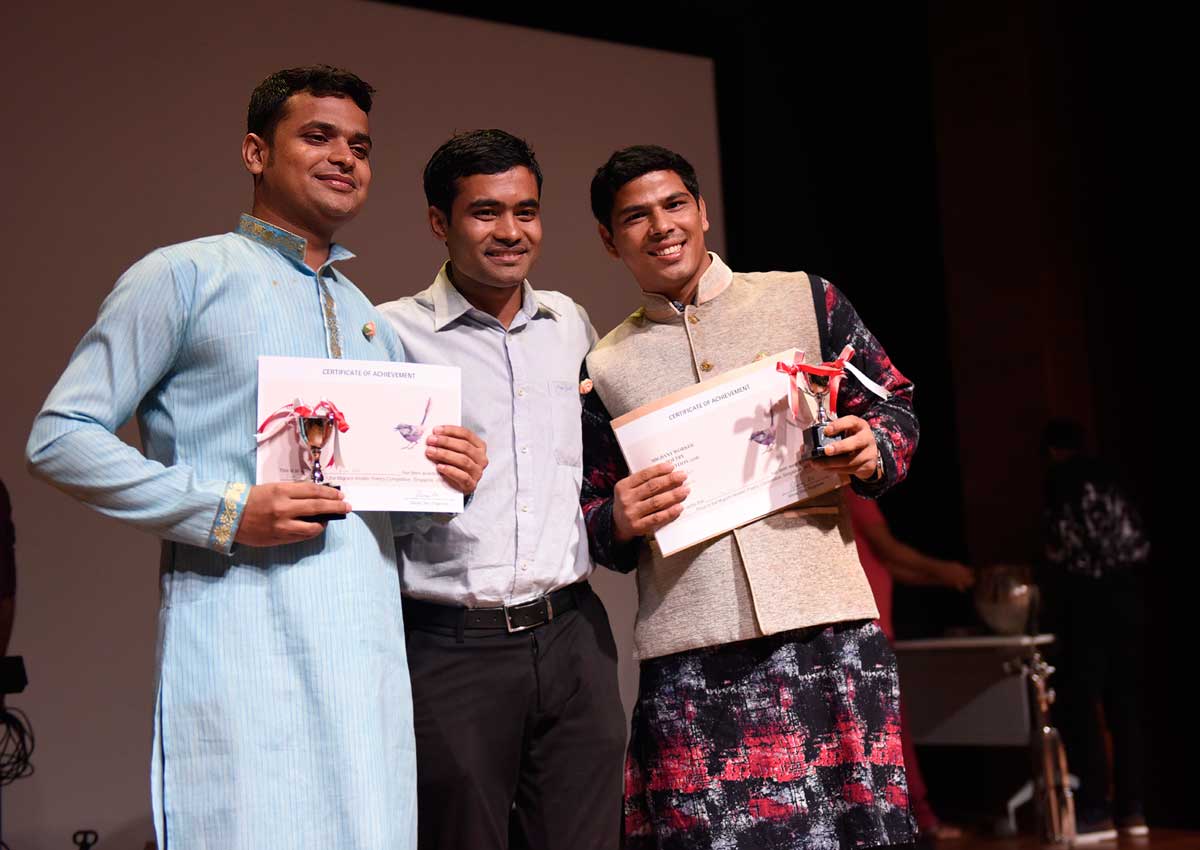
His words found voice at last on Sunday, when his poem Keno Probashi? (Why Migrant?) won the first prize at the Migrant Worker Poetry Competition.

The annual contest began in 2014 as a showcase of the literary talents of 28 Bangladeshi and Indian migrant workers. It later expanded to include other groups such as maids.

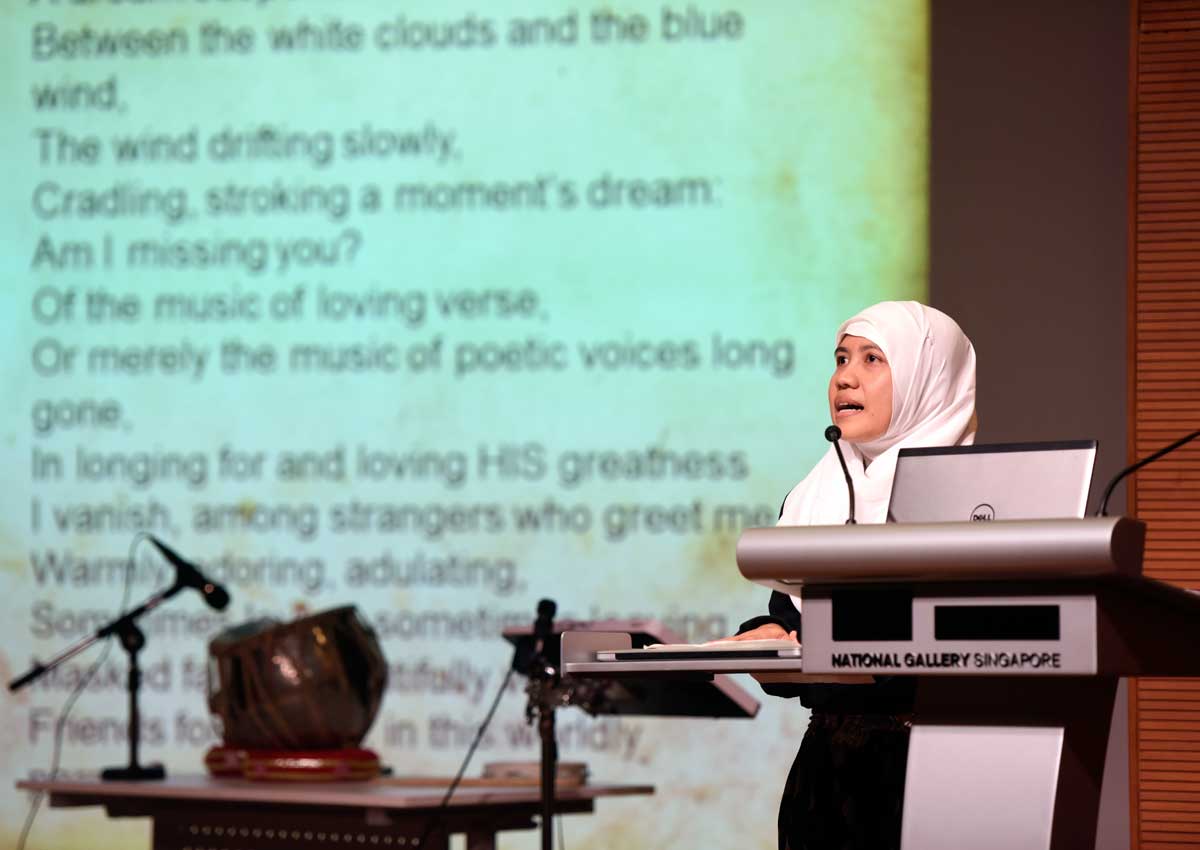
Due to an increasing audience, it was moved from a room in the National Library to the National Gallery Singapore auditorium, which was filled with close to 200 people on Sunday.

The contest is organised by a group of volunteers.

Local advocacy groups, such as the Humanitarian Organisation for Migration Economics, Transient Workers Count Too and Aidha, help to publicise it to workers.

Mr Bikas’ $500 award, as well as the $300 and $200 prizes for second and third places, were sponsored by the United States Embassy, while the National Gallery Singapore provided the venue for free.

This year, the contest received 70 entries in seven languages, including Tamil, Chinese and Visayan, of which 17 were shortlisted to be recited on Sunday.

The poets spoke of love, longing and loneliness. Many were choked with emotion as they read.

Indonesian maid Nur Hidayati, 35, could not hold back her tears as she read a poem for her four-year old son, whom she left at home five months ago to work in Singapore.

“I had to leave him behind,” she said. “If not, how can I make a better life for him?”

Indonesian Wiwik Triwinarsih, 32, who works as a domestic helper in Singapore, reciting from her poem, Rindu (Missing You) at the Migrant Worker Poetry Competition held at the National Gallery Singapore on 11 December 2016.The Straits Times

For others, the contest was a chance to express the unsaid.

Engineer Luo Lai Quan from China, who has been in Singapore for a year, confessed his homesickness in a poem about his mother.

“This is not something I’ve actually told her,” said the 32-year-old in Mandarin. “On the phone, we talk about simple things, like her health. I don’t want her to worry.”

Contest organising committee member Shivaji Das, 38, said it plans to work harder next year on reaching out to groups such as migrants from Myanmar and foreign sex workers, who, due to the limitations of their work passes, stay in Singapore for only a few months.

The committee is also working with volunteers in other countries to start similar migrant poetry contests.

A Malaysian version has been running for twoyears now, while an Abu Dhabi edition is slated to start next year.

Poet Alvin Pang, who judged this year’s entries along with playwright Haresh Sharma and last year’s Golden Point Award Chinese poetry winner Chen Yu Yan, was heartened at the bigger venue and bigger response.

Pang, 44, said: “I’m glad to see more and more people aren’t taking these workers for granted, but understand they come from cultures and traditions that are deeper and more artistic than our own.”

He added that he was happy to see women made up two-thirds of the entrants.

“So many of us have domestic helpers, but don’t imagine they have an intellectual life. This blows that wide open.”

Indonesian maid Susilowati, another finalist, scribbles fragments of poetry on the backs of supermarket receipts in her scant free time.

“Most of the time, I just throw them into the dustbin,” said the 26-year-old, who learnt of the contest through Aidha this year.

“Until now, I didn’t know there was a poetry competition for people like me.”

oliviaho@sph.com.sg


This article was first published on December 13, 2016.
Get a copy of The Straits Times or go to straitstimes.com for more stories.

Image: 
Publication Date: 
Tuesday, December 13, 2016 – 16:05
Send to mobile app: 
Source: 


Story Type: 
Others

Source link

South Korea’s ruling party on verge of breakup

0


Saenuri floor leader calls it quits

Two rival factions within the ruling Saenuri Party continued to clash with one another Monday, as the conservative ruling camp’s factional strife reached a boiling point following the impeachment of President Park Geun-hye.

Adding more chaos to the conservative camp, which is on the verge of a breakup, the party’s Floor Leader Rep. Chung Jin-suk called it quits, saying he wanted to take responsibility for the president’s impeachment.

“The governing party bears the same amount of responsibility as the president, when the president is suspended from office,” Rep. Chung said. The party’s chief policymaker Kim Gwang-lim also expressed his intention to quit.

Infighting over control of the party has been raging at Saenuri, following the parliamentary impeachment of President Park last week.

A group of lawmakers opposing the current leadership led by Rep. Lee Jung-hyun singled out eight party members, including the party chief, as “the entourage” of the president’s now-infamous confidante Choi Soon-sil, calling for their immediate ouster from the party.

Choi, a friend of Park for 40 years, is alleged to have manipulated power from behind the scenes.

“They have manipulated the government system, betrayed the people’s mandate and neglected the Choi Soon-sil scandal,” said Rep. Hwang Young-chul, a second-term lawmaker who represents the dissenting group. “They have to leave the party immediately.”

The eight accused are: Saenuri Chairman Lee, two Supreme Council members, Reps. Cho Won-jin and Lee Jang-woo, and Reps. Seo Chung-won, Choi Kyung-hwan, Hong Moon-jong, Yoon Sang-hyun and Kim Jin-tae.

They are key figures representing the party’s mainstream faction loyal to President Park. Dominating leadership positions in the party, they had previously wielded influence over the party’s decisions, but have recently been under mounting criticism, with the president’s fall from grace. Yet, throughout the presidential scandal, they stood steadfastly behind Park and refused to give up leadership positions in Saenuri.

Party chief Lee, along with the others, refused to step down from their positions or leave the party.

Instead, they demanded the departure of Reps. Kim Moo-sung and Yoo Seung-min, the two bigwigs of the rebels’ group who were once the president’s key allies.

“I think they are the epitome of betrayal and treason,” said Rep. Lee Jang-woo who sits on the party’s top decision-making Supreme Council.

The conservative party’s factional feud was evident, when the parliament passed the motion to impeach Park in a surprising 234-56 vote. This means that at least 62 Saenuri lawmakers voted for the motion in a secret ballot, which almost doubled the expectations of the faction that supported the opposition-mounted bill.

The three opposition parties and independents control 172 votes in the 300-seat National Assembly.

It was not the first time that Saenuri’s factional strife has made headlines. In the lead-up to the general election that took place in April, they clashed over how to nominate candidates for the election. After the pro-Park faction refused to nominate anti-Park lawmakers, they decided to quit and run as independents.

But some experts say that neither faction will bolt from Saenuri and form a new political entity.

“I don’t think we will see the party split,” said Lee Sang-hui, a political analyst who worked as a presidential aide during the previous Lee Myung-bak government. “Building a new party requires massive money and legitimate cause. I don’t think both factions have them.”

jasonyeo@heraldcorp.com

Image:
Category:
Publication Date:
Tuesday, December 13, 2016 – 13:55
Send to mobile app:
Source:

Story Type:
Others

Source link

Uniqlo launches new Sanrio Gudetama & Pompompurin themed UT Graphic T-shirts from 12 Dec 2016

0

New Sanrio themed T-shirts now available at Uniqlo

Uniqlo launches new Sanrio Gudetama & Pompompurin themed UT Graphic T-shirts from 12 Dec 2016

Check out the latest Sanrio new arrivals for UT featuring Gudetama and Pompompurin! Small gift, big smile. This phrase embodies the essence of Sanrio and its business philosophy.

Source

Campus sells HIV testing kits in vending machines

0


Students can get results confidentially, while the apparatus costs just 30 yuan

Students at Southwest Petroleum University are able to purchase cheap HIV test kits from vending machines on campus, which also sell edible goods such as instant noodles.

The kit, which costs 30 yuan ($4.40), consists of a plastic cup and a plastic tube. The user urinates into the cup and then draws the urine up into the tube, which has a serial number.

The user can then return the tube containing their urine to the vending machine through a specific slot. Student volunteers from the university’s anti-AIDS office check the two vending machines twice a day to collect returned tubes.

The tubes are sent to the university hospital, which in turn sends them to the centre of disease control and prevention in Xindu district of Chengdu, Sichuan province, where the university is located.

“The centre, which does not know the names of those submitting urine samples, announces which serial numbers are HIV positive or negative. A student can find out whether they are HIV positive or negative by checking the results for their serial number,” said Zheng Weirong, chief of the university hospital’s general office.

The kit, which was first put on sale in the two vending machines at the university in July, is part of a pilot project initiated by the China Association of STD/AIDS Prevention and Control to combat the rising incidence of HIV and AIDS among people aged 18 to 25, Zheng said.

According to the Joint United Nations Program on HIV and AIDS, China had 654,000 people with HIV at the end of September, and the infection rate among young students is rising. The most common cause of infection has shifted from drug-taking to sex.

“Sexually active young people face many temptations, which can be a result of partaking in friend-making platforms on the internet, which facilitate one-night stands and unprotected sex,” Zheng said.

After unprotected sex, many students do not go to hospitals or the centre of disease control and prevention in Xindu for checks, because they are afraid of a lack of confidentiality. But now, thanks to the availability of the test kit, their privacy can be protected, she said.

If students are found to be HIV positive and seek treatment early, their lives can be prolonged and a decent quality of life can be achieved, she said.

The university has posted an video online to teach students how to use the kit.

The timid 20-year-old from Yinchuan, Ningxia Hui autonomous region, said he did find tubes in the machines during that month, but declined to disclose how many.

According to Li Yang, an information officer at the university, the pilot project is being implemented at 20 universities in 16 provinces, one municipality and two autonomous regions.

“The kit is only available in vending machines at universities in Beijing, Yunnan, Heilongjiang and Sichuan provinces. Southwest Petroleum University is the first and only university in Sichuan to have the kit,” he said.

Feng said that when the kit was first made available at Southwest Petroleum University in July, he and many classmates were surprised.

“Thanks to publicity given to the kits by the university, we have learned more about them and deem them necessary,” Feng said.

Image:
Publication Date:
Tuesday, December 13, 2016 – 13:25
Keywords:
Send to mobile app:
Source:

Story Type:
Others

Source link

Tough work in Top Restaurant

0

In July this year, the cast of Chinese play Top Restaurant went through an unusual rite of passage – learning to roast duck in an old-school Beijing restaurant.

Director Gu Wei, 76, wanted the Beijing People’s Art Theatre actors to put on an authentic performance for the play, which chronicles the ups and downs of a Peking duck restaurant over half a century.

The 1988 classic by playwright He Jiping has been performed more than 500 times and was also made into a Chinese television drama in 2004.

The Beijing People’s Art Theatre, which staged Cao Yu’s revenge drama, Savage Land, here in March this year, will perform Top Restaurant at the Esplanade Theatre from March 23 to 26 next year, more than two decades after it was first staged in Singapore at Kallang Theatre.

The company began performing the play again in August after a two-year hiatus, during which some of the cast were replaced.

Liu Hui takes over from Yang Lixin as male lead Lu Mengshi, who finds himself saddled with keeping the restaurant afloat after its ageing boss retires.

Guo Yi Jun replaces Yue Xiuqing as the prostitute, Yu Chu, Lu’s lover.

Top Restaurant was born out of playwright He’s love of roast duck.

“Food is fascinating,” she says in Mandarin in an e-mail interview. “It’s like a great ocean full of interesting stories.”

As research for her script, He, 65, spent time in Beijing’s renowned duck restaurant, Quanjude.

As a young female graduate, she was out of place in the sweltering, hostile kitchen. She recalls: “The floor was covered in oil.

The cooks were all bald men who ignored me, thinking I was a health inspector.”

She persisted and ended up staying at Quanjude for three months.

She went on to visit other famous restaurants such as Hongbinlou and even got herself certified as a trainee cook to learn more about the trade.

While Gu did not demand this degree of immersion from his cast, he nevertheless insisted they visit Quanjude to observe and try their hand at the chopping, roasting and serving of ducks.

It was no picnic for the actors, who struggled to get the ducks into the oven, sometimes dropping them on the floor or in the flames.

But Gu, speaking in Mandarin over the telephone from Beijing, says: “They had to understand how a duck restaurant works. Otherwise, the play would lack the right flavour on stage.”

The restaurant visit was a bout of nostalgia for Gu, who co-directed the play in 1988 and also went with the original cast to Quanjude.

Since then, the 152-year-old restaurant has set up a museum on its history on its premises. Gu, who is married with a daughter, says seeing this made him emotional.

“It reminded me that this is a kind of business that is rare in today’s China. It is not just a business transaction, but also a service to the people.”

Besides bringing the roast duck trade to life on stage, he also faced the challenge of reproducing the look and feel of turn-of-the-century Beijing.

For instance, the production team had to seek out restaurant workers from that period to find out what kind of outfits they wore.

Waiters, they learnt, could not wear the full changshan – a traditional ankle-length Chinese tunic sported by male guests – and instead wore a version that ended at the knee.

“Today, I see many period productions that make no effort to get the costumes or the look right,” says Gu. “This is not preserving art. This is poisoning it.”

Although the play is almost 30 years old, playwright He – who lives in Hong Kong – believes it still offers plenty of food for thought to modern-day audiences.

“It has good food, it has love, it has deep meaning, it has something for old and young to enjoy.”

Cuisine in the play becomes a means to explore the culture and history of China.

“Governing a country is like cooking a dish,” she says. “Only by balancing the flavours can you bring people peace and prosperity.”

oliviaho@sph.com.sg


This article was first published on December 13, 2016.
Get a copy of The Straits Times or go to straitstimes.com for more stories.

Image: 
Publication Date: 
Tuesday, December 13, 2016 – 16:05
Send to mobile app: 
Source: 


Story Type: 
Others

Source link