28.7 C
Singapore, SG
Wednesday, September 23, 2026
Home Blog Page 2197

Radio DJs Glenn Ong and Jean Danker marry

0


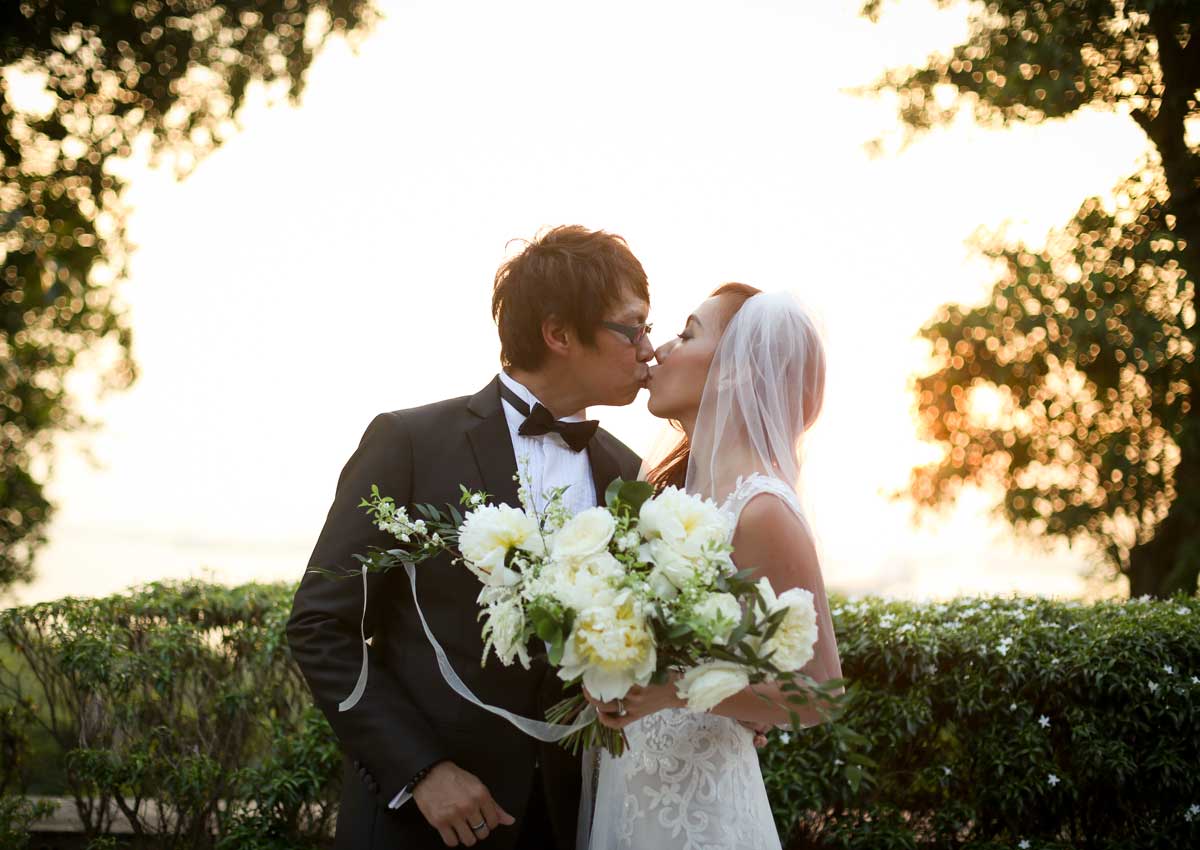
SINGAPORE – Radio DJs Glenn Ong and Jean Danker were married in a seaside solemnisation ceremony at Sofitel Singapore Sentosa Resort & Spa on Friday (Dec 16).

Ong, 46, is from SPH Radio’s One FM 91.3, while Danker, 37, is a presenter on Mediacorp’s Class 95 FM.

Ong, who hosts One FM’s #1 Breakfast Show, walked down the aisle with the couple’s five-year-old Jack Russell terrier, Biscuit. Danker was given away by her father, Mr Stephen Danker, 70.

As the sun set behind them, Ong promised in his self-written vows to look after Danker and stand by her side when she needs him the most.

“I promise to love you and protect you, especially from all the creepy crawlies that you’re so afraid of,” he joked.

He also poked fun at the difference in their ages, mentioning that she was 16 and he 24 when they first knew each other. The couple formerly worked together at Mediacorp.

“I’ve always found you adorable but I’m glad we didn’t fall for each other back then, because if we did, I would have gone to jail for being involved with a minor,” he said.

Danker also slipped in some humour in her vows. “I promise to love you and respect you. I will also comfort you, especially when Manchester United loses, but I will be cheering beside you when they win,” she said referring to Ong’s favourite football team.

She also joked about putting up with his snoring and that she will let him “play as much golf” as he wants.

About 80 guests, comprising family members, colleagues and close friends, attended the solemnisation. Several members of the media and entertainment community, including One FM producer/presenter Andre Hoeden and comedian Hossan Leong, were also present.

Danker wore a custom white gown by Berta Bridal. According to local wedding gown company Belle & Tulle, which distributes the brand in Singapore, she is the first bride in Singapore to wear a gown by the Israeli-based fashion house.

Ong wore a tailored tuxedo by local company The Bespoke Club.


This article was first published on Dec 16, 2016.
Get a copy of The Straits Times or go to straitstimes.com for more stories.

Read also

Image:
Category:
Publication Date:
Saturday, December 17, 2016 – 09:00
Send to mobile app:
Source:

video embed code:
<iframe width=”560″ height=”315″ src=”https://www.youtube.com/embed/GSnmzFpEXOM” frameborder=”0″ allowfullscreen></iframe>
Video Media:
Other Video Media
Story Type:
Others

Source link

Running Man will end in February 2017, Song Ji Hyo and Kim Jong Kook will stay till the finale

0

SEOUL – South Korean variety show Running Man will end in February next year and keep its cast of six to the last, reports said.

The fate of the six-year-old show, which is more popular overseas than it is at home, was decided after an emergency meeting on Friday (Dec 16), said websites such as Koreaboo and Apple Daily.

Actress Song Ji Hyo and singer Kim Jong Kook, whose shock departures were announced this week, will now stay till the end of the run.

Broadcaster SBS was quoted by Koreaboo as saying in a statement: “Running Man members and producers gathered together in Seoul today for an emergency meeting and overcame their misunderstandings and miscommunications. After deep and lengthy discussion both sides decided to end the show at the end of February 2017.”

The stars and the producers “did not want to end the show on such a sad note”, and they decided not to break up the cast of six.

The decision came after SBS’s reported plan to reboot the show next year. The cast lost a member last month when rapper Gary left to focus on music.

On Wednesday, after Song and Kim confirmed their departures, SBS said host Kang Ho Dong would join the show in January, reported Yonhap News Agency.

But on Thursday, Kang changed his mind, after it emerged that Song’s agency had found out about her departure from the news.

The producers apologised to Song and Kim in a statement. They said “unexpected news reports about the overhaul” were published before they could communicate with the cast.


This article was first published on Dec 16, 2016.
Get a copy of The Straits Times or go to straitstimes.com for more stories.

Image: 
Category: 
Publication Date: 
Friday, December 16, 2016 – 09:00
Keywords: 
Send to mobile app: 
Source: 


Story Type: 
Others

Source link

Placenta shots and fake names: South Korea president’s treatments raise eyebrows

0


SEOUL – At the start of President Park Geun Hye’s term, physician Kim Sang Man was a frequent guest at Seoul’s Blue House, exempt from thorough security checks, giving injections derived from human placenta to South Korea’s most important patient.

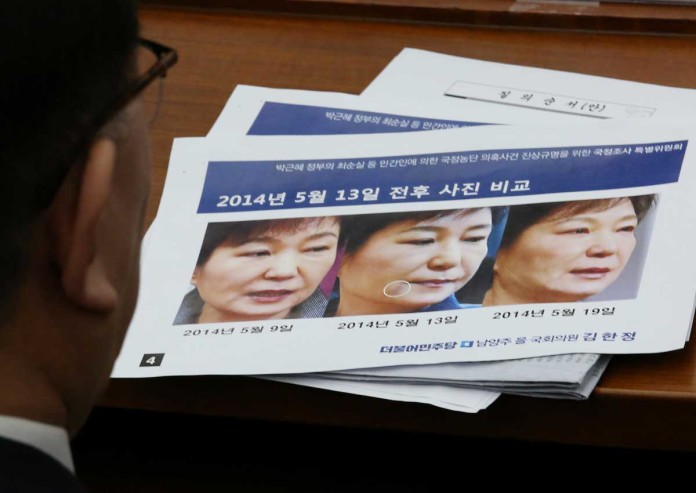
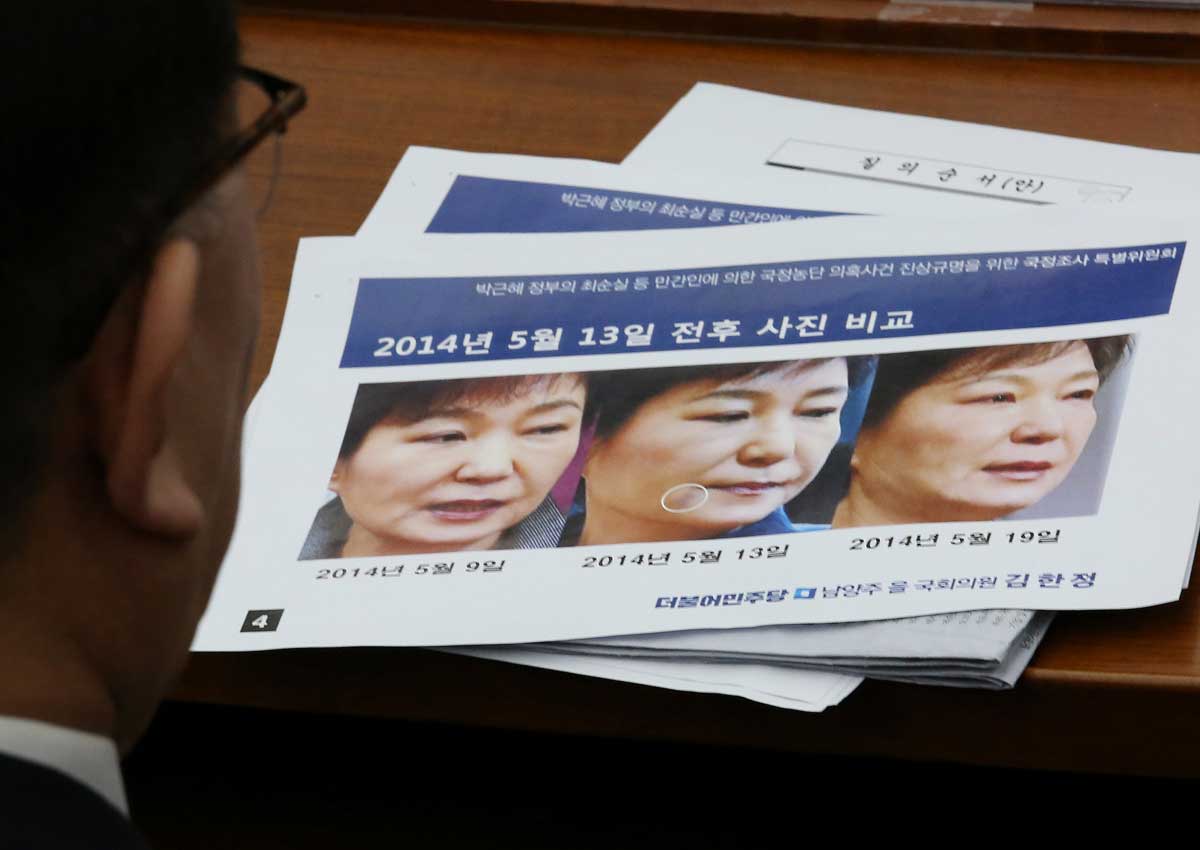
Park’s frequent medical and cosmetic treatments, including shots administered without the supervision of her official doctors, have been revealed in detail during investigations into a sweeping corruption scandal that is poised to cost her the presidency, raising questions over their safety and efficacy.

It has also fuelled criticism that doctors not appointed by the presidential office treated her over an extended period and continued to do so even after medical staff at her official Blue House residence became aware.

“We’re talking about the president, not just anybody, so the official doctor has to be consulted and then make the decision,”said Shin Hyun Dai, who served as a Blue House doctor for former President Roh Moo Hyun from 2003 to 2008.

“The official doctor needs to know even about pills given for indigestion. This is nonsense,” said Shin, who practices Oriental medicine.

Kim said Park, who is 64 and has never married, suffered from insomnia and often became fatigued. He said he had gone into the Blue House to see Park a few times before being named a”consulting Blue House doctor” in August 2013, and several times after that.

He said he would visit Park’s residential quarters after his shift at a clinic, when the president’s medical staff were off duty.

“I would get a call that she is not well, and I would go in,” Kim told a parliamentary hearing this week.

Kim would said he would give Park placenta extract injections, which are administered subcutaneously, or just under the outer layer of skin.

“Usually doctors treat illnesses but my speciality is I try to manage the condition before an illness,” he said.

More common in East Asia than in the West, placental extract treatments have recently become popular in South Korea, but many doctors remain sceptical.

Huh Kap Bum, an endocrinologist who was former President Kim Dae Jung’s official doctor from 1998 to 2002, said it would have been less controversial if Park had chosen to consult her official doctors for the same treatment.

But, he added: “I would have said to the president, no, because they are not proven safe.”

MYSTERY PATIENT

Park’s medical treatments had been shrouded in secrecy.

Kim had been a staff physician at Chaum, a clinic known for its detox and beauty care services, where Park was treated under a pseudonym before she was elected in December 2012, according to the clinic’s president.

The Health Ministry has said prescriptions for an intravenous glucose and vitamin mix were issued for Park from 2012 to 2014, but that a Chaum doctor had fabricated records to show them as written for Park’s friend Choi Soon Sil.

Choi has been indicted and is at the centre of the influence-peddling scandal that led to Park’s impeachment last week in parliament, which must be confirmed or overturned by the Constitutional Court.

Last year, the Blue House bought 200 units of placenta extract and other products normally used for aesthetic purposes, according to a government database obtained and released by an opposition lawmaker in November.

The same record made headlines last month when it showed the purchase of 60 Viagra pills that the presidential office said were intended to ease altitude sickness for staff members during a trip to Africa earlier this year, but were never used.

Doctors and lawmakers have also said they suspect Park underwent procedures to reduce facial wrinkles, but none of the doctors known to have treated her have confirmed performing them.

Huh, the ex-Blue House doctor, said it was “abnormal” that there was not a better accounting of Park’s treatments.

“It appears that the Blue House medical system didn’t function normally. It is something that should not happen.”

FOUNTAIN OF YOUTH?

Human placental extract therapy has been around for half a century in Japan, where the government approves its use in liver treatments and to ease symptoms of the menopause.

News reports about Park’s enthusiasm for the injections has renewed public interest in the therapy, which can cost up to 100,000 won (US$84.50) per visit, meaning the mark-up from a product supplied to clinics at about 5,500 won makes it a lucrative business.

Scientific evidence of the benefits of placental extract is thin.

A South Korean study in 2008 said women who received placenta extracts showed improvement in menopausal symptoms linked to reduced oestrogen levels.

A few other studies, including a 1998 paper by a team of University of Tokyo scientists and another in 2013 by South Korean doctors, found evidence human placental extract may stimulate liver regeneration in rats, but there have been insufficient clinical trials to substantiate the benefits to humans.

“Medically, the proven effect of placenta injections remains fairly weak, but doctors are free to prescribe them,” said Shin Hyun Young, professor of family medicine at Myongji Hospital and former spokeswoman of the Korean Medical Association.

Protein, amino acids and vitamins and other compounds found in the substance are purported to alleviate fatigue and fight inflammation.

“I don’t recommend it because there is some debate about it,” Lee Byung Seok, an obstetrics and gynaecology specialist who was Park’s official doctor while Kim provided placenta shots, told the parliamentary hearing.
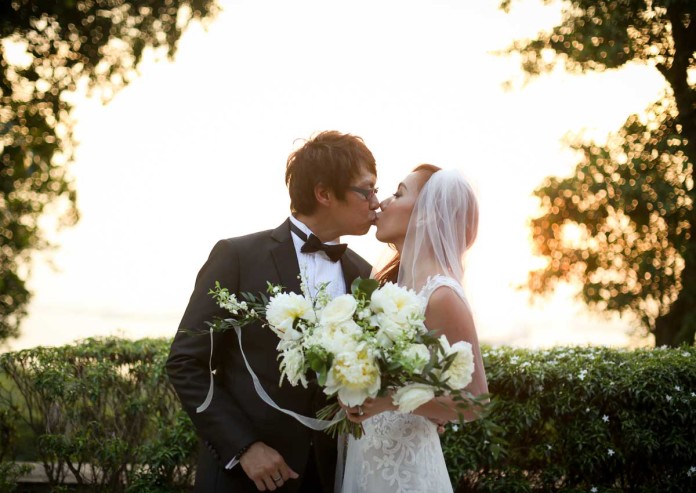

Image:
Category:
Publication Date:
Friday, December 16, 2016 – 22:15
Keywords:
Send to mobile app:
Source:

Story Type:
Others

Source link

Durian diplomacy: PM Lee hosts President Duterte to lunch

0

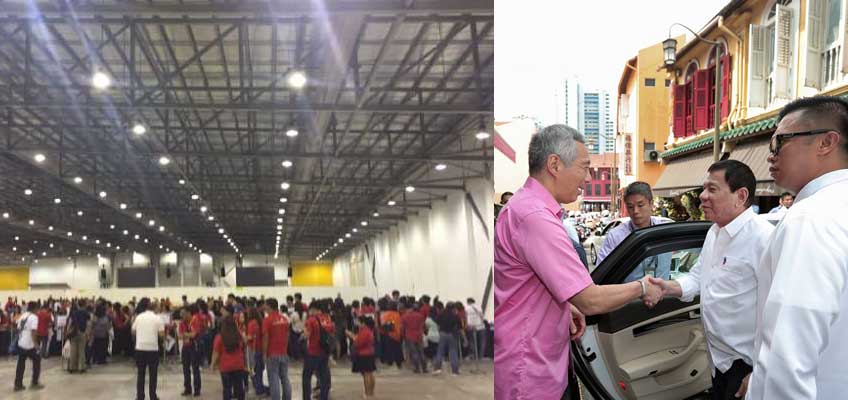
SINGAPORE: Durian featured on the menu on Friday (Dec 16) when Prime Minister Lee Hsien Loong hosted visiting Philippine President Rodrigo Duterte to lunch at a restaurant at Ann Siang Hill. 

In a Facebook post, Mr Lee said they capped off their nasi lemak meal with “some excellent D13 and Mao Shan Wang durians”.

Mr Lee noted that it was the second time this week that he had had durians. On Tuesday, Malaysian Prime Minister Najib Razak hosted him and his delegation to dinner in Putrajaya, after the signing of the high-speed rail agreement between the two countries.

“International diplomacy is indeed dangerous for waistlines!” Mr Lee quipped. 

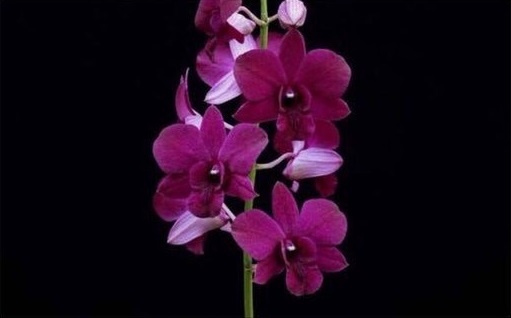
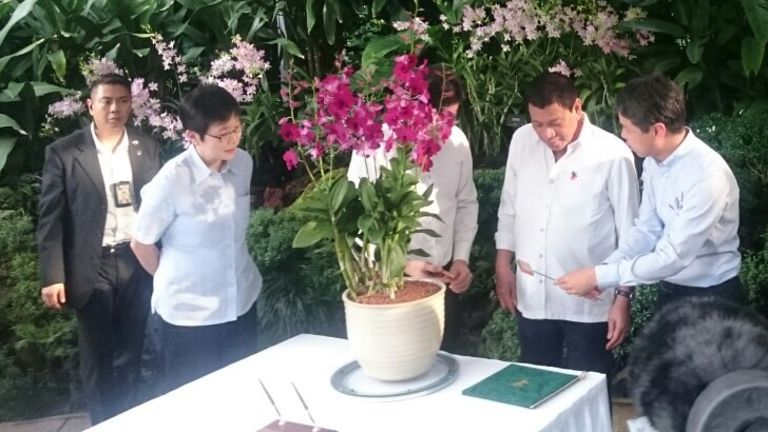
Mr Duterte, who is on the second and last day of his state visit to Singapore, also had an orchid named after him.

The “compact, robust and vigourous hybrid” was named during Mr Duterte’s visit to the Botanic Gardens’ National Orchid Gallery on Friday afternoon, said NParks.

Dendrobium Rodrigo Roa Duterte (Photo: President Duterte’s Corp Comms)

The hybrid is a cross between the Dendrobium Sonia Beauty and the Dendrobium Urmila Nandey, with violet red sepals and petals. 

Called the Dendrobium Rodrigo Roa Duterte

, the orchid “produces upright flower sprays that bear up to 15 striking and well-arranged blooms, each velvety bloom measuring about 6cm across”, NParks added. 

Philippine President Rodrigo Duterte with the orchid hybrid named in honour of him. (Photo: President Duterte’s Corp Comms)

After visiting the Botanic Gardens, Mr Duterte headed to the Singapore Expo, where he met members of Singapore’s Filipino community.

Source link

Government increases supply of land for housing amid strong developer demand

0

SINGAPORE – The Government has increased the amount of land it plans to sell for private housing development in the first half of next year, a move that property analysts said is in response to strong participation by developers in recent site tenders.
Under…

Source link

China upset as Dalai Lama meets Indian president

0

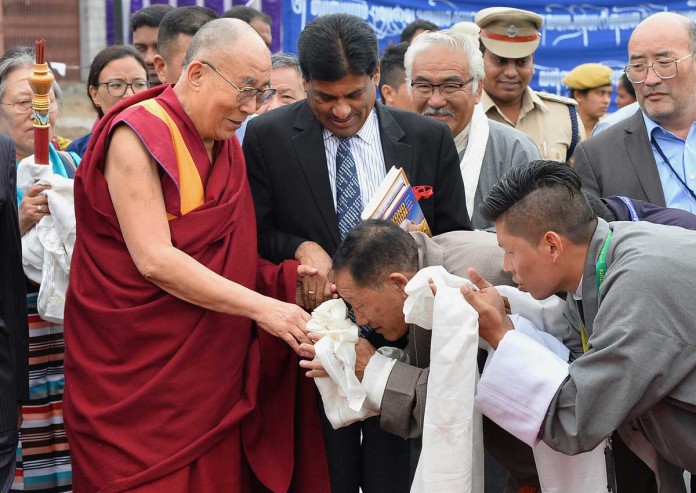
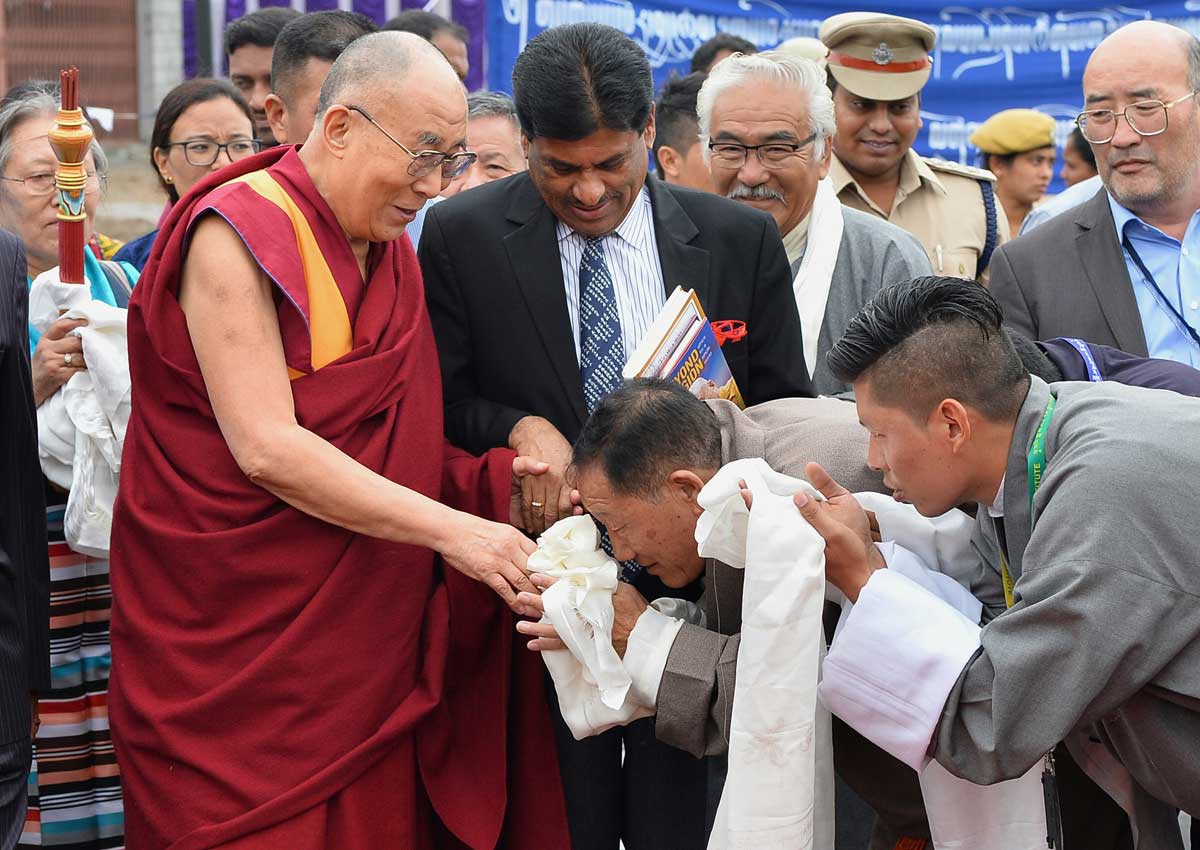
BEIJING – China expressed dissatisfaction on Friday after exiled Tibetan spiritual leader the Dalai Lama met Indian President Pranab Mukherjee, saying it hoped India would recognise the Nobel Peace Prize winning monk as a separatist in religious guise.

Mukherjee hosted the Dalai Lama and other Nobel Peace laureates at a conference on children’s rights at the presidential palace on Sunday.

Those who attended, and spoke, included Princess Charlene of Monaco and the former president of East Timor, Jose Ramos-Horta.

The Indian government had ignored China’s “strong opposition and insisted” on arranging for the Dalai Lama to share the stage with Mukherjee, and meet him, Foreign Ministry spokesman Geng Shuang told a daily news briefing in the Chinese capital. “China is strongly dissatisfied and resolutely opposed to this,” he said, adding that the Dalai Lama used the guise of religion to engage in separatist activities and China opposed any form of official contacts with him.

China wanted India to recognise the “anti-China, separatist essence of the Dalai Lama clique and take steps to banish the negative impact of this incident” to avoid disrupting ties between the Asian giants, Geng said.

While the Dalai Lama has had private meetings with Indian leaders, Sunday’s conference was the first public event, said the political head of the Tibetan government in exile based in India’s northern hill town of Dharamsala. “There are many European governments shying away from hosting His Holiness,” he told Reuters. “Here you have the president of India hosting His Holiness. I think is a powerful message to the world, and particularly to Beijing.” China regards the Dalai Lama as a separatist, though he says he merely seeks genuine autonomy for his Himalayan homeland Tibet, which Communist Chinese troops “peacefully liberated” in 1950.

The Dalai Lama fled into exile in India in 1959 after a failed uprising against Chinese rule.

China also expressed displeasure with India this month over the visit to a sensitive border region of another senior Tibetan religious figure, the Karmapa Lama, Tibetan Buddhism’s third-most-senior monk, who fled into exile in India in 2000.

India is home to a large exiled Tibetan community.

Image: 
Category: 
Publication Date: 
Friday, December 16, 2016 – 20:46
Send to mobile app: 
Source: 


Story Type: 
Others

Source link

Thousands of Filipinos gather to cheer Duterte in Singapore

0


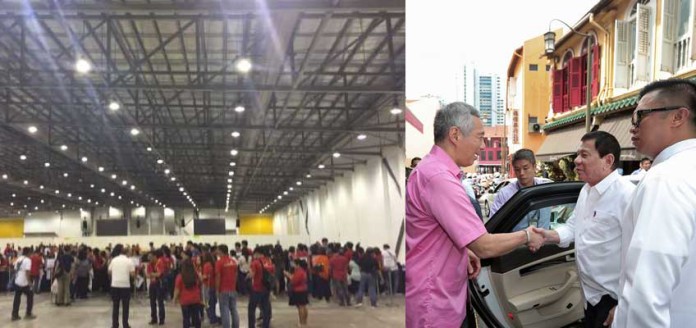
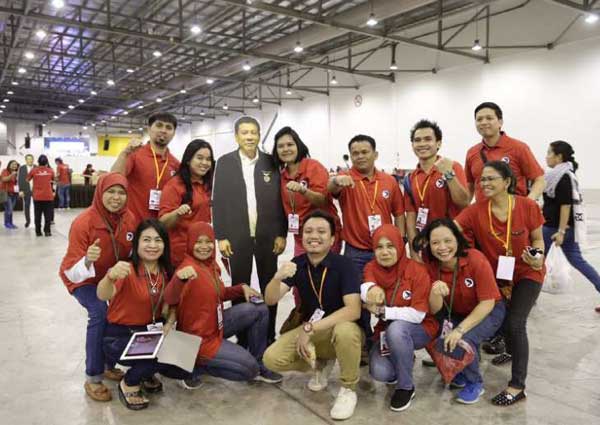
SINGAPORE – Thousands of Filipinos gathered in Singapore on Friday to catch a glimpse of their president, Rodrigo Duterte, in a big show of support for a leader whose bloody war on drugs has horrified global rights groups but won support at home.

About 135,000 people from the Philippines live in Singapore, according to a breakdown of Philippine statistics for 2015.

About 70,000 of them are women working as domestic helpers, rights groups estimate, and many of them turned up on Friday – some without the permission of their bosses – to cheer their president on a visit to the city state.

“Most people love Duterte,” said 43-year-old maid Arnelya, who declined to give her full name because her employers did not know she went out.

“I didn’t ask them because they wouldn’t have let me. I’m very lucky because my employers are on holiday,” said Arnelya, who is supporting her four children back home on Mindanao island, Duterte’s home region.

Hours before Duterte was due to appear at an exhibition centre near Singapore’s Changi airport, cover bands, a church choir and a martial arts group took to the stage to entertain the crowd.

Organisers issued 6,000 tickets for the event but expected a much larger turnout as supporters turned up hours early.

Duterte’s war on drugs, the key plank of his campaign for a May election, has claimed about 5,000 lives since July 1.

While international rights groups, organisations including the Untied Nations and leaders such as US President Barack Obama have raised concern about the extra-judicial killings, at home, the bloody toll has bolstered Duterte’s standing.

Duterte retained a “very good” opinion-poll rating after six months in office, with a net satisfaction rating of 63 per cent, a Philippine polling agency reported this week.

Arnelya shrugged off international criticism of Duterte, saying restoring order was “good for foreigners also”.

Other supporters held up clenched fists and banners reading: “You are not alone on your war against drugs, Mr. President” and “Duterte – Making Philippines glorious again”.

“I admire the war on drugs,” said 31-year-old architect Rene Tahun. “He’s fighting for us, for peace, order and safety. He must be tough. If not, crime will still go on.” Duterte has promised the country’s millions of overseas workers to boost the economy and fight drugs and corruption, so they can come home to a better life.

Across town, in central Singapore, Lilian Taguinod, 34, was disappointed she could not go to see her president. “I love Duterte,” said Taguinod, holding her employer’s nine-month-old daughter. “I want to see him, but I can’t go because I cannot take the day off. It is impossible for anyone else to take care of her. She’s like my fourth daughter.”

Image:
Category:
Publication Date:
Friday, December 16, 2016 – 18:24
Send to mobile app:
Source:

Rotator Headline:
Filipino helper working here sneaks out of home to catch a glimpse of President Duterte
Rotator Image:
Story Type:
Others

Source link

Instagram fixes bug that makes posts with 'Singapore' tag go viral

0

Instagram has fixed a “bug” that apparently made posts go viral when their location tag was set as “Singapore, Singapore”.

The BBC received confirmation that the bug “impacted engagement” when posts were tagged with that location.

The hack increased the likelihood of a post on the photo-sharing app gaining more likes and garnering the user new followers.

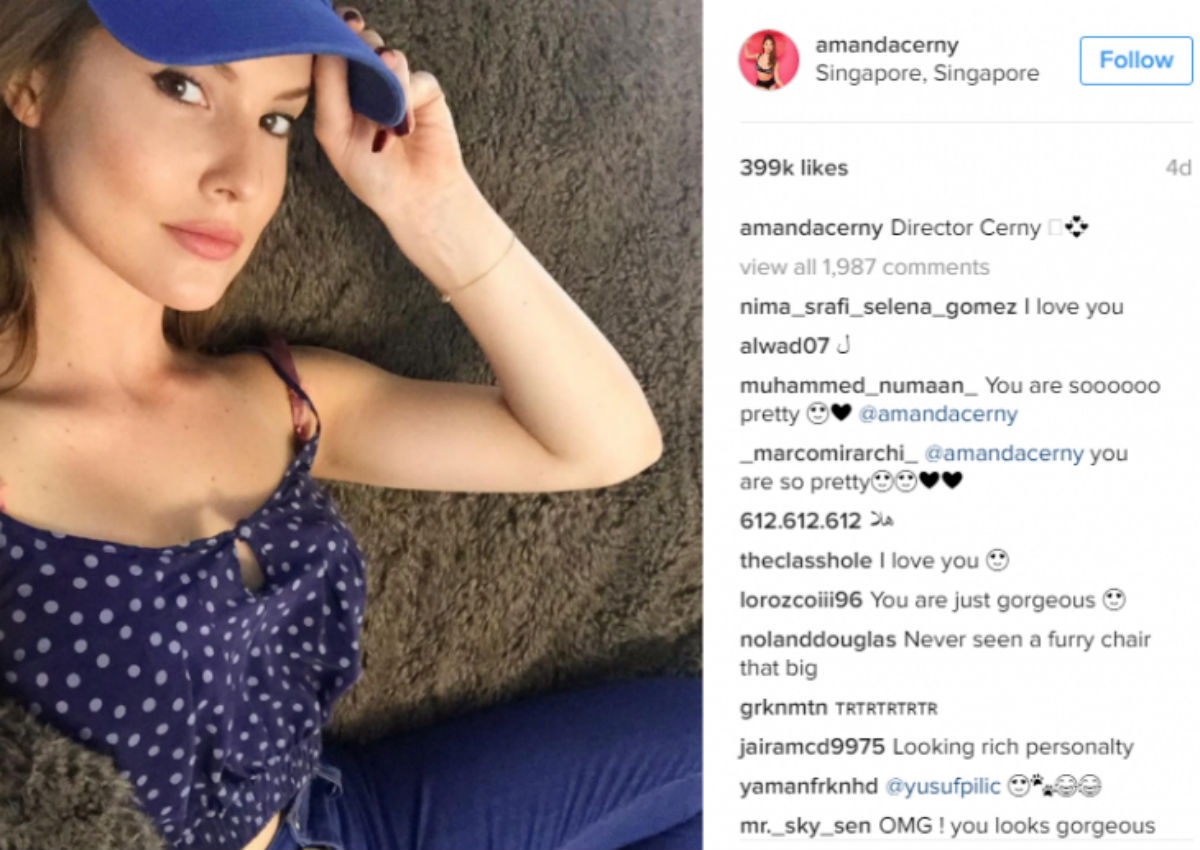
It began when a few Internet stars such as Logan Paul, Dan Bilzerian and Amanda Cerny, all began tagging their posts with the location of the Lion City, despite not being in this region at all.

According to BBC, the hack worked with a user first posting an Instagram post with “Singapore, Singapore” as the location.

After garnering “likes” from random complete strangers all over the world, the location tag is removed. But the number of “likes” earned remained.

The confusion spread over social media, making people wonder if their favourite social media celebrities were indeed in town.

Photo Credits: Twitter/@SMURFIQ

Ms Anna Lee, a digital strategist based in Singapore, called it the “Singapore boost”, according to BBC.

“Having a large number of ‘likes’ on your Instagram posts feels good and being featured on the Explore page is a great way to find new followers.”

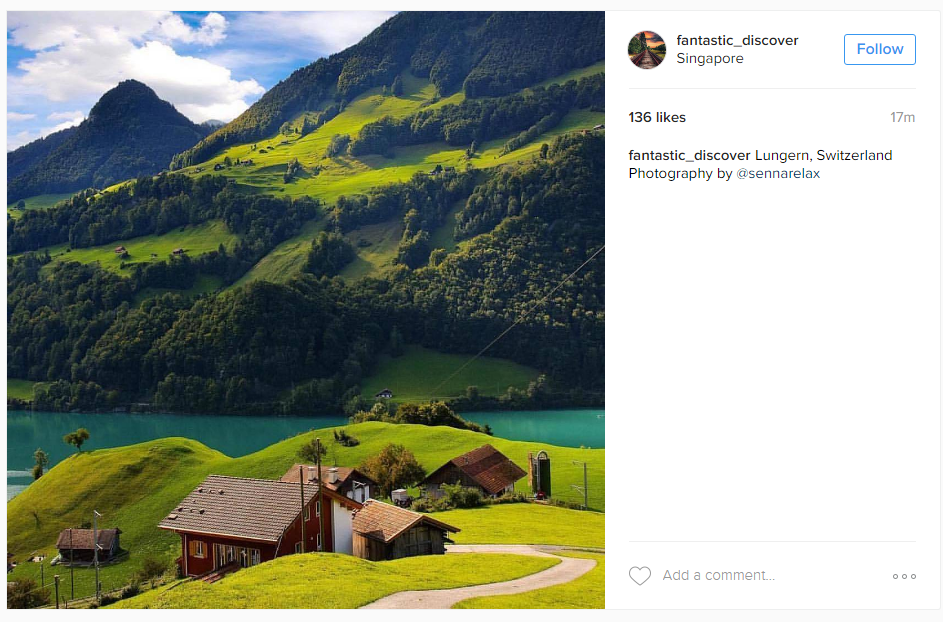
Photo Credits: Instagram/fantastic_discover

She added that she was puzzled as to why such a small city-state could have such a significant impact.

“It is probably just a fad and will pass. The only way to continually engage and enlarge your fan base boils down to having interesting content that will add value for your followers.”

fabkoh@sph.com.sg


This article was first published on December 16, 2016.
Get a copy of The Straits Times or go to straitstimes.com for more stories.

Image: 
Publication Date: 
Saturday, December 17, 2016 – 09:00
Keywords: 
Send to mobile app: 
Source: 


Story Type: 
Others

Source link

China wants 22 other northern cities besides Beijing put on red alert for smog

0


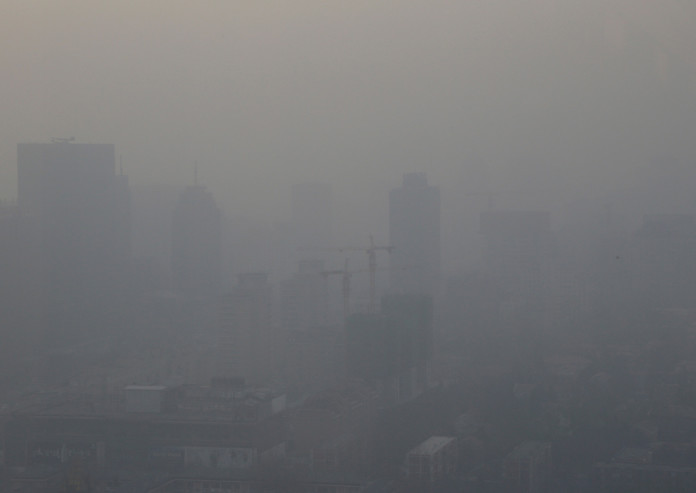
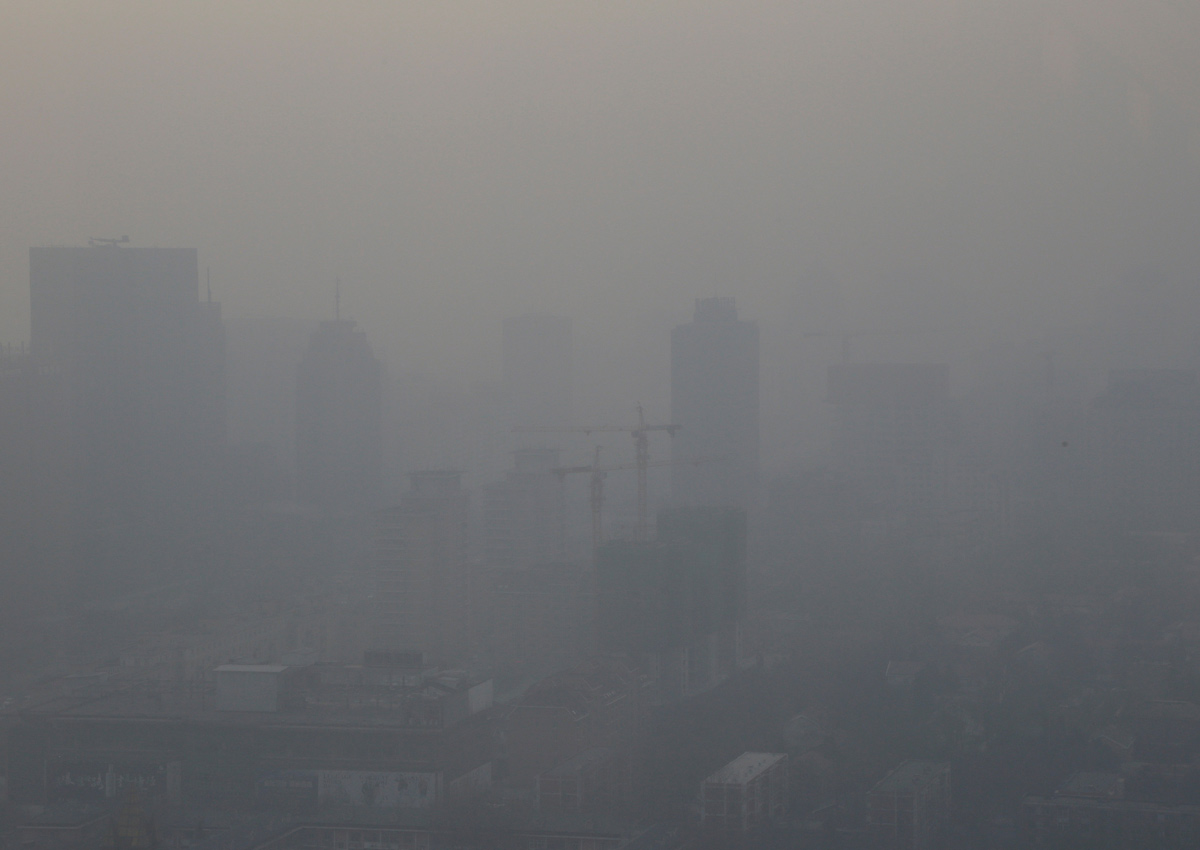
BEIJING – Environmental authorities in China have advised 23 northern cities to issue red alerts, the highest possible air pollution warning, on Friday (Dec 17) evening, against the “worst” smog the country has experienced since autumn, state media said.

China issued its first ever red alert for smog in Beijing, the capital, last December, after adopting a colour-graded warning system in a crackdown on environmental degradation left by decades of breakneck economic growth.

Officials in Beijing issued a red alert on Thursday after the Ministry of Environmental Protection (MEP) warned of a smog build-up across China’s north, saying the alert was expected to run until Dec 21.

The ministry has also advised 22 more cities reeling under pollution to issue the red alert warning, the official China Daily said on Friday.

Nine cities, including Jinan in the province of Shangdong were advised to issue the lower-status orange alert, Liu Bingjing, the ministry’s head of air quality management, told the paper.

The notification will be the third joint warning by city governments this month, Liu added.

Regular episodes of smog blanketing northern China this year stem from a combination of local emissions, unfavourable weather and pollutants wafted in from elsewhere, Bai Qiuyong, head of China’s Environmental Monitoring Center, told the paper.

Environmental authorities in Hebei province, which borders capital city Beijing, asked for a level one emergency response from major cities in the region to begin from Friday, according to a post on its official Weibo account late on Thursday.

The order requires the large number of heavy polluting industries in these cities, including in Tangshan, China’s steel capital, to cut back or halt production until Wednesday.

Red alerts are issued in Beijing when the air quality index, a measure of pollutants, is forecast to break 200 for more than four days in succession, surpass 300 for more than two days or overshoot 500 for at least 24 hours.

Read Also: Smog incentives hard to introduce in China

At each level, the colour-graded warning system prescribes advisories for schools, hospitals and businesses, as well as possible curbs on traffic and construction.

Thresholds for the issue of alerts vary among cities, as do the cautionary measures urged on local residents and businesses at each stage.

Residents of smaller cities near Beijing have previously complained that local government bodies failed to issue warnings when pollution was just as severe as in the capital.

Image:
Category:
Publication Date:
Friday, December 16, 2016 – 17:36
Keywords:
Send to mobile app:
Source:

Story Type:
Others

Source link

China holds first live-fire drills with aircraft carrier, warships

0

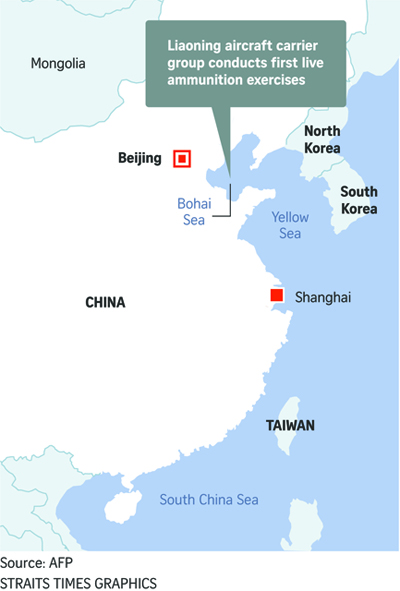
BEIJING – China’s military has carried out its first ever live-fire drills using an aircraft carrier and fighters in the northeastern Bohai Sea close to Korea, state media said.

China’s growing military presence in the disputed South China Sea has fuelled concern, with the United States criticising its militarisation of maritime outposts and holding regular air and naval patrols to ensure freedom of navigation.

Ten vessels and 10 aircraft engaged in air-to-air, air-to-sea and sea-to-air combat drills that featured guided missiles, state broadcaster Chinese Central Television reported late on Thursday (Dec 15).

“This is the first time an aircraft carrier squadron has performed drills with live ammunition and real troops,” it said.

Photo: STRAITS TIMES GRAPHICS

China’s Soviet-built Liaoning aircraft carrier and a formation of warships carried out aerial interception, anti-aircraft and anti-missile drills, in which Shenyang J-15 fighter jets carrying live missiles also participated, CCTV said.

On Wednesday, a US think tank said China had been installing anti-aircraft and anti-missile systems on artificial islands in the South China Sea, prompting China to defend its right to install military hardware there.

No other country has claims in the Bohai Sea, a busy north-eastern Chinese waterway and the site of Thursday’s drills.

The drills aimed to test the equipment and troop training levels, an unidentified navy official told the official China News Service.


This article was first published on Dec 16, 2016.
Get a copy of The Straits Times or go to straitstimes.com for more stories.

Image: 
Category: 
Publication Date: 
Friday, December 16, 2016 – 17:47
Send to mobile app: 
Source: 


Story Type: 
Others

Source link