28.7 C
Singapore, SG
Wednesday, September 23, 2026
Home Blog Page 2191

It Changed My Life: Ex-convict cooked for death row prisoners

0

Just over a decade ago, Mr Jabez Tan was a prisoner in Changi whose job was to prepare meals for inmates on death row.

Each time one of them was due to hang in a few days, the warden would alert him.

Mr Tan would take extra care in preparing their meals.

“I’d always pray for their souls,” he says.

The stint, he adds, was a major turning point in his life which, up until then, he had frittered away on lawlessness, drugs and triad activities. Then only 30, he had been imprisoned three times and spent nearly 15 years behind bars for drug offences.

“I was filled with a lot of thoughts. I told myself that if I messed up one more time, I might be the one sitting in there and someone else would be cooking for me.”

Now 42, Mr Tan has more than turned his life around.

Today, he is the founder of Soon Huat, a social enterprise which employs former offenders and gives them a fresh start in life. He has five outlets serving bak kut teh and other dishes in Singapore; more than half of the 40 staff members he employs have done time in prison.

Boyishly handsome, he is the elder of two sons of a couple who ran a video business.

Because they had their hands full trying to build their business, his parents entrusted him to the care of his paternal grandparents who ran a provision shop in Bukit Ho Swee.

The area had its fair share of unsavoury denizens, including druggies and triad members.

Books did not interest him; the former pupil of Bukit Ho Swee Primary preferred to run wild and free in the neighbourhood and beyond.

“I only passed Primary 1; I failed all the other years. I was put in the Monolingual stream and was supposed to go to VITB (Vocational and Industrial Training Board) after finishing Primary 8,” he says.

But he did not even do that.

In Primary 6, he joined a gang after he was roughed up by several teens.

“I had a fight with my classmate. He called three of his older friends who took me to a void deck. Two of them held me and one punched me until I was blue and black in the chest,” he says.

By then, he was already frequenting roller-skating rinks in Orchard Road where he met many gang members. They asked him to join them, promising protection.

That marked the beginning of a reckless life.

He started smoking, sniffing glue, running away from home, stealing, extorting from others, eventually dropping out of school.

When he was 14, he stole money from someone’s home.

When his parents found out, his father took him to the police station. He was sent to Bukit Batok Boys’ Hostel – a home for young offenders – for a year.

“My parents didn’t know how to handle me. They thought that by sending me to the home, I’d become better. They didn’t know I would become worse,” says Mr Tan. “I used to blame them but I know now that they were doing it for my own good.”

There were different factions in the boys’ home and fights took place frequently.

“You needed to be more violent and garang than others to survive,” he says, using the Malay word for fierce or aggressive.

His involvement with gangs became deeper when he was released. By the time he was 16, the glue sniffer was also popping pills and taking marijuana with abandon.

In the early 1990s, he was caught after he broke into a Chinatown coffee shop to steal cash and alcohol. While waiting to be sentenced, he robbed a woman at knifepoint.

For the two offences, he was given a one-year jail term at the old Changi Prison.

Fear there was none but pride, yes. “I felt saat,” he says using the Hokkien term for solid. “It was not just any RTC (Reformative Training Centre) I was going to but the big one, Changi. I felt like a somebody.”

Shaking his head, he adds with a sigh: “Youth sometimes makes you stupid.”

After completing his national service, he joined a motorcycle gang called the Mighty Warriors.

On weekends, nearly 100 of them would take to the roads, spoiling for trouble. They would go after smaller gangs, many of which would abandon their bikes to avoid being beaten up.

The Mighty Warriors would thrash the abandoned bikes with hammers and other equipment.

The psychoactive drug Ecstasy had by then made its appearance in Singapore and Mr Tan became so addicted to it that he sometimes popped as many as 20 pills a day.

“If you asked me to take one now, I’d probably go mad and if I took five, I’d probably die. But my system was so conditioned then, it was like taking rice.”

To afford the habit, he started trafficking in drugs. When one of his friends was arrested by the police, he led them to Mr Tan, who was caught with about 400 pills in Geylang.

He was sentenced to seven years and seven months, with 12 strokes of the rotan. This time around, the incarceration at Tanah Merah Prison sobered him.

“Traffickers needed to serve at least one-third of their sentence before they could even think of working or studying in the prison. That meant I had to spend 15 months in a small cell with two other people. We were allowed only one hour of yard time a day, the rest was spent in the cell. It was tough,” he says.

He started attending religious counselling sessions and found faith, and decided he could not waste his time in prison.

“At that time, I could not speak or read English. I could only manage simple children’s comics like Doraemon and Old Master Q in Chinese. I felt that in Singapore, if I didn’t know English, I would not be able to survive,” says Mr Tan, who now has a competent command of the language.

Because he only passed Primary 1, he could only qualify for Basic Education Skills Training (Best) courses which required a one-year wait because they were not conducted every year.

So determined was he to become literate that he applied for leave to engage in self-study.

Each day, he jotted down 10 English words in a notebook he still possesses. “I literally started with nose, mouth and chair. Initially, my friends helped me but soon they were running away when they saw me.”

Besides Best, he completed a couple of Worker Improvement through Secondary Education (Wise) modules and his N levels during his remaining time in prison.

Released in April 2002, he resolved to go on the straight and narrow, even enrolling as a student at the private St Francis Methodist School for his O-level studies.

“I was 27 but I had to wear a school uniform and a tie. I really wanted to change,” he says.

But barely six months later, he went back to his friends and to newer drugs like Ice and ketamine, or K.

“When I took K, I’d wake up with a nosebleed every morning. I can’t explain why I kept doing it, I guess I just wanted that ‘feeling’,” he says, referring to the hallucinations and trance-like state the drug induces.

Not long after, he was nabbed when he went for a mandatory urine test.

Back into prison he went, this time for four years.

He spent a lot of time reflecting on his life.

“I thought I had found my faith but why did I fail again? I realised I was overconfident and did not have a support group,” he says.

The first thing he did was to renounce his gang.

“It’s very important. By renouncing your gang, you’re taking away your pride,” he says.

Because he always had an interest in cooking, he applied to work in the kitchen. But instead of being a cook, he was made to wash dishes, for nine months.

Only after that was he given a gig to cook for inmates who opted for non-spicy meals. To get ideas, he would read recipe books his mother passed him on her visits.

Word soon got around that his cooking was far better than the standard fare. Many more inmates opted for his non-spicy menu.

When a vacancy opened up, the prison made him a cook for inmates on death row.

Among those for whom he prepared last meals was Took Leng How, the vegetable packer who was hanged for murdering eight-year- old Huang Na in 2004.

“He had a lot of requests, and kept changing his mind. I did my best for him,” he says.

To make sure he stayed out of trouble after his release, he checked into a Christian halfway house. After six months, he became a staff member there and stayed for seven years, during which he studied theology, got himself a diploma in counselling and became a house master. He also snagged himself a wife when he married his colleague Joy, with whom he now has two sons, aged two and four.

In 2011, he opened his first Soon Huat outlet in Jalan Kayu, with his savings and a loan from his father.

From the outset, he wanted it to be a social enterprise to help former offenders, the marginalised and the elderly.

“Being an ex-offender myself, I understand the difficulties of finding a job.”

There were naysayers who told him he was crazy to open a bak kut teh stall in Jalan Kayu, which was famous for halal roti prata eateries.

“The first few months were bad – we lost money. But then Lianhe Wanbao wrote a story about me, and the crowds just came,” he says, referring to the Chinese evening daily.

In addition to blog reviews, there was good word of mouth about his hearty pork rib soup. The recipe is his own, and he has refined it over the years.

Last month, Mr Tan opened his fifth outlet, Soon Huat Dining House, on the second floor of Chinatown Point.

There is also a franchised outlet in Jakarta, and Chinese investors are in talks with him to open Soon Huat eateries in Shanghai too.

Running a social enterprise is challenging, he says.

“Besides manpower problems, we also have to deal with ex-offenders who are not reliable or stable,” he says.

Several went back to drugs, including one whom Mr Tan groomed to be an assistant manager, who also stole $6,000 from him last year.

He writes to those who end up behind bars again, telling them not to give up and that he would give them a second chance.

“Of course, I feel disappointed but I tell myself not to give up. I always remember the Starfish story, ” he says, referring to the tale of a boy who throws starfish back into the ocean after they have been stranded on the beach by the tides. “Even if I save just one life, it’s worth it.”

Besides running Soon Huat, he does regular prison visits to counsel and encourage young inmates, and also gives talks about second chances and social entrepreneurship at events like TEDx Talks.

On his Facebook page, he has a post which sums up his life: “I regret nothing in my life, even if my past was full of hurt. I still look back and smile because it made me who I am today.”

kimhoh@sph.com.sg


This article was first published on December 18, 2016.
Get a copy of The Straits Times or go to straitstimes.com for more stories.
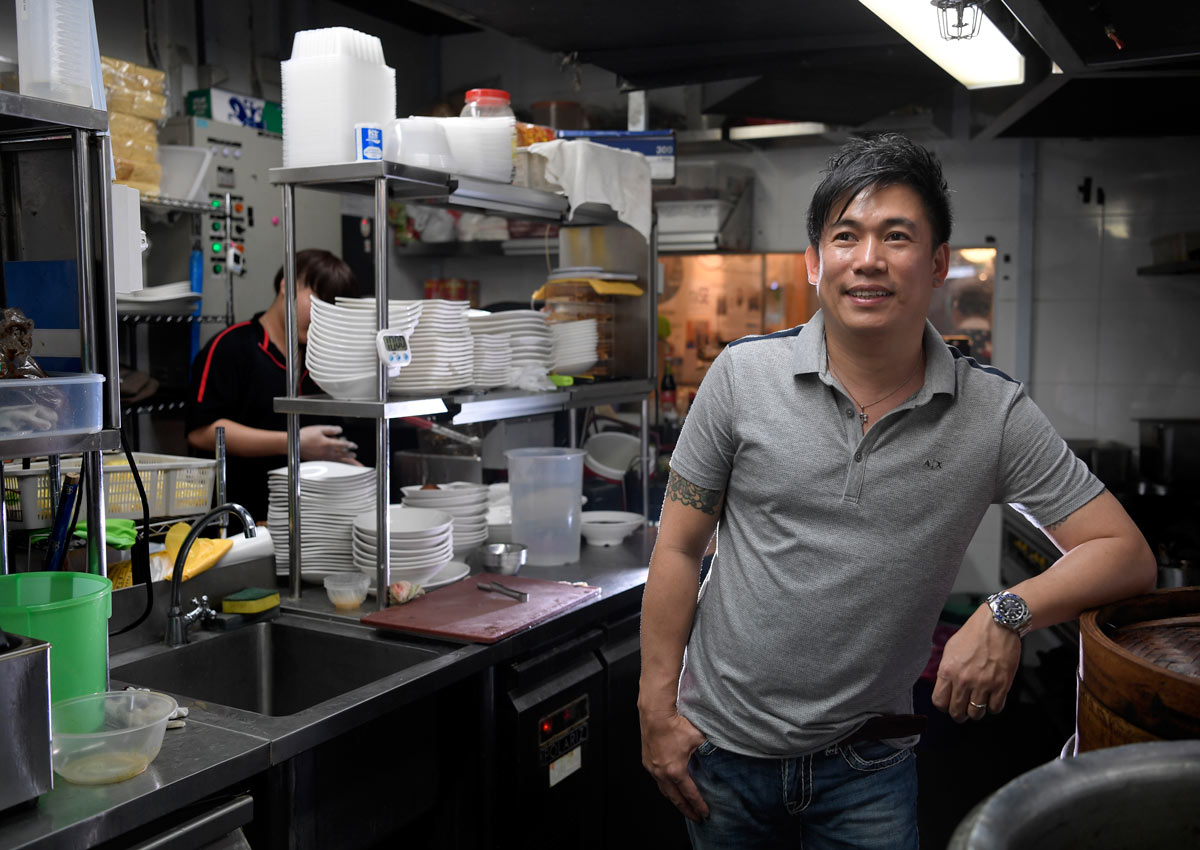
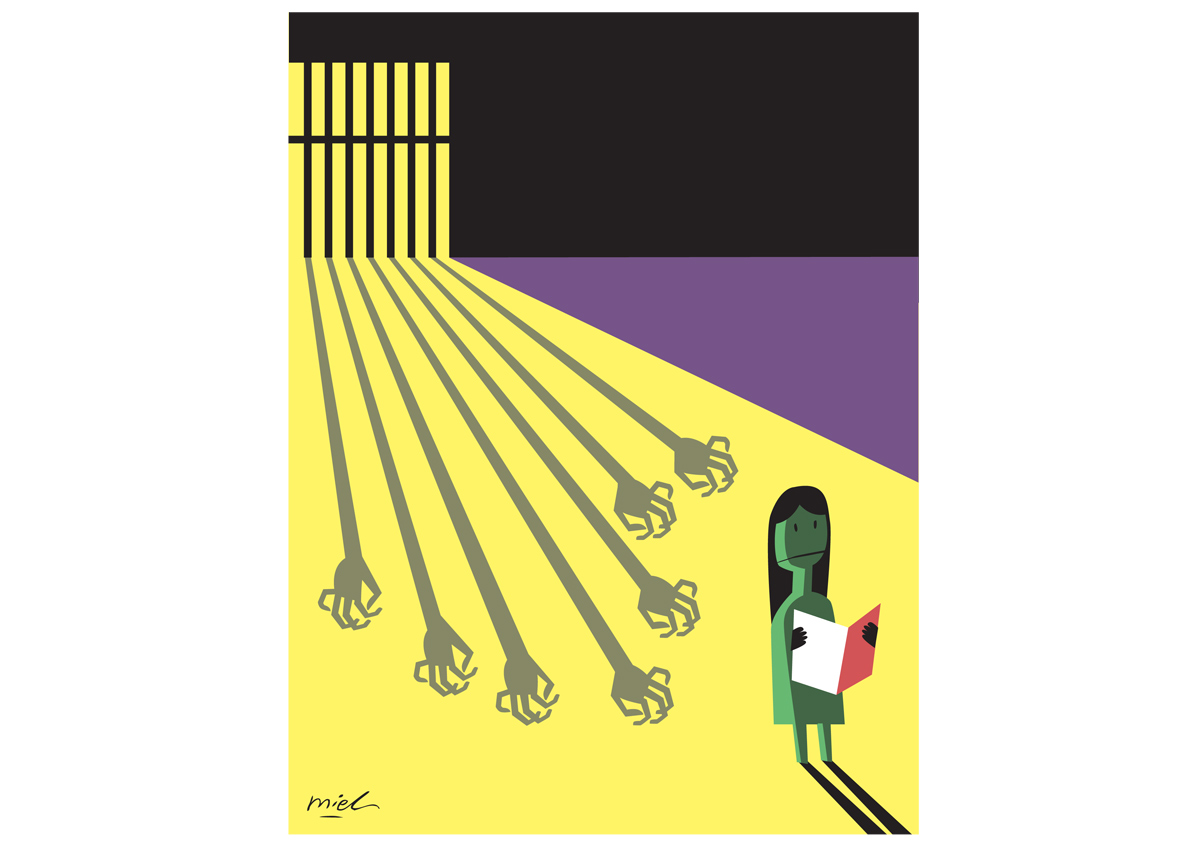
Image: 
Category: 
Publication Date: 
Sunday, December 18, 2016 – 16:00
Send to mobile app: 
Source: 


Video Media: 
Other Video Media
Story Type: 
Others

Source link

Her mother, aunt, grandparents are ex-cons. Can Aisyah break the cycle?

0

Aisyah, now eight, has never met her father. Her mother was in prison for half her lifetime – four years. Her parents never married.

Her grandparents and an aunt are also ex-convicts; like her mother, they were sentenced for drug offences.

When her mother was jailed – for the second time – for drug offences, Aisyah’s great-grandparents had to take care of her and her stepsister, now five.

The stepsister is her mother’s child by another man.

Aisyah (not her real name) has another sibling, a baby stepbrother – her mother married his father after she was released from jail last year.

Her mother, now 30, works as a sales assistant.

Aisyah is bubbly, but she does not make friends easily.

She says: “I never told anyone my mum was in jail. I was afraid, if they knew, they would not want to be my friend. I don’t have many friends.”

She is one of thousands of children here suffering from emotional hurt and material deprivation because of the mother’s criminal behaviour and imprisonment.

There were 1,240 women in jail here at the end of last year, although the Singapore Prison Service did not say how many had children.

This group of female prisoners and their children warrant greater attention and help.

For a start, there might not be anyone to look after the children when a woman is sent to jail.

When men go to jail, there is often a wife to care for the offspring, say social workers.

In 2012, the Singapore After-Care Association started an initiative to ensure that children of newly incarcerated women would be cared for and given the help that they need to cope.

In some three-quarters of such cases, grandparents have to step in as caregivers when the mother is jailed.

The fathers are often not in the picture – they could be in jail themselves, or the parents could be divorced.

Such children need more attention. The risk they face is termed intergenerational offending.

This happens when children – like their parents or grandparents before them – break the law and end up in jail as well.

A host of research overseas has found that children are adversely affected by their parents’ incarceration and are more likely to follow suit as a result.

This prompted Mr Amrin Amin, Parliamentary Secretary of the Home Affairs Ministry, to announce in May that the authorities want to focus more on helping inmates’ children and to reduce intergenerational offending.

For example, the Yellow Ribbon Community Project has grassroots volunteers visiting families of newly incarcerated inmates to see what help they need and to link them up with aid agencies.

Since July, its volunteers have also been trained to identify children who might need more help in areas such as counselling or their studies, linking agencies up to support them.

Dr Sytske Besemer of the University of California, Berkeley, says the odds of offending for children with criminal parents are on average 2.5 times higher than for those with parents who are not offenders.

Her soon-to-be-published research is based on a meta-analysis of 24 studies on the topic, she told The Sunday Times.

Children of offenders are at higher risk of offending not because they are “bad” children.

Children learn the values and behaviour of their parents.

Their home environments are often troubled – money is short and their parents are not positive guides.

These factors raise the chances of the children ending up in trouble, Dr Besemer said, citing past research.

Ms Durga Naidu, a senior social services executive at the Industrial and Services Cooperative Society (Iscos), which helps ex-offenders and their families, noted: “Without proper guidance in their lives, children might stray from their studies and look for company in the wrong places. Their friends can be a bad influence, leading them to illegitimate ways to make money.”

The odds of offending are even higher for children with a mother in jail.

An American study of more than 7,000 prisoners, both men and women, found that incarcerated women are 2.5 times more likely to have an adult child in jail, compared with incarcerated men.

And those “at especially high risk” of imprisonment are children of female drug users, a study by Dr Danielle Dallaire at the College of William and Mary found.

This is because the quality of caregiving and separation from the primary caregiver, usually the mother, have a profound impact on a child during the formative years of the child’s life.

And the quality of parenting by a drug-addled mother is, needless to say, cause for concern.

One former heroin addict told me that at the height of her addiction, all she could think of was herself and how to get her next fix.

She often lied to her mother that she needed money to buy milk and diapers for her two young children, only to use it to buy drugs.

So the million-dollar question is: How can we stop Aisyah – with her disadvantaged background and a family laden with drug issues – from ending up in trouble too?

The issue is even more pressing as the drug problem is creeping up again among men and women here.

Last year, there were 298 women at the Drug Rehabilitation Centre (DRC) in Changi Women’s Prison – in 2010, the centre had 143 women.

And the odds of re-offending are higher for drug offenders than for those who committed other crimes.

Of those released in 2013, almost one in three (31.9 per cent) re-offended within two years of release from DRC.

The recidivism rate for penal offences is one in four (24.7 per cent.

So what can be done?

Currently, initiatives focus largely on helping inmates’ families through financial and other forms of aid, for instance, by giving tuition to the children.

But there is also a need to reach out to support and guide children of inmates before they go astray.

For example, Iscos is already taking steps in this direction through its Fairy Godparent programme, which is aimed at breaking the cycle of intergenerational offending.

As part of the programme, Iscos pairs children of ex-offenders with mentors.

These mentors provide guidance, emotional and other forms of support to children who lack parental guidance.

More of such efforts would be helpful.

More support has to be given to the prisoners as well.

For women, especially drug offenders, it is vital to help them get their lives together after they are released.

This process could take years.

And when their lives are more stable, groups can look at teaching them parenting skills.

While efforts to break the intergenerational cycle of offending are resource-intensive, they would go a long way towards helping children like Aisyah.

She could hardly speak English, let alone read, when she started primary school. Volunteers from New Life Stories, a charity that helps incarcerated mothers and their children, have been reading to Aisyah regularly for the past 21/2 years.

When I met her last month, she proudly showed off her new-found reading skills to me.

She told me: “I want to be very clever. Some classmates kept calling me stupid, and it made me sad.

“My English has improved a lot, and I’m very happy. I want to be a teacher (when I grow up).”

theresat@sph.com.sg


This article was first published on December 18, 2016.
Get a copy of The Straits Times or go to straitstimes.com for more stories.
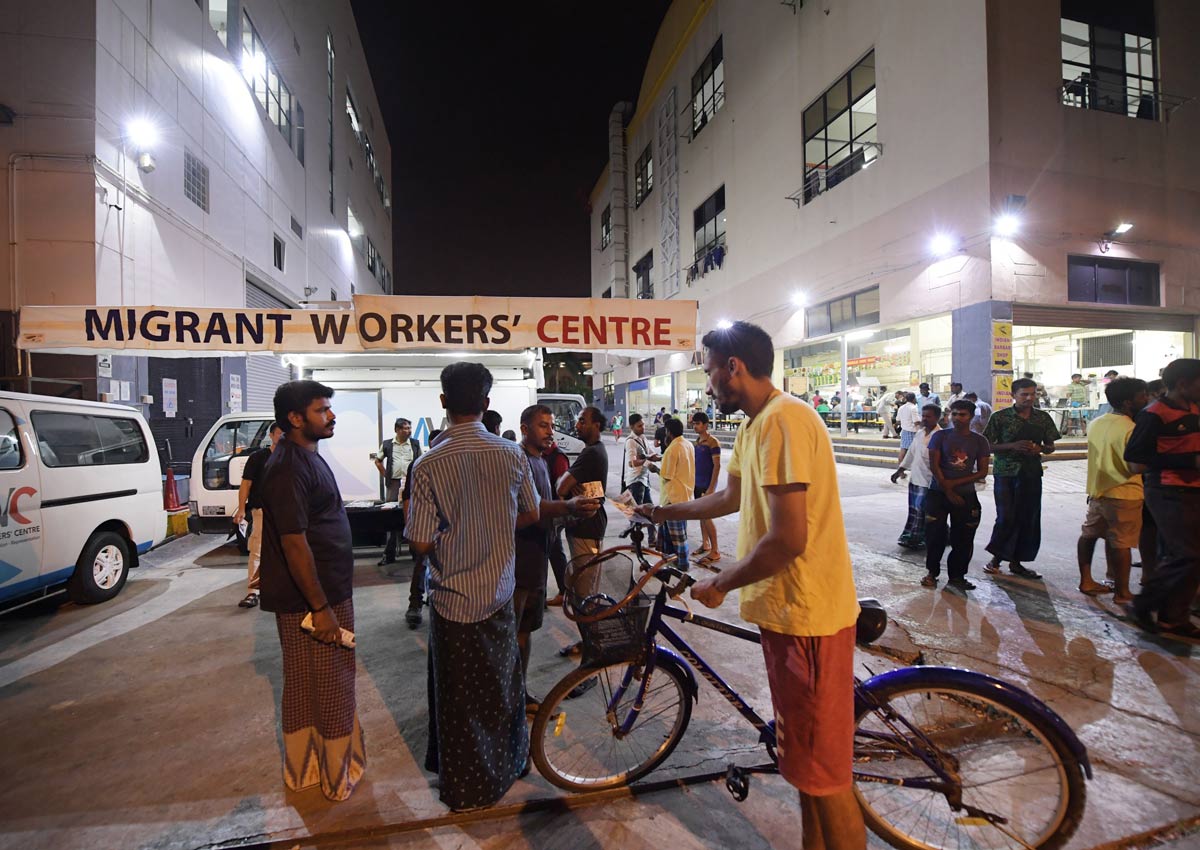
Image: 
Category: 
Publication Date: 
Sunday, December 18, 2016 – 16:00
Send to mobile app: 
Source: 


Story Type: 
Others

Source link

Kudos to NGOs that help Singapore's migrant workers

0

Migrant workers have been with us for centuries.

When modern Singapore was founded in 1819, migrants came here from across Asia to make a living – some returned home, others stayed on, as did many other migrants all over the world.

But only recently did the contributions of migrants get global recognition.

In 2000, the United Nations proclaimed Dec 18 as International Migrants Day.

On that day in 1990, a decade earlier, the UN adopted the International Convention on the Protection of the Rights of All Migrant Workers and Members of Their Families. The international treaty spells out protections for migrant workers and their families.

Since then, the day has been observed by countries in the world in various ways.

Singapore does not mark the day in a big way. There are no official events held around it and it does not appear on the diary of activities of the Ministry of Manpower (MOM).

However, a number of non-governmental organisations (NGOs) are celebrating the day by acknowledging the contributions of migrant workers here.

These workers form a significant proportion of the Singapore population and labour force.

There are about 1.4 million foreign workers in Singapore, out of a workforce of 3.7 million and a population of 5.6 million.

This means that about one in four people here is a foreign worker. And about two in five workers here are foreigners.

The bulk of these foreign workers, about one million of them, are work-permit holders doing manual work, for example, as construction workers and maids.

Unlike top-rung foreign executives who come to Singapore on expatriate terms with their families in tow, those doing manual work receive low pay and live in dormitories or others’ homes.

Without family support, they turn to non-governmental organisations for help when they run into problems.

NGOs say that the common problems these workers face are injuries related to work, salary and employment-related disputes and poor working conditions.

There are no official statistics on the number of foreign workers who die and are injured on the job, or those embroiled in disputes with their employers.

One of the oldest groups helping migrant workers is the Archdiocesan Commission for the Pastoral Care of Migrants and Itinerant People (ACMI). Commissioned as a ministry by the Roman Catholic Archbishop of Singapore in June 1998, ACMI has largely kept a low public profile.

The four big NGOs in the field are the Migrant Workers’ Centre (MWC), Humanitarian Organisation for Migration Economics (Home), Transient Workers Count Too (TWC2) and HealthServe.

The MWC is backed by the Government, the National Trades Union Congress and the Singapore National Employers Federation. It has the most resources in terms of manpower and funding.

Home has long been a champion for maids, offering training for them in vocational skills. It also runs the largest shelter for maids here.

TWC2, which runs a soup kitchen and provides shelter services, sees itself as a lobby group and advocate of migrant workers’ rights.

HealthServe is the only NGO that provides low-cost medical and dental care for workers, besides running shelters and a soup kitchen.

Apart from these four big groups, there are several other smaller players in areas such as training and raising awareness of migrant workers’ issues among university students.

Each of them fills a niche.

The MOM acknowledges the work of these NGOs. A ministry spokesman says: “The NGOs, together with many other stakeholders, such as the unions and employer associations, complement MOM’s efforts to take care of the migrant workers.”

On International Migrants Day today, Insight tells the stories of the NGOs that look after the welfare of these workers and speak up on their rights.

tohyc@sph.com.sg

joseow@sph.com.sg


This article was first published on December 18, 2016.
Get a copy of The Straits Times or go to straitstimes.com for more stories.
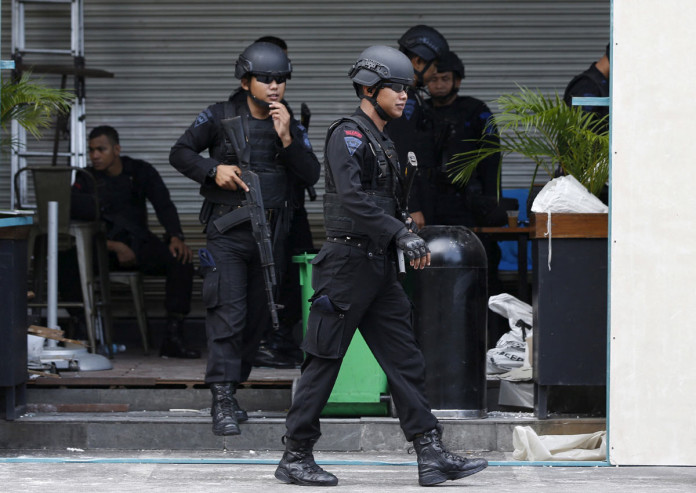
Image: 
Category: 
Publication Date: 
Sunday, December 18, 2016 – 15:00
Keywords: 
Send to mobile app: 
Source: 


Story Type: 
Others

Source link

Indonesia's new worry: Women turning suicide bombers

0

Dian Yulia Novi was not known to be religious growing up in Cirebon, West Java. She started wearing the hijab only a few years ago, after she left her home town to work in Taiwan and Singapore as a maid.

Last Tuesday, the 27-year-old appeared on live television in a black burqa, revealing only her eyes, as she recounted how she came to be part of a terrorist cell, which put her on a suicide-bombing mission.

When asked if she feared God’s wrath for being part of an attack that could kill on a massive scale, she said no because she was doing it “for the sake of Allah”.

The emergence of women who are willing to give up their lives to carry out suicide bombings has raised the stakes in the country’s war on terror, as counter-terrorism efforts will now have to consider female combatants as well.

Dian and Arida Putri Maharani, 25, were arrested last weekend after police foiled a plot to bomb the Istana Merdeka presidential palace in Jakarta last Sunday.

Read Also: Jakarta terror suspect worked as maid in Singapore

It also marks a shift in strategy by Indonesian militants, who are now recruiting women to mount attacks instead of men, said national police chief Tito Karnavian.

He confirmed the suspects had planned to use a “rice-cooker” bomb, and this was to be detonated by a woman, referring to Dian.

National police spokesman Inspector-General Boy Rafli Amar said women blend in more easily and appear less suspicious.

“That is why terror groups are using them,” he added yesterday.

Dian’s alleged recruiter Tutin Sugiarti, a 37-year-old housewife from Tasikmalaya, West Java, and a fourth woman terror suspect, Ika Puspitasari, were picked up on Thursday, as the dragnet against the new terrorist cell based in Solo, Central Java, continues to widen.

The cell was set up by an Indonesian militant named Bahrun Naim, who is in the Middle East fighting alongside the Islamic State in Iraq and Syria (ISIS) militant group.

So far, at least 10 members of the group, mostly men, have been nabbed by police commandos from the counter-terrorism unit Detachment 88 (Densus 88), across Java over the last one week.

Read Also: IS shifts focus to female suicide bombers

General Tito recalled the assassination of former Indian prime minister Rajiv Gandhi in 1991, as one of the more high-profile hits carried out by a woman suicide bomber, while such attacks are increasingly prevalent in Afghanistan, Iraq and Syria.

But Dian and Arida – who are both married to Muhammad Nur Solikin, the 26-year-old leader of the Solo cell – are the first Indonesian women known to be tasked with suicide bombings. There have been no reports of other women in South-east Asia doing the same.

Indonesian Defence University researcher Idelia Fitriana said Indonesian women historically become involved in terrorism through marriage, or family connections, and usually take on passive roles.

“Men are usually the jihadists because they are told if they martyr themselves, they will be in paradise with 72 beautiful virgins as their wives,” she added. “That’s the reward they believe they will receive if they commit a suicide bombing.”

But Ms Idelia said Dian was probably influenced by her husband to become a suicide bomber.

Religious Affairs Minister Lukman Hakim said such marriages have no place in Islam, adding that a marriage is a holy institution that promotes peace, hope and love.

Read Also: Indonesian terror cells switch tactics with women recruits

Investigations to establish the specific roles the four women played in the cell are ongoing. Dian is the only one who confessed to being a suicide bomber, adding that she was self-radicalised.

She said in the TV interview that it started when she looked up jihadists on social media and read about them online in 2014 – the year she was working in Singapore.

ISIS is known to have used social media to proselytise its cause and encourage sympathisers, including women to join it, said experts.

National Counter-terrorism Agency, or BNPT, recently set up a unit to counter radicalisation campaigns online but it is mainly targeted at children and young people in Indonesia, rather than women.

Jakarta-based Institute for Policy Analysis of Conflict director Sidney Jones said online chatter indicates that some women admire other women who are more active in terrorist movements overseas.

“They think it is more prestigious, more honourable, more satisfying if they become a mujahidah,” Ms Jones told The Jakarta Post, using the term for female militants.

Dr Fitri Bintang Timur, who recently completed a study on women in peacekeeping operations at Britain’s Cranfield University, noted that some women decided to bear arms because they too could be disgruntled with the government. But she felt Dian may have been brainwashed.

“I think she believes that what she is doing is good even though it will harm others,” added Dr Fitri.

tkchan@sph.com.sg


This article was first published on December 18, 2016.
Get a copy of The Straits Times or go to straitstimes.com for more stories.
Image: 
Category: 
Publication Date: 
Sunday, December 18, 2016 – 15:00
Keywords: 
Send to mobile app: 
Source: 


Story Type: 
Others

Source link

Talent show, fun fair, dinner among treats for foreign workers

0

It is International Migrants Day today and several non-governmental organisations (NGOs) helping foreign workers are holding activities to celebrate their contributions.

The Migrant Workers’ Centre (MWC) is holding a talent show at Ci Yuan Community Club in Hougang where 12 foreign workers are competing to win the top prize of $3,000 cash. The MWC said it will stream the show live on the Internet to six foreign worker recreation centres for other workers to watch.

“The event showcases the musical talents among foreign workers,” said Mr Yeo Guat Kwang, chairman of the National Trades Union Congress-backed MWC and assistant secretary-general of NTUC.

The Ministry of Manpower (MOM) said its senior officials will be at the show.

Over at Toa Payoh Town Park, the Centre for Domestic Employees (CDE) is holding a fun fair for 300 maids, featuring games and singing performances. The CDE, which was set up by NTUC in January, will be presenting folded paper hearts to the maids to show its appreciation.

Meanwhile, newly formed non-profit group Project Chulia Street is hosting a dinner for 7,000 workers at the Westlite Dormitory in Tuas. It is the third dinner the privately funded group is holding for migrant workers this year. It previously held dinners for about 11,000 workers in conjunction with May Day and National Day.

Some groups, such as Transient Workers Count Too (TWC2), celebrated the occasion early, with a movie and meal treat for about 200 migrant workers two weeks ago. The screening of superhero film Doctor Strange on Dec 4 also served as its annual fund-raising event, with some $60,000 raised.

Mr Patrick Tay, chairman of the Government Parliamentary Committee for Manpower, said such activities organised by NGOs complement efforts by the Government, public and embassies in looking after the welfare of foreign workers.

“NGOs can help promote the harmonious co-existence of migrant workers and locals, and generate greater acceptance and integration in our living and working spaces,” said Mr Tay, who is also assistant secretary-general of NTUC.

Domestic worker Kristine Lim Lee, a contestant in the MWC talent show, said such events motivate foreign workers. “I feel encouraged that foreign workers like me are appreciated,” said the 32-year-old who has worked here for five years.

But social worker and activist Jolovan Wham, consultant at the Humanitarian Organisation for Migration Economics (Home), said that events to mark the day cannot be entirely celebratory in nature.

Home urged the Government to ratify the United Nations’ International Convention on the Protection of the Rights of All Migrant Workers and Members of Their Families. The convention, introduced in 1990, came into force in 2003 and spells out protections for migrant workers and their families.

“It is not about throwing them a party,” said Mr Wham.

Responding, the MOM said 144 of the 193 UN member states have not ratified the convention. A ministry spokesman said the ministry ensures that the rights and well-being of foreign workers are protected under labour laws, but ratifying the convention means giving migrants and their families “a wide range of rights”, including the “same access to social security, equal employment rights in terms of remuneration and conditions of work”.

“Given Singapore’s constraints, we do not think that we can accede to such stipulations,” he added.

tohyc@sph.com.sg

joseow@sph.com.sg


This article was first published on December 18, 2016.
Get a copy of The Straits Times or go to straitstimes.com for more stories.

Image: 
Category: 
Publication Date: 
Sunday, December 18, 2016 – 15:00
Send to mobile app: 
Source: 


Story Type: 
Others

Source link

Maid who left Singapore as a businesswoman

0

Ms Nilushika Jayaweera came to Singapore to work as a maid in 2001 and 15 years later, she left as an entrepreneur.

The 36-year-old now buys tea leaves from gardens in Sri Lanka and boxes them for sale to some 500 international customers.

She was back in town recently to join a growing list of inspirational speakers on the TED Talks circuit. Other speakers have included tech giant Bill Gates, former United States vice-president Al Gore and researcher Jane Goodall.

Ms Nilushika was invited to speak at TEDxSingapore on Oct 29 this year at Capital Tower.

Not bad for a woman who grew up in an orphanage and was forced to leave her siblings behind to earn a living.

“Back then, I didn’t know who I was or what I wanted. Life just happened to me,” said Ms Nilushika, who came to Singapore to support her four younger siblings.

Her parents died when they were young. Ms Nilushika and her siblings grew up in an orphanage.

In her presentation, Ms Nilushika highlighted the work of Aidha, a non-governmental organisation (NGO) in Singapore that mainly teaches maids how to manage their money and start businesses. It was Aidha – a Sanskrit word which means “That to which we aspire” – that transformed her life.

Ms Nilushika said her time in Singapore not only equipped her with business skills, but it also taught her how to empower women in her home country, Sri Lanka.

The money generated from the tea business helped her start her own NGO a few months ago. She is now teaching women in her village how to start small businesses such as pig farming, dressmaking and spice-packing so as to lead independent lives.

Ms Nilushika said she learnt about Aidha in 2011. She was facing some family problems then and her employer thought Aidha’s courses could help her. So her employer paid $400 and signed her up for weekend courses where she picked up financial literacy, business and leadership skills.

With these skills, she helped her husband back home to set up a small online tea business.

“Learning the skills from the courses created more choices and possibilities for me. I began to realise that education and empowerment are key to a brighter future for women,” Ms Nilushika said in her speech.

She now uses part of her earnings to pay for the children in her village to get an education, including buying them school books.

Ms Nilushika is one of 3,350 domestic workers whom Aidha has reached out to in Singapore since it was set up in 2006. There were 237,100 such workers as of June this year. The NGO, which started as a United Nations Women project, is celebrating its 10th anniversary this year.

According to Aidha’s figures, more than four in 10 maids who joined its weekend classes go on to start businesses in their home countries. About a third of those who start a business go into farming, while the rest open restaurants and retail shops.

Aidha also educates domestic workers on the importance of savings. Based on a study of about 1,300 of its students, it found that their monthly savings increased by 68 per cent to about $220 after attending two financial literacy courses. That is almost half of the monthly salary of Indonesian and Filipino maids.

“Having adequate savings and skills to start a business is key, given the dearth of good employment opportunities and low pay back in their home countries.

“We want to break that cycle of poverty and that can start when they are in Singapore,” said Aidha’s chief executive Jacqueline Loh.

The maids who turn up at Aidha, which is located at United World College in Dover Road, pay $400 to attend three-hour lessons twice a month on Sundays for nine months.

Half of the students have their fees paid for by their employers while others now have a $100 subsidy provided by sponsors.

For instance, MasterCard donated US$15,000 (S$21,700) last week to Aidha’s fund-raising campaign. A third of Aidha’s costs are covered by student fees, while the rest are drawn from corporate and institutional funders.

The courses, which include language and IT skills, are run by more than 200 trained volunteers. These volunteers, and some maids, also organise hobby-related classes such as on dancing, make-up, yoga and cooking during the weekends.

“We estimate a multiplier effect of nine lives impacted for each of the women who attend our courses based on their average number of dependants and the number of employees in the businesses they start.

“That means over 30,000 lives have been impacted by Aidha’s work,” said Ms Loh.

Indonesian maid Nur Aini, 34, has been attending courses and helping Aidha with administrative work for the last five years. She is also the leader of a dance group there.

“Aidha is like a second home to me. I gained confidence in using English to communicate with others,” said Ms Aini, who plans to return home to start an English school in four years’ time.

“I also discovered that I have hopes, dreams and abilities that go beyond domestic work.”

Ms Loh said Ms Nilushika’s story will inspire others. “Like many of the maids here, she worked for many years and had little savings.

“Her story shows that if she can overcome monumental challenges, others too can do so.”

jantai@sph.com.sg


This article was first published on December 18, 2016.
Get a copy of The Straits Times or go to straitstimes.com for more stories.

Image: 
Category: 
Publication Date: 
Sunday, December 18, 2016 – 15:00
Send to mobile app: 
Source: 


Story Type: 
Others

Source link

Iceland rescue heroes: It was natural to help

0

Most people who land a dramatic video that goes viral online will want bragging rights.

Not Mr Muhammad Syahidin Shareffuden, 27, and his three friends.

They even dismissed online talk that they were heroes for rescuing a woman in Iceland who was trapped in her overturned car.

While driving to Gulfoss Waterfall on Nov 15, they noticed a car, driven by Icelander Audur Gisladottir, hit a road divider.

The car then flipped over several times before landing on its roof at the side of an icy road.

Shortly after the incident, Mr Syahidin posted online a video of the rescue – taken by his friend Muhammad Nasir, 27.

It went viral on the Internet.

Speaking to The Sunday Times, Mr Syahidin said he had wanted to warn his friends, who were planning to visit Iceland, how dangerous the roads can be.

So he was surprised when netizens hailed the four men as “heroes”.

“We never wanted the video to go viral,” said the IT support analyst.

“We just happened to be there and as human beings, it’s natural to help them. We are not heroes.”

Mr Salihin Iddeeros, 27, who works as a train driver, said that the whole incident lasted about 30 minutes.

Upon seeing the overturned car, the group’s first instinct was to rush over to get the woman out.

Mr Salihin quickly tried to unlock a car door because they could smell petrol.

After several tries, he managed to open a rear passenger door to unbuckle Miss Gisladottir’s seat belt. She was alone.

By then, several locals had arrived at the scene and she was later taken away in an ambulance.

“We didn’t manage to speak to her the whole time. She was screaming and very traumatised,” said Mr Syahidin.

“But as long as she’s fine, it’s okay with us. There’s no need for us to get any credit.”

On Facebook, the video was viewed about 4,000 times.

A friend also sent the clip to citizen journalism website Stomp, and it was uploaded on YouTube, where the video got more than 29,000 views.

An Icelandic website, Stundin, picked up the video and interviewed Miss Gisladottir, who expressed her gratitude.

The men said that during the trip, they experienced what it is like to drive on icy roads with temperatures at sub-zero while in the middle of snowstorms.

If anything, the entire episode has reminded them to be careful when driving.

“After witnessing the accident, we made sure we drove way below the speed limit of 85kmh for the rest of our trip,” said Mr Nasir, a technician.

“This incident just gives us another story to tell.”

kcarolyn@sph.com.sg


This article was first published on December 18, 2016.
Get a copy of The Straits Times or go to straitstimes.com for more stories.

Image: 
Category: 
Publication Date: 
Sunday, December 18, 2016 – 14:09
Send to mobile app: 
Source: 


video embed code: 
<iframe width="100%" height="355" src="https://www.youtube.com/embed/2vZ4V5jRzUI" frameborder="0" allowfullscreen></iframe>
Video Media: 
Other Video Media
Story Type: 
Others

Source link

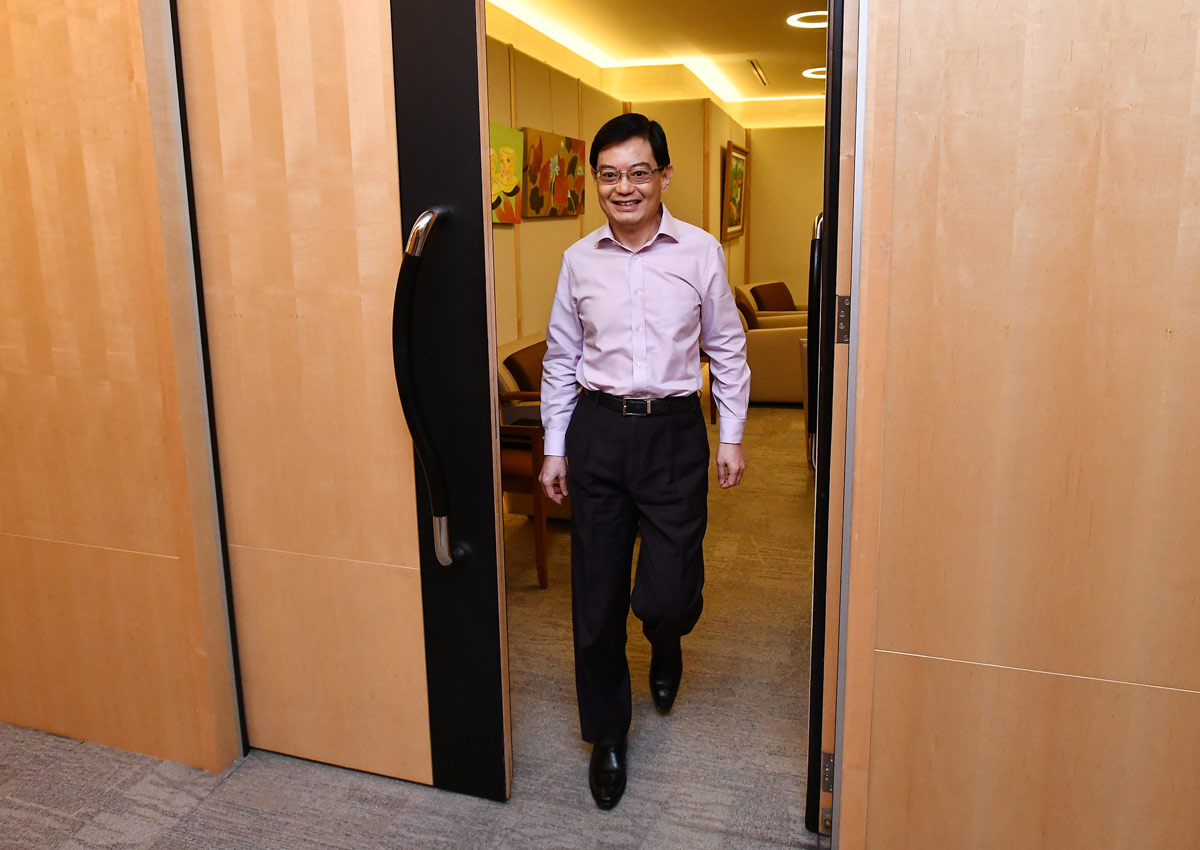
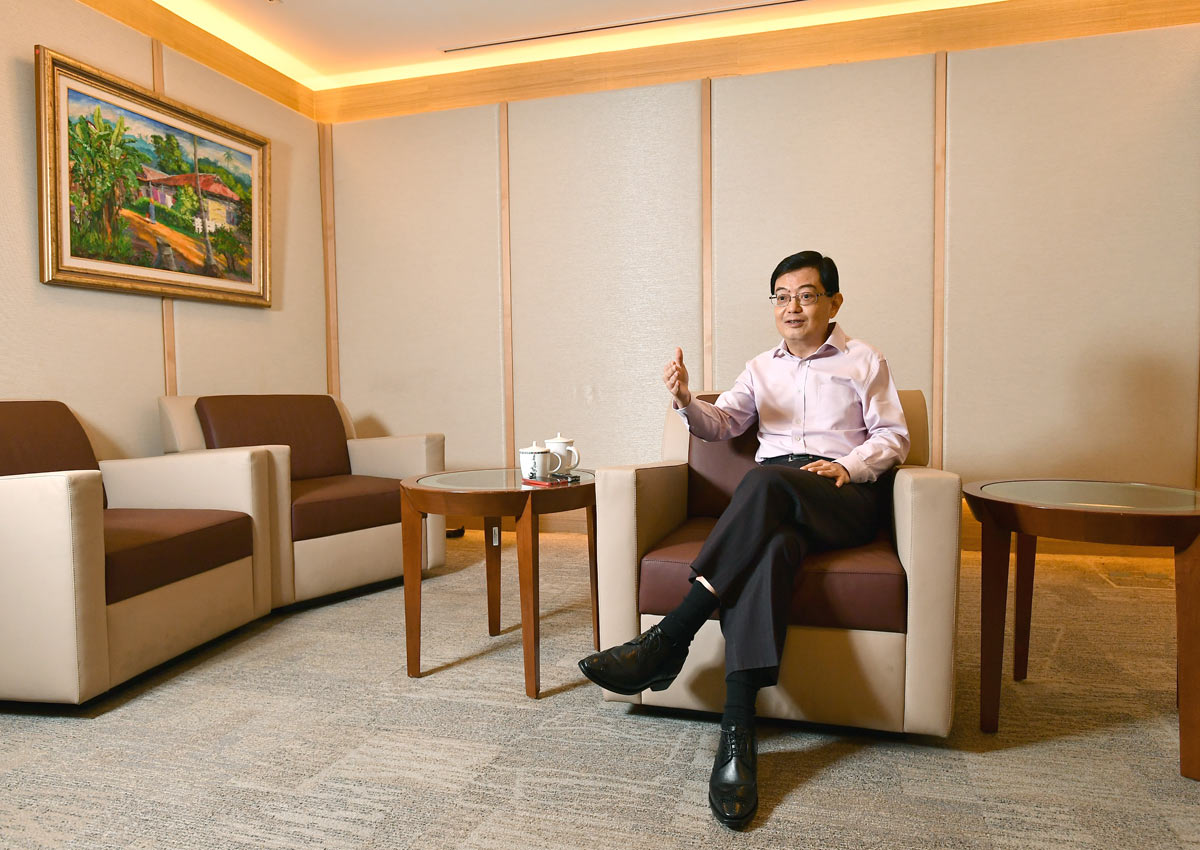
Heng Swee Keat says succession is all about teamwork

0

His name has often surfaced as a front runner to take over when Prime Minister Lee Hsien Loong steps down.

So when Finance Minister Heng Swee Keat had a stroke, it inevitably stoked discussion about his role in the future leadership team.

During an interview last Tuesday, Mr Heng declined to discuss who would lead Singapore next.

“That is a hypothetical question. I will not go into that,” he said when asked if he would accept the position if picked.

He, however, suggested that steering Singapore is about teamwork.

“A lot of it is really to make sure that we all pitch in and we all support one another, not just the fourth-generation leaders among ourselves, but also with all fellow members of the Cabinet and with the broader institutions in Singapore,” he said.

Succession planning took on a renewed urgency after PM Lee repeated several times his plans to retire some time after the next general election, which must be held by April 2021.

Concerns were raised when Mr Heng had a stroke in May and PM Lee almost fainted when delivering this year’s National Day Rally speech in August.

Mr Heng said the younger ministers have been getting their feet wet in the various ministries they have been rotated through, part of the preparation to take over. “I think they have all done well.”

Read Also: Heng’s first words when out of coma: Is there a Cabinet meeting today?

Mr Heng himself held the education portfolio before his current appointment, and was also put in charge of key assignments such as the 2013 feedback exercise Our Singapore Conversation, the SG50 celebrations last year, and the Committee on the Future Economy, tasked to come up with strategies to prepare the workforce and economy for upcoming challenges.

“It’s not just about your individual work, but it is how we connect with Singaporeans and how we do the right things to make sure we have the right policies that will enable us to navigate to a better future,” he said.

In the ruling People’s Action Party, each generation decides among itself who will lead its team.

Both prime ministers after the late Mr Lee Kuan Yew – Emeritus Senior Minister Goh Chok Tong and PM Lee – had taken on the premiership with the support of their peers.

PM Lee said as much when he pointed out that the fourth prime minister will be chosen the same way.

Just three years after taking over, he had said he would not anoint his successor.

Read Also: Get-well wishes spurred Heng Swee Keat on

Besides Mr Heng, others identified as core members of the next team include Minister in the Prime Minister’s Office and labour chief Chan Chun Sing, Minister for Education (Schools) Ng Chee Meng, Minister for Education (Higher Education and Skills) Ong Ye Kung, Minister for Social and Family Development Tan Chuan-Jin and Minister for National Development Lawrence Wong.

Asked if the team had started discussing who should be PM, Mr Heng was tight-lipped.

Breaking into a slight smile, he said firmly: “I shall not veer into this.”

But ultimately, he said, what matters is the trust and confidence Singaporeans have in the team that will lead the country.

“If we are united and cohesive and have a sense of direction, we can get there.”

yuenc@sph.com.sg


This article was first published on December 18, 2016.
Get a copy of The Straits Times or go to straitstimes.com for more stories.

Image: 
Category: 
Publication Date: 
Sunday, December 18, 2016 – 14:00
Send to mobile app: 
Source: 


Story Type: 
Others

Source link

Get-well wishes spurred Heng Swee Keat on

0

People across Singapore and from all walks of life sent wishes for a speedy recovery to Finance Minister Heng Swee Keat after he collapsed from a stroke in May.

Flowers and hampers of chicken essence packed the Heritage Museum at Tan Tock Seng Hospital (TTSH), messages were left on his Facebook page and there were cards and framed artwork by children and adults alike.

The good wishes played a significant part in helping him get well.

Opening up for the first time about his road to recovery, Mr Heng said at an interview on Tuesday: “The support and encouragement I got, from my immediate family members to members of the public whom I don’t know personally, were very touching.”

“It helps. It made me feel ‘Oh, you’re a part of something bigger’, and that was quite meaningful. It was quite amazing.”

Read Also: What Heng Swee Keat’s stroke means for the average Singaporean

In fact, the cards and messages were used to get him back on his feet. Mr Heng was unable to stand on his own after the stroke and he had to do daily exercises to build up strength in his body.

His physiotherapists at the hospital turned to the get-well cards to spur him on. They placed them at eye level so that he could read them only when he stood up.

Another motivator was a miniature of the lion statue that was part of the Future of Us exhibition last year to mark Singapore’s 50th year of independence.

It was given to him by the team that worked with him on the exhibition.

“I must say, my colleagues, family and friends and the hospital crew were quite creative,” he said.

Read Also: Heng Swee Keat says succession is all about teamwork

“Initially, it was difficult just to walk a few steps, so my wife used the mini-statue as a medal to motivate me. I got it every time I reached a target she set.”

Mr Heng had suffered a ruptured aneurysm on May 12, during a weekly Cabinet meeting.

He said he did not suffer great damage, as fellow office-holders who are trained doctors had begun resuscitation efforts while waiting for the ambulance to make sure his heart continued pumping and he did not stop breathing.

Just four minutes without oxygen could mean permanent damage to the brain.

He was taken to TTSH where he was given a scan right away. Neurosurgeons then performed endovascular coil embolisation on him, a surgery to seal off the aneurysm.

Doctors who spoke to The Straits Times said it would typically take three to six months for a stroke patient to recover fully, but Mr Heng was discharged after being warded for six weeks, and was able to walk unaided by then, albeit unsteadily.

Now, almost seven months on, there is no slur in his speech and no wobble in his gait. Striding in for the interview last Tuesday, Mr Heng appeared fresh and energetic. His was a recovery many have described as miraculous, and Mr Heng is thankful to all who had part in it.

Read Also: Finance Minister Heng Swee Keat was lucky to get immediate attention

“I was very, very lucky. I’m very grateful to my colleagues in Cabinet, especially Dr Janil Puthucheary, the ambulance crew and the medical team,” he said. “I’d also like to thank the many people who have been so warm in their good wishes to me.”

While he could remember the initial baby steps he took lucidly, he was at a loss about what happened on the day he had taken ill.

“Actually, I don’t remember what happened. It was only later that I began to piece together what happened from what my colleagues, wife and doctors related,” he said.

The only thing he remembered of that day was having a headache before the Cabinet meeting, and taking a Panadol tablet for it. “I thought it’s just one of those things, maybe I didn’t have a proper rest.”

But doctors later told him they believe that was the start of his stroke. Severe headaches are one of the symptoms when aneurysms bleed.

Read Also: Heng’s first words when out of coma: Is there a Cabinet meeting today?

The episode was scary for his Cabinet colleagues and especially difficult for his family. Not least because he developed a lung infection in the hospital, which complicated his treatment.

The six days he lay unconscious were the hardest moments, he said, but not for himself as he was “totally unaware of what was happening”.

They weighed heaviest on his wife, Ms Chang Hwee Nee, 53, who is deputy secretary at the Ministry of National Development, as she had to make some “very difficult decisions” about his treatment, such as whether doctors should proceed with inserting a tube into his lungs.

“It was very stressful for her, but I must say she’s quite resilient. And, of course, my children and family members were supporting her, and friends and colleagues also stepped forward to offer help,” he said.

Mr Heng has a son and a daughter, who are in their 20s.

The days immediately after he woke up were hazy. “I do have vague recollection about wondering where I was and why I am not allowed to get out of my room… I was told I was struggling to get up, but I don’t know what was on my mind,” he said of waking up in the hospital’s intensive care unit.

“My wife told me they had a hard time explaining to me that I was in a hospital. I thought I was in some office at a meeting… I asked to have coffee,” he added.

For the first week or so, he communicated through writing, not able to speak with tubes inserted down his windpipe to help him breathe. “The first few pieces I wrote, the handwriting was not very good. After a few days, it got a lot smoother,” he said.

Mr Heng was also put through speech and balancing exercises daily, as part of his rehabilitation.

In a Facebook post after he returned home in June, he described the six weeks in hospital as the “toughest of my life”.

But now, he exudes a Zen-like calm when speaking about his experience. “I must say I felt okay. By the time I was conscious, the focus was on regaining my strength,” he said.

While he was weak, and it took gargantuan effort just to perform routine tasks like sitting up, the encouragement of those around him helped to make it easier.

“At every stage, there was something to strive to do better, and that kept me going. I knew that if I did it properly, I’d be back to my normal self, so I was quite focused on that.”

It also helped that he paced himself during the rehabilitation, and spent his free time catching up on the news. After his discharge, he read all the cards, notes and e-mail messages he received, and also followed news about the United States presidential election campaign.

Now, he is mostly well, except for his lungs, which are still recovering from an infection.

Read Also: Heng Swee Keat’s condition stable, will stay in ICU for some time: PM Lee

To make sure it does not recur, his doctors have asked him to avoid crowded places, including even meetings with more than 10 people.

This means Mr Heng has not been able to return to his grassroots work in Tampines GRC, which he helms.

But he has been back at work at the Finance Ministry since August, busying himself with the Committee on the Future Economy and next year’s Budget.

Asked if the near-death experience had changed his life’s priorities, he said: “In a way I would say, ‘No’. I have always believed that in whatever we do, we should do our best. And so now that I am able, I will continue to do my best.”

But the scare has made him pay more attention to his health. He tries to sleep earlier now, at 10pm, instead of past midnight.

Also, instead of working long stretches non-stop, he now sets an alarm in his mobile phone to remind him to take a break every hour and just walk around. “Sometimes I forget,” he quipped. “But I decided I needed to pace it, do it in a more gradual way.”

Has the experience made him think more about life’s purpose?

“Do I think there may be a bigger purpose in life? One must never dismiss this. Life is full of mystery. It’s quite amazing how things turn out.”

yuenc@sph.com.sg


This article was first published on December 18, 2016.
Get a copy of The Straits Times or go to straitstimes.com for more stories.

Image: 
Category: 
Publication Date: 
Sunday, December 18, 2016 – 14:00
Send to mobile app: 
Source: 


Story Type: 
Others

Source link

Football: Siroch double sends Thais to Suzuki Cup triumph

0

Bangkok – Thai forward Siroch Chatthong scored twice against Indonesia to help Thailand lift the Suzuki Cup in Bangkok late Saturday, overturning a shock first leg deficit.

Goals on either side of halftime gave Thailand the 2-0 victory that allowed it to retain the hotly-contested Southeast Asian title for a record fifth time.

The pressure was on the War Elephants after a crushing loss to Indonesia in the final’s first-leg, when the Garuda took advantage of their home turf to become the first team in the tournament to breach Thailand’s defence with a 2-1 win.

But Thailand headed into halftime in high spirits on Saturday after Siroch got lucky and kneed a pass from Theerathon Bunmathan into the net just seven minutes before the break.

The strike shaved off Indonesia’s first-leg win advantage and set off a thunderous roar from the raucous, fan-packed stands in Bangkok’s Rajamangala Stadium.

Thailand charged confidently back onto the field after halftime and swiftly widened their lead when Siroch scored his second goal eight minutes in.

The squad continued their onslaught of attacks for the remainder of the match but failed to make another breakthrough.

In minute 81′ Indonesian goalkeeper Kurnia Meiga found some redemption in blocking a penalty kick by Thailand’s star striker Teerasil Dangda, who earned the cup’s top scorer award with 6 goals in the tournament.

The Garuda emerged as the dark horse of this year’s tournament after making it to the final despite missing out on more than a year of competitive matches due to a one-year ban from international events imposed by world soccer body FIFA.

The AFF Suzuki Cup was Indonesia’s first international tournament since the ban was lifted in May.

But the team will now go home empty-handed from the final for the fifth time, as Thailand’s smooth-passing, attack-minded players once again take the Southeast Asian title.

Image: 
Category: 
Publication Date: 
Sunday, December 18, 2016 – 13:48
Send to mobile app: 
Source: 


Hermes ID: 
2 816 941
Hermes ID String: 
SY_SUZUKICUP_1218
Hermes Author: 
SEANYAP
Story Type: 
Others

Source link