28.7 C
Singapore, SG
Wednesday, September 23, 2026
Home Blog Page 2190

Duterte painkiller use draws concern in Philippines

0


Manila – Philippine President Rodrigo Duterte’s admission that he used a powerful painkiller has prompted concern about his health, with lawmakers urging him Sunday to undergo a medical examination and disclose the results.

Duterte on Monday revealed that he used to take fentanyl, often prescribed for cancer pain and other chronic ailments, because of a spinal injury from previous motorcycle accidents.

He however said his doctor made him stop using it on learning he was “abusing the drug” by using more than the prescribed patches.

The firebrand leader has attracted controversy over his war against suspected users of illegal drugs, which has claimed thousands of lives, and his incendiary language against the United States and the United Nations.

Lawmakers said Duterte’s remarks revived speculation about his health, including rumours during the election campaign that he suffered from cancer – a claim Duterte repeatedly denied.

“To end this speculation, it would be better if his physician explains how the president manages the pain that he suffers,” Duterte ally congressman Carlos Zarate told AFP.

Zarate added that a medical bulletin would clarify the state of Duterte’s health, as fentanyl became controversial after pop legend Prince died of an accidental overdose of the drug in April.

Fentanyl, highly potent and addictive, is estimated to be up to 100 times stronger than morphine.

An outspoken Duterte critic, Senator Leila de Lima, supported Zarate’s call.

“It is not just the illness itself that we should be worried about, but also the impact or side effects that the medications he is taking may have, especially on his lucidity and ability to make decisions with a clear mind.” At 71, Duterte is the oldest president of the Philippines.

He has said he suffers from daily migraine and ailments including Buerger’s disease, a cardiovascular illness characterised by inflammation of blood vessels usually due to smoking.

Duterte cited ill health as the reason for skipping events during summits abroad. In Cambodia last week he said he might not even finish his six-year term.

Another critic, Senator Antonio Trillanes, told AFP Duterte’s admission that he took more than the prescribed fentanyl dosage showed he “qualified as a drug addict”.

However Duterte on Saturday denied any addiction.

“When there’s regularity, my friend, when you take it and when there’s a monkey on your back, that’s addiction,” he told a BBC reporter.

Doctors said fentanyl was regulated in the Philippines, with physicians needing a licence from the drug agency to prescribe it.

“The ones using (fentanyl) are usually people with harrowing pain or terminal diseases. Doctor monitoring manages risks of addiction,” said Leo Olarte, former president of the Philippine Medical Association.

“A medical bulletin is good so the public won’t be rattled.”

Image:
Category:
Publication Date:
Sunday, December 18, 2016 – 17:09
Send to mobile app:
Source:

Hermes ID:
2 817 279
Hermes ID String:
AS1218-DUTERTE-PAINKILLER
Hermes Author:
SSANDREA
Story Type:
Others

Source link

Save $5 off GrabShare rides during peak hours this week from 19 – 22 Dec 2016

0

Save $5 off GrabShare rides from Mon 19 to Thu 22 Dec, 7am – 10am & 5pm – 9pm

Save $5 off GrabShare rides during peak hours this week from 19 – 22 Dec 2016

Make your morning commute and evening ride home more economical with Grab’s peak-hour promo. Save $5 getting to and from work with GrabShare. Promo valid for payment by card only, from Monday-Thursday, 7AM-10AM and 5PM-9PM.

Source

Painting helps teenager brush off life's difficulties

0

Ms Sofhie Airinie, 19, has a twisted spine and a muscle-wasting disease that makes breathing and moving a struggle.

But the pain of living with scoliosis and congenital myopathy – an incurable disease of the muscle tissue – is forgotten when she starts to paint.

She said sketching and painting help her deal with life’s difficulties.

One of her pieces, now on display at the Singapore Art Museum, is a collage of an owl and represents how she tries to focus on the positive in life.

Like her, several other patients have contributed artworks to help tell the stories of patients in Dreamcatchers, an adolescent chronic illness peer support group under the National University Hospital (NUH).

This year’s exhibition theme of Into The Looking Glass explores the triumphs and tribulations of young people who live courageously with chronic illnesses.

Ms Sofhie started painting at age six and has made about 50 artworks, from sketches of birds to movie characters.

“Art distracts me from the adverse… Instead of what’s distressing, I tend to think about art and what I want to create to feel better,” she said.

Ms Bernadette Png, assistant manager at the Department of Paediatrics at NUH, said the aim of the exhibition is to raise awareness that childhood chronic illnesses are not disabling.

Dr Mahesh Babu Ramamurthy, head and senior consultant at NUH’s Division of Paediatric Pulmonary and Sleep, said there is currently no cure for children with congenital myopathy although significant improvements have been made in supportive care over the years.

For instance, the availability of home ventilation and non-invasive ventilation has improved the quality of life for both patient and caregiver.

“The prognosis for these children has improved significantly in the last 15 years because of the supportive care.

There is, however, a gradual decrease in the amount of activity that these children can be involved in, and over time become wheelchair dependent,” he added.

Ms Sofhie’s mother Sofia Aziz, 48, said her daughter – the third of four children – hopes to one day sell her artworks so that funds can be used to help those who are sick.

Said Madam Sofia, who runs a mining company with her husband: “My family and I have to be strong and stay positive… even though sometimes I break down and cry behind her.

kcarolyn@sph.com.sg


This article was first published on December 18, 2016.
Get a copy of The Straits Times or go to straitstimes.com for more stories.

Image: 
Publication Date: 
Sunday, December 18, 2016 – 17:00
Keywords: 
Send to mobile app: 
Source: 


Story Type: 
Others

Source link

Migrant Workers' Centre a heavyweight among NGOs helping foreign workers

0

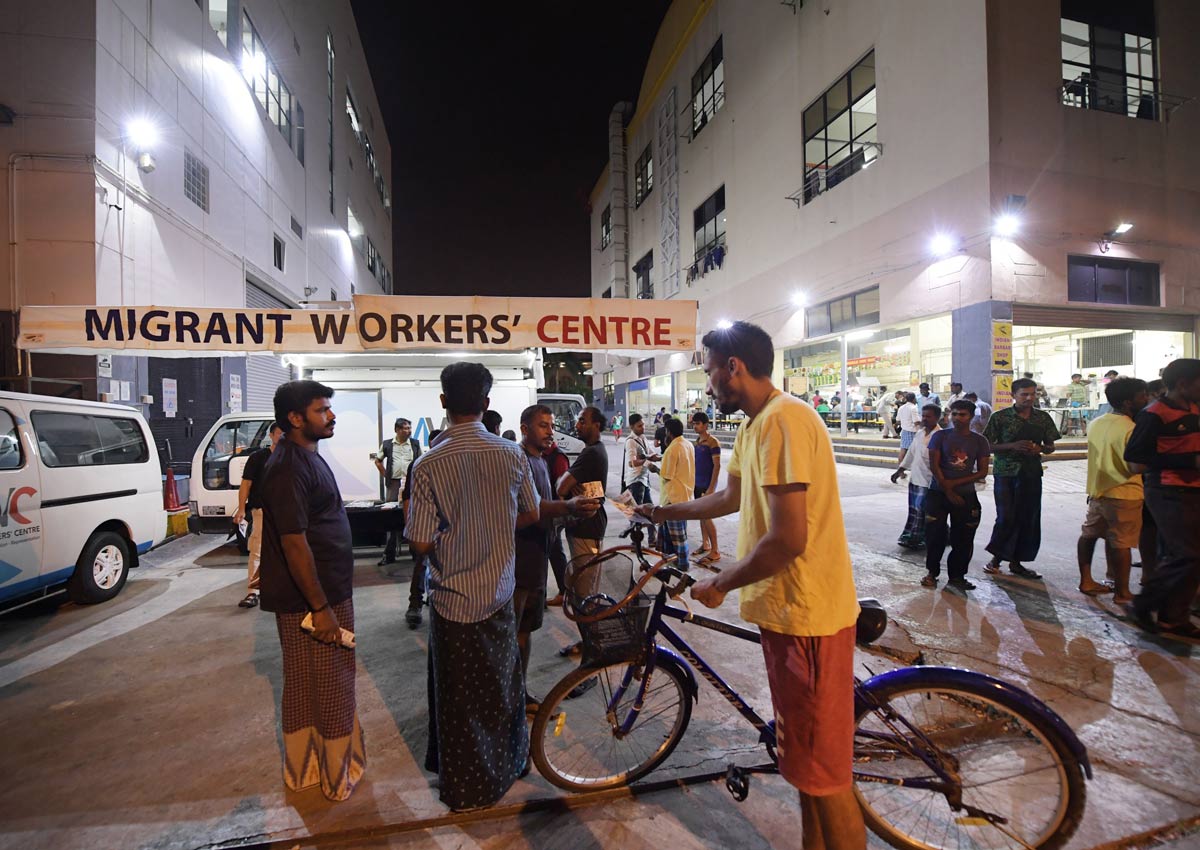
The Migrant Workers’ Centre (MWC) is a heavyweight among the non-governmental organisations (NGOs) helping migrant workers.

Set up in 2009 by the National Trades Union Congress (NTUC) and the Singapore National Employers Federation (Snef), it may seem an anomaly as it is the only group with the full support of the Government, labour movement and employers.

When it was set up, NTUC appointed Mr Yeo Guat Kwang, one of its veteran labour MPs then, to oversee the centre as its chairman. The Manpower Ministry also deployed two of its up-and-coming officers to set up the centre. One of them, Mr Bernard Menon, later joined NTUC full-time and continues to run the centre’s day-to-day operations.

When then Manpower Minister Tan Chuan-Jin published a personal collection of travel photos in 2014, he donated $320,000 from the book’s sales to the MWC a year later, making him the largest donor to the centre that year.

Last year, NTUC secretary-general Chan Chun Sing described the centre as “a tripartite effort”.

Mr Yeo, an assistant secretary- general at NTUC, tells Insight the MWC sees itself as an NGO as it champions fair employment practices and the well-being of migrant workers. “Both NTUC and Snef are NGOs, we are set up by two NGOs.”

Read Also: Kudos to NGOs that help Singapore’s migrant workers

The MWC has 17 staff members, the highest among the four larger NGOs assisting migrant workers. HealthServe, Home and TWC2 have nine, six and five full-time staff members respectively.

But unlike the other three, the MWC is not a registered charity.

Instead, it registered one of the funds that it runs – the Migrant Workers’ Assistance Fund – as a charity in May 2012. The fund stands at $457,706 as at March this year. It gave out $64,782 in assistance to workers last year.

Mr Yeo says the MWC keeps the costs of running the centre separate from the assistance it gives workers.

“This ensures the charity dollars go to helping workers, not the operations of the centre.”

It runs two centres in Serangoon Road and Geylang, where workers from South India and China congregate. It also funds a soup kitchen run by HealthServe in Geylang.

Read Also: Working to improve living conditions of migrant workers

But while its NGO status raises eyebrows in some quarters, Mr Yeo dismisses the suggestion that the MWC has an image problem because it is closely linked to the Government, unions and employers.

“At the end of the day, workers trust us and still come to us for help. They see us as effective and that is what matters,” he says.

Asked about criticism that MWC had been inactive until a strike by Chinese SMRT bus drivers in November 2012 and the Little India riot in December 2013, he says: “It is not fair. We have been working quietly in the background to help and advocate for workers.”

He says the MWC has directly assisted more than 20,000 foreign workers with problems and conducted outreach to more than 650,000 foreign workers since 2009.

Recently, the MWC invited Insight to its outreach to foreign workers in Tuas View Square. For nearly three hours in the evening, a team of four MWC staff members and four volunteers distributed fliers on its services to foreign workers returning to their dormitories after work.

Read Also: Medical and dental care offered to migrant workers for a small sum

A Bangladeshi worker approached a volunteer and complained that his employer had deducted too much from his salary for food and lodgings. Mr Menon, who headed the outreach team, interviewed the worker on the spot.

“Employers can make deductions for food and lodgings, but there is a cap,” Mr Menon tells Insight. “I will call the company the next day.”

One of the volunteers was catering company boss Ishtiaque Ahamed. The Singapore permanent resident, who has been here for more than 10 years, says he joined the MWC as a volunteer last year to help his countrymen. “I speak Bengali and it is my duty to help them,” he adds. The Bangladeshi national had approached the MWC to volunteer after a friend told him about it.

The MWC is not the only organisation set up by the NTUC to help migrant workers. In January, the NTUC also set up the Centre for Domestic Employees (CDE). It runs a 24-hour hotline and provides counselling and mediation services between employers and maids.

Mr Yeo also heads the CDE.

It rents about 50 beds from a private dormitory operator to run a shelter for maids, and is setting up a 100-bed shelter that can be expanded by at least another 50 beds. This will be the largest shelter for maids here when it opens next year.


This article was first published on December 18, 2016.
Get a copy of The Straits Times or go to straitstimes.com for more stories.

Image: 
Category: 
Publication Date: 
Sunday, December 18, 2016 – 17:00
Send to mobile app: 
Source: 


Story Type: 
Others

Source link

‘Humanity, where are you?’ protestors ask at rally for Aleppo

0


Berlin – Protestors rallied in Berlin on Saturday against the war in Syria denouncing the international community for failing to help civilians, especially children, in the besieged city of Aleppo.

Holding banners saying “The children of Aleppo are calling you!”, or “Aleppo is bleeding and the world is watching”, around 900 people braved plunging temperatures to gather in front to the Reichstag, the German parliament building, according to police estimates.

At the same time, another 1,800 people joined a second demonstration elsewhere in the German capital, police said.

“What is happening there amounts to what is the worst in the world,” said Mahmoud Almizeh, a 19-year-old Syrian refugee who comes from Raqa, now the bastion of the Islamic State jihadist group.

Germany has opened its doors to some 600,000 Syrian refugees since the conflict began in 2011.

Having arrived in Germany a year ago, Almizeh lamented that European leaders were “unfortunately doing nothing”.

In Aleppo on Saturday trapped Syrian civilians and rebels waited desperately for evacuations to resume from an opposition-held enclave of the city which has fallen to the brutal onslaught by Syrian government forces.

Aleppo has been ravaged by some of the worst violence of the nearly six-year war that has killed more than 310,000 people.

“We feel so powerless” about the tragedy facing the Syrians, said Anna Bone, a Berlin resident at the demonstration where another banner declared: “Stop murdering! Peace talks NOW.” “This powerlessness… this grief, it’s what brought me here today,” she added.

Hundreds of protestors also joined demonstrations in France on Saturday in the cities of Paris, Lille, Strasbourg and Marseille.

“It’s crazy that the world powers cannot intervene,” commented two protestors of Turkish origin, Hilal, 25, and Gulsan, 26, in Paris.

Thousands of trapped civilians and the last remaining opposition fighters in Aleppo were waiting for evacuations to resume on Saturday, a day after the operation was suspended by the Syrian government.

Meanwhile in New York, the UN Security Council could vote as early as this weekend on a French-drafted proposal to allow international observers into Aleppo and ensure urgent aid deliveries.

Image:
Category:
Publication Date:
Sunday, December 18, 2016 – 16:11
Send to mobile app:
Source:

Hermes ID:
2 817 168
Hermes ID String:
AS1218-ALEPPO3
Hermes Author:
SSANDREA
Story Type:
Others

Source link

New bus interchange opens in Tampines

0

SINGAPORE: The new Tampines Concourse Bus Interchange began operating on Sunday (Dec 18), increasing capacity and providing more bus services to commuters.

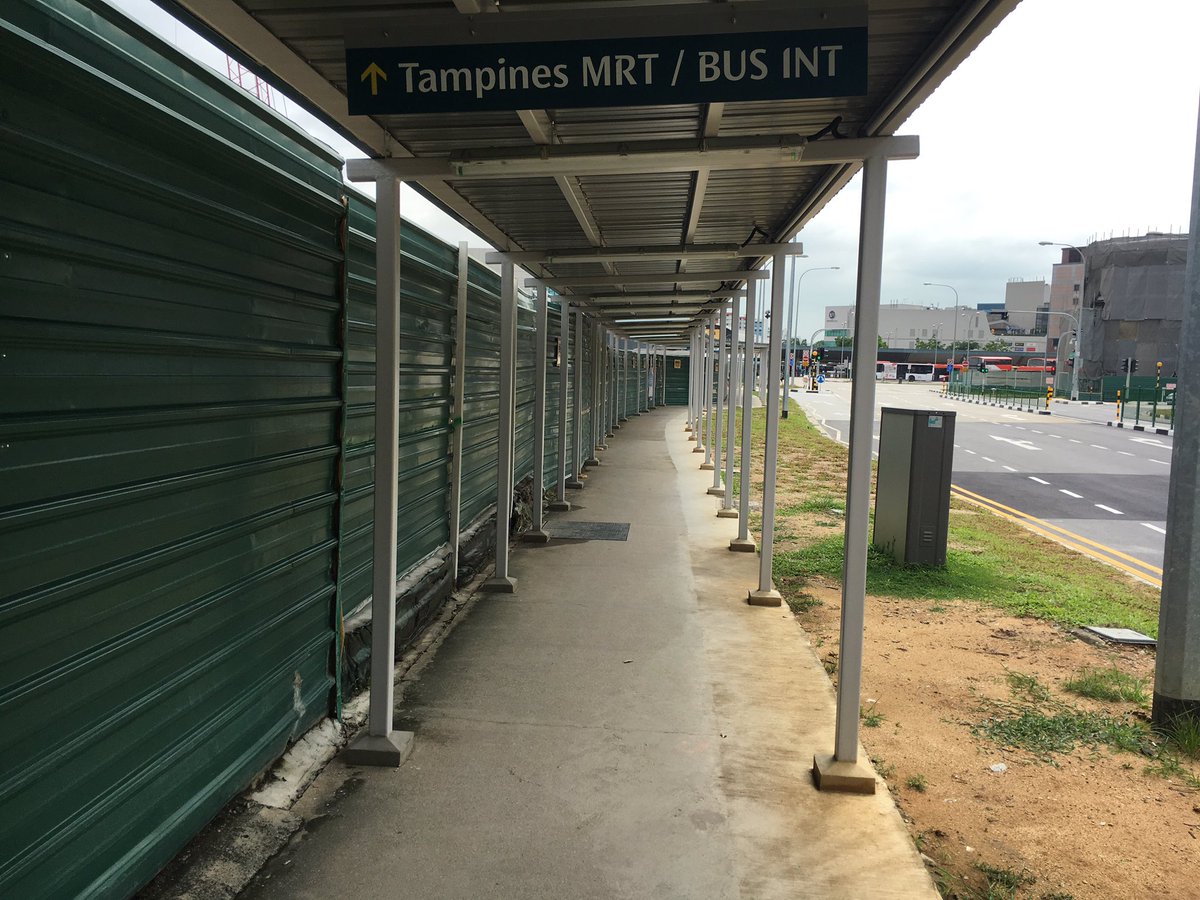
The new interchange complements the existing Tampines Bus Interchange, linking through a 250-metre sheltered walkway.

There are 12 bus parking lots on site and two berths for passengers to board buses. For now, the interchange is served by three bus services – the new number, 129, and existing services, 18 and 39, which have moved from the current interchange.

There are also facilities like a dedicated boarding point for those in wheelchairs and priority queues with seats for seniors and the disabled.

For the first few days, 40 additional SBS Transit staff are on hand to assist.

The new Tampines Concourse Bus Interchange is linked to the existing Tampines Interchange via a 250-metre sheltered walkway. (Photo: Olivia Siong)

“Very nice, it feels comfortable to come here. The old interchange is a bit cramped,” said 62-year-old Jenny Song who has been living in Tampines for more than 30 years.

Most commuters agreed that operations were smooth, though there were some who encountered some hiccups.

Mdm Yong Siow Lin and her husband had been travelling on new bus service 129, when the driver made a wrong turn.

“Instead of turning to the right, (the driver) went straight, so there was a bit of commotion there,” said Mdm Yong. “Everybody was so worried and my husband had to go down and tell the driver, “Uncle, you went the wrong way you know?” He then led him and reversed back to the right route.”

However, Mdm Yong said she was not upset by the small detour, noting it is the first day of operations and the driver perhaps being unfamiliar with the route.

Other commuters also raised some concerns about the distance between the new interchange and the existing Tampines Bus Interchange.

“I thought the distance is quite far because it is about 250m relative to another interchange – the new extension at Sengkang is just opposite the road,” said 16-year-old Melvin Cheng. “So I thought perhaps SBS Transit could implement a free shuttle service to shuttle commuters in between these two interchanges in the near future.”

Source link

Singaporeans find ways to bond with migrant workers

0

Sports have long brought people together, and in some dormitories, young Singapore students and migrant workers have come together to play football, sepak takraw and badminton.

For the past few years, five Secondary 4 students from Hwa Chong Institution have been organising sports sessions every two to four weeks in Mandai.

“We hope to promote bonding, and allow Singaporeans to have a look at the living conditions of foreign workers,” says the team’s logistics head Dexter Tan.

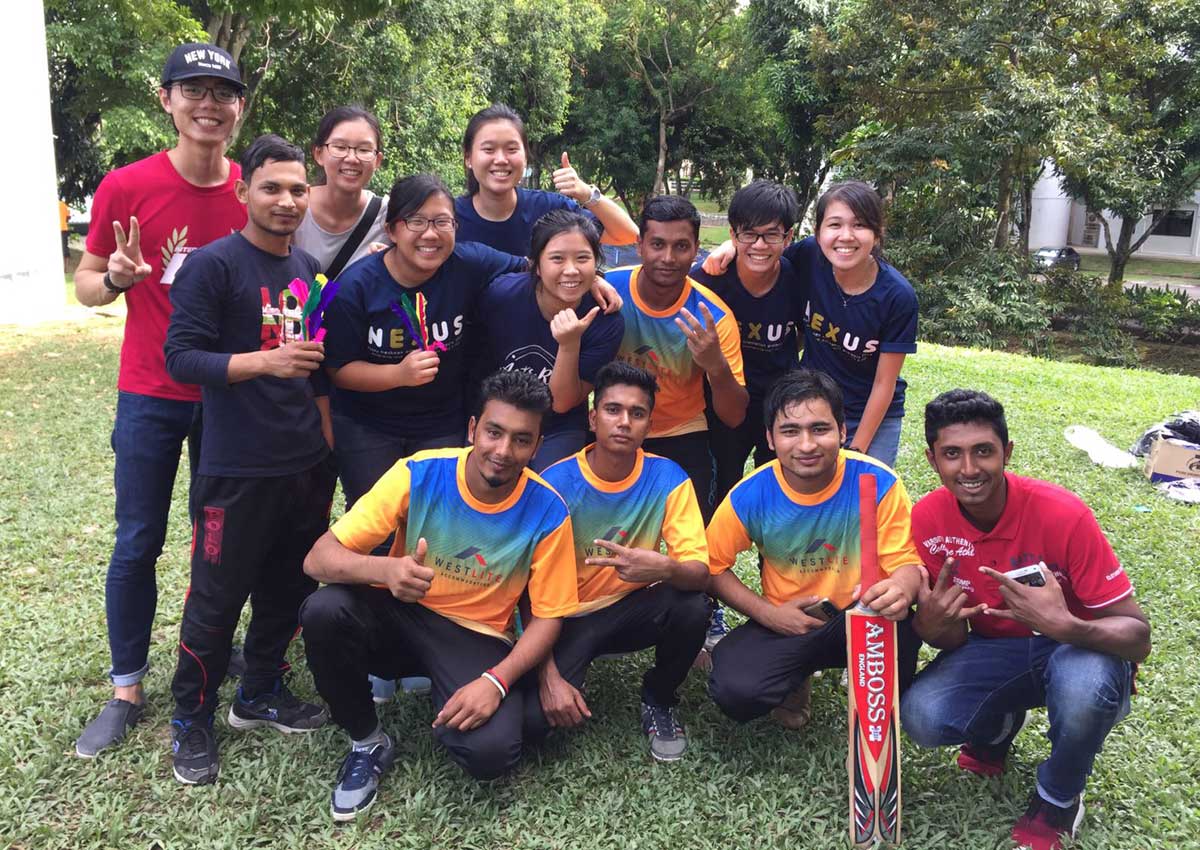
In another initiative, students from the Migrants Committee of the College of Alice and Peter Tan at the National University of Singapore (NUS), as well as NUS medical and nursing students, volunteered at an inter-dormitory cricket competition for workers and helped them measure their blood pressure.

Student Bernice Lee notes that many one-off events are based on assumptions of what migrant workers need.

“We need to have conversations with them to have a deeper understanding of their lives and circumstances… before we can implement a more long-term and meaningful initiative,” she says.

Many individuals and groups are stepping up to offer support to low-income migrant workers.

Mr Abdul Khaeer Mohammed Mohsin started local Bengali newspaper Banglar Kantha in 2006 to update the community on topics such as sports, Bangladesh politics and local Manpower Ministry rules.

Working out of his second-floor office in a Little India shophouse, he says problems for migrant workers have increased in the past decade, after the economic downturn saw some lose their jobs or get exploited by firms trying to cut corners.

“There aren’t many recreation materials for them, so many want to read the newspaper,” he says.

He publishes 6,000 copies a month. He also uses the shophouse to run the Dibashram cultural space, where workers rest, do literary work and seek counselling.

In 2011, some workers formed a literary society under the paper’s name. Many of the 50 or so members contribute poems and articles.

Separately, lawyer Dipa Swaminathan and volunteers collect unsold food items from 18 Starbucks outlets each Saturday, to distribute to workers.

She gives out donated raincoats, phonecards and other necessities on other occasions.

On a larger scale, some non-profit groups run training courses for low-income migrant workers.

Aidha, for instance, holds financial literacy sessions for maids.

One new kid on the block is Project Chulia Street, which hopes to be a “middleman” linking up companies and individuals with avenues to meet workers’ needs.

It recently started a pilot scheme with Fullerton Hotel, where excess frozen food is delivered to dorms for workers to use.

Says co-founder Eva Lim, who is marketing director at fish farm company Kuhlbarra: “We realised a lot of companies want to give, but they want a systematic, organised way to do so.”

The group organised two events for thousands of workers at Westlite dormitories for Labour Day and National Day.

It is holding a third fiesta today for 7,000 workers.

It aims to run classes in managing finances at dormitories and improve dental care for workers.

Founding director David Goh says the migrant worker community is a part of Singapore people overlook: “We are all common inhabitants of Singapore, so we should do what we can to strengthen our social fabric.”


This article was first published on December 18, 2016.
Get a copy of The Straits Times or go to straitstimes.com for more stories.

Image: 
Category: 
Publication Date: 
Sunday, December 18, 2016 – 17:02
Send to mobile app: 
Source: 


Story Type: 
Others

Source link

A place for maids to unwind and pick up skills

0

Formed in 2005, Fast has five staff members and 120 volunteers.

The charity has a round-the-clock helpline for maids (1800-339-4357) and a befriender clubhouse, and runs vocational skills courses.

Treadmills line the wall of an exclusive gym. In another room, shelves of books wait to be perused by club members.

This is not a lush country club, but an office building in Bukit Merah, which houses the Foreign Domestic Worker Association for Social Support and Training (Fast) clubhouse.

Instead of fancy furniture and swanky art pieces, the amenities are simpler; the exercise equipment was donated by a maid agency and a training centre.

But the clubhouse, which Fast moved into in August after outgrowing its previous location, is popular and bursting at the seams every Sunday.

Some 300 to 400 women take turns to use the computers, kitchen and karaoke rooms, or learn about cooking, crochet or financial literacy.

Fast was started in 2005 with the aim of providing training that employers would be keen for domestic helpers to receive.

Before the mandatory rest day rule took effect in 2013, days off were not the norm for many domestic workers.

“Activities were a way for helpers to break away from the house for a few hours, meet other people, learn a craft and relieve some stress,” says executive director William Chew.

The charity, which is supported by the Ministry of Manpower (MOM), was formed by Mr Seah Seng Choon, who is president of Fast, Mr Chew, Mrs Helen Tan, a former president of the Association of Employment Agencies (Singapore), pastor Solano Reynaldo Ortiz, and Mrs Quek-Ng Siew Fong, a senior deputy director at MOM.

They were worried about the high numbers of domestic worker deaths after falls from high-rise buildings, whether through accidents or due to stress, and felt that MOM’s focus on language skills was not enough, says Mr Seah.

“Emotional stress seemed to be the biggest adjustment problem. The women have to live with a new family and adjust to the culture and practices here which could be quite alien to them. Some are homesick and missing their children, and at the same time have to cope with job stress,” says Mr Seah, who is also the executive director of the Consumers Association of Singapore.

One of the first things Fast did was launch training programmes to help new workers learn how to clean windows safely and cook, as well as how to build a good relationship with their employers.

Some of these later became part of the mandatory Settling-In Programme which MOM requires all new domestic helpers to attend.

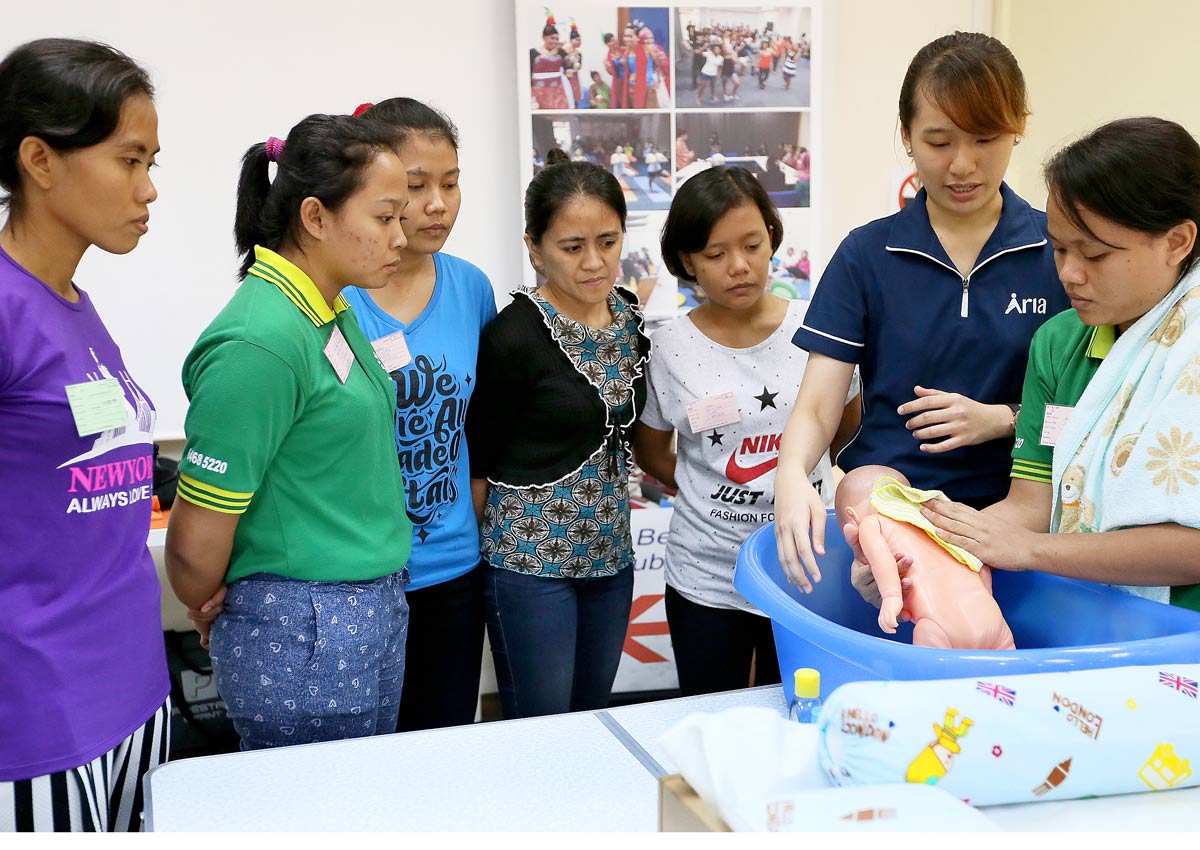
Fast has since launched more in-depth courses with training providers such as a 160-hour eldercare course run by the Care Academy and an 80-hour infant and maternal care course by Aria Training and Consultancy.

As a charity, getting sponsorships and volunteers remains a challenge, as is finding a permanent building to call its own, says Mr Seah.

Fast hopes to advocate more for fair terms and better working conditions for domestic helpers.

It runs a 24-hour helpline which gets about 170 calls a month, a counselling service, and a shelter for maids who may be abused and need to be urgently rescued.

Where possible, the first choice is still to mediate and encourage employers and employees to foster strong relationships, says Mr Chew.

“It’s a totally different lifestyle Singaporeans have gotten through domestic workers’ help,” he says.

“If this is the lifestyle we want, we should ensure that we can integrate them well into the family.”

joseow@sph.com.sg


This article was first published on December 18, 2016.
Get a copy of The Straits Times or go to straitstimes.com for more stories.

Image: 
Category: 
Publication Date: 
Sunday, December 18, 2016 – 17:00
Send to mobile app: 
Source: 


Story Type: 
Others

Source link

Working to improve living conditions of migrant workers

0

Ask a foreign construction worker what he thinks of Singaporeans, and he will likely say “honest, polite and considerate”.

But he may also be getting fleeced of thousands of dollars by his employers just to keep his job, says Transient Workers Count Too (TWC2) volunteer Debbie Fordyce.

Several student groups who approached her in the course of their schoolwork felt that anti-foreigner sentiment is the root cause of the plight of low-wage migrant workers, but the TWC2 executive committee member says this is not true.

“There are structural problems causing employers to cut corners for things like food, accommodation and protective equipment,” she says.

She says the work permit system results in workers not having the freedom to switch jobs easily, and gives them little say in where they live, how much they are paid, and how much they have to pay in recruitment fees or kickbacks.

One of thestrongest advocates for better working and living conditions for low-wage migrant workers, TWC2 was set up after a domestic worker was beaten to death by her employer in 2001. It was originally formed in 2003 as The Working Committee 2 by a group of activists to raise awareness about domestic workers’ needs, such as rest days.

It was registered as a society and took on its current name in 2004.

Read Also: Medical and dental care offered to migrant workers for a small sum

Four years later, during the economic downturn, TWC2 was alerted to large numbers of foreign workers sleeping in the streets of Little India. “There were people lining the five-foot-ways with their belongings. Companies didn’t know what to do for them, and couldn’t house them,” says Ms Fordyce.

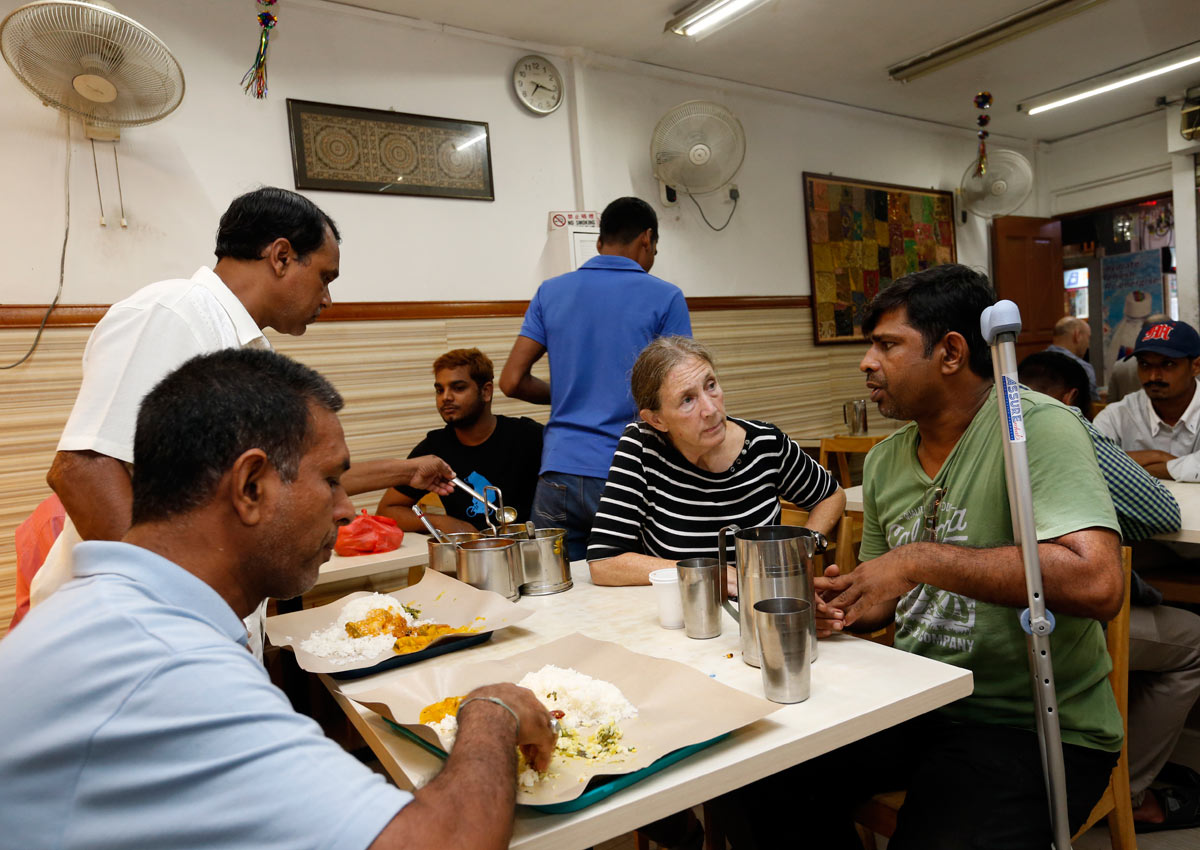
TWC2 started giving workers free meals, and today the Cuff Road Project serves meals 11 times a week, helping 500 to 600 people each month. These are men on Special Passes who are unable to work after lodging an injury or salary claim with the Manpower Ministry.

One of those who visited Alankar Restaurant in Dunlop Street for dinner earlier this month was Mr Shaikh Mohammad Sahidul, 33, whose kneecap was dislocated after he slipped and fell into a hole at his worksite in May.

Speaking to Insight, he said he has not been paid for several months, and he moved out of his dormitory to live with his brother as he feared the company and other workers would scold him for not working.

He relies on relatives for money while waiting for his Work Injury Compensation claim to go through, and for his knee to heal. “If not for the free meals, the problems would have been much worse,” he said.

Besides providing food, TWC2 also helps with ez-link card top-ups so workers can go for their hospital appointments. It also helps workers pay for urgent medical treatment.

Ms Fordyce says providing such services helps TWC2 better understand workers’ problems but she adds: “We don’t see charity as the answer. Advocacy comes first.”

Although working mostly with those who are out of work could result in a blinkered view of the lot of foreign workers – they only see those with problems – there is still a sizeable group who needs help, she says. Once or twice a month, TWC2 organises excursions, like a recent trip to Orchard Road to see the Christmas lights, so jobless workers can take their mind off the stress of having no income.

Read Also: Kudos to NGOs that help Singapore’s migrant workers

It still assists women who seek help, providing emergency shelter in volunteers’ homes. It lacks the funds to run a dedicated shelter, which would cost about $100,000 a year, including a staff member, says TWC2 vice-president Russell Heng.

He and Ms Fordyce both agree that some things have improved for workers. Whereas they once encountered a worker who was on a Special Pass and out of work for six years, now only a few go beyond two years.

And these days, airport police know they can call TWC2 if a worker alerts them that he is being forcefully repatriated, says Mr Heng.

The group, currently headed by polytechnic lecturer Noorashikin Abdul Rahman, has also seen its own premises improving, moving from a room in a volunteer’s home to bigger offices in Golden Mile Complex.

It now has a database for case notes on each worker it helps, and a volunteer management system, both developed by Singapore Management University students.

But the challenge of garnering enough financial support and manpower remains. Last year, TWC2 needed about $500,000 to run its programmes. Mr Heng is concerned the slowing economy may affect people’s desire to donate.

TWC2 is careful not to help workers who also seek assistance from other NGOs, so as not to duplicate work and spend resources that could go to someone else who needs it. And they turn away workers whose stories are dodgy, Ms Fordyce says.

Mr Heng says he is thankful TWC2 “had stamina”, and for his circle of like-minded friends there. “But it’s not that I want this to go on forever. My wish is we can close shop tomorrow because the problems are solved.”


This article was first published on December 18, 2016.
Get a copy of The Straits Times or go to straitstimes.com for more stories.

Image: 
Category: 
Publication Date: 
Sunday, December 18, 2016 – 16:00
Keywords: 
Send to mobile app: 
Source: 


Story Type: 
Others

Source link

Medical and dental care offered to migrant workers for a small sum

0

Founded in 2006 by GP Goh Wei Leong and social worker Tang Shin Yong, the charity has 10 staff members and 300 volunteers, and relies on public donations.

It focuses on foreign workers who are injured and unable to work while they wait for the outcome of injury claims.

It has clinics in Geylang, Jurong and Mandai, a help centre and shelter in Desker Road, a shelter in MacPherson, and a welfare centre in Tai Seng.

It is 6.50pm on a Wednesday.

In Lorong 23 Geylang, a line of men, all foreigners, forms along a dimly lit corridor.

While they wait, some clutch their backpacks while a few play games on their mobile phones.

Nearby, the crowd at a coffee shop builds up.

Across Geylang Road at Lorong 18, the pink lights and lanterns of brothels beckon to men who walk by.

But the men in the line do not have dinner or physical pleasure on their minds.

Instead, they are waiting to see doctors at a low-cost clinic for foreign workers run by HealthServe.

“The workers pay $5 for each visit,” says the group’s executive director Colin Chia.

“Those who are on Special Pass and not working do not pay anything.”

HealthServe has been running the Geylang clinic since 2007.

It also has clinics in Jurong and Mandai.

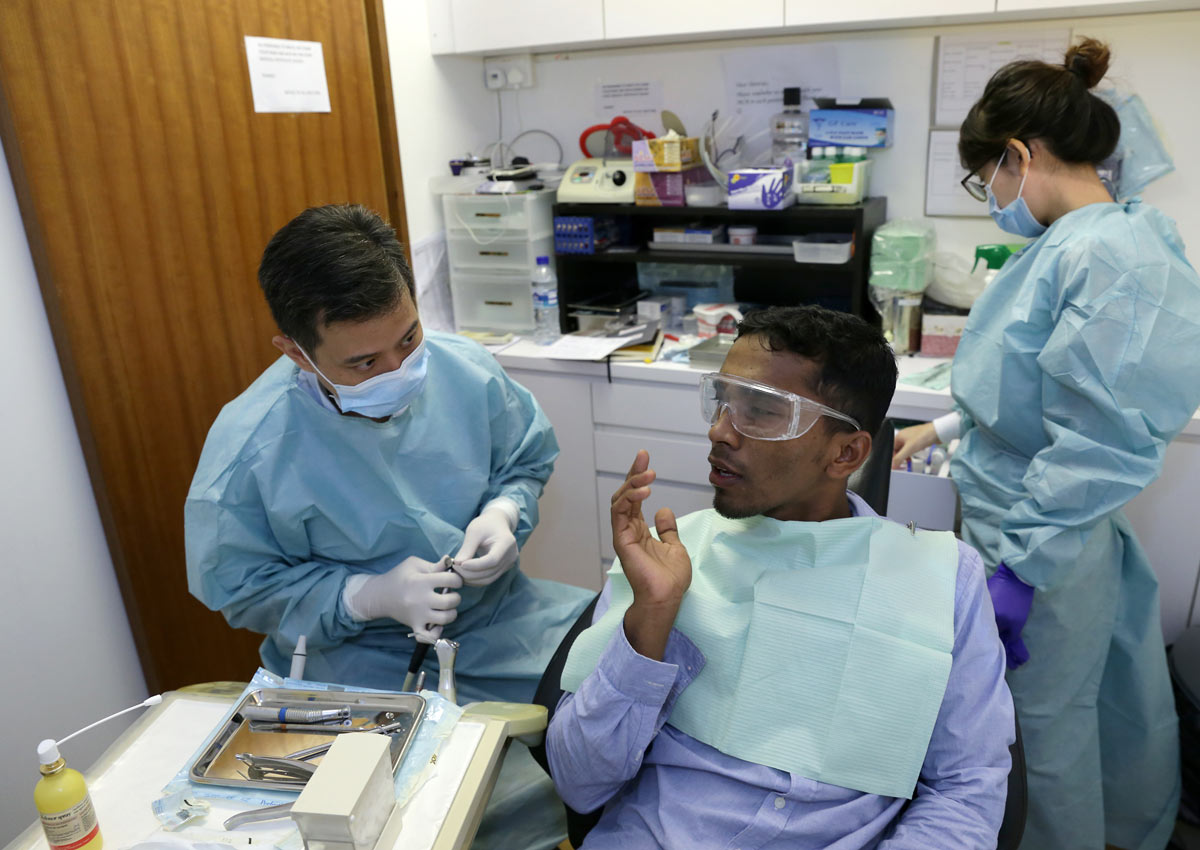
Last year, it opened a dental clinic in Geylang, where foreign workers pay $10 for services such as tooth extraction and fillings.

The clinics are run by volunteers.

The NGO has on its volunteers’ roster about 100 doctors and dentists and 180 nurses, pharmacists and clinic assistants.

The number of foreign workers who visit its clinics has soared from 2,646 in 2013 to 6,898 in the first 11 months of this year.

One reason, says Mr Chia, is that HealthServe is the only non- governmental organisation (NGO) here that provides low-cost medical care for foreign workers.

HealthServe’s co-founder, Dr Goh Wei Leong, says he did not start out with a plan to run an NGO .

“We started a clinic because we saw the need to provide affordable medical services to migrant workers,” says the general practitioner.

“The rest of the services just grew.”

HealthServe was registered as a company limited by guarantee in 2006.

“I relied on my network of friends for donations,” Dr Goh says.

It became a charity in 2011.

“We wanted to hold a fund-raising dinner and donors asked whether we could issue tax exemption receipts. That prompted us to register HealthServe as a charity,” he adds.

HealthServe also runs a welfare centre in Tai Seng where social activities and training classes are held on weekday nights.

The workers it helps are those who are stranded after getting injured.

HealthServe manager Eric Lee says this group of workers is the most vulnerable.

“They are injured, they cannot work and cannot send money to their families,” he says. “They can become depressed.”

The Ministry of Manpower (MOM) says on its website that most claims are settled within three to six months, but some injuries need more time to stabilise before a doctor can assess the extent of permanent disability, which affects the compensation.

It declined to say how many injury claims made by foreign workers it handles each year or give details on the time taken to process the claims.

Last year, HealthServe gave out $223,320 in social assistance to such stranded foreign workers through free meals, temporary shelter and MRT card top-ups.

It housed 35 workers last year at its MacPherson shelter. In July this year, it opened a second shelter in Desker Road.

Mr Lee, who manages the Desker Road centre, says the number of workers seeking help there “shot up to more than 200 cases in less than two months”.

To help them, Mr Lee and two centre employees provide free lunches, while volunteers hold social activities.

Last month, they took workers to see Christmas lights in Orchard Road.

Counsellors are present to speak to workers in the evenings.

Providing affordable medical care to foreign workers and social assistance to workers in distress will continue to be the mainstay of HealthServe’s work, says Mr Chia.

Construction worker Ahammad Rubal appreciates the medical and dental services HealthServe offers.

The 25-year-old, who has worked in Singapore for two years, paid more than $100 to see a private dentist for a toothache earlier this year.

“(It was) expensive and my tooth (was) still painful,” he says.

Read Also: Kudos to NGOs that help Singapore’s migrant workers

A friend told him about HealthServe and he went to see Dr Winston How, a volunteer dentist, last week. He got a filling and follow-up treatment.

Mr Chia says HealthServe is looking at opening two more dental clinics next year.

Last year, it worked with researchers at the National University of Singapore to survey Bangladeshi workers on their diet.

The study found over nine in 10 of them were given stale food to eat.

Dr Goh hopes to do more research on the problems foreign workers face, including those they have before coming to Singapore.

He says: “This will help us understand them so that we can help them holistically, rather than helping them when they come to us in distress.”


This article was first published on December 18, 2016.
Get a copy of The Straits Times or go to straitstimes.com for more stories.

Image: 
Category: 
Publication Date: 
Sunday, December 18, 2016 – 16:00
Send to mobile app: 
Source: 


Story Type: 
Others

Source link