25.3 C
Singapore, SG
Wednesday, September 23, 2026
Home Blog Page 2162

Vote for your local hero now

0

The shortlist of 12 candidates is complete with these final five, and voting opens from today till next Thursday.

A mental health advocate, a boy who rushed to help an accident victim, the founder of a social enterprise, the head of research and innovation at a family-run firm, and a mechanic who paid for a stranger’s studies – these are the final five candidates in a shortlist of 12 nominees for The Straits Times Singaporean of the Year 2016 award.

The second run of the award, supported by UBS Singapore, seeks to recognise Singaporeans who have put the country on the world map, persevered through great adversity or made the community a better place through selfless acts.

In the final batch of shortlisted nominees is 12-year-old Ashvin Gunasegaran, the youngest recipient of the Singapore Civil Defence Force’s Public Spiritedness Award, and Mr Jabez Tan, 42, a former convict who now hires and helps others who have been released from prison.

Also shortlisted are Dr Radiah Salim, 54, founder of charity Club Heal; 50-year-old mechanic John Shu, who, after a chance encounter, gave about $6,000 to a single mother who needed the money to study for a diploma; and Mr Eric Lew, 43, the executive director of family-run transport engineering firm Wong Fong Industries.

The Singaporean of the Year will receive $20,000 and a trophy, while the other shortlisted candidates will each get $5,000, all sponsored by UBS.

Now that the shortlist of 12 candidates is complete, a public vote will open from today to next Thursday. The vote will be a factor in the final decision to be made by a panel of 15 judges.

The panel will include editors and senior writers from The Straits Times and also social entrepreneur Saleemah Ismail, Lim Hoon Foundation chairman John Lim and Mr Aaron Maniam, founding chairman of the National Youth Council Academy’s advisory panel.

The first 100 to vote will win a commemorative book on Singapore’s founding prime minister Lee Kuan Yew, Lee Kuan Yew: A Life In Pictures, a pictorial book that covers the breadth of Mr Lee’s achievements and also reveals the intimate moments of his personal life.

The winner will be announced at an award ceremony on Feb 6. Deputy Prime Minister and Coordinating Minister for Economic and Social Policies Tharman Shanmugaratnam will be the guest of honour.

Crash victim’s comfort – Ashvin Gunasegaran (above)

Unlike most of his friends, 12-year-old Ashvin Gunasegaran does not have Facebook, Twitter or Instagram accounts.

“I prefer to go outside more. If I’m on social media, I’ll be spammed with too many messages,” said the Yishun Primary School pupil who recently completed his Primary School Leaving Examination.

But for someone with no desire for social media presence, Ashvin became a Facebook darling in June, as people shared the exploits that made him the youngest recipient of the Singapore Civil Defence Force’s Public Spiritedness Award since its introduction in the early 1990s.

Ashvin’s sister Laava, 25, had posted a photo taken by one of his schoolmates showing Ashvin staying with and helping the victim of a car accident.

It happened on May 31 at about 1pm after two cars collided at the junction of Yishun Ring Road and Yishun Avenue 2.

Ashvin, who had been walking home from school with his friends, heard the collision.

While a group of about 10 adults gawked and snapped away with their phones, the boy’s first instinct was to dash out to the busy junction.

He insisted on checking on the victims, despite his five friends warning him that the cars were emitting smoke.

The first driver he went up to was Ms Jocelyn Yu, who was pregnant.

The 32-year-old managing director at a marketing company appeared shaken.

“They thought there might be an explosion and told me to come back, but I said that she needs my help, and you can’t watch people suffer without doing anything,” recounted Ashvin.

Having learnt from a safety talk at his school that he should try to help people in an accident, Ashvin yanked at Ms Yu’s car door, but it was stuck.

He asked a tearful Ms Yu, “Madam, are you okay?”, words that she later said offered her immense comfort.

Ms Yu said she felt helpless and desperate when she was trapped in the car.

The left side of her body was numb and she had lost her glasses, impairing her vision.

Then Ashvin turned up.

“It gave me a lot of bravery because I was really scared,” said Ms Yu, who presented the boy with a cap inscribed with his name as a token of appreciation when she met him in June.

Ashvin’s father, assistant engineer A. Gunasegaran, was surprised by the amount of attention surrounding his son’s deed.

“This is something normal that other children could also have done, it just so happened that he was seen doing it. We believe in karma, that you should help others when you can,” said the 53-year-old.

And Ashvin’s message to those who opted to gawk instead: “It was sad to see how everyone was so connected to their phones and technology that the first thing they thought of was that they needed to take pictures, instead of about caring about others.”

Drive for innovation – Eric Lew
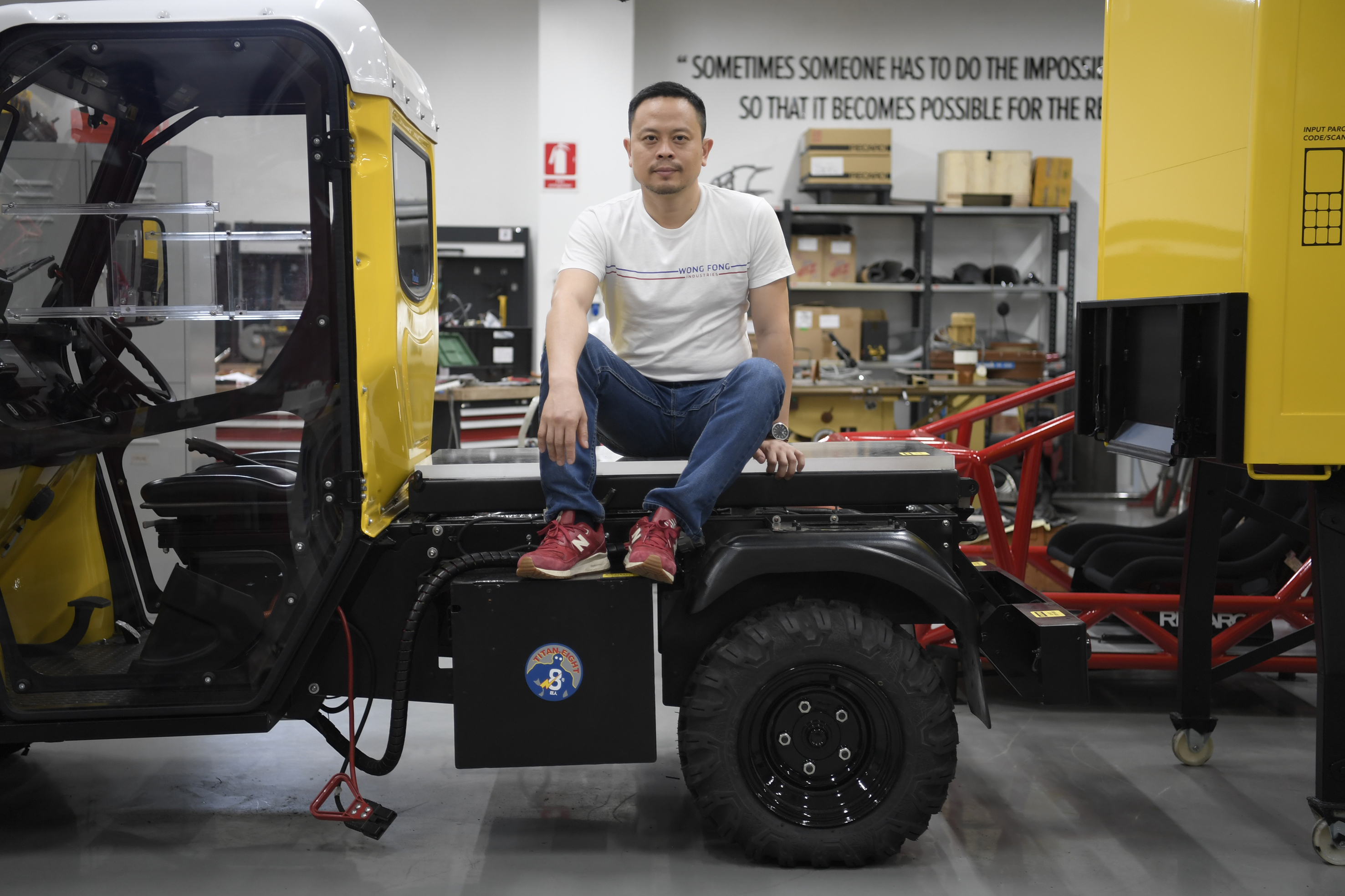
Mr Lew, executive director of Wong Fong Industries, wants the company, which sells, designs and services equipment such as trucks and cranes, to stay on top of trends that will shake up transport engineering.Photo: The Straits Times

With its mix of retro furniture pieces and minimalist elements, the offices at Wong Fong Industries’ research and innovation centre look nothing like the Joo Koon building’s industrial facade.

Instead, they bear the look and feel of a workspace belonging to disruptors like Facebook and Google.

But the small and medium-sized enterprise (SME) was not always this fashion-forward. In fact, it began life in 1964 as a truck equipment servicing business run out of a zinc-roofed workshop in Upper Bukit Timah Road.

Today, it not only sells, designs and services equipment such as trucks and cranes for construction, logistics, waste handling and military uses, but it also wants to be at the forefront of technology.

This is mainly due to its executive director, 43-year-old Eric Lew, who wants the company to stay on top of trends that will shake up transport engineering, including electric vehicles.

The impassioned Mr Lew has tried his hand at drama and other creative projects as a social services programme executive when he experienced “an early mid-life crisis” in his late 20s and quit his job as an auditor.

The youngest of four children, of whom two others are also at Wong Fong, Mr Lew found his groove in business development when he joined the family company 13 years ago. In 2013, he mooted the setting up of the Wong Fong Research and Innovation Centre (WFRIC), to work on new products outside of its core services.

Next year, Wong Fong will debut Singapore’s first electric supercar, a project undertaken in partnership with British F1 giant Williams Advanced Engineering, at the Geneva Motor Show. The Dendrobium, named after an orchid, has a top speed of 300kmh and is designed by Vanda Electrics, a WFRIC spin-off.

WFRIC also wants to help other companies develop new products through a “hardware accelerator” that Mr Lew hopes to launch in the middle of next year.

The vision is to create an alliance among hardware firms to pool resources and prototype commercially viable products, such as self-driving logistics vehicles, that can put Singapore on the map.

“We’re still an SME and our annual budget is limited. But if there is a consortium, we can come up with a framework for innovation so that other SMEs can benefit,” said Mr Lew, who plans to provide mentorship and other resources such as educating companies on how to identify industry trends through the accelerator.

Engineering has the power to change people’s lives, said Mr Lew. With more international companies moving research and manufacturing back to home base as new technologies reduce the need for outsourcing, it has become even more important for Singapore to make its own products to stay relevant. “Imagine if we are able to create many products and export it, then we can become an even more powerful economy and country.”

Helping ex-offenders – Jabez Tan
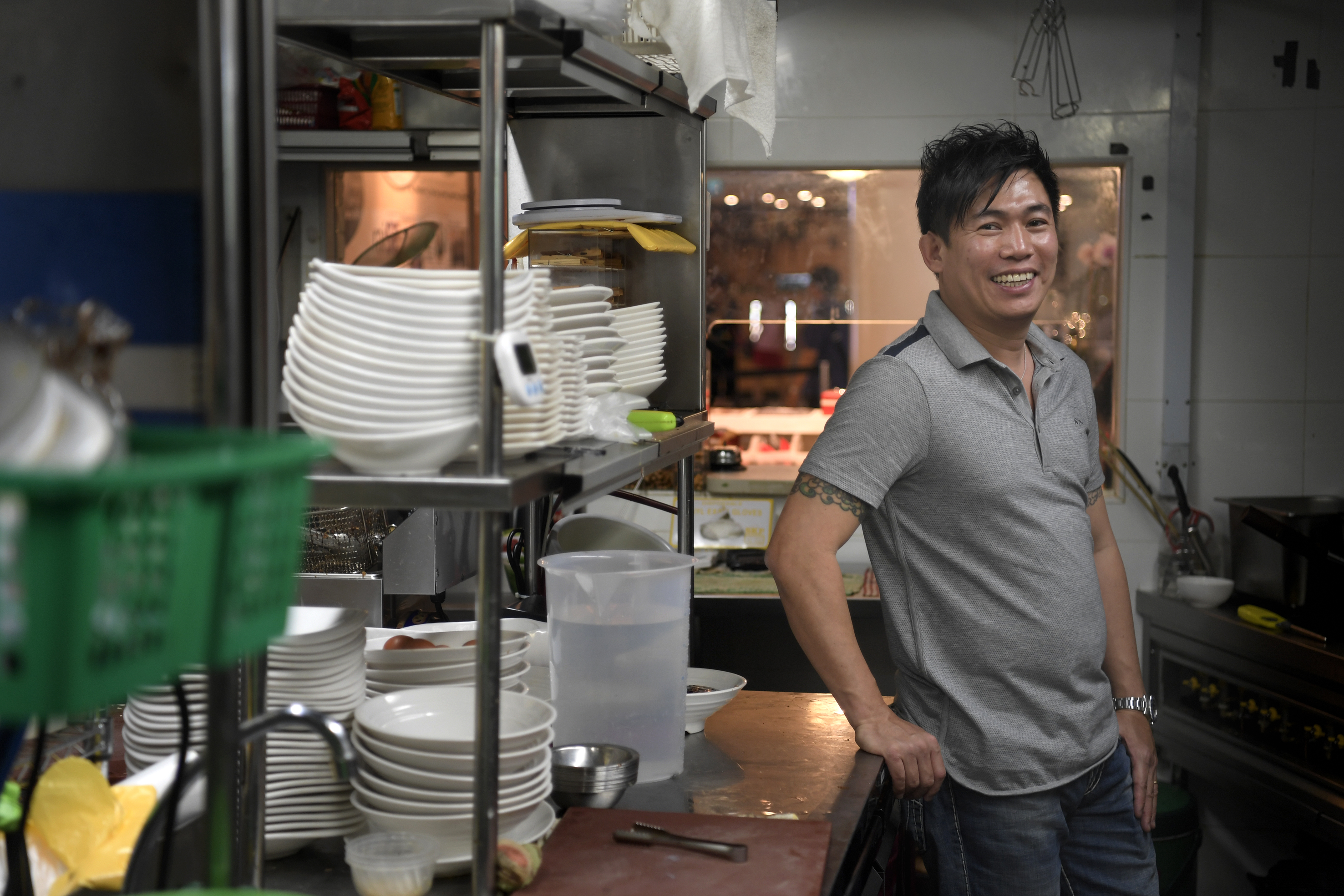
Jabez Tan, owner of Soon Huat Dining House. He went into prison three times for drug offences. Today, he runs four Bak Kut Teh outlets which employs ex-convicts.Photo: The Straits Times

He was an incorrigible gangster who was not afraid of rumbling with rival triads, and thought nothing of robbing a woman at knife-point when he was only 17.

But when he was spurned by a potential employer because he had spent a year in prison for stealing, Mr Jabez Tan found he was not too hardened for tears.

Mr Tan, who was then 20, had interviewed for a job in a car dealership. The interviewer recoiled when he heard he was a former offender. “It’s the classic response. They’ll say go home and wait to hear back from them, but I never did. It really hurt me.”

A flurry of similar rejections followed when he tried to find sales jobs in between the 13 years he spent in prison for drug-related offences. Throughout, he never forgot how that first rejection felt.

So instead of waiting in vain for an offer, Mr Tan set up his own bak kut teh stall in 2011 with his savings and a loan from his parents. By then, he had had four years in a halfway house. Mr Tan found he had a nose for business and Soon Huat Bak Kut Teh grew steadily. It now has five outlets, including a newly opened restaurant on the second level of Chinatown Point that also sells other local dishes.

Mindful of the difficulties faced by former offenders in getting jobs, Mr Tan decided from the start that he would use his business to give them a helping hand.

Run as a social enterprise, Soon Huat has 40 staff of whom half are former offenders. Two years ago, the brand was franchised to Indonesia. It is now in talks with Chinese investors to open eateries in Shanghai.

Mr Tan, now 42 and a father of two sons, aged two and four, said he changed after he found religious faith.

He is more than just an employer to his staff, who include young people at risk and single parents. Food and rent are paid for, and he chips in for necessities like children’s allowances or transport fees if someone is in need. Every month, the trained prison counsellor also holds mentorship sessions for his staff.

More than 100 former offenders have benefited from Soon Huat’s programmes, with some staying three to six years before moving on to other jobs.

Mr Tan acknowledges it is an uphill battle keeping his staff away from a life of crime and drugs. But he never stops believing in them, even when they relapse time and again. “Some fail us, some talk bad about us, but even if we help just one person, it’s good enough.”

Mr James Giam, 48, the head chef at one of Soon Huat’s outlets, has been working there since 2013 but went back to jail thrice for drug offences. “I caused so much trouble for Jabez, but he never once gave up on me and believed that I could change,” said Mr Giam, who has kept clear of alcohol and his former addictions for over a year.

Mr Tan hopes to grow the company, but it is not all he wants. “We don’t want people to think that ex-offenders are always just beneficiaries. I hope that when they become strong, they can contribute to society and also become their own bosses.”

Life-changing kindness – John Shu
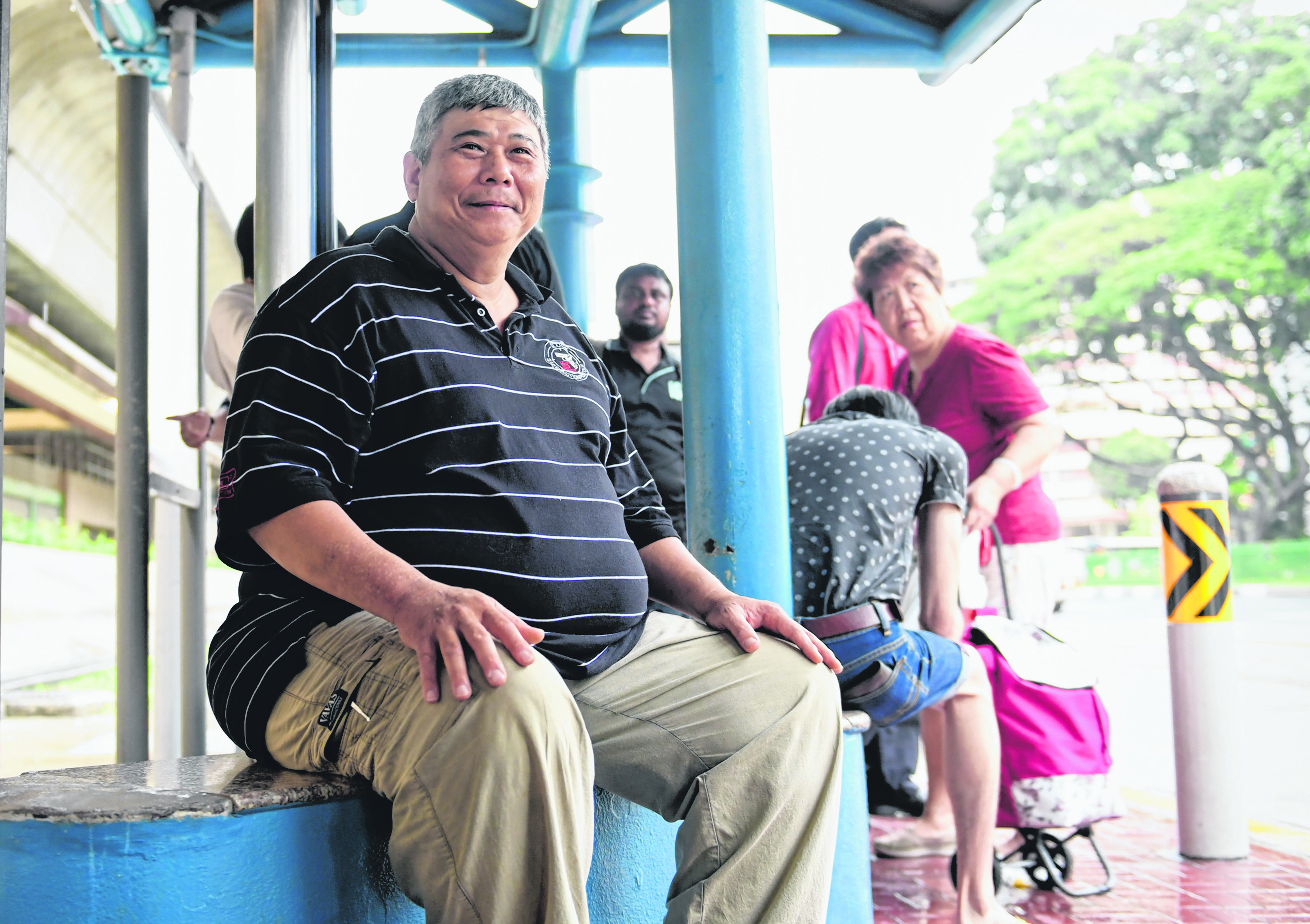
Singaporean of the Year profile of Mr John Shu, a technician who helped support a stranger’s education after a chance meeting at a bus stop in Yishun.Photo: The Straits Times

Mr John Shu, 50, earns just over $2,000 a month working as a mechanic for the Traffic Police.

But when he struck up an unlikely friendship with a former offender – who spoke to him about pursuing her education to better her lot in life – he did not hesitate to give her three months of his salary to pay for her school fees and other expenses.

Recalling the encounter, Mr Shu said he and two friends were on their way home from Yishun after a meal in late 2013.

Though they usually rode motorcycles, that day, they had to take the bus instead as their motorbikes were being repaired.

Ms Jaycie Tay, now 32, was on her way back to her halfway house in Sembawang – where she was finishing her 18-month sentence for drug offences – after attending a floristry workshop.

Mr Shu said: “She was carrying a big vase of flowers, and her friend had a bouquet in her hand. It looked quite out of place on the bus, and my friends started joking with her.”

A friendship blossomed, and both of them started meeting regularly.

Ms Tay was introduced to drugs by her friends as a teenager, dropped out of school and was jailed twice for drug offences.

She was divorced twice and had four children. But she was determined to get her life back on track.

She knew she would have a better future with a diploma but did not have the money to pay for school.

Mr Shu, who himself has two children aged 19 and 22, was moved by her plight.

He said: “She was close to tears when she talked about her past, and she did not have anyone else who could support her. Every time I met her, she said she wanted to study.

“I did not see her as someone who had gone to prison before, but just as another human being who needed help.”

When he offered to fund her studies, she decided to enrol at the Kaplan Higher Education Institute after she finished serving her sentence.

Eight months later, in December 2014, she graduated with a diploma in marketing management.

Mr Shu said: “She said she would pay me back but I told her to concentrate on upgrading herself first.” He told her that he and his wife, a hawker, had enough for themselves.

Naysayers questioned Mr Shu’s motives, and his wife initially misunderstood their friendship, but Mr Shu put her mind at ease.

“I see her as a sister,” said Mr Shu, who saw the potential for Ms Tay to do well in life.

“I’m illiterate, and I would rather someone else take this chance to further their education.”

Last month, Ms Tay started a part-time course for a bachelor’s in business studies in management, with an award from the Yellow Ribbon Fund Star Bursary.

The degree is awarded by University College Dublin.

Ms Tay, an administrative assistant, said she still finds the scale of Mr Shu’s generosity unbelievable.

She said: “Without him, I wouldn’t know where I would be. Now my life has been transformed, and I’m living a better life.”

Healer of minds – Radiah Salim
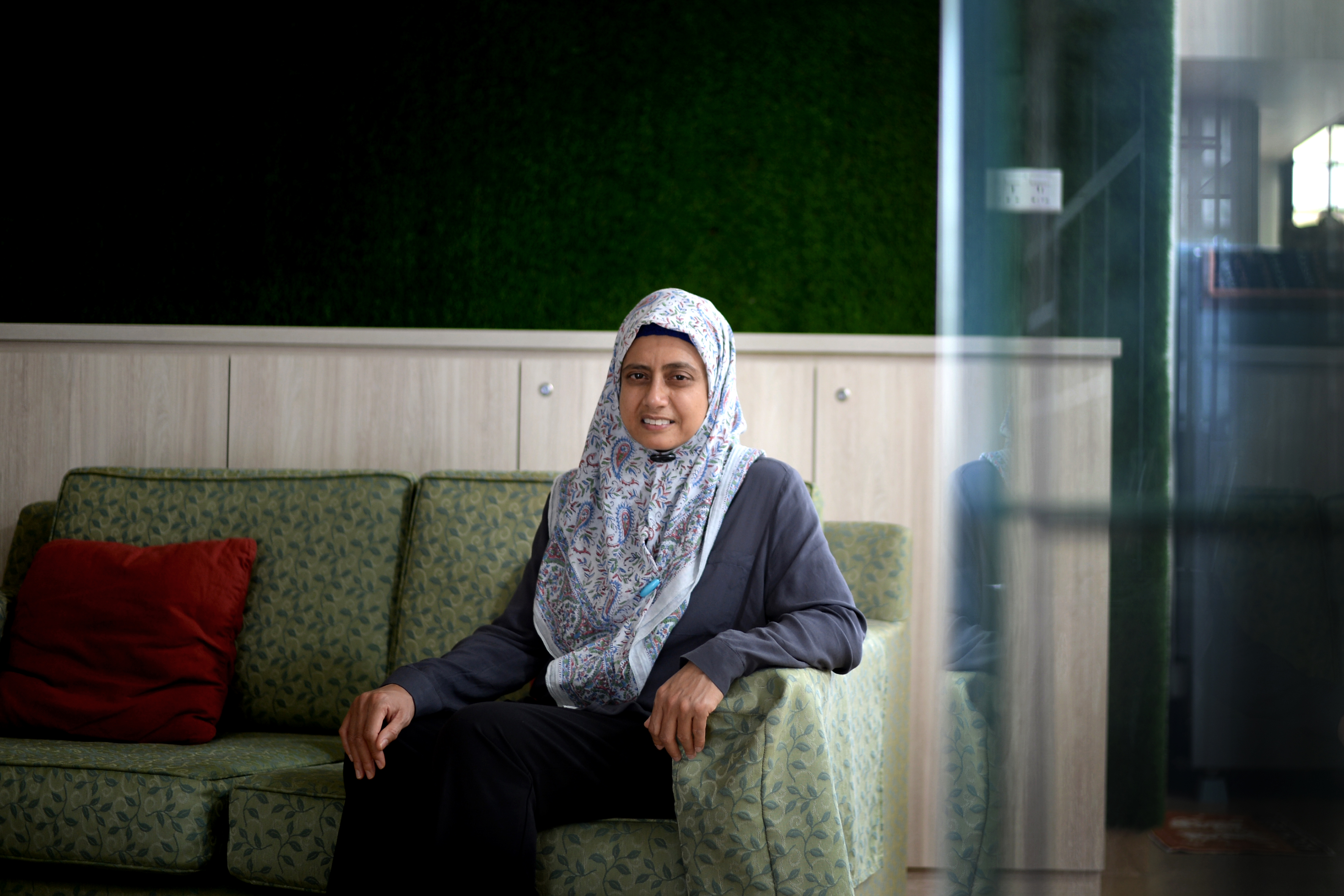
Dr Radiah Salim, founder of Club Heal, a voluntary welfare organisation that helps people with mental illness and their families.Photo: The Straits Times

Dr Radiah Salim loves her job as a locum family physician, tending to patients’ physical ailments so they can get better and go about their daily tasks.

Her other passion lies in raising awareness about invisible conditions that afflict the brain, particularly mental illness. In 2012, she founded Club Heal, a charity that provides support for those with such issues.

Having received Institution of a Public Character status, it now has three centres here and numbers Speaker of Parliament Halimah Yacob among its patrons.

Since 2014, it has helped over 650 people through its programmes and home visits.

Dr Radiah, 54, the seventh of nine children, grew up with an elder sister who had schizophrenia.

There were other family members who succumbed to mental illness – her sister’s son, Amman, began to show symptoms similar to his mother’s when he was 18 and, in 2000, leapt to his death at 23.

In 2011, a second cousin with depression and bipolar disorder committed suicide.

The incidents prompted Dr Radiah to act on plans to start Club Heal.

“Knowing what I know, I feel I should be a mental health advocate. You don’t want similar tragedies happening to other people.”

Formerly a resident medical officer at the Institute of Mental Health, she wanted to reach out to the Muslim community in particular. She noticed many Muslim mental health patients tend to relapse after being discharged, as they do not go for follow-up care offered by organisations such as the Singapore Association for Mental Health.

Her work involves educating patients and caregivers about mental illness, as well as empowering patients through rehabilitation programmes and support groups. Her family was not ashamed of her sister’s illness, but they did not understand it well. Only when she studied medicine at university did she realise that what they had dismissed as signs of laziness were actually symptoms of illness.

Dr Radiah recalls a patient she visited in 2013, who went into depression after having lost her husband and mother in a year. “She didn’t want to eat and had to be tube-fed.”

A few months after making three home visits, Dr Radiah bumped into the patient’s daughter, who said joyfully that her mother had started to come out of her depression and begun eating again. “That was really rewarding. I realised that when you help people with mental illness, you help their family members as well.”

She takes pride in the fact that eight of Club Heal’s 22 staff members are people with mental illness; four are its former beneficiaries.

Ms Nur Hafizah, 24, who has schizoaffective disorder, became a programme executive after joining Club Heal’s programmes in 2014. “I had low self-esteem and was nervous about joining, but they were caring and made me feel comfortable about sharing my problems.”

Ultimately, Dr Radiah hopes to see rehabilitative organisations like Club Heal become redundant.

“I want the stigma associated with mental illness to be completely eradicated so that all people will know what to do, and will seek help at the earliest signs of mental illness so they can recover,” she said.

yuensin@sph.com.sg


This article was first published on December 25, 2016.
Get a copy of The Straits Times or go to straitstimes.com for more stories.
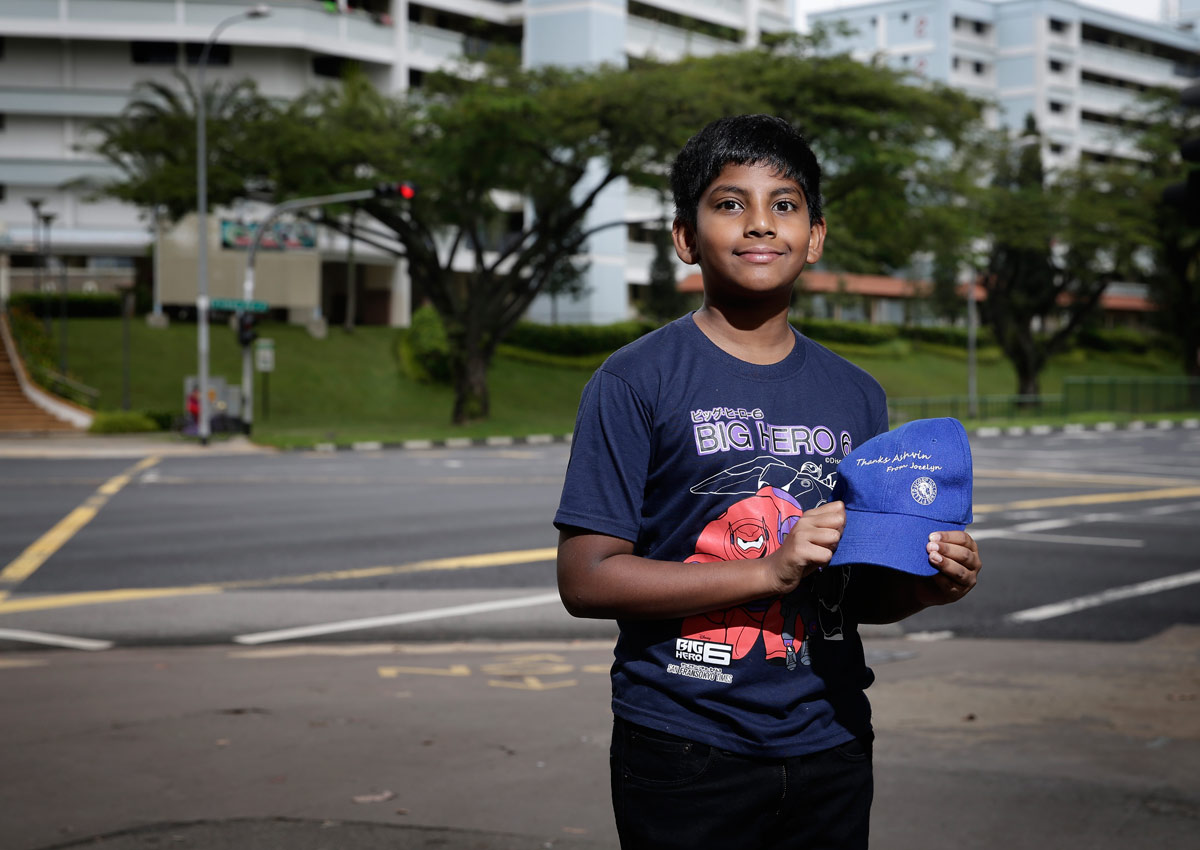
Image: 
Category: 
Publication Date: 
Sunday, December 25, 2016 – 14:06
Keywords: 
Send to mobile app: 
Source: 


Story Type: 
Others

Source link

Sri Lanka's artificial Christmas tree achieves world record

0

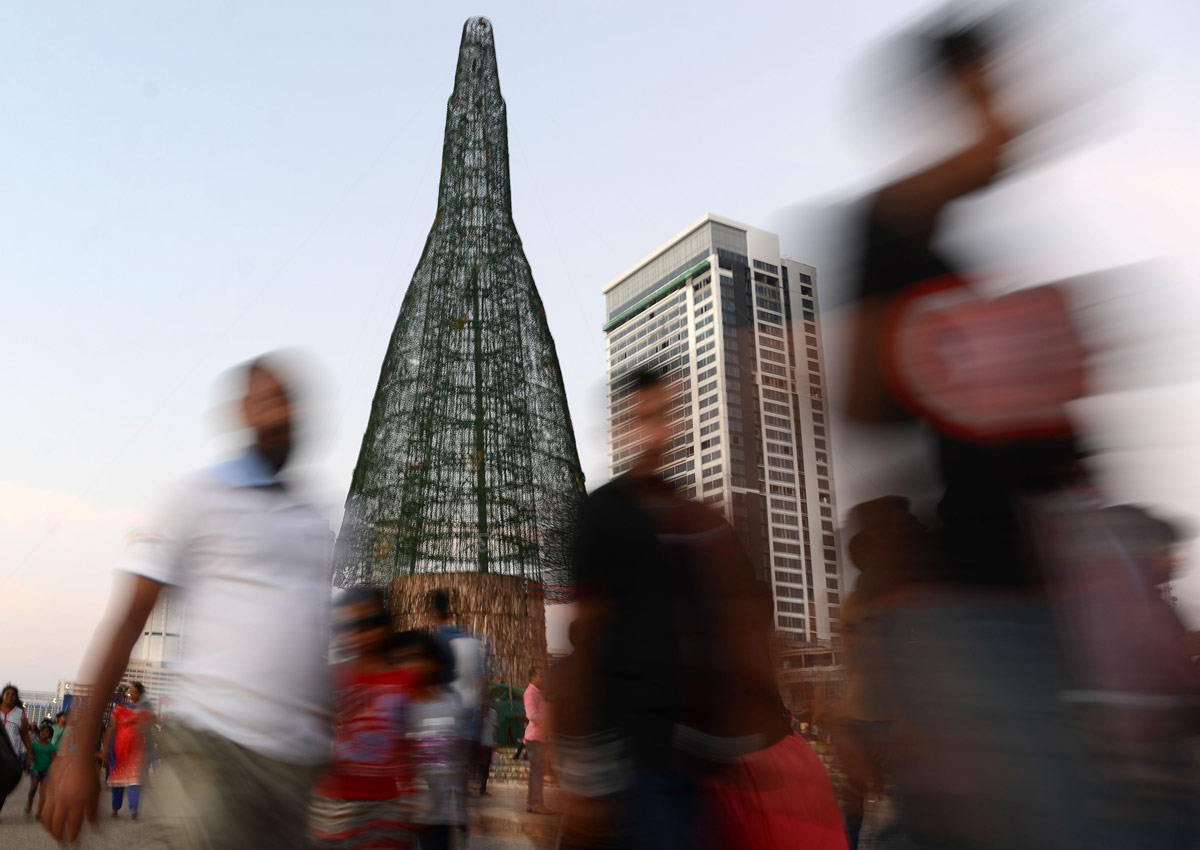
COLOMBO – Sri Lanka surpassed the world record for the tallest artificial Christmas tree Saturday despite building delays forcing organisers to prune the structure by almost half, an official said.

Cricket legend Arjuna Ranatunga initiated plans to build the record-breaking tree in Sri Lanka’s capital Colombo, but ran into opposition from the Catholic church which said the money would be better spent on charity.

“Initial opposition… meant a delay of about 10 days in our construction work,” event coordinator Mangala Gunasekera told AFP.

Read Also: 7 foodie gifts for Christmas

“Our target was 100 metres (328 feet), but construction delays forced us to cut down the height,” he said.

As of Saturday morning, the tree was about 57 metres (187 feet) tall, he said, two metres taller than an artificial Christmas tree erected in the southern Chinese province of Guangzhou last year.

The Sri Lankan claim is subject to confirmation by the Guinness World Records.

Gunasekera said 600,000 coloured LED bulbs would be used to decorate the tree, along with a six-metre (20-foot) Santa and a 12-metre (40-foot) sleigh.

“On Christmas eve, we will switch on the lights,” he added.

Ranatunga, who led Sri Lanka to victory in the 1996 World Cup, has been at the forefront of the project to raise funds for the artificial tree as a symbol of religious unity.

Read Also: Cocktails of Christmas memories

The project was rescued after Prime Minister Ranil Wickremesinghe spoke to the Archbishop of Colombo Malcolm Ranjith to secure his blessings.

The archbishop had initially described the project as “wasteful expenditure” and said that the estimated $200,000 cost would have been better spent on alleviating poverty.

Last year Sri Lanka’s Catholic church urged priests not to put up Christmas trees in their churches over the festive period, with Cardinal Ranjith saying they had no religious significance.

Sri Lanka is a mainly Buddhist country but around 1.2 million of its population of 21 million are Catholics.

Image: 
Category: 
Publication Date: 
Sunday, December 25, 2016 – 13:35
Send to mobile app: 
Source: 


Story Type: 
Others

Source link

India begins building world’s tallest statue at cost of $768m

0


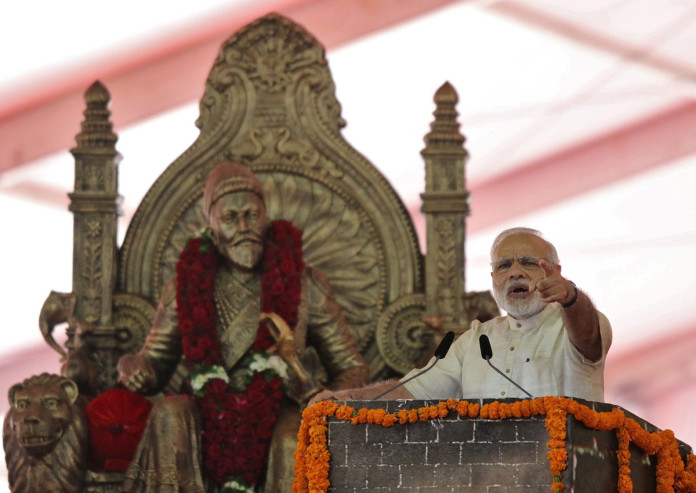
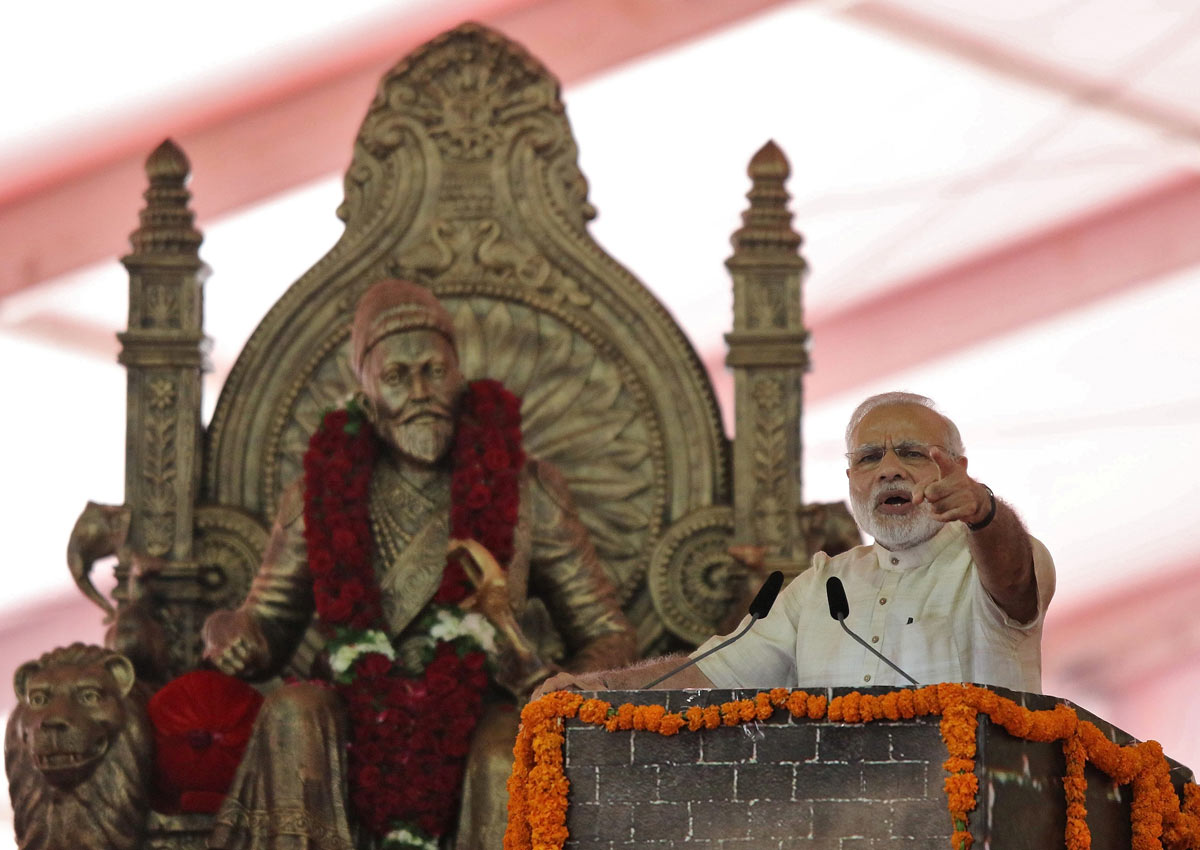
NEW DELHI – Indian Prime Minister Narendra Modi Saturday laid the foundation stone for what is set to be the world’s tallest statue, as its projected multi-million-dollar cost sparked criticism and an online petition against the project.

The statue of Chhatrapati Shivaji, a 17th-century Hindu ruler who fought the Muslim Mughal dynasty and carved out his own kingdom, will be more than twice the size of the Statue of Liberty and five times higher than Christ the Redeemer in Rio de Janeiro.

The structure, a pet project of Hindu nationalist Modi, will rise 192 metres (630 feet) from an island off the western coast of Mumbai in the Arabian Sea.

When finished, it will tower over the 128-metre Spring Temple Buddha in China’s Henan province that is currently the world’s tallest statue.

“Even in the midst of struggle, Shivaji Maharaj remained a torchbearer of good governance,” Modi said at the inaugural event.

“So many aspects of his personality inspire us.”

The government of Maharashtra state, of which Mumbai is the capital, is expected to spend some 36 billion rupees (S$768 million) on the statue, which is scheduled for completion by 2019.

But the project has drawn brickbats from many people who instead want the government to devote its resources to infrastructure, education and development.

By Saturday evening, more than 27,000 people had signed an online petition on Change.org urging the government to drop the plans.

“Apart from a waste of money, this statue is going to be terrible for the environment; for the traffic situation in South Bombay and a security nightmare,” said the petition.

Shivaji is revered by many in Maharashtra. Mumbai’s main train station and airport are named after the ruler, who is also one of the symbols of a Hindu cultural revival promoted by Modi.

The plans for the latest memorial follow an earlier initiative by Modi to build a 182-metre tall tribute to Indian independence hero Sardar Vallabbhai Patel in his home state of Gujarat, at an estimated cost of 25 billion rupees ($368 million). Construction on that statue began in 2014.

Image:
Category:
Publication Date:
Sunday, December 25, 2016 – 10:42
Keywords:
Send to mobile app:
Source:

Rotator Headline:
Petition launched against Modi’s tallest Hindu statue in the world
Story Type:
Others

Source link

‘Princess Leia’ Carrie Fisher suffers heart attack on flight from London

0


Friends and colleagues of Hollywood actress Carrie Fisher shared their hopes for a swift recovery for the “Star Wars” star on Saturday, a day after she was taken to a Los Angeles intensive care unit.

Fisher, 60, suffered heart problems during a flight on Friday from London, where she had been shooting the third season of the British television comedy “Catastrophe.”

Her family had said she remained in the intensive care unit on Friday.

Read Also: Star Wars’ actress Carrie Fisher has mid-air heart attack

New details on her condition were not immediately available on Saturday, and a spokeswoman at the Ronald Reagan UCLA Medical Center declined to comment, citing patient confidentiality laws.

“I’m shocked and saddened to hear the news about my dear friend,” Harrison Ford told The Hollywood Reporter on Saturday morning.

Ford played the swashbuckling Han Solo opposite Fisher’s intrepid Princess Leia in the original 1977 “Star Wars” film and its sequels.

Read Also: Star Wars enters “grittier” new chapter with Rogue One premiere

“Our thoughts are with Carrie, her family and friends.”

Fisher caused a stir in November with the disclosure that she had a three-month love affair with Ford during the making of “Star Wars.”

Fisher revealed the secret to People magazine while promoting her new memoir, “The Princess Diarist,” just before it went on sale.

Her friend William Shatner, best known for his role in the television series “Star Trek,” posted an old photograph on Twitter of him and Fisher embracing, writing that she was “all I want for Christmas.”

Other celebrities, including Ellen DeGeneres and Christina Applegate, took to social media to share their sadness, while the singer and actress Bette Midler described Fisher as “hilarious on paper and in person, and just plain beloved.”

Read Also: Actor Kenny Baker, Star Wars’ R2-D2, dies aged 81

Fisher reprised her Princess Leia role in two sequels and returned last year in Disney’s reboot of the franchise, “The Force Awakens,” appearing as the more matronly General Leia Organa, leader of the Resistance movement fighting the evil First Order.

Fisher’s career was dogged by substance abuse and mental health issues.

She underwent treatment in the mid-1980s for cocaine addiction and later wrote the bestselling novel “Postcards From the Edge” based on her experience.

The book was adapted into a 1990 movie starring Meryl Streep.

Fisher has also said she was briefly hospitalised in 2013 due to bipolar disorder.

Image:
Category:
Publication Date:
Sunday, December 25, 2016 – 10:21
Keywords:
Send to mobile app:
Source:

Story Type:
Others

Source link

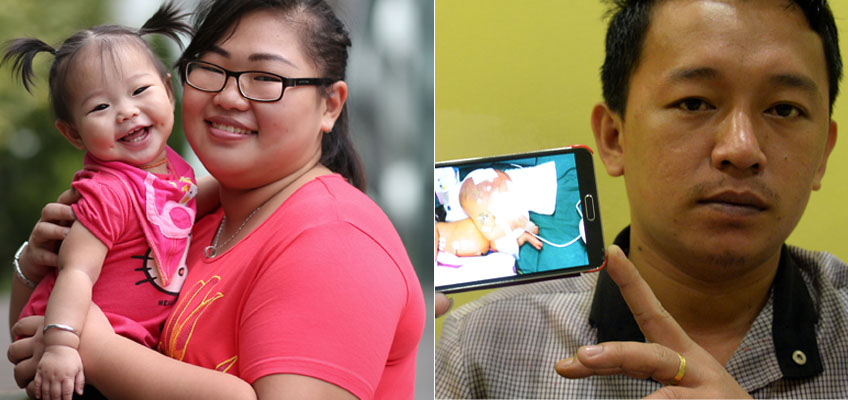
Baby Jeslyn is all smiles now – a year after surgery

0

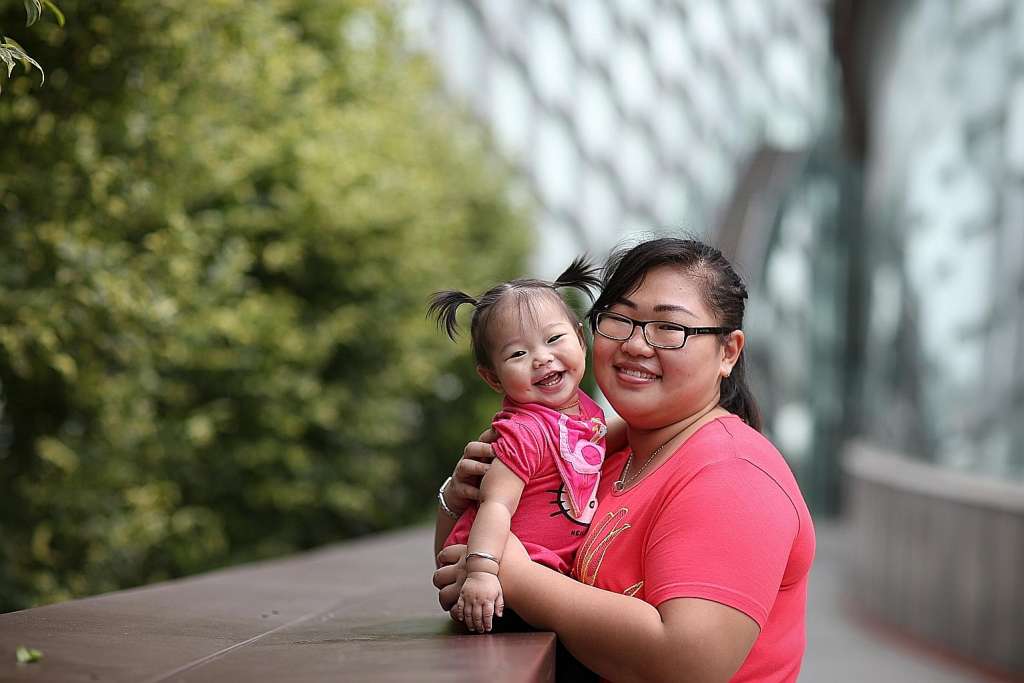
One year ago, Indonesian housewife Novi Ratna Sari spent most of the Christmas holidays at the KK Women’s and Children’s Hospital anxiously keeping watch over her month-old baby, who was recovering from a major operation.

Little Jeslyn Lim had a rare tumour that was larger than her body, extending from her tailbone, and doctors doubted her chances of survival.

The tumour, known as sacrococcygeal teratoma (SCT), caused Jeslyn to suffer multiple organ failure and she was in critical condition. Doctors fought hard to save her, and it was only after a seven-hour operation with a 50 per cent success rate that it was removed on Dec 4.

The SCT is a tumour formed before birth, and occurs in one in 35,000 to 40,000 live births.

Jeslyn and her family had arrived at KKH on Dec 1 last year from Batam with the help of the Rotary E-Club of Singapore, a humanitarian organisation, and left on Jan 7 after recovering from the surgery.

Speaking to The Sunday Times on Friday when she was here on a day trip for Jeslyn’s regular check-up at KKH, Ms Novi, 23, said she was grateful to all who had stepped forward to help her child, now 13 months old, when her story was first reported last year.

“Last year, I was so worried about her operation, but I’m so happy that she is growing every month, learning to crawl and sit, and calling us mum and dad, ” she said referring to herself and her husband, Mr Junadi Lim, 29.

Moved by Jeslyn’s plight, strangers in Singapore and Indonesia stepped forward with donations to pay for the baby’s medical fees, which came up to over $100,000.

Jeslyn’s parents would not have been able to afford the fees otherwise as Mr Lim earns just $500 a month as a storeman.

After Jeslyn was discharged, they have kept in touch with the donors who contacted them directly, with some of them visiting Jeslyn here when she returned for regular check-ups this year.

After the latest check-up, Associate Professor Low Yee, head and senior consultant at the Department of Paediatric Surgery in KK Women’s and Children’s Hospital, said there was currently no evidence of any recurrence of the SCT.

“Jeslyn’s bladder and bowel function and continence appear to be normal for her age and on all examinations done so far.”

Ms Novi said the family of three will be celebrating this festive season simply, having homecooked meals and spending time together. “Both of us are happy that we have been blessed with this little girl, and that we can have a whole and complete family.”


This article was first published on Dec 25, 2016.
Get a copy of The Straits Times or go to straitstimes.com for more stories.

Image: 
Blurb: 
<p>One year ago, Indonesian housewife Novi Ratna Sari spent most of the Christmas holidays at the KK Women's and Children's Hospital anxiously keeping watch over her month-old baby, who was recovering from a major operation.<br />
&nbsp;</p>
Publication Date: 
Sunday, December 25, 2016 – 14:00
Keywords: 
Send to mobile app: 
Source: 


Rotator Headline: 
Baby with massive tumour is all smiles now – a year after surgery
Rotator Image: 
Story Type: 
Others

Source link

Factory art? Singapore’s artists head for industrial buildings in the east

0

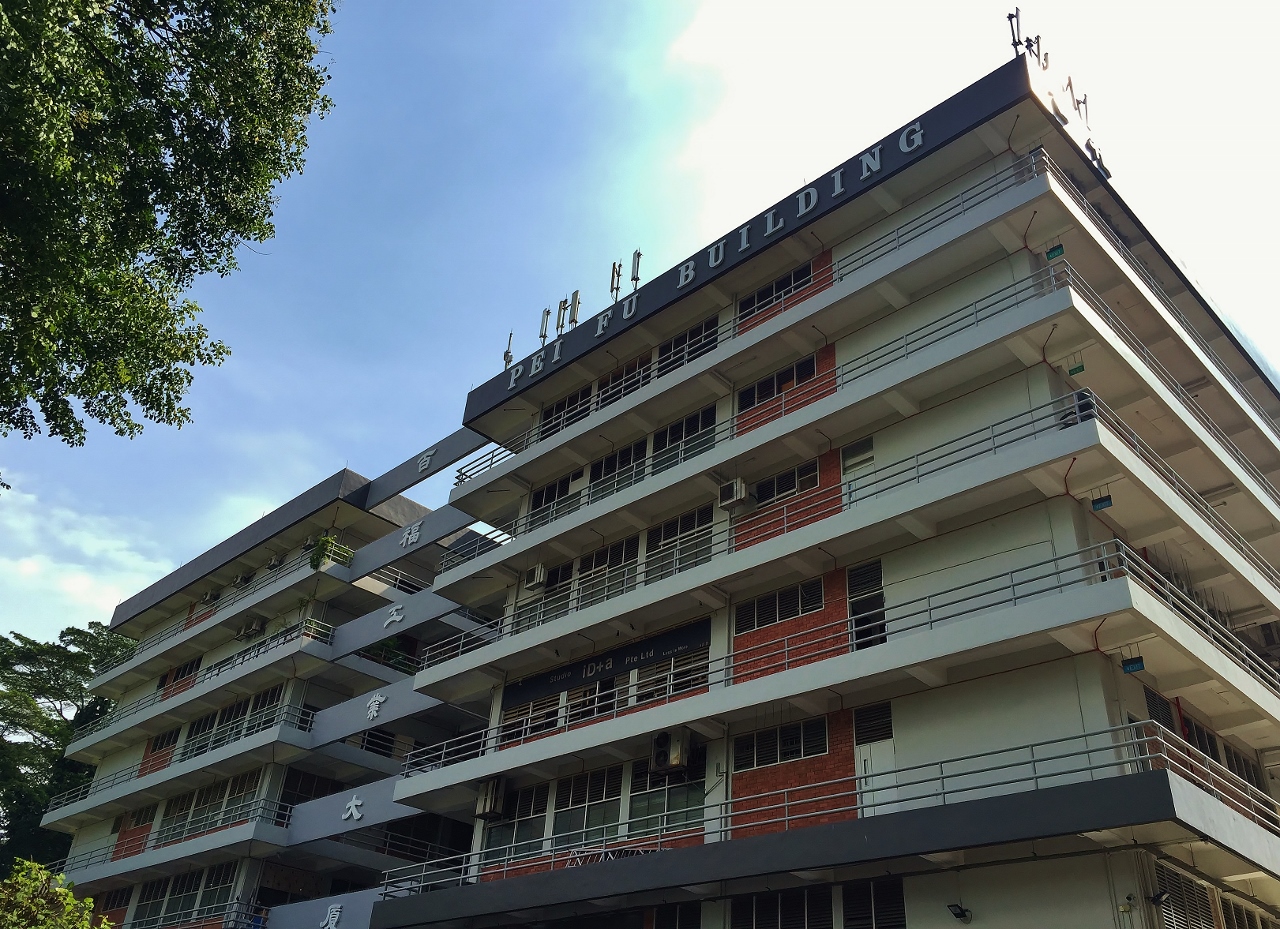
SINGAPORE: Pei Fu Industrial Building is your typical industrial building found all over Tai Seng.

Located at the end of New Industrial Road, just off the busy intersection of Upper Paya Lebar Road and Bartley Road East, the old six-storey structure houses a hodge-podge of businesses ranging from safety equipment vendors to interior fitting firms.

On the first floor, there is a food wholesaler, where trucks are busy unloading sacks of rice and boxes of cooking oil.

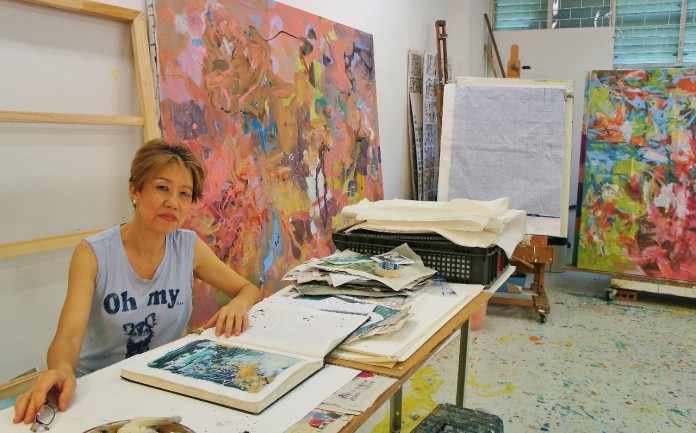
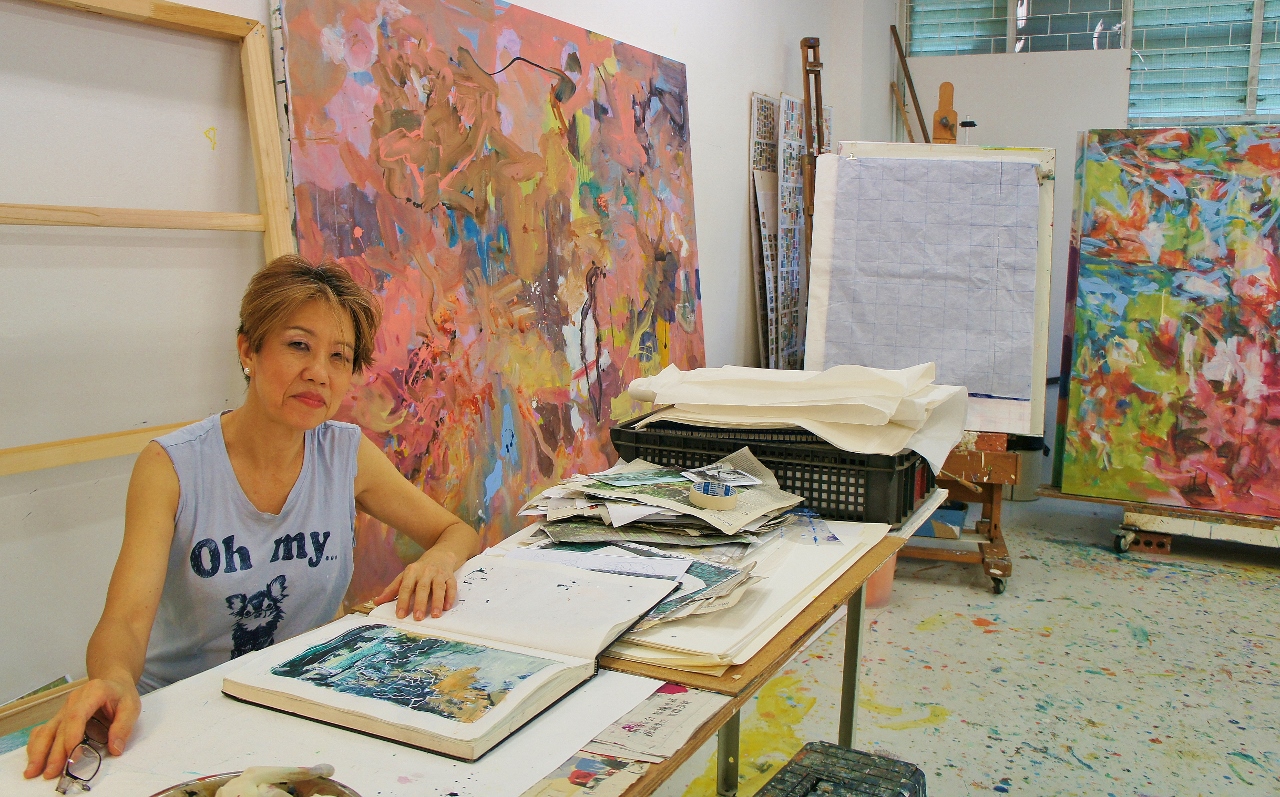
It is the last place you would imagine artists hanging out for inspiration. But for sculptor Tricia Lim and painter Liang-Gek Cheng, it is the perfect place to make art.

Together with filmmaker Victric Thng, the two share a unit on the second floor, which they’ve divided among themselves and turned into artist studios.

At the back, Ms Cheng has a large work area and storage space, where you will find her working on large paintings every day.

Meanwhile, the rest of the unit is divided between Mr Thng and Ms Lim, who have set up a storage space-cum-vintage thrift shop and a ceramics studio, respectively.

“As a painter, you want a big clear space without too much columns, low rental and maybe higher ceilings; a fairly good amount of lighting and cargo lifts for our stuff. Industrial spaces are a natural fit for us,” said Ms Cheng.

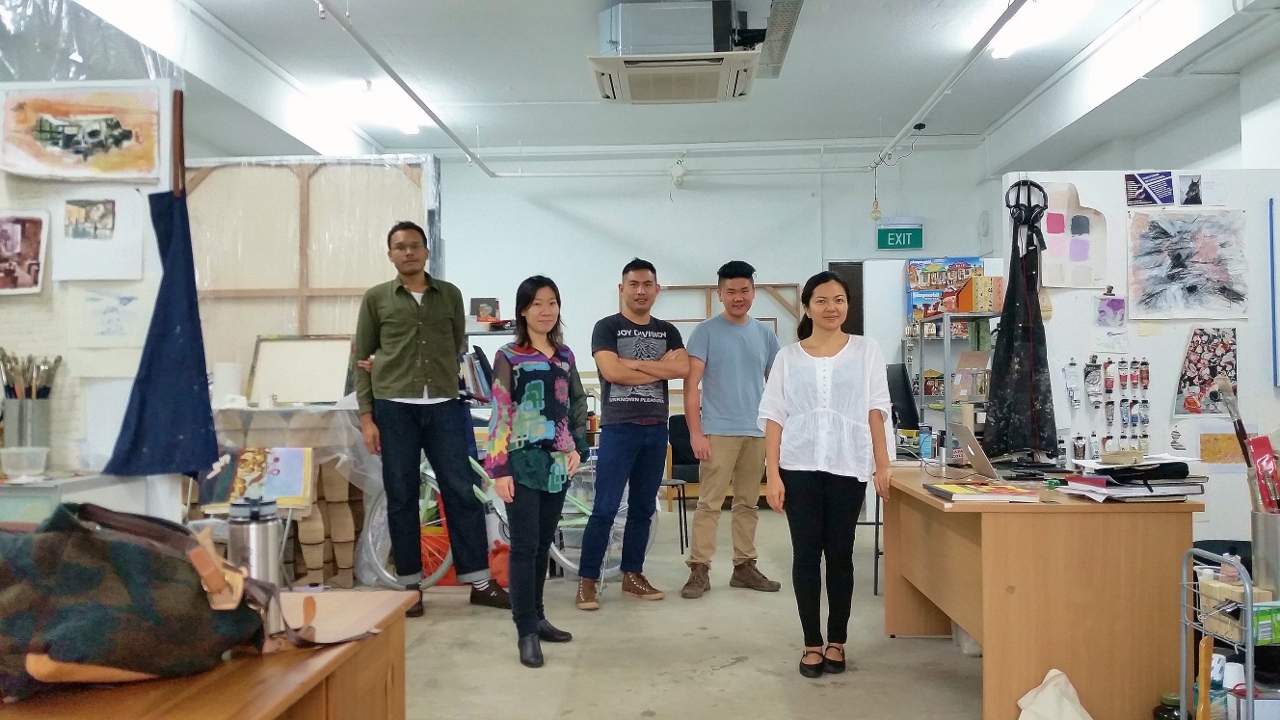
Painter Liang-Gek Cheng insider her studio at Pei Fu Industrial Building. (Photo: Mayo Martin)

A VIABLE ALTERNATIVE

As Singapore’s space crunch and rising costs at the city centre continues, industrial areas on the fringes are slowly becoming a viable alternative for artists looking for a place to work.

And like the artist-tenants at Pei Fu Industrial Building, others have also looked to the east, in areas such as Tai Seng, Ubi, Macpherson and Geylang.

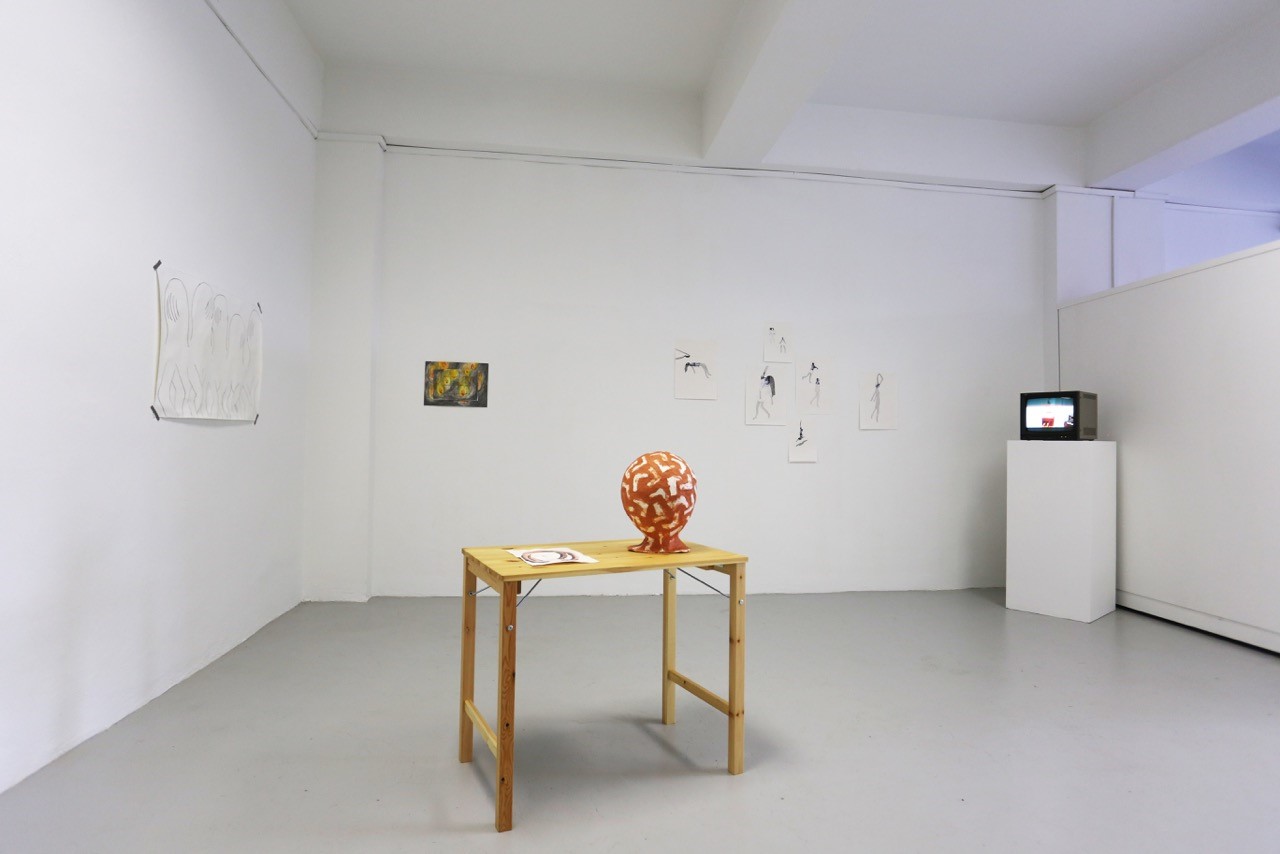
At Kapo Factory, a grungy rundown building that is walking distance from Tai Seng MRT along Upper Paya Lebar Road, two artists have set up Peninsular.

The 600 sq ft unit on the second floor opened last May. It mainly serves as a studio for Tan Guo-Liang and Cheong Kah Kit, but every three or four months, they open it up to experimental exhibitions by other artists.

The two had joined forces in search of a place, and decided to look at industrial areas.

It was partly because they were inspired by Hong Kong’s art scene, where many artists and galleries are based in similar places. “We picked this because it looked like some of the spaces we’ve been to (in Hong Kong) and I thought the vibe here was quite nice,” said Mr Tan.

“(Peninsular) is an in-between space, between a studio where people make and a gallery where people show, which I find the most exciting.”

Every three to four months, Tan Guo-Liang and Cheong Kah Kit turn their Peninsular studio at Kapo Factory into an exhibition space for artists. (Photo: Peninsular)

Their presence at Kapo Factory inspired another artist to move into the building.

On the same floor, but at the opposite block, artist Joo Choon Lin has been working at her new space for the past couple of weeks.

Previously, she worked at Telok Kurau Studios, one of the National Arts Council’s (NAC) oldest arts housing sites. There, she temporarily rented spaces from artist-tenants.

But after visiting Peninsular, Ms Joo decided to look for her own space at Kapo Factory. After searching online, she found an office space in one of the units, where she’s now busy building an installation work for a group show next year.

“I was looking around and there were many places where you can’t even drill things, but this was a factory, so it was okay,” she said.

A PLACE OF THEIR OWN

For the artists Channel NewsAsia talked to, renting spaces at industrial buildings has proven to be beneficial.

Prior to setting up her studio at Pei Fu Industrial Building, Ms Lim did not have any other place to make art.

She tried to apply for a studio space at Goodman Arts Centre (GAC) and Aliwal Arts Centre, two of NAC’s most recent and popular arts housing sites, but was unsuccessful. Her mother, herself an artist, had her own studio, but that did not work out either.

Now that she has a place of her own, she has been able to further her practice.

“Working from your house, from your bedroom, trying to do certain things, especially if its sculpture, is quite difficult,” she said.

“Here, I’ve managed to start to explore and really live and work as an artist. It has also become a place to think and process things.”

Being in an industrial area also has its plus points on a more practical level, said Mr Tan, who pointed out there are a lot of places in the Tai Seng area where artists can easily get materials. “I walk out, I can get wood or metal. There’s also stationery warehouse nearby,” he said.

And as it turns out, the area is quite interesting.

“One of the things we just found out is there’s a record shop upstairs, there’s an experimental kitchen in one of the buildings nearby, there’s food, second-hand shops … It’s industrial but it’s also kind of lively, so we’re always surprised.”

But the main attraction of going industrial in the east has undoubtedly been the range of options available and the relative reasonable costs of renting spaces.

For many artists, the default option has long been NAC’s arts housing scheme. The council offers studio spaces at heavily subsidised rates, which could go as high as 80% of the market rate. For instance, studios at GAC average around S$700, including service charge.

Recently, the council has also added 30 recycled shipping containers at GAC to address demands for short-term projects across all art forms.

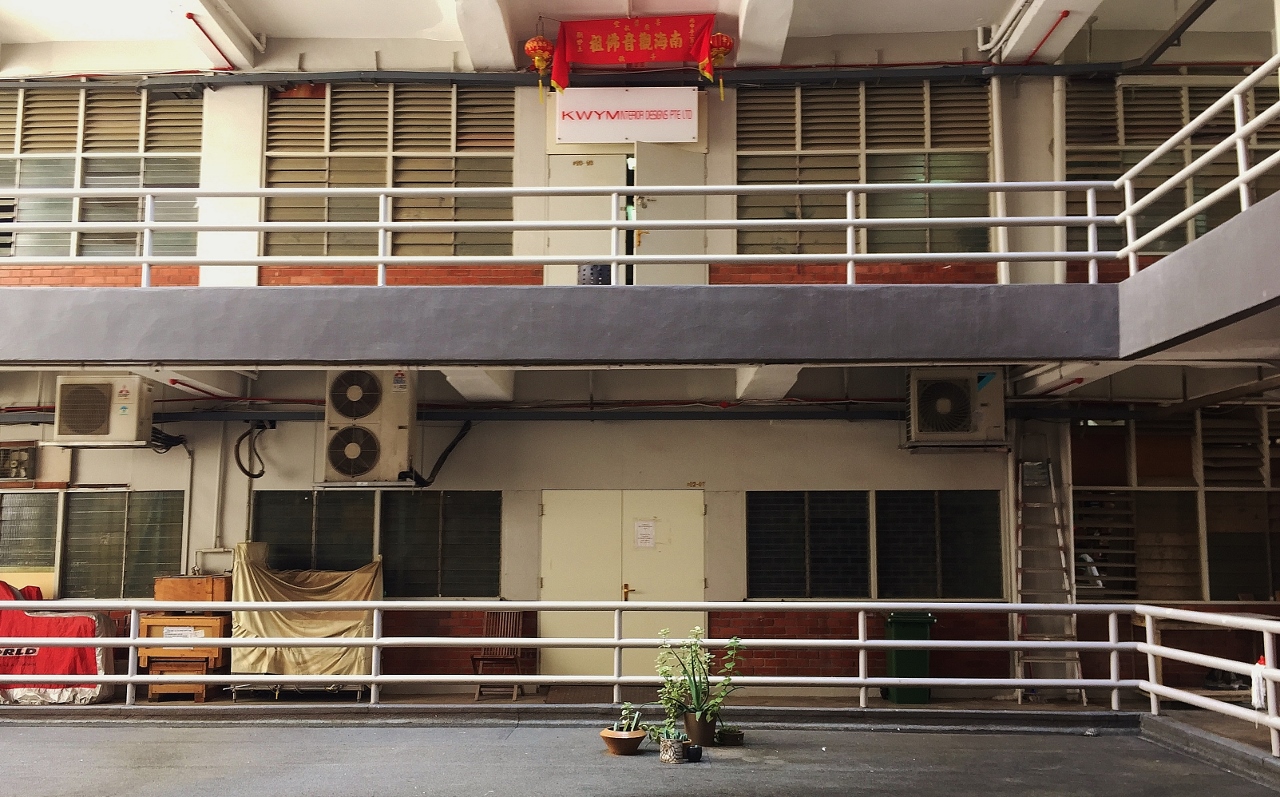
The entrance to Tricia Lim, Liang-Gek Cheng and Victric Thng’s studios at Pei Fu Industrial Building. (Photo: Mayo Martin)

But these Government-subsidised spaces are limited in number and very sought-after. These get snatched up quickly, so industrial buildings are looking to be the next best — and affordable — option.

The folks at Peninsular, for instance, pay around S$1,000 a month for their 600 sq ft studio, while their neighbor Ms Joo pays S$600 for her smaller, 193 sq ft space. Meanwhile, the three folks sharing the second floor unit at Pei Fu Industrial Building pay S$2,450 a month for their 1,900 sq ft unit.

FINANCIAL HURDLES

However, renting spaces at industrial buildings also has its unique set of challenges.

Artist Chua Chye Teck — who previously joined Cheng Liang-Gek and Victric Thng before roping in Tricia Lim to replace him — pointed out that like any other space available in the market, the costs at the beginning can be a headache.

“Most artists live month-by-month. Maybe they can afford S$500, but if you ask them to bring out a few thousand dollars for down payment and for renovation, it’s quite impossible unless they are financially stable, like if they teach,” said Mr Chua.

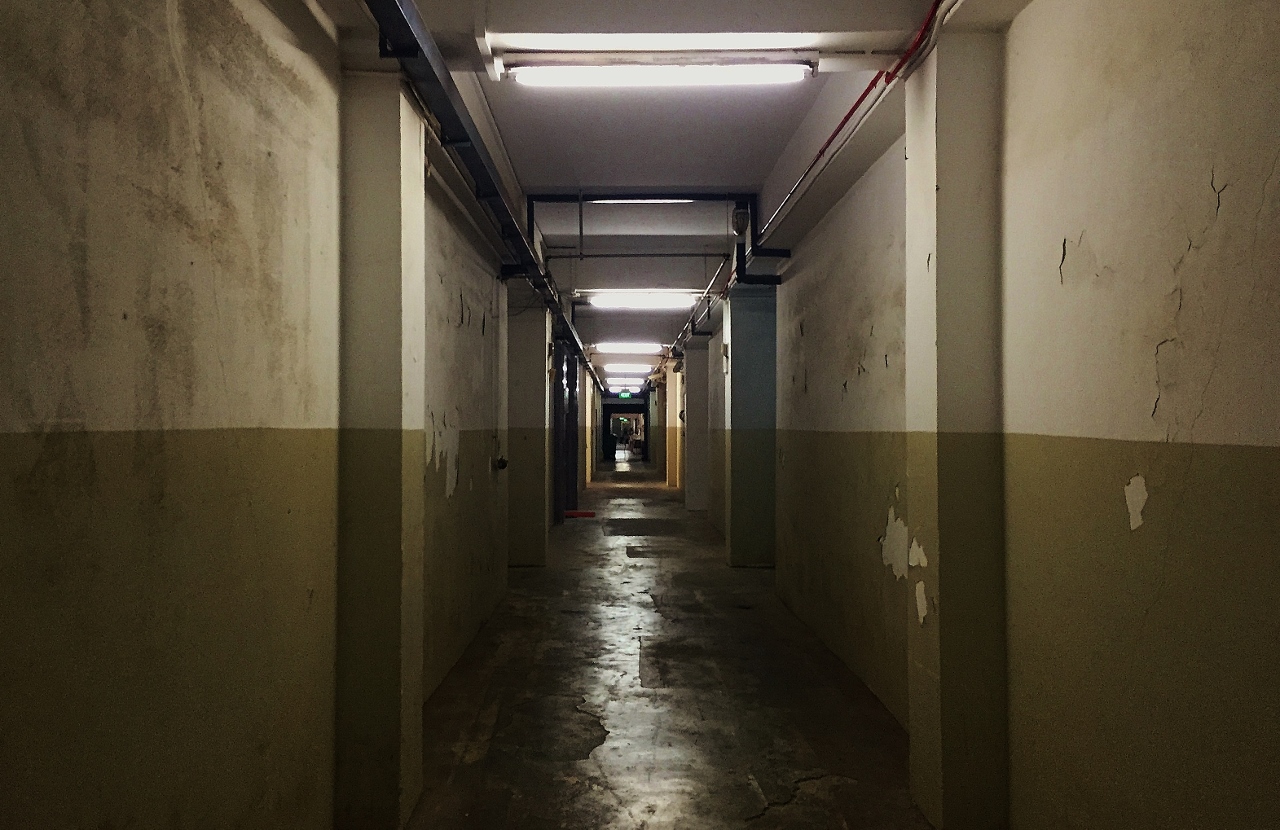
Don’t be deceived by its grungy looks. On either end of this corridor at Kapo Factory are artist studio spaces. (Photo: Mayo Martin)

That was the case for the three artists at Pei Fu Industrial Building, who collectively had to fork out nearly S$22,000 for renovation costs, lighting, partition walls, air-conditioning and doors.

Many of these spaces, too, are often too huge and too expensive for just one artist to rent — more often than not, those who do take the leap need to co-share with like-minded artists.

Two years ago, Ezekiel Wong Kel Win and a few other fellow artists did just that. Together with Hilmi Johandi, Betty Susiarjo, Choi Yin and Simon Ng, they pooled their resources to rent a unit at UB. One at Ubi Avenue 4.

“Me and Hilmi (Johandi) were thinking of looking for a space together and then we found out that the rest were also looking, so we thought why not look together. We were almost sure we wanted to be around Tai Seng area because it was convenient. It’s near the MRT and it’s somewhere central,” said Mr Wong, who had also unsuccessfully applied for a studio space at GAC.

The 1,023 sq ft space cost S$2,400 a month, which they divided among themselves.

But even then, it had been a huge gamble for Mr Wong, who had just graduated before plunging into the endeavour.

“I didn’t know we had to pay two months in advance, that you had to fix the light, put up partitions, activate the utilities,” he recalled. “Then all the bills started coming in and it was just crazy. That was the most stressful part.”

Ezekiel Wong Kel Win (second from right) with fellow artists at their Studio Ubi space. (Photo: Ezekiel Wong Kel Win)

But it eventually paid off. He finally had space and put it to good use. Many of the works for his first solo show — at last year’s Affordable Art Fair Young Talent Programme — were done at the studio.

Studio Ubi, however, is set to close shop, with a final exhibition during Singapore Art Week in January. So now, some of its artists are in the process of shifting to a smaller and cheaper space — an industrial building at Shaw Road, which, incidentally is very near Kapo Factory.

The building is so brand new (it is a refurbished former workers dormitory flanked by other workers dormitories) that only the fourth floor currently has occupants.

Each artist pays around S$300 a month for the square-shaped space that they’ve yet to spruce up.

“It’s definitely a lot cheaper. And we only have to pay for electricity; we don’t have to pay for water,” said Mr Wong. “A lot of people are co-sharing because rarely would people want to rent big spaces — and for many of them, like designers, you really only need a table space.”

COMING TOGETHER

Sharing a space with other artists isn’t only beneficial on a financial level; co-sharing means there’s an instant support group as well.

“I used to work all by myself,” said Ms Cheng, “But now, I have these two (Victric Thng and Tricia Lim), and the occasional interaction is quite good, emotionally.”

Added Mr Wong: “I would bounce off ideas with my friends, talk about recent exhibitions, get instant feedback about my paintings, which I think is very important for a young artist like me.”

So while practical needs drove these artists to move to industrial spaces, the potential for these to also become social places is there. 

In their attempts to build a kind of community among themselves, six studios organised a one-day open house event called Eastside Open Studios last month.

After moving into her small studio at Kapo Factory, Joo Choon Lin has temporarily transformed the entire room into an installation, in preparation for her next show. (Photo: Mayo Martin)

The no-frills, lowkey event was ambitiously compared to Brooklyn’s Bushwick Open Studios — the largest open studio event in New York — but suffice it to say the industrial scene in the east is still in its infancy stages.

“With these sorts of organic art clusters, it does take time to grow,” said Mr Tan.

But artists can take heart in the fact that Singapore has a tradition of these spaces cropping up where you least expect them.

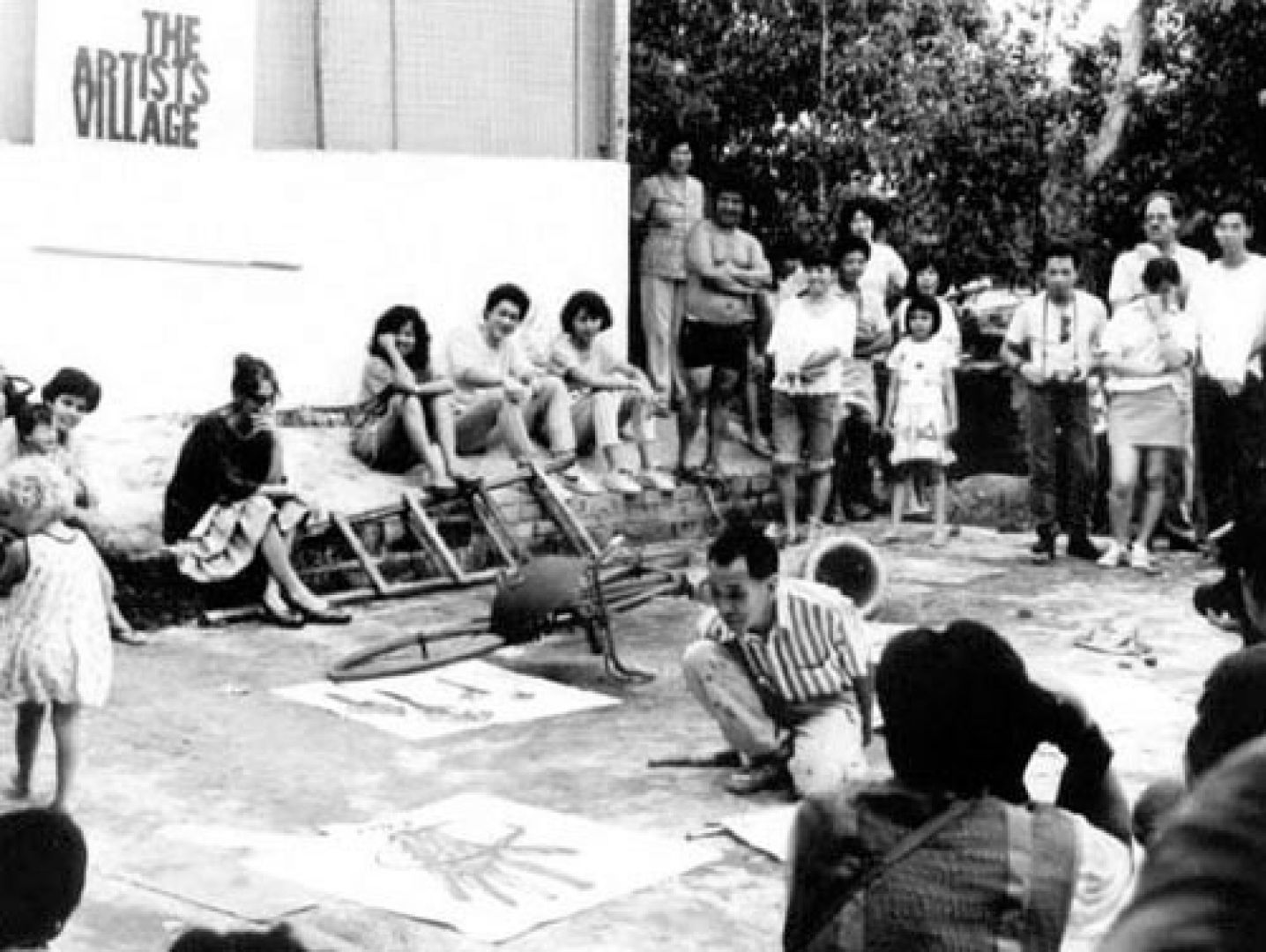
Most famous of these was the seminal Ulu Sembawang farm that was home to The Artists Village in the 1980s. Through the years, other places also attracted artists, primarily because of cheap costs but eventually, because of the vibrant artistic energy that emanated from them.

These included the double-storey colonial houses at Seletar Camp, where the likes of Vincent Leow, Han Sai Por, Lee Wen and Jason Lim stayed.

“It was cheap, there was land and you didn’t feel like you were in Singapore. As students, we would always hang out there,” recalled Mr Chua.

Later on, other places would become ground zero for many artists, most prominently in Little India during the mid-2000s. The main cluster was found at Perumal Road, where a two-storey block of flats became an artist colony of sorts.

In the 1980s, The Artists Village, a group of Singaporean artists, worked and showed art at a farm in Ulu Sembawang. (Photo: The Artists Village)

Peninsular’s Mr Tan was one of those who lived there for three years, sharing one of the units with a couple of artists from 2005 to 2008.

“It just happened that the whole building had very affordable rent and it was a great location in the city fringe. People slowly found out about it and because they were actively looking for units, that created something,” he said, adding that aside from the studios, there was also a creative “centre” in p-10, a defunct art collective that became the focal point in area.

THE NEXT PHASE

The trend of artists heading for industrial spaces in the east is fairly new. But it could very well be linked, historically, to how artists have adjusted and reacted to developments in Singapore.

If artists had once sought the idyllic environments of Ulu Sembawang as a reaction to rapid modernization of the country in the 1980s, and later converged in the heritage-rich area of Little India in the mid-2000s as the country began embracing the arts more fully, then heading to the industrial buildings could be tied to what’s happening in the art scene now. After all, the past few years have seen an explosion of galleries and art fairs, and a growing art market.

“There is something about industrial studio spaces that could be pegged to art as some sort of industry,” admitted Mr Tan. “But while we want to make stuff, I don’t want to be in a factory making art — I want the place to have some soul.”

Artist Ezekiel Wong Kel Win at work in his Studio Ubi space. (Photo: Ezekiel Wong Kel Win)

There is, in fact, a precedent to this current trickle of artists in Tai Seng. Back in 2009, a massive art exhibition called BlackOut was held at a warehouse that, incidentally, was in a building just across the road from Kapo Factory. Some 13 artists participated in the three-day event.

It remains to be seen whether more artists will embrace the industrial areas of the east, but for now, those who are there are simply enjoying the artistic space they have – even if they are pretty much still the odd ones out in their respective buildings.

“They’re very curious about what we do. They’re always looking in and probably thinking ‘what the hell are they doing’?” said Ms Tan, about their non-artist neighbours.

“But I feel very much like we’re all in this together.”

Source link

Recognise Amos Yee’s asylum claim, HRW urges U.S. government

0


THE U.S. government should recognise the asylum claim of controversial Singaporean blogger Amos Yee, who has been subjected to “a sustained pattern of persecution” by the Singapore government, said rights group Human Rights Watch (HRW).

HRW’s deputy Asia director Phil Robertson, said in a statement that Yee has faced consistent harassment and bullying for his views on politics and religion.

Yee has been jailed twice: in September this year, he was sentenced to six weeks’ jail for “wounding the religious feelings of Christians and Muslims”, while last year, he was sentenced to four weeks in jail for “wounding the religious feelings of Christians” and “uploading an obscene image”.

“Since his release from prison, Yee has faced intensive government surveillance and monitoring of his public and on-line comments. Amos Yee is the sort of classic political dissident that the UN Refugee Convention was designed to protect,” said Robertson.

“No one should doubt that it was the Singapore government’s actions to consistently harass and bully Amos Yee for his activism, and ultimately criminalize his acts, that led Amos Yee to this appeal for protection as a refugee,” he added.

On Saturday, U.S. Immigration and Customs Enforcement spokeswoman Gail Montenegro confirmed in a written statement that Yee is currently being held in custody by U.S. officials after being detained at Chicago O’Hare International Airport on December 16 and will remain in custody “pending federal immigration court proceedings.”

SEE ALSO: Singaporean blogger Amos Yee detained by U.S. officials while seeking political asylum

Yee’s U.S. lawyer Sandra Grossman told the South China Morning Post on Saturday that Yee was likely detained because he entered the country on a tourist visa despite an intention to apply for asylum.

She explained that Yee would have to undergo a “credible fear interview” with an asylum official to assess if he faces a credible fear of persecution or torture back home.

Grossman added that the process usually takes a few days, but the holiday season could delay it. He would then appear before an immigration judge, but that could take years because of backlogs in the immigration system.

SEE ALSO: Singapore: Teen blogger Amos Yee jailed six weeks over religious insults

Speaking to Byline, U.S.-based Singaporean activist Melissa Chen, whom Yee had been turning to for advice on how to make a bid for political asylum, said: “His attorneys are in the process of expediting USCIS to grant him the ‘credible fear interview’. Once this interview has been conducted, the lawyers intend to ask for immediate parole which would allow him to be released from detention centre.”

However, Chen said the asylum process is not a short one, and it wasn’t clear how long Yee might have to stay in detention. “Given the uncertainty, Amos might very well be in U.S. jail longer than he was in Singapore jail for his sentences,” she said.

Chen added that if Yee were to remain in Singapore, “he would be in and out of prison for the rest of his life”.

SEE ALSO: Singapore teen Amos Yee guilty of insulting Christians, ex-leader Lee

“He’s also been assaulted by members of the public, and by fellow inmates when he was in prison, so the ‘persecution’ is not just from the government – it’s from society at large too. If Amos cannot successfully seek asylum in the one country, for which the very First Amendment in its Bill of Rights is the freedom of speech, where else can he go?” she said.

According to Chen, Yee told her that U.S. jail is “heaven” compared to what he experienced in Singapore, and “if that gives him asylum and freedom, then it is totally worth it”.

According to reports by Singaporean media, Yee, 18, is also due to enter the National Service – a mandatory two-year conscription into the military for all Singaporean males.

Additional reporting by Associated Press.

Source link

Fairprice 48hr offers – Coca-Cola, Milo 3-in-1, Anlene & many more from 25 – 26 Dec 2016

0

Fairprice’s 48hr deals, valid till Monday 26 Dec

Fairprice 48hr offers – Coca-Cola, Milo 3-in-1, Anlene & many more from 25 – 26 Dec 2016

For this long weekend, Fairprice has not one, but TWO Day Specials – just for you. Head down to any outlet near you to #StretchYourDollar with more great savings for products such as fresh mangoes, prawns, Coca-cola, Milo and more!

Source

S'poreans stranded in Hokkaido by snow again

0

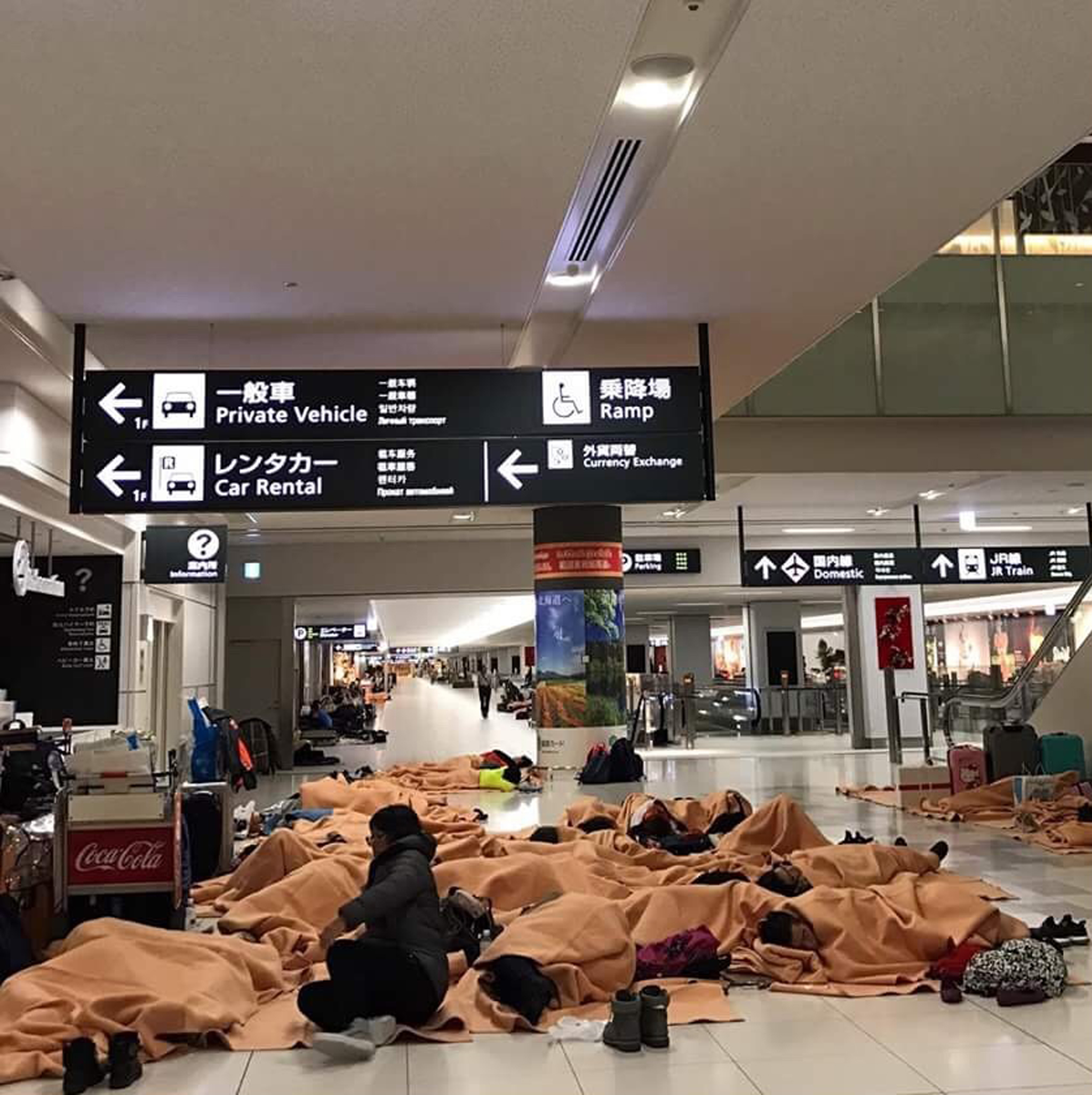
Some Singaporeans holidaying in Hokkaido have been stranded in the icy Japanese prefecture since Thursday, after heavy snow caused more than 250 flight delays and cancellations for the second time this month.

But clear skies yesterday saw the New Chitose Airport in Sapporo resuming operations, with several airlines, such as Hong Kong Airlines, arranging extra flights for their stranded passengers.

Heritage blogger and naval architect Jerome Lim, 52, was one of those stranded at the airport from Thursday.

His family were scheduled to fly back to Singapore yesterday but, at press time, he told The Sunday Times that the plane had not taken off yet because the right engine could not be started.

They were initially due to leave Hokkaido on Thursday on Scoot flight TZ215, which was scheduled to depart at 5.25pm with 315 passengers.

But the flight was cancelled due to heavy snow.

A Scoot spokesman said the plane could not depart the next day. The bad weather eventually led to the airport closing early on Friday afternoon.

A total of 284 flights were cancelled that day, with about 6,000 people spending the night at the airport, national broadcaster NHK reported.

This comes after some 200 Singapore Airlines passengers were stuck in northern Japan about two weeks ago, after more than 250 flights were cancelled due to inclement weather.

Mr Lim said his family had to use sleeping bags as no accommodation was provided.

The Scoot spokesman said: “Due to the unavailability of hotel rooms, affected guests were issued meal vouchers.”

But passengers reported that by the time they received the vouchers, a number of restaurants at the airport were closed.

Food outlets that remained open ran out of food. The shelves of the airport’s convenience store were also wiped clean of products.

Stranded Singaporeans in Sapporo. Photo: Jerome Lim

Singaporean dentist Tan Keng Wee, 28, who is travelling with seven friends on China Eastern Airlines, said they waited in the plane for seven hours on Friday before being asked to disembark.

The city saw its heaviest December snowfall in 50 years on Friday, with 96cm recorded by 9pm.

Nine flights had to be cancelled yesterday morning due to snow on the runway.

Transport chaos persisted in the morning in Sapporo as about 370 train services, including those connecting the city with the airport, were cancelled. Operations resumed at 1pm local time once snow removal work was done.

Clear skies are expected today, though it will likely snow this week, a Japan Meteorological Agency weather forecast indicated.

•Additional reporting by Chew Hui Min


This article was first published on Dec 24, 2016.
Get a copy of The Straits Times or go to straitstimes.com for more stories.


Image: 
Category: 
Blurb: 
<p>Some Singaporeans holidaying in Hokkaido have been stranded in the icy Japanese prefecture since Thursday, after heavy snow caused more than 250 flight delays and cancellations for the second time this month.</p>
Publication Date: 
Sunday, December 25, 2016 – 13:00
Keywords: 
Send to mobile app: 
Source: 


Rotator Image: 
Story Type: 
Others

Source link

BHG 20% off reg-priced items post Christmas super sale from 25 – 26 Dec 2016

0

20% off reg-priced items at BHG outlets today and tomorrow.

BHG 20% off reg-priced items post Christmas super sale from 25 – 26 Dec 2016

BHG will be having a 20% off regular-priced items Super Sale storewide promotion from 25 – 26 Dec 2016. Enjoy 20% off regular-priced items, 15% off sale items and 10% off cosmetics

Source