25.3 C
Singapore, SG
Wednesday, September 23, 2026
Home Blog Page 2161

Duterte vows ‘safer, comfortable lives’ for Pinoys in Christmas message

0


Rodrigo Duterte, the president of the Philippines, promised that as the country celebrated the holidays, Filipinos’ lives were “safer and more comfortable”.

“As your President, I will put food on the table; create more jobs; make our people feel more secure, more comfortable,” Duterte said in his Christmas message.

The President stated that the Government remained committed to bringing lasting peace to the country, one of his campaign commitments.

“Peace is still one of my main forces of governance, we go further in the government, for all to provide an olive branch of peace.

He said that the true nature of Christmas Christmas is built on peace and generosity.

He added that this was “a season of giving and sharing”, especially for the poor and marginalized groups.

“Our celebration of Christmas is the longest in the world, and we Filipinos are a peace-loving country, and Christmas is also a season of giving and sharing,” he said.

“This wonderful feeling is seen in the faces of our hopeful children, reflected in the hearts of our loving and happy family members and friends.

The Chief Executive urges Filipinos to join the government to build lasting peace and make progress in the Philippines.

“Christmas this year will provide inspiration for the achievement of lasting peace and national inclusive economic growth, and we join hands in creating a peaceful and progressive Philippines.

Image:
Category:
Publication Date:
Sunday, December 25, 2016 – 15:37
Keywords:
Send to mobile app:
Source:
Story Type:
Others

Source link

'My calling is people who are broken'

0

Sister Gerard Fernandez is sitting in a meeting room at the Good Shepherd Place in Toa Payoh, telling stories about her past in a voice clear, calm and soothing.

It was the early 1940s and she was then barely six years old.

Her late father – who was secretary to the chief justice – spoke impeccable English, and would put his children through enunciation drills while waiting for breakfast.

One morning, they had to recite a verse which went: “And I commit you to Sing Sing Prison, there to be hanged, drawn and quartered.”

Sing Sing is a maximum security prison in New York City.

“I remember saying to myself ‘I don’t like those words and I’m not going to say them when my turn comes’,” says the nun, now 78.

Instead, she recited a prayer honouring the Virgin Mary when her turn came. “I went: ‘Hail Holy Queen, Mother of mercy, hail, our life, our sweetness and our hope’.”

Her father, who did not know she had committed the prayer to memory, was stunned, and delighted.

For Sister Gerard herself, the episode is perhaps prescient. She became a Changi Prison counsellor for those sentenced to hang.

Among them were Catherine Tan Mui Choo and Hoe Kah Hong, the women who helped medium Adrian Lim kill two children in the sensational ritual murders case of 1981; Flor Contemplacion who murdered a fellow Filipino domestic worker and her four-year-old charge in 1991, and Van Tuong Nguyen, the Australian drug trafficker sentenced in 2004.

“At the age of 36, I walked with my first inmate on death row. I wasn’t aware of the call then but I guess it was long implanted in my heart,” says Sister Gerard who joined the Good Shepherd Sisters, a Roman Catholic order of nuns, when she was 18.

Blessed with a serene demeanour and prone to bouts of girlish giggles, she is the fourth of 10 children.

“My parents were the most generous and loving of parents; my faith came from them,” she says, adding that two of her sisters are Franciscan nuns.

Her early years were happy ones, spent in a house in McNair Road. The chief justice visited the family every Christmas, and allowed them use of his Jaguar during this period.

“We also had a pet pig running around the house,” she recalls.

But the pig got slaughtered when her father uprooted the family to Malacca during the Japanese Occupation.

“My uncle came to do it. Mum salted the meat, put it in a jar and that was what we lived on during our journey to Malacca.”

After a couple of years in the Malaysian state where one of her younger sisters died of tetanus poisoning after being pricked by a thorn, the Fernandez family returned to Singapore and a new home in Cairnhill.

After completing her secondary education at Convent of the Holy Infant Jesus in Victoria Street, she taught briefly at the Good Shepherd Kindergarten in Kampung Java before becoming a nun.

She felt the call to serve, she says, after meeting the Good Shepherd sisters who ran Marymount Centre in Thomson.

The place, which had to make way for the North-South Expressway, had several outfits including a welfare home and shelter for women and troubled teens.

“At the shelter, I saw this teenage girl, and she had such sadness on her face. I told myself: ‘This is where I want to work, with girls like her’.”

When she broke the news to her father one morning while he was having breakfast, he did not choke on his coffee.

“He put down his newspapers and said: ‘Are you sure you want to do that?’ And when I said yes, he said: ‘The only thing I want you to know is that I am ready to see you through a tertiary education. Do you want to go now?’

“I said: ‘Yes, if I don’t, I may lose my vocation’,” she recalls with a laugh, adding: “I was actually a very happy teenager, I enjoyed my life, going to parties and all.”

Her late mother too, she says, readily gave her blessings.

On May 19, 1956, she entered the Good Shepherd Convent in Marymount; she was 18 years old.

After two years of formation – the process of learning about the religious life – she took her first vows.

Life in the convent was not easy.

“I came from a closely knit family and I missed them very much. There were times when I wanted badly to go home. On Christmas Day especially, I felt the loneliness and I remember I’d cry in the chapel,” she says.

“But it’s a matter of going deep down into your heart and asking what you really want.”

During her formation, Sister Gerard attended two years of teacher training and taught primary school pupils at Marymount Convent from 1959 to 1962.

Her first mission was in 1962, when she went to Jakarta for four years to work with troubled teenagers.

The work was fulfilling but sometimes harrowing because of the political turmoil which rocked Indonesia then.

She recalls the Lubang Buaya incident in 1965, when a group of Indonesian military personnel captured and murdered six generals.

It was the start of an abortive coup that eventually led to the ouster of Sukarno, Indonesia’s first president.

This period was also marked by large-scale killings targeting communists, ethnic Chinese and suspected leftists.

Even the Good Shepherd Convent in Jakarta where she was based, was a target.

“But we were protected by students. It was a frightening experience,” says Sister Gerard who went back to the country for another stint between 1972 and 1975.

Over the next few decades, she worked with the abused, the lost and the marginalised.

“My calling is people who are broken,” she says simply.

In the 1970s, when drug abuse was rampant in Singapore, Sister Gerard, already a counsellor, attended more counselling and rehabilitation courses held by the Singapore Anti-Narcotics Association and started working with drug addicts.

Not long after, she founded the Roman Catholic Prison Ministry with two Redemptorist priests, Father Brian Doro and Father Patrick John O’Neill, to visit drug offenders, as well as other prisoners.

“In the beginning, we would go all the way to the prison even if it was just to see one prisoner. But now, we see nearly 20 inmates every week. From just four counsellors, we now have more than 100 in the Roman Catholic Prison Ministry.”

Her work with prisoners took a dramatic turn in 1981 with the ritualistic murders of two children by self-styled medium Adrian Lim, his wife Catherine Tan and mistress Hoe Kah Hong.

The case was especially shocking for Sister Gerard because she knew one of the victims, nine-year-old Agnes Ng whose elder sister was a cook at Marymount, as well as Tan who attended the Marymount Vocational Centre.

“I knew Catherine’s father too, he was an electrician and used to do the Christmas lights at Marymount,” she says.

Tan, she says, was a sweet and simple girl who fell into bad company after she left Marymount. Lim made her go into prostitution and eventually led her to the gallows.

Sister Gerard felt a “desperate” need to see Tan, and wrote to her. Six months passed before the latter replied and agreed to see her.

“When I walked in, she looked at me with her sad eyes which said: ‘You haven’t condemned me. Please help me change’.”

For seven years, until the three of them were hanged in 1988, Sister Gerard made weekly visits to pray with Tan and steer her back to her Catholic faith.

Not long after, Hoe, who was in the next cell, also sought her counselling.

Over three decades, the nun has “walked” with 18 convicts to the gallows, sometimes spending long nights with them in prayer.

Not all of them, she says, were Catholics. “There was this guy Kumar, he committed murder. He said he had seen me pass by his cell and heard me sing.”

The day before he was to be hanged, he asked to see her.

“He said: ‘Tomorrow morning, I’m going to see God and when I do, I will tell him all about you’,” she recalls softly.

Candidly, the sister lets on that she opposes the death penalty because it takes away life which is precious. “But I won’t give up the opportunity to be there for these people. When I walk in there, I can see a spark of hope in their eyes. It doesn’t come from me, it’s from the divine,” she says.

Although she is claustrophobic, she has never felt fear walking through the oppressive cells and corridors of the prison.

“Many have asked me where I get the strength to do it. I have questioned myself too. That’s why I believe this is a calling. I do not look at it as something I’m doing; it’s a relationship between the inmate and myself.

“It is most beautiful when they say: ‘Yes, I have done wrong but I have hope’,” says Sister Gerard, who calls all those she has walked with her friends.

Australian drug trafficker Van Tuong Nguyen, 25, who was hanged in 2005, asked her to be by his side in his final moments.

But she did not.

“That would have been too traumatic for me,” she says.

Last year, she decided to pass the baton. “I just felt it was time to stop. I have a team of people ready to take over,” she says.

Just two years shy of her 80th birthday, she still leads an active life despite having 10 screws implanted in her back, and hip replacement surgery a few years ago.

Her days at Good Shepherd Place, where she still works with troubled teens, counsels couples and helps “broken souls”, are packed.

“Don’t make me out to be a saint,” she repeatedly tells me. “I have my dark moments. My ego can be as big as a satellite. But I try to use the dark moments to become better. I’m 78 and I know when to pull back because that’s not the way to live.”

Asked to describe herself, she giggles and says: “I enjoy people and love chocolates.”

She enjoys good relationships with many people, she says, because she is not afraid to love.

“My heart is full of love. Because I’ve made a vow of chastity, it frees me up to love everybody. You can’t hold back and if you do, something’s not right,” she adds with a grin.

Sister Gerard sets great store by the words of St Mary Euphrasia Pelletier who founded Sisters of The Good Shepherd. “One person is more precious than the whole world.”

kimhoh@sph.com.sg


This article was first published on December 25, 2016.
Get a copy of The Straits Times or go to straitstimes.com for more stories.


Image: 
Category: 
Publication Date: 
Sunday, December 25, 2016 – 15:31
Send to mobile app: 
Source: 


Story Type: 
Others

Source link

14 questioned over Christmas tree adorned with word "Allah" in Indonesia

0


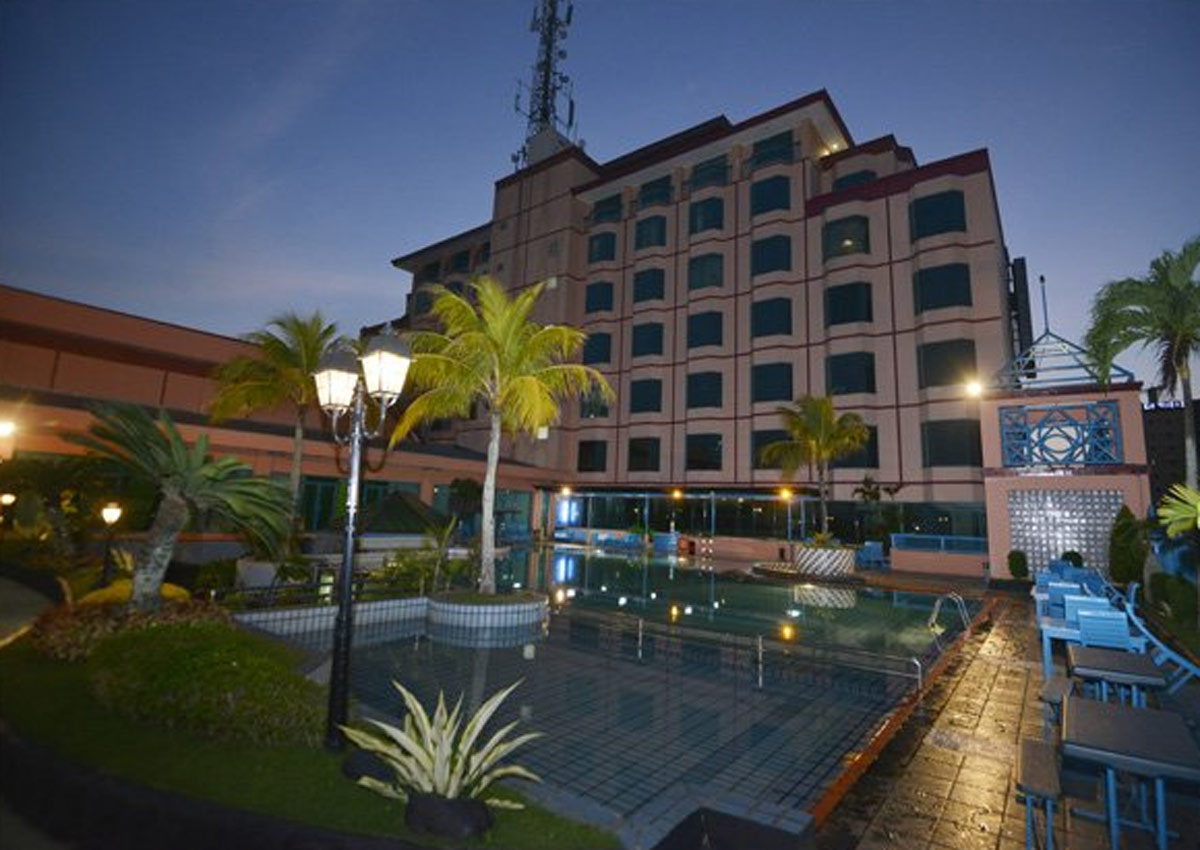
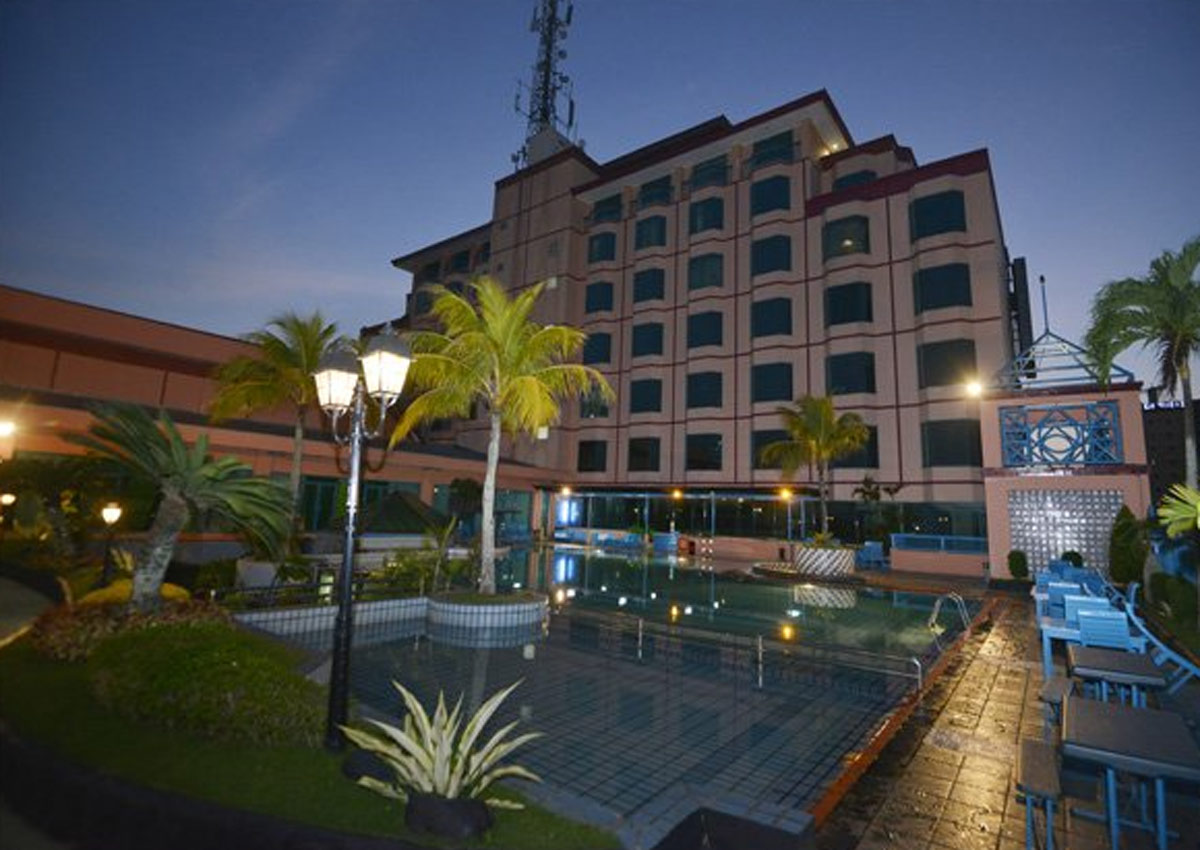
Jambi Police intensified an investigation over a Christmas tree decorated with the word “Allah [God]” in Arabic script allegedly erected by a four-star hotel in Jambi and questioned 14 people following the suspension of the hotel’s operation.

“Those questioned are people who knew about the ornaments,” Jambi police chief Brig. Gen. Yazid Fanani said on Sunday.

Several journalists and the employees of Novita Hotel are among witnesses questioned by investigators over the tree. Police also urge people not to be easily provoked by the incident and not to cause public tension.

Meanwhile, the chairman of Jambi’s Indonesian Ulema Council (MUI) Adri Hasan slammed the hotel for the incident, which he claimed was blasphemous.

“We want this case to be thoroughly investigated to prevent restlessness among Muslims,” he said.

Jambi Governor Zumi Zola also called on all parties to monitor security and tolerance in Jambi and not to get involved in any misconduct. However, Zumi also expressed regret over the incident that could have stemmed from the hotel’s negligence.

The Jambi municipal administration decided to temporarily suspend the operation of Novita Hotel over the word Allah as one of the ornaments decorating the Christmas tree in the hotel’s lobby.

Jambi Mayor Syarif Fasha said on Friday the decision to close down Novita Hotel was made to ease religious tensions related to the matter.

Image:
Category:
Publication Date:
Sunday, December 25, 2016 – 15:18
Keywords:
Send to mobile app:
Source:

Story Type:
Others

Source link

Thai army general Kampanat Ruddit appointed to Privy Council

0


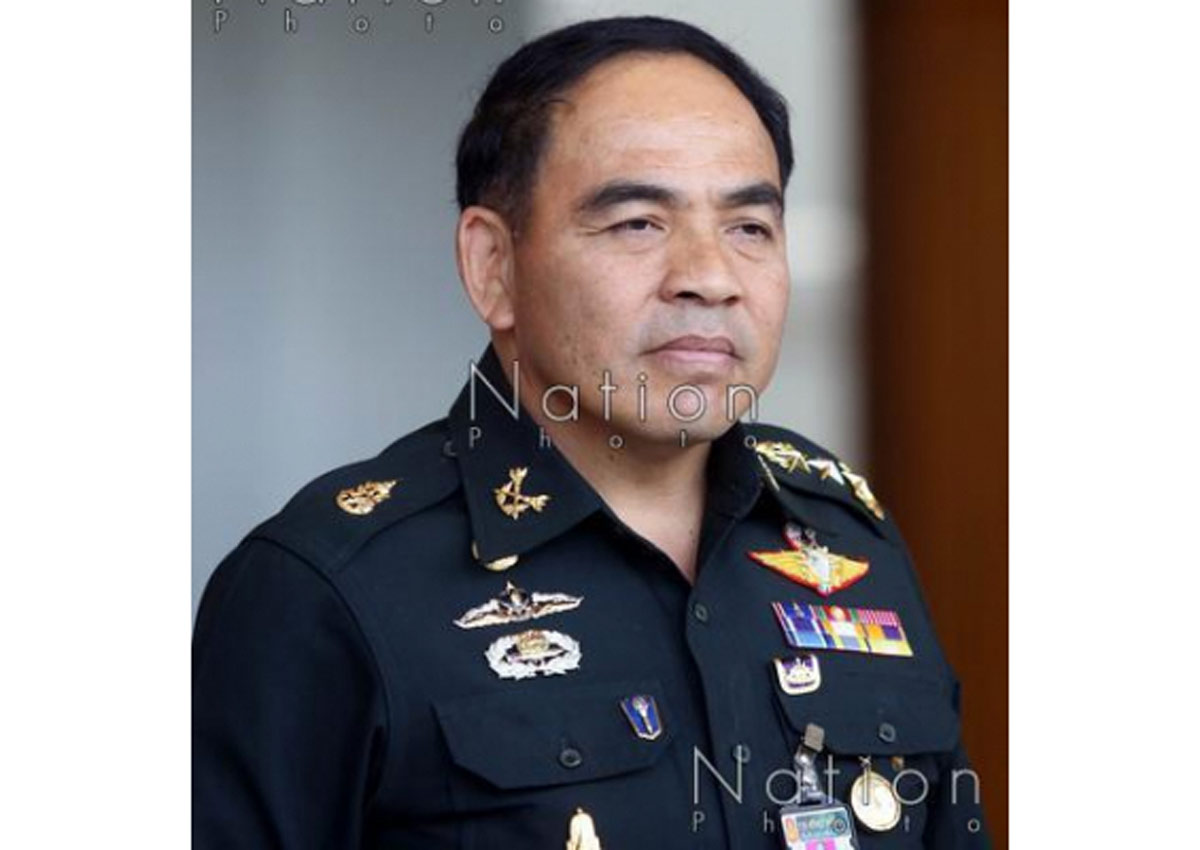
Former Assistant Army chief General Kampanat Ruddit has been appointed as a new privy councillor, raising the number of Privy Council members under the new King to 14.

His Majesty King Maha Vajiralongkorn issued a royal command on Friday to appoint Kampanat, a former member of the National Legislative Assembly (NLA), as the new privy councillor with immediate effect.

Kampanat on Thursday resigned as an NLA member.

The royal command was undersigned by Privy Council President Prem Tinsulanonda.

According to the post-coup interim charter, the King can appoint up to 19 privy councillors including the president.

After ascending the Throne, His Majesty the King first appointed 12 privy councillors – Wirat Chinvinijkul, Jaranthada Karnasuta, General Surayud Chulanont, Kasem Watanachai, Palakorn Suwanrath, Atthaniti Disatha-amnarj, Supachai Poo-ngam, Chanchai Likhitjitta, Air Chief Marshal Chalit Pukbhasuk, General Dapong Ratanasuwan, General Teerachai Nakwanich and General Paiboon Koomchaya.

Kampanat, Wirat, Jaranthada, former education minister General Dapong, former Army chief General Teerachai and former justice minister General Paiboon are first-time members of the Privy Council while the other eight, including Prem, served as privy councillors under the late King Bhumibol Adulyadej and were reappointed.

General Kampanat, 60, graduated from Class 16 of the Armed Forces Academies Preparatory School and Class 27 of the Chulachomklao Royal Military Academy.

Before his latest appointment to the Privy Council, Kampanat had served in numerous high-ranking positions including assistant Army chief, NLA member, and director of the National Council for Peace and Order’s Centre for Reconciliation for Reform.

Image:
Category:
Publication Date:
Sunday, December 25, 2016 – 15:10
Send to mobile app:
Source:

Story Type:
Others

Source link

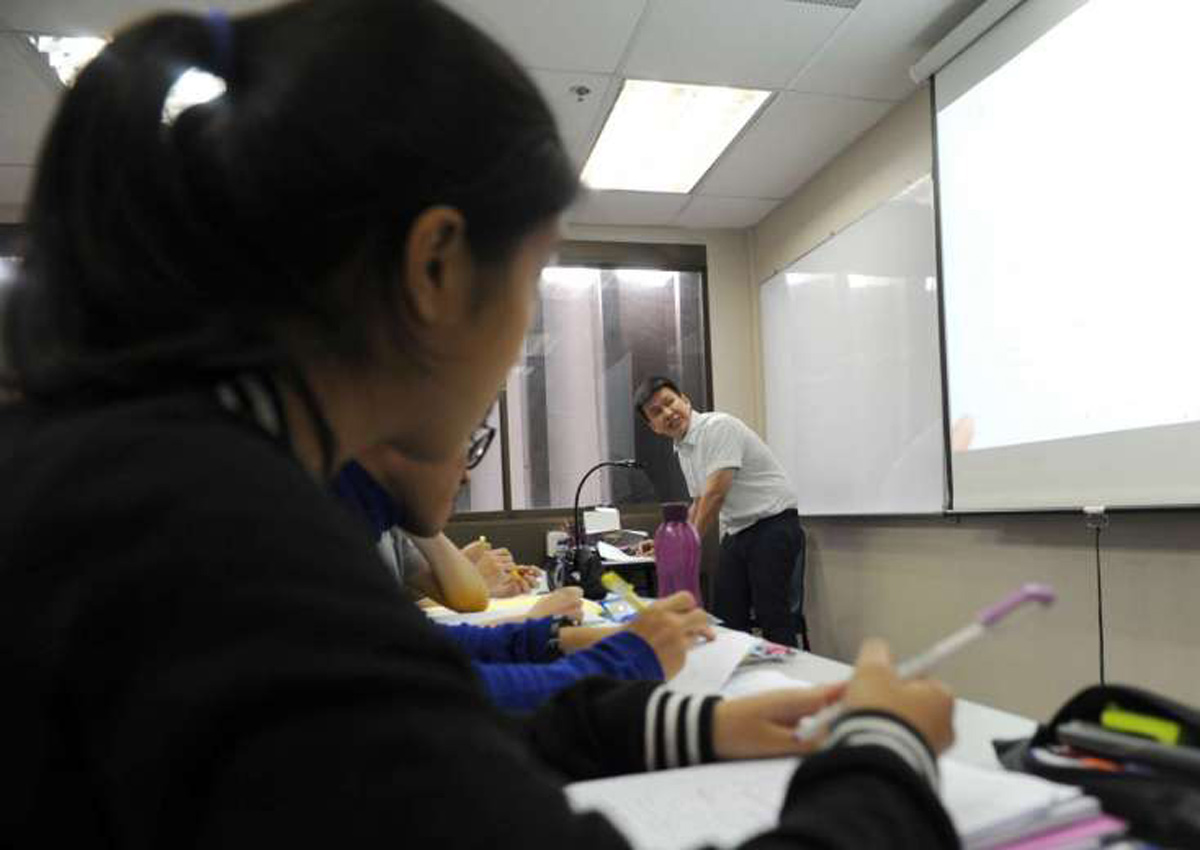
Tuition industry worth over $1b a year

0


Last month, Kelvin Seah, an economics lecturer at the National University of Singapore, analyzed the International Student Assessment Program (PISA) survey data in 2012 and found a surprising finding that tuition was worse than non-tuition.

Dr. Seah, 34, says he concludes: “These students are paying tuition because they are weaker in the first place, or worse because of tuition, which means that tuition and too much class may arise reaction.

Education experts say it is difficult to determine how many roles academic success has, or if it contributes to Singapore’s performance in Pisa, a global benchmark that peaked at 15-year-olds last year.

However, there is no controversy is the development of shadow education industry.

Tuition is worth more than $ 1 billion per year here, almost twice the $ 650 million spent in 2004.

Some parents spend hundreds or thousands of dollars a month on tuition, although knowing that tuition may not significantly improve their child’s grades.

This stems from a strong commitment to the education of the Singapore family – good practice in national examinations is a priority for many parents and students.

Dr Yeap Ban Har, 48, principal of Marshall Cavendish Institute, which conducts professional development courses for teachers, reckoned tutoring helps in mastering the basics, but does not contribute significantly to performing well in novel, challenging problems.

“If a student is weak in basics, tuition might help with basic skills questions as it tends to be about practice and more practice,” he said. “But it may not help with challenging, novel ones, like those found in the Pisa exercise.”

National Institute of Education don Jason Tan said the efficacy of tuition varies from student to student.

“I don’t think you can say tuition does not work for anyone.”

Read Also: Parents ponder value of Pisa test rankings

Experts said tuition will exist as long as there are high-stakes national examinations.

Dr Seah said tuition should not be lightly dismissed. “For students whose families can afford better-quality tuition and enrichment, it could be a big part of why they continue to do well.”

Dr Yeap said the skills of a teacher make more of a difference in a student’s learning process. “It is not a case of tuition or no tuition… If a teacher can create opportunities (for students) to explore, to collaborate, to think structurally, to reflect, to communicate, to be independent, to make meaning, to be confident… It does not matter whether he is a teacher in a school, or a tutor.”


This article was first published on December 25, 2016.
Get a copy of The Straits Times or go to straitstimes.com for more stories.

Image:
Category:
Publication Date:
Sunday, December 25, 2016 – 15:01
Send to mobile app:
Source:

Story Type:
Others

Source link

Parents ponder value of Pisa test rankings

0

When housewife Hua Yingying was a student, she was taught the basic concepts of maths and science from textbooks in school, and did not have much homework.

“We also didn’t have things like hands-on learning or project work. Now, even children in kindergarten or primary school are taught how to use basic software and work on projects,” said the 45-year-old, who has a daughter in Secondary 2.

And while many students tended to opt for traditional fields such as engineering or accounting in the past, it has now become harder to predict what jobs will be in demand.

Madam Hua wants her daughter to explore her interests and find her passion.

She thus cheered the news that Singapore had taken the top spot in the Pisa rankings, an international benchmarking test which places emphasis on higher-order critical thinking skills.

Read Also: Tuition industry worth over $1b a year

The results show the local education system has managed to equip students with such skills, she said.

“These skills are important for doing well in the global economy because children will need to learn how to adapt to changes quickly and cope with unforeseen circumstances,” she said.

Other parents question the relevance of the Programme for International Student Assessment rankings, and say the education system has to evolve further beyond imparting knowledge.

Mr Eugene Seah, 40, agrees that the role of parenting and education has evolved as Singapore’s economic needs change over time.

“We know for sure that what worked for us in the past would not work in the same way now,” he said.

The speaker-trainer learnt that lesson the hard way – in 2013, he was retrenched after 14 years of working in public relations and marketing in the financial industry.

The father of three children aged between six and 12 questions the relevance of the Pisa rankings.

Read Also: Pisa and the creativity puzzle

After all, the giants of the future economy – Facebook, Google and Uber – were all founded in the United States, which ranked 25th in the Pisa test.

“Do we want to end up working for other people, or be the ones creating the next big company?” he said.

While he acknowledged that schools are placing more emphasis on critical thinking and inquiry, he thinks there should be a much bigger shift away from teaching knowledge towards independent thinking, as Singapore still lacks talent in creativity and innovation.

While the Pisa test takes critical thinking into account, there are also plans to measure how well students perform in areas such as inter-cultural sensitivity in 2018.

However, creative business consultant Calvin Soh, who has a 10-year-old daughter and a 14-year- old son, thinks the Pisa rankings are evolving too slowly and cannot catch up with the exponential pace at which technology is developing.

While the Pisa rankings measure one’s ability to think critically, they do not measure qualities such as self-confidence and one’s ability to recover from failure – key traits needed in a successful entrepreneur, he said.

His son Dylan, who will be in Secondary 3 next year, has failed exams at Anglo-Chinese School (Barker Road).

However, Mr Soh, 49, said that has not affected Dylan’s self-esteem, as he encourages his son’s non-academic pursuits.

Read Also: How Singapore’s students rose to No. 1

At One Kind House, a community space with an urban farm that Mr Soh designed and set up in Telok Kurau this year, Dylan works on his own projects, such as designing and prototyping urban farming tools.

“Often, they don’t work out initially, but he has learnt to try and try again until he succeeds,” said Mr Soh.

Some schools, such as Spectra Secondary, have similar projects.

Through a gardening programme that is part of its Character and Citizenship Education curriculum, students learn about values such as resilience and respect for nature.

But Mr Soh says academic achievement is still prioritised over hands-on projects.

He reckons the overemphasis on the former creates a culture where failure is stigmatised in Singapore, holding it back from having a risk-taking culture that embraces innovation.

This is despite the country doing well in academic benchmarking tests.

“Though we see gardening as a low economic skill set, it teaches us things about the variability of nature, and understanding and respecting nature so that you see the consequences of your actions. But is this more important than scoring As and Bs in science at the moment? It is not.”

yuensin@sph.com.sg


This article was first published on December 25, 2016.
Get a copy of The Straits Times or go to straitstimes.com for more stories.
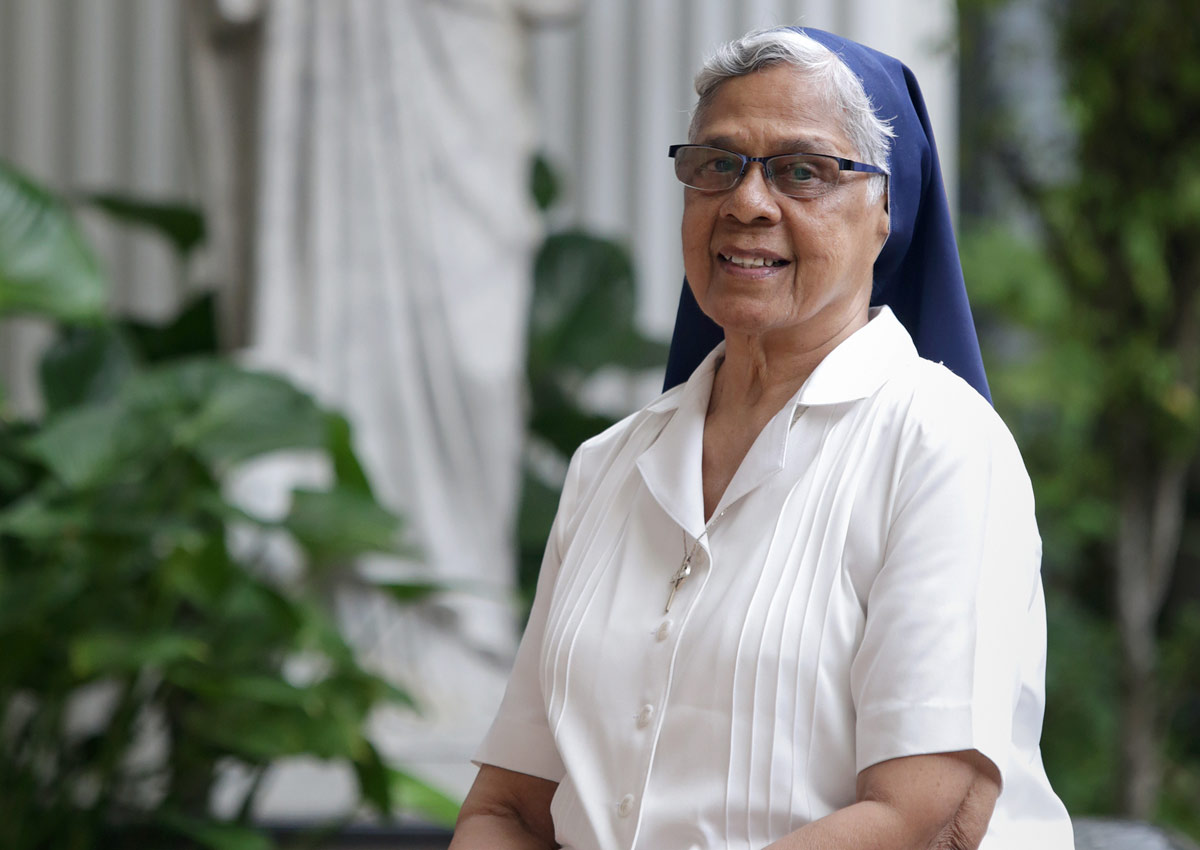
Image: 
Category: 
Publication Date: 
Sunday, December 25, 2016 – 14:56
Send to mobile app: 
Source: 


Story Type: 
Others

Source link

How Singapore's students rose to No. 1

0

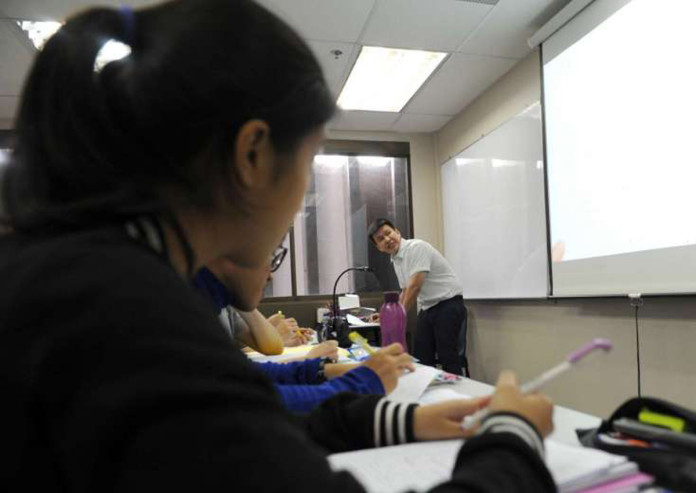
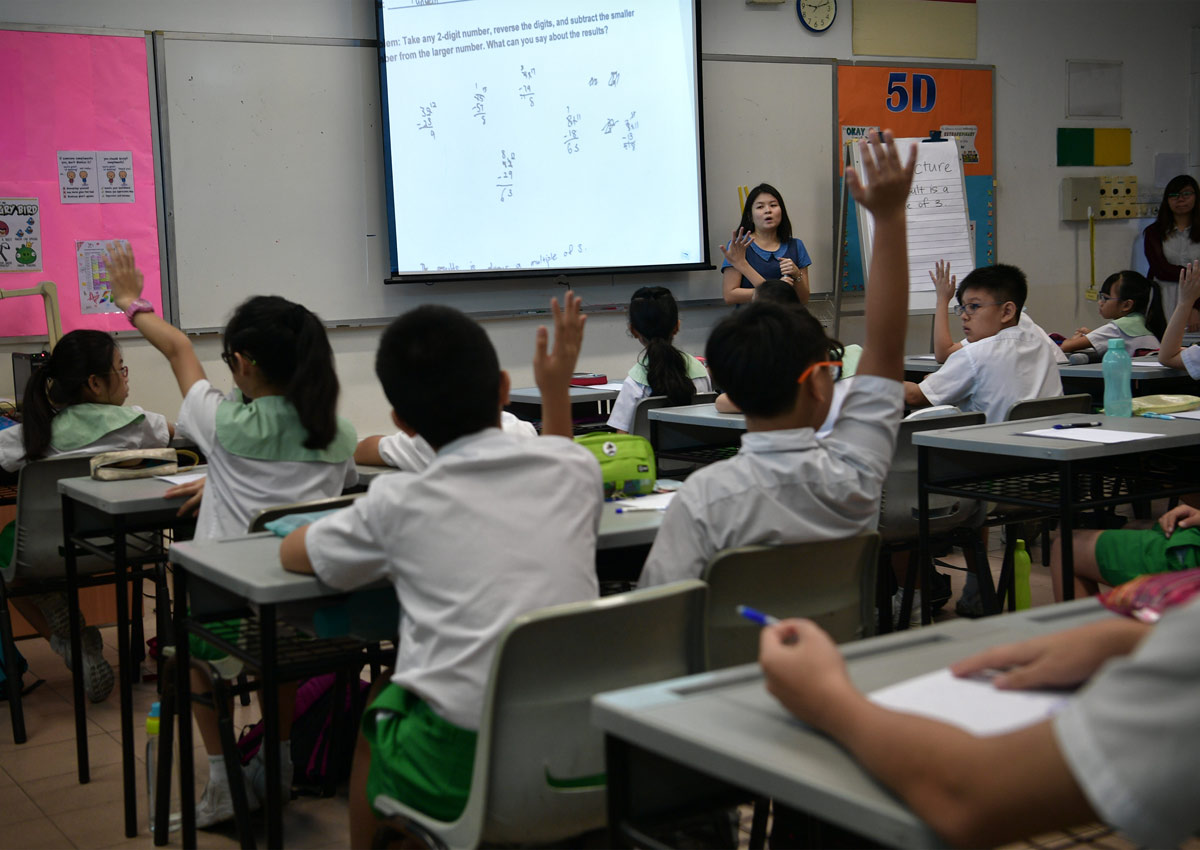
In a class last month, Primary 5 pupils at Woodgrove Primary School mulled over a mathematical puzzle unlike any standard problem sum.

The puzzle read: “Take any two-digit number, reverse the digits and subtract the smaller number from the larger number – what can you say about the results?”

“Try as many numbers as you like on a piece of paper,” said their mathematics teacher, Ms Lin Caili, 34, as she prompted pupils to test their hypotheses and explain their guesses.

“The answer is always a multiple of three,” one boy concluded.

“Maybe it’s a multiple of nine,” said another.

Ms Tan Hong Kai, 34, the school’s level head of mathematics, said the class was doing an investigative task on number patterns.

These open-ended activities, which she said are not usually tested in examinations, have been woven into lessons to equip pupils with higher-order thinking skills.

Such efforts by schools to encourage active learning have borne fruit, with Singapore students topping a global benchmarking test that measures how well they apply knowledge to solving real-world problems.

Read Also: Tuition industry worth over $1b a year

Earlier this month, 15-year-olds in Singapore were ranked No. 1 in maths, science and reading in the 2015 Programme for International Student Assessment (Pisa) test, dubbed the “World Cup for education”.

Last month, Singapore children in Primary 4 and Secondary 2 also topped another global mathematics and science test – Trends in International Mathematics and Science Study (Timss).

These results have placed Singapore on the world map and sparked discussion in media worldwide about the merits and flaws of the Republic’s education system.

Dr Kho Tek Hong, a former curriculum specialist who led a team in the 1980s to raise maths standards, said these results reflect the performance of Singapore as a country, not individual abilities, an indication that students from different academic streams were represented.

Science was the major domain tested in Pisa 2015, and the results showed teens here were strong in scientific enquiry skills and could use evidence to support claims.

An Education Ministry (MOE) spokesman attributed Singapore’s success in global studies to a teaching and learning culture which has built a “strong foundation in reading, numeracy and scientific literacy for all students”.

It also develops their thinking and communication skills, exposes them to application of knowledge in real-life contexts across subjects and gives them “positive attitudes towards learning”, he said.

Education experts point to Singapore’s ability to refresh its school curriculum and level up its teachers as key factors behind students consistently topping global rankings since the 1990s.

National Institute of Education (NIE) don Jason Tan, 53, noted that Singapore has managed to attain a high average achievement level compared with other countries in the region.

“This is helped by a rather centralised administration which can push reforms quickly from headquarters down to schools,” he said.

“Another plus point is the continuity in government, so there has not been much policy reversal.”

He also pointed to schools here having the resources to develop teachers, and physical infrastructure such as labs for learning.

CURRICULUM SHIFTS

Dr Kho, 70, said that Singapore’s journey to where it is today started with an overhaul of education in the 1980s to raise standards.

“The New Education system, as it was called, changed everything from school curriculum to teaching methods,” he said.

For instance, the former Curriculum Development Institute of Singapore was set up in 1980 to develop good-quality teaching and learning materials.

In those years, Singapore also looked to education systems in countries such as Israel and Japan, and studied how it could learn from various psychological theories.

“That was the start of slowly moving away from traditional rote learning and passive memorising over the next 30 years,” said Dr Kho.

“When students explore and are more active in learning, they make sense of concepts better.”

Since about a decade ago, the MOE has also made an effort to cut content across subjects, to make room for students to learn higher-order thinking skills such as logical reasoning and problem-solving.

This was done to free up time in schools for teachers to be more flexible and help students learn creativity instead of just content.

Dr Yeap Ban Har, 48, principal of Marshall Cavendish Institute, which conducts professional development courses for teachers, said there is a “clear direction” across the system today to train students to develop deeper inquiry skills.

For instance, since the 1997 vision of “Thinking Schools, Learning Nation”, curricula and assessment have focused more on critical thinking skills and creativity, he said.

Read Also: Pisa and the creativity puzzle

Increasingly, national examinations are also testing more application-based questions in novel scenarios, said Dr Yeap, who spent 10 years at NIE’s mathematics and mathematics education academic group from 1999 to 2010.

Twelve-year-old Gary Gan, who finished Primary 6 this year, said “higher-level” mathematics questions can be frustrating but he enjoys them as they help him think more.

“Maths helps me learn to solve problems and I think this will help me in the future to solve more challenging problems,” he said.

Dr Ridzuan Abd Rahim, an MOE lead curriculum specialist in mathematics, said: “It is no longer enough that we just know something.

More importantly, we need to know how to learn something new and how to apply what we know to new situations and problems.”

Today’s society and economy require workers to take ownership, be adaptive, and adapt ambiguity and complexity as the norm, said CHIJ Katong Convent principal Patricia Chan.

That is why curriculum has to evolve from one totally focused on content, to equip students with such skills for the future, she said.

In response to these rapidly changing needs, science and humanities subjects have been refreshed to equip students with skills for the future such as teamwork and the ability to analyse, be creative, make links and solve problems.

Lessons are now more grounded in real-life contexts, requiring students to apply textbook theories outside the classroom.

For instance, Ms Chan said students would learn about the total surface area of a cylindrical container in relation to understanding why and how manufacturers minimise material cost when canning drinks.

“In the humanities, the move towards the inquiry approach positions itself away from typical rote learning, where one can score by just memorising,” she added.

Students now need to make links between concepts and draw their own conclusions, using investigative work and examples from current affairs in the process, she said.

Pupils are also encouraged to speak up more so they are able to express themselves confidently.

A national curriculum called Stellar, short for Strategies for English Language Learning and Reading, was piloted in some schools in 2006 with the aim of developing pupils’ ability to use the English language confidently in real-world scenarios.

Stellar, which does not rely on textbooks and instead uses storytelling, role-playing and texts such as news articles in lessons, was extended to all primary schools in 2009.

Schools also pay more attention to developing students beyond book smarts through applied learning in topics such as robotics, food science or transport.

These programmes, said Dr Ridzuan, give students a chance to experiment and take on hands-on activities that apply to the real world.

TEACHER TRAINING

The other plank of Singapore’s global success lies in teacher training.

Experts said NIE and its predecessors have played a key role in training educators centrally over the years.

NIE director Tan Oon Seng said its partnership with schools and MOE ensures that teacher education is in line with “larger teacher policies, Singapore’s education priorities and aspirations, and the ground challenges in schools”.

For instance, to teach students higher-order thinking, teachers themselves must be equipped to “ask questions, to guide and facilitate students to think… beyond information or knowledge imparting”, said former NIE director Lee Sing Kong.

Professor Low Ee Ling, head of NIE’s strategic planning and academic quality, said having a central body that trains teachers is what makes Singapore “a very unique system”.

This model began with the setting up of the Teacher Training College in 1950.

Before that, many teachers had little or no prior formal teacher training, leading to uneven quality of teaching standards across schools, she said.

Today, around 85 per cent of teachers are graduates, and at the primary school level, seven in 10 teachers have a degree.

Read Also: Parents ponder value of Pisa test rankings

NIE trainee teachers, called pre-service teachers, also go on practice stints in schools to help them link theory to practice.

The MOE has also been improving pay and promotion prospects for teachers.

For example, in October last year, up to 30,000 teachers received a 4 per cent to 9 per cent increase in their monthly pay.

Mentorship schemes introduced since 2006 have also helped new teachers hone their craft on the job.

Each beginning teacher is matched to a mentor in school who provides guidance in areas such as classroom management, basic counselling skills and assessment skills.

St Stephen’s School teacher Gion Pee is grateful that the system emphasises beginning teachers’ professional growth.

The 33-year-old, who joined teaching in July 2012, had a one-year induction where he learnt teaching and management skills from senior teachers.

Since January this year, he has received tips on teaching English during weekly meetings with his mentor, Madam Azizah A. Rasak.

The sessions helped him to reflect on how to differentiate his teaching style to suit his pupils’ learning needs, he said.

Dr Charles Chew, principal master teacher in physics at the Academy of Singapore Teachers, said: “Teaching is a highly complex craft that needs to be constantly sharpened and honed to meet the needs of students… A good teacher is one who does not teach the subject but teaches students the subject.”


This article was first published on December 25, 2016.
Get a copy of The Straits Times or go to straitstimes.com for more stories.
@sph.com.sg>

Image: 
Category: 
Publication Date: 
Sunday, December 25, 2016 – 14:40
Send to mobile app: 
Source: 


Story Type: 
Others

Source link

The world's most famous diamond has blood-soaked history

0

NEW DELHI — Many precious stones have a blood-soaked history, but a new book reveals the world’s most famous diamond the Koh-i-Noor surpasses them all, with a litany of horrors that rivals “Game of Thrones.”

The Koh-i-Noor (“Mountain of Light”), now part of the British Crown Jewels, has witnessed the birth and the fall of empires across the Indian subcontinent, and remains the subject of a bitter ownership battle between Britain and India.

“It is an unbelievably violent story … Almost everyone who owns the diamond or touches it comes to a horribly sticky end,” says British historian William Dalrymple, who co-authored “Kohinoor: The Story of the World’s Most Infamous Diamond” with journalist Anita Anand.

“We get poisonings, bludgeonings, someone gets their head beaten with bricks, lots of torture, one person blinded by a hot needle. There is a rich variety of horrors in this book,” Dalrymple tells AFP in an interview.

In one particularly gruesome incident the book relates, molten lead is poured into the crown of a Persian prince to make him reveal the location of the diamond.

Today the diamond, which historians say was probably first discovered in India during the reign of the Mughal dynasty, is on public display in the Tower of London, part of the crown of the late Queen Mother.

The first record of the Koh-i-Noor dates back to around 1750, following Persian ruler Nader Shah’s invasion of the Mughal capital Delhi.

Shah plundered the city, taking treasures such as the mythical Peacock Throne, embellished with precious stones including the Koh-i-Noor.

“The Peacock Throne was the most lavish piece of furniture ever made. It cost four times the cost of the Taj Mahal and had all the better gems gathered by the Mughals from across India over generations,” Dalrymple says.

The diamond itself was not particularly renowned at the time – the Mughals preferred coloured stones such as rubies to clear gems.

Ironically given the diplomatic headaches it has since caused, it only won fame after it was acquired by the British.

“People only know about the Koh-i-Noor because the British made so much fuss of it,” says Dalrymple.

India has tried in vain to get the stone back since winning independence in 1947, and the subject is frequently brought up when officials from the two countries meet.

Iran, Pakistan and even the Afghan Taliban have also claimed the Koh-i-Noor in the past, making it a political hot potato for the British government.

‘Colonial looting’

Over the course of the century that followed the Mughals’ downfall, the Koh-i-Noor was used variously as a paperweight by a Muslim religious scholar and affixed to a glittering armband worn by a Sikh king.

It only passed into British hands in the middle of the nineteenth century, when Britain gained control of the Sikh empire of Punjab, now split between Pakistan and India.

Sikh king Ranjit Singh had taken it from an Afghan ruler who had sought sanctuary in India and after he died in 1839 war broke out between the Sikhs and the British.

Singh’s 10-year-old heir handed over the diamond to the British as part of the peace treaty that ended the war and the gem was subsequently displayed at the 1851 Great Exhibition in London – acquiring immediate celebrity status.

“It became, for the Victorians, a symbol of the conquest of India, just as today, for post-colonial Indians, it is a symbol of the colonial looting of India,” Dalrymple says.

The Koh-i-Noor, which is said to be cursed, has not been worn by a British monarch since the death of Queen Victoria in 1901.

It last emerged from its glass case in the Tower of London for the funeral of the Queen Mother, when it was placed on her coffin.

So might it be worn again – perhaps by Camilla, Duchess of Cornwall, when Prince Charles ascends to the throne?

“If that doesn’t finish the monarchy, nothing else would” laughs Dalrymple.

Read also:  Legendary lady diamond thief strikes again


Image: 
Category: 
Publication Date: 
Sunday, December 25, 2016 – 14:45
Send to mobile app: 
Source: 


Story Type: 
Others

Source link

Chen Shui-bian makes first public speech after prison release

0

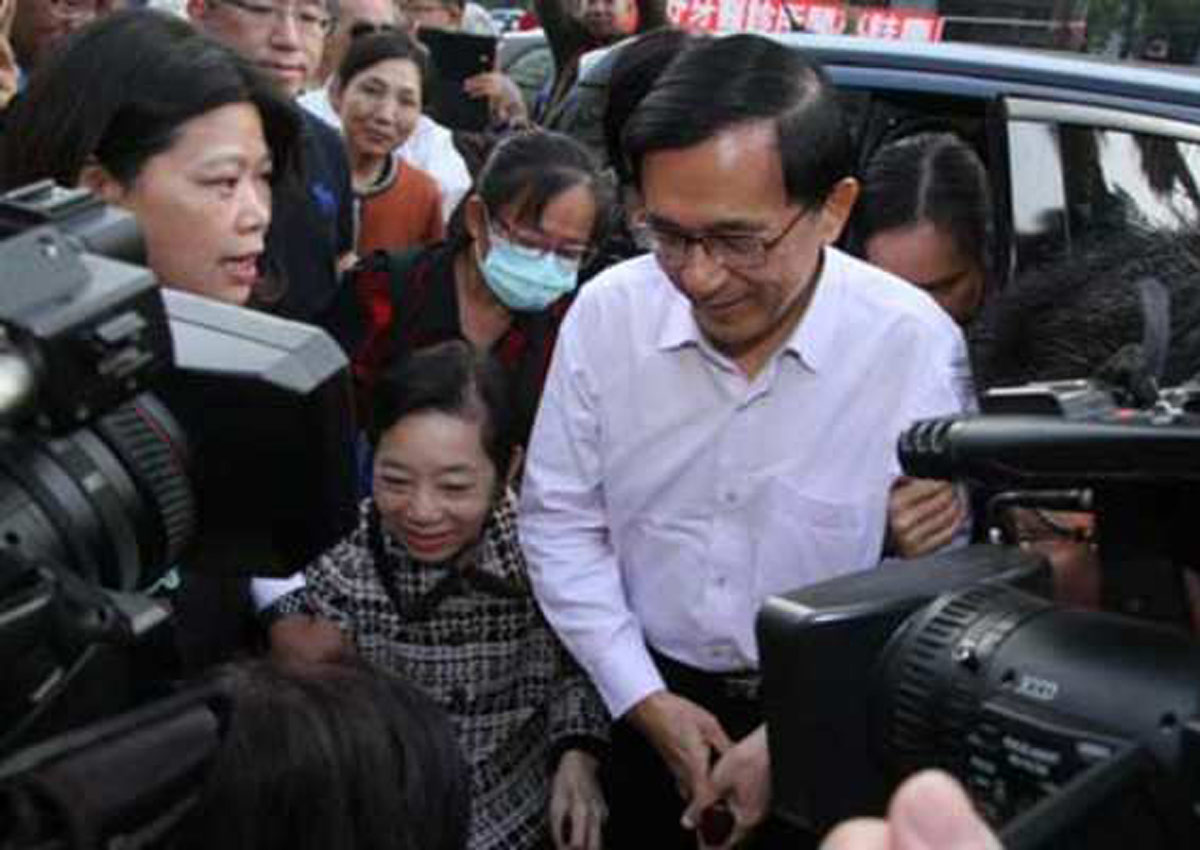
TAIPEI, Taiwan — Former President Chen Shui-bian Saturday delivered public remarks for the first time since his release from prison on medical parole.

Chen – who was handed a 20-year sentence for a string of corruption charges shortly after leaving office in 2008 – made a short speech at the opening of his daughter’s dental clinic in Tainan.

The former president was joined by Tainan Mayor Lai Ching-te (賴清德), as well as others, as he cut the ribbon to open the clinic.

Questions had been raised over Chen’s appearance at the event, as the former president is barred from giving public speeches of a political nature or at political events as part of the conditions of his release.

Taichung Prison officials stated after the event that whether Chen had violated conditions of his medical parole would be “evaluated.”

Despite the opening of his daughter’s clinic being an ostensibly apolitical event, the ceremony attracted hundreds of Chen’s supporters who chanted “Go! Go! Go!, President A-bian.”

The majority of the crowd appeared to be there to show their support for the former Democratic Progressive Party leader, but Chen eschewed political topics, using the opportunity to express his pride in his daughter’s achievements and to describe how his time in prison had “brought them closer together.”

Chen said he had “talked with his daughter more often than any other time over the past three decades” during his imprisonment, describing how his daughter, Hsing-yu, would visit him and bring him snacks from Tainan every Monday.

He said being a member of a first family was “tough,” and that his family had “suffered” because of his participation in politics.

The former president thanked his daughter for giving him “the opportunity to allow him to speak in public for the first time in eight years, while stressing that he was making “opening remarks,” and “not a speech.”

While Chen touched on politics, it was only to thank former advisory and successor as president Ma Ying Jeou for imprisoning him, saying it had allowed him to “rediscover my love for my family.”

He also thanked current President Tsai Ing-wen for allowing him to attend a private gathering with his supporters in Taipei in June and a concert in Kaohsiung in October.

Chen described how he had been conflicted over whether his appearance would violate the terms of his parole, before deciding that as the opening of the clinic “was not a political event, I should be ok.”

He began serving his sentence on Nov. 11, 2010, but was detained for nearly two years prior to that while prosecutors were investigating and prosecuting cases against him.


Image: 
Category: 
Publication Date: 
Sunday, December 25, 2016 – 14:28
Keywords: 
Send to mobile app: 
Source: 


Story Type: 
Others

Source link

Outrage erupts over student Nazi display in Taiwan

0

TAIPEI, Taiwan — A private Hsinchu high school has come under fire after its students wore Nazi uniforms and brandished swastika banners in a school-sanctioned parade.

The Presidential Office Saturday apologised for the incident, with education authorities vowing to reduce funding to the school as punishment.

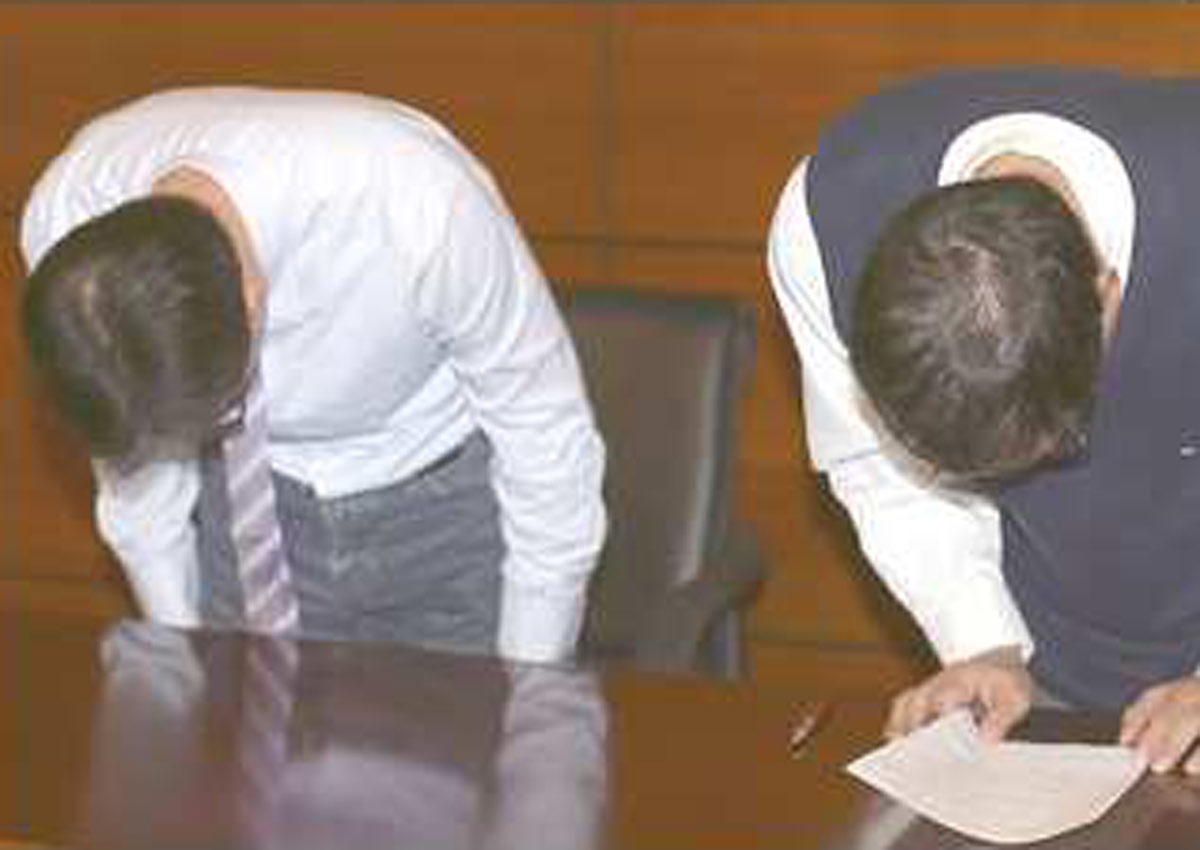
Private Kuang-Fu High School in Hsinchu also issued a statement apologising for the parade, but said it had not intended to condone Nazi atrocities.

The apologies came after Israel’s representative office to Taiwan condemned the event.

“It is deplorable and shocking that only seven decades after the world witnessed the horrors of the Holocaust, a high school in Taiwan is supporting such an outrageous action,” Israel’s representative office said in a statement.

Israel called on Taiwan’s government to initiate programs to teach students about the Holocaust, saying that schools should encourage tolerance and understanding among people.

Images of the high school’s “Christmas and Thanksgiving Costume Parade” surfaced online Friday evening, showing students in a sophomore media and design class dressed in Nazi uniforms and marching with a cardboard tank displaying German army insignia. The students were giving the “Sieg Heil” salute.

In a statement issued in response to the incident, the Presidential Office said the march was “especially disrespectful to the Jewish people’s suffering at the hands of war and represents ignorance toward modern history.”

Apologizing for the incident, the government called for an investigation into responsible school officials and urged that education on such matters be strengthened.

The Ministry of Education expressed shock and regret over the parade, saying administrators and teachers at Kuang-Fu High School should have told the students that their march would hurt others.

“It is improper to demonstrate creativity using the wounds of history,” said Education Minister Pan Wen-chung.

The ministry said it is considering punishing the school over the incident, including cutting government subsidies and revoking the “quality school” citation it had obtained from the ministry.

The latest incident is not the first time Holocaust-related imagery has stirred controversy in Taiwan. About two decades ago, the Israeli representative office condemned a company for featuring an image of Hilter in its promotional materials.

Kuang-Fu initially defended its decision to let the students dress as Nazis in the parade. The school called the decision a “demonstration of creativity” and said it was not intended to show support for Nazis.

School representatives said the parade was an annual event and that depicting Hitler was consistent with the event’s “historical figure” theme.

But the school later backed down and issued an apology, reportedly under pressure from the Presidential Office.

“When reviewing the parade beforehand, we failed to closely consider the meaning of the historical facts,” Kuang-Fu said in a statement. “It was the school’s negligence, and we will determine responsibility and avoid a repeat of similar incidents.”

But the school requested forgiveness for the students. “Please don’t be harsh on the kids,” the statement said.

DPP Legislator Su Chiao-hui said students must learn about the importance of human rights and transitional justice, and said Kuang-Fu High School had failed to teach its students about the atrocities represented by the Nazi flag.

DPP Legislator Lin Chun-hsien said it would be “unbearable” for the people of Taiwan if they had to watch reenactments of scenes from the Feb. 28 Incident during a carnival. In 1947, the Kuomintang (KMT)-led government killed thousands of people in crackdowns on riots, which have come to be known as the Feb. 28 Incident.

The students may have been ignorant about the Nazi war crimes, but their teachers should not have failed to understand the severity and consequences of Nazi costumes and insignia, Lin said.

Saturday’s incident may also add fuel to discussions after Taiwan was ranked the third most “ignorant country in the world” behind India and China based on people’s knowledge about their own nation, according to the 2016 Index of Ignorance conducted by Ipsos MORI.


Image: 
Category: 
Publication Date: 
Sunday, December 25, 2016 – 14:24
Keywords: 
Send to mobile app: 
Source: 


Story Type: 
Others

Source link