Home Blog Page 2153

China’s uneasy path ahead

0

In addition to Trump, analysts say the biggest challenge facing the nation’s rise is internal

For China and Xi, it will be a difficult and uncertain 2017, not just because of the unpredictability of US President Trump.

As Trump broke decades of traditions and talked directly with Taiwan’s President Tsai Ing-wen and questioned the “one China” policy as the foundation of Sino-US relations, the troubled Taiwan Strait became more unstable. Normal relationship.

China separates Taiwan from the motherland as a separate province, and Miss Choi is independent.

But the biggest challenge facing emerging countries in the coming year is internal challenges, analysts say.

The first is the transition of leadership that will take place next year, possibly in November, at the Nineteenth National Congress of the Chinese Communist Party.

Lee Kuan Yew School of Public Policy Professor Huang Jing said, has begun to hold the post.

Xi Jinping hopes to step down in 2022, because this meeting is his successor, so he began to reform, the policy will continue beyond two terms, as General Secretary, said in Singapore, East Asian Institute, in a recent forum.

To this end, Xi Jinping himself was designated as the party’s core leadership, so he has the right to choose his successor.

But that does not guarantee that he will succeed in doing so.

But Xi will continue to be the anti-corruption movement in the new year, which more broadly illustrates part of the Communist Party’s corruption and economic reform.

This was because he updated the two provisions at the sixth plenary meeting in October.

He said the move was aimed at improving the rule of law, strengthening party discipline, and eliminating wrongdoing in cadres such as money worship, hedonism and luxury.

The third challenge facing Xi is that China continues to rely on the growth of globalization in the face of slowing domestic economic growth and unstable global conditions. Reform continues to reform the economy.

Read: Chinese airlines in the case of re-entering the South China Sea

Mr Xi said that after he began to clean up local governments and state-owned enterprises, he began reforming the core of economic activity, and the financial sector was “the most corrupt”, he added. This would be a daunting task for Chinese leaders.

Compared with the domestic challenges, Xi Jinping will have easier time in foreign relations, analysts said.

In the region, the Asian Center for American Center, the 12-nation Trans-Pacific Partnership Trade Agreement, was rejected by Trump.

At the Asia-Pacific Economic Cooperation summit in Peru last month, Xi felt an opportunity to ensure that China supported the Asia-Pacific Free Trade Area and the smaller regional economic partnership (excluding the United States).

In addition to the region, China is expected to play a bigger role in combating global warming, as Mr. Trump is responsible for the treatment of climate change skeptics.

All is not optimistic, Trump on China’s huge threat to the import tariffs and his “one China” policy questioned.

China’s neighborhood is not stable enough.

North Korea’s Kim Jong-un is working to achieve nuclear power; South Korean President Park Geun-hye was overturned by Congress into a scandal-scandal; Japan is working to make its forces play a bigger role in defending their coasts.

Read: China “does not do enough” to promote relations with smaller countries

In order to effectively deal with external uncertainties, China and Mr. Xi will need to solve the internal problems, Professor Wang said.

“Only in the infinite conditions, China can safely deal with foreign aggression.

suinoi@sph.com.sg


This article was first published on Dec 27, 2016.
Get a copy of The Straits Times or go to straitstimes.com for more stories.

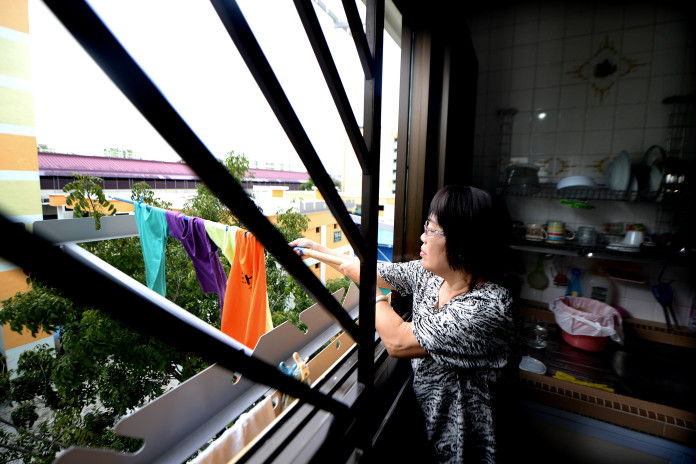
Image:
Category:
Publication Date:
Tuesday, December 27, 2016 – 16:00
Send to mobile app:
Source:

Story Type:
Others

Source link

105k families get help for elderly to move with Ease at home

0

What began as an ordinary trip to the bathroom at home in November last year ended in agony for Mr Sim Kok Keng, 72.

The Woodlands resident heard a “crack” and felt a sharp pain when he stood up after using the toilet in his Housing Board flat.

Doctors later said that his left heel bone had split open.

While the retired vegetable seller had always found it difficult to walk after contracting polio as a child, the injury made it tougher for him.

But flat upgrading last month provided timely assistance.

Mr Sim and his wife Jenny Koh, 64, were one of 105,500 households that had applied for the Enhancement for Active Seniors (Ease) programme as of last month.

The scheme, launched in July 2012, allows HDB home owners to equip their flats with elder-friendly fittings such as grab bars, slip-resistant tiles and ramps.

The HDB saidsome 42,200 households have applied for Ease directly, while another 63,300, including the Sims, opted for it through the Home Improvement Programme (HIP).

Citizen households with a family member aged 65 and above qualify for Ease.

They also qualify if a member is aged between 60 and 64 but needs help with at least one of six activities of daily living, such as bathing, dressing or feeding.

“It’s much more convenient to go to the toilet now,” said Mr Sim, who now uses a walking stick.

Madam Koh agreed: “We used to put three plastic stools in the rest- room so he could hold on to them. But the grab bars are much safer.”

His wife, Madam Koh, is using new laundry drying racks installed under the Home Improvement Programme.
Photo: The Straits Times

Introduced in 2007, HIP helps address common maintenance problems related to ageing flats, such as spalling concrete and the replacement of pipe sockets with new laundry drying racks.

These “essentials” are paid for by the Government.

Optional HIP components include those under Ease, and improvements such as toilet upgrades and a new front entrance gate.

The Government subsidises up to 95 per cent of the cost of these for Singaporean households.

Only flats built up to 1986 that have not undergone the Main Upgrading Programme are eligible for HIP.

Works proceed when at least 75 per cent of a block’s eligible households have voted in favour of it.

The scheme is popular, with an average support level of 90.1 per cent based on a poll, the HDB said.

This had MPs such as Ms Lee Bee Wah asking in Parliament last month if it could be extended to units built after 1986 when they become 30 years old.

National Development Minister Lawrence Wong replied that the HIP is not a one-time expenditure, but a multi-year expense that has cost “billions of dollars”.

So the Government has to “consider whether or not we are able to afford such a major programme that will run through many years, potentially even past this term and future terms of government”.

About 220,000 flats have been announced for HIP so far. Works have been completed for about 74,000 flats and are in progress for another 93,000 homes.

As of March, the Government has spent about $1.47 billion on HIP and $30 million on Ease.

It is expected to spend another $464 million on HIP and $19 million on Ease by March next year.


This article was first published on Dec 27, 2016.
Get a copy of The Straits Times or go to straitstimes.com for more stories.
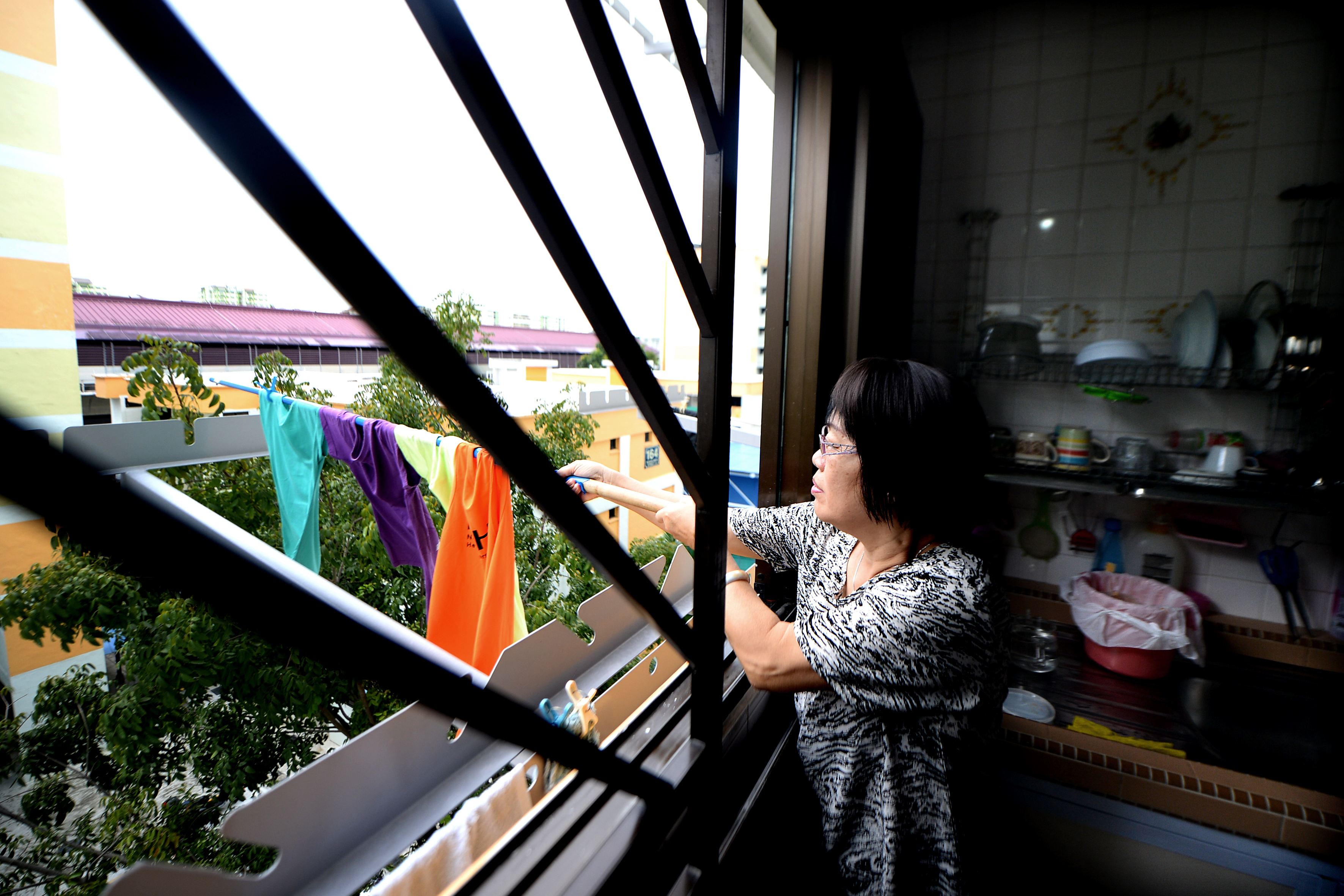
Image: 
Category: 
Publication Date: 
Tuesday, December 27, 2016 – 16:00
Keywords: 
Send to mobile app: 
Source: 


Story Type: 
Others

Source link

Cooking studio serves fun experiences

0


“Edutainment”, says Italian entrepreneur Giulio D’Erme, and “the experience economy” are where the future is at.

The 44-year-old former general manager of lingerie company Triumph in Russia is a co-founder of CulinaryOn, a cooking studio started in Moscow in 2012, that blends education with entertainment to create fun experiences for visitors.

Last October, CulinaryOn opened its first cooking studio outside Russia in the heart of Singapore’s central business district.

Mr D’Erme and Ms Liubov Vdovina, general manager of CulinaryOn Singapore, talk about their Singapore journey.

Question: The food start-up scene here is notoriously competitive. How do you stand out?

GD: Our format is quite unique.

We’re really not in the food business.

We are in the people business, serving culinary experience.

We don’t serve food.

The trend, we’ve noticed, is that people today are looking more and more for immersive experiences.

We don’t want to just go to the restaurant and sit down and try the food.

We want to know the chef, we want to interact with him.

We want personalised attention.

We want to be part of the cooking process, not only the eating part.

So we’re actually staging in these premises an experience that is much deeper than whatever you would get in a restaurant.

LV: The second main part that differentiates us is scale.

More than half of our business comes from corporate entities and we want to be a one-stop shop for the corporate sector.

When a company comes to us, they understand that they can do anything with us, whether it is a team-building event, a client-appreciation event, or a media launch.

And the event can be for one person or 200 people.

We give flexibility to our clients and, therefore, it’s easier for them to give preference to us because they know we can accommodate any of their needs.

Question: How big is the Singapore team?

GD: We are about 42 people, including interns and eight chefs.

We are taking people with high levels of skills, not only in terms of cooking, but also communication skills.

Chefs who can engage people as much as they can cook.

Our chefs and our event masters who work around the room, we like to call them cast members because we consider them as actors in a show.

Question: Is it hard to recruit good cast members here?

GD: Actually, even in the top restaurants today, there are chefs who like to be in the front of the house, meeting guests, rather than just being in the kitchen.

And these kinds of personalities find in CulinaryOn a place where they can express their creativity and their personality to the max.

The kitchen is a narrow place, very hot, and with huge time pressure.

At CulinaryOn, you experience something completely different.

You are becoming friends with the clients.

You are the centre of attention, the star for the night.

And it’s a completely different work experience that you get.

Question: Did it take long for you to turn a profit?

GD: Every business has a ramp-up period.

You need some time to scale it up.

In Singapore, we reached break-even in month 13.

In Moscow, it was much faster.

I think we reached it in month eight.

(It was) faster because of a higher use of part-timers and lower labour cost.

So one of the biggest challenges in Singapore obviously is labour – the hospitality industry is not very highly regarded as a career.

I think this will change.

Hospitality is a full-fledged career with a lot of pride, and I think the arrival of the Michelin stars in Singapore will help to contribute to a change in perception, creating winning personalities out of successful F&B entrepreneurs.

When you get star chefs and star programmes like MasterChef coming here, it will really help to contribute.

Changes in culture today can be very fast because they are… propelled through media.

So you can just create stars out of industries, and F&B is a very easy industry to create visible stars.

Question: Any plans to enter new markets?

GD: We are still in the expansion mode and we are looking for partners to expand in the Asian region.

marilee@sph.com.sg


This article was first published on December 27, 2016.
Get a copy of The Straits Times or go to straitstimes.com for more stories.

Image:
Publication Date:
Tuesday, December 27, 2016 – 16:00
Keywords:
Send to mobile app:
Source:

Story Type:
Others

Source link

More applying for poly entry programmes

0

Schemes that provide alternative routes for N-level students to gain entry to polytechnic – instead of moving on to Secondary 5 to sit the O levels – have been attracting more applications since they were first launched in 2012.

Since 2013, the proportion of eligible students who applied for the two-year Direct-Entry-Scheme to Polytechnic Programme (DPP) has grown by 10 per cent.

The proportion of those who applied for the year-long Polytechnic Foundation Programme (PFP) has grown by 5 per cent over the same period, said the Ministry of Education (MOE).

These schemes are reserved for Normal (Academic) students who have done well in their N levels.

Madam Sung Mee Har, principal of Hong Kah Secondary School, said that most of her students who were offered a chance to go for the PFP will take it up.

“In the past, everyone will choose to move on to Sec 5 if they can, because that was how they could get a place in polytechnic. But that has changed,” she said.

Top N(A) students, who receive a score of not more than 11 points in their N levels and have at least a grade three for both English and mathematics, are eligible for the PFP.

They go on to the polytechnics to do a one-year preparatory course, taught by polytechnic lecturers, that covers English, mathematics, and domain-specific modules such as life sciences or physics. If they pass all their modules, they will move on to the first year of their chosen diploma course.

Temasek Polytechnic student Chew Harris Rezal opted for the PFP when he scored 11 points for his N levels in 2012.

“My learning style is more hands-on and practical so I thought I’d prefer the PFP over Sec 5,” said Mr Chew, 20, who is in his final year of an infocomm and network engineering diploma course.

Like the PFP, the DPP guarantees students a place in a polytechnic if they meet the qualifying grade. N(A) students are eligible for the DPP if they score not more than 19 points, with at least grade four for English and mathematics, in the N-level exams.

Under the DPP, students spend two years in a Higher Nitec course at the Institute of Technical Education (ITE) and are guaranteed a spot in a polytechnic if they meet the minimum grade point average, which is between 2.5 and 3. This year, about 1,000 students have been admitted to the DPP, similar to the past few years.

The students attend a 10-week preparatory course, starting in January, that covers oral and communication skills and topics such as maths and business. They then go on to the Higher Nitec courses, which begin in April.

Poh Jia Qi, 17, was one of those who chose to go for the DPP when he got his N-level results last year. He is now doing a Higher Nitec course in information technology at ITE College West, and said that he enjoys the change of pace from a secondary school timetable.

“Most of our assignments are completed in school and we do more practical tasks, like coding and setting up a router,” said Jia Qi, who hopes to study information technology in polytechnic.

The MOE said that most of students in the DPP have completed the programme and obtained a Higher Nitec, and a “significant proportion” of them have moved on to polytechnics, though it did not give specific figures. Most of the students in the PFP have also moved on to polytechnics.

Students who fail the PFP are not allowed to repeat. They may apply for the ITE’s Higher Nitec programmes, approach their secondary schools for readmission in the following year or take the O-level exams as private candidates.

Dr Mike Cheong, assistant director of foundation and general studies at Nanyang Polytechnic, said that many PFP students have outperformed their O-level peers. Measures that the school has in place to help students cope with studies include providing remedial lessons and assigning mentors, who counsel students, to PFP classes.

Mr Loo Ming Yaw, principal of Mayflower Secondary School, lauded the introduction of the PFP and and DPP schemes, saying that it “has played a significant role in motivating the N(A) students to work hard for their N levels because the pathways are available only to students in their stream”.


Smooth transition when he took the direct-entry route

Student Lek Tai Yong did his research after sitting the N levels and decided he wanted a diploma in social enterprise management from Republic Polytechnic. He qualified for the course through the Polytechnic Foundation Programme.Photo: The Straits Times

When he was in Secondary 3, Mr Lek Tai Yong picked up the personal finance best-seller Rich Dad, Poor Dad and decided that he wanted to be an entrepreneur.

“It opened my eyes to the world of business, and I wanted to innovate and come up with something interesting,” recalled Mr Lek, now 19.

The former Pasir Ris Crest Secondary School student, whose father used to own a business in the mariculture industry, set his sights on joining the Polytechnic Foundation Programme (PFP). He qualified with a score of 11 points when he took his N levels in 2013.

Mr Lek did his research and found out that Republic Polytechnic offered a business course with a twist – a diploma in social enterprise management.

He applied for the course through the one-year PFP, which subsequently allowed him to skip the O levels and enter the diploma programme directly.

“I believe the future of business is not just in doing well, but doing good,” said Mr Lek, who is now in his second year.

He is working with friends to launch a personal and career development platform for youth.

While he reckons that he would not have had the chance to learn about entrepreneurship if he had moved on to Sec 5, he said that the polytechnic also gave him many opportunities to explore his interests.

On top of joining a youth entrepreneurship and co-operative interest group when he was in the PFP, he learnt how to set up a website using programming languages and picked up skills like project management and marketing.

He also appreciated being able to experience life on a polytechnic campus.

“The transition to polytechnic is smoother and I got to interact with older students who give you a different perspective of life,” he said.

While student life in the PFP can be busy at times, Mr Lek said that the environment at school is not a competitive one.

“Because of the culture in PFP, everyone wants to do well and succeed. But it’s not a zero-sum game, and people will be happy for you if you achieve something.”


yuensin@sph.com.sg


This article was first published on Dec 27, 2016.
Get a copy of The Straits Times or go to straitstimes.com for more stories.
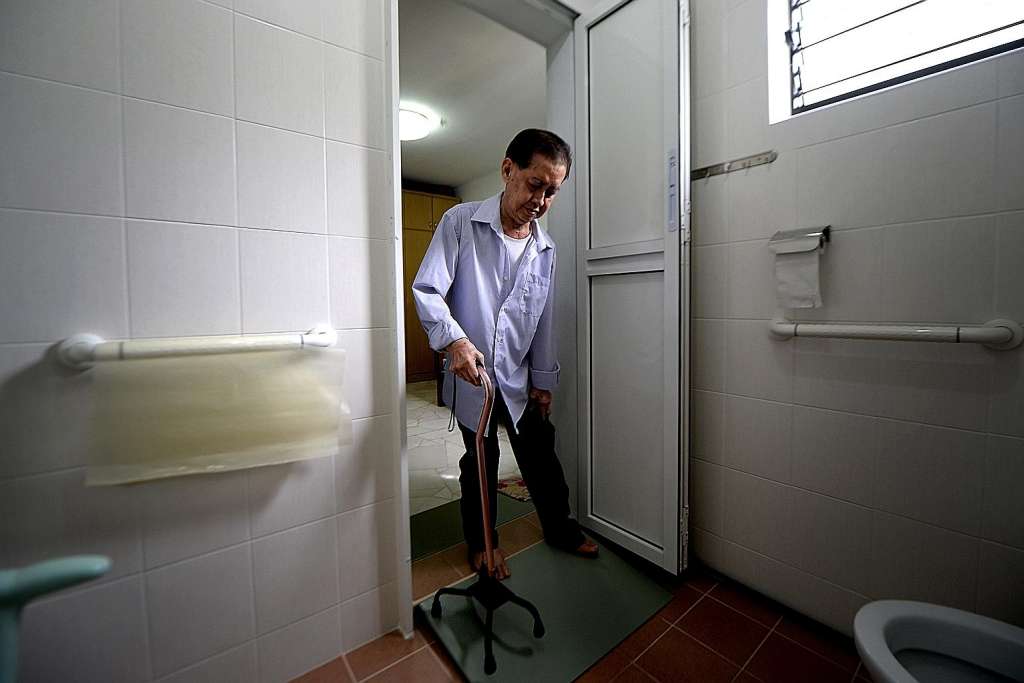
Image: 
Category: 
Publication Date: 
Tuesday, December 27, 2016 – 15:00
Send to mobile app: 
Source: 


Story Type: 
Others

Source link

Same-sex marriage in Taiwan clears first hurdle

0


TAIPEI, Taiwan –

In a major step toward making Taiwan the first Asian country to legalize same-sex marriage, the Legislative Council approved the amendments to the Civil Code on Monday.

After three hours of deliberation, the Judiciary and Organic Law and Regulation Committee approved the amendment proposed by the DPP legislator Yu Mei-woo.

The Commission rejected the most controversial provisions of the proposed amendment, replacing the words “both parties” in the Marriage section of the Civil Code with “both parties”.

The Commission added the sentence to the original provision, which stipulated that “both men and women should marry in their own rope agreement”; and agreed that marriage in same-sex marriage agreement should be by both parties in their own rope.

The Committee also endorsed a provision guaranteeing the equal application of spouse and parental rights to heterosexual and same-sex couples.

The addition to Article 1079-1 — the clause governing adoptions — prohibits a court from rejecting an application to adopt on the basis of the applicants’ sexual orientation.

The amendment also raised the legal ages for women to get engaged and married, making them equal with those for men.

Under current laws, women can get engaged at 15 and marry at 16, while men can get engaged at 17 and married at 18

The committee’s changes still need to pass through a round cross-party negotiations and a second and third reading in the Legislature before the amendments can be made into law.

“About six months ago, the bill could go through the legislature and take effect … In the meantime, we must continue to advocate, communicate and try to reach and create greater mutual understanding of society,” Yu said Monday Session.

“The bill will be sent for cross-party negotiations,” said Yu, who serves as the convener of the Justice and Organic Law and Regulation Commission.

Discussions of the controversial bill are not expected to take place until April or May next year as the legislature is about to adjourn before the start of the new session in February.

Citizens’ groups that support and oppose same-sex marriages gather outside the Legislative Yuan on Monday morning before they are reviewed.

“This is not the end of the world,” Yu said, who met the impressively.

Image:

Category:
Publication Date:
Tuesday, December 27, 2016 – 13:52
Send to mobile app:
Source:

Story Type:
Others

Source link

Elderly sick turn to foreign, live-in caregivers

0

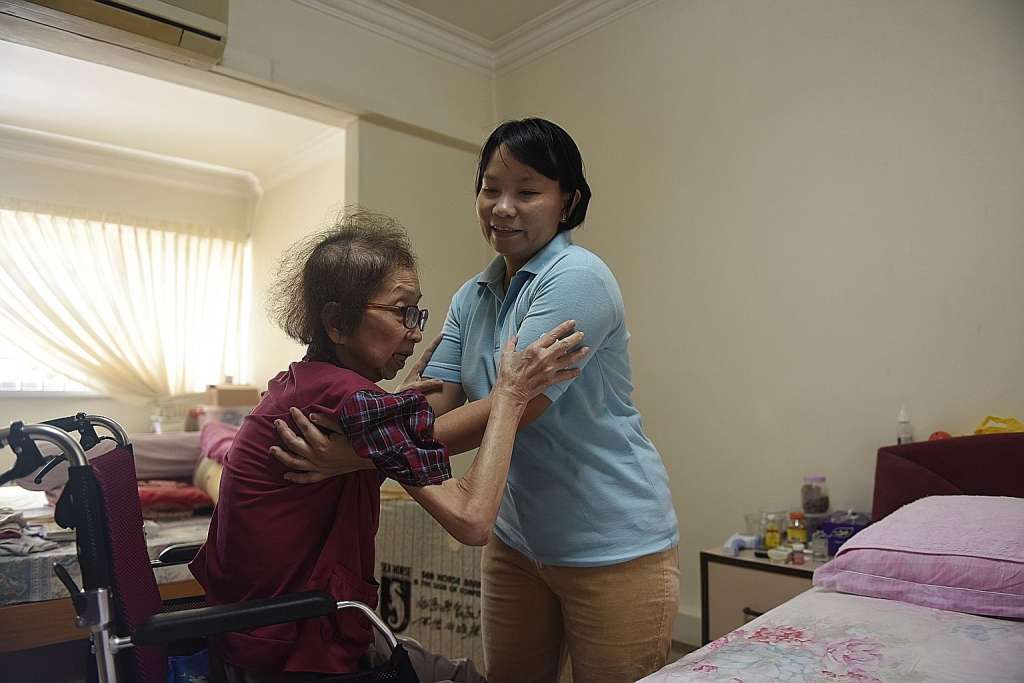
Families with elderly folk are increasingly turning to live-in help in the form of foreign nurses.

Service providers interviewed said that demand for these nurses has surged in recent years and they expect the uptrend to continue.

These nurses, who come from the Philippines, Myanmar and Indonesia, are seen as an option for older people who have mild to moderate disabilities and need round-the-clock medical care.

This includes people who suffer from dementia or have had a stroke.

Ms Yorelle Kalika, chief executive of Active Global Specialised Care- givers, said: “Demand in Singapore has been growing steadily over the last three years.”

Mrs Susan Ng, director of nursing at Sue Private Nurses Agency, said that demand for foreign nurses has increased exponentially as private nurses here usually do not want to stay overnight with their patients.

Mr Jonathan Lai, general manager of Nicole Consultancy, which offers local and foreign nurses for its home nursing services, said that another factor is the shrinking pool of foreign maids.

And with Indonesia planning to stop sending live-in maids to Singa- pore from as early as next year, trained help may be the best alternative, he said.

However, despite the bright business prospects, agencies are not going on a big hiring spree, citing costs and quality concerns.

For Ms Rena Ang, getting a live-in nurse to take care of her 70-year- old mother was a better option than a foreign live-in maid.

Her mother, Madam Tan Ah Sian, cannot walk without assistance.

Ms Ang, 40, said: “Rather than getting a maid to look after my mother, we wanted someone medically trained and who has had past experience taking care of older people.”

Madam Tan was diagnosed with terminal gall bladder cancer in March last year and her condition worsened over time.

Now, she is not only unable to walk on her own but also needs help with activities like using the toilet and taking a shower.

For more than six months, Ms Ang and her father, Mr Ang Chin Lai, 69, took care of Madam Tan on their own.

“Frankly, it was hard. One of us had to be in the house all the time,” said Ms Ang, who runs her own business.

Caring for Madam Tan on top of their regular jobs was a strain for Ms Ang and her father, a part-time logistics manager, and they decided to seek help.

Ms Ang contacted Active Global Specialised Caregivers, an agency that brings in foreign home nurses.

She hired Myanmar live-in care- giver Than Than Sint, 42, after a number of telephone and Skype interviews.

Ms Than Than Sint has been taking care of Madam Tan since May this year.

Among other duties, she monitors Madam Tan’s condition daily, changes her painkiller patch and stays overnight with her in the hospital should she be warded.

Ms Ang said: “A live-in caregiver needs to have a lot of patience and compassion. We’re very thankful for Than Than.”

NEED FOR ELDERCARE SERVICES

The number of people above the age of 65 in Singapore is expected to increase to 610,000 by 2020, even as the number of family caregivers shrinks.

By 2030, one in three people here is projected to need some form of eldercare service.

The Ministry of Health (MOH) announced plans in October to change “the centre of gravity” of senior healthcare from hospital to home and community, although this will take time.

It also intends to increase the number of healthcare workers here in 2020 by 30,000, with 10,000 of these in the eldercare sector alone.

But community-based eldercare options are still in short supply.

The capacity to care for older people in their homes was 6,900 last year.

In contrast, there were 29,000 older people living alone in 2011 and this figure is estimated to reach 92,000 by 2030.

There is thus room for the private sector to move into, but any expansion will run into the same constraints that affect the healthcare sector as a whole, such as manpower shortages.

In the last 12 months, Active Global has doubled the number of foreign nurses it employs in Singapore to 400, and the number is expected to double again next year.

Ms Kalika, who founded the company in 2012, said: “My estimate is that the number of potential clients is around 100,000 to 200,000.”

ENSURING HIGH STANDARDS

However, despite the burgeoning demand, most agencies offering foreign live-in caregiver services in Singapore remain small, employing fewer than 50 caregivers.

Ms Kalika said: “This is a labour- intensive industry and a lot of investment is required in terms of operating costs, such as provision for additional training.”

Active Global’s nurses do a refresher course or get additional training in caring for dementia or stroke patients, for example, by senior nurses who have worked in hospitals here.

Mrs Ng of Sue Private Nursing, which has been operating for 10 years and contracts an average of 10 foreign caregivers a month to households here, said: “We make a lot of home visits to uphold the standard of care expected. These are done by local professionals. That’s why our numbers are small.”

Compared with getting a maid, more work has to go into deter- mining the fit of a caregiver with an employer.

This is because, in addition to relevant skills and past experience, small things such as chemistry also matter.

Ms Kalika said that in a high- pressure job like caregiving, friction can arise from the patient and caregiver being in close proximity all the time.

Thus, the effort that goes into making the right match is important.

While maids may be the first resort for families needing caregiving help – they are relatively more affordable than specialised caregivers – the advantages of a live-in nurse are significant.

This is because maids may not be as adept as trained nurses at taking care of the sick or disabled.

Mr Lai said: “We do see that there will be a big gap. Foreign maids will need to be trained in other skills, and nursing is one of the options.”

For Madam Tan, it was important to have a caregiver who she could communicate with easily.

She said: “I taught Than Than a bit of Hokkien and she picked it up quickly. Now, she knows how to ask me in dialect, li jiak ba buay? (have you eaten?).”

Ms Than Than Sint said: “I am also lucky. I love Ah Ma (Madam Tan) and Ah Ma loves me.”

lesterw@sph.com.sg


This article was first published on Dec 27, 2016.
Get a copy of The Straits Times or go to straitstimes.com for more stories.
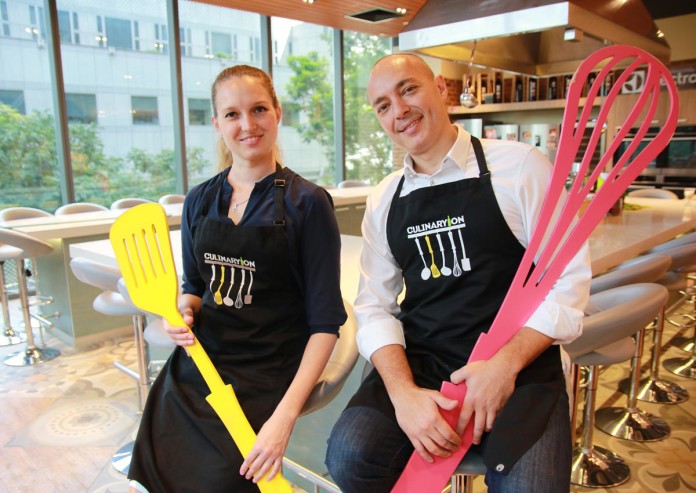
Image: 
Publication Date: 
Tuesday, December 27, 2016 – 16:00
Send to mobile app: 
Source: 


Story Type: 
Others

Source link

S’pore to tackle bacterial resistance to antibiotics

0


Singapore is developing a national action plan to address the increasing resistance of some bacteria to antibiotics.

It is even more of the Singaporeans exposed to such drugs as a quick fix for their disease.

The Ministry of Health (MOH) told the Straits Times that it is working with the Agri-Food and Veterinary Authority (AVA), the National Environment Agency and the National University of Singapore (NUS) to develop a national strategy for antibiotic resistance in Singapore.

This may include educating the public on which diseases should or should not be treated with antibiotics, and on monitoring their use.

Antimicrobial resistance refers to the ability of microorganisms, such as bacteria and viruses, to resist the effects of drugs that previously could kill them.

When these microorganisms are overused or abused, they are resistant to antimicrobial drugs.

“We are addicted to antibiotics – it has become an integral part of human medicine and livestock industries,” said Dr. Xu Liyang, associate professor and project leader of the Saw Swee Hock School of Public Health ‘s antibiotic resistance program at the National University of Singapore.

The more antibiotics a person takes, the more pressure the bacteria will evolve and become resistant, he adds.

Although the ministry has not provided details of the plan of action, the Straits Times has learned that it may closely follow the World Health Organization’s proposal to address antibiotic resistance.

In addition to targeting human drugs, it is recommended to focus on the use of antibiotics in livestock.

This may mean checking the use of antibiotics in Singapore farms.

AVA currently has a monitoring program for the testing of antibiotic residues in local agricultural products to ensure food safety.

Infectious disease expert Paul Tambyah says there is a need for a holistic approach.

“Public education can help, especially for those who may not need antibiotics, but the reality is that the use of antibiotics in agriculture than human clinics and hospitals to be much more.

Bacteria that have become resistant to antibiotics, including those found in domestic animals, can transfer their resistance genes to other people in the intestine after consumption of meat, especially if they are not properly cooked.

As for human medicine, Dr Tambyah says there is a need for better ways to diagnose the disease so that doctors can target people who actually need antibiotics.

The Ministry of Health currently has guidelines for doctors prescribing antibiotics.

But they are not mandatory.

“This is because not all cases are clear,” says general practitioner Leong Choon Kit.

Even so, doctors generally insist on them, said the interviewer. Dr. Winston Ho, medical director of Parkway Shenton, said that after careful assessment of a patient’s history and symptoms in a specific infection treatment, he decided to prescribe antibiotics.

Patient education is key, he said.

“We are experiencing some patient stress and always prescribing antibiotics for upper respiratory tract infections (URTIs) … They need to know that most acute URTIs are viral and that antibiotics can not be used for viruses.

Investment analyst Issac Foo, 27 years old, said he every time suffering from tonsillitis require doctors to give antibiotics. “My tonsillitis is very serious, unless I take antibiotics, otherwise I will not get better.”

The emergence of deadly super-bacteria makes even the strongest antibiotics invalid also caused widespread concern around the world.

In September, world leaders agreed at the United Nations General Assembly to develop action plans to curb the growing problem of antibiotic resistance.

It was only the fourth time in the history of the United Nations that the General Assembly had discussed a health issue, including the Ebola virus.


This article was first published on Dec 27, 2016.
Get a copy of The Straits Times or go to straitstimes.com for more stories.
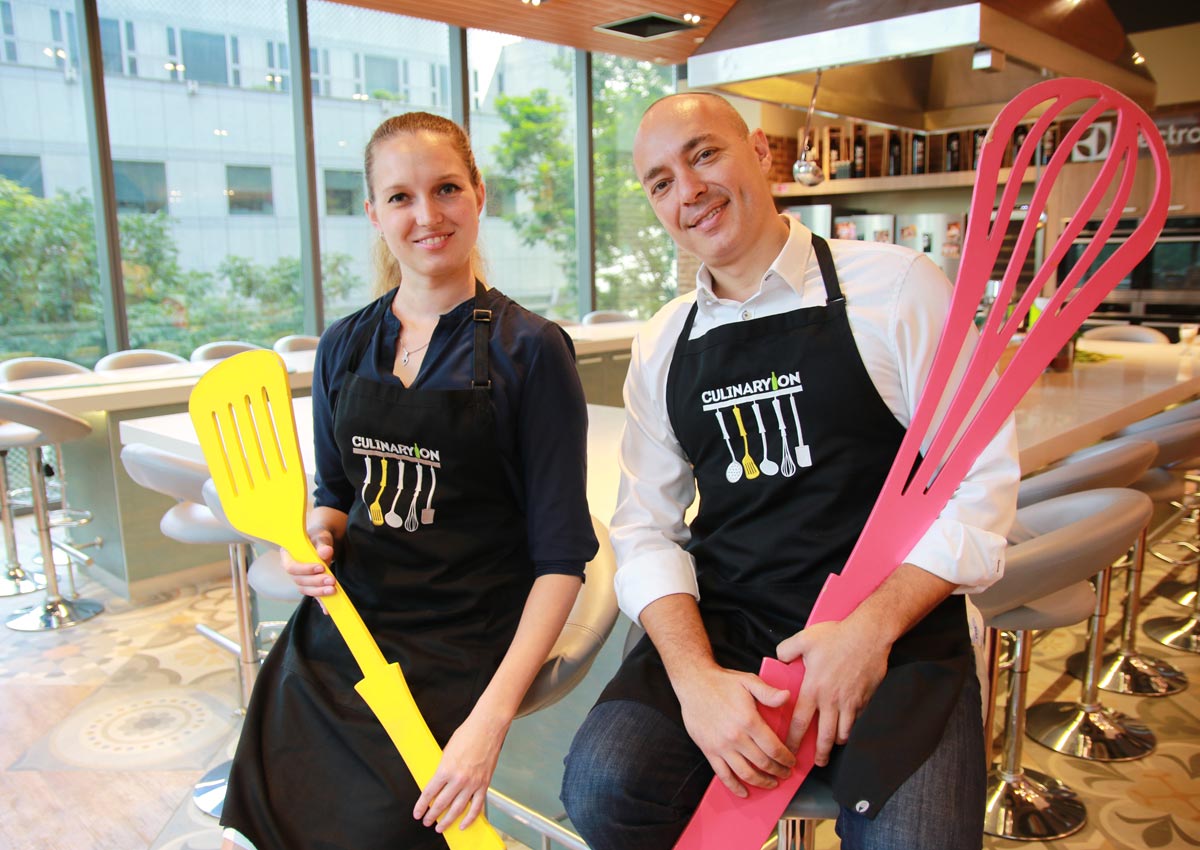
Image:
Publication Date:
Tuesday, December 27, 2016 – 14:00
Send to mobile app:
Source:

Story Type:
Others

Source link

Man throws 5 ping pong bombs inside Government House in Bangkok

0

A protester climbed to the rooftop of the post office inside the Government House compound Tuesday morning and threw down five ping pong bombs to try to draw the authorities’ attention, Channel 3 reported.

His action created commotion inside the compound.

Read Also: MFA urges Singaporeans to stay vigilant when travelling in Bangkok

A footage of the channel showed people running from the spot when the man threw down the first ping pong bomb.

The man was later identified as Chalerm Sonnothee 44, from Nan.

Last year, he also came to the Government House twice to rally to demand the government’s over help over his debt which he claimed was caused by frauds.

Read Also: Thai bomb blasts – tourists shrug off threat as security tightens in Bangkok

PM’s Office Minister permanent secretary Jirachai Moonthongroy came out to talk to Chalerm at 8:30 am.

The man agreed to climb down from the rooft at 9:20 am and he was later taken to the Metropolitan Police head office for questioning.

Image: 
Category: 
Publication Date: 
Tuesday, December 27, 2016 – 13:33
Keywords: 
Send to mobile app: 
Source: 


Story Type: 
Others

Source link

More rugged combat boots for SAF soldiers

0

Soldiers of the Singapore Armed Forces (SAF) will soon be equipped with new boots that are more rugged, while preserving its users’ comfort and agility.

They will progressively replace the Frontier model boots, which, while lauded for being lightweight and fast-drying, had a major flaw – their soles came apart after being placed in prolonged storage.

The Frontier boots have been in use for the past four years.

The new boots come in two variations – the Army Combat Boot (ACB), which will be constructed with directly moulded soles, increasing their durability; and the Enhanced Combat Boot (ECB), which will have a cupsole that is fully stitched.

These will combat the durability issues faced by the Frontier, which had three elements – a leather upper, a polyurethane midsole, and a rubber sole.

While this kept the boots light, the polyurethane material tended to degrade, especially when placed in long storage. Because of hydrolysis, which is a chemical breakdown due to reaction with water, the sole separated from the shoe.

on Facebook

<<New SAF shoes, new exercise regime>>

A few months ago I decided to switch from running and the elliptical to rowing,…

Posted by Ng Eng Hen on Monday, 26 December 2016

The Frontier has a lifespan of two years, whether it is used actively or kept in storage.

In comparison, the new ACB and ECB will stand up to two years of active use, and four years in storage.

Lieutenant-Colonel Elizabeth Soh, head of the System Development Branch, HQ Supply, said: “The boots are differentiated to match the force types and mission tasks. The ACB is for the mainstream army and operationally ready national servicemen; the key outcome is durability.

“The ECB is about performance… and (supplied) to selected active manoeuvre units – infantry, commandos, guards and armoured infantry.”

The ACB itself will come in two models – Wellco Peruana, a Peruvian brand, and Altama, a United States brand. Both weigh about 900g for a US size 9, and have synthetic breathable material that allows quick drying, with a sole suitable for jungle use.

Lt-Col Soh said the models are similar but the SAF chose two manufacturers for supply resilience.

In comparison, the ECB, which is made by US brand Magnum, is just 700g, and has an outsole that can be used in both jungle and urban terrains.

The new boots will be available from Friday at selected SAF eMart outlets, including at Safra Mount Faber, The Chevrons club in Jurong, Gombak Camp and Pasir Laba Camp. From January, the SAF will provide the ECB to selected active manoeuvre units. And starting from May, recruits will be equipped with two pairs of the new boots – the Wellco Peruana and Altama.

The Frontier’s predecessor, the Gore-Tex, had been in service for a decade, but the Frontier is being replaced just after four years, after feedback from soldiers.

Said Lt-Col Soh: “We are constantly reviewing the personal equipment of soldiers to better meet operational requirements and also to enhance combat effectiveness.”

Lieutenant Shahran Thanvagel, 20, who tested the new boots for two months, said each model has its merits.

“The Altama suits the jungle terrain a lot better. It is durable and water drains out very quickly,” said the Officer Cadet School (OCS) instructor. “The Magnum is suited for urban operations, because it is lightweight and the soles have markings which enable a quick change of direction, such as spinning on the spot. But the thick sole makes it hard to dry out.”

Second-Lieutenant Tan Hean Shuen, also an OCS instructor, felt that compared with the Frontier and Magnum boots, the Altama and Wellco Peruana boots have better cushioning in the lower shin area.

“It helps for long distance (walking) comfort,” he added.

Read also: Saint Laurent footwear resembling SAF combat boots selling for $1.2k


This article was first published on Dec 27, 2016.
Get a copy of The Straits Times or go to straitstimes.com for more stories.

Image: 
Category: 
Publication Date: 
Tuesday, December 27, 2016 – 14:00
Send to mobile app: 
Source: 


Story Type: 
Others

Source link

Chef whips up plan to help the needy

0

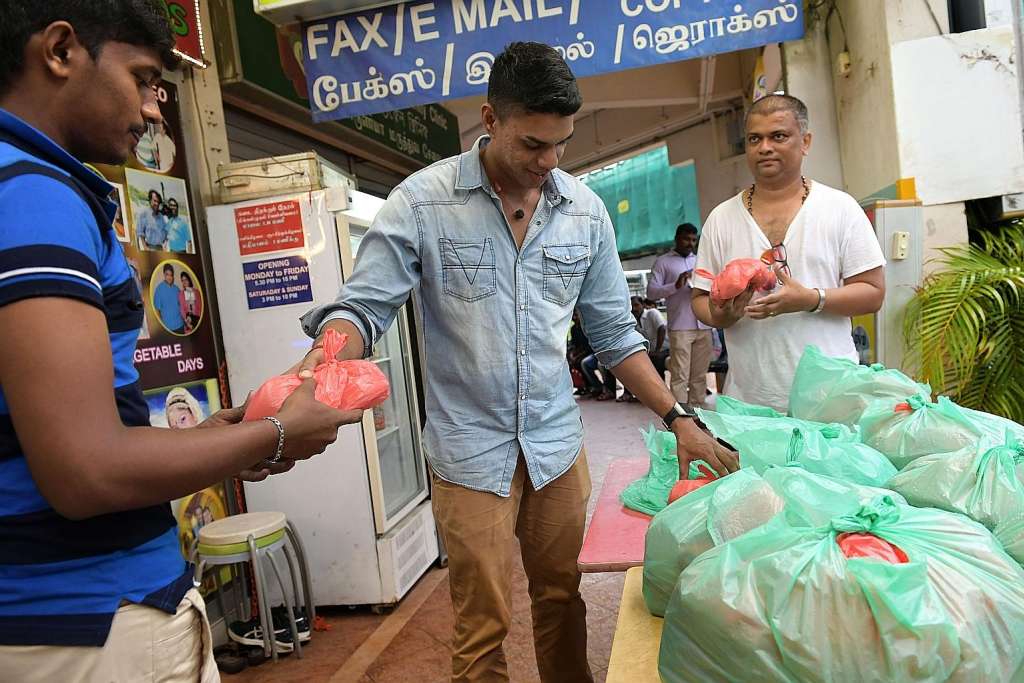
On Christmas Day, they distributed 100 packets of briyani to migrant workers and to halfway-house residents.

But the organiser of the food drive, chef Shetty Balchandra Rama – who goes by Bala – aims to raise enough money to cook and give away 10,000 packets to the needy by Chinese New Year.

It is quite ambitious for someone who came up with the idea last Monday, and who set up his thosai stall barely two months ago.

Mr Bala, 48, was inspired by a conversation with Mr Muthusamy Gnanasekaran, 32, a briyani resturant owner who was approached by customers to donate 500 packets of briyani to migrant workers.

Mr Bala then challenged him: “If you can do 10,000 briyanis… I will create a message that we will cook 10,000 meals.”

Mr Muthusamyagreed. His restaurant specialises in ambur briyani – at $5 a packet – which comes from the town of Ambur in Tamil Nadu, India.

Mr Bala then set up a fund raiser, in which every $5 donated would get the workers a briyani packet, and it has already raised enough for 450 packets, 100 of which were given out on Christmas Day.

He wants to cast his net far and wide, and is speaking with halfway houses, organisations for the elderly, injured workers, abused domestic helpers and with churches.

He explained that he wanted to donate to those “for whom briyani is a luxury”.

One of the two places he and his team visited on Sunday was Christian Care Services Singapore, a halfway house for ex-convicts and recovering addicts.

Its executive director Gabrieyel Guna said he “was very touched that there were people out there who still think for those who are less fortunate”.

Resident Anthony Gomez, 59, was released from jail in October for drug abuse, and has nowhere else to go in Singapore.

He was deeply moved by the gesture, and said: “When we got (the) food… I had tears in my eyes and tried to avoid (letting) people see me… It is a Christmas gift for me.”

josehong@sph.com.sg


This article was first published on Dec 27, 2016.
Get a copy of The Straits Times or go to straitstimes.com for more stories.

Image: 
Category: 
Blurb: 
Publication Date: 
Tuesday, December 27, 2016 – 16:00
Keywords: 
Send to mobile app: 
Source: 


Story Type: 
Others

Source link