Home Blog Page 1181

Woody Allen hits back at molestation claims, daughter says he's 'lying'

0

NEW YORK – Woody Allen battled to contain a growing backlash on Thursday (Jan 18) by accusing his ex-lover’s family of “cynically” exploiting the Time’s Up movement to repeat “discredited” child molestation allegations as his tearful daughter accused him of lying.

The 82-year-old issued the statement after his estranged, adopted daughter Dylan Farrow revived detailed claims that Allen sexually assaulted her as a seven-year-old girl, at her mother’s Connecticut home in 1992, in her first full television interview.

“Even though the Farrow family is cynically using the opportunity afforded by the Time’s Up movement to repeat this discredited allegation, that doesn’t make it any more true today than it was in the past,” said Allen in a statement.

“I never molested my daughter – as all investigations concluded a quarter of a century ago,” he added.

Farrow has stood by her claim, which first surfaced in the wake of her parents’ bitter split, when Allen left the actress and activist Mia Farrow for her adoptive daughter from a previous marriage, Soon-Yi Previn, 21 years old at the time.

Allen – the director of more than 50 movies, a four-times Oscar winner and showered with awards in Europe – has always denied the allegations, which have never been proven. He continues to enjoy a glittering career and remains married to Soon-Yi.

But the sexual harassment firestorm that has brought down Hollywood titans such as Harvey Weinstein, and rocked the United States has fuelled a growing backlash against Allen. In recent weeks, a growing number of actresses have announced they regret working with him.

Farrow says it is now time for the world to finally listen to the claims she has stood by for more than two decades.

‘HE’S LYING’

“He’s lying and he’s been lying for so long,” she told CBS This Morning in the interview that aired on Thursday, breaking down into tears when watching a clip of Allen denying the alleged assault.

Now a 32-year-old married mother of a young girl, Farrow said in retrospect she wished the case had gone to trial.

“Honestly, yes. I do wish that they had,” she told CBS.

A Connecticut state prosecutor at the time found probable cause to charge Allen but thought Farrow too fragile to face a celebrity trial.

Farrow says her father took her to a small attic crawl space, instructed her to lay down on her stomach and play with her brother’s toy train, while he sat behind in the doorway and touched her private parts.

“He was always touching me, cuddling me and if I ever said, you know, like I want to go off by myself, he wouldn’t let me,” she told CBS.

“He often asked me to get into bed with him when he had only his underwear on and sometimes when only I had my underwear on,” she added.

Allen said Thursday the alleged molestation had been “thoroughly investigated” by the Child Sexual Abuse Clinic of the Yale-New Haven Hospital and New York State Child Welfare and that both “concluded that no molestation had ever taken place.”

‘CULTURE OF SILENCE’

“Instead, they found it likely a vulnerable child had been coached to tell the story by her angry mother during a contentious breakup,” he said.

“What I don’t understand is how is this crazy story of me being brainwashed and coached more believable than what I’m saying about being sexually assaulted by my father?” hit back Farrow.

The New York judge who presided over the 1994 custody battle between Allen and Mia Farrow ruled that the allegations were inconclusive, but at the same time lambasted the director as “self-absorbed, untrustworthy and insensitive.”

In recent weeks, a growing number of actresses, including Greta Gerwig, Rebecca Hall, Ellen Page and Mira Sorvino, have announced they regret working with Allen.

“I believe Dylan,” Oscar-winner Natalie Portman told Oprah Winfrey in a recent group interview with others who included Reese Witherspoon.

Hall and the actor Timothee Chalamet, who appear in Allen’s upcoming movie A Rainy Day In New York, have announced that they will donate their salaries from the film to charities including the Time’s Up movement.

Farrow has called out celebrities who have starred in Allen’s films, but denied to CBS that she was angry with them.

Instead she expressed hope that they could “maybe hold themselves accountable to how they have perpetuated this culture of – of silence in their industry.”


Friday, January 19, 2018 – 10:47

More about

Sexual Assault

Others

Source link

'Taiwan's Most Beautiful Aunty' Chen Mei Feng, 61, shares tips on staying youthful

0

Taiwanese TV personality Chen Mei Feng is a veritable treasure trove of tips. After hosting the long-running A Date With Mei Feng for 17 years, she is so accustomed to dishing out healthcare advice and beauty tips that she can go on and on without stopping.

“People should learn how to take care of themselves, especially those my age, so that the young ones can rest easy as they go about their daily lives and not have to worry too much about us,” said 61-year-old Chen.

She was speaking during a press conference in Petaling Jaya to promote A Date With Mei Feng, which is available on dimsum, with new episodes to be simulcast.

The personable TV host was also at dimsum’s “Celebrate Asia With Us” roadshow in Penang on Jan 13.

“In Malaysia, people like watching dramas. But this kind of show is even better. In every episode, you will get to learn new things that benefit you and your loved ones,” said Chen.

Dubbed “Taiwan’s Most Beautiful Obasan” (obasan means “aunty” in Japanese), Chen had no qualms about revealing her beauty secrets, from tips on how to stop the knees from cracking and popping, to her secret to hiding grey hairs.

“When I’m shooting dramas, I’m required to have black hair. The problem with dyeing hair black is that grey roots start to show in a week or two. So, when I am not shooting dramas, I prefer a lower maintenance way to hide the greys. What I do is lighten my hair colour and add in highlights.”

She then went on to talk about how people always complain about their noisy knees and other joints cracking and popping.

“We are always advised to increase our collagen intake. But that is not enough. We also need to strengthen our muscles, as these help to support the bones. “

But she stressed that senior citizens need to go for more age-appropriate exercises.

“I don’t go to the gym because high impact exercise and heavy weights are not suitable for people our age. I prefer low impact activities. I like to take slow walks, do some yoga and light stretching.”

Taiwanese TV personality Chen Mei Feng posing with fans during the meet-and-greet session at dimsum’s ‘Celebrate Asia with Us’ event at Gurney Paragon Mall in Penang.Photo: The Star

FOOD MATTERS

Despite hosting what is essentially a cooking show for 17 years and publishing five cookbooks, Chen admitted that she is still not much of a chef.

“I’m always shooting dramas or talk shows, so I don’t really have the time and energy to do much cooking,” she said.

Still, she has a positive way of looking at things. “There are many young working professionals who also don’t know much about cooking or are not familiar with culinary terms. So, I help to ask the pertinent questions on their behalf.

“Let’s say the chef talks about superior broth – I’ll get him to explain what it is or lighten the mood by asking whether there is such a thing as inferior broth.”

If there is one thing she can dish up like a professional, it would be her favourite bak kut teh.

“It’s actually not difficult or complicated. I just brew up a pot of the soup using pre-mixed herbs and spices. I like to toss in lots of garlic, whole bulbs, unpeeled, for best results. And if you like it hot and peppery, then just add in lots of pepper. I guarantee you that the soup will taste really good. My friends love my bak kut teh and tell me that it is really good,” she said proudly.

She may not be a chef, but Chen is very much an avid foodie. In fact, she loves food so much that there is nothing she won’t eat. But sadly, she is lactose intolerant, so she has to be more careful with desserts.

“This is where durian comes in! If I feel like eating dessert, all I have to do is put some durian in the fridge and freeze it. The taste and texture will be exactly like eating ice-cream,” she said.

“Some people like to eat it deep-fried or made into a dessert. But I prefer natural flavours so I’ll usually eat my durian fresh.”

Chen Mei Feng is known as Taiwan’s Most Beautiful Obasan.Photo: dimsum

RICH AND FULFILLING CAREER

It has been 41 years since Chen made her debut in the Taiwanese entertainment scene. She has mostly been singing and acting almost exclusively in Taiwanese, a variant of the Hokkien dialect also known as Minnan or Hoklo.

The TV veteran has been acting in Taiwanese dramas since the 1970s, and has 29 dramas under her belt.

But it was only three years ago that she ventured beyond Taiwanese waters and tried her hand at acting in Mandarin in a Singaporean TV drama The Dream Makers II.

Asked whether she is keen to follow the current trend of Chinese-speaking artistes entering China’s entertainment scene, Chen said she has been hesitant to take the leap.

“The problem is my language skills. My Mandarin is not that good. All these years, I’ve been singing and acting in Taiwanese, so I tend to speak Mandarin with a Taiwanese accent. I also feel that I can express myself better in Taiwanese.”

Though she enjoys acting, Chen said she now prefers to keep her workload light and steer clear of heavy roles.

“Filming is usually very tiring and the hours are gruelling. There is no time to rest or attend to personal matters. I prefer to take on something less taxing. Maybe some cameos or even a guest spot on some shows and roles that don’t require me to project an unusually strong personality.”

A recording artiste who had released eight Taiwanese albums in the late 1990s, Chen said she enjoys singing, especially when there are good songs.

She is not in a hurry to release a new album though. “If there aren’t any good songs, I’ll continue to wait.

“I want the songs to feel right and the words to be close to the heart,” she mused.

Chen has hosted 17 different shows but the longest-running is still A Date With Mei Feng. “I’ve learnt so many things over the years. And the best thing is I get to share the goodness with so many people,” she said. “Even now, I still look forward to each new episode. I’m still excited about learning new things, and helping others to take care of their own health.”


Saturday, January 20, 2018 – 12:00

Others

Source link

Malaysian arrested for scamming $5.4 million from victim

0

A woman lost $5.4 million in November last year after she was cheated into believing that she had to surrender all her money to Chinese authorities.

Police investigations revealed that she had delivered the money to different strangers at various locations in Singapore over a one-week period. The suspects then left Singapore after committing the crime.

On Jan 16, one of the suspects was arrested in Kuala Lumpur. The 20-year-old Malaysian man was taken back to Singapore two days later with the assistance of the Royal Malaysia Police.

If found guilty, he faces a fine and/or imprisonment of up to five years.

Director of Commercial Affairs Department David Chew said: “We will spare no effort to identify, arrest and charge these criminals and their money mules.

“While they may try to try to leave Singapore to evade responsibility for their criminal acts, this arrest is testament to the continuing resolve of the police, both here and abroad, to bring them to justice.

“I would like to thank the Royal Malaysia Police for their strong support and assistance in arresting the suspect in this case.”

Police advise the public to take the following precautions when they receive unsolicited calls to surrender money in order to avoid criminal investigations:

  • Ignore such calls and the caller’s instructions. No government agency will demand payment through an undocumented medium like a telephone call or other social messaging platforms (WeChat or Facebook); or ask you for personal banking information such as your internet banking passwords.
  • For foreigner residents receiving calls from persons claiming to be police officers or government officials from your home country, please call your Embassy/High Commission to verify the claims of the caller.
  • Refrain from giving out personal information and bank details, whether on a website or to callers over the phone. Personal information and bank details such as internet bank account usernames and passwords, OTP codes from tokens, are useful to criminals. Do not make any funds transfer at the behestof such callers.
  • Call a trusted friend or talk to a relative before you act. Do not be pressured by the caller to act impulsively.

a1admin@sph.com.sg

Singapore

Friday, January 19, 2018 – 10:27

More about

scams

AsiaOne

Others

Source link

Photos: Civic District lights up for Light To Night Festival

0

Singapore

Friday, January 19, 2018 – 10:21

The Straits Times

Others

Source link

Singaporean man arrested with suitcase of drugs in Osaka airport

0

Asia, Singapore

Friday, January 19, 2018 – 09:30

The Straits Times

Others

Source link

Singapore Airlines among least fuel-efficient airlines flying across the Pacific

0

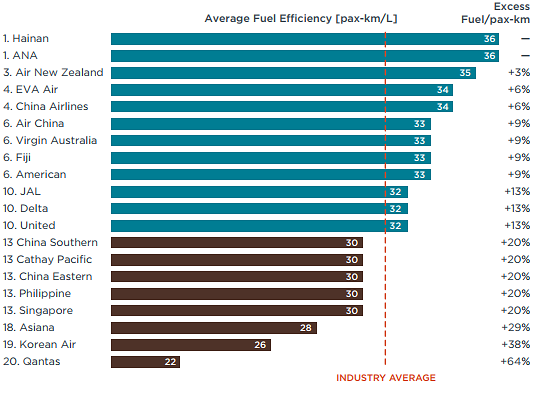
SINGAPORE: Singapore Airlines performs below the industry average for the amount of carbon dioxide per passenger-kilometre it emits, according to an analysis of 20 major airlines operating nonstop passenger flights across the pacific. 

The Transpacific Airline Fuel Efficiency Ranking by the International Council on Clean Transportation (ICCT) – the group that exposed the Volkswagen emissions scandal in 2014 – modelled fuel burn for the airlines using flight schedule and detailed operational data in 2016. 

Singapore Airlines had an average fuel efficiency of 30 passenger-kilometres per litre of fuel (pax-km/L) , below the industry average of 31 pax-km/L. 

Of the 20 airlines analysed, 12 had a fuel efficiency above the industry average. Singapore Airlines’ score, which was the same as four of the other airlines, was the fourth-lowest in the analysis. 

(Table: ICCT)

The national carrier uses Airbus A350-900, A380-800 and Boeing 777-300ER aircraft on its flights to Los Angeles and San Francisco, the ICCT noted in the report released on Tuesday (Jan 16). 

The A380, configured with either 379 or 441 seats, was the least fuel-efficient aircraft in its fleet, with an average of 304 passengers per flight. If an additional 50 passengers flew on each A380 flight, then the aircraft’s fuel efficiency metric would increase from 24 to 27 pax-km/L, ICCT said. 

The same fleet fuel efficiency metric of 30 pax-km/L could be achieved by loading an additional 1,000kg of freight or 10 passengers to all flights, it added. 

Hainan Airlines and All Nippon Airways (ANA) were the most fuel-efficient among the 20 airlines, with both achieving an average fuel-efficiency of 36 pax-km/L. 

Their strategies for being more fuel efficient were very different, according to the ICCT white paper. Hainan’s efficiency rating mostly reflected its very “advanced fleet”, with most of its travel in the region aboard the Boeing 787 Dreamliner aircraft. 

ANA, in contrast, operated aircraft with higher fuel burn but carried a heavier load on its flights, especially cargo. ANA carried about three times as much cargo in its baggage hold per passenger as Hainan, equaling 48 per cent of the flights’ payload. 

Australian flag carrier Qantas was the worst airline for fuel efficiency, at 22 pax-km/L. It operated the most fuel-intensive aircraft at very low load factors for both passengers and freight, according to ICCT. 

Source link

Enter a mirror maze and other things to do at the Light to Night Festival

0

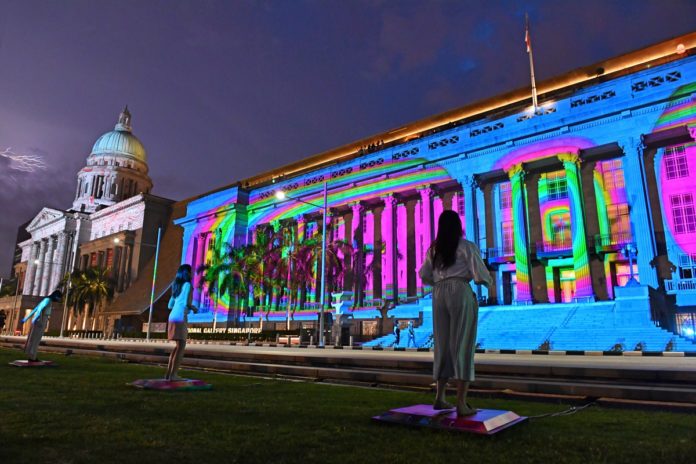
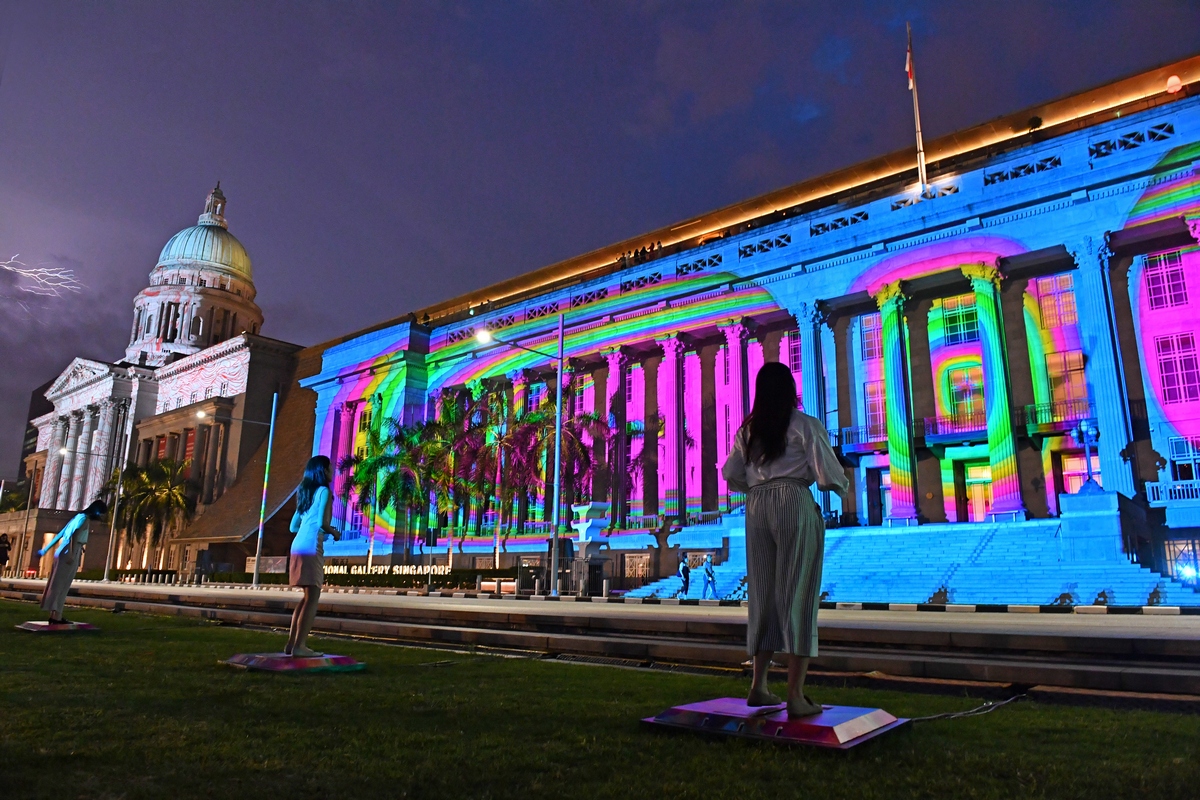
The 10-day event at the Civic District kicks off on Friday (Jan 19). It will feature light projections and art installations, musical performances, and food and crafts stalls – and that’s just what’s available outdoors.

Light To Night Festival’s Art Skins On Monuments features looped visuals created by Singapore artists that are projected unto the facade of the buildings at the Civic District. (Photo: Christy Yip)

SINGAPORE: When the Light to Night Festival kicks off at the Civic District on Friday night (Jan 19), audiences can put their artistic stamp on the festivities, literally.

Among the event’s highlights is Chromascope, an interactive installation by Australia’s Spinifex Group where people can step on 12 stomping pads to control the visual images projected unto the facade of the National Gallery Singapore’s City Hall wing.

Visitors to Light To Night Festival can try their hand at manipulating Chromascope, an interactive installation where they can change the projection by stepping on stomping pads. (Photo: Christy Yip)

The game-like artwork will be complemented by the Instagram-friendly Art Skins On Monuments, a series of looped projections shown on the facades of the museum’s former Supreme Court Building wing, as well as its neighbours The Arts House, Victoria Theatre and Concert Hall, and Asian Civilisations Museum (ACM).

Curated by artists Brandon Tay and Safuan Johari, these will include creations by 30 Singapore artists such as Samantha Lo, Speak Cryptic, Zero, Kristal Melson and Mojoko.

The two outdoor works are among the various outdoor and indoor events and installations that visitors can check out at the precinct-wide festival, which is a marquee event of Singapore Art Week.

A seemingly endless labyrinth awaits those who enter House Of Mirrors by Christian Wagstaff and Keith Courtney at the Empress Lawn. (Photo: Christy Yip)

Themed “Colour Sensations”, the 10-day event runs until Jan 28. It starts from 5pm till midnight on weekends (Fridays and Saturdays), while the outdoor light installations will be up from 8pm till 10pm throughout the festival.

On both weekends, the Padang will also transform into picnic ground featuring more than 80 food and craft stalls. There will also be music performances and poetry readings.

Meanwhile, other art installations will be scattered throughout the Civic District grounds.

Over at Empress Lawn, there’s House Of Mirrors by Australia’s Christian Wagstaff and Keith Courtney, where visitors can enter a very challenging and disorienting labyrinth of mirrors.

The Esplanade Park Tunnel also gets a futuristic makeover with lighting design collective Nipek’s Trip To The Colourscape. (Photo: Christy Yip)

Architecture students from National University of Singapore have also created a site-specific work at ACM Green, while the Esplanade Park Tunnel has been given an artistic makeover by Singapore-based design collective Nipek. The latter will be complemented by weekend musical performances held at the Esplanade Park premises itself.

“We see this as a throwback to the Civic District’s rich heritage of being a shared space where people from all walks of life meet to interact and bond by the Singapore River,” said Suenne Megan Tan, festival director and National Gallery Singapore’s director for audience development and engagement.

The festival won’t be limited to outdoor events – there will also be performances and exhibitions inside the various institutions’ premises. 

A kaleidoscope room by artist duo Other Half is one of the new indoor artworks seen at Asian Civilisations Museum. (Photo: Christy Yip)

​​​​​​​

The National Gallery Singapore, for instance, is presenting five newly commissioned indoor artworks. It will also extend its opening hours until midnight on weekends and offer free admission to all its exhibitions.

The Asians Civilisations Museum have also commissioned works, which include a life-sized kaleidoscope installation by artist duo Other Half.

During the festival’s two weekends, St Andrew’s Road will be closed from 4pm to 1am. For more details on Light To Night Festival, visit its website here.

Source link

Singapore-based start-up wants to better the odds for stroke victims

0

SINGAPORE: The problem is simple enough: Current methods of managing and predicting strokes are insufficient.

According to See-Mode Technologies’ co-founder Milad Mohammadzadeh, about 25 per cent of strokes globally are recurring ones with a year of the patient’s first stroke. In Singapore, there are 7,000 new stroke patients here each year, he added during an interview with Channel NewsAsia on Wednesday (Jan 17).

The first statistic is indicative of how current ways of predicting and managing strokes are not effective enough. Dr Milad, who has a PhD in Applied Physics from Nanyang Technological University, explained that currently, neurologists and clinicians rely on anatomical data from patients’ CT or MRI scans to make their assessments and come up with treatment plans for stroke victims.

However, studies in the past three years have shown that anatomical data is just one factor to predict the risk of strokes happening, and it is not the key one, he said. Rather, he said physiological data such as blood flow has been found to be correlated with strokes, and should be factored in the overall assessment.

However, blood flow data is not available to neurologists as it is to cardiologists, who use the data to assess the risk of cardiovascular diseases such as heart attacks, Dr Milad shared.

This, he explained, is because an invasive surgery would have to be done to collect patients’ blood flow data, and this is “too dangerous” to obtain for stroke patients, particularly those who suffer from intra-cranial ones, as this would mean operating on the brain.

As such, his expertise in biomedical fluid dynamics comes into play; he was able to develop the software to simulate patients’ blood flow. With both anatomical and physiological information, doctors would then be better able to assess and treat stroke patients, Dr Milad said.

He and his wife Sadaf, who holds a PhD in Electrical and Computer Engineering from the National University of Singapore, said they are “very honoured” if their idea is able to solve this current pain point for neurologists everywhere.

As it is, See-Mode has agreed to partner with two Singapore hospitals – “these are the biggest hospitals that deal with stroke patients … more than 1,000 a year” – and is waiting to complete the administrative formalities. Dr Milad said he expects to start clinical trials there “in the next few months”.

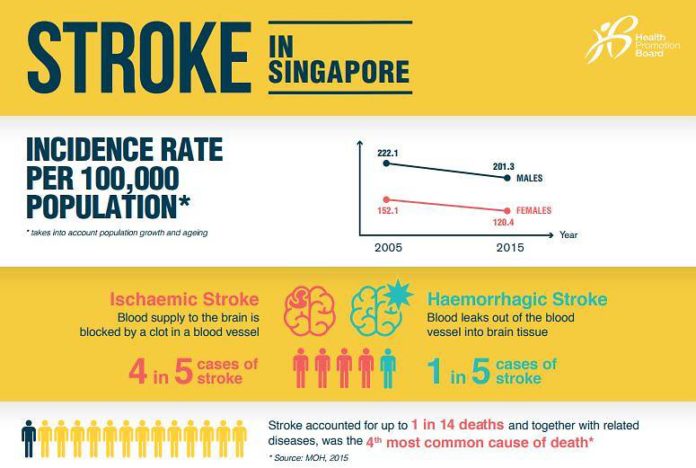
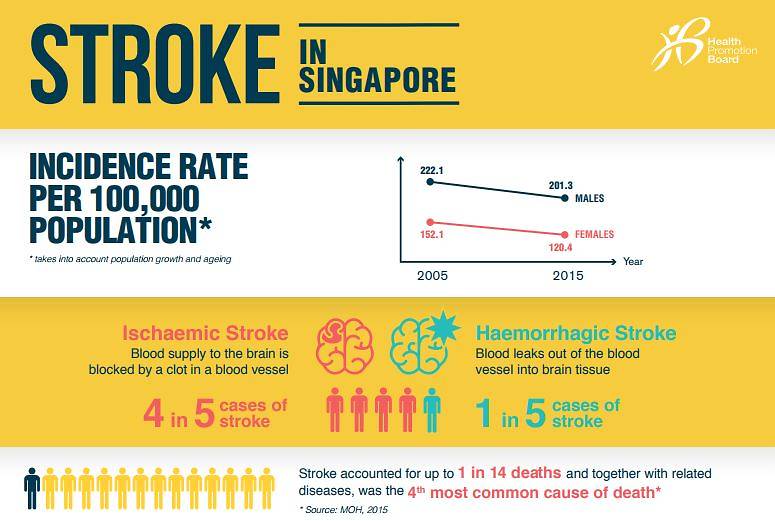
According to the 2015 figures from the Ministry of Health, the disease accounted for one in 14 deaths here. Together with related diseases, it was the fourth most common cause of death. 

(Infographic: National Registry of Diseases Office)

ACCIDENTAL ENTREPRENEURS

However, the See-Mode co-founder didn’t think much about starting his own business initially.

The 27-year-old shared that it was his wife who was the one that pushed them towards signing up for Entrepreneur First Singapore’s start-up bootcamp, which was then recruiting its second batch of interested applicants.

“I was worried about stability,” he shared, adding that his preferred route was to do a post-doctorate or enter the industry, knowing that his creations would be used.

“I essentially tagged along, but I’ve not looked back (since),” Dr Milad said.

Dr Sadaf, on the other hand, knew that settling down in academia wasn’t for her. “I wanted to make a difference,” she shared, having been inspired by her parents who are both in the medical field.

But signing up for EF’s six-month programme was the easy part.

When the programme started, the couple initially went their separate ways looking for partners to team up, given that their specialities were in different fields. It was only a chance conversation Dr Sadaf had with a “renowned neurologist from Singapore” that pointed the way for the husband and wife to work together.

The doctor had given “broad brush strokes” of the challenge facing neurologists and clinicians today, and she realised that half of the problem was related to her field in artificial intelligence and machine learning, while the other half related to her husband’s expertise in biomedical fluid dynamics.

To ascertain that this was indeed a problem faced by many, and not just one doctor, the couple then spoke to about 50 neurologists, radiologists and clinicians from countries such as the US, Sweden and other parts of Europe. Through these conversations, they narrowed down the problem to the one they are trying to solve: Assessing stroke risk beyond relying on traditional anatomical data.

“The risk of having a stroke is not just about the shrinking of one’s blood vessels,” Dr Milad reiterated.

He added that the start-up has seen “significant interest” by three VCs that attended EF’s Investor Day on Tuesday, which saw the company pitch its idea to the investor community.   

See-Mode Technology founders pitching their idea during EF’s Investor Day. (Photo: Alex Crompton/Twitter) 

“MAKING FIRST STEP SAFE” FOR WOULD-BE ENTREPRENEURS

Through the experience, Dr Sadaf shared that the EF method of recruiting people with deep technical skills, but who do not have an idea or a team, played a big part in enabling the couple to make their foray as entrepreneurs.

By giving a monthly stipend to the accepted applicants, this removes the immediate worry of financial security for researchers or those in academia who might have an idea, but were afraid of pursuing them. It “makes the first step very safe”, she said.

The programme comprises of two three-month phases: For the first three months, each participant receives S$5,000 a month and focuses on finding a co-founder and developing a commercially viable idea. If a start-up is successfully formed during this phase, EF will invest a further S$25,000 for an 8 per cent equity stake in the entity.

During the second phase, teams will focus on product development and customer traction, and they will receive mentoring and advice from the EF team and top entrepreneurs. The UK-based investor will also provide work spaces, legal and administrative support.

One of Europe’s leading talent investor, which has produced 100 start-ups that are now worth more than US$1 billion, it opened its first international office here in 2016 by partnering with SGInnovate, then known as Infocomm Investments.

Ms Anne Marie Droste, co-director of EF Singapore, shared during a media briefing on Wednesday that the difference it takes, compared to more traditional venture capitalists in the market, is it focuses on investing on the person, and even before they have decided to become an entrepreneur.

She added that many of those in academia or research institutes tend to face problems such as having “no confidence in their ideas” or unable to find co-founders to work on the same project, so they abandon the intention of starting their own businesses.

Her co-director, Mr Alex Crompton, pointed out that its start-ups incubated from out of Singapore has certain perks, particularly if they are in “regulated industries” such as healthcare.

He said the local government is “anticipatory” of businesses’ needs, which means companies can move very fast – and this is a “massive competitive advantage” over other markets, he said.

As an update, EF Singapore said its first batch of 12 graduating start-ups that made their debuts last March have all been offered term sheets and funding from venture capital firms such as Cocoon Capital, Wavemaker and SGInnovate.

It will continue to guide the second cohort of 14 – which See-Mode Technologies is part of – through fundraising and hiring over the next six months, while its third cohort is about to start later this month. Registrations for the fourth batch was also opened at the turn of the year, the company said. 

Source link

Commentary: A Changi Airport East for all, yet who should fund its bill?

0

SINGAPORE: Singapore’s Changi Airport has created a league of its own in the region.

With over 100 airlines and 60 million passengers in 2017, the airport has won the Skytrax Best Airport award for the last five consecutive years.

But it is coming under pressure to break new ground and strengthen its value proposition to win over critical masses of consumers and airlines as competition intensifies.

Asian and Middle Eastern airports are fast developing their capabilities to be high-potential hub airports, meaning more hub airports competing to capture the region’s growing traffic.

Today, airports are more than just transport hubs. They are transforming into bustling lifestyle, entertainment and travel destinations.

Beyond function, airports today are all about creating a unique experience for the travelling public. They represent colour, culture, cuisine and connectivity. They operate for performance, efficiency and service excellence.

The Changi East development, with the Terminal 5 projected to be ready by the late 2020s, is the most recent strategic move to enhance Changi Airport’s competitiveness as well as to serve the growing demand for air travel.

Set to be one of the largest airport terminals in the world, authorities say it alone will be able to handle 70 million passengers a year.

This massive development will require significant investments. The magnitude of the project and its complexity alone suggests there will be many risks involved in its execution.

Jewel Changi Airport is also on track for opening in 2019. (Photo: Olivia Siong)

Questions have arisen in recent months. What is the airport’s investment strategy? Will the new development escalate airport charges?

Will this impact Changi Airport’s competitiveness? Will partner airlines and passengers stand to gain or lose?

RESPONSIBILITY OF A FEW?

According to a recent statement from the Ministry of Transport, a large portion of the funding for airport development will be borne by the Singapore Government. This is not unexpected as the country will benefit from the externalities and the value generated from such a strategic investment.

Another chief responsibility lies in the hands of the operator Changi Airport Group which has also expressed the willingness to fund the project partially by plowing back a significant percentage of their cashflow and raising debt using their balance sheet.

This would provide some relief to the Government as it grapples with a tightening fiscal position and competing development needs in other sectors, not least in rail infrastructure and healthcare.

It may be an easy option for the Government to pass the financial burden of development to the citizens. But it seems the Government recognises that it is not fair to raise income taxes to fund airport development as a significant percentage of airport users are not taxpayers.

The greenwall outside the terminal has more than 16,000 plants. (Photo: Changi Airport Group)

A PRUDENT OPTION ARISES

It makes economic sense for direct beneficiaries of airport infrastructure development to partly fund such investments. Airlines and travellers may be willing to pay premium or minimum increase in charges for both better services and experience.

There are many airports around the world that are either considering or have already taken a similar approach. For instance, Japan is considering charging a departure tax of approximately S$12 later in 2018 to fund tourism infrastructure and promotions.

The Hong Kong International Airport has already been collecting between S$12 and S$31, depending on the class of travel and flight duration. In 2016, the Middle East airports in Dubai, United Arab Emirates and Qatar also introduced a departure tax of S$13 mainly to fund their airport development projects.

But is this the best option? As the argument goes, in countries that charge the highest flying fees, estimates suggest abolishing additional costs could significantly boost tourism.

According to the International Air Transport Association, if Australia were to abolish passenger movement charges (previously departure tax), it could garner an additional tourism revenue of A$1.7 billion (S$1.77 billion).

In this context, can Changi Airport increase airport charges and retain its competitiveness as an international air hub?

My view is we need to take a more nuanced view of how travellers make their decisions. The cost to airports as well as airlines to serve origin and destination (O&D) travellers versus transfer passengers is different. Similarly, there are clear differences in travellers’ propensity to travel and absorb related costs.

In my experience, over 90 per cent of O&D passengers lock in a destination even before they look at the price. They consider the overall trip cost, with the overall ticket price as a component (and airport charges as only a small sub-component).

In fact, more than 90 per cent of passengers in this category do not even recall the amount of airport charges they paid on their tickets.

Hence, the Hong Kong International Airport was able to take the approach of collecting up to S$31 per traveller. In fact, Hong Kong expects that seven in 10 passengers can expect to pay S$17. 

Transfer passengers, on the other hand, can be more price sensitive. While many are willing to pay a premium for direct flights, there are also passengers who prefer to substitute a direct flight with an indirect flight to save money.

This, in a way, explains the current strategy of Changi Airport to levy much lower fees of S$6 on transfer passengers compared to O&D travellers who pay fees of S$34.

The impact on partner airlines of Changi Airport will be similar. 

Although airport charges are a small percentage of the overall operating costs (less than 5 per cent of the operating cost of full service carriers at Changi Airport comprises airport charges), any increase should be carried out with care given the thin margins of airlines.

Therefore, it is important to evaluate any increase in costs against airlines’ ability to transfer these to the passengers.  This is also important because airlines today face stiff competition resulting in strong pressure on yield.

File photo of a Singapore Airlines plane.

While it is relatively easier for airlines to pass the costs if levied directly on passengers, the airport operator may need to ensure that such charges remain as a small percentage of the overall ticket pricing.

GOOD SENSE TO IMPLEMENT CHARGES NOW

As expectations that additional fees will be levied soon are rife, my view is it makes good sense to implement the charges now rather than wait until Terminal 5 is completed. 

The costs of development are incurred now and collecting them now will save the compounding effects of costs.

There are also many precedence of charging ahead of completion of a project. Apart from Hong Kong, other airports such as Dubai, London Heathrow and multiple Canadian airports have introduced or raised airport charges to fund development projects.

To ensure future generation of airport users are not burdened, both airlines and consumers should look at it positively as paying it forward.

In return, Changi Airport will need to sustain its efforts and continue to deliver value as both an experiential lifestyle destination and an award-winning international air hub.

Hean-Ho Loh is partner and global lead for transportation infrastructure and airports at the Boston Consulting Group.

Source link

Fire in Serangoon North flat forces nearly 70 residents to evacuate

0

SINGAPORE: A fire broke out on the second-floor flat in Block 147, Serangoon North Ave 1 on Thursday (Jan 18) evening, causing a power outage and forcing nearly 70 residents to evacuate their homes.

One woman in her 80s and another in her 30s, both from the neighbouring units, were taken to Tan Tock Seng Hospital after complaining of breathlessness, said the Singapore Civil Defence Force (SCDF). 

The SCDF said they were alerted to the incident at about 7.15pm.

The fire originated from one of the bedrooms, they added.

“Sixteen residents from the second to fifth stories were evacuated by SCDF and Singapore Police Force (SPF) officers,” said SCDF. These residents lived close to or directly above the unit that had caught fire.

Another 50 residents living in the block self-evacuated, SCDF added. 

Photos and videos posted on social media showed the unit engulfed in flames, with firefighters trying to extinguish the blaze. 

Mr Alvin Tan, who lives on the fourth floor of the affected building, told Channel NewsAsia that he heard people shouting “fire, fire” at about 7.10pm. 

When the 45-year-old stepped out of his house, he saw “thick, black smoke”and immediately gathered his family and ran out of the building. 

Mr Ken Chan, a resident living in the opposite block, told Channel NewsAsia he realised there was a fire when smoke started to rise from the building. 

The fire that broke out at a flat at Block 147, Serangoon North Avenue 1 sent plumes of black smoke into the sky on Thursday (Jan 18). (Photo: Facebook/Ken Chan)

The 26-year-old undergraduate said he saw the fire in the unit’s kitchen and bathroom window. 

Mr Chan also said that he heard several “pop sounds”.  

According to eyewitnesses, the fire caused a power outage in the building, with units up to the 12th floor seen in total darkness.

The fire was extinguished by SCDF using compressed air foam and a water jet, SCDF said. 

The cause of the fire is being investigated, it added. 

Source link