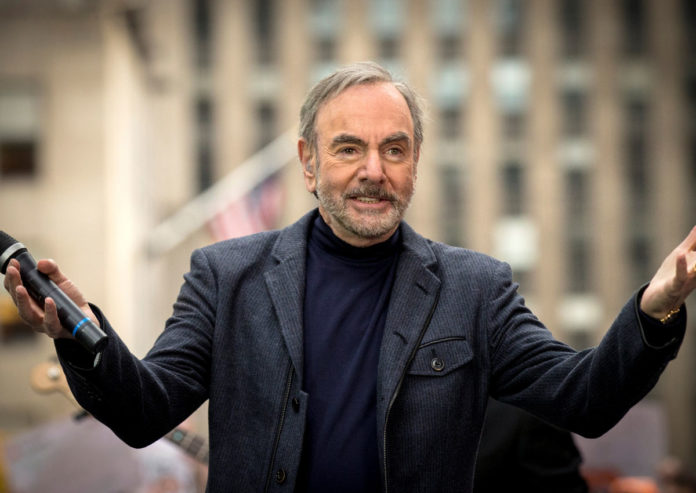
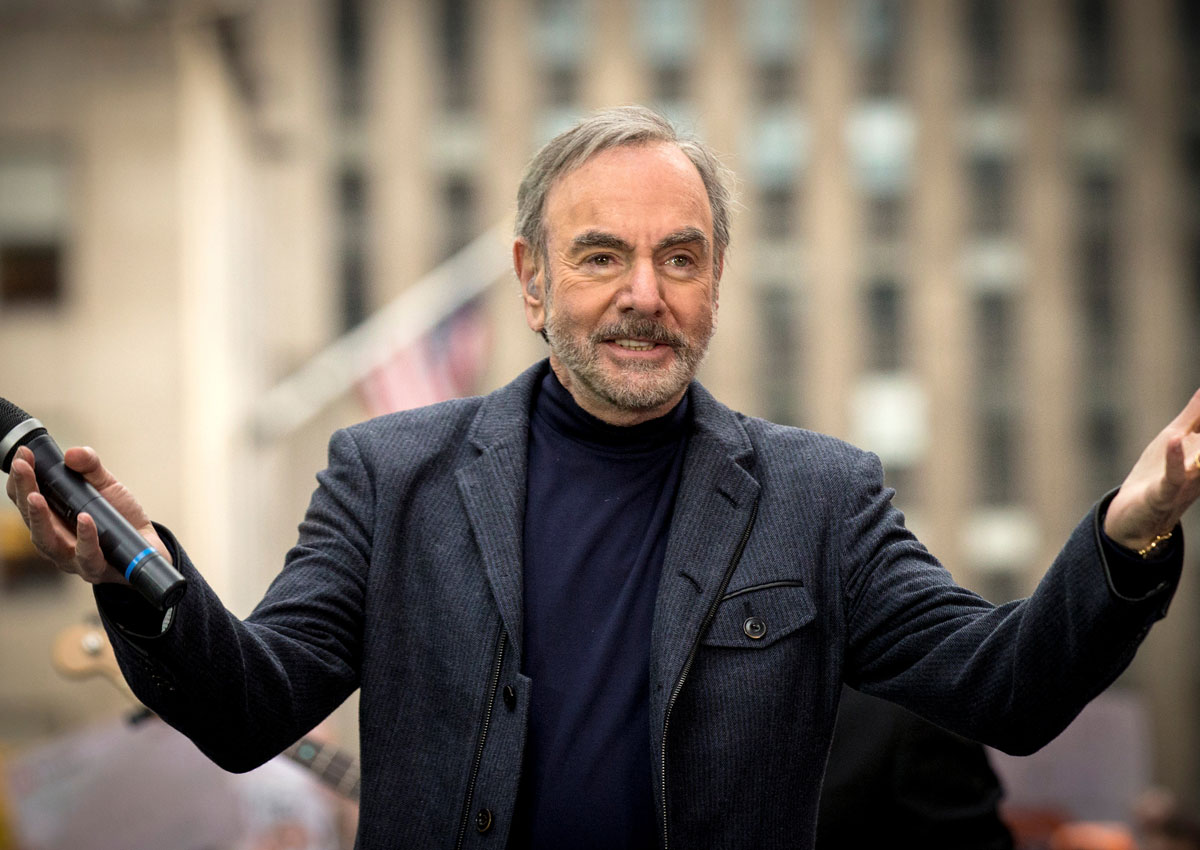
World-renowned singer, songwriter and performer Neil Diamond has announced his retirement from touring after being diagnosed with Parkinson’s disease.
Acting on medical advice, Diamond cancelled the upcoming Australia and New Zealand legs of his 50th Anniversary tour, which were set to commence in March.
Parkinson’s disease is a long-term degenerative disorder which affects the motor systems. It is characterized by shaking, rigidity and difficulty with walking.
The disease makes it difficult for the singer to travel and perform on a large scale, but he said in a statement that he expects to continue writing, recording and developing new projects
“It is with great reluctance and disappointment that I announce my retirement from concert touring. I have been so honoured to bring my shows to the public for the past 50 years,” Diamond said in an announcement on his website. “My sincerest apologies to everyone who purchased tickets and were planning to come to the upcoming shows.”
The singer added: “My thanks goes out to my loyal and devoted audiences around the world. You will always have my appreciation for your support and encouragement. This ride has been ‘so good, so good, so good’ thanks to you.”
The Australia and New Zealand leg of the tour would have been the third leg of the 50th Anniversary route with Diamond selling out shows in the US and Europe throughout 2017.
Ticket holders for the cancelled shows have been advised that they will be automatically refunded in full if they purchased by credit or debit card. Those who purchased tickets with cash of EFTPOS will be contacted to arrange a refund.
Diamond is due to celebrate his 77th birthday on Jan. 24.
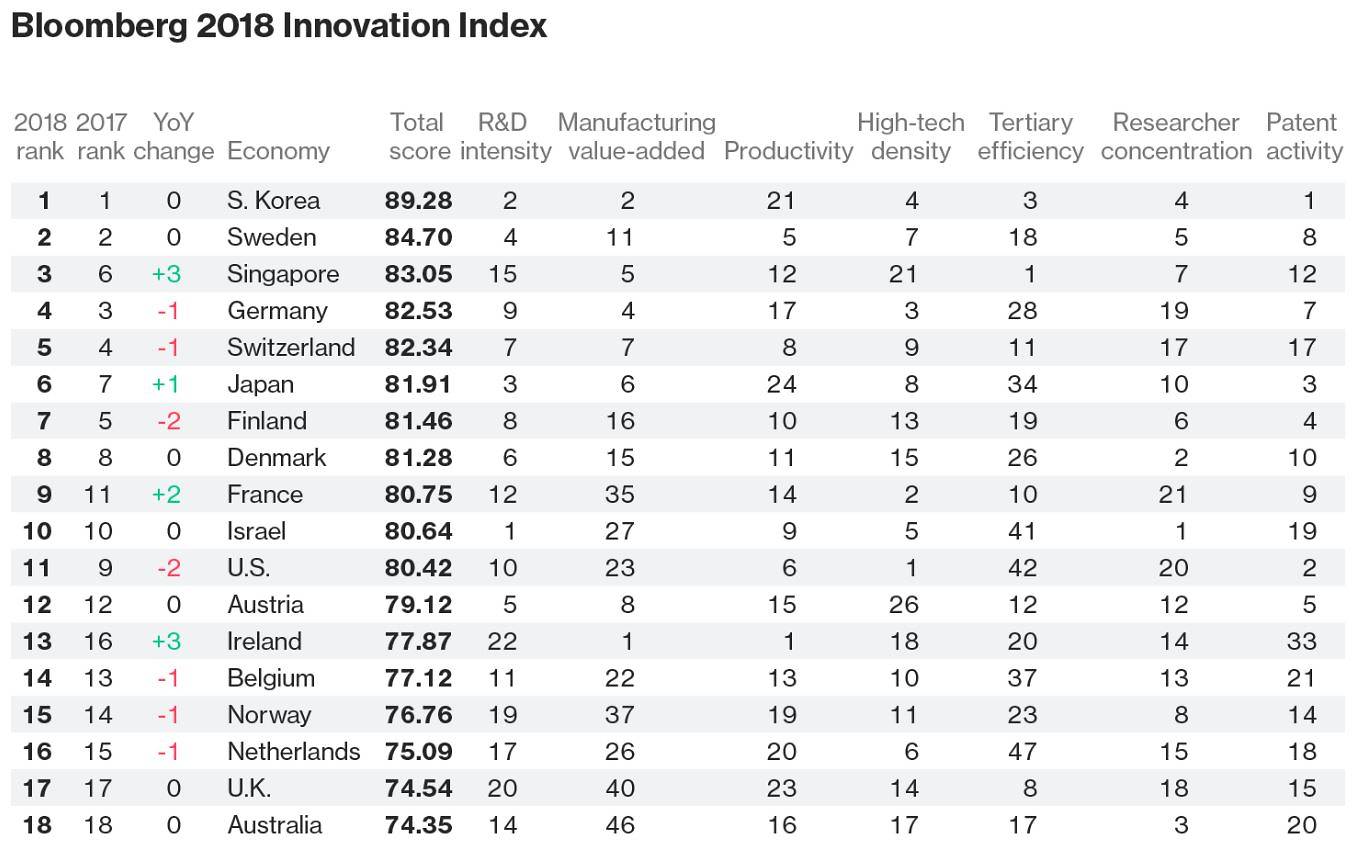
SINGAPORE: Singapore ranked ahead of European countries like Germany and Switzerland in the Bloomberg 2018 Innovation Index according to a report on Tuesday (Jan 23).
The annual index ranks countries based on seven criteria, including their research and development expenditure, productivity and concentration of high-tech public companies.
Singapore came in third this year, with South Korea maintaining its top spot on the index for the fifth consecutive year. Sweden also maintained its position on the index from last year, ranking second.
Singapore’s position rose by three notches as compared to 2017, where it was ranked sixth globally.
Singapore jumped ahead of European countries like Germany and Finland because of its top ranking in the tertiary-efficiency category, reported Bloomberg.
“Singapore has always placed strong focus on educating her populace, especially in STEM (science, technology, engineering and mathematics) disciplines,” said Yeo Kiat Seng, professor and associate provost at the Singapore University of Technology and Design, as quoted by Bloomberg.
South Korea, on the other hand, maintained its top position with the abundant US patents Samsung Electronics Co. has, and its foray into digital-media equipment, semiconductors and smartphones.
The top 18 countries in the 2018 Bloomberg Innovation Index. (Screengrab: Bloomberg)
Japan, one of the three Asian countries to be within the top 10 positions in the index, rose one spot from 2017 to rank sixth on the index.
The United States dropped out of the top 10 positions within the index for the first time in six years, according to Bloomberg.
China ranked 19th on the index, going up two spots from its rankings last year. This rise was attributed to its high proportion of new science and engineering graduates in the labour force and the increasing number of patents companies like telecommunications firm Huawei Technologies Co. are gathering.
Malaysia, Hong Kong and Thailand also managed to make it into the top 50 on the index. Malaysia ranked 26, falling three notches from last year. Since last year, Hong Kong’s position fell by two spots to 37, while Thailand went down the index by one spot to 45.
SINGAPORE: Two Singaporean firms, DBS Bank and City Developments Limited (CDL), were among 104 recognised for their gender-equality efforts in the 2018 Bloomberg Gender-Equality Index launched on Monday (Jan 22).
The sector-neutral reference index measures gender equality across internal company statistics, employee policies, external community support and engagement, and gender-conscious product offerings, Bloomberg said in a press release.
Firms on the index – which is not ranked – submitted a survey and scored at or above a global threshold established by Bloomberg to reflect disclosure and the achievement or adoption of “best-in-class statistics and policies”, it added.
DBS and CDL said in a separate press release on Tuesday that Singapore companies made up a third of the six Asian companies, excluding Japan, included in the index. CDL is also the only real estate management and development company named in the index, they noted.
DBS CEO Piyush Gupta called it a “milestone moment” to be recognised on the index.
“We believe gender, generational and cultural diversity is our source of strength. We believe that when you achieve a critical mass of women across all levels, this will make a difference in an organisation’s ability to succeed and contributes to our ability to consistently punch above our weight,” he said in a press release.
According to Mr Gupta, women form 60 per cent of DBS’ overall workforce, 40 per cent of its senior management and 30 per cent of its Group Management Committee, which sets the bank’s strategy and direction, in Singapore.
CDL CEO Sherman Kwek also said the real estate firm has “always believed in the importance of gender diversity and strived hard to make it part of our corporate culture and inherent within our workforce”.
“It has enabled us to benefit hugely from the unique perspectives and immense creativity which different individuals across both genders bring to the table. By harnessing the diversity of our talent pool represented by different genders, age groups, ethnicities, cultures, geographies and backgrounds, it has given us a strong strategic advantage when it comes to decision-making and operations,” he said.
Mr Kwek stated that women make up about 70 per cent of CDL’s workforce and 40 per cent of its department heads.
CDL chief financial officer Yiong Yim Ming and chief sustainability officer Esther An are among the real estate firm’s senior management. (Photo: CDL)
Bloomberg said this year’s index represents 24 countries and regions, including firms headquartered in Belgium, Chile, Greece, Ireland, Italy, Singapore and Taiwan. Companies range from a variety of sectors, including communications, consumer staples, energy, financials, materials and technology.
Of those on the index, the firms had women holding an average of 26.2 per cent of position on boards, 26 per cent of senior leadership positions and 19 per cent of executive officer roles. They also earned 46 per cent of promotions in 2016, according to Bloomberg.
The percentage of executive level positions held by women in member firms on the index increased 33.5 per cent from fiscal year 2014 to 2016.
Sixty-seven per cent of members on the index reported evaluating all advertising and marketing content for gender biases before they were published, while 65 per cent are signatories to or members of organisations advocating for gender equality.
Kiersten Barnet, Deputy Chief of Staff to the Chairman at Bloomberg, said that as investors continue to seek more information on companies’ approaches to environmental, social and governance factors, the 2018 Bloomberg Gender-Equality Index allows investors to compare companies’ commitments to gender equality across industries.
“More data and greater transparency in this space will allow investors to make better-informed decisions and help companies better understand their own progress towards gender equality,” Ms Barnet added.
“WHAT are you doing here?” is how you can expect to be greeted by wait staff when walking into one of Japan’s Tsundere cafes.
If there are two things for which Japan is famous, it is providing outstanding service and at times having some pretty weird interests. So-called Tsundere cafes – where waitresses in maid outfits are supposed to treat you like dirt – fall firmly into the latter category.
Source: Facebook/SubaToki Cafe
Next month, Singaporeans will get the “pleasure” of attending their very own pop up Tsundere experience organised by SubaToki Cafe.
“Want to get insults and abuse hurled at you while you dine? Here’s your lucky chance to get that treatment you’ve always been dreaming of at our very own Tsundere Cafe~!” reads the Facebook event being held on Feb 24.
“Popularised by visual novel Kimi ga Nozomu Eien, ‘tsundere’ characters are cold, even mean at first, but gradually become clingy,” according to Kotaku. “It’s all somewhat masochistic, but the unpredictable nature of the tsundere events makes them popular with customers.”
The experience at SubaToki in Singapore will set customers back 20 Singaporean dollars (US$15) if they get in early, or $25 (US$19) after Feb 1.
Photography is banned in the cafe, so they won’t be able to document the bizarre experience either.
Alongside cruelty, lasagne, pasta and red velvet cake are on the set menu. Don’t necessarily except that wait staff will get the orders correct, however.
“In there you are treated like dirt. You are constantly insulted,” one punter wrote of the experience in Akihabara, Tokyo in 2016. “They’ll get your order wrong intentionally and then when you get up to leave, they’ll beg and be nice! All in all a very interesting experience!”
SubaToki offers a “Tokubetsu Service List” where customers can pay an additional $5 to be fed, receive a massage, or a dekopin (forehead flick).
But the restaurant warns: “as insults and vocal abuse will be hurled at you during your stay, we would greatly appreciate your tolerance and restraint from retorting with our staff … the management has the right to remove customers who get aggressive at any point of time.”
As Kotaku assures: “It’s all a gag, and the customers are in on it.”
Stomp contributor Nabila was furious when an Uber driver dropped off her helper and two young daughters, aged two and four, at a different location from where she had stated.
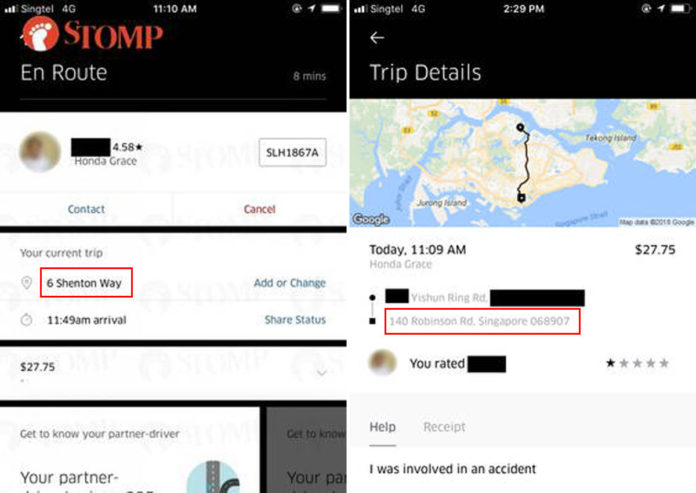
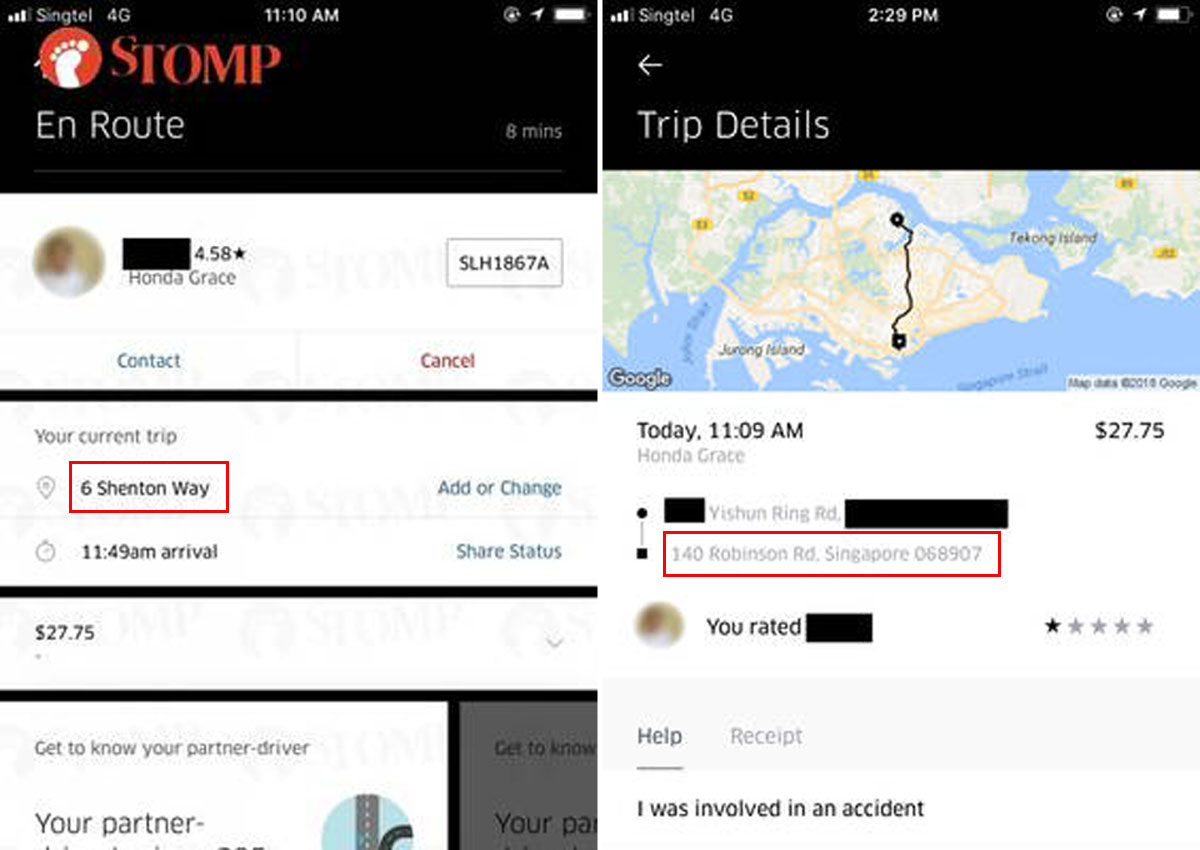
She had arranged for a pickup for her helper and daughters to her workplace at 6 Shenton Way on Jan 19.
She added that the location has a standard pick up and drop off point.
However, according to her app, the driver had alighted her helper and children at 140 Robinson Road.
“Can you believe how worried sick I was looking at the app and seeing that they had alighted but were nowhere in sight?” said the Stomp contributor.
“I rushed straight to 140 Robinson Road and still could not find them so I called the Uber hotline and asked him to give me the driver’s number so that I can find out where he had dropped off my children and helper.
“He said, ‘I’m sorry we are not allowed to do that and there’s nothing much we can do’.
“I shouted at him saying that my children are missing and he told me that I should call the police.”
She noted that her helper did not have a mobile phone with her.
Thankfully, her husband did a search around the area and found them safe and sound.
Nabila later found out from her helper that the driver had dropped them off behind the OUE Downtown building near the loading and unloading bay.
“She added that he was in a rush and drove straight off after alighting them at such a dangerous place with lorries and there was a construction site nearby.
“What makes me furious is that my maid was handling two young children alone with a stroller.
“Why am I paying for a service at the driver’s own convenience?
“I am utterly disappointed in the Uber driver and customer service personnel’s service.
“I want a refund. If anything happened to my children yesterday, will they be responsible?”
In response to Stomp’s media queries, an Uber spokesman issued the following statement:
“Thank you for reaching out to us on this matter.
“We are pleased to report that this matter has already been resolved to the rider’s satisfaction when it was brought to our attention.”
SINGAPORE: Private education institution PSB Academy has been acquired by specialist asset management firm Intermediate Capital Group (ICG), with its shareholding transferred from Baring Private Equity Asia (BPEA), PSB announced on Tuesday (Jan 23).
According to PSB, the investment will “bolster the Academy’s momentum of catering to the rising demands of Asia’s under-served higher education need”. Last year, the academy opened satellite campuses in Myanmar and Indonesia, after opening a S$15 million campus in Marina Square.
In an interview with Channel NewsAsia, its CEO Derrick Chang said that students and staff members would not be affected by the acquisition: “The transaction is at the ownership level, so it’s business as usual,” he said.
The deal was inked on Jan 19, after about half a year of searching for potential investors, with the academy receiving “competitive bids”, said Mr Chang.
“PBS has enjoyed remarkable growth under Barings’ ownership over the last five years,” Mr Chang said.
“And the current shareholder felt that this is an appropriate time, with an end to the investment cycle of approximately five to seven years, and they decided to seek new owners for PSB to bring PSB to greater heights.”
NEW CAMPUS FOCUSING ON STEM
PSB also announced that it will be launching a new campus by the first half of this year pending regulatory approval.
The campus, which will have a capacity of up to 5,000 students, will provide upgraded laboratories and facilities for its science, technology, engineering and mathematics (STEM) courses.
An artist’s impression of a Life Sciences Laboratory at PSB Academy’s new campus for its science, technology, engineering and mathematics (STEM) courses. (Photo: PSB Academy)
An artist’s impression of a Life Sciences Laboratory at PSB Academy’s new campus for its science, technology, engineering and mathematics (STEM) courses. (Photo: PSB Academy)
An artist’s impression of a Sports Laboratory at PSB Academy’s new campus. (Photo: PSB Academy)
Classes held at its second campus at Tiong Bahru, which has a capacity of up to 4,000 students, will be shifted to the new campus once it’s ready.
“Education is a focus industry sector for ICG and PSB represents the second education related investment for ICG in the Asia Pacific region,” said Mr Jin Tan, ICG Managing Director and Head of Southeast Asia.
“PSB will serve as an attractive platform for additional acquisitions in education in collaboration with the PSB management team who have demonstrated a strong track record of business growth.
“We look forward to building on our management partnership investment model in taking PSB to the next stage of development.”
As of January 2018, ICG manages US$33 billion of assets in third party funds and proprietary capital. The London-listed firm takes over the reigns from Baring Private Equity, which a total committed capital of over US$11 billion.
The private alternative investment firm first bought over the tertiary education business in 2011 from testing and certification firm TUV SUD in 2006.
Once known as Singapore’s Productivity and Standards Board, PSB was first set up in 1964 as a productivity unit in the Economic Development Board, with the aim of upgrading the knowledge and skills of the workforce.
It was later corporatised in 2001 and privatised in 2006. The academy currently serves over 12,000 local and international students in Singapore.
COLOMBO: With more than 40 years in Sri Lanka, Singapore brand Prima is a household name in the country.
The company, which entered the country in 1977, started out as a flour mill but has since grown from strength to strength, expanding into baking industry training, feed milling, commercial poultry farming and even IT services.
Today, it is one of Sri Lanka’s largest foreign investors.
When it first tried to make inroads into the country, Prima’s group general manager for Sri Lanka Tan Beng Chuan recalled that people felt it was a risky venture.
Prima’s Tan Beng Chuan is based in Sri Lanka, and has seen how the country has developed over the years. (Photo: Lianne Chia)
“We were the first one from Singapore to come in,” he said, explaining how they had entered at a time when the country’s economic policies were becoming more open.
“We had already been supplying flour to the country, and we knew the Sri Lanka market for a long time.
“Through this time, we knew the government has never defaulted on their commitment.”
Over the years, the 71-year-old Mr Tan has borne witness to Sri Lanka’s development – and the emerging opportunities the country offers for Singapore companies.
“There are many more skyscrapers now, and construction going on in the last few years,” he said. “It is very much the same as in Singapore, in the old days.”
Over the years, more Singapore companies have been venturing into Sri Lanka. Today, there are about 90 Singapore companies in the country.
An upcoming Free Trade Agreement (FTA), which is due to be signed by Singapore and Sri Lanka over the course of Prime Minister Lee Hsien Loong’s official visit to Sri Lanka from Monday (Jan 22) to Wednesday, is a boon for these companies, and an encouraging development for those looking to enter.
A GATEWAY TO THE REST OF SOUTH ASIA
When looking to expand its anchor brand PastaMania into the South Asia region, Singapore-based investment company Commonwealth Capital opted to open its flagship outlet in Sri Lanka’s commercial capital Colombo.
Describing the country as the “gateway to South Asia”, the company’s executive director of international business Wilson Lim explained that Sri Lanka’s per capita income is double that of India and triple of Bangladesh.
A street in Sri Lanka’s capital Colombo. (Photo: MTI)
“With a population of more than 1 million people, Colombo also serves as a very good test bed for us to bring in our concepts and acclimatise our brand before expanding into the larger South Asian nations,” he added. “
“It helps us to understand the cultural nuances of the South Asian countries, and localise the menu to get it right.”
The same goes for the founder of the Star Anise Boutique Hotel Vigneswaran Mohan, who saw a niche in the Sri Lankan market for accommodation catering to luxury backpackers.
“When I came here six years back, I saw there were bunk beds catering to the low-end backpackers, and the high-end hotels,” he explained. “This concept was doing quite well in Singapore, so I thought, why not?”
Established in 2016, his capsule hotel can accommodate up to 44 guests and boasts clean toilets and comfortable beds.
Founder of Star Anise Boutique Hotel Vigneswaran Mohan saw a niche in the Sri Lankan market for luxury accommodation targeted at backpackers. (Photo: Lianne Chia)
Mr Vigneswaran said he sees about 90 to 95 per cent occupancy on average and the business is on track to break even in July.
Together with his Sri Lankan partner, he hopes to set up two more hotels, a travel agency and a “Singapore-style hospitality corporate training institute”.
“Sri Lanka is booming, and there are a lot of opportunities here to try out a new industry,” he said, pointing out that infrastructure in the country has improved significantly since the end of the civil war in 2009.
“It’s strategically located between Southeast Asia and the Middle East, and in a way, it reflects South Asia generally, but with less red tape,” he added. “So if you want to do something in India, try it in Sri Lanka.”
WORKING AROUND THE CHALLENGES
The companies also highlighted the challenges they faced.
Commonwealth Capital’s Mr Lim pointed out the high tariffs and copious amount of documentation required to import food items into Sri Lanka.
“What is in the food, do you have this test report … so you really need to have strong local partners who can help smoothen the whole process.”
To that end, Mr Lim has been working around the challenges by looking at what ingredients can be sourced locally.
A street in Sri Lanka’s capital Colombo. (Photo: MTI)
“We are looking at leveraging on local ingredients, vis-a-vis proprietary items like pasta and tomato sauce,” he said. “Sri Lanka is very rich in seafood items, so why can’t we work on a pasta that’s related to say, Sri Lankan crabs?”
Meanwhile, Star Anise’s Mr Vigneswaran described getting skilled labour as a “very big problem”, recounting how, three months after he opened, he had to fire his entire housekeeping staff when he caught them stealing from the guests.
He explained: “Quite a bit of the Sri Lankan population is overseas, and people here aren’t fully trained, especially in the hospitality industry.
“That’s why we want to set up the institute to train people to work at different levels, whether it’s hospitality, tourism, office or admin.”
Nonetheless, the companies are looking forward to the upcoming signing of the FTA.
“Singapore businesses will be at an advantage compared to others,” said Star Anise’s Mr Vigneswaran. “The Chinese and Indians are also here. If we have an FTA, Singapore businesses can come in, and there’s also an incentive for local businesses to work with them.”
“From the perspective of reducing taxation, customs duties and tariffs for our food items coming into Sri Lanka, that’s going to be highly beneficial for us,” added Commonwealth Capital’s Mr Lim.