Home Blog Page 1174

Commentary: Singapore’s rising natural gas ambitions face big challenges

0

SINGAPORE: About 95 per cent of Singapore’s electricity is generated using natural gas. 

Before the completion of Singapore’s first liquefied natural gas (LNG) terminal in 2013, the city’s only option was to import natural gas via pipelines from Malaysia and Indonesia.

Singapore’s LNG industry has boomed since then, powering gas cookers and water heaters in most households and fueling industries including refineries and petrochemicals.

Its LNG ambitions are massive, involving markets further afield. Singapore’s strategic location and reputation as a global trading hub for other commodities place it at the forefront of becoming Asia’s LNG trading hub.

But the city state faces several challenges as it persists tirelessly towards this goal.

EXPANDING LNG INDUSTRY

Singapore’s central role in LNG trading is unquestionable and is supported by an expanding LNG infrastructure, business-friendly regulation, and a strong and growing pool of industry talent.

And as the global supply expansion drives LNG towards becoming a global commodity in its own right, Singapore’s position as an LNG trading centre will grow too.

Nearly 40 companies have opened offices in Singapore – from traders, buyers and sellers looking to enhance optimisation capabilities, to companies offering supporting services such as lawyers, consultants and shipping firms – according to the Singapore Department of Statistics.

Singapore aims to grow the sea transport industry’s value by S$4.5 billion and add 5,000 jobs by 2025, according to the Sea Transport Industry Transformation Map. (Photo: AFP / Roslan Rahman)
 

The country’s move to expand its LNG capacity to 11 million metric tonnes a year (mt/year) by 2018 and give international players access to storage and reload services demonstrates its commitment to become a regional facilitator of LNG trading.

Unlike other Asian buyers, Singapore has taken bold steps to develop a competitive and liberalised gas market, has access to international pipeline connections, and already allows third-party access to its gas and LNG infrastructure.

It has the support of its regulatory authorities and first-mover advantage relative to similar efforts by Japan and Shanghai to build their own LNG hubs.

Concerted efforts to create a Singapore-based pricing point for spot cargoes have also been made, in a bid to boost regional pricing transparency, and capitalise on the LNG industry’s departure from its traditional oil-indexed pricing model.

As LNG trading becomes more liquid in the physical and financial markets, industry participants feel more comfortable with pricing and hedging LNG cargoes not against an associated commodity like crude oil, but LNG itself.

Workers carry out a bunkering demonstration, transferring liquefied natural gas (LNG) to a ship. (Photo: Pavilion Energy)

LOW LIQUIDITY AND STORAGE BIGGEST CHALLENGES

Low liquidity will continue to be the biggest challenge to Singapore’s hub ambitions, as the limited size of its domestic gas market relative to the volume of LNG traded in Asia (which accounts for three quarters of global demand), makes it difficult for the country to replicate the balancing role the bigger and interconnected European hubs play in the global LNG markets.

The prospects of its storage and reload initiative may also be limited by the inefficient nature of LNG re-exports. Unlike oil, the cost of transporting and handling LNG relative to its market price is significant.

Storage costs at the Singapore LNG terminal on Jurong Island have been estimated within a range of S$2.5 million to S$6 million British Thermal Units per year (S$0.21 to S$0.50/MMBtu per month) depending on the source, plus unspecified reloading costs to re-export the volumes.

This means the cost of storing an LNG cargo for a year in Singapore can be as high the price of the cargo itself – the January to October 2017 average of the S&P Global Platts JKM benchmark daily spot price for physical deliveries to northeast Asia was at S$6.54/MMBtu.

Unlike oil, arbitrage decisions have to be made knowing that LNG cannot be stored for long periods because it loses volume due to boil-off.

Meanwhile, increasing flexible supplies from North America, Middle East and Asia-Pacific are reducing regional and seasonal price differentials in the global LNG markets, leading to fewer and shorter arbitrage opportunities, and less appetite for LNG reloads.

Qatar is the world’s biggest producer of LNG. (File photo: AFP/KARIM JAAFAR)

Singapore is seizing a huge part of the global LNG pie. It has reloaded six cargoes, of slightly less than 400,000 mt of LNG, from January to November 2017, up from five cargoes in 2016, according to S&P Global Platts Analytics. 

Meanwhile, the global market has reloaded just over 2 million mt of LNG this year, down from a peak of nearly 6 million mt in 2014, when the JKM averaged S$13.86/MMBtu.

Storage and reload costs on a $/MMBtu basis are even higher for medium and small-size LNG cargoes, one of the potential growth areas for Singapore.

Meanwhile, the ability of domestic end users in the potential break-bulk markets of Indonesia and the Philippines to pay a premium is particularly uncertain given downstream gas prices in those markets are heavily regulated.

Lastly, the future of Singapore’s further plans to develop the LNG sector, including LNG bunkering plans and leveraging LNG as a marine fuel – an alternative to the currently used marine diesel oil – are dependent on several factors including the areas where the vessel operates, the life of the ship, and most importantly, its relative price to other fuels.

To boost LNG bunkering in Singapore, the Maritime and Port Authority of Singapore has announced in December 2017 that it has pumped another S$12 million into the industry. The funds will be used to build new LNG bunker vessels to allow ship-to-ship LNG bunkering and to build LNG-fuelled vessels.

From left to right: MPA CEO Andrew Tan, Pavilion Energy CEO Seah Moon Ming, Senior Minister of State Koh Poh Koon and Pavilion Energy chairman Hassan Marican at the LNG bunkering launch ceremony. (Photo: Pavilion Energy)

LNG is seen as a substitute as Asian LNG spot prices have only been marginally lower than that of marine diesel oil. In fact, LNG spot prices have risen and hit its highest since 2015, with January deliveries assessed at S$9.90/MMBtu in November according to the Platts JKM benchmark price assessment.

The long-term prospects of Singapore’s LNG hub ambitions are therefore still uncertain.

But there is room for optimism as the country is well on track to becoming a global reference for LNG trading, and a key facilitator of regional market liquidity, flexibility and transparency.

Abache Abreu is senior editor, LNG News and Analysis (Asia-Pacific and Middle East), at S&P Global Platts.

Read past commentaries on Singapore’s energy needs:

1. On what Singapore has done to address its growing energy needs amid shifts in the energy landscape.

2. On the benefits of an Open Electricity Market to consumers.

3. On the affordability of electricity being a key goal of energy security for Singapore.
Source link

Re-imaging Singapore: New Google Street View cars hit the road

0

SINGAPORE: Better colour. Sharper images. More business details seen within the map. 

These are some of the things people can expect from Google Street View when Singapore has been re-mapped, said Ms Cynthia Wei, Street View Program Manager for Google Asia Pacific, during an exclusive interview with Channel NewsAsia on Monday (Jan 22) to reveal the initiative.

The tech giant’s Street View product was introduced to the country in 2009 and, since then, there’s been yearly refreshes to capture the changes in the city’s landscape. But the focus is on areas where “changes happens frequently” such as the Central Business District, particularly the area where Marina Bay Financial Centre is currently, she added.

However, Google recognises that “transitions are constantly changing” here, such as in areas like Punggol, and there is a need to re-map the country to keep Street View up to date, she said.

As to why do the Street View refresh now, with one car on the streets since Monday and the rest expected to hit the roads by end of the week, Ms Wei said “this is the earliest time slot for the technology” to be brought to Singapore. 

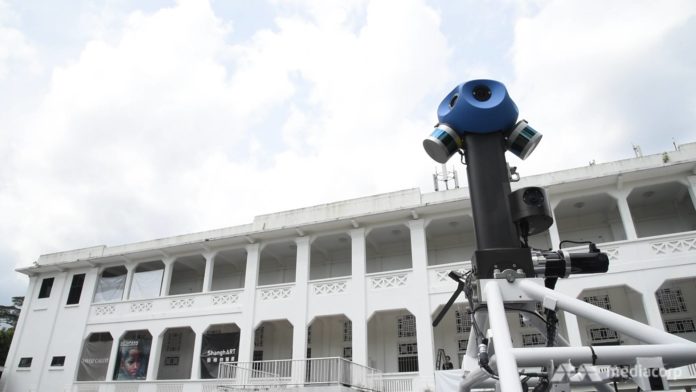
By this she means equipping the Street View cars with the latest rig: Seven cameras with 20 megapixels each, instead of the previous iteration of 15 cameras with five megapixels each. 

The WALL-E lookalike camera set-up is now more compact – with seven cameras, instead of the 15 in the previous model. (Photo: Howard Law)

Besides the more compact camera set-up, Google’s juiced-up Street View cars also come with Light Detection and Ranging (LIDAR) sensors, which Ms Wei said allows them to better place the imagery these cars capture during the post-production phase. There are also side-facing cameras, allowing the vehicles to capture street-level storefront data, she added.

LIDAR sensors are used by companies looking to bring autonomous cars to the roads, and it is a vital component as it maps the car’s surroundings in 3D by bouncing laser beams off the environment around it. 

Perhaps the biggest innovation, at least for the drivers of these cars, is the fact that the camera rig is now around 60 per cent lighter than its predecessor and can be automatically lowered from its operational height at the push of the button. 

Ms Wei shared that the previous version required drivers to manually lift the cameras on to the roof racks, and secure it using several screws. “So when there’s a sudden thunderstorm, the drivers will have to scramble to get the rig off the roof!”

The Google executive shared that her team is hoping the data collection for this latest re-mapping initiative will wrap up within three months, but that’s the “ideal timeframe” given the fickle nature of the tropical island’s weather. 

“If even a raindrop ends up on the image, then we can’t use it.” 

Additionally, Google will apply artificial intelligence and machine learning to the images collected, which would enhance the quality of the data collected, she said, adding that given the other post-production processes, she cannot say if the latest Street View maps can be seen by year’s end. 

Ms Wei did note that Singapore is the first Southeast Asian country to have the latest Street View technologies, and it is the first time the team has brought three of such cars to map the country when usually one would have sufficed. This initiative is done in conjunction with the partnership with local running group JustRunLah! to capture more than 30 running routes in Singapore, the executive said. 

Runners Paviter Singh and Ben Flint carrying the trekker. (Photo: JustRunLah!/Larry Laydn)

It will bring the car to the other parts of the region, but discussions are still underway, she added.

So the next time you see a car with a blue, WALL-E lookalike camera on its roof driving by, know that it is helping to bring the Singapore landscape into the palm of your hands via Google’s Street View app. 

Source link

Major investments planned, says PM Lee as Singapore signs FTA with Sri Lanka

0

COLOMBO: While Sri Lanka is in the process of negotiating free trade agreements (FTA) with several partners, Singapore is the first to complete one with them and Prime Minister Lee Hsien Loong said he is “very glad” that negotiations went smoothly.

Speaking to the media on Tuesday (Jan 23) towards the end of his official visit to Sri Lanka, Mr Lee noted that the Sri Lankan government is liberalising the economy, and wants to promote investments. In particular, he said they are looking to encourage tourism and develop more trade.

Mr Lee had earlier witnessed the signing of the Sri Lanka-Singapore Free Trade Agreement in Colombo, along with Sri Lankan President Maithripala Sirisena. The FTA is the first trade agreement that Sri Lanka is signing in more than 10 years.

“I think our trade is not so complicated with them,” he said. “Secondly, I think they hope to set an example for their other trading partners,” Mr Lee told reporters.

Credit should be given to the officials on both sides who worked very hard, he said. Negotiations had commenced in July 2016 and ended in Dec last year.

Prime Minister Lee Hsien Loong and Sri Lankan President Maithripala Sirisena attend a welcoming ceremony at the Presidential Secretariat in Colombo on Jan 23, 2018. (Photo: AFP)


In response to a question on Singapore not having to face domestic opposition or protectionist pressures in signing the FTA, Mr Lee said he is happy that the Singapore Business Federation and other federations are open-minded, and “take competition in their stride”.

“The SBF is very happy because they are hoping to get access into Sri Lanka and in a way which the Sri Lankan government will welcome,” he said. “Exports, but also investments, and there are major investments which are being planned.”

Some of these investments, he added, are by established players already in Sri Lanka such as Prima. Others are new players, like Hyflux or SembCorp.

“Even our not-so-big Singapore companies like Food Republic are thinking of coming to Sri Lanka and setting up things,” he said. “I think these are all positive results from the FTA.”

“On the Singapore side, our market has been more open, and I think our people and companies are much more conscious that they always have to meet international competition,” Mr Lee added.

“Because if you can’t even hold your own in Singapore, you really have no hope.”

TRANS-PACIFIC PARTNERSHIP

When asked if there were any other FTAs in the pipeline, Mr Lee said there are different schemes coming along, noting that Singapore has “a good number” of bilateral FTAs. He also brought up the Trans-Pacific Partnership (TPP), in the Asia-Pacific region. 

Earlier on Tuesday (Jan 23), MTI had said that eleven countries had officially concluded negotiations on a new trade pact, called the Comprehensive and Progressive Agreement for Trans-Pacific Partnership, after the US dropped out of the TPP last year.

“I read the report that they’ve come to some sort of agreement in Tokyo, minus the US, but we have to see how that develops because it’s politically sensitive for some countries,” he said.

He added that “ASEAN alone is not enough” for the Southeast Asian region, “so we have ASEAN plus other countries, and Singapore plus other countries”.

“So it’s very untidy, but we have to live with its untidiness. You have to make a judgement in each case, and that’s what we’re trying to do,” he said.

SRI LANKA AND SINGAPORE HAVE A ‘WARM FRIENDSHIP’  

Describing his first official meeting with President Sirisena as “good”, Mr Lee also pointed out other areas in which both countries can cooperate. He gave the issue of drug trafficking as an example, a serious problem which Sri Lanka grapples with.

“He asked us what we do, what are your policies, and I said our policies are very strict,” Mr Lee said. “We can exchange notes on many things, and we look forward to cooperating together.”

Mr Lee and Mr Sirisena also discussed strengthening bilateral relations and exchanged views on key regional and international developments at their official meeting, Singapore and Sri Lanka authorities said in a joint statement.

The leaders noted the warm friendship between the two countries, including the close historical and cultural ties, and encouraged greater people-to-people linkages.

They also discussed ways to enhance cooperation in the areas of technical and vocational education training, and public sector capacity building. PM Lee encouraged Sri Lanka to enhance its engagements with ASEAN and the ASEAN Regional Forum.

Prime Minister Lee Hsien Loong and and Sri Lankan Prime Minister Ranil Wickremesinghe talk during a meeting in Colombo on Jan 23, 2018. (Photo: AFP)

Sri Lankan Prime Minister Ranil Wickremesinghe and PM Lee also had fruitful discussions on how Sri Lanka and Singapore can step up cooperation through the promotion of trade, investment as well as the expansion of the existing cooperation in key developmental sectors, the statement added.

Mr Wickremesinghe accepted PM Lee’s invitation to be the keynote speaker for the Singapore International Water Week, World Cities Summit and CleanEnviro Summit Singapore in July.

PM Lee also extended an invitation to President Sirisena to make a state visit to Singapore. 

Source link

Students who helped boy trapped under car receive SCDF awards

0

SINGAPORE: Four secondary school students were among seven people commended by the Singapore Civil Defence Force (SCDF) on Tuesday (Jan 23) for saving a boy who was trapped under a car last week.

“We were walking to the MRT station after lunch when we saw a large group of people crowding around a car,” recounted 12-year-old Branson Ong, a Secondary 1 student at Maris Stella High School. 

“As we got nearer, we saw a hand sticking out from under the car, and heard someone crying and screaming in pain.”

Branson was with three friends when they saw a nine-year-old boy trapped under the front wheels of the vehicle at Geylang East Avenue 1 last Wednesday. The boy’s schoolbag was squashed under the front left tyre.

Some members of public quickly jumped into action and tried to lift the car. Among them were Mr Huang Han Xiang, Mr Govindan Meyyappan and Mr Wong Kit Soe.

Branson, along with two of his friends, Jose Alexander and Lin Yu Jie, threw their schoolbags to the ground to join in the effort. The fourth in their group, Megan Seow, dialled for an ambulance using the phone of a passer-by.

“An auntie passed me her phone, asked if I knew the boy’s parents and to call them if I did. I said I didn’t know his parents but I could call for an ambulance,” Megan said.

Six of the seven members of public who were lauded for their brave actions by the SCDF. 

From left:  Huang Han Xiang, Govindan Meyyappan, Jose Alexander, Branson Ong, Megan Seow and Lin Yu Jie. (Photo: Dawn Ang)

The driver of the car, who appeared to be in his 40s or 50s, also joined in to help, Mr Huang said.

It took the strength of nearly 10 people to lift the car and release the boy trapped underneath. Although the boy’s legs were bloodied, he was conscious, Mr Huang added.

The whole incident lasted 30 minutes, and the injured boy was taken to KK Women’s and Children’s Hospital.

“I was worried for the boy as he was losing a lot of blood,” said Jose. “But I am happy now that he is recovering. (He is) still in hospital and he is alright.”

Jose’s mother, Mrs Debbie Alexander said she did not realise the extent of her son’s bravery until he received a text from SCDF about the award. 

“When he came home, he just told me that he helped at an accident outside the library. I did not know it was about this!” she said.

SCDF’s Colonel Alan Toh speaking with the awardees, who recounted how they helped during the accident at Geylang East Avenue 1. (Photo: Dawn Ang)

When asked why they felt compelled to come forward, Branson said: “I remembered receiving a lot of help when I broke my arm, so, I thought… I should pass it on.”

Branson’s mother, Madam Sheryl Quek, said she was “very proud” of her son for his act of bravery. “It was a genuine gesture from his heart. When he heard that they were looking to recognise those who had helped, he turned to me and said: ‘But Mummy, I did not help with the intention to be recognised’,” said the 41-year-old.

Five of the seven were given the Singapore Civil Defence Force’s Community Lifesaver Award while Megan was presented with the Community First Responder Award. Mr Wong was unable to attend.

Formerly known as the Public Spiritedness Award, the awards are presented to members of the public whose actions have saved lives or property.

Singapore Civil Defence Force’s Community Lifesaver Award and Community First Responder Award. (Photo: Dawn Ang)

Colonel Alan Toh, who presented the awardees with the certificate and tokens, said that the SCDF encourages members of the public to emulate the “selfless actions” of the civic-minded award recipients.

“In this case, these Community First Responders, across ages, rendered assistance prior to SCDF’s arrival. This is vital as every minute relates to an increased chance of survival for the victim.”

Source link

National Service vital for Singapore’s future: President Halimah

0

SINGAPORE: National Service (NS) is vital for Singapore’s future and Singaporeans must constantly show support to the national servicemen, President Halimah Yacob said on Tuesday (Jan 23) after her visit to the Singapore Armed Forces (SAF) Basic Military Training Centre on Tekong island. 

“NS is very important – it is the bedrock of our national defence because we depend on a very strong defence for our survival, our success and our security,” said Mdm Halimah. “We must constantly show our support and encouragement for our NSmen. That is very important because they are protecting our interests, they are responsible for our defence.”

President Halimah Yacob inspecting the welcome guard at BMTC. (Photo: MINDEF)


Mdm Halimah also commended SAF’s efforts in enhancing training by leveraging technology. Such efforts are important because new generations of recruits are coming in and “they learn differently, not like past generations”, she said. 

“There must be changes to keep up with new needs and evolving styles of learning,” she added. 

Mdm Halimah noted how the NS experience also provides young men with opportunities for personal growth.

She said: “I have two sons who completed NS, of course many, many years ago. NS really contributed towards their growth and development as individuals, which is really important for our society. 

“I am sure many parents will feel the same, seeing how their sons have been transformed and how their sons have grown and developed, which is not only of benefit to defence but also to society as a whole, and to themselves and their families.” 

President Halimah Yacob observing recruits undergoing their SAR 21 Technical Handling Training at the BMTC. (Photo: MINDEF)

This was Mdm Halimah’s first official visit to an SAF and army unit as President. She was accompanied by Senior Minister of State for Defence Maliki Osman, Chief of Defence Force, Lieutenant-General Perry Lim, Chief of Army, Major-General Melvyn Ong, as well as senior officers from the Singapore Army.

Mdm Halimah visited recruits undergoing Basic Close Combat Training and SAR 21 Technical Handling Training, as well as toured the NS Gallery. 

Source link

Jonghyun's last album released posthumously

0

The last album by late SHINee member Jonghyun was released online Tuesday, along with a music video for its lead track.

Jonghyun’s album “Poet | Artist,” which was completed last year, comprises 11 songs showcasing the K-pop singer-songwriter’s distinctive musical tonalities.

The lead track “Shinin” is an electro-pop song with trap beats and tropical-tinged sounds. The music video for the track was released on streaming platforms including YouTube and Naver TV.

The album also includes the five songs that were introduced at Jonghyun’s solo concerts “Inspired,” held on Dec. 9 and 10. The songs include the electro synth-pop “Only One You Need,” the medium-tempo R&B song “#Hashtag,” the pop ballad song “Take The Dive,” the pop-punk song “Sightseeing” and “I’m So Curious,” an hybrid song that combines various elements from pop, R&B and future bass.

Other than the five songs that were previously introduced, the album also features future garage song “Rewind,” medium-tempo soul “Sentimental,” acoustic ballad “Before Our Spring” and “Just for a Day,” a pop song with acoustic guitar sounds and tropical beats.

All proceeds from Jonghyun’s album will go to the singer’s mother and be used for initiating a foundation to help the underprivileged, according to S.M. Entertainment.

A black and white memorial for SHINee’s Jonghyun by Singaporean fans at Hong Lim Park

Tuesday, January 23, 2018 – 17:03

Others

Source link

Over 100 endangered turtles hatch in Singapore

0

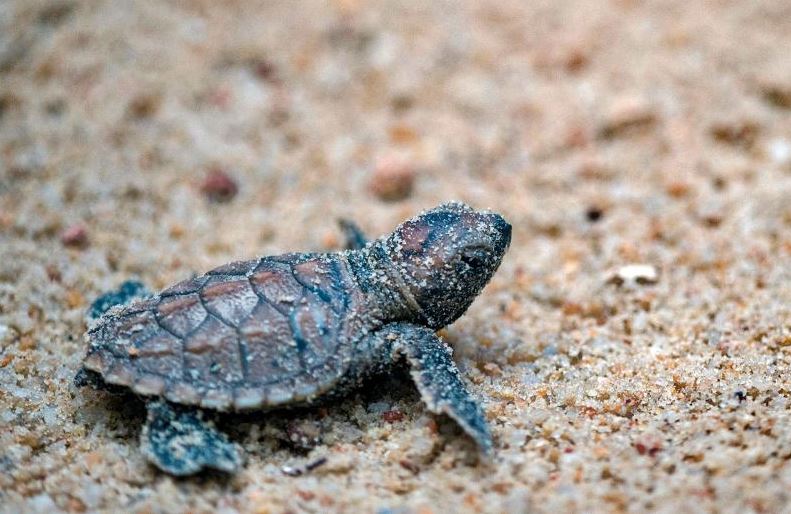
SINGAPORE – Over 100 baby turtles have hatched on a Singapore beach before being released into the sea, authorities said Tuesday, in a boost for the critically endangered creatures.

A nest of Hawksbill turtle eggs was discovered in November on Sentosa, a popular resort island south of Singapore’s main island.

A barrier was erected to keep the nest safe from predators, and officials carried out regular checks, said Sentosa Development Corporation, which manages the island.

On Friday 106 eggs hatched and, after officials carried out tests, the baby turtles were sent off scurrying down the beach and into the sea.

Read also


Sea turtles' sad fate: from restaurant menus to plastic 'soup'
Sea turtles' sad fate: from restaurant menus to plastic 'soup'<!–

Sea turtles’ sad fate: from restaurant menus to plastic ‘soup’

//afarkas.github.io/lazysizes/lazysizes.min.js

It was the third time that Hawksbill turtle eggs had hatched on Singapore’s beaches since August and the first time in eight years on Sentosa, the Straits Times newspaper reported.

Hawksbills get their names from their narrow pointed beaks and are found throughout the world’s tropical oceans, mainly around coral reefs.

They are threatened by damage to their natural habitats by pollution and coastal developments, and are also targeted by poachers.

Their body parts are used to make turtle soup and shells are crushed into powder for use in jelly dessert. The Hawksbill shell is also used to make products like combs and ornamental hairpins.


Singapore

Tuesday, January 23, 2018 – 16:17

AFP

Others

Source link

Male teen allegedly blindfolded, stripped and molested by NTU student under guise of research

0

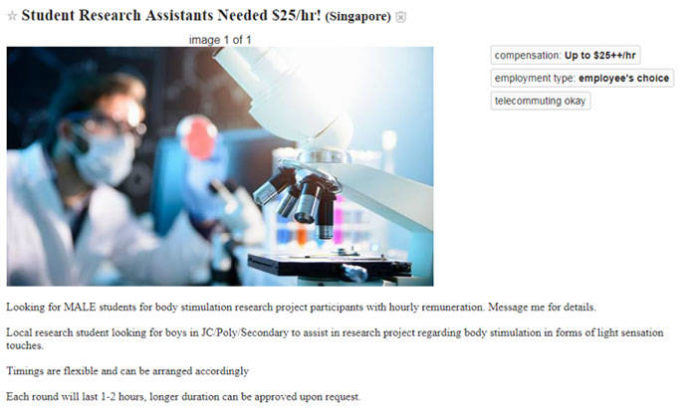
A teenager, 17, was allegedly molested by a Nanyang Technological University graduate student after responding to a Craigslist ad which read, “to assist in research project regarding body stimulation in form of light sensation touches.”

The incident reportedly happened after the teenager met up with the student, 25, at the lobby of NTU graduate hall at around 8pm on Nov 13, 2017.

The student was arrested for the outrage of modesty by the police on Saturday (Jan 20).

It is understood that both the male victim and the accused are Singaporeans.

The teenager told The Nanyang Chronicle that he had come across the ad on Gumtree and contacted the student on WhatsApp according to the number provided in the listing.

He said that the student told him that he would be tickled to gauge his body’s responsiveness to touch.

The student also said that for each article of clothing he kept on during the experiment, there would be money deducted from the payment.

The teenager agreed to the conditions, thinking that he had signed up for an official NTU research project which would happen in the lab.

However, after meeting up on the day of the incident, he was then taken to a dormitory room, where he was instructed to take a shower and come out naked.

He did so and was then blindfolded and restrained to a bed with cloth.

The teenager was restrained for two hours and said that after the student tickled him for an hour, he began stimulating his penis.

After that, the student offered him $55 to masturbate, saying that he had also done the same with a previous ‘participant’.

The teenager lodged a police report the day after the incident.

When asked why he did not protest the arrangements, he said that the student was ‘a big guy’.

The teenager told The Straits Times:

“It’s like sitting on a roller-coaster ride – after it has begun, you immediately regret it but it’s too late to leave.

“Honestly, it’s partly my fault for being so naive. It was my first time (participating in a study) and I thought since the student was from NTU, it was legitimate and nothing could go wrong.”

Several variations of the ad – a study involving ‘light sensation touches’ – were also posted on websites such as Gumtree, bestfreead and Locanto, listing the contact details of the NTU student.

Under the descriptions, the ads wrote that “light restrain(t)s” would be applied during the experiment, “in order to achieve uniformity in results collection”.

The ads have since been taken down or become expired.

The listings also stated that participants would be promised remuneration of $25 per hour, with an addition $10 per session for subjects below 16 years old.

The ad on Craigslist further called for male participants.

NTU’s Institutional Review Board (IRB), which is responsible for approving research studies involving human subjects conducted by staff and students, told the Chronicle that no such research was listed on their database.

The NTU-IRB confirmed in an email that the student had denied being involved with the aforementioned research study after being contacted by them.

The accused claimed that he did not know who put up the ads and that his number had been listed without his approval or knowledge.

He revealed that he had received calls from interested applicants but had asked an associate chair of his faculty for help to have his number removed from the ads.

In response to the incident, an NTU spokesperson said:

“The University views academic and research misconduct as serious disciplinary offences. We are aware that the police is investigating this case, and we are assisting them in their investigations.”

Singapore

Tuesday, January 23, 2018 – 14:28

Stomp

Others

Source link

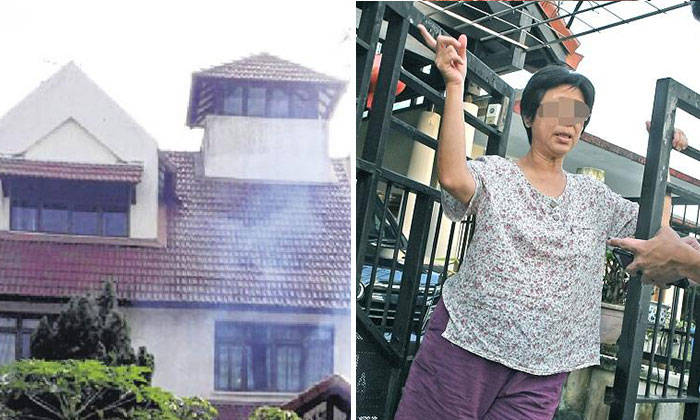
Bukit Timah resident chokes on 'blanket of smoke' created by neighbour barbecuing 100kg bak kwa

0

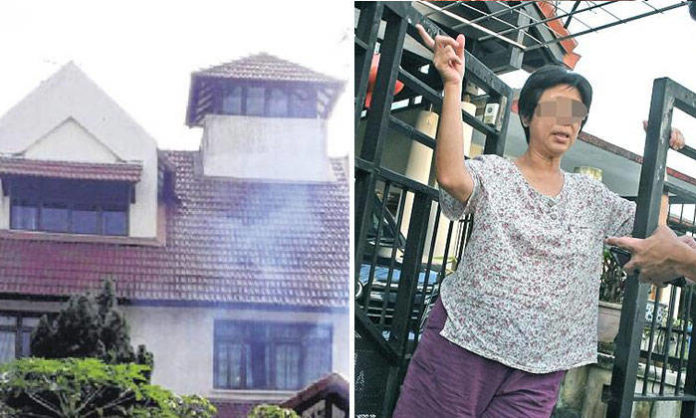
The police were alerted after a Bukit Timah household started barbecuing more than a 100kg of bak kwa, causing her neighbour to choke on the thick smoke produced.

Madam Huang, an affected resident who lives on Tham Soong Avenue, told Shin Min Daily News that her neighbour would barbecue bak kwa in her courtyard whenever it draws close to the Chinese New Year.

Each time, the thick smoke would cause her elderly parents to cough uncontrollably, said Madam Huang.

“A the weekends just before each Lunar New Year, she (the neighbour) would start barbecuing more than a 100kg of bak kwa in her family courtyard.

“There was once she started barbecuing from 8am in the morning to 12am midnight.

“Yesterday (Jan 21) she started on it again. She started at around 7am and went on till about 2pm in the afternoon.

“We haven’t been able to rest well because of them.”

Madam Huang also said that her parents’ health was affected adversely by inhaling the smoke.

She added:

“I tried asking her to stop barbecuing once, and she promised that she would not do it this year.

“However, yesterday, she started doing it again.”

The holder of the house, Madam Liu, 60, explained that the barbecuing was done in preparation for the Chinese New Year, saying:

“There are over 300 members in my family. It very expensive to buy bak kwa from shops outside, and we are unable to ensure the quality as well.

“So we prefer to prepare our own in our home to prepare for the Lunar New Year.”


Singapore

Tuesday, January 23, 2018 – 14:04

Stomp

Others

Source link

Singapore and Sri Lanka sign free trade agreement

0

COLOMBO: Singapore and Sri Lanka signed a free trade agreement on Tuesday (Jan 23) which will deepen economic ties and facilitates greater trade flows between the two countries.

The Sri Lanka-Singapore Free Trade Agreement (SLSFTA) was signed by Singapore’s Minister for Trade and Industry (Industry) S Iswaran and Sri Lanka’s Minister for Development Strategies and International Trade Malik Samarawickrama. 

Prime Minister Lee Hsien Loong and Sri Lankan President Maithripala Sirisena witnessed the signing in Colombo.

With the deal inked, Singapore and Sri Lanka companies will gain greater access to each other’s markets across many sectors, said Singapore’s Ministry of Trade and Industry (MTI) in a news release.

KEY BENEFITS INCLUDE TARIFF ELIMINATION ON MOST SINGAPORE EXPORTS, ACCESS TO GOVERNMENT PROCUREMENT

Outlining the key benefits of the agreement, MTI said Sri Lanka will over 15 years, eliminate tariffs on 80 per cent of Singapore’s exports.

This means a potential tariff savings of about S$10 million each year, it added.

The ministry said the agreement also contains one of the most liberal rules of origin, which will allow more exports from Singapore to qualify for the lower tariffs negotiated.

It includes Sri Lanka’s first treaty commitment on government procurement. This will allow Singapore companies to bid for projects by several of Sri Lanka’s large central entities and state-owned enterprises.

Singapore and Sri Lanka are also committed to granting better access to each other’s services markets, said MTI, adding that the agreement includes sectors of interest to Singapore companies in the professional and trade-related services as well as environment, construction and tourism.

The SLSFTA also covers cross-border transfers of information by electronic means and data flows. MTI said this will benefit Singapore and Sri Lanka companies given the increase in demand for e-commerce and digital services.

There are also safeguards against discriminatory treatment based on nationality and protection against expropriation. 

Under the agreement, the Singapore International Arbitration Centre is listed as an institution where Investor-State disputes can be heard. MTI said this is aligned with the objective of promoting Singapore as an arbitration hub.

Prime Minister Lee Hsien Loong and President Maithripala Sirisena witness the signing of the free trade agreement. (Photo:  Lianne Chia)

SRI LANKA’S FIRST MODERN AND COMPREHENSIVE FREE TRADE AGREEMENT

The deal is Sri Lanka’s first “modern and comprehensive” free trade agreement and will, said MTI, “position Singapore as an early and supportive partner of Sri Lanka’s economic liberalisation plans and development.”

To date, Singapore companies have established a presence in Sri Lanka in sectors such as construction, infrastructure, manufacturing, food and services. There are currently about 90 Singapore companies in Sri Lanka.

MTI said Sri Lanka was Singapore’s 36th largest trading partner in 2017, and bilateral trade amounted to S$2.7 billion. Singapore’s exports to Sri Lanka totalled S$2.5 billion, while Singapore’s imports from Sri Lanka totalled S$178 million.

Singapore’s top exports to Sri Lanka include petroleum and diesel, non-monetary gold and jewellery, while top imports from Sri Lanka include motor spirit, fuel oils, perfumes, clothing accessories and wheat flour.

Speaking to Channel NewsAsia about the agreement, Sri Lanka’s High Commissioner in Singapore Nimal Weeraratne noted that both governments had found that they could come up with a “modern, comprehensive and higher value free trade agreement” between both countries.

“It will liberalise trade and service, it will improve investments into Sri Lanka, and it will give a shot in the arm to manufacturing and service,” he said.

He added that the SLSFTA would “certainly be helpful” to small and medium enterprises and other prospective investors interested in Sri Lanka.

“As a result of the provisions, the investors will be given national treatment, and national treatment would make them feel that they are part of the Sri Lankan business community,” he said. “In addition, we also have the Avoidance of Double Taxation (DTA) treaty which was ratified in January.”

“The FTA and DTA will immensely facilitate business activities for would-be Singaporean investors.”

Source link