Home Blog Page 1110

Celeb Neelofa personally apologises for launching hijab line at nightclub

0

PETALING JAYA – Neelofa has taken responsibility over the controversy caused by the launch of her new range of headscarves at a nightclub in Kuala Lumpur and has issued a personal apology.

“I take full responsibility of all decisions made and I can only learn from the mistakes. I am far from perfect and I respect your thoughts and feedback. I am truly, deeply sorry,” said Neelofa, whose real name is Noor Nelofa Mohd Noor.

on Facebook

After understanding and reflecting on what has taken place after the NH event on the 26th Feb 2018, I would like to…

Posted by Neelofa on Wednesday, 28 February 2018

“I would like to sincerely apologise for causing stress and negative sentiments on the selection of the venue at which the event took place,” she said in a post on her Facebook page on Thursday.

Neelofa said that her team would give “greater attention” in the future to make sure the image of their product was protected.

“Moving forward, we will make sure that we continue to brand hijab to its true potential from here on,” she said.

She also conveyed her thanks for all the support she had received.

Neelofa also shared the company’s previous statement which said that they were taking “immediate corrective steps” to fix the wrong committed.

They clarified that throughout the event, organisers had ensured that all alcoholic branding, bottles, glasses as well as cutlery were removed before the event began.

The statement said that access to the bar and other clubs was also sealed off and smoking was not allowed during the event.

They also hired an external caterer that served halal food and provided their own cutlery and glasses for guests.


Thursday, March 1, 2018 – 14:50

Others

Source link

Leonardo DiCaprio and Brad Pitt team up for new Quentin Tarantino movie

0

LOS ANGELES – Leonardo DiCaprio and Brad Pitt – two of Hollywood’s biggest stars – are teaming up for Quentin Tarantino’s next project, a movie set in the 1969 Hollywood hippy era around the Charles Manson murders.

Movie studio Sony Pictures said on Wednesday (Feb 28) that the film was called Once Upon a Time in Hollywood and will feature DiCaprio as the former star of a Western TV series, and Pitt as his longtime stunt double.

It’s the first time the two actors have starred in a feature film together.

“Both are struggling to make it in a Hollywood they don’t recognise anymore. But Rick (DiCaprio) has a very famous next-door neighbour … Sharon Tate,” Sony Pictures said in a statement.

Tate, the pregnant actress wife of director Roman Polanski, was murdered in 1969 by followers of Manson, one of America’s most notorious criminals. Manson died in November 2017 at the age of 83 while serving a life sentence.

The movie is to be released on Aug 9, 2019, exactly 50 years after Tate and four friends were stabbed or shot dead.

Tarantino said he had been working on the script for five years and had lived in the Los Angeles area for most of his life, “including in 1969, when I was seven years old.”

“I’m very excited to tell this story of an LA and a Hollywood that don’t exist anymore. And I couldn’t be happier about the dynamic teaming of DiCaprio and Pitt,” he said in a statement.

DiCaprio won an Oscar in 2016 for his role in The Revenant while Pitt was Oscar-nominated for performances in Moneyball and The Curious Case of Benjamin Button.

Tarantino has two Oscars for the screenplays of Django Unchained and Pulp Fiction, both of which he also directed.

Thursday, March 1, 2018 – 14:25

More about

movies

Others

Source link

Grab outage leaves Southeast Asian commuters stranded

0

SOUTHEAST Asian ride-hailing monolith Grab experienced a brief outage early Thursday, leaving many grumpy commuters stranded in the morning rush hour across Singapore, Malaysia, Indonesia, and Vietnam.

The outage led to tens of thousands of users in the countries facing difficulties with booking their rides, with the company saying it faced a technical issue with its app, TodayOnline reported.

The Singapore-based company first announced problems faced by the app at about 8.30am on Thursday but some rides only accepted cash payments.

SEE ALSO: Here’s what ride-hailing app Grab thinks about rival Uber’s alleged spying

“Currently, we are working hard to improve it and our app will be back online soon,” the company said in its Grab Malaysia and Grab Indonesia Twitter accounts. “We apologise for the inconvenience and hope to serve you again soon!”

On Facebook, Grab also said: “Our engineers are already looking into this and we expect to be back up in 30 minutes.”

Despite the assurance, some users reported being unable to use the service an hour after the Facebook posting. However, most were able to call for drivers and use GrabPay-linked cards apart from cash.

2017-12-19T043036Z_809951257_RC16DBD8DC80_RTRMADP_3_GRAB-CAMBODIA

Sun Chanthol (R), Cambodia’s Minister of Public Workers and Transport, greets near a Grab car during a launch ceremony in Phnom Penh, Cambodia, December 19, 2017. Source: Reuters/Samrang Pring

Singapore’s The Independent reported the glitch caused GrabPay credits in the GrabPay mobile wallet payment system to disappear from customer’s accounts.

Ride prices continued to surge on the app despite the glitch and commuters in Singapore also faced problems with the train line due to a signal fault, causing delays during the morning peak hours.

“Hello grab! I already put money in my credits last night and now I can’t get to work!” Facebook user Marr Sakiynah R Giri wrote.

SEE ALSO: Uber’s stalling in Asia is its own fault

Another Singaporean Facebook user slammed Grab for its surge prices amid the breakdown.

“My wallet credits are all gone! Is this supposed to be normal? S$42 instead of the usual S$14. Is Grab capitalising on such an opportunity?”

At about 10.30am, Grab said all of its services and credits were fully restored.

This article originally appeared on our sister website Tech Wire Asia.

Source link

Circles.Life behind 'free money' vending machines at Orchard Road and Raffles Place

0

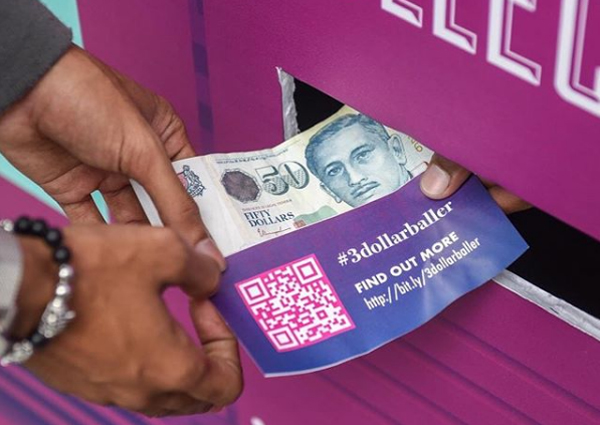
The organiser behind a publicity stunt involving vending machines that dispensed a $50 note in exchange for $3 has been revealed to be local telecommunications service provider Circles.Life.

The two vending machines, located outside H&M in Somerset and near Chevron House in Raffles Place, drew large crowds during the two-day event on Feb 27 and Feb 28.

People who inserted $3 into the vending machines received a $50 note, which means that they gained $47 with no strings attached.

Read also


'Free money' vending machine stunt at Orchard Road cancelled, Raffles Place event cut short
'Free money' vending machine stunt at Orchard Road cancelled, Raffles Place event cut short<!–

‘Free money’ vending machine stunt at Orchard Road cancelled, Raffles Place event cut short

//afarkas.github.io/lazysizes/lazysizes.min.js

However, the event held at Raffles Place yesterday had to be cut short after police turned up as the organiser did not have a permit, while the second Orchard Road event was cancelled as all cash prizes had been “fully redeemed”.

On Thursday (March 1), Circles.Life revealed via its social media platforms that it was the organiser of the #3DollarBaller campaign.

An announcement was also made on #3DollarBaller’s official Instagram page.

Some of you may have guessed it. We’re really behind #3DollarBaller. Here’s what you can get with $3. Find out more about $3 Unlimited Data on Demand on www.circles.life.

Some of you may have guessed it. We’re really behind #3DollarBaller. Here’s what you can get with $3. Find out more about $3 Unlimited Data on Demand on www.circles.life.

A post shared by 3DollarBaller (@3dollarballer) on

//www.instagram.com/embed.js

The marketing stunt was to promote Circles.Life’s ‘Unlimited Data on Demand’ service which is available for $3 per day on top of a subscriber’s base plan.

This add-on service is one of several new services announced by the telco today.

Singapore

Thursday, March 1, 2018 – 13:51

More about

Advertising and Marketing Circles.Life

Stomp

Others

Source link

Big Tobacco’s smoke and mirrors in Asean

0

ABOUT 10 percent of the world’s one billion smokers live in the member countries of the Association of Southeast Asian Nations (Asean). Indonesia and the Philippines have some of the world’s largest smoking populations. In the low and middle-income countries (LMICs) of Asean, more than 560,000 people died due to tobacco-related diseases in 2016 alone.

Even after more than ten years since the World Health Organisation (WHO) Framework Convention on Tobacco Control (FCTC) came into force, the poorer countries of Asean – Cambodia, Indonesia, Laos, Myanmar, Philippines, and Vietnam – representing about 80 per cent of Asean’s population, still have relatively weak to moderate tobacco control measures.

In terms of legislation, most of these countries have tobacco control measures that are in line with the FCTC. However, many of these interventions are not supported within their health systems, are weakly implemented because of lack of lack of political will, financing and human resources, or worse, are ignored by the tobacco industry.

SEE ALSO: Philippines: Nationwide smoking ban starts today, Govt urges public support

These countries have not fully and efficiently utilised tobacco taxes, despite decades of evidence showing it to be the most effective measure to reduce consumption of cigarettes. A pack (20 sticks) of cigarettes in these countries range from less than US$1 to around US$2.

Laos presents an interesting case in imposing tobacco taxes. Although the country has earmarked surcharge taxes for tobacco control since 2013, an existing 25-year tobacco license agreement with Imperial Tobacco restricted the government in imposing any increase on the tobacco tax. The result is that among the low and middle-income countries of Asean, only Vietnam spends the WHO-recommended US $0.11 per person on tobacco control.
Thailand-Cigarette-Tobacco

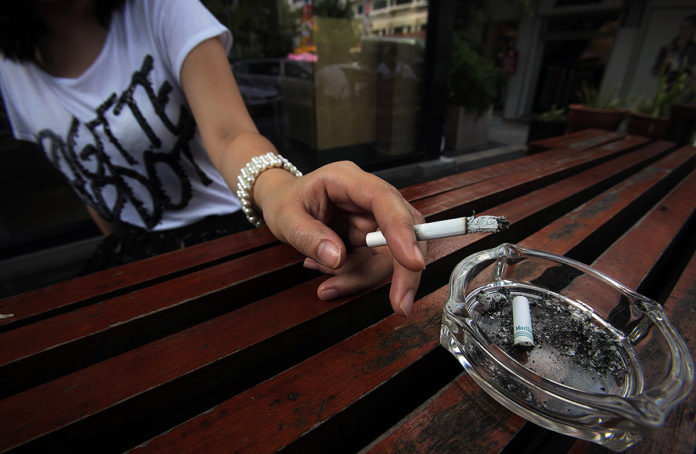
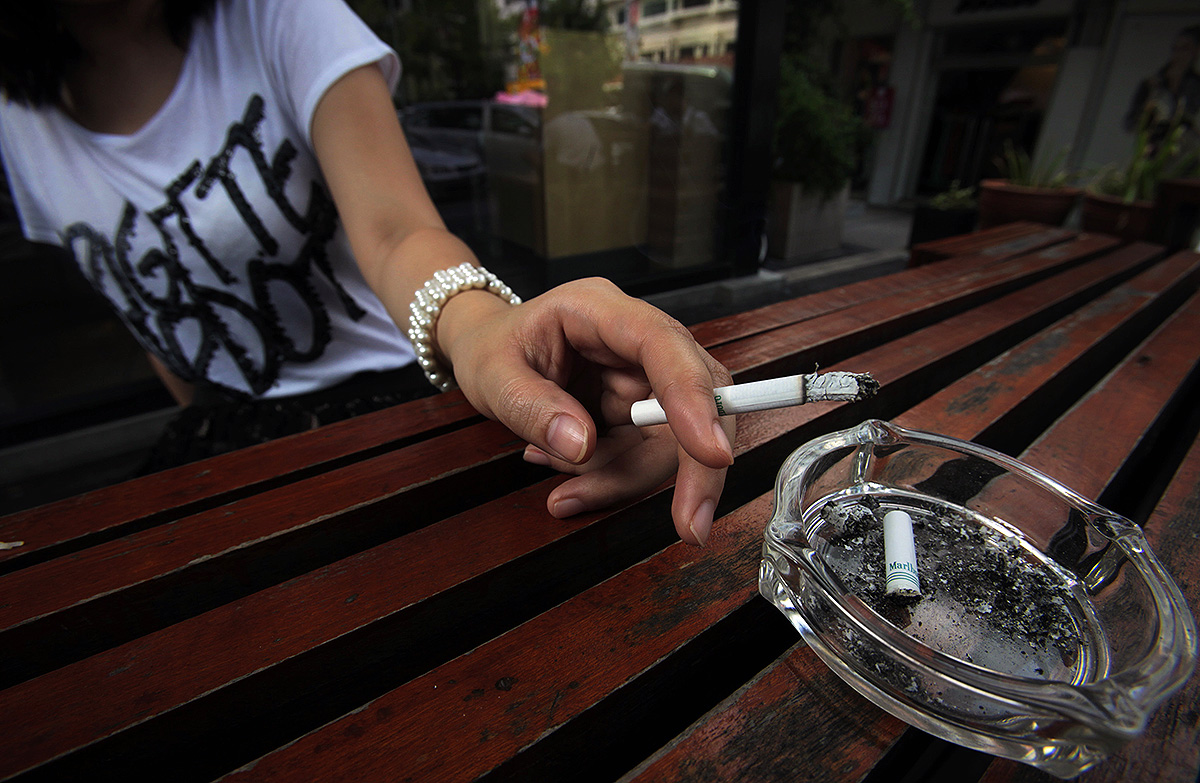
A female office worker in neighbouring Thailand smokes a cigarette outside a restaurant in Bangkok. Source: AP

One critical health service particularly affected by low-level financing for tobacco control is smoking-cessation programs. Vietnam, Cambodia and the Philippines have all launched quitlines, but they suffer from limited facilities and resources to support people who would like to quit. For example, nicotine replacement therapy is still generally unavailable or inaccessible in the public health sector of the poorer countries of Asean – not even as part of smoking-cessation programs.

Aside from Indonesia, all Asean countries ban the sale of cigarettes to minors, although enforcement is an issue. The downside, however, is that not all of these countries require sellers or retailers to demand proof of age at point of sale. Several countries also still permit the sale of individual sticks or small “kiddie” packs (less than 20 sticks in a pack).

Even when bolstered by the support of the Bloomberg Foundation and the Bill and Melinda Gates Foundation, strong tobacco control remains elusive in the region. The main reason is the tobacco industry, which has proved to be a tenacious bully when it comes to the implementation of the WHO recommendations in the region.

So long as Asean countries provide breathing room for the tobacco industry, increasing numbers of smokers will continue to shroud the region in smoky cigarette haze. Meanwhile, Big Tobacco – Philip Morris International, British American Tobacco, Japan Tobacco and Imperial Tobacco – are acquiring many of the local tobacco industries in these countries.

As an example, Philip Morris International has entered into a joint venture with Fortune Tobacco, effectively controlling more than 90 per cent of the cigarette market in the Philippines. Philip Morris has also acquired Sampoerna – the largest manufacturer of kretek or clove cigarettes, which is the most common type of cigarette smoked by Indonesians.

SEE ALSO: Will Japan really get tough on smoking or is it just hot air?

With its vast war chest, the tobacco industry has also recently pushed for a strategy to promote ‘reduced harm’ products, such as e-cigarettes and ‘heat not burn’ devices, as a way to maintain their dominance in the Asean region.

Among Asean’s low and middle-income countries, only the Philippines has a code of conduct to prevent tobacco industry interference. This code covers the whole bureaucracy but is not strictly enforced. In fact, in the Philippines and Vietnam, the tobacco industry is still represented in health policy-making entities, and even participates in FCTC delegations. Cambodia, Laos, Myanmar and Indonesia still give preferential treatment to the tobacco industry through tax exemptions, incentives, privileges and benefits to operate in their countries.

Big Tobacco’s focus now is Indonesia, the only Asean country that has yet to ratify the FCTC. Indonesia remains a stronghold for both local and multinational tobacco companies. Over the past decade, Indonesia has made pronouncements about ratifying the FCTC but has yet to follow through, particularly because of economic factors expressed as strong opposition from its agriculture, trade and finance ministries.

Although almost all these countries have legislation imposing graphic health warnings that cover at least 50 per cent of cigarette packs, some are not even implementable because of the tobacco industry.
shutterstock_570735691

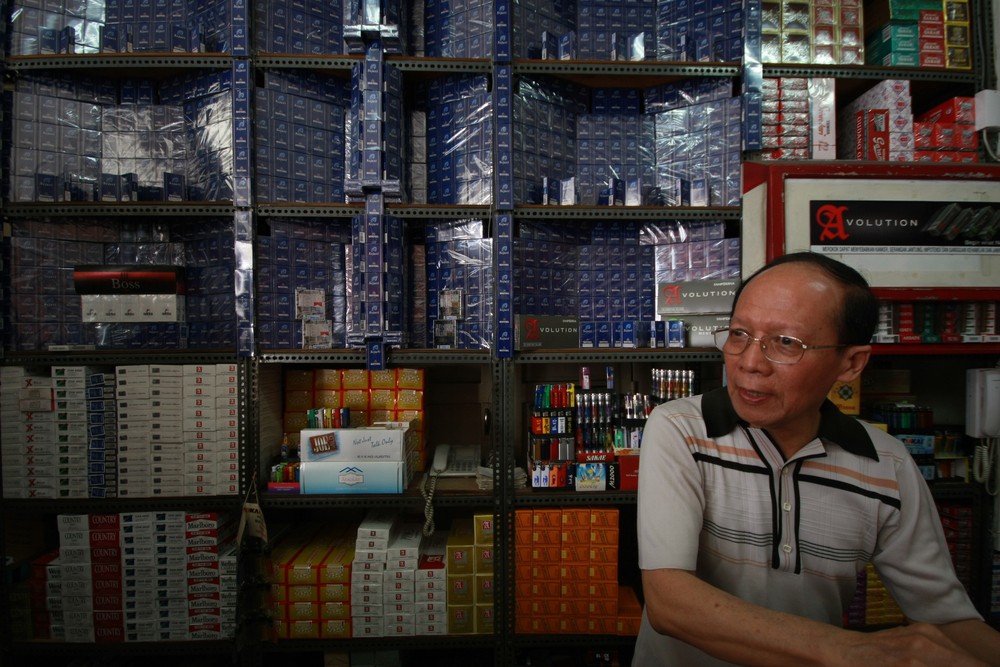
A man sells cigarettes in Bandung, Indonesia. Source: Muhammad Azham/Shutterstock

For example, Laos has required that all tobacco companies print graphic health warnings covering 75 per cent of cigarette packaging since 2016. Civil society monitoring has shown that Imperial Brands PLC subsidiary – Lao Tobacco Company Ltd and Lao-China Hongta Good Luck Tobacco Company Ltd – have yet to comply, even after the government has granted three extensions for compliance and implementation.

It is even worse in Indonesia where the government only requires that graphic health warnings cover 40 percent of cigarette packs, and still allows direct advertising, promotion and sponsorship, for example, of sporting events.

SEE ALSO: Big Tobacco is still king in Indonesia

To address the increasing burden of disease from tobacco-related diseases in the region, countries need more visionary leadership, stronger governance, and a commitment to health promotion based on smoke-free lifestyles. In 2016 alone, the people of Asean collectively lost almost 16 million healthy years of life due to smoking, accounting for about 10 percent of the world’s tobacco-related disability-adjusted life years (DALYs).

The socio-economic costs of the tobacco epidemic are growing in Asean. Low and middle-income countries in the region need stronger teeth in effectively implementing the FCTC and to clear the smoke and mirrors that the tobacco industry has skillfully placed in the region.

By Gianna Gayle Herrera Amul, a Research Associate on Global Health Policy at the Lee Kuan Yew School of Public Policy, National University of Singapore, and Tikki Pang of the Lee Kuan Yew School of Public Policy, former Director of the Research Policy & Cooperation department at the World Health Organization (WHO) in Geneva, Switzerland. Originally published on PolicyForum.net.


Source link

Circles.Life behind #3DollarBaller cash vending machine stunt

0

SINGAPORE: Singapore telecoms service provider Circles.Life has claimed responsibility for the #3DollarBaller cash vending machine stunt on Wednesday (Feb 28), which was cut short for security reasons.

Hundreds turned up in the hopes of getting free money, with successful members of the public paying S$3 into a box at Raffles Place to get S$50 in return.

The event was cut short after an hour and the crowd was told to disperse, with the organiser claiming that she was told to stop by the police.

The stunt appeared to be a promotion for the mobile virtual network operator’s new S$3 a day unlimited data plan, with the plan being promoted with the #3DollarBaller hashtag previously used to promote the vending machine stunt.

3 dollar baller screengrab website

Screengrab from the 3dollarballer website.

​​​​​​​

A second event that day at 313@Somerset did not materialise either, with the telco saying that all the S$50 notes had been redeemed.

Circles.Life on Thursday announced the new daily unlimited mobile data plan and an add-on service to use WhatsApp in 18 countries.

Source link

MAS looking at investor protection rules for cryptocurrencies

0

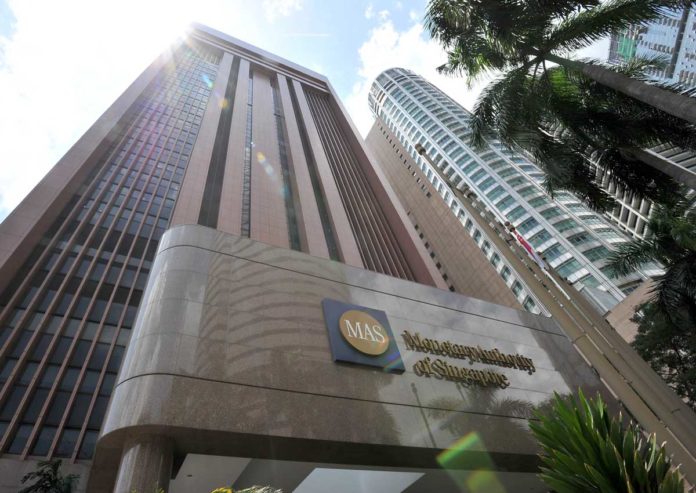
SINGAPORE – Singapore’s central bank is assessing whether additional regulations are required to protect investors in cryptocurrencies, an official said in a speech on Thursday.

The city-state – which is aiming to be a hub for financial technology and so-called initial coin offerings in Asia – does not regulate virtual currencies and last year called for the public to exercise “extreme caution” over investment in cryptocurrencies.

Its central bank does regulate activities involving virtual currencies if they pose specific risks. For example, it imposes anti-money laundering requirements on intermediaries providing virtual currency services.

“We are assessing if additional regulations are required in the area of investor protection,” Ong Chong Tee, deputy managing director (Financial Supervision), Monetary Authority of Singapore said.

Other countries like South Korea, where trading in cryptocurrencies is more popular, are looking at ways to regulate that activity.

Singapore

Thursday, March 1, 2018 – 12:05

More about

Cryptocurrency MAS (Monetary Authority of Singapore)

Reuters

Others

Source link

Microsoft to buy solar power in Singapore in first renewable deal in Asia

0

SINGAPORE – Microsoft Corp said on Thursday it will buy solar power from the Sunseap Group in Singapore, the technology company’s first renewable energy deal in Asia.

Microsoft will purchase 100 per cent of the electricity generated from Sunseap’s 60 megawatt-peak solar power project for 20 years for its Singapore data operations, the software company said in a statement. Sunseap’s project consists of an array of solar panels on hundreds of rooftops across the city-state.

“This deal is Microsoft’s first renewable energy deal in Asia, and is our third international clean energy announcement, following two wind deals announced in Ireland and the Netherlands in 2017,” said Christian Belady, general manager, cloud infrastructure strategy and architecture at Microsoft.

Microsoft said it is on track to exceed its goal of powering 50 per cent of its global datacenter load with renewable energy this year.

“Once operational, the new solar project will bring Microsoft’s total global direct procurement in renewable energy projects to 860 megawatts,” Belady said.

The solar project is under construction and will be operational by the end of the year, the companies said.

Singapore

Thursday, March 1, 2018 – 12:15

More about

Microsoft solar energy

Reuters

Others

Source link

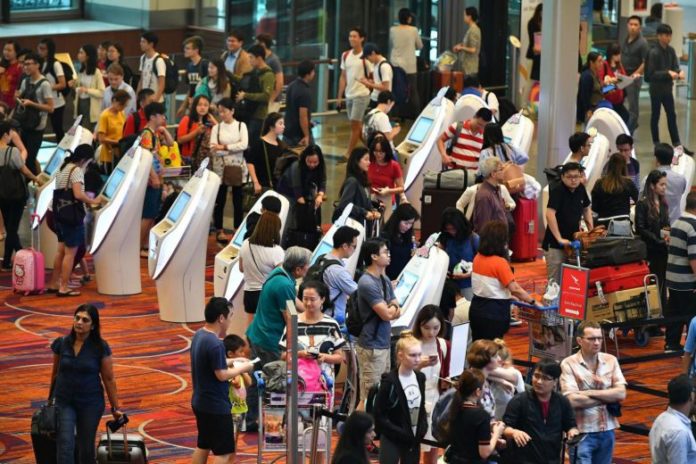
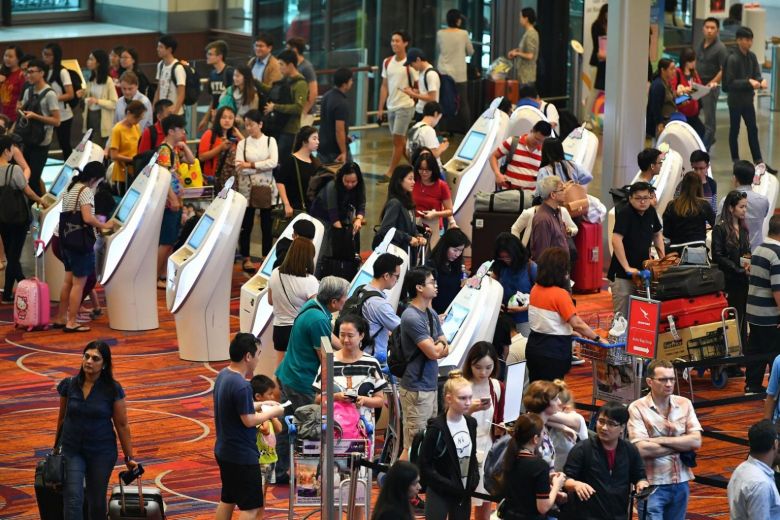
Some travellers put off by higher taxes at Changi Airport

0

Singapore

Thursday, March 1, 2018 – 11:54

The Straits Times

Some travellers put off by higher taxes at Changi Airport to fund T5

Others

Source link

World's first hand-painted film vies for an Oscar

0

Vying for an Oscar, “Loving Vincent” is the world’s first animated feature film painted by hand — all 65,000 frames — in the distinct style of Vincent van Gogh.

Centred on a probe into his untimely death, the film was shot on a shoestring budget of $5.5 million (S$7.3 million euros). That is 30 times less than Disney’s “Coco”, one of the film’s four Oscar rivals.

For director Dorota Kobiela, “Loving Vincent” has been a seven-year labour of love combining her twin passions of cinema and painting.

“Van Gogh’s style was perfect for the project; his paintings show all the details of his life, his day-to-day habits, his house, his room, his friends,” Kobiela told AFP ahead of Sunday’s Oscar ceremonies in Los Angeles.

Kobiela and co-director Hugh Welchman already have one Oscar under their belt; their BreakThru Productions film company won an Academy Award in 2008 for the animated short “Peter and the Wolf”, based on the story and music by Sergei Prokofiev.

“We are the underdogs! In our category it’s normally dominated by Disney and Pixar but I have a feeling we might be one of the big upsets this year,” Welchman, who is also Kobiela’s husband, told AFP.

Photo: AFP

.25 secs per day

After five years of pre-production, it took another two years for 125 artists from around the globe to bring the opus to life under Kobiela’s watchful eye.

Working in a massive studio in Poland’s Baltic port city of Gdansk, they based their oil paintings on scenes initially shot on film with actors.

The film includes representations of van Gogh’s most famous paintings such as “The Starry Night”.

Van Gogh, known for his bold colours and rough, vibrant painting style, is considered one of the most revolutionary painters of the 19th century.

Painting the 93-minute-long movie was a painstaking task.

“The pace of work was very slow, averaging a quarter of a second of the film a day,” said Kobiela, who spent seven years on the project.

A single second of the film represents an average of 12 hand-painted frames.

Each artist completed an average of six paintings a day, amounting to a half-second of the film for simple scenes.

But according to Kobiela, the quality of the hand-painted frames surpasses digital animation, making them well worth the extra effort.

“Often in animation, we have the problem that facial expressions are limited. But in oil painting, we can show even greater expression if the portrait is painted properly,” she told AFP.

Doubts about suicide

“Loving Vincent” explores both van Gogh’s works and his death, widely regarded as a suicide, from a gunshot wound.

Based on an original script by Pole Jacek Dehnel, the film follows Armand Roulin, the son of the postman from Arles who was the subject of several of van Gogh’s paintings.

Doubting van Gogh committed suicide, Armand travels to Paris to find out more about his death.

The artist was only 37 when he died after suffering frequent bouts of mental illness including the infamous episode in which he sliced off part of his left ear.

Five million people have already seen “Loving Vincent” in cinemas across the globe.

Its makers are already thinking about their next project, which could be a horror film based on the disturbing canvases of Spanish painter Francisco Goya.

Photo: AFP

Thursday, March 1, 2018 – 12:00

Others

Source link