SINGAPORE: Singapore’s native green mussels are at risk of being displaced by a competing species from the Atlantic waters near South America.
The Mytella strigata, commonly known as charru mussels, was first discovered in our shores by accident in 2016.
In the year since, these foreign mussels have reproduced rapidly, with sightings reported last year at eight other locations including Sungei Buloh, Sungei Jurong and Pulau Ubin, said a team of researchers at the National University of Singapore’s Tropical Marine Science Institute.
MUSCLED OUT
At a research site at Changi fish farms, the researchers found that the charru mussels – which grows on hard surfaces such as seawalls and boulders as well as soft sediments like mudflats and mangrove floors – displaced native green mussels by taking over their space.
As part of their study, the researchers placed sheets of nets underwater and reviewed them on a monthly basis.
“What we see on our fishnets is that it’s recruiting much, much faster than the green mussels. It’ll reproduce. Once you sit first, and you occupy all the space then the other one cannot go in,” said Dr Serena Teo, a senior research fellow at the research institute.
“They (green mussels) have less space to settle and grow bigger … We know that the Mytella Strigata can choose to settle in many places and that also includes the spaces that the green mussels also likes to dominate,” said research associate Lim Chin Sing.
The Mytella strigata, or more commonly known as charru mussel, was recently discovered in Singapore and is spreading rapidly. (Photo: Fann Sim)
“We do not know when it arrived in Singapore but what we have now is a detection when it has spread. Invasive species can come by many, many different routes. Through shipping, aquaculture, people also carry things around. There are a number of ways species can travel,” Dr Teo added.
Dr Teo urged the public to not collect or consume charru mussels found in the wild.
Mussels are filter feeders that obtain nutrients by processing large amounts of water they live in.
“While they are consumed in some countries, I think it’s important in Singapore that people are a bit more cautious about they want to collect. Wild collected food carries risk of environmental contaminants whereas what you buy from the market has gone through Agri-Food & Veterinary Authority (AVA),” said Dr Teo.
In the next phase of the study, the researchers will look into the life history of these mussels, such as their reproduction rate and environmental tolerance.
The researchers will also look at the larger impact of their invasive presence on fish farmers and the shipping industry .
HOW DID THEY GET TO SOUTHEAST ASIA?
The earliest record of the charru mussel appearing in the region was logged from a specimen collected from the Philippines in 1800s.
“They could have travelled through the Spanish galleons, maybe like an attachment to the boat or maybe through aquaculture or things that they bring over. These Spanish galleons travelled from America to Philippines in the 16th to 19th century so it could have followed them there and established in the local estuaries in the Philippines,” said Ms Lim Jia Yi, an NUS graduate who worked on the study.
Lim Chin Sing, Lim Jia Yi and Teresa Stephanie Tay are part of a team at the National University of Singapore who discovered an “alien” mussel which was recently introduced in Singapore and spreading rapidly. (Photo: Fann Sim)
The findings were published in the Molluscan Research journal.
Speaking on 938NOW’s Talkback programme, Dr Puthucheary agrees transaction cost is a hurdle in getting people to adopt e-payments but points out that there are costs for cash payments too.
Dr Janil Puthucheary on 938NOW’s TalkBack programme on Friday (Mar 2) with presenters Daphne Lim and Keith de Souza. (Photo: Facebook/938NOW)
(Updated: )
Bookmark
SINGAPORE: The cost of transaction is indeed a stumbling block in getting people to adopt cashless payments, but Dr Janil Puthucheary, the Minister-in-charge of the Government Technology Agency of Singapore (GovTech), has pointed out that cash transactions do also incur significant costs.
“When you go to the ATM, someone had to stock that ATM, manage the cash and maintain the ATM,” he said. “And then when you take it from the ATM to the cashier, after the cashier puts it in the machine, later on it also has to be hauled back to the bank and recycled,” Dr Puthucheary said during 938NOW’s Talkback programme on Friday (Mar 2).
“So there’s a cost associated with processing cash. Someone pays that cost.”
He agreed there would be a need to look at the “various relationships between the cost of transactions”. E-payments had been identified last year as one of the five strategic national projects to drive Singapore’s Smart Nation ambitions.
“Today, our focus is not necessarily on the cost of cash,” he said. “We’re really more concerned about the cost of processing a cheque, which is much more expensive to process compared to cash. We’ll deal with that frontier first, and we’ll let the e-payments landscape evolve.”
Dr Puthucheary, who is also Senior Minister of State for Communications and Information, said the Government is also concerned that there may be people – such as those who are bankrupt or those without bank accounts – who are inadvertently left out of the e-payments landscape.
“We are concerned. We’ve got a team that’s working on this that I chair at the MCI,” he said. “It’s called the Digital Readiness Workgroup, and it involves people from not just the Government, but also people from the private sector and also the people sector.”
“We do have to look and see who are the people who are either naturally excluded or feel that they want to be excluded from this process,” he added. “Now, if you want to be excluded, it’s your own choice. That’s fine. But, if we get to the point where essential services are delivered this way, then we need to think about how to bring everybody on board, and make it possible to access essential services.”
“So, by the middle of the year, we’ll have a strategy out.”
Dr Puthucheary stressed that going cashless has to be something that is easier and better for consumers, but he said the private sector is very supportive because cashless payments will help to drive down their business costs.
SINGAPORE: In another bid to use technology to overcome resource constraints, the Singapore Armed Forces (SAF) has unveiled an unmanned watch tower (UWT) that improves surveillance and cuts manpower needs in the protection of key installations.
The SAF will deploy three UWTs on Jurong Island, where it has been conducting coastal surveillance by positioning security troopers in watch towers across the island. In contrast, the UWTs will be operated remotely from the unit headquarters on the island.
The UWT, designed and built by DSO National Laboratories, is just one of several tech-centric initiatives announced by Defence Minister Ng Eng Hen in his Committee of Supply debate speech on Friday (Mar 2).
“The unmanned watch tower is an important addition that strengthens the overall defence of Jurong Island,” said 2nd People’s Defence Force commander Colonel (COL) Dinesh Vasu Dash, who also leads the Island Defence Task Force.
The UWT is equipped with multiple electro-optical cameras and a long-range acoustic device. (Photo: Aqil Haziq Mahmud)
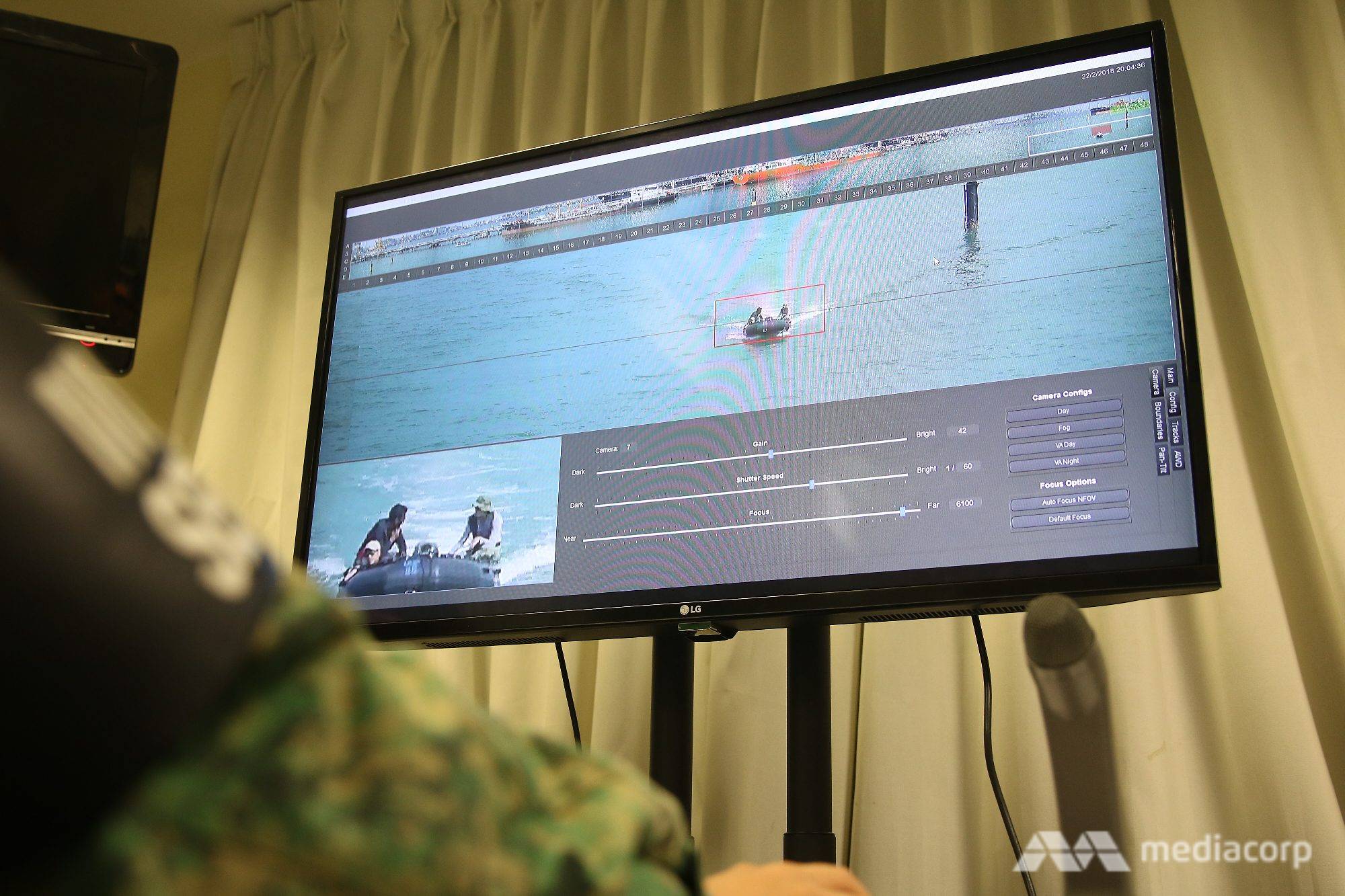
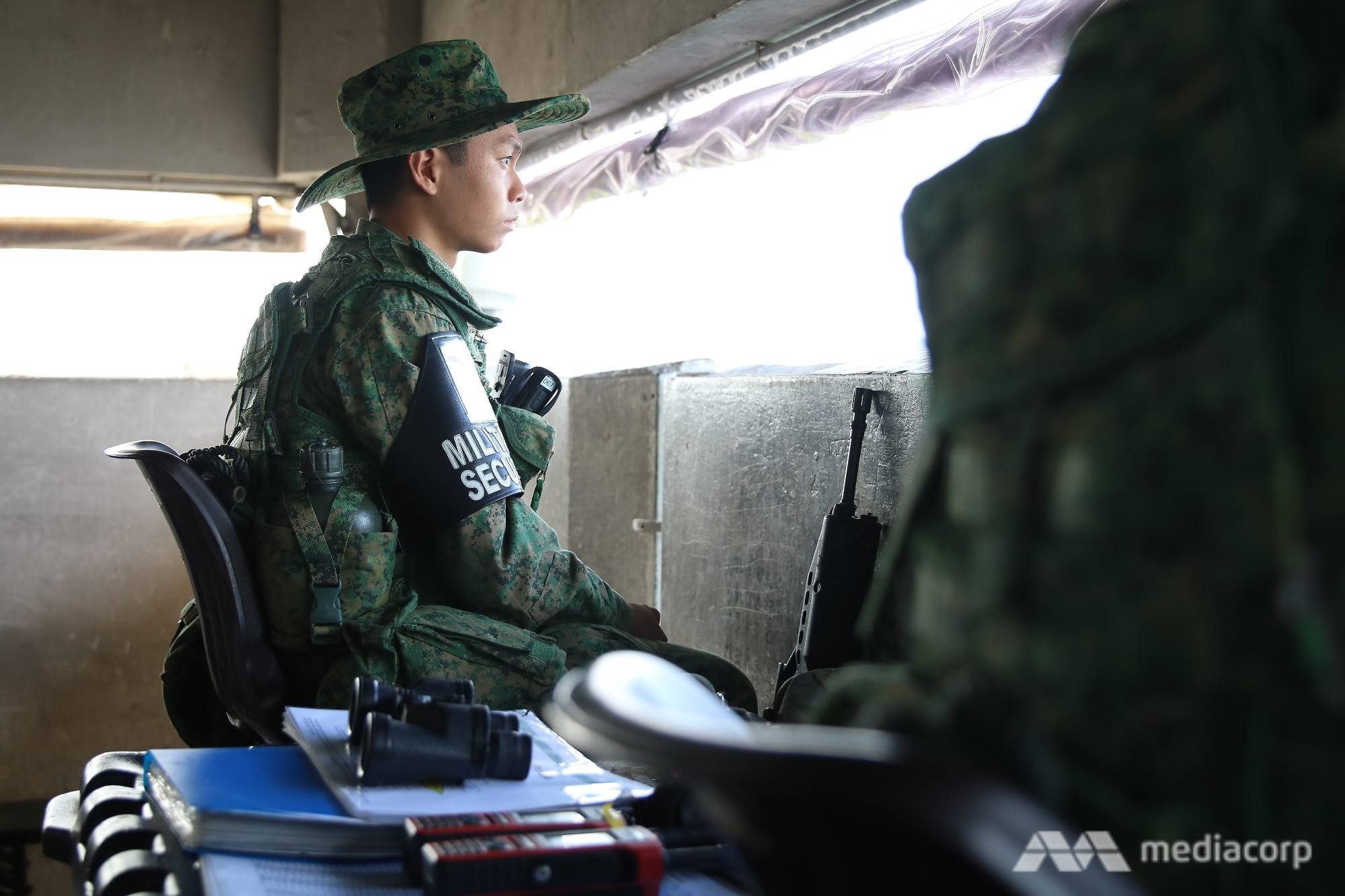
While security troopers on Jurong Island currently use binoculars for surveillance, the UWT is equipped with sensor systems comprising multiple low-light, high-resolution cameras and video analytics for automatic detection of targets.
The cameras, which automatically adjust their settings based on outdoor conditions, can detect targets as small as a swimmer. Sensors use machine learning to identify threats and will send an audio warning to security troopers if a threat enters a restricted zone.
“Soldiers with binoculars are susceptible to environmental conditions including rain, night and even during the haze,” COL Dinesh said.
“But the surveillance on board the unmanned watch tower provides a better field of view and allows the operators to observe threats that are approaching the island from a greater distance.”
Due to operational security reasons, the SAF is unable to disclose the UWT’s range.
Threats that cross into a restricted zone are automatically detected, triggering an audio alert. (Photo: Aqil Haziq Mahmud)
This technology also reduces fatigue on the eyes of soldiers, who can spend hours staring at the sunlit sea. “Our vision will get blurry and the information process will be slowed down,” said Corporal (CPL) James Tan, who has been a security trooper on Jurong Island for more than a year.
But the UWT changes that with its sharp visuals even at night, the 24-year-old added. “It gives us very precise (information) about the vessels that are coming in, so we can react fast.”
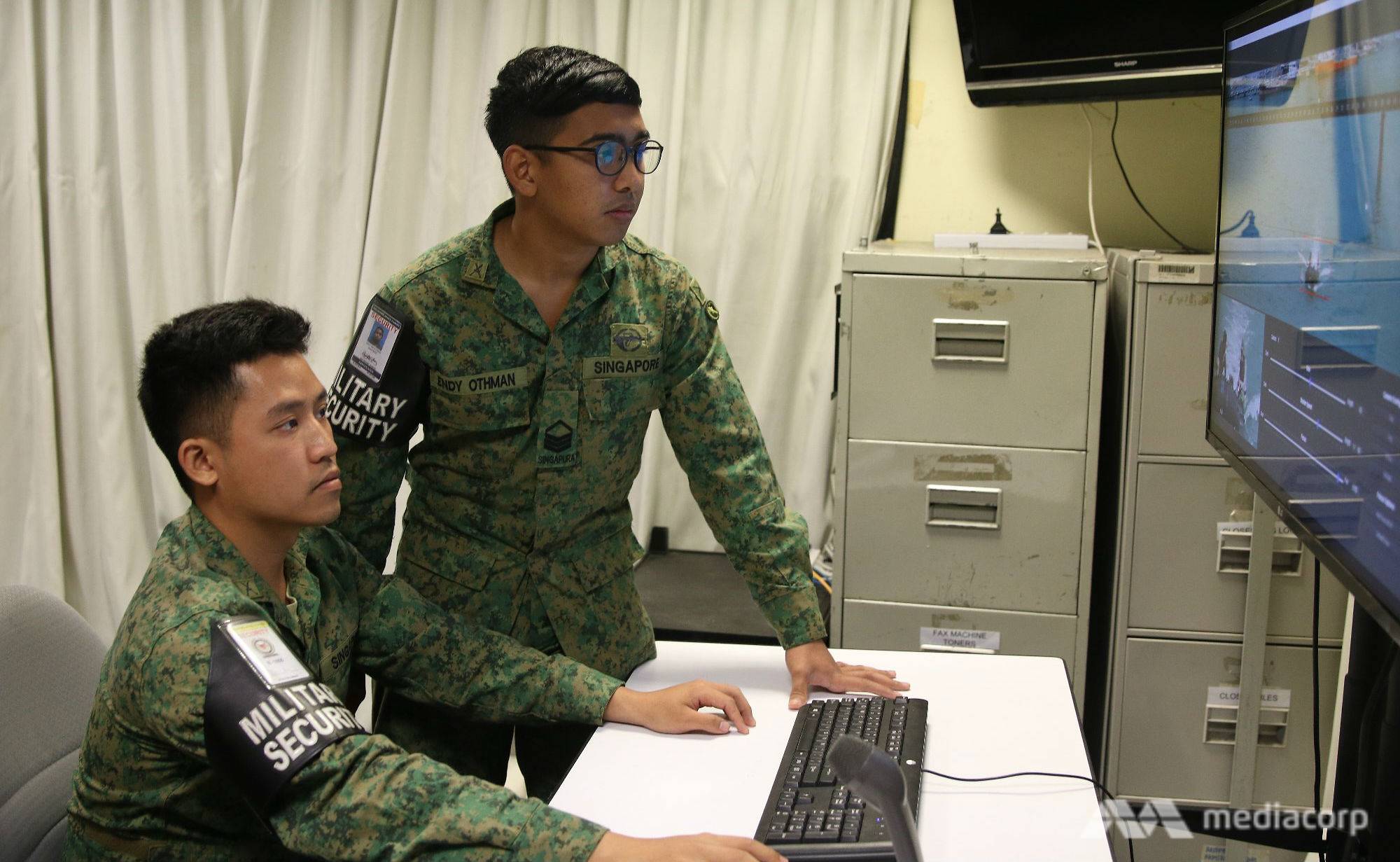
With the UWT, details like the colour and name of vessels can be seen clearly, said Second Sergeant Endy Othman, a platoon sergeant in the unit on Jurong Island. “It makes decision-making easier – whether to engage unauthorised vessels that come into our waters,” the 24-year-old added.
CPL James Tan (left) and 2SG Endy Othman manning the UWT at headquarters. (Photo: Aqil Haziq Mahmud)
When that happens, soldiers can “choose to trigger quick response forces from either the SAF or the Singapore Police Force”, COL Dinesh said. The UWT also comes with a loudhailer-like long-range acoustic device to warn intruders.
Beyond the operational improvements, the UWT brings manpower savings of up to 30 per cent. While one team of security troopers currently operates one watch tower, the same team can operate up to three UWTs. The SAF is unable to reveal exact manning figures for operational security.
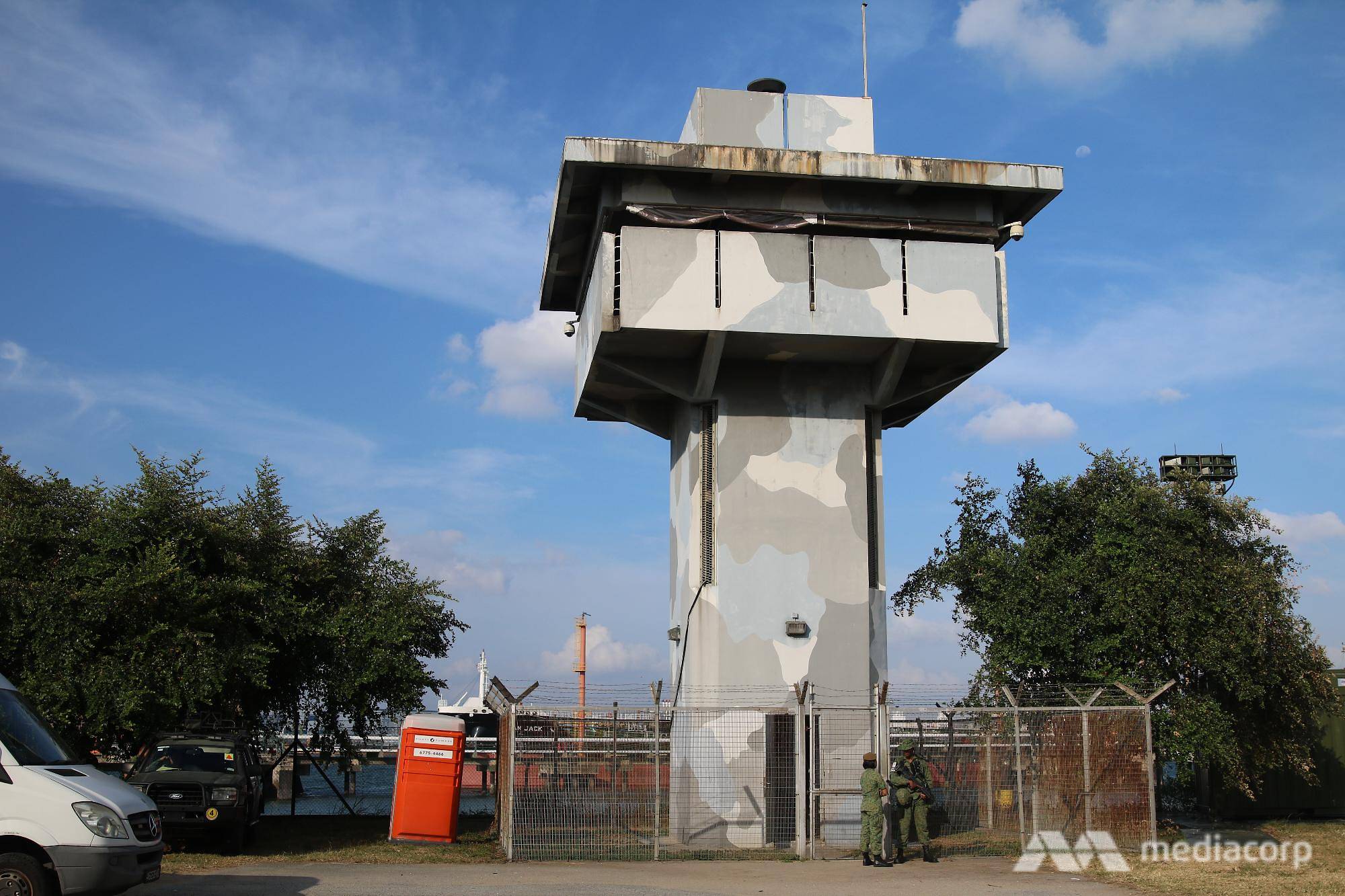
The existing watch tower on Jurong Island. (Photo: Aqil Haziq Mahmud)
In addition, the UWT’s automation allows more soldiers to be eligible for the job. For example, servicemen with mild asthma can now qualify as the need to run up and down the existing 8m-tall watch tower is removed.
“Soldiers previously not suitable to perform this critical role can now perform this role with changes to the directory of vocations,” COL Dinesh said.
Security troopers who protect key installations will go through the usual 11 weeks of training before spending two to three days familiarising themselves with the new system. Currently, one unit has been trained to operate the UWT.
Security troopers on surveillance duty atop the watch tower. (Photo: Aqil Haziq Mahmud)
CPL Tan said the transition has been seamless. “This is one of the technologies we can use easily, just like using your phone,” he said.
The first UWT will be deployed on Jurong Island this month, with another two towers operating by September. The UWT is also a redeployable system, which means it can be moved elsewhere depending on operations.
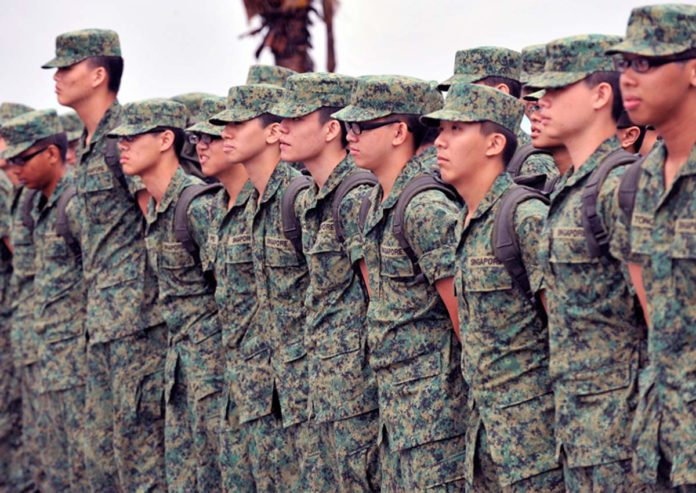
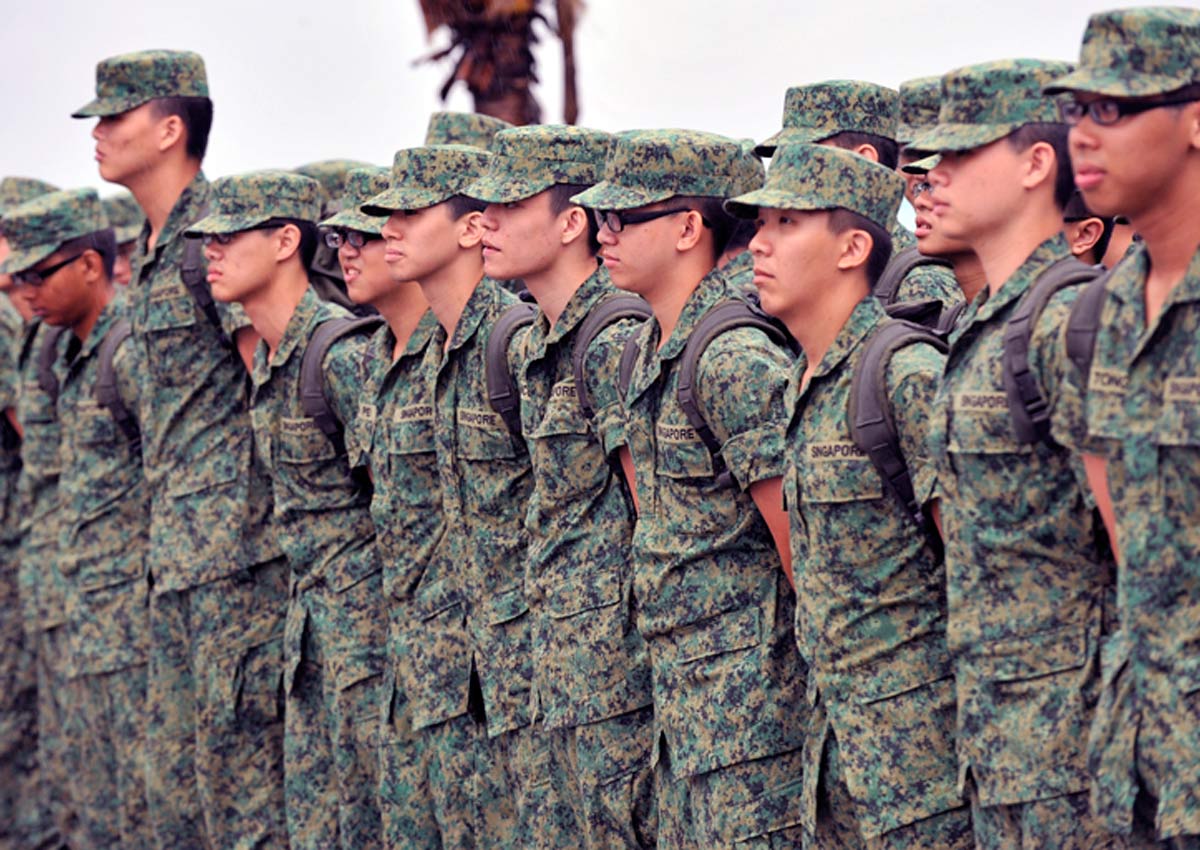
Security troopers currently use binoculars to look out for threats. (Photo: Aqil Haziq Mahmud)
The SAF will conduct a review before deciding whether to deploy the UWT at other key installations like Sembawang Wharves and Changi Airport.
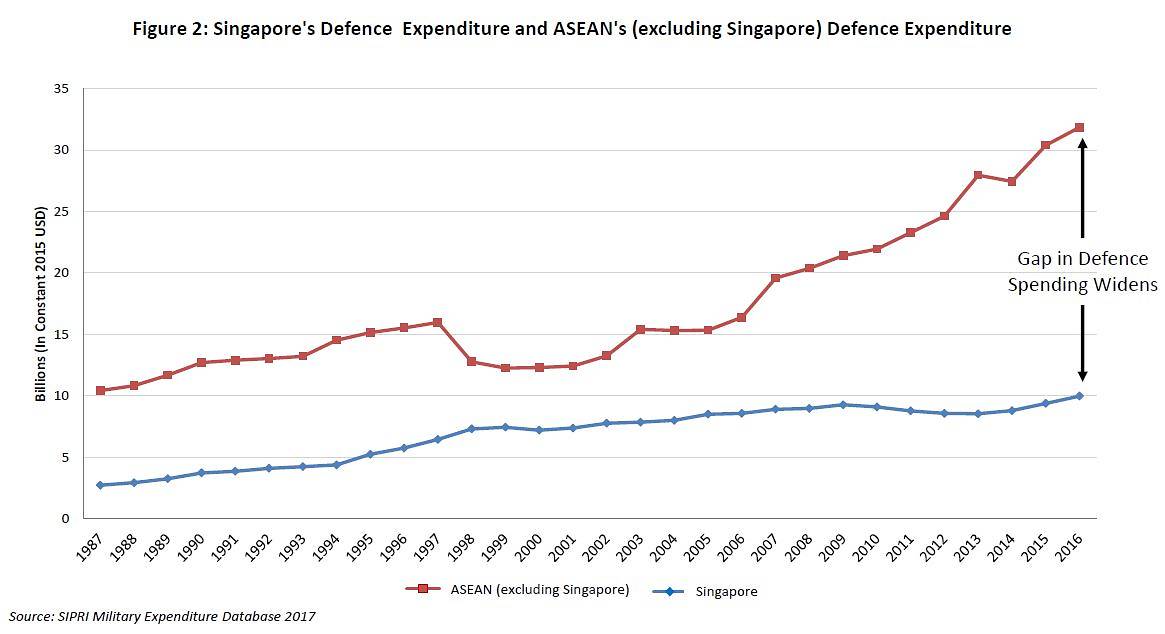
SINGAPORE: Singapore’s defence expenditure will be maintained at a level that keeps pace with inflation – around 3 per cent to 4 per cent increase each year – despite emerging threats and increased spending by neighbouring countries, Defence Minister Ng Eng Hen said.
“In the next decade, MINDEF (Ministry of Defence) does not foresee any spike in defence spending,” he said in his Committee of Supply debate speech in Parliament on Friday (Mar 2).
“Obviously, this will not apply if there are exigencies or unexpected scenarios. If there are terrorist attacks or if the security environment deteriorates, our agencies will have to spend more to protect Singaporeans.
“After the next decade, we will have to reassess then the security threats and the military spending and capabilities of other countries and plan ahead.”
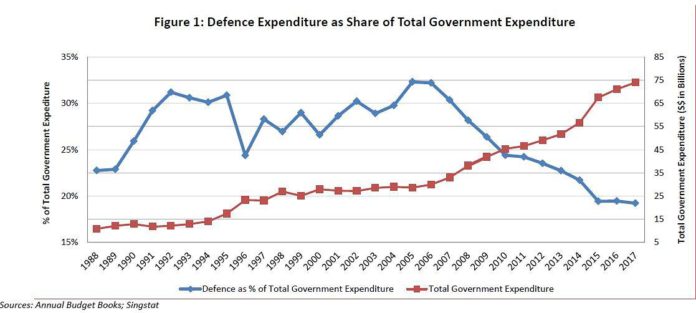
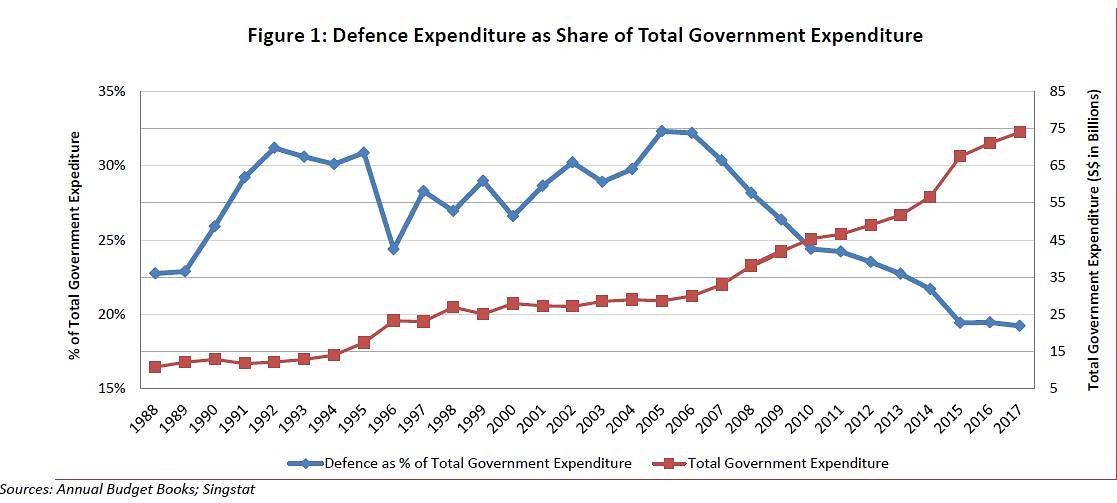
Chart showing defence spending as a proportion of Government spending over the years.
Singapore’s defence spending has grown from less than S$5 billion in 1988 to about S$14 billion last year, making up 19 per cent of the Government’s expenditure. But Dr Ng pointed out that this proportion is a significant dip from its peak in 2005, when defence accounted for a third of all Government spending.
“With the SAF (Singapore Armed Forces) modernised and doing more with its people and technology, defence spending as a portion dropped substantially in the last decade,” he said.
To that end, SAF saved S$200 million last year through innovation and better work processes, Dr Ng said, with this figure being the highest in four years. These innovations include unmanned watch towers, smart airbases and unmanned vessels.
Chart showing Singapore’s defence spending against that of ASEAN’s (excluding Singapore).
In smart airbases, the Republic of Singapore Air Force will use drones to assess damaged runways and data analytics for aircraft maintenance. Meanwhile, the Republic of Singapore Navy will deploy unmanned vessels for patrols and to detect and clear underwater mines.
“The SAF upgrades existing equipment where possible to avoid buying new platforms,” Dr Ng said, highlighting improvements made to existing hardware like Leopard tanks and Chinook helicopters.
“The SAF will not compromise on defence capabilities but has found ways to optimise resources, and stretch every dollar,” he added.
EMERGING THREATS
All this comes as Singapore faces emerging threats in the form of terrorism and cyber attacks, with the latter potentially being “as devastating as physical attacks”, Dr Ng said.
“These attacks are conducted by freelancers, as well as organised state and non-state actors,” he added.
As nondescript emails containing malicious software deliberately target senior military figures and departments handling sensitive information, MINDEF adopts a multi-layered approach to cyber defence, Dr Ng said.
This includes big picture programmes like the Cyber NSF Scheme and bug bounty programme, as well as physical steps like separating sensitive systems from the Internet and deploying “red teams” that test for system vulnerabilities.
As for counter-terrorism efforts, Dr Ng said the Island Defence Training Institute has trained 18,000 servicemen for homeland security operations. From this year, recruits undergoing Basic Military Training will also be trained to contribute as first responders in a crisis or security incident even when off-duty.
In addition, SAF’s Homeland Security Training Centre and the Singapore Police Force’s Frontline Policing Training Centre will be conducting routine joint training sessions from early this year to train soldiers to perform homeland security operations.
Nevertheless, Dr Ng said Singapore needs to be part of the international effort to “deal with terrorism at its source”.
“We need to work with ASEAN neighbours on counter-terrorism, especially because the risk of foreign fighters leaving Iraq and Syria has increased,” he said, adding that Singapore’s offer to help the Philippines patrol the Sulu Seas still stands.
In addition, Dr Ng said SAF will continue deploying troops to Iraq later this year in the fight against ISIS. This follows a request from US Secretary of Defence James Mattis for Singapore to commit more resources, he said.
The SAF Counter-Terrorism Training Unit, together with Australian and British forces, will train the Iraqi Security Forces to counter improvised explosive devices, as well as in tactical weapons and combat tactics.
“Singapore will maintain our commitment to counter-terrorism globally, for our own interests,” Dr Ng stated. “The partnerships forged from playing our role internationally are important in dealing with transnational threats that affect our own security.”
THE ever-changing world of powerful passports and visa-free travel has once again delivered a blow to Europe as two Asian countries now top the passport charts.
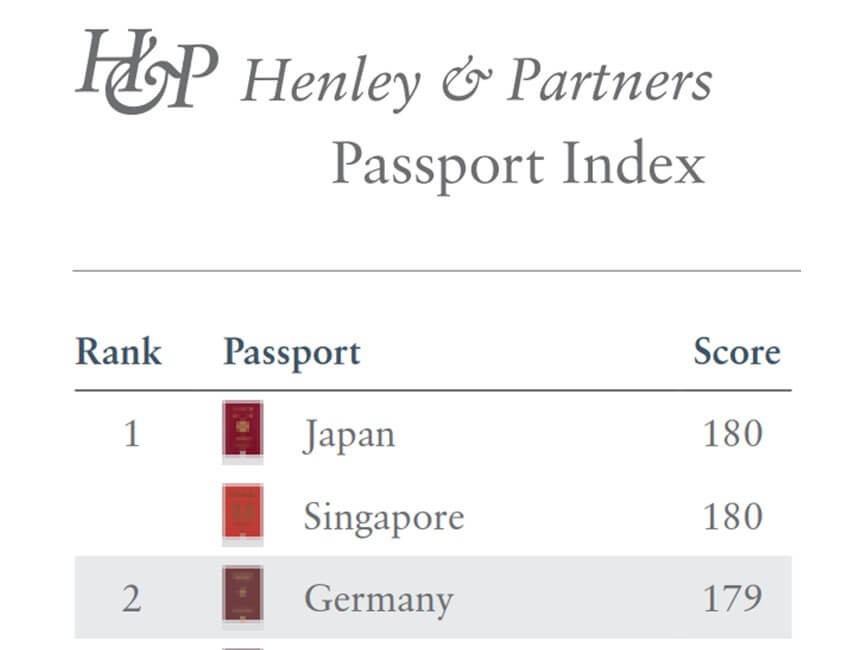
Singapore and Japan have knocked long-standing Germany off the passport perch as citizens from both these Asian nations can enjoy visa-free travel to 180 countries. This is the highest number of countries accessible without a visa since borders were enforced, nations divided, and passports became mandatory.
The news was released by Henley Passport Index for 2018 on Wednesday. While European countries still dominate the top ten spots, four of the top spots are held by Asia Pacific countries, namely Japan, Singapore, South Korea and Australia.
The reshuffle of the chart came after Uzbekistan lifted visa requirements for citizens of both countries earlier this month.
However, it wasn’t just the citizens of Singapore and Japan that benefited from the repeal of visa restraints. Indonesia, Turkey, and Israel, among other Asian and Middle Eastern countries also now enjoy visa-free travel to Uzbekistan.
Source: Henley & Partners
“In general, the Asian and Middle East regions have in recent months seen high levels of visa-policy activity compared with their European and American counterparts, where the signing of new cross-border agreements on short-term travel has been far less frequent,” said Henley & Partners in a statement.
So, what’s happened to the rest of the table?
Obviously, Germany has dropped to the second spot where it stands alone with access to 179 countries visa-free.
it has also bumped the UK down one place to fourth place with visa-free access to 177 countries. Whereas China and Russia have climbed up the chart slightly.
SINGAPORE: Budget 2018 has received a lot of public attention, particularly over news of a GST hike and an SG Bonus hongbao that many Singaporeans will receive.
Online comments have also focused on benefits households and broader society can look forward to – including the enhanced Proximity Housing Grant and higher annual Edusave contributions for students.
Yet one significant announcement has gone quietly under the radar – despite the potency it packs in giving the Government greater fiscal heft to do more within the same budget.
INCREASING SINGAPORE’S FISCAL ENVELOP
Last Monday (Feb 19), Finance Minister Heng Swee Keat announced that the Singapore Government plans to provide guarantees for long-term borrowings made by statutory boards and government-owned companies for infrastructure projects.
To many observers, the approach does not seem new on first sight.
Government agencies that have already issued bonds to finance their projects include the Housing and Development Board (HDB), the Land Transport Authority (LTA) and the Public Utilities Board (PUB). According to United Overseas Bank (UOB), the bonds issued by HDB, LTA and PUB are used for financing public housing, rail and water infrastructure.
Some say when an agency issues bonds, there is already an implicit government guarantee as market participants invest assuming the Government will not let the agency fail.
Yet the larger point to be observed is the policy shift towards seizing more bond financing opportunities to fund public works heralded in Mr Heng’s announcement.
The move opens up a new pot of money to the Government to fund expensive infrastructure projects – most of which would take up a sizable chunk of the Budget, leaving less room for other public programmes.
Mr Heng highlighted at Budget 2018:
The key challenge is that certain expenditures can be very lumpy, with hefty upfront investments.
Such an approach opens the fiscal envelop for the Government budget, ensuring that projects like the Changi Airport Terminal 5 or rail projects secure the financing they need so that they can proceed unimpeded by the Government’s fiscal envelop constraints.
A view of the site where Changi Airport Terminal 5 will be built.
At the same time, it ensures these do not curtail the Government’s ability to fund other new or existing initiatives.
If this access to capital markets comes from an investor base that includes domestic and foreign investors, it might also go some way to avoid Government expenditure from drying up local capital.
It also means that foreign investors will be funding some of Singapore’s public projects to some extent going forward.
LOWERING COST OF BORROWING
To an investor, borrowing with an explicit guarantee comes with a valuable difference – the guarantees typically cover the interest and principal repayment of the agency bonds.
Making the guarantee explicit also removes any uncertainty as to which investors will have first recourse in the event of financial distress, and hence serves as a smart way of lowering investor risks, and increasing investor appetite for funding these projects.
File photo of HDB flats under construction. (Photo: TODAY)
The Government has used such debt guarantees in the past – by way of senior debt financing instruments through project financing firm Clifford Capital for large-ticket, cross-border projects in the infrastructure and offshore marine sectors taken up by Singapore-based companies.
(Notably, Clifford Capital was the brainchild of the Economic Strategies Committee led by Tharman Shanmugaratnam when he was Finance Minister.)
These guarantees will help to reduce financing costs without drawing on the reserves. Because they are backed by reserves of the triple-A rated Singapore Government, the risk of default is seen to be lower, and investors are likely willing to stomach a lower interest rate.
This low cost of borrowing is to the agency and the Singapore Budget’s advantage.
And because the risk of a default is low, the reserves can back a larger number of projects and investments compared to how many can be funded if expenditure came directly from Government coffers in theory.
Singapore’s fifth NEWater plant located at Changi Water Reclamation Plant. (Photo: PUB)
PRIVATE SECTOR DUE DILLIGENCE
Besides being an external source of capital, external investors including individual and institutional players, based locally and overseas, provide another layer of monitoring for the projects.
Agencies issuing bonds are required to provide regular information to all investors as part of due diligence and disclosure requirements.
This additional transparency requirement increases accountability for the projects, infuses them with private-sector expertise and provides an added layer of checks and balances.
DEVELOPMENT OF THE BOND MARKET
A greater supply of such bonds also adds depth to the Singapore bond market.
UOB estimates that the initial target for the new infrastructure bonds would be around S$24 billion over a few years.
In the near term, National Environment Agency (NEA) is considering borrowing to finance a new integrated waste management facility. LTA may borrow for the Kuala Lumpur-Singapore High Speed Rail and the Johor Baru-Singapore Rapid Transit System Link.
The Changi Airport Group will also weigh up borrowing for Terminal 5. Other potential projects include the redevelopment of public housing areas and rejuvenation work in mature HDB estates.
These new infrastructure bonds may be similar to the low credit risk Singapore Government Securities (SGS) which is backed by the full credit of the government, and has been used to develop the domestic debt market, particularly in the long-term low-yield bond market segment.
Public transport operator SMRT and Malaysia rail operator Prasarana on Monday (Sep 25, 2017) signed a Memorandum of Understanding to form a joint venture company for the Johor Baru-Singapore Rapid Transit System Link. (Photo: Sumisha Naidu)
Using the SGS as a benchmark, the average SGS annual supply between 2010 and 2017 is around S$16 billion and the outstanding SGS issuance is about S$109.4 billion (as of Feb 1).
Going by UOB’s estimate of SG$24 billion, the new infrastructure bonds may be worth 22 per cent of the SGS-equivalent debt securities if issued.
The market is probably ready – where more than one-third of the long-term SGS debt have been taken up by asset management firms and insurance companies.
MANAGE PROJECT RISKS GOING FORWARD
Going forward, while there are numerous benefits, the provision of explicit guarantees on bonds needs to be managed to limit the total risks to the government. For example, if the project risk is higher in the early stages of the project, then it might be appropriate to delay bond funding to a later stage.
Also, if the project has foreign partnership, the Singapore Government’s guarantee should be designed to optimise risk sharing among all investors. For example, risk sharing between multiple partners could depend on the control exercised and gains shared among partners.
After all, the onus is on the Government to ensure each guaranteed project is viable and able to meet its financial obligations during the tenor of the bond.
Statutory boards and government-owned companies will also need to exercise due diligence to assure the quality and delivery of these critical national projects.
Allaudeen Hameed is Professor and Provost’s Chair in the Department of Finance at the National University of Singapore (NUS) Business School. Zhang Weina is senior lecturer in the same department. Duan Jin-Chuan, Cycle & Carriage Professor of Finance, also from NUS Business School, contributed to this commentary.