Singapore
Sunday, March 4, 2018 – 19:42
Veteran blues musician and funnyman Siva Choy has died at 71, tributes pour in
The Straits Times
Veteran blues musician and funnyman Siva Choy dies at 71, tributes pour in
Others

SINGAPORE: Snakes and geckos are typically considered wild animals.
But for some people, these reptiles are prized possessions worth breaking the law for so they can keep them as exotic pets.
The Agri-Food and Veterinary Authority (AVA) said it handled 105 cases pertaining to the possession, sale or trade of live wild animals seized from Singapore’s borders, inland possession and online sales from 2013 to 2017.
Some of these animals are listed under the Convention on International Trade in Endangered Species of Wild Flora and Fauna (CITES), an international agreement ensuring that trade does not threaten wildlife species with extinction. Singapore is a signatory of CITES.
Among the five most common illegal wildlife seized by AVA are star tortoises, hedgehogs, ball pythons, sugar gliders and leopard geckos.
These animals are allowed to be kept as pets in some parts of the world, but are banned in Singapore.
Wildlife Reserves Singapore’s Director of Conservation & Research Sonja Luz told Channel NewsAsia that exotic wild animals are “often very difficult” to keep as pets.

The Indian star tortoise is one of the most common illegal wildlife seized by AVA. (Photo: Junn Loh)
“They have very special requirements that you can only understand if you really understand the biology of the animal,” she said. “Because it’s illegal in Singapore, I think the expertise is simply not there.”
They could also transmit zoonotic diseases to humans, Dr Luz added. Reptiles like snakes and lizards are known to carry the Salmonella bacteria, which can cause people to be seriously ill.
TRANSIT HUB FOR ILLEGAL WILDLIFE TRADE
Despite its tough laws, Singapore is seen as a “country of primary concern” by wildlife trade monitoring network, TRAFFIC, in a report released last year.
Singapore’s World Wide Fund for Nature spokesperson Janissa Ng said illegal traders make use of Singapore’s strategic geographical location to carry out illicit activities.
“Wildlife trade in Asia is rampant and it’s something that is a daily occurrence for people across Asia, even here in Singapore,” said Ms Ng.
“We’re a transit hub, which basically (means that smugglers) take advantage of our connectivity and strong air and sea links,” she added.
To combat wildlife trafficking, Singapore has in place measures such as regulations, public education and industry engagement, said AVA. It also gathers intelligence and conducts investigations.
Those who violate the law pertaining to the illegal trading of wildlife could be fined up to S$500,000 or jailed for two years, or both.
Despite such measures, wildlife advocacy group Animal Concerns Research and Education Society (ACRES) believes that more deterrent methods are needed.
“We already have very good legislation that clearly states what’s prohibited, what’s not. We really look forward to and urge that at some point Singapore would consider sniffer dogs programmes to make our border controls tighter,” said ACRES’ Deputy Chief Executive Anbarasi Boopal.
ONLINE ILLEGAL TRADE ‘A CONCERN’: ACRES
The use of online sites to trade wildlife illegally was another concern raised by ACRES.
In 2017 alone, ACRES’ Animal Crime Investigation Unit picked up more than 500 online advertisements offering banned wildlife.
“It is shocking to see the level of trade online of in general live animals and also their parts,” Ms Anbarasi said.
“There’s no proper form of verification, and currently there’re no regulations that control and regulate online sale … they just have the access. They don’t even have to go and visit a pet shop to look for something exotic … (that) is the worse part of the online trade,” she added.

SINGAPORE: It was September 1, 1958, when Mr Ng Kar Cheong started a hardware business called Hiap Soon & Company together with three friends.
They had been colleagues at a hardware store and despite saving little from their monthly pay of S$45, the four friends decided to have a go at becoming their own bosses. They pooled together what little money they had and borrowed the rest.
During the start-up phase, Mr Ng remembered toiling day and night in a little shophouse along Beach Road. “It was tough. We were working like coolies, rather than bosses.”
Fast forward 60 years, the 84-year-old is now enjoying the fruits of his labour as the former hardware business evolved into Pan-United Corporation – Singapore’s leading ready-mixed concrete and cement supplier with 1,200 employees and listed on the Singapore Exchange.
The homegrown firm has also spread its wings beyond Singapore and in an array of businesses including shipping, aggregate quarrying and until last year, port operations in China which it spun off into a separate listed entity.
For Mr Ng, his entrepreneurial journey has been “a bumpy ride” and remains an unexpected one that has transformed his life.
“Starting my own business? It was a dream that I didn’t dare think about,” he told Channel NewsAsia in Mandarin as he recalled the time when his friends floated the idea of venturing out on their own.
“I had my parents and my own family to feed after getting married at 22. I didn’t even have a cent in my pocket then.”
FROM YOUTIAO SELLER TO BOSS OF HIS OWN
And that had been the case since he was young.
Born in the Fujian province of China, Mr Ng embarked on a week-long ship ride bound for Singapore with his parents and siblings in 1941 to escape a brewing war back home. He was seven.
But war soon descended upon Singapore, throwing the Ng family’s life into disarray. Mr Ng pulled out of school and his parents struggled to find work. With little money at home after his father became addicted to opium, Mr Ng, being the eldest son, started selling youtiao (fried dough fritters) on the streets to supplement the family’s income.
Prior to starting his own business, Mr Ng was an employee at a hardware shop and spent his younger days selling youtiao on the streets of Telok Ayer. (Photo: Tang See Kit)
As this was a common job for children from poor families, competition was stiff so hitting the streets earlier than the rest would be key.
Mr Ng recalled starting his days at 7am with the collection of freshly-made youtiaos before selling them along the streets of Telok Ayer. For every 50 youtiaos he sold, Mr Ng earned S$1 – a “big sum” that would make his day though that was barely enough to support the big family of more than 10. Hence, returning to school was never an option.
That went on for nearly three years before Mr Ng was given the task to make and fry youtiaos – a “promotion” that raised his monthly salary to over S$100. But his grandmother urged him to call it quits.
“She was angry and told me it was time to leave before I end up doing this for the rest of my life,” said Mr Ng. “She said I had to look for a new job to learn another skill.”
Hence, he took on an apprenticeship which paid S$30 a month, before moving on to work at a hardware store where he met his co-founders.
When the time came for Mr Ng to decide whether to become his own boss, his grandmother lent him another helping hand. This time round, the start-up capital of S$3,750.
“She said those were loans from various people but that could have been her savings. I would never know… She doted on me and was the one who reminded me to have an ambition despite being poor.”
From then on, Mr Ng threw himself into the business.
Pan-United’s underwater concrete was used in the building of the Helix Bridge. (Photo: Pan-United Corporation)
Thankfully, opportunities flourished for hardware firms especially after Singapore gained its independence in 1965. But Mr Ng soon started to have doubts about the company’s bottomline given its practice of extending credit to customers.
It was then when he took the first step to steer the company into other areas.
The construction industry was booming on the back of demand and despite not having any prior experience, Mr Ng felt that the opportunity was too good to pass up.
“Don’t know anything about the industry? Why cannot? You just have to put your heart to it. If you dare to do it, you shouldn’t be afraid of not succeeding.”
What he lacked in proper education, Mr Ng devoted all his time to learn on the job. Even as he could not understand or speak English, he still sought out foreign companies that were setting up in Jurong following then-Finance Minister Goh Keng Swee’s push to develop the swampy wasteland into an industrial estate.
As the construction business grew, Mr Ng set up a subsidiary called Pan-United Shipping in 1974 to provide tug and barge services to move Indonesian logs to Singapore. Eight years later, he took over the Pan-United unit following the decision to split up the company after the death of one of its founders.
Over the years, Mr Ng spearheaded the company into other ventures, such as shipbuilding and repair in the 1980s, as well as the set-up of an aggregate quarrying business in Indonesia in 1990. In 1993, Pan-United successfully listed on the SGX mainboard.
When asked what underpinned his business strategies, Mr Ng replied: “If my business failed, how is my family going to live? That’s why when my children fell so sick that even my own father scolded me for focusing all my time on the business, I said I don’t have a choice.
“If I don’t have my company, I won’t have my family so I need to work hard.”
On whether his days as a street hawker honed his business acumen, he answered: “Let me tell you: At the end of the day, it’s just about being hardworking. There is no shortcut.”
STAYING ON ITS TOES
Today, Mr Ng’s pet phrase in Hokkien “an zua buay sai”, or loosely translated as “why cannot”, remains on Pan-United’s corporate website, and the company has been embracing that in a different way since he stepped down in 1993.
In 1994, the company’s port business began when it acquired a site in Changshu. Five years later, it started its concrete supply operations that now forms its core business. In 2004, its shipyard unit was demerged and listed as Pan-United Marine, which was later acquired by Dubai Drydocks World and delisted in 2007. Its next significant corporate move came last year when it decided to spin off its China river ports business and list it on Hong Kong as Xinghua Port Group.
Singapore’s founding father Lee Kuan Yew attended the 10th anniversary of Xinghua Port at Changshu, China, in June 2004. (Photo: Pan-United)
For the financial year of 2017, Pan-United posted a 45 per cent year-on-year rise in net profit to S$20.1 million. Of which, S$14.3 million was from the port business that has since been spun off. Revenue edged up 3 per cent year-on-year to S$629.3 million for the full year ended Dec 31 on the back of higher coal trading revenue.
Mr Ng’s eighth child, May Ng, took over the reins as chief executive in 2011 and has since steered the family business towards more research and development (R&D).
In particular, it has been pushing the boundaries for its array of ready-mixed concrete products.
“Whatever the company has right now is all achieved by my children,” said Mr Ng. (Photo: Tang See Kit)
To date, Pan-United has more than 300 types of specialised ready-mixed concrete products produced by its six-year-old R&D facility. The R&D team has also ballooned to 30 people and continues to expand.
For instance, one of Pan-United’s latest product is a type of flexible concrete that can cushion the landing impact of aircraft, as well as reducing wear and tear of aircraft runways.
Its other products boast a range of functionalities, such as being able to shield against the rays of proton radiation, environmentally-friendly, light weight, temperature-controlled and self-compacting.
These efforts were highlighted by Finance Minister Heng Swee Keat in his recent Budget speech. He said the company’s significant investments in R&D and innovation of new products have helped it to break into regional and global markets.
Ms Ng, who was named by Forbes as one of Asia’s 50 most powerful business women in 2016, told Channel NewsAsia that this was a necessary step to take for the 60-year-old company to remain in sync with the market.
“Projects are getting bigger with higher technical requirements. These changing demands will require more and more sophisticated products and we have to invest in development to keep up.”
These include demand for green products amid higher awareness of eco-sustainability, as well as the push for productivity.
Hence in 2007, it rolled out green and eco-friendly concrete made with high amounts of recycled materials, becoming one of the first to do so in Singapore. This product has since been used in the construction of Gardens by the Bay and Singapore’s first carbon-neutral building, Tampines Concourse.
The company’s self-compacting concrete, meanwhile, helps to cut down the manpower needed to spread and compact the concrete, as well as accompanying noise pollution.
For the new product targeted for airport runways and taxiways, Ms Ng noted that the development process, which took 18 months, began after the company noticed demand for a product that would meet the latest standards of the US Federal Aviation Administration.
The company set up an innovation centre in 2012 to expedite its R&D processes. (Photo: Pan-United Corporation)
These investments into R&D come amid a less-conducive environment back home for it to do so. Softer construction demand in Singapore over the past years has pressured its bottomline.
But Ms Ng noted that it remains crucial for the company to be “very open-minded”.
“We have to take into consideration how the market is going to be developing especially since in the last 5 years, there’s been huge shifts in the marketplace due to technology,” she said. “If we stand still, we can easily be outdated.”
The innovations in its products will also underpin its regionalisation strategy, which it is banking on for longer-term growth. The urbanisation trends in Southeast Asia, coupled with China’s One Belt One Road policy, will provide the company with abundant opportunities, reckoned Ms Ng.
“In an environment when everyone is trying to leapfrog, how do we advance? Not just do we become a total solution provider, but we have to be the best in class then can we compete in the new markets.”
When asked about the path Pan-United is taking now, the elder Ng, who is still affectionately addressed as “Ah Gong” by some employees, said he has left the running of the firm to his children since stepping down and emphasised that its achievements can no longer be attributed to him alone.
“If you ask me whether the company is profitable now, I wouldn’t know. As long as I receive some pocket money to spend, I’m happy,” said Mr Ng with a hearty laugh.
Turning to his daughter, he added: “Whatever the company has right now is the work of my children.”
Pan-United’s CEO May Ng (left) and founder Ng Kar Cheong. (Photo: Tang See Kit)
Apart from Ms Ng, her sister Jane Ng is the company’s executive director while her brother Patrick Ng is the deputy chairman after being group CEO from 2004 to 2011.
When asked if there was a phrase that would characterise her leadership style, Ms Ng paused before answering with a smile: “I don’t really have a pet phrase like my father but I’ll like to think that I’ve been continuing his ‘can-do’ spirit.
“I think it’s important that my team and I continue to be hardworking. This fear that we could be irrelevant will drive the motivation and keep us on our toes.”
SINGAPORE: The comparisons are inevitable.
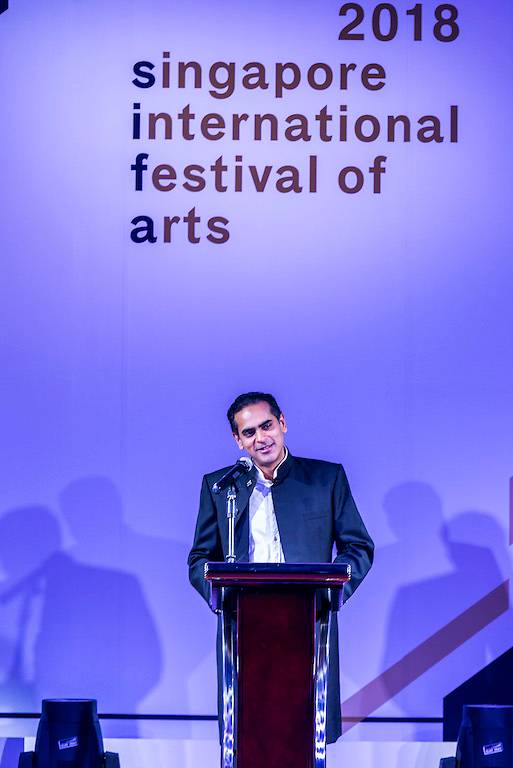
Gaurav Kripalani, director of this year’s Singapore International Festival of Arts (SIFA), speaks in placid tones about how censorship is a process of negotiation.
His predecessor, theatre doyen, Ong Keng Sen, in a 2015 interview, spoke emphatically about censorship impeding the country’s growth as a nation and said that he is “embarrassed in front of international artists, when we talk about Singapore, because it sounds very draconian.”
The differences are not entirely surprising.
As artistic director of Singapore Repertory Theatre (SRT), Mr Kripalani has been known for putting on shows considered popular and mainstream with big names to draw the crowds – Ian McKellen in the Royal Shakespeare Company’s King Lear, Kevin Spacey in Richard III and Kit Chan in the Singapore-made musical, Forbidden City.
Also, in an interview with Channel NewsAsia last year, Mr Kripalani had said, “I do love mainstream work. I don’t think it’s a dirty word. So I’m not shy, embarrassed or apologising for that at all.”
Mr Ong on the other hand is seen as a supporter of avant-garde and experimental productions.
They seem diametrically opposite in their aesthetic and demeanour.
Some might say Mr Kripalani’s lack of overt frustration over the perceived obstacles facing artists here or his indifference to the avant garde is indicative of a lack of passion for the arts.
But it is clearly not.
He proudly declares he has been running SRT for 22 years.
“Anyone in this industry will tell you it takes blood, sweat and tears. When I started with SRT, there were just three or four of us and we would decide which shows we’re going to do next and there was definitely a sense of: let’s just go for broke. Let’s just do the best show that we can do. Let’s just make sure it’s phenomenal and if we’re going to crash and burn, let’s do it in style.”
What does he consider phenomenal though?
He has talked often about making the arts accessible and not presenting work that is considered “weird”. “Mainstream” is not a dirty word to him, but is “avant-garde” necessarily so?
“I’m not sure that these labels actually have these clear definitions now,” he says circumspectly.
“The point is making sure that we’re taking audiences on a journey. You introduce artists who are making exciting, bold statements in the world and the following year, are you to present that artist again or do you actually look at what are the next boundaries we can push. You get a spectrum of work from that point of view and that’s where you would get this wonderful range to choose from.”
What about what some have described as the “weird” experimental work? Doesn’t that have a place? Could it be, in fact, even more evocative and make audiences truly think?
“There’s huge diversity in the landscape and you cannot program something that is going to cater absolutely to everyone. That isn’t the goal at all. More experimental work is certainly an objective over the next two to three years but making sure that there is work that caters for different audiences is very important to me.”
Hence, highlights of this year’s festival include productions such as George Orwell’s 1984 and Henrik Ibsen’s Enemy Of The People.
YouTube sensation and two-time Grammy winner Jacob Collier, and India’s arts power couple, poet Javed Akhtar and actress Shabana Azmi, will also be featured.
Local artists will definitely have a prominent role.
He mentions Toy Factory’s reinvention of the Ming opera epic A Dream Under The Southern Bough and a new Monuments series involving local artists presenting works on issues such as the death penalty at some national monuments.
“You can feed your belly, you can have a great job and make lots of money but you have to feed the soul,” says Gaurav Kripalani. (Photo: Singapore International Festival of Arts)
MAKING THE ARTS ACCESSIBLE TO ALL
To address the issue of making the arts accessible to more people, he’s introduced S$10 front-row student tickets.
There is also a first-timer pass, which curates one music, one theatre and one dance work for those who don’t know where to begin.
The Arts House will be turned into a Festival House where there will be music, theatre, dance, talks, workshops and master classes.
To those who find the arts intimidating, Mr Kripalani says he’s got you covered.
“The beauty of having a place like Festival House goes a long way towards that because you can walk up to a counter and speak to someone and say, ‘Hey, I don’t know where to begin.’ We have people who will say, ‘Don’t worry about it. You might enjoy this. If you’re worried about this play being too difficult or not sure what it’s going to be about, why don’t you come for the talk that we’ve arranged beforehand?’”
The timing of the festival was also carefully calibrated.
“One of the things with the previous schedule was when it was August-September, we had National Day and Formula 1. There were major national events competing with it.”
While he would choose attending an arts event over Formula 1, he knows many others wouldn’t.
He finds himself constantly making a case for the arts.
“Education, education, education. Once they have attended, I am convinced if the programming is good they will come back again and again. One of the things Singapore Repertory Theatre did is create the Little Company which produces shows by some of the best people in the world and from Singapore targeted at 2- to 12-year olds. We sell 30,000 to 40,000 tickets a year. Those kids in 20 years’ time will be avid Arts Festival-goers.”
But why should they?
“You can feed your belly, you can have a great job and make lots of money but you have to feed the soul. It’s critical. It’s not a nice-to-have. It’s the basis of everything. There’s a reason why works of playwrights like Shakespeare are still performed 400 to 500 years later. It’s because our great poets talk about human issues. They talk about things that remain relevant today. In Shakespeare’s Julius Caesar, Caesar was assassinated in the support and belief of democracy and I think if you look at what’s happening in the world today, it’s relevant now.”
He goes on to explain how some of the productions at the upcoming festival are similarly relevant.
“The issues in 1984 – Big Brother’s watching, fake news, excessive government supervision, rewriting history. In Enemy of the People, you’re dealing with an entire town whose economy is based on tourism for its spas but somebody discovers the spa water is contaminated. If he blows the whistle, it will destroy the economy. If he doesn’t say anything, people are going to get sick. What do you do? It’s raising these questions in a manner that will challenge the audience. That’s why I think the arts is important.”
TAKING AWAY THE “EXAM PRESSURE” MENTALITY
The obstacles to getting people on board remain daunting, but he’s optimistic.
“I think things are changing. In the education system today, there are a lot of discussions to take away that exam pressure mentality. Once you take that away, it will automatically give way to time for more creative thinking and an appreciation for the arts. We’re a young country. We’re growing, we’re learning. It will take time but I think the right steps are being made.”
He also concurs with others in the arts world when it comes to exposing kids to literature.
“We had what could be described as ‘the lost years’ for a while where subjects like literature became optional because they brought down grades and ranking. It’s still not compulsory, but I think the importance of exposure to literature is now slowly coming back as a key component of the curriculum and I think that’s really going to make a difference.”
Indeed, the number of schools offering upper secondary literature increased from 85 per cent in 2015 to 90 per cent in 2017.
He Mr Kripalani believes the reluctance to take literature as a subject might have its roots in the way it was taught, but he says his observations show things have been improving.
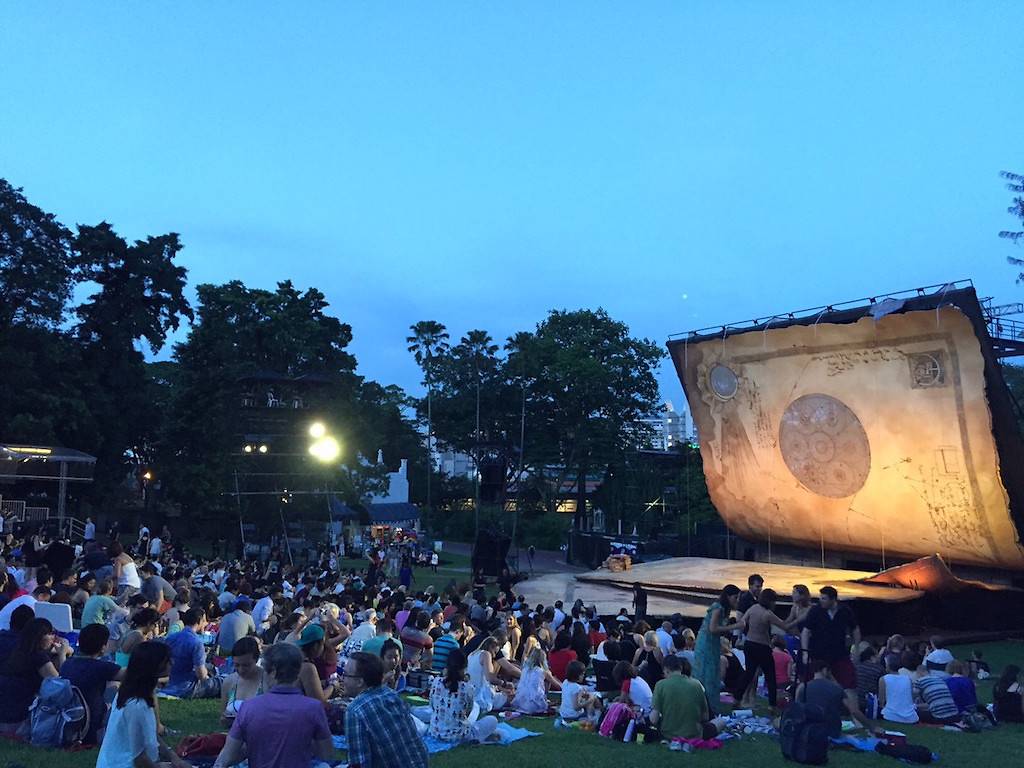
“One of the big reasons I created Shakespeare in the Park was to expose kids to great literature. I myself found literature boring in school. We forget that things like Shakespeare are plays and not a textbook. You have to see it performed and we lost money every year doing that but it was so important to plough ahead with it because getting those kids in and getting them exposed was changing lives.”
He was fortunate in that his parents were arts-loving people. His father was an actor in community theatre. But others may not be.
“The only way to do that is to get them in the door in the first place and create epiphanies for them.”
“One of the big reasons I created Shakespeare in the Park was to expose kids to great literature. I myself found literature boring in school. We forget that things like Shakespeare are plays and not a textbook,” says Gaurav Kripalani. (Photo: Singapore Repertory Theatre)
MONEY FOR THE ARTS
Last year, it was announced that SRT was among the arts companies for whom state funding would be cut “in light of budget reduction across the Government and the growth in the number of deserving recipients over the years.”
As a result of this, the company said it wouldn’t be able to keep the annual Shakespeare in the Park going.
However, since embarking on a crowdfunding effort, they’ve managed to raise their target of S$100,000 to stage it this year.
However, one could argue that the fact they were losing money would indicate a lack of audience support. In which case, why bother continuing?
“We are always sold out, but we still lose money because mounting anything outdoors is a huge undertaking. You’re building fencing, security, portable toilets, catering. You’re building a little city in a town for the duration of a month.”
They couldn’t raise ticket prices to cover the costs because, “How much more would a person spend to picnic on a lawn?” he says. With Shakespeare in the air, ardent arts lovers might, but there is little elasticity in ticket pricing for arts events in general.
This year they are going to try tiered pricing.
“I think the ticket price is usually flat at about S$40, but with discounts and concessions, it comes down. So this year, if you want the option of sitting in a chair under a fan, the tickets will cost more; if you want a backrest and a cushion and a picnic mat, it’ll be a different price. We also want to make sure we’re accessible to everybody. We’re experimenting with that. We’ll see.”
This year’s edition will run from May 4 to May 27 and they will be staging Julius Caesar with the titular character played by a woman.
SHOUD THE STATE BE FUNDING ART?
SRT has generally been known to raise funds from private sponsors successfully. Their fund-raising events are usually attended by the who’s who of Singapore society.
When I remark that it must require a lot of schmoozing, Mr Kripalani seems offended.
“I take issue with that expression only because I don’t think that’s how we’ve been successful at fundraising. We have been successful by not ‘selling’. If you’re passionate, believe in something wholeheartedly and convey that with sincerity, people will support you. It’s about convincing people that the arts is important, doing work that’s relevant and exciting and taking them on a journey to where they can see that it’s going to benefit everyone. I don’t do a tap and dance routine to get people in.”
How then does he persuade corporates who must want some type of return on their investment?
“Twenty years ago, it was very much about how big their logo would be and how many free tickets they got. But I think that’s changed over time. I think it’s about staff engagement. It could be customer acquisition. The experience of taking your guests to a performance and if that performance is good, your customer and staff will remember that experience for life. That’s why it’s important to support.”
How much of a part should the state play in funding the arts though?
“I feel in a country as affluent as ours, healthcare and education should be the priority of the state. Individuals and corporates should support the arts. The government will support looking after mind and body, and the private sector can look after the soul.”
But even with all its other priorities, if the arts are as essential as he says they are, shouldn’t the state actually be made to understand that and invest more in the soul of its people, rather than leave it to the private sector?
“I’ve done this for over 20 years and the pendulum always shifts in terms of what is the priority for state funding and there are different arguments made at different times. There’s going to be a time when state funding will increase because it’s part of that process of realising arts isn’t a nice-to-have, it’s a necessity.”
How does he feel about his own company’s funding being cut by the National Arts Council last year?
“Sometimes we go through this period where people say, ‘This arts organisation is doing really well, so, let’s graduate them from state funding and give the funds to the newer players.’ So, I certainly have to cater to that.”
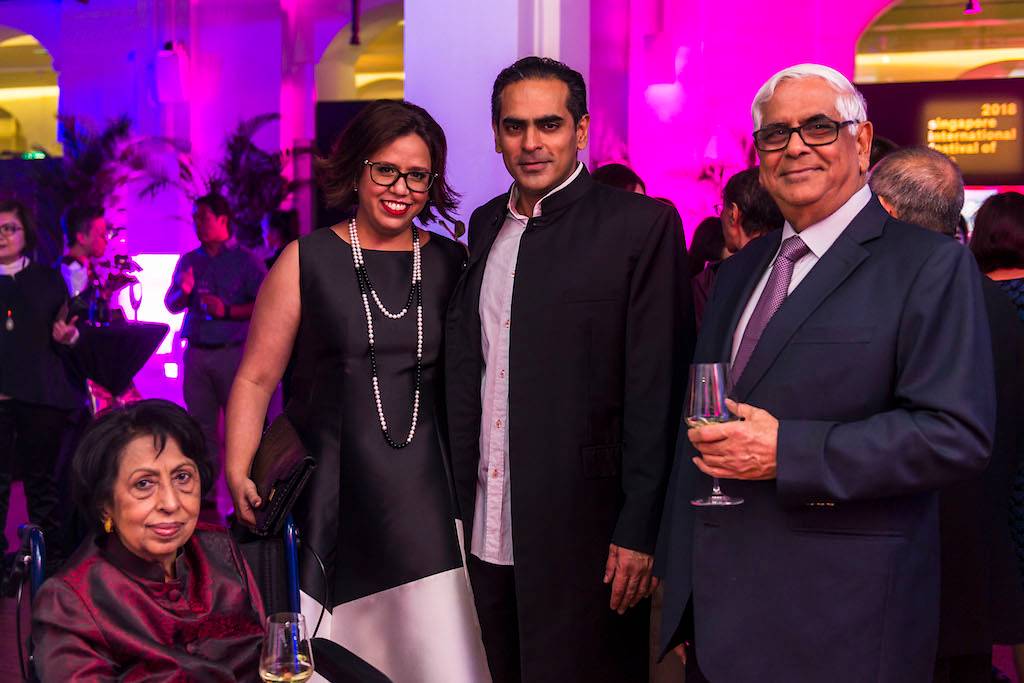
Gaurav Kripalani with Arts House Limited CEO, Sarah Martin (second from left) and his parents who exposed him to art from a young age. (Photo: Singapore International Festival of Arts)
ARE ARTISTS OVERSTATING THE PROBLEMS WITH FUNDING AND CENSORSHIP?
While he claims that his private sponsors have never tried to influence the content of the shows SRT puts up, I wonder if he’s had a similar experience with the state.
The fact that if the state doesn’t agree with the message in a piece of art, it could very well withhold or withdraw its funding has been a bugbear of some artists in Singapore.
He speaks about this calmly, not in the fiery manner in which some others on the scene do.
“We’re a young country and it’s a process of negotiation. A valid argument is it needs to fund the work, whether there are challenges or not because it’s vital to the growth of the arts scene but the way to make that happen is to engage in a dialogue and to negotiate that and realise that we’re all in this together.”
Why is he so careful about not being confrontational?
“I think it’s not about not being confrontational. It’s just I’ve noticed, for example, we did Disgraced a couple of years ago. I’m not sure if it would have been allowed a few years ago.”
Disgraced examined issues of religion and race in post 9/11 New York.
“I’m happy to say that not a single word was censored or changed and that’s because of dialogue and discussion with the authorities which I’m not sure that could’ve been achieved a decade ago.”
Could his experiences with the authorities be less unpleasant only because he’s played it safe?
“But we’ve also done things like Rent and Avenue Q. So, we’re growing. We’re learning.”
So are other artists over-stating the problem?
“I’m not saying I haven’t had challenges. There have been times I have been turned down. There are times I got ratings when I didn’t want ratings. It’s a negotiation. You go on this journey together.”
It’s a process that includes the audience which he says is becoming more and more arts literate.
“We have a very savvy audience and I think it’s about everybody being exposed to different things, and growing. Nobody walked out of “Disgrace” and protested. Everybody had a great dialogue after it.”
He feels the same way about the authorities responding to even a small number of audience complaints by shutting down a work – it’s a process of growing up.
THE STARVING ARTIST
Towards the end of our interview we begin discussing what’s needed to make the arts a part of Singapore’s cultural DNA.
Aside from appreciating the arts, there’s undoubtedly also a need to encourage people to enter the space as professionals so that good work can be created for audiences. Is a career in the arts viable today?
Before he answers, I remark that with his polished suits, he hardly looks like a starving artist.
“But I was a starving artist. If you knew my starting salary, you would laugh.”
“I had the advantage of living with my parents when I started so I had a roof over my head. I was fed. So it gave me the luxury to make art because I didn’t have to worry about those necessities. I think this is true too for a lot of people today.”
So can we count largely only on those from rich families?
He insists today, there is a bright future – monetarily and otherwise – for those considering it.
“SRT probably provides employment to almost 300 people a year obviously contract basis per show. Our resident directors get to work with six or seven different directors from around the world over a 12 to 18-month period. In my head, that’s the opportunity of a lifetime. We always need good production managers too. They are in great demand and people will pay a lot of money for them.”
Over 20 years in the arts has taught him many lessons.
“I think one of the most important things is don’t compromise. If the show is phenomenal, they’re going to buy tickets even for other arts events. The flipside to that is if you don’t do your best and you produce something that’s second rate, that audience member is never going to come back and that affects us all.”
What sorts of compromises has he been faced with?
“It could be a number of things. Sometimes, you have to change something because of the budget. Or your first choice artist suddenly becoming unwell and you have to choose somebody else who’s great but that wasn’t your first choice. The beauty of having a three-year lead time in planning is that we will push some productions because we just can’t afford it now or it’s not what we envisioned.
“Never, never compromise.”
Mr Kripalani may not have the fiery disposition of many artists, but his devotion to the arts and determination to get things right can be considered indisputable.
SINGAPORE: When I asked a taxi driver the other day what he thought about the 2018 Singapore Budget, he seemed confused and then with a ray of realisation, clarified: “Do you mean the SG Bonus hongbao?”
It seems commonplace for most people to think of the Budget in terms of the measures that most directly benefits them.
The taxi driver uncle is not alone in this.
In Hong Kong, permanent residents aged 18 and above similarly received a hongbao of HK$6,000 (S$1,000) in 2011 after the Hong Kong government announced its budget measures.
It might have created expectations of more handouts when the Hong Kong government rolled out its 2018 budget on Wednesday (Feb 28) – it’s first since Chief Executive Carrie Lam took over last July.
Hong Kong’s Financial Secretary Paul Chan delivers the 2018 budget speech at the Legislative Council in Hong Kong on February 28, 2018. (Photo: AFP/Anthony Wallace)
Where it was lauded for its tax breaks, allowances and a subsidy for poor students – it seems many had nonetheless expected a repeat of the HK$6,000 scheme and were sorely disappointed.
This is notwithstanding that the Hong Kong government is planning to share 40 per cent of new fiscal surplus (HK$138 billion) with the public in the form of sweeteners.
Public interest in benefits and handouts when a government budget is announced is understandable – but shouldn’t citizens also have an interest in how its government sets national priorities, spends to achieve these, and enhances its fiscal capacity for the longer term?
READ: A commentary on Hong Kong’s cautionary tale for Singapore.
HANDOUTS OR SOCIAL PROGRAMMES – A DIFFICULT CHOICE
Hong Kong newspapers since the start of the year had fanned the flames – culminating in political heavyweight Jasper Tsang, former president of the Legislative Council of Hong Kong, asking “why not distribute money (to the public)?” in a local newspaper column.
“Cash handouts … ensures that everyone benefits,” he wrote, noting that these directly assisted low-income households.
The bulk of recurring spending, as Tsang pointed out, had been used for regular expenditure on longer-term government programmes including those to spur economic development, education, public housing and social assistance.
Therefore, extra resources resulting from the government surplus should be used to directly aid low-income households, thereby lifting the spirit of society, his argument went.
Former Hong Kong Legislative Council Chairman Jasper Tsang centre on the election day of the Legislative Council in Hong Kong, China on Sep 4, 2016. (Photo: REUTERS/Bobby Yip)
Yet, where some have said a cash handout can help defray the cost of living, this is where the benefits stop.
We would be mistaken if we think they can be direct substitutes for long-term investments in education and healthcare provision for instance – areas in which improvements to the social safety net can make a difference to lower-income households.
To be sure, the fiscal constraints on government budget suggest competing interests must be prioritised. Policymakers need to balance different needs of its constituents.
In some years, the emphasis of redistributive policy in Hong Kong has been to help low-income families. One in five live below the poverty line. This has been exacerbated by its ageing population – where a third of the poor are 65 and above.
But middle-income families also feel squeezed and left out. Those in this segment have demanded for more public spending to aid them.
Where experts have pointed out that middle-income households spend at least one third of their families’ incomes on their children’s education, some have said the Hong Kong government should offer aid in supporting extra-curricular activities.
So the subsidies for poor students and some waived exam fees announced on Wednesday no doubt came as a relief to this group of Hong Kong residents.
Students prepare for SAT examinations at Asia-World Expo near Hong Kong Airport in Hong Kong, China on Oct 3, 2015. (Photo: REUTERS/Bobby Yip)
READ: A commentary on arresting the painful decline in Hong Kong’s financial centre status.
INCLUSIVE SOCIETY A GOAL EVERYONE CAN AGREE ON
If there’s one budgetary policy objective Hong Kong residents can agree on, it’s how government expenditure can be channelled to foster a caring and inclusive society.
So it’s no surprise in recent years, the Hong Kong government has shifted to emphasising helping the working and middle classes, even as it continues to spend more on addressing poverty and inequality.
No doubt whether taxes and benefits are levied and disbursed equitably and fairly is a key issue deserving of greater public debate – this is true both for Hong Kong and Singapore.
A maelstrom was raised in Singapore when a media outlet covered news of a five-figure income family describing their situation as “suffering”.
Where comments online have urged them to adopt a more frugal lifestyle, surely tempering one’s own expenditure cannot be a viable national solution to the problem of families feeling squeezed.
High rise private residential buildings are seen in Hong Kong, China on May 21, 2017. (Photo: REUTERS/Bobby Yip)
MORE DEBATE NEEDED, DON’T JUST REACT
We need to view Budget 2018’s hongbao and other forms of government assistance to households and businesses more holistically.
No doubt there are political ramifications after a budget is announced. In Hong Kong, the budget speech is widely regarded as one of the most important public events of the year. It makes headlines for weeks and teahouses are filled with debate about the budget.
One recalls also the protests sparked off after Hong Kong’s 2011 budget, where sharp reactions about the lack of social welfare aid led to the HK$6,000 handout being rolled out, which in turn caused outrage by those who wouldn’t receive it – including many immigrant workers.
A view of Hong Kong’s busy Wanchai district. (Photo: AFP/Anthony Wallace)
This tells me maybe what we need most is to discuss and debate the government budget before it’s put together, instead of just reacting to it.
The government budget is necessarily one of competing needs but we as a society need to discuss and agree on the challenges it should seek to address each fiscal year, whether those of an ageing population in Singapore, support for education, or ways to help small businesses innovate and expand capabilities.
We need to pay greater attention to the budget and the governing philosophy beneath. Where government revenue and expenditure impact us, the importance of the government budget is indisputable.
We also need to acquaint ourselves with the nuances, mechanisms and effectiveness of government programmes and policies. This will enhance the quality of public debate about how government monies are spent.
Where the GST hike has captured the most attention, a healthy debate has arguably clarified the reasons behind the rate hikes and timing, and generated greater consensus over its implementation.
READ: A commentary on re-examining our mindsets regarding the GST hike.
Finance Minister Heng Swee Keat speaks in Parliament.
Conversely, if the general public is lukewarm towards the Singapore Government’s budget, the role of annual budgeting, public finance and its discussion in Parliament will be limited.
The Government too has a role to play in stimulating debate about the budget beforehand.
Robert Gordon Menzies, an ex-Prime Minister of Australia, noted in 1948: “Politics is both a fine art and an inexact science. We have concentrated upon its scientific aspects – the measurement and estimation of economic trends, the organisation of finance, the devising of plans for social security, the discovery of what to do.”
“We have neglected it as an art, the delineating and practice of how and when to do these things and above all, how to persuade a self-governing people to accept and loyally observe them,” he continues.
This is true in today’s complicated and constantly-changing world, where attention spans are limited.
A careful design of fiscal policy that tackles urgent issues and long-term concerns, must be coupled with an effort to engage and stimulate debate among the governed.
Alfred M Wu is associate professor at the Lee Kuan Yew School of Public Policy, National University of Singapore. His research interests includes public finance and redistributive policy.
SINGAPORE: Mr Mohammad Shanwaz had never carried a baby until his son was born. Taking in that moment as he cradled his newborn, he then felt something peeling off on his fingers.
It was skin – coming off the back of his son’s neck entirely.
His wife Nurzeehan Abdul Halim did not even get to hold her son. The first thing she saw after her caesarean was the look of shock on the faces of her surgeon and anaesthetist. She thought her baby was handicapped.
Little Muhammad Raed spent a month in the intensive care unit. He was on morphine for far longer.
Ms Nurzeehan, 27, cannot begin to describe the pain the couple felt, let alone the pain her baby was in, except to say: “(He) wasn’t like a child (but) like a skinless chicken. It’s just that he was my son.”
Raed, who will be three years old in a few weeks’ time, was born without skin on his back, hands and lower limbs. He is one of Singapore’s butterfly children.
“The term ‘butterfly children’ is used because the wings of a butterfly are very, very fragile,” said KK Women’s and Children’s Hospital senior consultant Mark Koh, who heads its dermatology service.
It’s the same way how their skin responds to mild trauma. The skin comes off, just like a butterfly’s wings.
This inherited genetic condition known as Epidermolysis Bullosa (EB) has also been called “the worst disease you’ve never heard of”, and there are about 80 to 100 individuals in Singapore living with it.
Patients with very severe forms of EB can die in infancy or early childhood. Or as their skin – unable to withstand normal wear and tear – gets wounded over and over again, the cells can eventually become cancerous.
There is no known cure, only the possibility of progress towards treatment. But amid their struggles, hope abounds in the families living with EB who were featured on the Channel NewsAsia programme, Butterfly Children.
To them, every little triumph counts. (Watch the episode here.)
‘PAIN, MAMA’: ONE OF THE SEVEREST CASES
In the home of Raed’s family, the love and laughter that fill it up also get them through the difficult moments, which happen every day as he is bathed and his dressings are changed.
“If it’s painful, what are you going to say?” his mother asks him. “Pain, Mama,” he replies softly.
She must be gentle, as the “slightest friction could tear (his) skin”. She must also prick his blisters and drain the fluid so that they do not develop into larger wounds.
Dressings must then be applied so that there is no trauma caused by a shift of the skin. Careful as Ms Nurzeehan is – and she is a nurse – she still hears the plaintive words “Pain, Mama”.
Raed has one of the severest cases of EB here, according to Dr Koh. The boy was born into a family who did not have the condition, although both his parents had the gene. And the mutation developed in him.
After he went home for the first time, he fell sick and needed to be re-admitted to hospital for two to three weeks. He had a resistant bug that was growing, and he needed intravenous antibiotics.
“Because his skin was so fragile, it was extremely difficult to get any intravenous plugs in him,” said Dr Koh. “You can just imagine how difficult it was to hold the dressings in place (and) keep the plugs in place.”
Once Raed could return home, bath time then became a painful part of his early life. The water would turn red from his raw flesh, and he would scream, said Mr Shanwaz.
Each day after work, his wife took four hours to bathe their son and dress his wounds. And it required four people to be there. Ms Nurzeehan said:
The moment we carry him from the bath, we have to be really quick because … there’d be drops of blood trickling down.
“My helper would be the runner (to do) whatever we required. My mother would be there to pin the baby down. And then we needed, for example, my niece who distracted him with songs or other kinds of animation.”
Skin eventually formed on Raed’s lower limbs by his first birthday. And he has come a long way since the day he was born, his father said.
Ms Nurzeehan is now starting to even ponder the question of whether her son’s condition will allow him to attend preschool down the line.
WATCH: Raed’s story ()
SUFFERING QUIETLY, SO NO ONE WOULD KNOW
One parent who knows a thing or two about nursing a child with EB through her schooling years is Dr Ritu Jain. She has seen her daughter Ira, 18, “suffer quietly” with the disease.
“The most challenging part, I think, came when she was about four years old, when she had to give up her stroller and start walking. She’d inevitably have blisters,” recalled Dr Jain.
“So we bought her a bicycle and taught her to cycle before she was five years old. And she’d get some blisters on her palms from the holding the handlebars.
“That was a really tough time because she was too young to understand her limits. So she’d pretend that she was okay and try not to draw attention to the fact that she had a very, very painful condition.”
Early album photo of Dr Ritu Jain and Ira, who is now 18.
The severity of EB can vary, said Dr Koh. Patients who have it mildly, for example, get blisters only when they walk quite a distance.
In Ira’s case, repeated contact in any area, and even the labels on clothes, would cause blistering. She would also have to miss school on Fridays because she would walk Mondays to Thursdays.
Dr Jain said: “On Friday, she’d have blistering, so she couldn’t walk at all, and it would take the entire weekend to recover.”
At one point in secondary school, Ira had a mother tongue class on the sixth floor while her regular classroom was on the first floor.
“We’d have to climb six storeys of stairs to get there. And a lot of the time, I’d pretend I was going back to class in order to get a book, when in reality I’d … take the lift,” she said.
The idea that people would find out that I couldn’t walk was just so horrible to me, that I went to extreme measures to ensure that they didn’t.
She admitted that it has “always been very important” to her to be accepted – so much so that when she once had to share a room on an overseas school trip, she did not snip off her blistered skin.
“She didn’t want her roommate to see it. And she walked with her blisters,” said Dr Jain.
THE SOCIAL STIGMA, IN A HARSH WORLD
In the case of Raed, who has blisters all over his body, there is no hiding his condition when his parents take him out in his pram, for example to the mall.
“(People) would walk and look at him, and they’d turn their heads. And … they’d come back and ask, ‘(Are those) burns?’” said Mr Shanwaz. “Some of them even … (say), ‘Eee.’”
Mr Mohammad Shanwaz, Raed’s father.
One of the things he and his wife have learnt as Raed’s parents, however, it is to roll with the punches. As Ms Nurzeehan said, “It isn’t our duty to force our child to really accept this … harsh society.”
(But) it’s the job of every parent to raise a child to make this world a less cruel place to live. It begins with anybody who sees a child who isn’t normal … Just give (the child) a smile.
“Without you knowing, that smile of yours will in fact give (the child) lots of confidence to conquer the world,” she added.
For Mr Gary Chong, 49, whose two children have a less serious condition than his, it is this social aspect of living with EB that he feels the keenest because of his blisters and scars from the knees downwards.
“People would start to … stare at my leg, so I try to avoid wearing shorts,” he said. Echoing Ms Nurzeehan’s sentiments, he added: “I definitely hope that people … won’t look down on those people with a skin problem.”
Letting other patients know that they are not alone and spreading the awareness of EB were the reasons that both Mr Chong and the Jain family went on camera.
And it was an “absolutely” big decision for Mr Samir Jain, Ira’s father, as he had not disclosed his condition to anyone beyond his few close friends and family. “Maybe more people will come forward,” he said.
They are going up against a stigma attached to skin conditions, especially the severer ones, that Dr Koh thinks is ingrained in Singaporean society.
‘WE CAN’T EVEN USE MEDISAVE FOR DRESSINGS’
Stigma is not the only societal strain on EB families. There is also the financial cost.
Raed’s early hospitalisation bills came up to almost S$35,000. And before he was one year old, his parents were spending more than S$3,000 monthly on his dressings.
Dressings are “prohibitively expensive” because EB is a rare disease and the market is small for pharmaceutical firms, explained Dr Jain, the president of the Dystrophic EB Research Association (Debra) Singapore.
A five-gramme tube of ointment that works well for many EB patients costs S$71 here, she said, adding: “We can’t even use our Medisave to buy dressings and supplies for children.”
Dr Jain, president of Debra Singapore, on the costs of treatment.
It was a struggle for Raed’s parents. Mr Shanwaz was initially working as a warehouse assistant, earning S$1,600. He then took up an additional job as a valet.
“Just imagine (doing that) for one year … (5am), you leave the house, (1am) you come back. I’d sleep, per day, four to five hours only. That’s how we went through that one year,” he said.
(But) I’ll fight, no matter what, for my son.
He has since found a better-paid job in the oil and gas industry. Debra Singapore now also helps with three-quarters of the family’s expense incurred for dressings.
The organisation gets sponsorships from the pharmaceutical industry and does other fund-raising, with some regular donors. Dr Jain hopes that in the coming years, there will be more government support.
“I’d like to believe that the development and strength of a country is measured by the amount of help … it gives to its weakest, not by its gross domestic product,” she said.
Ms Nurzeehan, who joined the organisation in September 2015 and has attended EB conferences in the United States and New Zealand, cites the free medical supplies provided in other countries.
France is an example. Three of Mrs Charlotte de La Tullaye’s four children have EB simplex, which mostly affects the skin around their joints, and she admits that they are lucky in their home country because “this disease is known”.
“When you have that kind of disease that is genetic, you’re 100 per cent covered by welfare insurance,” said Mrs La Tullaye, who moved here with her family five years ago.
SCIENTIFIC PROMISE?
While the small number of people with EB means it will be a challenge making a remedy widely available, a new treatment approach in Europe brings some hope to the community.
A dying boy was saved by replacement skin created from cells taken from him and grown by scientists, with gene correction done. The new skin was then grafted onto the areas where there was extensive skin loss.
Explaining how it worked, Singapore’s Institute of Medical Biology executive director Birgitte Lane said: “Two years down the line from the grafting and the skin looks very good. The challenge is that this is usually going to be … expensive.”
Still, she called it a “very promising” start for a group of people who have a “huge medical need”.
Institute of Medical Biology executive director Birgitte Lane
In Singapore, the Agency for Science, Technology and Research has been developing an EB programme, and IMB research director Lim Sai Kiang is “very confident” about the work so far.
EB is caused by a deficiency in one of the proteins that make up the skin, and the IMB is looking into ways to give patients the missing gene so that their skin does not peel off.
“In the best-case scenario, we’re looking to go to a clinical trial within two years,” said Dr Lim.
‘DON’T DIE BEFORE YOU’RE DEAD’
For now, Singapore’s butterfly children and their families are finding their own ways of leading as normal a life as possible.
Ira – who hopes to become a scientist – had a chance recently to wear adult high heels for the first time, on a special occasion: Her prom. She still chose a comfortable pair, instead of one that matched her dress better. “Prom isn’t about looking your best. It’s about feeling your best and … having a good time,” she said.
She may even get the chance to go to university overseas, as a cold climate would enable her to walk more and be “more active without having painful blisters”, said her mother.
Ira (front) with the folks from the Institute of Medical Biology
Dr Jain’s bigger hope for Ira, however, is that her condition “makes her more compassionate to others who don’t fit the norm” and that she “grows into a … woman who learns that she still has the capacity to give back”.
Hope for the future is something that Raed’s grandmother Faridah has always had -even at those times her daughter would cry while applying his dressings.
“Sometimes while crying, she’d ask, ‘Why did I get a child like this?’ I would tell her we must go forward and not look back any more,” Mdm Faridah said in Malay as she misted up.
“We must look after this child well. And perhaps one day, this child will become a good and clever child who will help us.”
Raed’s mum, Nurzeehan Abdul Halim
Raed has already brought his parents closer together. Said Mr Shanwaz: “We understand each other better. I’ll be on her side, she’ll be on my side, no matter what happens, until our last breath.”
Ms Nurzeehan knows she can rely on him, not only for her marriage but also “throughout any kind of problem”. “(Given) this kind of condition (EB), not all couples can work together as a team. But I’m blessed (to) get that opportunity,” she said, her voice choked with emotion.
Their journey with Raed has taught her a lot, including “the truth (that) everybody is blessed differently”.
“Ten per cent is what the world gives you. But 90 per cent is how you are going to react,” she added. “Most importantly, don’t die before you’re even dead.”
Watch the show Butterfly Children here.

Harvey Weinstein’s lawyer said Saturday a woman having sex with a Hollywood producer to advance her career is “not rape”, in a British newspaper interview on the eve of the Oscars.
Ben Brafman is one of the US’ top criminal defence attorneys, hired by the disgraced Hollywood mogul whose career is in tatters following accusations of sexual harassment, assault and rape.
More than 100 women have accused Weinstein of impropriety going back 40 years, but Brafman argued there was no criminal behaviour.
“If a woman decides that she needs to have sex with a Hollywood producer to advance her career and actually does it and finds the whole thing offensive, that’s not rape,” he told The Times.
“You made a conscious decision that you’re willing to do something that is personally offensive in order to advance your career,” he added.
Weinstein, a twice-married father of five, is being investigated by British and US police, but has not been charged with any crime. He denies having non-consensual sex and is reportedly in treatment for sex addiction.
Dozens of Hollywood women, including Ashley Judd, Gwyneth Paltrow, Kate Beckinsale and Salma Hayek, are among Weinstein’s accusers.
The bombshell exposes last year have led the film industry to declare war on sexual misconduct, with the campaign dominating the 2018 awards circuit.
Brafman told The Times his client’s behaviour was reflective of the broader culture in the industry: “The casting couch in Hollywood was not invented by Harvey Weinstein.”
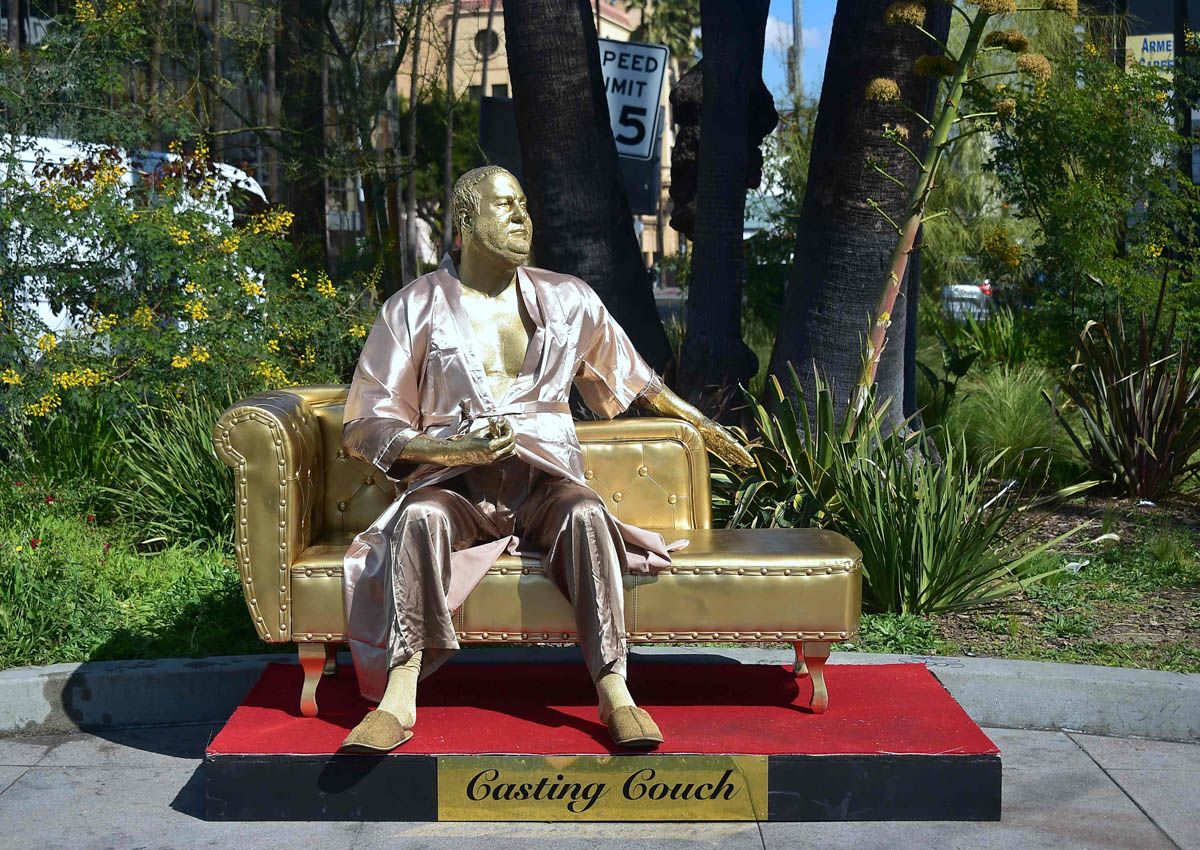
While Weinstein will not be welcome at Sunday’s Oscars ceremony, his infamous casting couch has been created by artists to mark the occasion.
Plastic Jesus and Joshua Monroe created a gold sculpture of Weinstein on the couch, wearing a dressing gown and clutching an Academy Award.

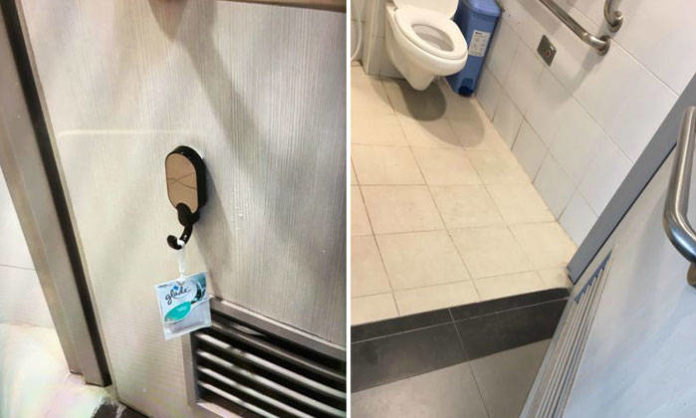
A pinhole camera was found in a handicapped toilet in Nanyang Technological University (NTU) on Mar 1.
The police said that they received “a call for assistance on a case of insulting the modesty of women in Nanyang Drive” at 5.03pm on Thursday (Mar 1), reports The Straits Times.
According to Lianhe Wanbao, the camera was supposedly hidden in a plastic hook that was mounted on the side of the door facing the toilet bowl.
It is understood that the camera was found by a female printing service contractor.
Inside the camera, an SD memory card was found but it is unclear if any videos or photos were inside.
A cleaner at the school told Wanbao that a woman rushed up to him on Thursday saying that someone had installed a pinhole camera in the toilet.
She had reportedly noticed the hook on the door of the toilet, which had not been there before.
She also noted that the hook, which had a freshener pack hanging on it, was placed in a relatively low position, just above the air vents on the door.
She said that it was positioned at the same level as the toilet bowl.
Feeling it was unusual and after some checking, she asked for someone to call the police.
Police investigations are ongoing.
Camera NTU (Nanyang Technological University)