Home Blog Page 1100

Salary norms in Government-funded social service professions to increase by up to 12%

0

The changes will take effect from April this year and apply to a range of jobs funded by the Ministry of Social and Family Development – such as special education teachers, psychologists, therapists, nurses and more.

Jason Chee 5

File picture of a physiotherapist working with Singapore para-table tennis athlete Jason Chee (right) (Photo: Aqil Haziq Mahmud)

SINGAPORE: People employed in programmes funded by the Ministry of Social and Family Development (MSF) will from Apr 1 have their salary norms enhanced by up to 12 per cent, said Minister Desmond Lee on Wednesday (Mar 7).

These professions include early intervention and special education teaching staff; psychologists, social workers, therapists, nurses and others.

“For example, a senior teacher trained in early special needs education may expect an increase of about 8 per cent,” said Mr Lee.

“Our future social needs are growing in complexity and intensity, and will inevitably demand more from the sector and our professionals … For our VWOs (Voluntary Welfare Organisations) to be effective, we need to continue to get good people to join and stay in the sector.”

He added: “Many of those who work in the social service sector do not do it for the remuneration. They see it as a calling. Nonetheless, they deserve to receive a fair and competitive wage and have their contributions duly recognised.”

Salary norms refer to the average gross monthly salary of comparable jobs in the labour market, which MSF uses to derive the amount of manpower funding for programmes run by VWOs under the ministry.

Salary norms are reviewed by MSF and NCSS every three years. In between, salaries are also adjusted to keep pace with annual average wage growth in the broader labour market.

The National Council of Social Services (NCSS) will reflect these salary norms in guidelines which VWOs are encouraged to take reference from, though they still retain the flexibility to manage their own financial and human resources.

Currently, about three-quarters of employees in VWOs running MSF-funded programmes are paid within the guidelines.

“MSF’s recurrent funding to VWO-run programmes will increase by about S$11 million, or 5 per cent, in FY (financial year) 2018,” said Mr Lee.

A Skills Framework for Social Service will also be launched later this year, he announced.

“This framework is developed jointly with SSG (SkillsFuture Singapore), our VWOs and social service professionals to help professionals better plan their careers and proactively develop their skills to meet the demands of the sector,” said Mr Lee.

“It will have information on career prospects, skills required for key professions, as well as the learning platforms to develop these skills.”

“These and other initiatives support VWOs in attracting and grooming good people. And I hope that employees and employers will make full use of them, so that we become stronger as a sector and fulfil our mission in social services.”

Mr Lee commented: “The (social service) sector and those who work in it are vital and indispensable partners in our mission to tackle income inequality, lift families and individuals, protect the vulnerable, and ensure that no one is left behind.”

Source link

Drug trafficking syndicate busted, suspected ring leader arrested in Punggol: CNB

0

SINGAPORE: A local drug trafficking syndicate was busted on Tuesday (Mar 6) during a pre-dawn operation in Punggol.

A man believed to be the leader of the syndicate was arrested along with four suspected drug offenders, said the Central Narcotics Bureau (CNB) in a news release on Wednesday.

It added that drugs worth more than S$166,000 were seized. The haul was made up of 1,375 grams of Ice, including some which had been dyed red, 548 Erimin-5 tablets, 413 Ecstasy tablets, 275g of cannabis, 72g of ketamine and 2g of heroin.

The suspected syndicate leader, 34, was spotted driving in the Punggol Drive area by CNB officers who had been on the lookout for him. His associate, a 38-year-old Singaporean man, was seen driving another car with two passengers, a 45-year-old man and 37-year-old woman.

CNB said when its officers moved in to arrest them, the suspected ring leader escaped in his car which was later found abandoned near Tebing Lane. The man was eventually arrested under a bridge along Punggol Promenade Riverside Walk.

Two packets containing 1,000g of Ice were found along the escape route. A raid on the suspect’s home uncovered another 243g of Ice, 516 Erimin-5 tablets, 390 Ecstasy pills and 200g of cannabis, said CNB.

CNB drug bust

Packages containing drugs recovered along the escape route. (Photos: CNB)

The suspects in the other car were arrested on the spot. Their hideouts and homes were searched and authorities found about 70 g of cannabis, 50 g of Ice, 2g of heroin, 23 Erimin-5 tablets, 2g of ketamine, two Ecstasy tablets and drug utensils.

A fifth suspect, a 42-year-old Singaporean man, was arrested in a follow-up operation. Drugs found at his Punggol Field home include about 82g of Ice, 70g of ketamine, 21 Ecstasy tablets, nine Erimin-5 pills and about 5g of cannabis.

Investigations into all the suspects are ongoing.

CNB said this drug trafficking syndicate was capable of distributing a “significant amount of drugs” to the local market. The amount of Ice seized, for instance, could feed the addiction of 786 abusers a week, it added.

Source link

Pre-schools piloting infant and toddler co-sharing spaces

0

SINGAPORE: The Early Childhood and Development Agency (ECDA) on Wednesday (Mar 7) unveiled an Industry Transformation Map (ITM) for the sector.

It is part of the two-pronged Education ITM, alongside the Training and Adult Education sub-sector launched in February.

Under the Early Childhood ITM, 12 anchor operator pre-schools will pilot the co-sharing of spaces for infants and toddlers, who are typically segregated.

“These spaces could be shared so that children can transit more smoothly from the infant to toddler age group,” said Senior Parliamentary Secretary for Social and Family Development Faishal Ibrahim. “Operators can also enrol more children, while maintaining standards of quality and safety.”

According to ECDA, preliminary feedback from parents and teachers indicate the shared spaces have made it easier for infants to transit to the toddler class.

The Association of Early Childhood and Training Services and its partners are also piloting the use of centralised services to help operators better manage costs. This includes catering and bus services, and demand aggregation across different operators for common items such as stationery and learning resources.

In tandem with the ITM, ECDA is also looking to make career prospects for early childhood professionals more attractive. Over the next five years, the anchor operators will create around 1,000 more senior professional positions, doubling the current number.

“These leadership roles include managing a larger centre, or a cluster of centres, or mentoring junior teachers,” said Assoc Prof Faishal. “To support this, the AOPs (anchor operators) will provide more structured leadership development. These efforts will raise the quality of our pre-schools.”

Salaries for early childhood educators are also projected to rise in parallel with the deeper skills, larger responsibilities, and more complex job roles required of them. Over the past three years, median salaries in the sector have grown by around 15 per cent, compared to the general market which grew by about 8 per cent over the same period. ECDA expects this trend to continue as the pre-school sector keeps expanding in coming years.    

children MOE kindergarten

Children at an MOE Kindergarten in Punggol View. (Photo: MCI)

MORE CENTRES TO OFFER MALAY, TAMIL

Anchor operator pre-schools will also progressively expand their provision of Malay or Tamil language education from 200 to 350 centres by 2022.

Currently all 550 anchor operator centres provide Chinese language education, while the Ministry of Education will continue to offer all three mother tongue languages (MTLs) at their kindergartens. There will be about 50 MOE kindergartens by 2023.

“MTL is important, and when it comes to language, starting early helps,” said Assoc Prof Faishal.

ECDA will work with anchor operators to determine provision based on estate-level needs and demand.

Assoc Prof Faishal said this may require an additional 1,000 mother tongue teachers by 2020.

Anchor operators are also intensifying their recruitment efforts for Malay and Tamil language teachers, though existing teachers who meet the criteria may choose to teach in these mother tongues.

“The Government has been supporting more locals to become MTL pre-school teachers. Since 2016, polytechnic students can pursue specialised MTL tracks,” he said.

These are the Diploma in Chinese Studies (Chinese Early Childhood Teaching Track) and Diploma in Tamil Studies with Early Education. There is currently no Malay language specialisation, but ECDA pointed to ongoing measures to cater to the training of pre-school educators in teaching Malay, for example during the practicum period.  

“These efforts have increased the pool of local MTL pre-school teachers to 3,300 in 2017, 35 per cent more than 2015,” said Assoc Prof Faishal. “Going forward, ECDA will work closely with the new National Institute of Early Childhood Development and other partners to enhance the training of MTL teachers, and encourage more locals to teach MTL in pre-schools.”

preschool teachers

Teachers with children from PCF Sparkletots. (Photo: PCF Sparkletots)

ON PLACES, FEES

The senior parliamentary secretary also provided other updates on ECDA’s initiatives, including working with the Housing and Development Board to build pre-schools as part of Build-to-Order developments, so that they can open earlier.

“To meet the pre-school needs of residents, these new centres will have 200 places, twice the size of an average centre today,” he said.

“ECDA has also been working with URA to ensure that developers set aside space for pre-schools in private residential sites released through the Government Land Sales programme.”

He added: “I would like to assure members that we closely monitor changes in pre-school fees, and that pre-schools are kept affordable through a series of measures, including government schemes and direct subsidies.”

“While ECDA does not regulate fees charged by (pre-school) operators, it requires centres to report fee increases and give parents at least four months’ notice. Centres need to explain the basis for the increase, and directly engage parents who face difficulties in meeting the new amount,” said Assoc Prof Faishal.

“In addition, anchor operators and partner operators are subjected to fee caps … Together with MOE kindergartens, these government-supported pre-schools provide affordable, quality services for almost half of all pre-schoolers, and have stabilised industry median fees.

“By 2023, two in three pre-schoolers will have a place in such pre-schools, where the fees are capped.”

Source link

Park Shin-hye, Choi Tae-joon confirm dating

0

Park Shin-hye and Choi Tae-joon are in a romantic relationship. 

Choi’s agency Huayi Brothers announced in a statement Wednesday, “After being close friends, as they went to the same university, Park and Choi started dating at the end of last year.”

A few hours earlier in the day, there had been news reports claiming that the two had been dating for a year, along with photos of them on a date.

Park’s agency, Salt Entertainment, denied the claim at first, saying they were just close friends, but later admitted that they are in a relationship. 

The two stars both attended Chung Ang University, majoring in film and theater studies. There had been rumors they were dating in April, when photos of them had been repeatedly released. At the time, the two stars said they were just friends and were accompanied by others. 

Wednesday, March 7, 2018 – 14:41

Others

Source link

Here are Singapore's richest people, according to Forbes 2018 billionaires index

0

Business, Singapore

Wednesday, March 7, 2018 – 14:04

AsiaOne

Others

Source link

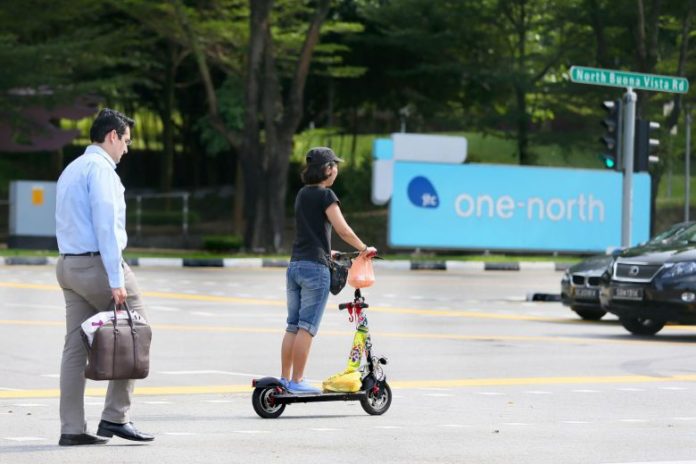
Parliament: Mandatory registration of e-scooters from second half of 2018

0

Singapore

Wednesday, March 7, 2018 – 13:48

The Straits Times

Others

Source link

Two structural moves to integrate services for aged will improve community care: Gan Kim Yong

0

Elaborating on his ministry’s efforts for the SG Cares initiative, the Health Minister stressed the importance of addressing the needs of senior citizens holistically.

Budget 2018 file - elderly 2

File photo of elderly people watching a performance. (Photo: Christy Yip)

SINGAPORE: The Ministry of Health (MOH) will make two “structural moves” to build more “communities of care” throughout Singapore, in order to address the needs of senior citizens more holistically, Health Minister Gan Kim Yong said on Wednesday (Mar 7). 

Speaking in Parliament, Mr Gan outlined his ministry’s efforts in the Singapore Cares (SG Cares) initiative, which is a joint effort by the Ministry of Social and Family Development (MSF), Ministry of Health (MOH) and Ministry of Culture, Community and Youth (MCCY).

Mr Gan explained that the Community Networks for Seniors (CNS) was piloted in 2016 to mobilise and coordinate efforts of community volunteers, service providers and other stakeholders in each community to care for seniors. He also stressed the need to build more of such “communities of care” throughout Singapore.

MOH is making two structural moves in order to achieve this.

First, he said the repositioning of the Pioneer Generation Office as the Silver Generation Office, which is housed within the Agency for Integrated Care (AIC), will help extend their outreach efforts to seniors beyond the Pioneer generation, and tap on AIC’s capabilities and services. Giving more details on the Silver Generation Office, he said it will do “more targeted outreach” to bring preventive health and wellness programmes to seniors.  

“For those with multiple needs, they can be quickly connected with relevant health and social support services under AIC,” he said.

The second shift, he said, is to consolidate all health and social aged services under MOH to better support seniors to age well within the community. The transfer of MSF’s social care functions to MOH will allow MOH to deliver support to seniors more seamlessly, he added, with AIC as the central implementation agency to coordinate all social and health related services for seniors and their caregivers.

 “This move also allows us to plan ahead for eldercare services at a national level, and in a more integrated way,” he explained.

MORE SUPPORT FOR CAREGIVERS

Mr Gan added that his ministry will provide greater support for caregivers, noting that he recognises their dedication and the important role they play in caring for seniors. He outlined the existing support for caregivers but noted that there is room to do more.

“Emotional and timely support is important for caregivers,” he said. “We are working on new approaches to embed dedicated support for caregivers within eldercare centres.” For example, support could take the form of phone conversations with caregivers, face-to-face meetings or even home visits.

“MOH and AIC will continue to take on board feedback with caregivers and work closely with our partners to support them,” he added.

Source link

Arrest warrant issued for former-PM Thaksin Shinawatra ahead of elections

0

THAILAND’S Supreme Court on Tuesday issued a new arrest warrant for fugitive former prime minister Thaksin Shinawatra after resuming his trial in absentia on alleged manipulation of policy for personal gain 15 years ago.

The revival of the case was made possible under a new law that took effect last year, allowing the trial of politicians after they have fled the country.

According to the Bangkok Post, the arrest warrant was issued after Thaksin failed to show up at court, or send a lawyer representative.

SEE ALSO: Thailand’s election delays widely criticised

The former PM has been in self-imposed exile since 2008 after he was put on trial for allegedly wrongfully changing regulations on telecom concession fees in favour of companies he owned, causing a loss to the state of 68 billion Thai baht (US$2.2 billion), during his time in office.

The charge is one of many cases shelved after Thaksin fled that could be revived under the new provision.

The court’s decision comes just days after Thaksin was seen holding meetings with his former political party, Pheu Thai, in the run-up to the country’s first post-coup elections.

2017-08-01T052753Z_194645526_RC1BB2DA10A0_RTRMADP_3_THAILAND-POLITICS-YINGLUCK

Yingluck Shinawatra greets supporters as she leaves the Supreme Court in Bangkok, Thailand, on Aug 1, 2017. Source: Reuters/Aukkarapon Niyomyat

Despite undergoing numerous delays under current Prime Minster Prayuth Chan-ocha, the election is slated to take place in February 2019. It is the first of its kind since the military seized power in a 2014 coup, unseating civilian leader, and Thaksin’s sister, Yingluck Shinawatra.

Yingluck is also in exile after being sentenced to five years’ jail in September after being found guilty of negligence for the mismanagement of a billion dollar rice subsidy scheme. She was seen travelling along with her brother.

SEE ALSO: What were Yingluck Shinawatra and brother Thaksin doing in China?

According to South China Morning Post, Thaksin raised eyebrows last week as he held court in Hong Kong and Singapore with elders from the deposed Pheu Thai party who had flown in to pay their respects to the man they still refer to as “the big boss.”

The party has downplayed the meetings, but the timing has led political observers to speculate they are a sign that Thaksin will remotely lead campaigning of the still popular Pheu Thai in the lead up to elections.

Military leader Prayuth has been showing signs that he wants to retain power after the polls. Changes to the Constitution and laws, written by the regime, have paved a way for him to stay in power if he receives the support of 250 winning candidates.

Tuesday’s hearing adjourned with the court setting July 10 for the examination of evidence and witness lists.

{“total”:1,”error”:””,”linkedin”:0,”stumbleupon”:0,”facebook_total”:0,”pinterest”:0,”google”:0,”buffer”:0,”twitter”:1,”vk”:0}

Source link

Cheap public transport fares popular but ‘not sustainable’: Khaw Boon Wan

0

Fares are currently being reviewed by the Public Transport Council to “better track total costs”.

stock people bus 01

SINGAPORE: The fare formula for public transport is being reviewed to better track total costs, as the Ministry of Transportation (MOT)’s budget rises for upcoming infrastructure upgrades.

Transport Minister Khaw Boon Wan said in Parliament on Wednesday (Mar 7) that while Singapore’s transport fares are currently “affordable”, the Government also needs to ensure the sustainability of the transport network.

“We must be careful that (fares) are not priced too cheaply, as maintaining a high-quality transport system requires resources,” he said. “Cheap fares are popular, but they are not sustainable.”

The current formula is “inadequate”, he said, and the Public Transport Council (PTC) is reviewing it to take into account “total costs”.

“I am confident that they can work out a fair and sustainable arrangement. Please support the PTC when they make their recommendations,” Mr Khaw said.

Noting how massive investments are being made to improve the transport system, Mr Khaw said that it would be “a disaster” for public transport subsidies to spike against declining revenue.

“Over the past five years, improvements to public transport services have increased operating costs by about 60 per cent,” he said. “One major contributing factor is the large increase in network capacity as we opened new lines and added more buses and trains.”

“This huge cost increase has been borne by the Government,” explained Mr Khaw. “Against such rising cost, fares have gone down by 2 per cent over the same period.”

“Every dollar spent on transport is a dollar less for other expenditure – like schools, healthcare and security,” noted Mr Khaw, who is also the Coordinating Minister for Infrastructure.

MOT’s budget is now the second largest among ministries, after the Ministry of Defence and ahead of the health ministry, Ministry of National Development and Ministry of Education, he added.

Source link

Registration of e-scooters to be made mandatory from second half of 2018

0

Other personal mobility devices such as electric hover boards and unicycles will not need to be registered due to their less widespread use and their lower speeds, says Senior Minister of State for Transport Lam Pin Min.

e-scooter at ntu

A man riding an e-scooter at NTU. (Photo: Olivia Siong) 

SINGAPORE: All e-scooter owners will soon have to register with the Land Transport Authority (LTA), as well as have identification stickers pasted prominently on their devices, Senior Minister of State for Transport Lam Pin Min announced on Wednesday (Mar 7).

Speaking at the ministry’s Committee of Supply debate, Dr Lam said the Government has decided to accept the Active Mobility Advisory Panel’s recommendation to mandate the registration of e-scooters.

“Registering e-scooters will help deter reckless behaviour, accord more responsibility to the users, and facilitate enforcement officers in tracking down errant users,” he said.

Since May 2016, LTA has issued more tham 3,000 advisories to personal mobility device users, including e-scooter users, for unsafe riding on pedestrian paths.

The registration regime will be implemented by the end of the year, and the process will be kept as simple and low-cost as possible, Dr Lam added.

In a separate news release, LTA said the registration regime will take effect in the second half of the year and that more details will be announced when ready.

Owners will also have to ensure that their e-scooter does not exceed 20kg in weight, is not wider than 700mm and has a maximum speed of 25kmh under the Active Mobility Act, which will be reviewed to allow for the registration regime.

The registration regime will not apply to other personal mobility devices such as electric hover boards and unicycles due to their less widespread use and their lower speeds.

LTA will monitor the situation and assess if further action is needed moving forward.

Dr Lam said the Active Mobility Advisory Panel will also take a deeper look at the rules on active mobility.

The panel will look into issues such as reviewing the speed limit on footpaths, and the insurance and compensation framework which some MPs have suggested. It will weigh the need for these initiatives against the impact on the large majority of responsible users, and take into account the practices of other jurisdictions, he said.

It will publish its recommendations by the end of the year.

“Our tough stance targets the minority of reckless users to deter bad behaviour. It should not discourage the majority of responsible and considerate users from enjoying the benefits of active mobility,” Dr Lam said.

Source link