Home Blog Page 1094

Commentary: The buffet metaphor for integrated shield plan riders only goes so far

0

SINGAPORE: If someone pays S$100 for a buffet, would you be surprised if that person proceeds to load up on as much food as possible? Or empties the dishes with the most expensive or delicious items?

What about when he or she picks up that last piece of lobster on the table, depriving others behind in the queue?

In this metaphor, the restaurant copes by pricing the buffet to make a profit even if there are people who consume much more than usual. Some people are happy, some get angry and stressed, and others simply give up and skip the buffet.

This is what is behind the Government’s plan to mandate a minimum 5 per cent co-payment for new Integrated Shield Plan riders.

According to Senior Minister of State Chee Hong Tat, the zero co-payment feature of full riders on integrated shield plans has resulted in a buffet syndrome, leading to over-consumption, over-servicing and over-charging of healthcare services.

Insurance companies are in the same position as the restaurant when it comes to providing full coverage of all health payments in their insurance riders. 

With over-consumption in a country with limited medical resources, people who may need the services more may get crowded out or may find their premiums skyrocketing to unaffordable heights. This is why Government should step in.

RISING PREMIUM COSTS

The buffet metaphor seems to make initial sense for those who use an economist’s viewpoint. The moral hazard implicit in Integrated Shield Plans with zero co-payment coverage, leading to overconsumption, is well-known in insurance markets.

When an insurance plan is voluntary, it also tends to attract those who think they can claim more, an effect known as adverse selection.

Both these effects raise costs for insurers, who then pass it on to consumers, to stay in business.

healthcare in singapore 1

A hospital ward in Singapore. (Photo: CNA) 

From this standpoint, putting a price to consumption seems logical, and goes towards making healthcare sustainable by emphasising personal responsibility in healthcare, encouraging service providers to focus on appropriate interventions, and nudging patients to make prudent decisions in healthcare services, according to Health Minister Gan Kim Yong.

Those who “made claims for 12 nose scopes in a year without clear medical need”, go for more expensive surgical options without clearly more effective outcomes, or choose to ward themselves so that they can make claims, are denying patients who need these services more – where resources such as timely access to doctors, MRI machines, surgical rooms and hospital beds are limited.

ARE PATIENTS TO BLAME?

But there are limitations to this buffet metaphor. Access to healthcare services is regarded as a basic right and may even be a matter of life and death in some cases. It is a potential cause of worry and stress to people who need it.

You might say doctors should control costs. But doctors are medical professionals with a primary focus on your health and should not be incentivised to keep costs down.

What about hospital administration? Yes, some measures can be rolled out such as financial counselling, sourcing for generic drugs, and other ways of keeping fixed costs down. 

But hospital administrators should not be asked to second guess their doctors or interfere with patient choice.

Surgery

A doctor and his team in an operating theatre. (Photo: Pixabay/sasint)

THREE IDEAS

Yet mandating a flat minimum of 5 per cent co-payment is not an optimal solution to this wicked problem. This may cause some of the more ridiculous examples to drop out (for example the “12 nose scopes” example), but fails to target over-consumption more precisely.

Perhaps it is a half-step towards a more optimal and more complex healthcare financing scheme.

Co-payments and deductibles are useful, but they ideally need to be highly targeted to allow insurers and consumers to both benefit from economic efficiency – an insurer makes a reasonable profit and stays in business to provide the insurance, while the consumer pays a relatively decent premium.

A flat minimum co-payment rate may not do the trick – it does not adequately distinguish between an elective surgery and a heart operation, between a class A ward or a class B ward, or the choice between an expensive procedure that is only statistically slightly better than another significantly cheaper one.

First, private insurers should proliferate their products and price them appropriately based on their characteristics. For example, a rider that allows for private hospital visits, less deductibles or broader treatment support should have much higher premiums, while a rider that, for example, limits wards to restructured hospitals, higher deductibles or have clear caps, should have lower premiums.

They should not be restrained from any product combination or be protected if priced too low.

Second, co-payments, deductibles and caps should ideally be on a per treatment or condition basis. This requires information.

File photo of Singapore hospital

File photo of a Singapore hospital.

​​​​​​​

The Government can help by mandating that all medical establishments in Singapore share anonymised data on admissions, medical conditions, treatments, ward stays, medicines, outcomes and use of diagnostic services.

Using this data, insurers can tightly price co-payments and deductibles on a per treatment or condition level. They can use data analytics to identify gaps in procedures that escalate costs unnecessarily and use the evidence to adjust contract conditions or influence care providers.

Third, to avoid all this complexity from overwhelming consumers and to encourage price competition, there should be some means of comparing among insurance providers. The Government can help by setting up a web service to compare policies.

To return to the buffet analogy, better data would allow the provider to dictate the type and quantity of each type of food to be served, where to serve it, limit wastage and still get customer satisfaction.

I think we already have an excellent health system. Let’s make it even better.

Tan Jin Meng is pursuing a full-time post graduate degree at the Lee Kuan Yew School of Public Policy and is currently engaged in research on long-term care financing for a local non-government organisation interested in eldercare matters.
Source link

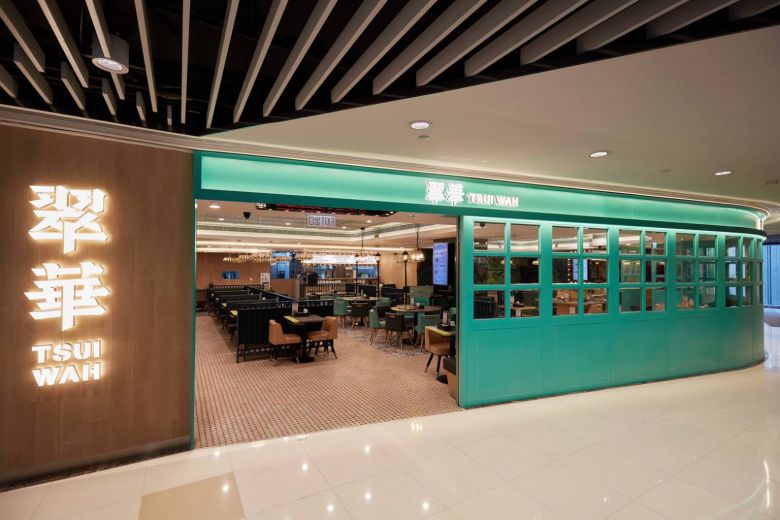
Popular Hong Kong 'cha chaan tang' Tsui Wah to open in Singapore

0

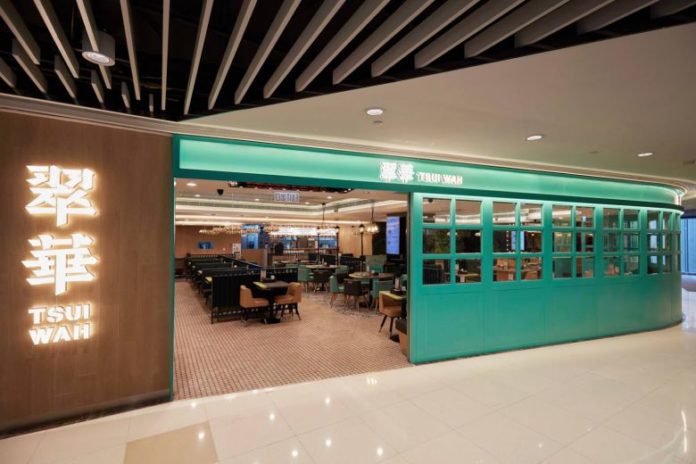
Popular Hong Kong casual eatery or ‘cha chaan tang’ Tsui Wah will be opening its first South-east Asian outlet here in Singapore.

The announcement was made by Jumbo Group on Friday (March 9), regarding the partnership between its subsidiary, Jumbo F&B Services, and Kang Wang Holdings, the wholly-owned subsidiary of Tsui Wah holdings.

The franchise agreement for the brand will stand for an initial term of 10 years, said the statement.

Tsui Wah  is known for providing traditional Hong Kong-style comfort fare to locals and tourists alike. Most outlets open late into the night, with some operating 24 hours.

Popular items on its menu include its fishball noodles, bottled Hong Kong milk tea and crispy bread drizzled with condensed milk.

The brand was founded in the Mongkok neighbourhood in 1967, and as of Jan 31 this year, there are 32 outlets in Hong Kong, 35 outlets in China, and 3 outlets in Macau.

Said Mr Ang Kiam Meng, Jumbo’s group chief executive and executive director: “This is part of our group’s strategy to grow our network of restaurants, and to further strengthen our foothold in Singapore.

We intend to capitalise on the popularity and growth potential of the Hong Kong-style cha chaan teng market in Singapore to broaden our local customer base.” 

Singapore is home to two other famous Hong Kong F&B chains famed for their egg tarts and milk tea – Honolulu Cafe, located at Orchard Centrepoint and Tai Cheong Bakery at Takashimaya (take-away only) and Holland Village.

But there’s no word yet on where the first Tsui Wah outlet will be located.

candicec@sph.com.sg

Food, Singapore

Saturday, March 10, 2018 – 10:01

AsiaOne

Others

Source link

Company director who raped son's ex-girlfriend said he had sex with maid at age 13: Psychiatrist

0

Singapore

Saturday, March 10, 2018 – 09:42

The Straits Times

Others

Source link

Commentary: The education system is changing, but does true change remain elusive?

0

SINGAPORE: With all the changes to the education system recently, we should feel optimistic about our children’s future.

Unfortunately, there remains an underlying disquiet in some quarters that exam pressure and competition to get into prestigious schools will remain unabated in spite of the changes.  

Minister for Education (Schools) Ng Chee Meng announced in Parliament on Monday (Mar 5) that by 2023, all primary schools in Singapore will have an Applied Learning Programme (ALP).

Mr Ng described it as “an investment worth making to nurture innovation and creativity”.

The initiative is not entirely new. 

Schools have been encouraged to develop ALPs since 2013, and currently, all secondary schools have such a programme.

Since 2017, more than 80 primary schools of the 191 in Singapore have had an ALP.

The idea is to help students apply their learning to the real world, uncover the meaning behind learning and develop a love for it.

“There are no tests or exams. I have emphasised this to MOE. Students learn through experimentation – they try, fail, try, learn from it and try again,” said Mr Ng.

By 2023, all primary schools in Singapore will have an Applied Learning Programme (ALP), Minister for Education (Schools) Ng Chee Meng announced in Parliament on Monday (Mar 5).

COULD HIGH-STAKES EXAMS NEGATE THE POSITIVES?

Gone are the days of rote learning and we should be happy. But why are many not?

We seem to be all too cognizant of the fact that ultimately, our children will have to sit exams – whether it’s the PSLE or O-levels.

Applied learning may rapidly ignite a love for learning from a young age, but will exams douse that fire just as quickly?

Some might argue that wishing for an education system with no standardised testing whatsoever is probably futile.

How else would a person’s abilities be tested? How else can employers gauge the probable capabilities of a person fresh out of school?

THE QUEST FOR ALIGNMENT

Ultimately, the quality of testing, the factors considered in school admissions, and the variables employers consider in hiring an individual are vital.

Over the years, the way in which exams are set has changed.

Educators here acknowledge that increasingly exams question knowledge application, the ability to make connections, and analysis.

Teaching methods have to continue to evolve to support this.  

But the marking process is equally vital.

SEAB 2

File photo of a student taking the 2017 A-Level Chemistry paper. (Photo: Ruyi Wong)

Can the paradigm shift so much so there are no “wrong” answers? Wouldn’t it be better to grade students based on how well they substantiate their answers?

In the area of school admissions, much has changed in at the tertiary level to consider an individual’s aptitude rather than academic scores.

A similar system exists for those in the earlier stages of academic development in the form of the Direct Schools Admission (DSA) scheme which allows students to seek admission to a secondary school based on talents and achievements that may not be apparent in their PSLE results.

From this year, secondary schools admitting students under the DSA scheme will not be able to use general academic ability tests as a criterion. Instead, the focus will be on identifying sporting and artistic talent as well as students’ strength in specific areas such as languages, mathematics or science.

But instead of reducing pressure, the scheme seems to have merely transferred it, with parents sending their kids for DSA preparation classes in order to ace interviews or auditions.

The education arms race seems to rear its head in spite of such efforts.

primary school students

File photo of students at a primary school.

ARE CHANGES BEING FELT ON THE GROUND?

Several steps have been taken over the years to reduce the emphasis on academic results and by extension, the stress associated with exams.   

Since 2013, MOE has not included the highest and lowest aggregate scores in students’ results slips.

But exam pressure doesn’t seem to have perceptibly reduced.

From 2021, the PSLE will be scored with wider bands and the scores will reflect the student’s individual performance and not his performance relative to his peers.

But the competition to get into prestigious schools might overpower the potential benefits of this.

Ideally, applied learning initiatives, if done well, could boost the love for learning and if exams are aligned with the objectives of such learning, most students would have no issues excelling in exams.

O Level students

File photo of students receiving their O-Level results. 

Also, if admissions processes take into account more measures than simply academic grades, students can flourish in the system through multiple pathways.

RADICAL CHANGES NEEDED

However, some argue that in order for the joy of learning to truly take hold, radical changes are needed, among them, scrapping the PSLE altogether.

Member of Parliament and Chair of the Government Parliamentary Committee for Education, Denise Phua’s has been a long-time advocate of this.

In fact, she recently raised it in parliament again, describing PSLE as a “structural thorn in the flesh of the system”.

“There are highly respected education systems globally which do not sort students at the age of 12,” she said.

She is not wrong.

Other advocates of scrapping PSLE often say the system is cruel simply because the exam comes when students are just 12.

How can the love of learning flourish if it is marred by the stresses associated with preparing for PSLE?

Taking a major exam later in life is preferable because it allows even late bloomers to develop a sense of self that could help them identify their interests. They would have also developed the maturity to handle the stress associated with major exams.

denise phua (1)

Member of Parliament Denise Phua. (Photo: Xabryna Kek)

However, Mr Ng said this would “transfer the stress on parents and students elsewhere, such as at the P1 registration” and it will “make the O-Level and N-Level exams most stressful – a single exam in the whole career of a child’s life.”

He may not be wrong either.

DO CHILDREN REALLY NEED TO BE “SORTED”?

But as long as PSLE exists, it should not be seen as a judgment of ability or even an accurate gauge of a child’s future success or failure.

Instead, can it be seen as a tool to determine the type of academic support a child will need in the years ahead instead of a “sorting” exercise to judge their capabilities?

MOE has already introduced subject-based banding at Primary 4 as a refinement to the streaming process.

It is designed to allow children to stretch their potential in the subjects that they are strong in while building up fundamentals in the subjects they need more help in.

Can this spirit be extended to children progressing to secondary school?

Advocates of mixed ability classrooms also say that sorting children into classes or schools based on academic ability is unnecessary. Instead, pedagogy can be adapted and enhanced to allow better integration and learning in the classroom.

In that case, MOE needs to show parents and students that every school is well-resourced to manage such learning.

Perhaps then, school admissions should be based on distance instead of scores.

Fern Green Primary School students

Students from Fern Green Primary attending a lesson on their first day of school. (Photo: Matin Akmal Mohammad Kamal) 

THE SYSTEM AND THE PEOPLE IN IT

However, as long as brand-name schools exist, this ideal may not be entirely achievable. As we’ve seen recently, some parents try to game the system even on distance in order to get their kids into popular schools.

The culture of judgment within the system needs to end, but it’s not just about the system. It’s about the people in the system.  

Fellow students, parents, and employers, among others need to re-examine the factors they apply to determine a person’s worth.

Do we still ask others which schools they went to?

Do we then form our opinions of them based on that?

Do we consequently, whether consciously or subconsciously, make friends with or hire someone based on that?

Do we ourselves often feel judged in this manner?

To change the face of education, the factors that constitute learning, teaching, assessing need to be aligned, but so do our own perceptions of what constitutes ability and success.

Bharati Jagdish is host of Channel NewsAsia Digital News’ hard-hitting On The Record, a weekly interview with thought leaders across Singapore, and The Pulse, Channel NewsAsia’s weekly podcast that discusses the hottest issues of the week.

Source link

Unmanned passenger drones: From sci-fi fantasy to mainstream reality?

0

SINGAPORE: Imagine being late for work on a Monday morning and skipping the traffic jam in a pilotless passenger drone taxi, flying over crowded highways to reach the office in time.

While such a scenario currently only exists in science-fiction, the technology to ferry humans in unmanned drone aircrafts could be perfected in the not-too-distant future.

The development of unmanned aircraft systems (UAS) was mentioned in Parliament on Wednesday (Mar 8) by Second Minister for Transport Ng Chee Meng.

“There is huge potential for UAS to spur new and innovative applications across industries,” he said. “In time to come, UAS can potentially even ferry people through the air, adding a new dimension to urban mobility.”

Two tertiary institutions in Singapore have been pushing the boundaries of what is possible with passenger drones. One of them is Singapore Polytechnic (SP), which had a project group successfully create a battery-operated one-seater drone – called “DATUM” – late last year, which could lift off the ground and hover for about five minutes.

It featured in SP’s Engineering Show 2018 in January, where it flew with a seated, 60kg mannequin.

 “It’s a fully functional transportation-class aircraft that has the capability of carrying a human being,” said Aeronautical Engineering student Ang Jing Hao. “With a total of 18 motors, we’re looking at carrying a payload of a human being and be classed as a transportation method that can hopefully be used here.”

SP Drone team pic 2

Singapore Polytechnic’s Aeronautical Engineering Final-Year Project team. (Photo: Wong Ruyi)

He added: “It has vertical takeoff and landing function, which is suitable for our urban environment in Singapore.

“We’re not looking to replace cars, but we’re hoping it can be developed further into a form of air taxi in the future.”

CURRENT INDUSTRIAL PROTOTYPES

Successfully conducting manned test flights of its prototype passenger drone last month, Chinese drone maker Ehang is arguably the closest to achieving the reality of air taxis.

Its drone consists a two-seater pod that is lifted into the air, thanks 16 exposed electric rotors attached to eight arms at its base.

According to China’s Xinhua News, Ehang’s team of 150 technical engineers have conducted thousands of test flights. Its performance allows 230 kilograms to be carried and a vertical climb of up to 300 meters. There has been a successful routed test flight covering 15 km and a high-speed cruising test that reached 130 km/h.

“This makes you feel like you have travelled into the future, like you’re in a sci-fi movie. But this is real,” Ehang’s founder and chief executive Hu Huazhi said in a company video that showed footage of the flight tests.

“It’s so easy and stable, and its operation is very simple. I’ve flown so many helicopters, but nothing feels like this.”

Another company, German drone-maker Volocopter, is also racing to be the first to perfect unmanned passenger drones.

“While we are far advanced with the aircraft, it takes more to become a mode of transport,” said the company, in response to queries by Channel NewsAsia. “We already have designs for the ecosystem and Volocopter infrastructure.”

Its drone, though, is not for sale for now.

Volocopter test ride pic 4

Volocopter’s test run in Germany. (Photo: Volocopter YouTube screenshot)

“While we have a long list of individuals interested to buy the Volocopter, we are currently not looking to sell them individually. Rather, we offer a public transport system – our customers will be cities implementing these systems for their inhabitants.”

BATTERY ISSUES

The current limitation of passenger drone prototypes is battery technology, as modern Lithium-based ones are unable to provide enough power for sustained flight. “For now, the biggest limitation is the duration of the flight,” said Singapore Polytechnic’s Aeronautical Engineering lecturer Reagan Chionh.

“Current passenger drones that purely run on batteries would fly for an average of 10 minutes before they completely run out power,” said Mr Chionh. “That’s due to the amount of energy needed to sustain thrust in order to lift the weight of a person in addition to the frame of the craft.”

He added: “I would think that it would take 15 to 20 years for drone technology to advance to a good stage.”

Mr Chionh’s student Ang Jing Hao is looking to solve this issue in SP’s DATUM drone. “We have an integrated a hybrid engine fuel management system,” he said. “What we have is an on-board battery charging and battery swapping system – which we can say it’s the first of its kind (for drones) in Singapore.”

He explained: “When the first set of batteries has been depleted, the second set will kick in, while the first one is automatically swapped out electronically and charged on-board using a petrol generator.

SP drone batteries pic 6

A look at  batteries used in SP’s passenger drone project. (Photo: Wong Ruyi)

“That way, we have extended the craft’s theoretical range and flight time to last for 30 minutes in total. Without this hybrid engine system, we’d have a flight time of eight minutes,” said the 21-year-old.

As for Volocopter’s latest industrial prototype, its redundancy systems allow for battery failure. “We have nine batteries, each of which powers two adjacent rotors,” said the German company. “While each individual battery is already very reliable and heavily tested, nothing would happen if one of the nine batteries is lost.”

It added: “A bigger challenge is the battery power until this day. It limits our flight range, which is why we have designed the Volocopter 2X with exchangeable battery packs, which can be changed within minutes.”

NOT SUITABLE FOR SINGAPORE’S URBAN SKYLINE?

Singapore’s densely populated environment, however, may not be suitable for passenger drones. “The area for usage is very limited for Singapore … but there could be certain uses for it, such as for emergency transportation,” said Nanyang Technological University (NTU) transport researcher Prof Gopinath Menon.

He added: “The other issue is high-rise buildings, as there could be security risks involved in flying them close to buildings.”

Volocopter artist impression pic 5

An artist impression of the Volocopter flying near buildings. (Photo: Volocopter YouTube screenshot)

“To have passenger drones in Singapore… if the numbers are small, then maybe it’s alright,” said the NTU lecturer. “But if the sky is full of them, then it could be an issue due to the limited airspace that we have.”

A drone mishap could have disastrous consequences, according to Prof Menon. “If there were to be a drone accident, it would affect a wider area compared to road accidents which tend to be more localised in a sense,” he said.

It is expected that such passenger drones – if they ever become a transportation reality – would likely be classed the same as helicopters in accordance with Civil Aviation Authority of Singapore (CAAS) laws.

EHang test ride pic 3

EHang’s passenger drone prototype during a test flight. (Photo: Ehang YouTube screenshot)

“One of the challenges I foresee would be (drones) meeting all aviation safety standards, criteria and infrastructure,” said Nanyang Polytechnic (NYP) Engineering lecturer Albert Sng. 

Mr Sng, however, is hopeful that both law and technology will catch up with each other in about two decades. “While Singapore does not have the luxury of vast land spaces to operate autonomous drones as a mode of transport, there is still a possibility of drones replacing land vehicles in the next 20 or 30 years,” he said.

“This may happen when the cost of building and sustaining the drones eventually decreases over the years.” 

Source link

‘Crazy Yishun’? This pop-up void deck exhibit wants to make it crazy cool

0

SINGAPORE: Of late, Yishun’s unfortunate reputation has been that of a “jinxed” town, with a reputation for cat killers, aggressive loan sharks, intolerate neighbours, and more.

But what about Yishun as a place to discover new trends in fashion, music and literature?

As part of the ongoing Singapore Design Week, an unusual pop-up exhibition space will be up at the void deck of Block 844 at Yishun Street 81 – near Khatib MRT Station – for the entire month of March.

Yishun People's Studio Calleen Koh

Among the participating artists at People’s Studio is the collective Atypical, which does guerilla installations, such as this work by member Calleen Koh. (Photo: Calleen Koh)

Each week, People’s Studio will feature a rotating showcase of works by creative types, including artist collective Atypical, writers Jollin Tan and Wahid Al Mamun, collective and fashion label Youths In Balaclava (its T-shirt line is currently stocked at Dover Street Market Singapore), hip-hop musician Subhas, and students from Ngee Ann Polytechnic, LASALLE College of the Arts and National University of Singapore.

The event is the brainchild of Aravin Sandran and Kesavan Kunasegaran, founders of a new art and design firm called Neighborhood, which received funding and support from the National Youth Council and the Nee Soon Town Council.

“It’s Yishun fights back,” quipped Kesavan, 28, who is also a chef.

Added Aravin, 29, a curator: “We wanted to react to all the news headlines we’ve compiled (about Yishun) and the different ways people have viewed it. So we wanted something positive to come into this space. Maybe not addressing it directly but just revitalising the perceptions of what could be (possible) in a place like Yishun. That it could be just as important as Bugis or City Hall for something as esoteric as art and design.”

Yishun People's Studio founders

Co-founders of Neighborhood, Aravin Sandran (left) and Kesavan Kunasegaran. (Photo: Shutterwerkz)

And they’re not just outsiders simply capitalising on the town’s unfortunate reputation. Some of the participants are from Yishun, and Neighborhood’s Kesavan is himself a longtime resident. In fact, he lives just a few blocks from the exhibit area.

“I know this route quite well. I cycle around and run in this area,” he said. “In the mornings, you’d see people go to work or pass through for breakfast at the market. In the evenings… you’d have a lot of children playing at the playground.”

Aravin also pointed out the exhibition is smack in the middle of a lively part of the area – nearby are a basketball court, the community centre, a skate park and a street soccer court.

“We wanted it to be in a space where there is that energy. We wanted it to be part of the flow of people,” he said.

While not all the works have direct links to Yishun itself, there are some that do.

Next week, LASALLE students will be holding an interactive art therapy workshop where they’re inviting Yishun residents to create plaster cast replicas of their own hand, which will be assembled into an installation.

Yishun People's Studio Pop Up Youths In Balaclava

Indie fashion label Youths In Balaclava is one of the creatives taking part in People’s Studio in Yishun. (Photo: Yoon Tae Yang)

One of the exhibitions will also be a nod to last year’s incident involving a moneylender who harassed an entire block by sending letters signed Voldemort – short “youth manifesto” pieces by emerging Singapore writers will be distributed in letterboxes.

“We thought it was really peculiar but we wanted to put a positive spin on it,” said Aravin.

While the pop-up People’s Studio is only on its first week, curious residents have already been stopping by to check out works as diverse as an LED hydroponic garden by Ngee Ann Poly students and magazine covers by the indie publication Mynah.

Yishun People's Studio

Ngee Ann Polytechnic’s Landscape Design & Horticulture course presents a hydroponics installation, as an alternative to traditional HDB corridor gardening. Modified LED lights and nutrient-rich water allow crops to be grown indoors without any soil. (Photo: Shutterwerkz)

“We’ve had an animation designer dropping by in his bicycle and singlet, another who was having an evening run, and Chinese aunties coming to look at the Chinese cabbages,” said Aravin.

“There was a Malay uncle in a wheelchair who actually wanted to be part of the whole thing because he was so interested in the space,” added Kesavan.

Hanging out at Yishun while working on the pop-up space has also left an impression on the organisers.

“I feel people are a bit warmer than I thought they would be. I come from the Geylang and Macpherson area, where there’s a bit more blase attitude to the surroundings,” said Aravin.

“Here, there seems to be a little more interaction with one another – aunties come and tell me we should do this or that and it’s quite refreshing. You don’t have that in a lot of neighbourhoods.”

Source link

From HDB flats to healthcare: 8 key COS announcements you need to note

0

SINGAPORE: Over the eight days of this year’s Committee of Supply (COS) debate, Members of Parliament filed 530 cuts lasting about 52 hours – the longest over the past five years. 

For many of us, calling that an information overload would be putting it lightly, especially when taken together with the quick-fire announcements coming out of the various Government ministries. 

So we’ve saved you the trouble, and summarised these announcements into the eight that may impact you and your lives the most.

1) PROTECTING PMEs UNDER AMENDED EMPLOYMENT ACT

Are you a professional, manager or executive (PME) who earns more than S$4,500 a month? Good news: You will be covered under the Employment Act (you weren’t previously) by April 2019.

This means your basic employee rights, like your precious public holiday and sick leave entitlements, will be legally protected.

You’ll also be able to seek redress with the Manpower Ministry if you feel your nasty boss has wrongfully dismissed you.

2) DEFERRING ASSESSMENT OF INCOME FOR YOUNG COUPLES

Welcome to Singapore, where many people think a good marriage proposal is to ask the famous (or infamous) question: “Shall we apply for a flat together?”

To help young couples get an earlier start to their marriage, the Housing and Development Board (HDB) will allow those applying for a flat to defer their assessment of income for housing loans and grants to just before they collect their keys. 

Say you’ve just graduated, and your partner’s still studying. But you’re serious about each other and know you’re going to spend the rest of your lives together. Previously, if you wanted to benefit from grants like the Additional Central Provident Fund (CPF) Housing Grant and Special CPF Housing Grant, you’d have to be working at least 12 months continuously before applying for a new flat.

HDB flats

File photo of HDB flats. (Photo: Hester Tan)

But from the upcoming Build-To-Order or Sale of Balance Flats exercise in May, first-time couples who are full-time students or National Servicemen, or have recently completed their studies or National Service, will be able to qualify for this deferment. This will, said the Ministry of National Development and HDB, reduce the waiting time for a new flat by at least a year.

3) REMOVING TIME-BAR POLICY FOR DIVORCEES

But say your marriage goes sour. It’s a difficult time, and this change may go some way in making the transition an easier one for you and your children.

Previously, only one party of a divorced couple could buy or own a subsidised flat within three years from the date of their divorce. But now, as announced by MND and HDB, both parties will be able to buy or own a subsidised flat each, provided they are both able to meet the eligibility conditions for buying a flat.

4) BATTLING ERRANT PARKING OF SHARED BIKES

Tired of weaving your way through the 56 shared bikes that crowd your void deck, bus stop, and MRT station? Fret no more. Authorities are rolling out geo-fencing and a new licensing scheme to clamp down on errant parking.

For geo-fencing, to be implemented in the second half of this year, users must scan a QR code at designated parking spaces to prove they’ve parked properly before ending a trip.

For the new licensing, bike-sharing operators will have their fleet size reviewed every six months based on how well they tackle errant parking. They must also temporarily ban mischievous users who park indiscriminately. The Land Transport Authority will start accepting licensing applications from middle this year.

Operators that don’t comply will face fines of up to S$100,000, reductions in fleet size, suspension or even cancellation of their licences.

5) REGISTERING E-SCOOTERS TO DETER RECKLESS BEHAVIOUR

It’s been a long day at work. You’re walking home and about to turn right when an e-scooter zooms past. Near miss, but the rider says he isn’t sorry. Changes are afoot, though – the Government will implement the registration of e-scooters from the second half of this year.

Users must ensure their e-scooter has a max top speed of 25kmh, and does not exceed 20kg in weight and 0.7m in width. They must also paste identification stickers prominently on their devices.

The registration process will be kept as simple and low-cost as possible, authorities said, adding that it will deter reckless behaviour and facilitate enforcement.

6) CO-PAYMENTS FOR INTEGRATED SHIELD PLAN RIDERS

So you’ve just signed up for an Integrated Shield insurance plan with a rider. But if you think your private insurer’s going to pick up the tab for all your medical bills, think again. 

From Apr 1, 2019, you need to know that zero payment coverage under new Integrated Shield Plan riders won’t be available and new policyholders will have to pay at least 5 per cent of your medical bill

In explaining the change, Health Minister Gan Kim Yong said these “full rider” policies encourage a “buffet syndrome”, as patients do not need to pay anything for their treatments. This also leads to over-consumption, over-servicing and over-charging of healthcare services, which could, in turn, lead to higher fees and premiums over time. 

But fret not if you’re worried about higher medical costs. Insurers will need to cap the co-payment amount, and they’re looking at an annual limit of about S$3,000. Premiums for the new riders are also expected to have lower premiums than these full riders, so the switch will result in premium savings for policyholders.

7) ADDING MORE POLYCLINICS

Residents of Nee Soon Central and Tampines North, this one’s for you. The Ministry of Health (MOH) will be opening new polyclinics in the two estates by 2023. This move is, in fact, part of a larger push by MOH to open more polyclinics. Six to eight more polyclinics are in the pipeline and will be coming to you by 2030. 

While there aren’t many details yet about where these polyclinics will be located, MOH says by 2030, there’ll be a total of 30 to 32 polyclinics under their network. So look forward to a shorter travelling time to your nearest polyclinic, and perhaps even shorter waiting times to see a doctor.

8) PAYNOW FOR CPF LUMP SUM WITHDRAWALS

You’ve turned 55 and are looking forward to a nice birthday present: your CPF lump sum withdrawal. So why wait five working days when you can get it on the same day? This will be possible from Mar 26 with the use of PayNow.

This comes as the Government steps up its efforts to reduce cash use, although it is not going cashless “for its own sake”, Minister-in-Charge of the Smart Nation initiative Vivian Balakrishnan said.

“The ultimate objectives are to lower transaction costs for both businesses and citizens, and expand opportunities especially for small businesses, freelancers and entrepreneurs.”

Source link

i Light Marina Bay 2018 in pictures

0

SINGAPORE: From glowing cows to an octopus lit up by the sound of drums – visitors to Marina Bay can get ready to have their sight, hearing and touch delighted at the annual i Light festival.

The festival launched its sixth edition on Friday (Mar 9) and will be on till Apr 1. On display are 22 sustainable artworks from 14 countries, including Singapore.

Here are some of our favourites:

Transistable Plastic allows you to submerge in plastic waste and lose yourself in it. 

i Light 2018 Transistable Plastic

Transistable Plastic by Spain’s Luzinterruptus is made using plastic panels from vacuum bags. It can be found under the Esplanade Bridge. (Photo: Jeremy Long)

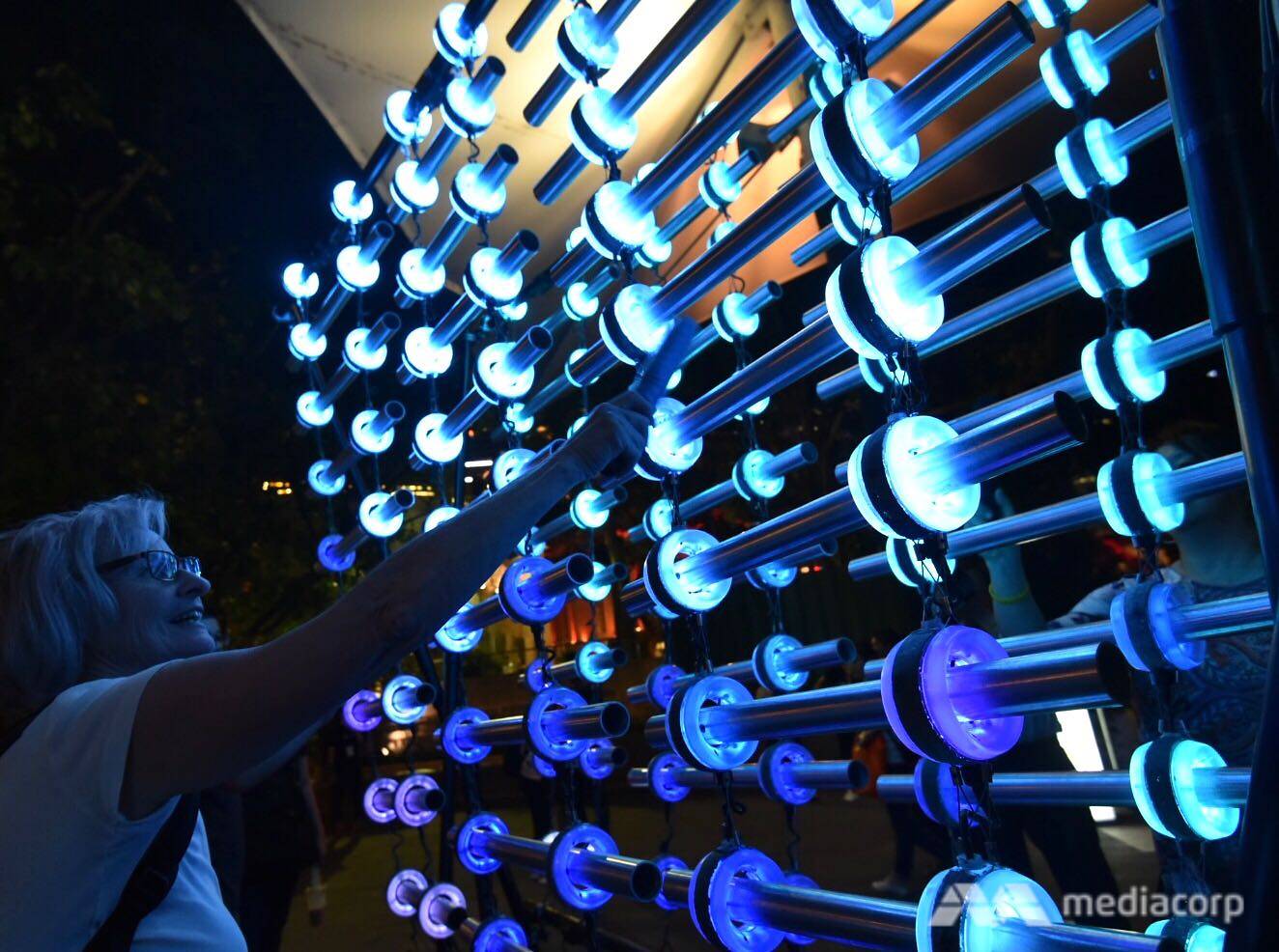
Standing 3.5m-high is the Illumaphonium, a multi-player musical sculpture. Hit the chime bars to get a series of ever-changing patterns of light and sound. 

I Light Marina Bay

The Illumaphonium by UK’s Michael Davis can be found by the Singapore River. (Photo: Jeremy Long)

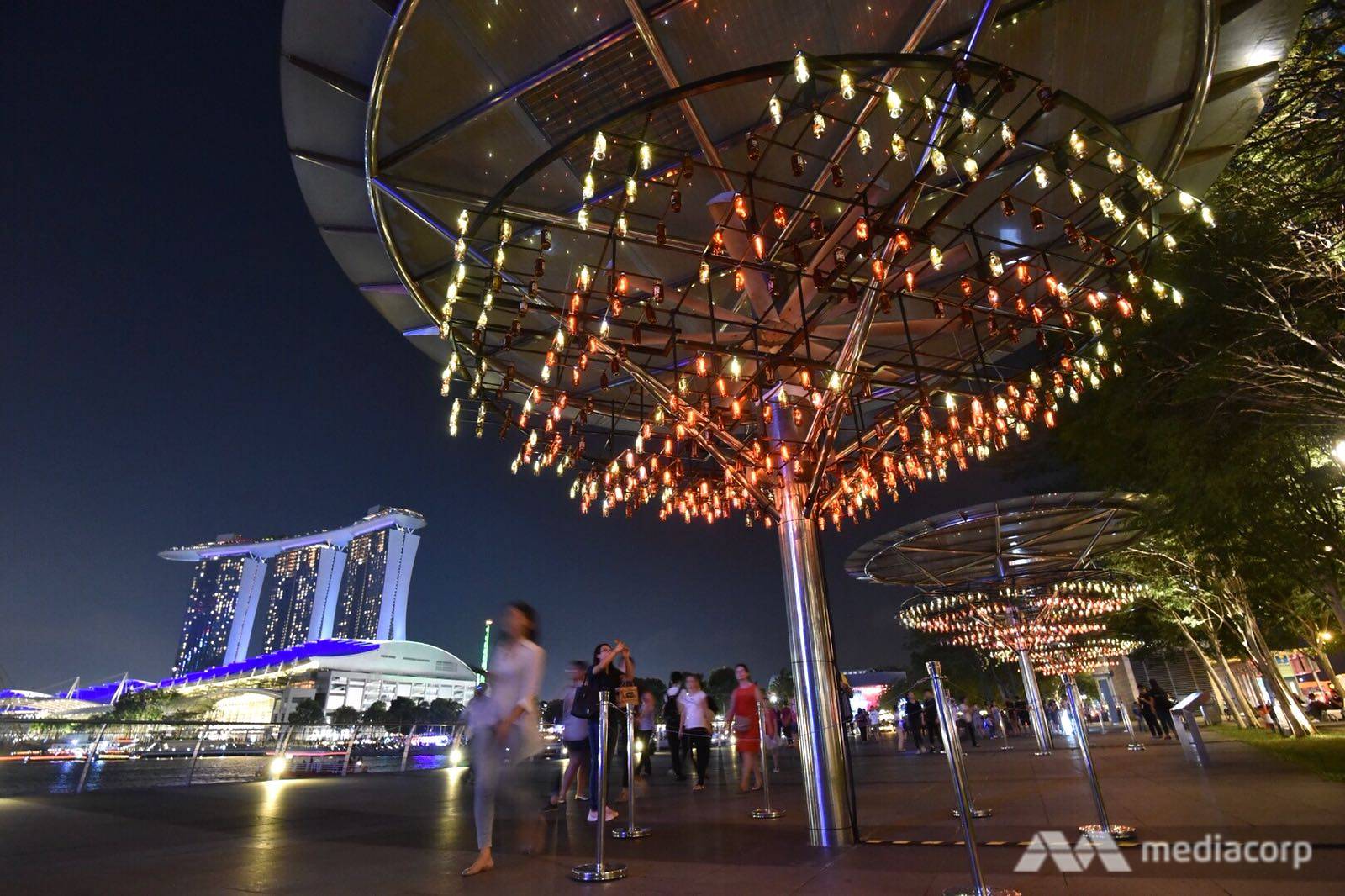
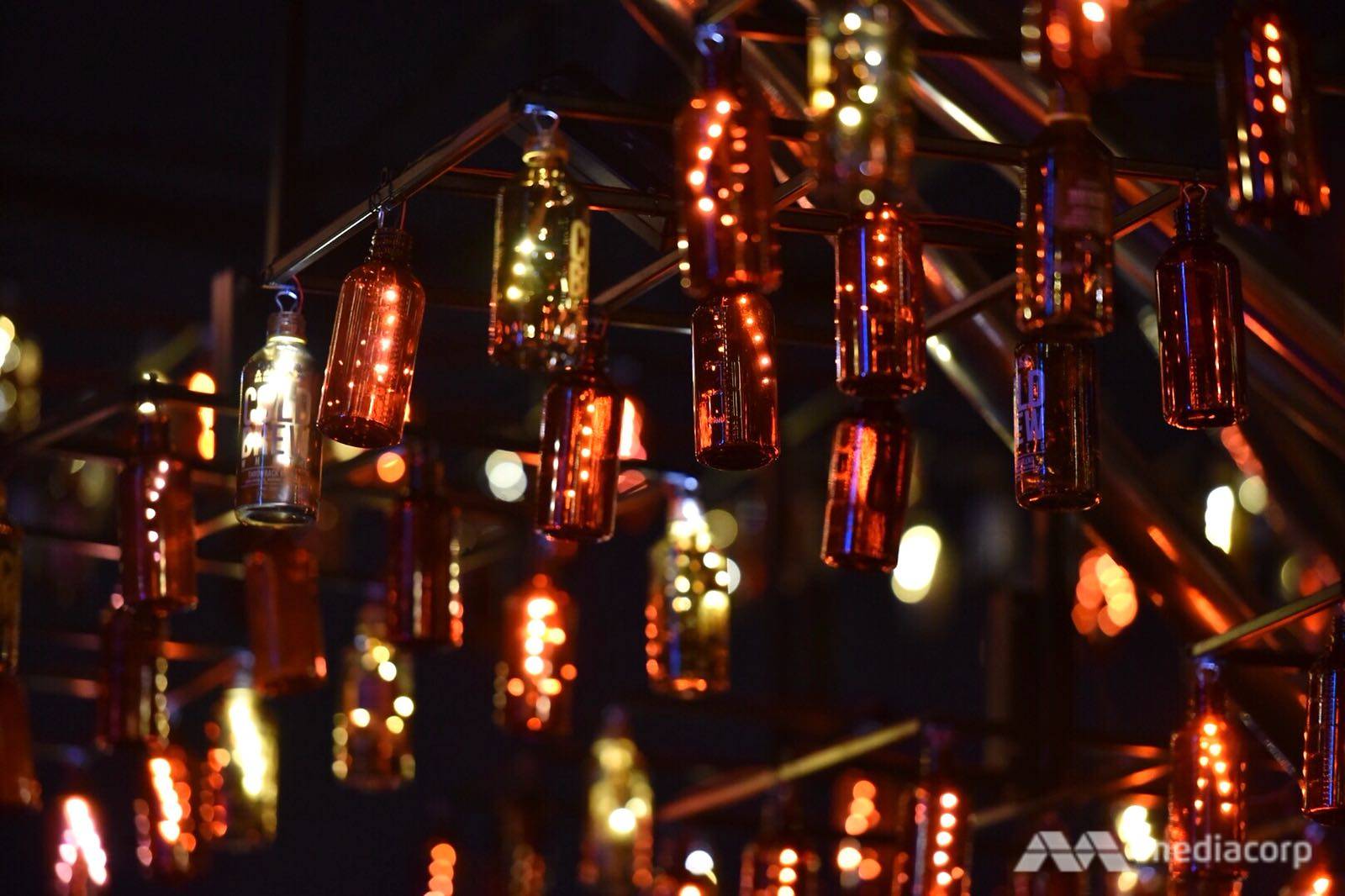
The more the merrier! The Chandelier of Spirits shines brighter when there are more people around it.

i Light Chandelier of Spirits 2

The Chandelier of Spirits by Thailand’s Living Spirits is made up of cold brew coffee bottles – a symbol of a hardworking and resilient workforce. (Photo: Jeremy Long)

i Light Chandelier of Spirits 1

The Chandelier of Spirits by Thailand’s Living Spirits can be found along Marina Boulevard. (Photo: Jeremy Long)

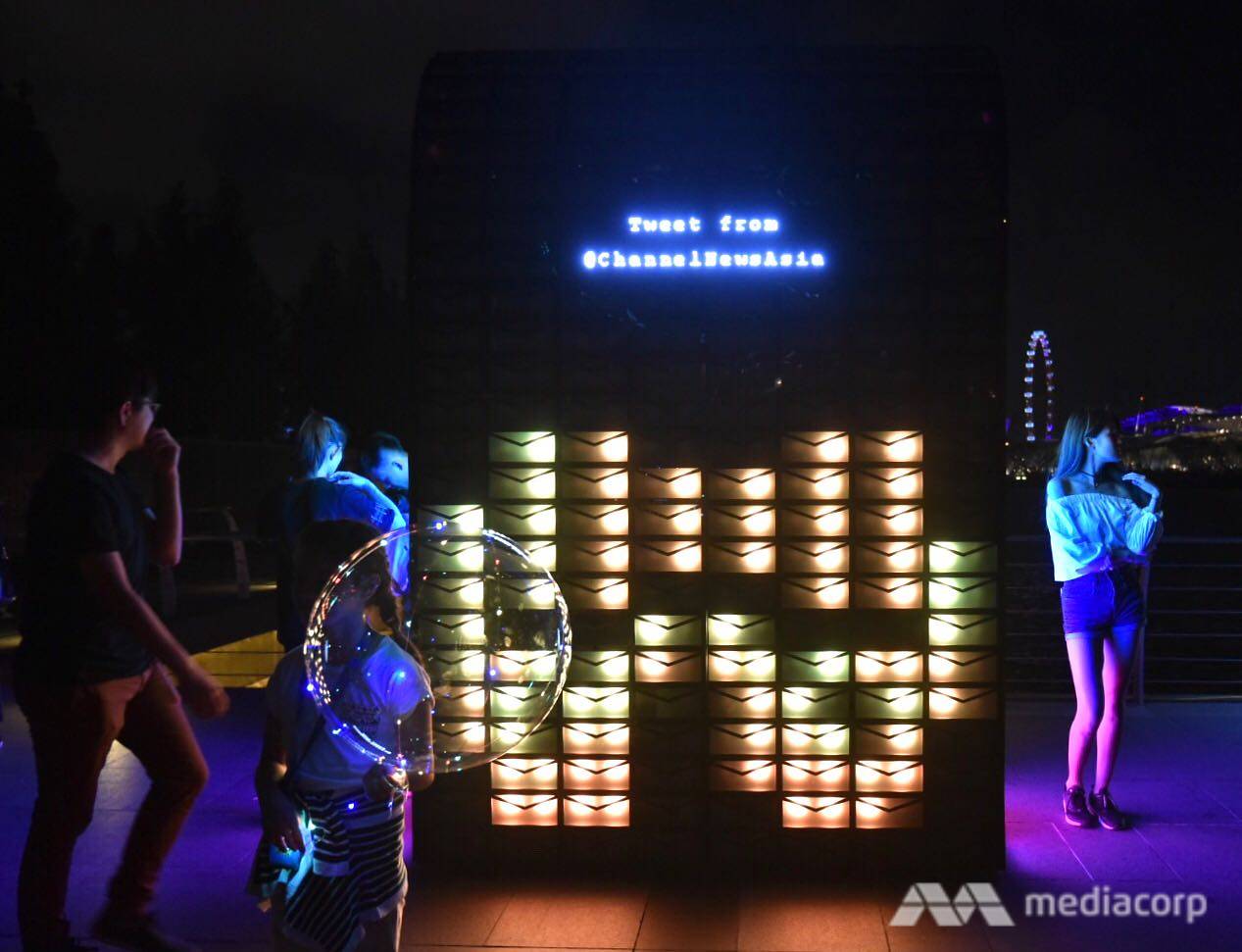
Be part of the installation by tweeting with the hashtag #iLightMarinaBay. MailboX can be found at Marina Boulevard.  

i Light 2018 MailboX 1

MailboX by Australia’s Christopher Simpson, Isabella Bain, Khanh Nguyen, James Rotanson, Anthony Zeater and Steven Bai was built to inspire individuals to be more positively connected by verbal and written conversation. (Photo: Jeremy Long)

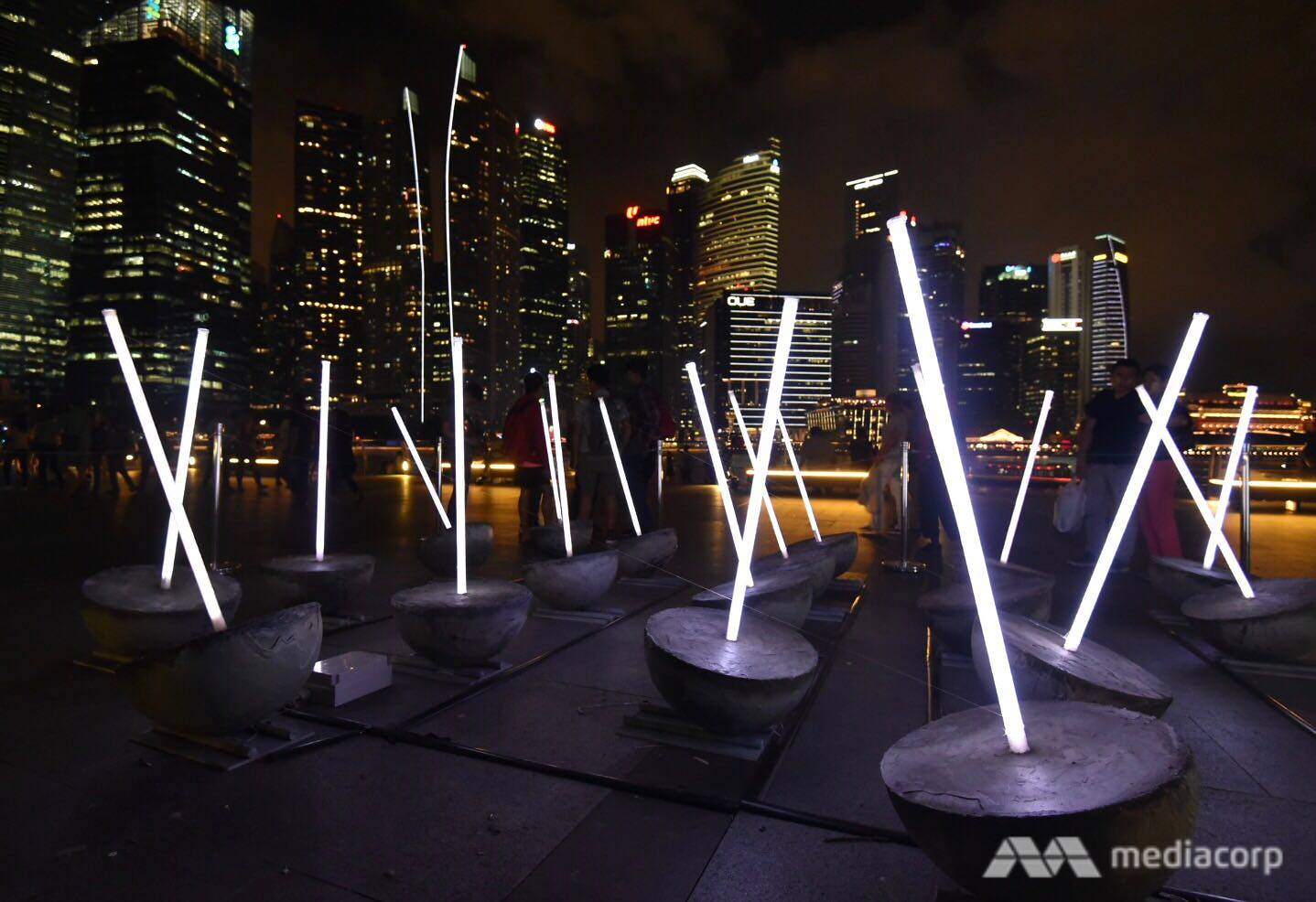
Light Breeze is inspired by the gentle sways of cogon grass – or the lalang plant. 

i Light 2018 Light Breeze

Light Breeze by Singapore’s LASALLE College of the Arts is a tribute to the overlooked and diminishing flora and fauna within Singapore. It can be found by Mist Walk. (Photo: Jeremy Long)

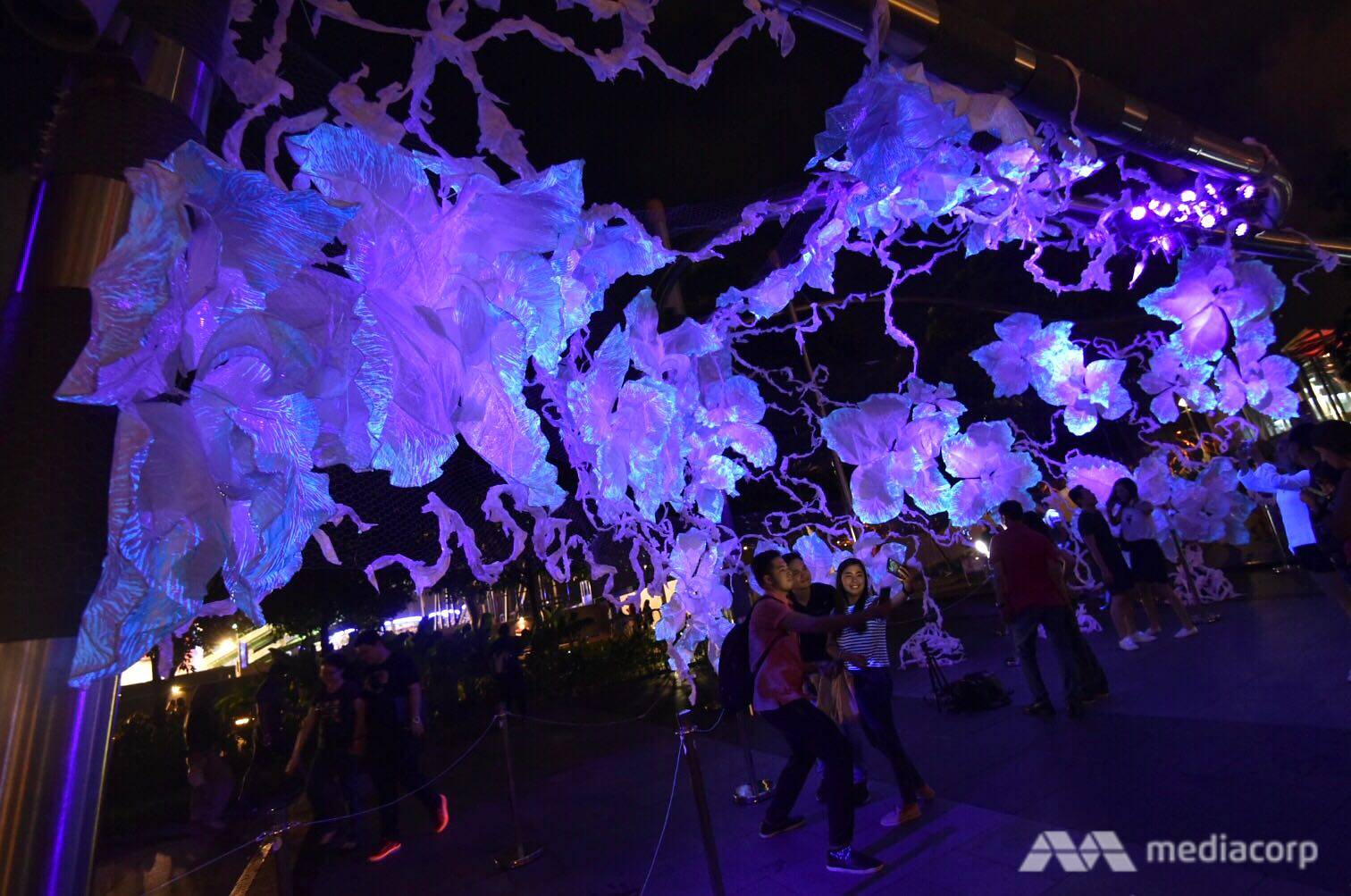
Enter a world of dreams and fantasies in this installation of numerous giant orchids. The delicate light and dreamlike structure makes it perfect for fantastical selfies. 

i Light 2018 Dreamscape

Dreamscape by Poland’s Magdalena Radziszewska can be found on Anderson Bridge. (Photo: Jeremy Long)

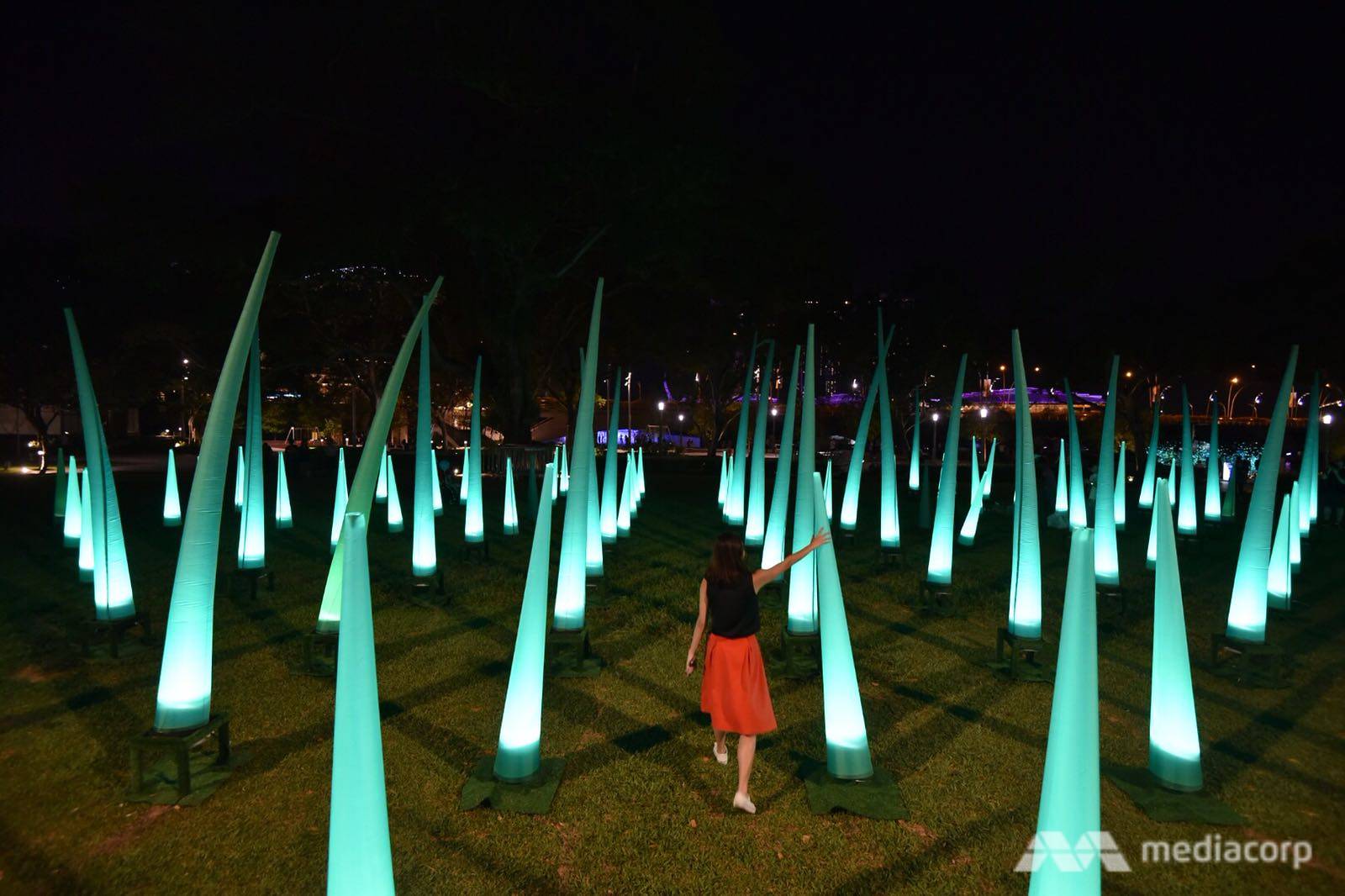
Venture into this glowing grass field; touch, feel and hug these larger-than-life plants. 

I Light Marina Bay5

Dancing Grass by South Korea’s Yuree Hong and Siyoung Kim moves with the wind, mimicking a dancing grass field. It can be found at Esplanade Park. (Photo: Jeremy Long)

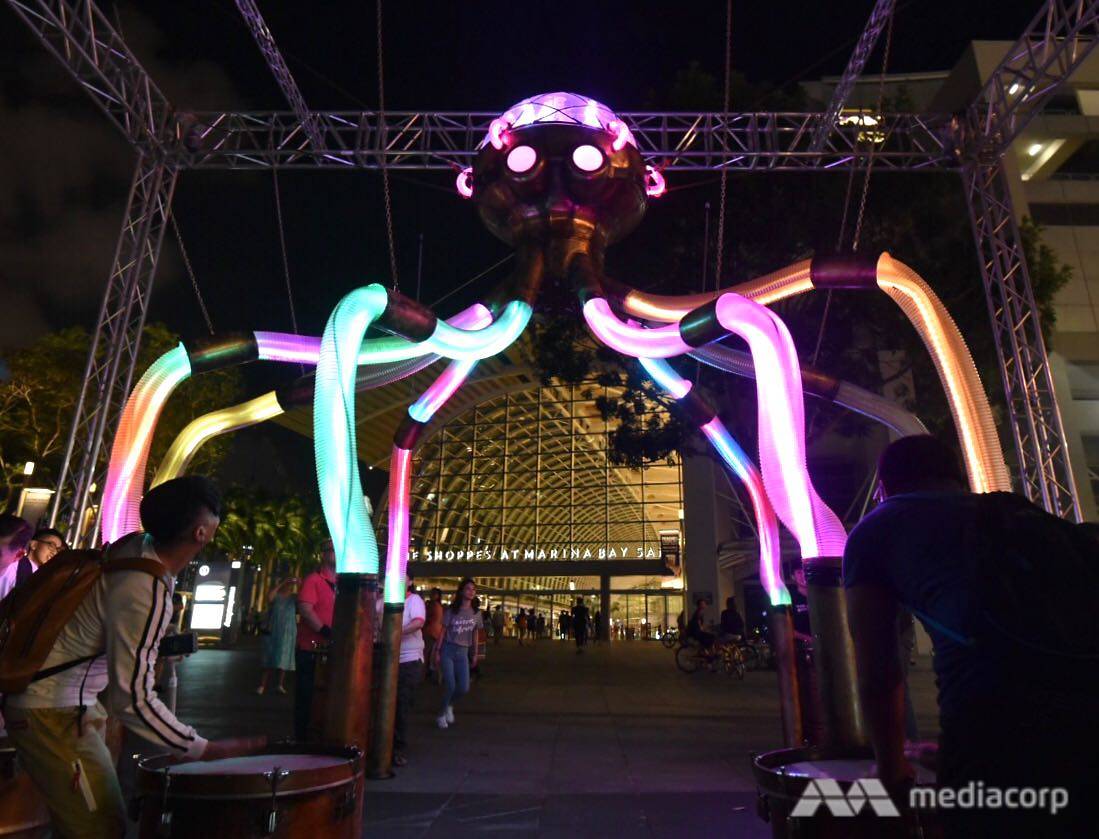
Light up Octopoda by hitting the drums at the base of each of the creature’s tentacles. 

i Light 2018 Octopoda

Octopoda by Australia’s amigo and amigo can be found in front of the Marina Bay Event Square. The drums at the base of the creature light up its legs and animates its musical mind. (Photo: Jeremy Long)

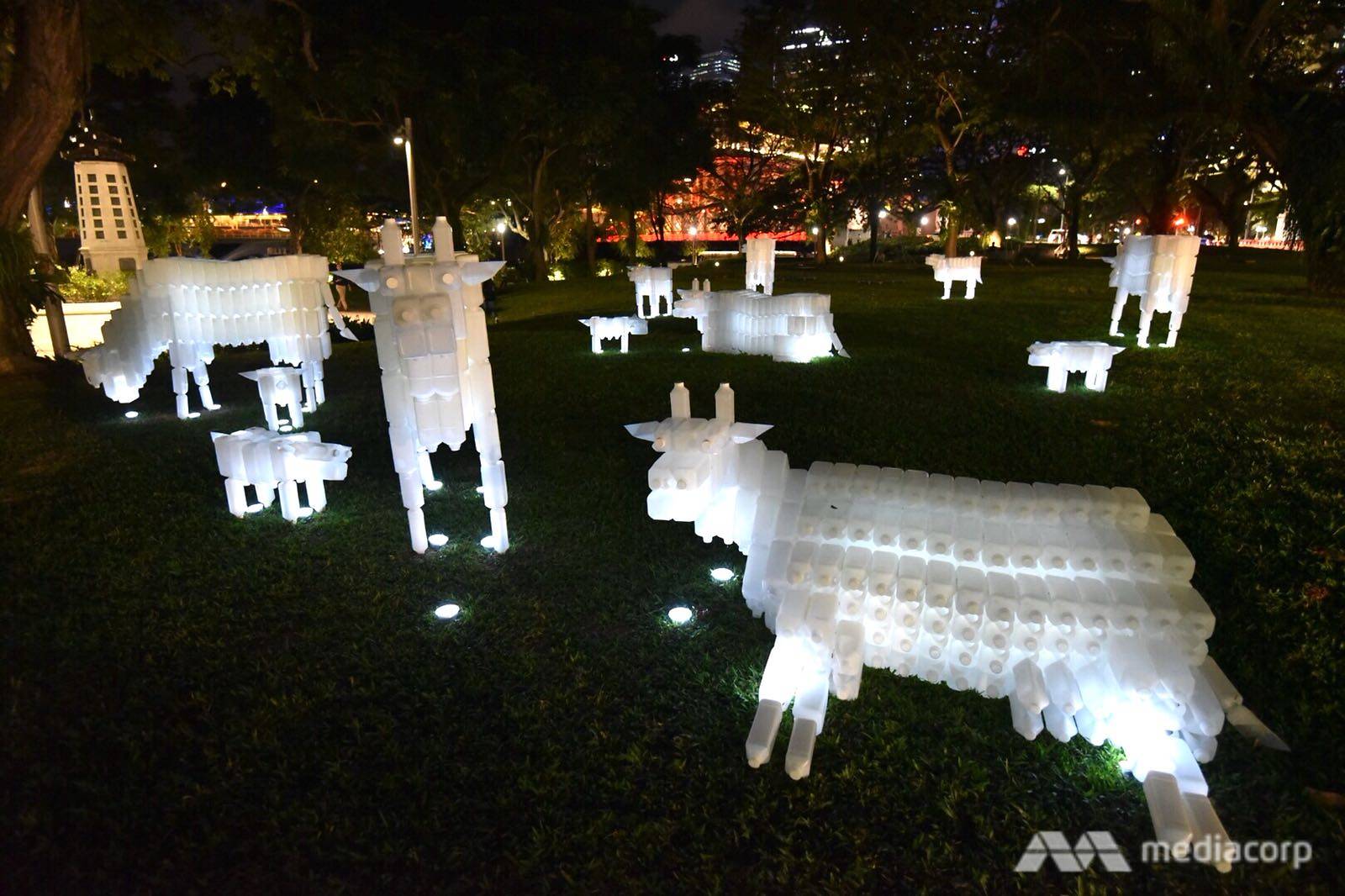
Moo – these cows made of milk bottles are meant to spread the message of sustainability.

I Light Marina Bay 4

Milk Bottle Cows by Singapore’s BP Loh, made up of more than 2,000 plastic milk bottles, can be found at Esplanade Park. (Photo: Jeremy Long)

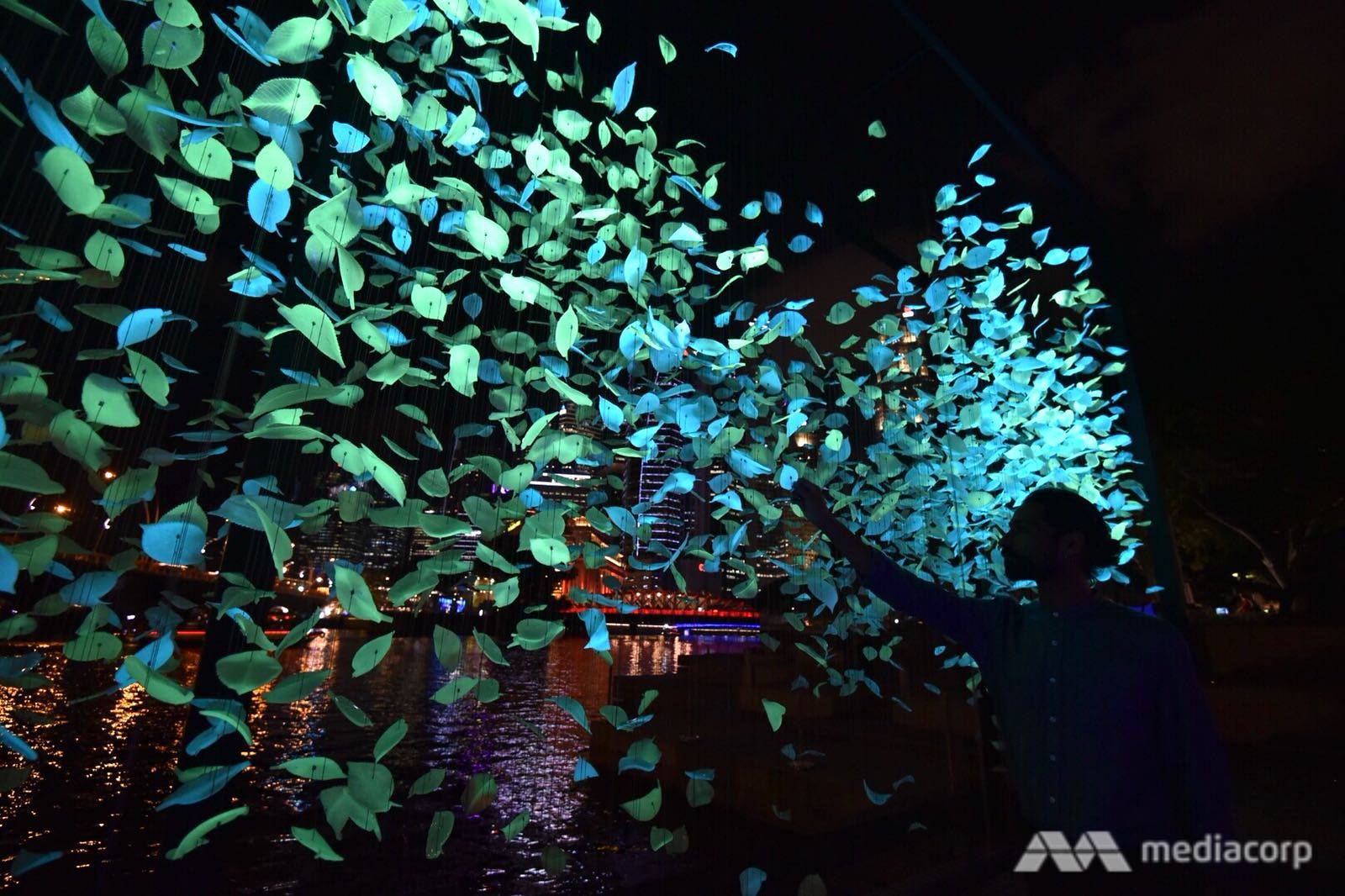
Interpreting the process of photosynthesis, this installation encourages visitors to capture the movement of shedding leaves and their reflection. 

I Light Marina Bay6

Flawless by Italy and The Netherlands’ Studio ALEX is based on the ephemerality of nature and can be found at Esplanade Park. (Photo: Jeremy Long)

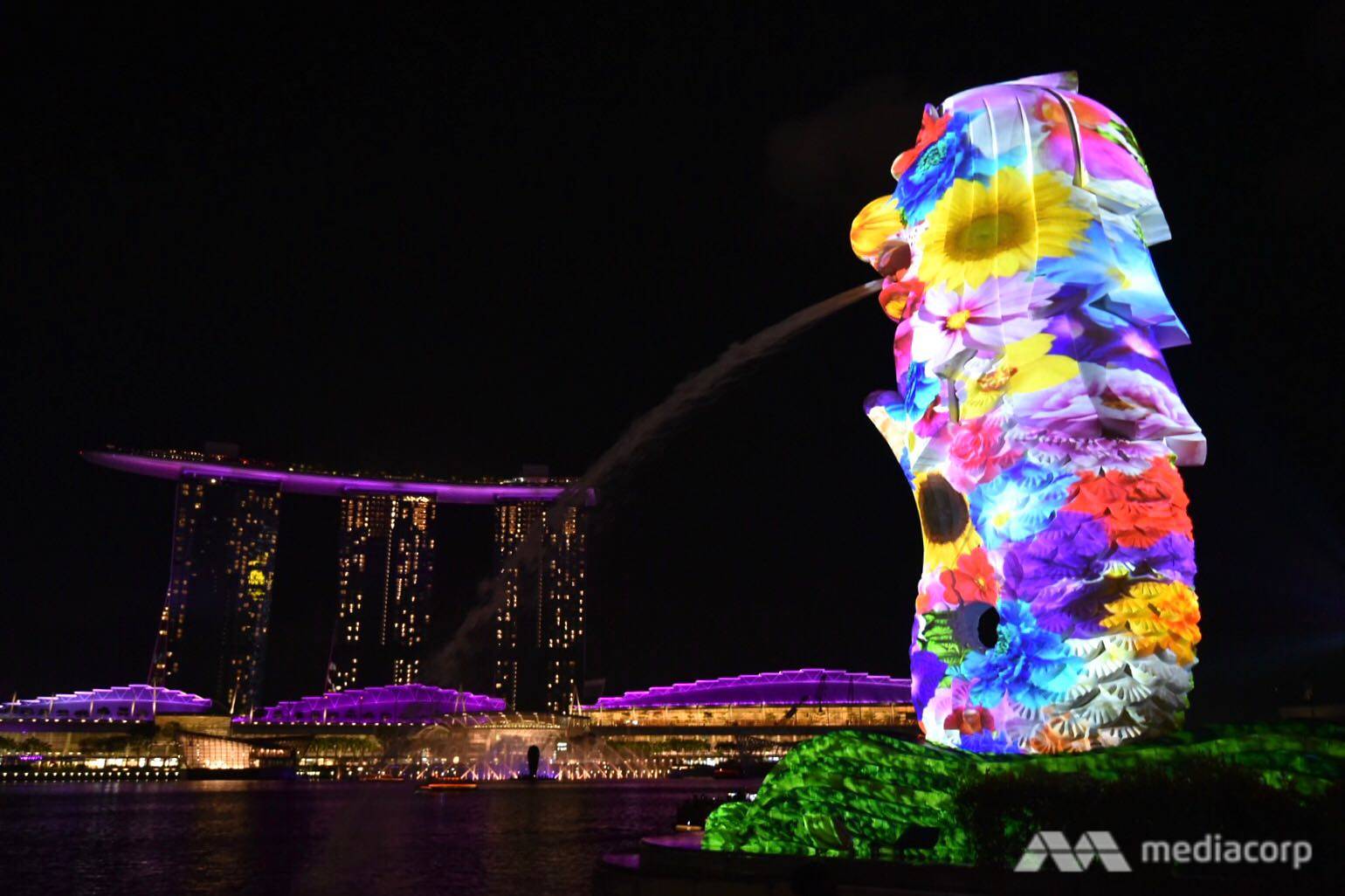
Watch Singapore’s iconic Merlion transform in this lights show. 

i Light 2018 Elements of LIfe

Elements of Life by Malaysia’s Flex Chew brings the audience through a journey from space to Earth and can be found at Merlion Park. (Photo: Jeremy Long)

i Light Marina Bay is on from Mar 9 to Apr 1. The main event is from 7.30pm to 11pm, extending to midnight on Friday and Saturday. Admission is free. 

Source link

Hong Kong’s Tsui Wah eatery to open in Singapore

0

SINGAPORE: Hong Kong’s famous Tsui Wah eatery will soon open in Singapore after Jumbo Group announced on Friday (Mar 9) its partnership with the brand. 

Famous for its crispy bun with condensed milk, baked pork chop rice and milk tea, this will be Tsui Wah’s first entry into the Southeast Asian region. 

In a press release, Jumbo said that its indirect wholly-owned subsidiary Jumbo F&B Services had entered into a joint venture agreement with Kang Wang, a wholly-owned subsidiary of Tsui Wah. 

Jumbo and Tsui Wah will work together to bring the Hong Kong-style “Cha Chaan Teng” into Singapore, the press release said.

No details are available on when or where Tsui Wah will open in Singapore, or whether the eateries will share the same menu as those in Hong Kong.

“We will share them with you as and when they become available,” said Jumbo, in response to queries from Channel NewsAsia.

tsui wah causeway bay

A Tsui Wah restaurant in Hong Kong’s Causeway Bay. (Photo: Google Street View) 

​​​​​​​

Cha Chaan Teng, which literally means “tea restaurant”, is a type of restaurant popular in Hong Kong for their affordable local cuisine. 

The Tsui Wah Group currently has 70 outlets in Hong Kong, Macau and China. 

Jumbo’s group CEO and executive director Ang Kian Meng said that the move is part of the group’s strategy to “grow our network of restaurants, and to further strengthen our foothold in Singapore”. 

“We intend to capitalise on the popularity and growth potential of the Hong Kong-style ‘Cha Chaan Teng’ market in Singapore to broaden our local customer base,” he added.

Source link

S$3.3 million worth of elephant ivory seized in Pasir Panjang

0

SINGAPORE: About US$2.5 million (S$3.3 million) worth of elephant ivory was seized at the Pasir Panjang Scanning Station on Monday (Mar 5), Singapore authorities said on Thursday.

The shipment from Apapa, Nigeria, was declared to have contained groundnuts, but an inspection by the Agri-Food and Veterinary Authority (AVA) uncovered 61 bags with a total of 1,787 pieces of ivory, weighing about 3,500kg. 

The ivory, which was to be re-exported to Vietnam, was seized and the importer is assisting with investigations, the Immigration and Checkpoints Authority (ICA) and AVA said in a news release. 

ava ica seized illegally imported elephant ivory

The shipment, from Apapa in Nigeria, was declared to have contained groundnuts. (Photo: ICA, AVA)

It is against the law in Singapore to import or export any illegal wildlife species, including their parts and derivatives under the Convention on International Trade in Endangered Species of Wild Fauna and Flora (CITES). Elephants are protected under CITES and international trade in elephant ivory is prohibited.

The same penalties apply to transits and transhipments, ICA and AVA said.

Offenders face a fine of up to S$500,000 and two years’ imprisonment, and the forfeiture of the items or animals.

Source link