Singapore
Sunday, March 11, 2018 – 10:30
Important for Govt to remove any doubt about timing of GST hike to protect its integrity: Chee Hong Tat
The Straits Times
Others
SINGAPORE: Seven years ago Desmond (not his real name) popped a little blue pill in a bid to rescue his marriage. And the Singaporean businessman still remembers being blown away by his virgin Viagra experience.
“It worked very well,” said the 57-year-old, who had been struggling to keep an erection. “I was shocked by the result initially, and then the lasting strength of it.
“It helped me maintain a sexual relationship with my wife. It took away the stress I felt from being unable to perform … It might have helped my marriage in one way or another,” he reflected. “And I haven’t stopped taking it since.”
Twenty years ago in March 1998, the drug got regulatory clearance by health authorities in the US, a significant first step into the global mainstream. Since then, Viagra has firmly cemented its identity as the signature, “iconic” treatment for erectile dysfunction (ED), at least according to the pharmaceutical firm responsible for its birth and subsequent entrenchment into popular culture.
A local spokesperson for the US corporation Pfizer, whose name is branded on each diamond-shaped tablet, said approximately 66 million men worldwide have taken Viagra since 1998. It was first approved for use in Singapore in 1999, as a prescription-only drug which cannot be bought over the counter in pharmacies.

Viagra pills displayed at a press conference in Singapore in 1999. Local hospitals and clinics had begun receiving the drug as manufacturer Pfizer assured supplies were sufficient to meet “encouraging” demand. (Photo: AFP/Roslan Rahman)
There are no specific local statistics available, though doctors Channel NewsAsia spoke to indicated a year-on-year growth in usage.
“Currently, I expect to see at least one or two new patients a day for ED,” said Dr Justin Sim of Atlas Pacific Medical, a clinic specialising in sexual health. “Most often, new patients will try one box of the medication first to make sure it works for them and that they tolerate it well.”
“For returning patients, I expect to see three to five per week. Usually they buy several boxes at once – as long as I’ve performed the physical examinations to make sure it is safe for them to continue.”
Said Dr Tan Kok Kuan of the Dr Tan & Partners group of sexual health clinics: “For the past two years, our group prescribed about 4,000 tablets of Viagra per year. There are many other factors like natural business growth … but I can definitely say we’ve been prescribing more Viagra and other medications for ED.”
“I expect the upward trend to continue as more men look towards Viagra and its like for help with ED,” Dr Sim affirmed.
“IT ALWAYS WORKED”
After having “intimacy issues” with his wife for “a while”, Darren (not his real name), a Singaporean in his late 40s, sought help with Dr Tan and was prescribed Viagra in October last year.
Describing his first time using the drug, he said: “I felt warm. It wasn’t spontaneous, but it helped. And after that, it always worked.
“It’s just the headaches I need to deal with … but if you need to do something, you need to do something.”
Patients are usually warned they could experience headaches, blurred vision, blocked nose, nausea and other side effects. But for many, these issues are outweighed by the results. According to Dr Tan’s website, the pill works for about 70 per cent of men with ED, and it is clear also that he and his peers hold Viagra in some regard.
“It was the first oral medication with proven efficacy for ED,” said Dr Ng Chee Kwan, director of the CK Ng Urology and Minimally Invasive Surgery clinic.
“Viagra has had an immense impact on sexual health for men in Singapore, and the rest of the world for that matter,” Dr Sim asserted. “If ED is an issue, you can be sure Viagra has played a big part in relieving that issue for many men. When we consider sexual function and ED, it would be a challenge to identify many other options that have had such an impact.”
“Viagra revolutionised the treatment of ED not only in Singapore but the world,” said Dr Tan. “It was the first effective, painless and convenient treatment for ED.”
He could not emphasise the latter two aspects enough, in contrast to the pre-Viagra days when penile pumps, injections, surgical implants, shockwave therapy and pellets thrust into the urethra were the only “painful, cumbersome” options on the table.
A shockwave therapy device for erectile dysfunction displayed during a conference of sexology in France in 2016 (Photo: AFP/Francois Nascimbeni)
The doctors noted that these methods either failed to work for everybody or caused considerable discomfort and inconvenience – in some cases even leading to emergencies such as priapism, a prolonged and painful erection.
“The situation today is certainly much more favourable,” Dr Sim commented. “Viagra is safe, readily available and easy to manage.”
As Dr Ng put it plainly: “Much easier to swallow a pill.”
“VIAGRA THE STRONGEST”
Viagra’s invention, however, was pure accident. In the early 1990s, Pfizer scientists were synthesising an ingredient – first labeled UK 92-480, later named sildenafil citrate – to treat high blood pressure and chest pain.
But in the first round of trials, patients reported an unexpected side effect: Spontaneous erections. The sildenafil was relaxing certain penile muscles, allowing blood to flow into the soft tissues and producing the requisite rigidity.
Viagra was discovered in unforeseen circumstances during trials at a Welsh hospital (Illustration: Kenneth Choy)
Pfizer promptly dipped into its name bank of words certified by linguists as meaningless, came up with “Viagra”, and went on to make a boggling US$1 billion in its first year on sale.
Despite the emergence of direct competitors Cialis and Levitra in 2003, revenue peaked at more than US$2 billion in 2012, and in 2016, Viagra continued to hold market share of about 45 per cent.
While the Pfizer treatment remains the best-known of the trio, local doctors called the medications fairly similar, with prescriptions based on patients’ background, needs, expectations and preferences.
“Viagra and Levitra are effective for up to 4 hours post-dose. Cialis is effective for up to 36 hours post-dose,” Dr Ng explained.
Said Dr Sim: “Broadly speaking, I would consider Viagra the strongest followed by Levitra then Cialis.”
Viagra has also become Pfizer’s – if not the world’s – most counterfeited drug, with potentially harmful bootlegs easily purchasable online and on the streets.
Last year, Channel NewsAsia reported on peddlers in Singapore’s Geylang area selling 10 fake “Viagra” pills for S$25. According to Dr Tan’s website, a box of four Viagra pills costs at least S$53.50.
Some of the purported Viagra pills for sale in Geylang show a dosage of 1000mg, when legitimate ones usually come in dosages of 25mg to 200mg. (Photo: Aqil Haziq Mahmud)
Although he started out with a legitimate doctor’s prescription of Viagra, Desmond admitted he later “got it from other sources across our checkpoints”, but did not reveal more. Viagra is also prescription-only in Malaysia.
“I’ve gotten used to the effects … I don’t feel any different,” he claimed.
Desmond may also have gotten lucky. In October 2017, Singapore’s Health Sciences Authority (HSA) said there were 17 cases over the past five years of people suffering “adverse effects” from illegal sex drugs. Back in 2014, HSA also revealed that since 2008, these illicit substances had left at least 11 men dead and caused over 300 to experience “nasty reactions”.
Pfizer is now exploring the option of making Viagra a non-prescription drug – and late last year announced it would start with Britain in 2018 (Photo: AFP)
“THERE IS LESS SHAME”
With the expiry of its patents, Pfizer’s Viagra sales have declined in recent times, dropping to US$1.2 billion in 2017. But go to its official Viagra.com website and the tagline below the instantly-recognisable blue silhouette reads: “Original brand, still the one to talk about”.
On this, the doctors agree that if Viagra has done anything right over the last 20 years, it is to make men more open to talking about their sexual issues.
“Viagra certainly has helped by being a conversation starter,” Dr Tan observed.
Viagra is credited with turning a bedroom frustration for many men into an openly-talked about medical issue (Illustration: Kenneth Choy)
In an email, the Pfizer Singapore spokesperson said: “Through Pfizer’s investment in research and education, and partnerships with academia, Pfizer has helped transform ED from being a topic of private shame to a publicly discussed and accepted medical condition.”
Desmond concurred. “I feel that there is less shame to it now. ED is a common and widely accepted illness that many men have suffered from or will suffer from in the future.
“It used to be associated with a lack of masculinity, but now that we are more educated we understand that like cancer it can happen to anyone, anytime.”
Dr Ng said Viagra’s introduction has led to more men seeking medical treatment for their sexual problems. “Its availability was a strong factor in bringing men’s sexual health issues into the mainstream,” he added.
Said Dr Sim: “I would also say that public awareness topics such as World Aids Day has also helped bring the other aspects of sexual health to the forefront … But we are still only scratching the surface.
“Most men will experience erectile dysfunction for many months to years before they seek help, even though they know about options such as Viagra.
“Most often the taboo and perceived emasculation is enough to stop them,” he stated. “Most have taken big steps just to see me.”
Darren has no regrets taking that leap of faith to go to a doctor. “I’m definitely more confident now. I’ve stopped giving excuses,” he declared.
“In just these few months I can say yes, in terms of my marriage, Viagra has changed my life.”

SINGAPORE: Joscelin Yeo never won an Olympic gold medal but, for many years, she was the larger-than-life national swimmer whose triumphs in the pool made a nation proud long before Joseph Schooling came on to the scene.
Her broad-shouldered swimmer’s body pushing against the water was a sight to behold especially during the years when no one else of her calibre was representing Singapore internationally.
Ms Yeo won 40 gold medals at the Southeast Asian (SEA) Games in her 17-year competitive swimming career. She is the only athlete on record to have won that many SEA Games gold medals. She also represented Singapore in the Asian Games, Commonwealth Games and four Olympic Games.
Her international swimming career began at the tender age of 11, at the 1990 Asian Games.
Just a year later, she got a rude shock.
At her SEA Games debut in 1991 in Manila, she won two silver and three bronze medals.
“I WAS NOT LIVING UP TO PUBLIC EXPECTATIONS”
You would think this would be enough of an achievement for a 12-year-old. But others didn’t think so.
“I got a bad report in the media saying that I didn’t come home with any golds,” she says.
“I was 12 and I was swimming at my first SEA Games. But because I was representing the national team, the expectation was that you come home with gold medals. So I knew I was not living up to public expectations.”
It feels as if a dark cloud is progressively descending on the room as we further discuss the ugly side of competitive sport.
“It was tough because I think at that point, there wasn’t a group of swimmers who were performing well that you could spread the news across. It was just me.”
She actually quit swimming for a few months after the negative media coverage.
“I remember very distinctly telling my mum that I just wanted to swim but if swimming came with all these bad reports and stuff that I had to deal with, with the media, I just don’t want to do it.”
But an Australian coach, who was then a head coach in Hong Kong, brought her back from the brink of permanent retirement.
His advice was simple.
“He said, ‘Look, you have the chance to do something really great here. You have a talent that not a lot of people have and you just focus on that.’ For that to have come from a very reputable coach and someone I respected … I just took a leap of faith and said ‘Okay, I’ll try it’.”
Many would agree that it’s a good thing she did. Today, in spite of having never won an Olympic medal, she is seen as one of the pioneering legends in Singapore swimming.
Her life today is markedly different.
She works as a counsellor at a church. It’s a job she describes as a calling.
Her driving force is to “hopefully give people hope and light for the situation they are facing”.
Her four children also keep her busy, but she continues to contribute to the sport as Vice-President (Swimming) at the Singapore Swimming Association.
HER LOWEST POINT
However, her memories of her own sporting career are bittersweet.
The 39-year-old recalls the bitter memories with startling clarity.
Her lowest point was at the Sydney Olympics in 2000.
“I had been swimming really well. In fact, just a few months before the Olympics, I broke a world record with my team. I got to the Olympics and I was told that I had a press conference scheduled. I was on my way to the press conference when I was told, ‘You need to make a detour and your brother needs to speak to you.’ and I’m thinking, ‘Why does my brother need to speak to me?’”
He had bad news about her younger brother, who was involved in an accident in Singapore. The taxi he was travelling in was hit head on by another vehicle. The taxi driver was killed instantly. Her brother, who was sitting in the front passenger seat, suffered serious injuries.
“He was all beat up, his joints were broken and dislocated and he was in a coma. My older brother and my mum, who were at the Olympics to support me had tried to keep it from me, at least till after my events but the media wouldn’t have that. They were going to ask me about that at the press conference.”
Her family had kept it from her for a few days.
“I couldn’t focus. I’ve always grown up protecting my younger brother and I felt that his accident was on me in some weird way. I felt that I should’ve been there to protect him and I wasn’t. The only reason I wasn’t there was because I had chosen to go to some faraway country to swim.”
All her feelings had to be swiftly put aside though.
“I didn’t know if I wanted to swim anymore and yet the Olympics was before me. The weight of the country was on me and everybody was expecting me to perform. But I had a struggle going through my head and my heart and I just didn’t know what I wanted to do.”
But she soldiered on.
“I went to the press conference. They asked me and I just said, ‘Look, I don’t know. I just want to know how he’s doing.’ Also, there was no justification for me to pull out of my events, so I swam.”
Her head wasn’t in it.
“When it comes to race day, 90 per cent of it is mental.”
Her brother recovered well, but she was disappointed in her performance at the Games.
“You have goals to want to win a medal, but at the end of the day, it’s not the only thing that matters and you walk away. I gave it everything I had,” says Joscelin Yeo. (Photo: Facebook / Joscelin Yeo-Purcell)
NO OLYMPIC MEDAL
She participated in three other Olympics – the 1992 Barcelona Olympics, the 1996 Atlanta Olympics and the 2004 Athens Olympics – making her the only Singaporean to have represented Singapore four times at the Olympic Games.
What does she think prevented her from winning a medal?
“When I went to my first Olympics, I was 13 and I think at that time, I was sent because I was the fastest in Singapore. They sent me for exposure. At the subsequent Olympics, I was four years older, but I was not quite at the level to win a medal. I was on the cusp of making the B finals and so there was progression.
“The Sydney Olympics in 2000 would probably have been my best chance of making the finals but because of what happened to my brother, everything just fell apart.”
Her final Olympics in 2004 also didn’t see her succeed, in spite of the fact she gave it everything she had.
“You have goals to want to win a medal, but at the end of the day, it’s not the only thing that matters and you walk away. I gave it everything I had. For the last four years I had poured my heart and soul into training, into preparing myself for this event and it just didn’t go my way.”
She intended to leave competitive swimming after the 2005 SEA Games. But she did well at the Games, so she decided to continue till the 2008 Beijing Olympics. However, after the 2006 Commonwealth Games and the 2006 Asian Games, she decided it was time to stop. She did not have the motivation to carry on.
“It’s ten times a week, three hours a session. It’s a big commitment. Do I have the drive to keep doing this? At the end of 2006, I asked myself that question and I didn’t feel that I had that drive that was necessary.”
When asked what caused the drive to dissipate, she struggles to explain.
“I don’t know. There had been seasons in the past where I felt like I don’t want to do it and I throw my hands in the air but it always passed. This was different. This wasn’t out of frustration. There was this “settled-ness” on the inside of me and I just knew that this is it.”
Her goal previously was to at least make it to the top five at the Olympics.
“I MADE THE BEST OF WHAT I HAD”
Why does she think she never made the made the mark in spite of giving it her all?
“It’s really hard to say. When I left Singapore to go overseas, I went because there was nobody here that could coach me to a higher level and so I didn’t have the kind of resources that the athletes have now with sports science, with sports medicine, with coaching of a decent level within Singapore. I had to go search for it at a time when things in general weren’t as developed as they are now. That can be tough.”
Her search took her to Australia in 1995, and to the US from 1999. In 2001, she followed her coach when he transferred to the University of Texas at Austin.
“There’s so much involved in moving countries. You’ve got to adapt to a different way of life, to different types of food, find a way to look after yourself. I started doing that when I was 14. Not many people have to live on their own, cook their own food, do their own laundry at 14 and try to be successful in their sports and their studies. I found it tough.
“Given where sports was in Singapore at that time, I think I made the best of what I had. Could it be different given the resources that they have now where they can start from an even younger age? Perhaps.”
“Fair enough, they have to get their story in but so do I. I have to swim. If I don’t swim well there’s no story,” says Joscelin Yeo about her relationship with the media. (Photo: Facebook / Joscelin Yeo-Purcell)
A FEAR AND DISLIKE OF THE MEDIA
As she was growing up, she also developed a reputation for being stand-offish with the media.
She admits to being naturally shy and introverted, which made dealing with the media even harder.
“It got the worst at the 1993 SEA Games. I was swimming ten events over five days and the time between events were very short. After each event, I would have to warm down and get ready for the next event. But the reporters wanted their story and they wanted it immediately. Unfortunately at that time, our team manager was not equipped as to how to handle the media and how to handle a swarm of media and so I was left to fend for myself.”
Reporters chased her down at the warm-down pool.
“I just told them that I have to get ready and I can’t do this now but they wouldn’t take no for an answer. Fair enough, they have to get their story in, but so do I. I have to swim. If I don’t swim well there’s no story.”
She grew to have a fear and dislike of the media.
“I got a negative report saying that I refused to talk to the media without the proper context of what had happened. I did not like talking to the media because I wasn’t sure they were going to write anything nice again.”
I remark that much of the coverage was positive.
“They wrote about the results, but a lot of times, they didn’t have anything good to say about my personality. I was a teenager. I was growing up. To have all that splashed in the newspaper was very tough. You’re going through that awkward stage in life. There was no buffer. There was nobody to help me. I had to deal with the media all by myself.”
Her mother was sometimes able to act as a buffer but at major competitions, she was not allowed into certain spaces and could not help.
However, she grew to improve her ability to face the spotlight, seeing it as a social responsibility.
“Eventually, I came to accept the fact that it’s part of who I have to be and it’s part of who I am as a national athlete. As I matured, I learnt how to handle that as well.”
This also explains why she doesn’t shy away from the media today.
In fact, in spite of not naturally gravitating towards the limelight, she wrote her autobiography, On the Move: My Career, My Story, in 2004.
“IF I HAD A CHOICE, I WOULD RUN AWAY”
But what she says next implies that in spite of maturing enough to deal with the limelight, her preference is still to shy away from it.
“Having time away from Singapore also allowed me to grow up without being under a constant spotlight and that helped me a lot.”
I remark she must have enjoyed the limelight at times, especially the thousands of adoring fans.
“Not really. It’s not really my thing. While I really appreciate the support from the fans, it doesn’t determine my self-worth and so I think while it’s nice, it’s not going to change who I am. I just accepted it as part of my social responsibility. But if I had a choice, I would run away.”
Joscelin Yeo with fellow national swimmers. (Photo: Facebook / Joscelin Yeo-Purcell)
“I DON’T THINK I MISS ANYTHING”
We’ve established she doesn’t miss the limelight, but what she tells me next is even more surprising.
She doesn’t miss anything about competitive swimming.
Just to be sure, I ask her the question again.
“I really don’t think I miss anything. I don’t miss waking up at 4:30 in the morning. Never been a morning person. I don’t miss that rigour.
If she doesn’t miss competitive swimming, nor the limelight that came with it, why then did she push herself so hard back then?
“Because I loved the sport. I enjoyed competition, I enjoyed the challenge. I wanted to be the best that I could be. I wanted to see how far I could go, but I don’t really miss anything about it. The adrenaline was fun but I have other opportunities now to get my adrenaline going.”
She’s referring to CrossFit training and her four kids, who she takes swimming from time-to-time.
It makes me wonder if she would have done something else with her life if given a choice.
“No, I chose swimming. My parents exposed me to a lot of things – piano, violin lessons and a lot of sports, but I chose swimming. I just loved the feel of the water. I made the choices to want to go overseas to get better. I made the choice to leave my family and to pursue my sporting career.
“Looking back, I would have chosen it again. There are many things that came out of my time in sports, such as learning how to deal with failure. It sounds simple but there are a lot of people in life who don’t know how to deal with failure. There are a lot of people who don’t know how to persevere through something. Sports has taught me that.”
A FATHER IN TROUBLE WITH THE LAW AND LOSING HER MOTHER
Public scrutiny followed her even after she retired from swimming.
In 2011, it was reported that her father was sentenced to jail and fined for running a loan shark racket.
“He made his mistakes and he served his time. My father is an adult. I don’t feel that I need to speak for his actions, so that’s all I have to say about that.”
She and her father are very much in touch, she says.
But her mother who supported her throughout her career, died as a result of a brain tumour in 2009.
“She went for an operation but they couldn’t remove the entire tumour. So she went for chemo. But she lived a lot longer than the doctor said she would. They told us she’s got two months left. But she went on for another two and a half years. So we were really grateful for that.”
Watching her health deteriorate was painful.
“It was tough seeing my mum, who’s an amazing and strong lady who would run interference for me and do all that, be in a place where she was so immobile.”
Her mother was a powerful influence.
“She was a very strong independent lady. I think she’s somebody who always believed if you want to do something, then go all out. She also showed me the strength of a mother’s love and you can love your child through even their worst moments.”
When Ms Yeo retired she didn’t have a plan but when someone at her church approached her about a counselor job, “it clicked on the inside.”
“One of my other passions was being able to impact young people and this job allowed that.”
Joscelin Yeo (third from right) with the rest of the executive committee of the Singapore Swimming Association. (Photo: Facebook / Joscelin Yeo-Purcell)
MONEY FOR SPORTS
Her job as Vice-President (Swimming) at the Singapore Swimming Association also keeps her very in touch with young people in competitive swimming and the challenges associated with it today.
She says that during her career, she felt blessed to have the support of the Singapore Sports Council, now knows as SportSG
“When I chose to go overseas, they supported my training expenses. Not 100 per cent, but they covered quite a bit of it. I was one of the first few whom they poured so much support into. I’m thankful that my parents were able to supplement that. It was just survival. I wasn’t making money or building up savings, but it was enough.”
She had an apparel sponsor back then, but that was short-lived. She claims that today, more corporates are willing to invest in athletes, but this still requires some convincing.
“These days we are able to use data to track where an athlete is going, how he’s doing. We can use many data points over a period of time, even if they haven’t won medals to make a case for athletes.”
In fact, the spexScholarship is also given on the basis of such data points.
“They don’t just step in later but they currently they look at people who have the potential.”
However, she thinks sources of funds need to be varied.
“If you’re only relying on the government, that’s only one source. How much do you expect it to grow? We need to find other sources. There is something about being invested to succeed and not just having everything handed to you.”
The Singapore Swimming Association has a team in place to raise additional funds. Inevitably, Joseph Schooling comes up.
“Sometimes when people make comments, they don’t have the whole picture. It’s not that we have not been supporting Joseph. If you look back at the records, the Government has been supporting him. But not 100 per cent. Joseph went overseas and of course, expenses overseas are also higher. It’s a chicken and egg thing. You put your money in those who show the most potential and more after they reach a certain level. Yet athletes need that support to be able to get better. Until he was winning at that level, the government, I think, supported him appropriately. His parents might disagree.”
“The corporates have even higher expectations. Companies want to see results before they invest in somebody.”
Ms Yeo was also a Nominated Member of Parliament from 2009 to 2011 and one of the issues she spoke against was the Foreign Sports Talent Scheme. She stands by her views.
“I think that it’s good to bring in foreigners for purposes of sparring. But at the end of the day, they should help to raise the standards here. The purpose has to be clear. I think it’s important that that knowledge is transferred to the local people.”
The foreigners who work at the Swimming Association’s secretariat and the foreign coaches, she claims, are doing just that.
During her two and a half years as NMP, she made only seven speeches. This was highlighted by some media organisations at the time.
“It was not an easy time. A lot goes into preparation. I was just starting out working and I found it challenging to juggle both. But I have to say I had many backroom conversations with MPs that were not necessarily recorded. These helped me bring forth the views on sports too.”
“GIVE BACK TO THE COMMUNITY WHAT SPORTS HAS GIVEN YOU”
We end on an uplifting note. Her vision for Singapore sports is very much tied to what she herself would like to be remembered for.
“Just like how my mum had impacted many people, I want to be remembered as somebody who was able to give back and impact the swimming scene while I could.”
She would like to see generations of sportspeople who are “not self-centered” but those who “understand that they can make an impact on society”.
“If you’ve learnt how to really persevere through something, talk to kids who are down and out and share with them how you push through when you don’t see success, how you find a way to succeed. Give back to the community what sports has given you.”
SINGAPORE: For many homeowners, the Chinese New Year period is traditionally a time of year to carry out a spring clean, take the opportunity to chuck out unnecessary clutter, or think about a complete makeover of their homes.
Home magazines and websites are filled with advice on “tasteful” holiday décor and tips on how changes to our homes can make them more liveable, desirable and conducive to improving our overall well-being.
As living spaces become smaller, a growing theme of these articles is a focus on minimalism, especially in the form of Japanese- or Scandinavian-inspired décor. A clean, simple and uncluttered home leads to a clean, simple and successful life – or so the general message apparently implies.
Japanese author and organisation consultant Marie Kondo’s books have sold in the millions, promoting what she promises is the “life-changing magic” of decluttering. In her books, she advocates that an ordered, minimalistic approach to home life leads to a calm and motivated mindset, clarity of thought, greater productivity and eventual happiness.
It’s a sight in stark contrast to the homes of mine and my friend’s grandparents that are piled high with mementoes, trinkets and ornaments – in other words, the complete antithesis of minimalistic living.
The traditional philosophy behind the Chinese New Year spring clean is about gaining a fresh start for a successful year ahead. It is often also about presenting the best face of our homes to visitors during the festive season.
BUYING LESS BUT SPENDING MORE
For many people, there is something inspiring about living spartanly and not getting caught up in the trap of excessive materialism. Yet minimalism, as it is generally espoused in today’s style magazines, is rarely about financial frugality.
Often the desirable, aspirational manifestation of minimalism is about buying less but spending considerably more on select luxury purchases that sell at a premium. The idea is also that because you have fewer possessions, you should be able to have nicer, more expensive items.
It could be argued that minimalism in this sense has less to do with simplifying and clarifying one’s life and more about displaying an aspirational image of luxury, prestige and success.
A minimalist bathroom, with a bath tub. (Photo: PIxabay)
Certainly many consumer goods companies seem to recognise this and have shaped their marketing strategies accordingly. A growing number of premium brands have taken a minimalist approach to their identity.
Rather than emblazoning their products with bold, brash, glitzy logos, they have opted for a more subtle, understated path, appealing to consumers who see themselves as connoisseurs and “in the know” about particular trends.
One iconic brand that has successfully adopted the minimalist approach to high-end retailing is tech giant Apple. Like its products, its stores around the world feature simple and clean lines and create an ordered, minimalist environment associated with prestige and aspiration.
Often located at busy shopping streets, Apple stores present themselves as a refuge from a harried, anxious crowd. Plenty of empty space conveys a sense of openness, whilst sleek white tables resembling laboratory desks reinforce Apple’s brand value of creativity and its open invitation to consumers to explore and experiment with its products.
Apple’s approach has been highly profitable, and one which many competitors and interior designers have sought to imitate, viewing the clean, simple and open environments of its stores as encouraging innovation and creativity.
Apple products displayed within the store, which boasts the tech giant’s signature minimalist fit out. (Photo: Howard Law)
But does this relationship between our environment and our behaviour stand up? Research suggests the psychology behind this is far from black and white.
MINIMALIST ENVIRONMENTS ENCOURAGE CONVENTION
A 2013 study by US researchers, for example, found that being placed in orderly, uncluttered environments led people to stick to conventional and traditional choices. In another experiment, the researchers found that people in these environments also made decisions that were better for their health.
However, the researchers also found that disorderly environments were the ones that encouraged individuals to break with convention, seek novelty, and be more creative and open to trying new things.
This raises an interesting question of what we value, what we think should be encouraged and what defines well-being. In a fast-changing, disruption-driven economy where innovation is increasingly valued, do we prioritise tradition and playing it safe over being more creative, open-minded and less conventional?
Indeed, if disorder encourages creativity, as the US study suggests, wouldn’t a cluttered, disordered Apple store actually attract more of the anti-conventional, creative types that Apple seeks?
A minimalist bedroom. (Photo: Pixabay)
That is unlikely to happen, but the point is that the relationship between our environments and our behaviours is nuanced and far from fully understood.
Some followers of minimalism may well find that decluttering of their home environments leads to greater clarity of thought and more productive lives.
Yet for others, minimalism may be driven less by concepts of order, frugality and inner well-being and more about managing impressions, projecting an aspirational image and presenting one’s best face.
Leonard Lee is an associate professor and dean’s chair in the Department of Marketing at the National University of Singapore (NUS) Business School.
SEOUL: They are barely one to three years old, but already, they’ve been enrolled in a highly sought-after cooking school in Seoul meant for toddlers.
As they carefully dice carrots, shape rice balls, and dust flour onto fish fillets with their tiny fingers – helped by their mothers beside them – they aren’t training to become junior master chefs.
No, the idea is that they will improve their motor skills. And, “the child is able to see the colours of the ingredients, and taste and touch them. This stimulates the five senses,” explained cooking instructor Ms Kim Haeyeon. The interaction during the process also is supposed to exercise their language skills.
So popular is this class that all spots were snapped up within 10 minutes of it being opened for online bookings.
Parents in South Korea and Singapore are shelling out billions just to help their babies develop faster and hit their milestones earlier, as the episode How To Raise A Super (Advanced) Baby discovers. (Watch it here.)
In South Korea alone, parents spent around US$3 billion (S$3.95 billion) in 2014 on enrichment classes and tuition, including English, ballet and cooking lessons for babies and toddlers. More than US$500 million dollars was spent just on kids below two years of age.
But can you really hack a baby’s growth with all these classes – and do they actually benefit junior in the long run?
YOUR BABY, A CLEVER LINGUIST?
At the tender age of four, Yesul already speaks English fluently – like the rest of her friends at Konis Montessori kindergarten in Seoul, where monthly fees are a hefty US$1,200.
She started learning English when she was just three at the private kindergarten which boasts its own specialised method of teaching English through more active and fun ways.
South Korean parents spend thousands a year on English-language lessons for their pre-school children. Some even hire native speakers just to play with their babies in English.
Ms Yeon Sook Lee, the kindergarten’s director, said a child is most sensitive to language when he is between 2.5 to 3.5 years old. But in December, the government called for a ban on teaching English to children below nine – concerned that it would stress out pre-schoolers and hamper their ability to speak Korean.
Ms Choi Hyun Joo, a researcher with the pressure group World Without Worries About Private Education, said: “When English or other foreign languages are taught, that can lead to the drop in thinking skills. As a result, they are unable to express themselves in Korean.”
However, some experts say the opposite – that babies are more able to pick up various languages when they are just a few months of age, and that they lose that ability as they get older.
Babies under a year old can actually tell the difference between all 800 sounds that comprise all the world’s languages, pointed out Dr Leher Singh, director for the National University of Singapore’s Infant and Child Language Centre.
Contrast that to adults, who can differentiate only about 40 different sounds.
“The human mind, when the baby is born, is able to take up multiple languages,” she said.
WATCH: Language learning explained (2:17)
NOT TOO YOUNG FOR THE SPA?
Another popular parenting trend in South Korea: Spas for children.
Spa Day started offering treatments for babies in 2014 due to customers’ requests. Young ones make up around 15 per cent of their clientele and each 20-minute session costs around US$35, as much as an adult facial.
Therapist Lee Hyung Sun said the massage stimulates a baby’s facial muscles and lymph nodes, boosting the immune system and helping with blood circulation. It also helps in emotional development, she added. “I think babies can be under a lot of stress too. We can make them feel at ease.”
But Ms Eudora Tang, a senior physiotherapist at the National University Hospital’s Rehabilitation Centre, advised parents to do the massages themselves – it will help them bond with their child.
“You wouldn’t want your child to be touched by strangers for such a long period. It is better for the parents to be the ones doing that,” she said.
Baby spa treatments have also made their way to Singapore. One spa here offers not just massages and haircuts for babies as young as a month old, but also water-training sessions, which are purported to help with a baby’s motor skills, sleep and balance.
The water-training involves a specially-designed neck float wrapped around a baby’s neck to keep the head above water.
Ms Tang, however, noted that a baby only develops neck control at around three months old; “before that they’re pretty floppy”.
Good neck control “is necessary” before exposing a baby to such activities, to ensure that the neck can support the head and that the float does not cause any harm, she added.
GETTING THEM TO WALK EARLIER?
Some parents send their babies to a chiropractor, hoping it would result in their young wards crawling and walking earlier.
Chiropractic Solutions Group in Singapore, for example, sees 10 to 15 babies a week, and baby Aidan is one of their youngest patients – he just turned 11 months and has been under their care since he was only one month old.
His father, Mr Farhan Mislam, brought him in when Aidan couldn’t stop crying every evening for two to three hours. He suspected it was colic. After the first chiropractic session, “his cries became less frequent within a couple of days”, said Mr Farhan.
He also claimed to have seen a vast improvement in his son’s mobility after these sessions: Aidan began crawling at nine months, compared to friends’ children who started at around a year old.
However, spinal manipulation like moving, wiggling or tapping the joints, is a controversial treatment – especially for children.
In 2016, an Australian chiropractor was suspended for cracking a four-day-old baby’s back and neck – a treatment that was deemed dangerous and unnecessary by other medical professionals, chiropractors included.
Dr Charmaine Teo, a paediatrician with the Singapore Baby & Child Clinic, said there is “no clear evidence” to suggest that going for chiropractic sessions can boost a child’s development.
She added: “We do know that there are anecdotal cases, reports of children who have undergone such practices and perhaps their parents feel that there are improvements.”
Babies typically begin to crawl when they are between six and 10 months old; and most take their first steps between nine and 12 months of age, although some take a little longer.
SIGN LANGUAGE FOR BABIES
As for speech development, babies should be saying their first words by 12 months of age. But there’s a group that claims that it’s possible to find out what a baby wants in a more efficient way.
At Baby Signs Singapore, kids between six and 18 months learn how to communicate what they want through signs, a method developed 25 years ago by two American researchers.
For example, instead of whining or crying, they can use a simple gesture to tell the care-giver that they’re hungry.
Instructor Melanie Horner said that signing is about using simple gestures to communicate the needs and wants of a baby, and it may help the child develop his speech sooner.
But just because baby hits his or her development milestones earlier, does that have any impact on his or her adult life?
“That’s a great question, and I think most scientist would tell you they don’t know the answer. There just haven’t been enough studies,” said Dr Anne Rifkin-Graboi, a principal investigator at the Singapore Institute for Clinical Sciences at A*STAR, who has spent 15 years investigating babies’ cognitive development.
“We know that the brain resources we use to accomplish a task at one age, may not necessarily be the same ones that we use at another age,” she said.
“Instead, you want to focus on really enjoying the milestones when they happen – and encouraging your child to enjoy them as well.”
Watch this episode of How to Raise a Super (Advanced) Baby here.


SINGAPORE: Shared bikes are being used less than twice a day and for about half an hour each time, according to a study by the Singapore-MIT Alliance for Research and Technology (SMART), the world’s first research paper on the subject.
The study showed that although more commuters are hopping on a dockless shared bike to get to the nearest MRT station or bus stop, usage was higher in the evenings after 5pm than in the morning peak hours.
This raises the issue of rebalancing where operators need to redistribute the bikes according to when and where they are most in use, said the report, which was published last month in the International Journal of Sustainable Transportation.
The study, titled “Understanding the usage of dockless bike-sharing in Singapore”, also revealed that shared bikes are heavily used as part of the last-mile of journeys.
The findings stem from more than 14 million records of data gathered from one of the largest bike-sharing operators in Singapore. The bike-share operator was not named.
The data collection, which took place over a period of nine days in April and May last year, was based on the GPS data of all the operator’s bikes.
WEATHER KEY ROLE IN BIKE USE
SMART Future Urban Mobility postdoctoral associate Dr Zhang Xiaohu says the findings also point to the weather as a key role in usage patterns.
“If the temperature becomes too hot, then the usage (of shared bikes) is decreased,” he said.
Dr Zhang also pointed out how Singapore’s frequent rainy weather impacted not only bike usage, but also the condition of the bike itself.
“The frequent rain really degrades the bikes much faster than other places in the world,” he said.
“I think we also need to consider how we can build more durable bikes in Singapore to really improve bike-sharing usage.”
The study also found that the supply of shared bikes was much higher in public housing estates, as opposed to private residential neighbourhoods.
File photo of oBikes parked at a bike rack in a HDB block. (Photo: Elizabeth Khor)
As for ongoing and unsightly issue of bikes being strewn about haphazardly, Dr Zhang says the problem can be addressed with a combination of social responsibility and proper bike-centric facilities.
While the government has already taken steps to tackle the problem, he said more can be done.
“Compared with the infrastructure of other transportation mode in Singapore, I think the cycling infrastructure is lacking,” said Dr Zhang.
“In order to realise Singapore’s vision of a car-lite society, I think we really need to promote active mobility patterns to build more cycling and pedestrian infrastructure for Singapore in the future.”
Dr Zhang also recommended that operators look into adjusting their fleet sizes, as oversupply can hurt their economic sustainability and cause urban and visual pollution.
SINGAPORE: About 2,000 flat-owners have been given the approval to sell their flats since an online portal was launched by the Housing and Development Board (HDB) in January this year.
The HDB resale portal, a site which streamlines the buying and selling of public housing flats for resale, aims to cut the transaction time by half, from 16 weeks to eight weeks.
Since it was launched, all flat sellers and buyers have to submit their resale applications through the portal using their SingPass. The portal can be found on the HDB Infoweb at www.hdb.gov.sg.
Mr Chea Onn Long, 35, and his wife Mandy Chan, 31, were one of the couples who benefitted from the shorter two-month process.
“I think it’s quite easy to understand … (if) you have all the documents ready, then it will facilitate the whole process,” said Mr Chea of the streamlined process.
Once flat buyers and sellers register their intent to buy or sell a flat through the portal, their personal details will be filled up automatically, using the Government’s MyInfo service.
The portal also filters out who is eligible to buy or sell. In addition, flat buyers will be able to view their eligibility for housing grants and an HDB concessionary housing loan through the portal, and apply for an HDB Loan Eligibility Letter if they intend to take up an HDB housing loan.
Buyers can also use the portal to ask HDB to confirm the value of their flat so as to determine their housing loan and Central Provident Fund (CPF) usage. They will need to pay a processing fee of S$120 to HDB.
Once the Option to Purchase has been exercised, flat buyers and sellers will complete their respective resale applications via the portal. Upon receipt of the resale application and supporting documents, HDB will verify the information provided and notify the flat buyers and sellers via SMS or email. The status of the application will also be updated through the portal.
After the application is approved, HDB will arrange an appointment for both parties to complete the resale transaction and to sign the necessary documents that require “wet-ink” signatures.
With the HDB Resale Portal, flat buyers and sellers need to attend only one appointment with HDB, instead of two previously. (Photo: Vanessa Lim)
MORE DO-IT-YOURSELF TRANSACTIONS: HDB
According to the HDB, the proportion of people carrying out resale transactions on their own has increased from 11 per cent in 2010 to 28 per cent in 2017.
With the new portal, the resale process is streamlined, thereby reducing transaction time and providing added convenience for flat buyers and sellers, said HDB.
Meanwhile, experts say they expect transaction volume of resale flats to continue to increase this year.
Mr Nicholas Mak, executive director of ZACD Group said: “Prices for resale flats continue to remain low, with very little increase, which might encourage more buyers.”
Mr Mak added that the availability of grants offered by the government, including the Proximity Housing Grant, have helped to increase the volume of flats sold.
Mr Ku Swee Yong, chief executive of International Property Adviser, said with more people putting their old flats on the market, the volume of resale transactions is likely to increase.
“More and more people are becoming aware that if you have an HDB flat that is more than 40 years old, the value may not keep well, so when they collect the keys to their new flat, they have to let go of their first flat, which pushes a bunch of resale flats into the market,” said Mr Ku, adding that prices could weaken with the increase in supply of resale flats.
SINGAPORE: It is a job he loves and has done all his life. But there is one part of it that saddens him a bit – every day when he says the words “Thank you, see you again. Have a nice day”.
Most diners would ignore him and his cheery goodbye as they leave after their meal. “They just walk away. They don’t give us any response,” said food and beverage manager Saravanan Arasan, 46.
Despite this non-reaction, he would keep his smile. After all, his workplace of four years – the restaurant he has managed – is where this quiet man at home would transform into the chatty person his customers see, or don’t see.
In fact, seeing to them makes him happy, he told Channel NewsAsia, which spent months filming him and four others for the documentary Don’t Make Us Invisible, about those who do jobs that are crucial but thankless.
They include a 77-year-old petrol pump attendant, a 23-year-old bus driver, a 75-year-old cleaner and a 38-year-old construction worker – just some of the people who keep Singapore going.
And in the case of Mr Saravanan, despite how busy his line of work gets and the stress it brings, it at least helps him to forget some of his worries at home, where he lives with his ailing mother.
LIFTED BY PASSION
He was only 17 years old when he took his first step towards a career in F&B, starting as a part-time employee in a fast food chain while he was schooling. It paid him S$1.90 an hour.
Every three months, if he passed an on-the-job test, he would get a 10-cent increment, until he was earning S$3.50 an hour. It is a far cry from the approximate S$8 per hour service staff get now.
Slowly but surely Mr Saravanan climbed the ladder, becoming a full-time employee and, from there, a crew leader and then a supervisor, before reaching the managerial level.
Less than five years ago, he joined the restaurant franchise PastaMania and was made the branch manager of its Jem outlet.
“When I was young, I never thought I was going to be a manager,” he admitted. But he has also never thought of quitting the industry. As he put it, “I love working in customer service … (and) talking to customers.”
That passion shows in his work. He has received a silver and a gold award for service excellence, and has also been nominated by his company for a best employee award.
Underlining how things have changed for him since young, he shared that when he first started out, he was “too shy to talk” to customers. “I didn’t know how to react to customers when (they) talked to me,” he said.
DEMANDING CUSTOMERS
He has also seen how customers have changed. “Singaporean customers are a bit demanding, I can say that,” he laughed. And that is in terms of both food and service.
“They do make complaints about food quality if the food isn’t right for them,” said Mr Saravanan, who remembers that complaints were rare when he was younger.
With the higher living standards and educational levels now, he believes that customer service has become very important, and more difficult, to the point that even a little unhappiness can lead to customers complaining.
“(And) they don’t talk to the managers, or they don’t talk to any person in the outlet – they’d straightaway write an email to the company, or maybe they … would Facebook. They like to do that,” he said with another laugh.
Even so, he does not treat such reactions as complaints, but rather as feedback “because it is for us to learn … (and) improve from there”. He added: “We must have patience with customers … a lot of patience.”
Maybe once or twice a month, however, his company sends him emails of another kind: Compliments, such as for being efficient and alert to customers’ needs. “In the service line, we need this kind of motivation from customers,” he said.
And that appreciation can more than make up for the disappointment felt when customers walk off without giving service staff a second look.
WHEN IT COMES TO CRUNCH TIME
The kind of challenges faced by Mr Saravanan were in full view as the cameras followed him at work, where he would be on duty six days a week.
One Sunday, the busiest day of the week – so busy that he could not take a break – a customer returned to look for a lost wallet.
Amid taking orders and serving food, Mr Saravanan began checking with his staff and the diners at the table where the man had been seated. And over the next hour, he searched relentlessly for the elusive wallet.
Though he had taken down the customer’s name and contact number, the man returned twice more, each time more fretful than before.
To solve the problem, Mr Saravanan promised to get the restaurant’s CCTV footage checked in the company’s main office the next morning. It would show that the wallet was most likely misplaced elsewhere.
Calling the main office for closed-circuit television footage
Having to keep calm is a key part of his job, even at crunch time, for example at another busy weekend when the dinner shift was in full swing and one of his waiters had not arrived.
With Mr Saravanan already helping to man the cash register and depending on a lean team of five – including two young trainees – to manage the dinner crowd, a manpower crisis looked set to unfold.
But then the latecomer arrived, having mistakenly thought he was scheduled to start at 6.30pm instead of 6pm. Mr Saravanan managed to laugh about it later, saying: “He was blur, but he felt very sorry for that.”
AT HOME, A DIFFERENT STORY
While Mr Saravanan’s colleagues know him for this jovial personality, it masks a pressing problem he has been dealing with at home, where he lives with his mother, brother and sister-in-law.
Last year, his mother’s health took a turn for the worse, and the 70-year-old had to have an operation to get a colostomy bag attached to her stomach. “We were very worried, and I cried (in the hospital),” he recalled.
“My mum was also worried that she was going to leave us. She … held my hand, started to cry and told me to take care of myself. That kind of stuff made me more emotional.”
Her digestive waste is now drained into the bag, which must be replaced as needed. She used to be more active but became weaker after the surgery. She also became underweight.
Doctors then found that her heart rate was low. To investigate this, an imaging test known as an angiography would be required. Though it is minimally invasive, just the idea of subjecting her to another procedure worried the family.
An album photo of Mr Saravanan and his mother.
Mr Saravanan, who is “very close” to his mother and spends his time off with her at home, has also seen how her mood has changed.
“I think she’s a bit frustrated because she can’t move around much,” he said. “She can only move around the house … She told me that when she goes downstairs, she’d feel a bit giddy.”
These problems would disappear from his thoughts, however, when he is busy working. And he is grateful for that. “(My) mind) is on the customers, to serve them,” he said.
AN UNEXPECTED FAREWELL
But even at work, it is now a time of change for him. His company recently transferred him to its catering operations, where it needed someone urgently.
He is getting a pay rise and a five-day work week. But it also means a different job scope and less face-to-face interaction with customers, as he will be taking orders mostly by phone and email, in an office.
“I’m happy with my new job but …” he said, his voice trailing off. Having enjoyed being on the ground for so long, his hesitancy showed.
And it is not just his customers he will miss. Over the past four years, some of his colleagues at the restaurant have also become his close friends.
Shift manager Baizura said: “To me, he’s a good manager because he cares about his staff … And as a friend … I’ve never met someone whom I can click with that fast.”
Shift manager Baizura has known her “hard-working” superior for more than three years.
At Mr Saravanan’s final lunch shift at the restaurant, he tried to be optimistic. “Now (that) I’m going to another department, maybe (I’ll gain) some experience from there,” he said.
The move could even revive a dream he first had when he was 30, which is to have his own F&B business. He said hopefully: “If I get enough money … who knows, maybe (I will) open a small cafe.”
Watch the Channel NewsAsia programme Don’t Make Us Invisible here. New episodes every Monday at 8pm.

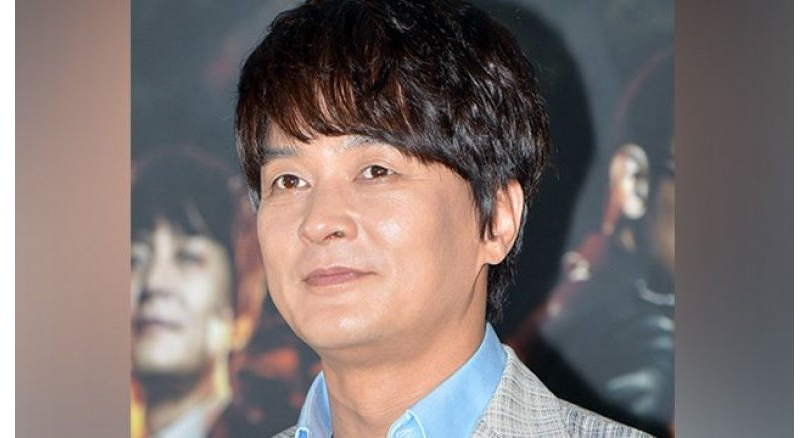
A South Korean actor accused of sexual assault in a spiralling wave of #MeToo accusations in the country was found dead Friday, Yonhap news agency reported.
Jo Min-ki, who had been accused of sexually molesting at least eight victims, was found dead at his home in Seoul, Yonhap cited police as saying, adding suicide was suspected.
Most of his victims were drama students at a provincial university where he taught, it said, adding the 52-year-old had been forced out of his professorship over the scandal, leaving his career in tatters.
His roles were mainly in television series, but he also appeared in a number of films.
The #MeToo movement has gradually gained ground in South Korea, which remains socially conservative and patriarchal in many respects despite its economic and technological advances.
Accusations of abuse have been laid against prominent men in fields ranging from politics to the arts.
Earlier this week, provincial governor and former presidential contender Ahn Hee-jung resigned after an aide accused him of multiple rapes.
He presented himself to prosecutors Friday for questioning, apologising and saying he would co-operate with the investigation.