Home Blog Page 1070

Inside the ring with Singapore’s pro wrestlers

0

Follow our new CNA LIFESTYLE page on Facebook for more trending stories and videos

SINGAPORE: It’s a Friday night in Toa Payoh and madness has erupted inside the strangest of wrestling venues.

At the all-purpose hall of the Singapore Federation of Chinese Clan Associations, a crowd of around 400 are good-naturedly chanting in support of homegrown pro Andruew Tang, aka The Statement. He’s inside the ring and locking horns with a giant of a man, a one-time WWE tag team champ from Canada named Rene Dupree.

“Singapore! Singapore! Singapore!” they cheer.

In a split-second, Dupree slams Singapore’s most famous pro wrestler against a corner. Ouch.

“Holy s**t! Holy s**t! Holy s**t!”

Singapore Pro Wrestling (Andruew Tang, Rene Dupree)

SPW co-founder Andruew Tang, aka The Statement, facing off against former WWE champ Rene Dupree. (Photo: SPW Facebook page)

It was the fifth of seven matches during a two-hour event that pulled out the stops: Bombastic announcers, intense ringside commentators, and a crazy assortment pro wrestlers flipping and whacking each other – much to the delight of a lively crowd of men, women and kids, who are suddenly giving props to… the venue?

“Chinese Clan! Chinese Clan! Chinese Clan!”

Welcome to Singapore’s professional wrestling scene.

WRESTLING DREAMS VS NO OPPORTUNITY

Spandex-wearing locals giving each other headlocks and flying kicks? It’s probably the last thing you’d imagine taking place in the placid streets of Singapore.

But thanks to independent promoters Singapore Pro Wrestling (SPW), it is a scene that has been slowly growing, quite literally, by leaps and bounds.

Formed in 2012, SPW was the brainchild of Tang – who’d eventually win his match against Dupree – and partner Vadim Koryagin from Russia.

The latter, an ex-pro who ran an indie wrestling group back home, was keen on expanding to the region. And Tang, who was itching to fulfil a childhood dream fuelled by watching Dwayne “The Rock” Johnson and other pro wrestlers on TV, was game.

“We told ourselves this was a good place (to set up a pro wrestling school) because we believed there were a lot of aspiring wrestlers out there who had the same mindset,” said Tang.

Singapore Pro Wrestling (Mighty Mighty, Eurasian Dragon)

Southeast Asia’s tag team champs Eurasian Dragon (centre) and Mighty Mighty (right), with fellow wrestler Jane Foo. (Photo: SPW Facebook page)

“Now you didn’t have to fly all the way to the US, Canada or Japan, where the cost of accommodation and training will be very expensive. We were giving them a chance to step foot inside a ring in Singapore.”

Among the first students at the country’s first pro wrestling group were Kenneth Thexeira and Mohamad Taufik. The two go by the monikers The Eurasian Dragon and Mighty Mighty, respectively, and are also the current Southeast Asian tag team champions as Mighty Dragon.

“I’d wanted to do nothing else in life except to wrestle. But I thought you needed to save money to go to, like, America. But when they opened their doors, I stepped in,” said Thexeira.

LOCAL WRESTLING VS SKEPTICS

It wasn’t an instant success, however. Tang recalled the initial scepticism that surrounded SPW.

“We received a lot of negative feedback and got a lot of haters and doubters saying, ‘Why start pro wrestling in Singapore?’ ‘I don’t think Singaporeans will actually like the art of pro wrestling.’ ‘Singaporeans are so small, can they even tangle with the big guys you see on TV?’”

Audiences were slow to catch on. During the early years, they would perform to crowds of around 60 people.

But the fledgling group would stay the course and continue to hold matches both in Singapore and overseas. SPW would also actively invite over big names.

Tang, for instance, tangled with international wrestlers, including the likes of Japan’s Masa Takanashi and World Wrestling Entertainment’s (WWE) United Kingdom champion Pete Dunne. He would also collect a few title belts along the way.

Singapore Pro Wrestling (crowds)

The crowd having a fun time at SPW’s match in Toa Payoh. (Photo: SPW Facebook page)

​​​​​​​

But even as SPW was looking to plug into the international and regional circuit, it also made sure to retain its local flavour.

“You’ll hear the crowd chanting ‘Referee kayu!’ or ‘Deepavali! Deepavali!’ during Deepavali,” shared Tang. He also recalled one match where The Eurasian Dragon brought out a durian and stuck it up someone’s behind.

A typical WWE-style flag match is also given a Singaporean twist. Instead of wrestlers scrambling to retrieve a flag, they chase a hongbao.

This local flavour extends to the unique characters they’ve concocted for the ring. Taufik’s Mighty Mighty “happy-go-lucky” persona wears a fedora and a baju melayu. As for his name – “You know during the Friendster days when a lot of us Malays liked to put our names twice on our profile?” he quipped.

SOLD-OUT CROWDS VS WWE BUZZ

Their attempts at connecting with the home crowd as well as putting SPW’s name out there overseas have slowly reaped rewards.

Tang reckons one of the turning points was back in 2015 – when SPW had scheduled an event one day before a WWE Live Event at the Singapore Indoor Stadium, which featured the likes of John Cena.

“We were worried we might not be able to sell tickets because people would just watch WWE – but to our surprise we sold out our event,” he said.

Two years later came another surprise: A WWE scout dropped by to check out an SPW match. “It meant that the big brothers were actually taking notice of us and they had very positive feedback for some of our wrestlers. It was a remarkable thing,” said Tang.

Today, SPW regularly performs to sold-out crowds of around 400 and 500 – and they’ve even gone mainstream with appearances at the Singapore Night Festival.

Singapore Night Festival 10th anniversary (wrestling)

Pro wrestlers giving it their all in 2014. At another edition, there were muay thai boxers, too. (Photo: Singapore Night Festival)

New blood – among audiences and aspiring wrestlers alike – are also coming in.

Among their new fans is 21-year-old student Ryan, who was at the Toa Payoh match, wearing a Mighty Dragon T-shirt to boot. He first saw an SPW match last year and was promptly hooked.

“It was quite cool. When you watch it live, the experience is different. The crowd, the chanting… Just the energy was very good! And the main event featuring The Statement and Pete Dunne…” he said, whistling for effect. “Through. The. Roof.”

That Friday night in Toa Payoh, one of the wrestlers Ryan caught was making his official debut. Professional street dancer Jonathan Cheong had been training for six months before the big boys decided he was ready to step into the ring as Jangkhawi.

“I had a little butterflies in my stomach but it was awesome. It’s very hard to describe but I hope I can do more,” he said.

FEMALE WRESTLERS VS ONLINE TROLLS

Today, SPW has a roster of around 15 performers. But the group continues to be predominantly male. Female wrestlers like Marie Lee Xinyi are still rare.

Lee, who wrestlers under the moniker Alexis Lee, is touted as Singapore’s first female pro wrestler and is only one of a handful at SPW. (At the Toa Payoh match, she was up against an up-and-coming wrestler named Jane Foo.)

“We’ve had a couple join in but none of them really managed to stick around for so long,” said Lee. “When I started, I was the only girl, so I kind of had to meet the boys’ standards. In the beginning it was hard – I’d be like, ‘Slow down, guys! I can’t keep up!’”

If being the rare rose among the spandex-ed thorns wasn’t hard enough, Lee said she often had to deal with unpleasant, testosterone-driven remarks online.

Singapore Pro Wrestling (Alexis Lee)

Women can do just as good or even better, says Alexis Lee, Singapore’s first female pro wrestler. (Photo: Alexis Lee’s Facebook page)

She cited the reactions to an SPW online promo video, which saw her male peers throwing her into the pool using wrestling moves.

“Some said it was cool and everything but we got way more people berating us online. We had people asking why I was letting the guys beat me up. But we’re trained professionals and we do this all the time in training,” she said.

Lee added: “The guys don’t get so much negative stuff but I get all these sexual comments online, too. I’ve had comments were people are, like, ‘Can she kiss me?’ and stuff. Which kind of creeps you out.”

That said, she reckoned that female pro wrestling is at an all-time high. “There has never been so many eyes on it, and it shows that we can do just as good (as the men) or even better.”

NEW BLOOD VS THE NEXT STEP

As the pros – both men and women – continue to take to the ring, SPW has also been nurturing the future. At its home base in a factory along Tannery Lane, aspiring wrestlers are shown the ropes by Tang and the rest.

It’s an unusual group, coming from all walks of life – from as old as 37 to as young as 17. Among them are two 19-year-olds, Celine Chia and Joshua Au, who have been training for a month now.

Singapore Pro Wrestling School

Pro wrestling students getting some tips from SPW’s Jangkhawi. (Photo: Mayo Martin)

Twice a week, they drop by to learn the basics, like rolling, headstands and how to fall without hurting yourselves. If all goes well, they’ll be taking a test before moving to the intermediate level.

Both of them are fans of pro wrestling and decided to take the next step after discovering SPW.

“I’ve been passionate about it since I was a kid and I always wondered if I could do it,” said Chia. She has no plans on turning pro, “but it’s cool to try!”

Whether or not the next batch of wrestlers come from these newbies, Tang already has big plans for SPW. “Our main aim is to become one of the top promoters in the whole of Southeast Asia and one of the leading ones in the independent circuit.”

Singapore Pro Wrestling (SPW members)

Singapore Pro Wrestling’s growing family of action heroes. (Photo: Najwan Noor, SPW’s Facebook page)

At some point, he hopes they’ll be able to secure a network deal and making SPW mainstream entertainment in Singapore.

“And maybe for our wrestlers to transcend to other media, cross over to do acting and hosting, and become icons like how The Rock and John Cena have in the US.”

He added: “We want to make sure we tell a good story inside the match. We wrestlers are like heroes and villains, because our characters are all larger than life. We always want to be different, we want to stand out, and want people to draw inspiration from us.”
Source link

Less than half of private school graduates find full-time work in six months: Survey

0

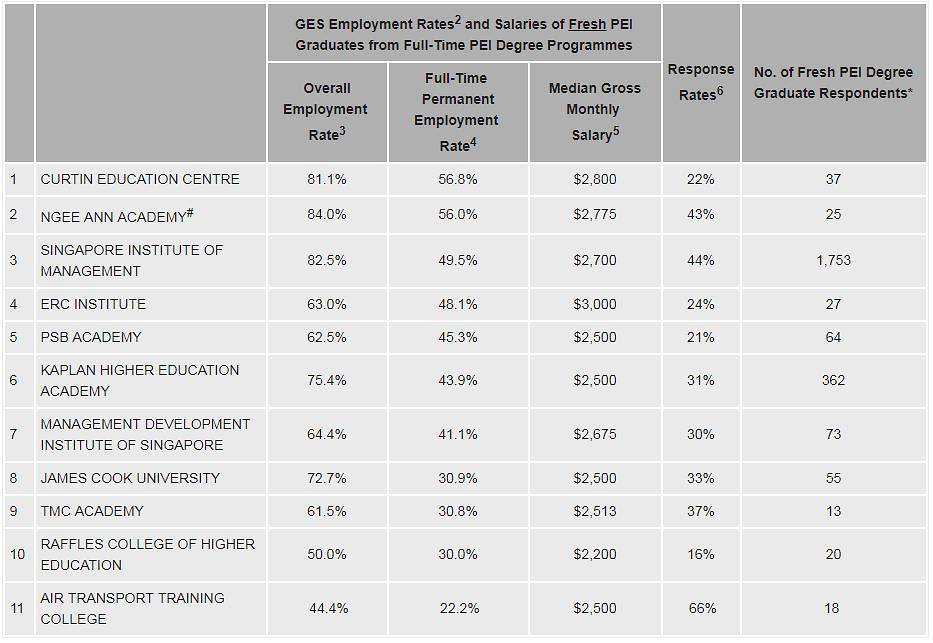
SINGAPORE: Less than half of private school students found full-time jobs within six months of their graduation, results of the latest Private Education Institution (PIE) Graduate Employment Survey (GES) showed on Tuesday (Apr 3). 

Thirty-seven per cent of the 10,171 students that graduated from full-time external degree programmes between May 2016 and April 2017 responded to the survey, most of whom were fresh graduates. 

CPE survey 2018

​​​​​​​

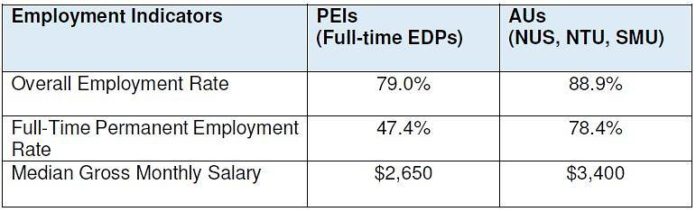
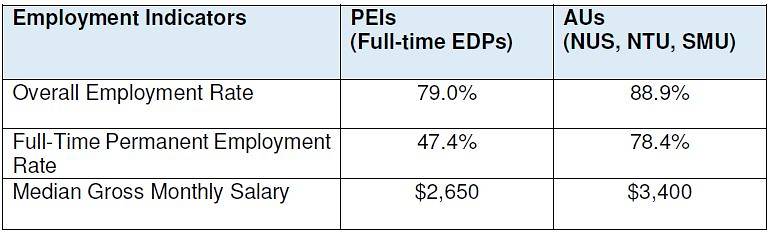
Only 47.4 per cent of the survey respondents obtained full-time permanent employment in the six months. Overall, 79 per cent found work, which includes permanent, freelance and part-time jobs. 

In contrast, the full-time permanent employment rate for the autonomous universities – National University of Singapore, Nanyang Technological University and Singapore Management University – was 78.4 per cent, while that for post-National Service polytechnic graduates was 64 per cent. 

PEI salary table

The survey also showed that the median gross monthly salary of private school graduates working in full-time jobs was S$2,650, while that of fresh autonomous university graduates and post-National Service polytechnic graduates were S$3,400 and S$2,480 respectively. 

Source link

Lower off-peak toll charges at Second Link

0

SINGAPORE: Off-peak toll charges at the Second Link in Tuas were reduced from Apr 1, said the Land Transport Authority in a news release on Monday (Apr 2). 

The changes come nearly two months after it was first announced on Feb 9 by Transport Minister Khaw Boon Wan, following Malaysia’s move to reduce tolls during off-peak periods. 

The reduction in toll charges is in line with Singapore’s long-standing policy of matching Malaysia’s toll adjustments.

Mr Khaw said he hoped the move will “encourage some road users to shift out of the peak hour period”, which will then ease congestion at the Causeway. 

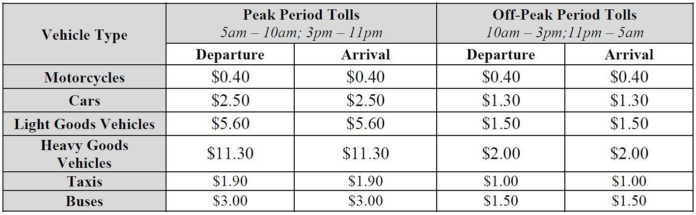
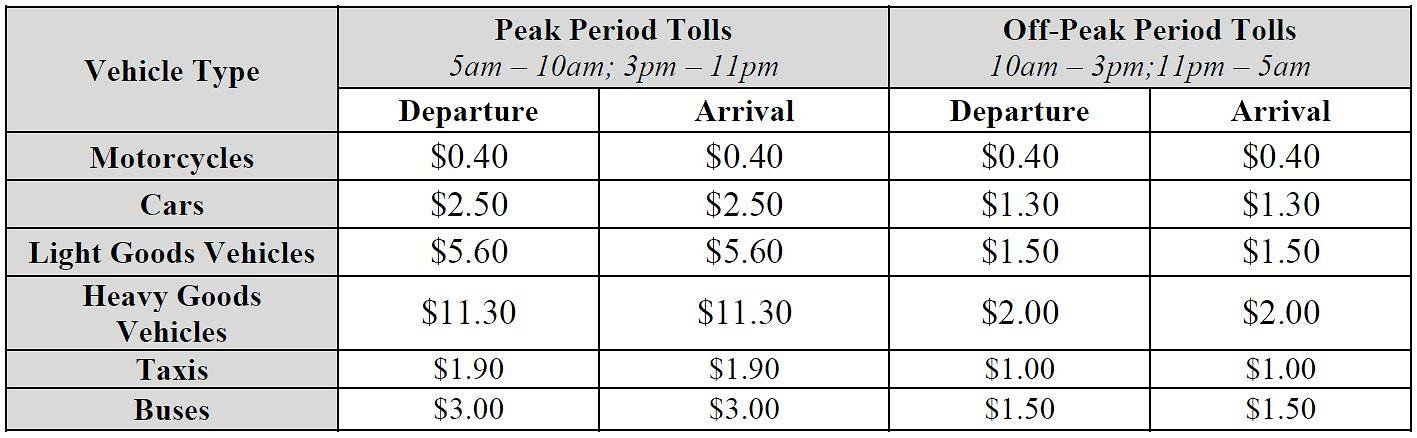
Off-peak hours are between 10am and 3pm, and between 11pm and 5am.

Singapore’s toll charges for all vehicles, except motorcycles, leaving and entering the Republic through Tuas Checkpoint will be reduced by more than 85 per cent during the off-peak hours, the LTA announced previously. 

Toll table Feb 9 2018

Source link

The Big Read: The big stick approach is no panacea to errant bike parking

0

SINGAPORE: Over the past year or so, the sight of shared bicycles strewn everywhere, sometimes in the most unlikely of places, has become an eyesore.

These two-wheelers can be seen on pavements, beside expressways and under flyovers, for example, with some places resembling mini bicycle graveyards.

The problem has persisted, despite the authorities’ warnings and measures by bike-sharing operators, as well as the public attention given to the situation – with the issue making headlines and being aired in Parliament on several occasions.

In the most drastic move yet, a new law was passed to place operators offering dockless shared bikes, personal mobility devices (PMDs), and power-assisted bicycles under a licensing regime which is set to kick in in the fourth quarter of this year.

While the looming regulations are the authorities’ biggest attempt at addressing public frustrations over the problem, which has arisen because of the growing bike-sharing market, it seems that the message has still not sunk in.

Over the past week, TODAY visited several hot spots where dozens of bicycles are dumped and observed that the problem remains rampant, as more and more people come to depend on bike-sharing services for their first- and last-mile commute, saving them time and providing greater convenience.

Many riders were also seen leaving the shared bicycles indiscriminately. When approached, the common refrains were “it is okay because everyone is doing it”, and there were insufficient parking spaces.

Under the regime, the authority can also direct all operators to impose a collective time-limited ban on users caught for parking their shared vehicles indiscriminately more than three times in a year. Those who park their shared bicycles indiscriminately could also be billed continuously.

A heap of shared bicycles dumped on a grass area in Kampong Bahru

A heap of shared bicycles dumped on a grass area in Kampong Bahru. (Photo: Raj Mohamed)

Two users, who only gave their names as Amat and Khairul, both 16, said: “We know we should be parking at proper zones, but when I am in a rush or can’t see any yellow boxes nearby, I will just find a place where many bikes are huddled together and leave the bike there. Even if I know that is not a legal parking zone, if others can park there, why can’t I?”

Workshop assistant Christopherson Ho, 30, said he has “no choice” but to park the shared bicycle he uses outside his office’s back door in Robertson Quay. He said:

There are no parking zones near my working place, but I still want to use the bike to get from the MRT station to my office.

Cycling to work halves his journey time compared to walking and gives him “time to grab breakfast”.

Another office worker, who only wanted to be known as Ms Zhang, 30, said:

You can’t expect users to not use the bicycles just because there are no proper parking places nearby.

Likewise, Mr Saravanan, a construction worker, uses a shared bicycle every weekday morning to get from Yew Tee to the Sungei Kadut industrial estate.

He usually does not have to pay for the 10-minute ride. When he reaches his workplace, he leaves the bicycle on the grass patch. “It’s very convenient and I can park it anywhere,” said the 38-year-old, who adds:

If I use my own bicycle, I have to bring a lock, find a place to park it and take it back home.

Mr Savaran is not alone. From as early as 7am to about 10am each day, workers stream into the industrial estate on shared bicycles. As a result, a 400m stretch there alone, for example, is littered with hundreds of indiscriminately parked bicycles.

Shared bicycles heaped in garbage dump

A stack of shared bicycles in a garbage dump area at Ubi Avenue 4. (Photo: Kyaw Mar Lar)

LITTLE INCENTIVE FOR OPERATORS TO GO AFTER ERRANT USERS

Recognising the problem, bike-sharing operators have tried to address it via measures such as penalties and fines, as well as incentives to encourage good behaviour.

oBike, for example, is completing a six-month trial for a credit scoring system. Under the trial which was rolled out last October, the company would issue notifications to users when they indiscriminately parked their bicycles.

Going forward, credits will be deducted from users’ accounts for errant behaviour such as parking outside the designated parking zones, illegally moving bicycles and vandalism.

All users are given 100 credits upon registration and they will not be allowed to use the service when they have depleted their credits.

A similar system is being used by other operators such as Mobike and Ofo.

At Mobike, the exact number of penalty points that will be deducted from a user’s account for indiscriminate parking and other offences have not been determined.

The lack of concrete enforcement of such penalty systems have allowed users to continue to flout the rules.

Construction worker, Mr Rana Masud, 24, said he has not had any issues using the shared bike services even though he does not park the bicycle at the parking zones after use. Speaking to TODAY near the Yishun MRT station, he said: “I don’t have any problems … I can still use the bikes.”

He added that should he be booted off an operator’s app, he would simply turn to another one.

Bike sharing singapore

(Photo: Kenneth Lim) 

Transport experts whom TODAY spoke to pointed out that before the licensing regime takes effect, there is little incentive for bike-sharing operators to clamp down on errant users.

“Their goal is to get users on their platforms and users will gravitate to the operator who is the most lenient,” said Dr Walter Theseira, transport economist at the Singapore University of Social Sciences.

Under the new regulations, users caught for parking their shared bicycles indiscriminately more than three times in a year will be banned temporarily from renting from all bike-sharing operators.

SG Bikes chief operating officer Sean Tay said:

For the collective ban to be effective, it must be practised by all operators, and either the Land Transport Authority (LTA) or a third party has to come in to make sure that the operators comply to the enforcement actions.

Other impending measures, such as the LTA’s requirement for operators to use geo-fencing technology, may prove more effective. However, some operators felt the move may create confusion among users when it comes on top of the technology the firms are already using.

The geo-fencing technology requires shared bike users to scan the unique QR code at designated parking locations as proof of proper parking before ending their trips.

Mr Tay said: “The cost to smaller players like us is more an intangible one. We already have our geo-station technology (which uses radio-frequency identification), which tells users to park within a certain range of our parking zones.” 

He added:

Having to adopt the QR scanning might result in potential confusion for users. We are worried that we might potentially lose customers, because they might be confused by the two methods to park.

Measures like the collective ban and geo-fencing technology were announced by the Government together with the new licensing framework.

Under the framework, the maximum fleet size of each operator will be controlled by the LTA and reviewed every six months, depending on how well they manage the problem of illegal parking and how efficiently their fleet is used.

FILE PHOTO: A Mobike bike-sharing bicycle is pictured in Singapore

FILE PHOTO: A Mobike bike-sharing bicycle is pictured in Singapore August 29, 2017. REUTERS/Edgar Su/File Photo

BUSINESS STRATEGY ‘CONTRIBUTING TO PROBLEM’

Earlier this month, scientists from the Singapore-MIT Alliance for Research and Technology released the findings of a study which found that shared bicycles are only used for 30 minutes a day on average.

The team had analysed the global positioning system data of about 10,000 shared bikes from one of the largest operators here over nine days in April and May last year.

The company was not named in the study, which also found that each shared bike was used to make between 0.62 and 1.64 trips a day, on average.

However, bike-sharing operators flagged out concerns about the time at which the study was conducted.

Ofo head of policy and communications for South-east Asia Christopher Hilton pointed out that the study was conducted when the bike-sharing industry was in its nascent stage in Singapore.

“The environment and habits of commuters might have changed since then,” he said.

Based on the company’s own data, Ofo bikes are currently used four times a day on average, and users ride them anywhere between 300m and 1.2km, with trips often taken to public transport stations, Mr Hilton said.

While other operators declined to reveal their utilisation rates, operator Mobike said it uses an artificial intelligence platform Magic Cube and a data-monitoring programme to track, assess and manage the use of its bicycles.

The Magic Cube platform charts ridership patterns based on user data on parking and riding behaviour. These include times of the day when the bikes are most used, locations that generate the highest demand, the most-travelled routes and where the bicycles are parked.

On the licensing framework, Mr Hilton said Ofo is concerned that a “definite cap” on the number of bikes that each operator will be allowed to have might crimp the industry’s growth.

“The industry still has much potential to grow. We also don’t want to limit bike-sharing as a transportation option for commuters,” said Mr Hilton.

However, it is precisely this strategy of flooding the market with shared bikes in a bid to grabbing market share that has contributed to the problem of indiscriminate parking, experts say.

Ofo bike-sharing bicycles are pictured in Singapore

Ofo bike-sharing bicycles are pictured in Singapore, Aug 29, 2017. (Photo: Reuters/Edgar Su)

“Gaining market share is always going to be (the operators’) number one priority … Utilisation rates and managing their fleet size are secondary,’ said SUSS transport economist Park Byung Joon, who noted that the operators are bleeding cash in order to enlarge their share of the market.

Associate Professor Pradeep Varakantham from the Singapore Management University said it “makes sense for the bike companies to try and gain as much market share as possible before the licensing application begins”. 

“From my observation, some operators like Ofo are introducing a monthly subscription pass at low costs (in Ofo’s case, 60 days for S$1.50) to try and attract and hopefully retain users on its platforms,” said Assoc Prof Varakantham, who does research in urban mobility and smart commuting.

Applications for licences begin in the middle of this year and they will be awarded by year-end.

While the LTA put the number of shared bicycles in Singapore at over 100,000, operators estimated that the actual figure could be twice that, given how quickly fleet sizes are expanding.

Mr Hilton said Ofo has about 70,000 bikes in the republic now, double their fleet size just five months ago.

ConWith Ofo Dai Wei 4

Dai Wei thinks ofo can provide other bike-sharing firms with the management system ability and experience that no other has.

An oBike spokesperson said the company has about 14,000 bicycles while smaller players such as SG Bikes have deployed almost 1,600 bikes in the north and eastern regions of the island.

Declining to reveal exact figures, Mobike said its fleet numbers are “in the thousands”.

Dr Theseira noted the “no holds barred” mentality of the operators particularly when they first set up shop here.

“There is little incentive for operators to act with restraint, even if there is a certain number of bicycles needed to meet overall demand, the operators don’t have the incentive to meet this demand collectively. Each of them wants their own bicycles to be used,” he said.

In addition, the bike-sharing operators, some of whom are Chinese-backed, have little to worry about meeting profit margins.

For example, Ofo raised US$700 million (S$966 million) in its latest funding round last July. The funding round, led by Chinese tech giant Alibaba, also saw other investors such as China’s ride-hailing giant Didi Chuxing and DST Global participating.

The US$700 million topped the US$600 million funding which its rival Mobike had raised just a month before.

Meanwhile, homegrown bike-sharing firm oBike also secured US$45 million in early-stage venture funding last year. Their investors included an unnamed global transportation platform and venture capital firm Grishin Robotics.

obike hdb block

File photo of oBikes parked at a bike rack in a HDB block. (Photo: Elizabeth Khor)

EFFORTS TO ADDRESS THE ISSUE

During his speech on the amendments to the Parking Places Act, Senior Minister of State for Transport Lam Pin Min said that there are over 170,000 public bicycle parking lots at MRT stations, bus stops, Housing and Development Board estates and parks.

He said that the LTA and other public agencies plan to provide another 50,000 lots by 2020.

Bike operators reiterated that public education is key to address the problem.

oBike’s general manager Tim Phang said:

More work needs to be done to regulate users, and not simply impose fines on operators. Such behaviour needs to be addressed and it is only through constant education that the community can learn that being considerate can lead to greater benefits of a sharing economy.

In the meantime, some operators have ramped up manpower in recent months to go around the island picking up indiscriminately parked bicycles and redistributing them to areas of greater demand.

For example, Ofo has doubled the size of its “marshal team” – which was set up in February last year – to 200.

Other than using GPS or Bluetooth beacon technologies, Mr Hilton said Ofo is also looking at the idea of using augmented reality to help users identify whether an area is a designated parking spot.

While the efforts should help inculcate proper behaviour in users, Mr Hilton stressed that operators have their work cut out.

Ofo, for example, see about 4,000 new sign-ups every week on average. “These are 4,000 new people that you have to teach to use a bike properly,” he said.

Ofo

A staff member from the bike-sharing company Ofo gathers its shared bikes for use during the evening rush hour, in Beijing, China, on Apr 12, 2017. (Photo: REUTERS/Jason Lee)

BAD HABITS DIE HARD?

Mr Zhivko Girginov, 42, a Bulgarian who has been living in Singapore for more than nine years, has been going around the island on a rented lorry, moving indiscriminately parked bicycles to public spaces where the operators can pick them up subsequently.

Reiterating that it takes time to instil the right habits in shared bicycle users, he said:

Wherever we have been going to help with tidying up indiscriminately parked shared bicycles, the situation went back to its previous state almost immediately, within a day or two … But we all know that the community has to be educated in proper behaviour and it doesn’t happen overnight.

Mr Lim How Kiat, 28, who is part of Ofo’s marshal team, added:

There are times when we catch users parking indiscriminately, but when we go up to inform them, they are nonchalant and frequently ignore us.

Both Mr Zhivko and Mr Lim hope that the new regulations will give operators more teeth to clamp down on errant users.

When that happens, some users said they would simply stop using the service, especially if the big stick approach defeats the purpose of bike-sharing services. After all, the point of such services is to offer users the convenience of picking up and dropping off a bicycle as near to their homes and destinations as possible.

“If I am indeed banned from renting the bicycle, I will probably (revert back to) using my own to get to work. More troublesome, but it’s okay,” said Mr Savaran.

The story first appeared in TODAY. Read the original here.

Source link

Commentary: Facebook’s fake news crisis is a product of Silicon Valley culture

0

SINGAPORE: All the elements were in place to create the Cambridge Analytica scandal.

First, there’s Facebook’s corporate culture. Facebook chose the name of the street in Silicon Valley where its headquarters are located: “Hacker Way”. 

What’s the hacker way? Facebook’s internal motto illustrates it: “Move fast and break things”. Don’t be constrained by current norms, like privacy. Norms can change.

A recently leaked memo by top Facebook executive Andrew Bosworth urges colleagues to focus on growth and connecting more people regardless of occasional “ugly” side effects like bullying and terrorism.

Third, there’s American freedom of speech, the “marketplace of ideas” approach: Let everyone say what they will, even if it’s false. Truth will eventually prevail.

Combine the elements, and here’s the result emerging from the allegations. 

While no one was watching, British data firm Cambridge Analytica illicitly obtained data harvested from Facebook to target millions of voters with political messages, including fake news, matched to their psychological profiles.

Its clients included the Trump campaign, the Brexit campaign, Kenyan politicians and others.

Now, the fallout. American legislators contemplate next steps. Singapore’s Parliament is acting swiftly, having already concluded hearings on deliberate online falsehoods, a possible prelude to legislation.

select committee DOF 15 march

The Select Committee on Deliberate Online Falsehoods on day 2 of the public hearings at Parliament House. (Photo: MCI)

WHO’S LOOKING ANYWAY?

The story of Cambridge Analytica, and reactions from American and Singapore lawmakers, make sense when seen in context.

A close look at Facebook shows Mark Zuckerberg was never one to follow rules. When he founded Facebook’s predecessor in his Harvard dorm, he faced a university disciplinary board for breaches of security, privacy and copyright.

What does Facebook’s “move fast and break things” mean? Roll out the innovation quickly, even with missteps. 

‘Iterate’, as innovators say. Get feedback. Do it again.

Emblematic of Facebook’s approach is its 2006 introduction of the news feed, the list of your friends’ updates. Before then, you logged in and saw your homepage. If you wanted to see friends’ updates, you sought them by visiting their pages.

Though it’s hard to imagine now, when the news feed first appeared, some protested that it was intrusive for Facebook to broadcast a user’s updates to their friends. Zuckerberg was unrelenting. Users adapted. The news feed quickly became an indispensable feature, adopted by other social networks.

Mark Zuckerberg said this year his mission is to "fix" the problems of the social network

Facebook CEO Mark Zuckerberg. (File photo: AFP/Justin Sullivan)

Fast forward to 2014. For years, developers had created games and other apps that plug into Facebook. 

Cambridge University’s Aleksandr Kogan developed a personality test app. Hundreds of thousands of Facebook users took the test. It also harvested their friends’ data, which Kogan had permission to collect for academic purposes.

Kogan allegedly passed all this data on millions of users to the company Cambridge Analytica, which eventually worked for the Trump campaign. 

A Cambridge Analytica former employee, whistleblower Christopher Wylie, told the BBC that the firm “absolutely” planted fake news stories.  

Kogan’s alleged disclosure of data to Cambridge Analytica violated Facebook terms and conditions on transfer of the data to a third party. But who was looking? 

The Financial Times recently reported that Kogan’s representatives submitted documents to Facebook saying the app’s data could be transferred to third parties. 

Apparently, Facebook did not catch the inconsistency with its own policies.

Window cleaners work outside the offices of Cambridge Analytica in central London

Window cleaners work outside the offices of Cambridge Analytica in central London, Britain on Mar 24, 2018. (Photo: REUTERS/Peter Nicholls)

In 2015, after the Guardian reported that Kogan transferred data to Cambridge Analytica, Facebook banned the app and asked all parties to delete data from it. 

Wylie says Facebook did nothing to enforce the request except to ask Cambridge Analytica to check a box on a form saying they deleted it.

UNREGULATED, HANDS-OFF APPROACH

Facebook and other new media firms thrived in a largely unregulated American communication technology sector. 

Lawmakers’ hands-off approach wasn’t new. They had taken steps to ensure platforms could grow with minimal threats of liability. In the 1990s, one of the first Internet regulations Congress passed was to insulate platforms from liability for defamation that users posted. 

Another law insulated platforms from liability for users’ copyright infringement unless the platforms are notified of infringing material.

Nowhere is America’s wait-and-see approach to regulating tech more evident than in data privacy, where there is still no comprehensive law, despite years of debate.

Technology companies opposed to privacy regulations have a loud voice, backed by campaign contributions. Public pressure for such regulation is not high.

When answering surveys, Americans say data protection is important, but their conduct suggests otherwise. Like people everywhere, Americans are quick to click “agree” to terms and conditions without reading them, and to exchange privacy for convenience.

European Council President Donald Tusk said the EU takes privacy 'very seriously'

European Council President Donald Tusk said the EU takes privacy ‘very seriously’ (Photo: AFP/Aris Oikonomou)


PROTECTING DATA

In Singapore, Parliament passed the Personal Data Protection Act (PDPA) back in 2012. It’s a comprehensive data protection regulation for the private sector, including social media companies.

Singapore’s PDPA is actually quite simple. Among its core provisions: An organisation like Facebook must notify users of how it uses their data, including whether data will be disclosed to third parties. Users must consent to such uses.

Without a PDPA counterpart, American regulators may instead be left to proceed under broad Federal Trade Commission (FTC) prohibitions of “unfair” or “deceptive” practices. Another possibility is law regulating political campaigns.

The FTC is investigating whether Facebook broke a 2011 promise, made to settle legal action for sharing more information than it notified users it shared. In this “consent decree”, Facebook promised that for 20 years, it would get users’ consent before sharing their data with third parties.

It’s notable, however, that American law lacks a standard way to proceed in such cases. Zuckerberg is set to testify before Congress. Lawmakers may craft more targeted measures to address a crisis generating global public outrage.

OPEN PUBLIC DEBATE?

The final piece of the fake news puzzle is America’s approach to freedom of expression.

In the hearings of Singapore’s Select Committee on Deliberate Online Falsehoods, Professor Thio Li-Ann disputed the marketplace of ideas model’s proposition that truth will emerge when all voices contend in an unregulated, open debate.

National University of Singapore’s (NUS) law professor Thio Li-ann

National University of Singapore’s (NUS) law professor Thio Li-ann.

To many Americans, that approach to open public debate is, ironically, not open to debate. America set its standard with the adoption of the Constitution’s First Amendment in 1791, which says Congress “shall make no law … abridging the freedom of speech, or of the press”.

Few exceptions to the First Amendment are made. Determining truth, about fake news or anything else, is considered the public’s job. 

Government is seen as having no role in determining what’s true in political news, since government is a central actor in that news.

America’s central principles have contributed to a crisis with global implications. Its freedom of commerce and speech opened the door for freewheeling Facebook to allow Cambridge Analytica to exploit user data and craft whatever messages it chose with its clients.

Singapore’s proactive, “better safe than sorry” stance was on display in recent weeks, as it moved quickly to prevent similar crises from erupting in Singapore.

Social media companies will continue to iterate using the “hacker way”. America will likely continue to abide by principles of openness in commerce and expression that have, in many ways, served it well.

It remains to be seen if American lawmakers, and others around the world, can agree on penalties for abuses of those freedoms, or ways to prevent abuses.

Mark Cenite teaches communication law at the Wee Kim Wee School of Communication & Information, Nanyang Technological University, where he is Associate Chair (Academic).

Source link

Go-Jek eyes expansion in Southeast Asia. Here’s where they could ride next

0


FROM 20 bikes to US$5 billion, Go-Jek has cemented its leadership in Indonesia. And it’s now ready for expansion, with rumoured plans to venture deeper into the Southeast Asian market.

The first startup of Indonesian origin to be classified as a transport system, Go-Jek had very humble beginnings, within the four walls of a call center. Go-Jek, a name that’s a play on the word ojek (motorcycle taxi), now has a fleet of more than 400,000 drivers for people in 50 Indonesian cities.

It has also evolved beyond a ride-hailing app as it now includes transportation, logistics, food delivery, and payment. And clearly, its key investors such as Google and Chinese tech giant Tencent are pleased.

SEE ALSO: Grab buys Uber’s business in Southeast Asia

“Go-Jek is led by a strong Indonesian management team and has a proven track record of using technology to make life more convenient for Indonesians across the country.

“This investment lets us partner with a great local champion in Indonesia’s flourishing startup ecosystem, while also deepening our commitment to Indonesia’s internet economy,” Google’s Next Billion Users VP Caesar Sengupta wrote.

2018-03-27T120906Z_485048823_RC1EA2F28610_RTRMADP_3_GO-JEK-INDONESIA

A driver and passenger ride on a motorbike, part of the Go-Jek ride-hailing service, on a busy street in central Jakarta, Indonesia December 18, 2015. Source: Reuters/Darren Whiteside

Having enjoyed huge success on home soil, the company is now looking to expand to the Philippines later this year, as well as to three other Southeast Asian countries.

The expansion will see the company attempt to grab a share of the regional market share of around 640 million people.

Although Go-Jek has neither denied nor confirmed the names of these three other countries, its founder and CEO Nadiem Makarim previously said the company would place their investment in countries with large populations and those that still rely on cash transactions.

With Uber out of the way in Southeast Asia, Go-Jek only has to worry about Singapore-based Grab, the competition that brands itself as “Southeast Asia’s Leading Ride-Hailing Platform”.

“So far, we have held off operating [outside Indonesia]. It will be the first time we have faced tougher competition,” said Nadiem, as reported by The Jakarta Post.

While Asians in this part of the world are waiting with bated breaths for the official announcement rumored to be coming in the “next few weeks“, these are the countries that will benefit most from the Go-Jek expansion.

SEE ALSO: Indonesia: Gory Grab advert to drive out rivals backfires as netizens express outrage

Philippines

This archipelagic country, home to the city with the third worst traffic in Southeast Asia, has been on Go-Jek’s radar since last year.

Go-Jek Group Chief Technology Officer (CTO) Ajey Gore said in an interview with Reuters that, “almost all Southeast Asian countries are on the radar over the next three, six to 12 months. The Philippines will be the first one just to figure out how things work.”

Of course, the Philippines seems to fit the bill of “countries with large populations and those that still rely on cash transactions”, as it happens to be the second most populated country in Southeast Asia, with over 100 million people.

And as at end-2017,  the current payment system in the Philippines was still predominantly cash- or check-based, according to The Manila Times.

shutterstock_187980443

Heavy motorcycle traffic in Hanoi, Vietnam. Source: Xuanhuongho/ Shutterstock

Vietnam

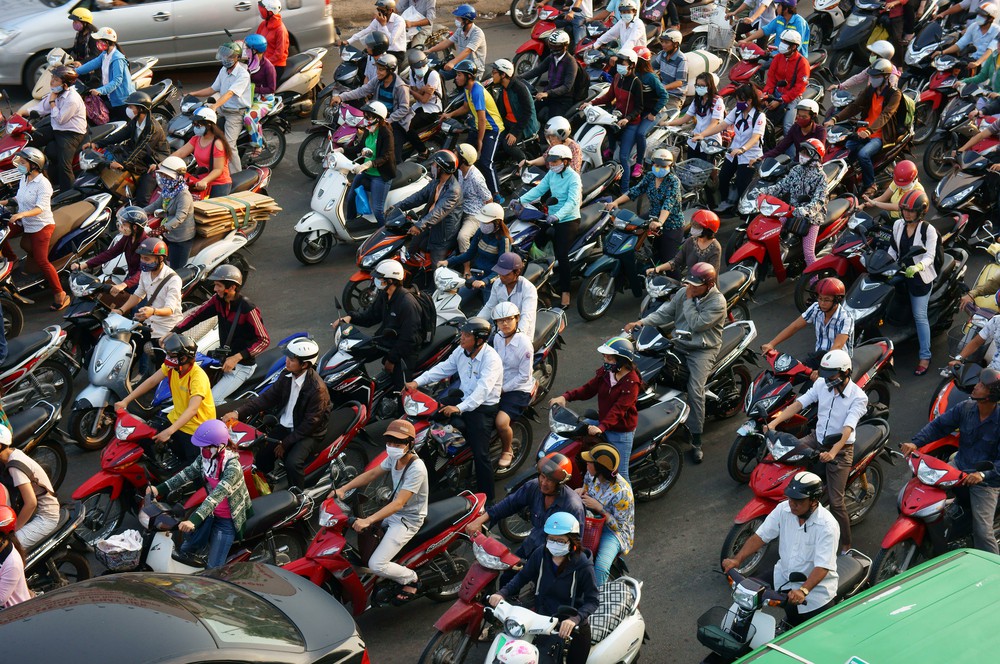
With a population 93 million and motorbikes being the country’s preferred mode of transportation, Vietnam being picked as the next best choice for Go-Jek’s Southeast Asian expansion is a no-brainer.

There are about 45 million motorbikes owned in the country. In Hanoi alone, there are over five million motorbikes, according to CNN.  Motorbikes are a way of life.

Also fitting the bill of “countries with large populations and those that still rely on cash transactions”, despite the country’s high smartphone and mobile internet penetration rates, cash is still king in Vietnam.

Operating expenses in Vietnam are also cheaper than in Singapore and Malaysia. And word on the street is Go-Jek is already in the process of recruiting professionals in Vietnam to drive its entry into the country.

Thailand

Thailand is the fourth most populated country in Southeast Asia. Its bustling capital, Bangkok, has the worst traffic in Southeast Asia. With such a reputation, it’s easy to see why motorcycle taxis are important to Thai people.

Just like in Vietnam, motorcycle taxis are an informal public transport for the people of Bangkok. It’s helpful for navigating through traffic-clogged roads and narrow alleys during rush hours.

This is why Bangkok’s first official and fully legal motorcycle-taxi app, GoBike, is reaping the rewards.

Especially after UberMoto and GrabBike were both forced to suspend their operations in the capital in May 2016.

gojek

A Go-Jek passenger wears a helmet with the startup’s logo as he rides pillion. Source: Shutterstock/findracadabra

Burma

Although ride-hailing and using smartphones to book taxis is still a relatively new concept in Burma (Myanmar), there’s great potential in the country as it is the fifth most populated in the region.

Of its 54-million strong population, nearly five million reside in the country’s largest city, Yangon. The city is undoubtedly a goldmine for ride-hailing app players as taxi services have gained popularity in Yangon in recent years.

SEE ALSO: What does the Grab buyout of Uber mean for you?

According to Frontier Myanmar, a traffic command center was built last year to aid the fight against Yangon’s chronic road congestion. Other Southeast Asia countries include Malaysia, Singapore, Laos, Cambodia, Brunei, and East Timor.

Singapore has already seen its Go-Jek presence when the company rode into the island city-state last June to open a data science office. The news brought on speculation and excitement about Go-Jek rolling out its bikes in Singapore.

However, Singapore’s Land Transport Authority (LTA) told The Straits Times, “Motorcycles are not allowed to be used for point-to-point transport services, unlike taxis and private hire cars.”

This article originally appeared on our sister site Travel Wire Asia.

Source link

Warm weather, thunderstorms expected in Singapore as inter-monsoon period begins

0

SINGAPORE: Warm weather and thunderstorms are expected to prevail in April and extend into May, said the Meteorological Service Singapore on Monday (Apr 2).

In a news release, the Met Service said the low level northeasterly winds are forecast to gradually shift to become light and variable in direction. This would signal the end of the northeast monsoon season and the start of the inter-monsoon period.

The inter-monsoon period is characterised by warm weather and thunderstorms occurring in the afternoon and evening. Lighting activity may also be higher than in other months of the year.

In its latest weather outlook, the Met Service explained that April is one of the warmest months of the year. Temperatures could reach a high of 35 degrees Celsius and drop to a low of 23 degrees Celsius.

The Met Service added that the first half of April is not expected to be as wet as the last two weeks of March, with rainfall forecast to be below average.

STRONGEST WIND GUST SINCE 2010

In March, northeast monsoon conditions prevailed in the region, bringing intense thundery showers on several afternoons.

In particular, heavy rainfall and gusty winds hit the western parts of Singapore on Mar 30. 

The Met Service said the strongest wind gust recorded that day was 133.3 km/h in Tengah, the highest since 2010.

The highest daily rainfall for March – 93.2mm – was recorded in Queenstown on Mar 24.

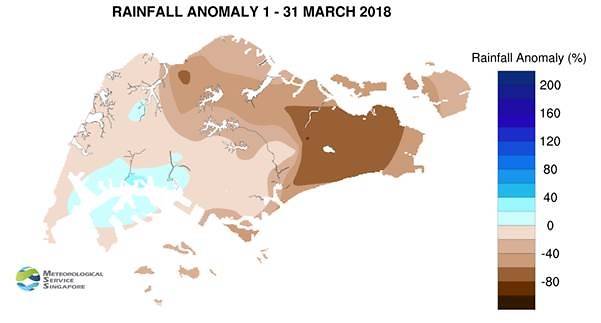
Most parts of Singapore received well below-normal rainfall that month. The lowest rainfall of 38mm, which was 82 per cent below average, was recorded in Paya Lebar. Meanwhile, rainfall was highest in the Jurong area where 280mm was recorded, 31 per cent above average.

MSS Rainfall March 2018

(Graphic: MSS)

March also saw temperatures falling to lows of 21.4 to 24.7 degrees Celsius and reaching highs of 26.6 to 35.7 degrees Celsius.

Source link

38 Oxley Road a ‘rare’ Early Style bungalow, only 16 conserved in Singapore: NHB

0

SINGAPORE: The 120-year-old bungalow which was the bone of contention between Prime Minister Lee Hsien Loong and his siblings Lee Wei Ling and Lee Hsien Yang has significant heritage, historical and architectural value, said the ministerial committee on 38 Oxley Road and the National Heritage Board (NHB) in a report on Monday (Apr 2).

The ministerial committee described the house as “a unique architectural type which is testament to its cosmopolitan past and the property is among the remaining few built in this style”.

The single-storey house was built in 1898 as one of a pair of bungalows. It was nicknamed “Castor” while its twin at 40 Oxley Road was nicknamed “Pollux”. “Castor” changed hands frequently then, a research report by the National Heritage Board said.

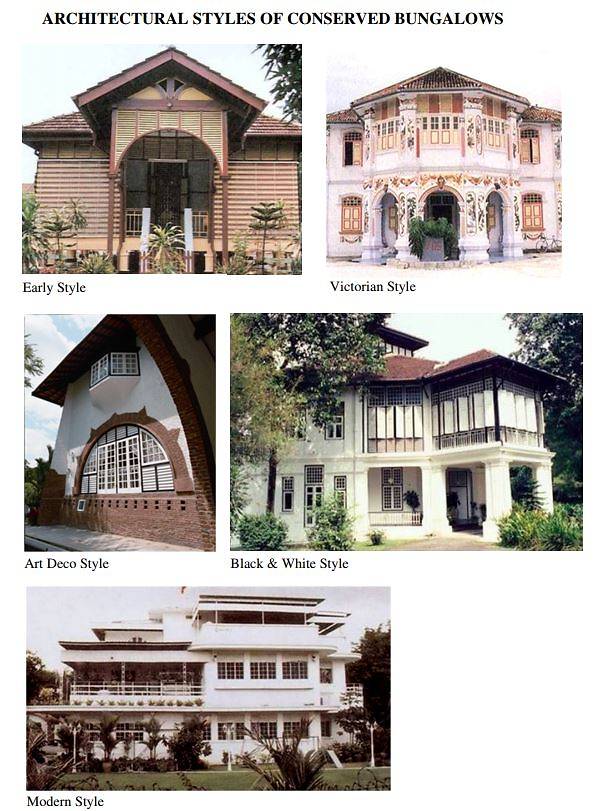
Among more than 200 old bungalows conserved in Singapore, 16 belong to the same Early Style and era as 38 Oxley Road. Its former twin bungalow at 40 Oxley Road has been demolished and redeveloped into three lots.

Architectural styles

38 Oxley Road is of an “Early Style” bungalow built in the late 19th and early 20th century. The blend of influences from the East and West, and from vernacular building give a variety of styles which can be broadly categorised into five architectural styles. (Photo: Screenshot/Ministerial Committee report)

Later during the Japanese Occupation between 1942 and 1945, houses along Oxley Road were converted into comfort houses, the NHB found.

After the war, founding Prime Minister Lee Kuan Yew and his new wife Kwa Geok Choo rented 38 Oxley Road, which was described as a “rambling house with five bedrooms and three others at the back which originally served as the servants’ quarters”. They paid 80 Straits dollars every month which went up to 118 Straits dollars by 1965, the report said.

The couple decided to buy the bungalow in 1965 when security became a concern and decided to fortify the house against threats such as arrests and assassination attempts, said NHB.

They added steel gates, additional brick walls and bullet-proof windows. Another house was also absorbed into the property, probably in the 1960s, to secure the back of the house after a police constable was shot dead there.

“THE UNDERGROUND” PLAYED A ROLE IN STOKING PAP’S FIRE

The ministerial committee’s report noted that the house was a familiar stomping ground for key political players in the 1950s, including former deputy prime minister Toh Chin Chye, Mr Samad Ismail who was the chief sub-editor of Utusan Melayu and unionist Fong Swee Suan.

“The Property was where meetings took place that led to the formation of the first independent government for Singapore, and altered the destiny of the country,” the report said.

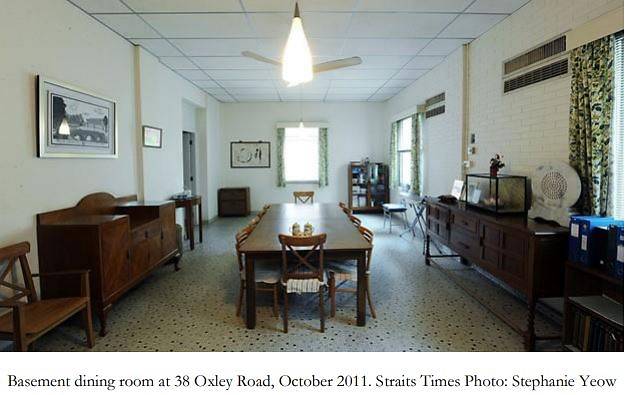
The house’s basement dining room, nicknamed “The Underground” was where the People’s Action Party was founded and the house functioned initially as its headquarters as the party “could not easily find places to rent as landlords were worried about upsetting the authorities”.

“Toh, Samad and Fong recalled that about 20 people huddled around the basement dining table for discussions. Dr Toh was the chairman and Lee Kuan Yew, the secretary and Lee Gek Seng, the assistant secretary. Lim Chin Siong, Fong and Devan Nair were among those who participated in the discussions,” the report said.

Dining room at 38 Oxley Road

The basement dining room at 38 Oxley Road was where the People’s Action Party was founded and headquartered in its early days. (Photo: Screenshot/NHB report/Straits Times)

“These meetings were held secretly, as the internal security regulations then forbade such political meetings. Dr Toh recalled that Ong Eng Guan suggested burying the minutes of the meetings in the garden,” it added.

NHB also listed at least two other locations in the house where nationally significant events took place. First, the verandah where unionists and postal workers prepared posters and addressed election manifestos during the 1955 legislative assembly elections.

Second, the study where Mr Lee would work on the contents of his “red box” which he used to file papers in during his political career.

A view of former Prime Minister Lee Kuan Yew's Oxley Road residence in Singapore June 14, 2017

A view of former Prime Minister Lee Kuan Yew’s Oxley Road residence in Singapore June 14, 2017. REUTERS/Edgar Su

BUILDING’S STYLE IS ‘TESTAMENT TO ITS COSMOPOLITAN PAST’

The NHB report said that the house is built in the style of the Anglo-Indian bungalow but includes variations such as a raised-floor construction, verandahs and overhanging roof eaves to better suit Singapore’s tropical climate and the building’s location.

Built on a slope, the house has a single storey at the front but two storeys at its rear, with arched openings used to ventilate the basement space. Lofty ceilings and an additional jack roof were created to let hot air rise and escape, and to cool the house, the report said.

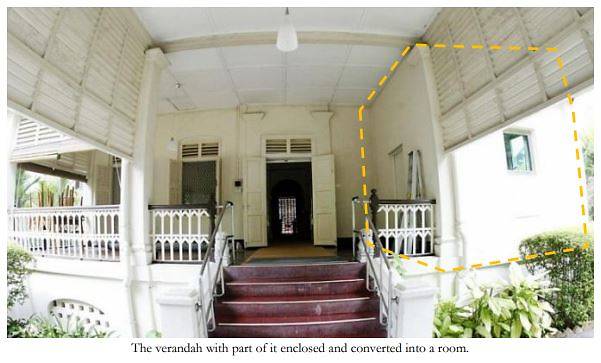
The verandah on 38 Oxley Road is described to be narrower than usual and is typically used for relaxation, entertainment and as a communal space. Part of the verandah was later enclosed and converted into a room.

NEW Verandah

One of the few alterations made to the house was the sealing off of part of the verandah to add an additional room to the building. A wheelchair lift was also added to the verandah in recent years. (Photo: Screenshot/NHB report)

The house also contains “a mix of features that were popular in bungalows of its time, and are not commonly found today” such as full-length French windows, fretted timber balusters, classical columns, pilasters and plinths, and vented grills that fill the arch masonry, the report said.

While the bungalow has gone through additions and alterations, the Ministerial Committee concluded that the original form and architectural character are largely intact. 

“As the home of Mr Lee Kuan Yew, Singapore’s founding Prime Minister, 38 Oxley Road stands for the values that he and his wife exemplified both in their public and private lives – frugality and discipline in particular. The architectural simplicity of the house is reflective of the times, the site it sits on, as well as the values of its historic occupants,” said the NHB report.

Source link

These cities have the highest quality of life in the Asia-Pacific

0


PERHAPS by no surprise, the wealthy, relatively low-populated nations of New Zealand, Australia and Singapore are home to the cities with the highest quality of life in the Asia Pacific region according to new research.

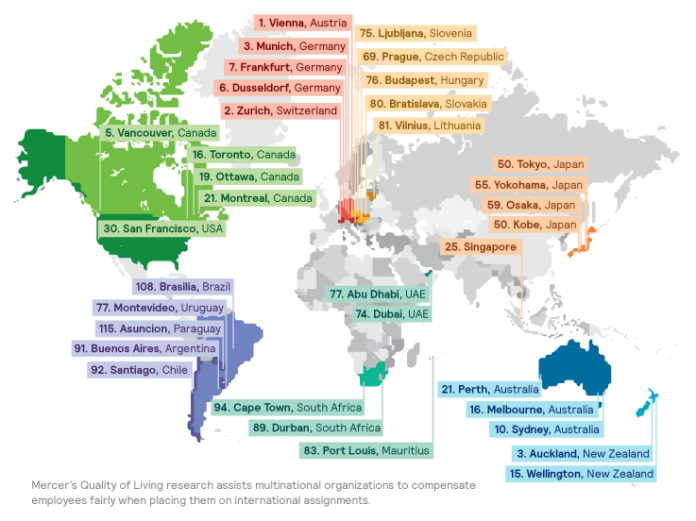
The 2018 Quality of Living Ranking released by international human resources consulting firm Mercer ranked New Zealand’s largest city Auckland third in the world for quality of life, the best in the Asia Pacific.

Some 450 cities were surveyed for the research, which ranks them according to living conditions assessed by 10 categories including political, social and economic environment, medical and health considerations, recreation, and public services and transportation.

2018QOL_Top5byRegions

How world cities performed in the rankings. Source: Mercer

SEE ALSO: Singapore ‘world’s most expensive city’ for fifth consecutive year

Australia’s largest metropolis Sydney came in at number 10, while New Zealand’s capital Wellington and Australia’s cultural capital Melbourne were ranked 15 and 16, respectively. Western Australia’s Perth was ranked just above the Little Red Dot Singapore at 25.

Mercer ranked Dhaka, Bangladesh in 216, which it said demonstrated the “region’s great disparity in quality of living.”

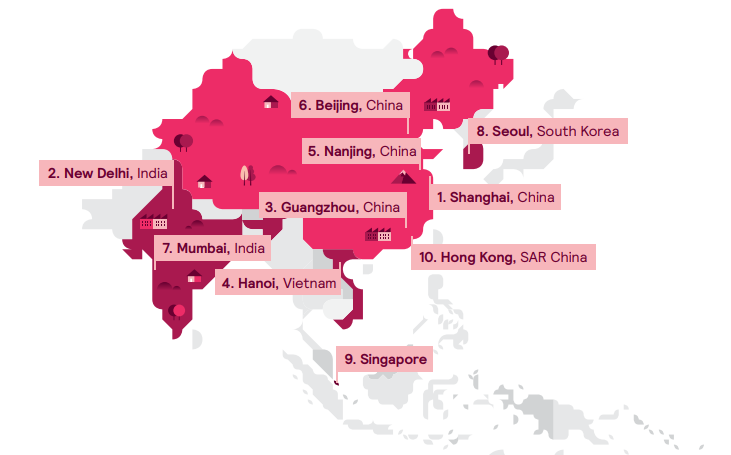
But while cities in Western Europe dominated the top of the list for the ninth year running, Asian cities have steadily improved as economic development transforms the region. According to Mercer, cities in China and India had the highest increases in living standards in Asia between 1998 and 2018.

mercermost

Visual representation shows the cities where quality of life has improved the most over the past two decades. Source: Mercer

“Cities in emerging markets, though challenged by economic and political turmoil, are catching up with top ranking cities following decades of investing in infrastructure, recreational facilities and housing in order to attract talent and multinational businesses,” said a statement from the company.

SEE ALSO: Kuala Lumpur named the best city to rent in the world

Nevertheless, the Indian metropolises of New Delhi, Mumbai and Kolkata still ranked among the worst cities for quality of life in the world for City Sanitation – a new category which assesses the availability of water, prevalence of air pollution and infectious diseases in urban centres.

mike-enerio-33580-unsplash

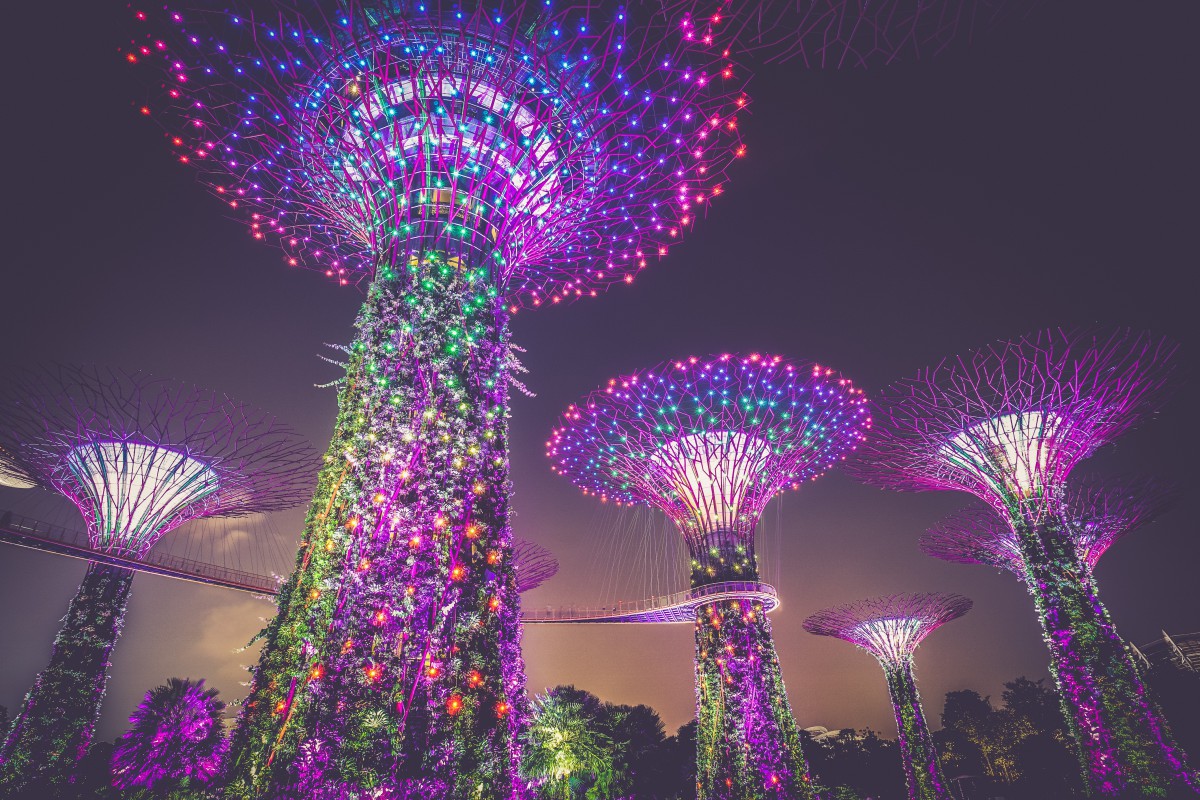
Supertree Grove, Singapore. Source: Mike Enerio/ Unsplash

Next overall in Asia below Singapore was Kuala Lumpur, Malaysia at 85, with other Southeast Asian centres Bangkok (132), Manila (137) and Jakarta (142) also ranking underwhelmingly.

Japanese cities ranked well in East Asia, with Tokyo (50), Yokohama (55) and Osaka (59) edging out Hong Kong (71), Seoul (79), Shanghai (103) and Beijing (119).

{“total”:5,”error”:””,”buffer”:1,”stumbleupon”:0,”facebook_total”:1,”pinterest”:0,”twitter”:3,”vk”:0}

Source link