Home Blog Page 1063

Commentary: Don’t hold our treatment of foreign domestic workers to countries with lower standards

0

SINGAPORE: Singaporeans generally compare conditions here against the highest standards in the world.

When it comes to governance, healthcare, transportation and quality of life, we often compare ourselves to the best and ask what it will take to get there if we’re not already there.

Yet when it comes to the rights of foreign domestic workers, many apparently choose to compare our standards to those of less developed countries which may have fewer protections for their local workforce.

A recent Channel NewsAsia commentary underscored the importance of rest days and overtime wages for foreign domestic workers in Singapore.

Anju Mary Paul, an associate professor of sociology and public policy at Yale-NUS College here, highlighted that even though since 2012, under Singapore law, foreign domestic workers are entitled to a weekly rest day, it can be negotiated away if there is a “written agreement mutually agreed between the employer and the foreign employee … for the foreign employee to be compensated for working in lieu of the rest day”.

But research has shown that often, rest days are in fact withheld without the worker’s consent.

Many agencies refuse to place new domestic worker applicants who ask for a weekly day off or present workers with “no rest day contracts” on arrival.

Many workers are also not compensated for working on their rest day even though Ministry of Manpower regulations stipulate that a domestic worker must be paid at least one day’s salary in lieu.  

Anju Mary Paul also argued that this amount is in fact inadequate as “in contrast, the Employment Act, which governs the working conditions of most other categories of workers in Singapore, stipulates that workers who give up their rest day for more than half of their daily working hours should be paid two days’ salary if it was at the employer’s request”.

Shouldn’t these standards be applied to foreign domestic workers too?

maid file photo

File photo of a foreign domestic worker.

BETTER OFF HERE THAN IN THEIR OWN COUNTRIES

Many readers responded to these suggestions by pointing out that even under current conditions, foreign domestic workers are earning more here that they would had they stayed in their own countries.

This may very well be true. But are those really the standards we should live by in Singapore?

We pride ourselves on being a First World nation, so shouldn’t we endeavour to apply First World standards of fairness to our treatment of all workers including guest workers here?

Many also pointed out that non-government organisations often exhort better treatment of foreign domestic workers but neglect employers’ rights.

Certainly, employers’ rights deserve equal attention. 

But the two aren’t mutually exclusive, unless upholding employers’ rights necessarily requires the unfair and inhumane treatment of workers.

Most would agree this isn’t the case.

So why then do so many adopt an “us against them” mentality when negotiating such rights?

NO REASON TO COMPLAIN?

Some employers maintain that the foreign domestic worker signed the contract, so why should she complain?

However, as organisations such as Transient Workers Count Too (TWC2) have pointed out over the years, many women, prior to leaving their own countries, are given a false impression of working conditions in their host country.

Often, they are told that salaries will be higher and that they will have time off.

Upon realising the reality of the situation, many would still be reluctant to return to their source countries as they would already be in debt and would have to work to pay off their agent’s fees. There is a cap on fees Singapore agencies can charge, but workers could be subjected to exorbitant fees levied by agents in their source countries. 

This is clearly a disempowering situation.

maids singapore

Domestic workers in Singapore (File photo: TODAY)

While employers cannot be held accountable for unethical agents, surely they can be held accountable for their own treatment of workers.

MORE RIGHTS FOR WORKERS IS NOT TANTAMOUNT TO FEWER RIGHTS FOR EMPLOYERS 

Think about what conditions you would find unacceptable.

How would you feel if you weren’t fairly compensated for forgoing your day off and got paid a much lower salary than others in your host country for doing work that is actually considered of great value in most societies – looking after your employers’ children, the elderly, cooking and cleaning for the family.

In a 2015 position paper on the well-being of foreign domestic workers in Singapore, the Humanitarian Organisation for Migration Economics (HOME), suggested that employment agencies in Singapore create recommended pay scales according to work experience and other relevant qualifications, and abolish discriminatory practices that determine entry-level wages according to the worker’s nationality.

It also recommended a cap on working hours.

Based on its research, foreign domestic workers, on average, worked 13-hour days.

Anecdotal accounts reveal this could routinely stretch even further depending on the needs of the family.

It also said that the right to a weekly rest day should be strictly enforced and it should be 24 hours.

So that working hours are more likely to be regulated and the workers’ privacy respected, HOME recommended offering live-out options to workers.

These sound like reasonable conditions, except some employers are bound to disagree.

The reasons behind our reluctance to consider these issues must be examined.

Would fulfilling such conditions really be tantamount to violating our own rights?

Granted, there are many accounts of foreign domestic workers taking advantage of their employers’ kindness and trust.

In such cases, safeguards for employers need to be strengthened, but surely these don’t have to come at the expense of rights for all workers.

A MORE RELATIONAL FRAMEWORK

Advocates for migrant workers often urge legislative changes to regulate employers’ behaviour.

While legislation is vital, perhaps the issue boils down to simple humanity.

In a recent On the Record interview, Dr Goh Wei Leong, co-founder of HealthServe a healthcare charity for migrant workers said that we have commodified what should actually be “a very relational contract” between workers and employers.

“You need to bring in a much more compassionate, humane and community level relational framework. Without a relational framework, all these legislative steps are going to waste,” he said.

Perhaps the simplest questions to ask are how we would like to be treated by our own employers and how we would feel if our employer constantly disappointed us.

Just as we do with other aspects of life and living in Singapore, let’s aspire to higher standards and set our own benchmarks for the treatment of guest workers in our country.

Bharati Jagdish is the host of Channel NewsAsia Digital News’ hard-hitting On The Record, a weekly interview with thought leaders across Singapore, and The Pulse, Channel NewsAsia’s weekly podcast that discusses the hottest issues of the week.
Source link

Singapore can help Shanghai companies expand as part of Belt and Road Initiative, says PM Lee

0

SHANGHAI: As China pushes for a more open economy, companies in Shanghai can use Singapore as a platform to support their outward expansion along the Belt and Road, said Prime Minister Lee Hsien Loong on Wednesday (Apr 11) during a meeting with Politburo Member and Shanghai Party Secretary Li Qiang.

Prime Minister Lee called on Mr Li in Shanghai on the fourth day of his five-day visit to China.

During the meeting, Mr Lee noted the developments in Shanghai since his last trip in 2010 when he visited the World Expo. The Shanghai leader briefed Mr Lee on the Chinese city’s role in the Yangtze River Delta integration efforts and the development of the economic belt along the delta. 

“In the Yangtze River Delta region, people always say Shanghai is the biggest port or the biggest hub,” said Mr Li.

“The defining feature of Shanghai is its openness, just like Singapore which has always been regarded by us as our role model. We want to open our doors to the rest of the world,” he added.

To that, Mr Lee said: “I’m very happy to be back and to see Shanghai has developed, progressed further and with many ambitious opportunities not only to push ahead on its own but also with the rest of the Yangtze River Delta and the rest of China, and as part of the Belt and Road.”

Mr Lee and the Shanghai Party Secretary agreed that both Singapore and Shanghai can do more to strengthen cooperation in many areas, such as education, science and technology, healthcare and medical research, financial services as well as urban planning and management. 

One other area, Mr Li said, is the exchange between the Chinese in Singapore and China. 

“We always say that the amity between people holds the key to national friendships. So we believe there is a lot for us to achieve in this area. The Chinese community accounts for about 70 per cent of the total population of Singapore … We must appeal to the emotional affinity among the people,” Mr Li said. 

Earlier in the day, Prime Minister Lee visited digital energy company Envision Energy where he looked at projects related to the application of Internet of Things and energy management systems including those with Singapore firms Keppel and Sunseap

PM at Envision

Prime Minister Lee Hsien Loong visited Envision, a Shanghai-based digital energy firm with Dr Vivian Balakrishnan, Mr Lawrence Wong and Dr Faishal Ibrahim. (Photo: Fann Sim)

On this trip, Mr Lee also met with Chinese Vice President Wang Qishan and Premier Li Keqiang in Beijing, as well as President Xi Jinping in Boao, Hainan. On Thursday, Mr Lee will attend the DBS Asian Insights Conference. 

Source link

Police officers in Singapore to get new uniforms

0

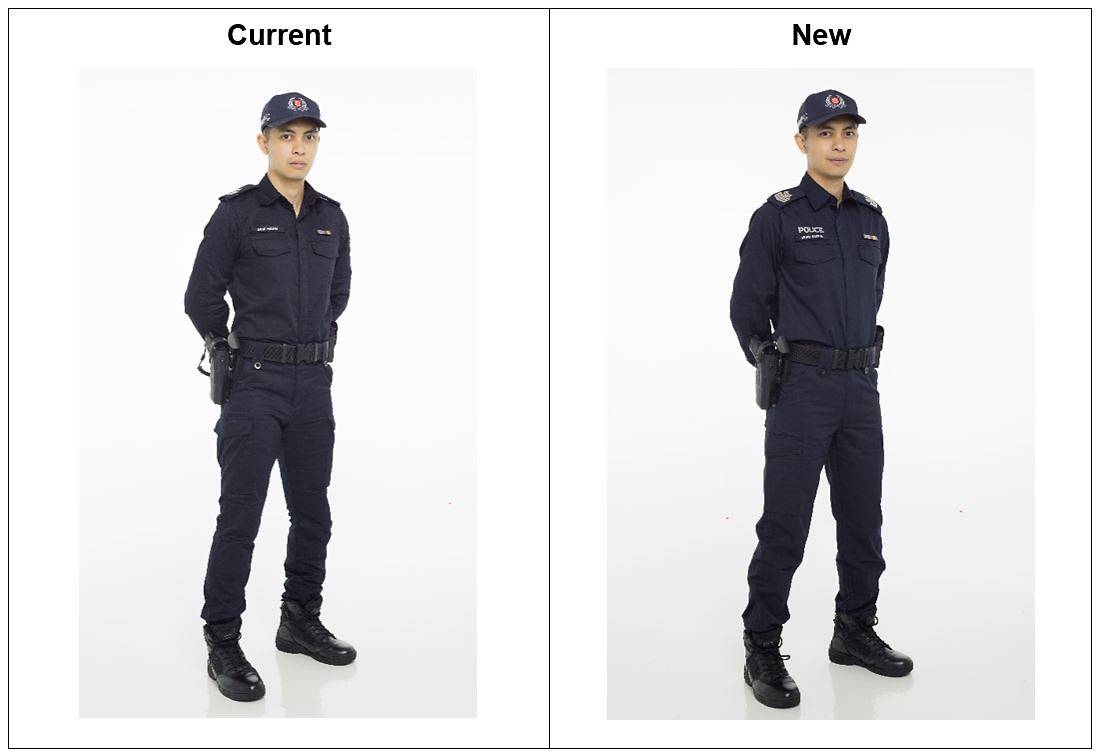
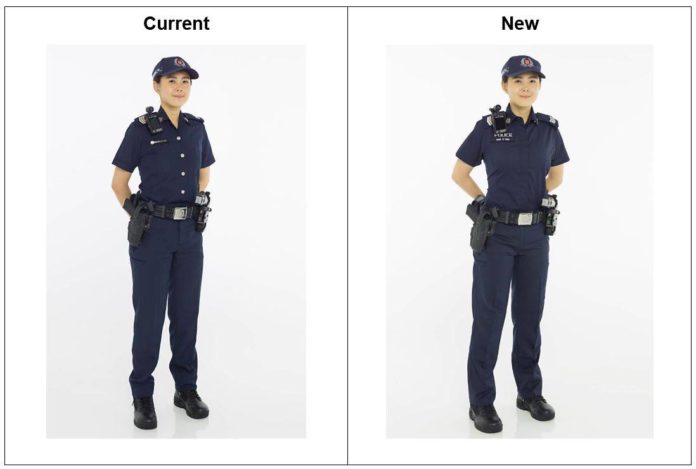
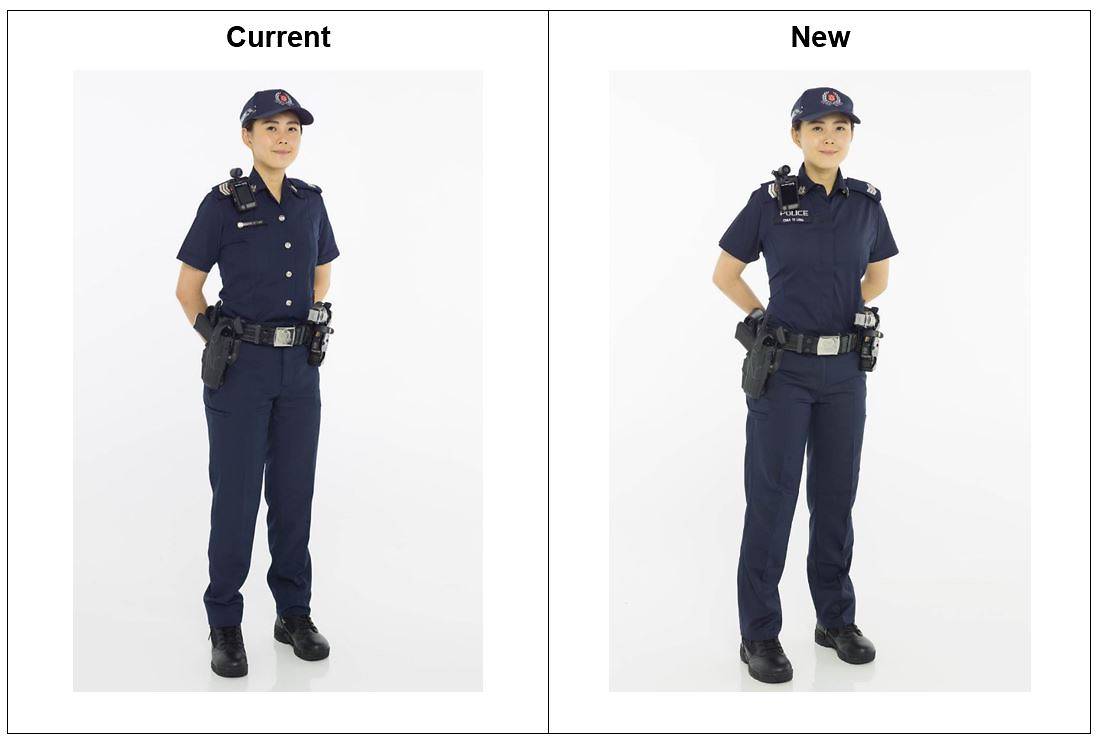
SINGAPORE: Frontline police officers will get new uniforms starting next Monday (Apr 16) to help them keep cool in Singapore’s hot and humid weather, the Singapore Police Force (SPF) announced on Wednesday.

Made of 98 per cent polyester and 2 per cent spandex, the new uniforms are more stretchable, absorb perspiration better and dry faster, SPF said. The old uniforms were fully made of polyester.

police new uniforms SPF (1)

police new uniforms SPF (2)

The change is part of ongoing efforts to improve officers’ operational effectiveness and support them in their work, SPF said.

The new uniforms will also have the word “police” embroidered above the name tag. The metallic buttons will also be replaced by more comfortable concealed plastic buttons, which will make it easier for officers to wear body vests over their uniforms.

Riveted buttons will be fixed on the shoulders for a bodycam attachment.

police new uniforms SPF

The new uniform will have the word “police” embroidered above the name tag. (Photo: SPF)

The uniforms were designed in collaboration with the Office of the Chief Science and Technology Officer (OCSTO), a unit under the Ministry of Home Affairs that works with Home Team departments to develop and deploy technologies.

THE PROCESS

OCSTO conducted two trials, one comparative and another operational, to test the new designs.

During the comparative trial, first conducted in 2013, eight frontline neighbourhood police officers donned the new uniform while carrying out light duties like foot patrols and driving the patrol car.

The officers’ body temperatures were analysed to compare heat dissipation between the two uniforms.

Officers wearing the new shirts found to have lower body temperatures by up to about 1 degree Celsius compared to the old shirts. The officers also said the new shirts felt thinner, cooler and lighter.

However, the new pants fared about 0.5 degree Celsius worse than the old pants. This led to a thinner construction and the removal of additional front pockets and knee pads.

After that, an operational trial started in 2015 saw 54 neighbourhood police officers at Ang Mo Kio North NPC take questionnaires and participate in feedback sessions. The results confirmed those in the comparative trial, the police said.

UNIFORMS LAST CHANGED IN 1985

The police last made a major change to their uniforms in 1985, when they went from a three-quarters polyester one-quarter cotton make-up, to full polyester. This made the uniforms stiffer.

When asked why this change was made only now, an SPF spokesperson said: “In this current context, we are always looking to move forward in some of our operations. And the betterment of the uniform is one way the police force is trying to move forward.”

The new uniforms have been distributed to all frontline officers, including full-time national servicemen trainees in the Home Team Academy.

As for the old uniforms, the spokesperson said: “We’ll most probably call them back and we’ll most probably try and recycle them.

“As with all new changes there will be some teething issues, but we are committed (to ensuring) all our frontline officers will be wearing new uniforms,” he added.

Source link

Razer Game Store comes to Singapore, and Southeast Asia, via Lazada

0

The Razer Game Store will be launched in Malaysia and Thailand “this quarter”, followed by Indonesia and the Philippines, both parties say.

Razer Game Store screengrab

Screengrab of the online Razer Game Store. 

SINGAPORE: Lazada is bringing Razer’s recently launched digital game distribution platform to Southeast Asia, starting with Singapore. 

The Razer Game Store, which was first announced on Apr 5, will be on Lazada’s e-commerce platform and the games will be available at local pricing. These include new releases such as Far Cry 5, as well as favourites such as Grand Theft Auto V and Assassin’s Creed: Origins, the joint press release on Wednesday (Apr 11) said.

Singapore is just the first stop though. The store will be launched in Malaysia and Thailand “this quarter”, followed by Indonesia and the Philippines, they added.

“The Razer Game Store on Lazada is the only Southeast Asia-centric source of original PC digital games from publishers all over the world,” said Mr Hari Vijayarajan, executive vice president and chief business officer at Lazada Singapore.

Both parties said the online store will regularly offer fans promotions, including in-app specials tailored for its home markets. 

The gaming and peripherals maker announced its digital game distribution platform earlier this month, and said it said has thousands of digital games.

Consumers get the games in the form of Steam or Uplay product keys – something CEO Tan Min-Liang was keen to point out as the platform is not meant to “kill Steam”, which is another digital games platform. 

He said in a tweet the following day: “Isn’t meant to kill Steam – we sell Steam keys on it!”

The recently listed company also said those who purchase the games from its online store will get access to “exclusive offers, Razer Game Store vouchers, discounted peripherals on the RazerStore or other perks”. 

“In addition, gamers will also earn zSilver loyalty rewards credits with each purchase on the Razer Game Store, including credit card transactions. Paying instead with zGold grants even larger zSilver rewards,” it added in its press release then. 

Source link

Train fault causes rush-hour disruption on North-East Line

0

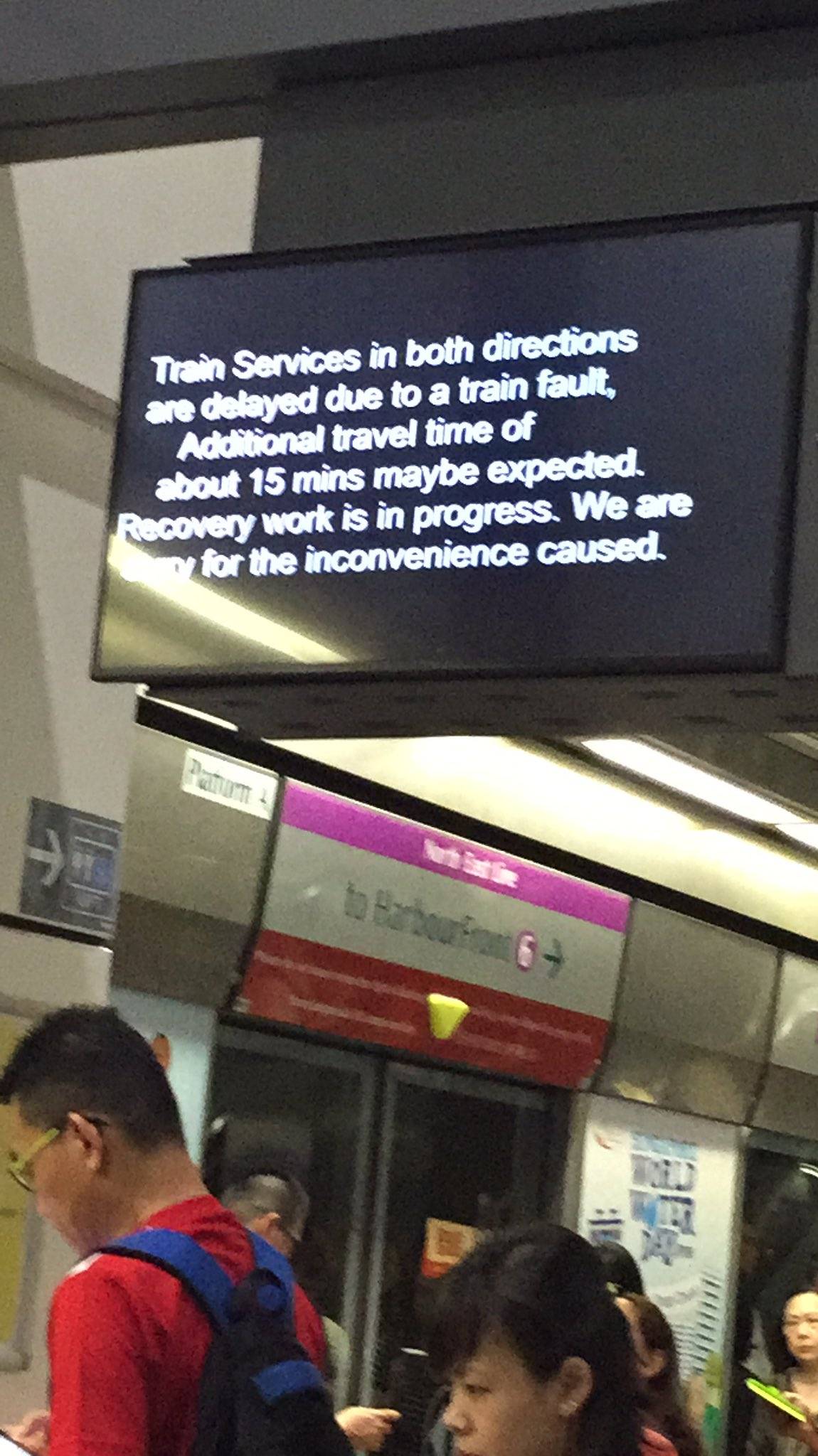
SINGAPORE: A train fault at Little India station caused a disruption on the North-East Line during the morning rush hour on Wednesday (Apr 11).

In a tweet at 7.55am, rail operator SBS Transit said there was no train service in both directions between Outram Park and Potong Pasir stations. Free bus rides were available between the two stations, it added.

It had earlier tweeted, at 7.30am, that service on the line was delayed due to a track fault at Little India station.

Train service resumed at around 8.35am, although stations may still be crowded, SBS Transit said. It added that commuters should expect an additional 15 minutes’ travelling time between Punggol and HarbourFront stations.

Commuters took to social media to post updates and pictures of the situation at various stations. Some said the delays were much longer than announced by SBS Transit. ​​​​​​​

One commuter also reported that Grab fares surged in Sengkang following the disruption.

NEL breakdown on Apr 11 2018 (1)

Commuters waiting at Sengkang MRT station at around 7.30am after train service was disrupted. (Photo: Twitter/@Kongleng)

NEL breakdown on Apr 11 2018

Train services on the North-East Line were disrupted on Apr 11, 2018, due to a train fault. (Photo: Twitter/@AmirulAce)

Source link

‘Plain injustice’: Biker groups aggrieved by NEA ban on older motorcycles from mid-2028

0

SINGAPORE: When Mr Joseph Tan, 45, bought his 2003 Triumph Bonneville T100 more than three years ago, he found it in poor shape.

The banking executive spent close to S$5,000 refurbishing and customising it to his taste, finally calling it his “pride and joy”.

Mr Tan has taken the Triumph, a 100th anniversary model that’s believed to be the only one in Singapore, to bike gatherings at home and abroad. It always attracts attention, he said. “It brought me not only to places, but also I made lots of friends through it.”

So when the National Environment Agency (NEA) announced on Apr 6 that motorcycles registered before Jul 1, 2003 would be banned from the roads after Jun 30, 2028, Mr Tan was distraught. His bike was registered on Jun 28, 2003, just three days before the cut-off date.

“Many of us had the same dream, which is to hand down our precious bikes to our children,” said Mr Tan, who also runs the Custom Bikes Xchange Facebook group. “But with this ruling, this is down the drain.”

motorcycle ban 3

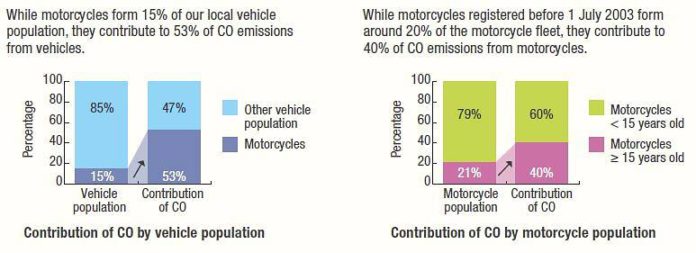
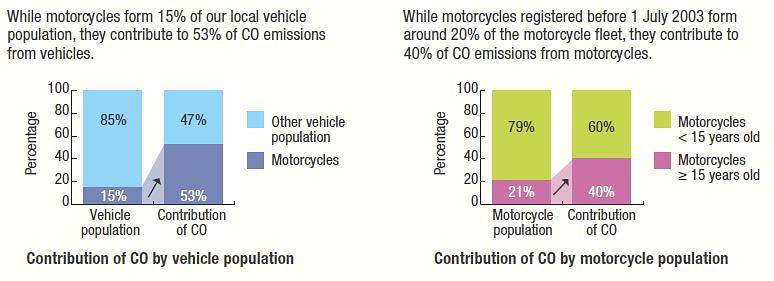
A graphic describing the amount of carbon monoxide pollution from motorcycles. (Source: NEA)

The NEA is trying to reduce emissions from some 27,000 older motorcycles as part of a push to meet Singapore’s air quality targets by 2020. Owners of older motorcycles have been offered up to S$3,500 to de-register their bikes within the next five years. Beyond that, emission standards for such motorcycles will be tightened, before the 2028 ban kicks in.

These initiatives come as NEA figures indicate that older bikes emit up to 30 times more pollutants than new bikes. They also contribute 40 per cent of the total carbon monoxide emitted by motorcycles on the road.

But Mr Tan questioned NEA’s data, suggesting that it “relies on a lot of assumptions and hypothesis”.

Furthermore, he added, all motorcycles regardless of age go through the same inspection and emissions test. “Then why target pre-2003 bikes now and with date of registration as the only criteria?”

Singapore Motor Cycle Trade Association (SMCTA) secretary-general Norman Lee said in a statement that it was concerned with the figures, pointing out that the “realistic road usage” of motorcycles must be taken into account.

“SMCTA is seeking more information on these data results from NEA,” he said. 

In response to queries from Channel NewsAsia, NEA said it considered the population of motorcycles, their respective emission standards, mileage travelled and other factors affecting emissions like engine size when estimating motorcycle emissions.

Explaining its rationale for the Jul 1, 2003 cut-off date, NEA said Singapore adopted Euro 1 type approval standards for new motorcycles on that date. Motorcycles registered before that are more pollutive than newer models which comply with the Euro 4 standard, it added.

The agency reiterated that phasing out older motorcycles and implementing more stringent emission standards will reduce pollutants that cause nausea and impair vigilance and respiratory functions.

“While such standards can encourage owners to maintain their motorcycles well, a new motorcycle is still significantly cleaner than a well-maintained older motorcycle,” it stated. “This is because the new motorcycles must meet even more stringent emission standards and are fitted with improved vehicular technologies, such as catalytic converters.”

DECADES OF MOTORCYCLES “DESTROYED”

A further concern, Mr Tan said, is that the pre-2003 category includes rare bikes like the Ducati MH900e and Yamaha VMAX 1200. “For owners of these bikes, it might be an investment in the long term,” he added, noting that such bikes can hit almost six figures in price.

Mr Yap Jian Jie, who runs the biker Facebook group Gasoline Addict, said many in the category are “instant classics”. “You’re getting guys whose machines have history and character,” he said. “They are from a time when the manufacturers were going all experimental.”

motorcycle ban 2

Motorcycle owners affected have been posting pictures of their bikes on social media. (Screengrab: Facebook/Oh Leong Kim)

Some of these bikes, however, will be able to stay on the roads after the ban – provided they are converted under the Classic Vehicle Scheme, which allows vehicles to be used for up to 45 days in a calendar year.

But there is a catch: To qualify for the scheme, the bikes must be at least 35 years old from their original registration date. This means that when the ban kicks in in 2028, affected bikes registered after June 1993 will not qualify.

“Almost two decades of bikes will be destroyed from the local scene forever and the older ones to storage,” said motor enthusiast Jonathan Tee, 44. The business consultant, who owns two retro bikes affected by the ban, said he will send one to the scrapyard and convert another to Classic status. He is also looking at taking his hobby overseas.

motorcycle ban 4

Some affected owners had intended to pass their bikes down to their children. (Screengrab: Facebook/Abraham Murali Django)

While some owners are considering exporting their prized possessions, Mr Tan said this is an option “we hope to avoid”. As for converting to Classic status, he said the limited usage is not ideal.

“The freedom to be able to ride as and when I wish to will be gone,” he said. “Biking is also about freedom. Restricted use is definitely not a form of freedom.”

Motorcycles on the Classic scheme also fetch a lower price, Mr Tan added. “Many of those who own pre-2003 models which are rare or deemed collectible had their assets’ value drop by half or more.”

According to Mr Yap, many owners of such bikes spend more than S$3,500 – the incentive offered to de-register – every year to keep their motorcycles roadworthy.

Regardless, it is impossible to put a price tag on these bikes because of their sentimental value, said Mr Chris Chong, an admin in the Singapore Classic Motorcycle Group on Facebook.

“It brings us inexplicable joy just to be able to keep these rare machines running on Singapore roads,” he added. “Just like historical buildings in Singapore, we can’t bring these classic vehicles back once they are turned to scrap metal.”

WHAT’S NEXT?

In response to the ban, Mr Tee said he is trying to organise a bike gathering that will be “classy, educational and heritage-related”, comparing it to the Distinguished Gentleman’s Ride, an annual global event where bikers dress up and ride together to support a cause.

“More importantly, we’d like to present to the authorities not to cull our bikes but offer us an option,” he said. The response has been positive, he added, with more than 10 individuals – comprising seasoned collectors and those representing biker groups – reaching out.

Mr Yap said motorcycle industry and community representatives are keen for a sit-down with NEA and the Land Transport Authority to “examine the facts and work on a better solution”.

NEA said it has received some feedback from affected owners who want to keep their motorcycles beyond 2028. “We have been addressing their enquiries,” it said.

“I think the NEA ruling is too high-handed,” Mr Tan said. “Not every pre-July 2003 bike is polluting. This is in a way discriminatory and a plain injustice.”

Source link

Commentary: The awkwardness of using Instagram as a 50-something

0

SINGAPORE: The dead French philosopher Charles Montesquieu wrote: “If we only wanted to be happy, it would be easy. But we want to be happier than other people, and that is almost always difficult, since we think them happier than they are.”

That was 250 years ago. Replace happy with glamorous/popular/thin/successful and you have Instagram.

Curating and presenting an idealised life in Instagram has long challenged young digital natives.

Increasingly, now, it is also challenging older people who are migrating there from Facebook because they worry about their data falling into the wrong hands but who still want social media.

One in four people on Instagram are over 50.

PARTIES, PICTURES AND FILTERS

The photo- and video-sharing app allows people to post highlights of their lives — the most picturesque food, the most breath-taking views, the liveliest parties, the prettiest make-up, all enhanced by photo-filters.

Instagram was launched in 2010 as a photo-sharing service and was bought by Facebook in 2012. At the last count in 2017, it had 800 million monthly active users.

Selena Gomez is the most followed person with 135 million fans, but Beyoncé gets more likes. The most-followed pet is a Pomeranian called JiffPom, with over 8 million fans.

Selena Gomez capture

Screengrab of Selena Gomez’s Instagram account.

A 2015 study by Hu Yuheng at the University of Illinois at Chicago and other colleagues found that selfies and photos of friends accounted for nearly half the pictures. Then came activities, gadgets, food and memes, with fashion and pets last.

Those are the facts. But the issue with Instagram has always been this: When we’re presented with a stream of Instagrammed perfection, how does that make us feel about our own lives? 

Following Montesquieu, Instagram makes it hard for us to be happy because everyone else seems to be having a better time than we are.

NOT JUST AWKWARD BUT HARMFUL

This is not about an older person criticising things that young people like because they themselves don’t understand it.

My parents worried about computer games and “video nasties” (horror movies), while smoking in the same room as me and indulging me with sugary, saturated-fat-filled treats, so I don’t imagine that older people can necessarily tell younger people what’s bad for them.

But it is about how the awkwardness that older people feel when they launch themselves on social media is based on the knowledge that with the dopamine high of being liked comes the inevitable low when that doesn’t happen.

There’s always a hangover — something that older people have more experience with than the young.

Beyonce Instagram

Screengrab of Beyonce’s Instagram account.

Similarly, older Instagrammers can see that as soon as you have followers, there is pressure to do something that makes you worth following.

If offline social rules apply in Instagram, it would be comparable to going out with friends. If you’re there, your job is to be interesting. If you’re not prepared to do that, then stay at home.

Last year, the UK’s Royal Society for Public Health surveyed 1,500 14 to 24-year-olds. Their report placed Instagram at the top of the social media ranking for being harmful to the mental wellbeing of young people. 

Shirley Cramer, its CEO, warned that Instagram was “very image-focused and … may be driving feelings of inadequacy and anxiety in young people”.

These young people are the digital natives who use it regularly. What more for digital immigrants who don’t know who Selena Gomez is?

It may be that there is no right way to be on Instagram for the over-50s in the eyes of the under-20s. If my students share photos of a wild party, that’s great; if I do, that’s slightly uncomfortable.

stock phone 01

File photo of a youth in Singapore using a mobile phone. (Photo: Francine Lim)

​​​​​​​

SHARING AND PRIVACY

Nevertheless, I joined Instagram last week, aged 52. By mistake.

My handphone shares a subscription package with my teenage son’s (like Harry Potter’s and Voldemort’s wands had the same phoenix feather at their core) so when he downloaded Instagram, it appeared on my screen. 

I clicked to see what it was, and apparently that signed me up.

Within five minutes I had 13 followers. A week later I have 36. I have never heard of 19 of them.

I posted a mildly humorous picture of a chair that looked as if it was smiling. It was liked by someone called I-australiana. Who is she? How did she know about my smiling chair? Older people used to actually knowing who their friends are will find this a bit disconcerting.

So it went on. Instagram invited me to follow my Facebook friends. When I clicked, I got an anxiety-inducing “Are you sure you really want to do this?” pop-up.

If it was safe, why would they ask me that? Older people hesitate before signing because we have heard things like: “The value of your investments can go up as well as down.”

Older people are also more aware of negotiating the line between privacy and sharing. Recent news about Cambridge Analytica has made it clear what we post on social media can find its way into places we didn’t foresee, and be put to uses we wouldn’t approve of, such as targeting fake news stories at voters to sway elections.

It’s one thing to craft your life on social media; the next step is to craft your life off social media in order to look good online.

Look at food. Some of my research is into food as a social construct – we eat what we are told is good – which is why different cultures have different ideas about eating, cows, pigs, dogs and horses. The new social construction of food, however, isn’t how it tastes; it’s how it looks.

instagram sweets

Screengrab of Instagrammed food.

A study by Chris Holmberg and colleagues in 2016 found that teens post pictures of food that is mostly high in calories and low in nutrition. Looks good, tastes good — only it isn’t. On Instagram, it’s more important for food to be visually appealing than to taste good.

Instagram and other social media open up new avenues of connection — once we have overcome the anxiety of getting it wrong — which is exciting.

But if it changes our diets so that what matters isn’t the taste, it’s whether it’s an Instagrammable confection of rainbow food and unicorn sprinkles, that is something all generations can be anxious about.

Andrew Duffy is an assistant professor at the Wee Kim Wee School of Communication and Information. His interests are in journalism and social media.

Source link

Taxi passengers voice concerns on privacy erosion with proposed inward cameras

0

SINGAPORE: As a busy mother, 31-year-old Faz Gaffa-Marsh regularly nurses her baby in the backseat of taxis while she is commuting. It is the best arrangement for her, as it saves time on-the-go while protecting her modesty.

This may not be a viable option for her in future, as cabs islandwide could soon feature inward-facing cameras. On Monday (Apr 9), the Personal Data Protection Commission (PDPC) published a set of advisory guidelines on the use of inward cameras in cabs and private-hire cars, paving the way for their widespread use in the future.

Such devices are aimed at catching fare evaders as well as deterring abusive passengers from physically harming drivers.  

However, a potential drawback for some passengers is that the inward cameras would take away their privacy. 

“I breastfeed a lot in taxis because looking for nursing rooms while I’m out is often a hassle,” said the mother of one. “My son hates being nursed under a privacy cover so breastfeeding becomes a challenge of me trying not to flash anybody.”

She added: “While I understand the necessity of precautionary measures for fare evaders, I will be very uncomfortable nursing my infant knowing that there’s a camera recording my every move and would rather be in a taxi without one.”

“Perhaps recording can instead start towards the end of a trip?” suggested Ms Gaffa-Marsh. “That way, passengers can be better (prepared) when recording is about to begin.”

taxi driver (1)

A taxi driver.

Student Rachel Wong is strongly against inward-facing cameras in cabs, as video footage from such devices can “still somehow be accessed by drivers themselves” – an issue which makes her most uneasy.

“Perhaps there can be an alternative way of identifying and tracking passengers such as through a passenger user ID system or even a fingerprint recording system for commuters, which only the cab companies can access,” suggested the 19-year-old.

“Fare evasion is not a new problem with taxis, but I’m not convinced that inward cameras is the solution that will eliminate the problem completely,” added Ms Wong.

MOST CAB USERS PREFER TO KEEP THEIR PRIVACY

Other regular taxi riders Channel NewsAsia spoke to were supportive of the need to identify fare evaders and abusive passengers.

“For me there is nothing to worry about as the cameras would mostly be for the safety of the taxi drivers,” said civil servant Brian Bee, who regularly takes taxis as he says it is the best way for him to commute with his wife and baby.

“I believe that the safety of taxi drivers is important, especially with the numerous cases of passengers who run away from paying their own fares,” added Mr Bee.

Said another regular cab user Mr Adzmin Isriyanto: “I am fine with inward cameras as it provides the driver with some security against thieves and those who run without paying fares.

“But I would feel uneasy if they were to also record private conversations,” said the videographer, who uses taxis for work. “It would be best if there’s a notice saying that passenger audio will be recorded, as I won’t like it if conversations are captured without my knowledge.”

Another cab user Ms Leann Lin agreed on the need to bring in cameras, but only if they focused on passengers’ faces instead of wider shots. “I’m okay with such cameras, in general,” she said. “Just like when you go shopping, there’s cameras in the mall to deter theft.”

“I believe that inward cameras in taxis are fine, but only if they are just directed at our faces and not sensitive areas like skirts and so on,” added Ms Lin, who works in the financial sector.

taxi mobile data terminal

A taxi mobile data terminal. (File Photo)

Some passengers, however, would not board cabs which have inward-facing cameras. “I certainly won’t take such cabs as it’s an intrusion of my privacy,” said daily cab rider Muhammad Hafiz. 

“There are always other ways to catch fare evaders. Taxi drivers can always give descriptions to the police, plus you can also take photos from your smartphone if a scuffle happens with passengers,” added the executive, who is in his late-20s. 

“I would need reassurance that data collected from inward cameras will not be misused, before I would consider such taxi companies” said Mr Hafiz.

TAXI COMPANIES CONSIDERING THEIR OPTIONS

As of now, taxi companies in Singapore are considering their next moves.

Channel NewsAsia reached out to several taxi companies, and those that responded said they are still reviewing the guidelines given by the PDPC on Monday.

“None of our cameras are inward taping,” said ComfortDelgro’s Group Corporate Communications Officer Tammy Tan. “We are currently reviewing the new guidelines and will work with our drivers to best look after their interests.”

Said SMRT Taxi’s general manager Shaun Lee: “We have noted the Personal Data Protection Commission’s latest advisory guidelines, and will review them accordingly based on our operational needs.”

Source link

Tighter security around Istana, Shangri-La Hotel during ASEAN Summit in April

0

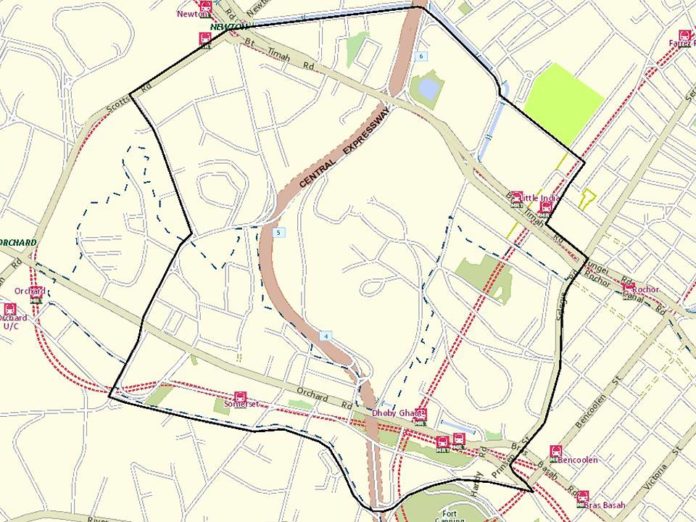
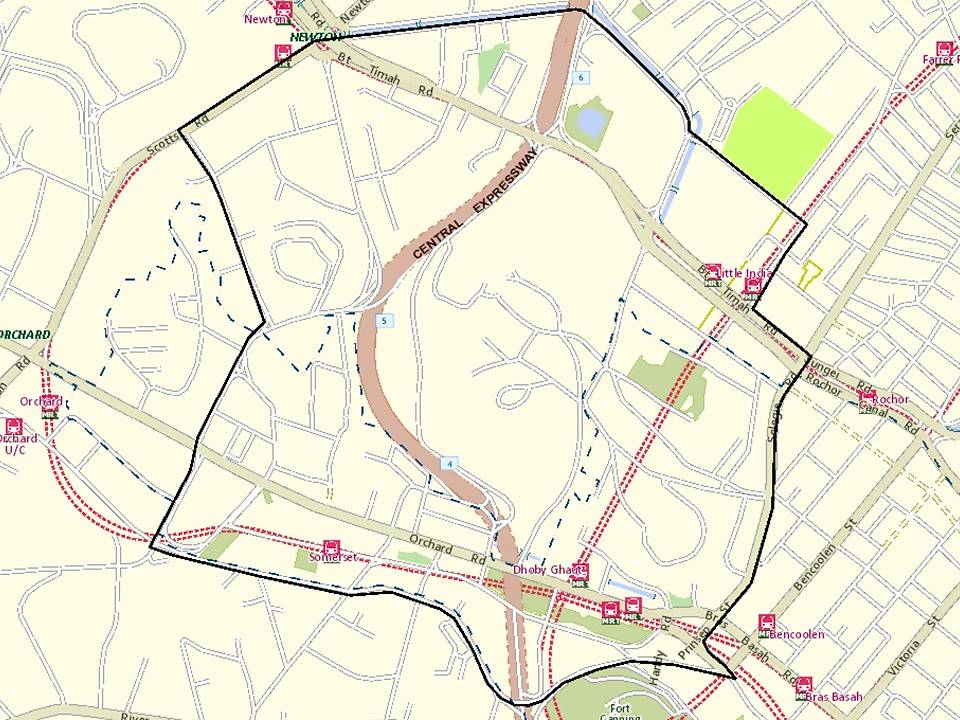
SINGAPORE: There will be tighter security in areas around the Istana and Shangri-La Hotel when Singapore hosts the 32nd ASEAN Summit later this month, said the police in a news release on Tuesday (Apr 10). 

The event, which will take place at the Istana on Apr 27 and at Shangri-La Hotel on Apr 28, has been declared by the Minister for Home Affairs as an Enhanced Security Special Event under the Public Order Act.

The areas around both locations have been designated as special event areas between 12am and 11.59pm on those dates, said the police.

Within each special event area, there will be a special zone where stricter security checks will be conducted on people and vehicles within or entering the zone. 

“The police will also have the powers to refuse entry to, or remove a person from, the Special Zone, if necessary,” said authorities.

A list of items such as loud hailers, aerosol paint containers and explosives will not be allowed in the area.

In addition, it will be an offence to bring drones into the special event area or fly them. It will also be an offence to fly drones outside the area in a manner that disrupts the event, said the police.

Those convicted of possessing prohibited items in the special event area may be fined a maximum of S$20,000 and jailed up to 12 months.

“The police seek the cooperation of the public to comply with all orders issued by police officers. Persons who engage in activities that compromise security will be dealt with firmly in accordance with the law,” said authorities.

special events area outside istana

The special event area (outlined in black) around the Istana. (Image: Singapore Police Force)

special events area outside shangrila hotel

The special event area (outlined in black) around the Shangri-La Hotel. (Image: Singapore Police Force)

Source link

Great World City to undergo refurbishment works from mid-April

0

SINGAPORE: Great World City will undergo enhancement works from mid-April, ahead of the opening of the Great World MRT station along the Thomson-East Coast line in 2021, according to a joint media release by property group Allgreen Properties Limited and Great World City on Tuesday (Apr 10). 

The works will be carried out in phases over the course of two years and will be completed by the third quarter of 2020. 

There will be a reconfiguration of interior walkways and escalators for ease of movement and “self-contained pods” housing creative retail concepts. 

dual pods in the newly revamped great world city

Artist’s impression of the unique dual-level retail pods in Great World City. (Photo: Allgreen Properties Limited, Great World City)

The shopping mall will also see food and beverage outlets covering 30 per cent of the space, up from 20 per cent at the moment, according to the press release. 

The first floor of the mall will feature a zone dedicated to food and beverage and children will have an outdoor playground on the second floor. 

Additionally, about 50 new tenants, including Japanese-focused retail and food outlets, will be introduced to the mall.

“With the revitalisation of Great World City, we are very excited to bring a new-found vibrancy to the River Valley area whilst maintaining its roots as a beloved leisure and lifestyle destination,” said the CEO of Allgreen Properties Limited Lee Yew Kwung.

With the upcoming Great World MRT station, commuters can also easily access the revamped Great World City with a new retail link on Basement 2 of the mall that gives easy access to the MRT station. This is alongside an entrance to the mall from the station on the first floor and on the second floor via a pedestrian overhead bridge. 

Despite the enhancement works, the mall will remain open and “tenants will continue to operate with minimal disruption during this period”, said the press release. 

Major retail, dining and lifestyle tenants such as Zara, Golden Village, Best Denki, Cold Storage, Imperial Treasure Cantonese Cuisine, Kuriya Dining and Food Junction will be unaffected. 

Office tenants in the building will also see improvements after the enhancement works. There are plans to allow office lifts in the building to directly connect to the third floor of the mall. 

Source link