SINGAPORE: Consider for a moment what you’ve touched today. After all, our hands do all sorts of things for us – they open doors, handle money at the wet market, hold on to poles on public buses and trains, all the time while grasping our phones. They often also act as the barrier between our coughs and the rest of the world.
Up to 80 per cent of all infections are transmitted by hands, according to estimates by the US Centers for Disease Control and Prevention.
In an effort to visualise the amount and variety of bacteria we regularly come in contact with, we literally got our hands dirty – handling various objects we regularly come in contact with, and then making prints of our hands on agar plates.
To eliminate cross-contamination, we also made sure to sanitise our hands before touching each surface.
Dr Chris Sham, Assistant Professor of Microbiology at the National University of Singapore, supervised our experiment and incubated the prints for three days at 37 degrees Celsius to provide optimum conditions for the microbes to reproduce.
This is what we found:
TEST AND CONTROL PLATES
First, we took a print of our hand as it was, several hours after it last saw soap or water.
Three days later, the agar plate revealed many thriving colonies of the bacteria that we had inadvertently picked up in the course of the day.
In the meantime, we washed our hands thoroughly and made another print – one that turned up drastically less bacteria. This was our control plate.
Bacteria from an unwashed hand (left) and the same hand, after it had been washed with soap and water. (Photo: Gaya Chandramohan)
More sophisticated techniques are required to identify bacteria, but Dr Sham appraised all the bacteria we picked up with a critical eye and an educated guess.
He explained that two kinds of bacteria can be found on human hands – resident bacteria and transient bacteria.
Transient bacteria is what we inevitably pick up in the course of touching or interacting with people and things around us.
Resident bacteria is always present on our skin and is usually harmless, often working to keep other bacteria at bay.
Dr Sham noted that the bacteria on the hand that hadn’t been washed was noticeably different from that on the control plate.
“This shows how soap and water definitely removes more bacteria on your skin’s surface,” he said.
MOBILE PHONE
Some of us are inclined to take our phones with us everywhere – even to the toilet – and its surface is often teeming with all kinds of micro-organisms we pick up.
Bacteria from a mobile phone. (Photo: Gaya Chandramohan)
Studying the print we made after handling a mobile phone, Dr Sham said: “The golden colonies seen here are likely staphylococcus aureus – an opportunistic pathogen that can cause serious infection.”
“You can also see that there was some mould on the hand as well. It was probably picked up from contact with soil,” Dr Sham said.
SUPERMARKET TROLLEY HANDLE
Bacteria from a supermarket trolley. (Photo: Gaya Chandramohan)
The handprint we made after pushing a supermarket trolley while grocery-shopping shed light on the many kinds of bacteria, including staphylococcus aureus, on the trolley handle.
Dr Sham also drew attention to the motile bacteria present – microbes that are able to move around the agar plate to gain more resources and grow into bigger colonies.
Human hands are “very good carriers” in disseminating bacteria, he said, citing how products like packaged poultry, seafood and fruit pass through the hands of many customers as they browse and wheel their trolleys around the supermarket.
“If I use the trolley and (then) you touch it next and I haven’t washed my hands previously, I can also spread my bacteria to you in that way.
It becomes like an indirect handshake.
“In that sense, we need to be more careful when touching public surfaces.”
COFFEE SHOP MENU
Bacteria from a coffee shop menu. (Photo: Gaya Chandramohan)
The handprint taken after flipping through a menu at a coffee shop showed a type of bacteria that moved very quickly on the nutrient-rich agar plate – so quickly as to colonise it entirely.
The menus pass through the hands of many people on any given day, and the experiment only highlighted the need to wash or sanitise our hands after handling items like these.
DOG SALIVA
How about our pets then? We spent some time outdoors playing fetch with our slobbery, enthusiastic dog.
Then we took a handprint.
Bacteria from a dog and its toy. (Photo: Gaya Chandramohan)
Toys that are taken outdoors and slobbery from being held in the dog’s mouth can provide the perfect conditions needed for bacteria to flourish.
“After (playing with) the dog, you can see a lot more environmental bacteria colonising the surface,” said Dr Sham, comparing the print with the control plate.
“The number of bacteria species has also increased by a lot.”
OFFICE PANTRY SPONGE
The experiment confirmed our worst suspicions about the shared kitchen sponges commonly found in office pantries.
Bacteria on the shared kitchen sponge in an office pantry. (Photo: Gaya Chandramohan)
“If you look closely at this print, you will find that there are no individual colonies present but instead, due to the large amount of bacteria present on the sponge, the individual colonies have actually fused together to become what we call confluent growth,” said Dr Sham.
“So that suggests that your sponge is not as clean as you expected.”
“Kitchen sponges – because they are damp, bacteria is able to multiply very quickly,” he said.
“After daily use, if you don’t disinfect your kitchen sponge, you actually end up spreading the bacteria from one item to another instead of cleaning it.”
Through a microscope, we could see tiny rod-shaped bacteria swimming around the agar plate, racing across the screen.
Imagine what happens if you continue to use this (sponge) to wash your items. This is what you are applying onto your coffee mugs and items – all this bacteria.
DO YOU WASH YOUR HANDS AFTER USING THE TOILET?
It’s impossible to avoid bacteria altogether, but Dr Sham suggested that we can at least control the kind of bacteria we come into contact with.
“We know where we can find pathogenic bacteria – like the toilet seat. This faecal-mouth pathway is very common to food-borne diseases,” he said.
I have personally seen people around who just rinse their hand for one second after using the bathroom.
Dr Natasha Bagdasarian, a consultant with the Division of Infectious Diseases at National University Hospital cited a study that found enterococci, a type of faecal bacteria, on the hands of people after they had touched handrails, door handles and seats in public areas, such as museums and public transportation.
Viruses can also be spread through contaminated hands and surfaces, she noted. These include norovirus, a common cause of stomach flu; rotavirus, another common cause of infectious diarrhoea; as well as respiratory viruses like influenza and adenovirus.
“Now that you know this, you should wash your hands really well and even apply skin disinfectant,” Dr Sham said. “This will effectively eliminate the bacteria on your hands such that when you grab food, you don’t take unexpected guests into your body – this is very important.”
But he added that one cannot make oneself completely sterile. “You can wash your hands 500 times but because the environment is filled with bacteria, you are bound to pick it up somewhere.”
Besides, he said, not all bacteria is not necessarily bad for humans. “For example, some of your gut microbes produce vitamins that you cannot produce. Some of them also help you to maintain your immune system.”
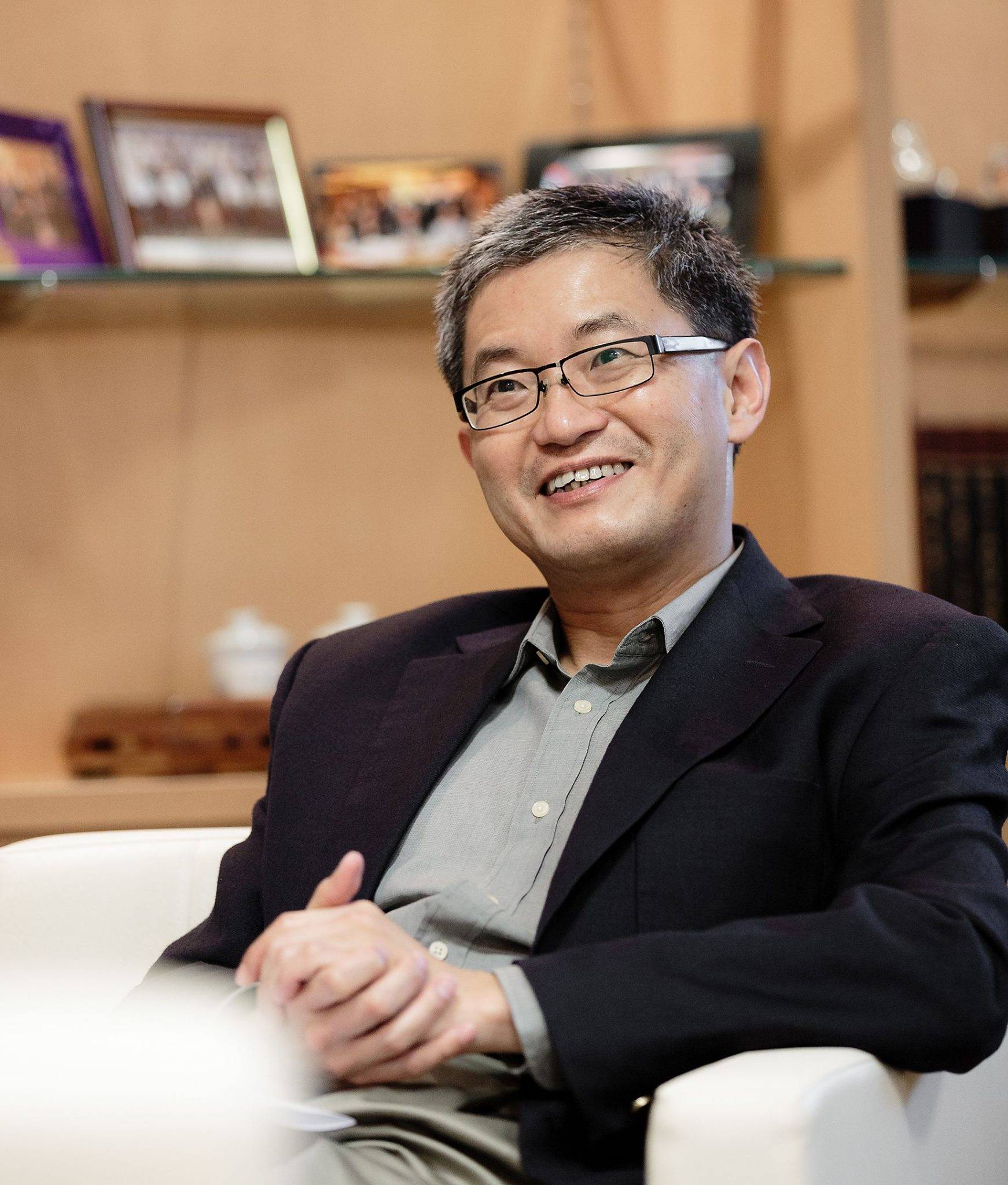
SINGAPORE: You would think as provost of one of the top local public universities, Professor Ling San would use any conversation about education to extol the virtues of a university education.
He does.
But he also spends a large part of our conversation urging a redefinition of success and an appreciation of multiple educational pathways.
Currently also Vice President (Academic) at Nanyang Technological University (NTU), the Professor of Mathematical Sciences spent 13 years at the National University of Singapore.
At first glance, he appears to be a typical staid math professor, but as we talk it becomes apparent that he is an advocate of risk-taking and experimentation.
“Take a course that’s totally outside your comfort zone. Do something that you know you have never done before, you haven’t the slightest confidence that you’re going to succeed in, but just give it a try anyway. When you’re forced out of your comfort zone, you’ll have to find ways to survive and maybe even overcome the situation. If the individual is very risk-averse and chooses to stick to a very narrow path, then the opportunity to learn is lost,” he says.
Universities here are incrementally encouraging this by offering inter-disciplinary courses which he says should be made compulsory for all students.
“When I was the Dean of Science, I had to speak to freshman at the orientation every year and for several years, I gave them one piece of advice only and that was: Make sure you fail.
“The intention is to drive home the point that it’s not about getting your As. It’s not about succeeding all the time. In fact the university is one of the best places and best periods of your lives where you can comfortably afford to fail and learn. It is like a laboratory.
“Most of the time, you’ll be surprised, right? You may actually thrive and enjoy that whole process. You might even find a new passion,” his eyes lighting up behind his glasses as he says this.
TAKING RISKS
While he encourages risk-taking in education, I wonder if he has taken any risks in his own career.
One of the riskiest things he had to do in his career was leaving the National University of Singapore (NUS) to join NTU, he says.
I remark it hardly seems like a risk.
“But for me, it was. I was very comfortable and very happy at NUS.”
He explains it was tough primarily because he was brought in to NTU to set up a new entity from scratch – the Division of Mathematical Sciences.
“I sounded out one colleague and said, ‘I’m going over, would you like to join me?’ After a couple of weeks he said, ‘I don’t have the guts.’ It was only then that I realised it’s not as simple as I imagined it to be. Nonetheless, I took the plunge.”
He went from being a deputy head of a department to being a founding head of a department.
It might seem like a modest risk, but to him it was an “experiment” that he could have declined.
“I learnt that this is a once-in-a-lifetime experience to set up new systems and set the tone. Eventually, I had no time to think whether I was scared. I was really driven more by the excitement of the possibility of shaping something, leaving my mark on it.”
As we talk about his career, he is quick to point out that it’s a result of following his passion. He realised his love for maths in secondary school.
He asserts that today, more and more, Singapore’s education system is moving towards helping individuals discover their passions and giving students enough room to “play and to explore”.
However, I point out many remain sceptical as the weight of doing well in exams could lead to disillusionment for many.
He himself wishes his time in university had been less exam-focused.
“I went through the British system. It was exams for six hours a day over two days and if you did badly, your life was over. It was cruel. Your entire years’ work hinged on the two days. So I’m thankful that our system today is not like that.”
But the 54-year-old admits that he grew up in Singapore during a time when the education system was less exacting than it is today.
“We hardly spent time on assessment books. We did our homework and the rest of the time was spent exploring whatever else we might be interested in.”
This is what he says needs to be re-injected into the system.
DOES THE SCHOOL YOU GO TO REALLY NOT DEFINE YOU?
“I can’t help but think that sometimes the academic demands come not from the system, but from the parents or peers. Parents define success as their kid going to a particular school. But success should not be so narrowly defined. In the larger scheme of life, what’s the difference between going to school A and school B? Maybe not even visible at the end.”
“Education should have at least two key aspects to it. One is to prepare the person for a job or at least for working life, but the other actually is to help a person lead a more meaningful and purposeful life,” says Professor Ling San. (Photo: NTU)
But is that really so?
I point to the latest Private Education Institution Graduate Employment Survey that showed less than half of private school students found full-time jobs within six months of their graduation.
In contrast, the full-time permanent employment rate for the autonomous universities – NUS, NTU and Singapore Management University (SMU) – was 78.4 per cent.
The survey also showed that the median gross monthly salary of private school graduates working in full-time jobs was S$2,650, while that of fresh autonomous university graduates was S$3,400.
“Having gone to a brand name university, you may have an advantage at your first job but thereafter, it’s all dependent on your performance. I’ve come to believe that. I’ve seen in a lot of success stories from people who never went to brand name schools or universities and they’ve been doing fabulously well, surpassing their peers later on in life.
“Don’t lose courage. Take this as an opportunity to build up your character and be more resilient.”
It does seem unfair though that individuals are judged in this manner to begin with.
“Life isn’t always fair. But even this group of people who judge, I think, may be evolving in the way they think. Of course it’s easier to use a recognised degree as a proxy for the kind of qualities an employer is looking for. But they must start asking more exact questions like ‘Does this person have the suitable qualities to succeed in this job?’ Increasingly I’m hearing some employers talk about competencies such as soft skills, team work, problem-solving skills, communication.”
If it were up to him, he’d look at what the student has done in terms of augmenting his academic education. There’s no need to get straight As. In fact, he says “mediocre results” are acceptable if someone has spent time on programmes and activities that have helped him build soft skills.
Universities themselves are opening up more places under the discretionary admission scheme to consider students’ qualities aside from their grades.
He emphasises that employers need to “stop using grades or qualifications as a convenient proxy for competence.”
“I think the civil service is trying to change things a little bit but a bolder approach could send a very strong message. I reckon that the civil service is very big so it’s challenging for the entire civil service to try to do things in an unconventional way.”
He urges a “nuanced approach” to sifting through resumes.
Another determining factor for students’ and employers’ preferences of schools is rankings.
Even though NTU has risen to 11th place in Quacquarelli Symonds (QS) World University Rankings, he admits such assessments need to be looked at with some perspective.
“I’m not hung up on rankings. Ultimately, it really depends on the student. You have to ask yourself what you are looking for in university education. There are students whose objective may be to eventually get a PhD. They probably want to make sure they go to a university with a very good environment to help them grow their interest in research. On the other hand, there are many people who just want to have a good university experience and go out and work. They probably want to look more holistically at the environment. At the end of the day, it’s about fit.”
MORE UNIVERSITY PLACES BUT IS A DEGREE REALLY NECESSARY?
He also feels success has to be defined even more broadly than just one’s career.
“Education should have at least two key aspects to it. One is to prepare the person for a job or at least for working life, but the other actually is to help a person lead a more meaningful and purposeful life.
“Appreciate the softer things in life even if it does not bring in the dollars. Appreciate the broader context of life. For example, if someone with a technical background has the ability to appreciate the finer things in life such as art, music or even social science and understands these disciplines do have a big part to play in life as well, it’s enriching. We need a broader education that nourishes our soul beyond career preparation.”
However, for this very reason and with a greater emphasis on skills and many different ways to acquire them, some are starting to ask whether a degree is even necessary.
University places for Singaporeans have been increasing, but is there really a need for them?
“From ancient times till now, we’ve seen many people succeed in life without a degree. Nonetheless, a degree programme has for many years been a very convenient way to prepare a person for a certain set of skills. I think that we cannot deny that.”
Yet, many often bring up examples of exceptionally successful individuals who made it without a university education.
“Well, if you know what you’re doing, you’re fine. People like Bill Gates and Steve Jobs probably knew exactly what they didn’t want and what they were good at, so, they were no longer bothered by that piece of paper or that label. If you’re as certain as them, why not? But on the other hand if you’re not all that sure, I think overall the value of a university education is still there. It’s about the holistic experience.”
“Singaporean students and parents are quite cautious when it comes to choices in careers and hence courses to study at the university. There’s a great tendency to follow the well-trodden path,” says Professor Ling San. (Photo: NTU)
ARE OUR UNIVERSITIES ADEQUATELY PREPARING STUDENTS?
He explains university education today is less structured and aims to deliver the very things he has spoken about.
But many, including employers have questioned how well our universities actually prepare our students for the new working world where confidence, critical thinking and adaptability are key.
“There may be some elements of truth to some of these criticisms but I would say that very often such criticisms tend to be a little too sweeping. If our local grads are really all that bad, I think Singapore is already doomed.
“That does not mean that we have no room for improvement,” he adds.
He assures me that today, tremendous attention is actually put towards enhancing the quality of the education, with the goal of adding value to the graduates.
“We have flipped classrooms. All the content delivery is on the iPad and the contact hours are now spent working in groups, discussing, brainstorming, sparring. It creates an environment for students to work in teams, to hone their communication skills and also challenges them to think on the spot. So these are skills that you want students to develop in preparation for the evolving workplace.”
But why did it take so long for university education here to transform?
“I don’t know. But I think the good news is, it’s transforming very fast now.”
However, in spite of having some of the best universities in the world, today Singapore is grappling with skills shortages in key areas. I ask him to explain why he thinks this has happened.
“That’s a hard question. Singaporean students and parents are quite cautious when it comes to choices in careers and hence courses to study at the university. There’s a great tendency to follow the well-trodden path.
“For several years now, we’ve known that areas such as data science and cybersecurity had been growing exponentially. But very often, when students made a career choice, these areas were not on their radar screen even though the courses were available at the university.”
Finance, medicine and law remained more popular in spite of the changing landscape.
As a result, Singapore is seen by some to be behind the curve.
But just knowing which course of study will guarantee you good career prospects is not enough today. He, like many other experts, believes in inculcating an ability and drive for continuous learning.
“The ability to learn, to process new knowledge and to apply whatever they have learnt – that skill is evergreen.”
Bearing in mind the need to also be multi-skilled, NTU is working on structuring and strengthening a modular system for its Masters programmes.
“Instead of marketing it as one package, we are marketing individual modules. Some of them will be tweaked as well. The working adult can come in and take just one module he finds relevant such as Artificial Intelligence, but at the end of the day, he can take a few other courses that he finds similarly relevant and that package could get him a Masters degree.”
BEYOND CAREER PREPARATION
We move on to talk about the other purpose of education. As he puts it, “to help a person lead a more meaningful and purposeful life”.
His own university education led to an awakening that has changed his life forever.
While he was doing his PhD in California, a number of his peers and professors regularly spent time serving food to the homeless at soup kitchens and building houses in poor communities.
“Having grown up rather comfortably in Singapore, it was something quite foreign to me. I was really quite intrigued by their commitment.
“I knew that I was going to work in the university and so by definition, that environment already restricts me to a rather selected segment of the society. You certainly don’t naturally get in touch with people who might be bringing home only S$800 a month and finding it a struggle to make ends meet. The possibility that I might become detached from society at large bothered me.”
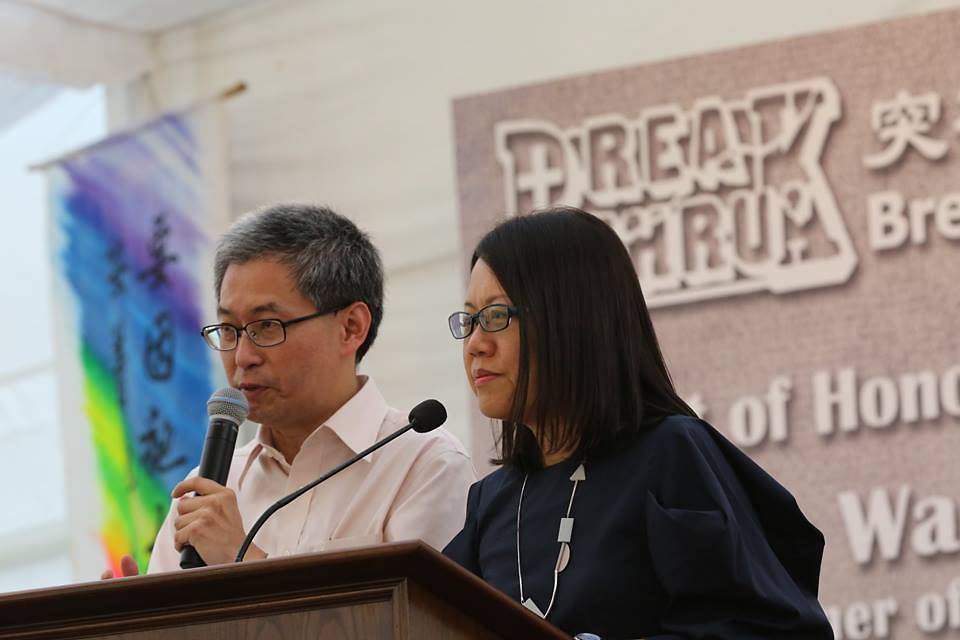
Professor Ling San has counselled more than 1,000 former drug addicts at the halfway house, Breakthrough Missions. (Photo: Breakthrough Missions)
Once in Singapore, he met a group of former drug addicts in his church who had problems fitting in.
He started to spend an evening a week with them, exercising, having meals and simply chit-chatting.
Today, he has counselled more than 1,000 former drug addicts at the halfway house, Breakthrough Missions.
“Their sharing actually helped me learn a lot about life. It gave me a real sense of the struggles that certain families go through. I realise they have their own strengths. Interacting with them makes me more complete. It also gives me a very deep sense of having been blessed as opposed to a sense of entitlement.”
This leads us to a discussion about social stratification in Singapore and how the school system might actually be perpetuating it even though efforts have been made to prevent elite schools from becoming closed circles.
For example, in order to ensure that top schools don’t stay “closed circles”, top secondary schools now have to take in more students from different backgrounds through the Direct School Admissions scheme.
But can more be done?
Professor Ling himself went to elite schools throughout his life, but he says during his school days, the spread in terms of class was not as wide as it is today.
He was from a middle-class family. His father was a clerical officer at a bank and his mother, a primary school teacher.
“Neither of them had a university education and we didn’t lead a luxurious life. We had to be frugal, but we were comfortable. Today, I feel the onus is on the school to create awareness and opportunities for their students to genuinely engage with people outside their normal social circle, perhaps through sports.”
Some experts have suggested mixed-ability classrooms and schools so that students from various academic and socio-economic backgrounds can interact more organically.
“I’m really split on this. While I do feel we define success too narrowly in schools, if just for the sake of being egalitarian, you force two individuals of different academic capabilities to be in the same class, the end result can be very frustrating for the teacher. No matter how you try to teach, you’ll never satisfy the two ends of the spectrum and the students will find it very frustrating as well.”
I point out that pedagogical methods to accommodate such differences exist and continue to be developed. Some experts even encourage collaborative learning with students sharing their strengths with others.
He doesn’t seem convinced.
“To some extent, I think that’s valid but if you want to do it on a very big scale, it’s not so easy. In an ideal world, yes, but practically speaking, I think it’s going to be very challenging. You can experiment with it but it requires a lot more resources, to have an approach that is so effective for the individual.”
As a start, he says schools should spend more time on community service.
“Don’t see community service as a sacrifice. See it as part and parcel of life. It’s not going to hurt your results if you take an average of one hour off a week to do community work. This exposure goes a long way to shape the views and the awareness of the person and if it means you don’t get an A in the exam, I think you shouldn’t see it as a bad thing.”
While ideas for improving education are aplenty, he says that if he had to narrow it down to just one thing, it would be “creating an environment where our students will be much more prepared to take risks.”
“Nothing is really certain so if you are too cautious, you’ll always be two steps behind others. The only way to leapfrog is really to just take a leap of faith and pray hard that everything works out fine. But even if it fails, it’s okay.”
SINGAPORE: Imagine being an ambitious fresh graduate interviewing for a job 15 years ago.
Recruiters would have asked about your degree programme, your grades and the nature of your extra-curricular activities.
Today, the ante has been raised. New, additional demands are increasingly common.
What overseas experience do you have? How did you value-add to the organisation you interned at? Do you have experience working with data? Are you agile enough to cope with change?
Recruiters are now looking for demonstrations of aptitude that go beyond good grades. The Ministry of Education has recognised this and introduced policies to prepare future graduates for this new reality.
In his Committee of Supply (COS) speech last month, Minister for Education (Higher Education and Skills) Ong Ye Kung announced the rolling out of micro-credentials by autonomous universities (AUs).
“The AUs will re-package certain courses to create pathways that lead to smaller qualifications – often referred to as ‘micro-credentials’,” he said.
He also issued a note of caution. “However, we should be careful not to let such micro-credentials become a new ‘arms race’ to collect credentials.”
Mr Ong had similarly remarked during his 2016 COS speech: “I will be rather upset if I change this policy and see the sprouting of a new tuition industry coaching students how to ace interviews.”
He expressed this sentiment as he announced the expansion of aptitude-based admissions into Institutes of Higher Learning (IHLs), where applicants will be assessed through a wider range of measures beyond grades.
There was a recognition that the unhealthy competition fuelling the paper chase might be replicated in students’ bids to compete for “non-paper” qualifications.
Education Minister in charge of Higher Education and Skills Ong Ye Kung speaking during his ministry’s Committee of Supply debate on Mar 5, 2018.
It is a valid concern. A second arms race in education may be heading our way.
Online, services “coaching students how to ace interviews” have sprouted up. There are many websites which curate internship opportunities and services that coach job seekers to tackle psychometric tests and mock-case interviews.
Since most IHLs already undertake this role to help students equip themselves with skills to secure a good job, these admission and interview coaching services are thus reminiscent of the academic tuition industry (or the “shadow education industry”).
In 2013, Prime Minister Lee Hsien Loong remarked in his National Day Rally speech as he discussed various suggestions raised to improve the Primary 1 admissions process that “anyway, whatever solution you make, parents will find ingenious ways to maximise their chances”.
If I may add to PM Lee’s words, students themselves too will do what it takes to maximise their chances when they seek entry into IHLs and the job market.
After all, when standards are raised and everyone ups their game, one must work even harder to demonstrate how he or she can stand out from the crowd.
With degrees becoming more common, it is no longer the defining factor that decides if one gets hired – strong aptitude and skills and holistic experiences are the newly coveted signals.
And so, a new race to obtain them could begin, one where the item in question is not a degree, but internships, leadership opportunities, community projects, communication skills, portfolio enhancements and other credentials.
To be fair, participation in non-academic activities usually stems from a genuine desire to pursue one’s interest. Nevertheless, students are also aware of the practical value these have in helping them stand out.
After all, as Mr Ong himself acknowledges in his 2018 COS speech, “what students and parents need to understand is that passion and aptitude need to be demonstrated and is not declared, and that has to come through in the admission application”.
Students attending a “Singapore: Imagining the Next 50 Years” tutorial at NUS, discussing the topic of population in Singapore. (Photo: NUS)
DEALING WITH THE NEW EDUCATION ARMS RACE
In finding the best candidate for the job where “best” can no longer be defined in conventional metrics, it can be tempting for organisations to search for candidates that “check as many boxes as possible” and have a full set of qualifications, experiences and skills.
This in turn further incentivises the chase by students.
Faced with a potential new arms race in education, both recruiters and future job seekers must approach this carefully to ensure it doesn’t spiral into a vicious cycle.
We cannot eliminate competition, but all stakeholders can play their part in enhancing how competition is managed and ensuring optimal outcomes.
First, hiring managers and admission officers can finetune their selection processes by demanding and prioritising depth of experience and degree of value-adding.
Focus not on how many internships or leadership positions one has taken up, but rather how much one has been able to value-add to the position or organisation during his or her stint there, backed up by verified testimonials.
Second, they could shift the focus of the selection process towards the latter stages where resumes matter less.
Organisations can demand interested candidates sit for on-site assessments if they wish to apply. These could take the form of scenario-based and business case tests. This has the benefit of allowing greater reliability and organisational-relevance of assessments but avoids the logistical challenges that would come with interviewing even more candidates.
In practical terms, this means eliminating less candidates during the resume-assessment stage and allowing more to proceed to the on-site assessment stage. This means assessing if candidates are as good as their resumes say they are.
Attendees at a job fair line up for an interview carrying their resumes in leather bags. (Photo: REUTERS/Jason Reed)
By demanding that candidates go through a rigorous assessment, it helps organisations filter out candidates who submit their resumes to “try their luck” but are not serious about the job.
More importantly, it mitigates the unintended filtering out of candidates who may not have a strong resume but possess the necessary aptitude to excel, which is what organisations are ultimately looking for.
Third, young people themselves, hungry for success they are, must also approach the process more judiciously. They should focus not on lengthening their resume but showing the depth and mastery of skills and experiences.
Don’t take on activities so that your CV looks good but participate in internships and leadership positions with the view of value-adding.
Students must also be realistic about the competition they face and actively prepare for the scenario of not getting their dream jobs. Just as the Labour Movement encourages workers to learn a second skill, prospective job seekers should take modules during their schooling days to achieve some degree of familiarity in a secondary interest.
Faced with a potential new arms race in education, recruiters and job seekers can take steps to make the job recruitment process more meaningful and productive.
Even as competition gets stiffer, with the right approach and mindset, a virtuous cycle of skills-job matching could very well be what awaits us at the finishing line.
Ng Chia Wee will begin his undergraduate education at the National University of Singapore’s Faculty of Arts and Social Sciences this August.
SINGAPORE: It was a victorious return to Singapore for national shooter Martina Veloso, fresh from winning two gold medals at the Commonwealth Games in Brisbane, Australia.
“It has yet to sink in. It’s unbelievable,” said Veloso on Saturday afternoon (Apr 14) as she was welcomed home by family and friends at Changi Airport Terminal 3.
There had been hopes that she would accomplish a hat-trick by winning the 50m rifle 3 positions, but it was not to be.
“For my last event I took a fourth place. I think it was still good because it was a back-to-back competition so it wasn’t easy,” said Veloso.
“I’m just really, really happy with my performance, it has surpassed my expectations. I just wanted to medal at an event, but to have two gold medals I think it’s icing on the top.”
Singapore’s shooting team made the finals in eight out of 13 events contested, and they are already looking ahead to the 2020 Tokyo Olympics.
Said Ms Jeanine Heng, the Singapore Shooting Association’s high performance manager: “I was thrilled of course for her (Veloso) and also for Singapore because we helped to get the first two gold medals for Singapore.
“Our main goal is the Olympics. For the women, Commonwealth Games is a stepping stone. Asian Games is a very big milestone because the big players, like China, Korea, Japan will be there. And of course Olympic qualification will be next – hopefully we do something for the Olympics.”
As for Veloso, she will be leaving again next week for the Shooting World Cup in South Korea. “A few days to celebrate, probably have a nice meal with my family and meet up with some of my friends,” said the Nanyang Polytechnic student.
The Commonwealth Games will come to a close on Sunday.
It has begun: The cast of Avengers: Infinity War arrives ahead of red carpet fan event
Avengers: Infinity War star Benedict Cumberbatch poses for a selfie at Pasar Ugi, a market place celebrating Bugis culture as part of the Singapore Heritage Festival. (Photo: Facebook.com/malayheritage)
SINGAPORE: A strange thing happened at the Malay Heritage Centre (MHC) today. More accurately, Doctor Strange happened.
Benedict Cumberbatch, who plays Doctor Strange in the Marvel Cinematic Universe, dropped by Pasar Ugi, a market place celebrating Bugis culture as part of the Singapore Heritage Festival.
Dressed casually to beat the heat in a grey T-shirt, the 41-year-old English actor happily posed for a selfie with MHC’s programmes manager Jamal Mohamad.
The MHC posted the seflie on its Facebook page, saying: “Look who dropped in for our #UgiFest!”
Cumberbatch is in town ahead of the red carpet fan event to promote Marvel’s Avengers: Infinity War at Marina Bay Sands on Apr 16. He will be joined by Robert Downey Jr (Tony Stark / Iron Man), Karen Gillan (Nebula from the Guardians of the Galaxy movies) and Infinity War co-director Joe Russo.
SINGAPORE: It may be time to re-examine Singapore’s public housing policy in light of increasing numbers of elderly residents who may need to monetise their housing to provide for retirement.
News last year that land at Lorong 3 Geylang where 191 private terrace houses sit would be returned to the state when the lease expires in 2020, has also provoked further discussion about HDB’s 99-year leases and what it means for the public, who have been encouraged to view property as an appreciating asset.
DO WE HAVE ENOUGH FOR RETIREMENT?
In 2016, the average CPF balance of persons aged 50 to 55 was S$137,000, enough for about slightly over S$1,000 in monthly income in CPF LIFE if one were to invest in the annuity now.
In a reply to questions in Parliament in 2014, then Minister for Manpower Tan Chuan-Jin said that only half of CPF members met their minimum sum pledge at age 55, inclusive of their property pledge.
Compared with the usual advice from financial planning experts that a person’s retirement income should be about 60 to 70 per cent of one’s pre-retirement income, it seems many may not be able to depend on CPF for retirement adequacy.
The number of persons aged 65 and above has increased from 8.5 per cent in 2007 to 13 per cent in 2017. This proportion could double again by 2030.
The National Survey of Senior Citizens last released in 2011 found that most senior citizens’ main source of income was from their children, something which may not be sustainable for many in the future, with increasing numbers of singles and childless couples.
File photo of elderly woman in Singapore. (Photo: Christy Yip)
MONETISING OUR HOME
Housing can be viewed as a kind of retirement saving, particularly in Singapore, where home ownership rates are among the highest in the world. Here, homes are financed very often primarily from CPF withdrawals and seen as assets with value to be unlocked when one gets older.
One study by the OECD concluded that one’s CPF savings could provide for somewhere between 13 per cent to 82 per cent of one’s pre-retirement income, depending on how much was withdrawn from CPF to pay for housing.
At the end of 2017, net withdrawals from the CPF for housing amounted to S$210 billion.
In 2003, based on the recommendations of the Economic Review Committee, the Government implemented a CPF withdrawal limit for property preventing people from withdrawing more than 120 per cent of the valuation of their property, including interest costs. This is likely to aid new entrants to the workforce in saving for their retirement better.
But this still leaves many people, including today’s pre-retirees in a potentially tenuous situation when it comes to unlocking the value of their old homes for retirement income.
This is one reason why the Government has promoted schemes over the years, such as reverse mortgages and the Lease Buyback Scheme, to help home owners monetise their houses.
But these schemes are not popular. Reverse mortgages were introduced in 1997 but failed to take off, with the last provider discontinuing the product in 2009. The Lease Buyback Scheme run by the HDB has a poor take-up with only about 2,500 since it was launched in 2009.
Public interest in 99-year HDB leases stirred when owners of private residences along Lorong 3 Geylang were given notice that their properties must be returned to SLA when their land leases expire in 2020. (Photo: Marcus Mark Ramos)
One reason might be that the Lease Buyback Scheme offers relatively little value and does not give guarantees as to what happens should the family outlive the shorter lease, even though HDB says applicants will not be left homeless.
With the number of elderly possibly doubling by 2030, any attempt at downgrading may encounter supply challenges as large numbers of people try to do so at once.
THE HDB 99-YEAR LEASEHOLD ISSUE
In March 2017, Minister for National Development Lawrence Wong sounded a note of caution regarding the phenomenon of home buyers paying high prices for old HDB flats in the hope of benefiting from a Selective En Bloc Redevelopment scheme (SERS). There are no guarantees – and HDB flats will be returned to the state at the end of their leases, he said.
The practical issue is understandable – the Government would not be able to afford to “rescue” everyone.
This has resulted in some public unease over the issue. At the moment, these voices are muted, probably due to the fact that there is no serious HDB test case yet.
Dr Ng Kok Hoe from the Lee Kuan Yew School of Public policy has highlighted in a commentary for Channel NewsAsia that we should re-examine our housing policy design and explore other housing options including renting, with a view to de-emphasise the view of housing as social security.
THE ECONOMIC VALUE OF A HDB FLAT
You cannot buy a HDB as a second property for investment purposes, and only Singaporeans and Permanent Residents can own one. A purchaser of a HDB flat must ensure that any private property owned must be sold within a certain period.
In contrast, with private property, you can freely en-bloc, buy a lease top-up, sublet or sell to an investor.
All these restrictions mean that HDB flats will be valued less than an equivalent leasehold private property.
HDB flats in Toa Payoh. (File photo: Calvin Oh)
A HDB flat also does not really sell at potential economic value.
A 4-room HDB flat in Toa Payoh with 57 years of lease left sells for about S$360,000. A flat in the same block can be sublet for S$2,200 a month (a 7 per cent gross yield). Even if you sublet the flat for only 75 per cent of the time, in 57 years, this is S$1.1 million in cashflow.
IS THERE ANOTHER WAY OUT?
What can we do to tackle this conundrum? One idea is to privatise older HDB flats, while we still have time to roll it out before problems arise. We have a precedent.
The HUDC programme was a programme started in the 1970s with the aim of catering to “sandwiched” middle-class professionals who did not qualify for low-cost HDB housing. By the 1990s, as the HDB programme gained momentum and catered to most classes of buyers with offerings such as executive flats, demand for the HUDC programme declined.
In 1995, HUDC estates were allowed to privatise provided a clear majority of owners voted for it and paid HDB a fee, inclusive of buying over common areas.
One by one, HUDC estates went private. Many went en bloc, with the developer picking up the tab for a lease top-up. Others simply topped up their leases.
Former HUDC estate Serangoon Ville has been sold for S$499 million to joint venture company Oxley Serangoon, announced construction and property development company KSH Holdings on Jul 26, 2017. (Photo: Wendy Wong)
In a similar way, we can do so for older HDB estates. Privatising HDB flats frees the way for owners of older HDB flats to maximise their ownership and monetise their houses as private property owners.
In the HUDC case, the process of privatisation across various HUDC properties was drawn out over decades. HDB privatisation can be similarly managed to ease the transition and avoid supply shocks, concurrent with HDB managing the supply of new flats.
The HDB programme has succeeded beyond its wildest imagining. It has done its job in providing decent housing for the vast majority of Singaporeans since the country’s independence.
Maybe it is time for the HDB to step back and evolve. Allow people to have more choice, less reliance on Government when it comes to housing, and have the HDB refocus its social mission.
Tan Jin Meng is pursuing a full-time post graduate degree at the Lee Kuan Yew School of Public Policy and is currently engaged in research on long-term care financing for a local non-government organisation interested in eldercare matters.
SINGAPORE: Dragons, lush flowers and the stoic faces of Greek gods.
These are some of the bold motifs that have adorned the skin of Ng See Min’s clients in sprawling, elaborate designs that often cover their entire arms or backs.
The catch: They only last about two weeks.
The 23-year-old artist lays claim to being Singapore’s first-ever jagua tattoo artist. Her tools of choice are not tattoo machines and needles, but cones and bottles of a gel made from the juice of the Genipa Americana fruit – commonly known as jagua – mixed with water and essential oils.
The gel is washed off after a few hours, leaving a faint tint that gradually darkens into a deep blue-black over the next one to two days. The resulting stain, which lasts about two weeks, is practically indistinguishable from a permanent tattoo.
Photo courtesy of Ng See Min.
Photo courtesy of Ng See Min.
Photo courtesy of Ng See Min.
The juice of the jagua fruit has been used by South American tribes for ornamentation and medicinal purposes for centuries. But while it has more recently caught on among henna body artists in North America and Europe, it is still a relative novelty in Singapore.
Ng jokingly credits her mother for her fascination with body art.
“She didn’t allow me to have tattoos since young. So, you know, the more you restrict something, the more you’ll like it,” she said, bursting into laughter.
The 23-year-old artist speaks to Channel NewsAsia. (Photo: Gaya Chandramohan)
She began by drawing tattoo designs on her own skin with pens, but after being warned by those around her that the ink could be bad for her, she began using henna, another plant-based paste that temporarily stains the skin an earthy hue.
“But henna was still brown, it didn’t really look very realistic to me and I really didn’t feel the kick of it,” she said.
She discovered jagua while searching for inspiration from overseas henna artists, given that, she said, there weren’t many henna artists in Singapore that ventured out into more “tattoo-like” modern designs.
“Maybe because (these overseas artists) were near South America, they heard about this jagua ink and they tried it … So that was how I realised that there was this new blue stain that looks really, really good, and looks like a real tattoo.
Photo courtesy of Ng See Min.
Photo courtesy of Ng See Min.
Photo courtesy of Ng See Min.
“I was also taken aback at first and upon researching more about it, I decided to bring it into Singapore for my own selfish reasons,” she recounted. “Because I thought that it really looks like a real tattoo, and I wanted to try it out, even though it was quite expensive.”
Jagua is at least five to 10 times more expensive than henna, according to Ng, with a four ounce cone going for about US$40 (S$50) before shipping costs.
Two years ago, while still a sociology undergraduate at the National University of Singapore (NUS), she founded her business Henndrawn – short for henna drawn – and started offering her body art services on a commercial basis.
At first, she said, people often didn’t know the difference between jagua and henna, and would walk right past her booth without looking at it at events thinking it was “just another henna booth”.
But word spread quickly: “Whenever people get fake tattoos done, they wanna scare people, or they just wanna tell people. So they’ll post it on their Instagram, their Insta stories, and …. the shock factor and the novelty will just make people very drawn to it naturally. It’s like this mystery – is it real, is it fake? What is it? It’s not henna? No it’s jagua. What is jagua? That kind of thing.”
Her work went viral on social media, especially on Instagram. Henndrawn has almost 13,000 followers on the photo and video-sharing platform, with each of the photos earning hundreds of “likes”.
Due to growing awareness of her work, Ng said people are a lot more receptive to the idea of jagua now and get “very excited” when they see her booths at events.
“I mean, not to be like very conceited or what lah. It’s just a very novel thing and people are still constantly finding out about it and people are always sharing.”
While she said she gets clients from all walks of life, she is most popular among those aged between 18 and 30.
“A lot of them just want to try out different designs before they commit to a real one. Or they just wanted to try out what exactly jagua tattoos are … a lot of them cannot do tattoos and they just want to enjoy the thrill of having them and not caring how their parents would react or how much responsibility they have to take on for that piece of skin.”
I volunteered my arm to be “tattooed” with the Channel NewsAsia logo – a decision I will only have to live with for two weeks. (Photo: Gaya Chandramohan)
Talking to clients has also taught her lessons in life, she said. One client, for example, would often request for pieces related to her relationship with her father.
Through multiple conversations, Ng learnt that this client’s mother had passed away when she was very young and her father raised her single-handedly. Her client also shared anecdotes such as how her father used to cut her hair short “like a boy’s” because he didn’t know how to tie her long hair, and he would get scolded by her grandmother as a result.
“These kind of things, they’re just very endearing to me because they make me realise that what I do, I think is more than just drawing. It’s more than just putting art on someone else’s skin; through talking to clients I uncovered a lot of their stories, and I realised that the beauty of humanity and human connection is just so pure.
“That experience and that client herself, she reminded me that there are a lot of things to be grateful about in this world, and one of them is definitely family.”
DRAWING HER OWN PATH
Since graduating this year, Ng has been running her business full-time. On top of taking between 50 and 70 bookings a month at her cozy home studio, she also hosts workshops and events once every few months.
While she states cheekily on her website that if guests are lucky, they “might find scraps of her NUS certificate in her toilet roll” when they visit her for an appointment, Ng said her sociology degree was “not completely useless”.
“For one, it has definitely made me less judgmental because it has taught me so many ‘not so nice’ things about humanity and about society. I feel like jagua tattoos or temporary body art are also another facet of all these things – self-expression and this tattoo stigma that we have in our society.
“I really feel like it just made me have a very complete understanding of the society, and allows me to communicate with my clients better. I guess it also helps a bit in PR and marketing. Sociology is so broad, so it helps a little bit in everything.”
The artist at work. (Photo: Gaya Chandramohan)
Her monthly income ranges between S$3,000 and S$6,000 – a more than respectable amount considering the median gross monthly salary for fresh graduates from NUS’ Bachelor of Social Sciences programme last year was S$3,300, according to the Graduate Employment Survey by the Education Ministry.
The artist said she never felt conflicted about choosing a somewhat unconventional career path after graduation.
“I’ve tried working in a few places before I graduated – some were corporate jobs and some were a little more on the creative side, and I really realised what drains my energy the most, which is, you know, the standard nine-to-five and very mundane desk jobs really …. Kills me,” she said, sighing dramatically.
However, she emphasised that she was “very lucky”, because her business took off before she graduated.
Even while juggling her studies, she was earning about S$1,000 to S$2,000 a month from taking on freelance assignments, she said.
“A lot of people look up to me and are like, ‘oh wow, you’re an inspiration for choosing an unconventional path’. But they don’t realise I’m very lucky because Henndrawn took off before I graduated. So it was a very easy and fast transition for me to earn more money as compared to the average post-grad pay.
“It’s not easy to find something that is so niche, something that catches on so quickly, something that goes viral.”
She also pointed out that running a business is not as easy as it may seem.
“The realistic side of things is that you do have to hustle for a lot of other things … maybe from social media it might just look like I’m having the time of my life, I don’t do anything except for watching TV, drawing and playing with my cats,” she said, when asked if she had any advice for other youths considering branching out on their own.
“Drawing is one part of the business. There are also a lot of aspects that I have to handle that I don’t show, like handling the admin stuff, marketing, all that. I really have to think of it all the time. So I would say really think through it, be very responsible for your decisions because … adulting is so hard. Adulting. Is. So. Hard.”
Nonetheless, she encouraged others to “chase your dreams at least once in your life”.
“It may not be now, after you just graduated, it might be after 10 years, after you’ve accumulated enough capital, I don’t know. I think when the time is right, you will know it and when your passion finally comes into fruition I think you will understand how much satisfaction I feel and this will really drive you to keep on going and keep on making this a reality.”
NEXT STEP: PERMANENT TATTOOS?
Outside of work, Ng said things that make her happy include spending time with her four cats and makeup – or as she refers to it, “painting my face”.
“I feel like art is so integral in my life that if I’m not drawing on skin, I’m painting somewhere else, or I’m drawing on paper, or I’m making some sort of art piece, I don’t know, elsewhere.”
Ng playing with two of her cats, Butter (left) and Cupcake. (Photo: Hani Amin)
The businesswoman said that while she foresees herself expanding Henndrawn to greater heights, she will ultimately want to move on to “real” tattooing.
“I don’t think that I will be doing this forever … I would like to give myself maybe three more years, because then Henndrawn will be five years old, and I’ll see what happens,” she said.
“I like to do things intuitively, and the three years is a rough gauge. Who knows, if the right opportunities come, I might jump at them … But I’ll definitely still be doing art.”
Currently, she has two other jagua artists working with her at Henndrawn, and said she may pass the business to them eventually.
Last month, she also began holding jagua workshops, nurturing a whole new generation of artists in her field.
The possibility of more competition does not threaten her, she insisted.
“I used to be a bit more narrow-minded and I thought that by sharing what I know it would be nurturing competitors and just making my business suffer. But after thinking about it for a while I realised that I created this whole new art form – it’s no longer henna, it’s no longer tattoos. It’s jagua tattoos from now on. So it would be really selfish of me to hold on to what I know.”
She also drew parallels to the wide-ranging field of permanent tattoos. “In the world of tattoos there are a lot of artists who have a lot of styles, who have different techniques and different ways to express the same medium,” she explained.
“Half of me is quite scared that jagua tattoos are just going to be a trend, but another half knows that if tattoos don’t die down I don’t think jagua tattoos will, especially in Singapore. Because people have a fear of commitment.”
Her “secret, mini ambition”, she said, is to lessen the stigma of body art.
“I feel that people do get a little more brave when choosing jagua tattoo designs nowadays. Like they dare to get bigger ones – full sleeve, half sleeve, all the way. And I think that’s very nice because I feel that it means people really see it as a form of art and self-expression now.”
Photo courtesy of Ng See Min.
Through her art and by teaching other jagua artists, she hopes to make wearing visible body art more common.
“People used to think they belong to gangsters and stuff but now you have super cool mums or hipsters, sporting full sleeves or half sleeves as well. It can be for anyone. Hopefully that will erase the stigma a little bit.”
GOLD COAST: Team Singapore’s table tennis pair Feng Tianwei and Yu Mengyu put aside their disappointment at losing in the team event final to India last Sunday by clinching gold in the doubles category at the 2018 Commonwealth Games.
Feng and Yu stormed to victory in Friday’s (Apr 13) doubles final by thrashing India’s Manika Batra and Mouma Das 3-0.
Feng Tianwei and Yu Mengyu in action at the 2018 women’s doubles final. (Photo: Reuters)
The Singapore pair beat their opponents 11-5, 11-4 and 11-5 in under 30 minutes to win Singapore’s first table tennis gold medal in this edition of the Commonwealth Games.
SINGAPORE: Who says there’s no such thing as crispy rendang? From now until Apr 30, you can get rendang chicken wings at Ikea.
Yes, the meatball place that sells furniture on the side is offering chicken wings served up with rendang sauce at S$9 for six pieces, for a limited period only.
The online furore over a Malaysian MasterChef UK contestant being told her rendang wasn’t crispy enough may have had Southeast Asians up in arms, but from a more positive perspective, it also opened up the possibility of a whole new dish.
It was only a matter of time before someone would actually invent crispy rendang – we just didn’t think it would be the Swedes.
Are you a rendang purist? Or have you tried the rendang chicken wings? Tell us what you think.