SINGAPORE: Mediacorp and Grab signed a Memorandum of Understanding (MOU) on Monday (Apr 23) to co-create content for passengers as well as provide more income opportunities for Grab drivers in Singapore.
“Mediacorp and Grab will co-create tailor-made content for in-transit viewing on Grab’s in-car tablets as well as Mediacorp’s suite of platforms and distribution network,” said the two companies in a joint media release.
“This will enable Grab’s passengers to access high-quality content – such as short-form dramas, sitcoms, variety shows and headline news – for free while en route to their destinations.”
For private-hire drivers, those interested can choose to deck out their cars with Grab’s in-car tablet or other fleet-based media assets, such as car wraps and in-car hangers, for additional income. Mediacorp will manage Grab’s fleet-based media assets.
Under the terms of the MOU, Mediacorp and Grab will co-create content for in-transit viewing on Grab’s in-car tablets, as well as Mediacorp’s suite of platforms and distribution network.
In addition, Grab’s drivers and passengers will get the opportunity to be featured in special content series and attend events alongside Mediacorp’s artistes and personalities.
“We are delighted to have found a like-minded partner in Grab who, like us, believe in doing all we can to serve our consumers,” said Mediacorp CEO Tham Loke Kheng.
“The partnership with Grab is focused primarily on creating a better in-car experience for the Grab customer. The team at Mediacorp are excited to work with Grab to make this happen through our personalities and content, using formats which are well suited for in-transit viewing.”
Grab said the MOU is an extension of its advertising programme to enable more drivers to earn passive income, on top of the fares collected through Grab rides. The programme, which started in March 2017, has already generated more than S$300,000 collectively for participating drivers.
Said the head of Grab Singapore Lim Kell Jay: “We are constantly thinking about new and better ways to delight our customers, including drivers and passengers.
“Our partnership with Mediacorp will enable us to enrich the in-car experience for our passengers through high-quality content as well as create more income opportunities for drivers. We look forward to working closely with the Mediacorp team to deliver on our promise to out-serve our customers.”
Mediacorp’s products and brands in four languages – English, Mandarin, Malay and Tamil – reach 99 per cent of Singapore residents every week, according to Nielsen Media Index. The broadcaster has also won accolades abroad. At New York Festivals 2018 earlier this month, it was handed two Gold, eight Silver and four Bronze awards.
Grab is one of the most frequently used online-to-offline (O2O) mobile platforms in Southeast Asia. More than five million people use the combined platform daily, and the app has been downloaded onto about 90 million mobile devices, according to the joint media release.
CSA says when it came to password security, there was “no improvement” in management habits last year.
The word ‘password’ is pictured on a computer screen in this picture illustration taken in Berlin May 21, 2013. T REUTERS/Pawel Kopczynski/Files
(Updated: )
Bookmark
SINGAPORE: There were some bright spots in terms of how people had better cybersecurity practices last year, but more still can be done to improve password management and software updates, an annual survey by the Cyber Security Agency of Singapore’s (CSA) found.
The 2017 findings showed that more respondents are exercising caution when it comes to online transactions and app downloads, the press release on the survey said. The proportion of respondents who proceeded with online transactions without first checking the authenticity of the websites dropped by 18 percentage points to 20 per cent last year from 38 per cent in 2016 .
For those downloading mobile apps, there was a 7 percentage point increase among those who did so via an official app store, from 83 per cent in 2016 to 90 per cent last year.
More are also aware of what two-factor authentication (2FA) is; the survey showed there was a six percentage point drop in the proportion of respondents who said they were “not sure” of the process, from 10 per cent in 2016.
“This could also be a reason why more respondents indicated that they had enabled 2FA for either some or all accounts, resulting in a significant increase of 13 percentage points from 66 per cent in 2016,” it added.
The survey collected data from 2,035 respondents through an online survey, and the information was weighted against the demographics of Singapore’s general population by gender, race and age.
MIND YOUR PASSWORDS, UPDATES
It was not all rosy last year though.
CSA said that when it came to password security, there was “no improvement” in management habits last year, with one in three respondents continuing to store their passwords in their computers or write them down, or use the same password for work and personal accounts.
Additionally, more than six in 10 respondents did not change their passwords regularly, or did so only when the system prompted them, the survey found.
In terms of mindsets, the survey found that respondents’ level of concern towards cyber threats saw a slight dip.
Furthermore, just between 31 per cent and 44 per cent of them felt that the three scenarios of cyber threats – i.e. having their devices infected by viruses or malware, their financial or personal information extracted without their consent, and falling victim to a scam or fraud – could happen to them, it added.
“It is heartening that a majority of respondents recognise that everyone should be concerned about cybersecurity. However, we need to translate this recognition into action. Cyber threats show no sign of abating,” said Mr David Koh, chief executive of CSA.
“While we will continue to provide cybersecurity understanding and know-how to the community, we must recognise that we all have a part to play to protect ourselves online and not fall prey to cybercriminals.”
The CSA said it will launch its second cybersecurity public awareness campaign, titled Cyber Tips 4 You, on Apr 23. The campaign will include a series of online videos, advertisements and posters, featuring local celebrities Suhaimi Yusof and Jae Liew from the cast of television drama Tanglin.
A launch event will be also held on May 5 at Bedok Mall where visitors can get tips on how to create strong passwords as well as information on antivirus software and how it works.
She is accused of stealing more than S$50,000 worth of items from Mr Liew Mun Leong and his family members.
(Updated: )
Bookmark
SINGAPORE: A maid who worked for Capitaland Group’s founding president Liew Mun Leong, and allegedly stole more than S$50,000 worth of items from him and his family, claimed trial on Monday (Apr 23).
Parti Liyani, 44, an Indonesian, is accused of stealing a S$25,000 damaged Gerald Genta watch and S$1,800 worth of clothes belonging to Mr Liew’s son Karl, a former private banker.
From Mr Liew, who filed the police report, she allegedly stole two Longchamp bags and a Pioneer DVD player worth S$1,400. The thefts were said to have taken place on Oct 28, 2016, on Chancery Lane in Novena, where Mr Liew and his family live.
Parti is also accused of stealing Gucci sunglasses with red stains worth S$500 and a Prada bag worth S$1,000 from Karl’s daughter, as well as fashion accessories and other items worth S$1,100 from Karl’s sister. Other stolen items included in the charges are blankets and bedsheets.
Channel NewsAsia understands that Parti had been working in Singapore since 1996, and for Mr Liew for eight years.
Assistant Superintendent of Police (ASP) Tang Ru Long who was involved in the preliminary investigations took the stand on Monday.
ASP Tang had put out an arrest warrant for Parti, who was out of the country at the time. She was arrested when she returned on Dec 2, 2016.
The trial is expected to continue till Wednesday. If convicted of theft, Parti faces up to seven in years in jail and a fine.
SINGAPORE: A 25-year-old lorry driver was arrested after three pedestrians were killed in an accident near Yio Chu Kang MRT station on Monday (Apr 23) morning.
The accident took place at Ang Mo Kio Avenue 8 at around 9.30am.
Two of the pedestrians had to be extricated from underneath the lorry using a rescue lifting airbag, said the Singapore Civil Defence Force (SCDF). All three victims were pronounced dead at the scene.
An SBS Transit bus had stopped at a traffic junction when the lorry “came hurtling”, the transport company said.
“Our bus was stationary at a traffic junction when a lorry came hurtling and hit three pedestrians and our bus,” said senior vice-president of corporate communications Tammy Tan.
“None of our passengers were injured. Our hearts go out to the family of the pedestrians.”
Three pedestrians were killed in an accident at Ang Mo Kio Avenue 8 near Yio Chu Kang MRT station on Monday (Apr 23) morning. (Photo: Howard Law)
The driver of the lorry was taken conscious to Khoo Teck Puat Hospital “in a serious condition”, said SCDF.
Police said the driver has been arrested for causing death by a negligent act. Investigations are ongoing, they added.
Three pedestrians were killed in an accident at Ang Mo Kio Avenue 8 near Yio Chu Kang MRT station on Monday (Apr 23) morning. (Photo: Howard Law)
A decal on the lorry showed it belonged to a company called Chang Fu located at Northstar @ AMK. When Channel NewsAsia contacted the company, a man named Xu Hsu Jing said his son had been driving the lorry when the accident occurred.
“My son said his vision went blurry and that he couldn’t see anything before the accident happened,” Mr Xu said in Mandarin.
He said he was not sure about the extent of his son’s injuries and was still waiting to see him. The police have spoken to him and his son, he added.
SINGAPORE: Imagine this. You are in a driverless private hire vehicle that’s ferrying you to work. As the vehicle drives itself, you take a nap in the backseat.
Suddenly, you are awakened by a loud thud and the sound of glass shattering. You come to your senses, and realise that the car has hit a pedestrian who is now lying motionless.
All this happened while you were asleep, without any human input on how the vehicle manoeuvred or behaved. In such a case, whose fault is it, and who should be held accountable for the injuries or fatalities sustained?
These questions are not the domain of science fiction. Already questions about fault and accountability for driverless cars are being asked. Uber had to deal with them in March this year when one of their self-driving vehicles in Arizona struck and killed a woman on the street as it was operating autonomously.
While the Arizonian incident happened far away, autonomous vehicles (AVs) are slowly becoming a reality in Singapore’s transport landscape. This means that these very same issues could very well surface here in our near future.
GREAT POTENTIAL
Despite these challenges, the potential of AVs is clear. The global market for AVs is expected to reach US$42 billion by 2025, with more than 30 companies worldwide already known to have invested heavily in the necessary R&D.
Locally, at least 10 companies and research institutions are currently involved in AV trials. Some of the more well-known pilots around the island are the driverless bus pilot in Nanyang Technological University and the NuTonomy taxi trial – which incidentally also met with an accident two years ago – in one-north.
As Singapore prepares to welcome autonomous vehicles on its roads, car owners are wondering how insurance policies and their premiums might respond to the growth of the AV population here – both in terms of owning and operating one and the implications of being involved in an incident with one.
A safety driver sits in a moving driverless car during a public trial run by Southeast Asia’s leading ride-hailing firm Grab in Singapore in 2016. (Photo: AFP/Roslan Rahman)
The premise for motor insurance is simple – insurers pool money together from premiums collected to pay out claims made by drivers involved in accidents. Premiums typically move in tandem with the incidence and severity of risk associated with the venture.
For motor insurance, premiums rise if the vehicle is more likely to meet with an accident, so what can drivers expect of their premiums as more AVs ply our roads?
REMOVING THE DRIVER
Research by the US Department of Transportation National Highway Traffic Safety Administration, one of the global leaders in automotive safety studies and tests, found that the critical reason for car accidents was drivers in 94 per cent of car crashes. With AVs, the impacts of risky and dangerous driving behaviour could be cut dramatically, making our roads safer.
However, premiums are not expected to decline in the near term while we slowly transit to an autonomous transport landscape, as the overall frequency and severity of incidents may not see an immediate impact.
In turn, as more AVs populate our roads, they will generate more evidence of their performance. If AVs prove to be more reliable and safer over user-operated vehicles with a resulting decline in accidents, it can be expected that insurance premiums will likely respond accordingly, potentially setting a downward trend.
DETERMINING FAULT
The other big question that may weigh on a driver’s mind is how fault is determined when an AV is involved. For example, if an AV strikes a non-autonomous vehicle, will liability fall on the AV? Can autonomous driving technology be faulted and held accountable in a road accident?
Determining liability in an accident is to find out which party or parties contributed to the accident.
The liability typically varies between the vehicle manufacturer, component manufacturers, vehicle importer, the driver, the owner of the vehicle and the government, who all hold some form of responsibility in the vehicle’s performance and operation.
Traditionally, if the accident was caused by driver error, liability and responsibility would usually fall squarely on the driver. However, if an incident arises from a stuck accelerator pedal, for example, fault would then likely lie on the vehicle manufacturer.
A truck passes the location where a woman pedestrian was struck and killed by an Uber self-driving sport utility vehicle in Tempe, Arizona, US on Mar 19, 2018. (Photo: REUTERS/Rick Scuteri)
In an AV, will its manufacturer be liable for all incidents caused, since there was no human input to the vehicle’s operation?
Currently, we cannot be certain on how liability will be determined for AVs. We will have to consider the exact specifications of locally-available models in the future, as there may be cases where vehicles allow users to decide just how much autonomy is granted to the vehicle’s driving systems.
Generally, the party with the most control on how the car manoeuvres and behaves holds the most responsibility.
There could also be cases where the driver is aware of faults in the vehicle’s systems but chooses to operate the vehicle nonetheless, pointing at driver negligence, which is also liable for fault.
The attribution of fault is not a simple, single-faceted task. Insurers and the authorities must consider a multitude of factors before deciding who is at fault and hence charged for damage, injury, or even death.
The availability of vehicle data may be critical in determining an error in driving systems, or even who was driving at the time of the accident – a driver or the vehicle’s driving system – and therefore who was more at fault.
As new technologies develop, insurers will continue to anticipate the emergence of new risks and find ways to mitigate them for consumers. Motor insurance will continue to be relevant even after vehicles become fully-autonomous.
There will always be the unforeseen, where incidents happen without any anticipation or stipulation, even with a fully-autonomous vehicle.
Modern insurance has been at the forefront of industrial change since the 1600s, including the first motor vehicle’s arrival in the 1890s.
The cars of the future may go without drivers, but motor vehicle insurance will always be necessary to provide stability for as long as vehicle ownership by individuals or organisations continues.
Karl Hamann is CEO of QBE Insurance South Asia. Grant Pearce is Head of Product – Personal Lines at QBE Insurance Australia.
SINGAPORE: The military drama When Duty Calls won big at this year’s Star Awards 2018 with four awards, including Best Drama Serial.
The series, which commemorates 50 years of National Service, also saw Desmond Tan bagging his first Best Actor trophy and gave funny woman Kym Ng the win for Best Supporting Actress. The series also won for Best Theme Song. When Duty Calls had eight nominations, the most this year, for six categories.
Meanwhile, last year’s blockbuster show The Lead, which celebrates 35 years of TV dramas, took home three awards: Best Actress for Rebecca Lim, Best Supporting Actor for Chen Hanwei and the Young Talent Award for Isabel Yamada.
Kym Ng (When Duty Calls) and Chen Hanwei (The Lead) win for Best Supporting Actress and Actor at the Star Awards 2018. (Photo: Genevieve Loh)
The 24th edition of the annual event celebrating the best in the local Mandarin entertainment industry was held on Sunday (Apr 22) at the MES Theatre.
Tan, who played 1st Sergeant (NS) Loke Jun Guang in the series, struck gold by winning his first Best Actor award – with his very first nomination in the category. “Our families and friend make a lot of sacrifices for us. I dedicate this to them,” he said.
Meanwhile, Lim won for playing the wardrobe assistant-turned-director Ah Zhen in The Lead – fellow winner Yamada played the same character at a young age.
The Lead’s Isabel Yamada wins the Young Talent Award. (Photo: Jeremy Long)
The Lead colleague Chen Hanwei quipped after winning his Best Supporting Award that he’ll be too busy catching a flight to celebrate: “I have to get to the airport later at 4am so there’s no time to celebrate!”
As for his Best Supporting counterpart, Kym Ng joked upon winning an acting – and not a hosting – award: “I have to do my homework and focus on acting now!”
Among the new elements featured in this year’s edition of the Star Awards was a special hologram projection segment featuring past recipients of the All Time Favourite Artistes awards to kick off the show, which was hosted by veteran artistes Guo Liang and Quan Yifeng.
Earlier, at a specially-constructed dome outside the theatre, the stars walked on a catwalk amidst a light show that employed 360-degree projection mapping, as a select group of fans watched on.
Aside from the who’s who of Singapore’s entertainment industry, prominent overseas personalities were also present, including actors Simon Yam and Charmaine Sheh from Hong Kong, and Taiwan’s Prince Chiu, Mickey Huang, Joanne Tseng and Lin Mei Xiu.
Among the night’s performers was singer, actor and Sing! China finalist Nathan Hartono, who re-arranged and re-interpreted the five songs nominated for this year’s Best Theme Song.
Best Newcomer Award recipient Chantalle Ng with her mother, actress Lin Meijiao. (Photo: Jeremy Long)
Other awardees included While We Are Young’s Chantalle Ng for Best Newcomer Award. Referring to her mother, veteran actress Lin Meijiao, Ng said: Mum told me to just enjoy the awards. But she didn’t say much about what to do if I won so I’m at a loss now that I’ve won… I’m probably heading home for steamboat at home with my mum.”
Meanwhile, Chen Shucheng bagged the Best Evergreen Artiste award and Quan Yifeng bagged her fifth Best Programme Host Award – and the third in a row – for Unique Lodging.
Marcus Chin was also feted with a Special Achievement Award, to which he quipped: “My only regret in life is my lack of height. This award elevated me tonight.”
The Top 10 Most Popular Male and Female Artistes lists were also announced. The results were based on a poll as well as telepoll and online voting results.
Veteran actress Jin Yinji (centre) gets her first Top 10 Most Popular Female Artistes award. (Photo: Jeremy Long)
The female artistes list included two first timers: Veteran actors Jin Yinji and Pan Ling Ling. The former, who was visibly moved to tears, said: “Life truly starts at 70.” Meanwhile, Pan quipped: “My son is already 19. Mummy finally won.”
Catch up on the Star Awards 2018 show at Toggle.sg.
***
STAR AWARDS 2018 WINNERS LIST
Best Drama Serial: When Duty Calls
Best Actor: Desmond Tan – When Duty Calls
Best Actress: Rebecca Lim – The Lead
Best Supporting Actor: Chen Hanwei – The Lead
Best Supporting Actress: Kym Ng – When Duty Calls
Best Newcomer Award: Chantalle Ng – While We Are Young
Best Evergreen Artiste Award: Chen Shucheng
Special Achievement Award: Marcus Chin
Best Programme Host: Quan Yifeng – Unique Lodging
Young Talent Award: Isabel Yamada – The Lead
Best Variety Programme: Ah Ma Can Cook
Best Info-Ed Programme: Little Maestros
Best Theme Song: When Duty Calls – ‘Yi Gang Ke Gang’ performed by Desmond Ng and Kenny Khoo
Top 10 Most Popular Female Artistes: Paige Chua, Rebecca Lim, Pan Ling Ling, Felicia Chin, Carrie Wong, Belinda Lee, Ya Hui, Kym Ng, Sheila Sim, Jin Yinji
Top 10 Most Popular Male Artistes: Dennis Chew, Romeo Tan, Pornsak, Dasmond Koh, Shaun Chen, Zheng Geping, Desmond Tan, Thomas Ong, Pierre Png, Guo Liang
SINGAPORE: As if gathering the best of local Mandarin entertainment under one roof for one night isn’t enough of a spectacle, this year’s Star Awards is taking its star-studded celebrity showcase to a new level with a “floating” catwalk and some fancy holograms.
The 24th edition of the annual event celebrating the best in the local Mandarin entertainment industry will kick off tonight (Apr 22) at 7pm at the MES Theatre at Mediacorp Campus. The show runs until 10pm.
Ian Fang and Rebecca Lim backstage at the Star Awards. (Photo: Jeremy Long)
Among the new elements this year is a special holographic segment to open the show proper. It will feature all the past recipients of the All-Time Favorite Artistes Award.
Prior to the show, the 40 nominees for the Top 10 Most Popular Male and Female Artistes awards will be walking through a specially-constructed dome set up outside the venue before joining other celebrities at the “red curtain” entrance to MES Theatre.
Desmond Tan backstage at the Star Awards. (Photo: Jeremy Long)
The dome, which was made in Germany, utilises a unique “dome projection mapping” technology for a 360 visual experience, which will see the 40 nominees walking across a ‘floating’ catwalk.
Compared to previous editions, this year’s Star Awards opened nominations to non-Mediacorp artistes to recognise broader contributions to local television.
Paige Chua backstage at the Star Awards. (Photo: Jeremy Long)
Leading the nominations list is military drama When Duty Calls, which commemorates 50 years of National Service, with eight nominations in six categories, including Best Drama Serial.
Watch the Star Awards 2018 tonight (Apr 22) from 7pm to 10pm, followed by Star Awards 2018 – Post Show Party at 10.30pm, on Mediacorp TV Channel 8 and Toggle. You can also catch the arrival of the artistes on Toggle from 4.30pm to 5.45pm.
***
STAR AWARDS 2018 NOMINEES
Best Drama Serial
Have a Little Faith
Mightiest Mother-in-Law
My Friends from Afar
When Duty Calls
While We Are Young
Best Actor
Desmond Tan – When Duty Calls
Pierre Png – When Duty Calls
Romeo Tan – Life Less Ordinary
Shaun Chen – My Friends from Afar
Zhang Zhenhuan – Home Truly
Best Actress
Carrie Wong – My Friends from Afar
Chen Liping – Mightiest Mother-in-Law
Paige Chua – Mightiest Mother-in-Law
Rebecca Lim – The Lead
Zoe Tay – While We Are Young
Best Supporting Actor
Brandon Wong – My Friends from Afar
Chen Hanwei – The Lead
Chen Shucheng – Home Truly
Marcus Chin – Have a Little Faith
Shane Pow – When Duty Calls
Best Supporting Actress
Aileen Tan – Have a Little Faith
Bonnie Loo – Mightiest Mother-in-Law
Kym Ng – When Duty Calls
Mei Xin – When Duty Calls
Sheila Sim – 118 II
Best Variety Programme
Ah Ma Can Cook
I Love You Mum Challenge – A Gift for Mum
Oh My Heroes!
Take a Break!
The Love97.2 Breakfast Quartet
Best Info-Ed Programme
Fixer
Going Miles, Spreading Smiles
Little Maestros
National Flavours
Tuesday Report: #myconnectionsg
Best Newcomer Award
Chantalle Ng – While We Are Young
Hazelle Teo – Dear DJ
He Yingying – 118 II
Richie Koh – When Duty Calls
Zong Zijie – While We Are Young
Best Evergreen Artiste Award
Chen Shucheng
Hong Huifang
Marcus Chin
Xiang Yun
Zhu Houren
Best Programme Host
Felicia Chin – Going Miles, Spreading Smiles
Guo Liang – Voices
Kym Ng – Ah Ma Can Cook
Lee Teng – Fixer
Quan Yifeng – Unique Lodging
Young Talent Award
Damien Teo – The Lead
Isabel Yamada – The Lead
Tay Kay Zer Cruz – Home Truly
Toh Xin Hui – My Friends From Afar
Violet Raine Ong Yong Zhen – Mightiest Mother-in-Law
Best Theme Song
Dear DJ – ‘Shi Ai Ah, Ha Li’ performed by The Freshman
Dream Coder – ‘Wei Meng Xiang Shan Yao’ performed by Derrick Hoh
Life Less Ordinary – ‘Xiao Ren Wu Xiang Qian Chong’ performed by the cast
The Lead – ‘Chu Zhong’ performed by Tay Ping Hui
When Duty Calls – ‘Yi Gang Ke Gang’ performed by Desmond Ng and Kenny Khoo
SINGAPORE: If you were considering a tertiary education ten years ago, your top choices were likely to have been law, accounting or engineering.
To many in Singapore and Asia, the purpose of tertiary education is to equip students with technical or other specialised skills that qualify them for a specific job and stable employment.
Universities do more than this, of course, but they typically require early specialisation.
The idea of a liberal arts education challenges this view of the importance of vocational preparation.
Broad-based and multidisciplinary in approach, it is less closely linked with a defined job path after graduation.
Liberal arts colleges, which are based on this approach, are common in the United States.
In 2013, the Ministry of Education made a bold move to offer a new pathway of education for young people in Singapore by establishing a college here that would allow them to pursue a liberal arts education locally.
But many have yet to appreciate what a liberal arts education is and why Singaporeans should care about it.
FLEXIBILITY IN THINKING
The key differentiator is that liberal arts students are exposed to a range of disciplines. This encourages flexibility in thinking and develops an ability to approach a problem from multiple angles. Students typically spend their first few years in classes in the humanities, social sciences and natural sciences before selecting a major.
At Yale-NUS, this takes the form of immersion in a common curriculum, where the experience ranges from reading classics of literature and philosophy from India, China, Africa and Europe to studying scientific inquiry and quantitative reasoning.
The new Yale-NUS College campus. (Photos: Yale-NUS’ Facebook page)
Part of my title, “the usefulness of useless knowledge”, is borrowed from a book first published in 1939 by Abraham Flexner, the founder and first director of the Institute for Advanced Study in Princeton. Flexner had studied classics as an undergraduate at Johns Hopkins University and then psychology at Harvard.
He argued that basic research – inquiry motivated by curiosity and imagination rather than by practical goals – can eventually lead to technological breakthroughs based on new discoveries. He saw that technologies based on old knowledge, like railroads, would eventually fail to match those based on new ideas, like digital computing.
Flexner’s argument is also a good reminder that a liberal arts education does not ignore science but includes it. The physical and life sciences, along with mathematics and computer science, are part of the liberal arts curriculum.
In a liberal arts college, these subjects are studied as distinct and interesting ways of thinking, rather than mainly as a set of tools to be applied in solving engineering, medical or other technical problems.
For instance, a liberal arts student who majored in computer science, and has an understanding of regional political structures through courses in politics and economics, can potentially offer more value to an IT firm wishing to expand its regional business operations.
A liberal arts education trains a person to develop the ability to learn new things and apply them quickly.
BREADTH IN THINKING
This emphasis on breadth, along with the ability to look at a problem from a variety of angles that goes with it, is a quintessential aspect of the liberal arts curriculum. It enables liberal arts colleges to produce graduates who succeed because they have acquired the range of ideas and abilities needed to move from narrowly defined jobs to leadership positions.
Adaptability is especially critical in today’s rapidly changing environment.
Another feature of a liberal arts education is its emphasis on discussion-based learning in small groups and early exposure to hands-on research. Students are encouraged to reflect on what they are learning and to articulate what they have learned. They must also practise how to reach reasoned consensus with their peers and instructors.
These are valuable qualities that liberal arts colleges, because of their small size and high teacher-student ratios, are better able than large universities to provide.
The new Yale-NUS College campus. (Photos: Yale-NUS’ Facebook page)
SOUGHT-AFTER
The marketplace knows the value of these qualities. Liberal arts graduates are highly sought after. Employment statistics for Yale-NUS College, like those for liberal arts colleges worldwide, show that their graduates compete well, even in technological fields.
According to the recently released Singapore Graduate Employment Survey, for example, Yale-NUS class of 2017 graduates achieved an employment rate of over 93 per cent within the first six months of graduation, as compared to overall employment rate of 88.9 per cent, as measured by a graduate employment survey which polled over 11,000 fresh graduates from NUS, NTU and SMU.
The top six industries that graduates from the liberal arts college joined were business and management consultancy; financial and insurance; information and communication; education; public administration and defence; and arts, entertainment and recreation.
One Yale-NUS graduate, a Mathematical, Computational and Statistical Sciences major, joined Singapore’s Ministry of Foreign Affairs and is now a country officer at the Ministry’s Australia, New Zealand and the Pacific directorate.
Looking back on his time at Yale-NUS, he commented that subjects he had studied outside his major, such as history and philosophy, had strengthened his understanding of the geopolitical dimensions of Singapore’s foreign policy.
Equally valuable were the analytical, writing and presentation skills that he acquired in the college’s small seminars.
THE CASE FOR A LIBERAL ARTS ENVIRONMENT
There are two reasons why these qualities are best cultivated in a liberal arts environment. First, liberal arts students learn to think and communicate in different modes because the education they receive is broad and diverse.
Second, the faculty-to-student ratio in a liberal arts college is designed to allow for close interaction. It is typically far lower than the ratio in universities. While universities offer some seminars, small seminars are the primary mode of instruction in liberal arts colleges generally and at Yale-NUS.
Many liberal arts graduates go on to pursue postgraduate study, and several among the first batch of Yale-NUS graduates have won acceptance at leading universities. One was selected to join the prestigious Schwarzman Scholars programme at Tsinghua University and another to attend Oxford as a Rhodes Scholar.
These successes are not limited to Yale-NUS. Evidence shows that liberal arts graduates are disproportionately successful in leadership positions.
Contributing to these successes is the advantage of having been able to spend their college years finding their way around many different subjects, cultivating a variety of skills and getting accustomed to different styles of thinking.
In contrast to a course of study that focuses on training students who are expected to specialise from the start in particular subjects, a liberal arts education encourages students to range widely beyond their eventual major, to enjoy learning for learning’s sake, and to sharpen their mental agility.
Students sitting around campus. (File photo)
A SENSE OF CURIOSITY, A SENSE OF CHARACTER
Beyond the employability and successes of a liberal arts graduate lies a deeper point: If we say that knowledge must be for some good, we must ask what that good is, and why it is important.
Are the things we usually think of as good – promises of better career prospects, wealth and the pleasures that money can buy – really the ultimate goods? Being able to think creatively is itself a pleasure. So is being able to read widely and to understand what one reads.
While applications of knowledge to solving technical problems are important, so are the ideas on which they are ultimately based.
The goal of a liberal arts education is in part to cultivate a sense of curiosity and to allow new ideas to develop. We cannot know in advance which new ideas will be most exciting and illuminating, or prove useful in the long run.
What then, is the ultimate point of chasing knowledge? Thinkers in Greece, China and elsewhere puzzled over these questions thousands of years ago. They concluded that the ultimate good is to realise one’s full human potential. This, to thinkers like Aristotle and Confucius, meant intellectual contemplation and moral virtue.
To contemplate is to think in a detached way about something in order to understand its assumptions and implications. And to understand moral virtue is to cultivate what we call “character”.
William Cory, Master of Eton College from 1845 to 1872, aptly captures how a liberal arts college cultivates character.
“You go to a great school,” Cory said, “not so much for knowledge as for arts and habits; for the habit of attention, for the art of expression, for the art of assuming at a moment’s notice a new intellectual position, for the art of entering quickly into another person’s thoughts, for the habit of submitting to censure and refutation, for the art of indicating assent or dissent in graduated terms, for the habit of regarding minute points of accuracy, for the art of working out what is possible in a given time, for taste, for discrimination, for mental courage, and for mental soberness.”
National University of Singapore graduates at a commencement ceremony. (Photo: Lionel Lin)
SUCCESS STORIES
Yale-NUS graduated its first class only last year, so it cannot yet point to alumni who succeeded later in life. However, there are many successful liberal arts graduates. Here is an example that might resonate with those who love music, as many do.
Luke Wood graduated in 1991 from Wesleyan University, an American liberal arts college, where he had majored in American Studies. Wood was able to turn his passion for music into an internship at Geffen Records, after which he signed artists for DreamWorks and Interscope.
In 2011 he became chief operating officer and president of Beats Electronics, the parent company of Beats by Dr Dre and Beats Audio, handling a wide range of strategic and operational activities in consumer electronics.
In 2014, Beats was acquired by Apple.
Wood’s success is another good reminder that “useless knowledge” can not only turn out to be useful after all, but also that usefulness is in the eye of the beholder.
Terry Nardin is professor of political science and director of Common Curriculum at Yale-NUS College in Singapore.
SINGAPORE: Since 2014, Ninja Van and its fresh-faced CEO, Lai Chang Wen, have been much lauded in the media.
Within a little more than three years, from providing last-mile logistics services in Singapore, it has expanded across Southeast Asia – Indonesia, Thailand, Malaysia, the Philippines, Vietnam and Myanmar.
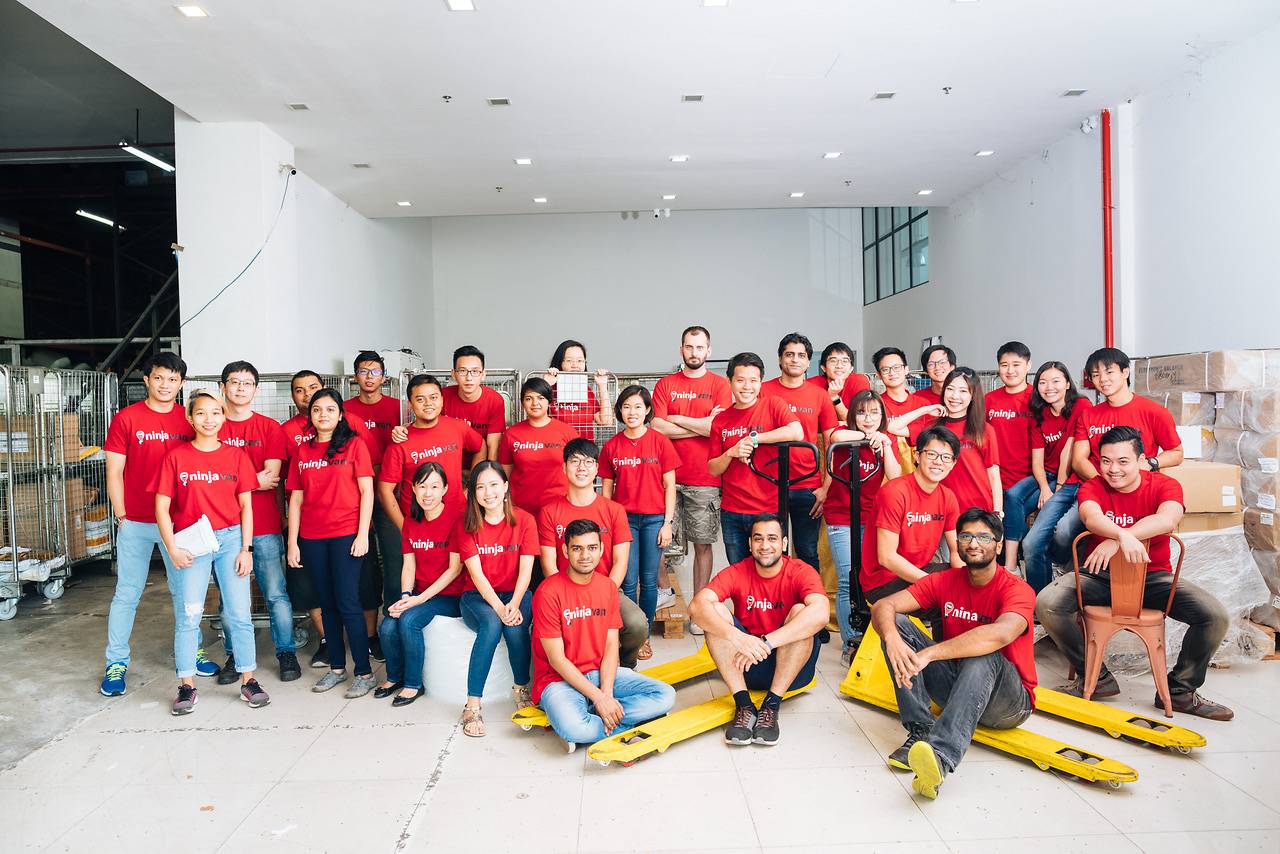
With 2,000 full-time staff and 10,000 full-time drivers, its aim is to use technology to enable next-day door-to-door deliveries for e-commerce firms and their customers.
The company recently reportedly raised a record amount in its series C funding round. To date, Ninja Van has received a total of more than US$115 million.
But amid the positive news, there’s been a considerable amount of negativity as well.
Last year, critical reviews of the service started surfacing on social media especially during the Singles’ Day 11/11 sale period. Since then, complaints have surfaced on and off. While there are some positive reviews, surely the negative ones have hurt business?
During our interview, Mr Lai claims they haven’t. He urges a sense of perspective.
“We have about 10 thousand full-time drivers across the region. There are going to be screw ups and I think we have to accept that. When we first started the business, we were very pedantic about it. Every single complaint, we took it personally, we took it to heart.”
But shouldn’t any good business rightfully do so?
“A business should always respect these issues, but as a business owner, a senior manager, you stop taking these things personally because it just clouds the data. If you delivered 10 million parcels a day and one parcel has issues and that customer kicked up a huge fuss, we still resolve it in a correct way, but you don’t kick yourself, you don’t lose sleep over it. That way, you’ll never get to sleep because everyday there will be problems.”
He claims “given the total volume” of transactions, the complaints are below the average industry standard and they have been working to “methodically decrease” them.
“But I think we’re confident that it’ll never be zero.”
Often, he claims they get blamed for issues that aren’t even under their purview as a delivery service.
“There have been instances where customers go crazy. They blame us for the wrong items in the parcel but we had no hand in packing the parcel at all. It’s easier to just blame the person who’s at your doorstep giving you the parcel, for everything that’s wrong with the parcel.”
But generally, how they’ve handled complaints on social media has also come under scrutiny. Often they don’t address the complaints publicly.
“When something goes out of hand, we try to step in and help. Whether or not we actively go out there and defend ourselves is a separate issue because many times, if you are a logical person, a rational person, and you look at our explanation, you’ll probably see our point of view. But if the person is angry and just keeps ranting, the last thing we want to do is get into a public spat. We believe in keeping quiet, doing the best we can, being logical about what we’ve done wrong and addressing it,” he says almost nonchalantly.
SHOULD HAVE CUT HIS LOSSES EARLIER
His goals for starting Ninja Van were simple, he says.
He wanted to make “a real difference”.
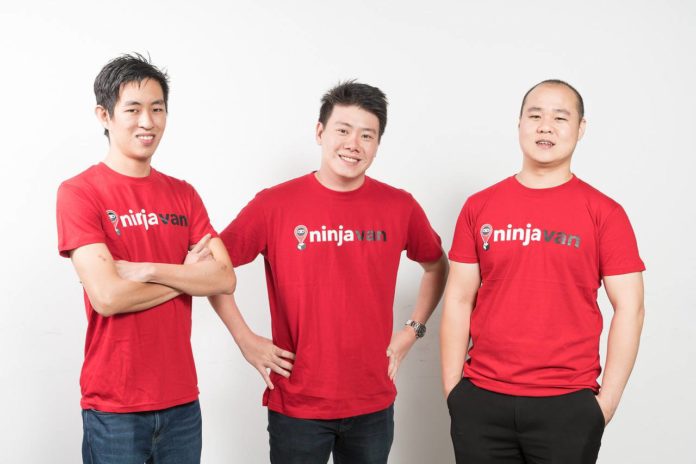
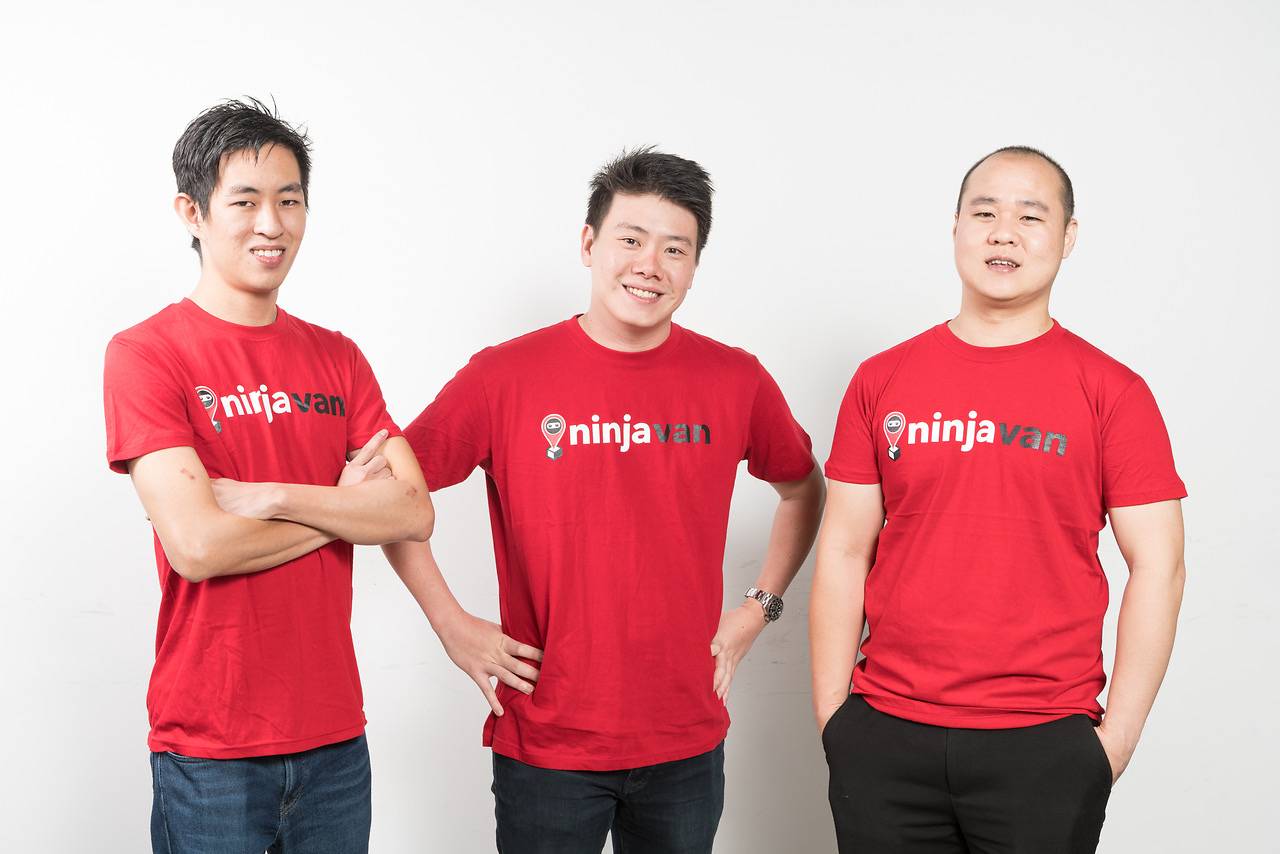
He often talks about his team – Chief Technology Officer Shaun Chong and Chief Operating Officer Tan Bo Xian.
They started the business together.
Lai Chang Wen (centre) with his business partners, Chief Operating Officer, Tan Bo Xian (left) and Chief Technology Officer, Shaun Chong (right). (Photo: Ninja Van)
But Mr Lai’s entrepreneurial instincts had surfaced long before.
While in secondary school and Junior College, he would buy used mobile phones online and sell them later at a marked-up price. He would also buy bicycle parts and re-assemble them to sell bikes at a profit.
“It was more hustling than business. Someone needs to sell it and you buy from him. Then you can afford to wait a week or two weeks to slowly sell it off. Chances are, you can make a bit of money.”
His first “real business” was a made-to-measure menswear line, Marcella, which he set up while he was a student at Singapore Management University (SMU).
After graduating, he went into investment banking while doing the business on the side.
“Investment banking was probably the best paying job a graduate can get but I quickly realised that I didn’t want to work for money. Money is a hygiene factor. I wanted to work to make an impact. I wanted to learn something new every day.”
So he quit his job to go into business full-time. It meant a 90 per cent pay cut.
Marcella arose from his personal frustrations at not being able to find a well fitting shirt and it seemed like an impressive solution. It automated the process of translating clients’ body measurements into paper patterns.
But he soon realised he couldn’t make it work.
“I’m not great at brand-building for fashion. It has to tug at the heartstrings of your customers. I’m better at hard things. I’m better at supply chain, When it comes to fashion I think there’s a small innate part of me which honestly doesn’t understand fashion.”
He ran the business for four years before calling it quits.
As we discuss this, his voice falters and he looks away for a moment. It’s the only time during our chat that he’s far from upbeat.
“I should have realised earlier that this is not a competency and tried to fix it earlier. We just dragged our feet along. Many times, we have too much attachment to things we start when we shouldn’t have that attachment, when it’s fundamentally not what you should be doing. I should have cut our losses earlier.”
But he does credit Marcella with giving him the idea for Ninja Van.
While he spent six months in China setting up a factory for Marcella, he decided to take the next step by selling online, but unreliable courier services rendered deliveries to their customers delayed or lost.
AUTOMATING HUMAN INTUITION
Ninja Van was designed as a solution to this problem.
He was 27 when he and his partners founded Ninja Van.
They had no experience in logistics, but leveraged their mathematical and technology skills to improve the delivery process, examining the entire life cycle of a parcel, from the point it is picked up to when it is delivered.
Instead of traditional mail-sorting methods, staff at Ninja Van use their mobile phones to scan parcels to figure out where the parcel is heading.
It employs technology and algorithms to optimise every step in logistics, for instance to recommend the best routes for drivers, or which van should be used to deliver a parcel.
As a result, drivers are able to deliver more parcels within a shorter period.
The technology is designed to “automate human intuition”.
“Usually, human intuition is what stops scaling and providing the consistent quality of service. When drivers have to know every address and they have to decide on what’s the most efficient route to take, it’s always challenging, because not all of the people you hire might be able to do this. So we believe in automating this intuition, which means that our addressing systems are strong, our routing systems are strong and efficient.”
This has also helped them with recruitment efforts across the region.
“Our belief is you are more productive in Ninja than outside Ninja. Using the systems we have, you are able to do your job in a shorter period of time which means that on a per parcel basis, we do not have to pay you more. So we are not paying you more per se, but because you are more productive, you earn more overall, or you work less overall.”
For customers the aim is clear.
“The idea is to make sure your shopping is hassle-free. People just want predictability and control.”
At this point, I wonder again if he’s managing to meet these demands considering the complaints we talked about earlier.
He insists that problems usually occur during peak shopping periods.
“If your volumes increase by three times, the question is can you hire three times as many drivers overnight? It’s difficult. We expect people to be unhappy. We try to pre-empt them by telling them there might be delays.
“Also, to be honest, our real customers are the shippers which choose us and if they are more data driven, they will realise that these complaints coming in are way below the industry average.”
The plan within the next six to 12 months is to give customers full control over when their parcel arrives and where it’s delivered.
Customers will be able to say, “‘I am not at home now. Why don’t you deliver in three hours or a certain specific timing, or drop it at this convenience store near me instead and let me collect it.’ Today, we let you do this but in a limited way, not throughout the entire delivery process. There’s a cutoff time where we say, now you cannot choose anymore, it’s going to your house.”
He admits quality control will remain a challenge that they’ll have to continually monitor.
It’s a challenge that looms larger in their other Southeast Asian markets.
“I think we expanded at a pace which was surprised even ourselves. We now deliver to 500 cities and it’s not as simple as opening them up individually. It’s a network. Having so many people, a lot of challenges came up when it came to standardising our quality of service and operating procedures, making sure that even someone in the furthest reaches of the Kalimantan area adheres to the quality promise.
“We are constantly learning new things about how to come up with training programme, how to set certain rules, how to build frameworks.”
Customer behaviour is also unique in some markets.
In Vietnam for instance, a customer could order two or three similar items from just as many merchants, but only accept one delivery.
“He or she only accepts the first one that comes at the right time – when he or she is home. Many parcels are being rejected. It’s cash-on-delivery, so they just order two or three because it is at no cost to them.”
Within a little more than three years, Ninja Van has expanded across Southeast Asia with more than 10,000 full-time drivers. (Photo: Ninja Van)
REPLACING HUMAN INTUITION?
He talks a great deal about automating human intuition, so does he believe technology can replace human intuition?
“How real is it that artificial intelligence or machinery can take all our jobs? That’s a bigger question which I have no answer to. But in the next 10, 15 years, do I see drivers being replaced by automated drones in delivering parcels to your doorstep? Probably not.
“If you can build robots which are so complex they can go through small alleys, they can climb the steps and they can find the doorstep of a place which has no markings or numbers on it, I think robots will be used for a lot more useful things than delivering parcels.”
He concedes it’s not impossible.
“But will we spend a lot of our efforts in chasing this given its extremely low probability? No. And I think if anything, this technology is best built by the global companies, not for logistics but for example, warfare, automation in soldiers – something far more important.”
He does see scope for drone deliveries in “larger countries where there are low-density rural villages.”
“We have seen trials, but usually what we’ve seen is that the cost of the automation is expensive, but labour in these countries is still affordable.”
LONG-TERM SUSTAINABILITY
Their expansion has obviously come largely because of healthy funding by investors.
I ask how he convinces them.
“It was our vision which is really is to make sure that a Ninja is within reach of every consumer in Southeast Asia. It is a coverage game for us because it’s not just pure volumes and saying that we do the most volumes in capital cities. It’s about being an enabler which allows any company to deliver something to anyone in Southeast Asia.
“A lot of the population lives in Tier 2 or Tier 3 cities. It is key to connect all of them and companies do not want to work with 10 different logistics providers with 10 different operating procedures to get their goods there. You want to work with one. We looked around the market and saw there was none.”
At this point they have no plans to venture beyond the region.
“Look at DHL, for example. Why is DHL delivering the majority of your parcels which you buy from Europe or the US? It’s because you are a global consumer and the shipper uses DHL because DHL provides global coverage. It’s hard to fight global coverage because they work with 200 different providers for every country. But their global coverage comes at a high price too. For us, our ambitions are not on the global levels yet. We can take parcels from anywhere globally, but we ensure that it reaches the hands of the Southeast Asian consumer and perfecting that at a lower price is the focus now.”
He says they are profitable in Singapore. It’ll be some time before they are profitable in their other markets.
Today, his focus is on long-term sustainability.
Some startups in recent years have focused on market share and many well-known ones are unprofitable even after several years.
“Over-focusing on market share, you could have a price point and fixed cost structure which can never turn profitable. To me, long-term sustainability is long-term profitability which means that in the medium-term, we focus on what’s really important – a measured approach towards providing the best hassle-free service for our business customers and consumers.”
It was a hard slog getting to this point.
It’s been widely reported that in the first few years, he would sleep on a mattress on the floor in his warehouse because there was just so much to do. He would also often make deliveries himself.
In fact, life as an entrepreneur is still tough.
Today, he spends a lot of time travelling to their various markets.
One of the hardest things about regionalisation has been understanding culture, a perennial problem that many before him have raised as well.
“I think Singaporeans are a lot more direct. They tell you how they feel. Other cultures sometimes are a lot more passive-aggressive. They say ‘no’ in very different ways and if you don’t catch that subtlety, you completely miss the point.
“In one country, we wanted to launch a big initiative and the guys in the local team said, no problem. Only later did we realise that they were really against it. They just didn’t want to say “no” outright. They said “no” by doing it slowly, and by being very slow to respond to everything. Now, we are a lot more perceptive about these subtle cues from them and we sometimes have to talk it out or hire someone else.”
“Chase the learning. Don’t chase the lifestyle because it’s all fake,” says Lai Chang Wen. (Photo: Ninja Van)
IT’S NOT ABOUT BEER NIGHTS EVERY NIGHT
He enjoys it all, though, and puts it down to having the right mindset.
“The objective of entrepreneurship is to change mindsets away from working for the Government and MNCs and only having one path in life which is the iron rice bowl. If you want the nation as a whole to succeed, I think people have to be more exposed, people have to be more thoughtful. We have to be more experienced in the wider scope of things and I think a great way to do that is to join a startup.”
But often, the young have the wrong perceptions about what joining a startup really means.
“They think it’s always fun and you get full autonomy. They think it’s about having beer nights every night. But it’s not. You must join the right startup where you get enough responsibilities and roles thrown at you. That helps you learn a lot. Chase the learning. Don’t chase the lifestyle because it’s all fake.
“It’s a lot of hard work, it’s a lot of resilience but through that all you, I think your objective is to learn as much as you can in a broader sense of how do you manage people, how do you think about problems and these are all easily applied to other businesses easily.”
WHAT’S REVERSIBLE, WHAT’S IRREVERSIBLE
In previous interviews he has mentioned his parents often. They worried for him when he left a lucrative job to start a business.
When he started Ninja Van, he often had to make deliveries himself which didn’t help his parents’ anxieties.
“Their worry was that I was leaving a better job to be a van driver and I don’t think they really appreciated that fact.”
I wonder if they are proud of him today.
He claims they don’t discuss it, but he senses they are happier now.
“This is a big problem with Singapore as a whole – the idea of what’s reversible and what’s irreversible. A lot of decisions you take throughout life are actually reversible, but many people think they’re not.
“Will I be able to join the bank again if I leave for two years and do something else? People always think you cannot, but reality is you can. They think you’ll lose two years of your life. But the question is will these two years have a positive impact on your future? Even if you fail, you’ll probably learn a lot.
“Going down one path doesn’t mean you cannot backtrack and go back another.”
He blames it on our education system.
“I think a lot of our education has been built on the system of irreversibility. In PSLE, if you don’t do well, it’s quite tough to take the PSLE again and the same thing for O-levels and thereafter.”
I point out you can, except you’ll have to deal with the stigma of not having made it the first time.
“It’s tough and no one ever talks about these things openly.”
“I now encourage people to voice their opinions. Don’t just listen to me because you are scared of voicing your opinion. I will not take it personally,” says Lai Chang Wen. (Photo: Ninja Van)
HAVING THE RIGHT PHILOSOPHY
His philosophy is really believing in the business and its impact and doing what is necessary to achieve it, something he believes some traditional SMEs lack.
“Some of them make very superficial references to modernising, to embracing technology. If you don’t actually believe in it and you think it’s just a trend, people see through it. You don’t hire the right people and you actually never change. So unless you really believe in it and you delve into the principles of how technology can really make a difference, your words just sound very hollow. How are you going to get your people on board? People are most important.”
He himself feels he has made some mistakes with people.
“I think we regionalised quite fast. It was probably the right move. You really need to plant the seeds early, but one thing we could have done better is to have focused more on hiring strong leaders in all the different countries. It took us a long time to get there and it slowed us down significantly. We were too much in a rush and maybe a bit lazy to keep looking. We shouldn’t have compromised and we should have hired the good guys earlier on.”
Today, at the age of 31, he’s learning to manage his people better which he believes is the key to continued business success.
“It’s a dialogue when there are different points of view and the other party actually stops to think about the other person’s point of view. It’s about humility and understanding. I’m constantly trying to learn more and it’s not easy sometimes. It’s easy to fall into very defensive mode. Many times I’m a bit rash and can be a bit stubborn.
“I now encourage people to voice their opinions. Don’t just listen to me because you are scared of voicing your opinion. I will not take it personally. I think that can combat my rash choices and help us make a mark together.”
SINGAPORE: When occupational therapist Jennifer Lam clicked on her Mobike app on Friday morning (Apr 20), she nearly dropped her smartphone.
The 180-day Mobike pass she purchased last November for S$5 would be ending soon, and she was shocked to learn that it would cost her more than S$50 to extend her pass for the same period.
“Instead of using Mobike for another six months, I’d rather use the money to buy a secondhand bicycle,” said the 26-year-old, who has been using the service for at least twice a day.
“The whole selling point of bike-sharing companies is their low prices. If they charge such (high) prices, why should we bother to use them?” she added.
Ms Lam was just one of many Mobike and ofo users who voiced their discontent over the recent price increases for the bike passes after the end of their respective promotional periods.
Prices for ofo packages on Apr 20. (Source: ofo/Facebook)
An ofo user Channel NewsAsia spoke to said she previously paid S$1.50 for a 60-day pass. The latest prices on the ofo app indicates that it would now cost S$15 to buy a 60-day pass – ten times the original amount.
For Mobike, a comparison between the price lists indicates that it would cost between S$6.99 and S$59.99 more to purchase passes on Friday (Apr 20) as compared to Nov 4, 2017.
A comparison between Mobike packages on Nov 4, 2017 (left) and Apr 20, 2018.
Freelancer Phoon Jia Hui told Channel NewsAsia that he is “thinking twice” about whether he would be continuing his subscription with Mobike.
“I really like the concept of bike sharing. But if it’s going to cost me S$50 for 180 days, it’s not worth it. Some of these Mobikes have brake issues and other faults,” he added.
Engineer Muhamad Shiraj Jamaludin, who is a frequent user of both bike sharing apps, told Channel NewsAsia that he would not be renewing his passes when they end.
“I use the bicycles during lunchtime as they are really convenient for me to cycle to the nearest coffee shop to eat. But once the passes expire, I’ll probably have to go back to walking,” said the 28-year-old, who works in an industrial area.
NOV PRICES WERE ‘INTRODUCTORY’: MOBIKE
In response to queries from Channel NewsAsia, Mobike Singapore’s Country Manager Sharon Meng said that the Mobike Pass was launched in November 2017 “as a discounted introductory price to encourage more people to try bikesharing”.
“We received extremely positive feedback from users during the promotional period, and we concluded the promotional offer in early March,” she added.
In an emailed statement, ofo maintained that it is the company’s priority to ensure that its bikes remain “accessible and affordable to all its users”.
“With the new ofo pass pricing, we will be able to continue maintaining and growing our fleet size to ensure it meets the demand for more and more shared bike journeys,” ofo said, adding that the company will be including new features to its app in the future.
Some users said they would continue purchasing Mobike and ofo passes in spite of the higher costs.
Administrative coordinator Bok Cheng Yang, who uses shared bicycle services up to eight times a day, said he was “fine with the price increases for ofo and Mobike”.
“It’s understandable the prices have to be increased as the previous prices were really cheap and were meant to be promotional. The new prices are still reasonable for me as I am a heavy user of bike sharing,” he said.
Mobike’s new bike design for Singapore. (Photo: Mobike)
“Bike sharing allows me to maximise my time and money to get the most value out of travelling around in Singapore,” added Mr Bok.
Civil servant Mohammad Noor Danial said he would consider paying the raised prices because he believes in paying “a premium for convenience”.
“For things like maintaining my own bicycle or taking the bus for short distances – I can easily spend between S$50 and S$100 per month. These (bike-sharing) services avoid a lot of hassle,” said the 28-year-old.
CONSUMERS NOT NOTIFIED?
However, Ms Lam pointed out that the two companies could have done better in informing users of the price hike.
She said that Mobike only alerted her when she clicked on the “renew pass” option on her phone.
“There was no notification or anything. Would Mobike have automatically renewed my 180-day pass for S$52 without informing me? I hope not, because I definitely want to stop using the service,” she said.
In its statement to Channel NewsAsia, ofo said registered users have been informed of the pricing changes via a text message directly to their mobile phones, as well as through ofo’s Instagram and Facebook pages.
However, Mr Shiraj, who uses ofo almost daily, said that he came across the notification of the price increase only because he was a heavy user, and so saw it on the app recently.
“For those that don’t open the ofo app often, and they subscribe to auto renewal, they might be charged with the updated prices without them realizing it,” he said.
The app, owned by Ride-hailing company Grab, allows users to share bikes and e-scooters from Grab’s mobility partners – oBike, GBikes, Anywheel and PopScoot.
GrabCycle will be piloted at Sentosa in the first half of this year before it is rolled out at other venues.
“I heard it’s much cheaper and gives us so many options. Looking at alternatives is the right thing to do now,” Ms Lam said.