Home Blog Page 1028

Grasshoppers with your lab-grown steak? Gross, but that’s food of the future

SINGAPORE: Betting that eating insects will become mainstream one day, a home-grown venture capital (VC) firm is going big on bugs – by investing in grasshoppers as a food source.

Managing director of Sirius Venture Capital Eugene Wong explained: “A piece of steak only gives you about 40 per cent in protein source. Grasshoppers, on the other hand, gives you about 70 per cent protein with no fats and is healthy.”

With global demand on the rise but resources thinning out, there’s been a revolutionary hunt for more sustainable food sources, as the programme Money Mind discovers (watch episode here).

MYMD future food 9

Together with a Dutch investment fund, Sirius led a US$600,000 (S$803,000) round of seed funding in Hargol FoodTech, an Israeli start-up that farms grasshoppers on a commercially viable scale.

CREEPY CRAWLIES ARE THE FUTURE

With one able to potentially farm grasshoppers in large quantities, investing in this insect – not a typical investment vehicle for VCs – does make financial sense.

“Grasshopper has about 15 per cent more protein than cricket. So for the same amount of so-called food feed, you get better yield in terms of protein,” said Mr Wong.

The company is not missing out on the cricket trend either – it also has a strategic placement in Chapul, a US-based maker of cricket protein bars.

“There is a revolution going on to change the way we produce food, to change the traditional ingredients of food and make sure that the food supply is sustainable into the future,” he added.

WATCH: What the future tastes like (2:53)

The United Nations has warned that the Western taste for diets rich in meat and dairy products is unsustainable as the global population moves towards a predicted 9.1 billion people by 2050.

“General disposable income is growing. As people grow richer, they want to have protein, they want to have more food. And because of that, we are in need to feed the world,” said Mr Wong.

Eating insects may be a solution – in fact, about two billion people worldwide, mainly in Asia, Africa and Latin America, eat insects, estimated the United Nations Food and Agriculture Office.

Professor William Chen, director of the Food Science & Technology Programme at Nanyang Technological University (NTU), pointed out that the nutrition profile of an insect is very similar to other animal sources in terms of protein content, lipid content, micronutrient and vitamins.

MYMD future food 10

But not much is known about the long term impact of insect protein on consumers.

“Much more studies need to be done to establish whether there is any toxic effect on human health,” said Prof Chen.

GROW MEAT INSTEAD

An alternative protein source may lie in plants where 100 per cent plant-based meat products such as burgers are concocted in laboratories.

Some of these “beef” burgers are made of natural ingredients such as wheat protein, coconut oil, heme – and tastes like the real McCoy.

Beyond Meat, for example, successfully launched its Beyond Burger in 2016. Impossible Foods also introduced its plant-based meat burgers to restaurants in 2016.

(Read: In Singapore soon? The ‘impossible’ burger that’s meatier than real meat)

MYMD future food 4

However, not all plants are able to provide all the amino acids that one needs, said Mr Wong.

“For protein to be recognised as a good protein, you need nine amino acids. Only soya or chia seeds and certain plants give you that full range of ingredients,” he pointed out.

Another way is to grow meat in the laboratory where cells are painlessly extracted from an animal and grown to “edible” size in cell cultures. So, instead of slaughtering livestock for the meat, we may end up with “meat-making” factories.

Memphis Meats has already successfully produced beef, chicken and duck from animal cells, while Israeli clean-meat start-up SuperMeat hopes to replicate that success by growing real chicken meat in the lab.

MYMD future food 2

The latter is confident it will have a product on the shelves in three years – it recently raised US$3 million in seed funding from investors which include Germany’s PHW, one of Europe’s largest poultry producers, and Sirius Venture Capital.

But, there are challenges such as costs and the issue of consumer acceptance.

A few years ago, the cost of a stem cell-based burger was US$30,000 a piece, recounted Prof Chen.

Although it’s promising, how (can one) scale it up while reducing the cost such that it will be something that consumer can afford?

Mr Wong acknowledged that for some, growing meat in a laboratory is pretty revolutionary.

“When you get a cut and your muscle gets injured, actually your muscle grows. So conceptually, growing meat in a lab may not be that scary,” he countered.

“We all remembered the time when we had bird flu. And this kind of alternative technology actually helps us in times of crisis.”

MYMD future food 8

BUILDING RESISTANCE

Research is also being done to produce food that is higher yielding, has better quality and is resistant to diseases and climate change.

Temasek Life Sciences Laboratory (TLL) has come up with enhanced selective breeding techniques where genetic markers are used to identify young fish with desired traits that they want for cross-breeding.

This is done by taking samples from the fish skin, examining the molecular markers, and determining if these fish have the traits that they want for cross-breeding, said Dr Azlinda Anwar, assistant director (Grants & IP Admin) at TLL.

MYMD future food 11

The process is entirely natural and different from genetic modification where one alters the genes of the organism or adds to it.

“So this is absolutely not a genetically modified organism because we do not alter the genome of the fish. We simply enhance selection of a natural process,” she explained.

Using this method, TLL has been able to grow a more hardy variety of rice, Temasek Rice, that is already commercially available.

It has also applied the same process to develop its own variant of the Asian sea bass which is commercially available at seafood retail boutiques and selected restaurants.

The laboratory has identified markers that they want for this sea bass – fast growth, good quality meat and resistance to diseases.

“We combine this molecular breeding with selective breeding. And from one hundred mass-crossing events, we come up with lead lines of fish that grows faster – with 30 to 50 per cent faster harvesting time compared to normal fish – and are resilient to diseases,” she added. “So they therefore they survive better and have more meat.”

Watch the episode here. Money Mind airs every Saturday at 10.30pm.
MYMD future food 5

​​​​​​​

Source link

Cracks along Adam Road caused by water which had ‘accumulated at the roadside’: LTA

SINGAPORE: Cracks on the road surface along Adam Road were caused by water that had accumulated at the roadside due to the “heavy rain”, the Land Transport Authority (LTA) said in a news release on Friday (Jun 1).

The authority said it has completed investigations into the cracks, which had caused a “massive” traffic jam in the area and along Lornie Road on Friday morning, with Adam Road partially closed for about two hours.

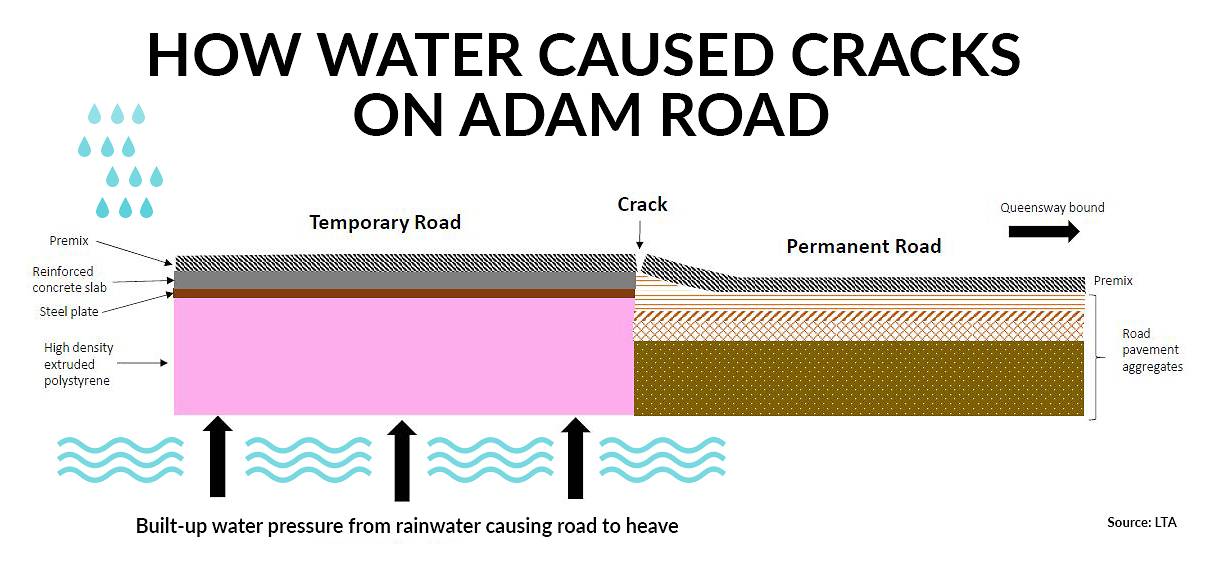
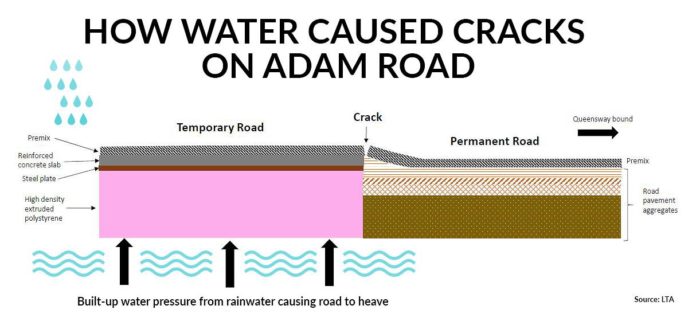
“The cracks were caused by water which had accumulated at the roadside due to the heavy rain and seeped under the road base,” said LTA. “The built-up pressure from the water caused the temporary section of the road to heave, thus resulting in the cracks on the road surface.”

Based on the authority’s investigations, the cracks were not caused by nearby construction works, and do not pose any structural risks, said the authority.

Upon the detection of the cracks at 8am, the affected lanes were “immediately closed to facilitate repairs”, said LTA. The authority drained the water under the road base and made sure the road was safe for use before re-opening the lanes at about 9.55am, it added.

“Safety is of paramount importance to LTA,” it said. “To prevent any further similar incidents, LTA’s contractor has implemented preventative measures to ensure water is drained away at all times to reduce the risk of accumulation of water at the road side.”

LTA Adam Road cracks illustration

Source link

Power outage hits parts of central Singapore

SINGAPORE: A power outage hit several parts of central Singapore on Friday afternoon (Jun 1).

A check on social media showed traffic lights were not working, while netizens tweeted about buildings in darkness.

Nicholas, who works in the CBD and who only wanted to be identified by his first name, told Channel NewsAsia he heard from friends who also work in the area that the power in City House, Clifford Centre and The Arcade was out.

Power outage at Lau Pa Sat

Power outage hits several parts of Singapore including the Lau Pa Sat food market. (Photo: Marc)

“Blackout in Chinatown area right now. Dark in Chinatown Point and Hong Lim complex,” posted Twitter user Zann Kwan.

The Twitter user posted a video showing what appeared to be an office in darkness, with employees using their smartphones for light.

“Power outage at The Arcade,” posted Twitter user gurmit singh. “Lifts unresponsive too. Seems like whole building.”

the Arcade blackout

A witness said The Arcade experienced three power outages, Jun 1, 2018. (Photo: Angela Ang)

Several HDB blocks in Chinatown including at Block 4 Sago Lane and at Blocks 333 and 334 Kreta Ayer Road were left without power, according to residents who spoke to the Jalan Besar Town Council. The Public Utilities Board was checking a power supply station in the area, according to a resident.

Reports on social media said that the power returned in some areas at around 3.15pm.

Marc, an executive who works near Cecil Street and who only wanted to be identified by his first name, told Channel NewsAsia that the traffic lights at Robinson Road were experiencing a power failure at around 2.20pm, but that traffic was light and that “all vehicles slowed down” when approaching the junctions.

He added that power was back at around 3.15pm.

Hong Lim blackout

A stall at Hong Lim Food Centre during the power outage. (Photo: Jacky Kong)

Source link

Temporary restricted areas for aerial activities established for NDP and RSAF50

SINGAPORE: Temporary restricted areas for aerial activities will be established over certain parts of Singapore on some days in June, July and August to ensure the safety of low-flying aircraft during the National Day Parade 2018 and RSAF 50th anniversary celebrations. 

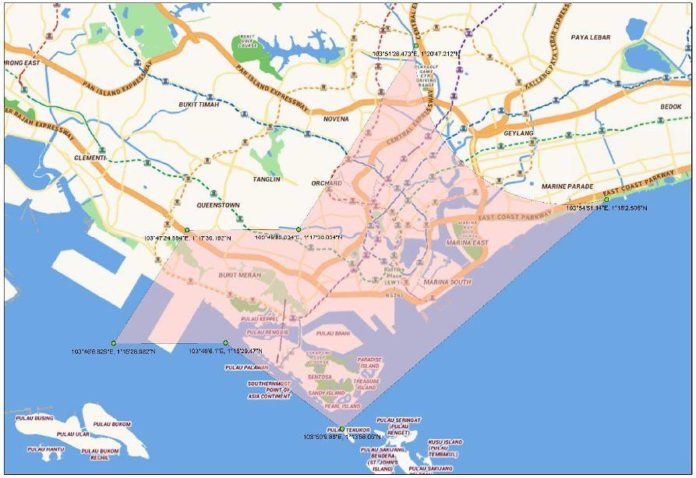
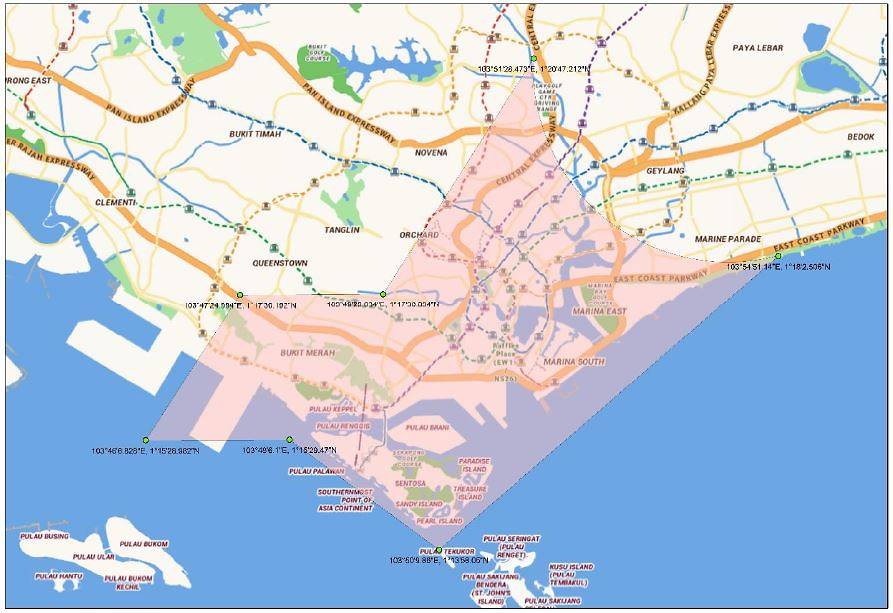
According to a joint press release on Friday (Jun 1) by the Civil Aviation Authority of Singapore (CAAS) and MINDEF, the temporary restricted area will encompass the Marina Bay Floating Platform and the surrounding areas, and will extend from ground level to 600 feet above mean sea level.

map of temp restricted zones

Map of the temporary restricted area for the conduct of aerial activity. (Map: CAAS, MINDEF)

Aerial activities like kite-flying and flying unmanned drones will be prohibited in the restricted zone unless authorised by CAAS. This is to ensure the safety of the aircraft and the public, the press release said.

Unauthorised conduct of aerial activities in the temporary restricted area is an offence. If convicted, a person can be fined up to S$20,000 in the first instance and repeat offenders can be fined up to S$40,000 and/or imprisoned for up to 15 months, according to the media release. 

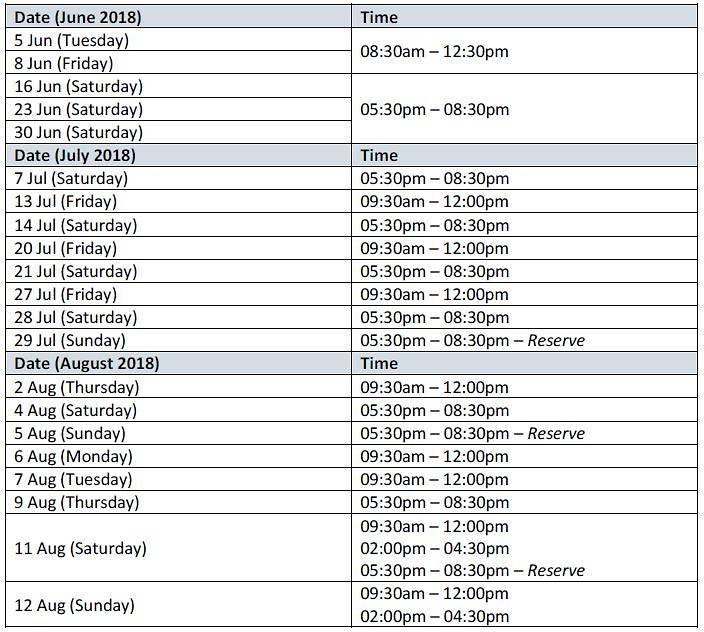
Here is a list of dates and timings the temporary restricted areas will be in effect:

restricted zone dates and timins

The dates and timings the temporary restricted area will be in effect. (Table, CAAS, MINDEF)

Source link

Singapore is an ‘elite’ city along with London, New York and Paris


SOUTHEAST Asia’s financial capital Singapore has been awarded yet another accolade, deemed an “elite city” of the likes of New York and London according to a new index of metropolitan centres around the world.

The 2018 Global Cities Index from management consulting firm A.T. Kearney named Singapore in the top 25 cities of 135 that it assessed for economic performance, liveability and quality of life along with regional economic powerhouses Hong Kong and Tokyo.

“Singapore routinely attract[s] the best companies, the top talent, and the most investment dollars,” said the report.

SEE ALSO: These cities have the highest quality of life in the Asia-Pacific

“In an era of increased localisation, challenges to trade, and a rise in populist sentiments around the world, the results of this report go beyond simply ranking cities,” wrote the report’s authors.

“This analysis reveals which global cities are primed for urban transformation and growth—and those that are falling behind.”

2018-05-24T001041Z_742692443_RC16C6B5F600_RTRMADP_3_SINGAPORE-ECONOMY-GDP

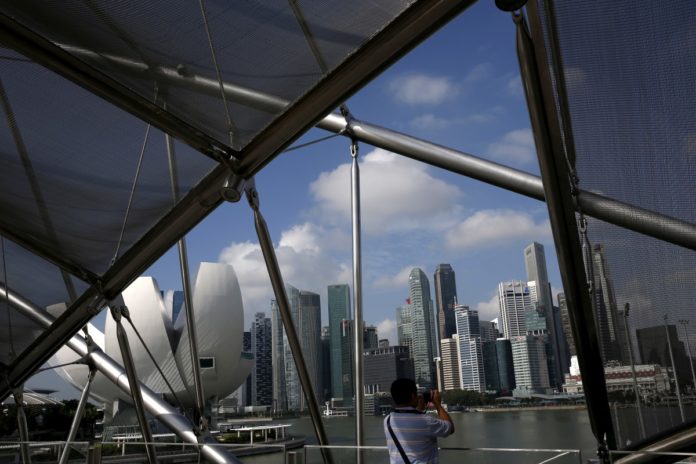
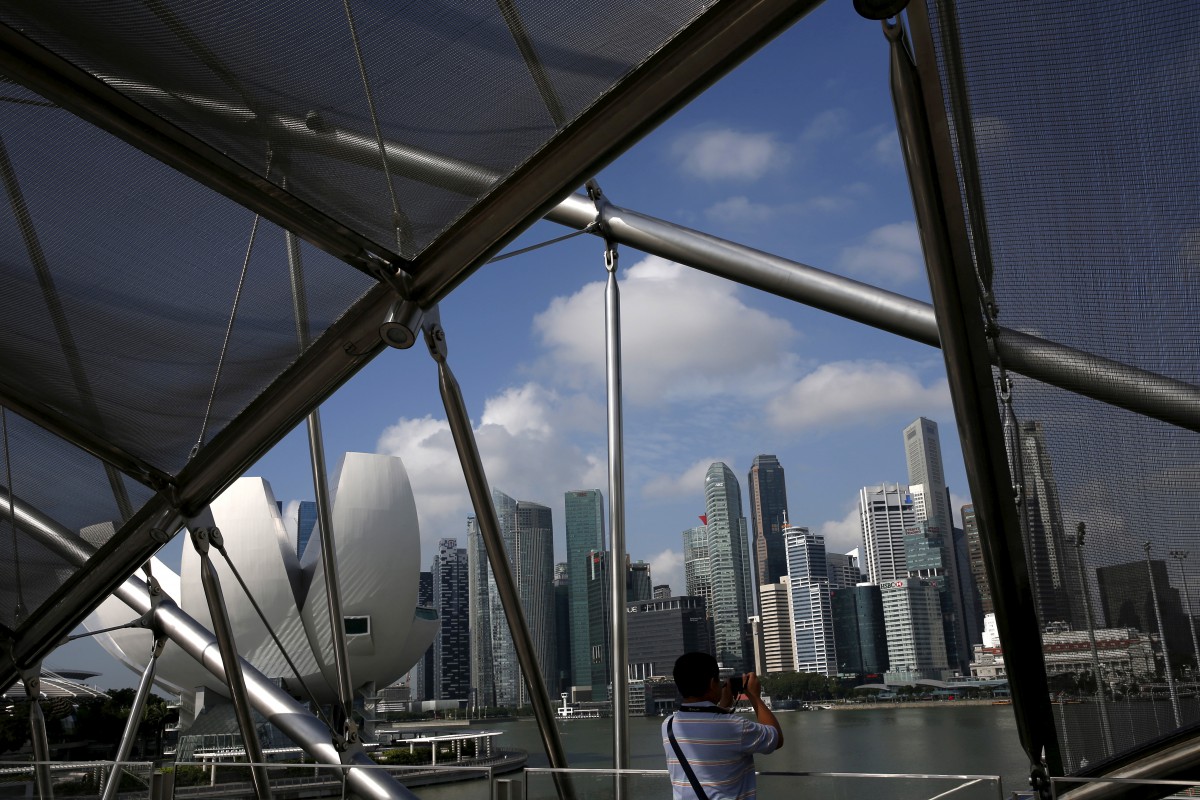
A man takes photos of the skyline of Singapore, February 22, 2016. Source: Reuters /Edgar Su

New York retained its first place as the world’s “most influential city”, followed by London, Paris, Tokyo and Hong Kong. Singapore came in seventh place just behind Los Angeles and ahead of Chicago.

“The Singapore government has been actively investing to transform the island-state into a ‘Smart City’ equipped with cutting-edge technology and a nationwide digital platform,” said Chua Soon Ghee, Partner and Head of Southeast Asia at A.T. Kearney in a statement.

SEE ALSO: Sorry Dubai, London: Singapore is the #1 smart city

“Various investments from the private sector have also strengthened Singapore’s journey towards a Smart Nation.” Singapore led the Online Presence category, reflecting the number of public-private sector partnerships, research and development, and heavy investment into innovation and security.

“The city’s commitment to continuous innovation and digitalisation further ensures its spot as a leading global technology hub,” Chua added. Singapore was an appealing location for a regional headquarters due to its preparedness for physical and cyber security, he said.

China’s capital Beijing came in at number 9 ahead of Brussels and Washington, D.C., while Seoul, Sydney, Melbourne and Shanghai also made the top 25.

Source link

Primary 1 registration for 2019 to start from Jun 28

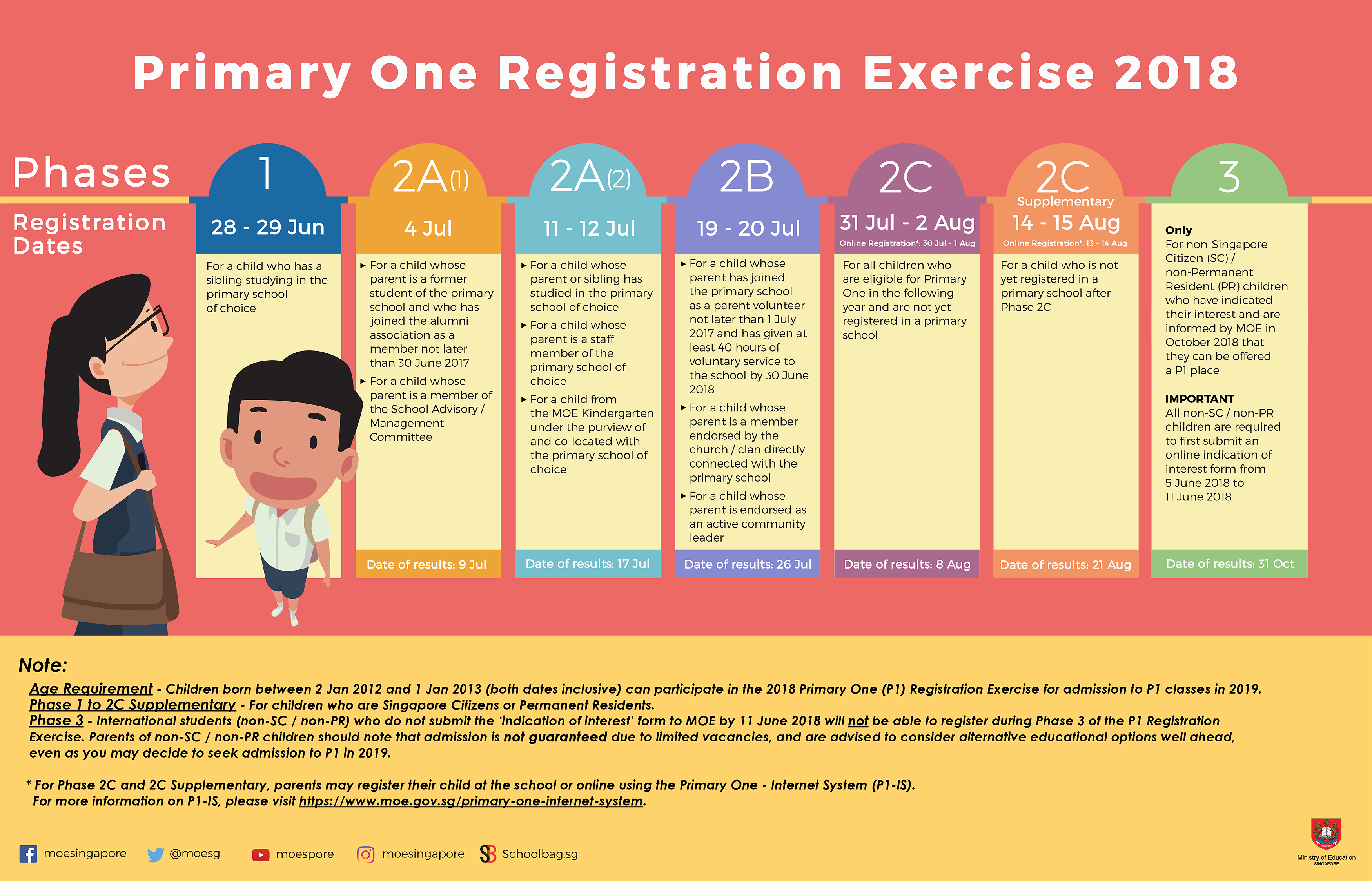
SINGAPORE: Primary One (P1) registration for classes in 2019 will take place from Jun 28 to Oct 31, said the Ministry of Education (MOE) in a press release on Friday (Jun 1).

Primary schools will open for registration from Mondays to Fridays from 8am to 11am and from 2.30pm to 4.30pm. 

Parents who wish to register online can do so using the Primary One Internet System (P1-IS), which is accessible from Jul 30, 9am to Aug 1, 4.30pm for Phase 2C and from Aug 13, 9am to Aug 14, 4.30pm for Phase 2C Supplementary. 

Parents who intend to register online are advised to set up their SingPass 2FA early if they have not done so. 

P1 registration 2018 chart

This year’s P1 registration exercise will also consider the locations of the kindergartens that the students have attended. 

Under a new pilot programme, children attending MOE kindergartens situated within primary school compounds will get a higher priority in entering those schools. 

The programme allows these children to be eligible under Phase 2A2, which was previously reserved only for children whose parents or siblings have studied in the school, and whose parents are staff members of the school.

This is also the first time that computerised balloting is being used for the P1 registration exercise.

Parents will be notified of the ballot outcome via SMS on the day the registration result is announced. A letter will also be sent to them at the end of each phase of the registration exercise.

Children born between Jan 2, 2012, and Jan 1, 2013, must be registered at this year’s P1 registration exercise so that they can begin school in January 2019. Parents may seek approval for deferment from MOE’s Compulsory Education Unit if a child is assessed as not ready or suitable for P1 on medical grounds. 

Parents registering their younger children under Phase 1 may submit their registration form and relevant documents through the older sibling, who will be given the form by the school.

Meanwhile, international students at Phase 3 will only register after all Singapore Citizens and Permanent Residents have been allocated a place. 

They are required to undergo a two-step process which involves submitting an online application to indicate interest before registering in-person at their designated schools once they have received an offer from MOE by October. 

The address used in the registration exercise should also reflect the one in the parents’ NRICs. This will be used to determine the home-school distance, which is required when considering priority in admissions. 

Source link

Crack on Adam Road causes ‘massive’ traffic jams

SINGAPORE: A large crack on Adam Road caused traffic jams along Adam Road and Lornie Road on Friday (Jun 1) morning.

The road was partially closed for about two hours while it was being repaired.

The Land Transport Authority (LTA) said in a statement that it discovered the cracks at about 8am on Friday morning along a stretch of Adam Road towards Queensway after the MacRitchie Flyover.

Motorists were warned in the morning via the Expressway Monitoring Advisory System (EMAS) that there was a “massive jam” on Adam Road due to an “uneven road”.

A video and photo sent to Channel NewsAsia showed a large crack across two lanes and depressions on the road before the entrance to the Pan-Island Expressway on Adam Road.

Motorist Augustine Low, 33, said that the traffic jam seemed to begin from Braddell Road and extended until Adam Road.

“It took me about 20 minutes on a motorcycle to clear the road. Normally it takes me five minutes,” Mr Low told Channel NewsAsia. 

“Two out of four lanes were immediately closed to facilitate repairs,” confirmed an LTA spokesperson.

LTA also posted updates on their social media accounts warning motorists of heavy traffic on Adam Road because of an “obstacle”.

SBS Transit cautioned commuters that bus services like 52, 74, 93, 157, 165, 852 were delayed along Adam Road towards Queensway due to “urgent roadworks”.

LTA later added that all the lanes were re-opened to the public at around 9.55am after it was deemed to be “safe for use” and that investigations into the cause of the crack are ongoing.

lta fixed road

An image showing the repaired road on Adam Road after a large crack appeared earlier on Friday (Jun 1) morning. (Photo: LTA)

This story came from a reader tip-off. If you would like to send in photos or videos of something newsworthy, WhatsApp our Mediacorp news hotline at +65 8218 8281 or message us on Facebook.

Source link

Commentary: Many helping hands to the North Korea headache begin work this weekend – in Singapore

SEOUL: The planned Jun 12 summit between US President Donald Trump and North Korean leader Kim Jong Un is shaping up to be a bigger affair than just a meeting between two countries seeking an answer to the old, vexing question of how to convince North Korea to give up its nuclear weapons.

This week, South Korea confirmed that President Moon Jae-in is considering a trip to Singapore to turn the summit into a three-way meeting. There are also rumours that Chinese President Xi Jinping could appear.

While this may sound like too many cooks in a hot, stuffy kitchen, the fact is that the main item on the summit agenda is a big, complicated issue that requires a multifaceted approach and the involvement of many actors.

For years, that was how the relevant countries approached the North Korea question – collectively instead of individually. Through a framework dubbed the Six Party Talks, the two Koreas, the US, China, Japan and Russia held six rounds of meetings from 2003-2007.

Having petered out with no major results – with North Korea having a much more advanced nuclear arsenal now than before the meetings started – the talks are mostly remembered as a failure and a testament to Pyongyang’s determination to become a nuclear power.

A REVIVAL OF MULTILATERALISM IN SINGAPORE THIS WEEKEND

This kind of multilateral approach to the North Korea issue may see a revival in Singapore, and in the time leading up to the summit. 

Another factor making Singapore a hotbed for policymakers is this weekend’s Shangri-La Dialogue, an annual forum that brings together defense officials from around the region. The title of the session on North Korea, decided months ago, hones in on the need to “deescalate crisis” in North Korea.

The diplomatic movements of recent months have meant that, at the current moment, goals have become far more ambitious than ratcheting down crisis. 

Security at SLD

A Singapore policeman from the Gurkhas contingent stands guard outside the hotel at the Institute for Strategic Studies (IISS) during the Shangri-La Dialogue summit in Singapore. (Photo: AFP/ Roslan Rahman) 

South Korea’s defence minister will be in attendance and will be able to update contemporaries from elsewhere in Asia on how Seoul is evolving in its defence posture.

The changed tenor of the Shangri-La summit is a sign of how, at the very least, having gotten out of crisis mode is a positive step.

INVOLVE MOON JAE-IN AND XI JINPING

But the more consequential questions will be addressed at the summit and there is still a ways to go. First, it makes sense for Moon to take part in the summit.

Slightly more than a year into his presidency, Moon has shown himself to be uncommonly adept at walking the diplomatic tightrope that presents every South Korean leader with their most daunting foreign policy challenge: How to work towards peace with North Korea while also maintaining strong, productive ties with the United States, Seoul’s main ally.

As president, Moon has skillfully developed relationships with both Trump and Kim, meeting with both men more than once each. 

At least from the outside, Moon seems to have convinced both the US and North Korea that he has good intentions and is earnestly seeking a peaceful solution to the befuddling issue of denuclearisation and formally ending the 1950-53 Korean War.

If Moon is on the ground in Singapore, he could act as a bridge between Trump and Kim, and if talks hit a snag, could remind his counterparts of the importance of the gathering and the need to work toward a meaningful result.

Moon displayed this propensity for putting out fires when, after Trump abruptly called off the summit, he held an unannounced second summit with Kim to demonstrate his commitment to dialogue. 

Hopes for the US-North Korea summit have being reignited after a flurry of weekend diplomacy,

Hopes for the US-North Korea summit have being reignited after a flurry of weekend diplomacy, including a surprise meeting between Kim Jong Un and South Korean President Moon Jae-in. (Photo: AFP)

It is likely that Moon’s calm influence had something to do with North Korea’s uncharacteristically accommodative response to Trump’s cancellation.

Also, due to China’s important role in Korean Peninsula affairs, Xi’s presence, or some form of off-stage involvement by Beijing, would be a boon to the proceedings.

This year, Kim has traveled twice to China for meetings with Xi in what were his first international trips since taking power in early 2012, strong signs that the two countries are mending ties after years of frosty relations caused mostly by China’s frustration with the North’s continued provocations and dogged pursuit of nuclear armament.

That Xi is on board with efforts to get North Korea to denuclearise means he can act in concert with Trump and Moon. That China is still the North’s closest ally means Xi has leverage in dealing with Kim that neither Trump nor Moon can match.

That then leaves Japan and Russia.

JAPAN AND RUSSIA AWAITING

Japan is a major US ally and Prime Minister Shinzo Abe has pledged to coordinate closely with Trump before the summit, possibly on the sidelines of the Group of Seven summit in Canada in early June.

Seeing as Japan is located within range of much of North Korea’s military arsenal, Tokyo has long been especially eager to see North Korea take a turn toward peace and away from weapons development.


Japanese PM Shinzo Abe (left) and President Donald Trump

The White House said Japanese Prime Minister Shinzo Abe (left) and President Donald Trump will meet ahead of a much anticipated summit with North Korea’s Kim Jong Un. (AFP/JOE RAEDLE)

Even Russia is in on the diplomatic flurry. This week Russia Foreign Minister Sergey Lavrov travelled to North Korea for talks that follow a trip to Moscow by North Korea’s top diplomat.

How Russia fits into the bigger picture is a tricky question, as Vladimir Putin is, at a time when his country’s foreign policy priorities are closer to home, unlikely to invest much effort in a far-away matter in which Russia would be a minor player.

But Russia enjoys growing relations with South Korea, and at least would not want to be seen as hindering efforts toward peace.

STARS ALIGNING

Less than two weeks before the summit, the stars are aligning in a way not seen since the Six Party Talks were last held more than a decade ago. The six countries still have their differences, but may be able to cooperate on this particular matter.

But, as with so much when it comes to North Korea, the ultimate success of their efforts will be determined by North Korea’s willingness, or lack thereof, to denuclearize. Pyongyang still holds the trump card, and multilateral cooperation isn’t necessarily enough to convince Kim of anything.

We could be witnessing the early stages of a new era of cooperation, or just the latest in a long series of disappointments.

Steven Borowiec is the politics editor of Korea Expose.

Source link

Commentary: Many helping hands to the North Korea headache begins this weekend – in Singapore

SEOUL: The planned Jun 12 summit between US President Donald Trump and North Korean leader Kim Jong Un is shaping up to be a bigger affair than just a meeting between two countries seeking an answer to the old, vexing question of how to convince North Korea to give up its nuclear weapons.

This week, South Korea confirmed that President Moon Jae-in is considering a trip to Singapore to turn the summit into a three-way meeting. There are also rumours that Chinese President Xi Jinping could appear.

While this may sound like too many cooks in a hot, stuffy kitchen, the fact is that the main item on the summit agenda is a big, complicated issue that requires a multifaceted approach and the involvement of many actors.

For years, that was how the relevant countries approached the North Korea question – collectively instead of individually. Through a framework dubbed the Six Party Talks, the two Koreas, the US, China, Japan and Russia held six rounds of meetings from 2003-2007.

Having petered out with no major results – with North Korea having a much more advanced nuclear arsenal now than before the meetings started – the talks are mostly remembered as a failure and a testament to Pyongyang’s determination to become a nuclear power.

A REVIVAL OF MULTILATERALISM IN SINGAPORE THIS WEEKEND

This kind of multilateral approach to the North Korea issue may see a revival in Singapore, and in the time leading up to the summit. 

Another factor making Singapore a hotbed for policymakers is this weekend’s Shangri-La Dialogue, an annual forum that brings together defense officials from around the region. The title of the session on North Korea, decided months ago, hones in the need to “deescalate crisis” in North Korea.

The diplomatic movements of recent months have meant that, at the current moment, goals have become far more ambitious than ratcheting down crisis. 

Security at SLD

A Singapore policeman from the Gurkhas contingent stands guard outside the hotel at the Institute for Strategic Studies (IISS) during the Shangri-La Dialogue summit in Singapore. (Photo: AFP/ Roslan Rahman) 

South Korea’s defence minister will be in attendance and will be able to update contemporaries from elsewhere in Asia on how Seoul is evolving in its defence posture.

The changed tenor of the Shangri-La summit is a sign of how, at the very least, having gotten out of crisis mode is a positive step.

INVOLVE MOON JAE-IN AND XI JINPING

But the more consequential questions will be addressed at the summit and there is still a ways to go. First, it makes sense for Moon to take part in the summit.

Slightly more than a year into his presidency, Moon has shown himself to be uncommonly adept at walking the diplomatic tightrope that presents every South Korean leader with their most daunting foreign policy challenge: How to work towards peace with North Korea while also maintaining strong, productive ties with the United States, Seoul’s main ally.

As president, Moon has skillfully developed relationships with both Trump and Kim, meeting with both men more than once each. 

At least from the outside, Moon seems to have convinced both the US and North Korea that he has good intentions and is earnestly seeking a peaceful solution to the befuddling issue of denuclearisation and formally ending the 1950-53 Korean War.

If Moon is on the ground in Singapore, he could act as a bridge between Trump and Kim, and if talks hit a snag, could remind his counterparts of the importance of the gathering and the need to work toward a meaningful result.

Moon displayed this propensity for putting out fires when, after Trump abruptly called off the summit, he held an unannounced second summit with Kim to demonstrate his commitment to dialogue. 

Hopes for the US-North Korea summit have being reignited after a flurry of weekend diplomacy,

Hopes for the US-North Korea summit have being reignited after a flurry of weekend diplomacy, including a surprise meeting between Kim Jong Un and South Korean President Moon Jae-in. (Photo: AFP)

It is likely that Moon’s calm influence had something to do with North Korea’s uncharacteristically accommodative response to Trump’s cancellation.

Also, due to China’s important role in Korean Peninsula affairs, Xi’s presence, or some form of off-stage involvement by Beijing, would be a boon to the proceedings.

This year, Kim has traveled twice to China for meetings with Xi in what were his first international trips since taking power in early 2012, strong signs that the two countries are mending ties after years of frosty relations caused mostly by China’s frustration with the North’s continued provocations and dogged pursuit of nuclear armament.

That Xi is on board with efforts to get North Korea to denuclearise means he can act in concert with Trump and Moon. That China is still the North’s closest ally means Xi has leverage in dealing with Kim that neither Trump nor Moon can match.

That then leaves Japan and Russia.

JAPAN AND RUSSIA AWAITING

Japan is a major US ally and Prime Minister Shinzo Abe has pledged to coordinate closely with Trump before the summit, possibly on the sidelines of the Group of Seven summit in Canada in early June.

Seeing as Japan is located within range of much of North Korea’s military arsenal, Tokyo has long been especially eager to see North Korea take a turn toward peace and away from weapons development.


Japanese PM Shinzo Abe (left) and President Donald Trump

The White House said Japanese Prime Minister Shinzo Abe (left) and President Donald Trump will meet ahead of a much anticipated summit with North Korea’s Kim Jong Un. (AFP/JOE RAEDLE)

Even Russia is in on the diplomatic flurry. This week Russia Foreign Minister Sergey Lavrov travelled to North Korea for talks that follow a trip to Moscow by North Korea’s top diplomat.

How Russia fits into the bigger picture is a tricky question, as Vladimir Putin is, at a time when his country’s foreign policy priorities are closer to home, unlikely to invest much effort in a far-away matter in which Russia would be a minor player.

But Russia enjoys growing relations with South Korea, and at least would not want to be seen as hindering efforts toward peace.

STARS ALIGNING

Less than two weeks before the summit, the stars are aligning in a way not seen since the Six Party Talks were last held more than a decade ago. The six countries still have their differences, but may be able to cooperate on this particular matter.

But, as with so much when it comes to North Korea, the ultimate success of their efforts will be determined by North Korea’s willingness, or lack thereof, to denuclearize. Pyongyang still holds the trump card, and multilateral cooperation isn’t necessarily enough to convince Kim of anything.

We could be witnessing the early stages of a new era of cooperation, or just the latest in a long series of disappointments.

Steven Borowiec is the politics editor of Korea Expose.

Source link

One-off payment proposal to ‘share productivity gains’ with workers

Over 24,000 low-wage workers earning up to S$1,300 might receive a pay hike and a special bonus if their employers accept the recommendations from NWC.

NWC 2018

The National Wages Council puts forth wage recommendations for the the year, with an emphasis on low-wage workers and sharing productivity gains. (Photo: Fann Sim)

SINGAPORE: The proposal for companies to provide a one-off payment of between S$300 and S$600 for workers earning up to S$1,300 was the most difficult item for members of the National Wages Council to agree on, National Trades Union Congress assistant secretary-general Melvin Yong said on Thursday (May 31).

The recommendation, which was proposed for companies that have enjoyed productivity gains in 2017, was agreed upon after intense “negotiations into the early morning”, said members of NWC. The council is made up of representatives from employers, trade unions and the Government.

Mr Yong said: “But we all agree that the message we want to send is that when there are productivity improvements, we want to make sure that we share the productivity gains with the workers and to tell the workers … that we will work harder in the coming year to continue to strive for productivity improvements.

“Only with productivity improvements can we have sustainable annual wage growth.”

NWC chairman Peter Seah said that this is the first time a lump sum quantum has been proposed for productivity gains and it signals the council’s emphasis on productivity, especially because last year’s productivity growth was “very commendable”. 

The Government and various tripartite stakeholders have accepted the NWC’s recommendations.

Apart from the one-off payment, the council also recommended a wage increment of between S$50 and S$70 for workers earning up to S$1,300.

Representing the Government, Permanent Secretary for Manpower Aubeck Kam said that the higher quantum of this year’s wage increase range reflects the improvement in general business conditions, while maintaining the flexibility for employers to provide wage increases.

“The Government supports the NWC’s move to build upon the success of earlier tripartite efforts to raise the wage threshold and cover more low-wage workers,” Mr Kam said.

With all 23 Industry Transformation Maps launched, NWC said that employers should continue or start to operationalise them to spur more productivity and transformation. 

Singapore National Employers Federation’s President Robert Yap said that employers should tap on programmes and initiatives launched by tripartite partners to upskill workers and to develop an agile workforce to support their business transformation. 

“The productivity gain in 2017 is terrific and we must ride on the momentum to press on with our productivity efforts. … Successful industry transformation will create better quality jobs, raise skills, pay better, sustainable wages as well as grow the economic pie,’ Dr Yap said. 

Source link