Home Blog Page 98

Five things to know before investing in the stock market rally

0

SINGAPORE: The stock market this year has been on a roller-coaster ride, with record-setting drops and all-time highs being reached.

Just last week, US technology stocks saw their worst drop since March. Then on Tuesday, amid another widespread sell-off, Tesla shares tanked 21 per cent — the stock’s largest one-day loss in history — after its exclusion from the S&P 500 index.

A day later, the technology sector had its best day in the stock market in more than four months.

Before jumping on the investment bandwagon and ploughing money into what could be a volatile rally, here are five things to consider as advised by the experts.

1. ENSURE THAT YOU HAVE ENOUGH SAVINGS

He Ruiming, co-founder of personal finance blog The Woke Salaryman, said he usually invests half his salary in the equities market. This includes investing during the sell-off earlier this year and the subsequent rally.

But he advises individuals to have at least six months of savings in terms of expenses or salary before investing in high-risk products.

“We saw a lot more volatility because of COVID-19, and the stock market fell in March,” he said. “If you can’t outlast the volatility, you shouldn’t invest.”

A man with a face mask walks by television screens outside the Nasdaq Market Site, after further cas

A man with a face mask walks by television screens outside the Nasdaq Market Site at Times Square in New York, US, March 9, 2020. (Photo: Reuters/Shannon Stapleton)

Financial blogger Jeraldine Phneah is more conservative: For holding power, she recommends setting aside a minimum of 12 months’ worth of expenses as an emergency fund.

“If you don’t have holding power, you might be forced to let go of investments at a loss during a bear market,” she said.

2. TAKE THE LONG VIEW

Based on his interaction with millennials and members of Generation Z, He said many of them are entering the stock market but lack “the right mindset”.

Some want to make a quick buck and turn S$10,000 into S$100,000 in two years.

“But a lot of them will panic (when the market turns), especially first-timers. Some actualise their losses — they put in S$20,000, and if it drops by 30 per cent, they sell and then the market recovers,” he added.

“You have to ride the ups and downs; that’s the way to reduce the risk.”

His investment horizon is between 10 and 20 years.

READ: Unable to resist a bargain, more Singaporeans turn to stock market amid COVID-19

READ: The rise of personal finance bloggers, out to save financially illiterate millennials

Phneah agreed that investing in the stock market is for the long term, which requires work and patience. “It’s not a get-rich-quick scheme,” she said.

This is especially so since markets are likely to remain volatile for a while more, said David Gerald, the president and chief executive officer of the Securities Investors Association (Singapore), or Sias.

Retirees, for example, who have a short investment runway and limited time to recover from losses, should not invest in high-risk instruments. “But this was exactly what many retirees did for Clob stocks, Lehman Minibonds and Hyflux’s perpetuals,” he cited.

David Gerald, president and CEO of the Securities Investors Association (Singapore).

David Gerald.

Paul Chew, the head of research at Phillip Securities Research, advised retail investors to buy shares based on a company’s normalised earnings and avoid valuing companies based on this year’s earnings.

“They’ll be negatively impacted by the virus at least in the short term,” he told the programme Money Mind.

3. DO YOUR RESEARCH, DON’T GET FOMO

Gerald also stressed the need be sufficiently informed about the companies that one buys into, as well as the state of the investment environment.

“Don’t have a ‘fear of missing out’ (FOMO) mindset — of rushing into the market to follow the crowd. This is a polite way of saying, investing based on greed,” he said.

Investing with knowledge is, after all, the right way to invest. On the other hand, investing without knowledge is gambling.

To inculcate this, Sias organises free investor education programmes, which teach people to use proper principles of investment instead of relying on tips and rumours.

They should also not leave decisions solely to brokers, but rather “familiarise themselves thoroughly with all the risks and features of the investments they’re considering with an experienced financial adviser before taking the plunge”, added Gerald.

Phneah is one who has taken investment courses, for example on dividend investing and growth investing.

“I’ve also attended some free webinars to deepen my knowledge, and follow other personal finance influencers who’ve achieved much better results, to learn from them,” she said.

“Being eager to learn and having a beginner’s mindset have helped me correct many mistakes I’ve made in investing over time.”

Jeraldine Phneah has taken investment courses on dividend investing and growth investing.

Jeraldine Phneah. (Photo credit: Jeraldine Phneah)

4. GO FOR HIGH-QUALITY STOCKS AND DIVERSIFY

In the midst of COVID-19 now, Gerald suggested going for high-quality stocks with strong balance sheets, which should enable these companies to ride out the storm.

Investors should also diversify their portfolio, with some representation of equities, bonds and gold, said Vasu Menon, executive director of investment strategy at OCBC Bank’s Wealth Management, who was on Money Mind recently.

“Gold is a useful hedge against (the) risk and uncertainty that lies ahead,” he added.

“The other element of diversification the investor should also pursue is time diversification … to spread investments out gradually over the next, perhaps, six months, 12 months. Keep some powder dry.”

Buying a company’s shares in phases helps to “take advantage of the volatility”, said Chew in an earlier Money Mind episode about how some stocks remained resilient when the market sank. “Don’t look for that elusive and expensive bottom.”

5. DON’T OVERCOMMIT MONEY YOU CAN’T AFFORD TO LOSE

Kenneth Lou, co-founder and CEO of financial platform Seedly, warned that investors should invest money they are willing to lose in the event the market drops.

“(Or) if a second wave of infections come around, then this should be a very big test of the reasons that you invest,” he said in another Money Mind episode. “Is it for the long term or … the short term?”

WATCH: Investment outlook for 2020 (6:40)

One information technology consultant, who started trading two years ago, told CNA Insider he lost S$50,000 in forex trading and gold exchange-traded funds.

The 28-year-old, who declined to be named, said his losses started building up last November and culminated in that big loss in May. He said he shorted some counters because “there was supposed to be a sell-off”.

“But the (price) went up. It was just wrong timing and bad management on my part,” he recounted. “It was like gambling … and the losses started to accumulate.”

As he was cash-strapped, he had used his credit card to finance his trading and needed Credit Counselling Singapore to help him restructure his debt to the bank. His stock market losses also cost him his marriage, he lamented.

“It was the trigger — that I didn’t manage to properly handle my finances. I wanted to plan for a longer future, to make some money before I had a kid,” he said.

“But I grew arrogant … Forex (trading) isn’t something you can learn overnight.”

In the past, he made thousands of dollars in forex trading and thought his winning streak would never end. “I’ve learnt not to be arrogant about it. There’s no such thing as fast money,” he added.


Source link

Unable to resist a bargain, more Singaporeans turn to stock market amid COVID-19

0

SINGAPORE: Estate agent Alan Toh is not one to frequently trade on the stock market.

But after global markets tumbled by some 30 per cent in March as a result of the coronavirus pandemic, he could not resist wading into the market to hunt for bargains.

“During the correction in March, I was worried that prices would come down further,” he told CNA Insider. “I only picked up the moving-up trend in April.”

Despite the grim economic forecasts amid the COVID-19 crisis, US stocks have rallied strongly from their March lows — including some of his investments in technology stocks, such as Apple, Facebook and Alibaba.

Some of Alan Toh's investments in technology stocks, like Apple, Facebook and Alibaba, have paid off

Alan Toh.

He reckoned that he made a five-figure profit from these investments. He declined to say exactly how much he has made from the ongoing rally, only that it is under S$50,000.

“I benefited from the market situation, with the rally in US and technology stocks,” said the 44-year-old. “I’m not a daily trader, but if I see a price correction, I’ll go in.”

READ: Five things to know before investing in the stock market rally

READ: Here’s why stock markets are defying the economic reality of COVID-19 — a commentary

KGI Securities (Singapore) analyst Joel Ng has seen how the drop in the stock market earlier this year has fuelled trading activity among retail investors who had been out of the market for the past few years.

Trading volume for his brokerage house went up 50 per cent in March compared to February. “Another group are new investors, some who’ve been following the stock market rally in the US. People see Apple shares going up,” he said.

And once the market is euphoric, there’ll be more investors.

There is, however, also a note of caution for them in this surge in investment.

TRADING COSTS HAVE DROPPED

It is not just Singapore that is seeing this retail trading boom. Ordinary people in countries like China, the US, Japan and Malaysia have also turned to the equity market in a big way.

Citadel Securities in the US told Bloomberg in July that retail traders account for about 20 per cent of stock market trading and as much 25 per cent on the most active days — up from 10 per cent last year.

A man with a face mask walks by television screens outside the Nasdaq Market Site, after further cas

A man with a face mask walks by television screens outside the Nasdaq Market Site at Times Square in New York, US, March 9, 2020. (Photo: Reuters/Shannon Stapleton)

Buying and selling securities has also never been easier, with trading costs dropping in recent years.

“Trading costs used to be high, from S$10 to S$50 to buy a stock. So you had to be sure you were making a good call. And you couldn’t trade frequently,” said National University of Singapore Business School assistant professor of finance Ben Charoenwong.

“We had a trend coming into COVID-19 where (lower trading costs) made it easier for people to participate in the market.”

Ng agreed, saying: “Based on anecdotal evidence, the lower prices have created more interest.”

So have smartphone apps, by opening up a world of online stock trading. “Working from home also helps; people have more time and flexibility to trade,” he added.

Robo-advisory platforms, like Syfe and StashAway, have also become popular recently, and said they have benefited from the swings in the stock market.

Syfe said that between February and June, as “the market crashed then rallied”, its number of clients and assets under management grew by three times.

The company added that over the past two months, “the most optimistic investors have benefited significantly from the market rally, with our pure equity portfolio appreciating more than 14 per cent during this period”.

StashAway also said it saw growth, with its nett deposits up 47 per cent from Dec 31 to Mar 31, and its assets under management growing by 4.3 times in the 12 months ending June 30.

RISK APPETITE HAS GROWN

The rally in stock markets worldwide in the wake of the COVID-19 pandemic has been partially led by this surge in demand from retail investors.

There are also hopes that the stimulus efforts of various governments will support their economies, amid encouraging reports on companies developing Sars-CoV-2 vaccines.

And with central banks lowering interest rates, many investors have decided to take a risk with equities, as safer investments are “offering dismal yields amid ultra-accommodative central bank policies”, said Securities Investors Association (Singapore) president and CEO David Gerald.

Investors are also taking a longer view, having written off this year, said Vasu Menon, executive director of investment strategy at OCBC Bank’s Wealth Management, on the programme Money Mind recently.

WATCH: How is the second wave impacting US markets? (7:00)

“Interest rates are extremely low — (there’s) not a great deal of opportunity in many asset classes. Equities do offer promising upside in the next two, three years, so there are bargain hunters looking to buy,” he said.

According to Singapore Exchange (SGX) data cited in a CNA article on July 23, Singapore-listed stocks had received a nett increase of S$6.8 billion in retail funds since Jan 6.

That more than offset the nett outflow of S$5.7 billion from institutional investors. Over the same period, the average daily turnover of securities on the SGX for each month increased by about 48 per cent compared to a year earlier.

READ: Commentary: SGX sees boom in retail investments. But can it last?

Gerald pointed out that this rise in retail participation is not limited to securities but is taking place across investments, including forex trading and Contracts For Difference, which allows for asset speculation without ownership or physical delivery of the asset.

BEWARE THE VOLATILITY

The current stock market volatility is cause for concern, however, as 2 to 3 per cent daily moves in the Dow Jones Industrial Average and the S&P 500, are becoming increasingly common, said Gerald.

As these movements will invariably spill over to the Straits Times Index, he reminded retail investors of the importance of going for high-quality stocks with strong balance sheets, and to do their homework before investing.

“As the pandemic continues … people will continue to lose income and jobs. Stocks won’t seem as attractive under those conditions,” he added. “Therefore, can this surge be sustained?”

File photo of David Gerald, president and CEO of the Securities Investors Association (Singapore).

David Gerald.

The worst-case scenario, cautioned Charoenwong, is that an investor loses his job and his stock portfolio value falls at the same time. He said investors should not invest all their money in the stock market.

“You have to be clear about your objective … Why do I want to invest now? Is it just because I’ve got cash, or because I heard from my friends that they’re investing?” he said.

“Are you just betting or is this a long-term investment?”

He added that investors should know their risk tolerance and how much money they are willing to lose in the market.

A regional marketing manager, who declined to be identified, is all too familiar with excessive market speculation.

Bullish about the oil and gas sector in 2018 and last year, he borrowed money from the banks and punted on stock warrants. He soon found himself facing a S$150,000 loss.

“I’d made money from stocks between 2013 and 2016 — about S$100,000 to S$200,000. I was so confident I thought the stock market cycle would repeat,” he said, adding that he had invested those profits in businesses that subsequently flopped.

Unable to pay off his loans, he approached Credit Counselling Singapore for help with restructuring his debt. This year, he has stayed out of the stock market.

“Investment is still critical, but you must have capital (to invest), instead of borrowing funds from other people. Trade within your limit and earning power,” he advised.

Source link

'Peranakan nasi lemak' that costs (at least) $12.50 sparks controversy online over culinary origins

0

[ad_1]

Spicy debate over the gentrification of traditional cuisine has been raging for years since expensive local fare appeared on restaurant menus, and it took a new form recently after the reveal of new Shaw Centre eatery Lemak Boys. 

An 8 Days feature offered a glimpse of the casual restaurant opened by Culinary Institute of America classmates Chong Jun Xiang, Daniel Gan and Martin Tan, all of whom have experiences working in high-end kitchens. 

Due to open tomorrow (Sept 12), Lemak Boys’ specialty is Peranakan nasi lemak, which is a Peranakan take on the humble coconut rice dish in Malay cuisine. 

The variances appear to be minimal as the nasi lemak at Lemak Boys is said to be “no different from any other nasi lemak” in the 8 Days report. The two Peranakan elements of note are the addition of Nyonya otak otak and sotong tauyu lemak, a Peranakan squid dish. 

[ad_2]

Source link

SIA may launch 3-hour 'flights to nowhere' in October to mitigate Covid-19 fallout

0

[ad_1]

SINGAPORE- Singapore Airlines (SIA) is looking to launch no-destination flights that will depart from and land in Changi Airport next month, in a bid to give its ailing business a lift.

Sources told The Straits Times that the national carrier is working towards launching this option for domestic passengers – dubbed “flights to nowhere” – by end October.

They said SIA also plans to explore a partnership with the Singapore Tourism Board to allow interested passengers to partially pay for such flights with tourism credits that will be given out by the Government.

Each flight is expected to take about three hours.

[ad_2]

Source link

She earns $3,000 a month at just 17 and even paid for her family's holiday

0

[ad_1]

Why I Do What I Do is an original AsiaOne series where we showcase people with uncommon professions and what it takes to get there.

Ang Jiaxin was just 15 when she paid for her family’s trip to Thailand, using the money she had earned from her self-made business.

She’s a slime maker, a slime influencer, a slime entrepreneur — or as people like her are known as in the community — a slimer (read as: slime-uh).

On average, she churns out 200 to 300 tubs of slime a week, with each tub retailing between $4 to $8. She rakes in a profit of about $3,000 each month — not bad for a teenager. At one point early in her business, her earnings reached a high of $7,000.

[ad_2]

Source link

Monkey see, monkey do? Truck appears to run red light, 18 other vehicles follow

0

[ad_1]

Posted on Facebook page My Grandfather’s Road today (Sept 11), a now-viral dashcam footage appears to show at least 19 vehicles appearing to behave as if it is, in fact, their grandfather’s road, running a red light in quick succession.

The incident reportedly took place at an intersection at Jurong Town Hall Road and Teban Flyover yesterday (Sept 10) at 1.11pm.

In the one-minute clip, which has been shared over 3,600 times at the time of writing, a container truck was shown coming to a brief stop at the intersection before seemingly driving straight through the red light.

Appearing to take their cues from the truck, a horde of at least 18 vehicles followed closely behind, all while the light remained red.

The unusual sight left many netizens amused and prompted more than a few Transformers jokes.

[ad_2]

Source link

More than 40kg of sexual enhancement drugs found hidden in packages at Changi Airfreight Centre

0

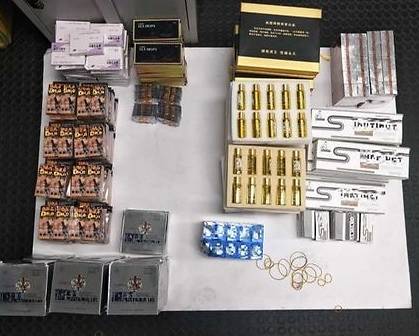
SINGAPORE: More than 40kg of sexual enhancement medicine were found hidden in packages at the Changi Airfreight Centre earlier this week, the Immigration and Checkpoints Authority (ICA) said on Friday (Sep 11).

The 42.5kg of items were concealed in packages that had been declared as “clothes and toys”, ICA said in a Facebook post.

They were discovered when officers noticed anomalies in the X-ray images of the packages on Tuesday.

READ: Sexual enhancement drugs found hidden in clothing at Tuas Checkpoint

The case has been referred to the Health Sciences Authority (HSA) for further investigation.

Sexual enhancement medicines found by ICA

The items were found at Changi Airfreight Centre. (Photo: Immigration and Checkpoints Authority)

This is the second time in two weeks that authorities have found sexual enhancement medicine hidden in packages at Changi Airfreight Centre.

On Aug 27, ICA officers found 18.5kg of such items hidden in packages declared as clothes.

READ: HSA raises alert on 2 products, including coffee product with high levels of erectile dysfunction medicine

ICA said this method of concealment is a cause for concern as similar methods may be used by people with ill intent to smuggle security items into Singapore.

ICA added that it will continue to conduct security checks on passengers, goods and vehicles so as to safeguard Singapore’s security.

Source link

Singapore, Japan to launch green lane for essential business and official travellers on Sept 18

0

[ad_1]

SINGAPORE – Singapore and Japan have agreed to launch a green lane for essential business and official travel for residents from both countries on Sept 18.

In a joint statement, the foreign affairs ministries of both countries said that the Business Track arrangement will help restore connectivity and support economic recovery for Japan and Singapore.

Singapore has similar arrangements with other countries, but this is the first such framework that Japan will implement with another country.

The Business Track will allow the safe resumption of cross-border travel and business exchanges with the necessary public health safeguards in place, the countries said.

These safeguards include pre-departure and post-arrival testing, as well as the need to adhere to a controlled itinerary for the first 14 days in the receiving country.

Operational details, including the requirements, health protocols and application process, will be published on the website of Japan’s Ministry of Foreign Affairs and Singapore’s SafeTravel website by Sept 18.

[ad_2]

Source link

Beauty salon that allegedly coerced cleaner into buying over $13k worth of products now a ‘public toilet’ on Google

0

[ad_1]

Things have been going south for a Suntec City beauty salon after it was reported to have allegedly pressured an elderly woman into purchasing over $13,000 worth of products. 

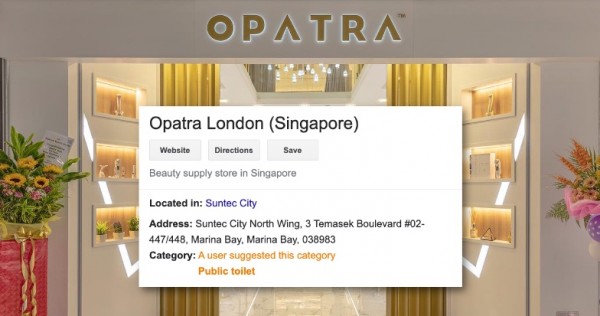
The salon, Opatra London, is now the target of backlash on social media following the tale of events. The store, operated by a franchisee of UK-based Opatra Skincare, has now deactivated its Facebook page.

But it was not able to escape the troll(s) on Google. The salon is currently being indexed on Google as a “public toilet”. 

The son of the elderly woman — known as Madam Tay — had tipped off news website Mothership on the “aggressive and unethical” sales tactics of store employees that apparently coerced the 63-year-old cleaner into spending $13,180 on Opatra’s beauty products and equipment.
PHOTO: Facebook/The Cott InteriorHere’s what allegedly happened according to Madam Tay’s son:

[ad_2]

Source link

TikTok owner to invest billions, recruit hundreds in Singapore in 3 years: Source

0

[ad_1]

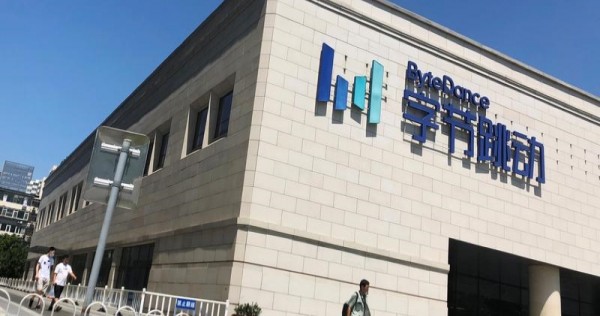
ByteDance, the owner of popular short-video app TikTok, is planning to invest billions of dollars and recruit hundreds of employees in Singapore over the next three years, a person familiar with the matter told Reuters on Friday.

The company’s plans about setting up a new data centre in the city-state is untrue, the source said, adding that the Beijing-based firm had stepped up the purchase of cloud-computing servers in Singapore to backup US data for contingency.

Separately, a company source said TikTok had moved some engineers to Singapore from China, starting this year.

Bloomberg earlier reported that ByteDance was planning to make Singapore its beachhead for the rest of Asia as part of its global expansion.

Singapore has been ramping up efforts over the last few years to attract tech firms and investors. The Covid-19 pandemic has hit the global trade and transport hub hard, accelerating the need to reinvent itself.

The city-state is likely to become more attractive to companies seeking a neutral ground amid rising tensions between the United States and China, according to analysts.

[ad_2]

Source link