Image:
Category:
Publication Date:
Saturday, March 12, 2016 – 14:45
External URL:
Send to mobile app:
Source:
Rotator Image:
Story Type:
Others
Monthly contributions to the Mosque Building and Mendaki Fund will increase by between S$1 and S$10, depending on income.
Source link

Singapore is expected to hold a presidential election within the next 18 months. Ahead of the election, the Government has initiated a review of the qualifying criteria for candidacy, the powers of the Council of Presidential Advisers, and minority representation. For all of these reasons, it is timely to ask how we should pick a president.
The innovation of the presidency from an entirely ceremonial role to one with select “executive powers” should be regarded as a step forward in the maturation of Singapore’s political arrangements. There is no push from any quarter to return the presidency to a merely figurehead role. The elected president model is, thus, likely to continue to define the office.
It should be recognised that despite the range and importance of select executive powers, the president is served by only a very small staff headed by a principal private secretary (the PPS).
The overwhelming majority of the staff allocated to the office of the president are concerned with the administrative, logistical, travel, security and planning arrangements of the ceremonial roles of the presidency. The PPS to the president is reliant on the support of the ministries to be kept informed on matters relating to the executive powers.
Consequently, the presidency appears designed in such a way that it is deliberately ill-equipped to become a position from which to initiate challenges to the Government on matters of detail of policy and practice. It is dependent on the information, data and arguments presented to it by the Government.
The president must possess a familiarity with government mechanisms, public policy and the principles and mechanism of public finance to best inform his or her judgment on whether, when and how to exercise the executive powers. This judgment comes with experience and being tested. The presidency is not the place for volatile personalities looking to make statements or a name. Ideally, the president should be a person whose “wars” are behind him, someone who can bring an emotionally balanced and sober attitude to upholding the prestige and standing of the presidency.
Such a president would be well equipped to play the role of a mentor to apex government leaders, including the prime minister. His or her prior experience and networks would be a welcome source of support for the otherwise lonely role of leader.
Prime ministers need confidants and guidance too. Naturally, the president must play the role of mentor carefully to avoid imposing positions and philosophies, and such roles are best played quietly away from the public gaze to maintain the trust and mutual respect necessary for the heads of state and government to interact constructively.
Citizens have been writing letters of appeal or complaint to the Istana from the inception of the office, hoping to get the attention and intervention of the president on their individual grouses. However, such letters are typically re-directed to the relevant government departments for their notice and response.

The president’s role can be expanded so he or she can play a more prominent role of guardian, when it comes to matters of fundamental public or national interest, beyond the narrow areas currently specified in the Constitution. In instances when a proposed or current public policy or practice is perceived to be in conflict with the public interest, the president could be empowered to use his or her discretion to ask for a review and response on behalf of the citizens. Playing such a role would give the elected presidency more direct currency than merely contingent potency.
The presidency can and should play the role of national unifier. Being above the fray of parliamentary politics, the president is uniquely placed to bring attention to the things which unite us despite our differences.
This moral role of unifier is critical in times of crisis, but is also valuable during times of stability. This calls for a president whose priority is the nation, not self, a person who can bring moral standing to the office without contaminating it with personal ego and agenda.
It must be someone who can bring personality to the presidency without making the presidency only about personality.
Those who step forward to seek this office should be held to the highest standards. But those standards need a framing and coherency.
Apart from being custodian of financial reserves, my suggestion is that the president’s moral role should include that of mentor, guardian and unifier. These roles are uniquely fitted to the office of the elected president.
Maturing our politics is more than about constitutional amendments and political frameworks. It is anchored foremost by the maturity of those who seek to be political actors – and the elected presidency may be non-partisan but it is still a political office.
Voters should judge the candidates not by what or who they are against, but for who they are as persons and what they stand for as leaders.
The writer is the chief executive officer of Future-Moves Group, a management consulting firm.







This article was first published on March 12, 2016.
Get a copy of The Straits Times or go to straitstimes.com for more stories.

The success of the ongoing political transition in Myanmar is critical not only for the stability of the South-east Asian country, but also for that of the wider region.
Come April 1, the country of 53 million, long controlled by a powerful military, will get a popularly elected government led by the National League for Democracy (NLD).
Myanmar lies at the crossroads of ASEAN, India and China: Its stability is essential to ASEAN’s plans for greater connectivity with India, to India’s own “Act East” policy, and to China’s southern connectivity. Beijing will welcome the opportunity to engage with the new government after a cool relationship with the current one.
Myanmar’s economy, choked by repressive military rule, underperformed for decades. But investments have poured in since political and economic reforms in 2011. The World Bank estimates that Myanmar’s growth was 8.5 per cent in real terms in 2014/2015. If this continues, it could turn into a powerhouse exporter of energy and agricultural produce in just five to 10 years.
The key to Myanmar’s stability must be not only sensible economic policy, but also a good working relationship between the still powerful military and the new civilian government. Thus far, pragmatism and consensus have prevailed.
Just as crucial is the relationship between the NLD’s strong-willed leader Aung San Suu Kyi and its candidate for president, Mr Htin Kyaw. Their personal ties go back to their parents’ generation.
It is important that this relationship remains seamless, or else factionalism and centrifugal forces – both of which Myanmar is known for – will reassert themselves.
If reforms are derailed by political uncertainty and instability, Myanmar will yet again be a nation-in-waiting, rather than one unleashed.
nirmal@sph.com.sg
This article was first published on March 12, 2016.
Get a copy of The Straits Times or go to straitstimes.com for more stories.
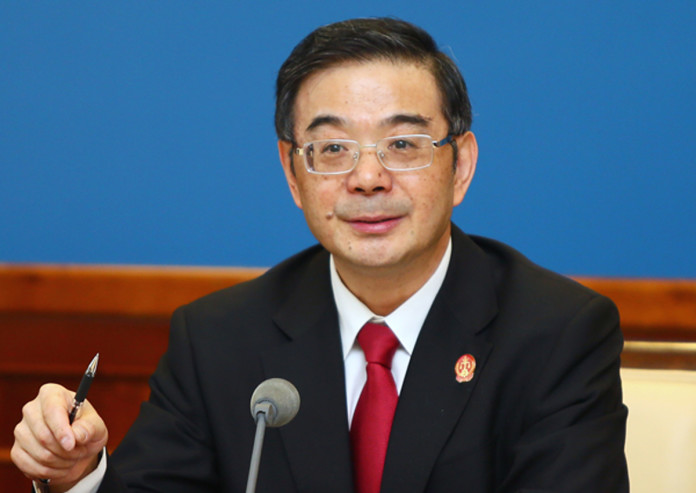
China’s top judge has asked the courts to improve the legal environment through better handling of disputes involving foreigners, particularly in the marine sector, as the country opens wider to the outside world and tries hard to attract overseas enterprises.
Zhou Qiang, president of the Supreme People’s Court, said it is important for such cases to be heard in China, as the number has been growing over the past few years, an indication of China’s growing integration into the world economy.
Among the cases involving foreigners, many are related to disputes on the sea, Zhou said.
Last year alone, 10 Chinese marine courts, including the Qingdao Maritime Court in Shandong province, concluded 1,030 cases involving foreign litigants – a 6.85 per cent increase year-on-year, according to official statistics.
“Better handling of these marine cases involving foreigners will help build China’s judicial image in the world and will attract more litigants from overseas to select our courts to settle marine disputes,” Zhou said.
The large number of marine cases involving foreigners has motivated the courts to be more professional in the hearings so they can better protect national maritime security, he said.
Last year in China, 15,348 civil and commercial cases involving foreigners were recorded, basically the same as recorded in 2014, according to the top court.
“How well we can handle these commercial disputes involving foreigners will, to some extent, affect the country’s Belt and Road Initiative and its efforts to operate a slew of free trade zones,” he said.
The initiative, proposed by President Xi Jinping in 2013, covers the Silk Road Economic Belt and the 21st Century Maritime Silk Road. It aims to improve connectivity and boost trade with countries along the ancient trade routes spanning Asia, Europe and Africa.
Solving such commercial litigation means foreign businesspeople can receive good legal services in China, so this will help build an open, safe and efficient economic system in the country, Zhou said.
The top judge asked all courts to treat litigants, Chinese and foreign, on an equal footing, adding that sound protection of legal rights and strict law enforcement will contribute to China’s economic prosperity.
He also asked Chinese courts to be more active in participating in international rule-making, saying this will give the country a stronger voice in world legal affairs.
Meanwhile, Chinese courts concluded 649 criminal cases involving foreigners last year, down 7.15 per cent from 2014, according to official statistics.
But there are still some thorny issues, such as a lack of judges who can speak English well and who have a good knowledge of foreign laws, Zhou said.
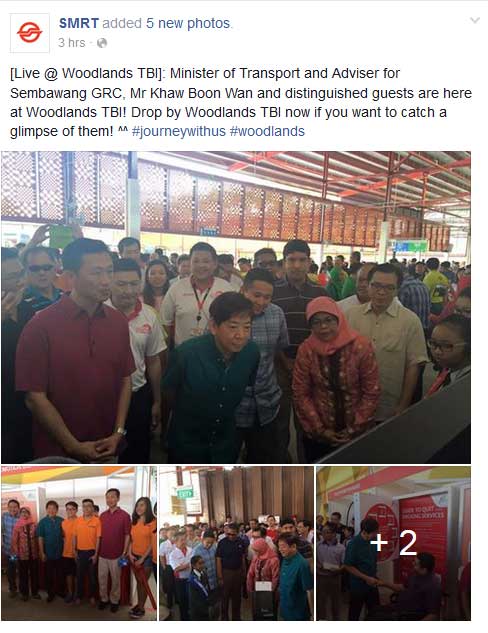
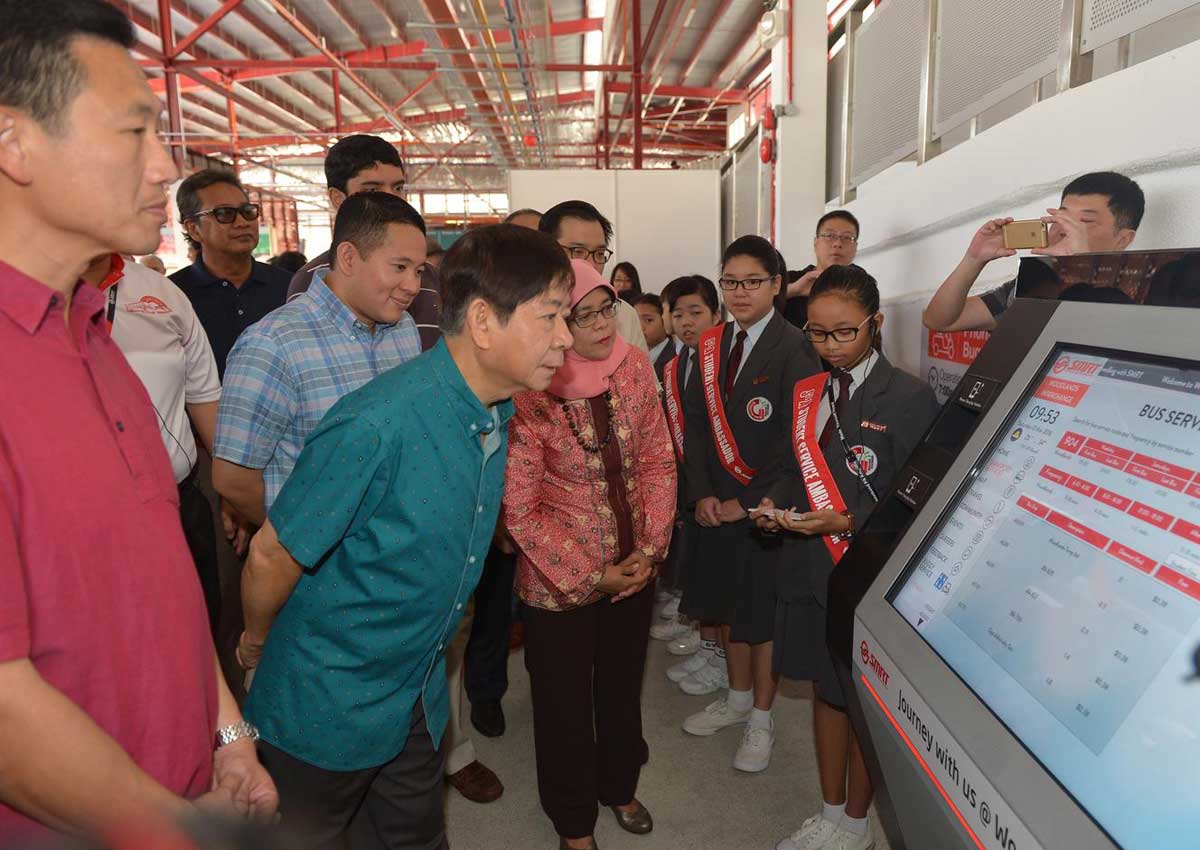
SINGAPORE – Free buggy services, interactive panels to help commuters plan trips, and Braille guidance on handrails to help the visually impaired are just some of the innovative features at the Woodlands Temporary Bus Interchange (TBI).
Although only an interim arrangement, transport operator SMRT has installed a host of new, first-of-its-kind features to ensure the needs of commuters are taken care of.
The new interchange, which was officially launched on Saturday (Mar 12) has bus boarding and alighting berths stretching nearly half a kilometer, making it one of the longest bus interchanges in Singapore. Therefore, a free buggy service will be available for commuters who may need assistance to get to berths at the extreme ends of the interchange.
The temporary interchange also introduces a tactile guidance system, which includes Braille guidance on handrails, which can help the visually impaired locate waiting areas.
There will also be new interactive panels that allow commuters learn about travel options in the area.
Meanwhile, the new interchange also ensures the comfort and needs of staff are not neglected. In another first, a SMART bus guidance system will display information on large panels so that bus captains can see which alighting berths and parking bays are avaiable.
An air-conditioned staff lounge and a canteen with various food stalls also provide a comfortable rest area for bus captains and interchange staff.
Woodlands TBI will serve residents for three years until 2019 as the Woodlands Regional Interchange undergoes upgrading and construction of an underpass.
Coordinating Minister for Infrastructure and Minister for Transport Khaw Boon Wan was at the interchange today for its first day of operations. He was accompanied by MPs from the Sembawang and Marsiling-Yew Tee Group Representation Constiuencies, including Acting Education Minister Ong Ye Kung, Parliament speaker Madam Halimah Yacob, and Parliamentary Secretary for Home Affairs Amrin Amin.
Mr Tan Kian Heong, vice president of SMRT Buses, said: “Although the relocation is temporary, we aim to provide our commuters and staff with the service standards found in a fully operational, permanent bus interchange.”
He added that the TBI allows trials of advanced technology and commuter-friendly features, and hoped commuters would be able to enjoy the new service enhancements.
seanyap@sph.com.sg

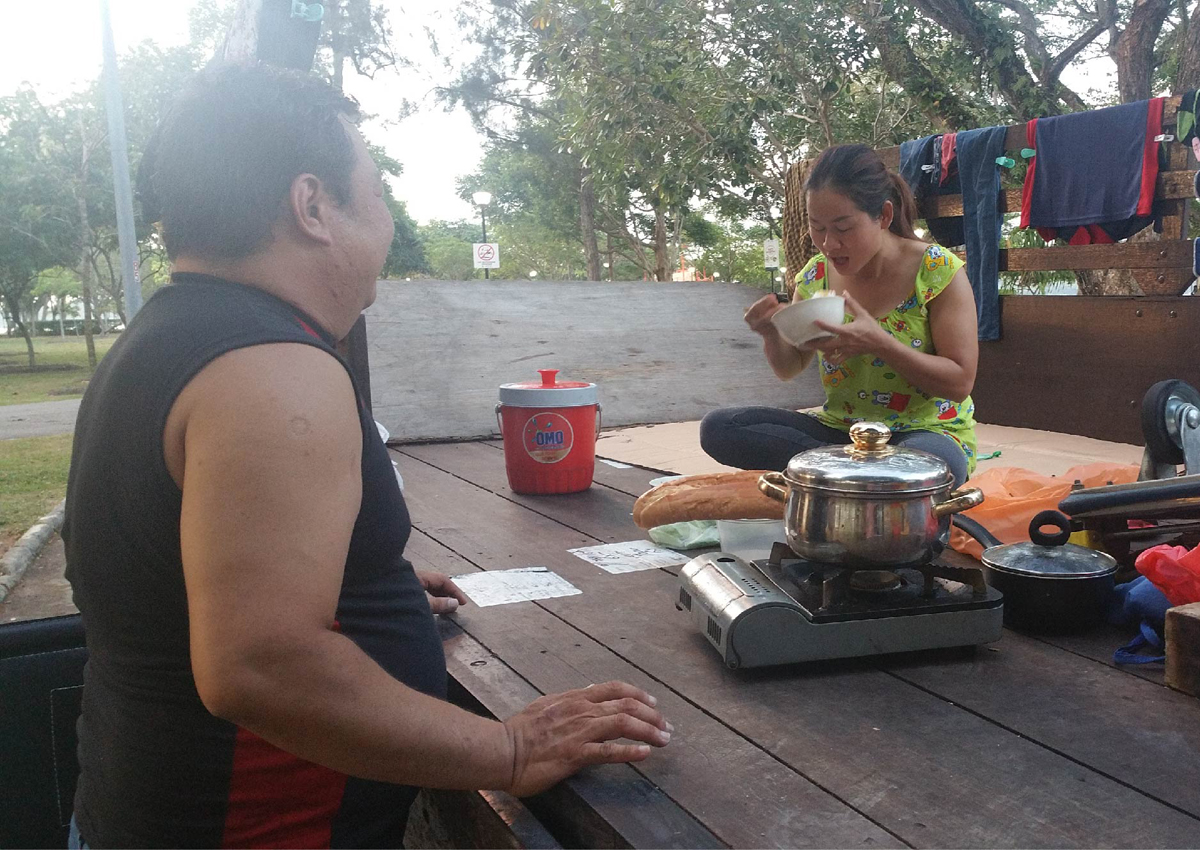
Since news of his plight broke, deliveryman Ong Poh Hwa, 44, and his pregnant wife have received a flurry of visitors at Changi Beach, where they park the lorry they call home.
Thursday night’s visitors included Ministry of Social and Family Development (MSF) officers, who told The Straits Times they were there to “better understand his current situation”.
Mr Ong’s story of how he and his pregnant Vietnamese wife live in the lorry he drives for work appeared in Chinese daily Lianhe Wanbao on Wednesday.
The couple get up at 3.30am to start his delivery job, then park the lorry at night at Changi Beach, where they use the public toilets to wash up and do their laundry. They then go to sleep on sheets of cardboard in the back of the open vehicle.
“We have referred Mr Ong to a family service centre for a more thorough assessment of his circumstances and needs so appropriate help can be rendered,” said an MSF spokesman. Mr Ong said he would visit the family service centre as soon as he can, given his six-day work schedule and the centre’s operating hours, but stressed it was not monetary aid he needs.
“I just want a roof over our heads for my wife and baby,” he said in Mandarin.
Last night, the couple were on the bed of their lorry tucking into a dinner of fried rice bought from a coffee shop. Mr Ong’s wife, Ms Nguyen Thi Phu Vinh, 34, usually cooks rice and fish or meat on a portable stove but she was not feeling well.
The couple met while Mr Ong worked in Vietnam from 2009 to 2013 for a rice exporter. He had left Singapore after he and his first wife divorced and sold their three-room flat.
His current wife joined him in Singapore in April last year, they registered their marriage in June, and she applied for a long- term visit pass last November.
Mr Ong said he is estranged from his parents, three siblings and his two children, who are in their early 20s.
He returned to Singapore in 2013 and lived with an uncle, before renting a room for $650 after his uncle got married. He moved out of the rented room after four months, opting to tough it out in his vehicle instead.

















While offers of help have flooded in, Mr Ong said he did not need more money.
“We have enough to get by daily. We also have nowhere to keep donations,” he said.
His wife, now 18 weeks pregnant, is finding it harder to climb up and down the vehicle. “If it was just the two of us, it’s okay. But I really want a home for the baby.”
Mr Ong cannot buy a new flat with his non-citizen spouse as he is not a first-time applicant for a subsidised flat.
HDB said he can buy a resale flat from the open market, but Mr Ong said he cannot afford one on his salary.
Nonetheless, they do not qualify for an HDB rental flat as their total household income a month exceeds $1,500 and his wife is not a citizen.
And rather than rent a room on his $1,900 salary, he said he would save the money for the baby he intends to name Jia Kang, or “healthy home”.
“A room is going to cost $800. After CPF deduction, I have only $1,600. And most rental rooms don’t allow cooking,” he said.
He considered having the baby in Vietnam, but thought he would have a better future here.
“I don’t care about the size of the house, I just need a home for my wife until she has the baby. And when my son is born, I can apply for a flat using his name and mine,” he said.
Read also: A van called home
kxinghui@sph.com.sg
domteojy@sph.com.sg
This article was first published on March 12, 2016.
Get a copy of The Straits Times or go to straitstimes.com for more stories.
Hong Kong singer Karen Mok’s husband may have applied to be a private chef on her ongoing tour, but he is unlikely to get hired.
Her finance executive husband, Mr Johannes Natterer, will not make the cut because he is inclined to whip up fattening meals for her.
In an interview with Singapore media ahead of her show here on April 9, Mok, 45, says: “He’s really good at pasta. He thinks I’m too skinny and I should put on more weight. He will add fattening ingredients such as cream into his dishes on purpose. I don’t think it’s a good idea to have him as my chef on the tour. I will get fat.”
Her German-born husband, also 45, will instead be helping out with logistics when the concert tour makes it to Europe. The Regardez World Tour started in Taipei last year and Mok will be holding a show in Singapore after 15 years.
The two-time Best Female Mandarin Artist winner at the Golden Melody Awards was speaking to Singapore reporters yesterday from Hong Kong. Unable to fly here, she chose to do a video conference as she wanted to be able to interact with reporters as if she were here in person.
Her attention to detail is also seen in her doubling as concert director, spanning all areas, from costume design to lighting.
“I’ve been a concert director ever since I started doing concerts. I’ve always designed my own shows and created them from nothing,” she says.
“It’s really satisfying how ideas born from my imagination become reality.”
She was inspired to recreate the spectacular Northern Lights astronomical phenomenon at her show with 1,000 laser beams after seeing it in Iceland with her husband two years ago.
Recounting the trip with glee, she says: “We went to Iceland. We were there for three nights and one night had perfect conditions and we saw the Northern Lights. It’s really magical, especially if you are there with someone you love.
“It’s something that a lot of people have on their bucket list, but not everyone gets that sort of chance. I know of a lot of friends who travel all the way there but, because of bad weather, they didn’t manage to see the Northern Lights. So I thought, ‘What if I can bring the lights to my show?'”
BOOK IT / KAREN MOK REGARDEZ WORLD TOUR
WHERE: 1 Vista Exchange Green, The Star Theatre
WHEN: April 9, 8pm
ADMISSION: $88 to $188 from Sistic (go to www.sistic.com.sg or call 6348-5555)
nggwen@sph.com.sg
This article was first published on March 12, 2016.
Get a copy of The Straits Times or go to straitstimes.com for more stories.

New features include CCTVs placed above queue berths to alert interchange operators to crowds, so the operators can adjust bus arrivals accordingly.
Source link

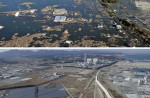
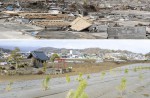
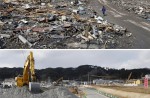
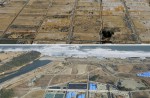
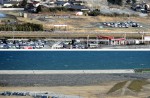
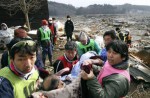
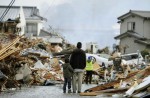
As the deadly waves of a tsunami approached the coastal town of Obama in Iwaki city five years ago, Ms Kiyoi Shida fled to the second floor of her house.
She clung to a pillar as the water gushed in, sweeping away all her belongings.
There was nothing to keep her warm from the snow as she waited for help. When she finally stepped out of her home to head to the evacuation shelter, the town as she knew it was gone, the 80-year-old told The Straits Times yesterday.
She was the last to reach the shelter, where she was reunited with her son, she said.
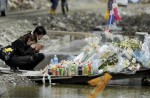
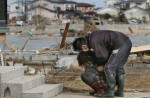
Yesterday, she joined about 50 others at a memorial event held by non-profit group Nakoso.
They chanted and prayed by the beach where the tsunami struck on March 11. Then, at 2.46pm – the moment of the disaster – they observed a minute’s silence and lined up to pay their respects.
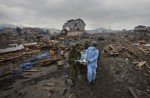
Iwaki city, about 60km south of the devastated Fukushima Daiichi nuclear plant, has been taking in evacuees from areas contaminated by radiation.
“In our daily lives, we gradually forget the dangers of such a disaster. But on this day, we recall the way that people helped each other in difficult times,” said Mr Takashi Tachi, chairman of Nakoso.
“We gather to reaffirm the fact that we are safe, and so as not to forget what had happened,” he said.
Said Ms Midori Watanabe, 76, another resident of Obama: “I’m grateful for being able to continue living here, and we are waiting for everyone to return home.”
As night fell, residents across the prefecture gathered to light candles in memory of the disaster as well.
Residents of Koriyama city, which is about 60km west of the nuclear plant, came together in a concert to mark the anniversary.
Tents outside the concert venue displayed candles decorated with supportive messages from visitors.
Among them was Ms Tomoe Waragaya, 35, a receptionist born in Tamura city. She had brought along her seven-year-old daughter, Hazuki.
“I was here in Koriyama during the earthquake, and hope that Hazuki will learn the importance of supporting the victims of the disaster,” she said.





























This article was first published on March 12, 2016.
Get a copy of The Straits Times or go to straitstimes.com for more stories.



