March 27, 2016 5:36 PM
SINGAPORE – The Tamil Language Festival has seen greater youth involvement over the years and will have components honouring pioneers of the language in Singapore this time.
March 27, 2016 5:36 PM
SINGAPORE – The Tamil Language Festival has seen greater youth involvement over the years and will have components honouring pioneers of the language in Singapore this time.
Nearly five years ago, Madam Choo Hong Eng became the talk of the town when she won more than $400,000 from a casino slot machine at Marina Bay Sands (MBS), and then proceeded to give it all away.
It was not the first time she had hit the jackpot only to donate the money to charity. Four years earlier, she had parted with more than half of the $280,000 she won from pulling the one-arm bandit on a cruise ship.
Her generosity is all the more impressive, given her background.
No heiress with oodles of spare cash, the 61-year-old was abandoned at birth and never had the privilege of an education.
Instead, she works hard for her money by running a vegetarian food stall which she started in Geylang 30 years ago.
So why did she give it all away?
“I have all that I want,” says the woman nicknamed Jackpot Auntie.
Some people said she was stupid or crazy for doing what she did but many others described her as a remarkable woman.
Madam Choo certainly has presence as she sits in a private dining room at Kwan Inn Vegetarian Restaurant in Tanjong Katong Road. The cosy eatery, which opened a few months ago, is her new undertaking with two business partners who are in the coffee business.
That she is a woman of action is obvious from the purposeful and animated way she moves and talks. She radiates charm and has an easy likeability, made even more pleasing by her sharp wit, keen intelligence and refreshing candour.
One can easily imagine her, with her smarts, running a successful business or corporation if Fate had dealt her a better hand at birth.
Shaking her head, the straight talker says she does not waste time grappling with such a scenario.
“It’s not something you can change,” she says in Cantonese.
Her real parents, she was told, were Shanghainese and worked on ships. They left her in an orphanage in River Valley when she was born.
When she was three, she was adopted by a devout Buddhist who had left Shanghai for Singapore after becoming disappointed with her husband’s philandering ways.
Her adoptive mother, whom she called Ah Por, or grandmother, also took in two boys from the orphanage, which was forced to close because of a lack of funding.
Ah Por was the head of a tontine, an informal micro-financing scheme where members make regular contributions to a common pool and bid for loans.
As she did not have a birth certificate and other documents, Madam Choo was not enrolled in a school.
“It didn’t bug me not having an education. I knew I could still have a career and not go hungry. My Ah Por told me that only the lazy starve,” she says.
Not only was she never lazy, but she was also entrepreneurial to boot. By nine, she already knew how to make money.
Each time an opera troupe performed in her kampung, she would peddle guava, rambutans and sugar cane. “In those days, opera performances sometimes lasted a week. We lived in a kampung, so there were all these fruit trees. Whatever was edible, I’d raid to sell. Or I’d reserve seats for the villagers for five or 10 cents,” she says.
Her leadership qualities surfaced early. “I was known as the samseng girl,” she says, using the local slang for ruffian.
“All the village boys looked up to me and did my bidding. The villagers all said I would be the first to marry because there were always boys around me,” adds Madam Choo, who is single.
Her hyperactive nature so exasperated her adoptive mother that she was packed off to a school for novice Buddhist nuns in Telok Kurau when she was 12.
While the feisty girl agreed to attend classes on Buddhist scriptures, she told the principal that she was illiterate and would not do homework or take exams.
For more than two years, she would attend classes daily from 8am to 4pm.
“That is why I can recite sutras by heart,” she says with a laugh.
At 14, she found work in a wig- making factory in Geylang Lorong 3. So adroit was she at her job that she could do the work of three people.
“My bosses loved me because I was fast and precise, but my colleagues resented me. I asked for overtime work every day because I wanted to make money,” says Madam Choo, who could rake in $1,000 – no mean sum 40 years ago – each month.
When the wig industry fell on hard times, she took on two jobs. By day, she worked as an assistant in a shop selling vinyls and stamps; at night, she was a ticket seller at the now-defunct amusement park Gay World. “In those days, a lot of Taiwanese singers such as Teresa Teng and Yu Ya performed at Gay World,” she says.
Quick to spot money-making opportunities, she persuaded her day boss to place big orders for records by visiting artists. She would then get these singers to sign the records during their rehearsals and flog the vinyls off in her ticketing booth at night, earning a commission for each one she sold.
Vivacious and sporty, she attracted quite a few suitors, among them a jockey. “Many who went after me were married. And my Ah Por told me never to get involved with a married man,” she says.
Surely there were eligible ones too. “Yes, but no feel lah,” she says, suddenly lapsing into English.
“Anyway, I’m not marriage material. I’m too independent and headstrong. I like to make and spend my own money.”
And she did. Over the next two decades, she made a more than decent living at different jobs.
For a spell in the 1980s, she was chauffeur to Hong Kong celebrities such as Andy Lau, Tony Leung Chiu Wai and Anita Mui whenever they were in town.
On weekends, she made a lucrative living cooking vegetarian dishes for busloads of tourists, who would eat in the spacious compound of her adoptive mother’s house in Ceylon Road.
“I cooked for three seatings of 15 tables each on weekends. I could make a couple of thousands each weekend. I stopped when the Government passed a law requiring all caterers to be licensed,” says Madam Choo, who also ran a photostating business in a local university.
In the 1990s, she started a vegetarian stall in Geylang East.
Although she has turned it into a thriving business, she did not have it easy at first.
She had to contend with sabotage attempts by jealous competitors and had her fair share of accidents.
Once, her hands slipped and she tipped a wok of hot oil onto her face and chest. She was in agony. Her scalded face took on a bright red hue and her clothes stuck to her chest.
She prayed to the Goddess of Mercy, imploring that she be spared disfigurement. When she emerged unscathed from the episode, she resolved to devote her life to charity and helping others.
Madam Kwan Seck Mui, 69, has known her for nearly 40 years.
“She really lives by her principles. If a person genuinely needs help, she will help,” says Madam Kwan, a former entertainment journalist.
That probably explains why Madam Choo adopted her friend’s two daughters about 20 years ago.
“My friend went on her knees and told me that she could not afford to raise them. Her husband was a gambler and they had just got divorced,” says Madam Choo.
The two daughters are now 21 and 24. One will be completing her business studies at Singapore Management University, while the other has a certificate in hospitality.
Madam Choo has been donating to charity for most of her working life, although her altruistic streak came to public attention only after her jackpot win at MBS.
She made headlines in October 2011 when she got involved in a dispute with the casino, which initially refused to pay her the winnings of more than $400,000, claiming that there was a computer glitch.
She was given the full sum only after she complained to the Casino Regulatory Authority.
Upon receiving the money, she gave it all away to nearly 30 charities, including the Singapore Buddhist Federation and the National Kidney Foundation.
She has not been to a casino since. She says: “You will never win again. I don’t gamble. But (at the time) my friend, who was visiting from China, wanted to see what the casino was like. I decided to change $50 for tokens to play the slot machines while waiting for him.
“It was the same on the cruise ship. A friend invited a few of us on the cruise. It was just meant to be.”
She insists the episode has not changed her life much.
“My branding has probably become stronger,” she jokes. “And I get recognised. People point at me and whisper, and taxi drivers ask me if I am the Jackpot Auntie.”
The attention does not bother her much. Neither does the fact that she has lost a few friends whose requests for help – to settle credit card bills or start businesses – she did not entertain.
“My philosophy in life is simple. Don’t hurt others to benefit yourself. And as long as what you do is proper, do not worry about what others say.”
Friends, she says, she does not lack. One of them is Singapore artist Tan Swie Hian, 72, who has been patronising her vegetarian food stall in Geylang for years.
“She is just a pure soul. She is so kind-hearted that she devotes her life to bringing happiness to other people,” says the Cultural Medallion winner, whose ink-on-rice paper work, Portrait Of Bada Shanren, sold for $4.4 million at the Poly Auction in Beijing two years ago.
“Like all kind people, she is taken advantage of by others, but she doesn’t let it get to her.”
When Madam Choo opened her Kwan Inn restaurant last year, Mr Tan, Singapore’s most expensive living artist, personally gave her a calligraphic plaque which doubles as a signboard for the eatery.
The restaurant is a lifelong dream. “I’ve always wanted to find a successor and a legacy for my recipes,” says Madam Choo, who has a repertoire of more than 100 dishes. “If it does well, there are plans to open branches.”
She chuckles when asked what goes through her head when she looks back on her life. “There have been ups and downs, but I have to say I have a happy life.”
And she does not worry about the future. “I’m not lazy. That’s why I’m here,” she says.

This article was first published on March 27, 2016.
Get a copy of The Straits Times or go to straitstimes.com for more stories.
Members of Parliament such as Mr Lim Wee Kiak and Ms Tin Pei Ling agree with Finance Minister Heng Swee Keat that the move, announced in this year’s Budget, promotes corporate social responsibility.
Source link

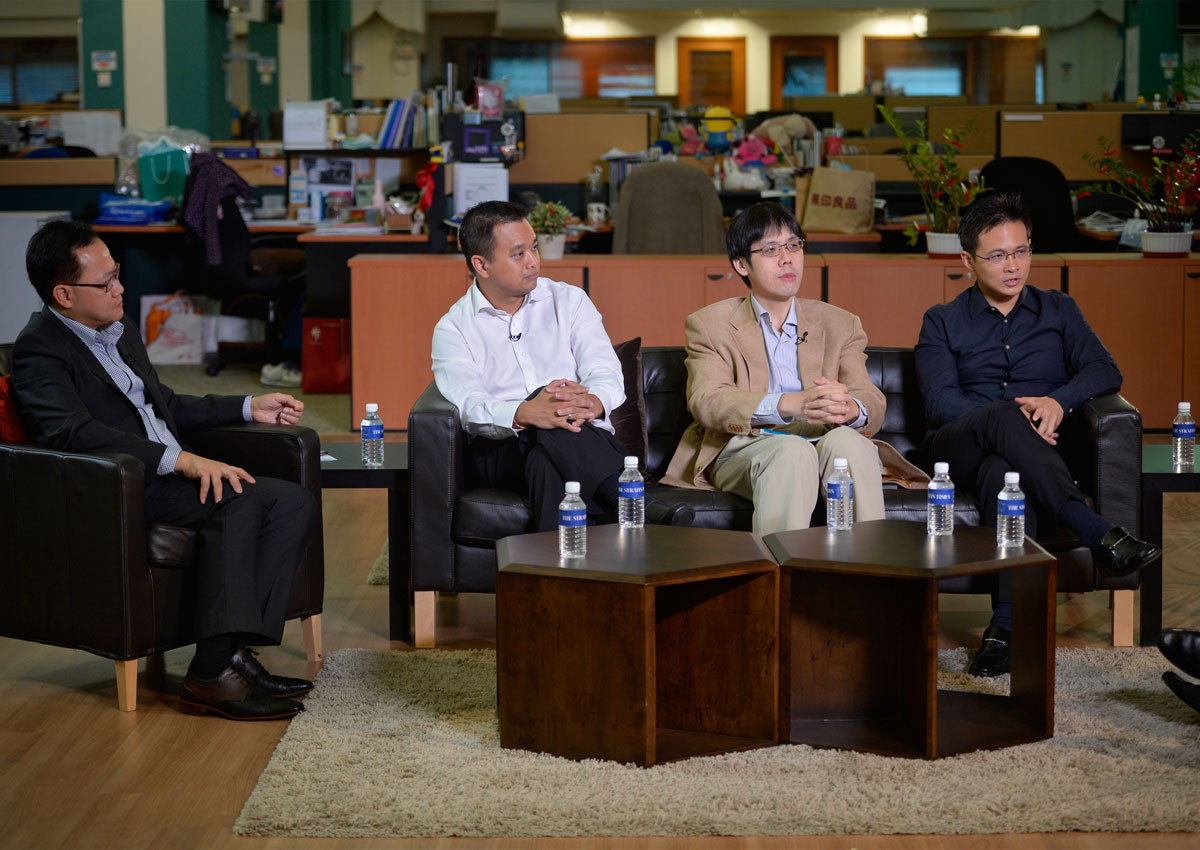
This year’s Budget built on the groundwork laid down to prepare workers for an increasingly uncertain future – but more still needs to be done, four roundtable panellists across the labour spectrum agreed.
The participants at The Straits Times’ post-Budget Roundtable yesterday raised concerns over the increasingly rapid pace of change in the economy and workers’ ability to keep up.
Their points come on the back of a Budget which singled out the need to help tide firms and workers over the slowdown in growth, even as Finance Minister Heng Swee Keat stayed the course in transforming the economy to meet new challenges.
The panellists said more can still be done to help retrenched professionals find their feet, guide workers to acquire the most useful skills, and get employees on board in adding value to justify higher wages.
Panellist Walter Theseira, a senior lecturer at SIM University, said Singapore must be prepared to become a “normal” country where the retrenched spend more time out of a job and firms find it tougher to hire employees with the right skills.
There have been low levels of structural unemployment for many years, but industries and jobs are evolving faster than ever, which means Singapore is likely to face higher unemployment in the long term, he added.
Structural unemployment is caused by a mismatch between workers’ skills and those demanded by employers. In contrast, cyclical unemployment is the result of booms and busts.
The panellists said the Budget – as well as previously announced initiatives like SkillsFuture – laid some groundwork to prepare workers for a more uncertain future.
But Dr Theseira noted: “We don’t have a lot of social protection against the risk of unemployment. I’m not suggesting exactly that we copy unemployment insurance in other countries because… we don’t want to put in a system where people don’t have incentives to find a job.”
But in the absence of some form of unemployment support, workers might not want to take the risk of retraining or finding a different job better suited to their skills, Dr Theseira said. “This is a major issue we need to look at that will take more than one Budget to address.”
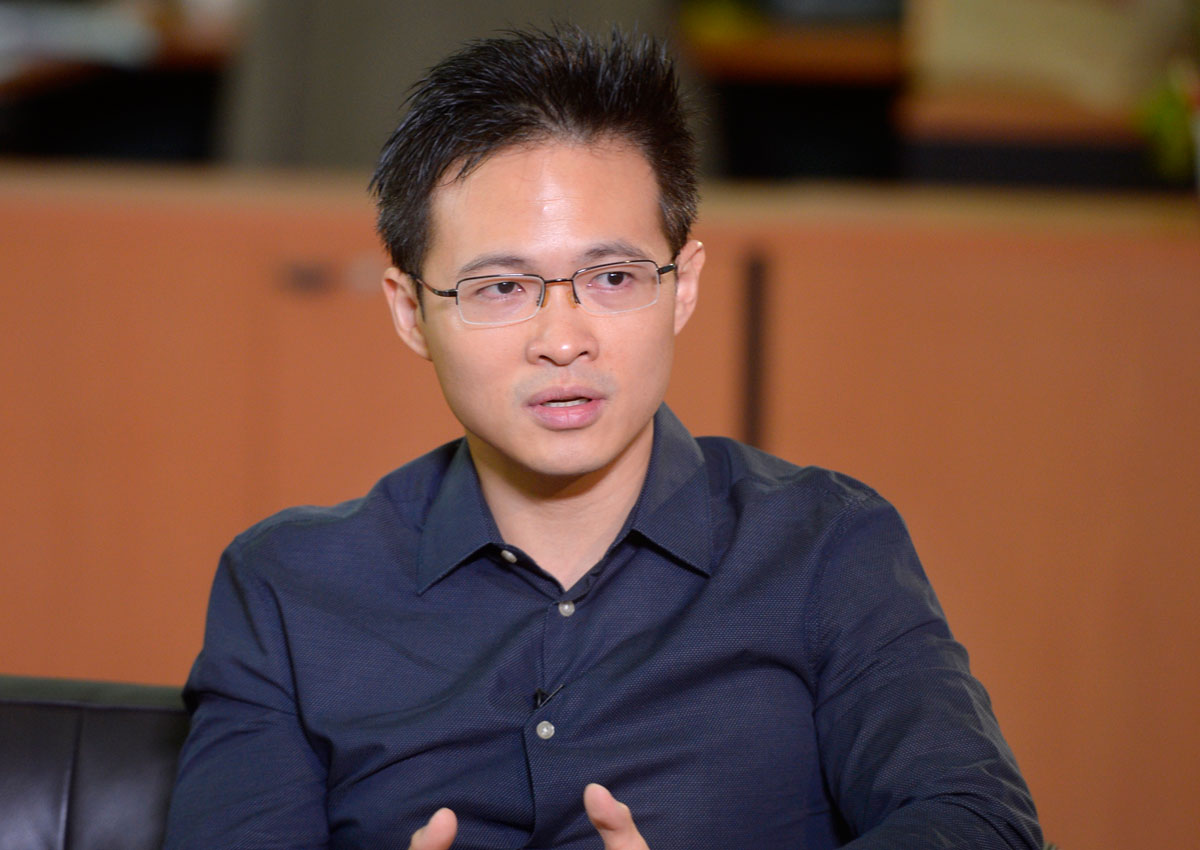
Mr Desmond Choo, a unionist and an MP for Tampines GRC, said the practicalities of skills upgrading or finding a new job can be tough to manage. Laid-off professionals, managers and executives often find it difficult to switch industries, said the director of NTUC’s youth development unit. “You either take a significant cut in your salary, or even when you try to retrain, it can be quite difficult.”
He added that more can be done to help workers move into new jobs or pick up new skills – for instance, by providing more support for workers who take time off to retrain, or career counselling for workers unsure about what skills to acquire.
Firms – many of which have been hit hard by rising wage costs even as they struggle to transform their business models – are also a vital part of the equation. Wage increases have been outpacing growth in productivity – another key issue that panellists say needs to be addressed.
Real wages were up 7 per cent last year, while productivity in terms of value added per worker dipped 0.1 per cent.
“The question is, how do we justify the high salaries and high costs? It has to be through revenues and adding value,” said Mr Jimmy Koh, United Overseas Bank’s head of global economics and markets research.
Association of Small and Medium Enterprises president Kurt Wee agreed it is “not realistic” for firms to rely on low-cost labour, which means firms have no choice but to transform and innovate to survive.
This effort has to be driven by both management and employees, with support from the Government, said Mr Choo. “The last thing that we want is to increase wages in a way that’s unsustainable, causing companies to fold and workers to lose jobs.
“(Workers should be able to say) ‘I’m not happy with the current pace of preparedness for the future’. (They can then) talk to the management and say, ‘I’ve heard about all these macro changes. I’ve heard about how my job might be taken away. How are we going to prepare for the next lap?’
“Only when we have this mindset change coupled with real training, and companies coming on board to support the training, can we make sure the jobs will be there five, 10 years down the road.”
This article was first published on March 27, 2016.
Get a copy of The Straits Times or go to straitstimes.com for more stories.
Good news for Hello Kitty fans, From 11 June, Robot Kitty SG will be happening at Suntec from 11 June for 11 days. Tickets will be available from 11 Apr
Featuring an exuberant display of photo attractions, interactive gaming departments, exclusive memorabilia, an autograph session with the designer of Hello Kitty & many more
Share this news with your friends & loved ones!

Robot Kitty Singapore Tickets Available From 11 Apr 2016 | SINGPromos.com
To all Hello Kitty fans, realise your engineering dream! Robot Kitty Singapore featuring an exuberant display of photo attractions, interactive gaming departments and more will be happening in Singapore from 11 June 2016
Good news for Hello Kitty fans, From 11 June, Robot Kitty SG will be happening at Suntec from 11 June for 11 days. Tickets will be available from 11 Apr
Featuring an exuberant display of photo attractions, interactive gaming departments, exclusive memorabilia, an autograph session with the designer of Hello Kitty & many more
Share this news with your friends & loved ones!
Robot Kitty Singapore Tickets Available From 11 Apr 2016 | SINGPromos.com
To all Hello Kitty fans, realise your engineering dream! Robot Kitty Singapore featuring an exuberant display of photo attractions, interactive gaming departments and more will be happening in Singapore from 11 June 2016
For many people going about their daily lives, Budget 2016 may have sounded like any other in the past few years. Take accountant Cheong Ying Fen. The 27-year-old said she read the news reports but nothing really stood out for her.
“It sounds the same as last year’s Budget, if you ask me. Productivity, automation, and some GST vouchers,” she said, with a shrug.
Indeed, panellists of a post Bud- get roundtable organised by The Straits Times yesterday agreed, noting that the approach taken by Finance Minister Heng Swee Keat was an evolutionary one, despite it being a Budget of firsts in many ways.
The Budget, delivered last Thursday, was the first for the term of the new Government after last year’s general election, the first after the milestone SG50 celebrations, and the first for Mr Heng, who took over as Finance Minister last year.
But on long-term challenges, the Budget took the approach of building on the foundations that have been laid down over the past few years, said Dr Walter Theseira, senior lecturer at SIM University. “When you look at economic restructuring and you look at basically what the Government is doing with the Budget towards that, the Government is largely staying the course,” he said.
Similar themes of restructuring for the long term and building social cohesion were present, he added.
Director of the National Trades Union Congress’ youth development unit and MP for Tampines GRC Desmond Choo said Budget 2016 was the continuation of a “nation-building Budget done in a very balanced way”.
However, he picked up on something that should make the likes of Ms Cheong take note: This is that the main difference was in the way the new Finance Minister is approaching the issues at hand.
“I think what Minister of Finance is really trying to look at is: Can we do things in a targeted fashion and set the stage and context for how to do proper industry transformation?” he said.
As to why the Budget’s focus on industry transformation, small and medium-sized enterprises (SMEs) and the economy matters to ordinary workers, The Straits Times’ Roundtable discussion throws up some answers.
EVOLUTION OF AN APPROACH
The Budget’s shift in direction is most perceptible in three main areas, said panellists.
One is the change in the Government’s approach to handing out financial help for firms, shown most clearly by the $4.5 billion Industry Transformation Package.
One big chunk of this policy is the new Automation Support Package, which will cost more than $400 million over three years, aimed at getting companies to scale up the use of automation in their operations.
At the same time, Mr Heng said the Productivity and Innovation Credit (PIC) scheme, which gave out generous financial incentives to companies to raise their productivity, is expiring in the 2018 tax year of assessment, with benefits to be cut from this tax year of assessment onwards.
This is the result from an implicit acknowledgement that the push from using broad-based incentives to raise productivity may not work for everyone, said Mr Jimmy Koh, UOB’s head of global economics and markets research.
To be sure, there are good examples of companies that have used the PIC incentives to buy machines that helped them make more of their products with less manpower.
“So (now) this is a very targeted approach, rather than the examples we see of companies going out there trying to buy laptops, iPads for everybody,” he said.
Dr Theseira agreed, arguing that there has been little accounting of the positive effects, if any, arising from the huge subsidies given out by the Government to companies.
“So the concern I have – the subsidies the Government has been giving out towards restructuring, I don’t think have been spent efficiently by a lot of companies,” he said. “Perhaps that is because sometimes, companies don’t even know what to do with the money, right? I give you money for automation in robotics, robotise what?”
But the president of the Association of Small and Medium Enterprises, Mr Kurt Wee, warned against doing away entirely with a broad-based incentive approach.
He said that for every bad example of companies frittering away PIC grants, there are more of companies which used them for good.
“When you want to make changes at the ecosystem level, the broad-based schemes are important and it helps you to move that needle,” he said.
PARTNERING FOR THE FUTURE
The second area in which Mr Heng has differed from his predecessor is in how he is positioning the Government as more of a partner than a leader in confronting the challenges of the future, said Mr Choo.
The Budget is signalling that it is less interested in trying to take a direct lead on how to find a solution. Instead, it now wants to work with trade associations, companies and unions more closely.
Mr Choo noted that there will be increased funding and support for trade associations and chambers to improve their outreach to companies, a clear sign of the Government wanting to tap networks.
Instead of adopting a top-down approach to picking industries for growth, the approach now is that the Government is choosing to help a firm of a certain size to grow, regardless of which industry it belongs to.
The Automation Support Package, for example, is clearly targeted at helping companies of a certain size with the capacity and knowledge to expand the use of machines in their operations. It will subsidise up to 50 per cent of a project, which will help companies scale up the use of automation, to a cap of $1 million. Firms likely to use this are most likely those with plans to grow overseas, or are of medium size.
This is not a bad approach, said Mr Choo. “Let’s bet on the winners, let the winners get Singapore to the next stage. Let us vary the way and change the way we use money – betting on the ones that have delivered on growth, support them the best that we can, letting other companies not doing so well go through some pain and restructure,” he said.
“But we ought to make sure that there is a social system to take care of the workers.”
The third area where change can be seen is a shift away from productivity to innovation. In his speech, Mr Heng acknowledged that productivity growth has “not been as strong as we would like”. He said: “While productivity has grown by an average of 2.7 per cent per year over 2009 to 2015, most of this increase was due to the cyclical rebound in 2010 and 2011. Productivity growth has remained relatively flat over the past three years.”
Innovation does not mean using high-tech software to mine data or using robots to drive growth. It is in the application of existing technologies, a creative and lateral way of thinking that can also work, said Mr Wee. He cited Pestbusters, which has started using satellite technology and drones to streamline its operations, as an example of a small firm doing a lot with technology. This creative thinking is the kind that he thinks the Government is seeking to encourage.
Signalling this new approach is the upcoming $100 million National Trade Platform. Among other things, it will allow service providers to develop applications or value-added services on top of the platform, akin to an open-source environment.
Another is the commitment to transforming Jurong West into a cluster of areas that promote and incubate innovation.
But Mr Koh said there has to be a balance in this. “Innovation is an elusive idea and the more one tries to cultivate it, the harder it is to realise it,” he said.
The better approach, he said, is to create the right ingredients for creativity and innovation to flourish. And that will mean taking risks, difficult for a country used to seeing structured approaches to problems.
“So sometimes in Chinese, we say it’s qi fa (to enlighten). That means you come in, think through how we evolve out from this space. It’s creating a culture and an ecosystem.”
A MORE RADICAL APPROACH?
For Dr Theseira, however, his main beef with the Budget is that it is moving too slowly in acknowledging how things are changing.
The labour market, for instance, could be in for a big shock, especially if Singapore is going to transit into a more “normal” economy, where structural, or long-term unemployment, is significantly higher than the 0.6 per cent experienced today.
He suggested revisiting the idea of unemployment insurance, because when structural unemployment starts to rise, there will be many people out of a job for extended periods of time.
“You change industry, maybe you’re not suited for it, you are not being unemployed for a while, right. And so I think again that’s the second reason why we need to think about providing the scaffolding or support, because without it, you can’t realistically expect people to take these kinds of risks,” he said.
He hoped this Budget will “lay the groundwork over the next couple of Budgets or this term of government for a more radical relook at some of the ways we do things”.
Mr Choo agreed, saying: “It’s balanced, it has quiet confidence, and I think that let’s not think that one Budget will be the silver bullet to our economic slowdown.”
Mr Heng himself seemed to pre- empt “silver bullet” solutions, pointing out: “Budget 2016 is the first step of the next lap in what we hope will be a long, successful journey.”
Vital to strengthen partnerships
MR KURT WEE, PRESIDENT OF THE ASSOCIATION OF SMALL AND MEDIUM ENTERPRISES
“I think the Budget is really about pushing ahead with the resources and needs for transformation and the move into the next era of robotics… and ensuring that those companies which wish to transform have the resources to do so.
We are also quite heartened by the efforts towards strengthening the support ecosystem for SMEs and trade associations.
Where I think it was lacking is in the area of helping with the costs of doing business. It quite surprised me that the levies for the services and the construction industry will actually continue to increase because, especially in the service industry, they are highly dependent on manpower and manpower is their main cost…
The Budget addresses some of the structural needs, going forward, but what is going to be really important is how we strengthen partnerships (between Government, business and the labour movement).
If we can close the gaps between these sectors, I think we will be able to (go even further).”
Prepare for a more radical reloook at methods
DR WALTER THESEIRA, SENIOR LECTURER AT SIM UNIVERSITY
“The Budget is mostly parametric reform to what exists and I think that’s not a bad thing, because in continuing with the themes of economic restructuring and social inclusion, we’re starting from a very strong base, and I think we’re going to go on to greater heights.
But at the same time, we should be laying the groundwork over the next couple of Budgets or this term of government, for a more radical relook at some of the ways we do things.
One of the areas that I think we need to put a lot more emphasis on is this issue of social safety nets for the unemployed.
This is something we talked a lot about in the past that we’ve been reluctant to embrace for maybe ideological reasons, but which could become increasingly relevant as we become a more developed and mature economy.
(Also), we are not tracking the right things in the economy right now… This is not something that the Budget can solve by itself, (and) it requires quite a big rethink of the way we monitor and understand the economy.”
A call-out for everyone to take a stake in future
MR DESMOND CHOO, DIRECTOR OF NTUC’S YOUTH DEVELOPMENT UNIT AND AN MP FOR TAMPINES GRC
“I really appreciated the fact that (the Budget) exudes a certain quiet confidence; that we are quite aware of what made us successful but at the same time we are willing to tackle some short-term issues…
The emphasis on partnership is really a call-out for everyone to take a stake in Singapore’s future. And you can find it not only just in the Industry Transformation Programme but also in the way the Minister for Finance wanted philanthropy to be done, that corporates have a big role in helping the less privileged in society, and that trade associations, industry and workers have a role in industry transformation.
We should not just look to the Budget for big-ticket items or for that knee-jerk reaction to a slow economy. It should focus on the foundations of Singapore’s success in the next 10 to 20 years.
We are not going to see immediate results… but I think that each Budget will layer on top of the previous ones; sometimes there will be big changes, sometimes there will be incremental ones.”
Differentiation key in the long run
MR JIMMY KOH, HEAD OF GLOBAL ECONOMICS AND MARKETS RESEARCH AT UOB
“We all know that the world is slowing down and one of the key reasons is because China is deliberately slowing down its economy.
What it means is that that (impact) cascades down in a significant way on our businesses here. This slowdown from China, along with the slower growth in the West because of their structural issues, is not a cyclical change. This is a new structural norm. So we will have to live with this slower growth for the next five to 10 years unless something changes.
On top of that, we have all the technological changes that are creeping into every part of our lives. We hear of businesses coming in to take our lunches through Silicon Valley.
Being relevant today will only help companies survive. If you want to succeed, you have to differentiate yourself. We want not just small companies differentiating themselves, we want to see the whole industry evolving, because we know we are not a low-cost centre around the world, we have to create that value.”
aaronl@sph.com.sg
This article was first published on March 27, 2016.
Get a copy of The Straits Times or go to straitstimes.com for more stories.
 SINGAPORE – The plight of those living on the poverty line is something Singapore Democratic Party secretary-general Chee Soon Juan hopes to bring up in the House if he is elected to Parliament as the Member of Parliament (MP) for Bukit Batok.
Just a week…
Source link
The Indonesian minister at the forefront of the country’s latest dispute with China in the Natunas, has been on the warpath against illegal fishing since she took office.
Maritime Affairs and Fisheries Minister Susi Pudjiastuti, who was appointed to President Joko Widodo’s Cabinet in late 2014, has since ordered the sinking of 152 vessels caught poaching in Indonesian waters.
The bulk of the culprits are from Vietnam (50) and the Philippines (43), but they also include 14 Indonesia-flagged vessels without permits.
Only one was from China, the country where the Kway Fey, the fishing boat that sparked the latest tensions between the two nations, is from, the Ministry of Maritime Affairs and Fisheries said last week.
The Chinese boat was stopped by the local maritime authorities on March 19 after it was spotted fishing illegally in Indonesian waters. But a Chinese coast guard patrol boat later prevented its Indonesian counterpart from towing it back to base.

The incident has spiralled into a rare territorial dispute between the two countries, with Indonesia taking an uncharacteristically hard stance.
Ms Susi has demanded that Beijing return the Kway Fey to Indonesia so that she can sink it – to send a strong signal to poachers.
The incident last weekend is the third known skirmish between a China-flagged vessel and the Indonesian maritime authorities.
In March 2013, an armed Chinese coast guard vessel confronted an Indonesian patrol craft and demanded the release of Chinese fishermen apprehended in the Natunas.
There was a similar incident in 2010.
According to President Joko, Indonesia suffers annual losses of more than US$20 billion (S$27.4 billion) from illegal fishing.
Ms Susi has been the main driver behind the President’s plan to revive the shipbuilding and fisheries industries in a bid to re-establish Indonesia as a maritime power.
To achieve the goal, Indonesia has been trying to maximise the potential of the sector through, among other things, modernisation of current industry practices, abolishing trans-shipment activities, and going after poachers.
Enforcement efforts have been ramped up in recent years, including the enhancement of its maritime surveillance capabilities.
Indonesian Defence Minister Ryamizard Ryacudu said in December last year that Indonesia will deploy a fleet of jet fighters as well as increase the number of navy vessels and troops in the Natuna Islands.
The Navy chief of staff, Admiral Ade Supandi, said the ramping up of military assets in the area will occur only if there is an escalation in the crisis which he described as “a fishing dispute” and not “a defence issue”.
Currently, there are five naval warships patrolling the Natunas and the Karimata Strait, he added.
Defence experts say Indonesia’s naval assets are no match for China’s massive maritime force, which includes a coast guard unit that operates what have been referred to as “monster” vessels, 10,000-ton patrol ships able to reach a speed of 25 knots or 46kmh.
Mr Emirza Adi Syailendra, a defence analyst from the S. Rajaratnam School of International Studies, said that despite plans to boost Indonesia’s maritime presence, those efforts had been limited to the development of infrastructure with little attention given to defence. “That is why Indonesia is still unable to rely on its navy or coast guard to be an effective deterrent, and will still have to turn to diplomacy,” he said.
This article was first published on March 27, 2016.
Get a copy of The Straits Times or go to straitstimes.com for more stories.

The 22 Rain Trees along Connaught Drive will be part of the upcoming Civic District Tree Trail to open on May 1.
Source link




