Marital problems arise from issues such as communication, unresolved baggage from early days, unfulfilled expectations, resentfulness or in some cases, infidelity. Couples should try to at least resolve such issues among themselves.
If that fails, they should consider getting the help of a marriage therapist or a marriage counsellor.
This is to say – divorce is a personal choice that should only be made after all other avenues of trying to salvage the marriage, have been exhausted.
When is the right time to contemplate divorce?
Ideally, divorce should be a clear, unemotional decision, that one can support over time.
For a divorce to actually come about, the marriage must have already been “broken down irretrievably” and it is best if both sides are willing to let go.
That is to say, the crucial elements of a marriage such as trust and concern, shared interests, commitment to the marriage and common long-term goals are no longer present.
A divorce is never easy — least of all one that takes place in the public eye, in front of millions of viewers. But the pair behind one of Singapore’s biggest YouTube channels are taking it in their stride.
Night Owl Cinematics’ (NOC) dynamic duo Ryan Tan and Sylvia Chan have ended their 10-year marriage, the pair announced in a YouTube video on May 31.
Tan and Chan, who founded their YouTube channel and production company in 2013, revealed that they divorced in March.
The pair, now 32, had met at 16 and started dating five years later, Tan recounted in the 45-minute video, breaking into tears at times.
But as NOC flourished, generating over 800 million cumulative views and landing the pair on Forbes’ 30 Under 30 Asia list in 2016, they grew apart.
Their tendencies to put their personal and romantic lives on hold for work was one of the reasons contributing to the divorce, they said.
The couple would “put a lot of commas” into their arguments and “never really finish the narrative”, according to Chan.
It is not just Singapore’s businesses that could be coming out of hibernation in the coming weeks, going by what the city state’s political soothsayers are saying.
Doing the rounds in the chattering classes this week were predictions that Prime Minister Lee Hsien Loong may be eyeing holding a much-awaited general election in July – well ahead of earlier forecasts that he would do so only after the country’s National Day celebrations in August.
But with the real risk of a future wave of the Covid-19 pandemic and job losses worsening, the conventional wisdom now is that the prime minister – whose government’s term ends in January – will seek to dissolve parliament at the earliest opportunity.
Over the last few days, that window of opportunity has been sketched out by local media and political commentators to be mid or late July.
The Straits Times on Saturday suggested polling day could fall on July 11, after the dissolution of parliament on June 24 and a nine-day campaigning period beginning July 1. It said July 25-26 was an alternative window for the election.
SINGAPORE: More than 17,000 cartons of contraband cigarettes were seized from a Yishun warehouse last week, the largest haul netted in a single operation this year.
Four men were charged on Friday (May 29) in relation to the chase, the Immigration and Checkpoints Authority (ICA) and Singapore Customs said in a joint media release on Monday.
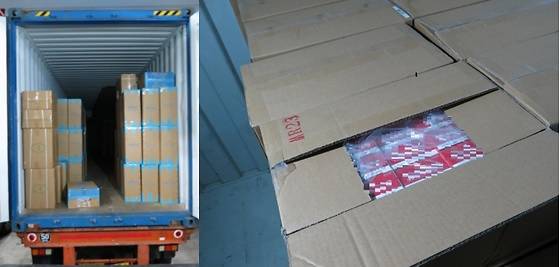
ICA officers had conducted further checks on a prime mover with an attached container at the Pasir Panjang Scanning Station at about noon last Wednesday. The officers became suspicious when they noticed “anomalies” in the scanned images of the consignment.
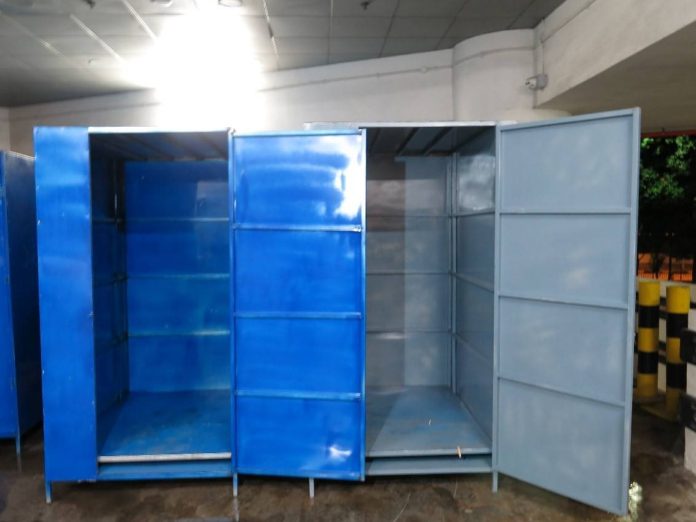
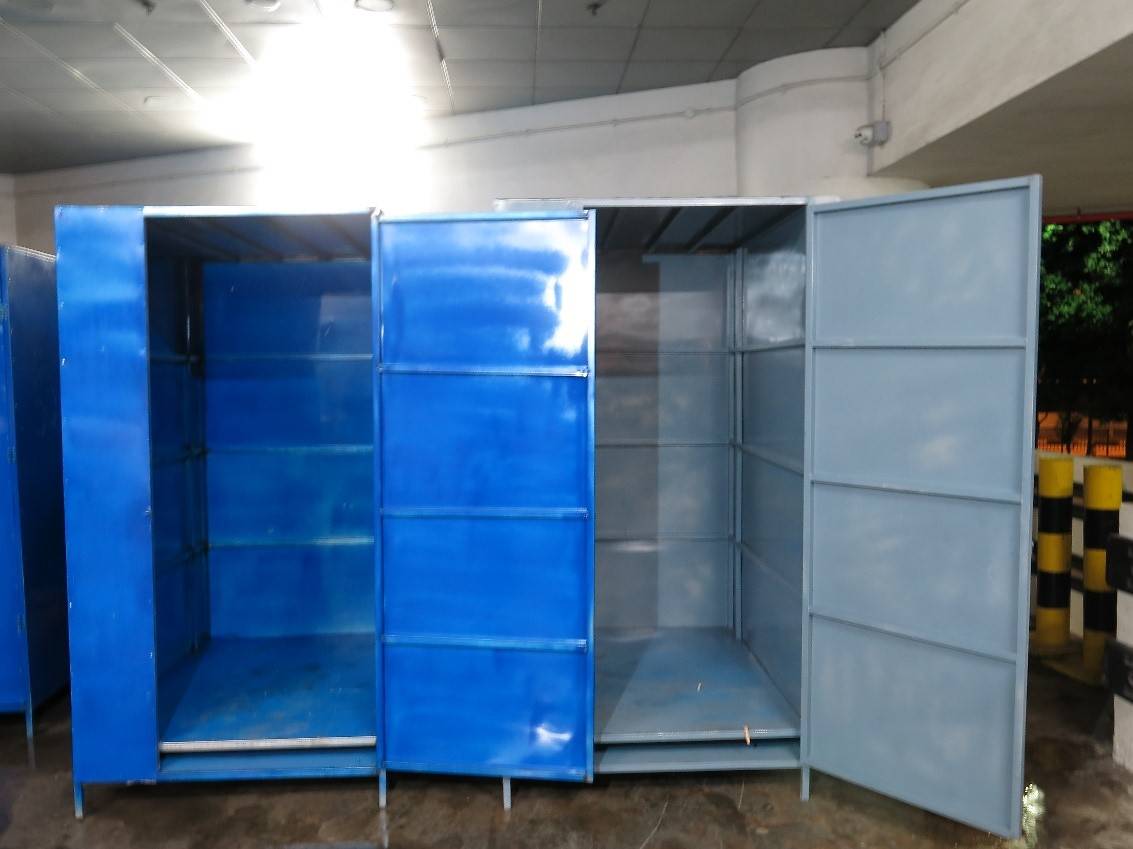
“During the course of checks, ICA officers uncovered duty-unpaid cigarettes concealed inside metal cabinets. The case was handed over to Singapore Customs for further investigation,” said the media release.
The contraband ciagrettes packed in carton boxes were retrieved from metal cabinets. (Photo: Singapore Customs)
Singapore Customs officers subsequently conducted an operation at an industrial building at Yishun Street 23 and observed a man using a forklift to remove metal cabinets from the container.
At the same time, two other men were seen removing carton boxes containing duty-unpaid cigarettes from 16 metal cabinets and loading the carton boxes back into the container.
The three men were arrested by Singapore Customs officers, who seized 17,250 cartons of contraband cigarettes.
The total duty and Goods and Services Tax (GST) amounted to about S$1.47 million and S$119,270 respectively.
Another 35-year-old man was later arrested on the same day for his involvement in the case. The four men were charged and court proceedings are ongoing.
Singapore Customs subsequently conducted an operation at an industrial building at Yishun Street 23. (Photos: Singapore Customs)
Buying, selling, conveying, delivering, storing, keeping, possessing or dealing with duty-unpaid goods are serious offences under the Customs Act and the GST Act, the authorities said.
Those found guilty of doing so can be fined up to 40 times the amount of duty and GST evaded, jailed for up to six years, or both.
“The same methods of concealment used by contraband smugglers may be used by terrorists to smuggle arms and explosives to carry out attacks in Singapore,” the authorities said.
“ICA will continue to conduct security checks on passengers, cargo and vehicles at the checkpoints to prevent attempts to smuggle undesirable persons, drugs, weapons, explosives and other contrabands across our borders.”
Members of public with information on smuggling activities or evasion of Customs duty or GST can call the Singapore Customs hotline at 1800-2330000, or reach them via email or the Customs@SG mobile app.
Singapore has agreed to further suspend the high-speed rail (HSR) project that would link it with Kuala Lumpur for seven months, till the end of the year.
In a Facebook post on Sunday (May 31), Transport Minister Khaw Boon Wan said that Malaysian Senior Minister Azmin Ali wrote to him to ask for the extension to discuss Malaysia’s proposed changes to the project.
“As any project change requires our agreement, the extended suspension will allow both countries to assess the changes that Malaysia has in mind,” he said.
“In the spirit of bilateral cooperation, we have agreed to a final extension of the suspension period to Dec 31, 2020,” he added.
“This should provide sufficient time for Malaysia to clarify its proposal and for both sides to assess the implications of the proposed changes,” said Mr Khaw.
In a separate statement, Datuk Seri Azmin, who is also Malaysia’s Minister for International Trade and Industry, said both governments have agreed to resume discussions “in the near future”.
See something newsworthy? Send your photos and videos to the newsroom via CNA Eyewitness. We’ll take it from there.
You can send videos or photos to CNA through Facebook, Twitter, Telegram or via our website or app. (Photo: Gaya Chandramohan)
(Updated: )
Bookmark
SINGAPORE: Have you ever wanted to alert CNA about something that you felt ought to be in the news? Or have you witnessed an incident that CNA should report on, investigate or alert others to?
You can now get in touch with the journalists, producers and editors in the CNA newsroom more easily via its new crowdsourcing platform – CNA Eyewitness.
The one-stop platform – with the tagline “See it. Report it” – allows readers and viewers to send in news tip-offs, photos or videos through the CNA website or app, and also via social media and messaging platforms such as Facebook, Twitter and Telegram.
On some of these platforms, users can also engage with a CNA Eyewitness chatbot to offer more details where needed.
The newsroom will monitor contributions via a customised dashboard that was built in partnership with global brand experience agency, VMLY&R.
Contributions which are newsworthy will then be fact-checked by journalists and editors, who will develop the content into accurate and verified news stories for CNA that may be published online and on its social media platforms, as well as broadcast on CNA television bulletins or on radio over CNA938.
“CNA Eyewitness underlines just how important our audience is to us. We are making it easier for them to talk to us and to send us what they think is newsworthy. This new platform will hopefully strengthen the connection between journalists, producers and editors in the CNA newsroom and our millions of readers and viewers across Asia,” said Jaime Ho, chief editor at CNA Digital.
“With their input, combined with our stringent editorial checks and standards, we hope that we will continue to be a trusted source for news that is verified and in touch with our audience,” he added.
Echoing this point, Preethi Sanjeevi, MD for VML&R Singapore, said: “CNA Eyewitness allows for greater collaboration, communication and interaction between the public and CNA editors, to not only curb the spread of misinformation, but enable the development of deeper, more personal news stories. VMLY&R is proud to be able to create this first-of-its-kind platform to strengthen Mediacorp and CNA’s position as the leading authority and source for reliable and trusted news.”
CNA has more than 900,000 subscribers on YouTube and the largest following on Facebook (3.2 million) among news outlets in Singapore. Readers regularly send in photos and videos on everything from fires to floods to haze to events such as the recent nationwide singalong as a gesture of solidarity with healthcare and migrant workers during the COVID-19 pandemic.
SINGAPORE: In the lead-up to pre-schools re-opening tomorrow (Jun 2), NTUC First Campus’ My First Skool reached out to parents with a 32-page document packed with tips and activities to prepare children for their return to class.
The Safe Return Transition Resource Kit covers topics like wearing, removing and disposing of masks safely, and how to understand germs. Teachers and principals from the anchor operator’s various centres also produced self-help videos to guide parents and children on habits such as hand-washing.
All this, according to My First Skool’s general manager Thian Ai Ling, was developed because they anticipated children would take some time to re-adjust to a school environment after weeks of being at home.
Like My First Skool, many preschools – from anchor operators to private players – have been reaching out to parents and children to help ease the transition, as those in Kindergarten 1 and Kindergarten 2 return to school on Jun 2 followed by younger ones later on.
A child on the way to being dropped off at a My First Skool centre at Buangkok in end-January. (Photo: Matthew Mohan)
But while the engagement has helped alleviate concerns over sending their children back to school for many parents CNA Insider spoke to, a few remain worried and have decided to keep their children at home for now.
Take Haikal Guntor, who received a letter on Friday from his son’s Ministry of Education (MOE) Kindergarten briefly outlining the measures it is taking. This did not change his earlier decision to have his two children – his son who is in K2, and a daughter who attends nursery at a PCF Sparkletots pre-school – stay home.
While his son had an online group call with his classmates and teachers sometime during the circuit breaker, the father described it as “more of a catch-up session” with nothing mentioned about measures taken in the school to keep children safe and healthy.
“Even with the masks, we’re not sure our kids will be safe,” he said, pointing to the “20-plus children” his son has in his class. Besides, he added, his wife used to be a pre-school teacher and can teach them at home.
According to the Early Childhood Development Agency (ECDA), pre-schools will be required to adhere to measures such as mandating the wearing of masks or face shields by all staff and children above the age of 2; and keeping staff and children within their own bays, floors or classrooms as far as possible.
Staff of all pre-schools and early intervention centres have also completed a one-time swab test.
MOE’s director of schools Liew Wei Li said the MOE Kindergartens have been engaging parents via letters. In addition, prior to re-opening tomorrow, they will “also be sharing infographics, photos or videos with parents” so as to “reassure and give parents a better sense of how these safe management measures will look like in each centre”.
Temperature taking station at Star Learners at Bishan Central, in preparation for when school reopens on Jun 2. (Photo: Anne-Marie Lim)
Another parent, Siti Saliha, whose 4-year-old daughter attends a PAP Community Foundation (PCF) Sparkletots centre, also does not plan to send her daughter back to school on Jun 8 when children in Nursery 1 and 2 are slated to return.
The centre held an online parent-teacher conference earlier this month, she said, but she was not satisfied with the answers to her questions – such as how the centre would keep the children from touching each other, and how they would ensure her daughter’s mask would be worn properly.
“They are just nursery kids,” she said. “The teacher kept saying they will guide them and keep reminding them (about the measures) … but I still don’t have confidence.”
On Saturday, she received a letter covering topics such as the items each child should have when they return, and the school’s safe management measures, but she has not changed her mind.
According to Marini Khamis, senior director of PCF’s pre-school management division, the remote parent-teacher conferences were meant to “serve as a platform for teachers to address parents’ concerns”, while the letter was another way to “reassure and alleviate parents’ concerns”.
PCF Sparkletots is the largest pre-school operator in Singapore.
But while mother Nur Afiqah also has concerns, she will be sending her four-year-old to his My First Skool centre tomorrow. She cites the trust and good relationships she has developed with its staff as one factor.
“I’ve been sending him to the same centre since he was an infant, and I know the principal and teachers well,” she said. “I can ask them anything… there’s no communication barrier.”
Andre Lim, a father of three whose two sons attend Catholic Kindergarten, says he has “no qualms” about his children returning to class.
“I think the risk I face going to the supermarket is higher than (the risk of) sending them to school,” he said.
Alternate sinks at Star Learners Bishan Central closed off, so children are safely distanced when washing hands regularly.
Some pre-schools are making sure by reaching out to the children even before their return to class, and getting them accustomed to important new habits such as washing their hands frequently and wearing a mask for extended periods.
“Habits take time to acquire and be formalised,” explained My First Skool’s Ms Thian, noting that the 32-page toolkit was designed to help parents get the ball rolling with their children.
“Have many conversations with your children… What makes good, healthy habits, and what should you not be doing, like rubbing your nose and not using a tissue. Parents can help us go through a few of these things.”
Teachers at Pat’s Schoolhouse @ Claymore have been masking up while they conduct home-based learning, “so the children can recognise them… like, ‘this is going to be how I look when you come back to school’,” said Ada Teo, the centre’s senior principal.
The children were also asked to put on masks during the video calls, to get used to doing so for lessons.
Teachers and students of Pat’s Schoolhouse @ Claymore masking up during home-based learning. (Photo: Pat’s Schoolhouse)
Teachers have in addition been reminding children to continue to practise contactless greetings such as air hugs, fist or elbow bumps with their friends when they return, which they had started doing before the circuit breaker kicked in.
“If we prepare them socially and emotionally, it’s a lot easier for them to adjust when they come back,” said Mdm Teo.
GETTING KIDS TO WEAR MASKS IN CLASS
One big reason why Siti Saliha has decided against sending her daughter back to nursery school is the girl’s inability wear a mask for long.
“My daughter only wears a mask for short distances, such as from the house to the car,” she said. “And when I bring her out, the mask will slide down her nose when she talks, and she keeps touching and pulling it up.
“The kids might not know how to re-adjust it the right way, and what if her hands are dirty?” she added.
The use of masks is one of parents’ biggest concerns, and pre-schools have acknowledged the challenges.
For instance, in circulars from three pre-schools that CNA Insider saw, parents were instructed to pack extra masks for their children in case their child drops or soils theirs.
At My First Skool, customised mask holders were created to give children a place to leave their mask when they remove them for mealtimes or naps.
Pre-schools also noted that being in a social setting can encourage children to comply with wearing masks. “During the circuit breaker where we provided limited services, we saw that children observe common practices”, said PCF’s Ms Marini.
“They tend to be more open to following practices such as wearing a mask when they see their teachers and friends doing the same.”
Then there are other kinds of encouragement. Principal Pua Yoke Ting of Star Learners at Bishan Central said they would let younger children “choose their favourite sticker and paste it on the mask, so they feel happy and are more inclined to (put it on)”.
Principal Pua Yoke Ting of Star Learners at Bishan Central shows how it’s done.
But what if a child simply refuses to keep a mask on? Pat’s Schoolhouse’s Mdm Teo said they would not force the child, but offer him or her the alternative of a face shield instead.
“We’ll let the child put it on, and continue to explain why we want the child to do that,” she said. “But if the child needs more time, it’s fine.”
“We just have to be very empathetic towards them,” she added. “I will tell them, ‘I know it’s very hot, I am also feeling very hot, but we try again, and we persevere, okay?’”
Maintaining a safe distance between children is another worry with parents.
One, who only wanted to be known as Mrs Tian, pointed to the number of children in her child’s K2 class at an MOE Kindergarten. There are about 25 children in a space she described as about half the size of a primary school classroom.
“When I was there, I saw different learning corners, a kitchen area, tables and chairs, which makes the classroom very packed. So how are they going to keep a safe distance between the children?” she said, adding that children across different classes would also be using the same entrance, exit and common corridor.
She also pointed out that while K1 and K2 children will have their arrival and dismissal times staggered, they would arrive around the same time that the primary school students – also returning to school on Jun 2 – are dismissed.
MOE’s Ms Liew said that schools will work with their respective MOE Kindergarten to minimise intermingling between primary school and kindergarten children by, for example, adjusting the timings for both.
To decongest common areas during arrival and dismissal, schools will make use of multiple access points or gates, and regulate movement of students at gates and drop-off or pick-up points.
As for classroom size, Ms Liew said the MOE Kindergarten classrooms are “larger than the average kindergarten classroom” and are well ventilated. Children were segregated into groups of five or six before the circuit breaker period, she noted, and this will now be further reduced to four.
Programmes and activities that involve close physical contact among children and staff will also be avoided – for example, there will be no sand and water play, she added.
Other pre-schools have implemented similar measures.
Pat’s Schoolhouse’s outdoor playground.
At My First Skool, for example, children and teachers at centres with “extended outdoor spaces” on their premises can use these for outdoor walks and to get sunshine and fresh air. The operator is also working with SportSG to introduce customised physical activities that can be done indoors with children.
“These include activities where children learn about underarm throws with newspaper balls, and simple obstacle courses for children,” said Ms Thian.
All outdoor play will also be moved indoors at Star Learners Bishan Central. “Thankfully, we have an indoor playground,” said Ms Pua. The playground will be sanitised after every use, and only up to 10 children can be there at any one time.
The centre has also split classes up into smaller groups of up to 10. “The same 10 children will be having lessons together, playing together and having meals together,” she said. “They will never mingle with children from the other groups.”
Star Learners classroom seating arrangement.
At Pat’s Schoolhouse @ Claymore, classrooms will be split into two sections using shelves and dividers, with one group per section. Children will also wear coloured tags to identify which group they belong to.
Each group will have their own toys and books, which will be cleaned daily during the children’s nap time. High-touch areas, such as low shelves and door knobs, will be disinfected every time the children are out having their meals or at the playground, said Mdm Teo.
“In the first half of the morning, we should be able to do it about three times, compared to ECDA’s advisory of twice a day,” she added.
Staff at Pat’s Schoolhouse marking off seating spaces at the outdoor meal area.
GETTING TEACHERS TO PACE THEMSELVES
On the manpower front, pre-schools have worked to ensure their staff are not cross-deployed across different groups. For example, at My First Skool, there are those who teach more than one level, such as Malay language teachers.
“The arrangement for June is that the teacher will stay put in one level, and she will continue to deliver (content) for the other level online,” said Ms Thian. “So the teacher will be on a screen delivering content to the other level, with a teacher in the classroom to monitor the children and help them give their responses to the teacher on the screen.”
“We have advised teachers to pace out a lot of things,” she added. “They are all going to be masked, and breathing can be a little unusual for them. So we told them that all activities can be slower for the first two weeks … they can afford to go slow, step back a little bit.”
Indeed, with all the preparation work necessary and additional duties when school re-opens, teachers might see an increased workload.
On top of their other duties, teachers will have to sanitise toys and other areas regularly.
For example, Chee Shu Yan, a teacher at Star Learners Bishan Central, pointed out that she has had to plan the curriculum to cater for smaller group teaching.
With the suspension of outdoor activities, teachers have also had to think up new ways to make the experience fun and engaging for their children, she added.
Ellis Lee, a senior teacher at Pat’s Schoolhouse @ Claymore, noted that there will be additional duties such as sanitising and sunning toys daily, as well as the playground, bicycles and tricycles after each use.
Nonetheless, she takes it in a positive light.
“I feel that it’s really not about focusing on these additional duties, but rather about keeping a positive mindset that we are also contributing and doing our part for the community,” she said.
SOME PARENTS CAN’T WAIT
For all the lingering concerns, there are also parents who are looking forward to their children returning to school.
Star Learners’ Ms Pua said she expects 100 per cent attendance on Tuesday, while Pat’s Schoolhouse’s Mdm Teo said all but one of her 50 K1 and K2 children will be returning.
“When our teachers check in with them online, the children are all really looking forward to coming back,” Mdm Teo added. “We also currently have one K1 child in school right now, and she was so happy when I told her that her friends will be coming back.”
Parents feel home-based learning just cannot measure up to the actual pre-school experience.
“My children are becoming very bored and socially isolated being at home every day,” said Camille Tan-Mahendran, whose two boys attend an E-Bridge pre-school. “Home-based learning just isn’t doing it for them.”
Allan Fuller, whose son Leo is in K1 at Pat’s Schoolhouse, said: “Physical attendance in school is critical to our son’s overall development… There is simply no substitute for the in-person classroom dynamic, and we’re grateful he can return.”
And as father of three Andre Lim quipped: “It’s great to have them home these two months, but I think it’s gotten to the point where we’re saying … ‘Please go back to school now’.”
To ensure no one gets left behind as Singapore becomes more digitally connected, the Government will be setting up a new digitalisation office to double down on outreach efforts to the hardest-to-reach segments of society and encourage them to adopt digital tools.
This new SG Digital Office (SDO) will recruit 1,000 digital ambassadors by the end of June to help stallholders and seniors learn how to use digital tools – skills which the Government says are more important than ever, given disruptions caused by the ongoing Covid-19 pandemic.
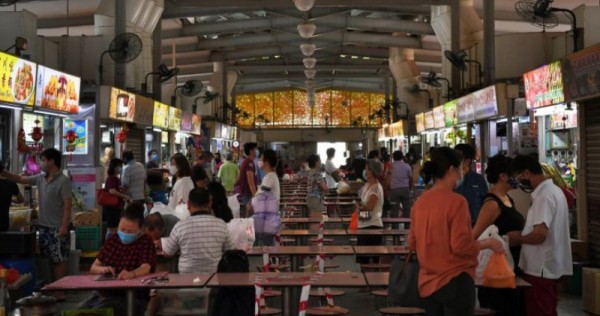
These ambassadors will cover all 112 hawker centres and wet markets in June to encourage stallholders to adopt SGQR codes for e-payment and to avoid having to handle cash, the Infocomm Media Development Authority (IMDA) and the Ministry of Communications and Information said in a joint release on Sunday (May 31).
The SGQR code lets stallholders receive payments through 19 different providers, such as Dash, GrabPay and local bank offerings such as PayLah.
This outreach will be ramped up in July to include coffee shops and industrial canteens.
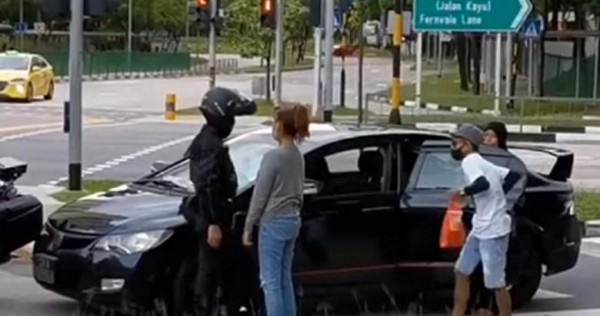
SINGAPORE – A 21-year-old female driver has been arrested after she refused to stop when asked to do so by a police officer, proceeding to drive against the flow of traffic and almost colliding with several oncoming vehicles.
She also revved up the car’s engine when her vehicle was eventually stopped, prompting the officer to jump over the car’s bonnet for his personal safety.
The police said on Saturday (May 30) that the woman was disqualified from driving and drove the car without the owner’s consent.
No one was injured during the incident.
The dramatic pursuit on May 28 at 5.05pm began when the officer spotted a car suddenly cutting from Lane 1 to Lane 3 along Tampines Expressway (TPE), before cutting across the chevron markings to turn into Jalan Kayu road.
This caused another driver to apply the emergency brake to avoid a collision and the officer to signal for the driver to pull over.
She sped off, instead, committing several serious traffic violations until she was stopped at the slip road of Sengkang West Avenue leading into Fernvale Road.