SINGAPORE: This year’s National Day fun pack will contain hand sanitisers, a thermometer and a face mask, as well as items that express “collective love and wishes for Singapore”, said Minister for Defence Ng Eng Hen on Friday (Jun 5).
Responding to parliamentary questions on the contents and cost of producing, packing and distributing the fun pack, Dr Ng said each “Singapore Together Pack” costs about S$2.40.
The minister said the executive committee will produce fun packs for about 80 per cent of households, taking into account those who said that they do not need a fun pack. This number of fun packs will be “adequate”, based on prior experience, he added.
The NDP2020 executive committee said on May 20 that each household would receive a fun pack containing items that will allow them to interact with the parade and within their family.
Shortly after, an online petition started on Change.org to appeal to the committee for an option to opt out of receiving the fun pack, citing concerns about environmental wastage. As of Friday morning, about 112,000 people have signed the online petition.
The bag for a fun pack will be a reusable grocery bag that is foldable into a small pouch, with designs by local artists with disabilities and Primary 5 students.
There will be 12 items in each fun pack, compared to 20 to 25 items in a typical NDP fun pack, the NDP2020 executive committee said in a fact sheet on Friday.
“As families will be at home, there is no need for single-use water bottles, neither plastic clappers nor packaging, and these have been done away with to reduce waste,” said Dr Ng.
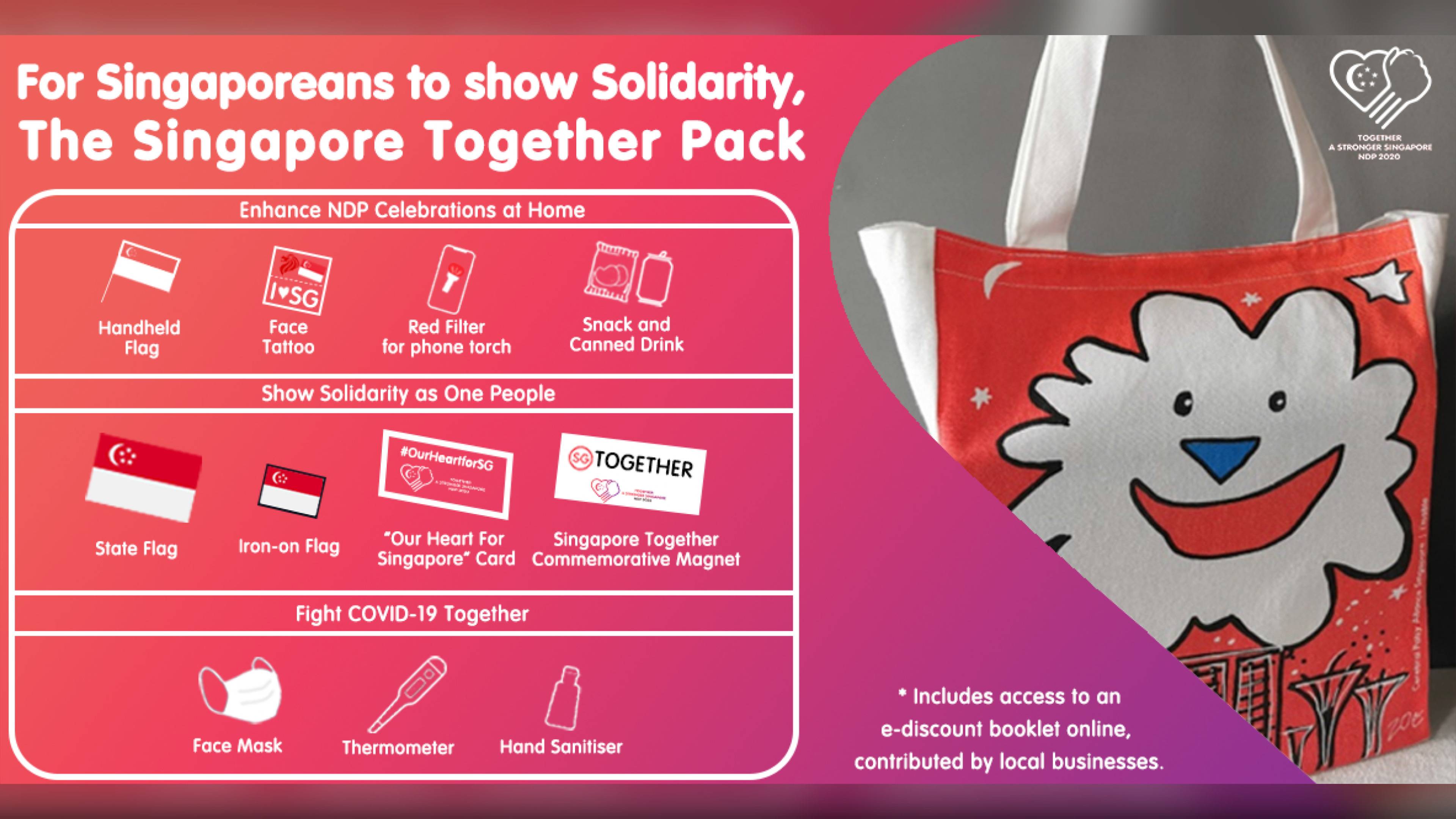
The fun packs will contain a full-sized national flag and a handheld one, as well as iron-on patches, a pledge card and a face tattoo, he added.
Hand sanitisers, a thermometer and a face mask will be included in a fun pack, alongside an e-discount booklet of vouchers.
There will also be a snack, a canned drink, a red filter for phone torches and a commemorative magnet.
The Singapore Together Pack will contain 12 items. (Photo: NDP2020 Executive Committee)
The fun pack will be available for collection from Jul 20 at community clubs and residents’ committee centres, said the executive committee. Each Singaporean and permanent resident household will be able to collect a fun pack. Collection is expected to be completed by Aug 2, the committee said.
Collection points will also be set up where the public can return selected items for redistribution or re-use, said the executive committee, and the fun packs will be distributed to vulnerable groups to “help them join in the NDP experience”.
“For every NDP, the (executive committee) aims to be inclusive and they take in views and accommodate different interests where possible. I think this is good and forward-leaning. But let me just say this as a gentle caution,” said Dr Ng.
“If every interest group pushes for its own agenda, especially during the NDP, then our common ground to celebrate this national event shrinks. Because the (executive committee) will simply never be able to satisfy every request adequately.”
LONDON (REUTERS) – The coronavirus pandemic could encourage a generation to turn away from a culture of selfishness, with young people now wanting to do jobs where they can help others, Dutch historian Rutger Bregman believes.
Mr Bregman, 32, whose latest book Humankind argues that people are generally decent rather than evil, became famous last year when he told a wealthy audience at the Davos World Economic Forum that they should pay more tax.
In an interview with Reuters Television, Mr Bregman said he sensed the virus crisis was showing that things are changing and there is “a shift in the Zeitgeist” for the younger generation.
“We are now moving into a different kind of era that is more about public service, about cooperation, about basically what’s decent,” he said.
Governments had published lists of essential professions in the crisis and this could have a huge impact on a whole generation, Mr Bregman said.
“If you look at these lists, you’re like, where are the hedge fund managers? You know, where are the bankers, or the marketeers?”
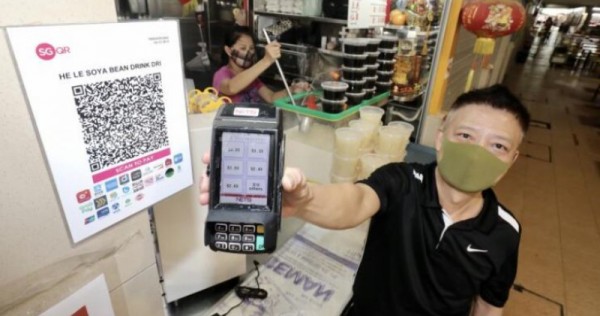
Mr Goy Thuan Heng introduced cashless payments at his soya bean stall in West Coast Hawker Centre five years ago, but it was more trouble than it was worth at first.
“No one used the cashless system for most days in the first one to two years. At most, there were three customers,” said the 57-year-old in Mandarin on Thursday (June 4).
“At that time, I also had to pay a monthly fee of $28 for the device and the payment options were limited.”
The tide has slowly begun to turn.
Mr Goy, who has been plying his trade at the centre for 24 years, said he now makes around 10 cashless transactions daily with a peak of more than 20 during weekends, although they still account for only 3 per cent to 5 per cent of his total takings.
He is also using the unified Singapore Quick Response Code (SGQR) e-payments solution launched in 2018.
It lets stallholders receive payments through 19 different providers, including PayLah, Dash and GrabPay, and Mr Goy is no longer paying a monthly fee.
Mr Goy said the good thing about going cashless is the time saved from having to count out change for customers.
SINGAPORE – A youth attacked her then boyfriend’s father with a knife last year, causing him to suffer cuts on his fingers.
Lai Li Ting, 17, who was charged with one count of voluntarily causing hurt to Mr Swaran Singh Ram Singh, 60, pleaded guilty on Thursday (June 4).
Court documents state that Lai was in a relationship with Mr Singh’s son, Mr Rammel Singh Swaran Singh, 22, and was living with him at the time of the offence.
At about 2.20pm on Sept 30 last year, the older Mr Singh was informed by Khoo Teck Puat Hospital that his son had been admitted to the hospital.
Mr Singh then asked Lai to pack his son’s belongings. She said she would meet him later that day to pass them to him.
At 5.44pm, Mr Singh received a message from Lai saying that she had mistakenly gone to Marsiling Rise, instead of where he lived at Block 104 Woodlands Street.
The two then arranged to meet at Lai’s location in Marsiling.
Mr Singh arrived at the new location and saw Lai at the lift lobby carrying a plastic bag.
When he asked her about his son’s belongings, she told him that they were “behind the block”.
SINGAPORE: While most people stayed at home during the “circuit breaker”, Mr Lim Han Eng was living at his factory with about 180 foreign workers.
As construction work ground to a halt, the 59-year-old owner of Aik San Construction took up the role of manager at his factory-converted dormitory.
“This is my rice bowl, I have to get through this with my workers. This is the dormitory for my own company,” he told CNA in an interview conducted in Mandarin.
“Honestly speaking, no one is willing to do this job, as the virus is spreading mainly in the dormitories … so the only way was for me to do it myself.”
Mr Lim Han Eng, founder of Aik San Group, is living at his factory-converted dormitory with his workers while they are in quarantine. (Photo courtesy of Lim Han Eng)
There are more than 1,200 factory-converted dormitories housing nearly 100,000 workers in Singapore. They complement 43 purpose-built dormitories with 3,000 to 25,000 workers each, housing about 200,000 migrant workers altogether. Another 20,000 workers live in temporary quarters within construction sites.
The vast majority of COVID-19 cases in Singapore have been in foreign worker dormitories, and hundreds of new cases are being found daily even as infections in the general community have declined.
Two dormitories were first declared isolation areas on Apr 5, with dozens more gazetted since then. Seventy-seven dormitories are COVID-19 clusters as of Wednesday, including nearly all of the 43 purpose-built dorms.
Dedicated teams have been sent to help manage larger dormitories, with another 127 mobile Forward Assurance and Support Teams providing support to factory-converted dormitories, construction temporary quarters and workers in private residences.
Authorities have stipulated that employers need to provide food and daily necessities to their workers, and have to continue paying their salaries. There are also stepped up hygiene and safety guidelines that the dormitories have to follow.
On Apr 21, Manpower Minister Josephine Teo said that all migrant workers living at dormitories would have to stop moving in and out of the dormitories. Even as the situation at the larger dormitories stabilised, the conditions at smaller dorms were still “mixed”, Mrs Teo had said in Parliament on May 4.
While Singapore exited its circuit breaker period on Jun 2, most workers have to continue staying in, as only those who are cleared of COVID-19 infection can resume work. In Phase 1 of re-opening, which the country is currently in, the cleared workers can only leave their dormitories for work.
“DIFFERENT RULES EVERY DAY”
Mr Lim said that besides the daily maintenance of the dormitory, he has had to communicate quarantine rules to the workers.
He’s organised a team of about 10 workers to help him, and sweetened the deal by giving them more pay. The daily tasks include cleaning the toilets and clearing the rubbish regularly, as well as arranging for meals and snacks for the workers.
“The Government is issuing different rules and regulations almost every day, which the workers don’t really understand … they don’t know what they can do and what they should not do. Someone here needs to understand and let them know all this,” said Mr Lim.
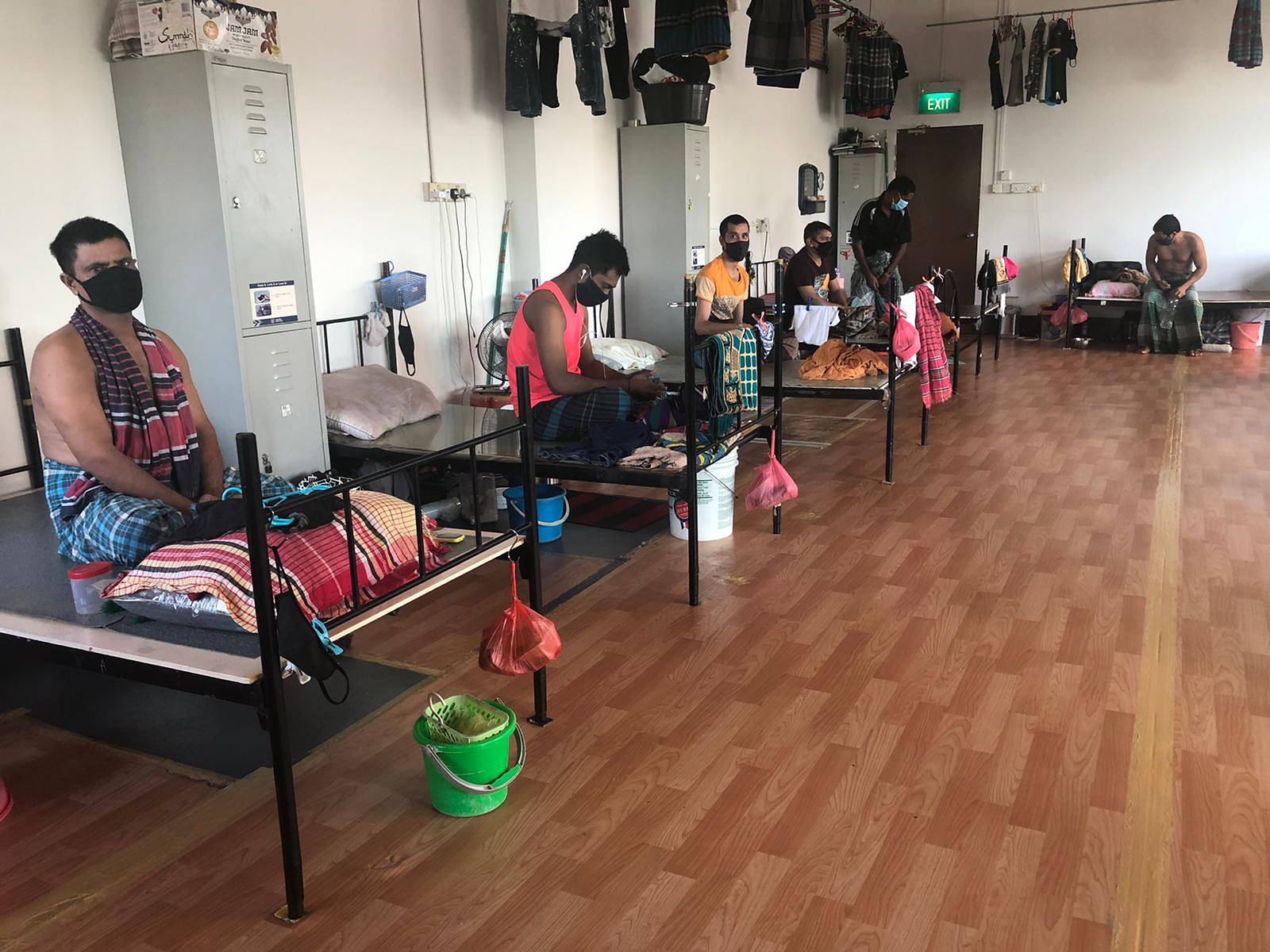
Workers of Aik San Group at a factory-converted dormitory. (Photo courtesy of Lim Han Eng)
A positive side effect is that he and his workers have become closer, he said.
“Normally we are working and everyone is very busy … under quarantine, we all have time. We tell each other stories, they talk about their hometowns and families. We also tell jokes so everyone can relax,” he said. He also tells them how he started his company and tries to share life lessons with them.
So far, there has been one worker infected with COVID-19 at his dormitory who was sent for treatment, while those who had been in close contact with him were taken to a hotel to be isolated. He also sends additional food and other essentials to his workers living at the hotel.
“I hope that they will be touched and work harder after this outbreak,” he said.
“NO BREAK FOR ME”: DORM OPERATOR
Some factory-converted dormitory operators and managers CNA spoke to said it’s been a challenging time for them.
“Every day, I’m in Tuas – all the 60 days, no break for me,” said Ms Sowmia Latha who runs a few dormitories housing more than 600 workers mainly in construction companies and shipyards.
Some of them are employed by her engineering firm, while she also provides accommodation for other firms. Most of her staff who are not in dormitories are on stay-home notices, she said.
Mr Chelladurai Dhanasekaran, who is helping Ms Latha manage the dorms after serving his notice, said that his workload has increased a great deal.
Their next challenge is to figure out how to put recovered workers back to work, and housing the workers under new regulations issued by the Manpower Ministry on Monday, which requires all dormitories to give each worker more space, she said.
At one dormitory, there were about 100 cases of COVID-19 over the last month and the workers have mostly recovered, said Mr Dhanasekaran. The dormitory has to prepare to receive the workers who are returning from community care facilities such as Changi Exhibition Centre.
“There’s a lot of work for me … we need to take care of the workers day and night,” he said.
Dorm operators say that the majority of the workers are from Bangladesh and India, with a small number from other countries, like China, Thailand and Myanmar.
“SPREADS LIKE WILDFIRE”
Mr Eugene Aw, dormitory business director for RT Group, said it was a mad scramble at first to “ramp up” the management of five dormitories with about 300 to 500 workers each.
“Suddenly you had up to 500 workers cooped inside the dormitories and no one is supposed to come out,” he said. “You had to do a lot of distribution of food, of materials, increase the trash disposal and cleaning of common areas … One of the biggest challenges was to find more manpower.”
They hired two more supervisors, while setting up communication channels with the workers by starting WhatsApp groups and appointing representatives among them to help with co-ordination.
“The planning of it on paper is very easy to say but the execution is not so easy … some employers they were caught off-guard, they didn’t prepare, and suddenly the Government said: No more cooking. Some couldn’t react fast enough,” he said.
When the situation stabilised, the mass swabbing began, and they had to monitor the health of the workers. He saw first-hand how infectious the coronavirus could be: “It really spreads like wildfire. If one person reports positive symptoms, it can then suddenly mushroom to 100 people.”
They too, have to prepare for the re-entry of the “cleared” workers into the workforce, as well as adapt to changes to dormitory regulations.
“I really salute my guys … they could very easily have given up,” he said of his dormitory supervisors, maintenance workers and cleaners. “Not every Singaporean or every worker is willing to put themselves into such a situation, and we are right at the front lines.
“We are thankful that a lot of charity organisations stepped in and on our own end we supplemented when employers couldn’t supply (food).”
SOME WORKERS LEFT IN THE LURCH
At one point, the Alliance of Guest Worker Outreach (AGWO) was providing about 20,000 meals a day to the workers who were mostly confined to factory-converted dormitories, said chairman Sam Gift Stephen.
As employers rushed to meet the needs of the workers, this number has fallen and is hovering around 15,000 meals a day. They are looking out for 267 dormitories, and providing meals to more than 110 as of Tuesday, he said.
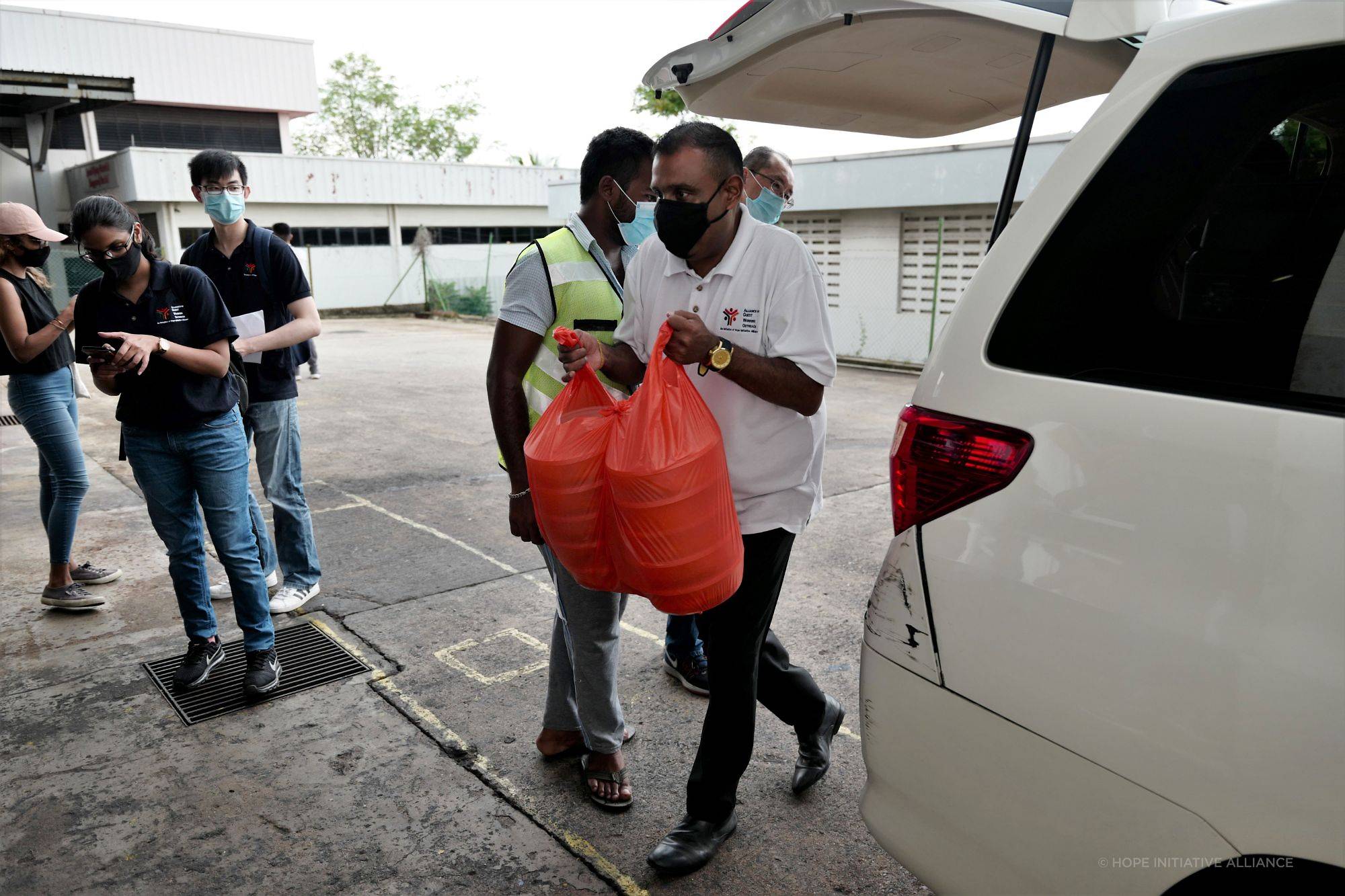
Alliance of Guest Workers Outreach chairman Sam Gift Stephen delivers food to migrant workers. (Photo: Hope Initiative Alliance)
“Some of the employers pick up the tab and pay for the food, but there’s a big majority who say they can’t. They don’t have the financial muscle to do it, they don’t have the bandwidth to take care of the worker,” he said.
For some employers, they gradually take over the food catering one meal at a time, so it is more manageable, he said.
AGWO has also started an “adopt-a-dorm” programme which has seen about 60 dormitories taken under the wing of volunteers or organisations.
“We also do counselling and befriending, one of the problems we found was many of them are depressed, many of them have become very frustrated. Somehow there is a lack of information being fed to the factory-converted dorms.”
For example, early on, some workers did not know that employers were required to provide catered meals to them, and on Jun 2, many did not know they still could go out after circuit breaker ended, he said.
Many fear that they may not have a job after the pandemic, while some are worried about their family back home but are unable to return because most flights have been cancelled.
Migrant workers living in factory-converted dormitories in particular face tough conditions of limited space and the lack of a proper logistical set-up, unlike residents in purpose-built dorms. Volunteer groups step in, to arrange meal deliveries and check on their needs.
To keep their spirits up, the non-government organisation ran fitness competitions, giving a mobile phone to a worker who did the most push-ups, and is conducting English classes via Zoom.
“THE WHOLE SPECTRUM EXISTS”
In some extreme cases, the workers were unable to reach their bosses, he said. Ms Ruchi Trivedi who is a lead volunteer at ItsRainingRainCoats (IRR), another NGO helping migrant workers, has also come across such cases.
IRR has distributed tens of thousands of meals, fruit, essentials, SIM cards and other items to migrant workers through this crisis. The NGO has expanded its network of volunteers from about 200 to almost 500 during this period.
There have also been employers who approached them to sign their workers up for virtual English lessons conducted by their volunteers, a programme called MadWish, which IRR had launched before the circuit breaker.
“To be fair, the whole spectrum of employers exists. If there are FCDs that are doing okay, they won’t call us. And we’ve actually reached out to few who told us they’re doing okay – especially if the employer of the workers is responsible – but those that lack support do reach out to us for help, and we do our best to help them” she said.
Mr Rubel, a worker who lives at a dormitory at Tuas View Square, told CNA that he has been getting meals, fruit and other essentials, although he cannot go out.
“Now (the) situation is good, still our dormitory (is) safe,” he said in a WhatsApp message. “Thanks for Singapore and Singaporean all people for helping.”
SINGAPORE: Singapore’s recently announced Fortitude Budget envisions a bold, digitally-empowered future for the nation in the wake of COVID-19.
Ensuring this stimulus unlocks equitable opportunity for the nation’s business ecosystem will be vital in delivering sustainable economic success.
Like its peers around the world, Singapore is in the trenches of a three-phase battle against COVID-19: Flatten-Fight-Future.
The nation is deep within the Flatten stage of this crisis, with a protracted Fight phase ahead. That means Singapore cannot afford to ignore planning for the Future to come.
The S$38 billion budget announced by Deputy Prime Minister Heng Swee Keat on May 26 sets out over S$500 million in funds to kick-start a digitally-inspired rebound.
That will be supported by an additional S$285 million of matched funds for private investment into promising start-ups.
This focus on digital transformation, which offers a valuable framework to build on Singapore’s impressive foundation of innovation, is not new as the Government has been encouraging businesses to digitalise over the years with specific initiatives.
We must ensure all companies and industries are empowered to unlock the greatest possible value from this opportunity.
BUILDING ON DIGITAL FOUNDATIONS
A commitment to innovation and digital transformation has long been a hallmark of Singapore’s evolving economy as government support has seen digitalisation become a key thrust of Singapore’s economic strategy.
Early investment in university research in the 1990s paved a pathway for enhanced innovation in private sector companies.
The US$1 billion Technopreneurship Investment Fund (TIF) launched in 2000 to nurture a regional venture capital hub also marked a valuable early step.
State investment company Temasek Holdings has played a pivotal role in this digitalisation journey as well, with a capital-driven strategy that is accelerating innovation investment.
In 2016, the Government announced S$2.8 billion planned investment in digital infrastructure as part of its Smart Nation initiative.
A year later, Finance Minister Heng Swee Keat introduced the SMEs Go Digital programme to help SMEs build their digital capabilities.
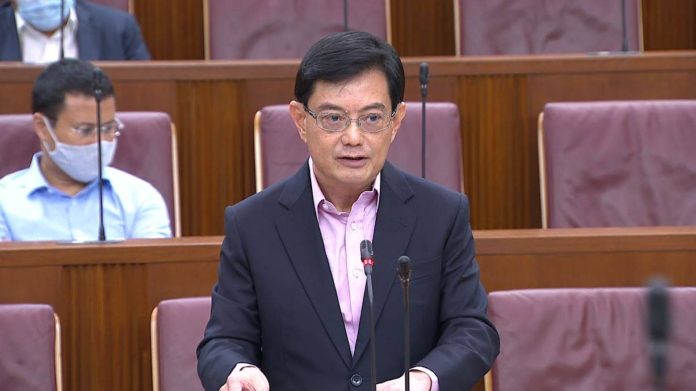
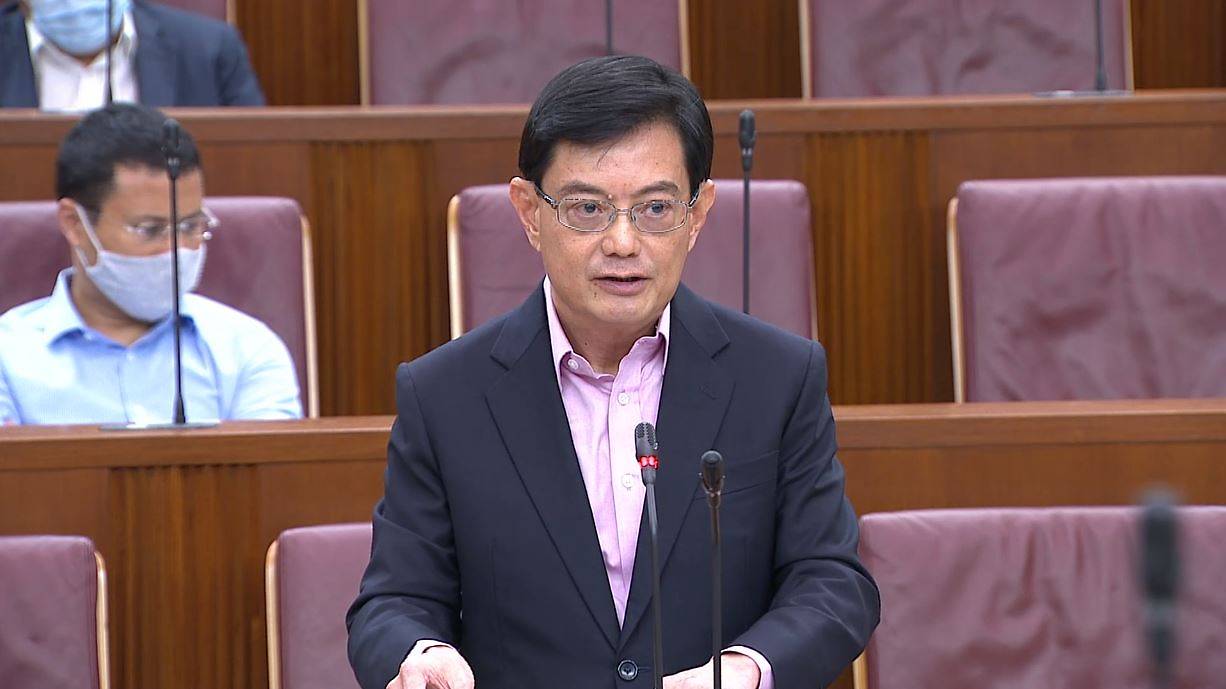
Deputy Prime Minister Heng Swee Keat speaks in Parliament as he launches the Fortitude Budget to tackle the COVID-19 crisis, May 26, 2020.
In 2018, the Government then rolled out the Services and Digital Economy Technology Roadmap as a key part of Singapore’s Digital Economy Framework for Action.
Such focus and investments on digitalisation have delivered notable dividends as Singapore is widely recognised as a leader in digital innovation, and a hotbed of global entrepreneurship.
Singapore was ranked 8th in the World Intellectual Property Organization’s 2019 Global Innovation Index, positioning it first in the Asian region.
According to data from the Singapore Department of Statistics, the number of tech start-ups in Singapore increased from 2,800 in 2003 to 4,300 by 2016.
Singapore also claimed top spot as most attractive destination to relocate to in Asia-Pacific for digital talent surveyed in Boston Consulting Group’s (BCG) Decoding Digital Talent study last year.
It may raise curiosity then that despite all the previous investments and initiatives ploughed into transforming Singapore into a digital economy that DPM Heng would yet make a digitalisation push in the Fortitude Budget, especially in a tense economic environment for businesses.
There are valid and important reasons for doing so.
DIGITALISATION MUST RUN DEEPER
Temasek predicts that Southeast Asia’s digital market will triple to reach US$300 billion by 2025. Singapore can be a leader in that evolving market opportunity.
The importance of digitalisation cannot be overstated. Cross-industry analysis by BCG reveals a clear link between the level of digital adoption and business performance. Successful digital leaders enjoy greater earnings growth and increasing enterprise value.
Since 2019, BCG has partnered with Infocomm Media Development Authority (IMDA) to deploy the Digital Acceleration Index (DAI). This index provides a common framework to identify the depth of digital capabilities across businesses.
Analysis of DAI scores shows broad-based improvements in Singapore between 2019 and 2020, with digital leaders demonstrating a 3 to 5 point improvement over this period.
That represents healthy progress which can generate significant positive business impact if sustained.
In a 2018 study of over 1,900 companies in the Europe and US, BCG found that greater digital maturity significantly enhanced competitive advantage in time to market, cost efficiency, product quality and customer satisfaction.
Those levers will be even more vital in the post-COVID-19 reality.
The ability to differentiate and operate effectively in this environment is critical. Digital capabilities will be crucial in ensuring efficient and competitive operations in uncertain economic conditions.
Leveraging the nation’s evolving digital potential will require recognising the value of digitisation across the whole business ecosystem.
As it stands, multinational companies and large local companies are at the forefront of this transformation. That leaves an important question about where support should be targeted in future.
Chief executive of IMDA Tan Kiat How speaking at a SME Go Digital event. (Photo: Calvin Hui)
Singapore is home to over 270,000 small and medium-sized enterprises (SMEs), accounting for around 99 per cent of the nation’s businesses, and 72 per cent of employment.
Despite all the efforts by the Government to drive digitalisation among Singapore’s SMEs, the results have room for improvement.
A previous study by the Association of Small & Medium Enterprises (ASME) and Microsoft Singapore found that only 56 per cent of SMEs here have digital transformation strategies in place whereas only one in four saw success in their digital implementation.
Through the impact of COVID-19, we have witnessed five years of transformation compressed into just five weeks. Cultural resistance quickly falls away when it is a question of “do or die”.
The enhancement to the SMEs Go Digital initiative introduced by IMDA and Enterprise Singapore offers one example, increasing funding support for digital adoption from 70 per cent to 80 per cent for enterprises through the whole of 2020.
In taking these first steps, the National Innovation Challenge laid out in the Fortitude Budget offers a welcome template. It aims to promote collaborative and creative digital transformation solutions to accelerate economic re-opening.
These measures will be particularly important for SMEs, who lack the comprehensive strategic planning resources of major companies.
TRUE DIGITAL TRANSFORMATION
Beyond the business reality of those endless hours shared on Zoom, a true digital transformation must penetrate deeper and deliver structural change to drive forward opportunity through innovation.
The support for eligible businesses to transition towards digital payments is an admirable inclusion. Consumer behaviour has revealed a clear uptick in e-wallet use during COVID-19. Supporting transformation to this new payment method could unlock valuable revenue for SMEs.
The Digital Resilience Bonus for F&B and retail businesses is an equally important step. These businesses have been hardest hit by the shutdown, and will require enhanced support to enable positive digital transformation.
The S$250 million set aside to help businesses digitise in partnership with digital platform solution providers and industry champions is another smart move.
Government support is essential but the true scope of realised opportunity will be reliant on the actions of businesses.
The Fortitude Budget provides a welcome addition to Singapore’s foundation of digital success. This support includes critical focus on digital transformation initiatives of particular value to the nation’s essential SMEs.
Regardless of business size however, the true scope of this opportunity will be determined by how businesses embrace this period of crisis to embed true digital adoption.
Michael Tan is a Managing Director and Partner at Boston Consulting Group, Singapore and the Leader of the Public Sector Practice in SEA.
It’s a new month and it’s that time again to splurge. What else are you gonna do with all that money saved up from not having to spend on commuting?
Traditionally, the middle of the year would mark the arrival of the annual PC show for local tech-heads. But as one would know, now’s not the time to stand in crowded halls together, even if the circuit breaker measures have been eased.
Of course, the show must go on and the Lazada Online Tech Show has returned today (June 4) for another five days dedicated to sweet consumerism and sweeter deals on gadgets. Much like the last sale, Lazada is teaming up with brands to offer deep discounts (up to 80 per cent off) for new gear.
Violet Oon is a respected brand in the local F&B industry, the de facto name when it comes to opulent Peranakan cuisine.
Unfortunately, their reputation got a wee bit tarnished in the past few days since the brand shot itself in the foot with a bullet called cultural appropriation.
What had happened was that the restaurant chain announced some new additions to their menu for home delivery — family-sized platters of rice and assorted side dishes that go for at least $115 each. As frightening as the prices are, it’s par for the course for Violet Oon restaurants, which offer fine-dining experiences across four atas outposts (including one at the National Gallery) across the island.
SINGAPORE – Workers’ Party chairman Sylvia Lim on Thursday (June 4) questioned the Government’s decision to task NTUC with the administration of a government support scheme, saying this could have implications for accountability.
She said the Self-Employed Person Income Relief Scheme (Sirs) involves the use of public funds and Singapore’s past reserves, and asked why there was a need to outsource the handling of applications and appeals to the National Trades Union Congress (NTUC).
“From a governance perspective, why was there a need to outsource the administration of Sirs appeals to NTUC in the first place? Was this done due to a lack of manpower or other reasons?
“Will this set a precedent for the Government to outsource its schemes to external parties to manage. What does this mean for government accountability?” she added during the debate on the Fortitude Budget.
Responding to the Aljunied GRC MP, labour chief Ng Chee Meng said NTUC got involved with Sirs when the Government made the request because it cares and also has the capability to help.